(Ken Silva, Headline USA) The Second Amendment Foundation has sued the U.S. government over its unconstitutional ban on gun possession or ownership by medical marijuana users.
The Second Amendment Foundation filed its lawsuit this week in a Pennsylvania federal court. The group is joined by Warren County, Pennsylvania District Attorney Robert Greene, who has served in that office since 2013 and currently possesses a medical marijuana ID card under Pennsylvania law.
“Greene desires and intends to lawfully purchase, possess, and utilize firearms and ammunition so that he may exercise his constitutional right to keep and bear arms for self-defense and all other lawful purposes,” the lawsuit stated.
“However [the U.S. government is] precluding Greene from purchasing and possessing a firearm and/or ammunition, which criminalizes Greene’s desired conduct under pain of criminal prosecution and incarceration for a period of up to 10 years and a fine of up to $250,000.”
The lawsuit also recounted the long history of cannabis in the United States, starting with the fact that it was cultivated by numerous Founding Fathers, including including George Washington, Thomas Jefferson, and Benjamin Franklin.
“Washington’s diaries indicated he grew hemp at Mount Vernon for about 30 years and that he may have had a particular interest in the medicinal use of Cannabis,” the lawsuit said.
It was not until in 1961 when Congress took action to bar non-violent felons from possessing firearms. About seven years later, Congress amended the law again to expressly prohibit the possession of firearms and ammunition by individuals who were “an unlawful user of or addicted to marihuana,” according to the lawsuit.
The Second Amendment Foundation said in a press release that it’s pursuing this lawsuit because medical marijuana users shouldn’t have to forfeit their right to own firearms.
“Medicinal marijuana has been adopted by 38 states despite federal inaction on the issue,” said the group’s director, Adam Kraut, who is also a practicing attorney in Pennsylvania.
“With the increasing acceptance of medical cannabis, millions of Americans are forced to choose between the exercise of their Second Amendment rights or treating their symptoms with a substance that disenfranchises them from their constitutionally guaranteed right to keep and bear arms. Such a choice is incompatible with the constitution and finds no basis in this country’s history and tradition,” he said.
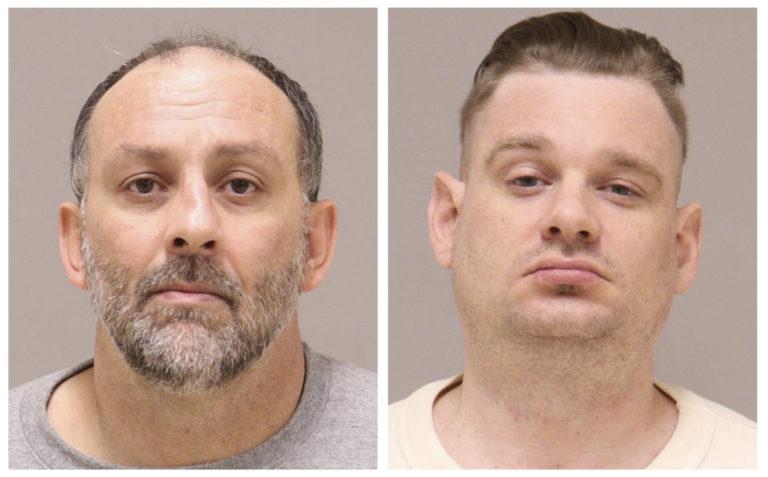
(Ken Silva, Headline USA) The alleged “ringleaders” of the 2020 militia conspiracy to kidnap Michigan Gov. Gretchen Whitmer filed their final briefs this week to overturn their convictions.
Croft and Fox were convicted of conspiring to kidnap Whitmer after their second trial in late 2022. At their first trial earlier that year, a jury acquitted two men while failing to reach a verdict as to Croft and Fox.
In their appeals first filed last August, Adam Fox and Barry Croft pointed out in their appeals that their lawyers said they were improperly limited in questioning government’s star witness at the second trial. The lawyers were also denied the ability to vet a juror who had expressed bias against the defendants, they said.
Moreover, the jury was never presented evidence that FBI agents were pressuring their undercover informants to provoke the defendants to criminality, according to Croft and Fox.
The Justice Department filed its response last month, denying all the alleged wrongdoing that occurred during Croft and Fox’s trial.
On the issue of time limitations, U.S. Attorney Nils Kessler argued that such restrictions were perfectly appropriate. And Kessler dismissed allegations of a biased juror as “double hearsay”—a coworker said he heard the juror had already decided to convict the men, but the juror denied the allegation, though he wasn’t under oath when questioned about the matter.
As for the evidence that FBI pressured its informants to provoke the defendants to criminality, Kessler argued that none exists—ignoring, among other evidence, the damning text between FBI agent Jayson Chambers to his informant, Dan Chappel, instructing him that the “mission is to kill the governor specifically.”
Fox and Croft’s final briefs this week responded to the DOJ’s arguments, and reemphasized many of the shady tactics the FBI used to entrap the two men.
Fox’s brief focused on what transpired at the second trial.
Croft, however, had stronger words for the appeals court—arguing that the DOJ never had a valid case against him in the first place.
“Despite the government’s transparent efforts to exaggerate Croft’s knowledge of and involvement in this government-produced sting, Croft was only involved in and attended four events, over 3.5 months: Dublin, Cambria, Peebles, Luther,” he said.
“And the FBI and its paid scammers were instigating all of them, including with its agent/informants Chappel, Plunk, and Robeson.”
The appeals court hasn’t indicated when it will render a decision.
Judicial Watch’s lawsuit stems from an alleged conversation between CIA analysts Eric Ciaramella—who ended up being one of the anonymous “whistleblower” who touched off Trump’s first impeachment—and Sean Misko.
Ciaramella had served as an adviser on Ukraine to Vice President Joe Biden and had been overheard in 2017 discussing with another staffer how to “get rid of,” or remove, the newly elected Trump from office. His colleague, Misko, left the White House in the summer of 2019 to join House impeachment manager Adam Schiff’s committee, where, sources say, he offered “guidance” to the whistleblower, Ciaramella.
In January 2022, Judicial Watch sued the DoD for records about the purported 2017 conversation between Ciaramella and Misko.
Judicial Watch sought all reports submitted by a US military officer assigned to the National Security Council to his superiors relating to a conversation he overheard Ciaramella and Misko. The organization also sought all records relating to any investigations conducted by the DoD into the alleged conversation.
The DoD has stonewalled Judicial Watch’s request, which is why the organization filed its lawsuit last week.
“The intelligence community targeted Trump for removal for daring to question Biden family corruption and election interference tied to Ukraine and Burisma,” Judicial Watch President Tom Fitton said. “The Biden Defense Department’s sitting for over a year on a simple FOIA request on the Deep State targeting of Trump is a cover-up plain and simple.”
Judicial Watch has been fighting for information about Ciaramella for years.
In November 2019 Judicial Watch reported that among those visiting Ciaramella at the White House were several officers who worked for George Soros organizations.
Judicial Watch has also been stonewalled for records about Ciaramella from the CIA on the grounds that “confirming or denying the existence or non-existence of responsive records would reveal information protected by the CIA Act, namely the existence or non-existence of an employment relationship between the Agency and Mr. Ciaramella.”
(Mike Maharrey, Money Metals News Service) The Federal Reserve recorded a record loss of $114.3 billion in 2023, and you (the American taxpayer) are on the hook.
The last time the Fed ran a net operating loss was 1915.
The loss was a direct result of the Fed’s interest rate hikes to fight price inflation.
Rising interest rates create big problems for the Fed. It earns interest income on the bonds it holds on its balance sheet. But the central bank also pays interest to banks and financial institutions that park money there.
The problem is the bonds the Fed purchased during multiple rounds of quantitative easing (QE) were relatively low-yielding. But having pushed interest rates much higher, it is paying interest at a much higher rate.
Tightening causes the net interest rate spread to fall; that is, it causes net income to fall for a constant size of the Fed’s balance sheet. This occurs because the Fed runs a maturity mismatch: It owns long-term securities and owes short-term liabilities.
Specifically, when the Fed raises the policy rate, it is immediately paying more interest on bank reserves and reverse repos—a large portion of the Fed’s liabilities: 42.5 percent and 17.0 percent, respectively, as of Nov. 8, 2023. However, the Fed’s assets are longer-term and often pay a fixed interest rate. Therefore, when the Fed raises the policy rate, its net interest rate spread falls.
According to the Fed’s income statement, it paid out $281.1 billion in interest during 2023. That compares with $102.4 billion in 2022. Meanwhile, it earned interest from its bond portfolio totaling $163.8 billion last year. That was a slight decline from $170 billion in 2022.
The drop in interest income stems from a modest reduction in the Fed’s balance sheet as part of its inflation fight. According to the St. Louis Fed, “Tighter monetary policy also tends to be associated with a reduction in the size of the Fed’s balance sheet. For a given (positive) net interest rate spread, this reduces the absolute value of net income.”
The Fed Is Losing Billions! So What?
Generally, businesses experience pain when they lose money. But when the Federal Reserve loses money, the U.S. government feels the pain.
And that means you feel the pain. Because you (the taxpayer) will ultimately foot the bill.
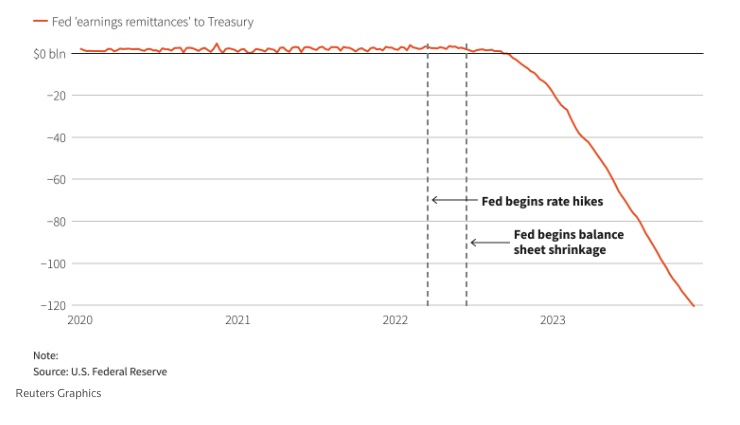
Under the Federal Reserve charter, the central bank remits net operating profits to the U.S. Treasury. This serves as an income source for the federal government and lowers the budget deficit. But when the Fed loses money, the Treasury loses its payday. That results in even bigger budget deficits.
And who pays for those deficits?
You do.
Bigger deficits mean Congress either has to raise taxes, or the Treasury must borrow even more money. Either way, taxpayers pay. They either get a bigger tax bill, or they pay for the borrowing via the inflation tax when the Fed prints money to monetize the debt.
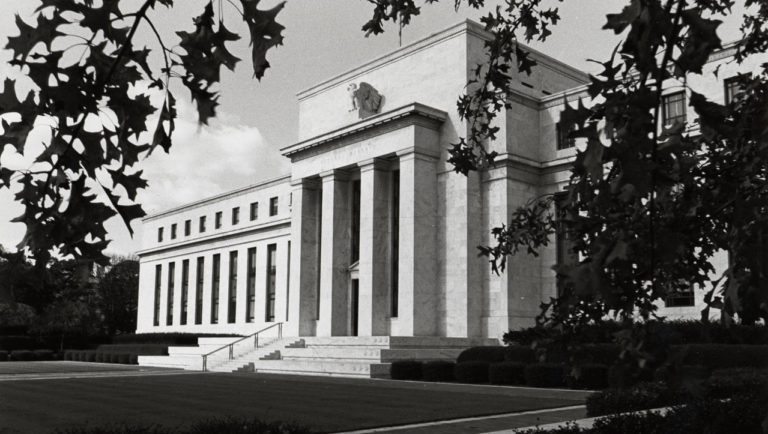
Meanwhile, it’s business as usual over at the Eccles Building.
Typically, managers must take drastic measures when their companies suffer big losses. They generally try to slash costs. Sometimes they lay off employees.
If losses mount high enough, they might have to borrow money or sell assets. If they can’t stop the business from bleeding red ink, the company will ultimately face bankruptcy.
When the Fed loses money, the central bankers don’t have to do anything other than some creative accounting.
We live in a universe where the Fed makes its own special accounting rules, and according to its own special accounting rules, a net loss magically transforms into a “deferred asset.”
You read that right. Losses become an “asset” on the Fed’s balance sheet.
[I]n the unlikely scenario in which realized losses were sufficiently large enough to result in an overall net income loss for the Reserve Banks, the Federal Reserve would still meet its financial obligations to cover operating expenses. In that case, remittances to the Treasury would be suspended and a deferred asset would be recorded on the Federal Reserve’s balance sheet.
Under Generally Accepted Accounting Principles, operating losses reduce a business’s reported capital or surplus.
But in Fed accounting, the central bank simply creates an “asset” on its balance sheet out of thin air equal to the loss. Business goes on as usual. If losses mount, the size of this “asset” grows.
Here are the combined Fed’s correct capital accounts as of June 30, based on Generally Accepted Accounting Principles. They result in a capital of negative $32 billion:
Paid-in capital $36 billion
Retained earnings ($68 billion)
Total capital ($32 billion)
As The Hillreported, “Among other things, this accounting ‘innovation’ ensures that the Fed can keep paying dividends on its stock.”
Don’t you wish the IRS would let you use “innovative” accounting on your tax returns?
It’s important to note that there is no limit to the size of a “deferred asset,” and it could theoretically exist forever.
According to Fed data, reported by Reuters, the deferred asset stood at $133 billion at the end of 2023. As of Jan. 10, it had increased to $136.9 billion.
Once the Fed starts making money again, it will reduce the amount of this imaginary asset. That means the U.S. Treasury won’t see another dime from the Fed until this “asset” is zeroed out.
According to an analysis by the St. Louis Fed, this won’t likely occur until 2027. An independent analyst told Reuters the life of this mythical “deferred asset” could extend into 2028.
This means as long as the Fed continues to lose money and during the time it pays down its “deferred asset,” the federal government will experience a reduction in revenue resulting in budget deficits higher than they otherwise would have been.
And it’s less than ideal for the U.S. taxpayer how will ultimately foot the bill for higher interest expense and the price inflation created as the Fed ultimately monetizes the debt.
Much of Zweig’s report focuses on how many of the COVID vaccine fraudsters seemingly have left-wing politics, which he said debunks the notion that the opposition to COVID mandates was a right-wing phenomenon.
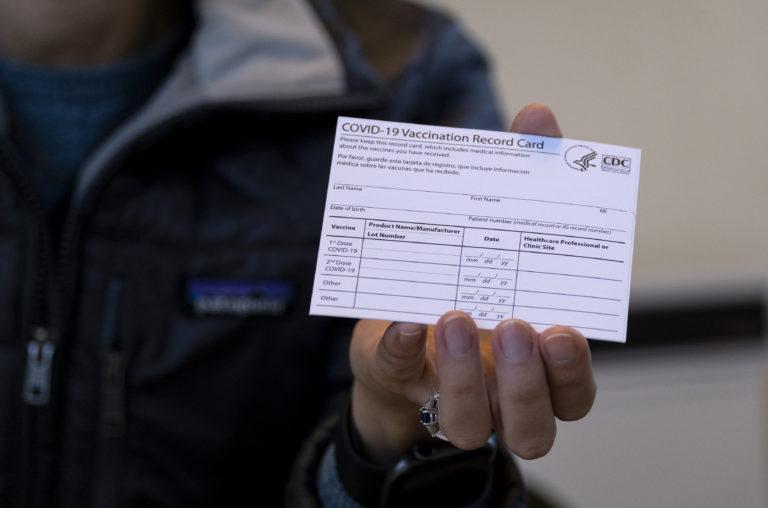
In one case, a New York nurse practitioner was indicted for selling forged vaccination cards and making false entries into the state’s vaccination database. Zweig noted that the defendant is a “natural medicine oriented pediatric nurse,” who has advocated for cupping treatment while at an acupuncturist’s office—”again, not exactly the profile of a typical right-winger,” he said.
Political leanings aside, Zweig showed that the U.S. government has thrown the full weight of its law enforcement apparatus against the COVID dissidents, even using undercover federal agents in come cases.
According to one indictment, the U.S. government used at least two undercover agents against a Utah plastic surgery center that was giving clients vaccine cards without them having taken the jab.
The indictment stated that one undercover agent called the clinic to receive a fake vaccine card. After the agent received the card, another undercover agent did the same. The indictment doesn’t state whether the agents were FBI or from another agency.
“On May 20, 2022, ANDERSEN received a text from Undercover Agent 2’s phone, indicating that Undercover Agent 2’s girlfriend had received a vaccine card and that he was hoping to get one too, and asking if it “still cost $50?” the indictment stated.d
“ANDERSEN replied with a text instructing Undercover Agent 2 to use “signal app”—an encrypted instant messaging system-to communicate with her.”
Another case in the Seattle area entailed the use of at least four undercover feds.
“VAN CAMP sold the false and fraudulent COVID-19 vaccination record cards for profit to purportedly unvaccinated persons, including Buyer-1, Buyer-2, and others, including several law enforcement officers acting in an undercover capacity,” charging documents from that case stated.
Remarking on those cases, Zweig questioned why the federal government is devoting resources towards relatively innocuous cases when crime is running rampant.
The most egregious case of vaccine fraud was that of Julie DeVuono, who allegedly made about $1.5 million off of fake vaccine cards, he said. “But relative to the big players in healthcare grift, for the feds to focus on DeVuono is the equivalent of using undercover agents and aggressive prosecution for a street corner pot dealer instead of a drug kingpin,” he said.
Zweig further noted that many of the cases he found were made after the scientific community accepted that the COVID vaccines didn’t stop transmission or infection.
“This raises the third, most important issue: the mandates were so feared and loathed by significant and diverse numbers of citizens that they were willing to become criminals rather than comply. (Even among the distributors only some of them appeared solely motivated by money. Many cited philosophical opposition to the mandates as their motivation.),” he said.
“Just the smattering of cases I reviewed represents thousands of regular citizens who felt compelled to fake their vaccination status.”
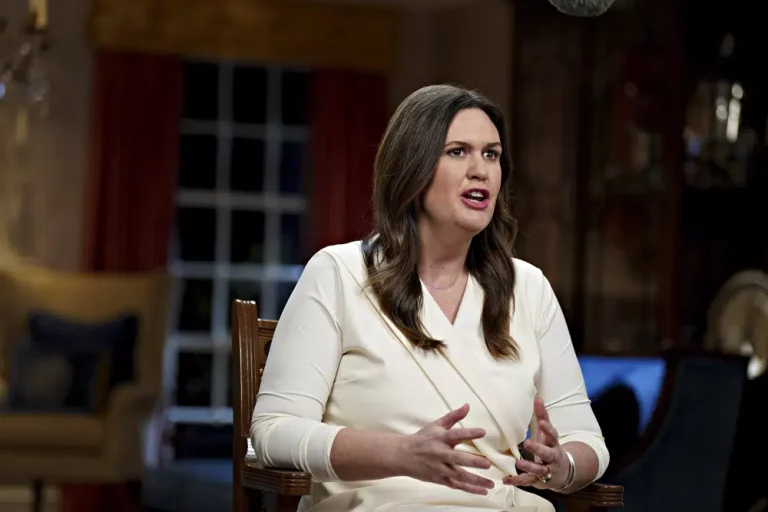
(Luis Cornelio, Headline USA) One of the rumored favorites among potential picks to join the Trump 2024 ticket has opened up about her plans in the years ahead.
During Monday’s Arkansas Christian School Summit, Arkansas Gov. Sarah Huckabee Sanders stated her intention to run for re-election in 2026, citing her short tenure as governor.
“I love Arkansas and I feel like I just got started here with one year in office,” Sanders said. “Really, really proud of what we’ve been able to accomplish in the first year, but I have a really long list of things that I still want to see happen.”
Would Arkansas Gov. @SarahHuckabee, who was one of Donald Trump’s White House press secretaries, be open to serving as his vice president?
“I love the job I have,” she says, adding that she hopes to do it “for the next seven years.” pic.twitter.com/MJsyvZom7p
Sanders voiced similar sentiments during a Sunday interview with CBS News’s Face the Nation.
“Look, I absolutely love the job I have,” Sanders told host Margaret Brennan. “I think it’s one of the best jobs I could ever ask for and I am honored to serve as governor, and I hope I get to do it for the next seven years.”
Sanders, a former White House press secretary, has emerged as a potential pick for former President Donald Trump, the front-runner and presumed Republican nominee for president. She became the governor of Arkansas in Jan. 2023.
While Trump has declared he knows who his pick is going to be, he has refrained from explicitly disclosing the person’s identity. “I can’t tell you that really. I mean, I know who it’s gonna be,” Trump stated during a Fox News town hall last week. When pressed for a potential hint, Trump said, “We’d do another show sometime.”
“She’s a killer,” Trump said of Stefanik, as reported by NBC News. On Monday, Stefanik expressed that she would be “honored” if Trump taps her as his running mate.
Donald Trump Jr., the president’s son, has indicated that Sen. J.D. Vance, R-Ohio, and possibly Florida Gov. Ron DeSantis are his favored choices for Trump’s running partner.
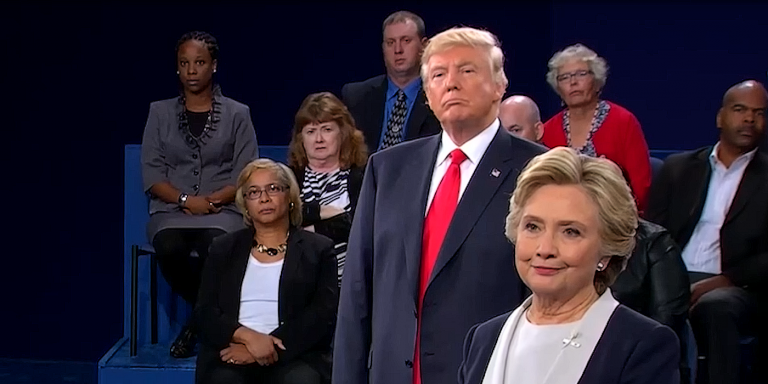
(Luis Cornelio, Headline USA) Failed presidential candidate Hillary Clinton took to Twitter to seemingly reminisce about her humiliating defeat in the 2016 election… It didn’t go as planned.
First, Clinton attempted to mock former President Donald Trump’s celebratory remarks following his New Hampshire victory. “This is a great, great state,” Trump said. “We won New Hampshire three times now, and we win it every time. We win the primary; we win the generals.”
In response, Clinton posted a screenshot of the New Hampshire presidential results in 2016 and 2020. “Reality: Um…” she captioned the photo, which showed both results portraying her and then-candidate Joe Biden as the “projected winner” of the elections. While Clinton won New Hampshire in 2016, she ultimately lost the electoral college.
Trump’s speech referred to the fact that he became the only individuals to win New Hampshire Republican primaries three times — first in 2016, then in his re-election in 2020 and now in 2024.
Despite facing a barrage of mocking responses, Clinton took another swipe at the 2016 election by drawing parallels between the Academy Awards snubbing Barbie actress Margot Robbie and director Greta Gerwig and her own experience of losing the electoral college but winning the popular vote.
According to Box Office Mojo, Barbie earned $636 million in North America ($1.4 billion worldwide). Despite the box office success, Barbie only secured eight Oscar nominations. Moreover, Robbie and Gerwig were both snubbed for the best actress and best director categories, respectively.
The snub has sparked criticism against the Oscars, especially considering that Ryan Gosling, an actor in Barbie, received a nomination in the male best actor category.
“Greta & Margot, while it can sting to win the box office but not take home the gold, your millions of fans love you,” Clinton claimed. “You’re both so much more than Kenough.”
The term “Kenough” references a phrase featured in the movie, reported the New York Times.
The post, gaining over 23 million views, received some mocking responses. “Margot really should’ve visited Wisconsin,” said Ken Klippenstein, a reporter at the Intercept.
Clinton’s posts come nearly eight years after Trump won the 2016 election. “This is painful and will be for a long time,” Clinton said during her concession speech.
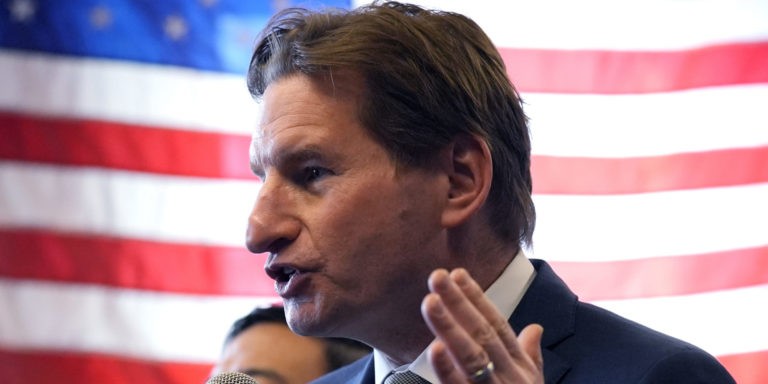
(Luis Cornelio, Headline USA) A Democratic presidential hopeful has criticized Democrats, including President Joe Biden, for their negative characterization of MAGA supporters.
Rep. Dean Phillips, D-Minn., praised supporters of former President Donald Trump after attending a Trump rally in New Hampshire. “They were the most hospitable, thoughtful, kind people I’ve interacted with in a long time,” Phillips said in a Thursday interview with Fox News.
I appreciate @FoxNews for affording me the opportunity to make the case for American repair and reconciliation.
“Angertainment” would have us believe we are more divided than we really are. Just have to get off our screens and convene. 🇺🇸pic.twitter.com/vHco0nBkS9
“Yesterday at the polls, I said hello to everybody holding signs: Biden signs, Williamson signs, my signs. Trump signs, Haley signs,” he added. “People were so decent and I would call it ‘anger-tainment.’ ‘Anger-tainment’ would have us believe we are so much more divided than we are.”
Phillips secured 20% of the Democratic votes in the New Hampshire primary. The Biden campaign did not participate in the New Hampshire primary as the DNC’s decided to kick off its 2024 season in South Carolina. Nevertheless, Biden achieved victory in the primary through write-in votes.
During a Jan. 23 CNN interview, Phillips went viral after rebuking the Democratic Party’s consistent demonization of Trump supporters, often labeling them as a collective “threat to democracy.”
Democrat presidential candidate Dean Phillips went to a Trump rally and found out that Trump voters are thoughtful, kind, diverse, hospitable and generally awesome people who feel like no one is listening to them but Trump. He now says Dems are delisiomal. pic.twitter.com/sLYGzHmteT
“I gotta tell you guys, I went to a Donald Trump rally a couple of nights ago,” Phillips said. “[I] Met probably 50 Trump people waiting in line. Every single one of them: thoughtful, hospitable, friendly. All of them [are] so frustrated that they feel nobody is listening to them, but Donald Trump—a diverse crowd, people who have never been to a Trump event before.”
He continued, “My party is completely delusional.”
Phillips’ remarks struck a chord with many, including Fox Business host Charles Payne, who rebuked Biden for attacking MAGA supporters during a viral Fox News segment.
“Biden’s anger and vitriol and hatred for ‘MAGA’ is far–worse than President Trump’s individual battles with someone who crosses him,” Payne said.
“That is something that is really detrimental to this country, that the President of the United States despises half of the United States,” he added.
EXPLOSIVE: Charles Payne (@cvpayne) EXPLODES on Fox News over Biden’s ‘hatred’ for MAGA, demeaning them, painting them as racists, attacking them, not considering them to be Americans, when they simply want a safe home and community, better USA. WATCHpic.twitter.com/6IPR4nXkty
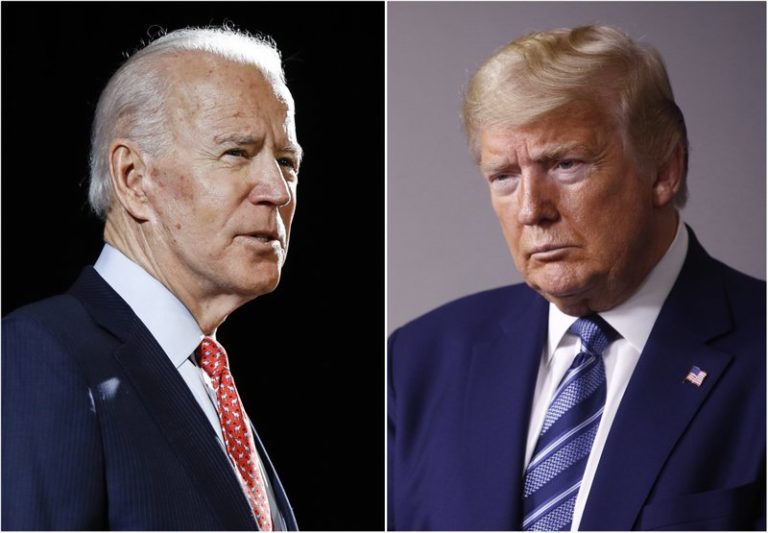
The Biden regime has pushed prosecutions against Trump in Florida, Georgia, and Washington, D.C., hoping to undermine Trump’s popularity in the lead-up to the 2024 general election — the strategy that turned out to be a complete disaster — according to the National Pulse.
So far, the two federal and one state persecutions of Trump by the Biden regime appear to be doing little to boost the incumbent Democrat’s chances in November 2024. Voters said they would back Trump over Biden by 53% to 47%, even if Trump were convicted of mishandling classified documents by a jury in Florida.
Even if he were convinced in the Georgia state RICO case alleging he conspired to overturn the results of the 2020 presidential election, Trump would also maintain an electoral edge. With a conviction, Trump would still defeat Biden with 51% to 49% of the vote.
In addition to that, accusations of misconduct surrounding Fani Willis and her lover whom she appointed to prosecute the RICO case have thrown the entirety of the court proceedings into question.
The only case that favors Biden to win the 2024 general election is the prosecution that is based in Washington, D.C. that alleged that Trump incited the January 6th, 2021, riots. The reason why that is the case is because the area is overwhelmingly controlled by Democrats. A conviction in this case would give Biden a slight electoral edge with 52% to Trump’s 48%.
Department of Justice special prosecutor Jack Smith’s Washington, D.C. prosecution, however, has stalled pending hearings over Trump’s claims of “presidential immunity.” It now appears that the trial won’t begin in early March 2024, with each passing day making it seem that the trial won’t happen at all before the election day, Nov. 5, 2024.
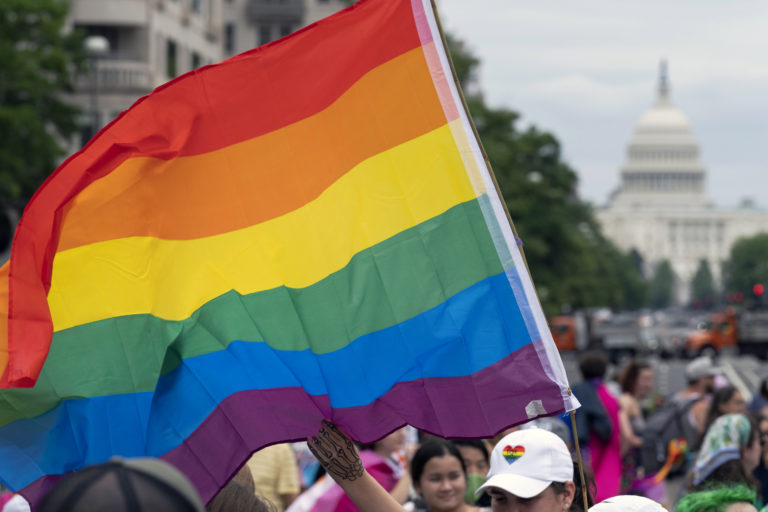
(Dmytro “Henry” Aleksandrov, Headline USA) A recent poll revealed that far-left activists in schools, colleges and universities have been successful because now over a quarter of Gen Z Americans identify themselves as LGBT.
According to a Jan. 23, 2024, poll from the Public Religion Research Institute, over 25% of Americans who were born between 1997 and 2012 and were interviewed for the poll identify as LGBT—the number that is significantly higher than previous generations—the Daily Caller reported.
Twenty-eight percent of Gen Z Americans consider themselves LGBT. In comparison, only 16% of millennials, 7% of Gen X and 4% of baby boomers identify as gay.
In addition to that, the poll reported that almost half of all young Americans who were interviewed for the poll said that they were more likely to identify as liberals.
Forty-three percent of Gen Z identified themselves as “liberal,” with one out of six of the entire generation now being able to radically change the course of the United States. When it comes to party affiliation, 31% of them identified as Democrats, 30% as Independents and only 21% claimed to be Republicans.
The poll also revealed that the younger generation was most likely to express displeasure with older leadership in political office. Nearly 58% said that “we won’t be able to solve the country’s big problems until the older generation no longer holds power” regardless of party affiliation.
Not surprisingly, it turned out that Gen Z Americans were less religious than Americans from the millennial, Gen X and baby boomer generations, with 33% of them claiming a non-religious status. It was revealed back in April 2023 that Gen Z was least likely to attend church services among all generations at 38% and even those who identified as religious did not often attend church compared to older generations.