Investors Don’t Believe the Gold Rally, Prefer General Stocks

(Mike Gleason, Money Metals News Service) This week investors are witnessing a historic move in gold prices. The precious metal finally broke above a longstanding overhead resistance level to reach new all-time highs.

For now, the white metals are playing catch-up to gold, and are certainly taking a backseat to the yellow metal, as its historic price move commands headlines.

Of course, gold’s spot quote in terms of U.S. dollars is largely a reflection of the currency’s steadily declining purchasing power. Plenty of other assets are also zooming to new nominal records, including stocks and cryptocurrencies.

The question for investors is which assets will hold value, or gain value, in real terms going forward.

The stock market tends to outpace inflation over the long run. However, buying an S&P 500 index fund at the wrong time could mean it will take years or even decades for buy-and-hold investors to see a real positive return on investment.

The period from 2000 to 2010 was a lost decade for equity investors. The S&P 500 failed to deliver a positive nominal return over those years – let alone gain enough to beat inflation. And the 1966 to 1982 period was an extended lost decade as high inflation inflicted devastating real losses on Wall Street.

That same inflation that peaked in the late 1970s helped propel gold and silver into epic bull markets.

Few investors today own any bullion at all for inflation protection. Most are dangerously overexposed to stocks, bonds, and other Wall Street assets.

Even bullish equity analysts admit that stocks are looking overextended here and due for at least something of a correction.

Precious metals markets are nearly the opposite of overextended. They are vastly under-owned by the investing public.

In recent months, assets held by gold-tracking exchange-traded products have shrunk while retail bullion buying has slowed.  Premiums have come down across the board in the process.

But gold’s breakout to new highs is likely to draw in new buyers who had previously sat on the sidelines and don’t want to miss out on the bull market. It will also trigger momentum trading algorithms in futures markets with buy signals.

Gold has risen thus far largely on the strength of demand from Asia and global central banks. China has added to its gold reserves for 16 consecutive months. The People’s Bank of China gobbled up 390,000 troy ounces of the monetary metal last month alone.  The Chinese central bank now holds more than 2,200 tons of gold and is showing no signs of slowing down on its purchases.

Central banks generally don’t accumulate silver or other metals as monetary reserves.  That partially explains why gold has outperformed the white metals over the past few years.

While gold has traditionally served as the money of kings, silver has served as the money of the masses. It is far more practical to be used in circulating coinage. Silver dimes, quarters, half dollars, and dollars can be more readily deployed for everyday purchases than far more valuable gold coins of any size or denomination.

Silver bullion coins, rounds, and bars are also more accessible to investors with limited budgets.

Gold’s push to new highs should boost broader interest in the metals space. And once silver gets some buying momentum behind it, its spot price can move more rapidly than gold’s.

In a precious metals bull market, silver stands to ultimately gain much more than gold in percentage terms – both because silver is a tighter, more thinly traded, and naturally more volatile market, and because its price is currently deeply discounted versus gold.

Silver prices would have to double from here just to match gold’s feat of making a new high. From there, a silver bull market could accelerate to much higher highs.

Santos Crashes State of the Union, Announces New House Run

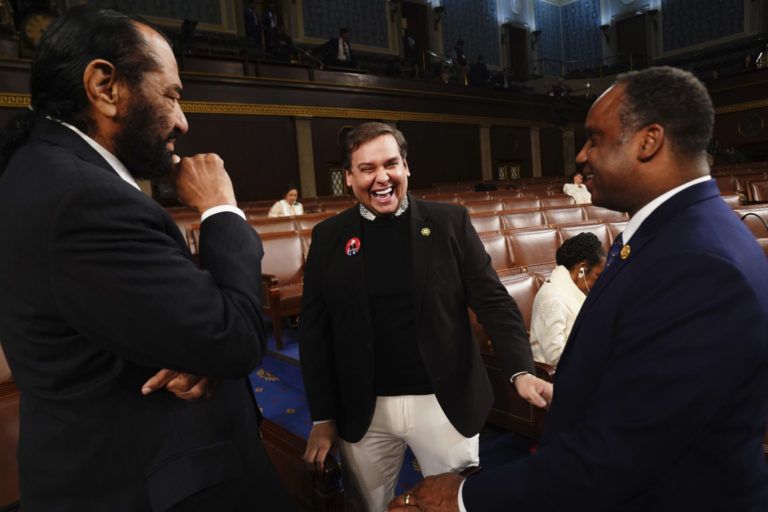
(Molly Bruns, Headline USA) Former Rep. George Santos, R-N.Y., unexpectedly showed up at the State of the Union address Thursday night, and took the opportunity to announce his next run for office.

Santos, who donned a bedazzled collar and silver shoes for the occasion, said he planned to launch a primary challenge against freshmen Rep. Nick LaLota in his upcoming reelection bid for New York’s 1st Congressional District, an affluent region that covers the East End of Long Island, including the Hamptons.

“Tonight, I want to announce that I will be returning to the arena of politics and challenging Nick for the battle over #NY1,” Santos tweeted.

“I look forward to debating him on the issues and on his weak record as a Republican,” he added. “The fight for our majority is imperative for the survival of the country.”

In his statement, he also called LaLota an “empty suit,” and a “RINO.”

The filing deadline for New York’s June 25 primary is not until April 4, giving the ousted lawmaker ample opportunity to mount his campaign, but leaving open many unanswered questions after the first openly gay Republican congressman was unceremoniously expelled late last year.

House rules stipulate that “any former lawmaker can maintain their floor privileges unless they are a lobbyist, foreign agent, have a direct interest in the bill being considered at the time, or have been convicted of a crime in relation to their election or service.”

Santos has the dubious distinction of being not only the first Republican to be forcibly voted out of the House, but also the first one removed without either having been convicted of a crime or supported the Confederate secession.

He was voted from his seat in December after a House ethics tribunal discovered “substantial evidence” that he “knowingly caused his campaign committee to file false or incomplete reports with the Federal Election Commission.”

There also was evidence of Santos spending campaign funds on non-campaign-related line items, such as Botox injections, Ferragamo merchandise and OnlyFans subscriptions.

Santos pleaded not guilty to all charges initially. As of late December, reports indicated that he was seeking to negotiate a plea deal with the Justice Department.

Democratic Rep. Tom Suozzi took Santos’s seat in a special election last month, reclaiming the district that he had previously held prior to leaving in 2022 to launch a gubernatorial run.

Santos lambasted his old colleagues over the loss, which slimmed the razor-thin Republican majority in the House even further.

“I look very forward to most of you losing due to your absolute hate filled campaign to remove me from Congress arbitrarily,” Santos said in a group message to his former colleagues in the New York GOP delegation. “Now go tell the Republicans Base what you f**king idiots did and good luck raising money next quarter.”

Can You Borrow Your Way to Prosperity? U.S. Consumers Give It a Shot!

(Mike Maharrey, Money Metals News Service) Can you borrow your way to prosperity? American consumers are certainly giving it the old college try. Consumer debt surged once again in January, rising by $19.5 billion, according to the latest data from the Federal Reserve.   

On an annual basis, consumer debt rose by 4.7 percent to a record $5.04 trillion. The jump was double the projection.

The Federal Reserve consumer debt figures include credit card debt, student loans, and auto loans, but do not factor in mortgage debt. When you include mortgages, U.S. households are buried under a record level of debt. As of the end of 2023, total household debt stood at $17.5 trillion.

Pundits and policymakers keep talking about how “strong, resilient American consumers” are keeping the economy rolling. But they’re making ends meet with credit cards. This doesn’t seem like a sustainable economic growth plan.

Revolving debt, primarily reflecting credit card balances, grew by 7.6 percent in January as Americans added another 8.4 billion to their credit card bills. American consumers are now buried under a record $1.33 trillion in revolving debt.

To put the percentage increase into perspective, the annual increase prior to the pandemic in 2019 was 3.6 percent.

The bigger problem is the double whammy of rising debt and interest rates. Average credit card interest rates eclipsed the previous record high of 17.87 percent months ago. The average annual percentage rate (APR) currently stands at 20.75 percent, with some companies charging rates as high as 28 percent.

That underscores the fundamental problem of running an economy on credit. It’s expensive and credit cards have an inconvenient thing called a limit.

We’re already seeing consumers laboring under the strain of rising debt levels. According to the New York Fed, delinquencies increased in every debt category during the fourth quarter of 2023, with about 8.5 percent of credit card balances in delinquency.

“Credit card and auto loan transitions into delinquency are still rising above pre-pandemic levels,” said Wilbert van der Klaauw, economic research advisor at the New York Fed. “This signals increased financial stress, especially among younger and lower-income households.”

It’s also putting strain on banks. The net charge-off rate on credit card loans came in at 4.15 percent as of the end of 2023. It was the highest rate for this portfolio reported by the banking industry since the first quarter of 2012.

Non-revolving debt, primarily made up of auto loans, student loans, and loans for other durable goods, also showed a sharp increase in January, rising by 3.6 percent to $3.71 trillion.

Borrowing for big-ticket items has plunged in recent months. In December, non-revolving credit contracted. The January increase is significant compared to recent months but remains below the historical average of 5 percent growth before the pandemic.

The recent slowdown in non-revolving credit indicates consumers have cut back spending on big-ticket items. That could signal that the economy is slipping toward a recession even as Americans continue to run up high-interest debt on their credit cards.

So, the next time you hear President Biden, Fed Chair J. Powell, or some talking head bragging about the impressive economic growth, don’t forget about the billions of dollars Americans are borrowing to buy it.

There’s a word for this – unsustainable.


Mike Maharrey is a journalist and market analyst for MoneyMetals.com with over a decade of experience in precious metals. He holds a BS in accounting from the University of Kentucky and a BA in journalism from the University of South Florida.

Paper Gold Vs. Real Gold: It’s Important to Know the Difference

(Mike Maharrey, Money Metals News Service) When you’re considering investing in precious metals, you are confronted with many options. Silver or gold? Bars or coins? And what in the world is an ETF?

Understanding the differences between an ETF and physical gold and silver is an important first step in the journey to precious metals investing.

ETF is an acronym for “Exchange Traded Fund.” In simplest terms, an ETF represents a basket of investments that trades on the market as a single entity. An ETF could represent just one commodity, such as oil, or it could hold a wide range of assets such as tech stocks. The mix of securities that can potentially be held in an ETF is limited only by your imagination.

Just like stocks, ETFs are sold in shares. The price rises and falls throughout the trading day as they are bought and sold on the market just like a stock or bond.

In the world of precious metals, there are gold and silver ETFs. Some funds hold a mix of metals and others include mining stocks.

For the sake of simplicity, I’ll focus on gold ETFs, but the same principles hold for silver-backed funds.

A gold ETF is backed by metal owned and stored by the issuer. In most cases, investing in an ETF does not entitle you to any amount of physical gold. You own a share of the ETF, not gold itself.

The most popular gold ETF is the SPDR Gold Shares Exchange Traded Fund (GLD). This ETF was established in 2004 and roughly tracks the market price of gold bullion.

So, why would anybody invest in an ETF instead of physical metal?

Simplicity and convenience.

ETFs are relatively liquid. You can buy or sell an ETF with a couple of mouse clicks. You don’t have to worry about transporting or storing metal. In a nutshell, it allows investors to play the gold market without buying full ounces of metal at the spot price.

Since you are just buying a number in a computer you can easily trade your ETF shares for another stock or cash whenever you want, even multiple times on the same day. Many speculative investors take advantage of this liquidity.

But it’s important to understand that investing in an ETF is not the same as owning gold.

While a gold ETF is a convenient way to play the price of gold on the market, you don’t actually possess any gold. You have paper. And you don’t know that the fund you’ve invested in has any gold either. 

SPDR claims it backs its entire $52 billion market capitalization in physical bullion. It probably does. But you have no way of knowing for sure. You can’t go inspect the gold in their vault. And they won’t give you the metal you’re investing in if you call them to ask for it.

The fund says it has gold and you’re taking their word for it.

It’s important to consider that the investment bank HSBC serves as the custodian of the vault holding SPDR’s gold.

This introduces significant counterparty risk.

On the other hand, owning physical gold comes with very little counterparty risk. If you buy gold coins or gold bars and store them in a safe at home, there isn’t another party involved. You know exactly how much gold you have and where it is. There is no other party to default, commit fraud, or make a mistake.

There are plenty of reasons to invest in ETFs, but it is not a substitute for owning physical gold.


Mike Maharrey is a journalist and market analyst for MoneyMetals.com with over a decade of experience in precious metals. He holds a BS in accounting from the University of Kentucky and a BA in journalism from the University of South Florida.

NTSB Chair: ‘Controlled’ Chemical Explosion That Poisoned East Palestine Was Unnecessary

(Ken Silva, Headline USA) Norfolk Southern’s half-baked plan to ignite chemicals released in its East Palestine, Ohio, train derailment was entirely unnecessary, as officials could have waited for the chemicals to cool down before removing them, according to National Transportation Safety Board Chair Jennifer Homendy.

Homendy testified to Congress on Wednesday, telling senators that Ohio officials didn’t have all the necessary information before allowing Norfolk Southern to ignite the chemicals in a “vent and burn.” Homendy said the Ohio officials, including Gov. Mike DeWine, weren’t told that the chemicals were cooling down.

“There was no justification to do a vent and burn,” Homendy said. “There was another option: let it cool down.”

That revelation from Homendy led to Sen. JD Vance, R-Ohio, and others to wonder whether Norfolk Southern ignited the chemicals just so it could move its freight more quickly.

“My criticism is of people on ground who provided inadequate information … this town may have been poisoned to facilitate the rapid movement of freight, or at the very least poisoned for reasons we can’t identify,” he said.

Sen. Sherrod Brown, D-Ohio, also expressed outrage over the matter following the hearing.

“This explosion — which devastated so many — was unnecessary. The people of East Palestine are still living with the consequences of this toxic burn. This is more proof that Norfolk Southern put profits over safety and cannot be trusted,” he said.

Homendy’s statements echoed that of top Ohio scientist Dr. David Manuta, who Headline USA interviewed last year in the wake of last February’s disaster.

At the time, Dr. Manuta also questioned the initial decision to conduct a “controlled release” of the vinyl chloride into prepared pits before burning it into the atmosphere. This decision produced phosgene gas, which was banned under the Geneva Convention after killing about 85,000 people in World War I.

While burning the 1 million-plus pounds of vinyl chloride may have been preferable to letting it seep into the ground, Manuta wonders why officials were so quick to opt for an open-air burn of all the chemicals at once. Giant tents or other enclosures over the burn pits—or over the train cars—could have captured at least some, if not the vast majority, of toxic plumes released into the air, he said at the time.

Norfolk Southern continues to face civil litigation over its poisoning of East Palestine.

Ken Silva is a staff writer at Headline USA. Follow him at twitter.com/jd_cashless.

Sick: Biden Refers to ‘Lincoln’ Riley in Cough, Gaffe-Ridden SOTU

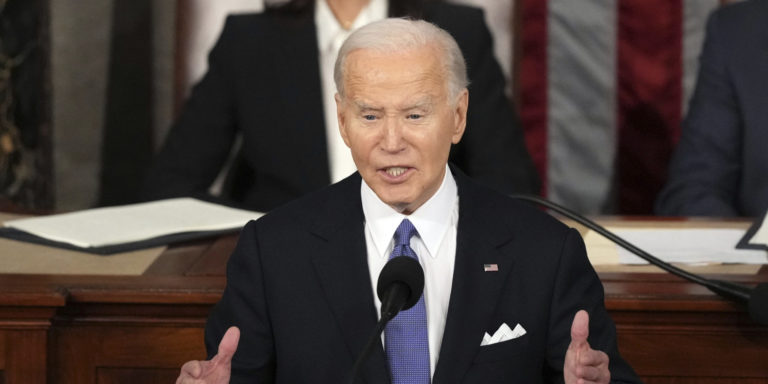
(Luis Cornelio, Headline USA) The State of the Union address was a make-or-break moment for President Joe Biden, who finds himself mired in corruption scandals, low polls, illegal immigration, global conflicts and a rocky re-election campaign.

However, while attempting to project toughness, Biden transformed the symbolic address into an apparent campaign rally marked by constant gaffes, a persistently loud cough and vitriolic attacks, including one aimed at the Supreme Court. 

Even Laken Riley, the beloved Georgia nursing student whose murder by an illegal alien has rocked the nation, did not escape Biden’s gaffes.

“Lincoln, Lincoln Riley, an innocent young woman who was killed by an illegal,” Biden said, raising a pin that read: “Say Her Name, Laken Riley.”

This reference to Riley came after Rep. Marjorie Taylor Greene, R-Ga., disrupted the president’s speech, challenging his false premises about the contentious southern border bill stuck in the Senate. 

Notably, the pin Biden raised had been handed to him by Greene upon entering the congressional chamber. Responding to Greene’s challenge, Biden retorted, “I know how to say her name.” Regrettably for the president, the claim did not hold true.

Throughout his speech, Biden, presently the oldest president in U.S. history, appeared visibly afflicted by a persistent cough. “My message to transgender Americans is…” Biden began but was disrupted by his own cough, “I have your back!”

Former President Donald Trump, currently seeking the GOP nomination and likely to face Biden in the 2024 general election, mocked Biden’s cough on Truth Social. 

“Don’t shake his hand, he’s been coughing into it the entire night!” Trump wrote. In another post, he sad: “See, as he’s getting ready to cough yet again into his right hand, the Fake News Media rushes him off the screen!”

Among other points highlighted by Trump was Biden’s partisan tone, which even extended to non-political Supreme Court justices. 

While stumbling over his words, confusing “electoral” with “electrical,” Biden mumbled: “With all due respect, justices, Women are not without electrical power! Excuse me, electoral or political power. You’re about to realize just how much…”

Biden’s threat against the justice come as several of the conservative majority face serious death threats, even leading to arrests. Biden himself had to increase security for the family members of justices due to the left-wing smears.

Reacting to the remarks, Trump wrote, “That may be the Angriest, Least Compassionate, and Worst State of the Union Speech ever made. It was an Embarrassment to our Country!”

Feds Weaponized Secret ‘Web Portal’ to Locate ‘MAGA’ Purchases

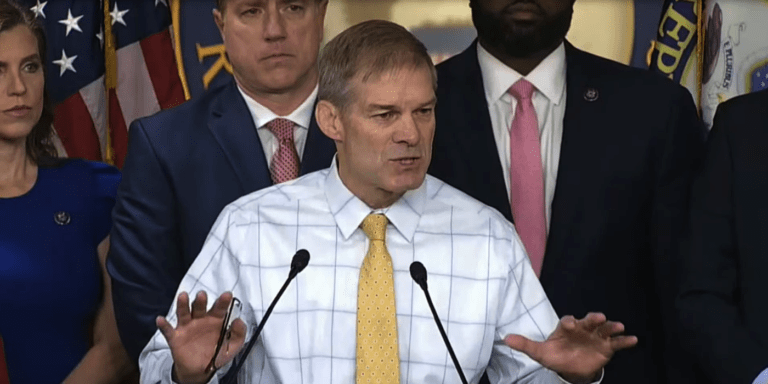
(Luis Cornelio, Headline USA) The House Judiciary Committee has disclosed the secret tool employed by federal investigators in their “broad financial” surveillance of financial transactions involving alleged “domestic violent extremists,” including presumed supporters of former President Donald Trump. 

According to a 36-page report announced on Thursday by the House Judiciary and the Weaponization Subcommittee, the FBI and the Treasury Department’s Financial Crimes Enforcement Network (FinCEN) utilized a covert “web portal” to guide major financial institutions in identifying targeted individuals.

The “web portal” was developed by the Domestic Security Alliance Council (DSAC), a public-private partnership led by the FBI’s Office of Private Sector and the DHS’s Office of Intelligence and Analysis. 

Participating entities included Barclays, U.S. Bank, Charles Schwab, HSBC, Bank of America, PayPal, and others, with Republicans asserting that the federal government used this tool to exchange information.

In a press statement, House Republicans emphasized, “This portal appears to have shared intelligence products with financial institutions that were used to identify individuals who fit the profile of criminal and ‘domestic violent extremists,’ often because of their conservative political views or other constitutionally protected activity.”

As outlined in the report, federal investigators utilized the web portal to disseminate reports and materials to banks, aiming to “commandeer” databases and conduct “sweeping” searches of Americans, Republicans alleged.

Targeted keywords included “MAGA” and “TRUMP,” as well as books, religious texts, and purchases related to firearms. Cabela’s, Bass Pro Shop and Dick’s Sporting Goods – establishments widely recognized and used by conservatives – were also targeted, according to Republicans. 

“This surveillance extended beyond criminal suspicion, likely encompassing millions of Americans with conservative viewpoints or Second Amendment interests,” Republicans highlighted. 

Tellingly, the warrantless searches targeted Americans not even suspected of committing any crimes, drawing the ire of congressional investigators. 

“The pattern of financial surveillance uncovered in the report raises serious concerns about federal law enforcement’s and financial institutions’ commitment to respecting Americans’ privacy rights and fundamental civil liberties,” Republicans wrote.

Laken Riley Murder Suspect Linked to Venezuelan Crime Syndicate

(Luis Cornelio, Headline USA) The accused murderer of the beloved Georgia nursing student Laken Riley has been connected to the violent Venezuelan crime gang committing rampant offenses in the U.S. 

Diego Ibarra – a Venezuelan national and the brother of Jose Antonio Ibarra, the man allegedly behind Riley’s murder – has ties to the Tren de Aragua gang, prosecutors wrote in documents filed on Wednesday, as reported by the New York Post.

While Jose Antonio Ibarra is already in jail for Riley’s murder, his brother appears to have his own list of disturbing crimes under his belt. 

Diego Ibarra was apprehended for using a fake green card in his position at the University of Georgia, where Riley studied nursing before her brutal murder by Diego Ibarra’s younger brother.

Federal prosecutors allege that Diego Ibarra is affiliated with the gang based on his tattoos, clothing and the use of signs tied to the gang. 

The Tren de Aragua gang has been involved in several high-profile crimes in Texas, New York, Illinois, Florida and Georgia in recent months, coinciding with the influx of illegal aliens filling the city’s homeless shelters.

According to the court filing, Diego Ibarra has a five-pointed crown and star tattoos associated with the gang. His attire featuring the Chicago Bulls basketball team is also linked to the gang.

Social media photos also revealed Diego Ibarra boasting about guns, which prosecutors said he obtained illegally given his status in the U.S.

Similar to his brother, Diego Ibarra entered the U.S. illegally on April 3, 2023, but was returned to Mexico that same day. He ultimately made his way back into the U.S. 27 days later, prosecutors wrote in the filing. 

On April 30, Diego Ibarra allegedly resisted arrest and grabbed the radio of an immigration officer. Despite the resistance, he was paroled by the Biden administration on May 11. 

He was given a GPS ankle monitoring device, which he removed on May 25, marking him as an absconder. 

Later that year, he made his way into Athens, Georgia. In Georgia, he faced a DUI arrest on Sept. 24. 

On Sept. 26, he allegedly slapped his girlfriend in the face but did not face charges. On Oct. 27, he was allegedly caught shoplifting at Walmart. On Dec. 8, he was apprehended for a second shoplifting incident. 

Calif. Public Schoolers Are Paid Money to Push Far-Left Ideology

(Dmytro “Henry” Aleksandrov, Headline USA) It was recently revealed that an activist group in California paid nearly 100 public high schoolers $1,400 each to brainwash them with the far-left ideology.

The contracts between Long Beach Unified School District and Californians for Justice (CFJ) from 2019 to 2023 showed that the school district used taxpayer funds to pay the group nearly $2 million to facilitate equity and leadership development training for students and teachers, according to the Free Press. In addition to that, contracts allocated a total of $20,200 to 13 parents who participated in the group’s programs.

The Long Beach Unified School District south of Los Angeles has been paying at least 78 students a total of nearly $100,000 since December 2019 for participating in a club that is run by CFJ, with the most recent contract ending in June 2024.

On its website, CFJ bragged about training “hundreds of youth of color in Long Beach to be community leaders and organizers.” The group was successful in advocating for the implementation of “restorative justice practices” across the district’s 84 schools.

However, four teachers who talked to the Free Press criticized the payments to students and their families by calling it a “horrible propaganda strategy.”

For example, CFJ implemented three “student-led professional development” training sessions in the district’s high schools — which cost the district $25,000 — back in 2021. It was also discovered that students were encouraged to school their teachers during these trainings on Marxist talking points like implicit bias, “student voice” and anti-black racism.

In addition to that, the contracts showed that the district signed CFJ on to host 15 of these trainings during the 2023–2024 school year.

Jay Goldfischer, a high school history teacher in the district, said that the organization just wants to brainwash students so that they would repeat the far-left talking points.

“… CFJ is not helping students find their own voices. It’s giving them a scripted voice that’s not their own. They’re teaching them parroting, which is the exact opposite of how you empower children,” he said.

‘Trump! Trump! Trump!’: Letitia James Gets Roasted at Fire Dept. Ceremony

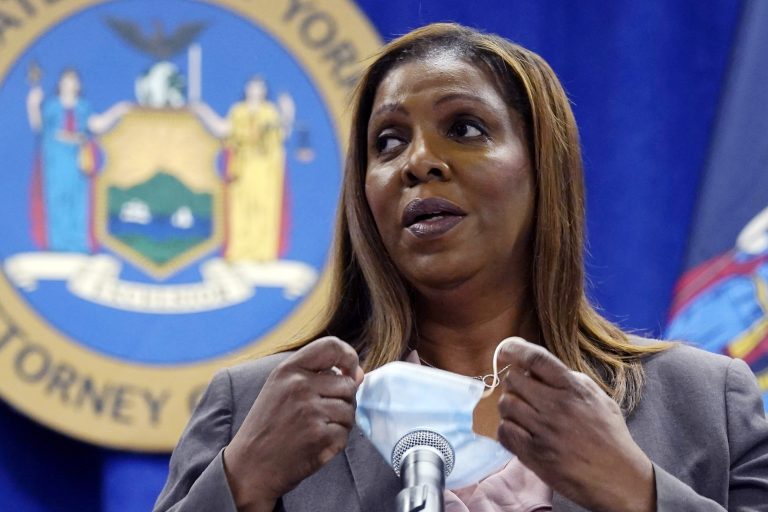
(Luis Cornelio, Headline USA) New York firefighters rebuked Attorney General Letitia James during a ceremony on Thursday, with the crowd even breaking into a pro-Trump chant.

The embarrassing ordeal for James unfolded as she took the podium to address newly promoted members of the New York City Fire Department. However, the crowd’s reception of James was, to say the least, not favorable.

“Trump! Trump! Trump!” the loud crowd chanted as James attempted to regain control. 

Upon taking the podium, loud boos filled the room, prompting James to respond, “Oh, c’mon, we’re in a house of God. Simmer down. Thank you for getting it out of your system.”

In statements to the media, Chief of Department John Hodgens scolded those who disrupted James’s speech. 

“Today’s ceremony was about one thing: the accomplishments of the members being promoted,” Hodgens told Newsweek, adding: “The members whose behavior distracted from that celebration were an embarrassment and not befitting of the world’s best fire department.” 

James was administering the oath to new and promoted FDNY members.

According to the FDNY, those promoted included 65 uniformed members of Fire Operations, EMS Operations and the Bureau of Fire Investigations. Also attending the event were 29 newly appointed members of the Bureau of Fire Prevention and 34 civilian employees.

James is currently facing criticism from conservatives for targeting the Trump Organization in a civil lawsuit that resulted in left-wing Manhattan Judge Arthur Engoron issuing a $450 million fine against Trump. 

James’s case stems from accusations that Trump inflated his net worth in a bid to obtain generous loans and other financial benefits. 

In response, Trump has criticized James, portraying her as nothing more than a left-wing prosecutor who campaigned for office on the promise to target the former president and his family members.