REVIEW: Dylan Mulvaney Releases Heavily Autotuned Pop Song

(Molly Bruns, Headline USA) Transgender influencer Dylan Mulvaney released a pop song titled “Days of Girlhood,” as a response to the haters of last year’s botched Bud Light campaign.

The song is part of a partnership with the infamous Trevor Project, which has been accused inappropriate child-grooming. All proceeds go to benefit the nonprofit.

Mulvaney purportedly published the song as a celebration of “femininity,” according to Daily Mail.

“Ring the alarms immediately / We have a code pink emergency / Calling women of all ages / Girls like me gotta learn the basics,” the song starts, with Mulvaney’s voice relying on a heavy dose of autotuning to maintain proper pitch.

From an artistic standpoint, the song seems to offer very little. Like the artist, there is an underlying frailty to it, for which it appears to overcompensate with excessive production, but ultimately, it comes off seeming superficially forced and unnatural.

The lyrics of the song are indicative of Mulvaney’s stereotypically clichéd—and, some would say, misogynistic—idea of womanhood: partying, taking extensive medication, shopping, anonymous hook ups and weeping to breakup music.

Mulvaney also took a moment to extend a personal “thank you” to many inspiring women that assisted with transitioning.

“Mom brought me into the world / Sister taught me how to ‘Girl’ / Best friend coached me how to text / The boy toy that I’m dating next / Girls who helped show me the way / They’re why I’m an it girl today,” says the pre-chorus.

The video shows Mulvaney parading around in skirts, lingerie and very short dresses, dancing to a basic, uninspired guitar soundtrack with mediocre dancing.

Mulvaney claimed the song came from the pain of the rejection following last year’s Bud Light promotional stunt.

“I think the theme of this last year was pain,” Mulvaney said. “And it’s not a bad thing, but it was so contrasting to the joy and ecstasy that I experienced in those early days, that it was almost comical, but also heartbreaking at times.”

In April 2023, Bud Light sent Mulvaney a case of Bud Light in order to celebrate the influencer’s “365th day of Girlhood,” during March Madness.

“I’m not sure exactly which sport, but either way it’s a cause to celebrate,” the transgender social-media influencer said before taking a drink of Bud Light with the label out. “Love ya, cheers, go team. Whatever team you love, I love too, OK.”

The company lost an estimated $1 billion after a conservative boycott of the Bud Light brand.

Screw Impeachment: GOP Opts to Keep Biden, Play Long Game

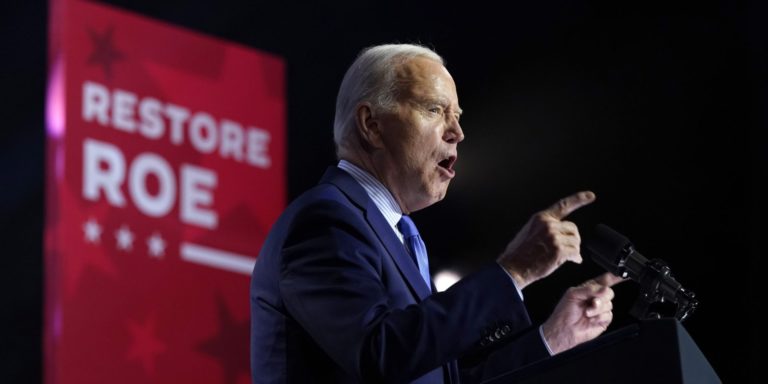
(Luis Cornelio, Headline USA) House Republicans are debating whether to prepare criminal referrals against those implicated in the impeachment inquiry involving President Joe Biden, potentially paving the way for indictments in a new Republican administration. 

The move arises from Republicans’ inability to gather sufficient votes to pass an impeachment resolution against the president, amid evidence suggesting his involvement in alleged influence-peddling schemes. 

Rep. Kelly Armstrong, R-N.D., disclosed this development to the New York Times on Thursday, stating he hasn’t heard any indication that his party is “anywhere close to having the votes” to hold Biden accountable. 

Potential referrals may include allegations of crimes under the Foreign Agents Registration Act and Hunter Biden’s contentious business dealings with various foreign entities. 

These referrals would also surpass Senate Democrats, who are currently threatening to ignore the historic impeachment of DHS Secretary Alejandro Mayorkas—the first cabinet secretary to face impeachment since 1876. 

House Oversight Committee Chair James Comer, R-Ky., said he is open to the idea of criminal referrals, suggesting that if a Republican wins the 2024 presidential election, action could be taken. 

“If Merrick Garland’s Department of Justice won’t take any potential criminal referrals seriously, then maybe the next president, with a new attorney general, will,” Comer told Fox News’s Sean Hannity on March 6.

Rep. Matt Gaetz, R-Fla., has emerged as one of the voices advocating for these referrals, as reported by the Times. “He deserves them,” the Florida lawmaker said, referring to Biden. 

“I don’t think that a sufficient number of Republicans hold the view I do that a bribe can be consummated through a payment to a family member,” Gaetz added. 

Gaetz’s remarks emphasize evidence suggesting that the Biden family may have received payments from foreign governments, with a portion earmarked for the “Big Guy,” later revealed as Biden. 

“The D.O.J. is about to change hands. It’s about to be under new management,” Gaetz continued, underscoring the 2024 election. 

Meanwhile, former President Donald Trump has emerged as the presumptive GOP nominee for the 2024 general election, where he is expected to face Biden. 

Polls indicate that Trump could secure victory in the 2024 election.

Bernie Berates Fox Reporter for Asking about Proposed 4-Day Work Week

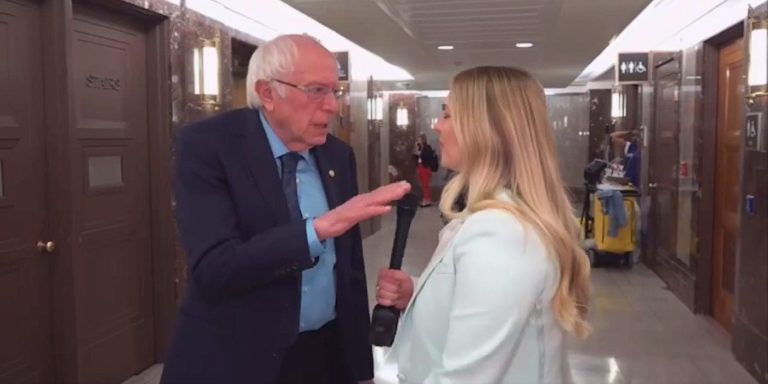
(Headline USA) Sen. Bernie Sanders, I-Vt., lashed out at a Fox Business reporter who questioned him about a proposal to cut the work week by an entire business day while forcing companies to pay the difference.

“I can yell as loud as you,” Sanders said, while repeatedly interrupting correspondent Hillary Vaughn.

It came after Sanders had previously spouted several socialist talking points about how “billionaires have got to start paying their fair share of taxes,” despite the fact that the proposal would dispropotionately devastate small businesses.

Sanders introduced the bill this week, titled the Thirty-Two Hour Workweek Act, which which would require employers to offer their employees a four-day work week with no loss of pay.

It would effectively reduce the standard work week from 40 hours to 32 hours over four years by lowering the threshold of overtime pay for employees.

It would also limit employers’ ability to use overtime by requiring overtime compensation at time and a half for work days longer than eight hours, and double a worker’s regular pay for work days longer than 12 hours.

The legislation would also prevent employers from using the shorter work week to reduce workers’ pay and benefits.

In a statement, Sanders claimed a shorter work week with no loss of pay was “not a radical idea,” according to NBC News.

American workers are “over 400% more productive than they were in the 1940s,” he explained. “And yet, millions of Americans are working longer hours for lower wages than they were decades ago. That has got to change.”

He went on to predict that artificial intelligence would further justify reduced working hours for millions of Americans.

“The financial gains from the major advancements in artificial intelligence, automation, and new technology must benefit the working class, not just corporate CEOs and wealthy stockholders on Wall Street,” Sanders said.

“It is time to reduce the stress level in our country and allow Americans to enjoy a better quality of life,” he continued. “It is time for a 32-hour workweek with no loss in pay.”

Sanders argued that several European countries had already reduced their work hours. France, for example, has a 35-hour work week, and Norway and Denmark have 37-hour work weeks.

Critics, however, warned that many companies would not be able to afford to keep paying employees their current rates if they are producing less.

“We have a balance. We don’t have people as they do in China working 80 hours a week, but we have that balance—this disrupts that balance,” said Sen. Bill Cassidy, R-La., said, referring to the bill.

“And we won’t maintain the status of being the world’s wealthiest nation if we kneecap the American economy with something which purports to be good for the American worker, but indeed will lead to offshoring of jobs seeking for a lower-cost labor force.”

Even if technology reaches the point of supplanting workers, some fear there may be unintended consequences, warning that the increased reliance on machines will eliminate individual autonomy, resulting in a sort of serfdom, in which a large portion of society is dependent upon a smaller elite ruling class where all the wealth and means of production are centralized, either by the government or by wealthy corporations.

U.S. Military Academy Drops ‘Duty, Honor, Country’ from Mission Statement

(Jacob Bruns, Headline USA) The once-prestigious U.S. Military Academy at West Point has dropped part of its motto that read, “Duty, Honor, Country,” Newsmax reported.

The cutting of the language signals the excising of the commitments that the American military’s officers-in-training used to follow. The words will be replaced, according to one proposal, by the phrase “Army Values.”

As a result, the new motto would read: “To build, educate, train, and inspire the Corps of Cadets to be commissioned leaders of character committed to the Army Values and ready for a lifetime of service to the Army and Nation.”

Some of the military’s top officers approved of the change.

For instance, Lt. Gen. Steve Gilland penned a letter to cadets and supporters on Monday, suggesting that jettisoning commitments to honor or country is part of a self-examination process.

“Our responsibility to produce leaders to fight and win our nation’s wars requires us to assess ourselves regularly,” he wrote. “Thus, over the past year and a half, working with leaders from across West Point and external stakeholders, we reviewed our vision, mission, and strategy to serve this purpose.”

The move should come as no surprise, however, given the military’s recent commitment not to winning wars, but to appeasing said “external stakeholders.”

Already in Washington there is a movement gaining strength to use the United States military used as a naturalization path for illegal immigrants.

Journalist Tucker Carlson compared such a move to the military situation in late Roman Empire, the army of which was filled with foreigners who eventually turned on the Roman citizens themselves.

In any case, the military academies have long incorporated into their curricula woke ideologies sucha as critical race theory and diversity, equity and inclusion, according to William Jacobson, a Cornell Law School professor and founder of Legal Insurrection.

“Do we really want our future military officers to view themselves and the troops they will command through an obsessive racial lens?” Jacobson asked in 2022. “Is military cohesion and effectiveness improved by putting people into racial and ethnic boxes?”

Trump White House Official Peter Navarro Heading to Jail after Appeals Court Ruling

(Ken Silva, Headline USA) The DC Circuit Court of Appeals has denied former Trump White House official Peter Navarro’s attempt to avoid prison for refusing to comply with a congressional subpoena from the politically driven Jan. 6 Commission—meaning that the 74-year-old man must report to jail on Monday.

Navarro was convicted of two misdemeanor contempt of Congress charges last September, and sentenced to four months imprisonment.

The former director of the Office of Trade and Manufacturing Policy under the Trump administration had argued that he didn’t flagrantly violate the law, but instead invoked executive privilege as his reason for not complying with the subpoena. Navarro noted that the courts are still reviewing the legal question of whether his actions were legal.

Nevertheless, an Obama-appointed federal judge ordered last month for him to begin his sentence, and the DC appeals court upheld that order in a Thursday decision.

“[Navarro] has not shown that his appeal presents substantial questions of law or fact likely to result in reversal, a new trial, a sentence that does not include a term of imprisonment, or a reduced sentence of imprisonment that is less than the amount of time already served plus the expected duration of the appeal process,” the appeals panel said in its decision.

Navarro’s case, along with that of former White House adviser Steve Bannon’s, marked the first time in roughly four decades that any such cases had been prosecuted by the DOJ, despite recent examples including Lois Lerner, Eric Holder and Hillary Clinton, all of whom brazenly disregarded congressional subpoenas during the Obama administration.

Bannon was convicted of two counts and was sentenced to four months behind bars, though he has been free pending appeal.

Navarro had previously characterized the imposed punishment as a “death sentence” given his age.

“Four months in prison at my age is effectively a death sentence if you look at the average lifespan in America,” he told Fox News’s Sean Hannity in January. “This to me is why you’ve got to let Donald Trump in 2024 and get him into the oval. … Our economy is in shambles. The border is in shambles. Our enemies are upon us.”

Navarro has not publicly commented on the matter.

Ken Silva is a staff writer at Headline USA. Follow him at twitter.com/jd_cashless.

RNC Sues Michigan over Fake Voter on Voter Rolls

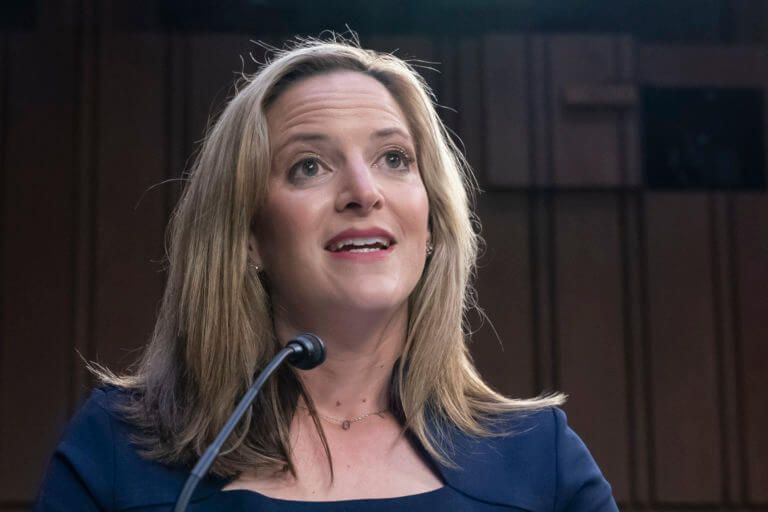
(Jacob Bruns, Headline USA) The Republican National Committee announced that it will sue Michigan Secretary of State Jocelyn Benson because the Democrat-run state continues to allow large numbers of fake voters onto its rolls.

The lawsuit alleges that Benson violated the National Voter Registration Act’s requirement to maintain up-to-date voter rolls.

According to the suit, things are so bad in the state of Michigan that numerous counties have more registered voters than legal citizens.

“At least 53 Michigan counties have more active registered voters than they have adult citizens who are over the age of 18,” it said. “That number of voters is impossibly high.”

Unsurprisingly, NBC News shill Jane Timm pounced on the lawsuit as an opportunity to editorialize about her own political leanings.

“There’s no evidence that bloated voter rolls lead to voter fraud, even as Republicans increasingly seize on the rolls as a focus of their election activism,” Timm opined, without evidence.

While there is strong evidence that such practices—whether due to negligence or acts of deliberate bad faith—have and will lead to fraud, that is immaterial to the fact that Benson violated the 1993 law passed early in the Clinton administration.

The lawsuit comes just days after a major turnover at the RNC, which ousted longtime chair Ronna Romney McDaniel.

McDaniel’s grandfather, George Romney, was the former governor of Michigan, and former President Donald Trump credited her with helping deliver the state to him in the 2016 election.

However, in the 2018 election, with help from a massive influx of funding via George Soros, radical Democrats—led by Gov. Gretchen Whitmer—gained control of the executive branch and proceeded to enact radical changes that would ensure their permanent majorities.

Meanwhile, leftist subversives appear to have infiltrated the state GOP and left it in disarray, focused more on political infighting than addressing the serious crisis at hand.

New RNC co-chairs Michael Whatley and Lara Trump, both of North Carolina, have pledged to tackle the serious nationwide concerns over Democrat-orchestrated vote-fraud, with Whatley having successfully stemmed it off as chair of the NCGOP.

On a recent Fox News appearance, Lara—the wife of Eric and daughter-in-law of presumptive GOP presidential nominee Donald Trump—announced the creation of an election integrity division alongside the devotion of “massive resources” to securing elections in the face of proliferating early-voting periods and absentee ballots.

The Michigan lawsuit pointed to other improbable irregularities, implying that there was a coordinated effort between Benson’s office and many of the state’s blue-run election offices to manipulate their data.

“An additional 23 counties have active-voter registration rates that exceed 90 percent of adult citizens over the age of 18,” the lawsuit said. “That figure far eclipses the national and statewide voter registration rate in recent elections.”

Benson, responding to the lawsuit, claimed that the suit was nothing more than “a PR campaign masquerading as a meritless lawsuit” meant “to diminish people’s faith in the security of our elections.”

The Secretary of State also showed her vitriol, wishing “shame” on anyone who “abuses” the court of law in order to “sow seeds of doubt” in “our democracy.”

Evidence in the past has pointed to illegal activity from Benson’s office and at least one court case determined that she overstepped her authority in enacting pandemic-era absentee-ballot rules during the 2020 election that ignored state law.

Nonetheless, in truly chilling fashion, Benson, Whitmer and state Attorney General Dana Nessel have fought back by actively trying to intimidate and punish their political adversaries for any sort of legal challenges to their authority.

Benson, who previously attempted to scapegoat GOP poll workers for Democrat losses, may plan on using a newly passed law that ostensibly addresses the intimidation of election workers to conceal all manner of sins and dodge accountability in the coming election.

It dictates that any individual who intimidates an election official “with the specific intent of interfering with the performance of that election official’s election related duties,” could be punished with a misdemeanor for the first two violations and a felony for the third violation, according to the law.

Headline USA’s Ben Sellers contributed to this report.

Menendez Receiving Donations from Iranian Marxist ‘Ex-Terror Group’

(Ken Silva, Headline USA) Responsible Statecraft published an analysis Wednesday showing that New Jersey Democratic Sen. Bob Menendez’s legal defense fund is receiving donations from contributors linked to an Iranian group that used to be listed as a terror organization by the State Department.

Menendez and his wife face multiple charges related to them allegedly conspiring to have the senator act as a foreign agent of Egypt. More recently, they were charged with obstruction of justice.

According to Responsible Statecraft, the Menendez Legal Defense Fund has raised more than $400,000 to fight these charges. Some of that money is reportedly linked to an exile group called the Mojahedin e-Khalq.

“An analysis of the donor rolls by Responsible Statecraft and The Intercept, however, shows that about 15 percent of the people who gave to Menendez — including Moeinimanesh and Afshari — are linked to an Iranian exile group called the Mojahedin e-Khalq, or MEK,” Responsible Statecraft reported Wednesday.

“Menendez and the MEK have a relationship going back a decade. Shortly after the group was removed from a State Department list of ‘foreign terror organizations,’ Menendez advocated for the MEK following an attack on its members by the Iraqi government.”

According to Responsible Statecraft, MEK began as a Marxist group that fought on the winning side of the 1979 Iranian Revolution. But the group faced a crackdown from Iran’s new theocratic state shortly thereafter, and it wound up fighting on the Iraqi side of the Iran–Iraq War in the 1980s.

“In 1997, the MEK was placed on the State Department’s list of foreign terrorist organizations for, among other things, its role in the killing of six Americans in Iran in the 1970s and an attempted attack on the Iranian mission to the United Nations in 1992,” Responsible Statecraft explained.

“The designation would last for a decade and a half. Following a successful lobbying campaign by its supporters in the U.S., the group won a major victory when it was removed from the American terror rolls in 2012.”

Menendez faces trial in May. Meanwhile, he is reportedly considering running for reelection as an independent.

Ken Silva is a staff writer at Headline USA. Follow him at twitter.com/jd_cashless.

The Federal Budget Deficit Was Back to Normal in February — Massive

(Mike Maharrey, Money Metals News Service) Thanks to record tax receipts, the January budget deficit was “only” $21.93 billion in January. 

In February, government receipts fell back to normal. Spending was normal too – normally high. As a result, the February budget deficit was back to normal – massive.

The Biden administration ran a $296.28 billion budget shortfall last month, according to the latest Monthly Treasury Statement. With that, the fiscal 2024 budget deficit is knocking on the door of $1 trillion ($828.14 billion) with more than half a year to go.

The U.S. Treasury took in $271.13 billion in February. That was a slight increase from $262.11 billion in government receipts a year ago.

The big problem is on the spending side of the ledger. The federal government blew through $567.40 billion — in one month!

Here’s a little perspective courtesy of ZeroHedge.

In February the US spent $567.4BN and collected $271.1BN, resulting in a deficit of $296.34BN which was 110% bigger than all tax collections.

So far in fiscal 2024, the Biden administration has spent $2.12 trillion.

Spending is up 14.5 percent compared to the first five months of fiscal 2023. And this is despite the [pretend] spending cuts and promises from the Biden administration that it would save “hundreds of billions” with the debt ceiling deal (aka the [misnamed] Fiscal Responsibility Act.)

It just goes to show that no matter what you hear about spending cuts, the federal government always finds new reasons to spend more money.

These massive monthly budget shortfalls are pushing the national debt higher at a dizzying pace. On December 29, the national debt eclipsed $34 trillion for the first time. When Congress effectively eliminated the debt ceiling on June 5, the national debt stood at a “mere” $31.46 trillion. As of March 12, the national debt stood at $34.5 trillion.

According to the CBO, debt held by the public is projected to balloon from $26.2 trillion to $48.3 trillion by the end of 2034. That would represent 116 percent of GDP and would be the highest level on record.

High Interest Rates Are Exacerbating the Problem

These big budget deficits are happening during a time of sharply rising interest rates. This is a big problem for a government that primarily depends on borrowing to pay its bills, and it is likely one of the reasons that the Federal Reserve is talking about rate cuts even though inflation appears to be sticky. The borrow-and-spend U.S. government can’t function in a high interest-rate environment.

The U.S. government spent $76.16 billion on interest expenses alone in February. This was more than the amount spent on national defense ($65 billion) and more than Medicare ($73 billion).

The government has shelled out $443.37 billion on interest payments in fiscal 2024. The only category with higher spending was Social Security.

Net interest expense, excluding intragovernmental transfers to trust funds, was $350 billion through the first five months of the fiscal year, still nearly as much as the government spent on national defense ($363 billion).

And interest expense will only continue to climb.

Much of the debt currently on the books was financed at very low rates before the Federal Reserve started its hiking cycle. Every month, some of that super-low-yielding paper matures and has to be replaced by bonds yielding much higher rates.

The weighted average interest rate on the government’s outstanding Treasury securities rose to 3.26 percent as of the end of February. That compares with a weighted average rate of 2.52 percent in February 2023. 

Rising interest rates drove interest payments to over 35 percent as a percentage of total tax receipts in fiscal 2023. In other words, the government is already paying more than a third of the taxes it collects on interest expense.

And it’s only going to get worse unless the Fed quickly ratchets down interest rates, as more and more Treasuries mature and are replaced by higher-yielding bonds.

The only way out of this fiscal death spiral is significant spending cuts and/or major tax hikes.

Good luck with that.


Mike Maharrey is a journalist and market analyst for MoneyMetals.com with over a decade of experience in precious metals. He holds a BS in accounting from the University of Kentucky and a BA in journalism from the University of South Florida.


Will Silver Steal the Spotlight?

(Mike Maharrey, Money Metals News Service) Gold has garnered a lot of attention in the last few weeks with its record-setting run. Since the end of February, gold is up nearly 7 percent and set an all-time record of $2,195 an ounce along the way.

This is really good news for silver.

That wasn’t a typo. I meant silver.

I’ve been arguing that silver is drastically underpriced given the supply and demand dynamics for quite a while. With gold setting up for an extended rally, silver could be poised for a record-setting launch of its own, and it just might steal gold’s spotlight.

In fact, mainstream analysts are starting to take notice. A recent CNBC article declared, “Gold prices could keep climbing – but analysts expect silver to steal the show before too long.”

The Gold Rally

Anticipation of Federal Reserve rate cuts and worries about de-dollarization sparked the gold’s recent bull rally. I’ve argued that this is just the opening act. The U.S. government isn’t going to suddenly become fiscally responsible or more reserved in using the power of the dollar as a foreign policy tool, so de-dollarization will likely continue and accelerate.

And the mainstream is right: rate cuts are coming.

But not for the reason most people think.

The narrative is the Fed has about got inflation whipped. Last week, Federal Reserve Chairman Jerome Powell said inflation is “not far” from where it needs to be to start rate cuts. Meanwhile, the economy is going to cruise to a soft landing.

There are two problems with this fairytale.

  1. Inflation isn’t whipped. In fact, it seems intent on sticking around. Furthermore, the Fed hasn’t done enough to rein in price inflation.
  2. The economy is broken, and another financial crisis is on the horizon. This economy wasn’t built to operate with interest rates at this level. It’s only a matter of time before it cracks, as it did back in 2008.

When the economy cracks, we all know what the Fed will do. It will run to the rescue. It will slash rates to zero. It will relaunch quantitative easing. It will unleash another tsunami of easy money.

What is gold going to do then?

If this recent rally based on the hope of rate cuts was this big, the rally we’ll see when the Fed actually delivers rate cuts far beyond what anybody today expects will likely send the price into orbit.

And that’s great news for silver.

The Case for Silver

Silver tends to get overlooked. It is often referred to as gold’s little brother, or its “poor cousin.” But while the price of silver is much more volatile, it generally correlates with gold over time. In fact, silver historically tends to outperform gold and a gold bull market.

This was the case during the pandemic.  As gold pushed above $2,000 an ounce, charting a 39 percent gain, silver rallied to nearly $30 an ounce, a 147 percent increase.

Here’s how an analyst explained it to CNBC:

“Here’s what usually happens with silver: it does move with gold, but it moves later. Gold will shoot up first and then you will see silver take off rapidly. And silver always outperforms. It’s just late.”

Over the last month, silver has quietly charted a gain of nearly 12 percent, once again outperforming gold.  But silver still has plenty of sky above it. Even as gold set a new record, the white metal remains about $5 below its 2020 high and $25 an ounce below its record.

The gold-silver ratio at 86:1 reflects the discrepancy between the two precious metals.

That means it takes about 86 ounces of silver to buy one ounce of gold. This is historically a widespread.

The average gold-silver ratio in the modern era has generally ranged between 40:1 and 60:1. When the ratio widens far beyond that range, as it has in recent years, it typically returns toward that mean.

The pandemic era provides a more recent example. As the Fed cut rates and launched quantitative easing to prop up a shaky economy caused by rate hikes the prior year, the gold-silver ratio climbed to nearly 93:1. As silver rallied along with gold, the gold-silver ratio plunged from over 100:1 to just over 64:1, close to the high end of the historical norm.

Macquarie head of commodity strategy Marcus Garvey told CNBC that he thinks the expectation of rate cuts is “setting up gold very well,” call it “risk positive.

And that’s bodes well for silver.

“From silver’s perspective, I mean it is sort of round numbers really, you want to get comfortably clear of the $24 level to feel that you have got a bit more room to run.”

Supply and demand dynamics also look good for silver.

Silver demand is expected to hit 1.2 billion ounces this year, according to the Silver Institute. That would rank as the second-highest annual silver demand on record. Record industrial demand for silver is expected to drive overall silver offtake this year.

Garvey said if global economic growth picks up, that could push silver even higher.

“Then I would expect silver to go from a relative underperformer to gold to being a relative outperformer to gold over really the third and fourth quarter of this year.”

The green energy movement is driving a big surge in demand for silver. Since governments are pushing this initiative, it should be a relatively recession-proof sector. Government money will likely keep flowing even if the global economy struggles.

All of these factors are why Money Metals Exchange Director recently wrote that “silver is poised to play catch-up to gold.”

“The silver price may be lagging behind the gold price in the futures market, but it would be foolish to assume that implies some sort of permanent divergence between the two metals. Most of the firms trading futures don’t care about gold supply and demand either.

“The electronic markets appear increasingly unhinged from reality.

“For long-term holders of gold and silver, nothing has changed. Both metals make sense to own given the times we are living in.

“Silver looks cheap relative to gold, and retail silver premiums have come way down. Now is not the time to get frustrated with or fooled by silver’s lagging price. Odds are the “poor man’s gold” will catch up over time.”


Mike Maharrey is a journalist and market analyst for MoneyMetals.com with over a decade of experience in precious metals. He holds a BS in accounting from the University of Kentucky and a BA in journalism from the University of South Florida.

Pentagon Flagged Secret Backdoor Codes to Chinese Safes, but Didn’t Warn Public

(Ken Silva, Headline USA) Sen. Ron Wyden, D-Ore., revealed Wednesday that the Defense Department has concealed the possibility that the Chinese government may possess backdoor codes to electronic locks made in that country.

According to Wyden, three companies manufacture the vast majority of electronic safe locks used in the United States: China-based SECURAM Systems, the U.S.-based Sargent and Greenleaf, and the Swiss company dormakaba.

Many of the safes made by those companies include electronic locks that can also be unlocked using special codes set by and known only to the manufacturer, Wyden said in an open letter to National Counterintelligence and Security Center Director Michael C. Casey.

“These backdoor codes can be exploited by foreign adversaries to steal sensitive information that U.S. businesses store in safes, such as trade secrets and other intellectual property,” he said, explaining that reset codes are not permitted in locks used to store U.S. government secrets.

Wyden warned in an open letter that the Chinese Communist Party could have access to SECURAM’s reset codes.

“China-based SECURAM Systems is one of the largest manufacturers of electronic safe locks sold in the U.S.,” he said. “SECURAM could be forced to share codes with the Chinese government that would enable surreptitious or clandestine access to the safes used by U.S. businesses.”

But while the Pentagon is apparently aware of this risk, national security officials have not informed the public, Wyden said.

“In short, the government has opted to keep the public in the dark about this vulnerability, after quietly protecting government agencies from it,” he said.

“It would be one thing if these backdoors were only available to U.S. government agencies, but they are not … Although DoD has informed my office that the company’s products are not approved for U.S. government use, its low-cost products have enabled the firm to dominate the consumer-focused portion of the market.”

Wyden also revealed that the U.S. firm Sargent and Greenleaf can be forced to turn over those, both to the government and to civil litigants.

The senator urged Casey to inform the public about the risk of safes that have secret backdoor codes.

“The NCSC plays an important role in warning U.S. businesses about the espionage threat posed by foreign spies. But U.S. businesses cannot protect their valuable intellectual property, and consequently, America’s global economic edge, from foreign espionage if they are kept in the dark about vulnerabilities in the safe locks they use,” he said.

“To that end, I urge the NCSC to update its public educational materials to recommend that businesses upgrade their safe locks to those that meet U.S. government security standards.”

Ken Silva is a staff writer at Headline USA. Follow him at twitter.com/jd_cashless.