Gold Is Rallying Again, But Silver Could Get REALLY Interesting

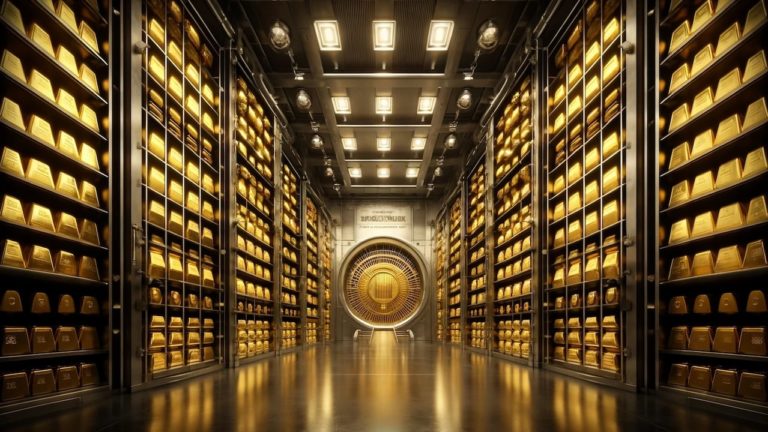
(Mike Gleason, Money Metals News Service) Another week, another record high for gold. On Wednesday, the monetary metal surged above $2,300 per ounce. It took a bit of a breather Thursday ahead of today’s key employment report but it rallied again on Friday.  

Turning to silver, it made a significant breakout of its own this week. The white metal shot up above the $27 level to a fresh 2-year high and rallied to over $27.50 on Friday.

As gold prices continue to reach new heights, bulls are eying even higher highs.  Detractors, meanwhile, are pushing the narrative that gold has gotten too expensive. 

They could both turn out to be right, though for different reasons. 

In terms of depreciating U.S. fiat dollars, there can be little doubt that gold prices will continue to gain over time. The official inflation rate may rise or fall from here, but inflation itself is here to stay. 

Those in the deflation camp have for years, and in some cases decades, been calling for gold and most other assets to suffer massive price collapses.  At this point, the deflationists have been totally discredited. But a few still stubbornly persist in their belief that a deflationary depression is coming. 

For some reason, they just don’t get that inflation is built into the machinery of our monetary system. It’s not the 1930s anymore. Back then, politicians and central bankers were still constrained by the remnants of a gold standard. The U.S. Treasury still minted coins made of silver. The Federal Reserve had no access to a digital printing press.

Today’s Fed can create unbacked currency in unlimited quantities with the click of a few keystrokes on a computer. Moreover, today’s Fed has vowed that it will not tolerate deflation for any sustained period of time.  Fed officials won’t even tolerate a positive inflation rate that they arbitrarily deem to be too low. 

Gold’s surge to new records reflects the Fed’s ongoing campaign of currency debasement. Yet the gold naysayers may have a point about the precious metal being too pricey – not in terms of dollars, but in terms of other hard assets.  

In recent years, gold has outperformed silver, platinum, palladium, and copper. In fact, despite rallying of late, all of those other non-gold metals still have a long way to go in order to post new all-time highs. 

Metals analysts have noted that structural supply deficits exist in these markets, perhaps most glaringly so in silver. It may only be a matter of time before chronic supply and demand imbalances trigger some sort of reckoning in the price-setting mechanism on futures exchanges.  

Given that silver in particular is a small market that attracts some highly leveraged players, a price squeeze could result in some major fireworks to the upside. Silver is certainly gathering some upside momentum, but the timing of when it might accelerate toward new highs may depend on how the Fed’s shifting stance toward inflation plays out.

Fed Chairman Jerome Powell seemed to confirm last month that central bankers are giving up on trying to get inflation down to their arbitrary 2% target. Powell indicated rate cuts would come later this year even if inflation stays elevated at current levels.

But this week, Federal Reserve Bank of Minneapolis President Neel Kashkari suggested that persistently high inflation may require policymakers to cancel rate cuts – and even consider rate hikes. 

Neel Kashkari: Ultimately, we’ve been surprised in a good way that the economy has been very resilient, even though we’ve raised interest rates a lot. So, if we continue to see strong job growth, if we continue to see strong consumer spending and strong GDP growth, then that raises a question in my mind, well, why would we cut rates? Maybe the dynamics that we have right now are actually sustainable.

Interviewer: Here’s another question. Are rate hikes off the table?

Neel Kashkari: No, they’re certainly not off the table. I don’t know of anybody who’s taken them officially off the table. I don’t think they’re very likely. Even me, I think I’m on the more hawkish side of the committee. Even for me, I don’t think it’s likely. I think if we continue to be surprised that inflation is more persistent. The first thing I think we would do is just hold rates here for an extended period of time to see if that ultimately does the trick. But ultimately, if we get convinced that that’s not enough to bring inflation back down to our target in a reasonable period of time, that I think we would consider raising interest rates from here.

Kashkari is admittedly more hawkish on inflation than most of his central planning colleagues. He may be playing a sort of “good cop, bad cop” routine with markets to try to discourage exuberant investors from aggressively front-running the Fed’s likely rate cut. 

In any event, central bankers have no actual intention of eliminating the inflation problem. They will never raise rates high enough or constrict the money supply tightly enough to deliver true price stability. 

Given the inevitability of further currency depreciation, gold isn’t done going up in terms of fiat Federal Reserve notes. And the moves in other metals may just be getting started.


Mike Gleason is a Director with Money Metals Exchange, a national precious metals dealer with over 500,000 customers. Gleason is a hard money advocate and a strong proponent of personal liberty, limited government, and the Austrian School of Economics. A graduate of the University of Florida, Gleason has extensive experience in management, sales, and logistics, as well as precious metals investing. He also puts his longtime broadcasting background to good use, hosting a weekly precious metals podcast since 2011, a program listened to by tens of thousands each week.


NYC Earthquake: Lizzo’s Twerking Aftershocks, or Could China Be Behind It?

(Headline USA) An earthquake shook the densely populated New York City metropolitan area Friday morning, with residents across the Northeast reporting rumbling in a region unaccustomed to it.

The U.S. Geological Survey reported a quake at 10:23 a.m. with a preliminary magnitude of 4.8, centered near Whitehouse Station, New Jersey, or about 45 miles west of New York City and 50 miles north of Philadelphia.

The agency’s figures indicated that the quake might have been felt by more than 42 million people.

People from Baltimore to the Massachusetts–New Hampshire border reported feeling the ground shake.

While there were no immediate reports of serious damage, officials were checking bridges and other major infrastructure, Amtrak slowed trains throughout the busy Northeast Corridor, and a Philadelphia-area commuter rail line suspended service out of what it said was “an abundance of caution.”

“Pretty weird and scary,” Shawn Clark said after feeling the quake in his 26th-floor midtown Manhattan office. Clark, an attorney, initially feared an explosion or construction accident.

His colleague Finn Dusenbery worried the ceiling or even the building would collapse.

“I wanted to get out of the building when I felt that,” Dusenbery said.

In midtown Manhattan, traffic grew louder as motorists blared their horns on shuddering streets. Some Brooklyn residents heard a boom and felt their building shaking. Cellphone circuits were overloaded for a time as people tried to reach loved ones and figure out what was going on.

In the aftermath of a major quake in Taiwan, some wondered if the two events might be nefariously connected.

A few referenced an online meme that saw plus-size flautist Lizzo—who last week performed at a Radio City Music Hall fundraiser for President Joe Biden featuring former presidents Bill Clinton and Barack Obama—twerking in front of the Taiwanese tremors.

“Hmmm, first a 7.5 magnitude earthquake hits Taiwan a couple of days ago, and now a 4.8-magnitude earthquake affected up to 4 to 5 states with New Jersey being epicenter… Even parts of Upstate NY have been affected,” wrote Twitter user @RagingKuJo1222.  “WOW😳 LIZZO really gets around.”

On a more serious note, however, the seismic events raised questions as to whether China might be trying to send a message given the country’s past exploration of weather-related warfare and other weaponry reliant on things such as electromagnetic pulses.

If so, it could signal the possibility of more soft-terrorism attacks ahead, with tensions in Sino–American relations continuing to simmer, even as Treasury Secretary Janet Yellen visits the country to address the ongoing trade imbalance.

“They’re not focused just on political and military targets,” warned FBI Director Christopher Wray during a January hearing before the House China Committee.

“We can see from where they position themselves across civilian infrastructure that low blows aren’t just a possibility,” Wray added. “The amount of conflict low blows against civilians are part of China’s plan.”

Despite President Joe Biden’s close financial ties with the Chinese government—which may have included the sharing of classified documents contained in the Penn Biden Center’s D.C. office space and in his Wilmington, Del., garage—online theories sprung up recently that the Democrat officials might even try to use Chinese election interference as they did Russian interference in the past several election cycles in an attempt to link presumptive GOP presidential nominee Donald Trump to the CCP.

Already, outlets like the New York Times and CNN have attempted the bizarre spin operation to make excuses for Biden’s expected loss in the November election.

And former Obama/Biden flunkie Susan Rice—who resigned her White House post just in time to avoid serious Hatch Act violations—was conveniently trotted out to suggest that Trump posed a national-security threat, even though Russian President Vladimir Putin recently endorsed Biden.

At U.N. headquarters in New York, the shaking of Friday’s quake interrupted the chief executive of Save The Children, Janti Soeripto, as she briefed an emergency Security Council session on the threat of famine in Gaza and the Israeli drone strikes that killed aid workers there.

“Is it an earthquake?” Soeripto wondered aloud, then asked if it was all right to go ahead. She did, but soon diplomats’ phones blared with earthquake alerts.

In New York City’s Astoria neighborhood, Cassondra Kurtz was giving her 14-year-old Chihuahua, Chiki, a cocoa-butter rubdown for her dry skin. Kurtz was recording the moment on video, as an everyday memory of the dog’s older years, when her apartment started shaking hard enough that a large mirror banged audibly against a wall.

Kurtz assumed at first it was a big truck going by. The video captured her looking around, perplexed. Chiki, however, “was completely unbothered.”

Earthquakes are less common on the eastern than western edges of the U.S. because the East Coast does not lie on a boundary of tectonic plates. The biggest Eastern quakes usually occur along the mid-Atlantic Ridge, which extends through Iceland and the Atlantic Ocean.

Quakes on the East Coast can still pack a punch, as its rocks are better than their western counterparts at spreading earthquake energy across far distances.

“If we had the same magnitude quake in California, it probably wouldn’t be felt nearly as far away,” said USGS geophysicist Paul Caruso.

A 4.8-magnitude quake isn’t large enough to cause damage, except for some minor effects near the epicenter, the agency tweeted.

Earthquakes with magnitudes near or above 5 struck near New York City in 1737, 1783 and 1884, the USGS said. And Friday’s stirred memories of the Aug. 23, 2011, earthquake that jolted tens of millions of people from Georgia to Canada. With an epicenter in Virginia, it left cracks in the Washington Monument and rattled New Yorkers ahead of the 10th anniversary of the Sept. 11 terror attacks.

Registering magnitude 5.8, it was the strongest earthquake to hit the East Coast since World War II.

On Friday, the White House said in a statement that Biden had been briefed on the earthquake and was “in touch with federal, state, and local officials as we learn more.”

As of noon, New York City had no indications of “major life safety or infrastructure issues from the earthquake,” Mayor Eric Adams tweeted, adding that the city was inspecting critical areas.

New York Gov. Kathy Hochul tweeted that the quake was felt throughout the state, but officials had no reports of any life-threatening problems.

Solomon Byron felt it as he sat on a park bench in Manhattan’s East Village.

“I was just like, ‘Where is that vibration coming from?'” Byron recalled. He was especially puzzled since there were no subways running nearby.

But he didn’t realize there had been an earthquake until he got the alert on his cellphone.

Adapted from reporting by the Associated Press

BRICS Alternative to the SWIFT System Could Accelerate De-Dollarization

(Mike Maharrey, Money Metals News Service) With Russia taking the lead, the BRICS bloc is talking about creating a new payment system that isn’t controlled by the United States and that is not dependent on the dollar.

Such a system could accelerate de-dollarization.

BRICS is an economic cooperation bloc originally made up of Brazil, Russia, India, China, and South Africa. As of Jan. 1, 2024, the bloc expanded to include Saudi Arabia, Egypt, the UAE, Iran, and Ethiopia.

More than 40 other nations have expressed interest in BRICS membership.

The expanded BRICS has a combined population of about 3.5 billion people. The economies of the BRICS nations are worth over $28.5 trillion and make up roughly 28 percent of the global economy. BRICS nations also account for about 42 percent of global crude oil output.

Russia assumed the chairmanship of the bloc in January 2024.

Earlier this year, Central Bank of Russia governor, Elvira Nabiullina said Russia is leading discussions with other BRICS countries about developing a payment system to serve as an alternative to the current system.

Currently, most global trade moves through the Society for Worldwide Interbank Financial Telecommunication (SWIFT) system.  

In effect, SWIFT serves as a “superhighway” facilitating global trade. It operates as a global financial messaging service, facilitating cross-border payments. As the SWIFT website puts it, “SWIFT is the way the world moves value.”

Since the dollar serves as the world reserve currency, SWIFT effectively facilitates the international dollar system.

It also gives the United States a powerful tool to shape foreign policy. It can use SWIFT as a hammer, punishing countries that don’t do its bidding by locking them out of the system.

This is exactly what happened to Russia after it invaded Ukraine.

Officials initially indicated Russia wouldn’t be locked out of SWIFT, but a few days later, the United States, the European Union, the UK, and Canada issued a joint statement announcing SWIFT would disconnect “selected” Russian banks from the global payment system.

This wasn’t the first time the U.S. used SWIFT and the dollar as a stick to advance its foreign policy goals. In 2014, the Obama administration locked several Russian financial institutions out of SWIFT as relations between the two countries deteriorated over Ukraine and Crimea. A few years later, the Trump administration threatened China in an attempt to force that country to join in sanctioning North Korea.

It should come as no surprise that countries with less than friendly relations with the United States might want to avoid depending on a system that requires American blessings and U.S. dollars.

A BRICS Alternative to the Dollar Payment System

Russia has created its own payment system to compete with SWIFT. The Russians began developing the System for Transmitting Financial Messages (SPFS) in 2014 after the U.S. locked Russian banks out of SWIFT for the first time. By the end of 2020, 23 foreign banks connected to the SPFS. Most of these banks are in developing countries and nations with rocky relationships with the U.S., but they include banks in Germany and Switzerland. According to Nabiullina, the SPFS currently has 159 foreign participants in 20 countries.

In her announcement earlier this year, Nabiullina pointed out that “similar infrastructure exists in other countries.”

For instance, China has developed a system known as the Cross-Border Interbank Payments System (CIPS). Russia would like to see these systems integrated across the BRICS bloc, creating a powerful alternative to SWIFT.

“We are holding discussions on the interaction of such platforms, but here the interest and technical readiness of our partners are important.”

Forexlive.com head of currency strategy Adam Button told Kitco News that creating an independent payments system is in the best interest of the BRICS bloc because “SWIFT has been weaponized now.”

“A big portion of the world is always under threat of U.S. or European sanctions, and it’s in their interest to create an alternative system. The initial promise or purpose of SWIFT wasn’t to be used in the sanctions system, and they changed the rules. My sense is that an alternative to SWIFT would have happened a long time ago if it had been weaponized.”

But can such a system succeed?

Button thinks so. After all, “Transferring money from bank to bank isn’t rocket science.”

“There are some standards to be agreed on and it will take some time. Then a launch is always going to be slow and maybe the system serves as more of a backup, or just for Iranian and Russian transfers or whoever else is under sanctions. But I think eventually this system will prove out, and a decent part of the world will use it.”

Such a system could raise gold’s role in the international monetary system. The BRICS countries own a lot of gold. Since just before the 2008 financial crisis official gold reserves held by BRICS nations have grown from just over 1,500 tons to just over 6,600 tons today.

As one analyst pointed out, even if there is some distrust between BRICS nations in using each other’s currencies, gold could fill the role of the dollar as an intermediary currency.

Would an Alternative Payment System Be a Problem for the U.S.?

The short answer is yes.

Why?

Because it would pose a direct threat to dollar dominance.

Beyond eroding America’s foreign policy influence, a widely used BRICS payment system could also accelerate de-dollarization.

In fact, during last year’s summit, BRICS leaders emphasized conducting increased trade within the bloc using local currencies as part of a move towards de-dollarization, with a stated goal of reducing the U.S. dollar’s dominance in global trade and finance.

This isn’t just a slap in America’s face. It could have significant economic ramifications.

Because the global financial system runs on dollars, the world needs a lot of them. The United States depends on this global demand to underpin its profligate borrowing and spending. De-dollarization could lead to a dollar glut.

The only reason the U.S. can borrow, spend, and run massive budget deficits to the extent that it does is the dollar’s role as the world reserve currency. It creates a built-in global demand for dollars and dollar-denominated assets. This absorbs the Federal Reserve’s money creation and helps maintain dollar strength despite the Federal Reserve’s inflationary policies.

But what happens if that demand drops leading to a dollar glut? What happens if BRICS nations and other countries decide they don’t want to hold dollars?

A de-dollarization of the world economy would cause the value of the U.S. currency to crash and likely spark a currency crisis. Americans would feel the impact through more price inflation eating away at the purchasing power of the dollar. At the extreme, it could even lead to hyperinflation.

This won’t likely happen overnight, but the de-dollarization trend is clearly accelerating. And to whatever extent it occurs is a problem for the U.S. There is already an overabundance of U.S. Treasuries in the marketplace and this is driving up yields. That means higher interest expense for the U.S. government.

It’s important to remember that nothing guarantees the dollar will maintain its dominance forever. In fact, history says it won’t.

In the meantime, it might not be a bad idea to do what many central banks around the world are doing – buy gold.


Mike Maharrey is a journalist and market analyst for MoneyMetals.com with over a decade of experience in precious metals. He holds a BS in accounting from the University of Kentucky and a BA in journalism from the University of South Florida.

Healthy Central Bank Gold Buying Continued in February

(Mike Maharrey, Money Metals News Service) Central banks continued to add to their gold reserves in February, albeit at a slightly slower pace.

On net, global central bank gold reserves increased by 19 tons in February with some selling pushing down that total. It was the ninth straight month of net central bank gold buying.

China was the biggest buyer in February. The People’s Bank of China increased its official gold holdings by 12 tons. The Chinese central bank has added gold to its hoard for 16 straight months. China officially holds 2,257 tons of gold. The Chinese have added over 300 tons of gold to their reserve since they resumed reporting gold purchases in October 2022. 

The People’s Bank of China added 1,448 tons of gold to its stash between 2002 and 2019, and then suddenly went dark until it resumed reporting in the fall of 2022. There is speculation that the Chinese were still adding gold to their holdings off the books during those silent years.

In fact, China may hold far more gold than it officially reports. As Jim Rickards pointed out on Mises Daily back in 2015, many analysts believe that China keeps several thousand tons of gold “off the books” in a separate entity called the State Administration for Foreign Exchange (SAFE).

The National Bank of Kazakhstan is back in a buying mood. It added 6 tons of gold to its reserves in February. Kazakhstan tends to shift back and forth between buying and selling.

The Reserve Bank of India bought 6 tons in February. Since resuming buying in late 2017, the Indian central bank has purchased over 200 tons of gold. In August 2020, there were reports that the RBI was considering significantly raising its gold reserves.

Turkey continued to add to its reserves in February but at a slower pace. After leading buyers in January with a 12-ton increase in its gold reserves, the Turks added another 4 tons in February. 

Last year, Turkey was a net seller, liquidating 160 tons of gold in the spring of 2023. The central bank returned to buying in the third quarter of last year.

According to the World Gold Council, the big gold sale was a specific response to local market dynamics and didn’t appear to reflect a change in the Turkish central bank’s long-term gold strategy. The Turkish central bank sold gold into the local market to satisfy demand after the government imposed import quotas in an attempt to improve its current account balance. The country is running a significant trade deficit.

These central banks also added gold to their reserves in February:

  • Singapore – 2 tons
  • The Czech Republic – 2 tons
  • Qatar – 2 tons
  • Kyrgyz Republic – 1 ton

There were two notable sellers in February. 

Uzbekistan sold 12 tons of gold. It is not uncommon for banks that buy from domestic production – such as Uzbekistan and Kazakhstan – to switch between buying and selling.

The Central Bank of Jordan reduced its gold holdings by 4 tons. 

The World Gold Council noted that sales in 2024 have lagged behind the same period last year, but still described central bank gold buying as “healthy,” adding that “the broad trend of gold buying remains intact.”

Last month, the World Gold Council said the continuation of gold buying supports its expectation that “2024 will be another solid year of central bank gold demand.”

“Last year central banks placed great emphasis on gold’s value in crisis response, diversification attributes, and store-of-value credentials. A few months into 2024 the world seems no less uncertain meaning those reasons for owning gold are as relevant as ever.”

Last year, central bank gold buying fell just 45 tons short of 2022’s multi-decade record.

According to the World Gold Council, central banks net gold purchases totaled 1,037 tons in 2023. It was the second straight year central banks added more than 1,000 tons to their total reserves.

Central bank gold buying in 2023 built on the prior record year. Total central bank gold buying in 2022 came in at 1,136 tons. It was the highest level of net purchases on record dating back to 1950, including since the suspension of dollar convertibility into gold in 1971.

China was the biggest buyer in 2023.

Analysts at ANZ Bank recently said they expect central bank gold buying to remain hot for at least the next six years. According to these analysts, “Depleted trust in the U.S. fixed-income assets and the rise of non-reserve currencies are other themes that could support central bank gold buying.”


Mike Maharrey is a journalist and market analyst for MoneyMetals.com with over a decade of experience in precious metals. He holds a BS in accounting from the University of Kentucky and a BA in journalism from the University of South Florida.

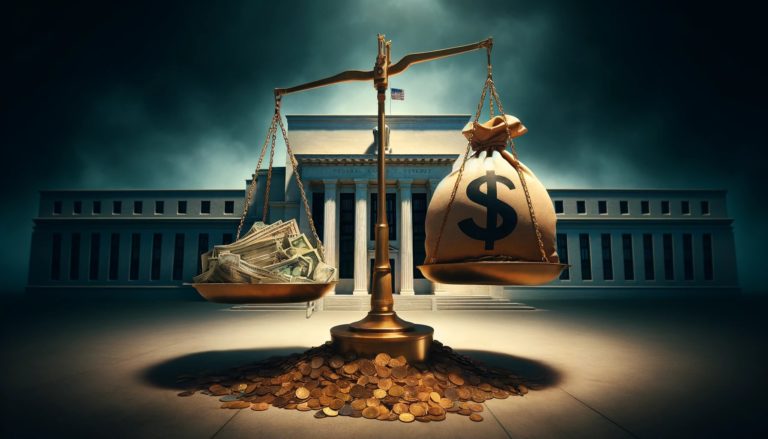
Fed Admits Losing $114 Billion

(Peter St. Onge, Money Metals News Service) The Federal Reserve just reported its largest loss in history. By far. But don’t worry — you’ll be covering it.

A few days ago the Fed announced its preliminary 2023 financial statements. Note these aren’t audited results — we have to take the Fed at its word.

You may recall Ron Paul’s decades-long campaign to audit the Fed, which failed since the Fed is an unconstitutional racket who answers to nobody. As Murray Rothbard noted, the Fed has less oversight than the CIA.

$114 Billion into Thin Air

At any rate, even with the Fed grading its own work, last year it reported an operating loss of one hundred and fourteen billion dollars.

To put that in perspective, it would be the third largest bankruptcy in American history — just behind Lehman Brothers and Washington Mutual in 2008.

In a single year. With much more to come.

So how did the Fed lose so much money?

Some of it comes from their paying Wall Street to park money at the Fed, which it does to hide inflation and because it likes handing money to Wall Street.

But the bulk of the Fed’s losses are because they printed trillions to finance Covid lockdowns, and used those trillions to buy bonds — mainly government debt. Then when they panic-hiked rates to try and choke off inflation, bond prices collapsed.

Meaning the Fed’s pile of $9 trillion worth of bonds started losing money hand over fist. In fact, estimates of unrealized losses — meaning money the Fed has lost but hasn’t yet fessed up to — could be well over a trillion dollars at this point.

Fed Going Underwater

Of course, those unrealized losses don’t come clean until the Fed sells the bonds.

Which they do either because the bond matured — bonds have a fixed time, like 90 days or 5 years. Or because the Fed pawned them off to try and soak up inflationary dollars — called quantitative tightening.

Last year’s hundred and fourteen was a bit of both, with another trillion-odd to come. So far.

So what does it mean? In the near-term, nothing: the Fed ignores losses because in a pickle it can just print money — converting it into inflation.

Longer term, though, every last penny the Fed loses is going on the taxpayer tab.

Because all those losses cancel the money the Fed is supposed to pay to the Treasury every year. These are called Fed remittances, and they’re the profits from printing money and lending it out — essentially a licensing fee for counterfeiting.

Those Fed remittances had been running about 80 billion a year. But now they’ll be underwater for potentially decades.

It’s worth noting this is fresh territory — the Fed never before turned in a loss until 2022. Now it will be losing money until our kids are grown.

The Fed’s Losses Will Soon Be Even Larger

The Fed’s losses are just beginning — 114 down, a trillion-plus to go.

In fact, they’ll continue getting even bigger until interest rates come down hard. Which will only happen with a hard recession — meaning yet more trillion in debt.

Either way, we’re looking at trillions more on a federal debt that’s already hit $275,000 per American household, growing at almost $30,000 per household per year.


Peter St. Onge writes articles about Economics and Freedom. He’s an economist at the Heritage Foundation, a Fellow at the Mises Institute, and a former professor at Taiwan’s Feng Chia University. His website is www.ProfStOnge.com.

DC Jury Finds ‘Praying Grandma’ Guilty of J6 Charges

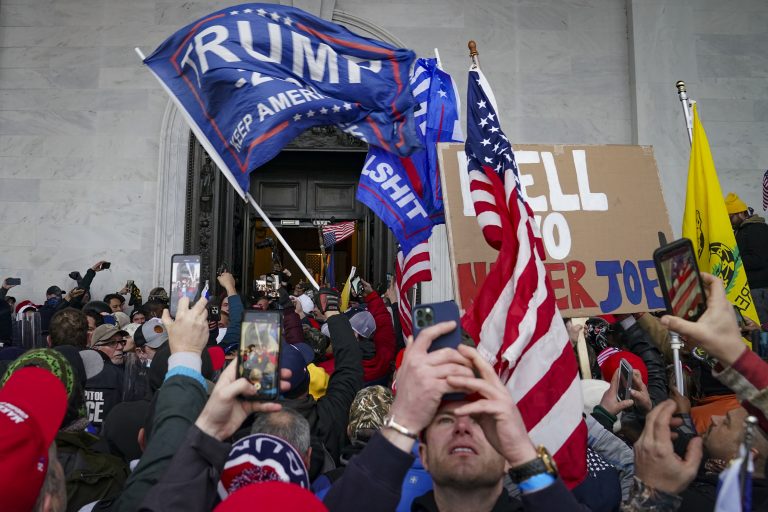
(Ken Silva, Headline USA) A Washington DC jury reportedly found Rebecca Lavrenz guilty of four misdemeanors Thursday in relation to her participation of the Jan. 6, 2021, Capitol Hill uprising.

According to the Justice Department, Lavrenz was in the Capitol for fewer than 10 minutes, and she did not act violently. Lavrenz said she was at Capitol Hill to attend a prayer rally sponsored by Women For a Great America, and that she led a prayer session inside the building before leaving.

According to the Post Millennial, Lavrenz is a mother to four adult children, grandmother to seven grandchildren, and great-grandmother to one.

She released a video last month before her trial, expressing emotions about her predicament.

“My own country is treating me like a criminal just because I believe that they stole my rightful president,” she said. “I was just standing up for my country, it makes me a criminal. And it’s just not right, it feels so weird to be here. Over three years ago I was here.”

Lavrenz reportedly faces up to a year imprisonment and a $210,000 fine. A date for her sentencing has yet to be scheduled.

Lavrenz’s lawyers made numerous unsuccessful motions to dismiss her case in the leadup to the trial. They also sought to compel the DOJ to produce interviews of several current or former FBI agents who were among the J6 protestors on J6. According to that motion, the FBI agents were present at her prayer rally outside the Capitol.

A heavily redacted FBI document says one of the former agents was there to “support” a prayer group—presumably the same one Lavrenz was a part of—but the DOJ refused to produce an unredacted version of the document.

The DOJ also insisted that recordings of the interviews the FBI conducted with the current and former agents don’t exist—even though the same heavily redacted FBI document indicates that they do.

Ken Silva is a staff writer at Headline USA. Follow him at twitter.com/jd_cashless.

FBI Interviewed Ex-Agent at Capitol on J6, but DOJ Says Recording Doesn’t Exist

(Ken Silva, Headline USA) In February, Jan. 6 defendant William Pope identified two possible plainclothes FBI agents at Capitol Hill, along with the FBI’s former liaison to the Capitol Police—all three of them passively viewing the events of J6 unfold, and at least one of them cheering.

“Oh! Oh! Oh man! This is huge!” a suspected agent can be heard saying on recently released surveillance footage.

Since then, it has been revealed that the agents were all interviewed by the FBI. But even though an FBI document indicates that the interviews were recorded, the Justice Department says it has no reason to believe that such recordings exist.

The likely existence of the interview recordings was revealed during the criminal proceedings of Jan. 6 defendant Rebecca Lavrenz, who’s known as the “praying grandma.” Lavrenz was reportedly found guilty of several misdemeanor charges Thursday, following her unsuccessful bid to compel the DOJ to provide the interviews of the former and current agents.

In her unsuccessful motion to compel the DOJ to give her the interviews, Lavrenz filed several pieces of evidence with the court—including an FBI document indicating that recordings of the interviews exist, as well as the DOJ’s emails refusing to provide the interviews.

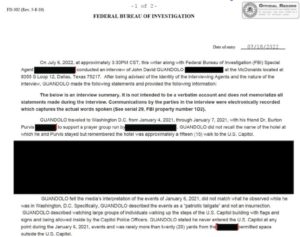
The FBI document about the recordings was a heavily redacted summary of an interview the bureau conducted with its former agent and liaison to the Capitol Police, John Guandolo.

“The below is an interview summary. It is not intended to be a verbatim account and does not memorialize all statements made during the interview,” the FBI summary states. “Communications by the parties in the interview were electronically recorded, which captures the actual words spoken.”

A heavily redacted summary of the FBI's interview with a former agent confirms that the interview was recorded. But the DOJ says no such recording exists.
A heavily redacted summary of the FBI’s interview with a former agent confirms that the interview was recorded. But the DOJ says no such recording exists.

Armed with that document, Lavrenz’s lawyers asked the DOJ to provide them with the interview recording, as well as the interviews of the two suspected agents with Guandolo on Jan. 6. But a DOJ lawyer responded that the recordings don’t exist.

“I am not aware of any audio of the interview and have no reason to believe any exists,” a DOJ attorney said.

When Lavrenz’s lawyers pointed to the FBI document indicating that recordings do, in fact, exist, the DOJ still denied their request.

A federal judge also backed the DOJ, denying Lavrenz’s motion to compel. The judge did not state the reasons for his decision.

Meanwhile, Pope has not yet gone to trial. He still has an outstanding motion to compel the DOJ to identify all FBI employees who were on Capitol grounds, as well as all other local law enforcement with whom Guandolo had contact—and to produce all related discovery.

According to Pope, his findings indicate that active-duty FBI agents perceived events at the Capitol to not be criminal.

“From the clapping and celebratory expression, we can conclude that these FBI agents were in favor of people accessing the building and that they believed the people had a First Amendment right to be there,” Pope said in his February motion.

Ken Silva is a staff writer at Headline USA. Follow him at twitter.com/jd_cashless.

Major Victory for Trump: No Labels Halts Third Party Bid

(Luis Cornelio, Headline USA) The No Labels political organization has ceased its long-shot campaign to recruit a third-party candidate to challenge electoral prospects for President Joe Biden and Republican candidate Donald Trump.

The group’s announcement came on Thursday, following refusals from several politicians, including failed GOP contenders Nikki Haley and Chris Christie. 

Other individuals who declined No Labels’ offer were Sen. Joe Manchin, disgraced former Rep. Liz Cheney, Hollywood actor Dwayne Johnson (known as The Rock), and former Maryland Gov. Larry Hogan, who has chosen instead to run for the Senate.

“Americans remain more open to an independent presidential run and hungrier for unifying national leadership than ever before,” No Labels spokesperson Maryanne Martini claimed in a statement, according to several media outlets. 

She further elaborated: “But No Labels has always said we would only offer our ballot line to a ticket if we could identify candidates with a credible path to winning the White House. No such candidates emerged, so the responsible course of action is for us to stand down.” 

No Labels CEO and founder Nancy Jacobson reiterated echoed these remarks in an interview with the Wall Street Journal. She claimed that No Labels “would only offer our ballot line to a ticket if we could identify candidates with a credible path to winning the White House. No such candidates emerged, so the responsible course of action is for us to stand down.” 

No Labels’ failed plot to present Americans with a so-called centrist alternative to both Trump and Biden was supported by a $70 million budget aimed at securing ballot access for a potential third candidate. 

The Journal noted that the death of former Sen. Joe Lieberman, who served as the founding chairman of the political organization, had an impact on No Labels’ unsuccessful attempt to recruit a third-party candidate. The outlet reported that Lieberman was heavily involved in recruitment efforts. 

The absence of a third-party candidate could play into Trump’s favor. Despite facing Democrat-led federal and state criminal charges, a civil lawsuit by a left-wing prosecutor and the leftist media hoaxes, the former president continues to lead in several swing state polls. 

A Journal poll, published on Tuesday, showed Trump ahead of Biden in six out of seven swing states.  

The lack of a No Label candidate leaves Robert F. Kennedy Jr. as the most popular third-party candidate. He was initially perceived as a threat to Trump. However, his selection of Nicole Shanahan as his running mate could pose a danger to Biden rather than Trump.

Shanahan, an attorney with left-wing views on abortion and social justice, aligns closely with the incumbent president’s positions. 

Study Reveals Most Kids’ Gender Dysphoria Is a Phase

(Dmytro “Henry” Aleksandrov, Headline USA) A long-term study from the Netherlands revealed that the majority of “gender“-confused children grow out of that feeling by the time they are fully grown adults.

Researchers from the University of Groningen tracked more than 2,700 people from age 11 to their mid-twenties, asking them every three years about feelings about their “gender,” according to the Daily Mail.

At the start of the research, results indicated that around one-in-10 children (11%) expressed “gender non-contentedness” to varying degrees. However, the study showed that by the age of 25, just one-in-25 (4%) said they “often” or “sometimes” were discontent with their “gender.”

“The results of the current study might help adolescents to realize that it is normal to have some doubts about one’s identity and one’s gender identity during this age period and that this is also relatively common,” the researchers wrote in their conclusion.

The results of the study only highlight the skepticism of the people who have been opposing the “transgender” ideology all along, according to Patrick Brown, a fellow at the conservative Ethics and Public Policy Center who was not involved in the research.

“The fact that rates of satisfaction are lower even just a few years later suggests that for the vast majority of people, prudence and caution, rather than a rush towards permanent surgeries or hormone therapies, will be the best approach for teenagers struggling to make sense of the world and their place in it,” he said.

Dr. Jay Richards, director of the Richard and Helen DeVos Center for Life, Religion and Family, agreed with Brown.

“These two facts make it clear why ‘gender-affirming care’ on minors is such an outrage. It leads, in the end, to sterilization and in many cases to a complete loss of natural sexual function. [It] medicalizes what could very well be temporary psychological symptoms. History will judge this medicalized ‘gender-affirming care’ on minors as we now judge eugenics and lobotomies,” he said.

Jill Biden Snaps at Anchor Who Asked About Hubby’s Poor Polls

(Luis Cornelio, Headline USA) First Lady Jill Biden clashed with a news anchor who questioned her about President Joe Biden’s plummeting polls ahead of the 2024 presidential election. 

The first lady’s tense exchange occurred during a segment on CBS News’s CBS Mornings on the National Teacher of the Year. Jill Biden had been spewing left-wing campaign talking points, emphasizing Joe Biden’s representation of so-called wisdom and experience.

It was during this segment that CBS anchor Tony Dokoupil challenged Jill Biden’s positive characterization of her husband’s image.

“But when these polls, like the Wall Street Journal one, land in the White House, and [Biden’s] losing in all the battleground states …” Dokoupil remarked, as reported first the The Blaze. 

Jill Biden abruptly interrupted the CBS anchor’s critical remarks, falsely claiming, “No, he’s not losing in the battleground states.” 

In response, Dokoupil swiftly countered, “All but one.

Undeterred, Jill Biden persisted with her claims, despite the live fact-check on air, asserting, “He is coming up and he’s even or doing better. So, you know what? Once people start to focus in and they see their two choices, it’s obvious that Joe will win this election.”

The Wall Street Journal poll referenced by Dokoupil indicated that former President Donald Trump is leading Joe Biden in six of seven swing states.  

The poll, published on Tuesday, adds to a series of surveys indicating that the scandal-ridden incumbent president faces a rocky road ahead. 

According to the Journal, Trump enjoys a lead ranging from two to eight percentage points in six battleground states: Pennsylvania, Michigan, Arizona, Georgia, Nevada and North Carolina. 

Significantly, Trump’s lead persists even when third-party and independent candidates are included in the poll. 

“Trump holds similar leads when voters are asked to choose only between him and Biden,” the Journal wrote.