Bill Proposed to Give U.S. Tax Dollars to Americans Fighting for Israel

(Ken Silva, Headline USA) Reps. Guy Reschenthaler, R-Pa., and Max Miller, R-Ohio, have introduced legislation that would extend certain U.S. military benefits to American citizens in the Israeli military.

“Over 20,000 American citizens are currently defending Israel from Hamas terrorists, risking their lives for the betterment of our ally,” said Reschenthaler in a Friday press release.

“This legislation will ensure we do everything possible to support these heroes who are standing with Israel, fighting for freedom, and combating terrorism in the Middle East.”

The legislation, H.R. 8445, would extend the benefits of the Servicemembers Civil Relief Act and Uniformed Services Employment and Reemployment Rights Act to American citizens serving in the Israel Defense Forces.

The SCRA provides members on active-duty status with financial subsidies, while the USERRA prohibits employment discrimination based on an individual’s prior service in the uniformed services, current service in the uniformed services, or intent to join the uniformed services.

“As our closest ally in the Middle East continues to defend itself against terror, many brave Americans have decided to lend a hand,” said Miller. “I’m proud that this legislation extends important protections to those Americans who chose to risk their lives in the fight against terror.”

An estimated 23,380 American citizens are serving in the Israeli military, according to a Washington Post report from February.

Many of those fighters are dual citizens who were already living in Israel. But as Antiwar.com’s Dave DeCamp noted, about 10,000 people living in the US had traveled to Israel to report for duty with the IDF after receiving draft notices.

“It’s unclear what the chances are for Reschenthaler’s bill to pass Congress and become law, but there is strong support for the Israeli military among House Republicans,” DeCamp said in his analysis of the legislation.

“For example, Rep. Brian Mast (R-FL) is an IDF veteran who recently wore his Israeli uniform on Capitol Hill, and he did not receive any backlash from his colleagues for showing up to work in the House wearing the uniform of a foreign military.”

Ken Silva is a staff writer at Headline USA. Follow him at twitter.com/jd_cashless.

Crockett Tries to Cash In on House Fracas, Misspells Her Own Name

(Jacob Bruns, Headline USA) Rep. Jasmine Crockett, D-Texas, got a dose of poetic justice Monday after telling MAGA Republicans she would “always be smarter” than them when she was ridiculed for misspelling her own name, Newsweek reported..

Crockett sought to take advantage of a recent spat with Rep. Marjorie Taylor Greene, R-Ga., by releasing a line of merchandise called the “Crockett Clapback Collection.”

It followed a viral exchange that the two lawmakers had last week during a House Oversight hearing over whether to hold Attorney General Merrick Garland in contempt of Congress.

After Greene mocked her artificial eyelashes, which Crockett later said she construed to be  a racial remark, she retaliated after several minutes by saying Greene had a “bleach blonde, bad-built butch body.”

Bothe women continued to double down on their feud, despite the embarassing lack of decorum, which centrist Sen. John Fetterman, D-Pa., likened to the Jerry Springer Show.

Crockett even secured a trademark for her infamous “B6” phrase and planned to turn it into a clothing line to help raise funds for Democrats as the 2024 election approaches.

“This collection will feature various swag that includes random things I’ve said,” she announced in a post Saturday on X.

“The money will go to ensuring that we have a Democratic House!” she added. “Give me a little time to really get the swag online etc., but B6 will drop first.”

Unfortunately, she misspelled her own name in the accompanying graphic, writing “Crockrtt” instead of “Crockett” on the T-shirt.

After helpful conservatives attempted to point out the mistake, Crockett rudely blocked them.

Since the incident, Crockett has used her temporary fame for excessive self-promotion that included sharing a “diss track” version of the outburst in which she compared herself to rapper Kendrick Lamar.

Crockett also accused Greene of using racial dogwhistles for criticizing her appearance.

“She is racist. I mean, I don’t have any questions about that,” she told reporters last week.

Rather than admitting that it took her several awkward minutes to come up with her “B6” clapback—during which Rep. Alexandria Ocasio–Cortez, D-N.Y., rushed to her defense—Crockett claimed that she was simply exercising restraint in deference to the parliamentary rules of order.

“I want to clarify that I actually did not react instantaneously to,” she claimed in a CNN appearance following the incident. “I was actually trying to allow the process to work.”

Headline USA’s Ben Sellers contributed to this report.

Startup Raises $26M for Vaccine to Reduce Cow Farts (and Burps)

(Jacob Bruns, Headline USA) A startup company called ArkeaBio has raised more than $26 million in seed money to combat the perceived danger of cow farts, Feedstuffs reported.

ArkeaBio is an agricultural biotechnology startup. The company plans to develop a vaccine for cows that reduces their total flatulence, in turn leading to less methane released into the atmosphere.

According to the report, the cow jab will create a more efficient “solution” to the problem of cows farting—or belching, which also produces large amounts of the methane gas generated via the rumination process for their cud.

Chris Rivest, the chairman of ArkeaBio’s board, said that by using large-scale pharmaceutical procedures, corporations would be able to alter cows’ natural responses to food and digestion.

“Reducing methane emissions from the agricultural sector is one of the most pressing challenges in today’s fight against climate change,” Rivest said in a press release, suggesting that the new technology will be effective particularly for mass-scale production.

“ArkeaBio’s approach using innovative vaccine technologies will create effective and massively scalable solutions to reduce on-farm methane emissions, leaving them well-positioned to redefine the agricultural landscape in the years to come.”

While the focus of its effort was on reducing livestock emissions—of which cows may be considered the greatest offender—the company did not indicate whether any research was being done to see if the vaccine might also be effective at reducing human flatulence or that of any other species, potentially adding to its market value.

Instead, the company was laser-focused on its objective of using the research specifically to addresss the problem of climate change.

Making the treatment available to humans could potentially risk a supply crisis that might drive up costs and turn it into little more than a moneymaking endeavor, just as other vaccines have become in recent memory.

With a problem as dire as global warming, there was little time to spare,” noted ArkeaBio CEO Colin South.

“We are thankful for the financial support, confidence, and trust of our investors,” South said. “This funding will accelerate the development of our vaccine-based solution to meet a pressing global problem.”

South said climate change presented an existential crisis, calling it “the greatest challenge humanity has ever faced” and “the race of our lives.”

As such, he has dedicated his life to eliminating cow farts by way of pharmaceutical intervention.

“This capital raise allows us to continue to create the tools necessary for farmers to achieve globally relevant reductions in livestock methane emissions,” he concluded.

The fascination with slowing cow farts is not a new concern new among climate change activists.

Things have gone so far in New Zealand as to lead to attempts to regulate cow flatulence at the behest of Klaus Schwab’s World Economic Forum, and will doubtless continue to gain traction in America as well.

Senior FBI Official Sexually Harassed Subordinate, Retired amid Investigation

(Ken Silva, Headline USA) A senior FBI official sexually harassed a subordinate employee and then retired amidst an investigation into the alleged conduct, according to a report last week from the Justice Department’s Inspector General.

“The senior official violated the Department’s zero tolerance policy on harassment by making five inappropriate comments to the subordinate employee. None of the allegations involved unwelcome touching, and the independent investigation did not find that any of the substantiated conduct was sexual in nature,” the DOJ-IG stated.

“The independent investigation also concluded that the same comments made by the senior official did not adhere to FBI policy because they were unprofessional or constituted statements that did not recognize the subordinate employee’s dignity in the workplace.”

The DOJ-IG also disclosed in its report that it recused itself from the investigation and allowed another Office of Inspector General handle the probe—something that’s not the norm for internal sexual harassment investigations.

The senior FBI official wasn’t named.

The DOJ-IG said it provided its report on the matter to the FBI for “appropriate action.”

The DOJ-IG report is the latest in a series of revelations about sexual misconduct within the FBI.

A Culture of Sexual Misconduct

Last month, the DOJ-IG released a similar report about an FBI assistant section chief who had an “inappropriate relationship” with a subordinate.

According to the DOJ-IG, the unnamed FBI official “accompanied the subordinate to multiple drinking establishments, including a strip club; drank excessively with the subordinate; and engaged in sexual contact with the subordinate in a rideshare vehicle.”

The month before that,  the DOJ-IG released yet another report about a now-retired FBI special agent in charge, or SAC, who arranged to have his or her spouse sit on a committee and receive a cash award as a result.

That investigation found that the SAC indeed violated federal ethics regulations and related FBI policies by directing a subordinate to complete the paperwork necessary for the spouse to receive the award.

The SAC retired before the DOJ-IG could compel the official to be interviewed. The report doesn’t state whether the DOJ-IG compelled the spouse to be interviewed.

Despite finding numerous instances of illegal activity in the FBI, the DOJ-IG’s investigations have often not led to prosecutions.

For instance, declined to prosecute a retired senior FBI official who solicited prostitutes from a foreign national’s massage parlor while he was still working for the bureau, according to a report released last October.

That OIG report came nearly two years after the OIG released a related report, which found that four FBI officials had sex with prostitutes while posted overseas, while a fifth also tried to—and all but one “lacked candor” about it during interviews and lie-detector test.

It was also alleged that one of the FBI officials provided another of the officials a package containing approximately 100 white pills to deliver to a foreign law enforcement officer.

According to that December 2021 report, two FBI officials resigned, two retired, and one was removed—all while the OIG’s investigation was ongoing.

The OIG’s December 2021 report said it referred the findings to the FBI for “appropriate action,” but nothing public has been revealed about the matter since then.

Meanwhile, the DOJ continues to prosecute the leading Republican presidential candidate, journalists, peaceful protestors and other non-violent dissidents—underscoring the widespread complaints about the U.S. having a two-tiered justice system.

Ken Silva is a staff writer at Headline USA. Follow him at twitter.com/jd_cashless.

Obesity ‘Activist’ Cries Discrimination at Having to Walk from Plane to Terminal

(Molly Bruns, Headline USA) Jae’lynn Cheney, a pro-obesity activist on TikTok, took to the platform to complain about an airline ignoring her request for wheelchair service, forcing her to walk the jet bridge, according to the Post Millennial.

@jaebaeofficial Wasn’t sure when I’d share this, but staying silent isn’t an option anymore. If you’ve faced something similar, you’re not alone. Discrimination is real, and I don’t want anyBODY else to ever experience something like this. I don’t plan on stopping the fight for change in the travel industry and beyond. EveryBODY deserves respect and dignity, regardless of size, ability, or any other factor. Let’s stand together to ensure equality for all. ⁣⁣ •⁣⁣ •⁣⁣ •⁣⁣ #BodyEqualityInTravel #TravelForAll #AccessForAll #PlusSize #PlusSizeTravel #FlyingWhileFat #TravelingWhileFat #FlyingWhilePlusSize #PlusSizeTravelPetition ♬ Sad song by piano and violin(886018) – NOVA

Cheney claimed that as she was preparing to exit the plane at Seattle Tacoma International Airport, the employee assigned to push her to the terminal simply walked away, taking the chair with her.

“I was then forced to walk up one of the longest jet bridges I’ve encountered, and she didn’t stop,” the activist told her more than 136,000 TikTok followers in the video.

“By the time she let me reach the wheelchair and sit down my lips were white, my oxygen levels had dropped, and I almost fainted,” Cheney continued. “This was my first time flying without oxygen.”

She expressed shock that the employee refused to expend mass amounts of effort pushing her to the terminal.

“This woman just assumed I could walk and would rather me do that instead of her having to push someone my size up the jet bridge,” she said. “All the other attendants wheeled their passengers up the jet bridge by my needs were disregarded.”

She capped off the video by accusing the airport of discrimination, and encouraged her followers to sign her petition.

The petition, which has nearly 40,000 signatures, demands that the Federal Aviation Administration mandate airlines cater to the demands of obese customers via larger seats, reimbursements for purchase of additional seats and comprehensive employee sensitivity training.

Such requirements, of course, would result in the already embattled airlines passing the additional costs onto their other customers, even as heftier freight already adds additional fuel costs and potentially creates concerns about the balance and equilibrium of the airborne plane.

It follows a recent mandate from the woke Transportation Department under Secretary Pete Buttigieg that airlines must shoulder additional burdens for the transport of wheelchairs to prevent any damage during flight.

Cheney previously made headlines for calling on the FAA to use taxpayer dollars to comp seats for obese passengers, mainly due to the reactions of fellow passengers who did not want to sit next to her.

She also petitioned that the FAA require new airplanes to have at least one wheelchair-accessible restroom to “promote a more inclusive and accommodating travel experience.”

FBI Authorized Deadly Force against Trump for Mar-A-Lago Raid

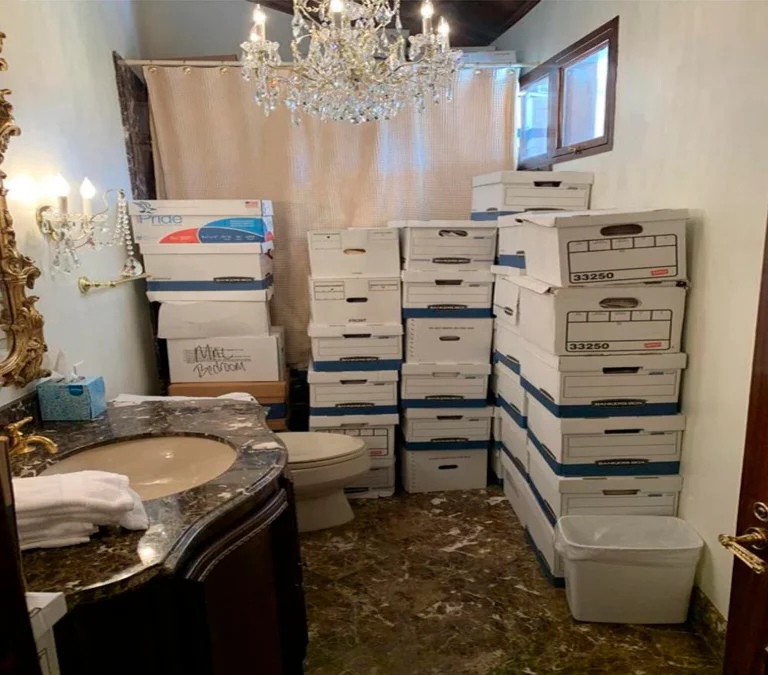
(Ken Silva, Headline USA) Newly unsealed documents in in former President Donald Trump’s classified documents case reveal that the FBI authorized the use of deadly force when planning its August 2022 raid on Trump’s Mar-a-Lago estate in Palm Beach.

The newly revealed information comes from a Trump motion to suppress evidence gathered during the FBI’s “unconstitutional” raid on Mar-a-Lago. Trump’s lawyers filed the motion in February, and Judge Aileen Cannon had it unsealed Tuesday.

The motion cited the FBI’s “operations order” for the Mar-a-Lago raid. That order contained a “Policy Statement” regarding “Use Of Deadly Force,” which authorized FBI agents to use deadly force “when necessary.”

The policy statement even authorized the FBI to “engage” with Trump’s Secret Service guards.

The newly revealed records sparked an immediate uproar among conservatives.

“Recall who authorized the raid: Merrick Garland. The FBI risked the lives of Donald Trump, his family, his staff, and MAL guests for a publicity stunt to make it look like Trump stole national security files,” said reporter Julie Kelly, who first reported on the documents.

“People need to be arrested for this.”

However, former FBI agent Kyle Seraphin downplayed the new information. He said the “policy statement” flagged by Trump’s lawyers is typical for executing search warrants.

Meanwhile, Judge Cannon has paused the classified documents case until a number of pre-trial issues could be settled.

Earlier this month, Cannon vacated a May 20 trial date and set deadlines for multiple pre-trial hearings. But the judge said it was too soon to set a new trial date, especially with issues pending regarding the Classified Information Procedures Act.

Trump has pleaded not guilty to 40 felony counts that allege he kept sensitive military documents, shared them with people who didn’t have security clearance, and tried to dodge the government’s attempts to get them back.

Trump has repeatedly said that the civil and criminal charges he faces are the result of politically motivated prosecutions designed to keep him from returning to the White House.

Trump is gearing up for a rematch in November with President Joe Biden.

Ken Silva is a staff writer at Headline USA. Follow him at twitter.com/jd_cashless.

‘Shock Flavors’ Show Up to Meet Demands of Weirdo Gen-Z Consumers

(Headline USA) Van Leeuwen Ice Cream usually draws customers with gourmet takes on classics like vanilla and pistachio. But occasionally, the artisanal ice cream maker headquartered in New York slips in what it calls a “shock flavor,” like Hidden Valley Ranch or pizza.

Surprising flavor combinations—think gravy-flavored Jones Soda or Sour Patch Kids Oreos—are showing up more frequently in grocery stores and restaurant chains.

Hershey recently introduced pink lemonade-flavored Kit Kats, while IHOP and Lay’s brought out Rooty Tooty Fresh n’ Fruity potato chips, designed to taste like strawberry-topped pancakes with a hint of bacon.

In the United Kingdom, Little Moons made fish-and-chips mochi ice cream in 2021, while potato-chip brand Walkers is known to celebrate Christmas with a Brussels sprout-flavored edition.

Usually, these are limited-time flavors, although occasionally they’re so popular they wind up on store shelves permanently, as Lay’s Flamin’ Hot Dill Pickle chips did in 2019.

While it’s tempting to pass them off as social-media stunts, experts say there’s more to the story. Food companies are responding to the changing and expanding tastes of consumers while also trying to keep brands relevant and distinct to win space on crowded store shelves.

“We’re in a really exciting time of flavor development where consumers are not just one thing,” said Kristen Braun, the senior brand manager for Oreo innovation at Chicago-based food and beverage company Mondelez International.

“You’re not just a sour lover or a sweet lover,” she continued. “You want a little of this and a little of that. Companies are finding the freedom to explore a little bit more and get more creative.”

Sour Patch Kids Oreos—vanilla cream-filled cookies speckled with colorful bites of the sour candies—are one of about a dozen limited-edition Oreo flavors that Mondelez plans to release this year.

Braun said it takes the company one or two years to develop such products, which stay on shelves for about nine weeks. She’s already thinking ahead to future flavors that blur the lines between sweet, salty and spicy.

Mondelez’s experimentation has spilled over into its woke virtue-signaling on social issues as well. Recently, the National Legal and Policy Center released a video criticizing the mega-corporation for its support of radical leftist causes that many consider to be just as far on the fringes as some of its recent flavor profiles.

For adults with discerning tastes and traditional views, that may make it that much easier to bypass the company’s products—although the colorful and quirky branding are likely to create added pressure from impulse buyers of a certain age.

But just as the ESG movement has seen more and more companies hop on the woke virtue-signaling bandwagon as a way to stay hip and trendy, making it impossible to boycott any one offender, more and more companies are now pushing weird flavor combinations onto an unwitting public, whether they like it or not.

Oddball pairings aren’t entirely new in the food and beverage industry. Hubba Bubba released a bubble gum-flavored soda in the late 1980s, for example.

But manufacturers and their suppliers have gotten more sophisticated and efficient, making it easier to experiment and put out limited-editions more frequently, said Mark Lang, a food marketing expert and associate professor of marketing at the University of Tampa.

Kyle Shadix, who as the corporate executive research chef for PepsiCo, has worked on beverages like Pepsi Maple Syrup and a strawberry shortcake Pepsi sold in Japan, said the members of Generation Z are also fueling innovation.

They’re diverse, adventurous and pick up on food trends quickly through social media, he said.

“They’re every chef’s dream to design for,” said Shadix, who is currently experimenting a lot with Mexican, Korean and Japanese flavors. “Gen Z is going to drive us faster. We’re going to start to see even more exploration quicker than in the past because they’re just so open to it.”

Toying with flavors can boost brands in several ways. Sometimes they bring new customers to a brand. They might also nudge buyers to pick up the original flavor, Russell Zwanka, director of the food marketing program at Western Michigan University, said.

“Sour Patch Oreos sound interesting, but nobody wants to risk buying Oreos that don’t taste good, so people buy both,” Zwanka said.

When companies combine brands, they’re trying to build an association in consumers’ minds. Peeps-flavored Pepsi, which came out last year, sends the message that Pepsi is current and fun, Lang said.

Mustard-flavored Skittles, which came out last summer, made the 104-year-old French’s brand seem playful.

Enter Kraft Heinz, which approached Van Leeuwen Ice Cream a few years ago about macaroni-and-cheese-flavored ice cream. Ben Van Leeuwen, the company’s co-founder and CEO, was doubtful at first but found that Kraft’s powder blended well with the Brooklyn-based company’s ice cream.

Van Leeuwen’s Kraft Macaroni and Cheese ice cream came out to rave reviews in 2021 and was re-released for a short time last fall.

“We will only do a shock flavor if we can make it good and distinct,” Van Leeuwen said. “We will not do a shock flavor where it’s just shock in name but taste like vanilla.”

But novel flavor combinations don’t always work. Van Leeuwen couldn’t eat more than a few bites of his company’s Hidden Valley Ranch ice cream, which contained onion and garlic powders. And shock flavors typically don’t end up on the permanent menu because of their lower “eat-ability,” he said.

“I think you would taste our mac and cheese and you’d say, ‘Oh, that’s good,’ but do you want to take a pint of that mac and cheese from your freezer when you’re watching whatever show on Netflix and eat the entire thing? Probably not,” Van Leeuwen said.

Candy brand Brach’s ran into that issue with its Turkey Dinner Candy Corn, a 2021 limited-edition version of the fall staple that tasted like turkey, stuffing, green beans, cranberry sauce, apple pie and coffee. Katie Duffy, vice president and general manager of seasonal at Ferrara Candy Co., which owns Brach’s, acknowledged there was a “gross-out” factor.

“We have learned from consumers that we don’t want to have something where they eat a few pieces of candy and then they toss it because there’s some things that they don’t want to repeat,” Duffy said. “We want it to be a delicious flavor journey.”

Brach’s recently introduced Easter Brunch-flavored jelly beans, and they hit that mark, she said. The candy beans mimicked the flavors of blueberry maple pancakes, chocolate doughnuts, caramel cold brew, cinnamon rolls, berry smoothies and mimosa cocktails.

Shannon Weiner, senior director of insights and analytics at Ferrara, said the company closely tracks social media to see what flavors are trending.

People are increasingly looking for dessert and dairy-flavored candies, she said. They’re also seeking more international flavors like Tajin, a brand of chile-lime spice from Mexico that recently did a collaboration with Pop Tarts.

Lang thinks the more time people spend in restaurants or trying out new foods, the more they seek out unusual flavors.

“We are variety-seeking animals. We constantly are seeking something new and different; it’s in our wiring,” he said. “We like to experiment.”

Adapted from reporting by the Associated Press

Red Lobster Seeks Bankruptcy Protection Days after Closing Dozens of Restaurants

(Headline USA) Red Lobster, the casual dining chain that brought seafood to the masses with inventions like popcorn shrimp and “endless” seafood deals, has filed for Chapter 11 bankruptcy protection.

The 56-year-old chain made the filing late Sunday, days after shuttering dozens of restaurants.

“This restructuring is the best path forward for Red Lobster,” CEO Jonathan Tibus said. “It allows us to address several financial and operational challenges and emerge stronger and re-focused on our growth.”

Tibus, a corporate restructuring expert, took the top post at the chain in March.

Red Lobster said restaurants will continue to operate through the bankruptcy proceedings, which are intended to simplify operations, close locations and pursue a sale.

As part of the filing, Red Lobster entered into a so-called “stalking horse” agreement, meaning it plans to sell its business to an entity formed and controlled by its lenders.

Aaron Allen, the founder of restaurant consulting firm Aaron Allen & Associates, said Monday that the bankruptcy was the culmination of two decades of trouble at Red Lobster, which has struggled with increasing competition from faster, cheaper chains like Chipotle and Panera.

Sometimes, Red Lobster would lower its prices to compete, a move that was often disastrous. In 2003, the company lost millions of dollars on an all-you-can-eat “Endless Crab” promotion when crab prices rose, Allen said. Twenty years later, the chain did the same thing with an “Ultimate Endless Shrimp” promotion.

“The fact that they would have this kind of corporate amnesia is a fascinating case study in corporate food service,” Allen said.

He said Red Lobster had more success in the mid-2000s, when it repositioned itself as an upscale restaurant. It raised prices and renovated stores. But it still struggled with rising lease and labor costs and changing consumer tastes.

“This slow-moving train wreck has been in motion for 20 years now,” Allen said.

Orlando, Florida-based Red Lobster was founded by Bill Darden, who wanted to make seafood restaurants more accessible and affordable for families.

Darden got his start in the restaurant business in Waycross, Georgia, in 1938, when he opened The Green Frog. He boldly refused to segregate the restaurant’s patrons by race, which went against state laws at the time. When he opened the first Red Lobster near Orlando in 1968, he again invited customers to sit anywhere they chose.

Darden sold Red Lobster to General Mills in 1970, and he continued to run restaurants as a General Mills executive. General Mills later went on to form Darden Restaurants, which owns Olive Garden and other chains. Darden Restaurants was spun off from General Mills in 1995.

Red Lobster had legions of fans for dishes like lobster linguini and its buttery Cheddar Bay biscuits.

“There is no one of-woman-born who does not like Red Lobster cheddar biscuits,” comedian and actress Tina Fey wrote in her memoir Bossypants. “Anyone who claims otherwise is a liar and a Socialist.”

But the restaurant had trouble keeping up with competitors and bringing in younger customers. Darden Restaurants sold Red Lobster to a private equity firm in 2014.

Thai Union Group, one of the world’s largest seafood suppliers, first invested in Red Lobster in 2016 and upped its stake in 2020.

Then last fall, Red Lobster lost millions of dollars on its “Ultimate Endless Shrimp” promotion, which charged $20 for all-you-can-eat shrimp deal.

“We knew the price was cheap, but the idea was to bring more traffic in the restaurants,” Ludovic Garnier, the chief financial officer of Thai Union Group, said in an earnings call with investors.

Garnier said the deal did work, and restaurant traffic increased. But more guests opted for the $20 deal than Red Lobster expected, and “we don’t earn a lot of money at $20,” he said. For the first nine months of 2023, Thai Union Group reported a $19 million loss from Red Lobster.

In January, Thai Union Group announced its intention to exit its minority investment in Red Lobster. CEO Thiraphong Chansiri said the COVID-19 pandemic, industry headwinds and rising operating costs had hit the dining chain hard and caused “prolonged negative financial contributions to Thai Union and its shareholders.”

Restaurant liquidator TAGeX Brands announced last week that it would be auctioning off the equipment of over 50 Red Lobster locations that were recently closed.

The store closures span across more than 20 states—reducing Red Lobster’s presence in cities like Denver, San Antonio, Indianapolis and Sacramento, California.

Allen expects Red Lobster’s 700-restaurant footprint to shrink by one-third to one-half as part of the bankruptcy process. Many potential buyers just want the chain’s real estate.

“Most likely whoever buys it is not going to want to fix up Red Lobster,” he said.

Red Lobster said in the court filing that it has more than 100,000 creditors and estimated assets between $1 billion and $10 billion. The company’s estimated liabilities are between $1 billion and $10 billion.

Adapted from reporting by the Associated Press

Saudis Accused of Masterminding 9/11 in Bombshell Court Filing

(Ken Silva, Headline USA) Saudi Arabia’s involvement in 9/11 has been public information for decades, with numerous sources documenting how Saudi officials Fahad al-Thumairy and Omar al-Bayoumi allegedly assisted at least two of the hijackers ahead of the Sept. 11, 2001, terrorist attacks.

But were Thumairy and Bayoumi rogue criminal religious zealots, or were they operating under the direction of the Saudi Arabian government?

A bombshell court filing in a long-running 9/11 lawsuit makes the case for the latter argument. Families of 9/11 victims argued in a 71-page brief filed on May 7 that Thumairy and Bayoumi operated under the directions of the Kingdom of Saudi Arabia.

“The evidence is clear that Saudi Arabia deployed its officials and agents to serve in an illegal government enterprise that was extensively intertwined with terrorism, so that the agents were acting within their core mission when they helped integrate the hijackers into the United States,” plaintiffs said in their May 7 brief, which is in response to Saudi Arabia’s motion to dismiss.

“The evidence also shows that Bayoumi and Thumairy acted at all times in accordance with the directives of more senior Saudi officials, which separately establishes that they were acting within the scope of their agencies and employment.”

The 71-page, partially redacted court filing compiles evidence that has been trickling out over the last several years about Saudi’s involvement in 9/11. That includes a 2017 FBI report that said Bayoumi was operating directly under then Ambassador Prince Bandar bin Sultan Alsaud—a close friend of the Bush family.

“Omar Albayoumi was paid a monthly stipend as a cooptee of the Saudi General Intelligence Presidency (GIP) via then Ambassador Prince Bandar bin Sultan Alsaud,” said the FBI report, which is quoted in the May 7 filing.

“Allegations of Albayoumi’s involvement with Saudi intelligence were not confirmed at the time of the 9/ 11 Commission Report. The above information confirms these allegations.”

Saudi Arabia, for its part, continues to deny any involvement in 9/11.

Meanwhile, new evidence in recent years has suggested that not only was Albayoumi a Saudi agent working for Bandar—he was also an asset of the CIA, which was, of course, once headed by George H.W. Bush. That information has been coming from the proceedings against 9/11 defendants at Guantanamo Bay.

According to Office of Military Commissions investigator Don Canestraro, at least two FBI agents told him that the CIA had attempted to recruit two of the hijackers as informants. The CIA was directing its recruiting efforts through Bayoumi, according to Canestraro.

Ken Silva is a staff writer at Headline USA. Follow him at twitter.com/jd_cashless.

Pentagon to Remove All Troops from Niger by Sept. 15

(Ken Silva, Headline USA) U.S. troops ordered out of Niger by the West African country’s new government will complete their withdrawal by the middle of September, the Pentagon and Nigerien defense officials said Sunday.

The timeline was the product of four days of talks between the countries’ defense officials in the capital city of Niamey, according to a joint statement.

“The U.S. Department of Defense and the Ministry of National Defense of Niger have reached a disengagement agreement to effect the withdrawal of U.S. forces, which has already begun,” the two entities said.

“It is therefore agreed that this disengagement will end no later than September 15.”

The withdrawal means the U.S. will leave behind infrastructure it has built over the years to support the approximately 1,000 troops who have been based there to conduct counterterrorism missions, the officials said. Fewer than 1,000 U.S. troops are still in Niger, mostly on an airbase near Agadez, some 550 miles away from the capital.

The officials called Niger an “anchor” in U.S. counterterrorism efforts over the last decade, and they are still looking at options on how to fill that gap. The officials said that their hope is to continue to work with the Nigerien military on counterterrorism work in the future, even if U.S. troops are not based there on the ground.

The rupture in military cooperation followed last July’s ouster of the country’s democratically elected president by mutinous soldiers.

After that, the Biden State Department’s top official for African affairs, Molly Phee, allegedly threatened the new government from doing business with Iran and Russia—which didn’t sit well with the new prime minister, Lamine Zeine.

“When she finished, I said, ‘Madame, I am going to summarize in two points what you have said,’” Zeine said in a recent interview. “First, you have come here to threaten us in our country. That is unacceptable. And you have come here to tell us with whom we can have relationships, which is also unacceptable. And you have done it all with a condescending tone and a lack of respect.”

In March, Zeine’s government declared that the U.S. military presence there is “illegal.”

From there, conditions for U.S. troops began to deteriorate rapidly.

In a letter published last month by the Washington Post, an Army whistleblower accused Biden of endangering the troops’ lives by leaving them there against the wishes of the country’s new government.

“Americans deployed here have not been able to perform their primary mission and have been told to ‘sit and hold.’ It is clear that the country of Niger does not want a permanent military presence in the country and they have informed us that we need to leave,” the whistleblower said.

“At the same time, there are approximately 1,100 US Military Service Members in the country who are essentially being held hostage from returning home to their families while the State Department continues with failed diplomacy by not communicating with the country of Niger on what their withdrawal plans will look like.”

According to the whistleblower, the troops in Niger can’t leave because the government isn’t approving visas for the new troops that would replace them.

The Pentagon has also said the U.S. will relocate most of the approximately 100 forces it has deployed in neighboring Chad for now. But talks are expected to resume next month about revising an agreement that allows U.S. troops to be based in Chad.

Ken Silva is a staff writer at Headline USA. Follow him at twitter.com/jd_cashless.

The Associated Press contributed to this report.