Nate Silver of FiveThirtyEight shared his analysis on the upcoming 2024 election on the Risky Business podcast with Maria Konnikova, the Daily Mailreported.
Silver also said that 81-year-old Biden was behind in the majority of swing state polls, calling it a “really really really bad sign for his campaign.”
“If Biden is still struggling in August he needs to consider stepping aside. It’s not a great situation for Ds either way, but you have to do due diligence on the question. It’s an important election, obviously. It shouldn’t be taboo to talk about,” Silver wrote.
If Biden is still struggling in August he needs to consider stepping aside.
It's not a great situation for Ds either way, but you have to do due diligence on the question. It's an important election, obviously. It shouldn't be taboo to talk about. https://t.co/JaJvtLFuQt
Silver’s analysis ties in with a new Bloomberg/Morning Consult poll that asked voters in the swing states who they would prefer to see as Biden’s replacement.
Of those who were polled, 45% of voters chose Harris, Whitmer and Buttigieg were tied at 36%, Newsom got 32% support, Moore earned 23%, and Pritzker got 21%.
Harris stepped up her campaign travel in 2024, working to get more votes, especially in the swing states. This year, Harris visited North Carolina, Nevada, Pennsylvania and Wisconsin four times each, Georgia three times and Arizona and Michigan twice.
Swing state voters are growing more familiar with Harris and have already set their opinion about her, according to the poll.
Even though 45% of voters supported Harris as Biden’s replacement, 46% of voters opposed Harris as the replacement, including 38% strongly opposing her as the choice.
Only 9% of people said they did not know anything about Harris, about 30% said that they did not know anything about Whitmer, Newsom and Buttigieg and over 50% said they didn’t know anything about Pritzker and Moore.
Several members of the admissions department came forward anonymously to shed light on the situation.
Since the hiring of Jennifer Lucero, the dean of admissions, in 2020, UCLA dropped from sixth to 18th place in rankings for medical research.
Over 50% of accepted students fail standardized testing on emergency medicine, family medicine, internal medicine and pediatrics.
“I have students on their rotation who don’t know anything,” a member of the admissions committee said. “People get in and they struggle.”
Students take the standardized tests at the end of clinical rotations in order to measure their medical knowledge and proficiency in that area. Results for these tests are vitally important for students’ residency applications.
Nearly 25% of medical students set to graduate in 2025 failed three or more of their standardized exams. Many of them must retake classes.
The demographic changed caused issues in hospital practicums as well.
One professor said a student in the operating room failed to identify a major artery when prompted, and subsequently blamed the doctor for making her nervous after the correction.
“This has been a colossal failure,” one professor posted on a forum for applicants. “The new curriculum is not working and the students are grossly unprepared for clinical rotations.”
Employees in the UCLA admissions office reported that only applicants of specific races have real standards imposed on them, and other select races receive preferential treatment.
Lucero reportedly claimed that each incoming class should reflect California’s diversity, and uses zip codes and euphemistic terms such as “disadvantaged” to shame other members of the admissions team into censoring their criticism of applicants with sub-par scores.
Several of Luceros co-workers also claimed that she accused them of racism and forced them into DEI training sessions for reeducation.
(Headline USA) Two abortion-inducing drugs could soon be reclassified as controlled and dangerous substances in Louisiana under a first-of-its-kind bill that received final legislative passage Thursday and is expected to be signed into law by Republican Gov. Jeff Landry.
Supporters of the reclassification of mifepristone and misoprostol, commonly known as “abortion pills,” say it could protect expectant mothers from coerced abortions, such as a high-profile 2022 case that occurred in neighboring Texas.
Vice President Kamala Harris described it as “absolutely unconscionable.”
Absolutely unconscionable. The Louisiana House just passed a bill that would criminalize the possession of medication abortion, with penalties of up to several years of jail time.
“You know you’re doing something right when @KamalaHarris criticizes you,” he posted in reply.
You know you’re doing something right when @KamalaHarris criticizes you. This bill protects expectant mothers while also allowing these drugs to be prescribed to those with a valid prescription.
Maybe Vice President Harris should spend more time fixing our southern border than… https://t.co/xXTqd8O6Ep
The bill will make it harder for abortionists to prescribe the pills, which some are now turning to as an alternative form of contraception, with roughly two dozen states, including Louisiana, having put at least some abortion restrictions in place since the overturn of Roe v. Wade.
Louisiana has a near-total abortion ban in place, which applies both to medical and surgical abortions. The only exceptions to the ban are if there is substantial risk of death or impairment to the mother if she continues the pregnancy or in the case of “medically futile” pregnancies, when the fetus has a fatal abnormality.
Currently, 14 states are enforcing bans on abortion at all stages of pregnancy, with limited exceptions.
As a workaround, activists have begun mailing the pills to states where abortion might otherwise be unavailable due to the closure of Planned Parenthood and other such facilities.
But Louisiana’s push to reclassify mifepristone and misoprostol could possibly open the door for other red states seeking tighter restrictions on the drugs.
Current Louisiana law already requires a prescription for both drugs and makes it a crime, in most cases, to use them to induce an abortion. The bill would make it harder to obtain the pills by placing them on the list of Schedule IV drugs under the state’s Uniform Controlled Dangerous Substances Law.
The classification would require doctors to have a specific license to prescribe the drugs, and the drugs would have to be stored in certain facilities that, in some cases, could end up being located far from rural clinics.
Knowingly possessing the drugs without a valid prescription would carry a punishment including hefty fines and jail time. Language in the bill appears to carve out protections for pregnant women who obtain the drug without a prescription for their own consumption.
The reclassification of the two drugs is contained in an amendment to a bill originating in the Senate that would create the crime of “coerced criminal abortion by means of fraud.” Lawmakers in the Senate unanimously supported the original legislation a month ago.
Later, bill sponsor Sen. Thomas Pressly pushed for the amendment to reclassify the drugs.
Pressly said both the bill and the amendment were motivated by what happened to his sister Catherine Herring of Texas.
In 2022, Herring’s husband slipped her seven misoprostol pills in an effort to induce an abortion without her knowledge or consent.
Although the couple had two children together already, her husband had been caught cheating and wanted a divorce, but he feared filing for one while she was pregnant would make him look bad.
Nonetheless, Herring quickly became suspicious and sought the help of a private investigator, gathering evidence including video recordings of her husband putting the powder into her drinks before going to the police.
There have been several cases similar to Herring’s reported by news outlets over the past 15 years.
While none of the known cases are from Louisiana, the law might prevent countless mothers and their unborn children from unknowingly becoming victims of such drug-induced poisonings.
“The purpose of bringing this legislation is certainly not to prevent these drugs from being used for legitimate health care purposes,” Pressly said. “I am simply trying to put safeguards and guardrails in place to keep bad actors from getting these medications.”
However, critics said any delay to obtaining the drugs could lead to worsening outcomes in a state that has one of the highest maternal mortality rates in the country.
“This goes too far,” said Democratic Sen. Royce Duplessis, who voted against the measure.
“We have not properly vetted this with the health care community and I believe it’s going to lead to further harm down the road,” he added. “There’s a reason we rank at the bottom in terms of maternal health outcomes, and this is why.”
The Senate voted 29-7, mainly along party lines, to pass the legislation. All five of the female lawmakers in the 39-person Senate voted in favor of the bill.
Passage of the bill comes as both abortion proponents and pro-life advocates await a final decision from the U.S. Supreme Court on an effort to restrict access to mifepristone. However, the justices did not appear ready to limit access to the drug on the day they heard arguments.
In addition to inducing abortions, mifepristone and misoprostol have other common uses, such as treating miscarriages, inducing labor and stopping hemorrhaging.
Mifepristone was approved by the U.S. Food and Drug Administration in 2000 after federal regulators deemed it safe and effective for abortion. It’s used in combination with misoprostol, which the FDA has separately approved to treat stomach ulcers.
The drugs are not classified as controlled substances by the federal government because regulators do not view them as carrying a significant risk of misuse. The federal Controlled Substances Act restricts the use and distribution of prescription medications such as opioids, amphetamines, sleeping aids and other drugs that carry the risk of addiction and overdose.
(Money Metals News Service) In a recent episode of the Money Metals podcast, host Mike Maharrey interviewed Chris Ritchie, President of SilverCrest Metals.
SilverCrest Metals, headquartered in Vancouver, British Columbia, is a precious metals producer known for its efficient and cost-effective mining operations.
The discussion covered the company’s operations, financial strategies, and broader perspectives on the mining industry and precious metals.
Who is Chris Ritchie?
Chris Ritchie
Chris Ritchie is President of SilverCrest Metals, a financial markets professional with 15 years of experience in resource-based capital markets including investment banking, marketing, corporate strategy, network and risk management. Mr. Ritchie earned a BA from Miami University (Ohio) in 1997 and an MBA in finance from Dalhousie University in 2000.
Overview of SilverCrest Metals
Founded in 2016, SilverCrest Metals has made significant strides in the mining industry, achieving production in just nine years, compared to the industry average of 16 years.
The company trades on the New York Stock Exchange under the ticker SILV and the Toronto Stock Exchange under SIL, boasting a market cap of approximately $1.4 billion USD.
In a recent quarter, SilverCrest Metals reported a strong performance, surpassing consensus estimates and maintaining a robust balance sheet with $90 million, including $20 million in bullion.
Unique Approach to Precious Metals
Unlike many mining companies, SilverCrest Metals holds a portion of its reserves in physical gold and silver. Ritchie explained the mechanism behind this strategy: the company sells its refined product and then buys back gold and silver as part of a currency transaction.
This approach allows SilverCrest to provide investors with direct exposure to precious metals, leveraging them as a store of value against the depreciating fiat currency.
The company holds these metals in a bank account, fully allocated and not lent out, to ensure liquidity and value preservation.
Economic Perspectives and Inflation Hedging
Ritchie emphasized the importance of considering gold and silver as sound money and effective hedges against inflation. Over the past 16 years, the average annual rate of inflation in the mining industry has been 8%, mirroring the rate of money printing.
This has resulted in significant increases in costs, such as housing prices in Toronto, which have also risen by approximately 8% annually.
By holding gold and silver, SilverCrest aims to mitigate the impact of inflation and provide long-term value to its investors.
Operational and Financial Metrics
SilverCrest Metals has demonstrated strong operational efficiency with an all-in sustaining cost of $12.90 per ounce of silver equivalent. However, Ritchie pointed out that this figure excludes several significant expenses, including property acquisition, exploration, and plant construction costs.
When these factors are included, the total cost per ounce rises to approximately $25 before tax. Despite these costs, SilverCrest has maintained high operating margins of around 60% for the past several quarters, enabling the company to pay off debt quickly and focus on strategic growth.
Advocating for Industry Change
Ritchie highlighted the broader implications of SilverCrest’s approach, advocating for more mining companies to adopt similar strategies. By holding precious metals and improving capital allocation, mining companies can enhance their financial stability and provide better returns to investors.
He criticized the short-term focus prevalent in the financial community, urging a shift towards long-term thinking and better risk management.
Key Questions and Answers
You guys hold some of your cash reserves in physical gold and silver. How do you do it?
SilverCrest sells its refined product and then buys back metal as part of a currency transaction. They treat gold and silver as a currency, holding it in a bank account, fully allocated and not lent out, to provide more exposure to precious metals and protect against costs.
This approach challenges the default notion of converting products into dollars, instead preserving value in precious metals.
Is gold and silver a better store of value than fiat currency?
Ritchie affirmed that gold and silver are better stores of value than fiat currency, which has consistently failed to preserve purchasing power over the long term.
SilverCrest, operating in a long-term, capital-intensive industry, uses precious metals to protect against inflation and provide long-term value to investors.
What is the rate of money printing and inflation in the mining industry?
The rate of money printing and inflation in the mining industry is about 8% per year. This rate matches the annual increase in housing prices in Toronto over the past 16 years, highlighting the devaluation of fiat currency rather than an increase in asset value.
Gold has outperformed housing, underscoring its effectiveness as a store of value.
What is the annual increase in gold mine production and the US dollar supply?
The annual increase in gold mine production is about 1-1.5%, while the US dollar supply increases by about 8%. From 1960 to 2015, the average supply growth of 160 fiat currencies was over 32% per year.
This highlights the contrast between the constrained supply growth of gold and the unlimited supply growth of fiat currencies.
How do you determine the ratio of cash to precious metals on your balance sheet?
SilverCrest believes in the better store of value offered by precious metals. They calculated their total cost per ounce, including all expenses, at around $25 before tax.
By holding precious metals equivalent to their operating costs, they hedge against inflation. They aim to maintain this ratio to give their investors more exposure to precious metals and less exposure to fiat currency risks.
Why don’t more mining companies adopt this strategy?
Most mining companies do not have the high-quality assets and margins that SilverCrest enjoys, which limits their flexibility. Many are focused on short-term survival, selling ounces to pay bills.
Ritchie emphasized the need for the industry to hold precious metals at lower levels and improve capital allocation. SilverCrest is open to sharing its data and process to encourage industry-wide adoption of this approach.
Could this strategy potentially influence the broader public consciousness and monetary system?
Ritchie believes that every company with a long-term horizon should manage inflation risk by holding instruments like gold and silver. The financial community’s short-term focus hinders the understanding of long-term inflation impacts.
By showcasing the utility of precious metals, SilverCrest hopes to encourage more companies and individuals to consider gold and silver as sound money, potentially leading to a more stable monetary system.
How can people find more information about SilverCrest Metals?
Ritchie encouraged listeners to reach out to SilverCrest Metals through their website. He emphasized the company’s commitment to transparency and its willingness to share its process and data to foster a broader conversation about the benefits of holding precious metals.
How SilverCrest Metals Excels Above Other Mining Companies
SilverCrest Metals differentiates itself from other mining companies in several key ways:
1. Shorter Time to Production:
Typical Mine Timeline: Most mines take about 16 years from initial exploration to production.
SilverCrest Timeline: SilverCrest achieved production in about half that time, starting with their first drill hole in 2016.
2. High-Grade Deposits:
Efficiency: The company benefits from high-grade deposits, meaning each shovel of dirt contains more gold and silver, leading to lower costs per ounce and better margins.
Impact: This translates into a better balance sheet and more financial choices, enhancing operational flexibility.
Mechanism: After refining their metals, they repurchase gold and silver, treating them as currencies. This approach protects against fiat currency depreciation and provides additional value to investors.
4. Financial Strength and Flexibility:
Balance Sheet: The company reported having around $90 million on its balance sheet, with $20 million in bullion.
Debt Management: They paid off all their debt within seven months of starting production, showcasing financial discipline and strength.
5. Focus on Long-Term Value Preservation:
Inflation Hedge: SilverCrest’s strategy includes holding precious metals to hedge against inflation, which they calculated at around 8% per year in the mining industry.
Operational Margins: With operating margins of about 60% over the last several quarters, they maintain high profitability and financial flexibility.
6. Challenging Industry Norms:
Innovative Approach: SilverCrest challenges the default industry practice of converting refined metals into fiat currency, instead opting to hold metals as a store of value.
Advocacy: They advocate for the industry to adopt similar practices, arguing that this would improve financial health and stability.
7. Investor Exposure:
Enhanced Exposure: By holding precious metals, SilverCrest provides investors with more direct exposure to gold and silver, reducing reliance on fiat currencies.
Comparison with Royalty Companies: They draw parallels to royalty companies, which are valued higher because they give investors more exposure to metals without production risk.
8. Strategic Use of Data:
Cost Analysis: SilverCrest meticulously calculates the true cost of production, including property acquisition, exploration, and plant construction.
Research and Comparisons: They analyze industry trends and historical data to inform their strategy, such as examining the long-term performance of gold versus fiat currency.
9. Promotion of Sound Money Principles:
Philosophical Commitment: SilverCrest promotes the use of gold and silver as sound money, advocating for their use as a better store of value compared to fiat currency.
Public Awareness: They aim to raise awareness about the benefits of precious metals, both within the industry and among the general public.
10. Corporate Responsibility:
Board of Directors: SilverCrest’s board is committed to managing the company’s balance sheet with a long-term view, considering inflation as a core risk management function.
Industry Leadership: They aspire to lead by example, encouraging other companies to adopt practices that enhance financial stability and investor value.
These factors collectively distinguish SilverCrest Metals as a forward-thinking and financially prudent company within the mining industry, emphasizing long-term value creation and sound money principles.
Conclusion
SilverCrest Metals stands out in the mining industry for its innovative approach to managing its resources and finances. By holding physical gold and silver, the company provides its investors with a hedge against inflation and a more stable store of value.
Ritchie’s insights underscore the need for broader adoption of such strategies within the industry to ensure sustainable growth and financial health.
For more information about SilverCrest Metals and their unique approach to precious metals, visit their website and explore their investor resources.
(Luis Cornelio, Headline USA) Media Matters, the leftist media watchdog non-profit, fired a dozen employees on Thursday due to the bombshell lawsuit filed by tech mogul Elon Musk.
“We’re confronting a legal assault on multiple fronts and given how rapidly the media landscape is shifting, we need to be extremely intentional about how we allocate resources in order to stay effective,” Media Matters President Angelo Carusone claimed in a statement.
“Nobody does what Media Matters does. So, we’re taking this action now to ensure that we are sustainable, sturdy and successful for whatever lies ahead,” he lamented, according to the New York Post.
Musk sued Media Matters for defamation after the organization claimed Twitter’s algorithms placed advertisements from major companies near posts by neo-Nazis and other hate groups.
However, Musk contended that Media Matters manipulated data to support their conclusion about the advertisements.
Several of the fired employees took to Twitter to express their dissatisfaction.
“Bad News: I’ve been laid off from @mmfa, along with a dozen colleagues. There’s a reason far-right billionaires attack Media Matters with armies of lawyers: They know how effective our work is, and it terrifies them (him),” Katherine Abughazaleh, a former senior video producer, wrote on Twitter.
Another employee, Beatrice Mount, tweeted, “After nearly four years of working at media matters, I got laid off. So if anyone is looking for researchers with video experience, drop a line.”
Mount, a media analyst, had recently authored articles attacking Fox News for reporting on immigration statistics.
She also labeled attorney Christina Bobb as an “election denier” and claimed that “right-wing media” is spreading a “baseless conspiracy that Democrats are trying to import migrants to vote in upcoming elections.”
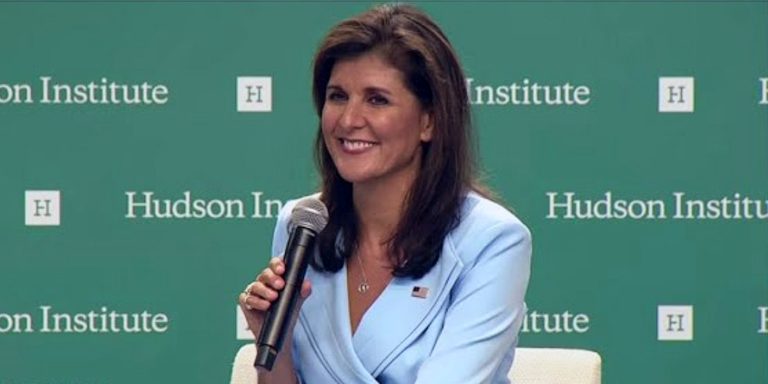
(Luis Cornelio, Headline USA) Former President Donald Trump has hinted at the possible announcement of his running mate, while also praising his former U.N. ambassador and one-time rival, Nikki Haley.
Earlier this week, Haley announced she would be voting for Trump and described President Joe Biden as a “catastrophe.” These remarks stand in contrast to her previous negative comments about Trump.
During a massive rally in the Bronx on Thursday, Trump was asked about Haley’s recent statements.
“I’m sure those were welcomed remarks for you, but it also left many people wondering, is there room for her on your team or better yet your ticket?” a reporter inquired.
Trump responded, “Well, I think she’s going to be on our team, because we have a lot of the same ideas, the same thoughts. I appreciate what she said.”
Emphasizing the 2024 campaign, Trump added, “We had a very nasty campaign, but she’s a very capable person, and I’m sure she’s going to be on our team in some form— absolutely.”
🚨🇺🇸TRUMP: HALEY WILL BE ON OUR TEAM
"Well, I think she's gonna be on our team because we have a lot of the same ideas, the same thoughts.
I appreciated what she said; you know, we had a nasty campaign. It was pretty nasty.
This exchange of positive remarks between Haley and Trump comes as the former president positions himself as the leading candidate for the 2024 election.
In the past, Haley described Trump as “totally unhinged,” among other critical remarks. But in response, Trump has called her a “birdbrain.”
Regarding his potential running mate, Trump, according to the New York Post, said he would announce his choice “sometime during the convention.”
He added, “We have many people who would do a fantastic job.”
(Luis Cornelio, Headline USA) Liberals at CNN were comically surprised when former President Donald Trump drew a massive crowd of supporters at a Thursday rally in the Bronx, New York.
CNN correspondent Kristen Holmes expressed her astonishment at the support for Trump in one of the bluest districts in the country.
“Certainly a bigger crowd than I think Democrats would like to see, particularly given this is one of the bluest counties in the entire country,” Holmes told CNN anchor Anderson Cooper, as reported by Fox News and seen in a video shared by the Trump campaign on Twitter.
“I wasn’t sure what to expect,” she added.
Even CNN is admitting President Trump's rally in the Bronx was a massive success:
"Certainly a bigger crowd than I think Democrats would like to see, particularly given this is one of the bluest counties in the entire country!" 🔥 pic.twitter.com/XScfuQmnVa
Trump’s appearance in the Bronx drew approximately 25,000 individuals, far surpassing the roughly 3,500 people expected to attend, according to Fox News.
Trump is currently in New York City facing his criminal trial on charges brought by Alvin Bragg, the radical, leftist Manhattan district attorney.
Holmes told Cooper that, unlike past rallies, the Bronx crowd seemed to have gathered organically and that the attendees were residents.
“I’ve gone to a lot of these rallies across the country, and there are often people who travel hundreds of miles to see Donald Trump and they’re not necessarily part of the community,” she continued. “However, one of the things that I found was that there were a lot of people here that were actually from the Bronx.”
As expected, some leftists were upset by the Trump rally, Holmes explained.
“You had people saying he doesn’t belong here,” the CNN correspondent said.
She then continued, “But you also had a number of voters who told me that they had supported Biden in 2020. They were very unhappy, particularly with the state of the economy and they were looking for alternatives, namely former President Donald Trump.”
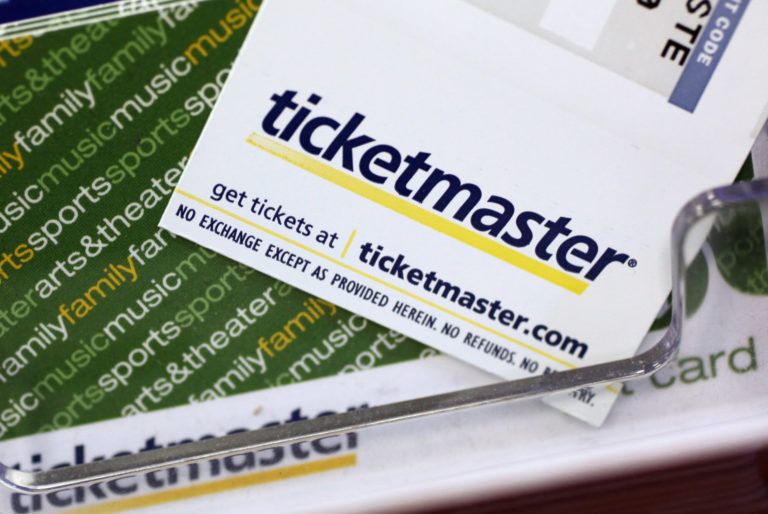
(Headline USA) The Justice Department filed a sweeping antitrust lawsuit against Ticketmaster and parent company Live Nation Entertainment on Thursday, accusing them of running an illegal monopoly over live events in America—squelching competition and driving up prices for fans.
The lawsuit, filed in federal court in Manhattan, was brought with 30 state and district attorneys general and seeks to break up the monopoly they say is squeezing out smaller promoters, hurting artists and drowning fans with endless fees.
“It’s time for fans and artists to stop paying the price for Live Nation’s monopoly,” Attorney General Merrick Garland said Thursday.
“It is time to restore competition and innovation in the entertainment industry,” he continued. “It is time to break up Live Nation, Ticketmaster. The American people are ready for it.”
The lawsuit is likely to be a much-needed crowd-pleaser for the embattled DOJ, which was excoriated over damning revelations this week that Garland and his team of corrupt prosecutors had authorized and planned for the use of deadly force during the controversial 2022 raid on former President Donald Trump’s Mar-a-Lago home.
Under the Biden economy, ticket prices, like most things, have continued to skyrocket inexplicably. It is unclear whether the associated production costs have risen due to higher prices for things like gas and groceries, as well as higher demands on wages, or whether the companies themselves are exploiting the situation to simply squeeze more out of customers who are desperate for some form of escapism amid the nation’s long list of woes.
However, when Ticketmaster controversially switched in 2022 to a dynamic sliding-scale system of “demand-based pricing” that sent prices soaring far beyond scalper ranges for top-tier seats, it sent red flags flying.
The Justice Department accused Live Nation of a slew of tactics—including threats and retaliation—that Garland said has allowed the entertainment giant to “suffocate the competition” by keeping a stronghold on virtually every aspect of the industry, from concert promotion to ticketing. The impact on consumers is seen in an “endless list of fees on fans,” the attorney general said.
“Live music should not be available only to those who can afford to pay the Ticketmaster tax,” said Assistant Attorney General Jonathan Kanter of the Justice Department’s Antitrust Division. “We are here today to fight for competition so that we can reopen the doors to the live music industry for all.”
Live Nation has for years denied that it is violating antitrust laws. The lawsuit “won’t solve the issues fans care about relating to ticket prices, service fees, and access to in-demand shows,” it said Thursday.
“Calling Ticketmaster a monopoly may be a PR win for the DOJ in the short term, but it will lose in court because it ignores the basic economics of live entertainment,” Live Nation added—stating that most service fees go to venues and that outside competition has ”steadily eroded” Ticketmaster’s market share.
The company said it would defend itself “against these baseless allegations” and push for other reforms.
The Justice Department said Live Nation’s anti-competitive practices include using long-term contracts to keep venues from choosing rival ticketers, blocking venues from using multiple ticket sellers and threatening venues that they could lose money and fans if they don’t choose Ticketmaster.
The Justice Department says Live Nation also threatened to retaliate against one firm if it didn’t stop a subsidiary from competing for artist promotion contracts.
The lawsuit is the latest example of the Biden administration’s aggressive antitrust enforcement approach targeting companies accused of engaging in illegal monopolies that box out competitors and drive up prices.
In March, the Justice Department filed a lawsuit against Apple alleging that the tech giant has monopoly power in the smartphone market.
The Democratic administration has also taken on Google, Amazon and other tech giants. In some cases, however, these lawsuits may be little more than a glorified shakedown, intended to squeeze a settlement from the multi-billion-dollor corporations that will be a mere drop in the bucket compared to the benefits they reap from favorable backdoor policies that the Democrats facilitate on their behalf.
Rarely do the lawsuits effect any meaningful change for the powerful tech industry beyond the nominal fines they impose.
Concert promoters, whose fees ultimately reflect negatively on influential leftist performers like Taylor Swift and Bruce Springsteen, may be a different story as the artists themselves may be motivated to advocate for lower costs, or at least some form of compromise.
On the other hand, the company has avoided serious reforms in the past. In 2015, Ticketmaster settled a major class-action lawsuit over its excessive fees. Eligible users were given a list of concerts for which they could receive discount vouchers. However, most of the concerts involved undesirable artists and inconvenient times, and the platform that the company set up for claiming the vouchers was riddled with glitches—or perhaps built-in features—that often prevented individuals from claiming them.
Ticketmaster, which merged with Live Nation in 2010, is the world’s largest ticket seller. During its annual report last month, the company said that Ticketmaster distributed more than 620 million tickets through its systems in 2023.
Around 70% of tickets for major concert venues in the U.S. are sold through Ticketmaster, according to data in a federal lawsuit filed by consumers in 2022. The company owns or controls more than 265 of North America’s concert venues and dozens of top amphitheaters, according to the Justice Department.
The ticket seller sparked outrage in November 2022 when its site crashed during a presale event for Swift’s stadium tour. The company said its site was overwhelmed by both fans and attacks from bots, which were posing as consumers to scoop up tickets and sell them on secondary sites.
The debacle prompted congressional hearings and bills in state legislatures aimed at better protecting consumers.
The Justice Department allowed Live Nation and Ticketmaster to merge as long as Live Nation agreed not to retaliate against concert venues for using other ticket companies for 10 years.
In 2019, the department investigated and found that Live Nation had “repeatedly” violated that agreement and extended the prohibition on retaliating against concert venues to 2025.
Ticketmaster has clashed repeatedly with artists and fans over the years. Pearl Jam took aim at the company in 1994, although the Justice Department ultimately declined to bring a case. More recently, Springsteen fans were enraged over high ticket costs because of the platform’s dynamic pricing system.
Ticketmaster has also had disputes with its industry competitors. In 2015 StubHub sued Ticketmaster and the Golden State Warriors, alleging it unfairly required fans looking to resell tickets to use Ticketmaster’s resale exchange.
StubHub alleged in the lawsuit that the organizations prevented fans from deciding how they want to resell tickets and artificially drove up ticket prices.
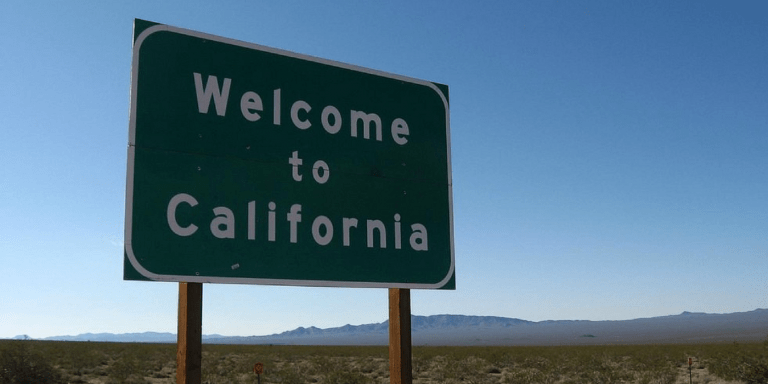
(Jacob Bruns, Headline USA) California’s far-left legislature is proposing a requirement that all new cars begin beeping to alert drivers when they are more than 10 mph over the speed limit, ABC News reported.
The bill, which cleared in the state Senate Tuesday, would force all new cars sold in the state by 2032 to beep at drivers who go too fast.
That, by extension, would likely lead to all cars incorporating the obnoxious feature, which is also likely to raise red flags for privacy advocates due to its reliance on automatic GPS tracking.
A “passive intelligent speed assistance system” would use geolocation to determine the car’s speed relative to the posted speed limit.
It then would deploy a “visual and audio signal”—that is, a constant beep—to “alert” the driver if the speed limit exceeded what the GPS manufacturer had listed as the posted speed limit for that stretch of road.
However, the bill would not require California to maintain a list of updated speed limits, and it does not seem to account for the possibility of out-of-date GPS software.
According to the bill’s author, state Sen. Scott Wiener, a San Francisco Democrat, his bill is supported by scientific studies and would make the world a safer place.
“Research has shown that this does have an impact in getting people to slow down, particularly since some people don’t realize how fast that their car is going,” said Wiener.
The speed tracking technology has been used in Europe for some time, as blue states continue use modern technology to crack down on petty lawbreaking while ignoring major crimes.
The vote passed in the state Senate by a 22-13 margin, and is scheduled for a vote in the state Assembly on Aug. 31.
Republican state Sen. Brian Dahle said he opposed it because sometimes people simply must drive faster than the speed limit, as is the case in emergencies.
“It’s just a nanny state that we’re causing here,” he argued.
California often prides itself on the fact that its regulations have an impact that extends far beyond the state.
The state has engaged in similar machinations with its green energy vehicle policies. In 2022, for example, the state passed a law dictating that no gas powered vehicles would be sold there after 2035.
It also has imposed notoriously high emissions standards on vehicles—and even trains.
(Mike Maharrey, Money Metals News Service) Governments constantly tinker with prices. Government people claim it’s in our best interest, but price manipulation creates all kinds of unseen negative consequences.
Sometimes governments set price ceilings, mandating that the cost of something can’t rise above a certain level. One example we see often is price gouging laws. In extreme cases, the government will even implement price controls. President Richard Nixon did this in the 1970s.
Sometimes governments set price floors such as minimum wages (After all, a wage is simply the price of labor).
Another example of price manipulation we see every day is Federal Reserve interest rate policymaking. The interest rate is the price of borrowing money. That means the Fed is literally engaged in price fixing.
The Impact of Government Price Manipulation
As economist Frédéric Bastiat made clear in his essay That Which Is Seen and That Which Is Not Seen, a good economist must try to account for the unseen effects of any policy. Sadly, most people aren’t good economists — and that includes a lot of economists.
It’s easy to see the supposed benefits of wage and price controls. A minimum wage benefits workers who have jobs. Price gouging laws keep prices lower during a disaster. But what about the unseen impacts?
During World War II, British Civil Defense workers turned around and moved street signs to confuse German troops in the event of an invasion.
“Change all traffic signs in the defensive area to confuse rapidly-moving attack forces.”
It makes sense. Changing or removing basic points of reference certainly makes it more difficult to navigate.
In the same way, government tinkering with the price system makes it more difficult for markets to function.
Prices serve as the street signs of the market system. They make the efficient allocation of resources possible. Economist Thomas Sowell explained the fundamental role of prices in his foundational book Basic Economics.
“Each consumer, producer, retailer, landlord, or worker makes individual transactions with other individuals on whatever terms are mutually agreeable. Prices convey those terms, not just to the particular individuals immediately involved but throughout the whole economic system – and indeed, throughout the world. If someone else somewhere else has a better product or a lower price for the same product, that fact gets conveyed and acted upon through prices, without any elected official or planning commission having to issue orders to consumers or producers – indeed faster than any planners could assemble the information on which to base their orders.”
The problem is that elected officials, bureaucrats, and central planners insist on issuing orders to consumers and producers anyway. They set minimum wages, price ceilings, and price floors. They subsidize some transactions and penalize others through taxation.
Generally, these central planners have noble intentions. They want to eliminate some perceived unfairness or right some perceived wrong. But in effect, they change the street signs. This causes chaos and confusion. Inevitably, we end up with misallocations of resources. The economy becomes less efficient. Markets cease to function properly. Society as a whole becomes poorer.
In effect, government action distorts, and in some cases, obliterates the price system.
“Prices are by definition determined by peoples’ buying and selling or abstention from buying and selling. They must not be confused with fiats issued by governments or other agencies enforcing their orders by an apparatus of coercion and compulsion.”
“Prices are a market phenomenon. They are generated by the market process and are the pith of the market economy. There is no such thing as prices outside the market. Prices cannot be constructed synthetically, as it were.”
We tend to think of markets as some kind of mechanical, faceless abstraction. In truth, a market is simply the aggregate of all of our voluntary exchanges.
Mises explains it this way:
“The pricing process is a social process. It is consummated by an interaction of all members of the society. All collaborate and cooperate, each in the particular role he has chosen for himself in the framework of the division of labor. Competing in cooperation and cooperating in competition all people are instrumental in bringing about the result, viz., the price structure of the market, the allocation of the factors of production to the various lines of want-satisfaction, and the determination of the share of each individual.”
So, when you break a market, you are effectively interfering with peaceful, voluntary associations. It harms real people, either forcing them to enter into transactions against their will or preventing them from engaging in exchanges they desire to make. It seems beneficial on the surface. But as Bastiat implored, you have to consider the unseen to get the full picture.
Mike Maharrey is a journalist and market analyst for MoneyMetals.com with over a decade of experience in precious metals. He holds a BS in accounting from the University of Kentucky and a BA in journalism from the University of South Florida.