Calif. Democrats Cut Proposed Penalties for Child Prostitution Buyers

(Kenneth Schrupp, The Center Square) – The California Senate passed a bill strengthening penalties for child sex trafficking after Democrats added a clause making purchasing sex from 16- and 17-year-olds a misdemeanor and making buying sex from children 15 years or younger a “wobbler” that cannot include prison time.

A “wobbler” is a crime that can be punished as either a felony or a misdemeanor in California.

Under existing California law, many crimes regarding purchasing sex from children are misdemeanors, with felony charges only available for cases involving minors 14 or under, or use of force. SB 1414, authored by state Sen. Shannon Grove, R-Bakersfield, originally would have made attempted or successful solicitation of sex with a minor for money a felony with a prison sentence ranging from 2 to 4 years, a fine not exceeding $25,000, and registration as a sex offender. The bill would punish all those who solicit from a child, regardless of whether or not the person knew or reasonably should have known that the person solicited was a minor.

In the California Senate Public Safety Committee, the Democratic majority added a series of amendments to SB 1414 against Grove’s objections. These amendments made buying sex from 16- and 17-year-olds only punishable as a misdemeanor, and from 15 years and younger a “wobbler” — with two days of jail and/or a fine as punishment for a misdemeanor, and jail time but no prison time as a felony. The amendments also give judges the option to eliminate the minimum mandatory two days of jail, remove punishment for those who did not know and could not reasonably have known the solicited child was a minor, makes the felony charge only punishable with jail, not prison time, and no longer require first-time offenders to register as sex offenders.

The bill, which passed unanimously on the Senate floor, now goes to the State Assembly.

“The crime of purchasing a child, of any age, for sex in the state of California should be a prison felony,” said Grove in a news release. “We must restore this bill in the Assembly to protect every child in the state of California from the horrific crime of sex trafficking.”

The bill is opposed by the ACLU and the California Public Defenders Association, which registered formal opposition to the most recent version of the bill. The ACLU also opposed Grove’s SB 14 from the prior legislative year, a bill signed into law that made trafficking children a serious crime eligible for the state’s three-strikes law.

In testimony against the unamended version of the bill, Caldwell Houston of the CPDA said, “Youth brain development is critical in part here because of the focus on such young people, and we know that through the science that a youth brain is not even really developed by 25. It would be unfortunate and wrong to force those young people to prison and to sex registry,” which suggests that younger adults should not be held to the same criminal standard as older adults.

This argument was reflected in one of the adopted amendments, under which only perpetrators with a previous conviction from purchasing sex from a child 15 or younger and with over a 10-year age gap to the victim must register as a sex offender, meaning a 25-year-old could purchase sex from 15-year-olds without registering as a sex offender.

Farm Bill Ignites Debate on Food Stamp Spending Amid $30 Billion Cut

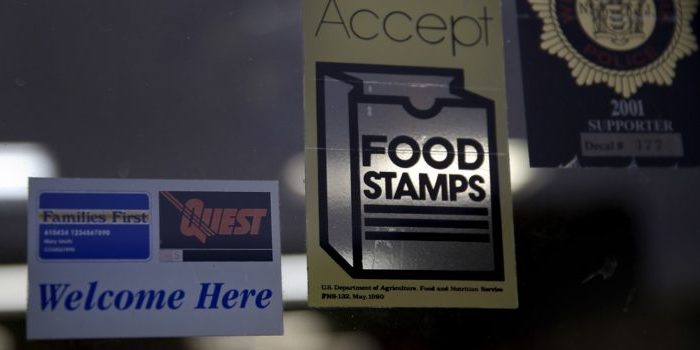
(Tom Gantert, The Center Square) – A $1.5 trillion Farm Bill supported by Republicans in the U.S. House of Representative has sparked criticism among Democrats for cutting $30 billion from the former food stamps program.

Supplemental Nutrition Assistance Program benefit costs, formerly known as food stamps, have increased from $55.6 billion in fiscal year 2019 to $107.04 billion in fiscal year 2023.

The average monthly benefit has increased from $129.83 in fiscal year 2019 to $211.57 in fiscal year 2023. That’s a 36% increase in the cost of benefits over that four-year period when adjusted for inflation.

The House Committee on Agriculture on Friday approved the Farm, Food, And National Security Act of 2024, better known as the Farm Bill that has a tremendous impact on food and food subsidies in the U.S.

The bill totaled $1.5 trillion and was the first Farm Bill to break a trillion dollars, according to ABA Banking Journal.

The U.S. House of Representatives Agriculture Committee passed the bill 33-21 with just four Democratic votes as the Republicans have majority control. The Democrats control the U.S. Senate and that House bill would have to be reconciled with the Senate bill.

U.S. Congresswoman Shontel Brown, a Democrat from Ohio, criticized the House bill, saying it would cut $30 billion over the next 10 years from future SNAP benefits.

“This partisan Farm Bill punishes the poor, picks winners and losers in commodities, undermines climate and conservation programs, and fails to properly support Black farmers, farmers from underserved communities, and new and family farmers,” Brown said in a media release.

The House Agriculture Committee Democrats said the bill would be the largest cut to SNAP in nearly 30 years.

Majority of House Democrats Support Noncitizens Voting

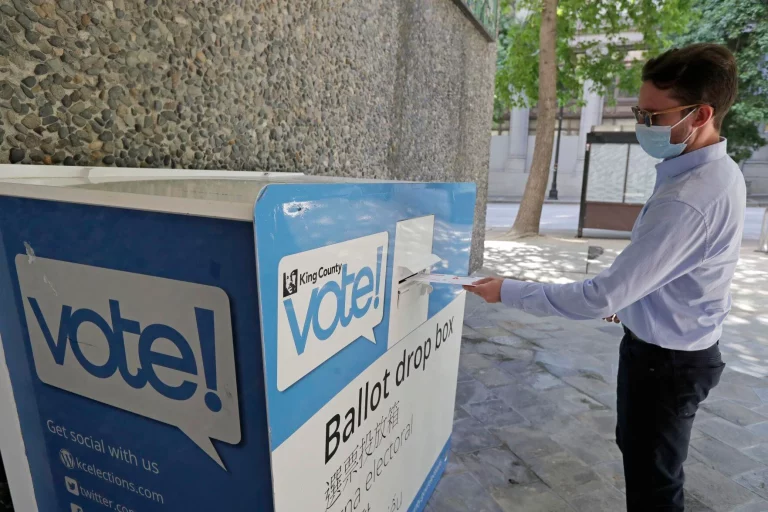
(Bethany Blankley, The Center Square) – U.S. House Democrats overwhelmingly voted to support noncitizens voting in U.S. elections.

The House voted Thursday on a bill filed by U.S. Rep. August Pfluger, R-Texas, to block noncitizens from voting in District of Columbia local elections.

The bill would repeal a 2022 District of Columbia law allowing noncitizens to vote in local elections and specifically prohibit noncitizens from voting in the district’s elections.

It passed by a vote of 262-143, with 52 Democrats joining 210 Republicans supporting it.

The majority of Democrats, 143, voted against the bill. Eighteen Democrats and seven Republicans didn’t vote.

Pfluger filed the bill in January 2023 after the Washington D.C. City Council voted nearly unanimously in October 2022 to allow noncitizens to vote in local elections beginning in 2024. The Local Resident Voting Rights Amendment Act of 2022 was approved by 12 of the 13 city council members and signed into law by Mayor Muriel Bowser. It requires congressional review. It allows green-card holders and those who illegally entered or live in the U.S. to vote in local elections if they are at least 18 years old and have lived in the district for at least 30 days.

The law was advanced after the mayor declared a state of emergency over thousands of illegal foreign nationals arriving in the city, blaming the governors of Texas and Arizona for the crisis, The Center Square reported.

At the time the law was passed, roughly 51,000 noncitizens were living in D.C., according to a Migration Policy Institute estimate. The district’s population as of July 1, 2023, was nearly 680,000, according to U.S. Census data.

One attempt to block the law was made by seven D.C. residents and U.S. citizens who sued. However, in March of this year, their efforts were squashed by District Judge Amy Jackson with the U.S. District Court for the District of Columbia. She ruled that the residents who sued didn’t have standing and granted the defendant’s motion to dismiss “for lack of subject matter jurisdiction.”

Two months after her ruling, Congress voted on Pfluger’s bill.

In a floor statement prior to the vote, Pfluger took issue with the D.C. City Council’s “short-sighted decision,” which he said not only allowed noncitizens “including illegal aliens and foreign agents – to vote in local D.C. elections,” but officials encouraged them to vote. He pointed to a flier being distributed throughout the district encouraging non-citizens to vote for the mayor, members of the State Board of Education, and others.

While some critics may ask what the harm is in allowing noncitizens to vote in local elections, Pfluger said they are “democratic elections that regularly determine taxation, the criminal code, and the election of the very city council members who decide ordinances like who gets the right to vote.”

It was “inconceivable” that the D.C. City Council or any city council “would intentionally dilute the voting power of their constituents (many of them from underserved communities) for noncitizens who otherwise would not meet residency requirements, don’t pay taxes, in some cases broke our laws to enter this country, and could even be employed by a foreign adversary,” he said.

“As the Capital of our democracy, D.C. ought to be leading the way in safe and secure elections – not incentivizing the exact practices our adversaries will relish.”

The House passed the bill after another election-related bill was filed by another Texas Republican.

Earlier this month, U.S. Rep. Chip Roy, R-Texas, with several cosponsors, filed the Safeguard American Voter Eligibility (SAVE) Act. Citing the border crisis and the greatest number of foreign nationals illegally entering the country in U.S. history, the measure’s supporters expressed alarm that instead of being deported, many are being registered to vote, The Center Square reported.

District of Columbia City Councilwoman Brianne Nadeu, a Democrat who has championed expanding voting rights for noncitizens for nearly a decade, said noncitizens should be able to vote because “those who have made the District their home have the right for their voices to be heard in our local issues, no matter their immigration status.”

Last month, the D.C. Board of Elections held a training session to educate noncitizens on how to vote.

MURDOCK: Congress Scorecard Reveals a ‘B’ Word Crockett Doesn’t Know—’Bipartisan’

(Deroy Murdock, Headline USA) Vermont’s Bernie Sanders is a relative conservative in the Democrat-controlled U.S. Senate. And self-styled socialist Rep. Alexandria Ocasio Cortez of New York (AOC) is hardly the hardest-left ​U.S. House member.

The Washington, D.C.-based Institute for Legislative Analysis made these and other discoveries after reviewing 58 Senate votes and 133 House tallies in 2023.

They then rated lawmakers from zero (most liberal) to 100 (most conservative). ILA figures confirm that Capitol Hill Democrats are almost uniformly left-wing radicals while Republicans are more moderate than even GOP voters imagine.

For starters, 26 Senate Democrats—a majority—scored lower than the 7.14% rating for Sanders, the one-man gold standard for American socialism. Such reputedly “middle of the road” lawmakers as Virginia’s Mark Warner (5.56), Pennsylvania’s Bob Casey (5.45), and Maryland’s Ben Cardin (3.57) are all left of Sanders.

At 7.14, Senate Democrat Leader Chuck Schumer of New York has the same score as … Bernie Sanders! So does alleged “centrist” and former astronaut Mark Kelly of Arizona. Schumer is just seven points from the Left’s 0% “wall.”

Meanwhile, Senate Republican Leader Mitch McConnell of Kentucky’s 66.04 score puts him fully 33 points from the Right’s end zone and that much nearer the center. Indeed, while 26 senators are Left of Schumer, 40 are Right of McConnell.

Many conservatives, not least moi, slam McConnell mercilessly and justifiably for sacrificing the Right’s principles an exquisite one-third of the time and more so when it really matters.

McConnell ate out of Schumer’s hand on omnibus spending bills, a hike in the debt limit, and April’s betrayal on border security. Still, if McConnell votes Left 33.96% of the time, Democrats should stop calling him an extremist.

The Senate’s ideological anchors are Connecticut’s hard-Left Chris Murphy (1.79); its most conservative Democrat, Joe Manchin of West Virginia (35.19); the most-liberal Republican, Susan Collins of Maine (a severely centrist 50.00), and the most-stalwart conservative, Mike Lee of Utah (100.00% pro- individual liberty, limited government, and free enterprise).

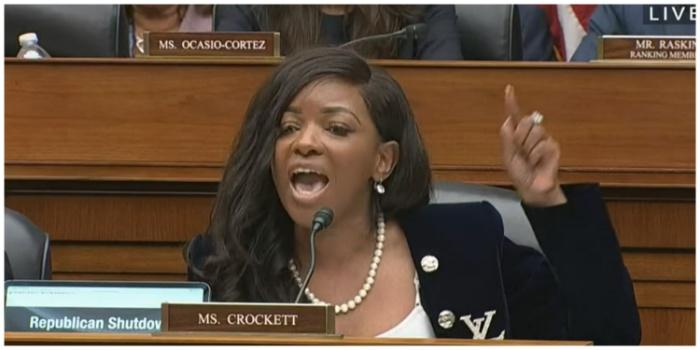
Across the Capitol, Rep. Jasmine Crocket​t, D-Texas, earned a 1.61 rating and the House’s farthest-Left trophy. ​The whole world was watching on May 16, when she ​participated in a​ juvenile, verbal​ melee with AOC and Rep. Marjorie Taylor Greene, R-Ga.

The House’s most conservative Democrat is Maine’s Jared Golden (33.33), and its most liberal Republican is Pennsylvania’s Brian Fitzpatrick (36.51). Pennsylvania’s Scott Perry, Texas’s Chip Roy, and Virginia’s Robert Good—Republicans all—share 100% ratings and the ​House’s Top Conservative award.

An 87.06 rating puts House Speaker ​Mike Johnson, R-La., closer to the center than Democrat Leader Hakeem Jeffries of New York’s 7.14. Shamefully, Johnson’s McConnell-style white flags likely will lower his numbers even further in next year’s ILA scorecard.

Meanwhile, 33 House Democrats are left of “Squad” leader and proud socialist AOC. Nearly three dozen of her colleagues must wish that she would stop voting so often with Republicans.

In both chambers, Democrats march with North Korean conformity while Republicans are more diverse. Senate Democrats range from 1.79 to 35.19. Republicans stretch more widely from 50.00 to 100. House Democrats run from 1.67 to 33.33. Republicans even more broadly span 36.51 to 100.

Most fascinating is how the parties address two key issue areas. On cultural questions like abortion, gender, and race, Senate and House Republicans jointly score 97.57 versus 0.87 for Democrats. On tax-and-spend fiscal matters, congressional Republicans earn 50.66. Democrats: 1.04.

“On cultural issues​, Republicans have become very hardcore, while trending much more moderate on fiscal affairs​,” says ILA President Fred McGrath. “Democrats, conversely, are extreme on cultural, fiscal​, and every other issue.”

McGrath added that nearly 95% of Democrats scored below 15%. “By contrast, fewer than 33% of Republicans score above 85%,” he noted.

Next time Joe Biden and his Democrat comrades foam at their mouths about “extreme, mega-MAGA Republicans,” they should study ILA’s irrefutable statistics and buy mirrors, so they can stare at Capitol Hill’s genuine extremists.

Deroy Murdock is a Manhattan-based Fox News contributor.

Trumps Unveil RNC’s Plan to Bank Votes and Harvest Ballots at State GOP Convention

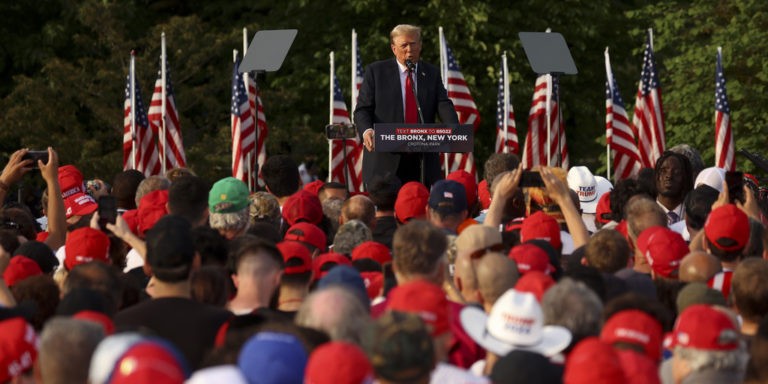
(Ben Sellers, Headline USA) At a rally Thursday in the Bronx, presumptive GOP presidential nominee Donald Trump put blue-state Democrats on notice that he was going after their territory while eyeing the biggest red-wave election in 40 years as his aspiration.

During the North Carolina Republican convention a day later in Greensboro, Trump’s daughter-in-law Lara, who is now the co-chair of the Republican National Committee, explained how the RNC intended to pull off such a feat in the age of systemic election stealing, following a brutal series of three disappointing election cycles under her predecessor, Ronna Romney McDaniel.

Just like Trump’s speech in New York’s Crotona Park, it involves going into uncharted territory where only Democrats have dared to venture in the past. The strategy is one that Donald Trump and many others in MAGA nation have not only scoffed at, but openly denounced as a conduit to fraud.

However, with rules that were controversial—and, in some cases, illegal—having since become codified in swing states like Arizona, Pennsylvania and Michigan that lost the last battle, there is no choice but to follow their lead rather than trying to go against the prevailing current.

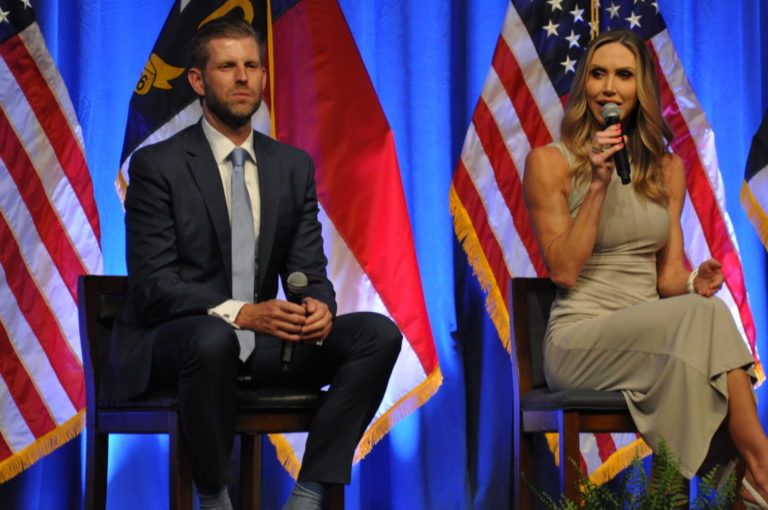
“Listen, we can’t play the game the same way and think we’re going to win—we have to fight fire with dynamite,” said Lara Trump, who was joined onstage by her husband, Eric, the second son of the once and future president.

LEARNING TO LOVE LEFTIST SHENANIGANS

For North Carolina, which allows those who submitted absentee ballot requests to begin voting two months before the election, vote-banking will become a key strategy. The state’s in-person voting begins on Oct. 17, with same-day registration available, according to the Board of Elections.

“What Donald Trump has said—and what we are encouraging people to do as well is—any way you can vote, and as early as you can vote, get your vote banked,” Lara Trump said.

She emphasized that the overarching goal of the strategy was to get Republicans back in control so that they could ideally enact legislation that would make election integrity the law of the land, including a single day of in-person voting as the U.S. Constitution specifically stipulates.

Nonetheless, she conceded that the 20 extra days of voting was something Republicans could use to their advantage as well—provided there were people watching at every step of the way to ensure chain-of-custody rules were respected and that poll-watchers were there to ensure no wee-hours ballot dumps muddled the official tally.

“Listen, life happens, right? You never know what can happen day to day—you might get sick, your kids might have an issue, something happens at work and you don’t want to wait and miss your opportunity to get your vote banked,” Lara Trump reasoned.

“We have to make it too big to rig in this election cycle, so we want you to go vote early—the very first day you can—and then we want you to work from that day, every single day up to Election Day taking people to the polling location,” she continued. “Take them there—make sure you get them engaged, make sure you get them voting.”

In addition to vote-banking, Lara Trump also previewed another major component to the RNC’s new pathway to victory that was likely to raise some eyebrows in the audience.

“The Democrats have been doing something for years that we have never undertaken as a party, and that is legal ballot-harvesting,” she said.

“So, everywhere in this country we can legally ballot-harvest, look out for an operation headed up by the RNC,” she added. “If they can do it, so can we, and we’re going to beat them at their own game.”

COUNT EVERY VOTE (EXCEPT WHEN REPUBLICANS WIN…)

As Lara Trump—a Wilmington native who helped deliver the state to her father-in-law in 2016 and 2020—is well aware, ballot harvesting is not legal in North Carolina.

In fact, the prohibition on it resulted in an ironic reversal of roles for Democrats during the 2018 election cycle, after a close race in the 8th Congressional District resulted in allegations against winning Republican candidate Mark Harris, a Baptist minister.

In an effort to steal the seat from Harris following his narrow victory, the Democrat National Committee sent notorious lawyer Marc Elias to Raleigh to argue the case against the alleged GOP ballot-harvester, despite Elias having successfully reversed several noteworthy elections by finding mysteriously uncounted bags of ballots after the fact.

Although Harris, following a dramatic hearing, opted to drop out of the do-over election, the story may have had a happy ending all around. Then-state Sen. Dan Bishop, a staunch pro-values Republican, was decisively elected (and re-elected twice thereafter), becoming a powerful voice on the House weaponization subcommittee and a member of the Freedom Caucus.

Frustrated by all the stagnation and red tape in Congress, Bishop is now running to be the state attorney general, where he hopes to have a greater impact in fighting the sort of lawfare attacks being waged by left-wing (mostly Soros-funded) activists.

Running to replace him is none other than Harris, who won his primary in a district that is now much more conservative, eliminating the need for any of the aggressive get-out-the-vote practices he had previously solicited from backwoods .

As for Elias, the ethically challenged litigator was seemingly forced to resign from his old law firm, Perkins Coie, after it drew the scrutiny of special counsel John Durham’s investigation into the Russia-collusion hoax.

However, he continues to aggressively seek ways to undermine election integrity and to fight the GOP at every turn, underscoring the need for leaders like Bishop to fight back in the courtroom.


The legal challenges being waged by Elias and other lawfare activists played no small part in the personnel changes that Donald Trump made at the RNC after locking up the Republican nomination in March.

As his son Eric said, the Trump team actively engaged in “RINO hunting” to weed the national party of any disloyal careerists who might secretly seek to undermine Trump’s populist movement in the hopes of restoring a Bush dynasty.

During the Friday night dinner presentation in North Carolina, Eric Trump even got his father on the phone for a roughly five-minute call. (Trump, who personally attended the NC convention in 2023, had a rare night of downtime on Friday before a scheduled speech on Saturday at the Libertarian Party convention in Washington, D.C.)

While Eric and Laura were joined by new NCGOP chairman Jason Simmons, Donald Trump has a special commendation for RNC co-chair Michael Whatley, who was due to appear at the convention on Saturday alongside Vivek Ramaswamy.

He noted that Whatley has stood out from other state leaders in his efforts to fight the fraud in 2020.

“There was never so much cheating in the history of elections as that—they used COVID to cheat,” said the former president.

However, “… Michael Whatley did a fantastic job,” Trump added. “The reason we took him is that he stayed steady. He had 600 different lawyers working that night. They were watching the election fraud. … Michael did the best job … so we took North Carolina and we put him in charge of the RNC along with Laura.

Listen to Trump’s entire phone call here:

Ben Sellers is the editor of Headline USA. Follow him at twitter.com/realbensellers.

Kansas City Fires Employee Who Doxxed Catholic Harrison Butker

(Dmytro “Henry” Aleksandrov, Headline USA) Kansas City Mayor Quinton Lucas’s spokesperson confirmed that the city fired the employee who doxxed Harrison Butker.

“The employee has been separated from the City workforce for violation of City policy by posting outside the scope of authorized City communications. The City will have no further comment on the post or individual employees related to it,” the spokesperson said in a statement, the Daily Wire reported.

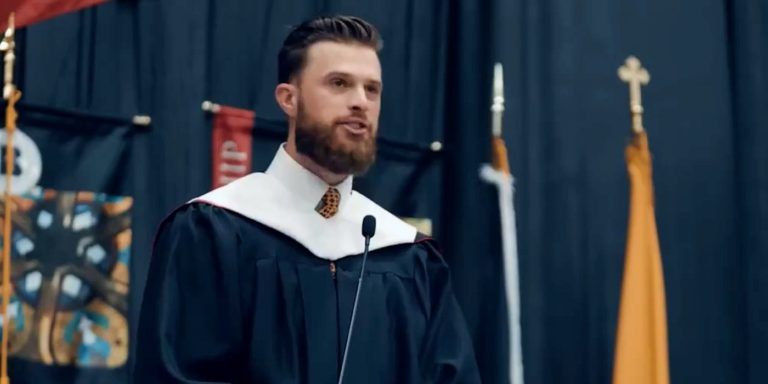
The news came after the employee behind the official city-run Twitter account revealed where Butker lived amid attacks from the leftists over his commencement speech to the graduates at Benedictine College when he praised his wife for being a “homemaker,” urged female graduates to become wives and mothers instead of pursuing their careers, called out Joe Biden’s support for abortion and criticized LGBT “Pride month.”

“Just a reminder that Harrison Butker lives in…” the official account of Kansas City posted, listing where Butker lived.

Soon after, the city quickly deleted that post and put out another apologizing for the “previous tweet.”

“A message appeared earlier this evening from a City public account. The message was clearly inappropriate for a public account. The City has correctly apologized for the error, will review account access and ensure nothing like it is shared in the future from public channels,” the city’s mayor said.

The placekicker said during his speech at the Catholic college that his wife would agree that her life “truly started when she began living her vocation as a wife and as a mother.”

“How many of you are sitting here now, about to cross this stage, and are thinking about all the promotions and titles you are going to get in your career? Some of you may go on to lead successful careers in the world, but I would venture to guess that the majority of you are most excited about your marriage and the children you will bring into this world,” he said.

NCAA Reaches $2.8B Settlement in Deal to Compensate College Athletes

(Headline USA) The NCAA and the nation’s five biggest conferences announced Thursday night that they have agreed to pay nearly $2.8 billion to settle a host of antitrust claims, a monumental decision that sets the stage for a groundbreaking revenue-sharing model that could start steering millions of dollars directly to athletes as soon as the 2025 fall semester.

NCAA President Charlie Baker along with the commissioners of the Atlantic Coast Conference, Big Ten, Big 12, Pac-12 and Southeastern Conference released a joint statement saying they had agreed to settlement terms.

They called the move “an important step in the continuing reform of college sports that will provide benefits to student–athletes and provide clarity in college athletics across all divisions for years to come.”

Terms were not disclosed, though some details have emerged in the past few weeks. They signal the end of the NCAA’s bedrock amateurism model that dates to its founding in 1906.

Indeed, the days of NCAA punishment for athletes driving booster-provided cars started vanishing three years ago when the organization lifted restrictions on endorsement deals backed by so-called name, image and likeness money.

The deal still must be approved by the federal judge overseeing the case and plaintiffs will have the opportunity to opt out or challenge terms of the agreement. If it stands, it will usher in the beginning of a new era in college sports where athletes are compensated more like professionals and schools can compete for talent using direct payments.

“There’s no question about it. It’s a huge quantum leap,” said Tom McMillen, the former Maryland basketball player and congressman who has led an association of collegiate athletic directors the past eight years.

Now it is not far-fetched to look ahead to seasons where star quarterbacks or top prospects on college basketball teams are not only cashing in big-money NIL deals but have six-figure school payments in the bank to play.

“This landmark settlement will bring college sports into the 21st century, with college athletes finally able to receive a fair share of the billions of dollars of revenue that they generate for their schools,” said Steve Berman, one of the lead attorneys for the plaintiffs. “Our clients are the bedrock of the NCAA’s multibillion-dollar business and finally can be compensated in an equitable and just manner for their extraordinary athletic talents.”

There are a host of details still to be determined, but the agreement calls for the NCAA and the conferences to pay $2.77 billion over 10 years to more than 14,000 former and current college athletes who say now-defunct rules prevented them from earning money from endorsement and sponsorship deals dating to 2016.

“Even though it was only because of the overwhelming legal pressure, the NCAA, conferences and schools are agreeing that college athletes should be paid,” said Ramogi Huma, a former UCLA football player and longtime advocate for college athletes. “And there’s no going back from there. That’s truly groundbreaking.”

Some of the money will come from NCAA reserve funds and insurance but even though the lawsuit specifically targeted five conferences that are comprised of 69 schools (including Notre Dame), dozens of other NCAA member schools will see smaller distributions from the NCAA to cover the mammoth payout.

Schools in the Big Ten, Big 12, ACC and SEC are likely to end up bearing the brunt of the settlement going forward at an estimated cost of about $300 million each over 10 years, the majority of which would be paid to directly to athletes.

“The settlement, though undesirable in many respects and promising only temporary stability, is necessary to avoid what would be the bankruptcy of college athletics,” said Notre Dame President Rev. John I. Jenkins.

PAYING ATHLETES

In the new compensation model, each school will be permitted but not required to set aside up to $21 million in revenue to share with athletes per year, though as revenues rise so could the cap.

Athletes in all sports would be eligible for payments and schools would be given the freedom to decide how that money is divvied up among sports programs. Scholarship limits by sport will be replaced by roster restrictions.

Whether the new compensation model is subject to the Title IX gender equity law is unknown along with whether schools will be able to bring NIL activities in-house as they hope and squeeze out the booster-run collectives that have sprouted up in the last few years to pay athletes. Both topics could lead to more lawsuits.

THE CASE

The class-action federal lawsuit at the center of the settlement, House vs. the NCAA, was set to go to trial in January. The complaint, brought by former Arizona State swimmer Grant House and Sedona Prince, a former Oregon and current TCU basketball player, said the NCAA, along with the five wealthiest conferences, improperly barred athletes from earning endorsement money.

The suit also argued that athletes were entitled to a piece of the billions of dollars the NCAA and those conferences earn from media rights agreements with television networks.

Amid political and public pressure, and facing the prospect of another court loss that some in college sports claimed could reach $20 billion in damages, NCAA and conference officials conceded on what has long been a core principal of the enterprise: that schools don’t directly pay the athletes to play beyond a scholarship.

That principle has been dented numerous times over the last decade. Notably, the Supreme Court unanimously ruled against the NCAA in 2021 in a case related to education-related benefits.

The narrow focus of the Alston case didn’t collapse the collegiate sports system, but the strong rebuke of the NCAA’s model of amateurism flung the door open to more lawsuits. Justice Brett Kavanaugh, a former Yale athlete, put it bluntly: “The bottom line is that the NCAA and its member colleges are suppressing the pay of student athletes who collectively generate billions of dollars in revenues for colleges every year.”

THE OTHER CASES

The settlement is expected to cover two other antitrust cases facing the NCAA and major conferences that challenge athlete compensation rules. Hubbard vs. the NCAA and Carter vs. the NCAA are also currently in front of judges in the Northern District of California.

A fourth case, Fontenot vs. the NCAA, creates a potential complication as it remains in a Colorado court after a judge denied a request to combine it with Carter. Whether Fontenot becomes part of the settlement is unknown and it matters because the NCAA and its conferences don’t want to be on the hook for more damages should they lose in court.

“We’re going to continue to litigate our case in Colorado and look forward to hearing about the terms of a settlement proposal once they’re actually released and put in front of a court,” said George Zelcs, a plaintiffs’ attorney in Fontenot.

COLLEGE ATHLETICS OVERHAUL

The solution agreed to in the settlement is landmark, but not surprising. College sports has been trending in this direction for years, with athletes receiving more and more monetary benefits and rights they say were long overdue.

In December, Baker, the former Massachusetts governor who has been on the job for 14 months, proposed creating a new tier of Division I athletics where the schools with the most resources would be required to pay at least half their athletes $30,000 per year. That suggestion, along with many other possibilities, remain under discussion.

The settlement does not make every issue facing college sports go away. There is still a question of whether athletes should be deemed employees of their schools, something Baker and other college sports leaders are fighting against.

Some type of federal legislation or antitrust exemption is likely still needed to codify the terms of the settlement, protect the NCAA from future litigation and pre-empt state laws that attempt to neuter the organization’s authority. As it is, the NCAA is still facing lawsuits that challenge its ability to govern itself, including setting rules limiting multiple-time transfers.

“This settlement is also a road map for college sports leaders and Congress to ensure this uniquely American institution can continue to provide unmatched opportunity for millions of students,” the joint statement said.

“All of Division I made today’s progress possible, and we all have work to do to implement the terms of the agreement as the legal process continues,” it continued. “We look forward to working with our various student-athlete leadership groups to write the next chapter of college sports.”

Federal lawmakers have indicated they would like to get something done, but while several bills have been introduced, none has gone anywhere.

Despite the unanswered questions, one thing is clear: Major college athletics is about to become more like professional sports than ever before.

Adapted from reporting by the Associated Press

Hunter Biden Defense Blames Gun Store Employee for Incriminating Form

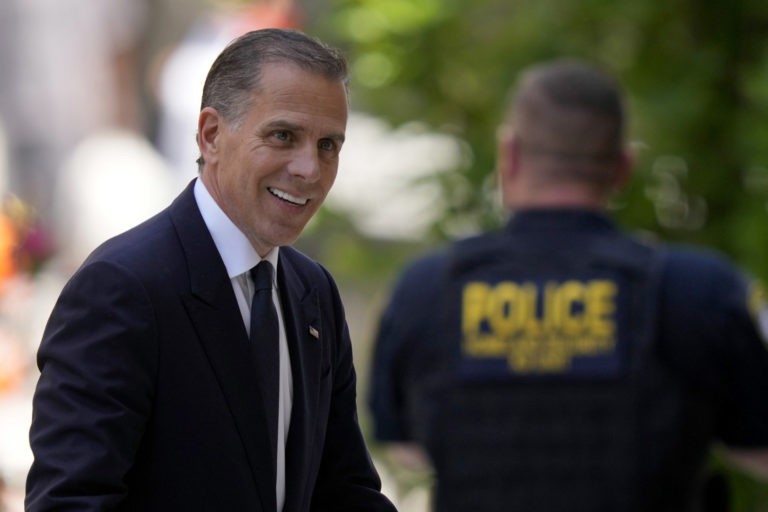
(Headline USA) Hunter Biden’s lawyer, Abbe Lowell, claimed in a Delaware court Friday that a gun store employee had helped him fill out a form that he is accused of lying on in a felony charge.

The filing suggested that the brother of the former Delaware attorney general and son of its longtime U.S. senator was unaware of the state’s laws prohibiting drug addicts from possessing firearms.

Despite the effort to deflect culpability, some quickly noticed glaring irregularities with the forms provided in the new court filings, including the fact that the employee used three different-colored pens.

U.S. District Judge Maryellen Noreika presided over what was expected to be the last hearing before trial expected to begin with jury selection on June 3.

President Joe Biden’s son didn’t speak to reporters as he followed his lawyers into the Wilmington courthouse.

He’s charged with lying about his drug use in October 2018 on a form to buy a gun that he kept for about 11 days in Delaware. He has acknowledged an addiction to crack cocaine during that period.

His lawyers have claimed he didn’t break the law and insisted the case is politically motivated.

The two sides have been arguing in court documents about evidence in the case, including the contents of his abandoned laptop that were recovered from a hard drive at a Delaware repair shop. Much of the contents have since been made public by the opposition-research group Marco Polo at BidenLaptopMedia.com.

Defense attorneys have questioned the authenticity of the laptop’s data in court documents, but prosecutors say that there’s no evidence the data has been compromised and that a drawn-out fight over it at trial would be a waste of time.

After media and deep state propagandists initially attempted to claim it was Russian disinformation, it has since been forensically analyzed by experts and intelligence officials, both of whom confirm the authenticity of the contents. Former Biden business associates have also verified the authenticity.

Prosecutors also plan to show jurors portions of Hunter Biden’s 2021 memoir Beautiful Things, in which he detailed his struggle with alcoholism and drug abuse following the 2015 death of his older brother, Beau, of brain cancer at age 46.

Hunter is also facing federal tax charges in Los Angeles and is set for trial in that case in September.

He’s accused of failing to pay at least $1.4 million in taxes over four years while living an “extravagant lifestyle” during a period in which he has acknowledged struggling with addiction. The back taxes have since been paid.

His lawyers have pushed unsuccessfully in both cases to have them dismissed. They have argued, among other things, that prosecutors bowed to political pressure to indict him after a plea agreement hit the skids in court and was publicly pilloried by Republicans, including former President Donald Trump, as a “sweetheart deal.”

Federal investigators slow-walked the case for years despite clear and compelling evidence, including the laptop, claiming that the the bureaucracy was hindering them from acting further. It was not until several whistleblowers testified before Congress that U.S. Attorney David Weiss, who was leading the probe, suddenly faced pressure to act as Biden officials were slammed for two-tiered justice.

The long-running federal investigation into the president’s son had looked ready to wrap up with a plea deal last year, but the agreement imploded after Noreika raised questions about it. Hunter Biden was subsequently indicted.

Under the deal, he would have gotten two years of probation after pleading guilty to misdemeanor tax charges. He also would have avoided prosecution on the gun charge if he stayed out of trouble.

Trump, who is running to unseat the Democratic president, faces his own legal problems. He is charged in four criminal cases which have all been slammed as spurious lawfare attacks.

Adapted from reporting by the Associated Press

N.Y. Has More Republicans, Dissatisfied Dems than ‘We’d Like to Admit,’ Leftist Professor Says

(Dmytro “Henry” Aleksandrov, Headline USA) A leftist New York City professor said that Donald Trump and the GOP are taking advantage of disappointment with the Democratic Party’s leadership in New York, adding that the state is not as blue as people might think.

“There are a lot more Republicans and dissatisfied Democrats in the state of New York than we’d like to admit. I don’t know if New York is definitely a blue stronghold. All states are red states, we just have blue cities in red states,” City College of New York professor Christina Greer said.

Greer also remembered how many people supported Republican Lee Zeldin when he was running for governor in 2022, Fox News reported.

“New York is the reason why Joe Biden didn’t have a unified government in 2022. We’re the ones who lost the four members of the House who went over to the Republican Party,” she said.

Panelists on MSNBC discussed Trump’s May 23, 2024, campaign rally in the South Bronx of New York City. Even though they agreed New York is not turning red anytime soon, they also said that Trump and the GOP are making surprising inroads in the infamous far-left state.

“The real reason why Donald Trump is going to the Bronx is to say to the Democratic voters of the Bronx ‘Has Joe Biden been here?’ right? ‘You all keep voting democratically, but I’m the one who’s actually coming to visit you,’” Greer said.

She then added that Trump doesn’t think that he would get the minority vote, assuming that he just doesn’t want them to vote for Biden.

“I don’t think he necessarily thinks he’s going to get black and Latino voters to vote for him. The strategy is to get them to abstain from voting for anyone on the top. That’s where it matters, not just in New York. It matters in places like Milwaukee and Detroit. Places where Joe Biden has less favorability,” she said.

Greer then said that Biden needs to concentrate on bringing back black male voters to the Democratic plantation.

“Joe Biden needs to make the case to black and Latino voters, and I should say, black male voters. Black female voters tend to be immune to what the Republican Party is selling. We always see black male voters voting a little bit more for the Republican Party than black female voters. The real reason that Donald Trump wants this is to make sure he sort of suppresses the vote by black male voters in the sense he’s not expecting them to vote for him,” she said.

Hochul Refers to Black and Latino Bronx Voters as ‘Clowns’

(Jacob Bruns, Headline USA) Fresh off the heels of a recent scandal in which she suggested black New Yorkers were computer illiterate, Democrat New York Gov. Kathy Hochul delivered another insult to minorities in the Big Apple.

Hochul made her derisive remarks while trying to downplay presumptive GOP presidential nominee Donald Trump’s hugely successful rally in the Bronx on Thursday in an interview with CNN’s Jake Tapper.

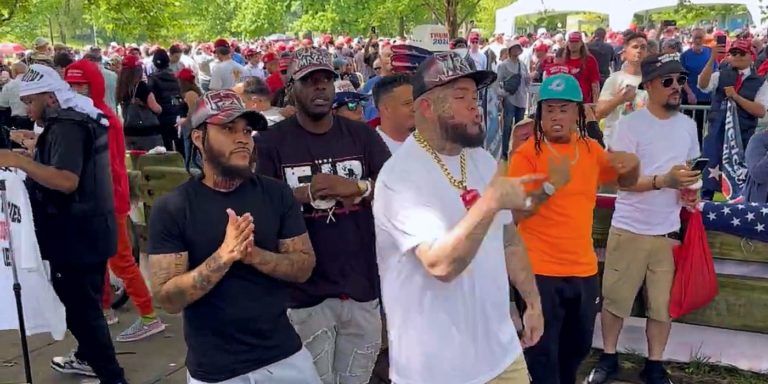
“Well, I’ll tell you what won’t make a difference at all, Jake, and that’s for Donald Trump to be a ringleader and invite all his clowns to a place like the Bronx,” Hochul said.

Some compared the gaffe to failed 2016 nominee Hillary Clinton’s “basket of deplorables” remark, since both risked alienating voters rather than attempting to win them over, Fox News reported.

Hochul, who narrowly won her reelection race to GOP challenger Lee Zeldin in 2022, boldly predicted that Trump had no chance to carry New York in the upcoming 2024 election.

No Republican presidential candidate has won there in 40 years, since former President Ronald Reagan took the state in his reelection bid.

“New York will never, ever support Donald Trump for president,” Hochul claimed.

She added that the former president is “just for himself,” accused Trump of holding “fake rallies” and praised President Joe Biden for “delivering for all Americans.”

While Biden easily carried New York in 2020 with over 60% of the popular vote, current polls indicate that New York will be much closer in 2024 with Biden holding a mere nine point lead.

Trump’s growing support in the traditionally left-leaning state is apparent in both polls and also the rally that Hochul mocked. While organizers estimated a couple thousand attendees, some suggested as many as 25,000 may have showed up.

Law-enforcement officials offered a more modest 8,000-10,000 attendees. Nonetheless, the size and diversity of the crowd were enough to shock CNN.

Videos of the event showed that thousands of New Yorkers turned out to support the 2024 Republican candidate.

Many of the attendees praised Trump for being the major first candidate in memory to make the effort to reach out to them by campaigning in the “hood.”

Republicans in the state said they thought Hochul’s insulting comments would only serve to aid their side in the upcoming election.

According to David Laska, director of communications for the New York GOP, Hochul’s “disparaging” and “appalling” comments revealed that she was only interested in serving citizens whose political views align with her own.

“It’s time for Governor Hochul to apologize to the hardworking citizens she continues to alienate with her elitist, offensive rhetoric,” Laska concluded.