Calif. Proposes Requiring Cars to Beep When Driver Exceeds Speed Limit by 10mph

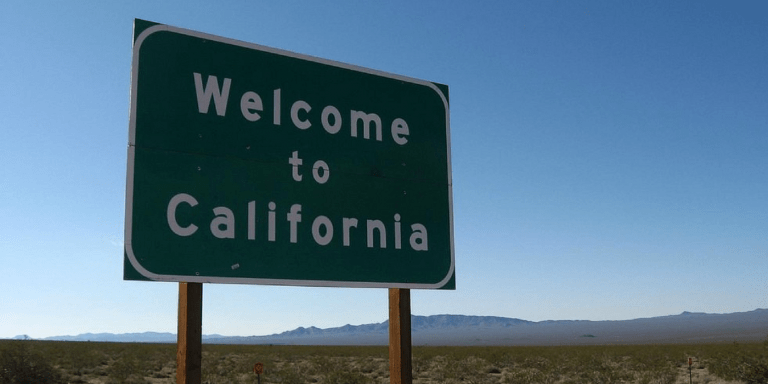
(Jacob Bruns, Headline USA) California’s far-left legislature is proposing a requirement that all new cars begin beeping to alert drivers when they are more than 10 mph over the speed limit, ABC News reported.

The bill, which cleared in the state Senate Tuesday, would force all new cars sold in the state by 2032 to beep at drivers who go too fast.

That, by extension, would likely lead to all cars incorporating the obnoxious feature, which is also likely to raise red flags for privacy advocates due to its reliance on automatic GPS tracking.

A “passive intelligent speed assistance system” would use geolocation to determine the car’s speed relative to the posted speed limit.

It then would deploy a “visual and audio signal”—that is, a constant beep—to “alert” the driver if the speed limit exceeded what the GPS manufacturer had listed as the posted speed limit for that stretch of road.

However, the bill would not require California to maintain a list of updated speed limits, and it does not seem to account for the possibility of out-of-date GPS software.

According to the bill’s author, state Sen. Scott Wiener, a San Francisco Democrat, his bill is supported by scientific studies and would make the world a safer place.

“Research has shown that this does have an impact in getting people to slow down, particularly since some people don’t realize how fast that their car is going,” said Wiener.

The speed tracking technology has been used in Europe for some time, as blue states continue use modern technology to crack down on petty lawbreaking while ignoring major crimes.

The vote passed in the state Senate by a 22-13 margin, and is scheduled for a vote in the state Assembly on Aug. 31.

Republican state Sen. Brian Dahle said he opposed it because sometimes people simply must drive faster than the speed limit, as is the case in emergencies.

“It’s just a nanny state that we’re causing here,” he argued.

California often prides itself on the fact that its regulations have an impact that extends far beyond the state.

The state has engaged in similar machinations with its green energy vehicle policies. In 2022, for example, the state passed a law dictating that no gas powered vehicles would be sold there after 2035.

It also has imposed notoriously high emissions standards on vehicles—and even trains.

Economics 101: Government Tinkering With Prices Is Like Hiding All of the Street Signs

(Mike Maharrey, Money Metals News Service) Governments constantly tinker with prices. Government people claim it’s in our best interest, but price manipulation creates all kinds of unseen negative consequences.

Sometimes governments set price ceilings, mandating that the cost of something can’t rise above a certain level. One example we see often is price gouging laws. In extreme cases, the government will even implement price controls. President Richard Nixon did this in the 1970s.

Sometimes governments set price floors such as minimum wages (After all, a wage is simply the price of labor). 

Another example of price manipulation we see every day is Federal Reserve interest rate policymaking. The interest rate is the price of borrowing money. That means the Fed is literally engaged in price fixing.

The Impact of Government Price Manipulation

As economist Frédéric Bastiat made clear in his essay That Which Is Seen and That Which Is Not Seen, a good economist must try to account for the unseen effects of any policy. Sadly, most people aren’t good economists — and that includes a lot of economists.

It’s easy to see the supposed benefits of wage and price controls. A minimum wage benefits workers who have jobs. Price gouging laws keep prices lower during a disaster. But what about the unseen impacts?

During World War II, British Civil Defense workers turned around and moved street signs to confuse German troops in the event of an invasion.

The U.S. Army recommends this same tactic in a 1978 manual titled Tactical Deception, Part 101.

“Change all traffic signs in the defensive area to confuse rapidly-moving attack forces.”

It makes sense. Changing or removing basic points of reference certainly makes it more difficult to navigate.

In the same way, government tinkering with the price system makes it more difficult for markets to function.

Prices serve as the street signs of the market system. They make the efficient allocation of resources possible. Economist Thomas Sowell explained the fundamental role of prices in his foundational book Basic Economics.

“Each consumer, producer, retailer, landlord, or worker makes individual transactions with other individuals on whatever terms are mutually agreeable. Prices convey those terms, not just to the particular individuals immediately involved but throughout the whole economic system – and indeed, throughout the world. If someone else somewhere else has a better product or a lower price for the same product, that  fact gets conveyed  and acted upon through prices, without any elected official or planning commission having to issue orders to consumers or producers – indeed faster than any planners could assemble the information on which to base their orders.”

The problem is that elected officials, bureaucrats, and central planners insist on issuing orders to consumers and producers anyway. They set minimum wages, price ceilings, and price floors. They subsidize some transactions and penalize others through taxation.

Generally, these central planners have noble intentions. They want to eliminate some perceived unfairness or right some perceived wrong. But in effect, they change the street signs. This causes chaos and confusion. Inevitably, we end up with misallocations of resources. The economy becomes less efficient. Markets cease to function properly. Society as a whole becomes poorer.

In effect, government action distorts, and in some cases, obliterates the price system.

As economist Ludwig von Mises explained, 

“Prices are by definition determined by peoples’ buying and selling or abstention from buying and selling. They must not be confused with fiats issued by governments or other agencies enforcing their orders by an apparatus of coercion and compulsion.”

“Prices are a market phenomenon. They are generated by the market process and are the pith of the market economy. There is no such thing as prices outside the market. Prices cannot be constructed synthetically, as it were.”

We tend to think of markets as some kind of mechanical, faceless abstraction. In truth, a market is simply the aggregate of all of our voluntary exchanges.

Mises explains it this way:

“The pricing process is a social process. It is consummated by an interaction of all members of the society. All collaborate and cooperate, each in the particular role he has chosen for himself in the framework of the division of labor. Competing in cooperation and cooperating in competition all people are instrumental in bringing about the result, viz., the price structure of the market, the allocation of the factors of production to the various lines of want-satisfaction, and the determination of the share of each individual.”

So, when you break a market, you are effectively interfering with peaceful, voluntary associations. It harms real people, either forcing them to enter into transactions against their will or preventing them from engaging in exchanges they desire to make. It seems beneficial on the surface. But as Bastiat implored, you have to consider the unseen to get the full picture. 


Mike Maharrey is a journalist and market analyst for MoneyMetals.com with over a decade of experience in precious metals. He holds a BS in accounting from the University of Kentucky and a BA in journalism from the University of South Florida.


Is the World Lurching Back Toward a Gold Standard?

(Mike Maharrey, Money Metals News Service) Could the world be creeping closer to a monetary gold standard? Steve Forbes sees signs that it is.

In a recent article published by Forbes Magazine, Steve Forbes wrote that it may seem hard to believe, but the world is “beginning to lurch toward a gold-based monetary system.”

“This, despite the fact that the historical gold standard is held in almost universal contempt by economists and financial officials.”

Forbes argued that this disdain for a gold standard is misplaced, pointing out that during the 180 years that the dollar was tied to gold, the U.S. enjoyed the greatest long-term growth in human history without the ravages of price inflation.

“Since the greenback’s link to gold was severed, our aver­age historic growth rates have fallen by about a third. Me­dian household income today would be at least $40,000 higher if our traditional pattern of growth for those 180 years had been maintained. Nonetheless, the contumely and scorn for a gold­based monetary system is universal.”

That’s because government people and their support system in academia and media hate gold.

Why Is There Such Disdain for a Gold Standard?

Because it limits the growth of government.

In fact, you could argue that by rejecting the gold standard, the U.S. traded economic growth that benefits the average person for government growth that benefits the political class.

Franklin D. Roosevelt took the first steps to abandon the gold standard in the 1930s.

With the dollar tied to gold, the Federal Reserve was unable to significantly increase the money supply during the Great Depression. It couldn’t simply fire up the printing press as it can today. The Federal Reserve Act required the central bank to hold enough gold to back at least 40 percent of the currency notes in circulation.

But the central bank was low on gold and up against the limit.

To solve this “problem,” FDR nationalized gold, removing it from public hands with a confiscation order. He then arbitrarily increased the fixed price of gold to $35 an ounce. This effectively boosted the value of gold on the Federal Reserve’s balance sheet by 69 percent. 

By increasing its gold stores through the transfer of private gold to the Fed, and declaring a higher exchange rate, the Fed could circulate more paper money. In effect, the hoarding of gold by the government allowed it to inflate the money supply.

President Richard Nixon severed the last link to the gold standard in 1972 when he closed the “gold window.”

While Americans were legally prohibited from redeeming dollars for gold by FDR’s moves in the 1930s, foreign governments retained that privilege. In the 1960s, the Federal Reserve initiated an inflationary monetary policy to support government spending for the Vietnam War and President LBJ’s “Great Society.” These inflationary policies rapidly devalued the dollar. Foreign governments responded by redeeming dollars for gold. As gold flowed out of the U.S. Treasury, officials worried it could completely deplete the country’s gold reserves.

This is exactly how a gold standard is supposed to work. It limits the amount the money supply can grow and constrains government spending.

Instead of insisting on fiscal and monetary discipline, Nixon simply cut the dollar’s last ties to gold. Since then, the Fed has been able to print money with virtually no restraints.

Is a Gold Standard Coming Back?

This monetary malfeasance has consequences. It incentivizes debt. It devalues the currency. It drives malinvestments in the economy and boom-bust cycles. The negative impacts of a fiat currency system could push the world back into the arms of gold.

As Forbes put it, “Events … have a peculiar way of forcing things once unthinkable into the forefront of consideration, and then into reality.”

Forbes points out four signs that point to a return to some kind of monetary gold standard.

1. Central Bank Gold Buying

Central banks have been gobbling up gold at a record pace. Last year, central bank gold buying fell just 45 tons short of 2022’s multi-decade record.

According to the World Gold Council, central banks’ net gold purchases totaled 1,037 tons in 2023. It was the second straight year central banks added more than 1,000 tons to their total reserves.

Central bank gold buying in 2023 built on the prior record year. Total central bank gold buying in 2022 came in at 1,136 tons. It was the highest level of net purchases on record dating back to 1950, including since the suspension of dollar convertibility into gold in 1971.

China, India, Russia, Turkey, and other emerging market banks have driven this buying spree.

“These countries are reacting to growing doubts about the long-­term value of the dollar, which in turn is a symptom of the perceived decline of the United States,” Forbes wrote.

2. The Rise of Cryptocurrencies

Forbes argues that the growing interest in crypto is a “high-tech cry for help in the face of increasingly unreliable fiat currencies.”

3. The Binge of Debt Creation

As already noted, fiat money systems incentivize debt. We see this playing out today with government, corporate, and personal debt at record levels. Much of the United States’s economic growth over the last 18 months has been put on credit cards.

Debt isn’t just a problem in the U.S. Global debt has grown to $300 trillion, three times global GDP.

This is unsustainable. Forbes argues that debt “will inevitably kindle crises that cannot be easily extinguished.”

4. The Rise of BRICS

BRICS is an economic cooperation bloc originally made up of Brazil, Russia, India, China, and South Africa. As of Jan. 1, 2024, the bloc expanded to include Saudi Arabia, Egypt, the UAE, Iran, and Ethiopia. More than 40 other nations have expressed interest in BRICS membership.

BRICS countries have floated the idea of an alternative currency to compete with the dollar, along with new payment systems that would dent U.S. economic hegemony.

Meanwhile, India is experimenting with gold-based government bonds.

Forbes said that these “monetary mechanizations” haven’t amounted to much – yet. But it does reflect a general shift away from the dollar and toward something else. The most logical something else is gold.

Even Zimbabwe, the poster child for monetary hyperinflation, has turned to the yellow metal.

“Deep skepticism is warranted that this government has the discipline to make such an arrangement work,” Forbes wrote, “But the move is a sign of things to come.”

The Impact of a Gold Standard 

A gold standard would drive the price of gold significantly higher.

 Financial analyst and investment banker Jim Rickards also sees the world tilting toward a gold standard.

Like Forbes, Rickards understands that there will always be a lot of resistance to a gold standard because it limits government. But he also sees a scenario where events force governments’ hands.

“What if confidence in command currencies collapses due to some combination of excessive money creation, competition from Bitcoin, extreme levels of dollar debt, a new financial crisis, war or natural disaster? In that case, central bankers may return to gold not because they want to, but because they must in order to restore order to the global monetary system.”

If the world were to turn to gold, Rickards calculates that gold would need to settle somewhere in the neighborhood of $27,000 an ounce.

There are plenty of roadblocks in any path back to sound money, but as the saying goes, necessity is the mother of invention. If the global fiat system collapses, it has to be replaced with something. Gold has been money for 5,000 years, so it is a logical choice.  And as I like to say –  eventually, economics always wins.


Mike Maharrey is a journalist and market analyst for MoneyMetals.com with over a decade of experience in precious metals. He holds a BS in accounting from the University of Kentucky and a BA in journalism from the University of South Florida.

‘Homeless’ UPenn Rioter Was Actually Daughter of Wealthy TV Filipino Star

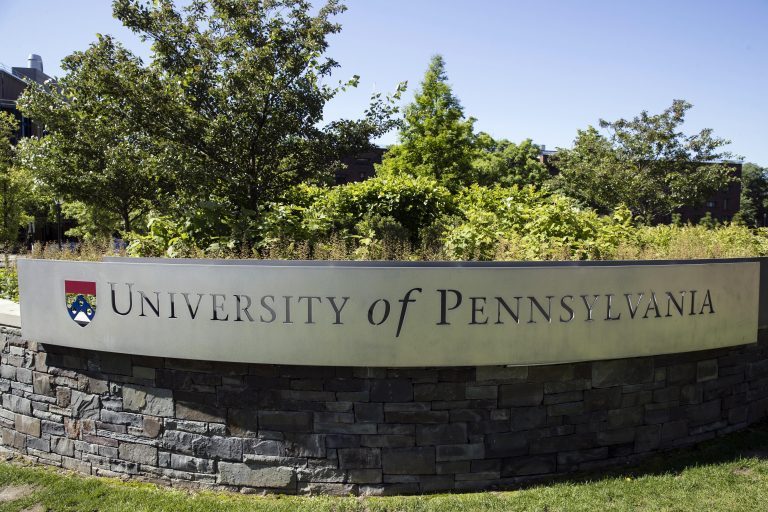
(Dmytro “Henry” Aleksandrov, Headline USA) One of the anti-Israel student protesters at the University of Pennsylvania complained about how the university left her “homeless,” after placing her on mandatory leave, even though she comes from a very wealthy family in the Philippines. 

Eliana Atienza’s father, Kim Atienza, is better known as “Kuya Kim,” a celebrity television presenter who has hosted the country’s most popular morning and game shows, the Washington Free Beacon’s investigation into the family revealed.

Her grandfather — a prominent Filipino politician Lito Atienza — served as deputy speaker of the country’s House of Representatives until 2022. After that, he launched a bid for vice president as the running mate of boxing superstar Manny Pacquiao.

Atienza’s mother is a Wharton School graduate who founded and led the Chinese International School Manila, a private K-12 institution.

Atienza’s father never bothered to cover up the incredible wealth of the family. On his Instagram account, he’s been bragging about it by sharing photos from a lavish first-class flight, which boasted caviar service and a full shower.

Atienza’s father, who was previously described as one of the Philippines’ “most recognizable television presenters,” also has been giving tours of his home on live television, showcasing his rare collections of dinosaur eggs, “mid-century modern chairs” and vintage motorcycles, including two BMW bikes used during World War II, the news source reported.

Additionally, Atienza herself highlighted her family wealth by posting photos from a very expensive trip to Antarctica in January 2024, just months before her forced leave of absence.

All of that didn’t stop the university sophomore from portraying herself as a homeless college student after Penn ordered her to “separate from the university” on May 9, 2024. She also lied by saying she didn’t “have any family to go back home to.”

Atienza also called herself a victim of “administrative violence” on Instagram.

“I live on campus. The university has barred me from entering. In other words—the university has made me houseless. I am also an international student. The University knows this. This is their weapon. So disappointed to be attending an institution that resorts to administrative violence,” she said.

13 Counties Approve Ballot Measures to Secede from Oregon, Join Idaho

(Dmytro “Henry” Aleksandrov, Headline USA) Thirteen counties in Oregon have voted to support measures to start negotiations to secede from the far-left state and join conservative Idaho.

Conservative Oregonians’ desire to secede from the state has been going on for many years. However, it seems that something could change after Crook County became the latest to approve the “Greater Idaho Measure” following a vote on May 21, 2024, the Daily Mail reported.

The proposal wants to move the Oregon border 200 miles to the west. That would mean that 14 counties and several partial counties would fall under Idaho state lines.

Organizers behind the Greater Idaho movement stated that conservative Oregonians who live in the east are being alienated by the state’s leftist policies which they blame for high crime rates.

Additionally, the organizers said that a move to Idaho would allow residents to take advantage of lower taxation and provide better representation and governance.

“[The Oregon/Idaho line] makes no sense in its current location because it doesn’t match the location of the cultural divide in Oregon. We want an economy that is not held back by Oregon regulations and taxes, including environmental regulations. We’ll still have federal and Idaho regulations, and that’s plenty. Idaho knows how to respect rural counties and their livelihoods,” the movement’s website said.

The news source reported that the vote is not legislatively binding and just means residents want to inform the state and federal representatives that they support negotiations to annex part of Oregon.

“The voters of eastern Oregon have spoken loudly and clearly about their desire to see border talks move forward. With this latest result in Crook County, there’s no excuse left for the Legislature and Governor to continue to ignore the people’s wishes,” Greater Idaho Executive Director Matt McCaw said.

The organization’s president Mike McCarter then urged “the Governor, Speaker of the House, and Senate President to sit down with [them] and discuss the next steps towards changing governance for eastern Oregonians, as well as for the legislature to begin holding hearings on what a potential border change will look like.”

“For the last three years, we’ve been going directly to voters and asking them what they want for their state government. What they’re telling us through these votes is that they want their leaders to move the border. In our system, the people are the ones in charge, and it’s time for the leaders representing them to follow through,” President Mike McCarter said.

Transgender Runner Audibly Booed in Far-Left Oregon after Stealing State Championship

(Jacob Bruns, Headline USA) A transgender teenager was booed at the end of a victorious race during Oregon’s high-school state finals earlier this week, NBC News reported.

The Libs of TikTok posted a video to Twitter with footage that showed McDaniel High School sophomore Aayden Gallagher getting voraciously booed by a number of people in the bleachers at the completion of the women’s 200-meter dash.

Booing could also reportedly be heard during the medal ceremony, as Gallagher received the first-place award.

The moment caught the eye of Riley Gaines, a former University of Kentucky swimmer who has refused to cooperate with transgenders in women’s sports.

Gaines penned a sarcastic social-media post, calling Gallagher’s victory “another proud moment for women’s sports!”

“Aayden Gallagher (male) just placed 1st in the Oregon state championship in the women’s 200m after placing 2nd in the 400m. Just listen to the audible BOOS. People are over this…& it’s about time,” she wrote.

In response to such skepticism, Cyd Zeigler, the founder of pro-LGBT sports site Outsports, claimed that anyone who opposed Gallagher’s participation was “disgusting” and engaged in irresponsible rhetoric.

“[T]his is the kind of stuff that causes kids to hurt themselves,” Zielger claimed, concluding that “the criticism is misdirected.”

Deflecting criticism by turning the offender into the victim has been a frequent tactic deployed by transgender activists, although there is no evidence that being booed for cheating in an athletic competition has resulted in any physical self-harm to transgender minors in the past.

Activists have also claimed that the examples of transgender athletes dominating female competitors have been amplified by critics in conservative media and that most transgender sports participants are still mediocre athletes.

Nonetheless, a growing number of transgender participants have won women’s championships over the past several years.

In West Virginia, for example,  five female athletes refused to compete against Becky Pepper-Jackson, a transgender shot-putter who had defeated girls in track events more than 700 times over the past three years, Legal Insurrection reported.

Gaines herself became an outspoken activist after competing against Lia Thomas, who made headlines for winning several awards in collegiate swimming and eventually receiving the title “NCAA Woman of the Year” in 2022.

Ohio Sec. of State: As It Stands, Dems ‘Will Not Be on the Ohio Ballot’ for President

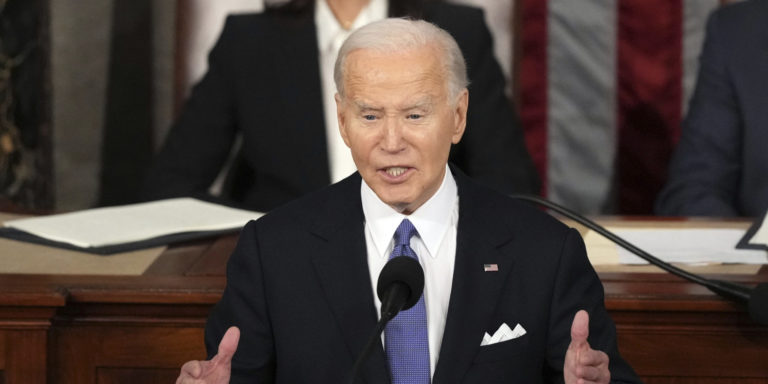
(Dmytro “Henry” Aleksandrov, Headline USA) Ohio Secretary of State Frank LaRose warned state Democrats on May 21, 2024, that Joe Biden may not appear on the ballot if he misses the state’s certification deadline.

The Ohio Democratic Party was informed about the state law requiring political parties to certify their presidential and vice-presidential candidates 90 days before Election Day by LaRose’s legal counsel Paul Disantis on Apr. 5, 2024, with the deadline being Aug. 7, 2024, and the general election being held on Nov. 5, 2024, National Review reported.

This is bad news for Biden because he won’t be nominated until the Democratic National Convention, scheduled to be held in Chicago from Aug. 19 to 22, 2024, after the deadline.

After Democrats were warned, LaRose said weeks later that neither the Ohio Democratic Party nor the DNC had responded.

The state’s top election official urged the party in a follow-up letter to work with Ohio officials in seeking an alternative solution.

“As it stands today, the Democratic Party’s presidential nominee will not be on the Ohio ballot. That is not my choice. It’s due to a conflict in the law created by the party, and the party has so far offered no legally acceptable remedy,” LaRose said in a statement.

After Democrats offered to submit a “provisional certification” by the statutory deadline, the office of Ohio Attorney General Dave Yost informed LaRose that provisional certifications neither can be provided for candidates under state law nor can the secretary provide a different solution than the one written in law.

That means that either the state legislature would need to pass a bill that allows Biden’s certification or the Democratic Party needs to push back its dates for the DNC so Biden can be nominated on or before Aug. 7, 2024.

House Speaker Jason Stephens, R-Ohio, also said that the Republican majority has no intent to change the law to accommodate Biden.

One of the reasons why Democrats would not want to nominate Biden would be that they want to nominate someone else at the last minute, like Gov. Gavin Newsom, D-Calif., or Michelle Obama.

O’Keefe Undercover Vid Exposes DEI Sickness Infecting U.S. Air Force

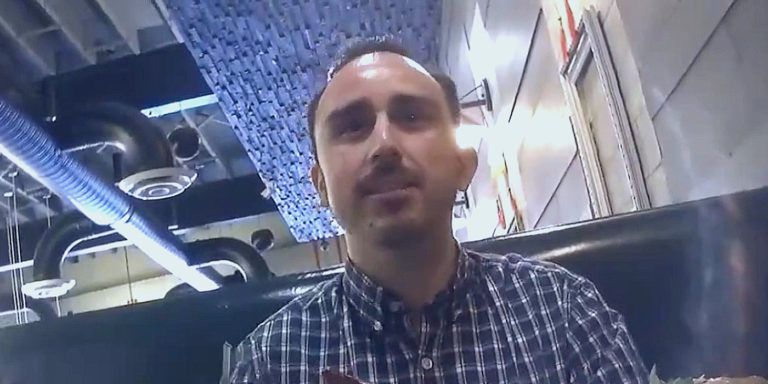
(Molly Bruns, Headline USA) James O’Keefe, founder of the O’Keefe Media Group, captured an undercover video of a high-ranking employee in the U.S. Air Force’s Office of Diversity and Inclusion admitting that the military branch still mandated DEI trainings despite leading Republican lawmakers to believe otherwise, according to the Gateway Pundit.

Jake Reyna, an operations analyst for the Office of the Secretary of the Air Force called white men “stupid,” said they “definitely suck” and “probably” made the military weaker.

Facing added pressure from Republican oversight following the 2022 election, Reyna said his office contacted workers with diversity-oriented jobs “and got them to sneakily change their title so it doesn’t sound as diversity oriented even though it is.”

He gloated that elected officials did not actually have any genuine power over the military since the permanent bureaucracy could always find ways to dodge any type of accountability.

“We just weaseled around it,” Reyna said. “There’s nothing really they would be able to do.”

Meanwhile, woke, unelected officials with highly partisan motives were able to exert seemingly unlimited control when it came to indoctrinating rank-and-file members of the U.S. Armed Forces.

Airmen were unable to opt out of DEI trainings because, according to Reyna, any who did would receive permanent marks on their records. This would affect consideration for promotions and could result in formal reprimands and censures.

Reyna admitted there was little evidence and data backing up DEI policies.

“I don’t know if there’s any specific data you can provide outside of just saying like, yeah, we’re getting more diverse talking about changing officers,” he said.

When prompted, he also conceded there was no evidence that DEI-approved officers performed better than their counterparts.

Deana Heitzman, an official spokesperson with the U.S. Air Force, responded to O’Keefe’s request for comment, but only to note that Reyna was not an official spokesperson.

“This individual was not speaking on behalf of the Department of the Air Force,” Heitzman said. In keeping with mandatory Biden administration policy, her signature included her preferred pronouns.

Many have questioned the Air Force’s illicit use of taxpayer dollars in the past, including for an annual, all-ages drag show on Nellis Air Force Base.

In recent years, the Air Force also implemented “safe spaces” for airmen, promoted “Pride” month and focused on hiring for diversity.

Rutgers, Northwestern Face Scrutiny from House GOP for Rewarding Anti-Semites

(Headline USA) The presidents of Northwestern and Rutgers universities defended their decisions to end pro-Hamas encampments through negotiations rather than police force, telling a House committee on Thursday that they defused the danger without ceding ground to protesters.

“We had to get the encampment down,” Northwestern’s Michael Schill said. “The police solution was not going to be available to us to keep people safe, and also may not be the wisest solution as we’ve seen at other campuses across the country.”

Schill and Jonathan Holloway of Rutgers were called before the House Education and the Workforce Committee as part of a series of hearings examining how colleges have responded to allegations of anti-Semitism.

Also testifying was Gene Block, chancellor of the University of California, Los Angeles, which has come under scrutiny for a delayed police response to violence between rioters and Jewish counterprotesters.

The committee’s inquiry expanded to large, public universities, UCLA and Rutgers, after earlier hearings largely focused on private, Ivy League colleges.

Committee Republicans accused the university leaders at the hearing of tacitly promoting and rewarding anti-Semitism, with particular scorn for Northwestern and Rutgers, where schools struck deals to end or limit protests.

Neither Northwestern nor Rutgers agreed to sever business ties with Israel—one of the protesters’ chief demands. Rutgers agreed to discuss the topic; Northwestern revived a committee on “investment responsibility.”

Other terms focused on expanding institutional support for Muslim and Arab students and scholars on campus, and Rutgers promised not to retaliate against those who participated in protests.

“Each of you should be ashamed of your decisions that allowed anti-Semitic encampments to endanger Jewish students,” said Rep. Virginia Foxx-R-N.C., the committee chair. “Mr. Schill and Dr. Holloway, you should be doubly ashamed for capitulating to the anti-Semitic rule breakers.”

The presidents considered police action but said it was not necessary.

“We made a choice—that choice was to engage our students through dialogue as a first option instead of police action,” Holloway said. “We had seen what transpired at other universities and sought a different way.”

Schill said students were willing to negotiate and reach a compromise that did not include divestment, their main demand. He said agreeing to a space for Muslim students where they could eat and pray, like other faith communities had on campus, was something he supported.

“We had students who were willing to negotiate and gave up their demands,” Schill said. “We said no, nothing that singles out Israel. Let’s think about what will make the university stronger.”

Protesters hailed the agreements as victories. But on Capitol Hill, the presidents said they did not lose any ground.

“I would never recommend to the Board of Trustees divestment of anything or any academic boycott of Israel,” Schill said.

Even so, Foxx countered that Schill “created the perception” he would support divestment, “which encouraged other universities to cave on this.”

Each president denounced the rise of anti-Semitism amid the Israel–Hamas war. Schill and Block, who are Jewish, expressed their own disgust at some of the rhetoric and imagery used by protesters.

Block said public universities are in an especially tough bind as they work to shield students from discrimination while also upholding free speech. Unlike private universities, public universities are bound by the First Amendment. Even hateful speech must be protected, Block said, but UCLA draws the line when it crosses into threats and harassment.

He expressed remorse over the handling of a UCLA encampment that was attacked in early May.

Counterprotesters threw traffic cones and released pepper spray in fighting that went on for hours before police stepped in, drawing criticism from Muslim students and political leaders.

“Tragically, it took several hours for law enforcement to quell the violence,” Block said “With the benefit of hindsight, we should have been prepared to immediately remove the encampment if and when the safety of our community was put at risk.”

On Wednesday, the police chief at UCLA was reassigned “pending an examination of our security processes,” according to a statement from the school.

A new pro-Palestinian encampment appeared on the UCLA campus as Block testified. “Our safety personnel are on site and actively monitoring the situation,” Mary Osako, vice chancellor for UCLA Strategic Communications, said in a statement.

As in previous hearings, Republicans pressed the leaders on discipline. They asked how many students had been expelled and how many faculty had been fired over anti-Semitic incidents since Oct. 7, when Hamas attacked Israel.

None of the presidents said students had been expelled, though they said there are dozens of ongoing investigations. Four students were suspended at Rutgers, Holloway said.

Schill said the numbers aren’t a reflection of inaction.

“The fact that we didn’t have not yet suspended or expelled students does not mean that students have not received discipline,” he said. “There’s a wide range of discipline, and discipline has been meted out to many of those students.”

Tensions over the Israel–Hamas war have been high on campuses since the fall and spiked in recent weeks with a wave of pro-Palestinian tent encampments that led to over 3,000 arrests nationwide.

After the first congressional hearings in December, an outcry of criticism from donors, students and politicians contributed to the eventual resignations of the presidents of Harvard and the University of Pennsylvania, who gave cautious, halting answers to questions about whether calls for the genocide of Jews would violate their schools’ conduct policies.

Initially, Harvard stood behind its leader, then-President Claudine Gay. However, the negative attention led outrage activists to examine her academic record, uncovering examples of plagiarism that ultimately forced her to resign her administrative post.

Harvard, which held its commencement on Thursday, announced that it would refuse diplomas to 13 students who had participated in weeks of disruptive campus protests and encampments, prompting roughly 1,000 students to walk out and eliciting boos for interim President Alan Garber, according to its student newspaper, The Crimson.

In April, the committee turned its attention to Columbia President Nemat “Minouche” Shafik, who took a more conciliatory approach to Republican-led questioning. Shafik’s concessions around faculty academic freedom upset students and professors at Columbia. Her testimony, and subsequent decision to call in police, escalated protests on campus that inspired students at other colleges to launch similar demonstrations.

Originally, the presidents of Yale University and the University of Michigan were called to testify on Thursday. But the committee shifted its attention to Northwestern and Rutgers after those colleges struck deals with pro-Palestinian protesters to limit or disband encampments.

Adapted from reporting by the Associated Press

Schumer Cynically Pushes Failed Border Bill in Election-Year Political Stunt

(Headline USA) Democrats performatively pushed a dead-on-arrival bill that would have allocated more funding to Homeland Security Secretary Alejandro Mayorkas in his effort to more efficiently process illegal immigrants coming into the United States.

The legislation, which failed for a second time after an earlier attempt in February, would have done very little to curtail the issue of illegal immigration, but would have given the gaslighting Biden administration bogus talking points to claim they had addressed the problem when, in fact, their open-border policies are directly responsible for it.

While most Americans saw through the hollow election-year ploy, Senate Majority Leader Chuck Schumer, D-N.Y., nonetheless spun the vote as if Republicans were to blame for the border crisis that has allowed an estimated 11 million illegals into the country on President Joe Biden’s watch.

“We gave Republicans a second chance to show where they stand,” Schumer claimed after all but one Republican, Sen. Lisa Murkowski of Alaska, voted against it.

Stunningly, the 73-year-old New Yorker couldn’t help but convey his contempt for the American people as he undertook the show vote, his voice dripping with sardonic derision that undercut his sudden apparent concern for a bipartisan solution.

“Do they want to fix this so-called emergency or do they want to show blind allegiance to the former president even when they know he’s wrong?” Schumer sneered.

Although Democrats may be dishonest about what is in the bill and what its actual impact would be, Schumer has, in fact, been remarkably candid about his true motivations for brining it back to the floor.

He is trying to defend a narrow Senate majority in this year’s election and sees the Republican’s rejection of the deal that a handful of RINOs helped to negotiate as a political “gift” for Democrats.

Seeking to highlight Republican resistance to popular measures, Schumer is also planning to push forward a bill in June that would protect access to “contraception,” which it broadly defines as any “an action taken to prevent pregnancy.”

That, presumably, would be a back-door attempt at a federal abortion mandate. (Headline USA reached out to Schumer’s press secretary for comment and will follow up accordingly.)

The Democratic leader said it would “show the public who’s on what side and in June we’re going to spend a significant amount of time talking about reproductive rights.”

When the immigration proposal was brought up in February, the test vote failed 49-50—well shy of the 60 votes needed to advance.

This time, not even some of the bill’s primary authors—Sens. James Lankford, an Oklahoma Republican, and Kyrsten Sinema, an Arizona independent—voted for Schumer’s move.

“Today is not a bill, today is a prop,” Lankford said on the floor ahead of the vote. “Everyone sees it for what it is.”

Sinema called the vote “political theater” that will do nothing to solve problems at the border.

“To use this failure as a political punching bag only punishes those who were courageous enough to do the hard work in the first place,” she said.

Republican leaders spent much of the week decrying the vote as a bald-faced political maneuver and reiterating that ownership of the border crisis rested entirely with Biden Democrats.

“We’re nearing the end of President Biden’s term, and the American people’s patience for his failing to secure the southern border is running thin,” Senate minority leader Mitch McConnell, R-Ky., said Thursday.

Earlier in the week, McConnell told reporters, “The president needs to step up to it—do everything he can do on his own because legislation is obviously not going to clear this year.”

The Biden administration claims it has been considering executive orders on border policy and immigration—a dramatic departure from its early days, when it swiftly repealed the executive actions taken under the Trump administration and actively fought them in court.

Biden recently made some changes to the asylum system meant to speed up processing and potential removal of migrants.

Borrowing from Trump’s playbook, the Democratic president has considered using a provision in federal immigration law that gives leeway to block entry of certain immigrants into the U.S. if it would be “detrimental” to the national interest of the United States.

Mayorkas told reporters Monday that Senate legislation would provide more money for Customs and Border Protection officials, asylum officers, immigration judges and scanning technology at the border—all things that officials have said the underfunded immigration and border protection system needs.

“The legislation provides tools that executive action cannot,” Mayorkas said.

Even before the bill was fully released earlier this year, Trump effectively killed the proposal by labeling it “meaningless” and a “gift” for Biden’s reelection chances. Top Republicans soon followed his lead and even McConnell, who had initially demanded the negotiation over the border measures, voted against moving forward.

A significant number of Democrats have also criticized the proposal, mostly because it does not include any broad relief for immigrants who have already established lives in the United States. On the left, four Democrats, as well as Sen. Bernie Sanders, I-Vt., voted against advancing the bill.

“It fails to address the root causes of migration or to establish more lawful pathways,” said Sen. Alex Padilla, a California Democrat.

The Congressional Hispanic Caucus said in a statement this week that the Senate’s bill “fails to meet the moment by putting forth enforcement-only policies and failing to include provisions that will keep families together.”

They have urged executive actions that would provide protections from deportation for immigrants who have lived in the U.S. for years or who have family ties to U.S. citizens.

Amid the tension, Biden’s reelection campaign met with CHC leadership Wednesday to discuss outreach to Latino communities, and Biden spoke on the phone with Rep. Nanette Barragán, the chair of the group. She discussed the reasons for the group’s opposition, according to a person familiar with the call who spoke on the condition of anonymity to discuss the private conversation.

Schumer said that if Democrats win majorities in the Senate and House next year, he wants to advance “comprehensive immigration reform.”

Still, for Democratic senators facing tough reelection battles this year, the vote Thursday provided another opportunity to show they were supportive of stronger border measures, as well as distance themselves from Biden’s handling of the border.

As Sen. Jon Tester attempts to hold a Democratic seat in the red-leaning state of Montana, he said in a statement, “This common sense bill would push back on the Biden administration’s failed border policies by forcing the president to shut down the border, strengthen our asylum laws, and end catch and release.”

Adapted from reporting by the Associated Press