Martha’s Vineyard Faces Biggest Crisis Since Illegal Immigrant Invasion: Weed Shortage

(Headline USA) When Florida Gov. Ron DeSantis flew illegal immigrants to Martha’s Vineyard to make a point to leftist elites about NIMBYism by taking the Biden administration’s open-border policy to their own exclusive vacation enclave, it was the sort of trauma many on the island assume would be a once-in-a-lifetime occurrance.

But now, for the second year running, disaster has struck the Massachusetts island that former President Barack Obama and many other wealthy celebrities call their second or third home.

They’re almost out of weed.

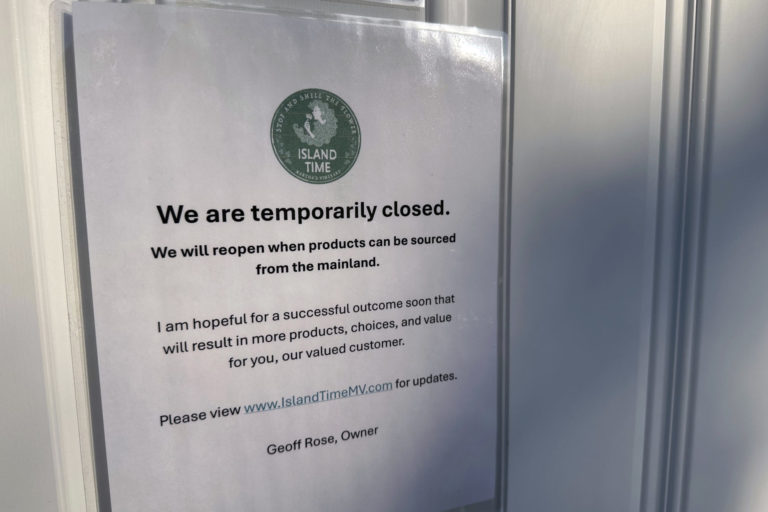
An 81-year-old woman on Martha’s Vineyard drove up to the Island Time dispensary last week seeking her usual order of pot. But owner Geoff Rose had to tell her the cupboard was bare—he’d been forced to temporarily close three weeks earlier after selling every last bud and gummy.

Unless something changes, the island’s only other cannabis dispensary will sell all its remaining supplies by September at the latest, and Martha’s Vineyard will run out of pot entirely, affecting more than 230 registered medical users and thousands more recreational ones.

The problem boils down to location. Although Massachusetts voters opted to legalize marijuana more than seven years ago, the state’s Cannabis Control Commission has taken the position that transporting pot across the ocean—whether by boat or plane—risks running afoul of federal laws. That’s despite a counterargument that there are routes to Martha’s Vineyard that remain entirely within state territorial waters.

The conundrum led Rose to file a lawsuit last month against the commission, which now says that finding a solution to the island’s pot problem has become a top priority. Three of the five commissioners visited Martha’s Vineyard on Thursday to hear directly from affected residents.

The tension between conflicting state and federal regulations has played out across the country as states have legalized pot. California law, for example, expressly allows cannabis to be transported to stores on Catalina Island, while Hawaii last year dealt with its own difficulties transporting medical marijuana between islands by amending a law to allow it.

Federal authorities have also been shifting their position. The Justice Department last month moved to reclassify marijuana as a less dangerous drug, though still not a legal one for recreational use.

For several years, sellers on Martha’s Vineyard and the nearby island of Nantucket thought they had a solution. They grew and tested their own pot, eliminating the need to import any from across the water.

But Fine Fettle, a Connecticut-based company that had been the sole commercial grower on Martha’s Vineyard and also runs the island’s other dispensary, told Rose last year that it planned to stop growing pot on Martha’s Vineyard and would close its store when its existing supplies ran out.

Benjamin Zachs, who runs Fine Fettle’s Massachusetts operations, said that when the company opened in Martha’s Vineyard, it knew it was illegal to transport marijuana across federal waterways.

“Candidly, when it started, we thought this was a good thing for business,” Zachs said. “A captured market.”

But over time, pot became cheaper with more varied options on the Massachusetts mainland, while the costs of employing testers on the island rose, making it uneconomic to continue such a niche operation, Zachs said. He added that many people bring their own supplies over on the ferry.

But for people living on the island, taking the ferry to buy pot can be expensive and time-consuming. There’s no dispensary in Woods Hole, where the ferry lands, so they either need to take an Uber from there or bring over a car, and space for vehicles is in hot demand over summer.

That leaves medical users such as Sally Rizzo wondering how they will access marijuana. She finds the drug helps relieve her back problems and insomnia.

“The nice thing about getting it at a dispensary is that you can tell them specifically what you’re looking for, and know the milligrams, and know the potency, and what’s in it,” said Rizzo, who submitted an affidavit in support of Rose’s lawsuit.

Rose, 77, has lived on Martha’s Vineyard for more than 20 years and opened his Island Time store three years ago. For now, he’s keeping his core staff of five on the payroll.

The dispensary’s green logo looks like a hippyish take on the famous Starbucks emblem, with a relaxed woman smelling a bloom under the words “Stop and smell the flower.” But Rose is anything but relaxed these days.

“I’m on the verge of going out of business,” he said. “While I acknowledge the efforts of the commission to address the issue, I really felt that the only way to get some immediate relief was to file a lawsuit. I was not going to sit on the sidelines. I had to do something.”

Rose was joined in his lawsuit by the Green Lady dispensary on Nantucket, which for now continues to have its own homegrown supply but also faces the same high costs of onsite testing.

In the lawsuit, Rose outlines how he told the commission in November that his business faced an existential crisis because Fine Fettle would no longer be growing pot. In March, he took a chance by buying some pot on the mainland and shipping it across on the ferry.

But the commission ordered Rose to stop selling the product he’d shipped over, putting it into an administrative hold. The commission eventually released the marijuana a few weeks later but told Rose he couldn’t ship over any more.

In his suit, Rose complains about the commission’s “arbitrary, unreasonable, and inconsistent policy against transport over state territorial waters.”

Island Time is represented by Vicente, a firm that specializes in cannabis cases. It agreed to delay an emergency injunction against the commission until June 12 after the commission said it would enter into settlement discussions.

“We’re cautiously optimistic that we’ll be able to reach resolution, but if we can’t, we’ll be prepared to make the arguments in court,” said Vicente lawyer Adam Fine.

Until last week, the commission maintained that it wouldn’t comment on pending litigation, other than to say there was no special accommodation to allow pot to be transported from the mainland to the islands. But when commissioners traveled to Martha’s Vineyard, they assured residents they were all on the same page.

“Obviously, this is a super priority for us, because we don’t want to see the collapse of an industry on the islands,” said commissioner Kimberly Roy.

She said nobody could have foreseen that there was going to be such a supply chain issue and they wanted to get it resolved.

“It’s a funny juxtaposition,” she said. “The entire industry is federally illegal. But that’s evolving, too. We are just trying to stay responsive and nimble.”

Adapted from reporting by the Associated Press
BREAKING: Sen. John Fetterman Hospitalized from Car Accident

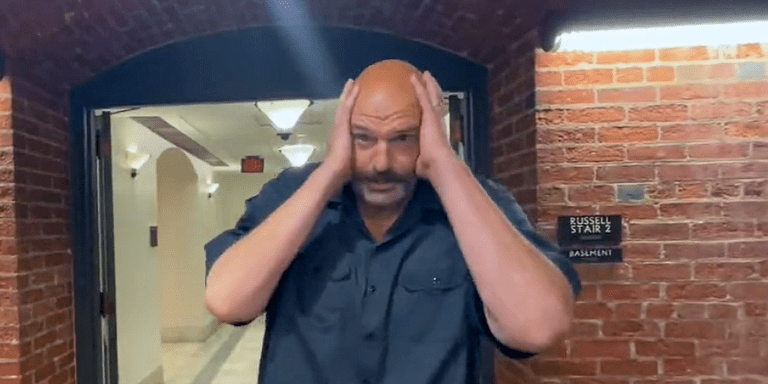
(Headline USA) The increasingly conservative Sen. John Fetterman, D-Pa., was treated at a hospital for a bruised shoulder after a car accident Sunday morning, according to a statement from his Senate office. He was released from the hospital Sunday afternoon.

Fetterman, a Democrat, and his wife Gisele were “involved in a car accident with another driver,” the statement said, and were both evaluated at a local hospital and discharged within hours. The senator returned to his home in Braddock, Pennsylvania, and is expected to be back in the Senate for votes this week.

A spokeswoman for Fetterman, Carrie Adams, said that the senator was driving the car and the accident was on Interstate 70 in Maryland. The condition of the other driver is unclear.

Fetterman, 54, suffered a stroke in May 2022 as he was campaigning for his seat. As a result, he still has some trouble speaking fluidly and quickly processing spoken conversation, and he often uses devices in congressional hearings and routine conversations to transcribe spoken words in real time.

During his recovery, Fetterman has seemingly drifted to the right.

One of the more recent examples of this occurred in April, when he said that squatters have “no rights” and should be charged as criminals.

Fetterman’s apparent realignment had many cracking jokes online that the Democrats are trying to take him out.

“Has anyone seen Hillary,” one account joked.

Adapted from reporting by the Associated Press
Bombshell Internal Memo Tells Border Patrol to Ignore Biden’s ‘Order’ in All but 6 Countries

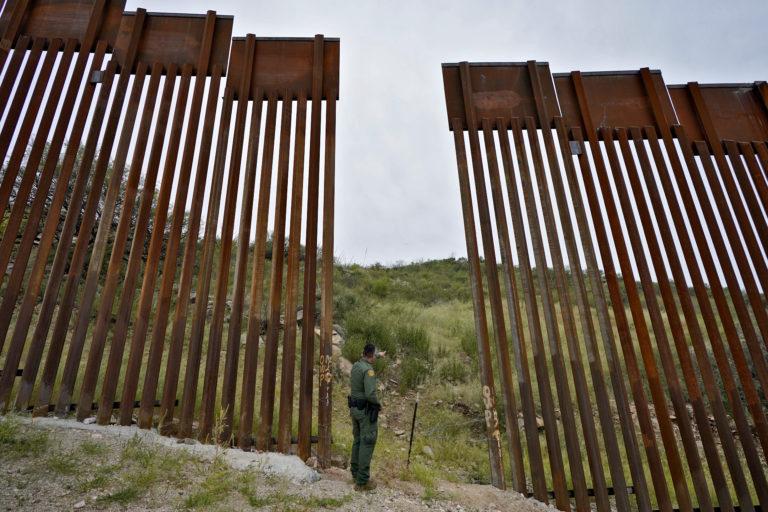
(Headline USA) The Biden administration has instructed Border Patrol agents in southern California to release illegal immigrants from countries in the Eastern Hemisphere directly into the U.S. because they are “hard” or “very hard” to remove, according to a bombshell memo obtained by the Washington Examiner.

The government document given to Border Patrol officials in San Diego, California advises that illegals from all but six of the more than 100 countries in the eastern half of the world—which includes the Middle East, Africa, Asia, Australia, and Europe—be released rather than deported.

Only single adults from Georgia, Moldova, Kyrgyzstan, Russia, Tajikistan, and Uzbekistan should be referred to U.S. Immigration and Customs Enforcement for removal.

“Please see updated Presidential Proclamation guidance below, this is effective immediately,” the Border Patrol instructional document states.

The order seems to directly contradict an executive order signed by President Joe Biden last week banning asylum for most illegal immigrants. When asked about this discrepancy, a Customs and Border Protection official claimed that just because these illegal immigrants are being released into the U.S. does not make them eligible for asylum, according to Fox News.

“We do think that the rules measures will allow us to impose an immediate and fast consequence to migrants no matter what country they’re coming from,” a senior administration official claimed in a statement.

Another administration official admitted in a background call with reporters that the updated guidance to San Diego’s Border Patrol is due to the inability of the administration to Eastern Hemisphere countries, such as China, to cooperate with deportations. Many of these countries refuse to take their citizens back, the official said.

Until the administration is able to reach agreements with uncooperative countries to take their citizens back, most illegal immigrants from the Eastern Hemisphere will continue to be released in the San Diego sector, the official acknowledged.

Federal Court Rules that mRNA COVID Shot Isn’t a Vaccine

(Jacob Bruns, Headline USA) It would have been called a wild conspiracy theory as recently as two years ago.

On Friday, a federal court that the mRNA COVID jab is not a vaccine, but rather a “therapy” because it does not prevent the transmission of COVID, and therefore that it cannot be mandated by law, Red State reported.

Responding to the Los Angeles Unified School District’s vaccine mandates, the Ninth Circuit Court of Appeals reversed a prior dismissal of a ruling that upheld the mandate over and against the pleas of school district employees in the case Health Freedom Defense Fund v. Carvalho.

A District Court had initially ruled that the United States government can in fact mandate vaccines, citing Jacobson v. Massachusetts, a 1905 case that permitted the mandating of the smallpox vaccine.

However, the Ninth Circuit, hearing the appeal, determined that Jacobson has no bearing on the experimental COVID jabs, which are not preventative vaccines, but treatments.

Judge Ryan D. Nelson, who wrote the opinion, arguing that the misapplication nullifies both the school district’s argument and the district court’s ruling.

“The district court thus erred in holding that Jacobson extends beyond its public health rationale—government’s power to mandate prophylactic measures aimed at preventing the recipient from spreading disease to others—to also govern ‘forced medical treatment’ for the recipient’s benefit,” he wrote.

Nelson further excoriated the school district for it’s shameful attempts to manipulate the legal system in order to escape penalties for its forced healthcare mandates.

“Litigants who have already demonstrated their willingness to tactically manipulate the federal courts in this way should not be given any benefit of the doubt,” he added.

Nelson’s opinion is backed by none less that COVID Czar Anthony Fauci, who, in court last week said that the protection offered by the jabs is “limited.”

The suit was ultimately remanded back to the District Court, where it will be decided in light of the new ruling precedent established by the Ninth Circuit.

WATCH: New Footage Shows Nancy Pelosi Taking Responsibility for Jan. 6

(Ken Silva, Headline USA) The House Administration Subcommittee on Oversight has released previously hidden footage of then-House Speaker Nancy Pelosi on Jan. 6, 2021, accepting blame for what had happened.

According to Politico, Pelosi’s statements were captured by the former speaker’s daughter, documentarian Alexandra Pelosi, and recently provided to congressional investigators by HBO.

“We have responsibility Terri. We did not have any accountability for what was going on in there, and we should have … You’re going to ask me — in the middle of the thing when they’ve already breached the inaugural stuff — ‘should we call … the National Guard?’” Pelosi asked her chief of staff Terri McCullough while they rode in an SUV that would take them to Fort McNair.

“Why weren’t the National Guard there to begin with? … They clearly didn’t know, and I take responsibility for not having them just prepare for more.”

According to interview transcripts released earlier this year, former White House Deputy Chief of Staff Anthony Ornato told the Jan. 6 Committee that former White House Chief of Staff Mark Meadows explicitly offered D.C. Mayor Muriel Bowser the National Guard deployment.

“‘[Trump is] willing to ask for 10,000,’” Ornato informed the Jan. 6 Committee, quoting Meadows’s conversation with Bowser. However, Bowser declined the offer, insisting on deploying only a few hundred individuals.

Capitol Police Chief Steven Sund and DC National Guard leader Maj. Gen. Walker have also reportedly said that Army Lt. Gen. Walter Piatt (ret.), who was Army Staff Director on Jan. 6, delayed or ignored Sund’s request for National Guard support.

Four whistleblowers further also testified in April about Pentagon officials prevented them from promptly responding to the Capitol Hill uprising.

The four whistleblowers spent much of their testimony discussing the three-hour 19-minute delay from the time they were requested to deploy to the Capitol to when they arrived. Their testimony suggests that the top Pentagon officials failed in executing President Donald Trump’s authorization to have the at least 10,000 National Guards members ready to assist in quelling violence on Jan. 6.

After news broke of her candid admission, Pelosi quicky moved into damage control, shifting blame back onto then-President Donald Trump and his supporters.

Pelosi appeared to back off her false claim that police officers died as a result of the events, noting only vaguely that “people died, one way or the other.” Four Trump supporters died—two by natural causes, while Ashli Babbitt’s shooting death was confirmed a homicide, according to the Washington, D.C. coroner’s report.

Roseanne Boyland’s death was officially ruled a drug overdose, although witness accounts and video suggest she was either trampled or beaten to death by Capitol Police.

Officer Brian Sicknick walked away from the protest but died later that night of natural causes.

Ken Silva is a staff writer at Headline USA. Follow him at twitter.com/jd_cashless.

Nashville Trans Shooter Was Heavily Medicated Psych Patient Since Age 8

(Ken Silva, Headline USA) The Tennessee Star continues to publish bombshell reports on Nashville mass shooter Audrey Hale, including two articles last week on the transgender killer’s troubling mental health history.

Hale, a 28-year-old woman who was identifying as a man at the time of the mass shooting, gunned down three Christian children and three adults in March 2023 before being killed by law enforcement.

The Star published a search warrant on Friday, which revealed that Hale began receiving treatment at Vanderbilt University Medical Center on April 23, 2001, when the shooter was just six-years-old.

That information came from a search warrant affidavit from a police officer who said he believes there is a strong possibility that Hale confided to a VUMC staff member about violent fantasies.

The Star also revealed last Thursday that Hale was given access to Buspirone, Lexapro or Escitalopram, Hydroxyzine, and a sodium chloride nasal spray by doctors at VUMC.

The Star reported that Hale’s autopsy doesn’t note any medications found in her stomach.

“However, Medical News Today reports that using Lexapro and Buspirone simultaneously, or Lexapro and Hydroxyzine simultaneously, can ‘increase the risk of side effects’ from both Lexapro and the other drugs, meaning Hale’s mental state could have been adversely impacted at the time of her March 27, 2023 attack,” the newspaper reported.

The Star’s articles last week followed another June 3 report, where the newspaper revealed that one of Hale’s psychiatrists failed to report the transgender killer’s murder fantasies to law enforcement—a legal and ethical violation. Furthermore, the psychologist, whom the Star didn’t name, closed her practice just 86 days prior to Hale’s murderous March 27, 2023, attack at the Covenant School.

VUMC has not commented on the matter. The organization didn’t respond to a media inquiry from this publication.

Along with the details about Hale’s mental healthcare, The Star has published new excepts from Hale’s “manifesto,” as well as information that Hale purchased firearms with a a federal Pell Grant.

News about how Hale obtained weapons was first reported by Tennessee radio host Brian Wilson, who said that Hale “took money from an education grant she received to purchase her weapons and to pay for training at a local gun range.”

See more of the Star’s exclusive reporting here:


Ken Silva is a staff writer at Headline USA. Follow him at twitter.com/jd_cashless.

Soros-Backed Prosecutors’ Case Collapses against C’Ville Torch Marcher

(Ken Silva, Headline USA) A Virginia judge has declared a mistrial after Charlottesville jurors deadlocked on charges against a man charged with a little-used law that makes it a crime to burn objects with intent to intimidate.

The trial for Jacob Joseph Dix of Clarksville, Ohio, was the first test of a law enacted by the state in 2002 in response to Ku Klux Klan cross-burnings. The law was challenged all the way to the Supreme Court, which ultimately found the law constitutional in a 6-3 vote in 2009.

Dix’s lawyer, Peter Frazier, argued in the trial that his client did the night of Aug. 11, 2017, was criminal, and that the chants he joined in, including, “You will not replace us!” were free speech protected by the First Amendment.

Most jurors agreed.

After deliberating for about 12 hours over two days, jurors in Albemarle County Circuit Court announced Thursday that they were deadlocked. According to Jason Kessler, who organized the 2017 rally, eight jurors voted not guilty, three voted guilty and one voted undecided.

Judge H. Thomas Padrick declared a mistrial Thursday evening.

“It wasn’t even close for the prosecution. It was actually close in the other direction,” Kessler said.

Indictments unsealed last year showed 11 people had been charged with intimidation by fire, but prosecutors have not said whether additional defendants were also charged. Five people have pleaded guilty to the charge. Dix was the first to go on trial.

Henrico County Commonwealth’s Attorney Shannon Taylor, who was appointed as a special prosecutor, said she intends to try the case again and will see if there is any other evidence to pursue. Taylor took over the case after Judge H. Thomas Padrick Jr. reportedly said that the entire Albemarle County Commonwealth’s Attorney’s Office has an “appearance” of conflict of interest, and therefore can’t prosecute its case against Dix.

According to The Daily Progress, the main prosecutor of the torch marchers, W. Lawton Tufts, was found to have a relationship with groups such as Black Lives Matter and Showing Up for Racial Justice. Tufts reportedly has offered to research legal issues for people and groups that opposed Unite the Right.

Charlottesville D.A Jim Hingeley made it a campaign promise in 2019 to prosecute torch-carriers. His predecessor, Robert Tracci, had declined to press charges.

Ken Silva is a staff writer at Headline USA. Follow him at twitter.com/jd_cashless.

Drug-Ingesting Dog Gives New Meaning to the Term ‘Meth Lab’

(Molly Bruns, Headline USA) A Labrador retriever named Tator got into a methamphetamine stash recently at a local park in Gillette, Wyoming, according to the Cowboy State Daily.

Owner Michael Frith took Tator, 2, to Dalbey Memorial Park to walk around the lake and play fetch.

“So I guess when [Tator] was returning the tennis ball he somehow ingested methamphetamine,” said Michael’s wife, Dolores.

Neither of them know how he consumed the meth or how much he had in his system, but they could tell something was wrong immediately upon their arrival at home.

“His tail was wagging a thousand miles an hour, thumping on the hardwood floor,” said Dolores. “He couldn’t lie down; he was just excited. He was kind of staring off into space.”

They took him to the Red Hills Veterinary Hospital to get tested; the blood test came back positive for meth.

The veterinarian reported the incident to the Gillette Police Department, who combed the park for further evidence of the drugs.

There was no further evidence of any drug activity.

“But better my dog—I hate to say—than a child,” Dolores said. “So, we’re grateful it was him instead of a kid.”

Dolores also reported that Tator fully recovered and “he’s back to being his normal, goofy self.”

Illicit drug use spiked across the nation over the course of Joe Biden’s Oval Office tenure, especially drugs such as fentanyl and meth flowing through the porous southern border.

Agents working in border states recorded record busts in massive narcotics operations, seizing over one million pills in the space of a week in California alone.

An anonymous border agent recorded a message regarding the seriousness of the situation at the southern border, making it clear that the U.S. government gave up its control.

“The biggest thing is that we do not control the border. The cartel controls the border. Everything that we do is a reaction to things that they have planned,” he said. “Usually, we’re chasing around pawns while the kings and queens are doing whatever they want.”

A Pair of Recent Name Changes Reveals Pure Stupidity of Left’s Historical Revisionism

(Ben Sellers, Headline USA) For 15 years, Democrats in Charlotte fretted over the fact that some of the city’s major thoroughfares appeared to be named after Confederate generals.

That included one of its major arteries, Stonewall Street, which notably greeted NFL fans as they exited the city’s light-rail system en route to the Carolina Panthers’ Bank of America Stadium.

In 2006, debate first arose about changing the name to honor the Rev. Martin Luther King Jr. instead. However, nobody at the time could prove that the offending street was, as suspected, named after Gen. Thomas “Stonewall” Jackson, mastermind of its Shenandoah Valley campaign, who would go on to lose his life to friendly fire during the chaotic Battle of Chancellorsville in 1863.

“As the city council was considering the name change in 2006, local historian Dan Morrill mused to The Charlotte Observer that perhaps the street was named for an actual stone wall that was part of nearby railroad tracks or St. Catherine’s gold mine, where Bank of America stadium now sits,” WFAE reported in 2017.

Morrill pointed to an 1855 map that referenced the street, prior to Jackson having been given his nickname “standing like a stone wall” during the Battle of Manassas. However, a local librarian said the map was a copy and that the name might have been added after the fact.

It was not until 11 years after the debate began that local historians finally coughed up what they claimed were a page from the handwritten minutes of a City Council meeting dated June 26, 1869, when local officials named Stonewall Street along with streets honoring Gens. Robert E. Lee and A.P. Hill—along with Zebulon Vance, who was North Carolina’s Confederate-era governor.

Still, a 2015 state law enacted during one of the first waves of anti-Confederate cancel culture, prevented them from changing the names or removing monuments without the permission of the N.C. Historical Commission.

Leftists ultimately succeeded in toppling the law following the frenzied waves of fervor that exploited events like the 2017 Charlottesville riot and the 2020 death of George Floyd to push so-called social justice causes through violence and vandalism.

The city approved a “Legacy Commission” to rename nine streets in February 2021, and in June 2022, Stonewall Street became the last of those.

“In order to move forward in unity, I think it is clear that we needed to dismantle the symbols of racism that still existed in Charlotte,” said Mayor Vi Lyles, who is black, according to Spectrum News. “I take pride in the fact that we are now focusing on the positive and renaming this important city street to pay tribute to the thriving neighborhood that was once located in this area.”

Nonetheless, some pointed to the cost that the city would be subjecting taxpayers—both residents and businesses to—for such a vanity project.

“We need to have an orderly process to look into renaming Stonewall Street, while taking into consideration the number of business that would be financially impacted by that name change,” state Sen. Joel Ford said in 2017.

The new name, Brooklyn Village Avenue, reportedly honored a black community that thrived until the 1950s and ’60s, when urbanization displaced its residents. Attached to the renaming was a proposed $683 million redevelopment project for the area that would incorporate “restorative justice” principles into its planning.

“Some people didn’t see an apology was needed,” said Rev. Willie Keaton, chair of the restorative justice group and pastor at Mt. Olive Presbyterian Church, according to the Charlotte Observer.

“They didn’t even see having this discussion was needed,” he continued. “But the more you hear the stories, you realize that there was an unresolved trauma there that needed to be addressed.”

For most visitors, of course, the new name will be as puzzling as the last, with the assumption being that it is named after the New York City borough that has, itself, recently been gentrified.

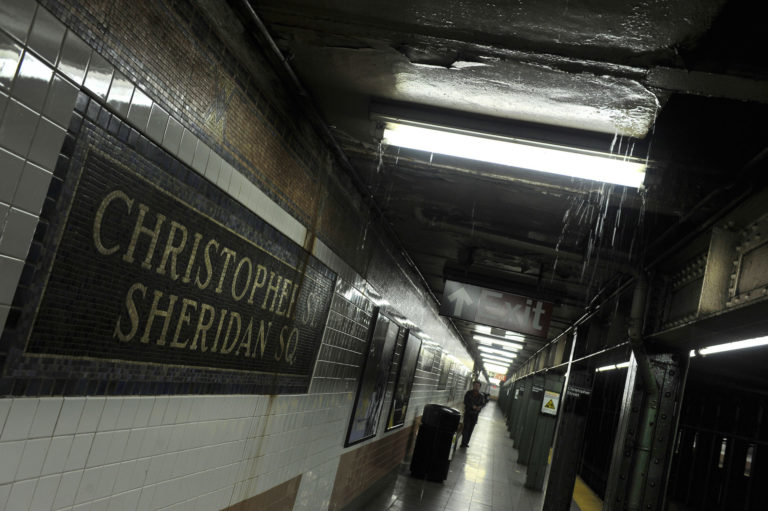
And that isn’t the only change taking place in the Big Apple. According to the Associated Press, the state Legislature approved a bill Wednesday directing the Metropolitan Transportation Authority to change the name of the Christopher Street–Sheridan Square subway station in Greenwich Village.

The goal was to celebrate the neighborhood’s robust LGBT heritage. The new name will retain the Christopher Street identifier, which honors one of Manhattan’s original landowners.

The street has become strongly associated with annual gay-pride festivals, according to podcasters the Bowery Boys in a 2008 history.

“[T]he thousands-strong Pride Parade every June ends here every year, while over in Europe (specifically major cities in Germany), their annual celebration is actually called Christopher Street Day,” the article noted. “But the Christopher of Christopher Street would most likely be scandalized to learn the how his name is being used.”

Meanwhile, the new subway station will lose the “Sheridan,” which honors Union Gen. Philip Sheridan. Following the death of Jackson, Sheridan was the opposing general who prevailed in the Shenandoah Valley campaign against Confederate Gen. Jubal Early, using scorched-earth tactics to destroy much of the region’s infrastructure, including a key railroad supply line.

Instead, the station will “be renamed to commemorate the Stonewall riots that galvanized the modern LGBTQ+ rights movement,” the AP reported.

State Sen. Brad Hoylman–Sigal, who sponsored the legislation, took to social media to celebrate this win for not just the LGBT community but the broader social justice movement.

The city also plans to celebrate the 1969 riot, which followed a police raid at the Stonewall Inn, by opening up the Stonewall National Monument Visitor Center next door to the historic national landmark. It will be the National Park Service’s first such center focused on LGBTQ+ history.

Ben Sellers is the editor of Headline USA. Follow him at twitter.com/realbensellers.

Credit Card Spending Sagged Again in April Suggesting American Consumers Are Tapped Out

(Mike Maharrey, Money Metals News Service) American consumers kept their credit cards in their pockets for the second straight month in April, a bad sign for an economy that has run on plastic for the last year.

After cratering in March, revolving credit contracted in April. 

Meanwhile, non-revolving credit continued to grow at a tepid rate, a trend we’ve seen for well over a year.

Both of these data points, along with the crash in retail sales in April and slowing GDP growth signal the American consumer may well be tapped out. 

Overall, consumer debt grew by $6.4 billion in April, a 1.5 percent annual increase, according to the latest data from the Federal Reserve. Americans now owe $5.05 trillion in consumer debt.

The Federal Reserve consumer debt figures include credit card debt, student loans, and auto loans, but do not factor in mortgage debt. When you include mortgages, U.S. households are buried under a record level of debt. As of the end of 2023, total household debt stood at $17.5 trillion

Pundits and politicians have talked up the “robust economy” and the “resilient” American consumer for months, but this economic growth was brought to you by Visa and Mastercard. Now, it appears the Americans might have maxed out their credit cards, or they’re at least feeling the strain of sky-high interest rates.

Revolving debt, primarily reflecting credit card balances, contracted by $500 million in April, a 0.4 percent decline.

Even with this slight decline in revolving debt, Americans still owe $1.34 trillion.

The double whammy of rising debt and interest rates exacerbates the debt problem. Average credit card interest rates eclipsed the previous record high of 17.87 percent months ago. The average annual percentage rate (APR) currently stands at 20.68 percent, with some companies charging rates as high as 28 percent.

This is one of the problems confronting the Federal Reserve. Even though inflation remains sticky, the central bank needs to ease interest rates before they bury debt-saddled American consumers.

Consumer debt is also putting strain on banks. The net charge-off rate on credit card loans came in at 4.15 percent as of the end of 2023. It was the highest rate for this portfolio reported by the banking industry since the first quarter of 2012.

All of this underscores the fundamental problem of running an economy on credit cards. It’s expensive and they have an inconvenient thing called “a limit.”

And it appears American consumers may be at that limit. This could be part of the reason GDP growth unexpectedly fell in the first quarter.

The growth in non-revolving debt also reveals problems in America’s borrow-and-spend paradise. 

Non-revolving debt, primarily reflecting outstanding auto loans, student loans, and loans for other big-ticket durable goods, increased by 2.2 percent. The March number was revised down to a contraction of 0.9 percent. This continues a trend of sagging spending on big-ticket items that we’ve seen in recent months. Before the pandemic, revolving credit growth averaged 5 percent. 

This plunge in spending was inevitable. The post-pandemic economic rally was never sustainable. 

As prices skyrocketed last year, Americans blew through their savings to make ends meet. Aggregate savings peaked at $2.1 trillion in August 2021. As of June 2023, the San Francisco Fed estimated that aggregate savings had dropped to $190 billion.

In other words, Americans ran through $1.9 trillion in savings in just two years. 

Then they turned to credit cards.

Now that they’ve apparently maxed out the credit cards, what happens?


Mike Maharrey is a journalist and market analyst for MoneyMetals.com with over a decade of experience in precious metals. He holds a BS in accounting from the University of Kentucky and a BA in journalism from the University of South Florida.