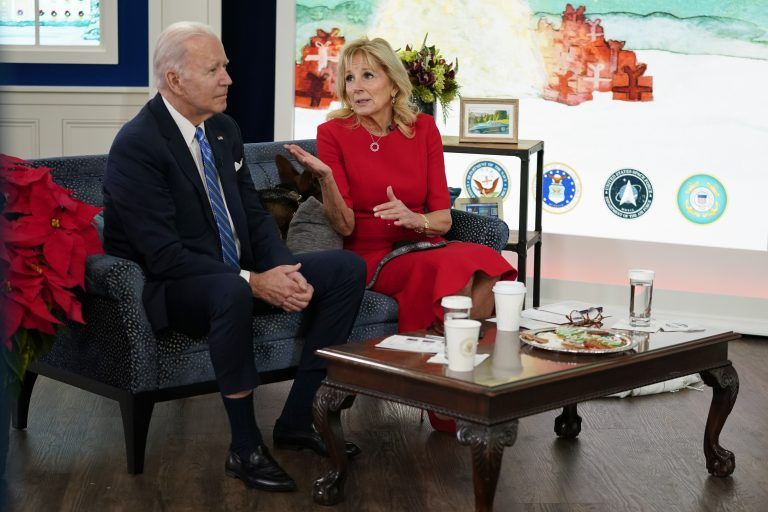
(Headline USA) The odds of Vice President Kamala Harris suffering an unfortunate mishap may have increased dramatically this week amid growing chatter that the time is drawing nigh to boot President Joe Biden from the ballot—and that she is not up to the task of replacing him.
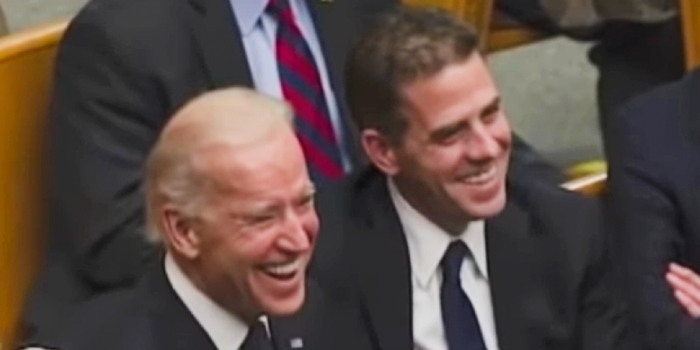
Since the indictment of his son Hunter on three felony charges, Biden, 81, has appeared to take a turn for the worse in what was already an alarming cognitive decline.
He has suffered several recent episodes in which he has seemed lost or frozen during public appearances, and at least one in which he is suspected of having defecated himself.
Nonetheless, some fear Biden, who has already secured the pledged electoral delegates needed to be the Democratic candidate, may not be willing to step aside.
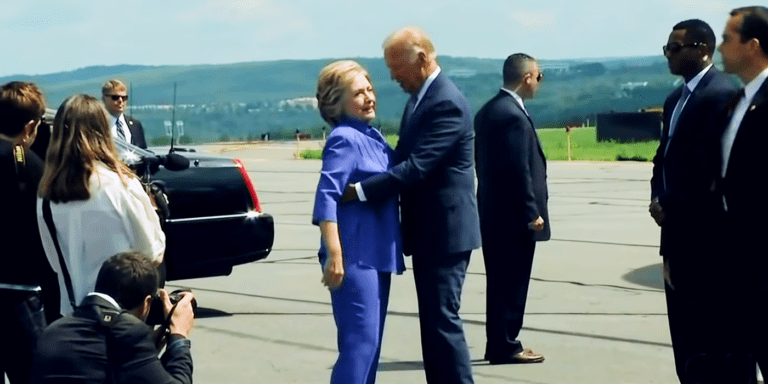
Instead, to ease concerns about his age, Washington Post columnist Kathleen Parker argued in a column this week that Biden could kick Harris off his reelection ticket and replace her with failed presidential candidate Hillary Clinton.
Parker admitted that Biden has suffered a “steady decline the past few years,” made apparent by his “stumbles, his search for words, his occasional blank stare,” all of which are now “impossible to ignore.”
However, Biden’s situation is made worse by the fact that his running mate, Harris, who is the next in line to replace him should anything befall the president, is not popular.
Replacing Harris could be “risky” given that it may “jeopardize black votes,” Parker noted, but if “Democrats … want to win elections” then they may have to make that sacrifice.
She suggested that Harris could at least keep a spot in the Biden administration and be named attorney general for agreeing to leave the ticket.
Democrat activists have desperately been trying to force several of the elder Supreme Court justices—including conservatives Clarence Thomas and Samuel Alito, as well as leftist Sonia Sotomayor—to retire.
By doing so, they might open up a spot that would take care of the “Kamala” problem, enabling party leaders to bribe the former San Francisco district attorney and California attorney general with a lifetime appointment to the high court.
Parker claimed that Clinton could help extricate American politics from its “old-White-men dilemma,” despite the fact that she tried and failed to do so back in 2016.
And she could provide Biden’s ticket with “confidence” that she would be able to “keep the country on track” if something were to happen to Biden, Parker said.
“No one has mentioned her as a possible running mate for Biden far as I know, but why not replace Harris with Clinton?” the columnist wrote. “At 76, she might want no part of it, but it’s hard to retire when you feel your job isn’t done.”
She added that Clinton has already been “inserting herself” into the 2024 election cycle by endorsing specific candidates.
“It’s just a thought, but worse ideas have met with regrettable success,” she added.
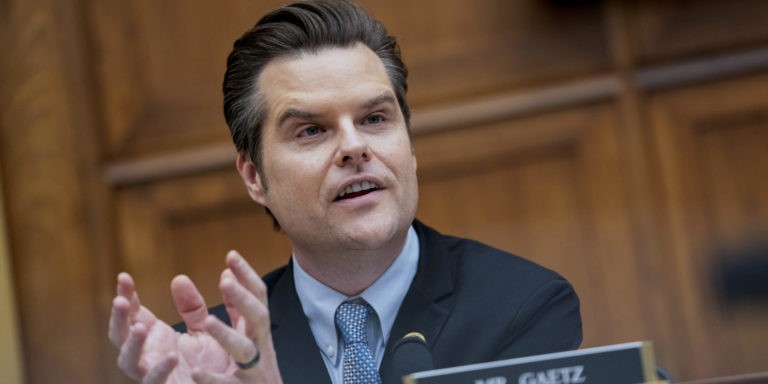
(Luis Cornelio, Headline USA) The House Ethics Committee confirmed on Tuesday the expansion of an investigation into Rep. Matt Gaetz, R-Fla., the lawmaker responsible for the ouster of former House Speaker Kevin McCarthy, R-Calif.
In a lengthy statement, the Ethics Committee claimed that the investigation has expanded based on the receipt of new information about Gaetz, despite the investigation being launched in 2021.
“Based on its review to date, the Committee has determined that certain of the allegations merit continued review,” the committee wrote. “During the course of its investigation, the Committee has also identified additional allegations that merit review.”
According to the Ethics Committee, Gaetz is under investigation for allegations of sexual misconduct, use of illicit drugs, accepting improper gifts, dispensing special privileges and favors to individuals close to him and obstruction of the congressional investigation.
Gaetz has not been charged with any crimes related to the allegations brought forward by the Ethics Committee.
“The Committee will take no further action at this time on the allegations that he may have shared inappropriate images or videos on the House floor, misused state identification records, converted campaign funds to personal use, and/or accepted a bribe or improper gratuity,” they wrote.
Gaetz’s fiery tweet on Monday, accusing the Committee of carrying out a “frivolous investigation” into him, likely triggered the Committee’s statement.
“The House Ethics Committee has closed four probes into me, which emerged from lies intended solely to smear me,” he wrote. “Instead of working with me to ban Congressional stock trading, the Ethics Committee is now opening new frivolous investigations. They are doing this to avoid the obvious fact that every investigation into me ends the same way: my exoneration.”
The House Ethics Committee has closed four probes into me, which emerged from lies intended solely to smear me. Instead of working with me to ban Congressional stock trading, the Ethics Committee is now opening new frivolous investigations. They are doing this to avoid the…
In the same post, Gaetz added, “This is Soviet. Kevin McCarthy showed them the man, and they are now trying to find the crime. I work for Northwest Floridians who won’t be swayed by this nonsense and McCarthy and his goons know it.”
Gaetz led the effort to file a motion to vacate against McCarthy in 2023, which ultimately resulted in the then-House Speaker’s removal.
Since then, McCarthy has resigned from Congress and claimed that Gaetz’s campaign to oust him was driven by McCarthy’s refusal to stop the Ethics Committee’s investigation into Gaetz.
“I’ll give you the truth why I’m not speaker. Because one person, a member of Congress, wanted me to stop an ethics complaint because he slept with a 17-year-old,” McCarthy claimed at an event at Georgetown University in April. “Did he do it or not? I don’t know.”
(Ken Silva, Headline USA) Just the News published a scoop Tuesday about how the FBI knew at least since 2016 that Hunter Biden and his partners had plotted to set up a new venture would be capitalized by a whopping $120 million investment from the controversial owner of the Ukrainian energy firm Burisma Holdings.
According to Just the News, the potential deal, which was never executed, was not referenced in Hunter’s infamous Laptop form Hell or during the 2019 impeachment proceedings involving Ukraine. Instead, it was among the roughly 3.39 million documents the FBI seized from him and his business partners during a securities-fraud probe nearly a decade ago.
“The new evidence shows the major investment plan was being built at the time when Hunter Biden was serving on Burisma’s board of directors and Joe Biden was still serving as Barack Obama’s vice president in charge of U.S.-Ukraine policy,” Just the News reported.
“The Hunter Biden-connected Burnham entity was slated to get a quarter of the new venture’s net revenues without putting up any cash, according to recent testimony to Congress from one of the partners,” the publication stated.
“Zlochevsky, the Ukrainian oligarch, meanwhile was committed to ‘$120 Million over thirty-six (36) months to be invested in exploration and leasehold improvements’ in the new venture designed to make Burisma a global energy leader, according to a prospectus for the project.”
Hunter’s lawyer, Abbe Lowell, reportedly didn’t respond to a request for comment.
Tuesday’s scoop was the latest indication that the FBI—and, as recently revealed, the CIA—slow-walked and stonewalled the Hunter Biden investigation.
“Based on the information provided to my office over a period of years by multiple credible whistleblowers, there appears to be an effort within the Justice Department and FBI to shut down investigative activity relating to the Biden family,” Grassley reportedly wrote in his letter, which was addressed to Attorney General Merrick Garland and FBI Director Chris Wray.
“Such decisions point to significant political bias infecting the decision-making of not only the Attorney General and FBI Director, but also line agents and prosecutors.”
Grassley demanded answers from Garland and Wray, but thus far none have been provided publicly.
The disturbing attack led to the agent’s blood being splattered on the floor, temporarily shutting down White House tours, reported the Daily Mail on Tuesday.
According to an email obtained through a Freedom of Information Act request, the Secret Service mentioned the existence of a video of the attack, which reportedly occurred on June 15, 2023.
“The video purportedly showed Commander running at a high rate of speed and jumping toward the agent in the East Wing’s Kennedy Garden, leaving a ‘deep bite’ on the individual’s left arm ‘that reportedly needed stitches,’” the Mail reported, citing the alleged email.
The violent attack prompted White House tours to be halted for roughly 20 minutes until the blood was cleaned from the floor in the booksellers’ area.
On Friday, Secret Service Public Liaison Kevin Tyrrell told the Mail that the video had been conveniently “destroyed” due to the agency’s so-called retention standards.
Echoing Tyrrell’s claims, Secret Service spokesman Anthony Guglielmi told the Mail that the Secret Service follows the “federal records retention schedule that defines when certain types of records can be archived, destroyed, etc.”
Guglielmi added that he had no “direct knowledge” of the infamous video and claimed, “Based on that response, I am assuming the record in question is no longer available because of the expiration of record retention.”
News of the video’s destruction comes less than a year after the White House was rocked by scandals involving multiple biting incidents perpetrated by the president’s dog.
Commander had subjected White House aides to at least 25 incidents. Biden’s other dog, Major, also subjected Secret Service agents to several incidents.
A Secret Service agent described the harrowing experience in an email dated May 2023.
“Just for situational awareness. It seems that we’re back to the K9 being let off leash to roam the grounds freely,” the agent, whose name was redacted in the email, warns others in the email. “Tonight we had the team on the roadway for the evening sweep when [redacted] brought the dog out. K9 ran directly south and bounced between us techs.”
The agent added, “Though no one was bitten it’s just a matter of time before it happens.”
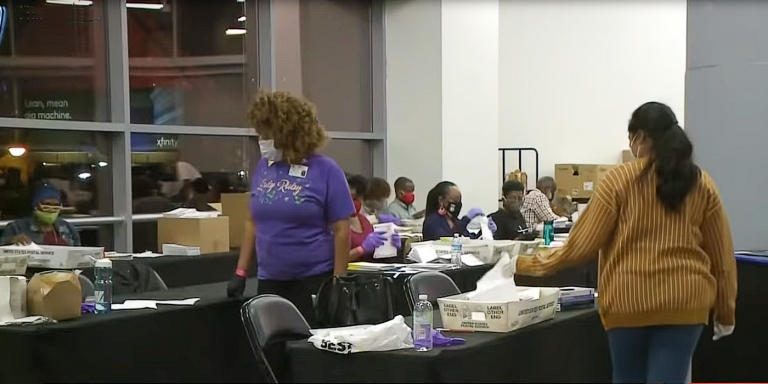
(Jacob Bruns, Headline USA) As more details continue to emerge from the investigation into potential fraud in Georgia’s 2020 election, investigative journalist Liz Harrington revealed that tens of thousands of mail-in ballots cannot be tied to real tabulators, Revolver News reported.
The concerns over irregularities in Georgia’s election, which have long been a matter of debate and speculation, were validated in May, when a hearing by the state Board of Elections confirmed the presence of thousands of double-scanned ballots and others that were purportedly tallied but could not physically be accounted for, either through paper ballots or electronic scans.
“Does the investigation confirm that there are missing ballot images?”
“Yes.”
Case closed. No cover up operation can conceal the fact that Fulton County did not have the votes it claimed it had. The recount could not replicate the original results.
As Harrington reported at the time, there were more than 300,000 missing ballot images. Democrat Joe Biden’s declared victory in the state was a margin of only 11,779 votes.
Likewise, the margins of the state’s two U.S. Senate races, which by pure happenstance were both decided in runoff elections on Jan. 5, 2021, under the same election rules, were by margins of fewer than 100,000 votes.
Democrats flipped both seats, handing them full control of not only the presidency but both chambers of Congress.
However, if the case of the missing ballots weren’t bad enough already, it turns out that, in some cases, the equipment used to scan them also cannot be accounted for.
According to a new Twitter thread posted by Harrington, 20,000 ballots from the 2020 election came from tabulators that do not exist, or at least were not available to the public and have no public records.
There are over 20K unsubstantiated ballots in GA’s 2020 original results from tabulators that “do not exist” according to the Rossi/@KevinMoncla complaint.
The situation centers on Fulton County, a hotbed of election integrity issues, which received a formal reprimand from the state board following last month’s hearing.
When pressed on the separate issue of missing tabulators, Fulton County officials presented alleged proof that the machines exist, but they simply copied the serial numbers of different machines, thus making their evidence useless at best or a fraudulent attempt to deceive investigators at worst.
Officials further tried to argue that these additional, thus far unreported, tabulators were at various voting points around Fulton County on and leading up to Election Day.
But according to Harrington’s findings, it seems that Fulton County officials tried to invent at least four additional tabulators to cover for the 20,000 votes, claiming that they were at voting locales where all tabulators were thoroughly documented.
In the end, therefore, Harrington concluded that Fulton County’s evidence actually proved that they engaged in illicit activities, partook in deceptive reporting methods—or both.
“Fulton County’s proof that the 10 missing tabulators existed actually proves they didn’t, and that the results for early voting were tampered with,” she wrote.
“There’s a word for this,” Harrington said. “Oh yes, fraud.”
Fulton County District Attorney Fani Willis, who was elected in 2020 on a platform of prosecuting then-President Donald Trump, succeeded in indicting Trump and 18 other co-defendants on allegations that they were engaged in a racketeering conspiracy due to their efforts to challenge the state’s dubious election outcome.
One of those co-defendants—former Trump lawyer and New York Mayor Rudy Giuliani—was also forced into bankruptcy following a $148 million defamation verdict against him from two Fulton County election workers whom he had accused of double-scanning ballots after hours at the State Farm Arena.
Surveillance footage appeared to show Ruby Freeman pulling suitcases of ballots from underneath a table and scanning them multiple times after having sent home poll watchers, media and others due to a flooded toilet.
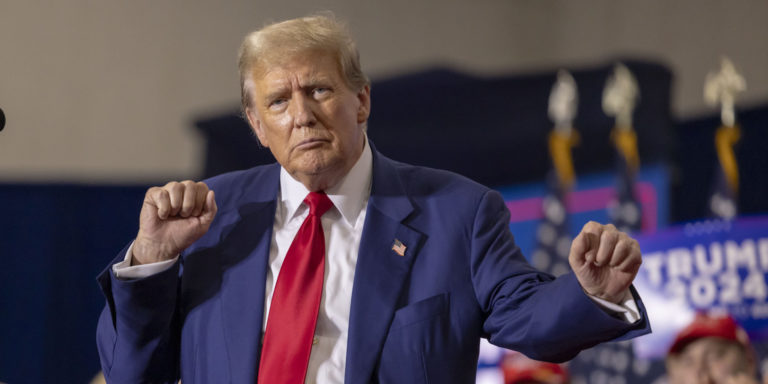
(Elias Irizarry, Headline USA) Recent polling that showed former President Donald Trump leading President Joe Biden among younger voters have spurred some social-media influencers to dump the 81-year-old president for fear of damaging their brand.
During a fundraiser over the weekend in Los Angeles, former President Barack Obama gave voice to the rising panic, which some party officials are beginning to see as a triage situation, with Biden hemorrhaging voters in must-win demographics, Fox News reported.
“Joe Biden: You may not agree with everything he does,” Obama said in acknowledgment of the growing discontent, even among Democrats.
True to form, the former president brought the focus back on himself in what appeared—at best—to be a sort of backhanded compliment in support of his former running mate.
“By the way, you didn’t agree with everything I did,” Obama said, pointedly offering no defense of Biden’s policies.
“And that’s OK,” he continued. “Because in a big, messy, complicated country like this, there are going to be disagreements.”
For Biden, however, those policy disagreements and a chronic disconnect with the overall mood of the country have translated to cratering public approval and an enthusiasm gap that may lead to dangerous levels of voter attrition—despite having received 11,826,604 more votes in 2020 than Obama did in his landslide 2008 win.
According to the Taylor Lorenz, the Washington Post‘s technology and online culture columnist, online stars who helped the Democrat president gain cred in the 2020 race have turned their back due to policy disagreements on issues like the war between Hamas and Israel.
“Biden is out of step with young people on a number of key issues,” said Aidan Kohn–Murphy, 20, the founder of Gen-Z for Change, which has thus far refused to endorse him in his reelection bid.
Kohn–Murphy claimed “the frustrations of young progressive leaders [were] a barometer of widespread dissatisfaction among Gen Z voters.”
However, left-wing activists’ insistence that the Biden administration has not been radical enough for the next generation don’t appear to track with what the data actually indicate.
According a May 13 survey published by the New York Times, Trump polls above Biden by 1% among voters ages 18-29, with the presumptive GOP nominee holding at 31%.
“We were promised all kinds of things by President Biden when he was running for election and what have we gotten?” said Philadelphia Young Republicans chair Matt Lamorgese, 31, in an interview with the Philadelphia Inquirer.
“People are struggling to buy houses, get a mortgage for the amount they need, they’re not starting families, not saving for retirement and if they compare themselves to their parents, they’re behind,” Lamorgese added.
Trump has shown considerable growth across the board among demographics that tend to vote for Democrats. The Times also showed Trump received 18% support from African Americans and 42% support from Hispanics when asked how they would vote if the election was held today.
The Times isn’t the only group showing Trump with a strong lead among young voters. Quinnipiac University released the results of a poll on June 05 showing a 1% lead for Trump among voters ages 18-34 at 45%.
Recent moves by the Trump campaign have indicated a push to gain youth support, such as Trump speaking out against the TikTok ban recently signed into law by Biden. Trump acknowledged that while the China-based TikTok likely poses a security threat, banning it altogether would only help Facebook, which he called “an enemy of the people.”
In early June, Trump joined the popular video-streaming app, gaining millions followers within only 24 hours of signing up. (By comparison, Biden has failed to gain even a million followers since joining the app in February.)
Since then, Trump has posted two TikTok videos—one at UFC and one with YouTube influencer and boxer Logan Paul.
Trump also participated in a nearly hourlong interview with Paul that touched on rarely discussed topics like UFOs and cage-fighting. As of Tuesday it has been viewed more than 92 million times on X.
It was not the first time Trump has succeeded in reaching out to a younger, more social-media savvy audience.
In 2021, Trump appeared in an interview with the NELK boys, a group of young influencers, in a YouTube segment that received 5 million views in one day before being taken down by YouTube.
However, it may be these types of untraditional activities such as attending conventions, UFC fights, and going on podcasts that is helping Trump make inroads with historically non-Republican demographics.
In the conclusion of Trumps interview on Paul’s podcast, Impaulsive, the social media influencer extended an invitation to Biden to appear on his podcast.
However, the Democrat incumbent may have his hands full as he courts voters 65 and up, an age group known to turn out much more reliably at the polls (particularly in the new era of absentee ballot-harvesting, which is often conducted at nursing homes).
Trump has reportedly shed about 5% of the senior-citizen vote he received in 2020, according to the Wall Street Journal, and the Biden campaign has pounced, rolling out activities such as “Biden bingo” nights and pickleball games.
(Elias Irizarry, Headline USA) A recent red wave in Europe may be one of the biggest bellwethers yet in predicting a win for presumptive GOP presidential nominee Donald Trump’s November re-election bid in the U.S.
Yet, some are waiting to see how globalist elites respond to the populist sweep and whether they are actually willing to cede their power, or if America’s 2020 election (not to mention Brazil’s similarly suspicious 2022 outcome) was, in fact, the bellwether for what lies in store across the pond.
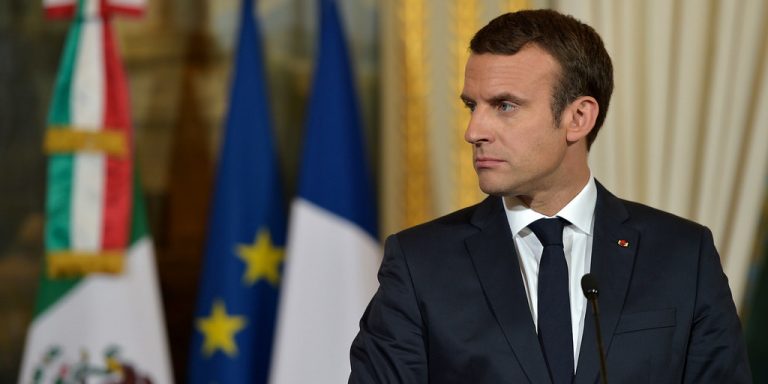
Following the unexpected victory of France’s right-wing National Rally in last week’s European elections, President Emmanuel Macron dissolved the French parliament and called for a “snap election,” giving French parties only two weeks to campaign.
The election, scheduled to take place in two rounds—one on June 30 and the other on July 7—has been characterized as a “strategic move” by Macron to protect his coalition in Parliament at a time where polling indicates an increasing loss of support for his party among the French populace.
However, a stunning loss for Macron may be on the horizon. French newspaper Le Journal du Dimanche reported National Rally’s support among the French electorate as high as 35% on June 15—leading the leftist New Popular Front by 9 points. Macron’s coalition, Together, failed to garner even 20%—consistently holding at about 18% in polls according to the French newspaper.
Macron’s five-year term ends in 2027, when he will be ineligible to run again, but much remains at stake for his legacy in his final three years under a parliament sympathetic to his longtime political rival, Marine Le Pen.
Macron’s reported desperation to hold his coalition has been noted by foreign officials – with the President being called out by Italian Prime Minister Giorgia Meloni for “electioneering” at the recent G7 summit over abortion, commenting,
“I believe it is profoundly wrong, in difficult times like these, to campaign using a precious forum like the G7.”
Even if Macron’s maneuver were to succeed in France, he might find himself in a drastically changed political landscape with much of the rest of the European Union shifting more conservative.
Right-wing political parties in France, Belgium, Germany and Italy all saw sharp gains in the recent European parliamentary elections.
And in the United Kingtom, former Brexit leader Nigel Farage’s new party, Reform UK, also enjoyed a boost in polling.
In Germany, right-wing party Alternative for Germany (AfD) gained six seats in the European Parliament. In France, National Rally gained 12 seats. In Belgium, right-wing and Eurosceptic parties Vlaams Belang and New Flemish Alliance held at six seats. In Italy, Meloni’s Brothers of Italy gained a whopping 14 seats
These parties represent the populist side of the right-wing, a stand against the status-quo establishment ‘conservatives’ which have failed to protect their countries in the face of mass-migration, cultural decay, and failed economic policies.
In the U.K., right-wing voters have begun to ditch the Conservative Party following the return of Farage to the political scene—with Reform UK potentially slated to receive more seats than Conservatives in the upcoming general election.
This could be compared to a what-if scenario when Trump reportedly floated leaving the Republican Party and starting the “Patriot Party” following the 2020 election.
Europe’s red wave is mirrored by matching patterns throughout the international community, with right-wing groups gaining traction in the Americas as well.
Trump is currently polling higher than President Joe Biden in key battleground states ahead of the U.S. election.
Meanwhile, in the Canadian Parliament, after a wave of backlash against Prime Minister Justin Trudeau’s authoritarian COVID crackdowns, Conservatives are projected to win a majority for the first time in 2015.
And despite the defeat of Jair Bolsonaro in Brazil, which triggered a wave of mass protests and public outrage after powerful judges effectively rigged the election with help from the Biden administration, other countries in Central and South America have offered a silver lining.
El Salvador’s Nayib Bukele has used tough-on-crime measures to turn his country—once one of the world’s most dangerous and poverty stricken—into a model for how to tackle gang violence.
And the unprecedented victory of libertarian Javier Milei in the Argentinian presidential election likewise signaled a worldwide shift in favor of more conservative economic policies as the country sheds its longtime socialist dependency—which had led to massive insolvency, inflation and government dysfunction—for a more austere but efficient model.
(Ken Silva, Headline USA) Former FBI confidential human source David Gletty has provided Headline USA with a tell-all interview, describing how he went from a Florida redneck to infiltrating neo-Nazi and other anti-government groups in the late 1990s through 2007.
In the process, Gletty candidly told this publication that his handlers directed him to disrupt those groups by just about any means necessary—even if it meant skirting the Fourth Amendment and other constitutional protections.
“You get into the FBI office, there’s audio and video recordings everywhere, and they have to tell you to do things by the book: ‘You can’t do this and you can’t do that.’ But then, when they walk me out to the parking lot to my car, that’s where they tell you, ‘Look, we need results, we need to send shockwaves. We don’t care what it takes,'” he said.
“I admit I’ve lied, I’ve cheated, I’ve stole for the FBI. I sold drugs for them; recorded illegally for the FBI.”
🚨REVEALED🚨 A former FBI undercover informant, who infiltrated right-wing groups in the mid-2000s, says he broke the law at the direction of his handlers
"I admit I've lied, I’ve cheated, I’ve stole for the FBI. I sold drugs for them; recorded illegally for the FBI…" pic.twitter.com/3GS4n42cBq
Gletty makes no apologies for what he did. He said his work helped take down drug dealers, robbers, rapists and even deadly terrorists.
However, with the FBI now using some of its same dirty tactics against mainstream conservatives—Newsweek warns the FBI is resorting to the “infiltration of political circles and other controversial government activity” ahead of the upcoming election—Gletty has a warning for right-wing dissidents.
“If you have 10 people at a meeting, eight probably work for the FBI,” he said.
Gletty knows that from experience. And he said he’s willing to share his experiences because the FBI discarded him in 2007, after he was outed as an informant in open court.
The FBI has declined to comment on Gletty other than to confirm that he did work for the bureau.
An Undercover Nazi
A self-described adrenaline junkie, Getty grew up a Florida redneck: wrestling alligators, riding horses, swinging from trees like Tarzan, and flirting with other dangerous activities to get his kick.
@TowerGangJose and I talked to someone last week who infiltrated right-wing groups for the FBI
I'll also be dropping a story on him soon, so people can prepare to talk about one of the most interesting interviews I've ever done pic.twitter.com/TF3seZyqUZ
So when the FBI asked Gletty to infiltrate right-wing anti-government groups in the late 1990s, he jumped at the chance.
Here, Gletty makes a distinction between himself and the typical FBI informant who works for the government to avoid or downgrade criminal charges. He said he did it for the money and adrenaline rush.
“I was not an informant. I hate that word. I was an operative. Informants are more like people who got in trouble,” he said, explaining, “They send in operatives when the FBI is fed up in not getting results. We helped get criminals arrested more quickly than they would on their own.
“Some say we set them up; I don’t care. We used everything to get them arrested because a couple arrests pay off in terms of paranoia and distrust in the group.”
Because Gletty didn’t testify in a criminal case, his activities from the late-90s and early 2000s are largely undocumented.
At first, Gletty said his assignment from the FBI was simply to become ingratiated with racist right-wing groups. To do that, he hung out at the same bars frequented by neo-Nazis and other white nationalists. Eventually, he began going hunting and white-water rafting in the Appalachian Mountains with some of them.
According to Gletty, the FBI wanted him to flip right-wingers into informants more than it wanted him to build actual cases. When he was working on a criminal case, he’d typically be the one to introduce an undercover agent before taking a back-seat role while the government’s investigation unfolded.
“The FBI might get more informants from the work I did than arrests. And then they go to work for the government to stay out of jail, and it’s a cascading event from there,” he said.
At some point in the late 90s, Gletty said, an Aryan Nations member began discussing partnering with al-Qaeda—this was before 9/11—to denotate radiological bombs throughout American cities. Gletty has also told this story in his book, Undercover Nazi.
Gletty said he helped the FBI comb through hundreds of white-water rafting tourist photos that were taken at the French Broad River in North Carolina to find the Aryan Nations member, whom Gletty referred to as “Gary the Mountain Guy.” Gletty said he doesn’t know Gary’s last name or what happened to him.
While Gletty described himself as playing a relatively low-key role in his early tenure as an undercover Nazi, the FBI apparently had bigger plans for him in the mid-2000s.
By that time, Gletty had assembled his own crew, which included two other FBI confidential human sources, his friends Joe and Fred. Gletty hasn’t released Joe and Fred’s last names—he said Joe continued working undercover after he stopped—but their photos do appear in his book.
By all accounts, Gletty excelled in infiltrating Florida’s right-wing underground and making a name for himself. He was already known as “Gator Gletty” in Central Florida for wrestling alligators and competing in televised roller-derby events—and those crazy exploits made it easy for him to socialize with neo-Nazis, skinheads and other potential criminals of all stripes.
“Everyone would come up to me and say, ‘David we saw you on the television!,'” he said.
The FBI wanted to exploit and enhance Gletty’s notoriety.
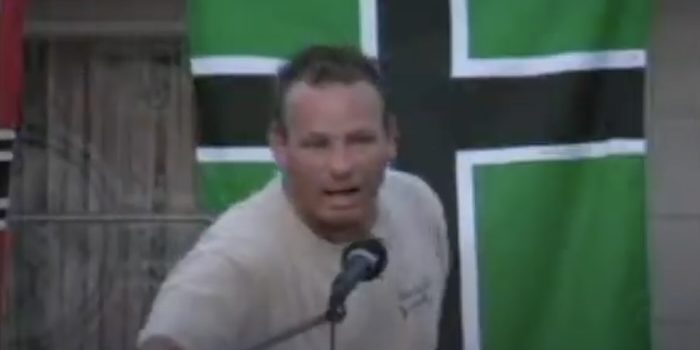
According to Gletty, the FBI instructed him to organize the Orlando event on behalf of the National Socialist Movement—a group founded by an FBI informant and almost certainly headed by another informant, Jeff Schoep, at that time. The NSM and FBI needed Gletty to sign the permit for the event because he lived in Orlando, and the law required someone in the NSM to live there in order to hold a protest.
The rally would serve two purposes: raising Gletty’s profile in the neo-Nazi movement, and allowing the FBI to conduct surveillance of the Nazis who attended the rally.
The FBI’s plan worked. After a rambunctious February 2006 rally, the bureau had hundreds of photos of neo-Nazis for its then-nascent facial recognition system. Meanwhile, Gletty was plastered over newspapers and television screens as the “face of hate.”
“My own mother called me crying: ‘Oh my God I didn’t raise you like this David,’” Gletty said.
The Orlando rally also caught the attention of another group in the area: the Confederate Hammerskins, who weren’t happy about their backyard being used by neo-Nazis.
Setting up the Hammerskins
Gletty said the Confederate Hammerskins were mad that the NSM held a rally on their turf, and they wanted to make sure it wouldn’t happen again.
“They’re like, ‘Who the hell is David Gletty organizing a Nazi rally in our town?’ Because Nazis and skinheads hate each other. At parties, they’re the first one to fight. So now, I’m a Nazi trying to become a skinhead. The skinheads came and saw me because everyone knew where I live. They came and saw me, and that’s what I wanted,” he said.
“They’re like: You’ve got two choices: Keep going on like you are, or join with us. And I’m like, ‘This is gold. I was finally with the Confederate Hammerskins. It took like two years.'”
Up to that point, the FBI had largely used Gletty to spy on right-wing groups and turn other members into informants. But with the Confederate Hammerskins, the bureau wanted to make a criminal case against the group.
In his interview with Headline USA and in his book, Gletty described using illegal tactics to take down his targets in the Hammerskins: John Rock and Tom Martin.
Gletty admitted to using copious amounts of cocaine, as well as riling them up with provocative statements.
I'm muted here, but I've never laughed as hard on camera as when former FBI undercover Nazi David Gletty talked about doing cocaine on the job
The FBI says "don't overindulge" when infiltrating right-wing groups.
Court records corroborate Gletty, showing that he pushed a plan with Rock and Martin to rob drug dealers, telling them at one point that “we want to roll up with fucking guns drawn.”
The self-described operative also talked about manipulating surveillance recordings, though he didn’t say he did that in the Hammerskins case.
“There’s not a GPS on my recorder, so it does not know where I’m at. It’s relying on me to tell it the time and place; where I’m going and who I’m seeing,” he said. “Then I’ve got to run the thing entirely. Then after I leave I tell it the time and date—but I can actually tell it a different time and date.”
Regardless of whether Gletty was coloring outside the lines on his own accord or under the direction of his handlers, his tactics worked. He helped the FBI set up a successful sting on Rock and Martin, who were both arrested before they could rob some unsuspecting crack dealers on the night of Feb. 9, 2007.
Martin and Rock would both claim Gletty entrapped them—and they were probably right. Gletty said the FBI wanted specifically to entrap the two Hammerskins in a plot to rob drug dealers.
“I was there with them, and I might have put that seed in their heads six months ago before the event happened,” he said, referencing the “event” as the night he, Martin and Rock were set to rob some crack dealers before the FBI swooped in.
Despite the evidence that they may have been entrapped, Rock and Martin both took plea deals. Entrapment defenses are extremely difficult to argue in court, as the Whitmer kidnap plot showed.
Again, Gletty said he has no regrets for what he did to take down Rock and Martin, both whom were allegedly violent criminals.
“I believe the Constitution is for everyone, no matter what. But once you violate the rights of others, you no longer have those rights for yourself,” he said. “Don’t screw with the Constitution, man, that pisses us off.”
Now, Gletty said he wouldn’t be surprised if the FBI used the same entrapment playbook for events such as the disastrous 2017 Charlottesville Unite the Right rally and the Jan. 6, 2021, Capitol Hill uprising.
“I don’t want to sound like a conspiracy theorist, but from the work I’ve done. I’ve done the same thing. I’ve held protests under the direction of the FBI, so it’s not unreasonable to say, ‘Yes the FBI initiated these events’ knowing that things would go haywire,” he said.
“I know that if there’s a hornets nest, I can control the thing initially. I can poke a coupel holes in it and run, but I can’t control all the wasp and hornets. And they’re going to do what they do, and hurt innocent people that weren’t even involved when I poked the holes in the thing.”
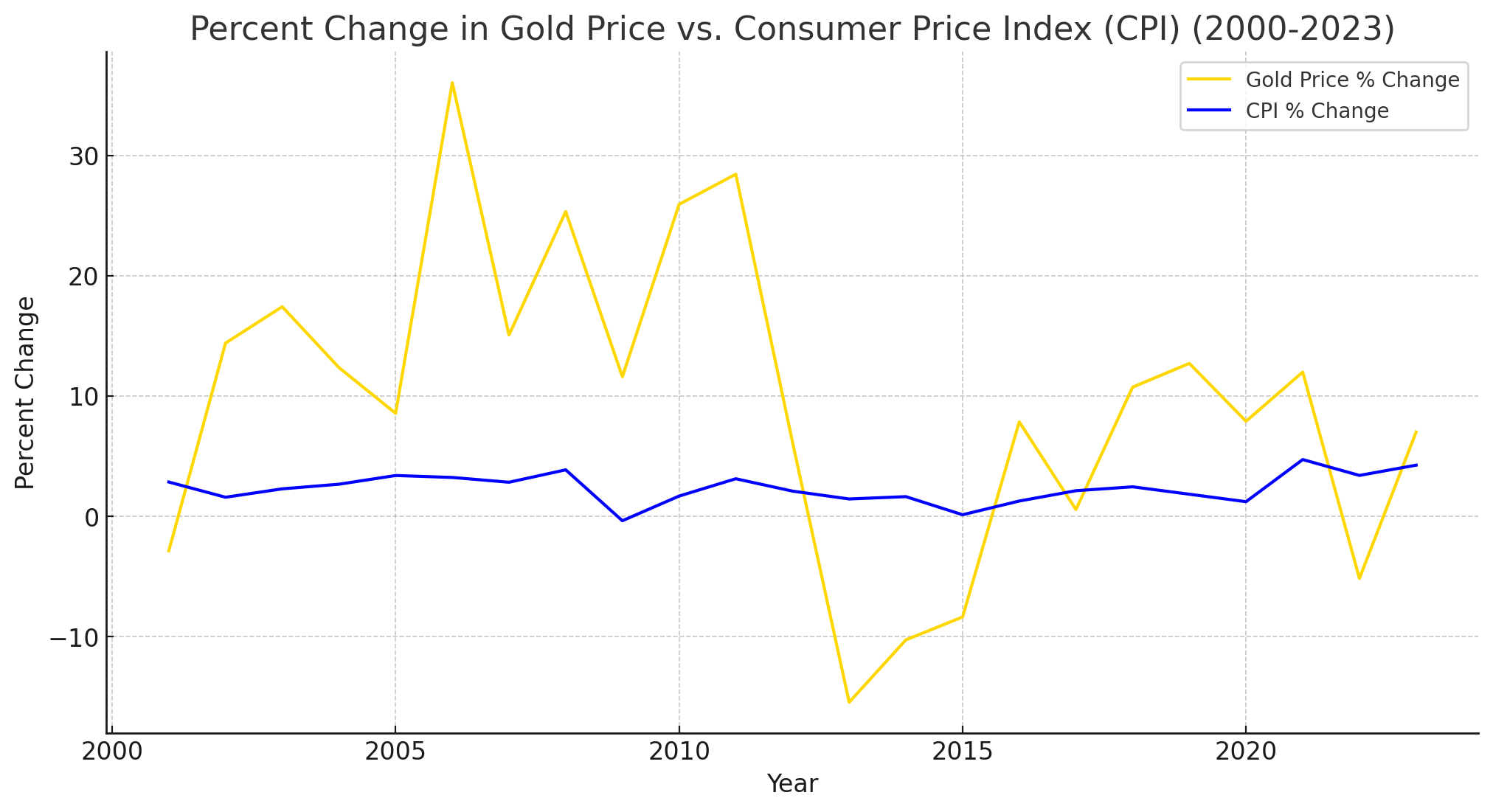
During this inflationary period, a lot of people sold gold as evidenced by the rangebound price through most of 2023. Was selling a good move?
Looking closer at the trend, gold sellers prevailed over the last couple of years whenever news broke indicating price inflation was still hot. We’d see these selloffs whenever there were large increases in the CPI or “strong” economic news, particularly positive jobs reports.
Conversely, gold buyers jumped in when the inflation news was positive or if there were hints of an economic slowdown.
The mainstream thinking is that any hint of lingering price inflation meant the Federal Reserve would raise interest rates, or at least keep them higher for longer. Since gold is a non-yielding asset, higher interest rates tend to create headwinds for gold. Investors gravitate toward yielding assets such as bonds thinking they will get a better return than holding non-yielding gold.
While I understand this thinking, I still found it curious that mainstream investors consistently sold a traditional inflation hedge during the worst inflationary period in some 50 years.
I think at least some of the swings we’ve seen in the gold price in recent months were a “monkey see, monkey do” phenomenon. Traders assumed other traders would sell gold on hot inflation news and that they would buy as inflation cooled. They programmed their algorithms to follow that trend. No doubt, there was money to be made following short-term this strategy. But these traders didn’t seem to be factoring in long-term trends or the economic fundamentals.
I also think there is some question as to whether or not gold is really an inflation hedge. There are plenty of investors who think gold is a “useless metal” and there is no reason to hold it in a modern portfolio. After all John Maynard Keynes declared gold “a barbarous relic.”
So, how did investors who bought gold early in this inflationary cycle fare?
Pretty darn good.
The price of gold has increased by about 29 percent since June 2021 (as inflation started heating up) from around $1,800 an ounce to today’s price of around $2,320 an ounce. In that same period, CPI increased by 12.30 percent based on official Bureau of Labor Statistics data.
So, the price of gold has increased by more than twice the rate of price inflation so far in this cycle. That’s a pretty solid inflation hedge!
But what if we look at gold’s relationship with inflation over a longer period of time? Does the yellow metal still hold up as an inflation hedge?
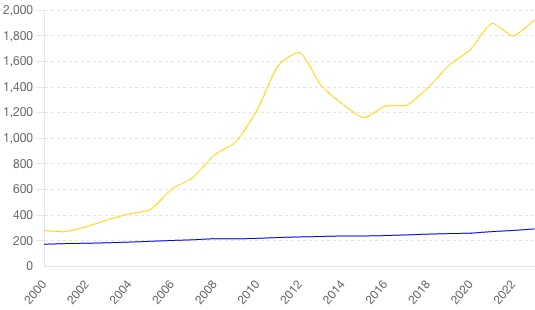
Let’s consider the price of gold and its relationship with price inflation during the 21st century.
The spot price of gold in January 2000 was around $285 an ounce. If you bought an ounce of gold that month and sold it today, you would earn about 714 percent on your investment.
During that same period, the CPI has increased by about 81 percent.
Again, gold was more than adequate as an inflation hedge during that period of time (That’s a bit of an understatement, eh?).
Of course, the return on any investment depends on exactly when you buy and when you sell. If you happen to buy gold at the peak of a bull cycle and sell at the bottom of a bear run, you will likely lose money in both real and inflation-adjusted terms. There is always an inherent risk in investing. That means one can select arbitrary dates to “prove” that gold failed as an inflation hedge. That’s why one must always look at longer trends.
A lot of people like to point to 2011 to prove that gold has been a poor investment. They chose 2011 because gold peaked that year in the wake of the 2008 financial crisis and Great Recession. It took about a decade for gold to regain that level.
So, if you bought gold in early 2011 and sold it today, how would you do?
Not too bad.
In January 2011, gold was selling at around $1,400 per ounce. If you bought an ounce then and sold it today at $2,320, you would chart a gain of 65.7 percent. In that same period, price inflation has increased by 38.55 percent.
Even if you bought gold at the peak of around $1,900 an ounce in August 2011, your investment has still slightly outpaced price inflation based on the CPI.
While the correlation breaks down for short periods, gold has generally outpaced price inflation during this century.
Maybe the “smart money” that sold gold during this inflationary run wasn’t so smart after all.
Mike Maharrey is a journalist and market analyst for MoneyMetals.com with over a decade of experience in precious metals. He holds a BS in accounting from the University of Kentucky and a BA in journalism from the University of South Florida.
(Mike Maharrey, Money Metals News Service) It’s starting to get difficult for the most optimistic cheerleader to pretend this economy is “robust.”
We got more evidence today that the American consumer is tapped out.
And that’s really bad news for an economy that depends on consumers buying stuff to keep rolling along.
Retail sales grew at a tepid 0.1 percent in May. That was below the expectation for a somewhat less tepid 0.2 percent gain. And if you factor out autos, retail sales fell by 0.1 percent.
Meanwhile, April retail sales were revised down from flat to a decline of 0.2 percent.
On an annual basis, retail sales have increased by just 2.3 percent.
You might look at that number and think, ‘Well, that’s great. People are still buying more stuff.’
But that raw retail sales data doesn’t tell the whole story because it isn’t adjusted for price inflation. In reality, Americans are forking out more money than they were last year, but they’re buying less stuff.
Retail sales always reflect rising and falling prices, along with the volume of stuff consumers buy.
When price inflation is high, retail sales tick higher, unless consumers cut back spending enough to offset rising prices. During deflationary periods (falling prices), retail sales fall, all things being equal, unless people up their volume of purchases enough to offset falling prices.
In other words, just because dollar widget sales increase doesn’t mean people bought more widgets. It could be that they bought fewer widgets but paid a lot more for them. Conversely, falling sales could reflect price drops and don’t necessarily mean people purchased fewer widgets.
When you factor in an annual CPI of 3.3 percent, it’s clear that Americans aren’t even keeping up with rising prices.
Looking at the internals, it appears Americans are cutting back on discretionary spending. Sales at bars and restaurants fell by 0.4 percent. Home furnishing retailers saw sales fall by 1.1 percent.
Are American Consumers Reaching Their Spending Limit?
Not only are retail sales falling, but we’ve seen a sudden dropoff in the increase of consumer debt over the last few months. Revolving debt, primarily reflecting credit card balances, contracted by $500 million in April, saw a 0.4 percent decline.
That may well indicate Americans are starting to max out their credit cards.
American consumers are currently buried under 1.34 trillion in revolving debt alone. When you factor in non-revolving credit including student and vehicle loans, and borrowing for other big-ticket items, Americans owe $5.05 trillion. That doesn’t even factor in mortgages.
Americans used stimulus money handed out during the pandemic to pay down credit cards and beef up their savings. Then prices started surging.
As prices skyrocketed, Americans blew through their savings to make ends meet. Aggregate savings peaked at $2.1 trillion in August 2021. As of June 2023, the San Francisco Fed estimated that aggregate savings had dropped to $190 billion.
In other words, Americans ran through $1.9 trillion in savings in just two years.
Then they turned to credit cards.
Now it appears they have maxed out the plastic. We see this in both the consumer debt data and sagging retail sales.
This soft landing may be about to get a little bumpy.
Mike Maharrey is a journalist and market analyst for MoneyMetals.com with over a decade of experience in precious metals. He holds a BS in accounting from the University of Kentucky and a BA in journalism from the University of South Florida.