Buyers-Remorse Stricken Dems Face Arduous Path to Repeal and Replace Biden

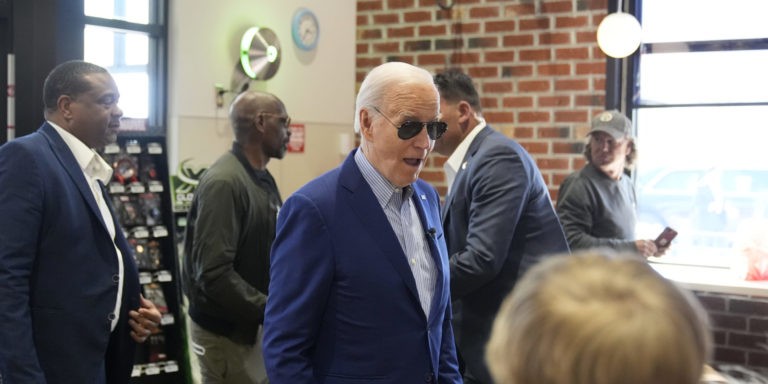
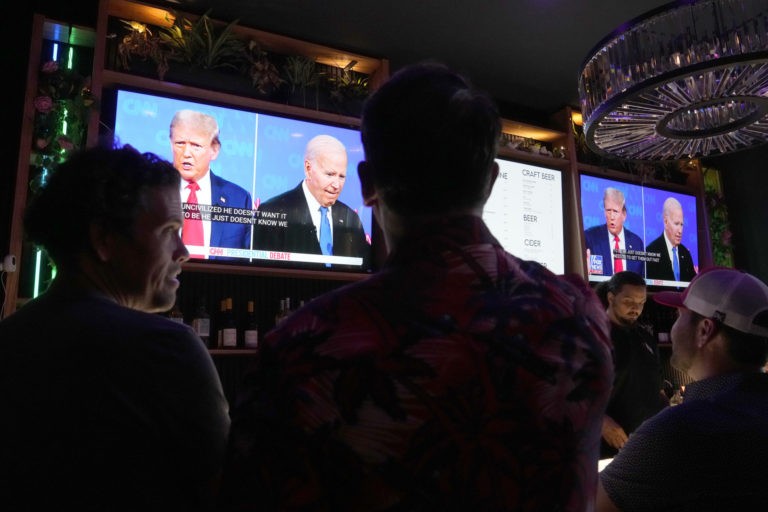
(Elias Irizarry, Headline USA) Left-wing pundits and Democrat operatives were caught scrambling in panic from the fallout of President Joe Biden’s poor performance in his debate Thursday with former President Donald Trump.

Even leftist Anderson Cooper of CNN spared no mercy—ripping into Vice President Kamala Harris with questions regarding Biden’s competency and ability to stand as a candidate against Trump.

“Is that the person you see in meetings every day?” grilled Cooper.

CNN’s Van Jones even made suggestions that it might be time for the 81-year-old President to step aside and for the Democratic Party to conduct a “bait-and-switch” of Biden for someone else.

“He had a test to meet tonight to restore confidence of the country, and of the base, and he failed that,” Jones said on a CNN post-debate panel.

“I think there’s a lot of people who are going to want to see him consider taking a different course now,” Jones added. “We’re still far from our convention—and there is time for this party to figure out a different way forward.”

The scramble has forced leftists to answer a critical question: Can Biden be replaced as the nominee?

The short answer is yes. However, many analysts agree it won’t be easy.

While once could game out a variety of strategies for Biden’s forced exit from the Democratic ticket—some of them more morbid and conspiratorial than others—the safest way for party leaders to dispatch with the sitting president would be by his own accord.

Thus far, Biden has emphatically stated that he would not abandon his campaign, shaking off all questions or hints at the matter. But if his war chest were to dry up and a viable competitor were to emerge with backing from prominent members of his party, he might have no choice in the matter if he wishes to spare himself the embarrassment of a crushing defeat.

Moreover, a graceful exit would likely come with perks, such as the possibility of blanket pardons for Hunter and himself—a level of protection that Biden would not enjoy under a Trump presidency.

Even with Biden voluntarily out of the picture, though, the path ahead is still lined with obstacles.

There is no formal way for Biden to approve or appoint a replacement, which would lead to a chaotic situation at the Democratic National Convention in Chicago. The event, from Aug. 19 to Aug. 22, is already unusually late, giving the eventual nominee little time to campaign—although that may be just what Democrats were hoping for all along.

The delegates currently aligned pledged to Biden would be left to decide on a replacement in what could potentially be a contentious clash among prospective hopefuls. Out of 4,000 delegates, the replacement would have to win over at least half of them. If nobody achieves that, a body of 900 superdelegates comprising of Democratic Party elites and officials would be able to step in and vote to put an individual over the finish line.

Delegates could theoretically oust Biden without his consent, but doing so would be a tough and almost unrealistic challenge. It would likely lead to an embarrassing and highly divisive schism in the Democratic Party at a time when it needs unity to defeat Trump.

The timing of when Biden decided to bow out will also play a factor—and there is little left to spare with the deadline to nominate a candidate for the Ohio ballot coming up on Aug. 7. The state’s constitution requires that candidates be approved 90 days before the election—a law passed by Democrats when they controlled the Buckeye State that is now coming back to bite them.

After Republican Secretary of State Frank LaRose warned that Biden might be withheld from the ballot if Democrats waited until the convention, party leaders decided to hold a “virtual convention.”

However, state lawmakers since passed legislation granting special permission for this year’s convention. It is unclear if the exceptions passed in that an other states with deadlines that fall before the DNC convention—including Alabama and Washington state—would still apply if the state’s primary winner were no longer in the race.

Some say that it may be too late to replace Biden.

Charlie Kirk, CEO of Turning Point USA, posted on social media platform X that Biden had a small window to withdraw, but doing so would not allow anyone else to replace him.

“States such as Wisconsin do not allow withdrawal from the ballot for any reasons besides death,” Kirk wrote. “In Nevada, no changes can be made to the ballot after 5 p.m. on the fourth Friday in June of an election year ‘or a nominee dies or is adjudicated insane or mentally incompetent.'”

Both are considered to be crucial battleground states, where a Democrat candidate’s ineligibility would put the party at a serious disadvantage, to say the least.

Citing information fro the Heritage Foundation’s Oversight Project, Kirk also mentioned another state that Democrats fought hard to claim in 2020, even going so far as to orchestrate what many suspected to be a massive illegal ballot-harvesting operation.

However, their ill-gotten gains in Georgia would all be wiped away in one fell swoop by a Biden exit.

“If Biden were to withdraw less than 60 days before the election [in] Georgia his name will remain on the ballot but no votes will be counted,” Kirk noted.

Another key question is: who would replace Biden? Many have listed California Gov. Gavin Newsom as a key favorite, even asking Newsom himself if he will be the next Democratic nominee.

Newsom’s chances of winning the presidency even increased by 4% following the debate, according to Polymarket, an online political betting website.

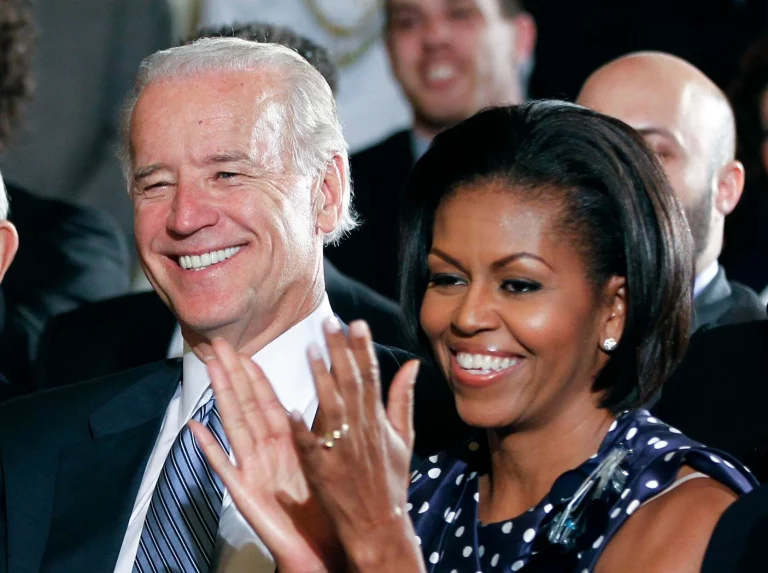
In comparison, Biden dropped 19% as the favorable winner on the website. Vice President Kamala Harris and former first lady Michelle Obama both rose in odds, as well.

Other names floated have been Michigan Gov. Gretchen Whitmer, infamously known for her draconian handling of the COVID-19 pandemic in Michigan; failed candidates Hillary Clinton and Pete Buttigieg; and even retiring Sen. Joe Manchin, D-W.Va., who reportedly considered a presidential run earlier this year on the No Labels ticket.

Headline USA’s Ben Sellers contributed to this report.

Border Patrol Union Denies Biden’s Lies about Endorsement

(Dmytro “Henry” Aleksandrov, Headline USA) During the June 27, 2024, presidential debate, the National Border Patrol Council (NBPC), which represents approximately 18,000 agents and support personnel, said they never did and never will endorse Joe Biden.

“We worked very hard to get a bipartisan agreement that not only changed all of that, [but it also] made sure that we were never in a situation where you had no circumstance where they could come across the border with the number of border police there are now,” Biden said in response to the question of why Americans should trust him to solve the current invasion of the country by illegal aliens, Blaze Media reported.

After saying that his administration “significantly” increased the number of asylum officers, Biden added that the Border Patrol endorsed him.

This claim turned out to be a lie after the union itself denied the endorsement.

“To be clear, we never have and never will endorse Biden,” the NBPC wrote.

It is possible that Biden may have wanted to refer to the union’s lukewarm support of the February Senate bill. However, the support of the bill could barely be described as even lukewarm, since the union referred to the legislation as “not perfect” but “far better” than nothing.

“Biden claimed this morning that Congressional Republicans have blocked his hiring of thousands of Border Patrol Agents. In reality, Republicans have actually funded more agents in recent appropriations bills in spite of Biden — not because of him,” the union wrote in an earlier post while wishing Donald Trump “luck” in the debate.

Hypocrite Newsom Attacks Trump While His Own Sex Scandal Resurfaces

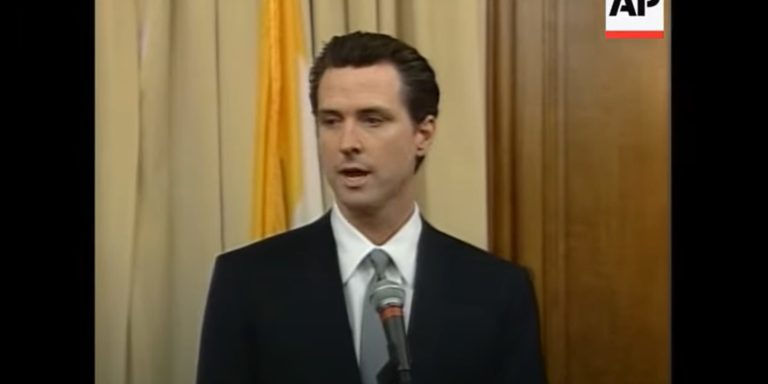
(Luis Cornelio, Headline USA) California Gov. Gavin Newsom came under fire on Friday for attacking former President Donald Trump over Stormy Daniels’ claims, all while having survived his own sex scandal during his tenure as mayor of San Francisco. 

In 2007, Newsom’s mayorship nearly crumbled after he was exposed for having an affair with one of his aide’s wives. Additionally, Newsom faced intense scrutiny after it was revealed that his office paid $10,000 in taxpayer dollars to the woman involved. 

The scandal began when Ruby Rippey-Tourk admitted to having an affair with Newsom in 2005, during her time as Newsom’s appointment secretary. As reported by the New York Times, her husband, Alex Tourk, was running Newsom’s re-election campaign at the time. 

Newsom infamously admitted to the affair during a press conference. “I want to make it clear that everything you’ve heard and read is true and I am deeply sorry about that,” Newsom said at the time.

“I’ve hurt someone I cared deeply about, Alex Tourk, his friends and family, and that it’s something that I have to live with and something that I am deeply sorry for,” the then-mayor added. “I’m also sorry that I let the people of San Francisco down.” 

Fast forward to Thursday, and Newsom attacked Trump over allegations of an affair with Stephanie Clifford, known as Stormy Daniels. 

“When you use the words, ‘I didn’t have sex with a porn star” you’re not winning, you’re losing,” Newsom said during a cable news interview, referencing Trump’s defense during the CNN debate. 

No evidence has ever been produced to support Daniels’ claims that she had an affair with Trump.

In fact, Daniels owes Trump over $620,000 in legal fees after she unsuccessfully sued him for defamation. 

Trump’s defense during the CNN debate came after President Joe Biden accused him of lacking morals. However, Biden himself has faced allegations of sexual misconduct from his former Senate aide, Tara Reade. Reade alleged that then-Sen. Biden placed his fingers on her private parts.

She has provided evidence of the alleged assault and is one of eight women who have come forward with similar accusations against Biden, alleging inappropriate kissing, hugging and touching. 

The president’s daughter, Ashley Biden, has expressed concerns about possible childhood sexual molestation.

In her infamous diary, she recounted having showers with Biden, which she described as “probably not appropriate.” 

Supreme Court Rejects Steve Bannon’s Bid to Delay Prison Sentence

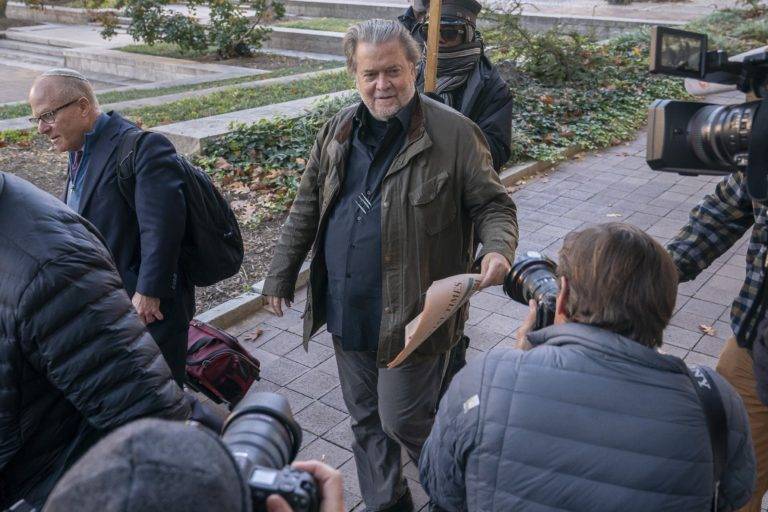
(Headline USA) The Supreme Court on Friday rejected a bid to delay a prison sentence for longtime Trump ally Steve Bannon as he appeals his conviction for defying a subpoena from the Jan. 6 Commission.

Bannon filed an emergency appeal after a judge ordered him to report to prison on July 1 for a four-month sentence for defying a subpoena from the House committee investigating the Jan. 6, 2021, uprising. The court previously denied a similar request from another Trump aide.

The appeal was originally directed to Chief Justice John Roberts, who oversees such requests from Washington. He referred it to the full court.

The court rejected it without explanation, as is typical. There were no noted dissents.

Defense attorneys have argued the case raises issues that should be examined by the Supreme Court, including Bannon’s previous lawyer’s belief that the subpoena was invalid because former President Donald Trump had asserted executive privilege. Prosecutors, though, say Bannon had left the White House years before and Trump had never invoked executive privilege in front of the committee.

A jury found Bannon guilty nearly two years ago of two counts of contempt of Congress: one for refusing to sit for a deposition with the Jan. 6 House Committee and a second for refusing to provide requested documents.

U.S. District Judge Carl Nichols allowed Bannon to stay free while he appealed but recently ordered him to report to prison after an appeals court panel upheld his contempt of Congress convictions. The panel later rejected Bannon’s bid to avoid reporting to prison.

Bannon is expected to appeal his conviction to the full appeals court, and Republican House leaders have put their support behind stepping in to assert the Jan. 6 committee was improperly created, effectively trying to deem the subpoena Bannon received as illegitimate.

Another Trump aide, Peter Navarro, has also been convicted of contempt of Congress. He reported to prison in March to serve his four-month sentence after the Supreme Court refused his bid to delay the sentence.

Adapted from reporting by the Associated Press

Biden’s Abysmal Debate Performance Sparks Calls to Invoke 25th Amendment

(Headline USA) Congressional Republicans are reportedly calling on President Joe Biden’s Cabinet to seriously consider invoking the 25th Amendment to remove the 81-year-old from office after his abysmal debate performance Thursday night.

“There’s a lot of people asking about invoking the 25th Amendment right now, because this is an alarming situation,” House Speaker Mike Johnson, R-La., told reporters on Friday, according to The Hill. “Our adversaries see the weakness in this White House, as we all do.”

Biden’s ability to fulfill his role doesn’t just affect the Democratic Party, Johnson added, it affects “the entire country.” 

He added, “I would ask the cabinet members to search their hearts. … We have a serious problem here because we have a president who by all appearances is not up to the task.”

Sens. Mike Lee, R-Utah, and Rick Scott, R-Fla., raised similar concerns shortly after the debate between Biden and former President Donald Trump ended.

“If you think Democrats in Washington and across the country aren’t talking about the 25th Amendment right now, you’re crazy,” Scott wrote on X. “It’s not a question of whether he should be on the ballot. That ship has sailed. It’s a question of whether he can serve as president right now.”

Rep. Chip Roy, R-Texas, revealed Friday morning that he plans to introduce a resolution to that effect. 

“I intend to put forth a resolution calling upon [Vice President Kamala Harris] to immediately use her powers … to convene and mobilize the principal officers of the Cabinet to declare [Biden] unable to to successfully discharge the duties and powers of his office,” Roy wrote on X.

Even Democrats were forced to admit after Thursday’s debate that Biden’s mental fitness has deteriorated significantly, with several leftist pundits openly calling on the Democratic establishment to replace him at the top of the 2024 ticket.

Biden, however, downplayed his poor performance on Thursday and said he has no intention of stepping aside, according to CNN. He also reportedly vowed to return to the debate stage in September.

Biden’s Odds Plummet In Betting Markets While Newsom, Michelle Obama Surge

(Headline USA) President Joe Biden’s odds for winning the 2024 election plummeted after his abysmal debate performance on Thursday night, while other potential Democratic challengers’ odds surged.

On betting website PredictIt.org, which allows users to buy stock in a candidate’s chances of winning, Biden’s odds dropped 15 points in the aftermath of his CNN debate against former President Donald Trump. Prior to the debate, the site showed Biden at a 48% chance of victory. Afterwards, he was at 33%.

Trump’s odds, meanwhile, peaked at 61% on PredictIt.com as the debate began, and settled at 58% after it concluded. Before the debate, Trump’s chances were at 53%, according to the website.

On another betting website, BetOnline.ag, Trump started the debate as a -150 favorite and rose to -175 by the end. Biden started at +130 and saw his odds fall to +300, the website reported.

Other Democrats, however, had a good night in the betting markets. California Gov. Gavin Newsom, in particular, saw his odds improve from 25/1 before the debate to 7/1 after it.

Former First Lady Michelle Obama’s odds also jumped from 22/1 to 16/1, according to BetOnline.

Newsom tried to play coy about his chances on Friday, dismissing rumors that he might step in to replace Biden at the top of the Democratic ticket.

“Our nominee is Joe Biden. I’m looking forward to voting for him in November,” Newsom told reporters.

Newsom later scolded MSNBC for even considering replacing Biden.

“We’ve got to have the back of this president,” Newsom said. “You don’t turn your back because of one performance. What kind of party does that? Democrats deliver. The president has delivered. We need to deliver for him at this moment. With all due respect, the more time we start having these conversations, go down these rabbit holes, it’s unhelpful to our democracy, our fate, and the future of this country.”

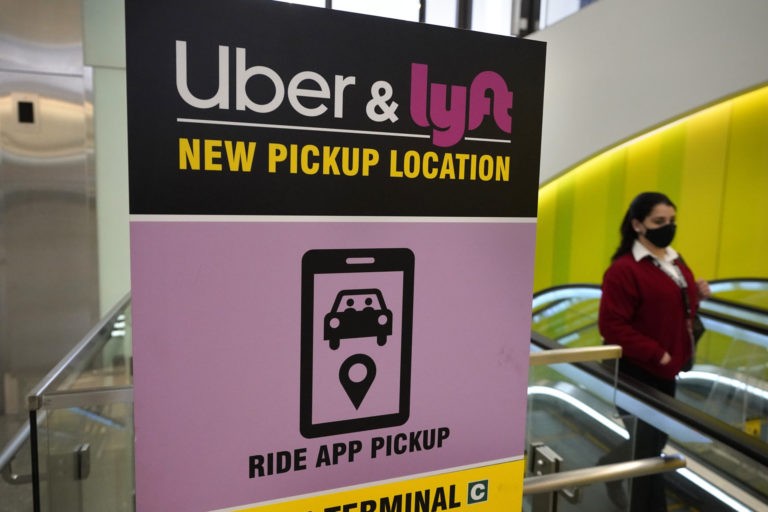
Uber, Lyft Agree to Pay Drivers $32.50 per Hour in Mass. Settlement

(Headline USA) Environmentally conscious Boston residents who thought they were making a responsible choice by not owning a car are about to pay a steep price for their decision with heftier ride-sharing rates as blue-state efforts to regulate the gig economy finally catch up with them.

Drivers for Uber and Lyft will earn a minimum pay standard of $32.50 per hour under a settlement announced Thursday by Massachusetts Attorney General Andrea Campbell, in a deal that also includes a suite of benefits and protections.

The two companies will also be required to pay a combined $175 million to the state to resolve allegations that the companies violated Massachusetts wage and hour laws, a substantial majority of which will be distributed to current and former drivers.

Campbell said the settlement resolves her office’s yearslong litigation against the two companies and stops the threat of their attempt to rewrite state employment law by a proposed 2024 ballot initiative.

That question would have resulted in drivers receiving inadequate protections and an earnings standard that would not guarantee minimum wage, she said.

“For years, these companies have underpaid their drivers and denied them basic benefits,” Campbell said in a written statement. “Today’s agreement holds Uber and Lyft accountable, and provides their drivers, for the very first time in Massachusetts, guaranteed minimum pay, paid sick leave, occupational accident insurance, and health care stipends.”

Democratic Gov. Maura Healey said the settlement delivers “historic wages and benefits to right the wrongs of the past and ensure drivers are paid fairly going forward.”

In a statement Lyft said the agreement resolves a lawsuit that recently went to trial, and avoids the need for the ballot initiative campaign this November.

“More importantly, it is a major victory in a multiyear campaign by Bay State drivers to secure their right to remain independent, while gaining access to new benefits,” the company said.

Uber called the agreement “an example of what independent, flexible work with dignity should look like in the 21st century” in a statement.

“In taking this opportunity, we’ve resolved historical liabilities by constructing a new operating model that balances both flexibility and benefits,” the company said. “This allows both Uber and Massachusetts to move forward in a way that reflects what drivers want and demonstrates to other states what’s possible to achieve.”

The companies were pushing a ballot question that would classify drivers as independent contractors eligible for some benefits, but Campbell said the settlement stops the threat of the ballot question. A competing ballot question seeks to give drivers the right to unionize in Massachusetts.

Drivers will now earn one hour of sick day pay for every 30 hours worked, up to a maximum of 40 hours per year. As part of the agreement, Uber and Lyft must update their driver applications so drivers are able to view and claim their sick leave directly in the app. Drivers will also receive a stipend to buy into the state’s paid family and medical leave program.

Under the deal, Uber and Lyft will also allow drivers to pool together their hours driving for the two companies to obtain access to a health insurance stipend. Anyone who drives for more than 15 hours per week—for either or both companies—will be able to earn a health insurance stipend to pay for a plan on the Massachusetts Health Connector.

Drivers will be eligible for occupational accident insurance paid by the companies for up to $1 million in coverage for work-related injuries.

The agreement also requires the companies to provide drivers with key information—about the length of a trip, the destination and expected earnings—before they are expected to accept a ride.

The companies are barred from discriminating against drivers based on race, religion, national origin, sex, sexual orientation, gender identity, disability or other protected identities—and can’t retaliate against drivers who have filed a complaint about the companies with the Attorney General’s Office.

The deal also requires the companies to provide drivers in-app chat support with a live person in English, Spanish, Portuguese and French and must provide drivers with information about why they have been deactivated and create an appeals process.

Adapted from reporting by the Associated Press

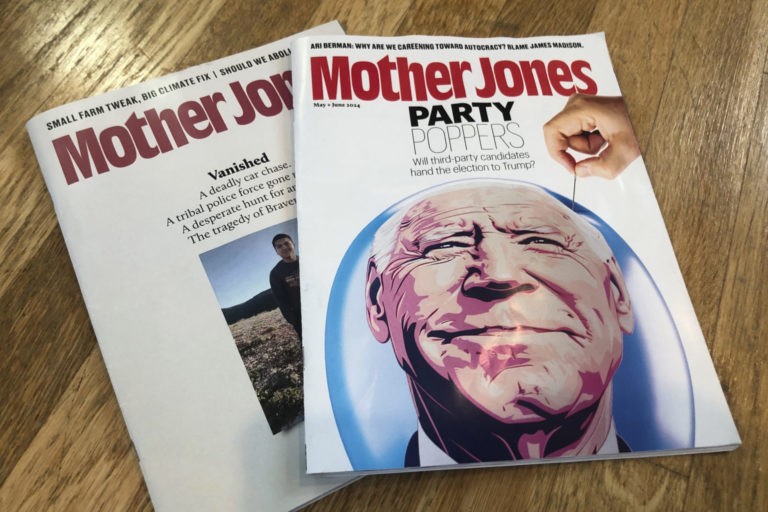
Mother Jones Publisher Sues ChatGPT for Copyright Infringement

(Headline USA) The Center for Investigative Reporting—a radical leftist organization masquerading as a public advocacy “nonprofit” that is funded largely by wealthy billionaire oligarchs via tax-exempt foundations—said Thursday it was suing ChatGPT maker OpenAI and its closest business partner, Microsoft, marking a new front in the fight to regulate content generated by artificial intelligence platforms.

The activist group, which produces Mother Jones and Reveal, said that OpenAI used its content without permission and without offering compensation, violating the organization’s copyrights.

The lawsuit, filed in a New York federal court, described OpenAI’s business as “built on the exploitation of copyrighted works” and focused on how AI-generated summaries of articles threaten publishers.

“It’s immensely dangerous,” Monika Bauerlein, the center’s CEO, told the Associated Press. “Our existence relies on users finding our work valuable and deciding to support it.”

Bauerlein said that “when people can no longer develop that relationship with our work, when they no longer encounter Mother Jones or Reveal, then their relationship is with the AI tool.”

That, she said, could “cut the entire foundation of our existence as an independent newsroom out from under us” while also threatening the future of other news organizations.

The lawsuit is the latest against OpenAI and Microsoft to land at Manhattan’s federal court, where the companies are already battling a series of other copyright lawsuits from the New York Times, other media outlets and bestselling authors such as John Grisham, Jodi Picoult and George R.R. Martin. The companies also face a separate case in San Francisco’s federal court brought by authors including comedian Sarah Silverman.

Some news organizations have chosen to collaborate rather than fight with OpenAI by signing deals to get compensated for sharing news content that can be used to train its AI systems. The latest to do so is Time, which announced Thursday that OpenAI will get access to its “extensive archives from the last 101 years.”

OpenAI didn’t respond directly to the lawsuit Thursday but said in a statement that it is “working collaboratively with the news industry and partnering with global news publishers to display their content in our products like ChatGPT, including summaries, quotes, and attribution, to drive traffic back to the original articles.” Microsoft didn’t respond to a request for comment.

OpenAI and other major AI developers don’t typically disclose their data sources but have argued that taking troves of publicly accessible online text, images and other media to train their AI systems is protected by the “fair use” doctrine of American copyright law.

CIR’s lawsuit says a dataset that OpenAI has acknowledged using to build an earlier version of its chatbot technology contained thousands of links to the website of Mother Jones, a 48-year-old print magazine that’s been publishing online since 1993. But the text used for AI training was usually missing information about a story’s author, title or copyright notice.

The reliance on Mother Jones as its information source raises significant red flags on its own about the potential bias involved with training the AI, which has been a major point of concern and criticism as the tool infiltrates itself increasingly into people’s lives, sometimes in ways in which they may be unaware, such as the screening of job applicants, the censoring of posts on social media or the determination what articles show up in basic internet searches.

Mother Jones is generally regarded as one of the most extreme left publications, almost militaristic, and has taken an actively hostile stance toward conservative viewpoints, even targeting Headline USA as part of one investigation based on op-ed pieces by current Trump spokeswoman Karoline Leavitt that the website published, for which it received no compensation and had no vested interest, financial or otherwise.

Some have accused it of being a front for the Chinese Communist Party.

Last summer, more than 4,000 writers signed a letter to the CEOs of OpenAI and other tech companies accusing them of exploitative practices in building chatbots.

“It’s not a free resource for these AI companies to ingest and make money on,” Bauerlein said of news media. “They pay for office space, they pay for electricity, they pay salaries for their workers. Why would the content that they ingest be the only thing that they don’t (pay for)?”

The AP is among the news organizations that have made licensing deals over the past year with OpenAI; others include the Wall Street Journal and New York Post publisher News Corp., The Atlantic, Axel Springer in Germany and Prisa Media in Spain, France’s Le Monde newspaper and the London-based Financial Times.

Mother Jones and CIR were both founded in the 1970s and merged earlier this year. Both are based in San Francisco, as is OpenAI.

The lawsuit from CIR, also known for its Reveal podcast and radio show, outlines the expense of producing investigative journalism and warns that losing control of copyrighted content will result in less revenue and even fewer reporters to tell important stories in “today’s paltry media landscape.”

“With fewer investigative news stories told, the cost to democracy will be enormous,” the lawsuit says.

Adapted from reporting by the Associated Press

Navigating the Economic Landscape: Insights from Axel Merk

(Money Metals News Service) In a recent episode of the Money Metals podcast, host Mike Maharrey engaged in a comprehensive discussion with Axel Merk, President and Chief Investment Officer of Merk Investments.

Known for his expertise in macroeconomic trends, Merk provided valuable insights into the current financial landscape, the Federal Reserve’s policies, and the prospects for precious metals like gold and silver.

(Interview Begins Around 6:50 Mark)

Who is Axel Merk?

Axel Merk
Axel Merk

Axel Merk is a prominent figure in the financial world, serving as the President and Chief Investment Officer of Merk Investments. With a strong academic background, holding a B.A. in Economics (magna cum laude) and a M.Sc. in Computer Science from Brown University, Merk has built a reputation as a sought-after speaker, contributor, and author.

He founded Merk Investments, which has grown into a $1 billion investment advisory firm offering services in domestic and international equities, fixed income, commodities, and currencies.

Merk’s deep understanding of macro trends and his analytical insights have made him a respected voice in the investment community.

The Federal Reserve’s Rate Cut Dilemma

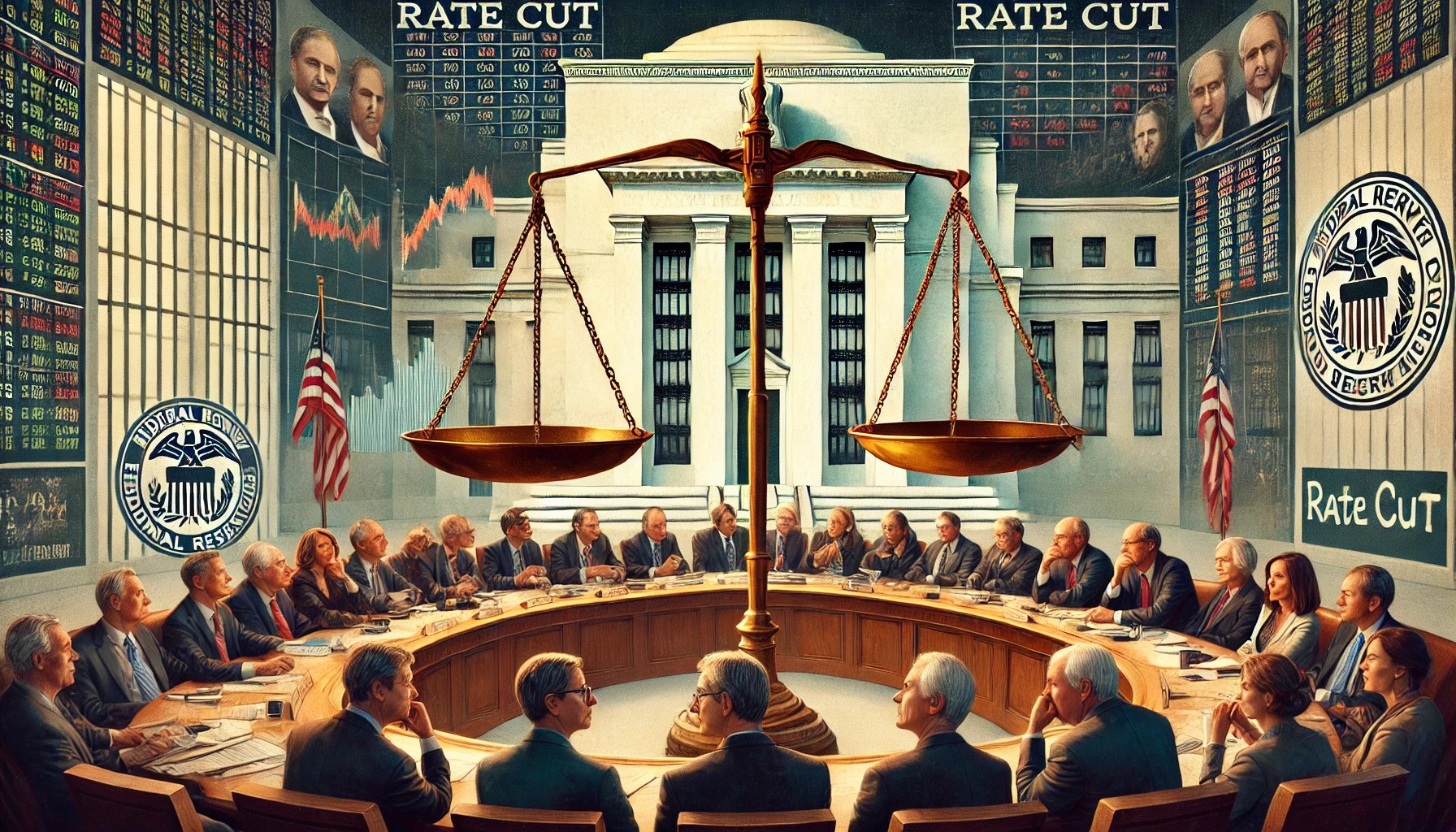
Merk began by addressing the ongoing debate surrounding potential rate cuts by the Federal Reserve. He emphasized the significance of the Fed’s easing bias, noting that Fed Chair Jerome Powell is likely eager to cut rates but is constrained by economic data and market conditions.

According to Merk, the market currently anticipates a high probability of rate cuts in the coming months, particularly in September and October. This outlook is driven by mixed economic signals, including recent non-farm payroll reports and underlying economic weaknesses.

Financial Conditions and Inflation

Maharrey and Merk discussed the true tightness of financial conditions in the U.S. Merk highlighted the importance of the Chicago Fed’s Financial Conditions Index, which examines credit spreads rather than relying on more volatile measures like the VIX.

Despite some improvements, Merk pointed out that fiscal stimulus and the Fed’s support for small banks have cushioned the economy, complicating the assessment of true financial tightness. He warned that this micromanagement by the Fed could lead to inefficient capital allocation and increased political meddling, ultimately necessitating more printed money to achieve economic stability.

“The fiscal stimulus is a big one. The area that I don’t think gets enough attention is that the Fed has provided the Fed by giving a rescue line to the small banks. If that had been allowed to play out, we would’ve had a much worse economy,” said Merk.

Silver’s Complex Dynamics

Turning to the silver market, Merk acknowledged its recent brief surge but expressed caution about its future prospects. He noted the dual role of silver as both an industrial and precious metal, making it highly sensitive to economic fluctuations.

While there are strong fundamentals supporting silver, such as supply constraints and rising industrial demand, predicting its short-term performance remains challenging. Merk advised investors to approach silver with caution, given its inherent volatility and complex dynamics.

“The curse of silver is of course that it has this heavy industrial component that gold does not have… If you want to get really frustrated, do go invest in silver.”

Global Geopolitical and Economic Factors

Merk also addressed the broader global economic and geopolitical landscape. He emphasized the central role of the Federal Reserve in setting global benchmarks and the ripple effects of U.S. policies on the world economy.

“The Fed sets the global benchmark of the so-called risk-free assets… And while on the fringes there are some concerns about that, there isn’t really anything else to take its place at this stage.”

Discussing recent turmoil in Europe and conflicts like the Gaza situation, Merk highlighted the interconnectedness of global markets and the potential for increased geopolitical risks to drive inflation and economic instability. He pointed out that Europe’s struggles with energy policies and red tape are contributing to slower growth and more significant economic challenges.

Stock Market Concerns

The conversation shifted to the stock market, where Merk expressed concerns about its current state. He pointed out signs of overvaluation and irrational exuberance, reminiscent of the dot-com bubble.

While acknowledging that calling a market top is difficult, Merk advised caution, especially given the elevated levels of debt and consumer credit. He mentioned his own cautious approach, maintaining substantial cash holdings and avoiding new equity investments in recent months, while still holding significant positions in precious metals.

Merk expressed, “I do think that this stock market has many hallmarks of being at the… it’s certainly not at the bottom of a bull market. I think we can all agree on that. When CEOs become these hip cult icons, to me, those are not just yellow flags, those are starting to flash red.”

Merk underscored the importance of gold as a hedge against economic uncertainty and a tool for portfolio diversification. He explained that gold’s value is not just about current economic conditions but also about the unknown future.

Merk cautioned that macroeconomic forecasts are often wrong and emphasized the need for risk management and scenario planning in investment strategies. He advised investors to remain vigilant and adaptable, recognizing that economic trends can take time to play out and that crises can arise unexpectedly.

“Gold is the thing you are glad you had looking backward, but why the heck do you have it going forward if it doesn’t even pay a dividend?… It’s one of these things that in the long run help balance out a portfolio.”

Key Questions and Answers:

These key questions and answers highlight Merk’s cautious yet strategic approach to navigating the current economic environment, emphasizing the importance of adaptability and vigilance in investment strategies.

Do you think the Fed is going to deliver a cut or two before the election or are they going to hold it off?

Merk believes the easing bias is significant, noting that Fed Chair Jerome Powell is inclined to cut rates if given an excuse. He mentioned that the market currently prices in a high probability of rate cuts in September, October, and December. However, he emphasized that these predictions are uncertain and dependent on economic data.

According to Axel Merk, “Mr. Powell would love to find an excuse to cut rates. And ever since that bias changed… I think the bias matters and we can talk about that. The market currently prices in a… 77% chance of a rate cut in September actually, and a full rate cut in October and then a second rate cut in December.”

Are we really tight, and has the Fed done enough to slay the inflation dragon?

Merk highlighted the Chicago Fed Financial Conditions Index, which he considers a reliable measure as it focuses on credit spreads. He pointed out that fiscal stimulus and the Fed’s support for small banks have mitigated economic tightening. However, he warned that the Fed’s micromanagement of the economy could lead to inefficient capital allocation and increased political interference.

When do you think that silver might finally “have its day”?

Merk acknowledged that silver had a brief surge but remains volatile due to its dual role as an industrial and precious metal. While there are strong fundamentals for silver, such as supply constraints and rising industrial demand, he advised caution, noting that predicting silver’s short-term performance is challenging.

What does some of the turmoil in Europe mean for the broader market as we move forward?

Merk emphasized the interconnectedness of global markets and the central role of the Federal Reserve. He discussed the potential inflationary pressures from geopolitical conflicts, such as those in Gaza and Ukraine, and the economic struggles in Europe. He pointed out that these factors contribute to a less stable and more inflationary world.

Is the stock market really a bubble, or is this a legitimate increase in value?

Merk expressed concerns about the stock market, noting signs of overvaluation and irrational exuberance. He advised caution, highlighting elevated debt levels and consumer credit. While he has not entirely exited equities, he mentioned maintaining substantial cash holdings and avoiding new equity investments in recent months.

If we get a significant correction in equities, how do you think that will affect the gold and silver markets?

Merk explained that precious metals tend to perform well during significant corrections in equities, especially in hard-landing scenarios where the Fed reacts more aggressively. He noted that investors often turn to gold and silver as diversifiers during market downturns.

Merk agreed, emphasizing that markets reflect future expectations rather than current conditions. He noted that macroeconomic forecasts are often wrong and that crisis events are unpredictable. He advised a focus on risk management and scenario planning rather than precise predictions.

What is something that you see bubbling under the surface that maybe is being missed by the mainstream?

Merk expressed concern about the gradual erosion of fiscal and monetary stability, driven by policymakers’ good intentions that often lead to worse outcomes. He warned about the long-term implications of these trends, including increased political instability and fiscal deficits, which he views as major threats to national security.

“What really concerns me is the gradual erosion of numerous things on the fiscal side, on the monetary side, it’s the road to hell that’s paved with good intentions. And then policymakers always reacting the wrong way, really amplifying things, making things worse rather than better,” stated Merk.

Conclusion

Axel Merk’s insights provide a nuanced perspective on the current economic environment, highlighting the complexities of central bank policies, the dynamics of precious metals, and the broader geopolitical and economic challenges. His cautious yet strategic approach to investing offers valuable guidance for navigating uncertain times.

For those interested in following Merk’s latest analyses, he can be found on X (Formerly Twitter) @axelmerk, and more information about Merk Investments is available on their website.

This comprehensive discussion serves as a reminder of the importance of staying informed and adaptable in an ever-changing economic landscape.

Racial Activists, Free-Speech Groups Join Fight against TikTok Ban

(Headline USA) A dozen social and racial justice groups said Thursday that the federal effort to require a sale or ban of TikTok would suppress speech from minority communities by disrupting a critical tool many use to establish connections online and advocate for causes.

The legal brief, submitted to a federal court in Washington, comes as TikTok and its Beijing-based parent, ByteDance, are waging a consequential legal battle against the law, which would disrupt the platform’s U.S. operation to address bipartisan concerns about the popular app.

Thursday was the deadline for third-party groups to file documents supporting the social video platform and eight TikTok creators who sued the U.S. government last month. The two cases have since been consolidated.

The legal filing submitted Thursday came from a diverse set of organizations, including the New York-based Asian American Federation, a Washington-based nonprofit called the Hispanic Heritage Foundation, a Virginia-based transgender advocacy organization named the Calos Coalition and the Muslim Public Affairs Council.

In the brief, the groups wrote that TikTok has been instrumental to advocacy around various issues, such as reproductive rights and opposition to anti-LGBT legislation around the country.

They say the platform has empowered diverse communities in online conversations and placed “marginalized views squarely before new audiences,” enabling them “to break down stereotypes that persist in America and globally.”

The brief claims this happens because the platform gives communities increased reach and the ability to bypass “entrenched hierarchies” found on other social media platforms.

TikTok has also received support from other organizations, which have echoed arguments the company has made in its lawsuit against the government.

On Wednesday evening, seven other free speech-oriented advocacy groups submitted a brief to the court, arguing the law would infringe on the First Amendment and make it impossible for users to associate on the app.

Some digital rights groups like the Electronic Frontier Foundation have previously expressed support for the company or sided with it in a similar lawsuit against Montana last year.

The libertarian public interest firm Institute For Justice and Reason Foundation also filed a brief Thursday supporting TikTok’s free speech claims. Both groups have received donations from the Susquehanna Foundation, a sister organization to the trading firm co-founded by prominent ByteDance investor and Republican megadonor Jeff Yass.

The federal law, which President Joe Biden signed as part of a larger foreign aid package in April, is the U.S. government’s attempt to deal with long-running national security concerns about TikTok’s presence and reach in the U.S.

Lawmakers from both parties and some administration officials have said TikTok’s current ownership structure poses a threat since ByteDance operates under the laws of the Chinese government.

They say Chinese authorities could force ByteDance to hand over U.S. user data or sway public opinion towards Beijing’s interests by tinkering with the algorithm that populates users’ feeds. However, the government hasn’t provided public evidence to support either claim.

The racial and social justice groups claim in their filing that anti-Asian sentiments clouded discussions around the law. Many TikTok creators have also opposed the measure, which marks the first time the U.S. has singled out a social media company for a potential ban. It gives ByteDance nine months to sell TikTok, and a possible three-month extension if a sale is in progress.

However, both companies have argued they would have to shut down TikTok’s U.S. operation by Jan. 19 because continuing to operate in the U.S. wouldn’t be commercially, technologically or legally possible if forced to divest.

Last week, TikTok filed another legal brief giving its account of negotiations it held with the Biden administration since 2021. The company said it presented a draft agreement in August 2022 but claimed the administration “ceased any substantive negotiations” with its attorneys after that.

The Justice Department said in a statement last week that it’s looking forward to defending the recently enacted legislation, which addresses “critical national security concerns in a manner that is consistent with the First Amendment and other constitutional limitations.”

The Cato Institute, a Washington-based libertarian think tank, is also expected to file a legal brief supporting TikTok. Yass currently serves as Cato’s vice chair.

Adapted from reporting by the Associated Press