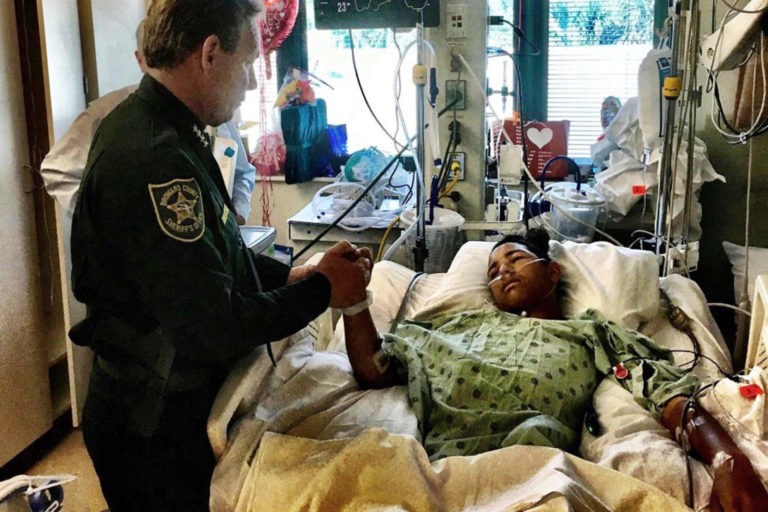
(Headline USA) The most severely wounded survivor of the 2018 massacre at Parkland‘s Marjory Stoneman Douglas High School now owns shooter Nikolas Cruz’s name, and Cruz cannot give any interviews without his permission, under a settlement reached in a lawsuit.
Under his recent settlement with Anthony Borges, Cruz must also turn over any money he might receive as a beneficiary of a relative’s life insurance policy, participate in any scientific studies of mass shooters and donate his body to science after his death.
The agreement means that Cruz, 25, cannot benefit from or cooperate with any movies, TV shows, books or other media productions without Borges’ permission. Cruz is serving consecutive life sentences at an undisclosed prison for each of the 17 murders and 17 attempted murders he committed inside a three-story classroom building on Feb. 14, 2018.
“We just wanted to shut him down so we never have to hear about him again,” Borges’ attorney, Alex Arreaza, said Thursday.
Borges, now 21, was shot five times in the back and legs and collapsed in the middle of the third-floor hallway. Video shows that Cruz pointed his rifle at Borges as he lay on the floor, but unlike most of the other victims he walked past, did not shoot him a second time. Arreaza said he asked Cruz why he didn’t shoot Borges again, but he didn’t remember.
A promising soccer player before the shooting, Borges has undergone more than a dozen surgeries and still lives in pain. He received donations, a $1.25 million settlement from the Broward County school district and an undisclosed settlement from the FBI for their failures in preventing the shooting. Arreaza said it is difficult to say whether Borges has received enough money to cover his future medical expenses.
Several other families also sued Cruz, and a mini-trial had been scheduled for next month to assess damages against him. That trial has been canceled, Arreaza said. David Brill, the attorney representing the other families, did not return a phone call and two email messages seeking comment.
Florida already has laws that prohibit inmates from keeping any proceeds related to their crimes, including any writings or artwork they might produce in prison. In addition, Judge Elizabeth Scherer, when she sentenced Cruz, ordered that any money placed in his prison commissary account be seized to pay restitution to the victims and their families and all court and investigation costs. In total, that would be millions of dollars.
Arreaza said he feared that without the settlement, Cruz could find a way around the law and the judge’s order or assign any money he might receive to a relative or other person.
Borges, the families of those Cruz murdered and other survivors are also suing former Broward County sheriff’s deputy Scot Peterson, the sheriff’s office and two former school security guards, alleging they failed to protect the students and staff. No trial date has been set. Peterson was acquitted of criminal charges last year.
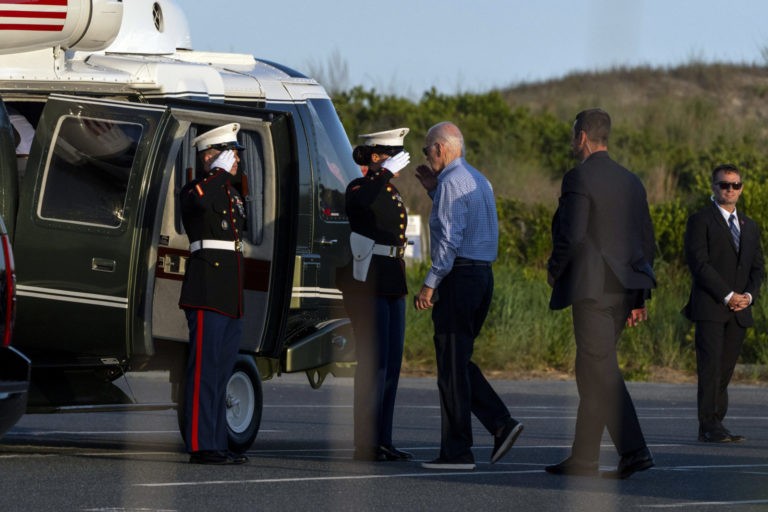
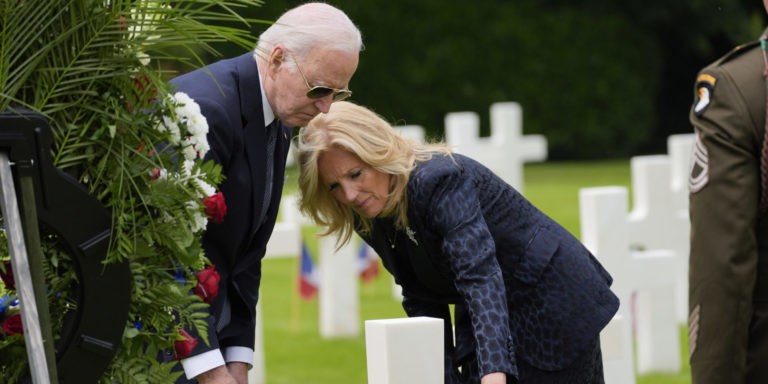
(Luis Cornelio, Headline USA) Sunday could mark the formal beginning of President Joe Biden’s end as the presumed presidential nominee of the Democratic Party.
Biden has summoned his family for an apparent emergency meeting to discuss whether he should exit the 2024 race.
The move came after Americans witnessed his senility and declining health during his CNN debate with Donald Trump, the Republican nominee.
The meeting, planned before the debate, includes First Lady Jill Biden, along with the president’s children and grandchildren.
The news of the meeting was first reported by NBC News, which cited five sources familiar with Biden’s plan.
On Friday, Biden’s mood was described as “humiliated” and “devoid of confidence.”
Calls for Biden to step down emerged after Trump dominated the debate, criticizing Biden’s disastrous border policies inflation and rising crime.
In contrast, Biden appeared incoherent, lost and confused, igniting chaos within the leftist legacy media, the White House, Congress and the Democratic Party.
Top Democrats, including Senate Majority Leader Chuck Schumer, House Minority Leader Hakeem Jeffries and Reps. Nancy Pelosi and Jim Clyburn, are panicking that if Biden continues as the Democratic nominee, Trump would cruise directly to the White House.
The New York Times’s editorial board similarly called for Biden to step down as the Democratic nominee. The Times’s call came after the its scheme to shield the president from so-called cheap fake videos that revealed Biden’s senility.
Despite their concerns, one source said that only Biden and the first lady will determine whether to step down or not.
“The only person who has ultimate influence with him is the first lady,” the source said. “If she decides there should be a change of course, there will be a change of course.”
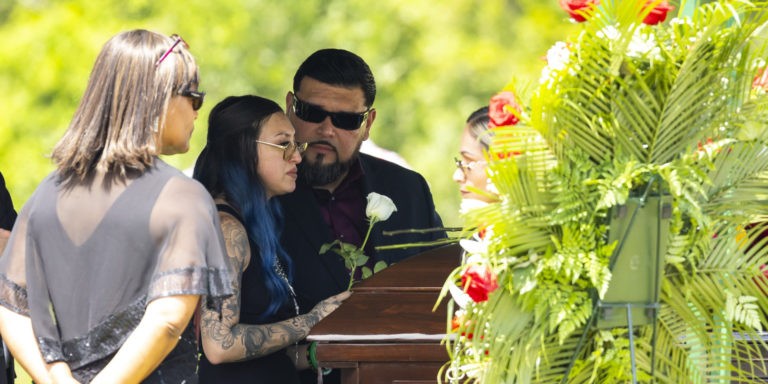
(Luis Cornelio, Headline USA) Alexis Nungaray, the mother of a 12-year-old girl reportedly killed by two illegal aliens, shared her initial reaction to former President Donald Trump’s call before his CNN debate on Thursday.
“Shocked,” was how the mother responded to Trump’s Thursday call, as reported by the New York Post, citing family friend Victoria Galvan.
According to Galvan, Trump spoke with the grieving mother for 10 minutes, offering his condolences and assuring her he would keep in contact.
Trump said he was thinking of Jocelyn Nungaray, who authorities say met her tragic end after being lured onto a bridge by two Venezuelan men in Houston, Texas.222
“He wanted to … say that he was praying for Alexis and that he’s been thinking about her and he wanted to reach out. He said that he was going to reach out in a couple days to her … I mean, she was really … we were all shocked,” Galvan told the Post.
Jocelyn Nungaray’s mother and grandfather are exactly right. We have to stop burying our kids. It is not right that Joe Biden’s open border is killing Americans. pic.twitter.com/CzBz9ER3K0
Prosecutors allege that Johan Jose Martinez-Rangel and Franklin Jose Peña Ramos murdered Jocelyn Nungaray before disposing of her body in a bayou.
Authorities suspect that the two men raped the young girl but are waiting for medical examinations.
The murder of Jocelyn Nungaray has deeply shaken the nation, highlighting the dangers associated with President Joe Biden’s border policies.
“He was like, ‘I’m actually about to come on for a debate’ … He gave his condolences, and he said that he would be reaching back out to her,” Galvan said.
According to Galvan, she and Alexis Nungaray reflected on how Jocelyn would have been amazed that a former president remembered her.
During the CNN debate with President Joe Biden, Trump highlighted the victims brutally murdered by illegal immigrants who have entered the U.S. under the Biden administration.
“There have been many young women murdered by the same people [Biden] allows to come across our border,” Trump said.
“We have a border that’s the most dangerous place anywhere in the world, considered the most dangerous place, anywhere in the world. He opened it up and these killers are coming into our country and they are raping and killing women,” he added.
NEW: The mother of 12-year-old Jocelyn Nungaray was “shocked” when she got a phone call from President Trump just moments before he took the debate stage.
Trump reportedly told Alexis Nungaray that he was praying for her.
(Ken Silva, Headline USA) The first article of this series chronicled the FBI’s mid-2000s program to stage neo-Nazi rallies around the country as a means to conduct surveillance and recruit potential informants.
Those rallies were just the beginning of a sweeping multi-state investigation, Headline USA can reveal.
Indeed, after an FBI informant was exposed in 2007 for organizing a Nazi rally in Orlando the year before, the bureau launched another operation in the same area. Dubbed “Primitive Affliction,” the FBI set up a neo-Nazi motorcycle front group to infiltrate Florida’s right-wing underground.
Federal agencies are known to have used motorcycle front groups cases against targets such as the Hells Angels for drug- and gun-trafficking investigations. However, Headline USA is unaware of such a tactic being employed in a politically charged domestic terrorism case until Primitive Affliction.
This publication has also found that then-FBI Director Robert Mueller had a personal interest in Primitive Affliction, which ran from about 2007 to 2012. Indeed, Mueller was briefed daily on the operation during its final stages, according to a newly unearthed performance review of one undercover cop on the FBI’s Joint Terrorism Task Force.
OK I've been promising docs that ties then-FBI Director Robert Mueller to these post-9/11 PATCON-like ops.
Here's a performance review of an undercover FBI officer in Primitive Affliction, which was centered around a neo-Nazi motorcycle front group.
Because Primitive Affliction collapsed with no terrorism convictions, the case never grabbed the national spotlight. However, a deeper look at the case reveals infiltration and entrapment techniques used by the FBI in 1990s investigations against the Aryan Nations, as well as more recent cases such as the 2020 militia conspiracy to kidnap Michigan’s governor.
Mueller did not respond to an email about Primitive Affliction. The FBI declined to comment.
Reviving the Aryan Nations
In the 1980s and 90s, the Aryan Nations rivaled the Ku Klux Klan as the face of “white hate” in America—and for good reason, having been linked to numerous bank robberies, the assassination of a Jewish radio host and the Oklahoma City bombing, along with other crimes.
But by the mid-2000s, the Aryan Nations was largely decimated by numerous arrests and civil litigation. The group had splintered into various factions around the country. One of its remaining leaders, August Kreis, was desperate to consolidate power.
Working out of a South Carolina mobile home with a man named Joshua Caleb Sutter—who was a known FBI informant since 2003—Kreis attempted several publicity stunts to put his name on the map.
For example, at one point Kreis pledged allegiance to Osama bin Laden and claimed to seek an alliance with Muslim jihadists. Sutter, who was Kreis’s “minister for Islamic liaison,” also reportedly posted a “message of solidarity and support” to Saddam Hussein on the Aryan Nations Web site. (If Sutter’s name sounds familiar, it’s because he made headlines in 2021, when it was revealed that he earned more than $100,000 from the FBI while running a Satanic publishing house.)
When that didn’t work in attracting new members or donations, Kreis began plotting with another Aryan Nations member, Robert Killian. Like Sutter, Killian turned out to be undercover law enforcement—Killian an undercover cop on the FBI’s JTTF.
An avid motorcyclist living in Orlando, Killian had been hanging out at a local Outlaw biker bar while posing online as a member of the Aryan Nations. Using the name “Doc,” by 2007 he had risen to become the Aryan Nations Florida state administrator—which, ironically, gave him power to vet applicants. The Orlando Sentinel later described Killian as the Aryan Nations’ “top recruiter.”
Apparently, someone in the FBI had the idea of merging a domestic terrorism case with a biker case. Killian planted the idea in Kreis’s head to start a neo-Nazi motorcycle club, the 1st SS Kavallerie Brigade Motorcycle Division—named after a horse-mounted unit of Nazi Germany’s Waffen-SS.
For Kreis, a biker gang posed the opportunity to attract publicity, gain members and increase revenue for the Aryan Nations.
But first, they needed bikers. To that end, Killian convinced an Outlaw biker named Brian Klose to become the leader of the 1st SS Kavallerie. According to people familiar with the matter, Killian was able to convince Klose to leave the Outlaws by playing to his ego. Keeping with the neo-Nazi theme, Klose was named “Fuhrer” of the new group.
Klose would come to regret his decision to leave the Outlaws for what turned out to be an FBI front group.
With Klose surrounded by a gaggle of informants and undercover cops, the 1st SS Kavallerie clubhouse was open for business. According to internal law enforcement records, there were at least four undercover employees and an untold number of informants who infiltrated the group, along with numerous wiretaps and other “sophisticated techniques.”
Kelly Boaz a.k.a. ‘Kevin Post’
One of the key undercover agents from Primitive Affliction was Kelly Boaz, a local Orange County cop who, like Killian, had earned a spot on the FBI’s JTTF—receiving specialized training from the ADL and SPLC, according to their personnel records.
Boaz earned a JTTF assignment despite a scandal-plagued career with the Orange County Sheriff’s Office, where he was the subject of more than a dozen internal investigations since joining in 1989, several involving allegations of excessive force.
Meet undercover FBI officer Kelly Boaz, who features in Part 2 of The Hidden History of Robert Mueller’s Right-Wing Terror Factory Boaz posed as renegade Black Pistons bomb-maker "Kevin Post" in Primitive Affliction
In December 1999, for example, Boaz was involved in a predawn raid where another officer shot a suspect. Months later in August 2000, Boaz was at the center of another controversy when he shot and killed an unarmed thief at a shopping center.
He was cleared of wrongdoing in both incidents, but his supervisor was reportedly demoted and his racketeering squad was disbanded. A civil lawsuit was filed against him and the Orange County Sheriff’s Office over the December 1999 incident, but the case was eventually dismissed.
Despite Boaz’s controversial past, the FBI relied on him to build a complex case against a supposed network of white supremacist terrorists.
Boaz, who declined an interview request, entered Florida’s neo-Nazi scene sometime after the Orlando neo-Nazi rally organizer, FBI undercover operative David Gletty, had his cover blown in the media—as detailed in Part 1 of this series.
According to court records, Boaz was introduced to the Outlaw bikers and the 1st SS Kavallerie in 2009 by his colleague, Killian. By then, Boaz had already infiltrated the Black Pistons biker gang and was posing as one of its members, a renegade bomb maker named “Kevin Post.”
For nearly the next three years, Boaz and the FBI built their case.
During his investigation, one of his informants purportedly learned about another right-wing group in the area called the American Front. Operation Primitive Affliction eventually expanded to the Russia-linked American Front, which will be the subject of Part 3 of this series.
In both cases, Boaz made extravagant claims of the drug deals and terroristic plots he witnessed in his roughly three years as an undercover biker/bomber. He also claimed that his life was threatened when an Outlaw biker put a firearm to his head and accused him of being law enforcement.
Mueller likely heard similar reports. A glowing performance review for Boaz said the case “was briefed to the FBI Director daily during the executions of the disruptions.”
But a deeper look at the evidence produced in court casts doubt on Boaz’s claims, as well as the FBI’s entire case.
Kavallerie Collapse
“Biker Gangsters Busted after Three-Year Probe,” the Orlando Sentinel reported on March 31, 2012.
Two nights earlier, Boaz and the FBI had rounded up the targets of Primitive Affliction. One of those arrested was a woman named Deborah Plowman, who was at her home near Chicago when more than a dozen armed agents swarmed her on March 29, 2012. According to Boaz, he saw Plowman take pills at an Outlaw bikers party several years earlier.
After spending the night in jail, Plowman was told she needed to travel to Florida to face drug-trafficking charges—or else, she’d face extradition. Baffled, Plowman professed her innocence.
She was telling the truth.
On April 19, 2012, Plowman turned herself into law enforcement in Florida to be interviewed by Boaz. It didn’t take long before Boaz realized that he had the wrong person arrested.
“Boaz asked [Plowman] if she has ever used the nickname or has ever been called ‘Sin,’ to which she replied with a ‘no,’” Plowman said in a lawsuit she filed later over the wrongful arrest.
“Defendant Boaz immediately began to break out into a sweat upon viewing and questioning [Plowman], realizing he caused the wrong person, [Plowman], to be arrested in his undercover operation, instead of ‘Sin’ [Kristy Pryzbylla].”
It turned out, Plowman was married to someone Boaz had been investigating, and the undercover agent somehow confused her with Pryzbylla. Plowman quickly hired a lawyer, who blasted Boaz in the Orlando Sentinel for his carelessness.
“Had Boaz pulled her drivers license, he would have known it wasn’t her, and he’d made a huge mistake,” Plowman’s then-attorney, Jerry Theophilopoulos, said at the time. “In all my 20 years of practice, I’ve never seen anything like what they did to Deborah Plowman.”
Plowman had her charges dropped in May 2012, and she eventually won $30,000 from Boaz in a civil lawsuit.
Boaz’s sloppy police work would continue to rear its ugly head as the fruits of Primitive Affliction moved through the courts.
The other defendants—including the “Fuehrer” Klose, Ronald Cusack, Carlos Eugene Dubose and Harold Johnson Kinlaw—were initially charged with violent crimes, such as bomb-making and soliciting murder. However, prosecutors later dropped most of the charges related to violence, instead reaching deals with the defendants to plead guilty to drug charges.
Assistant State Attorney Steven Foster reportedly said at the time that prosecutors were willing to strike plea deals with alleged white supremacist extremists because they were following the “Al Capone theory of prosecution”—referencing how federal authorities jailed the notorious mobster for tax evasion instead of his countless violent crimes.
“We decided to strike against the Kavallerie Brigade by bringing these heavy-duty drug charges to shut the active members down,” Foster reportedly said, bragging about shutting down an FBI front group.
However, one of the Outlaw biker defendants, Dubose, fought his charges.
It was a good thing he did.
A retired U.S. Marine, Dubose’s crime stemmed from when he cracked his skull in a motorcycle accident. Down and out on his luck and looking for cash, Dubose took another blow in life when an FBI informant arranged for him to sell his prescription painkillers to an undercover officer.
Outlaw biker Carlos Dubose was originally charged with trafficking enough pills to land him in prison for the rest of his life, but an FBI 302 shows he only sold a misdemeanor amount. Had Dubose not noticed this, he might still be in prison.
Initially charged with selling more than 28 grams of Oxycodone pills, Dubose could have spent the rest of his life in prison. But when he started receiving pre-trial discovery, he noticed something: An FBI report showed he only gave the undercover officer 9 grams of pills—a crime that carried the far lesser max sentence of seven years imprisonment.
After successfully diminishing the severity of his drug charge, Dubose decided to plead guilty to that lone count. But he continued to vociferously deny any involvement in a bomb plot—a charge that stemmed from a conversation he had with Boaz, aka renegade bomb maker “Kevin Post,” nearly three years earlier in 2009.
To Dubose’s point, the Feb. 27, 2009, conversation he had with Boaz/Post never developed any further over the next three years. And a transcript of the conversation shows Dubose choosing his words carefully when talking about “hypothetically” building a pipe bomb: “We’re not lookin’ to do anything. It’s just a matter if we start to go to war with somebody,” Dubose told Post/Boaz at the end of the discussion.
Florida prosecutors admitted that Boaz’s one recorded conversation didn’t contain smoking-gun evidence of bomb plots, but they claimed there were other discussions where Dubose made such plans.
Even though there were no recordings of those other purported conversations—and even though Dubose never possessed or attempt to build a bomb—the judge accepted the narrative of Boaz and the government. He tossed the motion to dismiss, and Dubose took a plea deal soon thereafter.
Gun to the Head?
Boaz’s credibility would be challenged once more at Dubose’s April 21, 2014, sentencing hearing, where the undercover agent claimed to have had a weapon pointed at his head.
During the hearing, defense attorney Harold Uhrig asked Boaz the obvious question: If Dubose pointed a gun at him, why didn’t the government mention that before?
“I’ve gone through about 600 pages of transcripts, reports, supplemental reports, I don’t find it anywhere mentioned in there. Are you telling me that there’s some information that y’all did not disclose to us?” Uhrig asked Boaz.
Boaz insisted that he did report the gun-pointing incident to the FBI for “intelligence gathering,” but he didn’t tell the Orange County Sheriff’s Office. Boaz also admitted that he didn’t have any documentation proving that he reported the alleged incident to the FBI.
After Boaz’s dubious testimony, the judge still sentenced Dubose to five years imprisonment for both the drug trafficking and bomb solicitation charges.
The judge did admit that the available evidence “somewhat” supported Dubose’s version of events.
However, the judge noted that Dubose did talk about having a bomb “in the event of a war.” Therefore, “the Court finds, viewing the evidence in its totality, that [Dubose intended] to obtain a destructive device for the purpose of injuring or causing damage to persons or property,” the judge said, allowing the government to somewhat save face after a disastrous case.
The judge sentenced Dubose to five-year concurrent sentences for the drug and bomb charges.
While prosecutors were able to secure some convictions from the 1st SS Kavallerie investigation—Klose is still in prison on felony drug trafficking charges—they fared even worse in the American Front case, thanks in part to more Boaz blunders.
Bizarre developments would continue to occur outside the courtroom, too. As they prepped for trial around 2013, Boaz and several other government officials would begin receiving strange threats, purportedly from a neo-Nazi fugitive on the run in Mexico—the subject of Part 3 of this series.
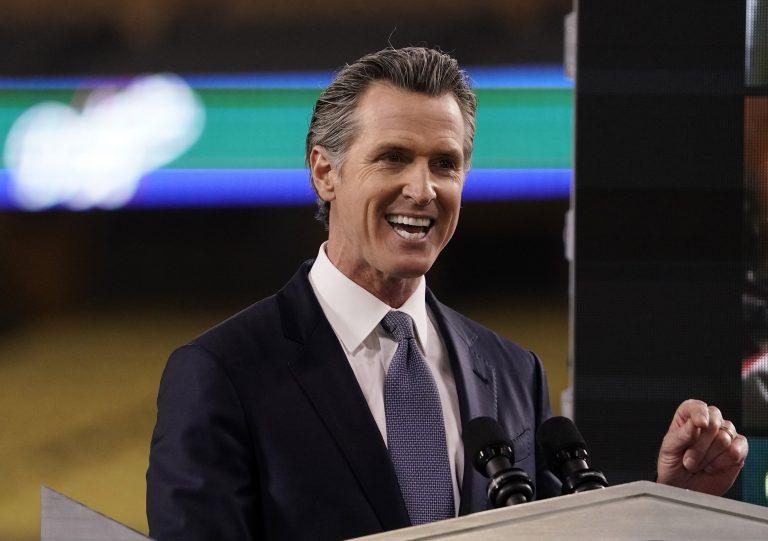
(Luis Cornelio, Headline USA) California Gov. Gavin Newsom faced sharp criticism for his pandemic-era mandates, including the shutdowns of beaches and outdoor dining despite limited evidence of their effectiveness.
During an interview on NewsNation with Chris Cuomo, Adam Carolla, briefly co-hosting, pressed Newsom on his decision to close beaches.
“Governor, why did you shut the beaches in California during COVID?” Carolla queried, catching Newsom off guard from his expected topic of the CNN debate.
Newsom unobtrusively responded, “Yeah, we were working with the information available at the time. We didn’t fully understand the virus.”
Carolla persisted, challenging, “So, you didn’t know anything so why did you shut the beaches?”
This time, Newsom defended his record, claiming, “Early in the pandemic, there were concerns about transmission. We acted cautiously to save lives.”
Carolla sarcastically retorted, “So you didn’t let them go into sunshine and get vitamin D and exercise—so you shut the beaches, oh okay. You’re arrested guy was paddle boarding in the bay.”
Newsom seemed uncomfortable and replied with a smirk, “Always good to see you, Adam.”
Undeterred, Carolla pressed further, “And why shut down outdoor dining?”
“I’m looking forward to the debate,” Newsom deflected, trying to steer the conversation.
In 2020, Newsom came under fire after he was busted dining maskless with Democratic donors. At the time, the governor had demanded Californians avoid Thanksgiving gatherings.
In response to the scandal, Newsom conceded he was wrong and apologized.
“While the First Partner and I followed the restaurant’s health protocols and took safety precautions, I should have modeled better behavior and not joined the dinner,” he claimed.
But Newsom is no stranger to scandals.
Just on Friday, he was ridiculed after attempting to attack former President Donald Trump with Stormy Daniels’s unproven claims.
Yet, Newsom, during his tenure as San Francisco mayor from 2004 to 2011, was rocked with controversy when news broke of his affair with a secretary, who happened to be the wife of his campaign manager.
His office then paid $10,000 to the same woman, raising serious ethical questions.
Many on social media are suggesting that his symptoms mimic those of “Sundowner’s Syndrome,” a term used to describe behaviors commonly associated with dementia and Alzheimer’s.
Biden’s minimal schedule, first reported by Axios in a piece citing “sources,” contrasts sharply with the excruciatingly long hours typically demanded of the job of the commander-in-chief.
The nation is currently facing an unprecedented influx of illegal aliens, inflation, growing global conflicts and threats of nuclear war.
According to the outlet, any engagement outside Biden’s 6-hour schedule would likely be marred with “verbal miscues” and the president’s fatigue.
Sara Broadwater, a Republican communications strategist, suggested that Biden’s inability to be alert outside the hours of 10 am and 4 pm resembles the symptoms of her grandparents, who suffered from Alzheimer’s.
“If you care for someone with Alzheimer’s or dementia, you’d know there’s an actual term for this: Sundown Syndrome,” she wrote. “Unfortunately, I have seen it 3 times in my grandparents.”
She added, “It’s time to acknowledge the charade is over. Being president is not a 6 hour job.”
Echoing this sentiment, journalist JD Sharp wrote: “What they are describing is called Sundowner’s Syndrome. They just admitted the President Of The United States has dementia, and must be removed from office immediately.”
The word is spreading extremely fast at this point.
Democrats actually made a huge mistake by putting Biden on the trail yesterday when he was lucid.
They were trying to make the debate look like a "bad day" but in the process ended up proving his dementia.
Several other conservatives criticized the White House, leftist media and the Democratic Party for hiding these disturbing details about Biden until this week—when his declining mental acuity was exposed to millions of Americans during the debate.
“We went from ‘these are cheap fakes of Biden’ to ‘he’s only really on his game for 6 hours tops’ in the span of 10 days,” tweeted Siraj Hashmi, a conservative podcast host.
Hashmi’s remarks referred to the White House’s failed rebuttal to several viral videos showing Biden’s forced gait and inability to speak coherently.
We went from “these are cheap fakes of Biden” to “he’s only really on his game for 6 hours tops” in the span of 10 days pic.twitter.com/VA5c8yGR3E
Like drawing attention to the White House’s “cheap fake” defense, Republican strategist Kaelan Dorr asked, “Where were these sources a week ago?”
Others echoed these concerns in various tweets:
Biden suffers from Sundowner's syndrome caused by his dementia. Until Biden is removed from office he ought not to engage with ANYONE after 4PM. The bad news is that our enemies know this. Having a 'morning' president is dangerous. pic.twitter.com/FVaeo2hHdk
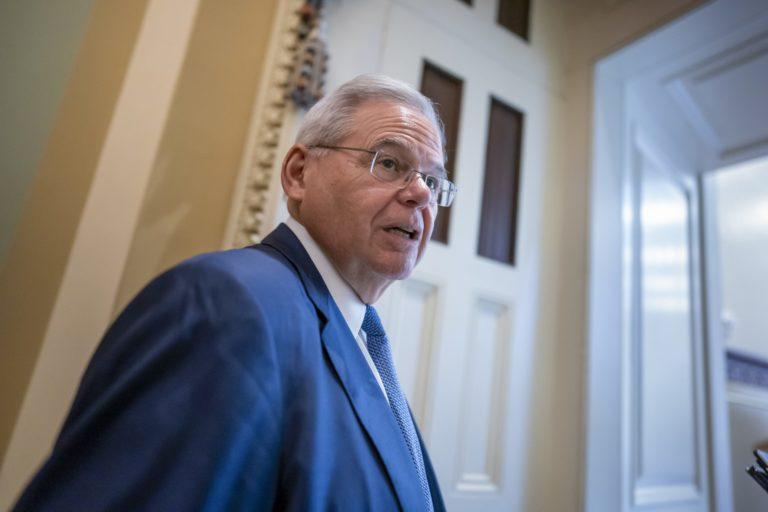
(Headline USA) Prosecutors at the bribery trial of Sen. Bob Menendez rested their case on Friday after presenting evidence for seven weeks, enabling lawyers for the Democrat and two New Jersey businessmen to begin calling their own witnesses next week to support their claims that no crimes were committed and no bribes were paid.
On their final day of direct questioning, prosecutors elicited details about the senator’s financial records by questioning an FBI forensic accountant. Judge Sidney H. Stein then dismissed jurors for the weekend. Defense attorneys are scheduled to begin presenting their case on Monday in Manhattan federal court.
Later Friday, Stein rejected requests by lawyers for all three defendants that he acquit their clients on grounds that prosecutors had failed to provide sufficient evidence to the jury for it to deliver a verdict. The requests are a routine feature of trials after prosecutors rest.
Prosecutors say gold bars and hundreds of thousands of dollars in cash found in a raid of Menendez’s home two years ago were bribes paid by three businessmen from 2018 to 2022 in return for favors that the senator, using his political power, carried out on their behalf.
Defense lawyers claim the gold belonged to his wife and that Menendez had a habit of storing cash at home after his family lost almost everything in Cuba before they moved to New York, where Menendez was born.
“The government hasn’t proven its case,” the senator remarked as he left the courthouse Friday afternoon.
Menendez, 70, is on trial with two of the businessmen after a third pleaded guilty in a cooperation deal with the government and testified at the trial. Menendez’s wife, Nadine Menendez, is also charged in the case, which was unveiled last fall. Her trial has been postponed while she recovers from breast cancer surgery. All defendants have pleaded not guilty.
Menendez’s lawyers are planning to spend up to three days presenting testimony from several witnesses to support their argument that Nadine Menendez, who was Nadine Arslanian when she began dating the senator in early 2018, kept him in the dark about her financial troubles. The couple married in the fall of 2020.
The defense also plans to introduce testimony to try to show that Arslanian was in close contact with the senator at the height of the alleged conspiracy in late 2018 and early 2019 because she was being harassed by an ex-boyfriend.
Stein said Thursday that defense lawyers can elicit testimony to counter evidence introduced by prosecutors that might otherwise be interpreted to suggest that Arslanian and the senator seemed to be closely following each other’s whereabouts because they were involved in the alleged conspiracy.
But he said he wouldn’t allow the jury to hear testimony that she underwent treatment at a hospital because of an abusive relationship with an ex-boyfriend. He said Friday that a witness also cannot testify about specific acts of stalking or abuse.
“This is not going to be ‘Days of Our Lives’ or some soap opera,” the judge warned lawyers Thursday.
(Headline USA) As they travel around Alaska on a long-planned vacation, Ike and Susan Riffel stop now and then to put up stickers directing people to “Live Riffully.”
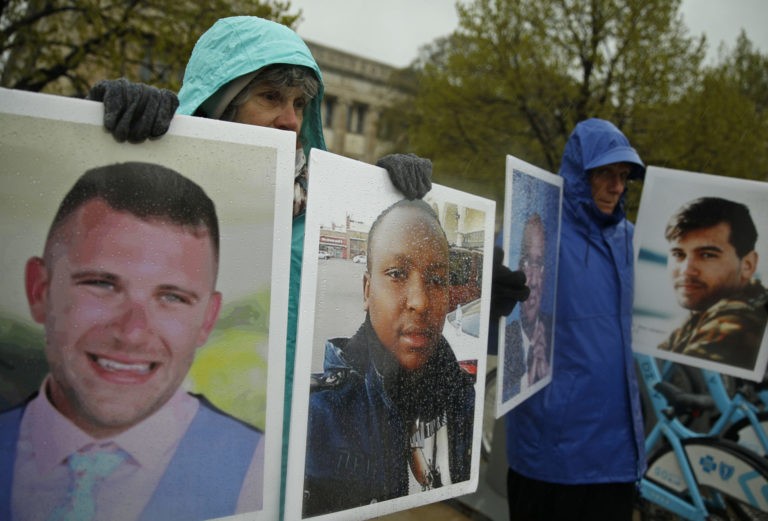
It’s a way for the California couple to honor the memories of their sons, Melvin and Bennett, who died in 2019 when a Boeing 737 Max jetliner crashed in Ethiopia.
The Riffels and families of other passengers who died in the crash and a similar one in Indonesia a little more than four months earlier are waiting to learn any day now whether the U.S. Justice Department, all these years later, will prosecute Boeing in connection with the two disasters, which killed 346 people.
Ike Riffel fears that instead of putting Boeing on trial, the government will offer the company another shot at corporate probation through a legal document called a deferred prosecution agreement, or DPA. Or that prosecutors will let Boeing plead guilty and avoid a trial.
“A DPA hides the truth. A plea agreement would hide the truth,” Riffel says. “It would leave the families with absolutely no idea” of what happened inside Boeing as the Max was being designed and tested, and after the first crash in 2018 pointed to problems with new flight-control software.
“The families want to know the truth. Who was responsible? Who did what?” the father says. “Why did they have to die?”
Ike is a retired forestry consultant, and Susan a retired religious educator. They live in Redding, California, where they raised their sons.
Mel was 29 and preparing to become a father himself when Ethiopian Airlines Flight 302 went down six minutes after takeoff. He played sports in school and worked as a technician for the California Department of Transportation in Redding. Bennett, 26, loved performing arts while growing up. He worked in IT support in Chico, California, and clients still send cards to his parents.
“They were our only two sons. They were very adventurous, very independent, loved to travel,” Riffel says.
In early 2019, Mel and his wife, Brittney, took a “babymoon” to Australia. Brittney flew home while Mel met his brother in Taiwan to start what they called their world tour. He and Bennett were headed toward their last stop, South Africa, where Mel planned to do some surfing, when they boarded the Ethiopian Airlines flight in Addis Ababa.
Back in California, Susan Riffel answered the phone when it rang on that Sunday morning. On the other end, someone from the airline told them their sons had been on a plane that had crashed.
“When you first hear it, you don’t believe it,” Ike Riffel says. “You still don’t believe after you see that there was a crash. ‘Oh, maybe they didn’t get on.’ You think of all these scenarios.”
The next shock came in January 2021: The Justice Department charged Boeing with fraud for misleading regulators who approved the Max, but at the same time, prosecutors approved an agreement that meant the single felony charge could be dropped in three years.
“I heard it on the news. It just kind of blew me away. I thought, what the hell?” Riffel says. “I felt pretty powerless. I didn’t know what a deferred prosecution agreement was.”
He and his wife believe they were deceived by the Justice Department, which until then had denied there was a criminal investigation going on. Boeing has never contacted the family, according to Riffel. He assumes that’s based on advice from the company’s lawyers.
“I have no trust in (Boeing) to do the right thing, and I really lost my confidence in the Department of Justice,” he says. “Their motto is to protect the American people, not to protect Boeing, and it seems to me they have spent the whole time defending Boeing.”
The Justice Department reopened the possibility of prosecuting Boeing last month, when it said the company had breached the 2021 agreement. The DOJ did not publicly specify the alleged violations.
Boeing has said it lived up to the terms of the deal, which required it to pay $2.5 billion, most of it to the company’s airline customers, and to maintain a program to detect and prevent violations of U.S. anti-fraud laws, among other conditions.
The pending decision in Washington matters to family members around the world.
The 157 passengers and crew members who died in the Ethiopian crash came from 35 countries, with the largest numbers from Kenya and Canada. Nearly two dozen passengers were flying to attend a United Nations environmental conference in Nairobi.
The March 10, 2019, crash came just months after another Boeing 737 Max 8, operated by Indonesia’s Lion Air, crashed into the Java Sea, killing all 189 people on board. The vast majority of passengers on the Oct. 29, 2018, flight were Indonesians.
In both crashes, software known by the acronym MCAS pitched the nose of the plane down repeatedly based on faulty readings from a single sensor.
Relatives of people on both flights sued Boeing in U.S. federal court in Chicago. Boeing has settled the vast majority of those cases after requiring the families not to disclose how much they were paid.
The Riffels have found strength and purpose in meeting with families of some of the other passengers from Flight 302. Together, they have pressed the Justice Department, the Federal Aviation Administration and Congress to make sure that aircraft are as safe as possible.
Many of them want the government to prosecute high-ranking Boeing officials, including former CEO Dennis Muilenburg and current chief executive David Calhoun, who was on the company’s board when the crashes occurred. They have asked the Justice Department to fine Boeing more than $24 billion for what one of their lawyers, Paul Cassell, called “the deadliest corporate crime in U.S. history.”
The group of relatives includes Javier de Luis, an aerospace engineer whose sister, Graziella, was on the Ethiopian flight. And Michael Stumo and Nadia Milleron, who lost their daughter, Samya. Canadians Paul Njoroge and Chris and Clariss Moore have made several trips to Washington to implore government officials to move against Boeing and demand safer planes. Njoroge’s wife, three children and mother-in-law were all on the plane, as was the Moores’ daughter, Danielle.
At first, the disparate group of family members connected by emails just to check in on each other. Before long, and especially after meeting face to face, they grew more determined to do more than grieve together; they wanted to make a difference.
“We want to find some meaning in what happened to our loved ones,” Ike Riffel says. “If we can make aviation safer so this doesn’t happen again, then we have had some victories out of this.”
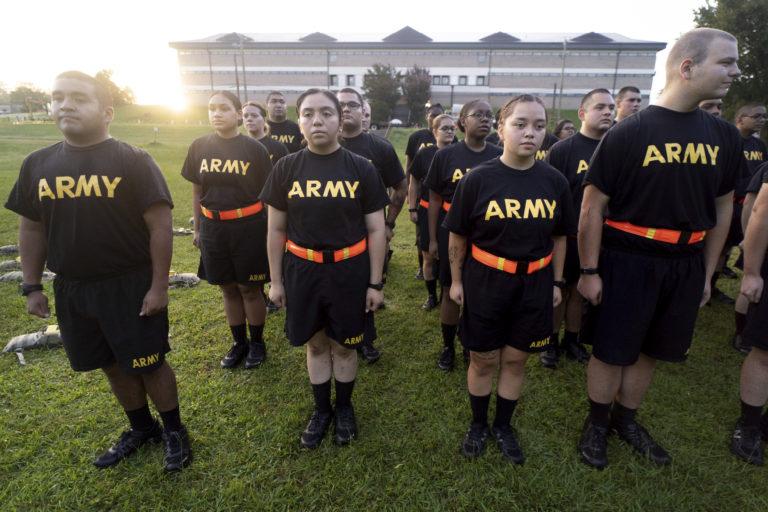
The study done by the university’s Center for American Institutions argued that there is a emphasis on training new soldiers about social issues like “unconscious bias” and “intersectionality” in a way the center says runs contrary to typical American ideals. The study examined DEI plan’s in different sector of the military, including DEI office staffing and education at academies like West Point.
“The massive DEI bureaucracy, its training and its pseudo-scientific assessments are at best distractions that absorb valuable time and resources,” the executive summary states.
“At worst they communicate the opposite of the military ethos: e.g. that individual demographic differences come before team and mission.”
Donald Critchlow, the director of the center, wrote in the studies introduction that it was focused on looking at the influence of Critical Race Theory in the United States Armed Forces training.
“The Commission on Civic Education in the Military began as a project to review civic education in the military. Our research team did not expect to find Critical Race Theory so embedded and pervasive. Diversity, Equity, and Inclusion programs are found throughout the U.S. Armed Forces and our service academies,” Critchlow wrote. “This year long study documents just how pervasive these training programs are in our Armed Forces and Service Academies and that DEI extends well beyond just formal training programs in the military and service academies.”
“The Founders of our nation understood and feared a politicized military. History had shown them that a politicized army easily became the tool of tyranny. The Armed Forces of the United States has proudly upheld this long tradition of separating mission from politics,” he continued.
In terms of recommendations, the study suggests that DEI office’s be completely scrapped, but said it may be politically unlikely for the time being.
“The surest way to eliminate the concerning trends we have identified, and the growth of race and sex-based scapegoating and stereotyping in the U.S. military, is to altogether end the DEI bureaucracy there,” the study states. “However, until such a time as the executive or legislative branches of the government choose to end the DEI bureaucracy in our federal agencies and military, we are left to advocate the pursuit of alternative avenues that may affect positive change despite existing policies.”
They also suggested that the military prioritize civic education with a focus on “America’s commitment to freedom and opportunity.”
The study comes as some branches of the military continue to struggle with recruiting new service members.
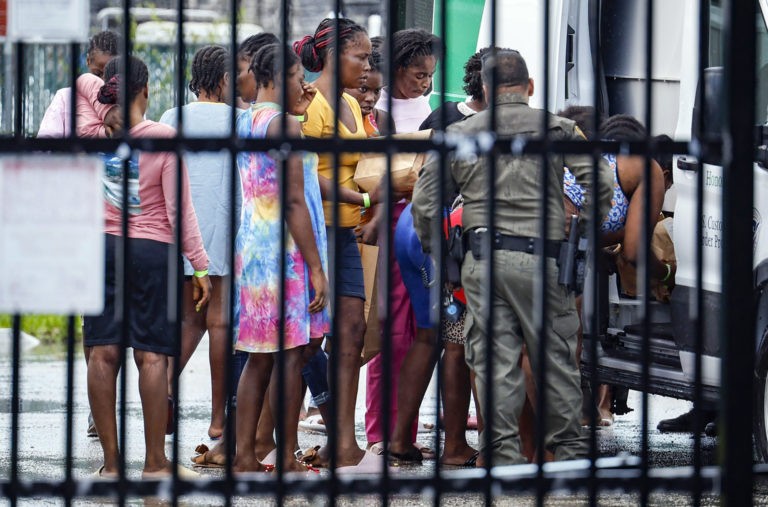
(Headline USA) About 300,000 Haitians already in the United States will now be eligible for temporary legal status allowing them to remain in the U.S., the Biden Homeland Security Department said Friday.
The decision marks a major expansion of Temporary Protected Status for Haitians.
The TPS designation was created by Congress in 1990. The Homeland Security secretary can grant temporary protection for different nationalities based on conditions in their home countries. The protection also allows them to apply for a work permit.
This expansion will apply to Haitians who were in the United States on June 3 and will last until Feb. 3, 2026. Separately, Mayorkas also extended the Temporary Protected Status of an estimated 200,000 Haitians who already had it.
The move — one of the largest expansions of TPS — draws another sharp policy contrast on immigration between Joe Biden and his predecessor, President Donald Trump, who sought to end temporary status for many countries, including Haiti, during his tenure in the White House.
Gangs have pillaged their way through the Haitian capital of Port-au-Prince and surrounding areas, killing, raping and kidnapping thousands of people in recent years and leaving hundreds of thousands of others homeless and unemployed, which in turn has deepened poverty.
“Several regions in Haiti continue to face violence or insecurity, and many have limited access to safety, health care, food, and water,” Homeland Security said in a press release.
About 200,000 Haitians already have TPS under previous offers, according to the Congressional Research Service, the first one after a devastating earthquake in 2010 and the second amid political turmoil in 2021.
With the expansion announced Friday, Homeland Security estimated that an additional 309,000 Haitians will be eligible for the protected status.
Nearly 900,000 people from 16 countries are currently registered for TPS, with the largest nationalities hailing from Haiti, Venezuela, El Salvador, Honduras and Ukraine.