Money Metals Podcast: Michael Pento’s Insights on Economic Outlook and Investment Strategies

(Money Metals News Service) In a recent episode of the Money Metals podcast, host Mike Maharrey sat down with Michael Pento, the president and founder of Pento Portfolio Strategies (PPS), to discuss the current state of the economy, the precious metals market, and effective investment strategies.

Pento, who boasts over three decades of experience in the professional investment world, offered a candid assessment of economic conditions and the financial landscape.

Who is Michael Pento?

Michael Pento is the President and Founder of Pento Portfolio Strategies (PPS), a Registered Investment Advisory Firm designed to operate like an actively managed fund without the high expenses associated with hedge funds.
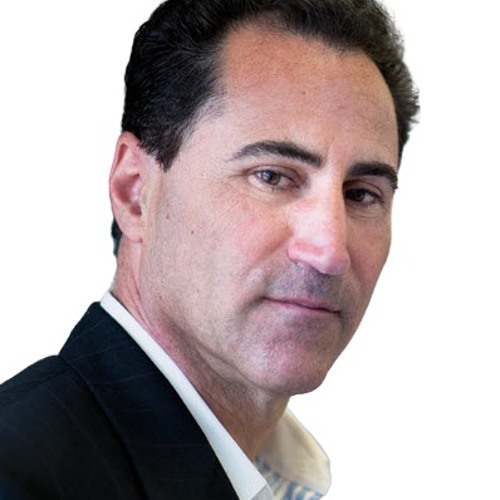
Michael Pento
Michael Pento

With over three decades of experience in the professional investment world, Pento is a recognized expert in economic cycles, inflation, and market dynamics. Michael Pento is well-established for his ability to explain how to survive and thrive during all economic cycles.

He is the author of the influential book, “The Coming Bond Market Collapse,” and the producer of the weekly podcast, “The Mid-week Reality Check.”

Pento’s proprietary Inflation/Deflation and Economic Cycle Model guides his investment strategies, focusing on profiting from macroeconomic shifts.

Known for his candid assessments and deep understanding of financial markets, Michael Pento is a sought-after commentator and advisor in the economic and investment communities.

Silver vs. Gold
Silver vs Gold

The conversation began with a focus on the divergence between gold and silver prices. Maharrey pointed out the recent profit-taking in gold, which still hovers around $2,400 an ounce, and the sharp decline in silver prices, with the gold-silver ratio ballooning to over 85:1. Pento explained the fundamental difference between the two metals:

“Silver has an industrial component to it… it only really does best or better than gold when you have inflation and a growing global economy. Gold is money. It’s pure and simply money.”

Economic Outlook

Economic Outlook

Pento dismissed the notion of a “soft landing” for the US economy, despite recent positive GDP prints. He highlighted the severe economic disparity, where the top quintile, especially the top 1%, are thriving while the bottom four quintiles struggle:

“The bottom fourth quintiles have been eviscerated and disemboweled by inflation and their purchasing power has been destroyed.”

A Federal Reserve survey showed that 25% of Americans are cutting back on food and medical care due to unaffordable prices. Pento criticized the Federal Reserve’s handling of inflation, emphasizing the need for deflation to restore purchasing power:

“Prices are rising at a fast clip… inflation has already destroyed, hollowed out the middle class of this country.”

Federal Reserve Policies
Federal Reserve Policies

Pento was particularly critical of the Federal Reserve, accusing it of prioritizing Wall Street over Main Street. He highlighted the unprecedented increase in the Fed’s balance sheet, which ballooned from $700 billion before the Global Financial Crisis to $9 trillion:

“$6 trillion of helicopter money was inflicted on the American population. Four and a half trillion was printed by the Federal Reserve… that’s like Zimbabwe numbers.”

He also noted that despite the Fed’s claims, inflation is still a significant issue:

“Core PCE inflation actually increased month-over-month at last reading… it’s rising from a level that has destroyed the middle class.”

National Debt and Deficits
National Debt and Deficits

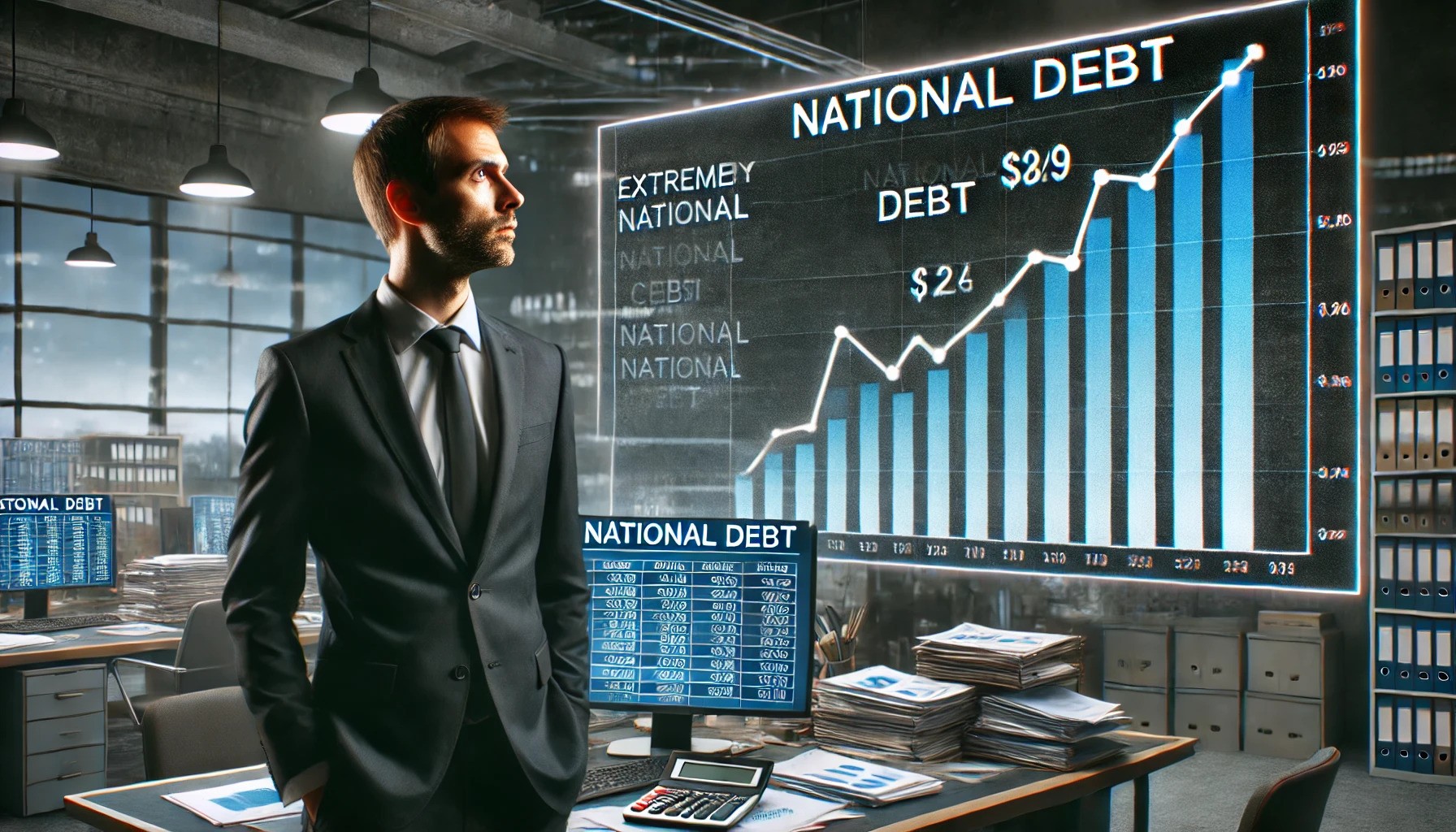
Pento highlighted the alarming growth in national debt and deficits. The US national debt now exceeds $35 trillion, with $1 trillion in interest payments alone and annual deficits reaching $2 trillion. For context, the total deficit in 2007 was $160 billion. Pento criticized the complacency surrounding these figures:

“In 2007, the total deficit was $160 billion. The deficit now is $2 trillion with $1 trillion in interest payments.”

He expressed concern about the sustainability of such high debt levels and their impact on the economy:

“The national debt is 725% of revenue, and you’re adding 40% of that revenue to the debt every year in the deficit.”

Investment Strategy

Investment Strategy Gold and Silver

Pento detailed his Inflation-Deflation Economic Cycle Model, which assesses inflation trends, economic growth, and asset prices. This model helps navigate the economy’s fluctuations and guides investment decisions based on the prevailing economic conditions. He emphasized the importance of understanding the broader economic context when making investment decisions:

“I have a model that tells me where the economy is… Usually in a fiat currency regime, you’ll see the economy weaken during recessions and strengthen during inflations.”

Conclusion

Listeners interested in Pento’s analysis can follow his work on his website, pentoport.com, where he offers a midweek reality check and investment services. Pento’s approach to managing portfolios reflects his deep understanding of economic cycles and his commitment to navigating the complex financial landscape.

Maharrey concluded the interview by expressing his appreciation for Pento’s insights, noting the alignment in their views on the economy. The conversation provided a sobering look at the current economic challenges and underscored the importance of strategic investment in uncertain times. Mike Maharrey and Michael Pento recommend buying gold and silver as a part of a sound investment portfolio.

Key Questions and Answers:
Key Questions and Answers with Mike Maharrey and Michael Pento

How do you explain the recent performance of silver and the disparity with gold prices? 

According to Michael Pento, “Silver has an industrial component to it… it only really does best or better than gold when you have inflation and a growing global economy. Gold is money. It’s pure and simply money, and it’s a placeholder of your wealth.”

What do you think about the notion of a soft landing for the US economy, given the recent positive GDP prints? 

“I don’t believe in the soft landing myth. We have incredible asset bubbles that are tenuously clinging onto the fumes of… monetary fuel that is attenuating quickly… The bottom fourth quintiles have been eviscerated and disemboweled by inflation and their purchasing power has been destroyed.”

What are your thoughts on the Federal Reserve’s handling of inflation and its current trajectory? 

“It’s embarrassing and disgusting that anybody associated with the Federal Reserve would claim that they have a victory over inflation… Inflation has already destroyed, hollowed out the middle class of this country.”

Given the national debt has now surpassed $35 trillion, how do you view the debt and deficits in the context of your investment strategy? 

“The deficit now is $2 trillion with $1 trillion in interest payments… The national debt is 725% of revenue, and you’re adding 40% of that revenue to the debt every year in the deficit.”

How do you play the current economic conditions as an investor? 

“I have a construct called the Inflation-Deflation Economic Cycle Model… I ask myself, ‘What is the second derivative of inflation?’… ‘In what context is that inflation vis-a-vis growth?’… ‘What is the level of asset prices and debt?'”

Where can listeners follow your work and get in touch with you?

“The website is pentoport.com, and I have a midweek reality check… It’s a five-week free trial, and it’s $50 a year if you like it… I will manage your money in the inflation, deflation, and economic cycle portfolio.”
Deranged Anti-Trump Head-Chopper Ruled Competent to Stand Trial

(Headline USA) The man accused of beheading his father in their suburban Philadelphia home early this year and posting a video of the severed head online is competent to stand trial, a judge ruled Thursday.

Judge Stephen Corr ruled from the bench after a nearly five-hour proceeding that unfolded with Justin Mohn, wearing a yellow jumpsuit with “inmate” printed on the back and with his hands cuffed in front of him, seated in court and smiling, nodding or shaking his head throughout testimony.

Corr also granted Mohn’s wish to dismiss his public defender and appoint a different attorney to handle the case. Asked whether he’d be willing to work with a new attorney, Mohn responded: “Absolutely.”

The ruling means the case, which captured headlines with Mohn’s arrest at a National Guard base two hours from his and his parents’ Levittown home and after the gruesome video had already been viewed numerous times online, will go forward.

The hearing had several surreal moments, with Mohn nodding along and smiling widely at prosecution witness Dr. Kelly Chamberlain, a forensic psychologist, who testified that she found Mohn in her two meetings with him to be intelligent, calm and socially appropriate.

Chamberlain testified that Mohn apparently objected to his attorney’s strategy of using a mental health defense and that he seemed appropriately “self-interested.”

She disputed the findings of defense expert witness Dr. John Markey, who said he had met with Mohn four times and determined at first that he had schizophrenia, but on Thursday said it was delusional disorder instead. He pointed specifically to Mohn’s letters in which he said he claimed to be the messiah, a King David-like figure whom the federal government was persecuting.

Mohn came to believe his own public defender was a federal agent working against him, Markey said, and he wrote a letter to Russia’s ambassador to the United States seeking to strike a deal to give Mohn refuge and apologizing to President Vladimir Putin for claiming to be the czar of Russia.

“It’s all delusional,” Markey said.

Chamberlain said she didn’t believe he meant to say he was the messiah, and that his writings in fact said “Satanic” cults within the U.S. think he’s the messiah.

“I believe it could be construed as delusional,” she said, but added that his writing was part of his rhetoric. “He feels people like him have been kind of screwed over.”

Mohn nodded agreeably during her testimony.

Another prosecution witness, corrections officer Ralph Taylor, said Mohn was “extremely polite” and respectful in jail.

Corr questioned him at the start of the proceedings, asking him if he knew why he was there, and Mohn recounted that he was facing a number of charges, the “most serious” of which were first-degree murder charges.

All that added up, prosecutors said, to someone able to participate in his own legal defense.

According to prosecutors, Mohn fatally shot his father with a pistol and then used a kitchen knife and machete to decapitate Michael Mohn at the Levittown house where they both lived.

Justin Mohn then recorded a video in which he held up his father’s head and identified him as a 20-year federal employee, while calling for violence against the government. Prosecutors have said they found blood stains on the desk in the room where the video was recorded along with a computer that had several tabs open, including one for YouTube.

In the video, Justin Mohn also espouses a variety of conspiracy theories and rants about the Biden administration, immigration and the border, fiscal policy, urban crime and the war in Ukraine.

The video was posted on YouTube for several hours before it was taken down.

Justin Mohn faces charges of first-degree murder, abusing a corpse and possession of instruments of crime. He is being held without bail.

Adapted from reporting by the Associated Press

Kyle Rittenhouse Says He’s Voting for Dr. Ron Paul for President

UPDATE: Shortly after the publication of this article, Kyle Rittenhouse backtracked on his criticisms of Donald Trump. See here.

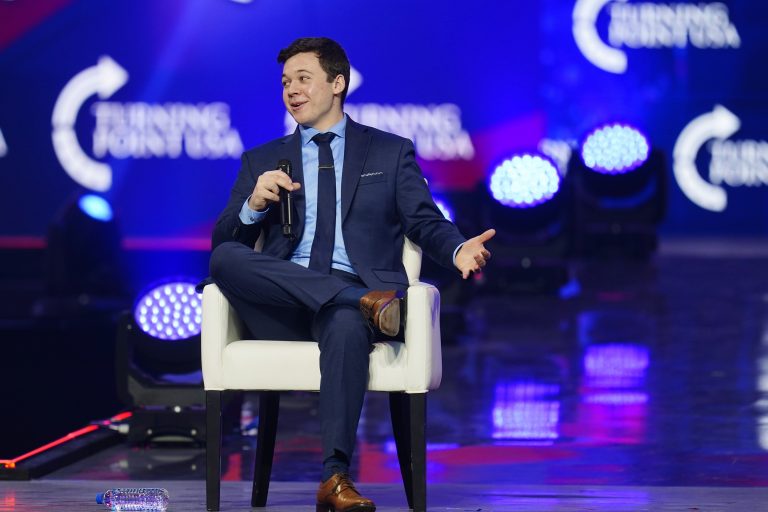
(Ken Silva, Headline USA) Pedophile slayer Kyle Rittenhouse caused an uproar online when he confirmed that he’s not voting for Donald Trump in the 2024 presidential election—and will instead by voting for former Republican congressman Dr. Ron Paul.

Rittenhouse—who shot three protestors who had attacked him, killing two of them, during the August 2020 riots in Kenosha, Wisconsin— said in a video published Thursday that he’s not voting for Trump due to his shaky record on the 2nd Amendment. As a libertarian and strict constitutionalist, Dr. Paul has one of the best records on 2A issues in congressional history.

Rittenhouse, who now works for a pro-2A group, acknowledged he’s upset the MAGA movement in his video.

“A lot of people are upset that I said I’ll be writing in Ron Paul for president of the United States, and that is true: I will be writing in Ron Paul. Unfortunately, Donald Trump had bad advisors making him bad on the Second Amendment, and that is my issue,” he explained.

“If you can’t be uncompromisable on the Second Amendment, I will not vote for you, and I will write someone else in. We need champions for the Second Amendment, or our rights will be eroded away each day. I support my decision, and I have no takebacks.”

Rittenhouse was referencing Trump’s ban on bump stocks, which was overturned by the Supreme Court in June. Trump has also made comments favorable towards red-flag laws.

Despite his principled reasoning, Rittenhouse’s announcement has been met with sharp criticism from MAGA influencers.

“I can stomach a lot of things—but backstabbing millions who supported you at your lowest point. Then turning on Trump right after he got shot. Can’t stomach it—won’t put up with it—forgotten forever,” said the Twitter account Catturd, which is run by an elderly boomer.

However, others supported Rittenhouse, pointing out that putting political pressure on Trump could lead to positive outcomes.

“This is how you leverage your influence to gain concessions. It requires real conviction and I respect the hell out of it,” said libertarian pundit Clint Russell.

Ken Silva is a staff writer at Headline USA. Follow him at twitter.com/jd_cashless.

Leaked DHS Report Implicates Kamala’s Secret Service in J6 Pipe Bomb Scandal

(Ken Silva, Headline USA) A copy of DHS Inspector General Joseph Cuffari’s report about the Secret Service’s security failures related to the Jan. 6, 2021, Capitol Hill uprising has been leaked—and it’s reportedly extremely damning.

ABC News, the Washington Post and other mainstream said they obtained the report, which had been suppressed by leadership at the Department of Homeland Security, which oversees the Secret Service.

According to those mainstream news outlets, the report shows that then Vice President-elect Kamala Harris ended up within feet of a “viable” pipe bomb that had been planted the night before in the bushes right outside the Democratic National Committee’s headquarters.

Harris arrived to the DNC at 11:25 a.m., but the nearby pipe bomb wasn’t discovered until 1:07 p.m. by a plainclothes Capitol Police officer.

“The pipe bomb had been placed near the building the night before, but … advance security sweeps by the Secret Service at the DNC building did not include the outside area where a pipe bomb had been placed,” says the report, which was shared with members of Congress on Thursday, according to ABC.

The mainstream media outlets haven’t reported many other facts from the report, which is apparently heavily redacted.

However, the right-wing site Revolver News said it spoke with officials familiar with the report. Revolver released more details in an article on Friday. In the process, Revolver directly contradicted some of the mainstream reporting.

“The Secret Service did in fact have a canine unit that swept the DNC area prior to then Kamala Harris’ arrival at 11:25 A.M. on January 6th … This we can now confirm based on the OIG report—that there was a canine sweep of exactly two canine teams, and that the canines were Secret Service,” Revolver reported.

“There was an SS agent standing within feet of the pipe bomb for over five hours who managed to miss the bomb. When one takes into account how conspicuous the pipe bomb was, and how close to Kamala’s path to the DNC building (Kamala passed within 20 feet of it as she drove through the DNC parking garage) it is impossible to imagine that two secret service canine units could have missed the bomb,” Revolver added.

Along with exposing the Secret Service’s security failures on Jan. 6, the report also revealed that the agency stonewalled the DHS IG during its investigation—a fact revealed by reporter Julie Kelly. The Secret Service was run by disgraced former director Kimberly Cheatle at the time.

 The DHS IG’s report adds to the mystery of the Jan. 5/6 pipe bombs.

Former Capitol Police head Steve Sund has suggested that the pipe bombs placed outside the DNC and RNC were distractions to divert law enforcement away from the Capitol, right around the time as the election protests were about to become violent. Rep. Thomas Massie, R-Ky., has also advanced that theory.

“It was specifically at the same precise time to cause maximum distraction from the events going on at the Capitol,” he said last July at a congressional hearing. “It appears to me that that wasn’t a coincidence.”

Ken Silva is a staff writer at Headline USA. Follow him at twitter.com/jd_cashless.

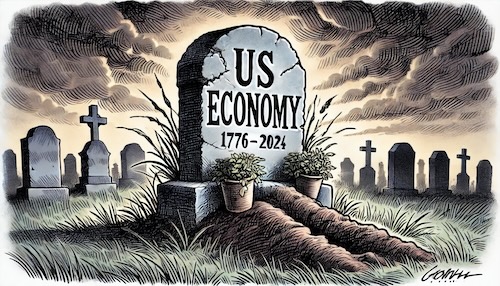
Stocks Get Slammed on Bad Economic News, Gold Remains Buoyant

(Mike Gleason, Money Metals News Service) As the national debt soars to yet another new milestone, gold prices are ascending toward a new record of their own.

The official debt held by the public has just ticked past the $35 trillion mark. Of course, with all the billions and trillions being spent by the government on various projects using money it doesn’t have – and the tens of trillions more in unfunded entitlement commitments – it can be difficult to keep track of just how much spending is taking place.

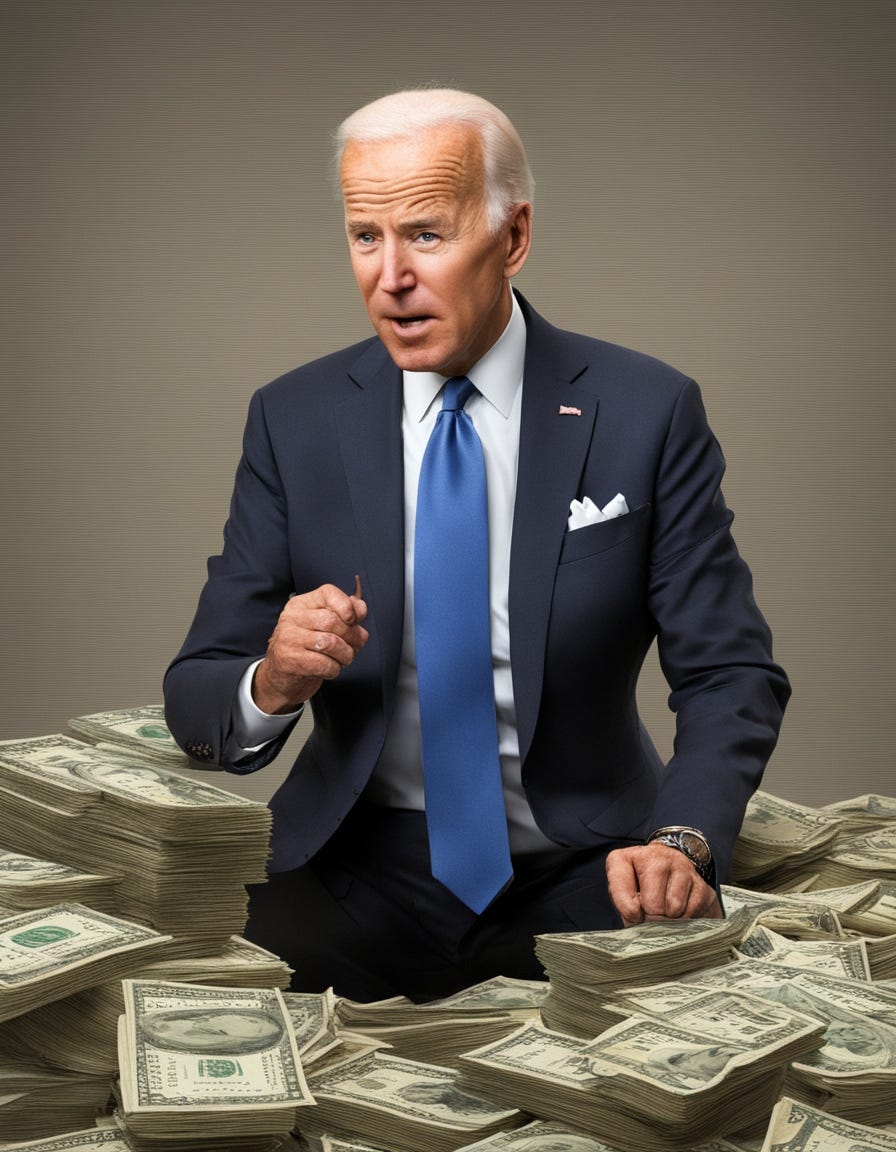
Joe Biden: There’s a situation where there’s an estimation of somewhere between 700 billion and a trillion, 300 million, billion dollars.

John Dickerson (CBS News): There was once a time, not that long ago, when the size of the national debt dominated political conversation. In 1992, when Ross Perot ran for president on that issue alone, the debt was about $4 trillion. It has now surpassed $35 trillion. It hit that number for the first time on Monday, and equates to over $104,000 per person. Financial hole is mounting quicker than most economists had predicted, that’s because the money spent on federal programs recently has gone over their initial projections.

Joe Biden: Over a billion, 300 million, trillion, $300 million.

Yes, numbers so high some people can’t even seem to spit them out.

We’ve heard talk from President Joe Biden about how he is supposedly reducing the budget deficit. Politicians may lie, but the numbers don’t.

In the last year alone, the Biden administration has added an astounding three and a half trillion dollars to the national debt. So far this year, interest payments alone on the nation’s line of credit have exceeded $900 billion. That’s more than the United States spends on national defense.

Many Republican members of Congress decry the Biden administration’s spending record. But they aren’t entirely credible on the issue of fiscal responsibility, either. Most Republicans routinely vote for budgets that expand rather than reduce federal deficit spending.

Congress ultimately has the power of the purse. And only a small handful of politicians are willing to actually vote to cut government outlays.

Substantive discussions of how to tackle the debt have been virtually absent from the Democrat and Republican presidential campaigns. Kamala Harris is stuck having to defend incumbent Joe Biden’s spending record. And let’s not forget that the debt also ballooned under the presidency of Donald Trump.

Trump wants to grow the economy faster than the rate of debt growth. Were he to return to the White House, he’d also likely try to talk interest rates down to reduce the government’s servicing costs.

But the President of the United States cannot simply order an increase in GDP – let alone one massive enough to reduce the relative debt burden. Nor can he simply refinance the $35 trillion debt at a lower rate.

Trump can publicly berate the Federal Reserve chairman for keeping interest rates too high. But the reality is that for most of its existence, the Fed has artificially suppressed interest rates. Artificially low rates, in turn, encourage consumers, businesses, and governments to take on excessive leverage – making the debt problem even worse.

The Fed is widely expected to begin cutting its benchmark Funds rate in September. Recent economic data showing rising jobless claims and declining manufacturing output are bolstering the doves at the central bank and raising recession concerns. Rising loan delinquencies and defaults are also raising alarms about the health and stability of the banking sector.

Meanwhile, the relentless stock market rally may finally be giving out. The S&P 500 plunged this week. Wall Street saw a massive rotation out of technology and growth stocks and into defensive sectors including utilities, consumer staples, and of course gold.

During times of stress in the economy and financial system, gold tends to outshine not only stocks but also other metals. Silver and platinum group metals markets are more sensitive than gold to changes in the outlook for industrial demand.

But given that gold prices are already relatively high versus silver, now may not be the best time for investors to favor the yellow metal over the white metal. Any deterioration in industrial demand for silver could be more than offset by diminishing production volumes from major mines. In fact, silver and other critical metals face chronic supply deficits.

Of course, all hard assets stand to gain value in terms of U.S. dollars over the long term. Those fiat units of account are sure to depreciate steadily as the government’s appetite for borrowing rises relentlessly, along with its costs for debt servicing.

Currency depreciation translates inevitably into price inflation. It’s not businesses raising prices or workers demanding higher wages that cause inflation. These are mere symptoms.

The root cause of inflation is the creation of new currency. And every time the government issues new debt backed by nothing except the power of the printing press, it is effectively doing just that.


Mike Gleason is a Director with Money Metals Exchange, a national precious metals dealer with over 500,000 customers. Gleason is a hard money advocate and a strong proponent of personal liberty, limited government, and the Austrian School of Economics. A graduate of the University of Florida, Gleason has extensive experience in management, sales, and logistics, as well as precious metals investing. He also puts his longtime broadcasting background to good use, hosting a weekly precious metals podcast since 2011, a program listened to by tens of thousands each week.

When Will the Fed “Normalize” Interest Rates? This Is Normal!

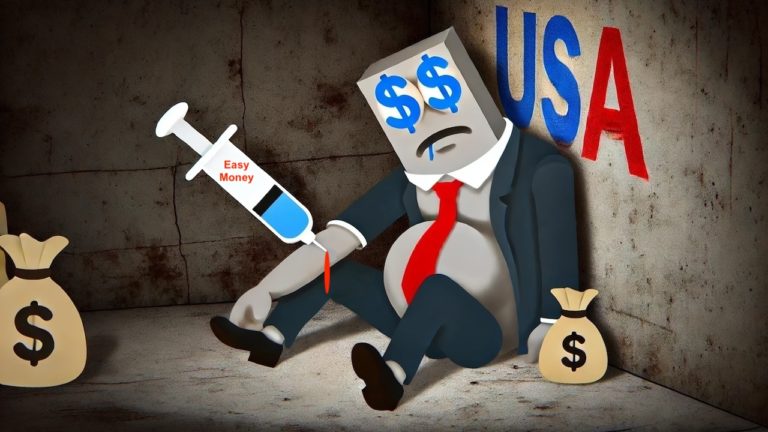
(Mike Maharrey, Money Metals News Service) A drug addict constantly needs more drug to get the same effect. The U.S. economy is addicted to easy money, and it needs more and more of this drug to maintain the high.

The problem with this scenario is eventually the addict overdoses.

This Is Normal

During its July meeting, the Federal Reserve signaled that a rate cut is likely in September. In his post-meeting press conference, Jerome Powell said, “If we were to see inflation moving down … more or less in line with expectations, growth remains reasonably strong, and the labor market remains consistent with current conditions, then I think a rate cut could be on the table at the September meeting.” 

But a lot of people aren’t satisfied with the promise of an interest rate cut soon. They want it now!

An article headlined “Markets are clamoring for the Fed to start cutting soon: ‘What is it they’re looking for?’” published by CNBC after the July FOMC meeting highlighted the frustration of those who believe the Federal Reserve has kept rates too high for too long.  

The article quotes New Century Advisors chief economist Claudia Sahm. She goes on to insist, “The Fed needs to start that process back gradually to normal, which means gradually reducing interest rates.”

This raises a question: what is normal.

Well, this is!

Or at least the current rate environment is closer to normal than the artificially suppressed interest rates the markets have feasted on for the most part since the 2008 financial crisis.

In the wake of the financial crisis, the Federal Reserve slashed interest rates to zero. It was an unprecedented move justified by an “unprecedented” emergency. Little did anybody know that the “emergency” would last for seven years!

The Fed didn’t move rates off zero until December of 2015 with a quarter percent hike. And then it waited a full year before it hiked again.

The central bank finally started hiking rates in earnest in 2017, pushing rates to 2.5 percent by December 2018.

And that was the end of “normalizing” interest rates.

But this was nowhere near normal. During the cycle prior to the Great Recession, rates peaked at 5.25 percent (June 2016).

In the fall of 2018, with his drug supply limited, the addict threw a fit. He wanted his easy money drug back. The stock market crashed, and the economy started showing signs of recession. To avoid the pain of withdrawal, the pusher (the Fed) started supplying the drug again. It cut rates three times in 2019 and abandoned balance sheet reduction.

Then came COVID-19. The pandemic gave the Fed the excuse it needed to fill the easy money syringe to the top. Rates went back to zero until price inflation inevitably reared its ugly head.

This rate history lesson illustrates a point.

The economy needs more and more easy money every single cycle. The threshold for “normal” gets lower and lower – meaning more and more of the easy money drug.

That’s why everybody is clamoring for rate cuts today. The addict is on the verge of withdrawal. He wants his drug supply to go back to normal – the new normal.

What Is a Normal Interest Rate?

It’s difficult to define “normal” when it comes to interest rates.

Interest rates are a price – the price of borrowing money. In a sane world, the market would set the interest rate in the same way it sets the price of cell phones or milk. But we don’t live in a sane world. We live in a world where central planners try to “set” rates. If we allowed the market to function, we would know exactly what “normal” means.

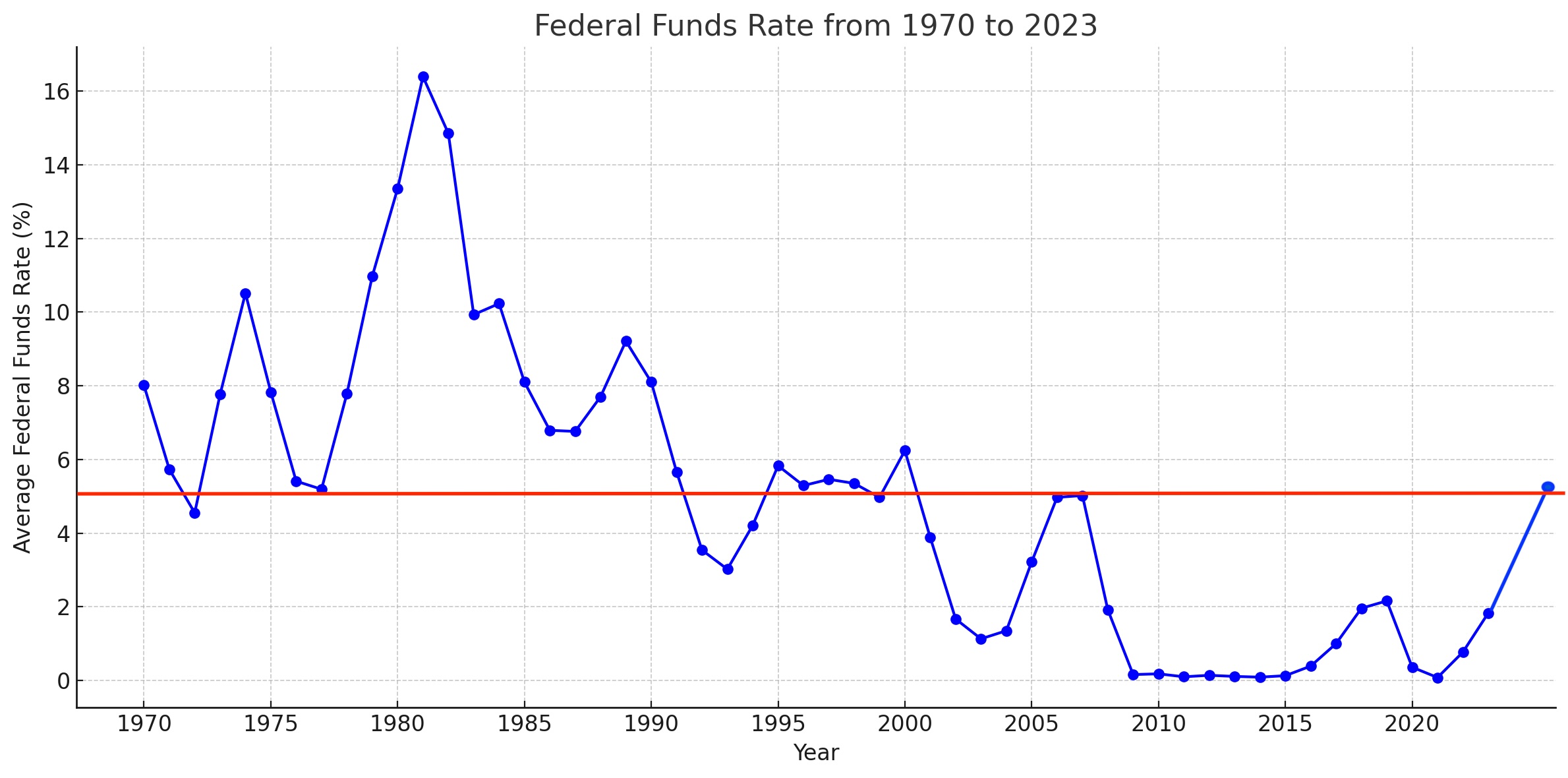
But we can look at averages, and historically, the average federal funds rate since 1970 has been 4.95 percent. That’s basically where we are today. From a historical perspective, this is normal. And yet Sahm and many others are pleading for the Fed to start “normalizing” rates.

And if you factor out the nearly 15 years of artificially low rates in the wake of the 2008 financial crisis, you discover that rates today are a little below normal. The average federal funds rate from 1970 to 2007 was 6.74 percent.

A chart of the trajectory of the federal funds rate over time makes it clear what’s happening. Every cycle, the Fed delivers more of the easy money drug fueling a boom. And once ensuing the bust passes, the peak interest rate in the next cycle ratchets lower and lower.

As the addict builds up resistance to the drug, it needs more and more to maintain the high and can tolerate less of a taper when the party gets out of control.

This is an example of what economist Robert Higgs termed “the ratchet effect.”

Higgs argued that during times of national emergency, such as wars or severe economic downturns, governments expand their authority and intervention in the economy, often justified by the need to address the crisis. After the crisis passes, the government eases the intervention, but it never returns to the “normal” before the emergency. The overall size and scope of government remain larger than before the crisis. This ratchet effect leads to a long-term trend of increasing government intervention over time, as each crisis creates a new baseline for government intervention that is higher than before.

Fed interest rate policy shows a negative ratchet effect. After each crisis, the baseline for “normal” interest rates gets lower and lower. 

The problem with upping the dosage of drugs to maintain a high is that eventually, the addict overdoses.

So, how much more easy money can the Fed inject before the economy ODs?

The Fed has been reluctant to toy with negative interest rates. Instead, it has used the balance sheet to inject the easy money drug. The Fed pumped nearly $4 trillion into the economy during the Great Recession through quantitative easing. It upped the ante to nearly $5 trillion in QE injected in a much shorter timespan during the pandemic.

What’s next? $8 trillion in QE? $20 trillion?

The question becomes, when does the drug kill the addict?

The Desperation for Rate Cuts Is Understandable 

I completely understand why the markets are desperate for rate cuts. They want to keep the party going and the drugs flowing. Everybody knows that this debt-riddled bubble economy can’t function in a higher interest rate environment. Whether the current rate environment is “normal” or not, it’s not sustainable. The addict will go into withdrawal.

This is exactly what the economists quoted in the CNBC article tell us. DoubleLine CEO Jeffrey Gundlach said he thinks the Fed is “risking recession” by holding a “hard-line” on rates.

And he’s probably right.

But the Fed is also risking a resurrection of the inflation dragon if it starts cutting now.

This is called being stuck between a rock and a hard place.

The Fed can ramp up the party and risk an overdose (in the form of more rampant price inflation) or it can hold back the drugs and risk a painful withdrawal.

Either way, the addict has a problem.


Mike Maharrey is a journalist and market analyst for MoneyMetals.com with over a decade of experience in precious metals. He holds a BS in accounting from the University of Kentucky and a BA in journalism from the University of South Florida.

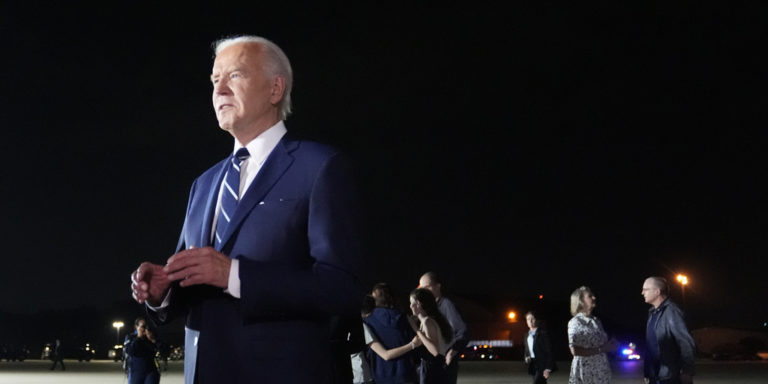
Biden Blames Trump for Hostages Taken on HIS Watch

(Luis Cornelio, Headline USA) President Joe Biden appeared to take a jab at this predecessor, Donald Trump, regarding American citizens taken hostage after Trump left office. 

On Thursday, the Biden administration announced the release of three American citizens who had been imprisoned in Russia.

During a press conference about the release, Biden was asked to respond to comments claiming Trump would have secured the hostages’ release more quickly. In response, Biden asked, “Why didn’t he do it when he was president?” 

However, there is a slight issue with Biden’s response. Two of three American hostages were arrested while Biden was president, critics pointed out.

Wall Street Journal journalist Evan Gershkovich was arrested in March 2023 on dubious espionage charges, while Biden had been in office for over two years. Russian-American editor Alsu Kurmasheva was detained in October 2023—more than three years after Trump left office.

Paul Whelan, the third released hostage, was the only detainee arrested in 2018. Trump had previously defended his inability to secure Whelan’s release, citing Russia’s disproportionate demands. 

In a fired-up Truth Social post, Trump demanded the release of information about the prisoner swap deal between Russia and the U.S.

“How many people do we get versus them? Are we also paying them cash? Are they giving us cash (Please withdraw that question, because I’m sure the answer is NO)? Are we releasing murderers, killers, or thugs?” Trump wrote.

He added, “Just curious because we never make good deals, at anything, but especially hostage swaps. Our ‘negotiators’ are always an embarrassment to us! I got back many hostages, and gave the opposing Country NOTHING – and never any cash.”

Trump’s remarks referred to his successful effort to secure the release of Josh Holt, an American held captive in Venezuela since 2016, according to CNN. Trump achieved Holt’s release without exchanging any prisoners. 

Bryan Nerren, another American, was released under Trump’s leadership after being detained in India for failing to declare $40,000 in customs. The funds were intended for religious conferences helping children in need in India and Nepal, reported The Jackson Sun. 

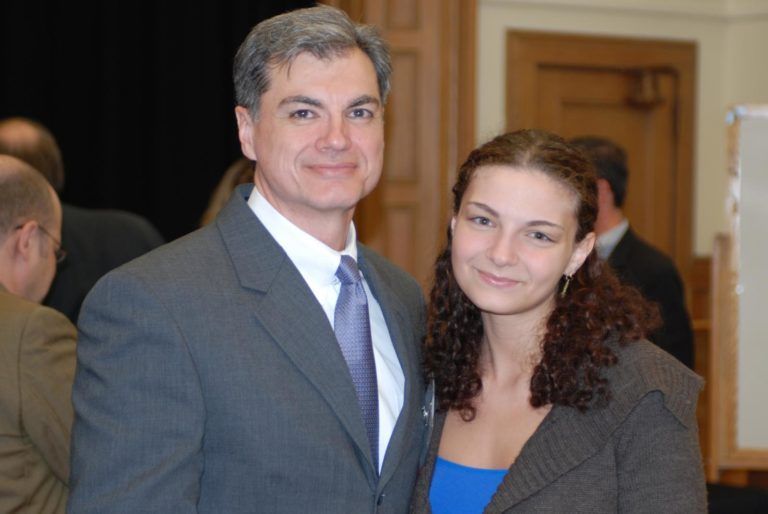
Trump Demands Merchan’s Recusal after Kamala Paid His Daughter $7M in ‘Services’

(Luis Cornelio, Headline USA) President Donald Trump is calling for the immediate recusal of Judge Juan Merchan from his Manhattan case due to his daughter’s ties to Vice President Kamala Harris and multi-million-dollar business dealings with her. 

On Thursday, Trump’s attorneys filed a motion citing Loren Merchan’s relationship with Harris’s political campaigns as evidence of potential conflicts of interest in the case.

Loren Merchan and the New York State Unified Court System did not respond to Headline USA’s interview requests before publication.

“Your Honor’s daughter has a long-standing relationship with Harris, including work for political campaigns. She has obtained — and stands to obtain in the future — extensive financial, professional, and personal benefits from her relationship with Harris,” Trump attorneys Todd Blanche and Emil Bove wrote, as reported by ABC News and journalist Julie Kelly.

The motion is related to the $9 million that Harris and the Biden campaign paid Loren Merchan for alleged “services” during the 2020 cycle. Loren Merchan runs a marketing agency called Authentic Campaigns, which lists high-profile Democrats as clients. 

Among these clients are President Joe Biden, Michigan Gov. Gretchen Whitmer, Arizona Gov. Katie Hobbs, Oregon Gov. Tina Kotek, Sen. John Hickenlooper and pro-Democrats Senate Majority and the House Majority PACs. 

These ties have triggered an investigation by the House Judiciary Committee into Authentic Campaigns and potential bias by the judge against Trump. Specifically, Harris paid $7 million to Authentic Campaigns, followed by Biden’s $2 million.

Following Trump’s indictment in Manhattan over business payments to his former attorney Michael Cohen, some Democrats connected to Loren Merchan have received multi-million-dollar donations.  

Rep. Adam Schiff’s Senate campaign pocketed $20 million in donations from the Trump indictments. The Senate Majority PAC garnered $73.6 million by using the indictments as campaign talking points, the House Judiciary Committee stated in a letter addressed to Loren Merchan. The multi-million dollar figures were first unveiled by the New York Post on March 30.

“At a minimum, there is a perception that you and Authentic Campaigns could profit considerably from President Trump’s prosecution in a forum overseen by your father,” the letter read. 

The letter concluded, “Judge Merchan’s conflicts of interest and biases in the case against President Trump, the Republican nominee in the upcoming 2024 presidential election, implicate serious federal interests. Congress has a specific and manifestly important interest in preventing politically motivated prosecutions of current and former presidents, especially in venues in which real or perceived biases exist.”

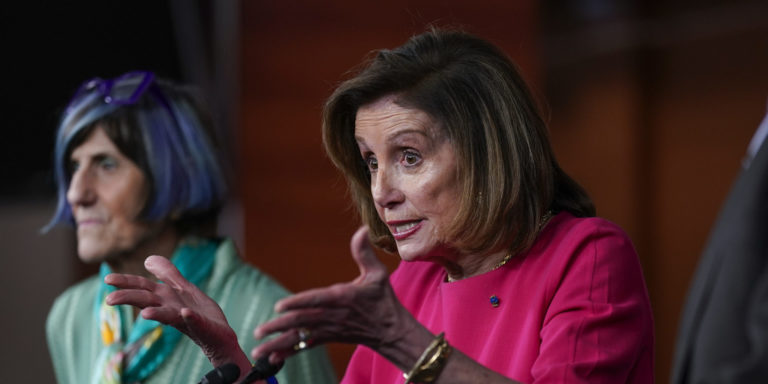
Black Reporter Who Attacked Trump Zips It when Pelosi Questions Her English

(Luis Cornelio, Headline USA) ABC News reporter Rachel Scott criticized President Donald Trump at a black journalists’ conference on Wednesday, tying him to allegations of racism. Yet, she stayed silent last month when former House Speaker Nancy Pelosi questioned her ability to speak English. 

Pelosi’s offensive remarks came in response to Scott’s inquiry about whether President Joe Biden should run for re-election. This exchange occurred on July 10, more than a week before Biden would eventually withdraw from the race. 

“Am I speaking English to you? I’m not going to be making any statements about any of that right now in the hallway,” Pelosi said after Scott, a black woman, repeated questions about the state of the Democratic Party in 2024. 

Scott stood silent as Pelosi condescendingly moved her hand to dismiss her questions. Notably, Scott did not respond to Headline USA’s request for comment before the publication of this article.

This passive attitude was strikingly different from Scott’s defiant and hostile tone when she co-hosted the 2024 National Association of Black Journalists convention, where she interviewed Trump about his presidential agenda. 

Scott opened the interview with a bafflingly confrontational tone.

“I want to start by addressing the elephant in the room, sir. A lot of people did not think it was appropriate for you to be here today,” she said, referring to journalists who were angered by the NABJ conference’s invitation to Trump. 

Scott then told Trump that he had questioned whether some minority opponents were born in the U.S., had instructed U.S. lawmakers to “go back where they came from,” and had referred to Manhattan District Attorney Alvin Bragg as an “animal” and black journalists as “losers.” 

Scott then brazenly asked, “Why should black voters trust you after you have used language like that?” 

Unfazed by the unprofessional question, Trump responded, “I don’t think I’ve ever been asked a question so — in such a horrible manner, the first question. You don’t even say, hello, how are you?”

Trump added, “For you to start off a question-and-answer period, especially when you’re 35 minutes late because you couldn’t get your equipment to work in such a hostile manner, I think it’s a disgrace. I really do.” 

Video of the exchange has since gone viral, with Republicans praising Trump for swiftly addressing the hostile line of questioning. 

Scott did not seem concerned about Trump’s response and continued the conference with other pointed questions that exposed her lack of decorum and professionalism. 

Scott’s aggressive approach was nowhere to be seen when she questioned Pelosi last week, despite Pelosi facing criticism for her controversial record on racial minorities.

Earlier this week, Rep. Maxine Waters, D-Calif., a black woman, questioned Pelosi’s odd reluctance to endorse Vice President Kamala Harris, also a black woman.

Earlier this year, Pelosi berated pro-Palestinian protesters outside her California home, shouting, “Get out of my way! Go back to China where you came from!”

She was reportedly targeting the financier of Code Pink, the group behind the protests. A New York Times report has linked Code Pink to potential Chinese ties.

In 2019, Rep. Alexandria Ocasio-Cortez, D-N.Y., accused Pelosi, then House Speaker, of “singling out” congresswomen of color in her criticism.  

In her exchange with Pelosi, Scott did not address these allegations.

Kamala’s Astroturfing Scam Exposed as Gen-Z Influencers Admit to Bribery

(Jacob Bruns, Headline USA) Social-media influencers have exposed Democrats’ election strategy—to artificially convey the appearance of having grassroots momentum—by revealing recent efforts to bribe them in return for boosting Vice President Kamala Harris’s image, the Daily Caller reported.

According to some Gen-Z influencers, the campaign and its backers were offering cash in exchange for social-media endorsements and promotions.

For instance, comedian Steve McGrew posted a screenshot to X of an email he received, showing that a pro-Harris group tried to pay him to boost her publicly.

“They are trying to get ME to be a paid shill for Kamala,” he wrote, including text from the email which offers him a chance to collaborate with the Harris campaign in exchange for pay.

The offer requires that those with social-media influence “encourage your fans to share, like, and follow Kamala, post one or more memes, post your content on TikTok, Instagram, or both.”

The revelations suggest that recent “trends,” such as TikTok’s “Kamala is Brat” campaign and efforts to label Republicans as “weird” may be less organic than propagandist media outlets are letting on.

According to Chrissy Clark, a Gen-Z conservative commentator and journalist, the Democrats are building an “influencer dark network” designed to promote online trends as the Harris campaign works tirelessly to rebuild her image in order to make her “cool and approachable.”

Even more troublesome, the mainstream media is attempting from the other side to claim that influencer content is evidence of natural support for the historically unpopular VP, when in reality it is simply the result of her campaign’s strategy.

“She’s gone from cringe to cool”, CNN commentator Van Jones recently suggested. “A whole generation has taken all the content and remixed it in all these incredible TikTok videos.”

Meanwhile, as Kamala waxes poetic about the passage of time, the Left is desperately trying to erase the VP’s failures to secure America’s southern border by rewriting history.

Democrats were said to be distributing papers containing highly dubious talking points aimed at exonerating Harris of guilt with respect to her greatest failure by falsely claiming that she was never considered the “border czar.”

According to the talking point cheat sheet, “Vice President Harris was NEVER appointed the ‘border czar’.”