Sniper from Trump Shooting Speaks Publicly for 1st Time, Revealing New Info

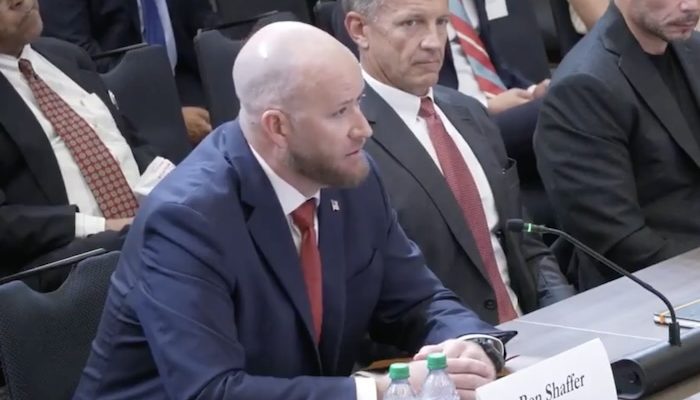
(Ken Silva, Headline USA) Washington Regional SWAT operator Ben Shaffer, who was one of the counter snipers at the July 13 Trump shooting, made his first public remarks Monday at an informal congressional hearing held by former Navy Seals sniper Rep. Eli Crane, R-Ariz., and decorated combat veteran Rep. Cory Mills, R-Fla.

Shaffer said he was a sniper stationed about 238 yards southwest from where Donald Trump was speaking, and about 348 yards from where Thomas Crooks opened fire—grazing Trump, killing a firefighter, and hospitalizing at least two others. According to local law enforcement records, he was on top of covered bleachers just north of the Butler Farm Show Airport.

According to Shaffer, Crooks was never in his quadrant, nor was he ever in his line of sight.

Shaffer told lawmakers that based on Crooks having been deemed suspicious 30 minutes before his attack, the and the other snipers had the autonomy to use deadly force against him—debunking previous reports that the Secret Service policy dictated that counter snipers had to wait until the attacker fired first.

“Compromised authority lays out the requirements for a deadly force response. Based on the prerequisites and the boxes checked, Crooks would have met that threshold,” he said.

Shaffer also defended the local Beaver and Butler County snipers who were stationed in a building that had oversight of the rooftop used by Crooks. At least one of those snipers, Beaver County’s Greg Nicol, left his post before the shooting. It’s still not clear why the other Butler sniper failed to see Crooks when people just below his perch were shouting that Crooks was on the rooftop.

Shaffer said he’s spoken to Nicol and the Butler sniper, who still hasn’t been named.

“Based on the depth of the room, their placements, and the limited field of view that those windows provided—they were very narrow—the angle was too hard for them to see that far to the east,” Shaffer insisted.

Along with the shooting, Shaffer revealed information about the explosives were ANFO bombs—a mixture of ammonium nitrate and fuel oil. He also said the explosives included remote detonating devices commonly used in the commercial fireworks market.

Shaffer said the bombs were “possibly” manufactured in Crooks’s parents’ home, where the gunman lived.

“In the construction of these materials, there is a process. There are things that need to be procured, and most likely those things would have been located through online means, which again leads to more questions,” he added.

Ammonium nitrate is a potent explosive, capable of wreaking death and destruction on an unimaginable scale. The April 19, 1995, Oklahoma City bombing was one such example—a homemade bomb containing ammonium nitrate that had been constructed and detonated with devastating consequences.

Ken Silva is a staff writer at Headline USA. Follow him at twitter.com/jd_cashless.
Trump Team Rebuffs Kamala’s Effort to Revise Debate Rules Seeking More Favorable Terms

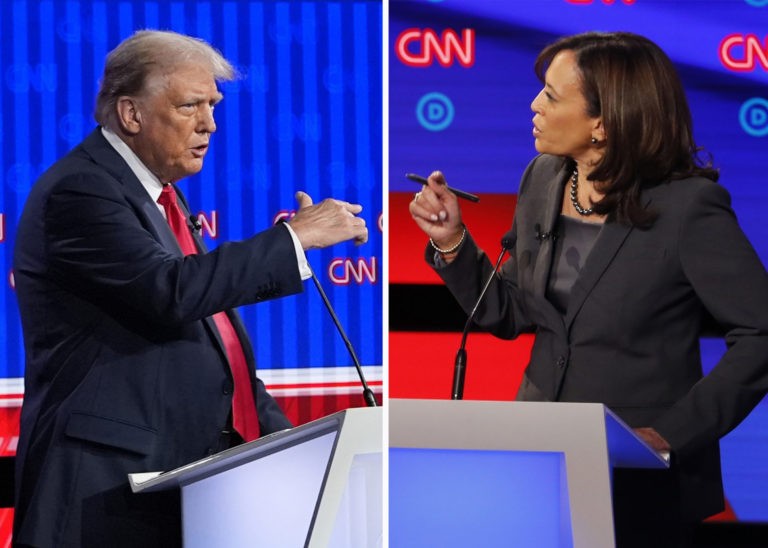
(Headline USA) After previously accusing former President Donald Trump of backing out on a debate against someone he’d never agreed to debate in the first place, the campaign of Vice President Kamala Harris sought to change the rules of the planned Sept. 10 debate on ABC to allow Harris to interrupt Trump with help from sympathetic moderators and producers—including a longtime friend and donor of the newly anointed Democrat candidate.

Trump on Sunday night raised the possibility that he might not show up, posting on his Truth Social network that he had watched the network’s Sunday show with a “so-called Panel of Trump Haters” and posited, “why would I do the Debate against Kamala Harris on that network?” and urging followers to “Stay tuned!!”

In the meantime, both sides were locked into the dispute over whether the terms of the agreed-upon debate could be renegotiated.

Complicating the negotiations this year is that debates are being orchestrated on an ad hoc basis by host networks, as opposed to the bipartisan Commission on Presidential Debates, through which debate rules were negotiated privately.

Microphones had been unmuted for both candidates for most of televised presidential debate history—until the the first Biden–Trump contest in 2020 descended into a shouting match.

The second 2020 debate with the microphone muting rules was widely celebrated for being more substantive than the earlier matchup.

President Joe Biden’s campaign team made microphone muting a condition of its decision to accept any debates this year, and some aides now regret the decision, saying voters were shielded from hearing Trump’s outbursts during the debate. That move likely would not have helped the incumbent Democrat’s disastrous performance.

However, after the debate fiasco led Democrat elites to push forward on a long-anticipated Biden coup, his successor now fears Trump could dominate the second debate if it boils down to policy and not panache.

The Harris campaign now wants microphones to be live all the time, focusing less what is actually being discussed and more on how it is being discussed.

“Trump’s handlers prefer the muted microphone because they don’t think their candidate can act presidential for 90 minutes on his own,” claimed Harris spokesman Brian Fallon.

Harris “is ready to deal with Trump’s constant lies and interruptions in real time,” Fallon continued. “Trump should stop hiding behind the mute button.”

Trump—who also sought a debate on Fox News in the interest of fairness, but which Harris refused to participate in—disputed the Harris team’s false characterization, saying he would prefer open mics, as well.

“I’d rather have it probably on,” Trump said Monday during a stop in the Washington area, when asked if he wanted microphones muted. “I didn’t like it the last time, but it worked out fine,” he added, in terms of the policy during his debate with Biden.

However, he seemed reluctant to allow Harris’s team to begin changing the terms in order to make even more favorable arrangements on top of the sweetheart agreement that Trump made with Biden’s campaign.

“We agreed to the same rules—same rules, same specifications,” Trump noted. “And I think that’s probably what it should be.”

Trump spokesman Jason Miller alleged Harris’s representatives had further sought “a seated debate, with notes, and opening statements.”

The Harris campaign denied the allegations that she wanted notes or to be seated during the debate.

Miller also took a shot at Harris not sitting for an interview or holding a news conference since Biden ended his reelection and endorsed her, arguing her campaign now wants “to give her a cheat sheet for the debate.”

Asked how he was preparing for the debate, Trump responded, “I’m not. … I think my whole life I’ve been preparing for a debate.”

Adapted from reporting by the Associated Press

Trump Honors Victims of Biden–Harris Afghan Fiasco, Collects Another Big Endorsement

(Headline USA) Former President Donald Trump on Monday commemorated the third anniversary of the Afghanistan suicide bombing that killed 13 U.S. service members while highlighting one of the greatest foreign-policy disasters of the Biden–Harris administration.

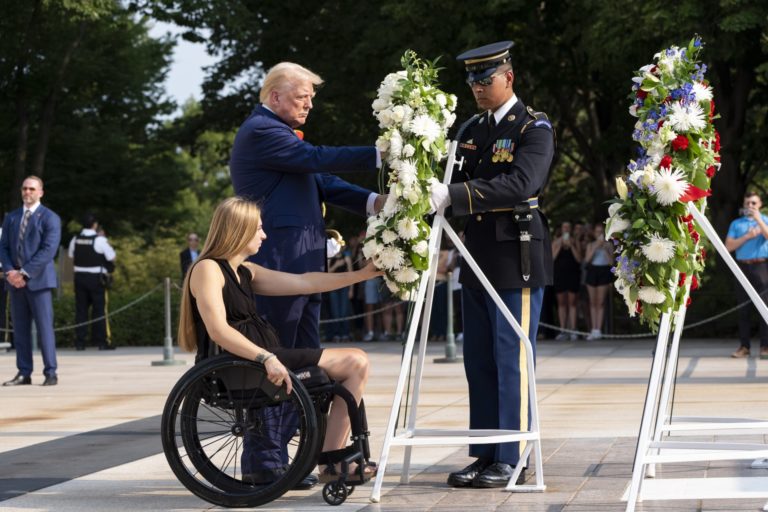
Trump, the Republican presidential nominee, laid wreaths at Arlington National Cemetery in honor of three of the slain service members—Sgt. Nicole Gee, Staff Sgt. Darin Hoover and Staff Sgt. Ryan Knauss.

Later in the day, he went to Michigan to address the National Guard Association of the United States conference, where he received the endorsement of another high-profile ex-Democrat, former Rep. Tulsi Gabbard, D-Hawaii, on the heels of his endorsement last week by political scion Robert F. Kennedy Jr.

Separately, House Speaker Mike Johnson, R-La., announced that Congress would posthumously honor the 13 service members next month by presenting their families with the Congressional Gold Medal—the highest civilian award that Congress can bestow.

Monday marked three years since the Aug. 26, 2021, suicide bombing at Kabul’s Hamid Karzai International Airport, which killed the American service members and more than 100 Afghans. The Islamic State group claimed responsibility for the attack.

Trump called the withdrawal “the most EMBARRASSING moment in the history of our Country” on his Truth Social site Monday.

“Gross Incompetence – 13 DEAD American soldiers, hundreds of people wounded and dead,” he wrote. “You don’t take our soldiers out first, you take them out LAST, when all else is successfully done,” he said in the post.

Trump’s campaign has specifically highlighted Vice President Kamala Harris’s statements that she was the last person in the room before President Joe Biden made the decision on Afghanistan.

“She bragged that she would be the last person in the room, and she was,” the former president said last week in a North Carolina rally.

“She was the last person in the room with Biden when the two of them decided to pull the troops out of Afghanistan,” he added. “She had the final vote. She had the final say, and she was all for it.”

Harris had no plans to commemorate the anniversary, but she issued a statement claiming she mourned the 13 U.S. service members who were killed.

“My prayers are with their families and loved ones. My heart breaks for their pain and their loss,” she said.

Biden drew sharp criticism following the fiasco—not only for the poor planning and partisan motives that prompted an overly hasty evacuation, allowing the Taliban to regain power after more than two decades of U.S. nationbuilding in the country, but also for his apparent disinterest in the lives lost.

At the ceremony receiving the caskets, Biden was seen checking his watch, and in meetings with the Gold Star families of the lost servicemembers, he was slammed for bringing up the stolen valor of his eldest son, Beau, who briefly served oversees in Iraq as a military lawyer before dying of cancer several years later.

The relatives of some of the American service members who were killed appeared on stage at the Republican National Convention last month, saying Biden—who was at the beach this week—had never publicly named their loved ones.

“Joe Biden has refused to recognize their sacrifice,” Christy Shamblin, the mother-in-law of Sgt. Gee, told the crowd. “Donald Trump knew all of our children’s names. He knew all of their stories.”

Biden said the 13 Americans who died were “patriots in the highest sense” who “embodied the very best of who we are as a nation: brave, committed, selfless” in a statement on Monday.

“Ever since I became Vice President, I carried a card with me every day that listed the exact number of American service members who were killed in Iraq and Afghanistan—including Taylor, Johanny, Nicole, Hunter, Daegan, Humberto, David, Jared, Rylee, Dylan, Kareem, Maxton, and Ryan.”

In his disasterous debate against Trump in June, Biden bizarrely claimed that no U.S. troops had died overseas on his watch.

Harris has sought to distance herself from many of the Biden administration’s failures, framing her campaign as one of “hope and change.”

However, in her own statement she offered a robust defense of the failed withdrawal.

“As I have said, President Biden made the courageous and right decision to end America’s longest war,” she said.

“Over the past three years, our Administration has demonstrated we can still eliminate terrorists, including the leaders of al-Qaeda and ISIS, without troops deployed into combat zones,” she added. “I will never hesitate to take whatever action necessary to counter terrorist threats and protect the American people.”

Under Trump, the United States signed a peace agreement with the Taliban that was aimed at ending America’s longest war and bringing U.S. troops home.

However, as Rep. Wesley Hunt confirmed in July, Trump’s peace accord was conditional upon the Taliban upholding its end of the bargain—and included a strong disincentive for the radical Islamic sect’s leaders to take advantage of America’s goodwill.

Nonetheless, Biden later pointed to that agreement as he sought to deflect blame for the Taliban overrunning Afghanistan, claiming it bound him to withdraw troops and set the stage for the chaos that engulfed the country.

A Biden administration review of the withdrawal acknowledged that the evacuation of Americans and allies from Afghanistan should have started sooner, but attributed the delays to the Afghan government and military, and to U.S. military and intelligence community assessments. No Pentagon officials were ever held accountable for the failures.

The top two U.S. generals who oversaw the evacuation said the administration inadequately planned for the withdrawal. The nation’s top-ranking military officer at the time, then-Joint Chiefs Chairman Gen. Mark Milley, told lawmakers earlier this year he had urged Biden to keep a residual force of 2,500 forces to give backup. Instead, Biden decided to keep a much smaller force of 650 that would be limited to securing the U.S. embassy.

Adapted from reporting by the Associated Press

Report: Trump Shooter’s Parents Hire ‘Powerhouse’ Law Firm

(Ken Silva, Headline USA) The Daily Mail reported Monday that the parents of alleged Trump shooter Thomas Crooks have hired an attorney as the FBI continues to investigate what they knew about their now-deceased child’s plans for the July 13 campaign rally in Butler, Pennsylvania.

Citing a Crooks family member who spoke on the condition of anonymity, the Daily Mail reported that the parents—licensed counselors Matthew and Mary Crooks—have hired Pittsburgh-based Quinn Logue, which reportedly describes itself as trial attorneys who specialize in both criminal defense and civil suits, including wrongful death and personal injury.

“The FBI still very much has questions about how much they knew and how he slipped through the net,” the unnamed family member told the Daily Mail. The family member also reportedly revealed that the father, 53-year-old Matthew, is a gun enthusiast who has sold firearms to relatives in the past.

Crooks’s father reportedly owned the gun used to wound Trump, kill a firefighter, and hospitalize at least two others.

It’s since been revealed that Crooks’s parents called the police on the day of the shooting. Crooks reportedly told his dad that he was taking the AR-15 to the gun range, but instead went to the Butler rally.

There have been conflicting reports as to whether Crooks’s parents called law enforcement before or after the attack.

Headline USA filed a request with Bethel Park police for records and a recording of the parents’ call. However, police denied the request last week, citing an ongoing law enforcement investigation.

Pennsylvania law allows for the release of 911 recordings if a law enforcement agency or court deems them to be in the public interest. Headline USA has appealed Bethel Park’s denial of the phone call recording, and will be making the argument that it’s in the public interest for the recording to be released.

The FBI could also be investigating whether Crooks used his parents’ house to make the purported explosives found in his vehicle. Local sniper Ben Shaffer, who was involved in the security at the Trump shooting, said at a Monday press conference that the explosives were “possibly” made at the Crooks household, where the gunman lived.

Ken Silva is a staff writer at Headline USA. Follow him at twitter.com/jd_cashless.
Report: Suspected Capitol Pipe Bomber Possibly Interacted w/ Police

Update: Shorty after the publication of this article, Blaze Media published a clarification that the pipe bomb suspect seen walking by the Capitol Hill Club was not the same person who walked towards Capitol Police vehicles minutes later. Blaze’s report has come under intense criticism, but Headline USA will leave this article intact so readers can judge the evidence for themselves.

(Ken Silva, Headline USA) Blaze Media has published possibly groundbreaking footage that shows the suspected J6 pipe bomber seemingly interacting with Capitol Police the night before the Jan. 6, 2021, Capitol Hill uprising.

The footage reportedly comes from Capitol Police CCTV files recently made public by the Committee on House Administration Subcommittee on Oversight. The specific finding was made by the social media user “Armitas,” according to Blaze.

“The alleged bomber emerged onto First Street Southeast from an alley between the Capitol Hill Club and the Republican National Committee at 8:14 p.m. Jan. 5. The suspect walked north past the Capitol Hill Club. As the individual passed under the restaurant’s green awning at 8:14:30 p.m., a Capitol Police SUV turned the corner onto First Street. The alleged bomber waved at the squad car and then pointed — it appeared — at the driver as the vehicle passed by,” Blaze reported.

“…The officer turned on the vehicle’s red and blue emergency lights at 8:15:44 p.m., just as the bomber turned and walked south down the Rumsey alley and disappeared from view,” Blaze added.

“The suspect was hidden from camera view for nearly three minutes behind the blinding strobe headlights and emergency beams of the squad cars. At 8:22:53 p.m., the apparent suspect emerged from the spread of light and crossed the street again. The individual was last seen on the security video at 8:23:08 p.m. as he or she walked down the alley a second time.”

While Blaze touted its discovery, others expressed skepticism. Those skeptics included Revolver News’s Darren Beattie, one of the leading reporters on the pipe bomb controversy.

Either way, he next day a civilian purportedly discovered one pipe bomb near the Republican National Committee headquarters at 12:43 p.m., and a plainsclothes Capitol Police officer found another one outside the Democrat National Committee HQ at 1:05 p.m.—just as violence was picking up at the Capitol. Rep. Thomas Massie, R-Ky., and other prominent conservatives have suggested that the pipe bombs were meant to divert law enforcement from Capitol Hill to respond to the bomb threats.

Blaze’s findings come on the heels of footage released earlier this month from investigative reporter Julie Kelly, showing that the DNC pipe bomb might have actually been placed on the day of Jan. 6—after the RNC one was found.

The footage from Kelly showed an apparent law enforcement officer from Vice President-elect Kamala Harris’s security detail exiting a DC Metro Police SUV at 12:51 p.m., and walking towards the area where the pipe bomb was found—with a bag in hand. Minutes later, the same officer walked back to the police vehicle with bag still in hand.

“What exactly was he doing? Did he set the device? And if he was acting on the up-and-up, how in the world did he not see a pipe bomb sitting right there?” Kelly asked.

For Revolver News’s Darren Beattie, who’s broken numerous stories on the pipe bomb case, Kelly’s footage makes it overwhelmingly likely that the FBI surveillance footage is fake and the bombs were actually planted not the evening before, but day of Jan. 6. Beattie has previously analyzed surveillance footage of the J5/6 pipe bomber, showing that the FBI has failed to release footage that would have shown the bomber planting the device.

Ken Silva is a staff writer at Headline USA. Follow him at twitter.com/jd_cashless.

MURDOCK: What Kamala’s Voters Don’t Know about Her Could Hurt America

(Deroy Murdock, Headline USA) Ignorance is bliss. It also is Kamala Harris’s secret weapon.

The American people can make wise decisions, but only when they have quite enough information to do so.

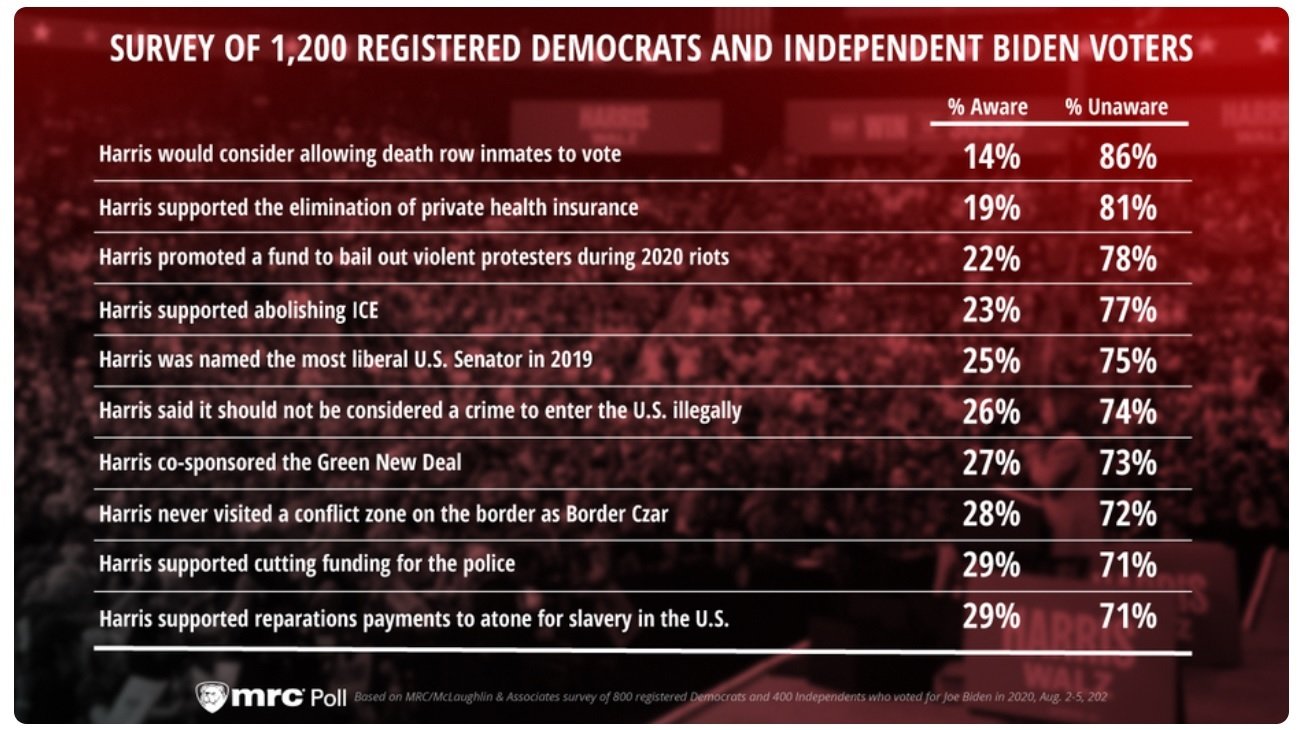
Alas, an August 14 Media Research Center survey confirms that most 2020 Biden–Harris voters know shockingly little about her far-Left record.

Media Research Center chart
Courtesy of the Media Research Center

Staggering majorities of the 800 registered Democrats and 400 independents in McLaughlin & Associates’ poll were stunningly unfamiliar with Kamala’s neo-Marxist words and deeds.

Last week’s Democrat National Convention taught her voters far more about Kamala’s passion for cooking than about her extremist statements and actions:

  • Kamala would consider enfranchising Death Row inmates. Don Lemon asked her at an April 22, 2019, CNN town hall if imprisoned felons “like the Boston Marathon bomber, on Death Row, people who are convicted of sexual assault, they should be allowed to vote?”

Rather than laugh at this concept, Kamala said: “I think we should have that conversation.”

Among those surveyed, 86% were unaware or unsure of her views on turning every Death Row into a voting precinct.

Of those polled, 81% were unacquainted with Kamala’s desire to junk their private medical policies.

Another 71% were astonished that Kamala backed defunding the police. She told Nick Cannon of Power 106-FM in Los Angeles: “We have to redirect resources” from law enforcement to schools and small businesses. “For too long, people have confused achieving public safety with putting more cops on the street.”

  • Kamala suggested abolishing ICE. On June 24, 2018, MSNBC’s Kasie Hunt asked if she agreed with a supporter’s “Abolish ICE” placard. Kamala said, “We’ve got to critically reexamine ICE,” and added, “we need to probably think about starting from scratch.” This surprised 77% of Biden–Harris voters.
  • In 2019, GovTrack ranked Kamala the most liberal/least conservative U.S. senator—left of Vermont socialist Bernie Sanders. GovTrack gave her a 0.00% conservative rating and Sanders a slightly more right-wing 0.02%. GovTrack self-censored its scorecard, but Internet Archives’ priceless Wayback Machine preserved it. Among participants, 75% were new to Kamala as the Senate’s No.1 Leftist. Her co-sponsorship of the über-liberal Green New Deal escaped 73% of respondents.
  • Kamala disagrees that illegal aliens who invade America are criminals. “I know what a criminal looks like who’s committing a crime,” she told CBS News. “An undocumented immigrant is not a criminal.” Of those asked, 74% had not heard Kamala’s statement.

So, why do so many know so little about so much of Kamala’s record? MRC’s subjects chiefly rely on broadcast and cable TV news. MRC says that its “examination of ABC, CBS and NBC evening news coverage in the three weeks since Harris became the leading Democratic candidate (July 21 to August 10) shows eight of these ten issues received ZERO attention from these newscasts, while two others received only minor coverage.”

That’s right: Zero airtime—positive, negative, or neutral—on eight of the Democrat presidential nominee’s highly relevant positions. Two other policies earned cursory coverage: Kamala endorsed slavery reparations and briefly visited the US–Mexico border—once.

This is media malpractice.

Republicans and conservatives must use rallies, speeches, broadcast and digital ads, print, social media, e-mails, text messages, billboards, one-on-one discussions, dormitory debates, smoke signals, and carrier pigeons to educate Democrats and independents on what they do not know about Kamala Harris, starting with these 10 frightening facts.

Ignorance is bliss, but the truth will set America free.

Deroy Murdock is a Manhattan-based Fox News contributor.

National Bank of Poland Was the Biggest Central Bank Gold Buyer in Q2

(Mike Maharrey, Money Metals News Service) The National Bank of Poland was the biggest central bank gold buyer in the second quarter. A Euronews report speculated that the country is “preparing for the worst.”

The Polish central bank added 19 tons of gold to its reserves in Q2. According to the Euronews report, the buying spree boosted the country’s total gold reserves to 377.4 tons. 

Poland was the second-biggest gold buyer in 2023, adding 130 tons of gold to its holdings last year.

Gold currently makes up about 14.7 percent of Poland’s total reserves.

NBP Governor Adam Glapiński recently indicated the Bank of Poland will continue to add gold to its reserves with a goal of holding at least 20 percent of the country’s reserves in gold.

“This makes Poland a more credible country, we have a better standing in all ratings, we are a very serious partner, and we will continue to buy gold. The dream is to reach 20 percent.”

In 2021, Glapiński announced a plan to expand the country’s gold reserves by 100 tons. The central bank reached that goal in September of ’23 and kept buying.

When he announced the initial plan to expand its gold reserves, Glapiński said holding gold was a matter of financial security and stability.

“Gold will retain its value even when someone cuts off the power to the global financial system, destroying traditional assets based on electronic accounting records. Of course, we do not assume that this will happen. But as the saying goes – forewarned is always insured.

“And the central bank is required to be prepared for even the most unfavorable circumstances. That is why we see a special place for gold in our foreign exchange management process.”

Glapiński also pointed out that “Gold is free from credit risk and cannot be devalued by any country’s economic policy. Besides, it is extremely durable, virtually indestructible.”

Back in 2021, Glapiński also hinted that worry about the U.S. dollar’s stability was driving the decision to increase the country’s gold reserves.

“Gold is characterized by a relatively low correlation with the main asset classes – especially the US dollar dominating the NBP reserve portfolio – which means that including gold in the reserves reduces the financial risk in the process of investing them.” 

According to Euronews, the central bank is currently buying gold to “diversify their reserves to protect against macroeconomic uncertainty and geopolitical shocks.”

“As such, gold’s relatively stable performance during times of crisis, as well as its inflation hedge qualities are driving factors behind the central banks picking the metal. It is also an effective way to diversify central bank portfolios and is considered to be highly liquid, with no default risk.”

Euronews also noted that gold provides a hedge against the weaponization of the dollar because the yellow metal is “less affected by policy risk and can be used as a valuable collateral and policy tool.”

“In some cases, gold can also help countries facing international sanctions, such as Russia, to avoid them. This, in turn, incentivizes these countries to buy more gold and use it to help maintain their liquidity, in case other means of finance are blocked off or difficult to access.”

Gold demand surged in Poland following the pandemic and again after Russia invaded Ukraine. According to Euronews, “Investors also fear that the Russian invasion in Ukraine may spill over to Poland and want to prepare themselves in case of such a scenario by investing more in gold.”

The physical gold market in Poland has been among the strongest in Europe over the last three years.  

Poland’s central bank is one of many adding gold to its reserves. Central banks globally added a net 483 tons of gold through the first six months of the year,  5 percent above the record of 460 tons in H1 2023.

Last year, central bank gold buying fell just 45 tons short of 2022’s multi-decade record.

According to the World Gold Council, central banks net gold purchases totaled 1,037 tons in 2023. It was the second straight year central banks added more than 1,000 tons to their total reserves.

Central bank gold buying in 2023 built on the prior record year. Total central bank gold buying in 2022 came in at 1,136 tons. It was the highest level of net purchases on record dating back to 1950, including since the suspension of dollar convertibility into gold in 1971.

China was the biggest buyer in 2023.


Mike Maharrey is a journalist and market analyst for MoneyMetals.com with over a decade of experience in precious metals. He holds a BS in accounting from the University of Kentucky and a BA in journalism from the University of South Florida.

Fed Chair Powell Sends Clear Signal that More Inflation Is in the Pipeline

(Mike Maharrey, Money Metals News Service) Federal Reserve Chairman Jerome Powell gave the clearest indication yet that more inflation is in the pipeline during his Jackson Hole Speech on Friday.

Powell indicated rate cuts are on the horizon, saying, “The time has come for policy to adjust, adding that “the direction of travel is clear.” 

But Powell stopped short of saying exactly when and how quickly the central bank would trim interest rates.

“The timing and pace of rate cuts will depend on incoming data, the evolving outlook, and the balance of risks.” 

Nevertheless, Powell all but declared victory over price inflation, saying, “My confidence has grown that inflation is on a sustainable path back to 2 percent.”

He also insisted that a soft landing remains in play, saying, “There is good reason to think that the economy will get back to 2 percent inflation while maintaining a strong labor market.”

A Return to Inflationary Policies

While virtually nobody will say it out loud, this so-called victory over price inflation sets the stage for a return to inflationary policies.

While it didn’t create much of a stir in the mainstream financial media, the Federal Reserve already eased monetary policy when it began slowing balance sheet reduction in June. Instead of allowing $60 billion in U.S. Treasuries to come off the balance sheet each month, it capped the runoff at $25 billion. 

Slowing and ultimately ending balance sheet reduction and lowering interest rates will increase the money supply, and the expansion of the money supply is, by definition, inflation.

Inflation is an expansion of money and credit. Price inflation is one symptom of inflationary policy.

The Fed has tightened things up just enough to slow rising prices, but it hasn’t come close to running wringing the pandemic-era inflation out of the economy. The central bank pumped nearly $5 trillion into the economy through quantitative easing alone. That was on top of the credit expansion incentivized by artificially low interest rates. It has only shrunk the balance sheet by about $1.8 trillion. 

In fact, the Fed never substantively shrank the balance sheet after the 2008 financial crisis despite Ben Bernanke saying, “Ultimately, at the right time, the Federal Reserve will normalize its balance sheet,” in February of 2011.

Apparently, that time has yet to come.

Meanwhile, interest rates are higher than they were, but from a historical perspective, the current rate environment is close to normal. 

Today, most of the inflation created during the pandemic and the Great Recession is still sloshing around in the economy.

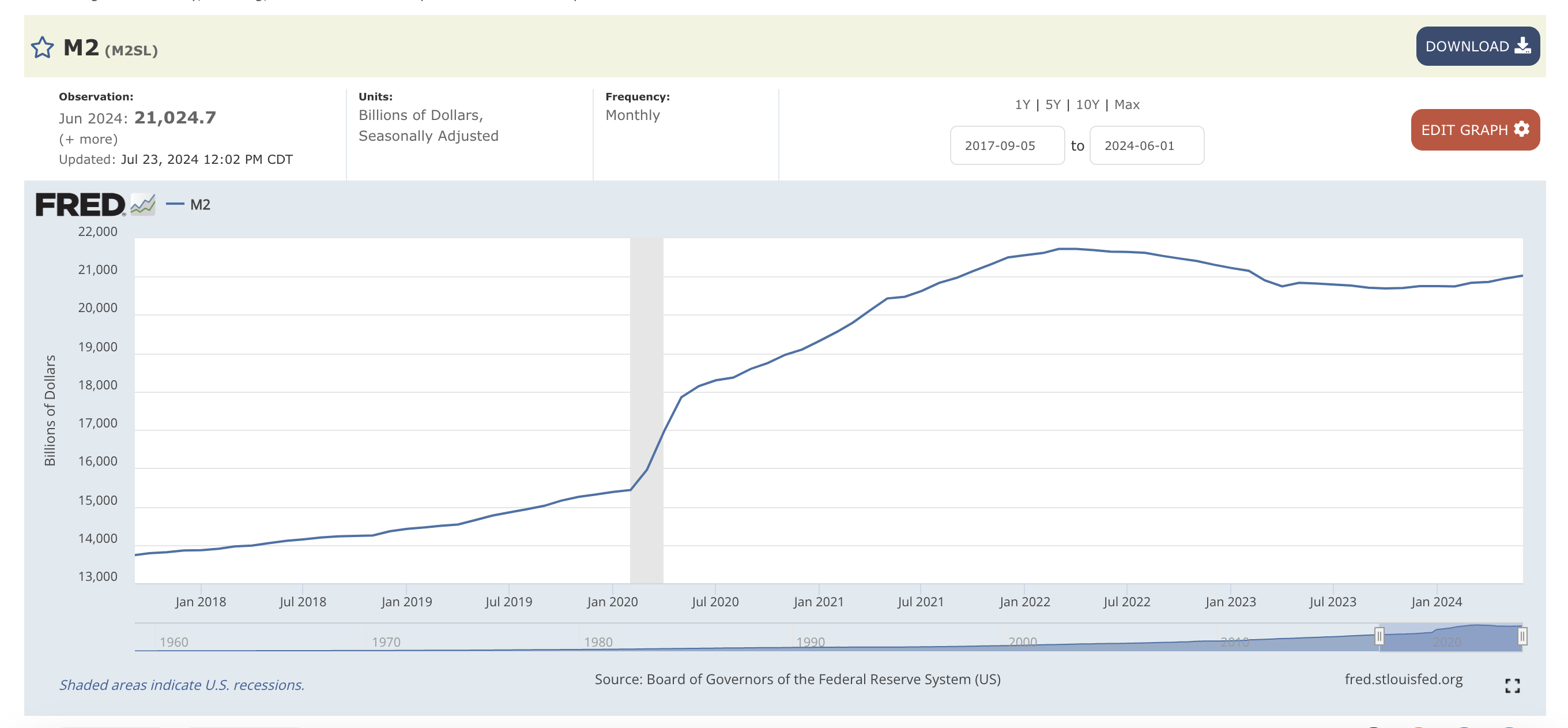
And now, by slowing balance sheet reduction and signaling interest rate cuts, the Fed is telling you it plans to ramp up the inflation machine.

As you can see from this chart, the money supply is already starting to increase.

Powell Dodges the Real Cause of Inflation

During his Jackson Hole talk, Powell confessed that the stickiness of price inflation took him by surprise. You might remember that during the 2021 Jackson Hole speech, Powell doubled down on the “inflation is transitory” narrative.

Powell pinned the inflation problem on “supply chain issues” and said policymakers at the Fed were surprised they didn’t clear up sooner. Powell said they expected the problems to fade “fairly quickly without the need for a monetary policy response” — in short, that “the inflation would be transitory.’’

Powell has never acknowledged that pumping trillions of dollars into the economy and handing out trillions in stimulus to people who weren’t producing anything were at least two factors in the post-pandemic inflation surge.

This might explain why nobody seems to grasp the fact that this monetary policy pivot is, in fact, a return to inflationary policies, albeit at a much more modest pace than during the last two economic crises. 

But of course, there is no guarantee an economic crisis isn’t still on the horizon. Despite Powell’s victory lap and mainstream optimism about a soft landing, it is highly likely this higher interest rate environment has already broken things in the economy. In fact, it has already precipitated a financial crisis that the central bank managed to bury under the surface with a bailout.

History tells us that it takes quite a while for the impacts of interest rate changes to manifest in the economy. The Federal Reserve began cutting interest rates in the fall of 2007, a full year before the 2008 financial crisis.

If the Fed is already committing to a return to inflationary policies when the economy is supposedly strong and robust, what is going to happen when the next crisis unfolds?

If history is any indicator, it will slash interest rates to zero and launch quantitative easing.

It’s also important to remember when you hear Jerome Powell and other policymakers talking about “controlling” inflation, they don’t mean getting rid of it. Inflation is the Fed’s stated policy.

It would be wise to brace yourself for more inflation – from now to eternity.


Mike Maharrey is a journalist and market analyst for MoneyMetals.com with over a decade of experience in precious metals. He holds a BS in accounting from the University of Kentucky and a BA in journalism from the University of South Florida.

India’s Silver Imports Could Double, Largely from Solar Demand

(Jon Forrest Little, Money Metals News Service) The global economic landscape has undergone a seismic shift over the past few decades, with the outsourcing of jobs from the United States to India playing a pivotal role. This transformation has had far-reaching consequences for both nations, reshaping their economies and societies in profound ways.

In the United States, the outsourcing trend has led to a significant loss of well-paying jobs, particularly in the Rust Belt and in sectors such as customer support and IT services. This exodus of employment opportunities has left many American workers grappling with economic uncertainty and diminished prospects.

Conversely, India has experienced a remarkable surge in its middle class, fueled by the influx of outsourced jobs. This rapid economic ascent has lifted millions out of poverty, dramatically altering the nation’s socio-economic landscape.

As Indian households gain increased purchasing power, they are embracing modern conveniences that were once out of reach. The demand for appliances like air conditioners, washing machines, and refrigerators has skyrocketed, along with automobile ownership.

From 2022 to 2023, only 5% of households in India had AC. India is a scorching hot country. As people are lifted out of misery (poverty) into the middle class, it’s understandable that India will require ooodles more from the power grid (silver being the #1 conductor of electricity).

This newfound prosperity, however, comes with its own set of challenges.

India’s energy infrastructure is straining under the weight of increased consumption, as millions of newly affluent citizens plug in power-hungry devices.

The surge in demand for modern amenities has also created an unexpected pressure point: the need for silver, a crucial component in many electronic devices and appliances due to its superior conductivity.

Expect Silver Prices to Rise as Demand Surges

India’s Silver Imports Set to Double: India is expected to witness a significant surge in silver imports this year. This growth is primarily fueled by the rising demand from solar panel and electronics manufacturers.

Driving Force: The significant increase in silver imports can be largely attributed to the burgeoning investment in solar energy. Silver, a crucial component in solar panel production, is driving this surge in imports.

Market Impact: The increase in silver imports reflects a broader trend of escalating demand for materials essential for renewable energy technologies.

Economic Implications: The surge in silver imports could potentially influence local silver prices and significantly impact India’s balance of trade. This is particularly significant as India heavily relies on imported silver for its manufacturing needs.

Future Projections: Analysts suggest that as solar energy initiatives expand, the demand for silver and other critical materials will continue to rise, potentially leading to further increases in imports in the coming years.


Jon Forrest Little graduated from the University of New Mexico and attended Georgetown University’s Institute for Comparative Political and Economic Systems. Jon began his career in the mining industry and now publishes “The PickAxe” which covers topics surrounding precious metals, energy, history, and politics.

RFK Jr. Reveals Key Reasons for Endorsing Trump Ahead of 2024 Election

(Luis Cornelio, Headline USA) Robert F. Kennedy Jr., the former third-party presidential candidate, detailed the main reasons behind his monumental endorsement of President Donald Trump for the 2024 election. 

RFK Jr. highlighted Trump’s willingness to unite the country and specifically praised Trump’s openness to his advice on various critical issues, including ending the war in Ukraine, fighting censorship and protecting children’s health.

“He invited me to form a unity government, and we agreed to be able to continue to criticize each other on issues on which we don’t agree—but these issues are so important for unifying our country. We need, in this country, to reach a point where we love our children more than we hate each other,” RKF Jr. said during an interview on Fox News Sunday with host Shannon Bream.

In response, Bream asked about any discussions on potential cabinet positions if Trump wins the 2024 election. 

“It’s a good unifying theme that I think a lot of people could get around, it’s how we get there…” she said of the endorsement. “Have you all negotiated over or talked about a cabinet position? A position within a Trump government in exchange for your endorsement?” 

RFK Jr. clarified, “No, there’s been no commitments. I met with President Trump, with his family, with his closest advisors and we just made a general commitment that we are going to work together.” 

His endorsement of Trump has drawn vitriolic attacks from his family. The Kennedys have long been associated with the Democratic Party, with his uncle, John F. Kennedy, having served as president, and his father as attorney general, U.S. senator and presidential candidate.

In response to these attacks, RFK Jr. expressed his continued love for his family despite the attacks.