‘Bad Faith’: Rupert Murdoch Loses Bid to Keep Fox News Right-Wing

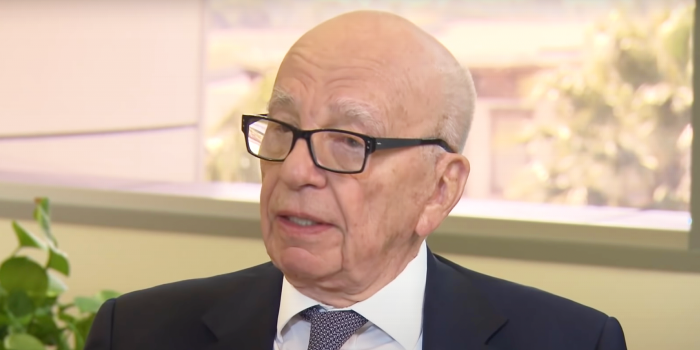
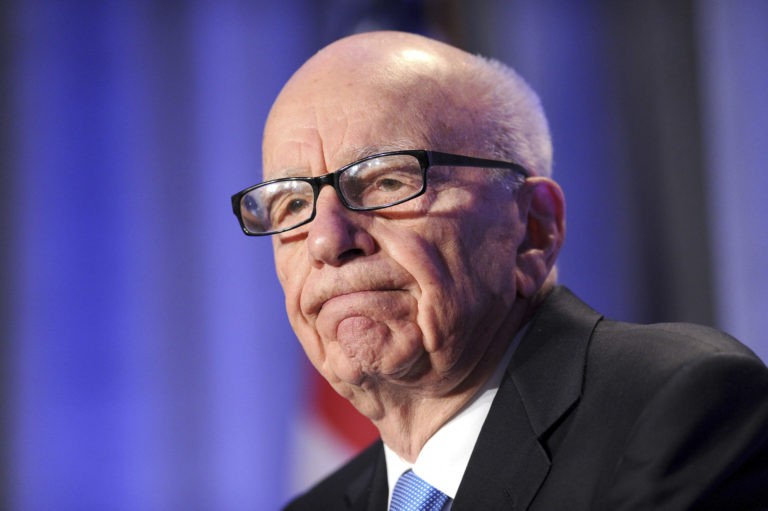
(Julianna Frieman, Headline USA) Media mogul Rupert Murdoch reportedly lost his bid Saturday to change his family’s trust in order to safeguard Fox News’s production of right-wing content from his leftist children.

Nevada Commissioner Edmund J. Gorman Jr. ruled against Murdoch’s attempt to give son Lachlan Murdoch, who is already in charge of Fox News and News Corp., full control of the company, according to sealed court documents obtained by The New York Times.

The 93-year-old’s company will be divided equally among his four eldest children—Lachlan, James, Elisabeth and Prudence—when he dies, the outlet reported.

The commissioner claimed Murdoch acted in “bad faith” when he tried to untangle his family trust plans, according to the outlet.

In his ruling, Gorman called Murdoch’s attempt to change his family trust a “carefully crafted charade” intended to “permanently cement Lachlan Murdoch’s executive roles” in the company “regardless of the impacts such control would have over the companies or the beneficiaries” of the family trust, the outlet reported.

Murdoch and his son, Lachlan, were not pleased with the ruling and plan to appeal, one lawyer for the pair reportedly said.

Murdoch’s other three eldest children issued a statement following Gorman’s ruling, according to the outlet.

“We welcome Commissioner Gorman’s decision and hope that we can move beyond this litigation to focus on strengthening and rebuilding relationships among all family members,” they wrote.

While Murdoch initially considered Lachlan, James and Elisabeth as potential successors, he landed on Lachlan in 2019. However, the family trust complicated his choice, the outlet noted.

James and Elisabeth reportedly have more left-leaning politics than their brother, Lachlan, whose leadership is more likely to support the right-wing editorial slant of Fox News.

Julianna Frieman is a freelance writer published by the Daily Caller, Headline USA, The Federalist, and the American Spectator. Follow her on Twitter at @JuliannaFrieman.

OpenAI Releases AI Video Generator Sora but Limits How It Depicts People

(Headline USA) OpenAI has publicly released its new artificial intelligence video generator Sora but the company won’t let most users depict people as it monitors for patterns of misuse.

Users of a premium version of OpenAI’s flagship product ChatGPT can now use Sora to instantly create AI-generated videos based on written commands. Among the highlighted examples are high-quality video clips of sumo-wrestling bears and a cat sipping coffee.

But only a small set of invited testers can use Sora to make videos of humans as OpenAI works to “address concerns around misappropriation of likeness and deepfakes,” the company said in a blog post.

Text-to-video AI tools like Sora have been pitched as a way to save costs in making new entertainment and marketing videos but have also raised concerns about the ease with which they could impersonate real people in politics and otherwise.

OpenAI says it is blocking content with nudity and that a top priority is preventing the most harmful uses, including child sexual abuse material and sexual deepfakes.

The highly anticipated product received so much response upon its Monday release that OpenAI has temporarily paused the creation of new accounts.

“We’re currently experiencing heavy traffic and have temporarily disabled Sora account creation,” according to its webpage.

OpenAI first unveiled Sora earlier this year but said it wanted to first engage with artists, policymakers and others before releasing the new tool to the public.

The company, which has been sued by some authors and the New York Times over its use of copyrighted works of writing to train ChatGPT, hasn’t disclosed what imagery and video sources were used to train Sora.

Adapted from reporting by the Associated Press

Rupert Murdoch Loses Bid to Protect Fox News’s Conservative Views When He Dies

0

(Headline USA) A probate commissioner has ruled against Rupert Murdoch’s effort to change his family’s trust to give one of his sons control of his media empire and ensure Fox News maintains its conservative-leaning editorial values, according to a sealed document obtained by the New York Times.

In a decision filed on Saturday, a probate commissioner in Nevada concluded that Murdoch, 93, and his son, Lachlan Murdoch, had acted in “bad faith” in their endeavor to amend the irrevocable trust, the New York Times reported on Monday.

The trust divides control of the company equally among four of Rupert Murdoch’s children—Prudence, Elisabeth, Lachlan and James—after he dies. Lachlan Murdoch has been the head of Fox News and News Corp since late last year, when his father stepped down.

The elder Murdoch has argued that to preserve his businesses’ commercial value for all his heirs, the trust must be changed to allow Lachlan Murdoch to maintain Fox News’s conservative bent.

James and Elisabeth Murdoch are both known to have less-conservative political views than their father or brother, potentially complicating efforts to ensure that Fox News remains conservative.

In his 96-page opinion, Nevada Probate Commissioner Edmund J. Gorman Jr. of the Second Judicial District Court characterized the plan to change the trust as a “carefully crafted charade” to “permanently cement Lachlan Murdoch’s executive roles” inside the empire “regardless of the impacts such control would have over the companies or the beneficiaries” of the family trust.

Adam Streisand, a lawyer for Rupert Murdoch, told the newspaper that his client and his client’s son were disappointed with the ruling and intended to appeal.

A spokesperson for Prudence, Elisabeth and James Murdoch said in an emailed statement to the Associated Press that they welcome the ruling and hope that their family can “move beyond this litigation to focus on strengthening and rebuilding relationships among all family members.”

Gorman in his conclusion said: “The effort was an attempt to stack the deck in Lachlan Murdoch’s favor after Rupert Murdoch’s passing so that his succession would be immutable. The play might have worked; but an evidentiary hearing, like a showdown in a game of poker, is where gamesmanship collides with the facts and at its conclusion, all the bluffs are called and the cards lie face up.”

He added: “The court, after considering the facts of this case in the light of the law, sees the cards for what they are and concludes this raw deal will not, over the signature of this probate commissioner, prevail.”

Adapted from reporting by the Associated Press

Where’s Pete? Lame-Duck DOT Chief Shirks Duties to Campaign in Michigan

(Headline USA) Where’s Pete this time? The perennially absent Transportation secretary has gone absent during countless crises during the Biden administration, from the supply-chain shortages due to port backups, to the train derailment and chemical spill in Ohio, to unprecedented airline groundings due to sheer incompetence.

Pete Buttigieg, the former South Bend, Indiana mayor and model-train enthusiast who became a notorious DEI hire in President Joe Biden’s Cabinet, is now seeking to reignite his political career in Michigan—a state where his advocacy of electric vehicles may receive a lukewarm reception from the auto-manufacturing industry, as well as his LGBT identity due to the large Muslim population.

Nonetheless, his radically progressive politics could make him a logical successor for Gov. Gretchen Whitmer, provided he doesn’t mind stepping over a few state leaders who have been busy paying their dues.

In a packed union hall outside Detroit, a worker shifts the conversation from policy to the personal, quizzing Buttigieg on his knowledge of Michigan, the state he only recently started calling home.

“Mayor Pete—Secretary Pete, I apologize,” one auto worker yelled from the crowd. “Now that you’re a Michigander, who do the Lions play Sunday?”

Caught off guard, Buttigieg couldn’t provide an answer. Familiarity with the schedule of Detroit’s long-suffering but recently soaring NFL team isn’t an official prerequisite for holding statewide office. But the casual exchange illustrates the challenge Buttigieg may face in proving his connection to Michigan voters—a hurdle some Democrats nevertheless hope he’ll take on by entering a crowded governor’s race.

Though Buttigieg has publicly and privately stated that he won’t make any decisions about his future until after the Biden administration ends on Jan. 20, he has already fielded calls from Michigan Democrats urging him to enter the 2026 race to replace Whitmer, who is term limited.

Buttigieg, who moved to Traverse City, Michigan, soon after his unsuccessful presidential campaign in 2020, hasn’t ruled out the possibility, according to a source speaking on condition of anonymity to discuss private conversations.

“I haven’t made any decisions about, big decisions about my future. And I know that we’ve got six more weeks and we’re going to sprint through the tape,” Buttigieg told reporters at an event south of Detroit on Monday.

Bound by the nature of his official trip, Buttigieg avoided political questions during his visit, which included a stop at a union hall in Dearborn before heading south of Detroit to highlight nearly $200 million in federal funding to replace a bridge.

But pressure on him to enter the governor’s race will likely only intensify after Detroit Mayor Mike Duggan, expected by many Democrats to be the leading contender to succeed Whitmer, announced last week plans to run as an independent.

“People are shocked and stunned and angry. Many view this as a serious situation where Mike Duggan could put the governor’s mansion in the hands of Republicans and roll back years of progress,” said Andrew Feldman, a Democratic strategist who has worked for the state party.

Michigan Democrats, who until recently had been posting big wins in a battleground state and advanced a far-left agenda with remarkable party unity, suddenly find themselves in a new period of turmoil after significant losses in the 2024 election, including a backbreaking defeat in the presidential race.

President-elect Donald Trump won the state by a wider margin than in 2016, and Republicans reclaimed control of the state House, ending Democratic dominance in the Legislature. In their final month holding a slim majority in both chambers, the party has struggled to pass significant legislation, hampered by internal divisions.

While Whitmer—herself the subject of speculation about whether she’ll seek higher office—still has two years remaining in her term, Duggan’s surprise move has kick-started the race to replace her and has left Democrats worried the mayor of Michigan’s largest city could drain support from their candidate and hand the office over to Republicans.

Some hope Buttigieg, who vaulted to prominence with his 2020 presidential run, might have the broad crossover appeal to win that support back, despite the stigma of his association with the Biden administration.

“I personally want to thank you for going up, facing the Fox News crowd, listening to people’s questions and answering. And I think you’re one of the few politicians that does that,” an attendee told Buttigieg at the union hall on Monday, earning loud applause.

Buttigieg moved to Michigan to be closer to the family of his husband, Chasten, he said in an interview with the Associated Press on Monday.

“I grew up a few miles from the state line, so even growing up I was getting the news from Michigan and from both sides of the state line,” he claimed.

“And I could point to any number of moments over the years, some wonderful and some really tough, like when our little guy was in the intensive care in Grand Rapids,” Buttigieg added, without specifying who the “little guy” was.

“But, yeah, bottom line, this is home,” he said.

Other potential candidates may not be ready to concede either race just yet. Michigan Democrats still boast one of the deepest political benches in the country, with several other high-profile candidates expected to join the race soon.

Secretary of State Jocelyn Benson confirmed last week that she was “certainly considering” a gubernatorial bid and was actively listening to voters’ concerns as she weighed her decision. She also criticized Duggan for abandoning the party rather than grappling with its challenges.

“For me, it’s important that in moments like this, we don’t flee from the party, but we stay and fix it,” Benson said during a televised interview with reporters.

Lt. Gov. Garlin Gilchrist II is also considering a gubernatorial bid and has assembled a team to explore the possibility, though a final decision won’t be made until 2025, according to a source with direct knowledge.

A 42-year-old Detroit native, Gilchrist, who is black, could provide a strong contrast to the 66-year-old Duggan, who is white. If he runs, Gilchrist plans to engage with voters who feel the Democratic Party has failed to address their frustrations with the status quo, the source said.

There also are a number of dark-horse candidates, including Genesee County Sheriff Chris Swanson. The woke sheriff from the Flint-area rose to prominence after he marched with a crowd of protesters after the death of George Floyd in 2020. Swanson, who spoke at the Democratic National Convention in August, recently told the AP that he had a “team doing due diligence” about a possible run.

“When it comes to the Democratic Party in Michigan, it is a prime time for them to restructure—to not have a polarizing platform, but a more unifying one,” Swanson said during a recent interview. “The entire playbook has to be evaluated and restructured to go and listen to the people.”

Adapted from reporting by the Associated Press

Scott Jennings Pulls Out Chart to Show CNN Assassins Are ‘Bad Guys’

(Julianna Frieman, Headline USA) CNN’s Scott Jennings pulled out a chart Monday night to show fellow CNN panelists that assassins are “bad guys.”

On NewsNight, Jennings told a table of CNN panelists that the murder suspect who allegedly shot UnitedHealthcare CEO Brian Thompson dead in New York was “bad,” while Daniel Penny, who protected subway-goers from a mentally unstable and potentially violent man, was “good.”

“If you’re on the American left tonight, here’s my chart,” Jennings said, flipping around a white sheet of paper with two distinct columns.

The left column of the chart read “Good Guys,” while another column on the right read “Bad Guys.” The name “Daniel Penny” was listed as a “Good Guy” and “Luigi Mangione” was categorized as a “Bad Guy.”

One panelist attempted to interject with a question about the victims in both cases during Jennings’s spiel, but he kept going.

“I’m just telling you what I see out in the world today,” Jennings said as CNN panelists continued to interrupt. He told them to make their own chart before continuing to explain his own.

“People on the left can’t seem to tell the difference between the good guys and the bad guys. It’s crazy!” Jennings said. “We have people praising Luigi and attacking Penny. One is good, one is bad.”

Penny, 26, was acquitted Monday in his New York City manslaughter trial for the death of Jordan Neely.

The same day, Mangione, 26, was arrested at a McDonald’s in Altoona, Pennsylvania after an employee recognized his appearance and called police.

He was later charged with murder for shooting Thompson, 50, dead as he walked out of a Hilton hotel in Midtown Manhattan early Wednesday.

Julianna Frieman is a freelance writer published by the Daily Caller, Headline USA, The Federalist, and the American Spectator. Follow her on Twitter at @JuliannaFrieman.

‘Backbone of Steel’: Pete Hegseth Returns to Fox News to Defend His Nomination

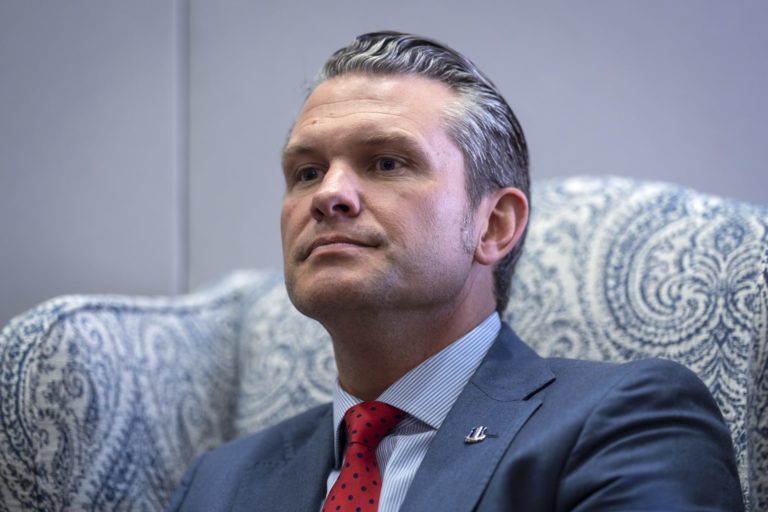
(Julianna Frieman, Headline USA) Pete Hegseth returned to Fox News late Monday to defend his nomination as defense secretary by President-elect Donald Trump.

Trump named Hegseth as part of his Cabinet picks on Nov. 12, and the former Fox and Friends Weekend co-host has since faced an ambush of allegations of sexual misconduct and drunkenness on the job, all which he denied.

After meeting with Sen. Joni Ernst, R-Iowa, for a second time, Hegseth told Hannity that he had a “great meeting” with the reported Senate holdout.

He revealed that he will meet with Sen. Lisa Murkowski, R-Ala., on Tuesday and Sen. Susan Collins, R-Maine, on Wednesday.

“Sean, the founders got this right. This is not a trivial process. This is a real thing. Advise and consent of a nominee that the president has chosen, and in so grateful that President Trump would have the faith in me to lead the Defense Department,” Hegseth said.

He blasted leftist media outlets for trying to railroad his confirmation through a relentless smear campaign.

“The left is trying to turn this into a trial in the media, a show trial. And we’re not gonna let that happen,” Hegseth said. “I’m gonna walk into the door of every one of these senators with… just as an open book, willing to answer their questions because they deserve answers.”

Hegseth emphasized that he looks forward to “earning” the votes of senators.

The former Fox News co-host told former colleague Sean Hannity that he was not surprised by leftist journalists relying on anonymous sources, such as 10 nameless Fox News employees cited by NBC News. He said, “This is what the left does. It’s the anatomy of a smear.”

“This is where I give so much credit to President Trump. He’s got a backbone of steel,” Hegseth said.

Hegseth revealed Trump called him on the phone and encouraged him to “keep fighting.”

Julianna Frieman is a freelance writer published by the Daily Caller, Headline USA, The Federalist, and the American Spectator. Follow her on Twitter at @JuliannaFrieman.

Gold And Silver Take Off On Surprise Rally

(Brien Lundin, Money Metals News Service) “Don’t look a gift horse in the mouth.” That was my first thought on seeing gold up about $45…and silver jumping 4%…this morning while other markets weren’t confirming the moves.

The Dollar Index was down, but not much. Treasury yields were actually higher. And the stock market was flat (and has since turned lower).

Long story short, I looked straight at that gift horse’s mouth and set about trying to figure out why the metals were soaring.

Yes, there was the collapse of Bashar Al-Assad’s dictatorship in Syria over the weekend and concerns over more uncertainty in the Middle East. But you know I discount geopolitical flashpoints as drivers for gold, and this change in leadership will likely be a good thing on balance.

Then there was China’s much-heralded return to gold buying, with its announcement of five tonnes purchased in November. But this was mostly public relations, as we know from the recent great research by our friend Jan Nieuwenhuijs that China has likely bought more than 60 tonnes of the metal over the last few months.

The fact that the People’s Bank of China famously stopped reporting gold purchases in early summer doesn’t mean they actually stopped buying, and Jan’s work shows they’ve bought much more than that 60 tonnes in November.

So, none of this is behind gold’s big surge today, in my opinion.

More likely are two factors:

1) China’s Politburo just announced that it will ease monetary policy and boost fiscal spending to jump-start the economy.

2) It’s simply time for gold to turn around.

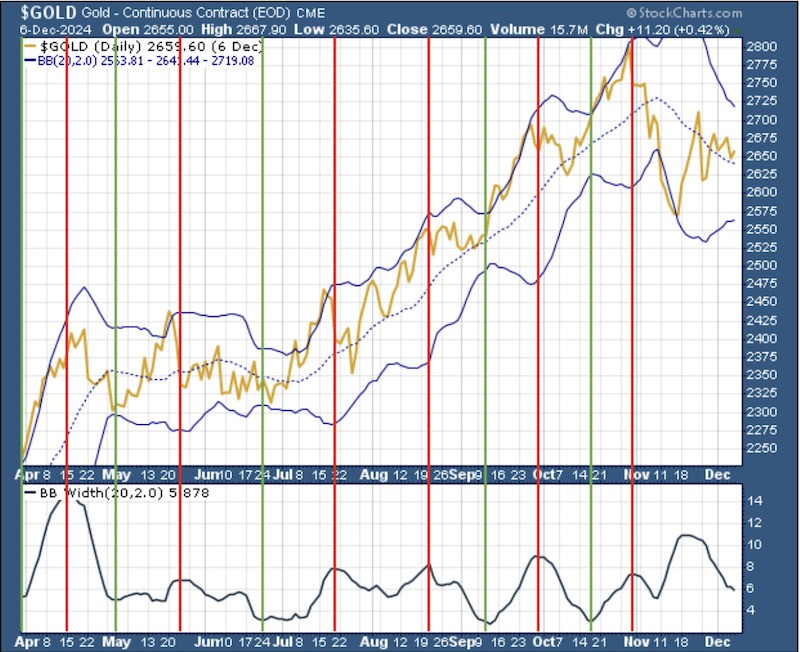
As you’ll remember, tracking the width of gold’s Bollinger bands was an extremely accurate tool for us throughout the summer and into the fall, as the bottoms in width (“pinching” bands) repeatedly foretold imminent rallies while the peaks in width pinpointed upcoming corrections.

That indicator failed us spectacularly in gold’s post-election correction as the bands, which measure volatility, greatly expanded as the gold price plummeted.

The one aspect of this indicator that did survive, though, was the timing.

You see, gold has exhibited fairly regular cycles during this bull market, as indicated in our chart…which I have updated below:

As you see, the red lines show when the band width peaked, showing an upcoming price decline. And the green lines indicated when the width bottomed, indicating an upcoming rally.

Things got messed up with that early November correction, as I said, but the timing of the cycles would indicate that a new rally is due.

But also, we see that the band width has fallen, and the bands are pinching once again. This chart, with data as of Friday’s close, seems to indicate that a new move — up or down — was about to occur.

Well, with gold’s big surge today, I’m guessing the predicted move is upward…and we’re back in rally mode.

Seasonality Also In Play

Even better news is that we’re in that time of year that often corresponds to a bottom in the metals and miners. Historically, we’ve often seen the beginnings of a rebound in the mid- to late-December timeframe.

In my experience, those who get in near the bottom can often add 20% or greater gains on top of the common early-year rally in junior mining stocks.

In short, a buy signal is flashing right now.

While gold and silver have given up some of today’s early gains, they’re still up strongly, as I write. The signal and the buying opportunity are still firmly intact.

I’m going to try to take advantage of it, and I urge you to consider doing so as well.

To get Brien Lundin’s ongoing commentary on the markets at no charge, click here to subscribe to his free Golden Opportunities newsletter.

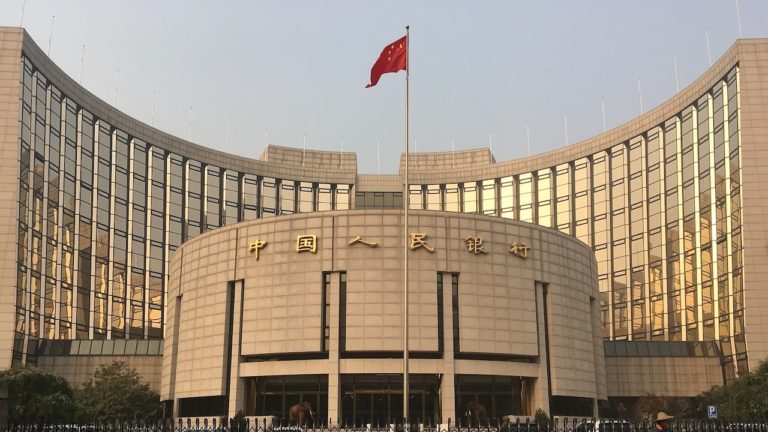
Chinese Central Bank Resumes (Official) Gold Purchases

(Mike Maharrey, Money Metals News Service) After a six-month pause, China’s central bank officially resumed gold purchases in November. 

According to data released by the People’s Bank of China, it added about five tons of gold to its reserves in November.

China was the biggest central bank gold buyer in 2023, but it stopped announcing increases to its reserves in May.

Even with the pause, China still added nearly 30 tons of gold to its official reserves through the first half of 2024.

A drop in the gold price may have motivated the resumption of Chinese gold buying. The yellow metal was down about 5 percent last month after hitting a record high just below $2,800 in October.

Despite the correction after Trump’s electoral victory, gold is still up around 28 percent on the year.

One analyst told Reuters that the sudden resumption of buying could indicate the Chinese central bank has accepted the higher price levels.

“The resumption will send a signal that the PBOC has grown accustomed to these record-high price levels and is prepared to build reserves regardless.”

Reuters also reported that the central bank’s return to the table may support Chinese investor demand. It has been muted since the People’s Bank of China paused increasing its official reserves.

When the Chinese paused increasing gold reserves in May, it precipitated a panicked gold selloff. Despite the knee-jerk reaction, I said at the time that it was unlikely that the Chinese were finished adding gold to their reserves.

China has a history of adding to reserves and then going silent.

The People’s Bank of China accumulated 1,448 tons of gold between 2002 and 2019 and then reported nothing for more than two years before resuming reporting in the fall of 2022. Many speculate that the Chinese continued to add gold to its holdings off the books during those silent years.

Even with China out of the picture, central bank gold buying has been robust in 2024. October was the biggest month of the year, boosting official central bank purchases to 754 tons for the year after a record third quarter.

China Likely Has More Gold Than Reported

There has always been speculation that China holds far more gold than it officially reveals. In 2015, Jim Rickards pointed out that many people believe that China keeps several thousand tons of gold “off the books” in a separate entity called the State Administration for Foreign Exchange (SAFE).

Last month, Jan Nieuwenhuijs reported that the People’s Bank of China secretly bought large amounts of gold, even as official buying was on pause. Nieuwenhuijs has shown that the Chinese central bank covertly purchases gold in the London Bullion market through bullion banks.

“Since the war in Ukraine began, there has been more supply in the Chinese market than sold through the SGE; the ‘surplus’ reflects what the PBoC buys,” Nieuwenhuijs wrote.

According to Nieuwenhuijs’s analysis, China recently bought about 60 tonnes of gold.

The World Gold Council often notes “unreported” gold buying in the central bank sector. Most analysts think this represents Chinese buying off the books.

State Dept’s. $100 Million Censorship Network to Close in 2 Weeks

(Ken Silva, Headline USA) A shady State Department-funded censorship network exposed by Twitter/X CEO Elon Musk last year announced Monday that it will likely be closing by Dec. 23—an early Christmas present for online free-speech advocates.

That network, the Global Engagement Network, announced its impending closure in a Monday court filing. The State Department and GEC are facing a lawsuit from the Texas attorney general and several conservative media outlets for allegedly engaging in a conspiracy to censor American media outlets disfavored by the federal government.

It’s unclear how the GEC’s closure will affect the lawsuit. Monday’s court filing said lawyers for all parties are still discussing the implications.

Musk put the GEC on the map in March 2023, when he deemed it to be the “worst offender in U.S. government” when it comes to censorship and media manipulation.

According to revelations from the “Twitter Files”—a trove of internal records about the censorship decisiosn made within the social media company—the GEC funded groups such as the Atlantic Council’s Digital Forensic Research Lab, which in turn compiled blacklists of Twitter accounts that were supposedly tied to foreign disinformation campaigns. The Digital Forensic Research Lab sent those blacklists to Twitter so that the company could deactivate the accounts listed.

Federalist senior legal correspondent Margot Cleveland further revealed in April 2023 that the GEC marketed anti-conservative censorship products to private-sector tech firms. Cleveland also noted that the GEC apparently worked with infamous FBI Agent Elvis Chan, who was revealed in the Twitter Files to be in constant touch with the social media firm about censorship issues.

Despite those scandals, Democrats had been pushing to renew the GEC’s $100 million budget before it expires at the end of the year.

Sen. Chris Murphy, D-Conn., who drafted the original legislation in 2016 that led to the GEC, argued last year that the censorship network was crucial to counter foreign disinformation.

“There’s no way to combat Russian and Chinese misinformation without the GEC,” Murphy insisted.

Murphy and the other Democrats have apparently relented in the wake of Republicans sweeping into the House, Senate and White House.

Ken Silva is a staff writer at Headline USA. Follow him at x.com/jd_cashless.

Consumer Debt Surged in October

(Mike Maharrey, Money Metals News Service) After two months of keeping their credit cards in their wallets, American consumers pulled out the plastic again in October.

A surge in card spending drove consumer debt higher by $19.2 billion, a 4.5 percent increase, according to the most recent data from the Federal Reserve. The increase in debt was nearly double expectations.

It was the biggest jump in consumer debt since July.

American consumers now owe over $5.1 trillion in consumer debt.

The Federal Reserve consumer debt figures include credit card debt, student loans, and auto loans but do not factor in mortgage debt. When you include mortgages, U.S. households are buried under a record level of debt. As of the end of the third quarter, total household debt stood at $17.94 trillion.

A large jump in revolving debt, primarily reflecting credit card balances, drove the overall increase as it surged by $15.7 billion in October, a 13.9 percent increase.

Many economists view increased debt as a bullish sign for the economy. They argue that it reflects consumer confidence. But it could also indicate more people are struggling to make ends meet and are turning to credit cards to close the gap.

As a MarketWatch article put it, consumer spending is “powering” the economy. But this power will only last until people reach their credit card limits.

Credit card spending in August and September seemed to be slowing. The surge in October indicates consumers still have some spending power left.

Either way, consumers buying stuff on credit is not the foundation for long-term economic prosperity. The fundamental problem with running an economy on credit is it’s expensive, and credit cards have an inconvenient thing called a limit.

The double whammy of rising debt and interest rates exacerbates the debt problem. Average credit card interest rates eclipsed the previous record high of 17.87 percent over a year ago. The average annual percentage rate (APR) currently stands at 20.37 percent, with some companies charging rates as high as 28 percent.

Rates aren’t coming down as quickly as one might expect, given the Federal Reserve’s recent rate cuts. According to an ABC News report, while the Fed has dropped the benchmark rate by 75 basis points, credit card companies are charging a higher margin “to weather default risk, cover overhead costs and recoup profits, experts added.”

“Credit card rates are high, and they’re staying high,” Bankrate analyst Ted Rossman told ABC News.

Americans are starting to struggle to pay those big balances

According to New York Fed Q3 data, “Aggregate delinquency rates edged up from the previous quarter, with 3.5 percent of outstanding debt in some stage of delinquency.” It characterized delinquency rates as “elevated.”

Subprime credit card borrowers are struggling the most, with delinquency rates nudging upward by about 5.6 percent since the Federal Reserve began raising rates to battle price inflation.

Citigroup recently noted a shift in spending patterns that seems ominous. More consumers are using credit cards to pay for “basic needs,” with a notable slowdown in “non-vital” purchases.

In other words, people are using credit cards with 28 percent interest rates to pay for groceries.

Non-revolving debt, primarily reflecting outstanding auto loans, student loans, and loans for other big-ticket durable goods, increased by roughly $3 billion, a 1.1 percent increase. This was up from a tepid 0.5 percent rise in September.

Non-revolving debt has increased at a relatively subdued pace of under 2 percent for most of the year as consumers cut back on big-ticket spending to cover the increasing costs of day-to-day necessities. Before the pandemic, revolving credit growth averaged 5 percent.

According to a University of Michigan report, the uptick in non-revolving debt in October could reflect consumers rushing to buy durable goods to get ahead of possible tariffs on overseas goods imposed by the new Trump administration.

As credit card balances max out, more and more Americans are turning to their home equity to fill the gap. HELOC balances increased by $7 billion to reach $387 billion in Q3, representing the tenth consecutive quarterly increase since Q1 2022.

So far, American consumers have weathered the inflation storm, but they did it by blowing through their savings and then by turning to credit cards. At some point, they will have to pay the proverbial piper. This reliance on debt to drag the U.S. economy isn’t sustainable.

Joe Biden, Jerome Powell, and the talking heads on corporate media can brag all they want about the “strong economy,” but Americans have been borrowing to buy it. At some point, they will reach their limit.