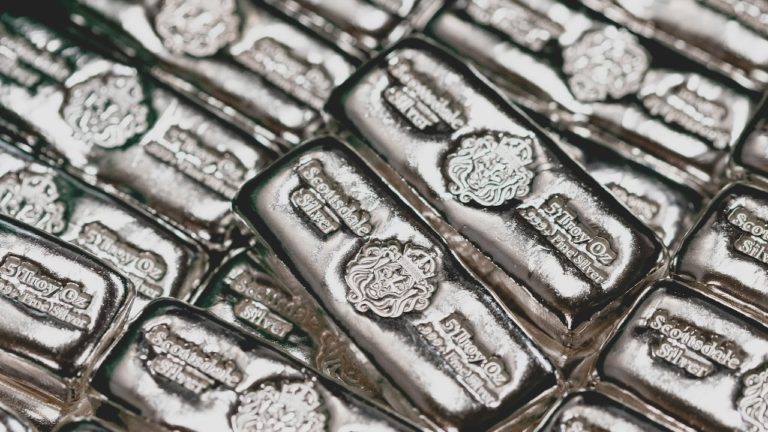
(Mike Maharrey, Money Metals News Service) The gold-silver ratio has surged to over 90-1. This indicates that silver is extremely underpriced from a historical perspective.
In other words, silver is on sale.
The last time we saw a gold-silver ratio over 90-1 was in the early days of the pandemic lockdowns.
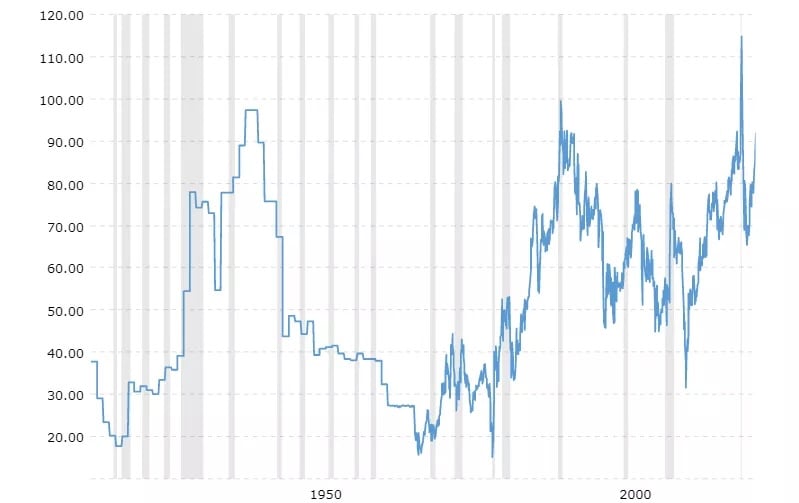
In the modern era, the gold-silver ratio has averaged between 40-1 and 60-1. When it rises far above that level, it tends to snap back quickly to that mean.
You can see the phenomenon in this cart. Although the ratio has run at a higher average since the U.S. government demonetized silver in 1964, we still see sharp returns to the mean when the gold-silver ratio gets out of whack.
Chart from Investopedia
This typically happens when the price of silver rallies to close the spread. For instance, the gold-silver ratio fell to 30-1 in 2011 after rising to over 80-1 during the money creation of the Great Recession in the wake of the 2008 financial crisis.
In a more recent example of this snap-back, the gold-silver ratio set a record of 123-1 as Covid hysteria gripped the world and then plunged to around 60-1 as central banks around the world cranked up the money creation machine to cope with governments shutting down economies.
From a historical perspective, when you see gold-silver ratios well above the historical average, it tells you that silver is underpriced compared to gold and there is a strong possibility that silver will go on a bull run to close that gap. Historically, this has often happened in the midst of a gold bull rally, with silver outperforming gold. (Of course, past performance does not guarantee future results.)
Some mainstream analysts are projecting silver will outperform gold in 2025 even as the gold bull market marches forward.
Saxo Bank head of commodity strategy Ole Hansen recently said silver’s dual role as a monetary and industrial metal creates the potential for a strong upside in the coming year with the gold-silver ratio falling into the 70s.
He notes that in 2024, “increased industrial demand helped create physical tightness in the silver market. Sectors such as electronics and renewable energy, particularly photovoltaic (solar) technologies, significantly contributed to this surge.”
Based on preliminary data from the Silver Institute, industrial demand set a record in 2024, topping 700 million ounces for the first time. With mine output declining, the market will likely see its fourth consecutive supply deficit.
“The expectation of sustained industrial demand is likely to keep silver in a supply deficit into 2025, potentially deepened by a pick-up in ‘paper’ demand through exchange-traded funds,” Hansen said.
If Hansen is correct, that would still leave room for further upside in 2026 based on the historical trajectory of the gold-silver ratio.
Mike Maharrey is a journalist and market analyst for MoneyMetals.com with over a decade of experience in precious metals. He holds a BS in accounting from the University of Kentucky and a BA in journalism from the University of South Florida.
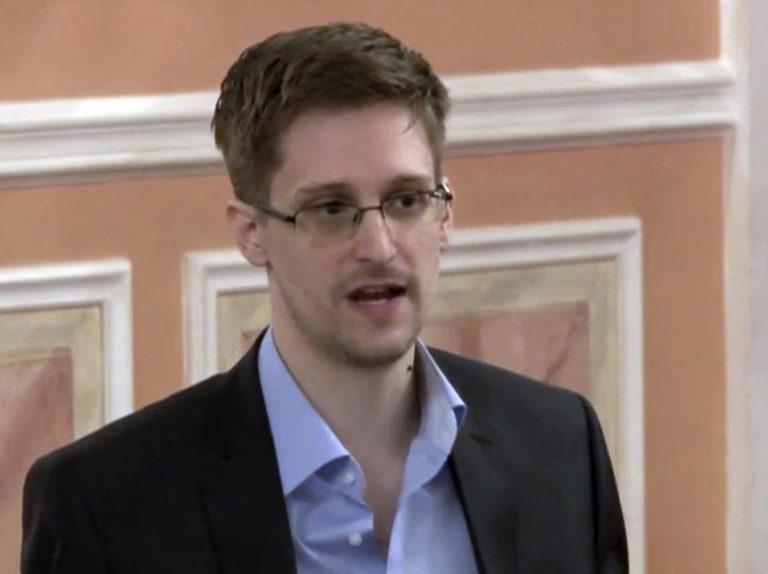
(Ken Silva, Headline USA) Axios reported Wednesday that some Republican Senators are opposing President Donald Trump’s pick to run the Office of Director of National Intelligence, Tulsi Gabbard, on the grounds that she’s expressed support for NSA whistleblower Edward Snowden—whose disclosures revealed how U.S. agencies are spying on Americans.
“There’s definitely a risk that she won’t even survive the committee process,” one Republican senator, who spoke on the condition of anonymity, reportedly told Axios.
Sen. Susan Collins, R-Maine, did speak on the record about legislation Gabbard co-sponsored with former Rep. Matt Gaetz to have the Justice Department drop its espionage charges against Snowden. Collins reportedly told Axios she is concerned about the legislation. According to Axios, she said that “it’s something that came up in my own review of [Gabbard’s] record.”
Gabbard’s team, for its part, said that “There is not one GOP senator on record opposing Lt. Col. Gabbard’s nomination.”
Gabbard, who for years was a vocal opponent of domestic surveillance, has already compromised on that issue. Earlier this month, she reportedly said that she now supports warrantless spying on Americans via Section 702 of the Foreign Intelligence Surveillance Act. Section 702 allows the U.S. government to collect without a warrant the communications of targeted foreigners located in other countries — including when those subjects are in contact with Americans or other people inside the U.S.
The arrangement often results in Americans having their communications read. Gabbard now says she supports this due to recent reforms from the last Congress.
“If confirmed as DNI, I will uphold Americans’ Fourth Amendment rights while maintaining vital national security tools like Section 702 to ensure the safety and freedom of the American people,” she said coming out of last week’s round of private Senate meetings.
“My prior concerns about FISA were based on insufficient protections for civil liberties, particularly regarding the FBI’s misuse of warrantless search powers on American citizens. Significant FISA reforms have been enacted since my time in Congress to address these issues.”
Ken Silva is a staff writer at Headline USA. Follow him at x.com/jd_cashless.
(Mike Maharrey, Money Metals News Service) Every month, we report on the massive budget deficits. Most people yawn and move along. The reality is they don’t view overspending and debt as a big problem. After all, the debt has been growing for decades and nothing bad has happened.
But the problem with kicking the can down the road is eventually you run out of road. And the federal government is hurtling toward a dead-end fiscal cliff with its foot on the accelerator.
If the size of the national debt itself doesn’t concern you, its exponential growth should at least give you pause.
The Speed of Debt Growth in Perspective
Those of us of a certain age remember the “Republican Revolution” of the 1990s. It was largely driven by fiscal concerns and accusations that Democrats were taxing and spending us to death.
At the time, the national debt stood at $4.7 trillion. This represented a mere 64.5 percent of the GDP at the time.
And that was viewed as a problem.
Fast forward to today.
As of Jan. 21, the national debt stood at $36,218,258,403,326.35. According to the national debt clock, that’s 122.9 percent of GDP.
It seems like just yesterday, we were talking about the debt topping $35 trillion. That’s because it took less than 16 weeks for the debt to climb from $35 trillion to $36 trillion.
Between 1789 and 1981 (192 years), the debt grew to $ 1 trillion. That translates to a pace of about $ 0.005 trillion in accumulated debt per year. The debt-to-GDP ratio in 1981 was 31 percent.
Between 1982 and 2008 (27 years), the debt surged to just over $10 trillion as the pace increased to an average of $0.33 trillion of additional debt per year. The debt-to-GDP ratio in 2008 stood at 67 percent.
Between 2009 and 2024 (16 years), the debt exploded to its current level, with Uncle Sam adding $26 trillion in new debt, an average pace of $1.6 trillion per year.
Over 45 percent of the accumulated national debt was incurred in the previous 8 years.
During Donald Trump’s first term, the debt grew by $7.7 trillion, a 38.9 percent increase. Over the next four years, with Biden occupying the Oval Office, the debt grew $8.4 trillion, a 30.3 percent increase.
Trump has talked about shrinking government spending during his second term, but even if we’re optimistic and assume he can harness the cooperation of Congress and rein in spending, there is only so much he can do. Discretionary outlays only account for 27 percent of total expenditures. The vast majority is for entitlements, and there is little political will to take the scissors to Social Security or Medicare.
So, What’s the Problem?
Trump also has to work against a widespread perception that debt doesn’t matter.
James Madison disagreed. He called public debt “a public curse, and in a Rep. Govt. a greater than in any other.
Thomas Jefferson also disagreed. He called public debt “the greatest of dangers to be feared.”
So did George Washington.
“No pecuniary consideration is more urgent than the regular redemption and discharge of the public debt. On none can delay be more injurious or an economy of time more valuable.”
But why does it matter?
At some point, the world will decide it’s no longer interested in financing the U.S. government’s borrowing and spending. And as the Bipartisan Policy Center pointed out, the growing national debt and the mounting fiscal irresponsibility ultimately undermine the dollar.
“Confidence in U.S. creditworthiness may be undermined by a rapidly deteriorating fiscal situation, an increasing concern with federal debt set to grow substantially in the coming years.”
At least, this could lead to lower economic growth, higher unemployment, and less investment wealth.
The central bankers at the Fed won’t say so out loud, but they have to factor in the massive national debt as they make monetary policy decisions. Uncle Sam needs low interest rates to finance its borrowing and spending binge.
Of course, the Fed is simultaneously trying to keep price inflation at bay. This requires higher interest rates.
And it could get worse. The federal government may ultimately need the central bank to step in with quantitative easing (QE)
In QE operations, the central bank buys Treasuries on the open market. This increased (artificial) demand drives bond prices higher and puts downward pressure on yields. But the Fed runs QE operations with money created out of thin air. The new money gets injected into the monetary system and the economy. This is, by definition, inflation.
When you boil it all down, the federal government has a big problem even if the economy continues on its present trajectory. Any kind of economic crisis will exacerbate the problem and push the car down the road even faster.
In the worst-case scenario, we could experience a dollar collapse.
We’re not to that point yet. We may not even be close. But we’re driving closer to the edge of that cliff with our foot on the accelerator.
Mike Maharrey is a journalist and market analyst for MoneyMetals.com with over a decade of experience in precious metals. He holds a BS in accounting from the University of Kentucky and a BA in journalism from the University of South Florida.
(Money Metals News Service) Host Mike Maharrey dives into the economic principle of incentives, emphasizing their critical role in shaping behavior and policy outcomes.
He references French economist Frédéric Bastiat’s essay The Seen and the Unseen (That Which is Seen, and That Which is Not Seen), which explores the visible and invisible consequences of economic actions.
Maharrey critiques policies like minimum wage increases and tariffs for their unintended consequences, often overlooked by policymakers.
Economic Policy Under the New Administration
As the U.S. transitions into the second Trump administration, Maharrey analyzes potential shifts in economic policy.
Early signs include deregulation efforts and fiscal reforms, such as a federal hiring freeze, aimed at boosting the private sector.
However, he cautions against overestimating the president’s influence, noting significant barriers like Congress, entrenched spending patterns, and the challenges of reducing the $600 billion monthly federal spending levels.
Gold, Silver, and Tariff-Induced Market Dynamics
A primary focus of the episode is the ripple effect of potential tariffs on gold and silver markets. Maharrey explains that fears of tariffs on precious metals are driving a significant shift in bullion from London to the U.S., creating market distortions:
Gold Lease Rates Surge: Lease rates for gold in London jumped to over 3.5% annually, levels not seen since 2002. This signals a rising demand for gold in U.S. markets.
Silver Market Squeeze: The silver market, already constrained by four consecutive years of deficits and record industrial demand (over 700 million ounces in 2024), faces tightening supplies. Bloomberg estimates only 50 million ounces of readily available silver remain in London.
Maharrey warns of potential price spikes due to these dynamics, emphasizing that the silver market is particularly vulnerable due to its smaller size.
Investment Implications
For investors, Maharrey sees the current market conditions as a prime opportunity to buy gold and silver. Premiums on physical metals are at historic lows, making it an attractive time to enter or expand positions.
He advises caution against overoptimism about economic improvements under the new administration, pointing to deep-seated structural issues like national debt, deficit spending, and monetary inflation.
Call to Action
Maharrey encourages listeners to consider investing in precious metals to hedge against inflation and economic uncertainty.
He directs them to Money Metals Exchange for expert guidance on integrating gold and silver into their portfolios.
(Joshua D Glawson, Money Metals News Service) Sound money composed of gold and silver has historically been a way to establish economic and financial stability, build wealth, plan for the future, and hedge against tyrannical government overreach.
The “soundness” in sound money refers to its validity and reliability, much like a sound argument in logic. Coincidentally (pun intended), sound money made of gold or silver also has unique sounds to them when struck – which makes them fairly easy to test for their validity, and consequently their reliability.
In Article 1, Section 10, of the US Constitution, sound money was specified when it said, “No state shall… make any Thing but gold and silver Coin a Tender in Payment of Debts.”
“Over and over again, the founding fathers warned us about paper money. George Washington warned paper money would ‘ruin commerce – oppress the honest, and open a door to every species of fraud and injustice.’ Today we’ve abandoned sound money – gold and silver – and we got exactly what Washington predicted. Thomas Paine may have summed it up best, ‘Money is Money, and Paper is Paper. – All the invention of man cannot make them otherwise.’”
The fight for the US’ return to Constitutionally sound money has been championed most specifically by Money Metals’ Sound Money Defense League, which has helped eliminate taxes on precious metals — gold and silver — in over a dozen states within the past few years.
“Sound money, gold and silver, protects a country’s money and citizenry from currency debasement and high inflation, while actively restraining the government from overspending. Gold and silver provide constraints on governments that have proven they will otherwise get too large or overspend if given the opportunity.”
To help learn more about sound money, and ways you can escape the dangers of fiat dollars, here are my top 5 recommended books on gold and silver sound money in no particular order:
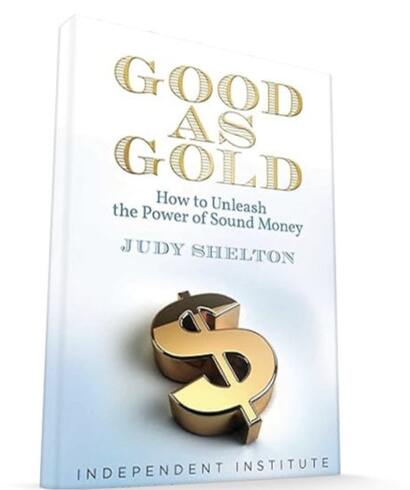
“Good As Gold, by Judy Shelton, provides a comprehensive overview of gold sound money and practical measures that governments can take to reimplement a form of gold standard.
From financial crises, to pandemic price-spikes, to recurring cycles of inflation, everyone agrees: the economy has seen better days.
Judy Shelton—Senior Fellow at Independent Institute, former Chairman of the National Endowment for Democracy, an economic advisor to Donald Trump, and critically acclaimed monetary economist—has written a book with answers.”
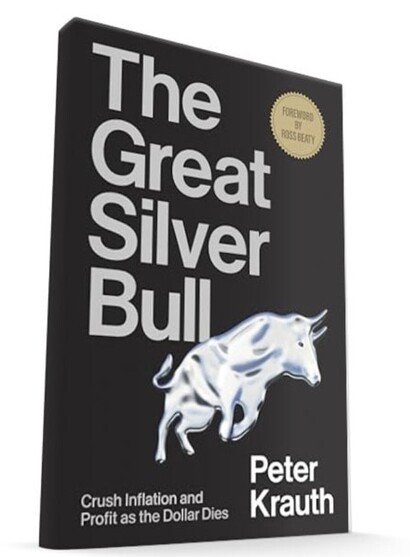
The Great Silver Bull, by Peter Krauth, is an exceptional exploration of silver sound money.
“Silver is your chance to survive and thrive in the next crisis. Silver is a proven inflation hedge and a crucial industrial metal for solar panels, electric vehicles, electronics, and medicine. As the world shifts to green energy, silver demand will soar. Supply will not be able to keep pace.
This book is the essential guideto profiting from silver’s generational opportunity. Whether you are a novice or professional, this book will help you learn silver’s role throughout history and how it is uniquely positioned to benefit from inflation and the green revolution.
You will also learn the secret indicator for rising silver, how silver’s bull market will outperform stocks and bonds, Krauth’s shocking silver price target, what makes an ideal silver portfolio, and importantly, when to sell your silver.
Krauth explores the full investment spectrum, from coins to junior exploration stocks. You’ll learn the SILVER M.A.P. System,a framework that shows you how to build and manage your ideal silver portfolio. This book could mean a world of difference for your future. It might help you sidestep hardship.
Even better, it may be your way to profit from events most do not see coming.”
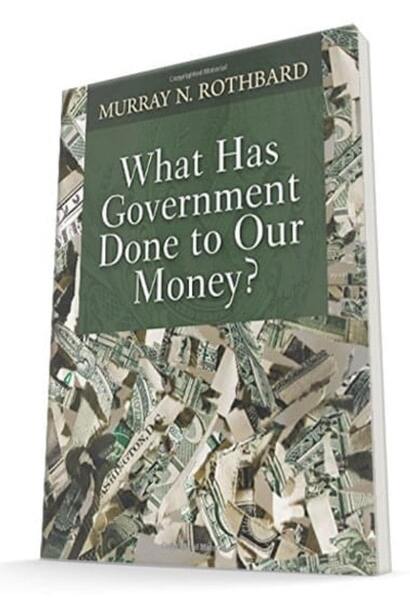
What Has Government Done to Our Money, by Murray Rothbard, is widely considered one of the most influential books on sound money in the modern age.
“Rothbard boils down the Austrian theory to its essentials. The book also made huge theoretical advances. Rothbard was the first to prove that the government, and only the government, can destroy money on a mass scale, and he showed exactly how they go about this dirty deed. But just as importantly, it is beautifully written. He tells a thrilling story because he loves the subject so much.
Rothbard shows precisely how banks create money out of thin air and how the central bank, backed by government power, allows them to get away with it. He shows how exchange rates and interest rates would work in a truly free market.”
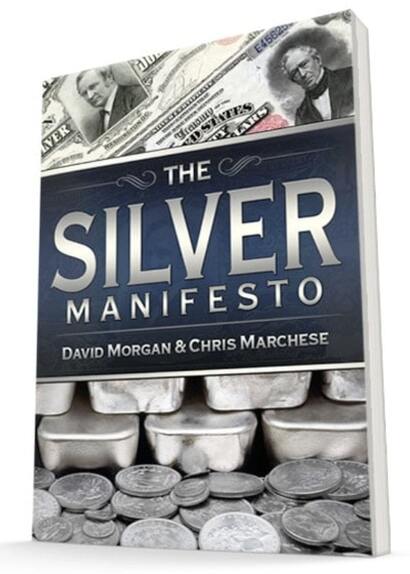
Silver Manifesto, by David Morgan and Chris Marchese, is a treatise on a very underappreciated asset class, notably silver.
“During a time when the global economy is in turmoil and more importantly all the major currencies, silver (and gold) are the ultimate safe havens although most in the Western world fail to realize this.
Even most Americans don’t know the U.S. was founded on a silver standard. A fiat monetary system is unviable and led to over 60 instances of hyperinflation in the 20th century.
This treatise covers all aspects of silver, including a monetary history, both worldwide and in the United States. The fundamentals of silver (supply and demand) are examined in detail, including the fact silver is the best conductor of heat and electricity, making it vital to our civilization, especially in technology. There is a high probability that precious metals will once again play an important role in monetary systems around the world.”
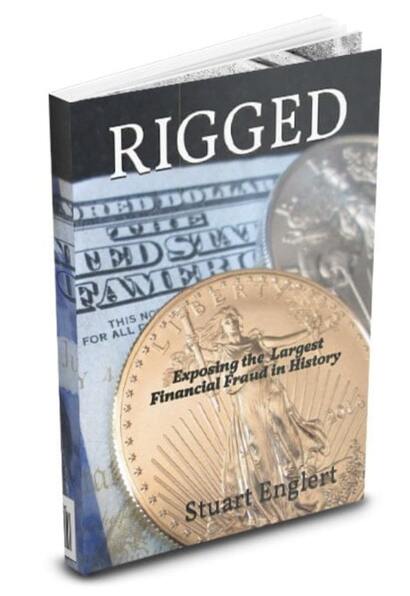
Rigged: Exposing the Largest Financial Fraud in History, by Stuart Englert, provides key insights into market manipulation, collusion, and dollar deception on a grand scale.
“The largest financial fraud in history is not the colossal accounting crimes of Enron, Bernie Madoff’s record-setting Ponzi scheme, or the infamous Libor scandal, where some of the world’s largest banks profited by manipulating interest rates.
The biggest fraud in history is a covert financial scheme orchestrated by the U.S. government and its banking accomplices. For over a century, these entities have used coercion, deception, and market manipulation to perpetuate the myth that the U.S. dollar is as good as gold and silver.”
Joshua D. Glawson is Content Manager for Money Metals Exchange and is writer on such topics as politics, economics, philosophy, finance, and personal development. He has a Bachelor’s in Political Science from the University of California Irvine.
(Luis Cornelio, Headline USA) Somebody should do a wellness check on Tim Miller, the insufferable Never-Trump ringleader, who couldn’t stomach a Democrat senator speaking fondly of President Donald Trump.
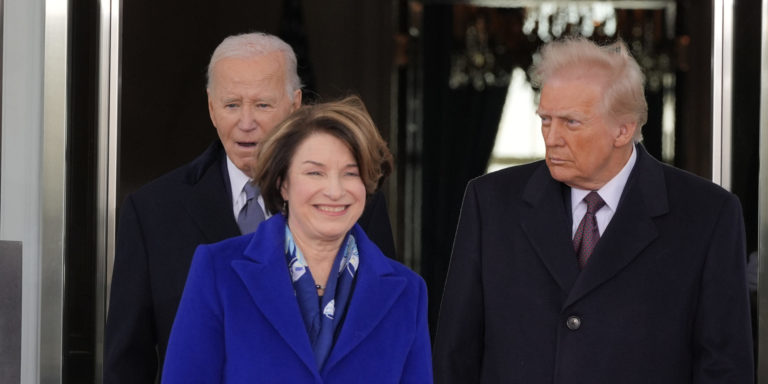
Miller—a podcast host, MSNBC mouthpiece and former “Republican” operative—threw a hissy fit after Sen. Amy Klobuchar, D-Minn., had nothing but kind words to describe her encounter with Trump.
Klobuchar joined Trump and former President Joe Biden for a ride in The Beast from the White House to the U.S. Capitol for Monday’s inauguration. “I bet you wish you were in there,” Klobuchar reminisced in an interview with MSNBC.
Miller, visibly outraged, barked at Klobuchar on Tuesday’s episode of The Bulwark podcast, which he co-hosts.
“You bet I wish I was in the car with Donald Trump?” Miller bemoaned, mocking Klobuchar’s comments about the presidential ride.
“Your options in this situation are stern, silent, respect for the institution and your duties—that’s one option; or protest or speaking to his face and say, ‘You are not going to do this,’ you know to whatever group you harangue him about,” Miller pontificated.
“Those are the options, not like, ‘Oh, yeah. It’s nice. Wasn’t it cool? I got to be in the limo during the transition.’ No!” Miller added, visibly aggravated.
Later in the podcast, Miller suggested he wanted to see Klobuchar physically attack Trump.
“Where is the Amy Klobuchar that threw a comb at a staffer I guess is my question,” Miller asked. “That’s the Amy Klobuchar I wanted to see in the limousine, not the ‘Oh, let’s make nice with Donald Trump and pretend like he might invite me back to the Oval Office, we’re going to be able to do business together.’”
“F**k that!” Miller concluded.
Miller sure knows a thing or two about how to rebuke Trump—he’s made a whole career out of bashing MAGA.
Miller is a former spokesperson for the Mitt Romney-led Republican National Committee and author of the anti-Trump manifesto, Why We Did It: A Travelogue from the Republican Road to Hell.
He frequently appears regularly on the struggling MSNBC and has a social media presence where he does nothing but rant about—surprise—Trump.
(Luis Cornelio, Headline USA) Are the fake news media kicking the bucket? The latest layoffs on CNN and NBC News suggest this is exactly what’s happening.
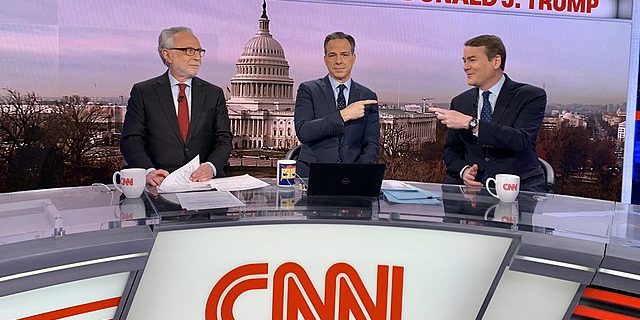
CNN plans to fire hundreds of employees on Thursday to lower costs amid tanking viewership, CNBC reported Wednesday.
The shocking layoffs come less than a week after CNN settled a multimillion-dollar defamation lawsuit filed by U.S. veteran Zachary Young. Young filed the lawsuit after CNN falsely accused him of unethically profiting from Afghanistan evacuations.
CNN sources claim the layoffs are part of the network’s restructuring to focus on global digital audiences.
While some of the high-profile anchors may not be affected by the layoffs, they could be ordered to relocate to Atlanta, Georgia to lower costs. CNN currently broadcasts from Manhattan and D.C.
These cost-saving measures followed CNN hiding some news articles behind a laughable $3.99 monthly paywall. It is not immediately clear whether the move backfired, as more Americans turn to independent media or podcasts for news.
Not to be outdone by CNN, NBC News is preparing to terminate at least 50 employees, CNBC reported.
This marks the second time in less than a year that NBC News has undergone mass firings, getting rid of 50 to 100 jobs in January 2024. In 2023, the network also fired 75 employees.
CNN’s latest layoffs follow several others, including a three percent (100 employees) reduction in July 2024. Less than two years earlier, the network had cut hundreds of jobs.
Print media outlets are also laying off workers. The Washington Post and the Associated Press—infamously known for their leftist bias—are reducing their workforce by four and eight percent, respectively.
These developments follow President Donald Trump’s wise decision to snub legacy media during his 2024 campaign, instead opting for popular podcasts hosted by personalities like Joe Rogan, Theo Von and Logan Paul.
(Luis Cornelio, Headline USA) The Jan. 6 hostages recently released by President Donald Trump’s pardons may once again be victimized—this time by a radical leftist and Soros-funded prosecutor.
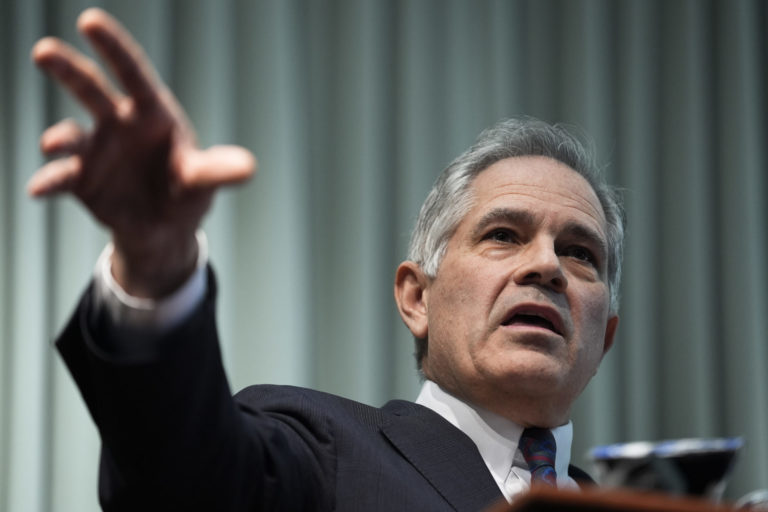
Philadelphia District Attorney Larry Krasner, a woke Democrat, suggested in a Wednesday interview with CNN that he might pursue state charges against his constituents who participated in the Jan. 6 protests.
While presidential pardons exonerate federal charges, they do not extend to state offices. Despite this, Krasner’s threats are likely to violate the protesters’ protections against double jeopardy.
Many may recall how a New York judge dismissed former Manhattan District Attorney Cyrus Vance’s charges against Paul Manafort right after Trump had pardoned him.
Krasner seemed undeterred by these major obstacles, telling CNN, “You can have a state prosecution for conduct that was not fully encompassed in the federal prosecution.”
I remember the Philly Riots of 2020
Over 2,000 rioters were arrested and 95% of those cases were dropped by Larry Krasner by 2021
CNN’s characterization of Krasner’s statements implies the District Attorney’s Office may even stretch the law to target some of the released Jan. 6 defendants. Their alleged offenses occurred in D.C., more than a hundred miles from Krasner’s jurisdiction.
He claimed Philadelphia prosecutors, rather than prioritize local violent crime, could use statutes criminalizing the use of phones or computers to break the law. Krasner’s prosecutors could also rely on other laws concerning state elections and other conspiracy statutes.
Dripping with self-righteousness, Krasner chastised Republicans and even took a jab at Trump, his newly sworn-in commander-in-chief.
“Those of us who actually believe in the rule of law, and actually believe in the law, and actually believe in order — in other words, those of us who are not MAGA — intend to preserve the values, traditions, laws and Constitution of the United States. And that means accountability for the co-conspirators of the 34-time felon president,” Krasner pontificated.
Krasner’s disturbing threats came less than 24 hours after Trump acted on his campaign promise to issue sweeping pardons for the 1,500 individuals who had been subjected to the Biden-Harris administration’s aggressive prosecution for the events of Jan. 6.
🚨 #BREAKING: President Trump has just signed a pardon for 1,500 J6 political prisoners
Several released Jan. 6 defendants shared emotional videos and photos on social media after their release from federal prisons. Many reunited with loved ones who had waited outside in the freezing cold.
Promises Made, Promises Kept. J6 Hostages released after being pardoned. This is such an amazing sight to see! pic.twitter.com/Ox35KyeOGI
(Kenneth Schrupp, The Center Square) The California beachside city of Huntington Beach continued its confrontation with the state with its city council adopting a resolution declaring the city “a non-sanctuary city for illegal immigration for the prevention of crime.”
Huntington Beach has an ongoing lawsuit against the state’s sanctuary state law that limits cooperation with federal immigration authorities, citing a high reoffending rate by illegal aliens with active detainers from federal Immigration and Customs Enforcement officials that are supposed to result in transfers and deportation.
“The intent of this Resolution is to deliberately sidestep the Governor’s efforts to subvert the good work of federal immigration authorities and to announce the City’s cooperation with the federal government, the Trump Administration, and Border Czar Tom Homan’s work,” the city said in a statement. “City Officials have a duty to follow all laws, including federal immigration laws, and neither the Governor nor the State will interfere with that.”
The city has a mixed record in its confrontations with the state on issues ranging from housing to voter identification – a record that highlights the ongoing tension in constitutional federalism’s hierarchy that puts federal law over state law, and state law over local law, but still maintains some separate powers at each level of government.
In May 2024, a judge ruled in favor of the state in a case against the city’s insufficient zoning of new homes, finding it in violation of state housing laws that require it to zone – but not necessarily construct – 13,368 more high-density units.
The city emerged victorious last year against the state in a battle over its newly adopted voter ID laws for city elections, with the court finding the law was within the power of charter cities such as Huntington Beach to approve, and that the case was not yet ripe for further adjudication.
Now, with a new state law that went into effect Jan. 1 banning municipalities – explicitly including charter cities, which have historically enjoyed greater independence in local governance – from defying state mandates, California Attorney General Rob Bonta and Secretary of State Shirley Weber have filed an appeal that is likely to result in a more final, complete ruling on the matter.
(Ken Silva, Headline USA) Headline USA has obtained apparent footage of the aftermath of a shooting Wednesday at Antioch High School in the Nashville area, where a 17-year-old black student named Solomon Henderson allegedly opened fire—killing a female student and wounding one other before killing himself.
The footage was provided by online researcher “Bx,” who has provided Headline USA with reliable information in the past. Bx also provided this publication with Henderson’s “manifesto,” which indicates that he was linked to Satanic cults, as well as other high school shooters interested in the same.
NEW: Footage reveals the aftermath of Wednesday's high school shooting, which appears to be conducted by a 17-year-old black teenager who was interested in Satanic accelerationism. The footage is mostly a black screen, due to the camera being on the floor. Commotion can be heard… pic.twitter.com/8pvmkfkTna
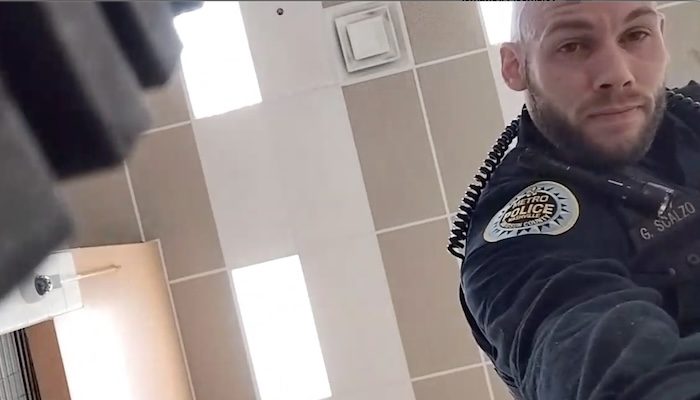
The footage is mostly a black screen, due to the camera being on the floor. Commotion can be heard in the background.
“He tried to shoot me, too,” a female student can be heard saying.
“He shot another shot … This is the same fucking kid who brought a box cutter,” a male is later heard.
At the very end of the video, a Nashville Metro Police Officer picks up the phone before turning it off.
Bx said she believes Wednesday’s shooting stemmed from the latest mutation of a disturbing online trend known as “accelerationism”—the ideology that seeks to topple Western institutions to usher in a “new Dark Age.” Bx released a video on the subject last week.
Part 5 – Total Human Death
Now that you're aware that Satanic accelerationists are running amok online and the entire planet is on fire, it's time to take a closer look at the history of the Order of Nine Angles.
“A new breed of Satanic accelerationists dominates the online terrorism landscape,” she said, explaining that a new wave of Satanic cults aims to lure in mal-adjusted teenagers and groom them to commit acts of terrorism, pedophilia and other crimes.
That certainly appears to be the case with Henderson, whose manifesto repeatedly references accelerationism.
Additionally, Henderson apparently operated the Twitter/X account @GroidCell, which is linked to the Satanic 764 pedophile network. The shooter’s manifesto also claimed that he had connections with other school shooters, including 15-year-old Natalie Rupnow, who opened fire during a study hall last month.
“Lately I’ve been inspired by other young attackers around my age such as Colt Gray, Saintress Samantha Rupnow, Arda Kucukyetim, Morad Heideri, and Dylan Butler,” the shooter’s manifesto states. “I have connections with some of them only loosely via online messaging platforms.”
Henderson’s claim about Rupnow appears to be accurate, as Rupnow’s Twitter/X account did follow Henderson’s @GroidCell account—a fact uncovered last month by Bx.
Bx further noted that some of Henderson’s manifesto contains phrases lifted from a terroristic manual entitled “Hard Reset” that’s available on “Terrorgram”—a series of decentralized Telegram chat groups that promote accelerationism.
The rest of the manifesto is laden with racist and antisemitic content. Henderson said he was inspired by a slew of online political personalities—from right-wing personalities such as Candace Owens, Ethan Ralph and Nick Fuentes, to left streamers such as Destiny and Hasan Piker.
the alleged manifesto of the Nashville shooter includes an actual FAQ.
“Candace Owens has influenced me above all each time she spoke I was stunned by her insights and her own views helped push me further and further into the belief of violence over the Jewish question,” Henderson said.
Bx cautioned that the inclusion of mainstream political pundits was likely intended to sow public discord in the aftermath of the shooting. Liberals will likely blame people like Owens and Fuentes instead of focusing on the underlying issue: Accelerationists are grooming teenagers to commit acts of terrorism.
Additionally, Henderson’s manifesto references the Satanic cult Order of Nine Angles, as well as its offshoot, 764—if only to make fun of those groups. He said he’s not an O9A member because “it only scares your 1980s boomer Christians.”
Meanwhile, Police Chief John Drake said the shooter “confronted” a 16-year-old female student in the cafeteria and opened fire, killing her. Drake said police are looking into a motive and whether the students who were shot were targeted.
Satanism’s Threat to Western Society
According to the Justice Department, Satanic accelerationist groups such as the Order of the Nine Angles, 764 and their various offshoots have a terroristic goal: They want to corrupt the youth, which will accelerate the collapse of Western society.
In recent months, the DOJ has begun to treat Satanic accelerationist groups as gangs, warning the public of the threat they pose to teenagers in particular. Last month, after 764 member Richard “Rabid” Densmore was sentenced Thursday to 30 years imprisonment for sexually exploiting a child, the DOJ warned the public that “this case represents a new and depraved threat against our kids.”
“Members of 764 gain notoriety by systematically targeting, grooming, and extorting victims through online social media platforms. Members demand that victims engage in and share media of self-mutilation, sexual acts, harm to animals, acts of random violence, suicide, and murder, all for the purpose of accelerating chaos and disrupting society and the world order,” the DOJ said last month in a press release.
Before that, Headline USA revealed that the Order of Nine Angles was likely behind the arson of three African American Baptist churches in 2019.
Along with being known for Satanism, O9A has been in the news in recent years due to its links to right-wing extremism. O9A fomented several neo-Nazi terrorist plots over the last several years, an O9A-linked neo-Nazi participated in the 2017 Charlottesville Unite the Right rally, and one of the network’s leaders, Joshua Caleb Sutter—the one who started the abovementioned Tempel ov Blood—was revealed to be a longtime FBI informant.
According to the DOJ, the 764 group was an offshoot of O9A. The 764 cult “represents a radical shift in the group to specifically target children and use [child porn] and videos depicting animal cruelty, self-harm, and other acts of violence to accelerate chaos in society,” the DOJ said last year.
The Associated Press contributed to this report.
Ken Silva is a staff writer at Headline USA. Follow him at x.com/jd_cashless.