Trump Slashes 10% of CDC Workforce

(Headline USA) Nearly 1,300 probationary employees at the Centers for Disease Control and Prevention — roughly one-tenth of the agency’s workforce — are being forced out under the Trump administration’s move to downsize the federal bureaucracy.

The Atlanta-based agency’s leadership was notified of the decision Friday morning. The verbal notice came from the U.S. Department of Health and Human Services in a meeting with CDC leaders, according to a federal official who was at the meeting. The official was not authorized to discuss it and spoke to The Associated Press on condition of anonymity.

The affected employees are supposed to receive four weeks paid administrative leave, the official said, adding that it wasn’t clear when individual workers would receive notice.

HHS officials did not immediately respond to an emailed request for comment.

With a $9.2 billion core budget, the agency had about 13,000 employees before the cuts, including more than 2,000 staff work in other countries.

The staff is heavy with scientists — 60% have master’s degrees or doctorates. Most of the workforce does not belong to a union.

It’s not only new employees who are subject to probation. Probationary periods also are applied to veteran staffers who, for example, were recently promoted to a new job in management.

The cuts at the CDC are part of a Trump administration Department of Government Efficiency initiative to cut some $2 trillion from the federal government—though DOGE boss Elon Musk has admitted that’s unlikely.

“I think we’ll try for $2 trillion. I think that’s like the best-case outcome,” Musk said last month. “But I do think that you kind of have to have some overage. I think if we try for $2 trillion, we’ve got a good shot at getting $1 [trillion].”

Adapted from reporting by the Associated Press

Notorious Sanctuary City Sues to Stop ICE from Enforcing Federal Law in Schools

(Headline USA) Denver Public Schools became the first U.S. school district Wednesday to sue the Trump administration challenging its policy allowing ICE immigration agents in schools.

Colorado’s largest public school district argued in the federal lawsuit that the policy has forced schools to divert vital educational resources and caused attendance to plummet.

“DPS is hindered in fulfilling its mission of providing education and life services to the students who are refraining from attending DPS schools for fear of immigration enforcement actions occurring on DPS school grounds,” the lawsuit states.

The federal lawsuit against the Department of Homeland Security and Homeland Security Secretary Kristi Noem says the Trump administration hasn’t provided “good reason” for rescinding the rules nor adequately considered or addressed the fallout.

Last month, President Donald Trump lifted longtime rules restricting immigration enforcement near sensitive locations, including schools. The announcement came as the new president seeks to make good on campaign promises to carry out mass deportations.

“Denver is standing up for its children and families and protecting the right of all children, regardless of their immigration status, to attend public schools,” Elora Mukherjee, director of the Immigrants’ Rights Clinic at Columbia Law School, said in an email.

Denver Public Schools serve more than 90,000 students—about 4,000 of which are immigrants, according to the lawsuit, which cites 2023-2024 school year numbers.

The city of Denver has seen an increase in migrants recently. Since 2023, about 43,000 people have arrived in the city from the U.S. southern border, according to the lawsuit.

“Parents across Denver enroll their children in public schools believing that while at school, their children will be educated and enriched without fear the government will enforce immigration laws on those premises,” the lawsuit said.

The school district says it has had to devote a lot of time and resources to adding policies that keep students safe and training faculty and staff on how to respond to people claiming they are conducting immigration enforcement at schools.

Denver Public Schools also want to see DHS publish the directive publicly, saying that not being able to view the change in policy has impeded their ability to prepare for it, according to the lawsuit.

Adapted from reporting by the Associated Press

2 Guns Purchased by Trans Nashville Shooter Remain Unaccounted For

(Ken Silva, Headline USA) The Tennessee Star, which last year published Nashville mass shooter Audrey Hale’s “manifesto,” continues to publish stunning revelations about the attack nearly two years after the fact.

Earlier this week, the Star revealed that the Metro Nashville Police Department detective who initially led the investigation quit the force and left the state in late 2023. The Star also revealed that two of Hale’s guns remain unaccounted for—possibly because they were secretly carted away by the FBI.

Hale, a 28-year-old woman who was identifying as a man at the time of the mass shooting, gunned down three children and three adults at a Christian school before being killed by law enforcement on March 27, 2023.

According to the Star, Hale purchased seven firearms. She used three of the guns during the attack, including two 9mm handguns and one AR-15 rifle—all of which were recovered from her body.

Two other Hale firearms were reportedly recovered from her home, according to an inventory of evidence published by The Star last year.

However, “This means that two weapons remain unaccounted for by the police department,” the Star noted.

“The Star asked MNPD on Monday for the exact model numbers of the seven firearms owned by Hale, whether she was in possession of these items at the time of her death, and whether Hale named or added art to the other firearms, but MNPD Spokesman Don Aaron told The Star the department would not comment,” the news outlet noted.

The missing guns may be with the FBI.

According to the Star, the police captain who led the department’s search of the killer’s residence ordered officers not to complete the required evidence documentation form—what’s known as a “110 form.”

Citing an unnamed source, the Star reported that “these items not captured by the required form 110s were carted away by the FBI, and that no chain of custody exists for the digital evidence associated with these items obtained during the search of Hale’s home.”

Ken Silva is the editor of Headline USA. Follow him at x.com/jd_cashless.

Ex-Arkansas Gov., Clinton Associate Indicted after Whitewater Scandal Dies at 81

(Headline USA) Jim Guy Tucker, who became Arkansas governor when Bill Clinton was elected president but was later forced from office after being convicted during the Whitewater investigation, has died. He was 81.

Anna Ashton, Tucker’s daughter, said the former governor died Thursday in Little Rock from complications from ulcerative colitis.

“Because he had a public life, there will be a lot of focus on the details of that,” Ashton said. “In addition to that, he was a really wonderful father, an adventurous man, a fun person with a lot of friends who loved music, the outdoors. I couldn’t have asked for a better dad.”

Tucker ascended from lieutenant governor to succeed Clinton as governor in 1992, then won election to a four-year term in 1994 despite claims by his opponent that Tucker would soon be indicted for fraud.

Tucker didn’t help his cause by refusing to release his tax returns, saying they were complicated and subject to misinterpretation, but still beat Republican Sheffield Nelson easily.

A grand jury charged Tucker five months after he was sworn in for a full term, and a jury convicted him in 1996 of lying about how he had used a government-backed loan. He pleaded guilty in 1998 to a tax conspiracy count, then spent eight years fighting to withdraw his plea, claiming prosecutors used the wrong section of the law when charging him.

He had no connection to Clinton’s north Arkansas land development that gave the Whitewater investigation its name. Whitewater prosecutor Kenneth Starr ensnared Tucker after winning court permission to broaden his probe into several Arkansas-based small businesses.

Tucker eventually was convicted of misusing a $150,000 government-backed loan.

Instead of using the money to paint a water tower, Tucker used it toward the purchase of a water and sewer utility.

The Whitewater investigation ended in 2006 when the U.S. Supreme Court refused to take up Tucker’s tax conspiracy conviction. He long lamented he would never have been pursued by prosecutors if not for Clinton, and when the case finally ended, deputy Whitewater prosecutor W. Hickman Ewing said, “It’s probably true.”

After his initial Whitewater case, Tucker announced he would step down July 15, 1996, but as the day approached laid claim to a new trial, saying a juror in his case had married into the family of a man whose clemency Tucker had previously rejected.

Minutes before the designated hour of his resignation with then-Lt. Gov. Mike Huckabee preparing to be sworn in as governor, Tucker reneged and withdrew his resignation.

The ensuing mayhem that day created confusion over who was running the state. Tucker relented later that evening after facing threats of impeachment from Huckabee and a lawsuit from the attorney general. Huckabee, now President Donald Trump’s nominee to be ambassador to Israel, went on to serve 10½ years as governor.

“I clearly made a terrible mistake in delaying the resignation I had announced,” Tucker said in an interview 10 years after leaving office. “This is not an anniversary that I like to reflect that much on.”

Clinton on Thursday said Tucker’s public service “made Arkansas better, stronger, and fairer.”

“He accomplished a great deal, and would have achieved even more had his tenure not been unjustly cut short by a partisan witch hunt,” the former president said in a statement.

Arkansas Gov. Sarah Huckabee Sanders, Mike Huckabee’s daughter, praised Tucker as someone who “was dedicated to public service and providing for the most vulnerable Arkansans.”

Tucker’s political career started in 1970 when he was elected prosecuting attorney for an area that includes Little Rock. He later served two terms as the state’s attorney general before winning a seat in Congress in 1976.

“Jim Guy was smart as a whip and he was also tough,” said former Gov. Mike Beebe, who served in the state Senate when Tucker was governor and lieutenant governor. “He put forth all of his effort to make our state a better place and he stood up for what he believed was right.”

After losing a bid for governor in 1982, Tucker devoted time to his law practice and a growing cable television empire. He initially announced a run for governor in 1990 but switched to the lieutenant governor’s race when Clinton said he would seek another term. Tucker won, and after Clinton’s election as president became governor on Dec. 12, 1992.

Tucker’s health problems began in 1983 when he was diagnosed with ulcerative colitis. He also had sclerosing cholangitis, a chronic and sometimes fatal disorder of the liver.

Tucker remained active in recent years and was among the mourners at the funeral for former Arkansas governor and senator David Pryor last year. He also appeared at the governor’s mansion in 2020 to mark its 70th anniversary.

After Tucker’s initial Whitewater conviction, his lawyers argued a prison term would be akin to a death sentence, and a federal judge agreed. The judge temporarily suspended Tucker’s home detention in late 1996 so he could receive a liver transplant at the Mayo Clinic in Minnesota.

Tucker, born June 14, 1943, grew up in Arkansas before attending Harvard University. He also served in the U.S. Marine Corps Reserve and was a civilian war correspondent in Vietnam.

Tucker is survived by his wife, Betty; stepson Lance Alworth Jr.; stepdaughter Kelly Driscoll; and his daughters, Anna Ashton and Sarah Tucker.

Adapted from reporting by the Associated Press

Migrants Avail Themselves of Opportunity for Fresh Start in Mexico

(Headline USA) When Angelica Delgado took a one-way flight to Mexico as she fled Cuba in December, she was set on seeking asylum in the United States.

But with the Biden administration’s open-border policy coming to a halt following the 2024 re-election of President Donald Trump, the 23-year-old recalibrated her plans, opting to stay in Mexico rather than seek U.S. visa status through legitimate means.

“Like almost all Cubans, our objective was to go to the United States,” she said. “It wasn’t in our plans to stay, but now we have to face reality.”

Delgado is among a growing number of migrants from across the world to ditch their ambitions of taking up undocumented status in the U.S., with some who entered illegally now opting to self-deport rather than .

Migrants trying to apply for asylum in Mexico in January more than tripled compared to the monthly average from the previous year, according to an international official with knowledge of the numbers who was not authorized to discuss them publicly. Mexico’s refugee agency has not yet published figures for January.

“All of these policies Trump is pushing are leading more people to seek international protection in Mexico,” said Andrés Ramírez, former director of the Mexican Commission for Refugee Aid, which processes asylum cases.

Delgado was among hundreds of migrants from Cuba, Venezuela, Haiti, Afghanistan and other countries gathering outside the refugee agency in Mexico City after Trump unleashed policies to resecure the border.

The Associated Press spoke to around a half-dozen people who had asylum appointments in the U.S. through the Biden-era app, CBP One, that Trump canceled on Inauguration Day.

Many more said they now intended to seek asylum in Mexico, citing increasingly harsh restrictions in recent years in the U.S.

“Now, it’s the Mexican dream,” said a Mexican man helping Haitian friends try to get an appointment this month to apply for asylum in Mexico.

“Crossing illegally isn’t an option for us. We’d rather stay here” in Mexico, Delgado said, adding that if they crossed illegally into the U.S. and were caught “they’ll deport us and they’ll send us back to Cuba.”

Adapted from reporting by the Associated Press

Trump’s Teasing about 3rd Term May Not Be Serious, but It Is Strategic

(Headline USA) President Donald Trump has just started his second term, his last one permitted under the U.S. Constitution. But he’s already started making quips about serving a third one.

“Am I allowed to run again?” Trump joked during the House Republican retreat in Florida last month.

Whether teasing or taunting, it seems to be part of a pattern. Just a week after he won election last fall, Trump suggested in a meeting with House Republicans that he might want to stick around after his second term was over.

“I suspect I won’t be running again unless you say, ‘He’s so good we got to figure something else out,’” Trump said to laughs from the lawmakers.

Over the years, Trump and his supporters have often joked about him serving more than his two constitutionally permitted terms—an idea that is anathema to those afflicted with Trump Derangement Syndrome who have been desperate to drive the twice-impeached convicted felon out of office.

Joking aside, Trump has repeatedly said that this will be his last term. Trying for another also would flatly violate the Constitution.

“No person shall be elected to the office of the President more than twice,” begins the 22nd Amendment, adopted after President Franklin Delano Roosevelt was elected four times in a row. He was last elected in 1944.

Even assuming Trump would attempt another run, a combination of election officials and courts would virtually ensure that he stayed off the ballot.

State officials have long kept would-be candidates off presidential ballots if they didn’t meet the basic constitutional criteria, such as being a natural-born U.S. citizen or being at least 35 years old. They would do the same with someone clearly violating the limit on presidential terms.

A version of this unfolded in 2023, when blue-state officials and left-wing activists colluded to keep Trump off the ballot in several states by claiming he violated the 14th Amendment’s so-called Insurrection Clause.

The U.S. Supreme Court reversed those decisions, noting among other things that Trump had never been convicted of insurrection and that meddling in party primaries would have serious First Amendment implications.

While the issue largely hinged on how the courts legally interpreted “insurrection” and regarded Trump’s role in the Jan. 6, 2021, uprising at the U.S. Capitol, no such ambiguity would exist as to whether Trump met the existing eligibility requirements.

Derek Muller, a professor at Notre Dame Law School, said he would expect far more states to deny Trump’s placement on the ballot under those circumstances.

“You would not have the factual disputes, so it would be much wider,” Muller said. “I’m not persuaded the Supreme Court is going to roll over.”

Some Trump supporters argue the language is meant to apply only to two consecutive terms because Roosevelt’s terms were consecutive.

Others contend that because the ban is just on being “elected” more than twice, Trump could run as the next president’s vice president and, if the ticket won, could simply replace that person if he or she resigns.

But in both cases, the 22nd Amendment would likely still need to be modified.

At least one lawmaker in Congress, Rep. Andy Ogles, R-Tenn., has been bold enough to propose a constitutional amendment that would allow Trump to seek another term. However, it has no chance of going anywhere, given the high bar for amending the Constitution.

Trump has a long history of taunting his critics as a way of ridiculing the bogus left-wing narrative that he constitutes an existential “threat to democracy.”

Nonetheless, there could be a strategic reason for his keeping the third-term discussion alive as a way to disarm political adversaries who might attempt to exploit his term-limited “lame duck” status to undermine his ambitious four-year agenda.

“He’s governing like he’s a lame duck right now, with nothing to lose,” Muller said.

Or it might simply be a way to distract taillight chasing media, allowing potential successors—including Vice President JD Vance—the extra breathing room needed to make their case for succeeding him, free from the long shadow of his transformative legacy.

Adapted from reporting by the Associated Press

Despite Trump’s Trolling, Canada Annexation Would Wreak Havoc on U.S. Politics

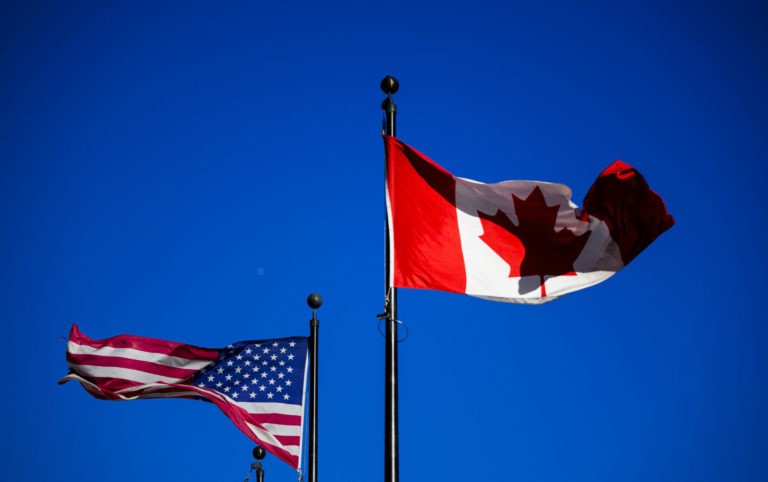
(Headline USA) President Donald Trump has repeatedly said Canada should be the 51st U.S. state as he proposes erasing the 5,525-mile-long border that separates the countries and alleviating the need for tariffs that he has leveraged to force the northern neighbor into maintaining tighter border security.

“If people wanted to play the game right, it would be 100% certain that they’d become a state,” Trump said recently addressing Canadian citizens’ desire to pay lower taxes and benefit from better healthcare.

Canadain Prime Minister Justin Trudeau, who initially scoffed at the proposal, recently acknowledged behind closed doors that Trump’s sustained annexation call “is a real thing.”

But is it? Really?

The U.S. Constitution’s Admissions Clause, Article IV, Section 3, states: “New States may be admitted by the Congress into this Union; but no new State shall be formed or erected within the Jurisdiction of any other State; nor any State be formed by the Junction of two or more States, or Parts of States, without the Consent of the Legislatures of the States concerned as well as of the Congress.”

While it takes only a House majority, Senate filibuster rules require a minimum of 60 votes in the 100-member chamber to bring a bill to the floor—an insurmountable threshold for all kinds of key legislation.

There are currently 53 Republican senators, although several have defied Trump on matters, including his Cabinet picks, that they deem too outlandish.

The proposal would seem to have its share of supporters.

Sen. Lindsey Graham, R-S.C., an occasional Trump ally, joked on X when all 50 states certified Trump’s Electoral College victory last month, “They skipped Canada. We’ll fix that next time!”

Still, no major legislation is advancing that would extend an invitation to statehood to America’s northern neighbor.

There have been multiple past pathways to statehood—from the absorption of the 13 colonies under the Articles of Confederation, to Congress formally agreeing to Texass request to be annexed as the 28th state, but only after rejecting previous overtures from the then-republic.

However, most states were added after Congress accepted a petition from some territorial legislative body, which could include legislatures that Congress itself suggested forming as part of the process.

In practice, therefore, Canada would probably have to have a referendum to gauge voters’ interests in joining the U.S. before more detailed aspects of the process could begin—and the chances of passage don’t seem high.

While not addressing Canada as the 51st state directly, polling last year from Gallup and the Pew Research Center showed that Americans overwhelmingly had a positive view of Canada. Yet, while Canadians viewed the U.S. more positively than negatively, their view may be a little more muted.

Moreover, Trump’s threats of tariffs have left Canadians feeling betrayed, and sports fans in Canada have begun voicing their displeasure by booing the U.S. national anthem at NBA and NHL games.

Of course, public opinion wouldn’t matter if the U.S. opted to invade Canada and annex it by force. Not even Trump is suggesting that, though he’s refused to rule out U.S. military force to seize back control of the Panama Canal.

Either way, despite public sentiment having turned against the soon-to-resign Trudeau and his far-left administration, there is no guarantee that Canadians would back Republican policies, meaning the move would come with considerable risk.

If Canada were to join the U.S., its population of 41.6 million would make it the largest state, outpacing California’s 39.4 million residents. Canada would get two senators but also 55 House seats based on the average congressional district population following the 2020 U.S. census, which was 761,169 individuals.

That would make Canada the presidential race’s richest prize, with 57 Electoral College delegates—exceeding California’s 54.

The Permanent Apportionment Act of 1929, meanwhile, caps the number of House seats at 435, meaning that other state delegations would shrink to make room for the new Canadian members of the House—and, by extension, its delegates to the Electoral College.

Suddenly, make-or-break swing states like Pennsylvania, Michigan and Wisconsin may not look so important if there are tens of millions of Canucks waiting to be wooed with a presidential election on the line.

Adapted from reporting by the Associated Press

NATO Globalists Flip Out over Trump’s Call w/ Putin after Zelenskyy’s Unhinged Demands

(Headline USA) Several NATO allies demanded on Thursday that Ukraine and Europe not be cut out of any peace negotiations—despite an alarming interview recently in which Ukrainian President Volodymyr Zelenskyy appeared to precondition any such negotiation on his country’s access to nuclear weapons.

“There can be no negotiation about Ukraine without Ukraine. And Ukraine’s voice must be at the heart of any talks,” U.K. Defence Secretary John Healey told reporters at NATO headquarters, as the organization’s 32 defense ministers met for talks on Ukraine.

The NATO ultimatum came after President Donald Trump on Wednesday revealed that he had spoken at length with Russian President Vladimir Putin, who expressed his own willingness to go to the negotiation table.

After talks with both Putin and Zelenskyy, Trump said he would “probably” meet in person with the Russian leader in the near term, possibly in Saudi Arabia.

Trump also insisted that Kyiv should not be allowed to join NATO—which would obligate NATO allies to engage in an active military conflict with the nuclear power—and said it was up to Europe to protect itself and Ukraine from whatever Russia might do next.

During the Biden administration, the United States funneled hundreds of billions of dollars into Ukraine’s defense against the Russian military, although much of the money remains unaccounted for.

The war-ravaged country has not outlined any specific benchmarks or terms that would provide for an exit strategy. The conflict has been ongoing since a 2014 color revolution ousted Ukraine’s Russia-friendly president, but it picked up steam in 2022, when Russia actively invaded a border region of the former Soviet satellite country that is considered to be culturally Russian.

Zelenskyy, who assumed the presidency of Ukraine in 2019 but has suspended democratic elections during wartime, told British TV host Piers Morgan that short of being allowed to enter the NATO alliance, only one other option was acceptable to him.

“Which support package, which missiles,” he asked. “Will we be given nuclear weapons?”

Nonetheless, European governments were left reeling at the prospect of face-to-face talks between the U.S. and Russia.

“For me, it’s clear … that Europe must be involved in the negotiations” said German Defense Minister Boris Pistorius. “And I think that’s very easy to understand [… particularly if Europe is] supposed to play a central—or the main—role in the peace order.”

Europe “will have to live directly” with the consequences, he added.

U.S. Defense Secretary Pete Hegseth rejected claims that the U.S. was throwing Ukraine under the bus through Trump’s efforts to achieve a peaceful resolution.

“There is no betrayal there,” Hegesth told reporters. “There is a recognition that the whole world and the United States is invested and interested in peace—a negotiated peace.”

The European Union’s foreign policy chief, Kaja Kallas, expressed surprise that Hegseth and Trump had listed what appeared to be concessions to Russia even before talks had begun in earnest.

“We shouldn’t take anything off the table before the negotiations have even started, because it plays to Russia’s court,” she said.

“Why are we giving them everything that they want even before the negotiations have been started?” she continued. “It’s appeasement. It has never worked.”

Hegseth warned that the war in Ukraine must “be a wakeup call” for NATO’s European allies to spend more on their own defense budgets.

While 23 of the 32 member–countries were forecast to have met the organization’s guideline of spending 2% of the country’s gross domestic product on their national defense budgets last year, nearly a third of them still do not.

Hegseth’s French counterpart, Sébastien Lecornu, claimed the wrangling over greater defense spending was “a false debate,” saying that governments and parliaments across Europe were already approving more weapons purchases and bigger military budgets while helping Ukraine stave off an invasion.

Lecornu warned that the future of NATO itself was now in question after the U.S.—by far NATO’s biggest and most powerful member—signaled that its security priorities lay elsewhere, including in Asia.

“To say that it’s the biggest and most robust alliance in history is true, historically speaking,” Lecornu said. “But the real question is, will that still be the case in 10 or 15 years?”

NATO Secretary–General Mark Rutte, who was chairing Thursday’s meeting, said that whatever agreement was struck between Russia and Ukraine, it was crucial that the “peace deal is enduring, that Putin knows that this is the end, that he can never again try to capture a piece of Ukraine.”

Touting Europe’s investment in Ukraine, Swedish Defense Minister Pål Jonson said European nations provided about 60% of the military support to Kyiv last year and must be involved, especially given U.S. demands that Europe take more responsibility for Ukraine’s security in the longer term.

His Estonian counterpart, Hanno Pevkur, maintained that the European Union has driven sanctions against Russia, has invested heavily in Ukraine’s defense, and will be asked to foot the bill for rebuilding the war-ravaged country.

“We have to be there. So there is no question about it. Otherwise this peace will not be long lasting,” Pevkur warned.

European sanctions against Russia have not always been consistent, with some nations—including Germany—continuing to rely on the country for their energy supply.

Western corporations—including BlackRock—have eagerly eyed Ukraine as a prize that will yield lucrative rebuilding contracts as part of a public–private partnership, similar to the nationbuilding that occurred in Iraq during the George W. Bush administration. Since the withdrawal of U.S. forces, the oil-rich country, which was once bitter enemies with neighboring Iran due to theological differences, has grown increasingly close to the U.S. adversary.

Adapted from reporting by the Associated Press

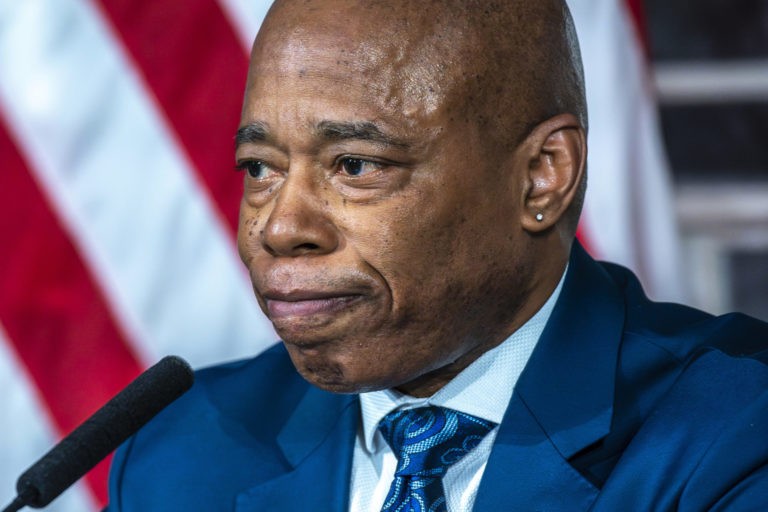
NY Prosecutors Quit in Rebellion of DOJ Order to Drop Eric Adams Case

(Headline USA) The top federal prosecutor in Manhattan resigned Thursday after refusing a Justice Department order to drop corruption charges against New York City Mayor Eric Adams. Two senior DOJ officials also quit after the department leadership in Washington moved to seize control of the case.

Danielle Sassoon, a Republican serving as interim U.S. attorney for the Southern District of New York, announced her resignation in an email to her staff. The move was confirmed by a spokesperson for the office. Adams’ case has yet to be dropped.

After Sassoon declined to dismiss the case, the department’s public integrity section in Washington was asked to take over, according to a person familiar with the matter. Two senior officials who oversee the unit, including the acting chief, resigned in response, according to the person, who spoke on the condition of anonymity to discuss personnel matters.

The exits came days after a high-ranking Justice Department official directed federal prosecutors in New York to end the case against Adams, a Democrat who was accused of accepting illegal campaign contributions and bribes of free or discounted travel from people who wanted to buy his influence. He has pleaded not guilty.

Acting Deputy Attorney General Emil Bove said in a memo Monday that the case should be dismissed so Adams could aid President Donald Trump’s immigration crackdown and campaign for reelection free from facing criminal charges. The primary is four months away and Adams has multiple challengers.

Bove had directed that be done as soon as “practicable,” but there have been no public statements or actions by the prosecution team. On Wednesday, Attorney General Pam Bondi said she would “look into” why the case had yet to be dismissed. As of Thursday afternoon, the charges remained in place.

In the email to her staff, Sassoon did not give a reason for her resignation. In the note, the contents of which were obtained by The Associated Press, she said she had just submitted her resignation to Bondi.

“As I told her, it has been my greatest honor to represent the United States and to pursue justice as a prosecutor in the Southern District of New York,” Sassoon wrote.

The Justice Department did not ask Sassoon to resign, according to a department official who spoke on condition of anonymity.

The department declined public comment on Sassoon’s exit. A message seeking comment was left for Adams’ attorney, Alex Spiro. A spokesperson for the mayor did not immediately respond to a request for comment.

The government’s decision to end the Adams case because of political considerations, rather than the strength or weakness of the evidence, alarmed some career prosecutors who said it was a departure from long-standing norms.

The directive from Bove, a former Trump personal lawyer, was all the more remarkable because Bove had been a longtime prosecutor and supervisor in the Southern District and because department leaders are historically reluctant to intervene in cases where charges have been brought — particularly in an office as prestigious as that U.S. attorney’s office.

Bove’s memo also steered clear of any legal basis for the dismissal despite decades of department tradition dictating that charging decisions are to be guided by facts, evidence and the law.

Sassoon, a former clerk for the late U.S. Supreme Court Justice Antonin Scalia, was not the prosecutor who brought the case against Adams last year. That was then-U.S. Attorney Damian Williams, who stepped down after Trump’s election victory in November.

Sassoon had only been tapped to serve as acting U.S. attorney on Jan. 21, the day after Trump took office.

Her role was intended to be temporary. Trump in November nominated Jay Clayton, the former chairman of the U.S. Securities and Exchange Commission, to the post, an appointment that must be confirmed by the Senate. That has not happened yet.

The Southern District of New York is among the largest and most prominent prosecutor’s offices in the U.S., with a long track record of tackling Wall Street malfeasance, political corruption and international terrorism.

It has a tradition of independence from Washington, something that has earned it the nickname “the sovereign district.”

During Trump’s first term, the office prosecuted both the president’s personal lawyer, Michael Cohen, and his strategic adviser, Steve Bannon, in separate cases. Cohen pleaded guilty to tax evasion and campaign finance charges. Trump ended the federal fraud case against Bannon by pardoning him, though nearly identical charges were then brought by state prosecutors.

This is the second Justice Department tussle in five years between Washington and New York officials to result in a dramatic leadership turnover.

In 2020, William Barr, who served as one of Trump’s attorneys general during his first term pushed out Geoffrey Berman, the U.S. attorney in Manhattan, in a surprise nighttime announcement. Berman initially refused to resign his position, creating a brief standoff with Barr, but did so after an assurance that his investigations into allies of Trump would not be disturbed.

Sassoon joined the U.S. attorney’s office in 2016. In 2023 she helped lead the fraud prosecution of Sam Bankman-Fried, founder of the cryptocurrency exchange FTX. More recently, she had served as the office’s co-chief of criminal appeals.

Adams was indicted in September on charges that while he worked as Brooklyn borough president, he accepted over $100,000 in illegal campaign contributions and lavish travel perks such as expensive flight upgrades, luxury hotel stays and even a trip to a bathhouse.

The indictment said a Turkish official who helped facilitate the trips then leaned on Adams for favors, including asking him to lobby the Fire Department to let a newly constructed, 36-story diplomatic building open in time for a planned visit by Turkey’s president.

Prosecutors said they had proof that Adams personally directed political aides to solicit foreign donations and disguise them to help the campaign qualify for a city program that provides a generous, publicly-funded match for small dollar donations. Under federal law, foreign nationals are banned from contributing to U.S. election campaigns.

As recently as Jan. 6, prosecutors had indicated their investigation remained active, writing in court papers that they continued to “uncover additional criminal conduct by Adams.”

Bove said in his memo that Justice Department officials in Washington hadn’t evaluated the evidence in the case before deciding it should be dropped — at least until after the mayoral election in November.

But he criticized “recent public actions” by Williams that he said had “threatened the integrity of the proceedings, including by increasing prejudicial pretrial publicity.” Williams hasn’t spoken publicly about the Adams case since his resignation, but wrote an editorial decrying corruption in politics.

Federal agents had also been investigating other senior Adams aides. It was unclear what will happen to that side of the probe.

Adapted from reporting by the Associated Press

Booming Breakfast Biz Exacerbates Egg-Supply Issues Caused by Biden Bird Flu

(Headline USA) It’s a chicken-and-egg problem: Restaurants are struggling with record-high U.S. egg prices, but their omelets, scrambles and huevos rancheros may be part of the problem.

Breakfast is booming at U.S. eateries. First Watch, a restaurant chain that serves breakfast, brunch and lunch, nearly quadrupled its locations over the past decade to 570. Eggs Up Grill has 90 restaurants in nine southern states, up from 26 in 2018. Florida-based Another Broken Egg Café celebrated its 100th restaurant last year.

Fast-food chains are also adding more breakfast items. Starbucks, which launched egg bites in 2017, now has a breakfast menu with 12 separate items containing eggs. Wendy’s reintroduced breakfast in 2020 and offers 10 items with eggs.

Reviews website Yelp said 6,421 breakfast and brunch businesses opened in the United States last year, 23% more than in 2019.

In normal times, producers could meet the demand for all those eggs. But an ongoing bird flu outbreak, which so far has forced farms to slaughter more than 145 million chickens, turkeys and other birds, is making supplies scarcer and pushing up prices. In January, the average price of eggs in the U.S. hit a record $4.95 per dozen.

The percentage of eggs that go to U.S. restaurants versus other places, like grocery stores or food manufacturers, is not publicly available. U.S. Foods, a restaurant supplier, and Cal-Maine Foods, the largest U.S. producer of shell eggs, did not respond to The Associated Press’ requests for comment.

But demand from restaurants is almost certainly growing. Foot traffic at U.S. restaurants has grown the most since 2019 for morning meals, 2019, according to market research firm Circana. Pre-lunchtime hours accounted for 21% of total restaurant visits in 2024.

Breakfast sandwiches are the most popular order during morning visits, Circana said, and 70% of the breakfast sandwiches on U.S. menus include eggs.

Eggs Up Grill CEO Ricky Richardson said breakfast restaurants took off after the COVID pandemic because people longed for comfort and connection. As inflation made food more expensive, customers saw breakfast and lunch as more affordable options for eating out, he said.

The growth in restaurant demand reverses a pattern that emerged during the pandemic, when consumers tried to stock up on eggs for home use but restaurants needed fewer of them, according to Brian Earnest, a lead economist for animal proteins at CoBank.

Changing preferences since then have caused further market strain. Americans are increasingly looking for protein with few added ingredients, and eggs fit that bill.

“Consumers think eggs are really fresh, so if you’re making something with eggs, you know it’s fresh,” Earnest said.

To address animal rights concerns, McDonald’s and some other companies have switched to 100% cage-free eggs, which limits the sources they will buy from. Ten states, including California and Colorado, have passed laws restricting egg sales to products from cage-free environments.

“It makes the market much more complicated than it was 20 years ago,” Earnest said.

The higher prices are hitting restaurants hard. Wholesale egg prices hit a national average of $7.34 per dozen last week, according to the U.S. Department of Agriculture. That was 51% higher than at the beginning of the year. Wholesale costs may be higher than retail prices since grocers use eggs as a loss leader to get customers in the door.

Some chains, like Waffle House, have added a surcharge to help offset the cost of eggs. Others may turn to egg substitutes like tapioca starch for some recipes or cut egg dishes from the menu, said Phil Kafarakis, the president and CEO of the International Foodservice Manufacturers Association.

First Watch President and CEO Chris Tomasso said eggs are critical for the chain’s brand and are found in the majority of its offerings, whether at the center of the plate or as an ingredient in batters. So far, he said, the company has been able to obtain the eggs it needs and isn’t charging extra for them.

First Watch is also increasing portion sizes for non-egg items like meat and potatoes, Tomasso said.

Richardson, of Eggs Up Grill, said he recently met with franchisees to discuss adding a surcharge but they decided against it.

“Eggs have always been and will continue to be an important part of American diets,” Richardson said.

Adapted from reporting by the Associated Press