Donald Trump Vows to Launch Primary Challenge Against Rep. Thomas Massie

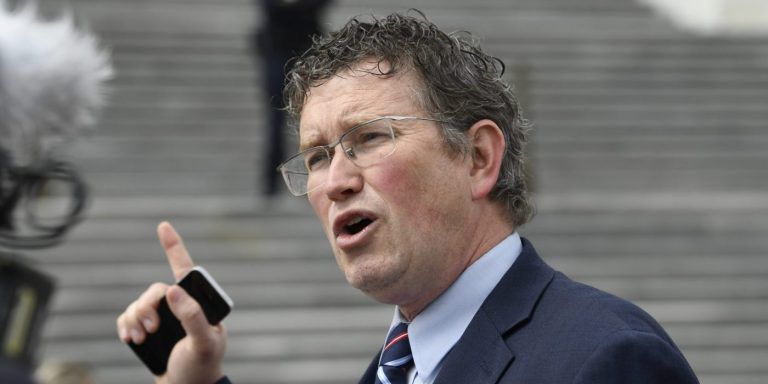
(José Niño, Headline USA) President Donald Trump wants Rep. Thomas Massie, R-KY, out of office. 

On Monday, Donald Trump launched a scathing attack on Massie in a post on his social media platform Truth Social. Trump promised to “lead the charge” to unseat Massie in a primary challenge. This threat came after Massie went public about his plan to vote against the Republican’ short-term government funding bill ahead of a potential shutdown on Friday.

Trump observed that “Congressman Thomas Massie, from beautiful Kentucky, is an automatic ‘NO’ vote on just about everything, despite the fact that he has always voted for Continuing Resolutions in the past.”

For Massie’s decision to vote no on this bill, Trump announced that the Kentucky congressman “SHOULD BE PRIMARIED, and I will lead the charge against him.”

The president even likened Massie to former Representative Liz Cheney, describing him as “just another GRANDSTANDER, who’s too much trouble, and not worth the fight.”

Trump then called for challengers to step up against Massie, “The people of Kentucky won’t stand for it, just watch. DO I HAVE ANY TAKERS???”

Trump’s criticism came after thanking the House Freedom Caucus for supporting the stopgap funding proposal and Speaker Mike Johnson’s attempts to prevent a government shutdown. This attack marks another instance of conflict between Trump and Massie, as Trump had previously taken the congressman to task in 2020, labeling him a “third-rate Grandstander” and calling for him to be kicked out of the Republican Party for delaying a vote on a COVID-19 spending bill. 

The Kentucky Congressman responded to Trump and GOP political strategist Chris LaCivita’s threats by stating: 

Someone thinks they can control my voting card by threatening my re-election. Guess what? Doesn’t work on me. Three times I’ve had a challenger who tried to be more MAGA than me. None busted 25% because my constituents prefer transparency and principles over blind allegiance.

Massie is a staunch fiscal conservative and a notable skeptic of the United States government’s intimate relationship with Israel. 

During an interview with Tucker Carlson on The Tucker Carlson Show on June 7, 2024, Massie revealed that every Republican in Congress has an “AIPAC babysitter.” He explained that these “babysitters” are representatives from the American Israel Public Affairs Committee (AIPAC) who maintain close contact with members of Congress to influence their votes on legislation concerning the Jewish state and making sure they vote in a pro-Israel manner. 

José Niño is the deputy editor of Headline USA. Follow him at x.com/JoseAlNino

NIH to Stop Funding Studies into Why People are Skeptical of Vaccines

(Maire Clayton, Headline USA) The National Institutes of Health plans to cancel or cut back on dozens of grants that were looking into why people are reluctant to get vaccinated, according to The Washington Post.

The outlet obtained an email Monday that was titled “required terminations — 3/10/25.” The internal email said the agency “received a new list … of awards that need to be terminated, today. It has been determined they do not align with NIH funding priorities related to vaccine hesitancy and/or uptake.”

The email was reportedly sent by Michelle Bulls, director of the Office of Policy for Extramural Research Administration.

The email noted there were roughly 40 grants and it instructed to send termination letters by the end of day Monday.

The memo instructed individuals to send the following message to the grants that were being cut: “It is the policy of NIH not to prioritize research activities that focuses gaining scientific knowledge on why individuals are hesitant to be vaccinated and/or explore ways to improve vaccine interest and commitment. … Therefore, the award is terminated.”

The Washington Post learned the previous week NIH terminated funding related to diversity, equity and inclusion.

It was unclear if Department of Health and Human Services Secretary Robert F. Kennedy Jr. contributed to the cuts.

He previously put a 90-day stop-work hold on a multimillion-dollar contract that was going to be used to develop a new COVID-19 oral vaccine.

Kennedy was sworn in on Feb. 13 and put in charge of the “Make America Healthy Again” Commission by President Donald Trump.

The commission’s goal is “to investigate and address the root causes of America’s escalating health crisis, with a focus on childhood chronic disease.”

Infowars Reporter was Brutally Murdered Outside of Apartment in Austin, Texas

(José Niño, Headline USA) Jamie White, a reporter for InfoWars, was fatally wounded outside his apartment in Austin, Texas, on Sunday night.

White was found unresponsive with “obvious signs of trauma” in the parking lot of his apartment complex in South Austin at around 11:57 PM.

He was transported to a hospital where he was pronounced dead shortly after arrival. The Austin Police Department is currently investigating the death as a homicide. 

White was born in 1988 and was a writer for InfoWars, building his reputation as a versatile writer who covered topics ranging from domestic politics to international relations. InfoWars founder Alex Jones described White as a dedicated worker who “loved to fight tyranny” and “promote freedom.” 

White was also reportedly included on Ukraine’s infamous “enemies list” due to his critical reporting on Joe Biden’s proxy war against Russia.

The exact nature of White’s death (whether it was a stabbing or shooting incident) has not been disclosed by authorities. Additionally, law enforcement has not published information about potential suspects or motives. 

White’s killing marks the eighth homicide in Austin in 2025. 

Jones announced White’s death and vowed “those responsible for this senseless violence will be brought to justice.”  The InfoWars host connected the murder to local District Attorney Jose Garza – a George Soros-funded district attorney — and his soft-on-crime policies that have the city more dangerous since Garza was first elected as DA in 2020 and was re-elected in 2024.

The investigation is ongoing, and APD authorities have stated they will publish more information as it becomes available.

White’s previous work can be found here.

José Niño is the deputy editor of Headline USA. Follow him at x.com/JoseAlNino

Feds Borrow $8 billion per Day, CBO Says

(Casey Harper, The Center Square) The U.S. The Congressional Budget Office released new data showing that in the first five months of this fiscal year, the U.S. federal government has already racked up $1.1 trillion in debt, or nearly $8 billion per day.

The fiscal year began last October and runs through the end of September. Interest on the national debt now exceeds federal defense spending and is on track to be the largest expense for U.S. taxpayers.

CBO said that the current deficit is $319 billion higher than the same time period for the previous fiscal year and that even though revenues rose 2%, spending rose 13%.

Experts continue to warn that the federal debt and deficit are unsustainable.

“Absent a change in course, our country will surpass its historic World War II era record level of debt in just four years,” Maya MacGuineas, president of the Committee for a Responsible Federal Budget, said in a statement. “It is well past time for policymakers to come together and put in place a plan to get our debt under control. Borrowing nearly $8 billion a day is clearly unsustainable, and continuing down this path undoubtedly threatens our economy, our national security, and the well-being of future generations.

The news comes as Congress considers a spending measure to avoid an imminent government shutdown and debates making Trump’s tax cuts permanent, which are expected to add trillions to the debt.

MacGuineas said the U.S. is on track to borrow over $2 trillion this fiscal year. Before the COVID-19 pandemic, deficits never topped $1 trillion.

“This month’s projections are a stark reminder of our nation’s increasingly dangerous fiscal situation,” she said.

A Chinese Firm Built More Ships in 1 Year Than the Entire U.S. Has Made Since WW2

(Headline USA) In only two decades, China has grown to be the dominant player in shipbuilding, claiming more than half of the world’s commercial shipbuilding market, while the U.S. share has fallen to just 0.1%, posing serious economic and national security challenges for the U.S. and its allies, according to a report released Tuesday by the Center for Strategic and International Studies.

In 2024 alone, one Chinese shipbuilder constructed more commercial vessels by tonnage than the entire U.S. shipbuilding industry has built since the end of World War II. China already has the world’s largest naval fleet, the Washington-based bipartisan think tank said in its 75-page report.

“The erosion of U.S. and allied shipbuilding capabilities poses an urgent threat to military readiness, reduces economic opportunities, and contributes to China’s global power-projection ambitions,” the report said.

Concerns about the poor state of U.S. shipbuilding have been growing in recent years, as the country faces rising challenges from China, which has the world’s second largest economy and has ambitions to reshape the world order. At a congressional hearing in December, senior officials and lawmakers urged action.

Last week, President Donald Trump told Congress that his Republican administration would “resurrect” the American shipbuilding industry, for commercial and military vessels, and he would create “a new office of shipbuilding in the White House.”

“We used to make so many ships,” Trump said. “We don’t make them anymore very much, but we’re going to make them very fast, very soon. It will have a huge impact.”

In February, the heads of four major labor unions called on Trump to boost American shipbuilding and enforce tariffs and other “strong penalties” against China for its increasing dominance in that sector.

“What we are seeing now is a recognition of the strategic significance of shipbuilding and port security, and the related challenges posed by China,” said Matthew Funaiole, a senior fellow in the China Power Project at CSIS and a co-author of the report. Funaiole said concerns over shipbuilding are “a fairly bipartisan issue.”

The report said that China’s shipbuilding sector went through “a striking metamorphosis” in the past two decades, transforming from a “peripheral player” to the dominant player on the global market, with efforts centered on one state-owned enterprise: China State Shipbuilding Corporation, or CSSC.

At the same time, China has greatly expanded its navy. Last year, a CSIS assessment found that China was operating 234 warships, compared with the U.S. Navy’s 219, although the U.S. continued to hold an advantage in guided missile cruisers and destroyers.

In developing recommendations for the U.S. to compete with China, the researchers zoomed in on the Chinese company’s use of Beijing’s “military-civil fusion” strategy, which blurs the lines between the country’s defense and commercial sectors.

They found that CSSC, which builds both commercial and military ships, sells three-quarters of its commercial production to buyers outside China, including to the U.S.-allied Denmark, France, Greece, Japan and South Korea. These foreign firms are thus funneling billions of dollars to Chinese shipyards that also make warships, advancing China’s modernization of its navy and providing Chinese defense contractors with key dual-use technology, the report said.

The CSIS researchers suggested that, as a long-term fix, the U.S. should invest in rebuilding its shipbuilding industry and work with allies to expand shipbuilding capacities outside China. For the near term, they recommended actions to level the playing field and “disrupt China’s murky dual-use ecosystem,” such as by charging docking fees on Chinese-made vessels and cutting U.S. financial and business ties with CSSC and its subsidiaries.

The Trump administration has proposed new fees on China-linked vessels calling on U.S. ports. A BlackRock-led consortium last week agreed to acquire stakes in 43 ports across the globe, including the two ports on either side of the Panama Canal, from a Hong Kong-based conglomerate.

Adapted from reporting by the Associated Press

Stock Market Sinking… and What Are Gold & Silver Doing?

(Money Metals News Service) The Dow, S&P 500, and the Nasdaq all sold off viciously yesterday, with the Nasdaq having its worst day since 2022. This brings overall stock market losses to $4 trillion since last month’s highs.

Shares of the “Magnificent Seven,” the companies largely responsible for the strong performance of the major stock indices over the past year – i.e. Nvidia, Tesla, Alphabet, Amazon, Meta, Apple, and Microsoft – all fell sharply, with Tesla falling a whopping 15%.

Silver – and especially gold – didn’t budge during the recent carnage, though, proving their “mettle” as risk hedges with low correlation to other asset classes. In fact, they’re both trading HIGHER today.

Meanwhile, retail bullion demand in the U.S. only picked up slightly during the recent stock market downturn, even as premiums on coins, bars, and rounds remain at multi-year lows.

It’s been demand from other regions of the world (along with steady central bank buying) that have fueled gold’s $1,000 rally over the past 18 months. (You read that right, $1,000!)

However, a deepening stock market correction and especially a bear market, should it unfold, may finally get U.S. investors off the dime to buy gold too.

The major stock indices are off to another bad start again today.

This is certainly not the time to be shy about carefully examining one’s exposures…

…and potentially beefing up allocations to gold and silver.

Don’t miss this exclusive interview with Money Metals CEO Stefan Gleason for his latest take on these fast-moving events – as well as nagging Fort Knox questions, secret gold flows, and sound money reforms.

Platinum Demand Outstrips Supply for Third Straight Year

(Mike Maharrey, Money Metals News Service) The world platinum market charted its third significant structural deficit in a row last year, and we should expect these supply shortfalls to continue into the foreseeable future, according to the World Platinum Investment Council (WPIC).

Platinum demand outpaced supply by 995,000 ounces last year. That was 46 percent higher than forecast.

The WPIC expects a market deficit of around 848,000 ounces in 2025.

Last year, total supply rose by 3 percent, but it couldn’t keep pace with surging demand.

Surprisingly, platinum offtake climbed despite a drop in automotive demand. According to the WPIC, the use of platinum in the automotive sector fell by 2 percent to 3.1 million ounces as auto and truck production globally declined by 2 percent and 5 percent, respectively.

Automotive demand makes up around 80 percent of total platinum outtake. But according to WPIC director of research Edward Sterck, auto demand would have to drop by 30 percent to match dwindling supplies.

Meanwhile, platinum jewelry sales grew by 8 percent in 2024, and investment demand took off, rising by 77 percent.

The WPIC forecasts that jewelry demand will reach 2 million ounces this year, an increase of 2 percent year-on-year. It would be the first time consumption exceeds 2 million ounces since 2019.

Platinum mine output grew modestly by 3 percent in 2024, but it is expected to drop by 5 percent in 2025

Above-ground stocks of platinum fell by 23 percent last year, and are expected to drop another 25 percent this year. This represents less than four months of demand.

Recycling has failed to help fill the supply gap as expected.

“Automotive recycling remains extremely weak due to an ongoing shortage of end-of-life catalytic converters, with total recycling at 1,496 koz, only 10 koz higher than the 12-year low seen in 2024,” according to the WPIC Platinum Quarterly report.

Given the current dynamics, platinum may be significantly undervalued.

The current platinum price is hovering around $1,000 an ounce. To put that into perspective, platinum hit an all-time high of $2,213 an ounce in March 2008. This was higher than the record price gold hit in 2011.

Before 2011, platinum was generally more expensive than gold. In 2015, this historical trend reversed with the spread between gold and platinum growing wider.

It remains to be seen whether platinum will regain the price parity with gold we saw before the mid-2010s, but given the supply and demand dynamics, it is reasonable to be bullish on platinum in the near to mid-term. Given the price disparity with gold, this may signal a buying opportunity.


Mike Maharrey is a journalist and market analyst for Money Metals with over a decade of experience in precious metals. He holds a BS in accounting from the University of Kentucky and a BA in journalism from the University of South Florida.


Money Metals CEO: Missing Gold Would Be a National Security Nightmare

(Money Metals News Service) In a recent episode of the Soar Financially podcast, host Kai Hoffmann sat down with Stefan Gleason, the President and CEO of Money Metals Exchange, to discuss shocking irregularities during decades-old Fort Knox gold audits, secret global gold flows, investor behavior, and the broader implications of sound money.

Gold’s Price Drivers: Central Banks and Geopolitical Uncertainty

As of the interview, gold prices hovered near $2,900 per ounce, a level driven by multiple macroeconomic forces aside from just inflationary reasons.

Gleason pointed to ongoing central bank buying, particularly from Asian nations like China, which has been removing bars from London vaults every month to increase its reserves. Even during periods when media reports suggested China had paused its acquisitions, trade data showed steady inflows of gold into the country.

Another major factor influencing gold prices is the weaponization of the U.S. dollar. Following the expulsion of Russia from the SWIFT system, many nations sought to reduce their dependence on the dollar, leading to an increase in gold demand.

In addition, recent U.S. tariffs on foreign metals have created arbitrage opportunities, shifting gold from London and other global markets into the U.S. and adding to the upward price momentum.

Despite gold’s recent gains, Gleason cautioned that media hype can create short-term price distortions. Figures such as Elon Musk, Donald Trump, and Joe Rogan have all contributed to the rising interest in gold, but he noted that the broader financial industry still largely ignores or discredits gold as an investment class.

Unlike Bitcoin and other cryptocurrencies that have been fully embraced by the tech community, gold remains an underappreciated asset among mainstream financial institutions.

Gold Reserves Transparency Act: Solving the Mystery of Fort Knox

A recurring concern in the gold community is whether the U.S. gold reserves at Fort Knox and the Federal Reserve are fully accounted for. Treasury officials claim that the gold is audited annually, but as Gleason explained, these audits consist only of checking the seals on vault compartments rather than physically verifying and assaying the gold.

This lack of transparency has led to speculation about potential leases, swaps, or encumbrances on U.S. gold reserves, which could mean the gold is no longer fully under U.S. control.

In response, a new piece of legislation, the Gold Reserves Transparency Act, is being prepared for introduction in Congress. Initially sponsored in 2019 and 2021 by Rep. Alex Mooney, the bill aims to:

  • Conduct a full inventory and assay of U.S. gold holdings.
  • Investigate any encumbrances or pledges of gold to international institutions or financial markets.
  • Upgrade lower-purity “coin melt” bars into standard, .9999 fine gold to improve liquidity.
  • Implement regular audits every five years.

Gleason warned against any publicity stunts, where politicians visit Fort Knox, see sealed vaults, and declare everything in order without conducting a full forensic audit. He stressed that a serious, independent review is necessary to restore confidence in U.S. gold reserves.

Revaluing Gold & Monetizing Government Assets

Another hot topic in the discussion was the possibility of revaluing gold as a way to monetize U.S. assets and strengthen the national balance sheet. Treasury Secretary Scott Bessent was asked whether gold would be revalued from its official price of $42.22 per ounce to something closer to its market value near $3,000.

Bessent denied and formal gold revaluation plan was under consideration, and Gleason believes Bessent on this score.

Another way to leverage gold reserves would be through gold-backed government bonds, a concept promoted by economist Judy Shelton. This would allow the U.S. to issue long-term debt tied to gold, reinforcing its role as a monetary asset.

In addition to gold, the government could monetize its vast real estate holdings whether it be vacant office buidlings or land, particularly in the western U.S., where federal lands and natural resources could be privatized or used more productively. Gleason suggested that privatization and deregulation of natural resource extraction could also serve as ways to bolster the economy without resorting to excessive money printing.

Despite rising gold prices, retail investment in gold has actually slowed in the U.S., with more people selling than buying in recent months. Gleason attributed this to:

  1. Profit-taking: Many retail investors bought gold at much lower prices and are now selling to lock in gains.
  2. Economic pressure: Some sellers may need liquidity due to inflation and financial stress.
  3. Election optimism: Following Trump’s rise in the polls, some more conservative investors felt less urgency to hold gold, assuming a return to more prudent economic policies.

At the same time, Asian and central bank demand remains strong, meaning that while retail investors in the West are not driving gold higher, institutional and global forces continue to push prices up.

In contrast, silver has lagged behind gold, maintaining a high gold-to-silver ratio of around 89:1, well above historical averages. While industrial demand for silver—particularly for solar panels and electronics—remains strong, silver’s investment demand has not yet surged in the way many expected. Gleason remains bullish on silver and believes it will eventually outperform gold later in the bull cycle.

Tariffs and the Global Gold Flow

Another factor shaping the market is the impact of U.S. tariffs on imported gold and silver. The Biden administration’s 20% tariffs on select metals from China and Mexico have led to:

  • Gold rerouting from Mexico to Canadian refiners to avoid tariffs.
  • A COMEX short squeeze, where U.S. refineries and traders scrambled to meet demand amid supply disruptions.
  • Increased arbitrage trading, as metals flow into the U.S. to take advantage of price discrepancies.

Gleason expressed concerns that these tariffs could create supply chain inefficiencies, potentially hurting both consumers as well as U.S. refiners and bullion businesses.

What Could Stop Gold’s Bull Market?

While most indicators point to continued strength in gold, Gleason outlined potential bearish scenarios:

  1. Drastic U.S. fiscal reform – If the government balanced its budget and controlled spending, it could reduce inflation and dampen gold demand.
  2. Significant interest rate hikes – If the Federal Reserve were to aggressively tighten monetary policy, it could strengthen the dollar and slow gold’s ascent.
  3. A major gold discovery – A large, high-grade gold deposit could increase supply and put downward pressure on prices.
  4. Deflationary shock – A severe recession with mass deleveraging could lead to short-term gold selling, similar to what happened during the 2008 financial crisis.

That said, Gleason remains highly bullish on gold and silver, particularly in an era of massive debt, geopolitical instability, and inflationary policies.

Conclusion: The Renaissance of Sound Money

As discussions around gold, fiscal responsibility, and government transparency gain traction, the sound money movement continues to grow. Gleason highlighted the increasing legislative efforts to restore gold’s role in the financial system, as seen in Wyoming’s recent gold reserves bill and Idaho’s tax exemption on precious metals.

With gold near all-time highs, increasing skepticism over fiat currency, and calls for an audit of U.S. reserves, it’s clear that awareness of gold as a key monetary asset is reemerging. Whether through central bank buying, retail investment, or legislative action, the push for sound money is gaining momentum.

For those interested in following policy efforts on sound money, Stefan Gleason recommends visiting moneymetals.com and soundmoneydefense.org.

De-Dollarization, Gold and a Shift to a Multipolar World

(Mike Maharrey, Money Metals News Service) An end to the dollar’s status as the world’s reserve currency would mean disaster for the U.S. economy. The United States depends on global demand for dollars to facilitate its borrowing and spending. The greenback’s status helps support America’s economic and military dominance.

You will sometimes hear talk about the dollar’s demise. Of course, many brush this off as fear-mongering, and while a complete collapse of dollar dominance seems unlikely, an equally problematic scenario remains within the realm of possibility—the evolution to a “multipolar world” where the dollar plays a much less dominant role.

The Dollar: One Among Many?

In a multipolar world, several currencies would play a significant role in the global financial system. Dollars would remain important, but the role of the greenback would diminish as other currencies, including the euro and yuan, gain more influence. A multipolar world would also drive a diversification of global reserves, with gold and other currencies making up a larger percentage of holdings.

We’re already seeing this trend develop. Central banks have added over 1,000 tonnes of gold to their reserves each of the last three years. To put that into perspective, central bank gold reserves increased by an average of just 473 tonnes annually between 2010 and 2021. Meanwhile, the percentage of dollars held by central banks has dipped by 14 percent since 2002.

The Rise of BRICS

The rise of the BRICS economic bloc could help usher in this multipolar world. As economist Peter C. Earle noted in a recent article published by The Daily Economy, “Member nations have increasingly expressed interest in reducing reliance on the U.S. dollar, exploring alternative payment systems, and strengthening trade relations within the bloc.”

BRICS is an economic cooperation bloc originally made up of Brazil, Russia, India, China, and South Africa. As of Jan. 1, 2024, the bloc expanded to include Egypt, the UAE, Iran, and Ethiopia. Saudi Arabia has also been formally invited to join. It has yet to formally accept the invitation but is active in the bloc. Turkey, Azerbaijan, and Malaysia have formally applied to become members.

The expanded BRICS has a combined population of about 3.5 billion people. The economies of the BRICS nations are worth over $28.5 trillion and make up roughly 28 percent of the global economy. BRICS nations also account for about 42 percent of global crude oil output.

The BRICS has several “partner countries” including Algeria, Nigeria, Uganda, Kazakhstan, Malaysia, Thailand, Uzbekistan, Belarus, and Bolivia.

There is no question some of the BRICS members would love to see the U.S. and its currency taken down a peg or two, Russia and China leading the way. However, the October 2024 summit in Kazan, Russia, revealed it is easier to talk about de-dollarization than it is to actually de-dollarize.

Russia was pushing hard for BRICS to consider an alternative payment system to replace the dollar-denominated SWIFT system. But after the summit, Russian President Vladimir Putin conceded that there was no immediate plan, saying members of the economic bloc “have not and are not” creating such a system.

Nevertheless, plenty of rhetoric came out of the meeting indicating that the U.S. shouldn’t think de-dollarization is off the table.

Earle argues that given the rising status and economic power of the BRICS, a new multipolar global financial order “centered around commodity-based currencies and reduced dollar dominance,” is plausible.

He points to three factors underscoring this plausibility.

  1. The ongoing diversification of reserves. As already noted, central banks are rapidly expanding gold holdings, with several BRICS nations, including India and China, driving this push. Earle said this signals “a shift towards commodity-backed assets and away from dollar-centric reserves.”
  2. Alternative payment systems. When the U.S. and its Western allies locked Russia out of the SWIFT payment system in the wake of the invasion of Ukraine, it set off warning bells throughout the world. Many world leaders realized that if the U.S. can weaponize the dollar against Russia, it can use it against them as well. This weaponization of the dollar has helped drive the acceleration of de-dollarization as countries scramble to minimize the exposure to the greenback. As Earle pointed out, talk about the creation og BRICS Pay “exemplifies efforts to establish financial infrastructures that bypass traditional dollar-based systems, facilitating trade in local currencies.”
  3. Geopolitical realignment. With its expansion, BRICS now includes diverse economies. Earle said this “indicates a collective move towards a multipolar world, challenging the unipolarity of dollar hegemony.

Earle argues, “The new BRICS lineup represents a broader shift toward multipolarity.”

“The inclusion of oil-rich nations such as the UAE and Iran could alter energy markets, while the growing African and Asian presence in BRICS gives the organization a stronger foothold in regions traditionally influenced by Western powers. Countries like India and China, which often compete for regional influence, must now navigate a more complex dynamic within the expanded group, balancing cooperation with national interests.”

The Erosion of the Dollar and the Rise of Gold

BRICS isn’t likely to “bring down the dollar,” but this new financial order could erode its status. As Earle pointed out, this has ramifications for the U.S. economy.

“A concerted move by BRICS nations to reduce reliance on the U.S. dollar in international trade could diminish the dollar’s global dominance. This shift might lead to decreased demand for dollars, potentially resulting in a weaker currency. While a weaker dollar could make U.S. exports more competitive, it may also lead to higher import prices, contributing to domestic inflation. Additionally, reduced global demand for dollar-denominated assets could increase borrowing costs, impacting everything from government debt to consumer loans.”

And as already noted, even a small decline in dollar-dominance could be significant.

Because the global financial system runs on dollars, the world needs a lot of them, and the United States depends on this global demand to underpin its bloated government. The only reason the U.S. can borrow, spend, and run massive budget deficits to the extent that it does is the dollar’s role as the world reserve currency. It creates a built-in global demand for dollars and dollar-denominated assets. This absorbs the Federal Reserve’s money creation and helps maintain dollar strength despite the Federal Reserve’s inflationary policies.

But what happens if that demand drops? What happens if BRICS nations and other countries don’t need as many dollars?

A de-dollarization of the world economy would cause a dollar glut. The value of the U.S. currency would further depreciate. At the extreme, global de-dollarization could spark a currency crisis. You and I would feel the impact through more price inflation eating away at the purchasing power of the dollar. In the worst-case scenario, it could lead to hyperinflation.

Again – the world doesn’t have to completely abandon the dollar to create negative impacts. Even a modest drop in the demand for the greenback will ripple through the U.S. economy.

VanEck analysts Imaru Casanova and Joe Foster argue that we’re already seeing some economic tremors due to de-dollarization, noting that despite its continued dominance, “The dollar has been devaluing relative to gold—an unprecedented trend.”

It is unprecedented because it has happened during a period of relative dollar strength and the absence of any economic crisis. They say the current gold bull market is being driven by an erosion in confidence in the dollar.

“[P]eople and nations that have long used, coveted and hoarded the U.S. dollar are now losing faith and trust in the currency as a store of wealth. This shift began in 2008 when the global financial crisis led many to question the efficacy of the banking system and western economic hegemony. It escalated with sanctions and freezing of assets imposed on Russia by the U.S. Other countries fear that similar retribution or ‘weaponization of the dollar’ is possible for lesser infractions than the hostile invasion of another country.”

Casanova and Foster also note that the Trump administration has weaponized tariffs, creating resentment and further eroding the confidence that had historically underpinned the greenback.

“The U.S. dollar’s strength against other currencies has traditionally been supported by the robustness of the U.S. economy and its reputation as one of the safest jurisdictions in which to invest.”

The VanEck analysts warned that “irresponsible fiscal policies and political chaos in the U.S. suggest that one or more of the traditional drivers of gold may reemerge.”

“As a result, the world is slowly and methodically moving away from the dollar, a shift most evident in changes to currency reserves and increased central bank gold purchases.”

Casanova and Foster said they believe this is the beginning of a long-term trend “that will become recognized as a crisis of confidence in the U.S. dollar.” This could drive gold prices even higher than many expect.

“If a digital asset like Bitcoin, created and residing within servers, can be valued at $100,000, then surely an ounce of a tangible, reliable safe-haven asset like gold could reach a small fraction of that value.”


Mike Maharrey is a journalist and market analyst for Money Metals with over a decade of experience in precious metals. He holds a BS in accounting from the University of Kentucky and a BA in journalism from the University of South Florida.

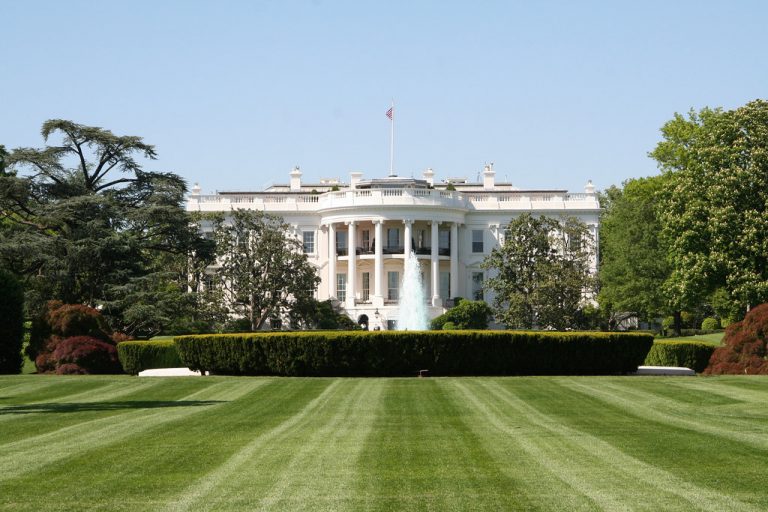
Secret Service Identifies ‘Suicidal’ Suspect Shot Outside White House

(Luis Cornelio, Headline USA) The Secret Service has identified the suspect who was shot by agents outside the White House on Sunday morning after allegedly brandishing a weapon. 

The suspect, 27-year-old Andrew Dawson, was taken to a nearby hospital and remains alive, though his overall condition is unknown, the New York Post reported. 

Dawson allegedly drove from Indiana to D.C. with the intent to commit “suicide by cop,” meaning he sought to provoke officers into killing him, according to sources cited by the Post. 

The Post reported Dawson was allegedly armed with both a knife and a gun when approached by federal agents. Law enforcement had been alerted earlier that day of a “suicidal” individual traveling from Indiana to Washington, D.C. 

The shooting occurred near 17th and F Streets, just outside the White House. 

It is unclear whether Dawson had any intent to harm any White House officials or USSS agents, as he has not been charged with any crimes as of Monday evening.

His criminal record shows an arrest in 2018 for marijuana possession and drug paraphernalia. 

At the time of the incident, President Donald Trump was at his Mar-a-Lago estate in Florida. He returned safely to the White House on Sunday evening, hours after the shooting. 

The Sunday shooting at the White House follows similar incidents in recent years. 

  • In 2020, Trump was abruptly escorted from a briefing after a shooting broke out near the White House. 
  • In 2016, the USSS shot a man who approached a White House checkpoint with a gun. 
  • In 2011, Oscar Ramiro Ortega-Hernandez fired several rounds at the White House and later pleaded to “one count of injury to a dwelling and placing lives in jeopardy within the territorial jurisdiction of the United States, as well as one count of discharging a firearm during a crime of violence,” according to the FBI. He was sentenced to 25 years.

The Sunday incident followed just days after Trump demanded answers from federal investigators about his two would-be assassins. Trump implied that information had been withheld because of the Biden administration.