U.S. Inflation Cooled in Trump’s 1st Full Month in Office

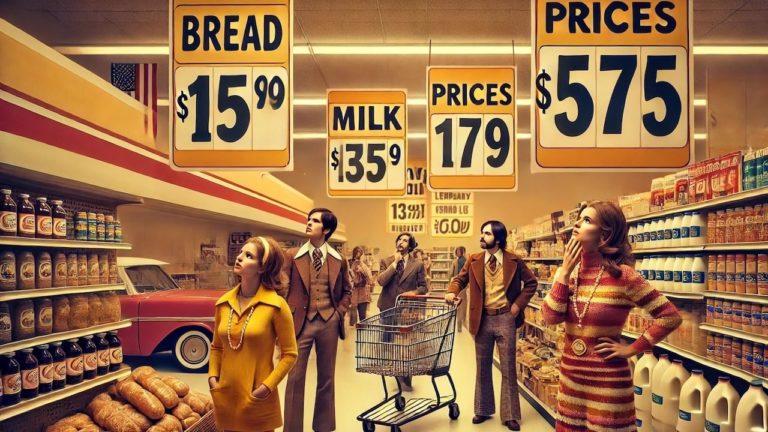
(Headline USA) U.S. inflation slowed last month for the first time since September and a measure of underlying inflation fell to a four-year low.

The consumer price index increased 2.8% in February from a year ago, Wednesday’s report from the Labor Department showed, down from 3% the previous month. Core prices, which exclude the volatile food and energy categories, rose 3.1% from a year earlier, down from 3.3% in January. The core figure is the lowest since April 2021.

The declines were greater than economists expected, according to a survey by data provider FactSet. Yet inflation remains above the Federal Reserve’s 2% target. And most economists expect inflation will remain elevated this year as Trump’s tariffs kick in.

The report “is encouraging news, though it doesn’t tell us much about where inflation is headed,” said Oren Klachkin, Nationwide Financial Markets economist, in an email. “With tariffs possibly set to push goods prices higher … we see inflation risks as tilted to the upside.”

On a monthly basis, inflation also came in much lower than expected. Consumer prices rose 0.2% in February from the previous month, down from a big 0.5% jump in January. And core prices rose just 0.2%, below the 0.4% increase in January. Economists watch core prices because they are typically a better guide to inflation’s future path.

A sharp drop in air fares, which fell 4% just in February from the previous month, helped bring down overall inflation. Rental price increases also slowed and the costs of hotel rooms and car insurance rose much more slowly in February than the previous month. The price of new cars fell last month compared with January.

Grocery prices were unchanged last month from January, bringing some relief to consumers grappling with a 25% jump in grocery prices from four years ago. The cost of eggs, however, jumped 10.4% in February from the previous month and are nearly 60% more expensive than a year ago.

Avian flu has forced farmers to slaughter more than 160 million birds, including 30 million in January. Average egg prices hit $5.90 a dozen nationwide in February, a record high. The price had consistently been below $2 a dozen for decades before the disease struck.

How big an impact Trump’s tariffs will have on prices remains unclear, for now. The duties have roiled financial markets and could sharply slow the economy, and some analysts see the odds of a recession rising.

Adapted from reporting by the Associated Press

Why Bitcoin Is NOT Equal to Gold

(Joshua D Glawson, Money Metals News Service) On March 6, 2025, U.S. President Donald Trump signed an executive order establishing a strategic Bitcoin reserve and digital asset stockpile for the United States government. Within this executive order, Trump refers to the notion that Bitcoin is akin to “digital gold.”

Cryptocurrency enthusiasts often refer to Bitcoin as “digital gold” and consider both as equal forms of sound money. In reality, gold and Bitcoin are quite different in asset quality and in terms of their hierarchy as sound money.

Digital Assets vs Real Assets

According to Investopedia, a digital asset, such as Bitcoin, is generally anything created and stored digitally, is identifiable and discoverable, and has or provides value.

And, a real asset, such as gold, has a tangible form, and a large part of its value derives from its unique physical qualities.

Bitcoin, the most popular digital asset for the past decade, is usually a speculation used as a means of acquiring more fiat currency (Federal Reserve Notes, i.e., dollars).

Gold, the most popular real asset for five millennia, is mostly used for savings diversification and as a core holding by central banks, financial institutions, and individuals seeking an ongoing hedge against inflation.

Although there is no current gold standard, nearly all central banks around the world use gold as a method of fiat currency stabilization, inflation hedge, geopolitical safeguard, and foreign exchange (FOREX) risk reduction.

Why Is Gold More Valuable Than Bitcoin?

Real assets tend to have higher value when compared to digital assets due to such things as historical precedence, security, and utility.

Gold has been used as a stable form of currency for over 5,000 years — nearly universally —  through all types of struggles and conditions, giving it a sense of value based on this historical precedent.

Gold cannot be fabricated, counterfeited, or tarnished given its physical nature, lending it a sense of real security.

Gold has many natural qualities that give it real-world use-value or utility.

Gold is the most malleable metal, it is highly ductile, one of the densest metals, resistant to corrosion, highly reflective of visible and infrared light, possesses low reactivity, and is an excellent conductor.

Gold does not rely on anyone else’s performance and thus has no counterparty risk. It is final payment in and of itself.

You may have heard people erroneously call Bitcoin “digital gold” while preceding to equate the two, or even go as far as claiming Bitcoin is more valuable than gold.

But gold’s value is not dependent on another element, while Bitcoin’s value is dependent on other real-world conditions and limitations to exist or be used, including electrical grids, internet connections, computers, etc..

Furthermore, cryptography experts are warning of the coming threat of quantum computing in eventually cracking many forms of encryption, including blockchains like Bitcoin. At minimum, they warn the cryptocurrency may become disabled for months while a protocol upgrade is implemented.

Ultimately, the use value is quite different between these two forms of assets, and their end goals are not the same.

The Hierarchy of Sound Money

Sound money refers to money, or currency, that possesses marginal value based on its validity and reliability, much like a sound argument in logic.

Sound money establishes its validity through trust, non-counterfeitability, universal acceptance, and marginal use value. Sound money preserves purchasing power, economic stability, genuine transactional trust, it acts as a store of value, enables long-term planning, and is much more resistant to manipulation, giving it reliability.

Sound money has such qualities as durability, portability, fungibility, divisibility, acceptability, inflation resistance, established historical value, and independence of government.

Gold is not only a real asset, but it is also the ultimate form of sound money as it possesses each of these aforementioned qualities and characteristics, and then some.

Gold, as sound money, is in direct contrast with Federal Reserve Notes and other forms of fiat currency.

Fiat currency, unlike gold, obtains its subjective value through perceived trust, market manipulation, legal counterfeiting, political redistribution schemes, and government decrees based on coercion.

Even the Federal Reserve openly believes that the U.S. Dollar (USD) should lose at least 2% every year, and it works intentionally to achieve this result. 

When comparing gold and Bitcoin, we have already established that gold has a higher real value than Bitcoin. Gold also has a higher sound money value than Bitcoin.

The price of Bitcoin can be manipulated more easily than the price of gold. For example, Bitcoin has seen massive and sudden swings via big whale purchasing and selling, wash trading, spoofing, media and government propagation, mining centralization, bot trading, and algorithmic trading.

In contrast, gold is universal, well-established, and a real asset, so its price fluctuations are less volatile in the short, medium, and long term.

All that said, Bitcoin does have many of the qualities of sound money and is a superior form of currency when compared to government fiat currencies.

Unlike most fiat currencies, Bitcoin is naturally scarce, has a generally predictable price, and is widely accepted. Bitcoin is also durable, portable, and divisible as a digital asset.

So, if we were to rank these three forms of currency in order of most sound to the least sound, gold would be the superior form of sound money, while Bitcoin would be second, the U.S. dollar third, and the remaining fiat currencies at the bottom.


Joshua D. Glawson is Content Manager for Money Metals and is writer on such topics as politics, economics, philosophy, finance, and personal development. He has a Bachelor’s in Political Science from the University of California Irvine.


More on the Presumed Theft of Gold that Became the Fort Knox Holdings

(Jane L. Johnson, Money Metals News Service) Mises Wire recently ran a story entitled “The Gold at Fort Knox Was Stolen From Americans,” written by Mises Institute‘s executive editor Ryan McMaken. His essay‘s apt title reiterates the facts of the events that occurred in the early days of Franklin Delano Roosevelt‘s first term as president (1933-37).

As he correctly states, FDR was determined to “…end the gold standard and confiscate private gold holdings in the United States,” believing that it was a major cause of the Great Depression. In so doing, McMaken continues, “The US government reneged on its promises to redeem US dollars in gold,” including defaulting on redemption of gold-based Liberty Bonds from World War I, which were scheduled to mature in 1938.

But the fallout of FDR’s gold adventures was far worse than reneging on US gold bond redemption, as I explain below.

First, A Personal Disclosure

I grew up hearing my parents—who were in college during the early 1930s—lambasting FDR‘s actions and enforcing their lifelong hatred of this president, who was elected four times from 1932 through 1944. McMaken‘s facts about this era are correct, based on my parents‘ rantings throughout their lives and my own later reading of the history of US monetary gold from the late 19th century through today.

FDR‘s Gold Steal in 1933 Was a Two-Step Process

On April 5, 1933, FDR issued Executive Order 6102, completely bypassing Congress. This EO required all persons to deliver on or before May 1, 1933, any gold—coin, bullion, and gold certificates owned by them—to the Federal Reserve (through one or more of the thousands of chartered banks across the country) at $20.67 per troy ounce in paper currency and Treasury coin of the type we use today. Failure to do so would result in ten years‘ imprisonment, a $10,000 fine, or both. Jewelers, dentists, and industrial users were allowed to keep small amounts of gold for occupational use.

Most of the publicly-owned gold at the time was in the form of gold pieces, coins that were used in everyday commercial transactions. Americans were almost emotionally attached to their gold coins, which were minted in denominations of $5, $10, and $20. There was almost a reverence for these coins, glistening as they were and with a heft in one’s hand.

Being very attached to their gold coins, many Americans risked imprisonment and fines as they retained some of them and surreptitiously refused to surrender them. Some parents and grandparents kept a few gold pieces to pass down to their progeny, as they believed the coins’ forced governmental disappearance marked the end of an American era. My own maternal grandmother was one of these, and my parents respectfully treasured the $10 coin that she had bequeathed to them.

The Second of the Two-Step Gold-Steal

After FDR’s EO called in the gold coins in 1933, Congress passed the Gold Reserve Act of 1934, signed on January 30, 1934. This legislation codified FDR’s original EO signed in April 1933, officially transferring ownership of all monetary gold in the US to the US Treasury and prohibiting the Treasury and banks from redeeming dollars for gold, marking the culmination of FDR’s controversial gold program.

But most importantly, Section 12 of the 1934 Act authorized the President to establish the gold value by proclamation, which FDR did the day after signing the act into law in January 1934. He then explained that the purpose of these actions was to increase the supply of credit, “to stabilize domestic prices and to protect the foreign commerce against the adverse effect of depreciated foreign currencies.”

Taking advantage of this statutory authorization, FDR declared that the price of gold would henceforth be increased to $35 per ounce from $20.67 per ounce, which Congress had set in the Gold Standard Act of 1900. This action immediately devalued the US dollar from its level established by the Gold Standard Act of 1900.

But what of the Americans who had been forced to surrender their beloved gold coins no later than May 1, 1933? They had received a mere $20.67 in paper currency and (non-gold) coin rather than this new higher $35 gold value. This final act of extortion can be said to have topped the earlier FDR gold steals.

This is the major reason why my parents—just getting started in their adult lives in 1933—and many other Americans at the time felt ripped off by FDR’s gold coin theft. He not only forced them to surrender their valued, treasured gold coins, but then added insult to injury by raising the legally-set price of gold by 69 percent, from $20.67 to $35 per ounce after the fact. To her dying day, my mother decried any politician who, in her opinion, might threaten to “devalue” the dollar, even though in today’s fiat-currency world the proper terminology would be currency “depreciation” rather than “devaluation,” a distinction she never managed to understand.

A Final Note on US Controversies Over Gold and Silver Monetary Standards

Parenthetically, for those interested in the national monetary controversies of the late 19th and early 20th centuries between a gold standard and a bimetallic standard based on both gold and silver, note the Wizard of Oz books by journalist Frank Baum. He wrote the books to entertain his children, but their allegorical quality made them popular literature for all Americans and the source of the iconic 1939 Hollywood film by the same title.

The books portray the controversy as one of regional economic and political forces. Those advocating gold lived primarily in East Coast urban areas, while Midwestern farmers and Western miners advocated silver. The Wizard of Oz himself—Oz being a riff on “ounce” of gold—the Wicked Witch of the West, the flying monkeys, the good witch Glinda, and other characters were all based on these stereotypes of that era. A place to start is this Wikipedia article.

Originally Published on Mises Institute.


Jane L. Johnson is a retired college economics instructor who currently teaches economics at the Osher Lifelong Learning Institute in southern California. She is a graduate of Vassar College, and has graduate degrees from UC-Berkeley, and the University of Washington.

U.S. Lands on Soros-funded ‘Human Rights’ Watchlist—Alongside North Korea and China

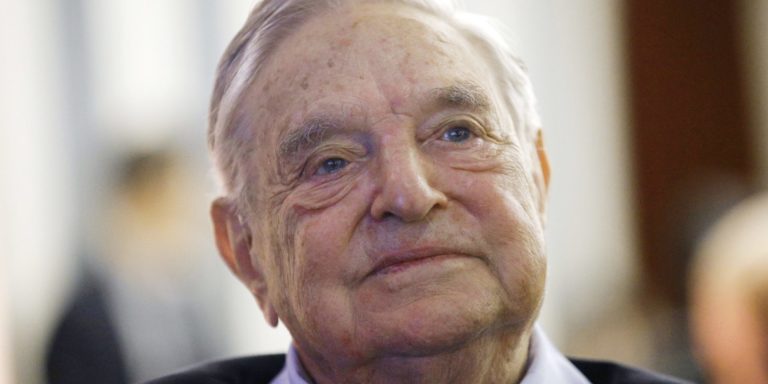
(Luis Cornelio, Headline USA) The United States—a country historically touted as a beacon of freedom—has been added to a watchlist of countries allegedly violating civil rights. CIVICUS, a leftist and Soros-founded organization, stands behind the list. 

“Due to the Trump administration’s assault on democratic norms and global cooperation, CIVICUS has added the United States of America (USA) to its Watchlist of countries with faltering civic freedoms,” CIVICUS claimed in a press release on Monday. 

CIVICUS is a nonprofit that received more than $3.5 million in donations from George Soros’s Open Society Foundations from 2016 to 2021, according to a Headline USA review of a grants database. 

Given these ties, it was unsurprising that the non-profit would cite a series of innocuous actions taken by the Trump administration to place the U.S. closer to dictatorial regimes like North Korea, China and Russia.

These actions include: 

  • Issuing executive orders, as allowed by Article II of the Constitution. 
  • Overhauling federal agencies within the executive branch, which Trump heads. Among these agencies is USAID, an unruly agency that attempted to defy directives from the duly elected president 
  • Appointing individuals to cabinet positions in accordance with the Constitution and established practice. 

According to Mandeep Tiwana, CIVICUS’s interim co-secretary general, these actions are somehow reminiscent of McCarthyism. “This is an unparalleled attack on the rule of law in the United States, not seen since the days of McCarthyism in the twentieth century,” Tiwana claimed.  

“Restrictive executive orders, unjustifiable institutional cutbacks, and intimidation tactics through threatening pronouncements by senior officials in the administration are creating an atmosphere to chill democratic dissent, a cherished American ideal,” he added. 

CIVICUS omitted any reference to actions taken by the Biden administration that have deteriorated the republic by any conservative standards. Tiwana continued, “The Trump administration seems hellbent on dismantling the system of checks and balances which are the pillars of a democratic society.” 

The 2025 watchlist also targets countries such as the Democratic Republic of Congo, Italy, Pakistan and Serbia. CIVICUS, founded in 1993, claims to be a “global alliance of civil society organisations and activists working to strengthen citizen action and civil society throughout the world.” 

See its Soros donations below:

Trump’s Iconic ‘Fight!’ Photo Wins Political Photo of the Year

(Luis Cornelio, Headline USA) The photograph capturing President Donald Trump defiantly shouting “Fight! Fight! Fight!” after narrowly escaping an assassination attempt has been named “Political Photo of the Year.” 

The award—part of the Eyes of History series by the White House News Photographers Association—honored Associated Press photographer Evan Vucci, who shot the photo just seconds after would-be assassin Thomas Crooks’s bullets grazed Trump’s right ear on July 13. 

In response to the award, Vucci threw a subtle jab at the White House, which had barred his employer from accessing the Oval Office as a consequence of their false and misleading reporting. 

“This photo underscores the importance of eyewitness journalism and AP’s legacy of documenting the presidency,” Vucci wrote, defending his colleagues at the Associated Press.  

“I look forward to the day I can once again cover President Trump alongside my colleagues. Now more than ever, independent, nonpartisan photojournalism is essential,” he added.

Trump was in Butler, Pennsylvania, rallying voters to send him back to the White House in the 2024 presidential election. Minutes after Trump took the stage, Crooks fired several shots from a nearby roof he had secretly climbed. 

Crooks’s bullets grazed Trump’s skull by mere millimeters. Secret Service agents rushed to the stage and intercepted him. As Crooks was neutralized, agents quickly lifted Trump and attempted to escort him off stage. However, Trump had different plans. 

“Wait, wait!” Trump shouted. “You fight! Fight! Fight!” Trump was seen murmuring, raising his fist as blood dripped from his ear. 

The crowd, having just witnessed the 45th commander-in-chief nearly assassinated, erupted in chants of “USA! USA! USA!” 

The photographs went viral, capturing Trump defiantly standing with a cane that held an American flag up high and urging his supporters to keep fighting even when facing death.  

Even some of his biggest critics praised the image. Meta owner Mark Zuckerberg, formerly aligned with the left, celebrated the photo as “badass.” 

Michelle Launches New Podcast to Talk Obama Drama

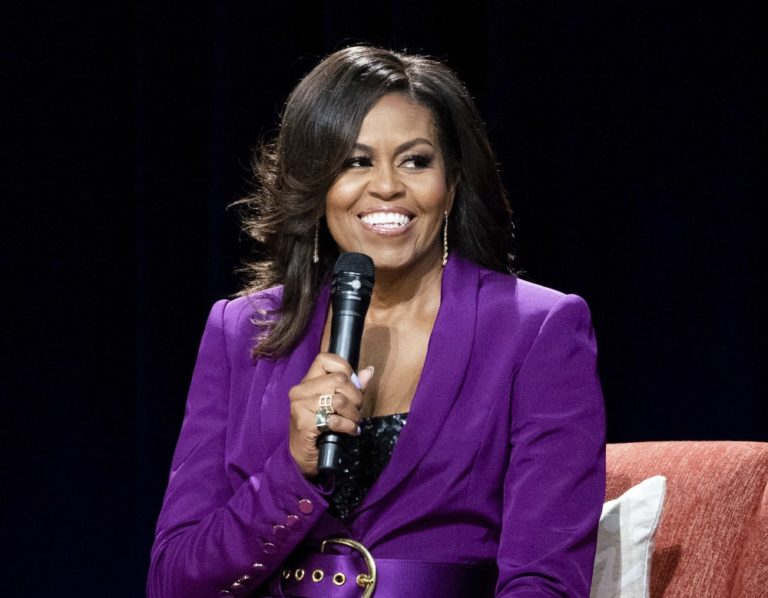
(Maire Clayton, Headline USA) Former First Lady Michelle Obama announced Monday she is starting a podcast with her brother Craig Robinson called “IMO.”

“There’s a lot going on in the world right now,” Obama posted to her Instagram while making the announcement. “We’re living through some really complicated and confusing times and on top of that, folks are trying to juggle family life, work dynamics, relationships, aging parents, and more.”

The first two episodes of the weekly podcast drop on Wednesday.

“My brother Craig and I launched the ‘IMO’ podcast to create a space for people to come as they are, ask honest questions, give their opinions and have thoughtful conversations about life,” Obama continued. “There is no single way to deal with the challenges we may be facing — whether it’s family, faith or our personal relationships — but taking the time to open up and talk about these issues can provide hope.”

Some of the guests include Tyler Perry, Tracee Ellis Ross, Keke Palmer, Seth and Lauren Rogen.

Obama is not the only Democrat to recently launch a podcast. California Governor Gavin Newsom announced his podcast on March 1 with similar talking points.

“I’m talking directly with people I disagree with, people I look up to, and you — the listeners,” Newsom wrote on X. “Egg prices? Tariffs? DOGE? We’re tackling all your big questions.”

Some social media users are already calling out Democrats for now attempting to gain support through podcasts.

“Between @imopodcasts and Gavin Newsoms podcast, it’s clear the left is positioning themselves to compete against the manosphere for relevancy before the 2028 election,” one user wrote.

Many just blasted the former first lady and said she needs to just go away.

“America has had enough…,” one user simply wrote.

Robert F. Kennedy Jr. Praises Fast Food Chain for ‘RFKing’ Its Fries

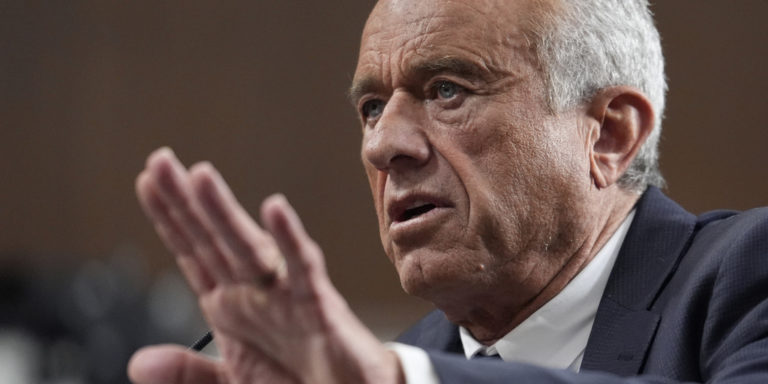
(Maire Clayton, Headline USA) Health and Human Services Secretary Robert F. Kennedy Jr. visited a Steak n’ Shake with Fox News host Sean Hannity after the fast food chain halted the use of seed oils in its fries. 

“Steak ‘n Shake just switched out, and people are raving about these french fries,” Kennedy told Hannity while sitting inside the restaurant.

The chain is now using beef tallow instead of vegetable oil.

“Steak n’ Shake has been great. We’re very grateful for them for RFK-ing and the French fries,” Kennedy continued. “They turned me into a verb.”

Kennedy briefly spoke about how he thinks seed oil is partly responsible for chronic illnesses.

“Seed oil is one of the components of processed foods, and all the science indicates that ultra-processed foods are the principal culprit in this extraordinary explosion — the epidemic we have of chronic disease,” he said.

While Kennedy does not like the use of seed oils, he believes everyone deserves the freedom to decide if they want to consume it.

“People should be able to make their own choices. If you want to eat a donut or seed oils, you should be able to,” he told Hannity. “You should be able to exercise informed choice. You should know what that product is, what’s in your food, and what the health impacts are. That’s all we’re going to do,”

The fast food chain later thanked Kennedy for stopping by one of its establishments.

“Thank you for visiting Steak n Shake Secretary Kennedy!” the post read along with an image of Kennedy.

The chain previously announced its plan to switch all locations away from seed oil on Jan. 16.

“The consumer wants the best and deserves the best. By adopting 100% beef tallow, Steak n Shake is delivering the best fries possible,” Chief global development officer Kristen Briede said at the time.

USAID Bureaucrats Ordered to Shred or Burn Documents

(Luis Cornelio, Headline USA) The remaining bureaucrats at the U.S. Agency for International Development have been ordered to get rid of classified safes and personnel documents from its D.C. headquarters—a move that signals the seriousness of President Donald Trump’s plan to reform the controversial and unruly agency. 

The order, issued by USAID’s acting executive secretary Erica Carr, followed Trump’s suspension of the agency’s operations after its leadership refused to grant DOGE workers access to internal documents. 

Copies of the new order were conveniently leaked to leftist news outlet ProPublica and CBS News on Tuesday. “Shred as many documents first, and reserve the burn bags for when the shredder becomes unavailable or needs a break,” Carr allegedly told bureaucrats.  

“The only labeling required on the burn bags are the words ‘SECRET’ and ‘USAID/B/IO)’ in dark sharpie if possible,” she added, instructing staffers to request for burn bags or sharpie if necessary. 

On Monday, Secretary of State Marco Rubio—whom President Donald Trump tapped as acting USAID administrator—announced that 83 percent of the agency’s foreign aid had been canceled. He said that roughly 5,200 contracts had also been canceled because they did not serve—“and in some cases even harmed”—U.S. national security interests. 

“In consultation with Congress, we intend for the remaining 18% of programs we are keeping (approximately 1000) to now be administered more effectively under the State Department,” Rubio added.  “Thank you to DOGE and our hardworking staff who worked very long hours to achieve this overdue and historic reform.” 

USAID’s closure was nothing short of a soap opera. Shortly after taking office, Trump announced the creation of DOGE, a federal task force designed to modernize government systems and save billions of tax dollars in waste and fraud. 

DOGE agents, acting on Trump’s behalf, showed up at USAID’s headquarters seeking access to documents, only to be met by defiant bureaucrats who aggressively denied them access. 

USAID’s action was stunning. Here was a federal agency refusing to comply with orders from Trump, the duly elected president and head of the executive branch. If not Trump, to whom were these bureaucrats accountable? 

Faced with this defiance, Trump ordered the agency to be overhauled and transferred to the Department of State. As a result, approximately 4,200 staff members were placed on leave and at least 1,600 employees were fired, according to CBS News.

Online Threats will Lead to the Creation of Internet ID System, Superstar Streamer Warns

(José Niño, Headline USA) A prominent Twitch streamer believes that the alarming amount of violent threats users are posting on Reddit will lead to the eventual creation of an Internet ID system. 

Asmongold has noted that since Donald Trump took office, Reddit has experienced a significant increase in threats of violence directed at President Donald Trump, people in his administration, and the broader conservative movement. 

During a livestream on March 9, 2025, he criticized Reddit for becoming a “radical terrorist breeding ground” where users casually talk about and glorify political violence. He argued that the platform’s lax moderation policies and the prevalence of such content might accelerate the push for connecting online accounts to real-world identities, thereby ending online anonymity.

In February, Reddit temporarily banned several pages after users started posting threats directed at staff working for the Department of Government Efficiency (DOGE).

“Time to hunt,” one user posted, while another asserted, “Lets drag their necks up by a large coil up rope.”

“You have people that are upvoting and glorifying political violence all over this website and it’s completely become a radical terrorist breeding ground, like it’s actually insane how bad this is,” the streamer proclaimed.

He noted that the threats have only increased since Luigi Mangione killed UnitedHealthcare CEO Brian Thompson. “It’s getting real bad, these people are speed running Internet Real ID, I just hope that they understand that,” stated Asmongold, making a reference to a system of government-issued IDs that could be potentially revoked by the government.  

He stressed the need for content moderation policies in line with First Amendment principle, which allows legal free speech while clamping down on doxxing and direct calls to violence. “You just follow the law and you ban people based off of things they say that break the law,” stated the streamer.

He described the current situation as “actually insane” and warned that the trajectory Reddit is on could lead to extreme measures such as the implementation of Internet Real ID. Asmongold specifically argued that if there are more attacks similar to the Thompson assassination, “We’re absolutely gonna get Real ID on the Internet.”

Asmongold, whose real name is Zack Hoyt, is a highly popular American Twitch streamer, YouTuber, and content creator known for his focus on World of Warcraft (WoW) and other massively multiplayer online role-playing games (MMORPGs) MMORPGs. 

Asmongold started uploading videos to YouTube in 2009 and began streaming on Twitch in 2014, where he quickly amassed a large following. Today, he has over 3.5 million Twitch followers and is widely viewed as one of the most influential figures in the MMO gaming scene.

José Niño is the deputy editor of Headline USA. Follow him at x.com/JoseAlNino

U.S. Resumes Military Aid after Ukraine Agrees to 30-Day Ceasefire

(Dave DeCamp, Antiwar.com) The Trump administration has lifted its pause on military aid and intelligence sharing with Ukraine following talks between US and Ukrainian officials in Saudi Arabia on Tuesday.

US officials said the move came after Ukraine signaled it was open to a 30-day ceasefire if Russia agreed.

“Ukraine expressed readiness to accept the US proposal to enact an immediate, interim 30-day ceasefire, which can be extended by mutual agreement of the parties, and which is subject to acceptance and concurrent implementation by the Russian Federation,” the US and Ukraine said in a joint statement.

“The United States will communicate to Russia that Russian reciprocity is the key to achieving peace. The United States will immediately lift the pause on intelligence sharing and resume security assistance to Ukraine,” the statement added.

The joint statement also said that “both countries’ presidents agreed to conclude as soon as possible a comprehensive agreement for developing Ukraine’s critical mineral resources to expand Ukraine’s economy and guarantee Ukraine’s long-term prosperity and security.”

So far, there’s been no reaction from Moscow. Russian President Vladimir Putin has previously rejected the idea of a temporary ceasefire, saying in January that he wouldn’t accept “some kind of respite for regrouping forces and rearmament with the aim of subsequently continuing the conflict” and that he wanted a “long-term peace based on respect for the legitimate interests of all people, all nations living in this region.”

Secretary of State Marco Rubio said after the talks that the US will bring the proposal to Moscow. “We’re going to tell them this is what’s on the table. Ukraine is ready to stop shooting and start talking. And now it’ll be up to them to say yes or no. If they say no, then we’ll unfortunately know what the impediment is to peace here.”

Ukrainian President Volodymyr Zelensky has repeatedly rejected the idea of a ceasefire, and his openness to the 30-day truce marks a significant shift in his position. US officials had said the pause in US military aid and intelligence sharing would only be lifted after Ukraine made clear it was willing to work toward peace.

“The Ukrainian delegation today made something very clear, that they share President Trump’s vision for peace,” US National Security Advisor Mike Waltz said after the talks. He said the two sides “got into substantive details on how this war is going to permanently end,” including the idea of long-term security guarantees.

Waltz didn’t elaborate on the potential security guarantees, which will be a major sticking point in any negotiations. Zelensky and his European backers have been pushing for the deployment of Western troops to enforce the ceasefire, a proposal that’s been repeatedly rejected by Moscow.

This article originally appeared at Antiwar.com.