Patriotic Whistleblower Explains in Court Why He Leaked Secret Pentagon Docs about Ukraine

(Headline USA) Jack Teixeira, the Massachusetts Air National Guard member who caused an international uproar when he leaked highly classified documents about the war in Ukraine, pleaded guilty to military charges of obstructing justice at his court-martial Thursday and called himself a “proud patriot.”

In a 10-minute address, Teixeira said he was “exposing and correcting the lies that were perpetrated by President Biden and force-fed to the American people” about the war in Ukraine.

“I believe the Department of Justice was politicized against President Trump and myself,” added Teixeira, who said he acted alone. He called on Trump and members of his administration to reverse his convictions.

“If I saved one American, Russian or Ukrainian life in this money-grabbing war, my punishment was worth it,” he said.

The plea agreement calls for dishonorable discharge and no jail time. The judge approved the plea agreement, but had not addressed his sentencing yet, which was expected to occur later Thursday afternoon.

Teixeira pleaded guilty to the obstruction charge, admitting that he used a hammer to destroy a cellphone, a computer hard drive and an iPad after seeing some news reports of the leaked documents. He also admitted to telling his friend to destroy messages exchanged on a communication app.

“I was scared about a potential law enforcement investigation into me and my friends,” he said in court Thursday.

As the sentencing phase began, Teixeira’s parents said he took an early interest in the military as a child. His father, also named Jack Teixeira, described him as “a good kid, energetic, intelligent, and quirky.”

When his son decided to join the military, “I was excited about it,” the elder Teixeira said. ”It was a good option for Jack.” He said it gave him direction and the chance to see the world.

“He made a mistake,” his mother, Dawn Dufault, said. “Everyone makes mistakes. He’s my son, I love him. He deserves a second chance.”

Thursday’s military tribunal hearing comes after Teixeira was already sentenced in federal court last year to 15 years in prison. In federal court, he pleaded guilty to six counts of willful retention and transmission of national defense information under the Espionage Act, following his arrest in the most consequential national security breach in years.

Among other revelations, Teixeira’s disclosures showed that the U.S. has boots on the ground in Ukraine, the U.S. the Biden administration spied on Ukrainian President Volodymyr Zelenskyy and that the war there was going worse for Ukraine that officials were saying publicly—while shoveling more than $100 billion toward that effort.

The leaked documents also revealed assessments of the defense capabilities of Taiwan and internal arguments in Britain, Egypt, Israel, South Korea and Japan. Teixeira also admitted to posting information about a U.S. adversary’s plans to harm U.S. forces serving overseas.

Teixeira worked as an information technology specialist responsible for military communications networks. His lawyers described Teixeira as an autistic, isolated individual who spent most of his time online, especially with his Discord community, and never meant to harm the United States.

Instead of being hailed as a whistleblower for exposing Biden’s lies and malfeasance, mainstream media outlets and Democrat politicians have accused him of being a traitor. The New York Times and government-funded publication Bellingcat went as far as help the FBI identify Teixeira as the alleged leaker.

Since then, the FBI has reportedly been visiting the homes of people who posted stories about the leaked Pentagon documents in an “intimidating” attempt to remove such content from the internet.

The judge presiding over Teixeira’s case also issued an unconstitutional order for reporters and other third parties to destroy Teixeira’s sentencing memorandum, which was apparently inadvertently filed on the public court docket when it was supposed to be sealed. The judge rescinded her unconstitutional order a day later.

Ken Silva contributed to this report.

Adapted from reporting by the Associated Press.



Improved CPI Data Sets Stage for More Inflation

(Mike Maharrey, Money Metals News Service) Price inflation moderated in February, setting the stage for more inflation. The CPI data for last month wasn’t bad. It broke a four-month upward trend, and the numbers all came in lower than forecast.

But the CPI data for last month wasn’t great either. Even with the dip in the numbers, the headline annual CPI rate is still higher than it was last November, and core CPI remains mired above 3 percent.

The February CPI Data

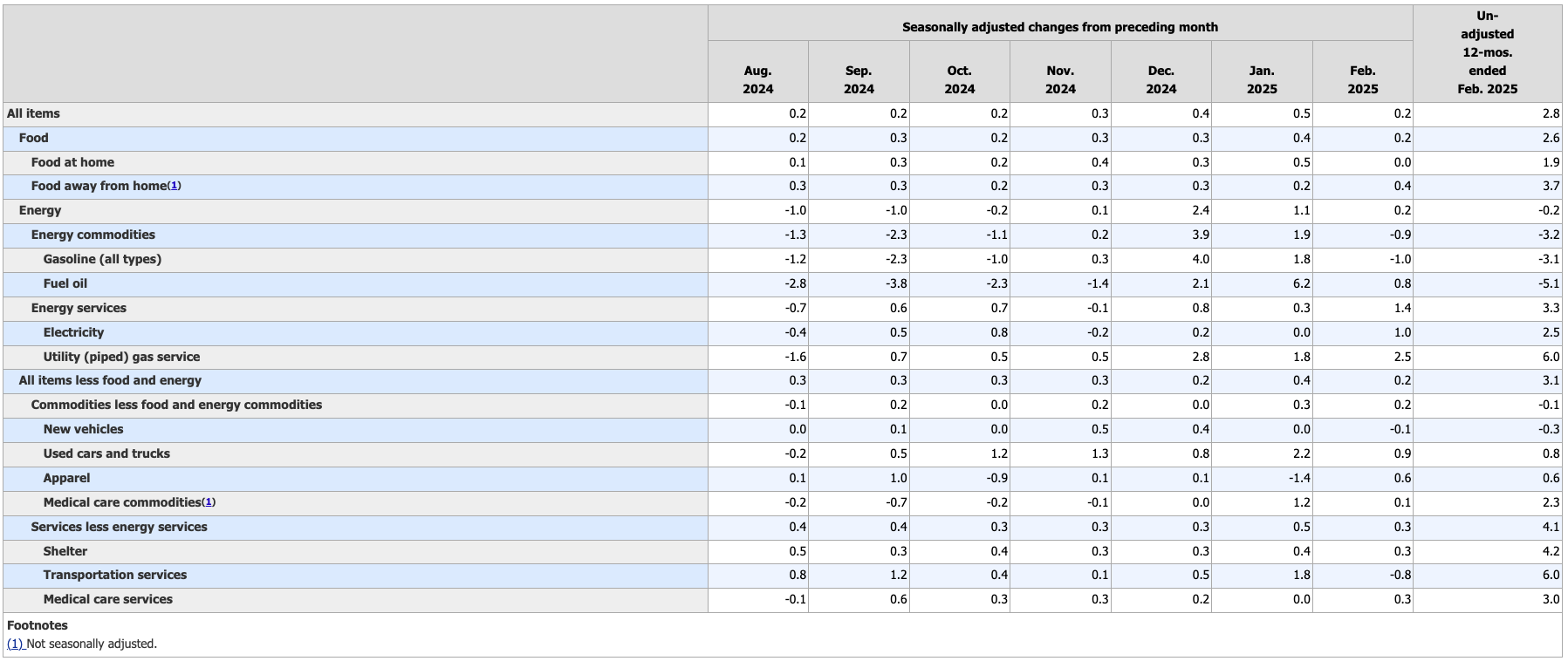
On an annual basis, prices rose by 2.8 percent in February, according to the latest release from the Bureau of Labor Statistics (BLS). This was down from 3.0 percent in January.

It’s important to put this number into context. This was the first drop in the annual CPI rate since September. Before that, prices crept up from 2.4 percent in September, 2.6 percent in October, 2.7 percent in November, and 2.9 percent in December.

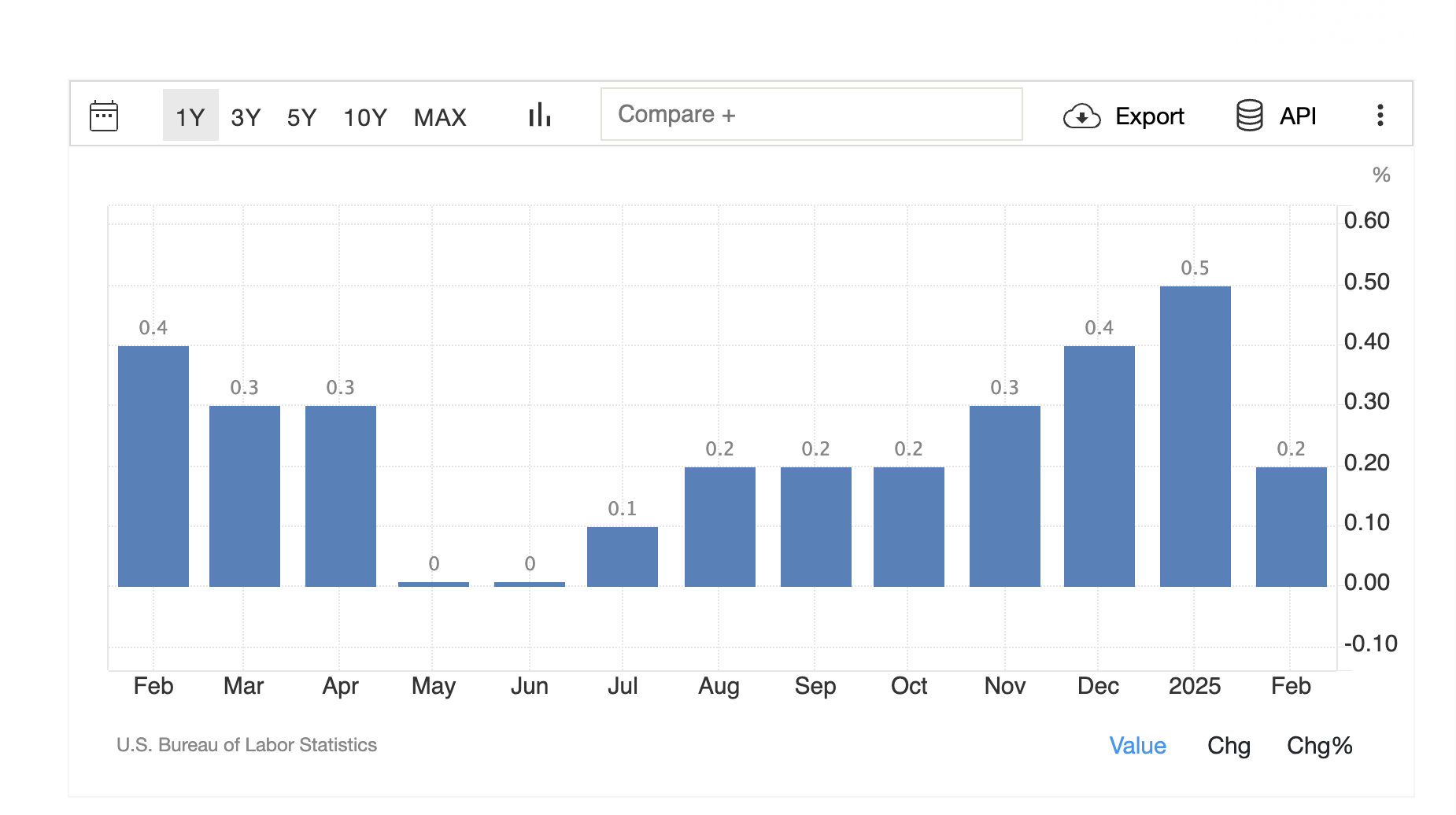
We’ve also seen this song and dance before. Month-on-month CPI dropped to zero last spring, only to surge again later in the year.

Chart courtesy of Trading Economics

One shouldn’t draw conclusions from a one-off report. It could be the beginning of a downward trend, but it could also be an anomaly.

Stripping out more volatile food and energy prices, the core CPI also moderated, coming in at 0.2 percent in February. That pushed the annual core CPI down to 3.1 percent. Core CPI has been mired in this range since last May and we still haven’t seen a core reading below 3 percent.

One might note that all these numbers remain well above the mythical 2 percent target.

Also keep in mind that the CPI doesn’t tell the entire story of inflation. The government revised the CPI formula in the 1990s so that it understated the actual rise in prices. Based on the formula used in the 1970s, CPI is closer to double the official numbers. So, if the BLS was using the old formula, we’re looking at CPI closer to 6 percent. And using an honest formula, it would probably be worse than that.

Looking more closely at the data, we find that a big drop in gasoline prices (-1.0 percent month-on-month) and energy commodities (-0.9 percent month-on-month) helped push overall CPI down.

Lower airline fares and dip in new car prices also helped pull the index lower.

Prices in virtually every other category rose last month, albeit at a slower rate.

This underscores a painful reality — you’re still paying more for everything even when there is “good news” on the price inflation front.

The producer price index data was also cooler than expected, adding more optimism on the inflation front.

On a monthly basis, PPI was unchanged. The forecast was for a 0.3 percent increase in producer prices. Core PPI fell -0.1 percent month-on-month. On an annual basis producer prices were up 3.2 percent, with the core PPI coming in at 3.4 percent. Both annual numbers were 0.1 percent below the forecast.

There was one hint of caution in the mainstream analysis of the February CPI data. Many analysts noted that the February report doesn’t reflect the impact of tariffs.

Setting the Stage for More Inflation

The better-than-expected CPI report boosted optimism that the Federal Reserve might resume cutting interest rates sooner than expected. A CNBC headline trumpeted, “Latest U.S. inflation data gives Fed cover to lower rates.”

FX Empire analyst James Hyerczyk said that the CPI numbers could prompt the Fed to cut rates earlier than forecast, triggering the next leg up for gold.

In other words, one month of mildly optimistic CPI data has raised expectations for more inflation!

Rate cuts encourage borrowing. In turn, this boosts the money supply. This is, by definition, inflation. One of the symptoms of this monetary inflation is price inflation. In other words, any victory over price inflation opens the door for the Fed to resume the very policy that gave us higher price inflation to begin with.

We’re already seeing this inflationary pressure manifest after the first round of rate cuts and the slowdown balance sheet reduction.

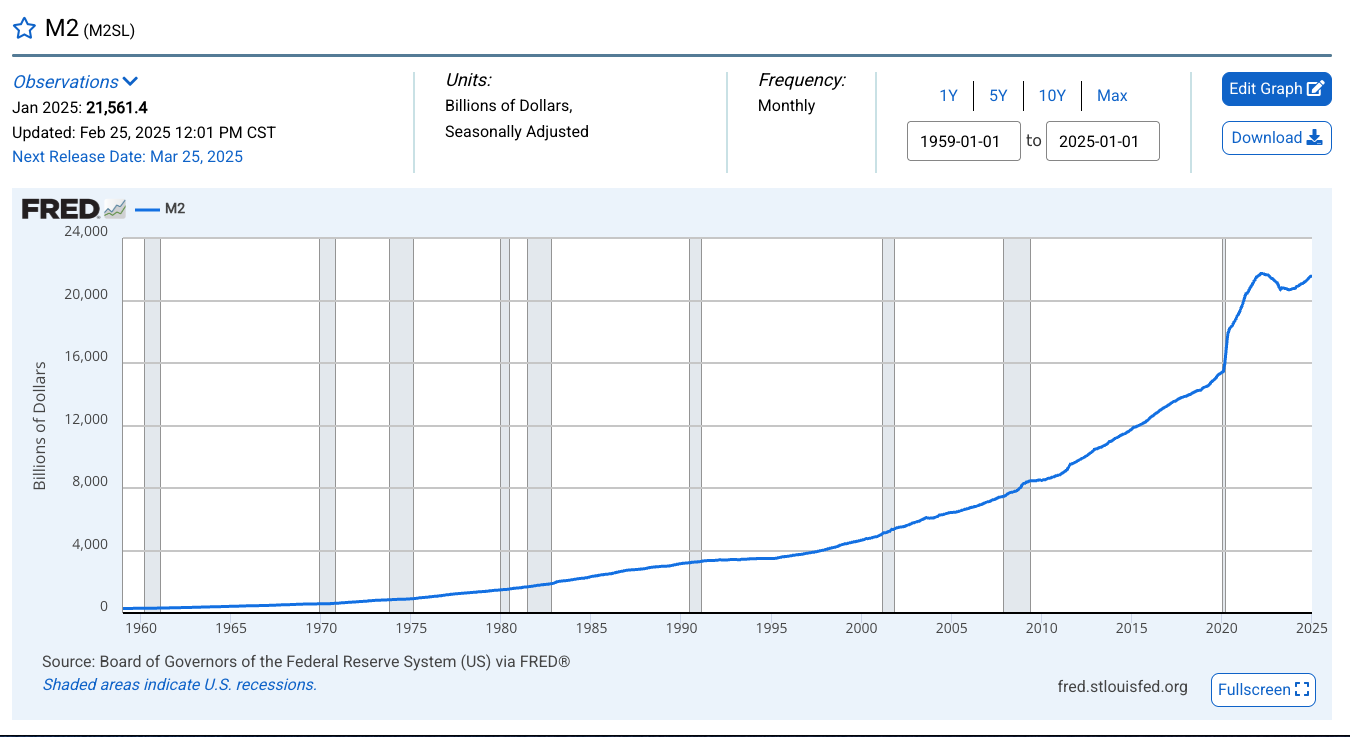
The M2 money supply bottomed a little over a year ago at $20.60 trillion. Since then, it has crept upward. As of January, it was at 21.56 trillion. That’s the highest level since September 2022 and approaching the all-time high of $21.72 trillion hit in the spring of 2022.

The money supply rose by 0.4 percent in December alone. This represents an annual monetary inflation rate of nearly 5 percent.

The Chicago Fed National Financial Conditions Index also reflects this increasingly inflationary environment. As of the week ending March 7, the NFCI stood at -0.57. A negative number reflects historically loose financial conditions.

And the markets want even more looseness!

This underscores the problem facing the central bankers over at the Fed.

The reality is the Federal Reserve is in a Catch-22. Given the escalating inflationary pressure, it needs to push rates even higher. After all, it never did do enough to slay the inflation monster. The bottom line is that the inflation dragon isn’t dead. Sure, the Fed might have knocked it to the mat. But it’s not down for the count.

On the other hand, the central bank needs to cut rates because the economy is addicted to easy money. Given the levels of debt and the amount of malinvestment, the economy can’t function in this higher interest rate environment. It needs its easy money drug.

How Powell & Company will navigate this remains to be seen, but they certainly can’t simultaneously raise and lower interest rates. They are walking a tightrope. The question is which way will they fall?


Mike Maharrey is a journalist and market analyst for Money Metals with over a decade of experience in precious metals. He holds a BS in accounting from the University of Kentucky and a BA in journalism from the University of South Florida.

The Weaponization of the Dollar and Its Global Implications

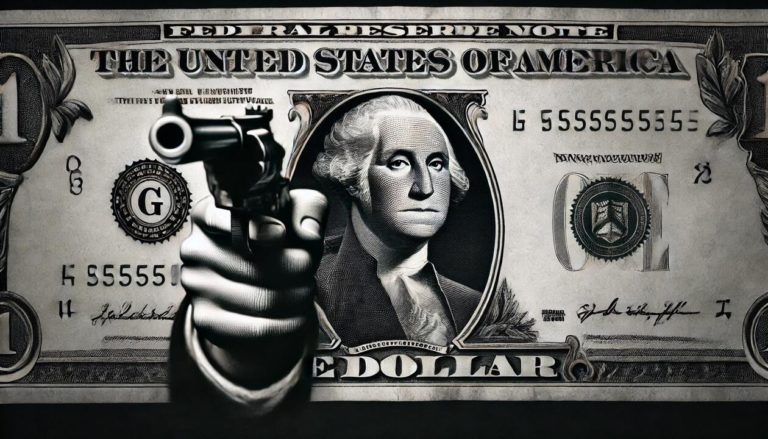
(Money Metals News Service) In this week’s episode of the Money Metals Midweek Memo, host Mike Maharrey went into a deep discussion on the weaponization of the U.S. dollar, the global response to financial sanctions, and the ongoing trend of de-dollarization.

Maharrey revisited a 2019 appearance on RT, where he predicted that the U.S. and its Western allies would leverage the SWIFT payment system as a foreign policy tool, in the faces of naysayers and so-called fact checkers at the time. That prediction has since come true, with major ramifications for the global financial system.

SWIFT as a Foreign Policy Weapon

SWIFT, the Society for Worldwide Interbank Financial Telecommunication, serves as the backbone of the international financial messaging system, facilitating cross-border payments. Maharrey explained how the U.S. has wielded its influence over SWIFT to enforce economic sanctions.

  • 2014: The Obama administration cut several Russian financial institutions off from SWIFT following the Ukraine-Crimea conflict.
  • 2017: Treasury Secretary Steven Mnuchin threatened to lock China out of the international dollar system unless it sanctioned North Korea.
  • 2022: Following Russia’s invasion of Ukraine, the U.S. and its allies cut off Russian banks from SWIFT and froze Russian assets.

While the effectiveness of such policies is debatable, Maharrey emphasized their unintended consequences—prompting countries to seek alternatives to the U.S. dollar.

The Acceleration of De-Dollarization

The exclusion of Russia from SWIFT and threats to liquidate its dollar-denominated assets have led other nations to reduce their dependence on the greenback. The process of de-dollarization, where countries minimize their exposure to the U.S. dollar, has gained momentum.

  • Emerging Markets Shift Reserves: Many emerging economies are diversifying their reserves by accumulating gold instead of dollars.
  • Central Bank Gold Purchases: Over the past three years, central banks have added 1,000+ tons of gold annually to their reserves—more than doubling the yearly average of 473 tons from 2010-2021.
  • Declining Dollar Reserves: Since 2002, the percentage of global reserves held in U.S. dollars has declined by 14%, a trend that has accelerated post-2022.

Bob Minter of Aberdeen Standard Investments highlighted that countries are strategically pivoting away from the dollar, seeking more economic autonomy.

BRICS and the Rise of a Multipolar Financial System

The BRICS bloc—comprised of Brazil, Russia, India, China, and South Africa—has expanded to include Egypt, the UAE, Iran, and Ethiopia, with Saudi Arabia also invited to join.

  • Economic Clout: The expanded BRICS nations represent 3.5 billion people, control 28% of the global economy ($28.5 trillion), and account for 42% of global crude oil production.
  • Alternative Payment Systems: BRICS members are working on alternative financial structures such as BRICS Pay, a competitor to SWIFT, and trade mechanisms that bypass the dollar.

While BRICS is not yet a direct challenge to Western financial dominance, it is steadily reducing global reliance on the U.S. dollar, contributing to the shift toward a multipolar financial order.

Implications for the U.S. Economy

Maharrey warned that even a modest reduction in global demand for dollars could have severe economic consequences for the U.S.

  • Dollar Glut and Inflation: Reduced global demand for U.S. debt would mean higher borrowing costs and a weaker dollar, leading to domestic inflation.
  • U.S. Fiscal Policy: The U.S. depends on dollar hegemony to finance its debt-heavy economy. If demand for U.S. bonds declines, the Federal Reserve will be forced to monetize more debt, worsening inflation.
  • Declining Purchasing Power: As the dollar loses its global dominance, Americans will feel the impact through rising import costs and decreasing purchasing power.

VanEck analysts Imaru Casanova and Joe Foster noted that the U.S. is already experiencing an erosion of confidence in the dollar, which they expect to drive gold prices significantly higher.

Gold as a Safe Haven

Given these economic trends, Maharrey underscored the importance of owning real money—gold and silver—to protect against currency devaluation. With rising central bank demand and increased geopolitical uncertainty, gold continues to be a safe haven investment.

For those looking to hedge against the dollar’s decline, Money Metals Exchange offers a variety of precious metals investment options, including a monthly purchase program starting at just [$100] per month.

As the world moves toward a multi-polar financial system, investors should consider the long-term benefits of diversifying away from fiat currencies and into tangible assets like gold and silver.

For more insights on sound money, the precious metals markets, and the global economy, visit MoneyMetals.com and subscribe to the Money Metals Midweek Memo podcast.

72-Year-Old Machine Gun Maker Pleads Guilty to Running Underground Firearms Enterprise

(Ken Silva, Headline USA) A 72-year-old man known as the “AK Guru” pled guilty on Wednesday to selling firearms without a license.

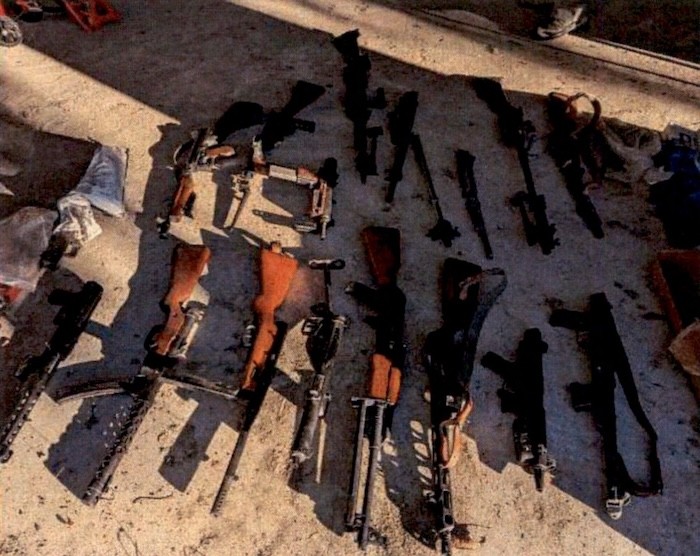
Earl Carter Jr., 72, of Hamlet, North Carolina, allegedly manufactured more than 1,000 fully automatic AK-47s and other firearms, selling them to groups around the area—including “multiple prominent local individuals,” according to the Justice Department.

After his arrest last October and being denied bail, Carter pled guilty some five months later. His plea agreement is not publicly available. He’s set to be sentenced on June 10.

Charging papers describe an underground gun-making enterprise that could be fit for a Breaking Bad-style television series.

“CARTER has connections around the world who are able to smuggle firearms from Europe into the United States … CARTER has sold over 1000 fully automatic AK-47s to different groups in the area and that individuals from the ‘mountains’ have purchased multiple fully automatic AK-47s a week from CARTER,” stated the FBI’s criminal complaint, which was first reported by Court Watch.

“CARTER is an individual who is well connected and has sold machineguns to multiple prominent local individuals.”

According to the 14-page criminal complaint, the FBI eventually nabbed the 72-year-old Carter because one of his clients turned snitch.

An FBI informant bought four machine guns and two illegal suppressors from someone in Wake County. That person, identified in charging papers as “CD-1,” then snitched on Carter and agreed to cooperate against him.

The FBI executed a search warrant on Carter’s home on Oct. 15, finding a cache of firearms.

“Of these firearms, investigators specifically seized at least one AK style rifle that had a “third pin”; an exterior indicator that an AK style rifle is constructed with parts capable of functioning as a machinegun,” the criminal complaint said.

“In addition to the AK style rifles, over twenty other firearms were found during the search warrant execution. In addition to the firearms being found, investigators also seized a homemade suppressor.”

The criminal complaint said there’s more information about Carter’s criminal enterprise that has yet to be disclosed.

Meanwhile, the man who snitched on Carter has been revealed to be Fayetteville resident Travis Morgan, who pled guilty last month to also dealing firearms without a license. Morgan’s sentencing is set for May 6.

Ken Silva is the editor of Headline USA. Follow him at x.com/jd_cashless.

FEMA Launches Probe of NGOs Who Helped Traffic Illegal Migrants

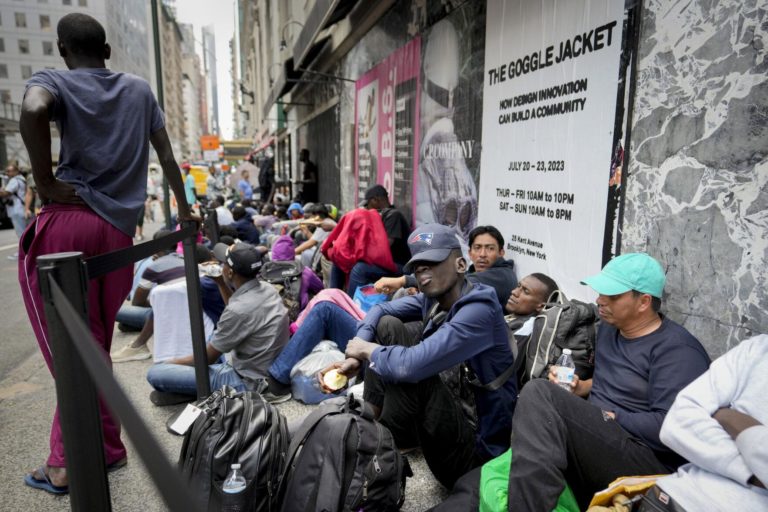
(Headline USA) The Trump administration has launched a review of organizations that provide temporary housing and other aid to migrants, suggesting they may have violated a law prohibiting human trafficking.

The Department of Homeland Security has “significant concerns” that federal grants used to address a surge of migration under former President Joe Biden were used for illegal activities, wrote Cameron Hamilton, acting administrator of the Federal Emergency Management Agency.

His letter, dated Tuesday and obtained by The Associated Press, asks recipients of grants from FEMA’s Shelter and Services Program to provide names and contact information for migrants served and “a detailed and descriptive list of specific services provided” within 30 days. The letter says funding will be withheld during the review.

While it doesn’t explicitly threaten criminal prosecution, it raises concerns that recipients may have violated U.S. Criminal Code Section 1324, a felony offense against bringing people across the border illegally or transporting them within the United States. It also says executive officers must sign sworn statements that they have no knowledge or suspicions of anyone in their organizations violating the smuggling law.

FEMA did not immediately respond to a request for comment late Wednesday.

Hamilton’s letter suggests that the U.S. government is taking action to address a scandal that the House GOP has been chasing for years.

In May 2023, Rep. Jim Jordan, R-Ohio, chairman of the House Judiciary Committee, sent a letter to DHS Alejandro Mayorkas asking Mayorkas to provide information, communications, and documents related to the agency’s funding awards to NGOs at the southern border.

At the time, Jordan argued that NGOs are likely taking advantage of the administration’s loose funding guidelines to make a financial profit off of the border crisis.

Jordan cited a recent inspector general report that found more than $110 million in federal funds had been fraudulently spent by immigration nonprofits. The nonprofits “did not always provide the required receipts or documentation for claimed reimbursements” and “were unable to provide supporting documentation” for how the money was spent, the Office of the Inspector General reportedly found.

“NGOs simply tell DHS how many illegal aliens they encounter, and funding can be awarded without any documentation or receipts,” Jordan wrote. “Federal funding for migration-related NGOs at the border has increased dramatically at a time when federal resources for border security and immigration enforcement and local resources for emergency response and medical care have been strained to the breaking point.”

Last November, The Center Square revealed that the federal government allocated $159 million in FEMA funding to “provide humanitarian services to noncitizen migrants” in California alone since 2023.

FEMA’s Shelter and Services Program awarded $641 million to dozens of state and local governments and organizations across the country in the 2024 fiscal year to help them deal with large numbers of migrants who crossed the border from Mexico. They include the cities of New York, Philadelphia, Chicago and Denver, as well as the United Way of Miami, the San Antonio Food Bank and several branches of Catholic Charities.

Adapted from reporting by the Associated Press

Trump Says Chuck Schumer Is a ‘Palestinian, Not Jewish Anymore’

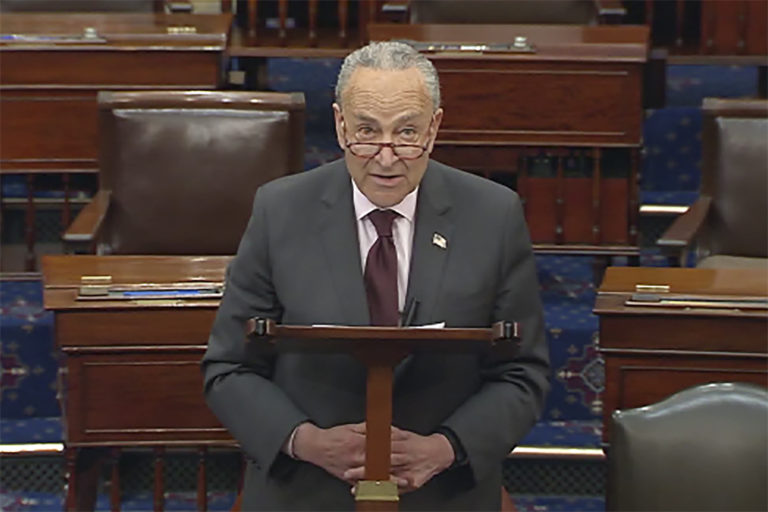
(Dave DeCamp, Antiwar.com) President Trump on Wednesday called Senate Minority Leader Chuck Schumer, D-N.Y., a “Palestinian” while criticizing the Democrats for not supporting the GOP’s spending plan.

“Schumer is a Palestinian, as far as I’m concerned,” Trump said in the Oval Office while hosting Irish Prime Minister Micheál Martin. “He’s become a Palestinian. He used to be Jewish. He’s not Jewish anymore.”

Trump began using “Palestinian” as an insult while on the campaign trail and even called President Biden a “bad Palestinian” during their debate. Trump first labeled Schumer a “Palestinian” while campaigning, apparently criticizing the Jewish senator for calling for elections in Israel.

While Schumer criticized Israeli Prime Minister Benjamin Netanyahu last year and called for elections, he has always been and still is a staunch supporter of Israel.

Trump recently referred to Schumer as a Palestinian when discussing his plans for the US to “take over” the Gaza Strip.

“The Gaza Strip would be turned over to the United States by Israel at the conclusion of fighting,” Trump wrote on Truth Social on February 6. “The Palestinians, people like Chuck Schumer, would have already been resettled in far safer and more beautiful communities, with new and modern homes, in the region.”

While speaking to the press on Wednesday, Trump said that “nobody’s expelling Palestinians” from Gaza despite his repeated calls for their permanent removal.

This article originally appeared at Antiwar.com.


Banking Official Admits in Court to Having Sex w/ Jeffrey Epstein Employee

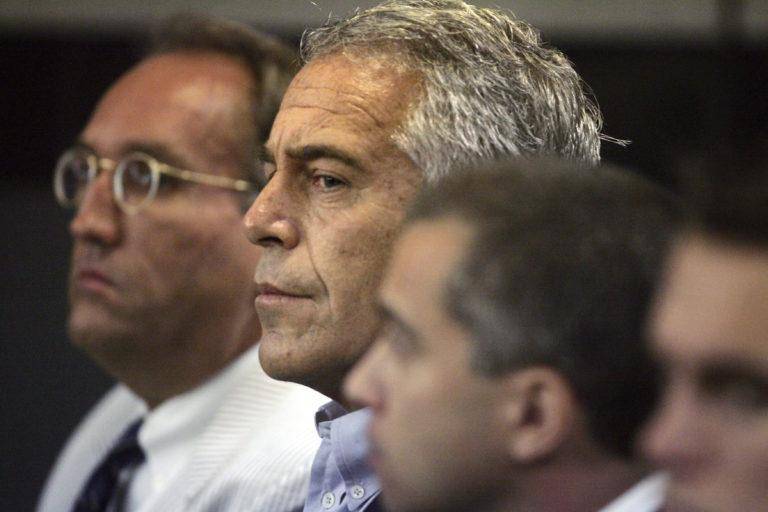
(Ken Silva, Headline USA) Former Barclays CEO Jes Staley reportedly admitted in court this week that he had sex with one of Jeffrey Epstein’s employees in an apartment owned by the deceased sex trafficker’s brother in New York.

Staley’s admission came in a UK appeals tribunal, where he’s challenging UK Financial Conduct Authority’s decision to ban him from holding senior positions in the country’s financial services industry. The ban was implemented in 2023 due to him allegedly misleading the regulator about his relationship with Epstein.

“Do you accept that you had sexual intercourse with a woman at Mr Epstein’s brother’s apartment?” FCA lawyer Leigh-Ann Mulcahy asked Staley during appeal proceedings Wednesday, as reported by The Guardian.

“Yes,” Staley said.

“How did it come about that you had sexual intercourse with a woman who worked for him at an apartment, owned by his brother, without him knowing?” Mulcahy asked further, to which Staley responded: “Oftentimes I would go to Epstein’s apartment and he would be late, and she and I got the chance to know each other.”

Staley reportedly described the sex as consensual. The date of the encounter and the age of the woman were not disclosed in court, according to The Guardian.

Staley was also asked about disturbingly suggestive emails between him and Epstein in 2010.

“That was fun. Say hi to Snow White,” Staley reportedly wrote to Epstein back then.

“What character would you like next?” Epstein asked, to which Staley replied: “Beauty and the Beast.”

Epstein responded: “Well one side is availble [sic].”

According to The Guardian, Staley says he doesn’t’ remember those emails.

“You’ve had a lot of time to consider this email … are you able now to explain?” Mulcahy asked him Wednesday.

“No,” Staley reportedly replied.

The appeals hearing is set to last through Friday.

According to the Wall Street Journal, records filed in court by the FCA show that Staley considered Epstein a “deep friend,” even after Epstein was convicted of sex crimes against juveniles in 2009. In fact, when Epstein’s brief jail stint was over in July 2009, Staley wrote him the following email: “I toast your courage!!!!”

Over the next 10 years, Staley maintained his relationship with Epstein, visiting his private Caribbean island in 2015.

Furthermore, Staley often used his daughter, Alexa Staley, as an intermediary to conceal their relationship, the Journal reported in January.

In the fall of 2016, Epstein emailed Alexis to offer his father a potential gig as U.S. Treasury Secretary.

“Spoke with him. He said not yet, but thanks,” Alexa reportedly replied.

It’s unclear whether this was after Donald Trump won the election that year, as the Journal didn’t disclose the exact date. Trump and Epstein were once considered friends, but they had a falling out in 2004 over a bidding war for a mansion near Mar-a-Lago. Trump also kicked Epstein out of Mar-a-Lago in 2007 for harassing the daughter of a member there.

Ken Silva is the editor of Headline USA. Follow him at x.com/jd_cashless.

Trump Administration Withdraws Nomination for CDC director

(Headline USA) The White House has withdrawn the nomination of Dr. David Weldon, a former Florida congressman, to lead the Centers for Disease Control and Prevention.

The Senate health committee announced Thursday morning that it was canceling a planned hearing on Weldon’s nomination because of the withdrawal.

A person familiar with the matter, who spoke on the condition of anonymity to discuss internal deliberations, said the White House pulled the nomination because it became clear Weldon did not have the votes for confirmation.

Weldon was considered to be closely aligned with Robert F. Kennedy Jr., the U.S. health secretary who for years has been one of the nation’s leading anti-vaccine activists.

A former Florida congressman, Weldon also has been a prominent critic of vaccines and the CDC, which promotes vaccines and monitors their safety.

After news of his withdrawal broke, a clip circulated online of him criticizing the lack of transparency at the CDC in 2002.

“If everything was so objective and any scientist at all can look at this stuff, it would be one thing,” Weldon said at the time.

“But they continue to deny people access to this information,” he said.

“Until we get a free and open dialogue within the scientific community, I don’t think I will ever be satisfied that there isn’t some data suggesting that some children may have serious side effects from some of these vaccines that is really going undetected, unnoticed and yes, it may actually cause autism.”

Weldon becomes the third Trump administration nominee who didn’t make it to a confirmation hearing. Previously, former U.S. Rep. Matt Gaetz withdrew from consideration for attorney general and Chad Chronister for the Drug Enforcement Administration.

Adapted from reporting by the Associated Press

Florida Gov. DeSantis Wants to Repeal Post-Parkland Shooting Gun Control Laws

(José Niño, Headline USA)  Florida Gov. Ron DeSantis vows to repeal several gun control measures that were passed in Florida in 2018 after the Parkland high school mass shooting. 

During his State of the State speech last Tuesday, DeSantis announced his desire to roll back the measures that then-Gov. Rick Scott signed into law. 

“The free state of Florida has not exactly led the way on protecting Second Amendment rights,” he declared. “We need to be a strong Second Amendment state.”

At the time, Scott signed SB 7026 after the Parkland Massacre of 2018, where a 19-year-old man slaughtered 17 people at Parkland high school. This bill enacted a bump stock ban, an increase in the age to buy a guy, and a red flag gun confiscation order.

DeSantis said the state’s gun laws lag behind other conservative states who have liberalized their carry laws in recent years. He cited problems with “red flag laws” and legislation raising the minimum age to buy firearms from 18 to 21. Red flag laws refer to laws that grant law enforcement the power to seize the lawfully-owned firearms of Americans based on accusations from family members, neighbors, co-workers, or any other close associates who deem that individual to be a threat to himself or others. Second Amendment advocates have long argued that red flag laws violate both gun rights and due process rights. 

DeSantis signed Constitutional Carry into law in 2023, declaring it was “an anomaly” that the state hadn’t put that law on the books. Constitutional Carry is the concept that any law-abiding individual can carry a firearm without having to obtain a government-issued permit. The Florida governor described red flag laws as a “huge due process violation” and advocated that the burden of proof be shifted to the state.

José Niño is the deputy editor of Headline USA. Follow him at x.com/JoseAlNino

Gavin Newsom Funded Statue of Himself on Taxpayer Dime

(Luis Cornelio, Headline USA) Call him Gavin Newsom, the autocrat.

Newsom, the California governor and 2028 presidential hopeful, has joined the ranks of Saddam Hussein, Joseph Stalin and Kim Jong Un, all of whom used their power to erect statues of themselves. 

Newsom secretly commissioned a $100,000 statue of himself in the San Francisco City Hall following his tenure as the city’s mayor from 2004 to 2011. Even worse, Newsom paid part of it himself, the Daily Mail reported on Tuesday.

These revelations were made by authors Jedd McFatter and Susan Crabtree in their latest book Fool’s Gold: The Radicals, Con Artists, and Traitors Who Killed the California Dream and Now Threaten Us All. 

The book found that Newsom used two of his companies—Balboa Cafe Partners and PlumpJack Management Group—to donate a combined $10,000 toward the statue, which cost approximately $97,000. 

The rest of the donations came from “behested payments,” meaning Newsom solicited contributions from donors for the statue’s construction. These types of payments are typically reserved for charitable or humanitarian work—not self-aggrandizing monuments. 

In 2015, Newsom—then California’s lieutenant governor—faced questions about his role in the statue’s creation but played coy, telling the SFGate at the time, “I don’t want to call it embarrassing, but it’s a strange thing. I’m just awkward about it. … But now the word is out.” 

Newsom claimed the statue was merely a proposal, as it still required approval from local civic art leaders. “There’s some risk,” he added. 

At the time, Newsom claimed the statue had “been in the works for a few years, but no one’s worked on it. … It’s been an idea that’s been floating around.” He misleadingly claimed he did not know who the fundraisers were—despite his two companies funding part of it. 

Nearly a decade later, Newsom is under fire for the statue, which many see as a sign of narcissism, according to the Daily Mail. The San Francisco City Hall is maintained by the city’s taxpayers. 

The statue features a quote from Newsom and lists his past positions, including lieutenant governor, mayor, member of the Board of Supervisors, University of California regent and California State University trustee.