


A Haitian Ex-Mayor Is on Trial, Charged w/ Lying about Rights Abuses to Get US Residency

(Headline USA) A former mayor from Haiti went on trial Monday after authorities say he lied on his visa application about a series of politically motivated attacks against his opponents that left one dead and several people injured.

Jean Morose Viliena, who has been living just north of Boston in the city of Malden, Massachusetts, was indicted in 2023 on three counts of visa fraud. Authorities say he wrote on his application that he had not “ordered, carried out or materially assisted in extrajudicial and political killings and other acts of violence against the Haitian people.”

But federal prosecutors allege that while Viliena was mayor of the town of Les Irois, an isolated, rural community of about 22,000 on Haiti’s western tip, he committed “violent atrocities” against his political foes. The impoverished community is only accessible by a dirt road that winds through the mountains.

“The defendant was the mayor of this town and he didn’t tolerate anyone who questioned or opposed his authority,” trial attorney Alexandra Skinnion told the jury, adding that some of the victims of that violence would testify during the trial.

In 2007, prosecutors said, Viliena led a group of his allies to the home of a political opponent, where he and his associates shot and killed the opponent’s younger brother, then smashed his skull with a rock.

Prosecutors also allege that in 2008, Viliena and his allies went armed with guns, machetes, picks and sledgehammers to shut down a community radio station that he opposed. Authorities said he pistol-whipped and punched a man and ordered an associate to shoot and kill the man and another person.

Both survived, but one of the men lost a leg and the other was blinded in one eye.
“Today, we are in a courtroom in Boston because the defendant lied about all this,” Skinnion said. “He didn’t disclose he was involved in murdering and shooting people because he knew, if he did, he wouldn’t be allowed into the United States.”

Defense attorneys say Viliena is innocent and therefore didn’t lie on his visa application.

But Viliena was found liable by an American jury in a civil trial in 2023 in connection with the killing and the two attempted killings and assessed $15.5 million in compensatory and punitive damages.

The lawsuit was filed by the San Francisco-based Center for Justice and Accountability on behalf of David Boniface, Juders Ysemé and Nissage Martyr in Boston in 2017. Nissage Martyr died and his son, Nissandère Martyr, replaced him as a plaintiff.

The lawsuit was filed under the Torture Victim Protection Act of 1991, which allows suits to be filed in the U.S. against foreign officials over allegations of wrongdoing in their homeland if all legal avenues in their country have been exhausted.

The center also called on the State Department, the U.S. Embassy in Haiti and the Inter-American Court of Human Rights to work with Haiti’s government to ensure the safety of its clients and their family members, who have been subjected to retaliation and intimidation.

Defense attorneys argued in court that it was members of a rival political party — including some who they say are government witnesses — who committed the violence detailed in the charges against Viliena. They described the former mayor as the son of a farmer who became a teacher and eventually ran for mayor to improve conditions in town.

“Mr. Viliena is innocent of the charges against him and we are looking forward to the opportunity to prove this,” Jason Benzaken, the lead counsel for Viliena, said ahead of the trial.

Adapted from reporting by the Associated Press
Fulton DA Fani Willis Fined $54K for Suppressing 2020 Election Case Records

(Headline USA) A judge has ordered Fulton County District Attorney Fani Willis to pay more than $54,000 in attorneys’ fees and to turn over documents after finding that her office violated Georgia’s Open Records Act.

Attorney Ashleigh Merchant represents former Trump campaign staffer Michael Roman, one of the 18 people indicted in August 2023 along with President Donald Trump on allegations that they illegally tried to overturn Trump’s 2020 election loss in Georgia. Merchant sued in January 2024, alleging that the district attorney’s office had failed to turn over public records she had requested.

Fulton County Superior Court Judge Rachel Krause found that the failures to comply with the records law “were intentional, not done in good faith, and were substantially groundless and vexatious.” Because Willis and her office “lacked substantial justification” for not complying, Merchant is entitled to attorneys’ fees and litigation expenses totaling just over $54,000, Krause found.

Krause ordered Willis to search for and turn over all records responsive to Merchant’s requests. The documents and payment are to be delivered within 30 days of Friday’s order.

A spokesperson for Willis’ office said Monday that they plan to appeal the order.

Merchant posted Krause’s order on the social media platform X, writing, “Proud that we have judges willing to hold people in power accountable when they ignore the law!!!!”

Willis’ office was “openly hostile” to Merchant and testimony showed that Merchant’s requests “were handled differently than other requests,” Krause wrote in her order. Open records officer Dexter Bond said during a hearing that he refused to communicate by phone with Merchant, even though it was his regular practice to call the requester if a request was unclear.

Treating Merchant’s requests this way “indicates a lack of good faith,” Krause wrote.

Among the records Merchant sought were reports provided to Willis’ office by companies hired “to track the impact of Willis’ statements to the media and whether such statements were viewed favorably by the public,” according to a court filing. The filing says Willis began contracting with those companies just before she and her office sought to indict Trump, Roman and others.

Merchant also asked for a copy of the non-disclosure or confidentiality agreement that employees of the district attorney’s office are required to sign, as well as a list of attorneys Willis had hired.

The Georgia Court of Appeals in December ruled that Willis and her office could not continue to prosecute the election interference case against Trump and others. Willis in January asked the Georgia Supreme Court to review and reverse that ruling, and the high court has not yet said whether it will take up the case.

The intermediate appeals court’s ruling was based on an “appearance of impropriety” created by a romantic relationship Willis had with special prosecutor Nathan Wade, whom she had hired to lead the case. It was a bombshell filing by Merchant in January 2024 that first exposed that relationship publicly, alleging that the relationship created a conflict of interest that should disqualify Willis and her office from the case.

A grand jury in Atlanta indicted Trump and 18 others in August 2023, using the state’s anti-racketeering law to accuse them of participating in a wide-ranging scheme to illegally try to overturn Trump’s narrow 2020 loss to Democrat Joe Biden in Georgia. The alleged scheme included Trump’s call to Georgia Secretary of State Brad Raffensperger urging him to help find enough votes to beat Biden. Four people have pleaded guilty and agreed to cooperate with Willis. Trump and the others, including Roman, have pleaded not guilty.

Even if the Georgia Supreme Court agrees to hear the case and eventually rules in Willis’ favor, it seems unlikely that she will be able to prosecute Trump while he’s the sitting president. But there are 14 other defendants, including Roman, who still face charges in the case.

Judicial Watch and Republican investigators have long suspected Willis of secretly colluding with Biden’s special prosecutor, Jack Smith, and the Jan. 6 committee in her longshot prosecution of President Donald Trump over his opposing the 2020 election certification.

Smith was appointed special counsel by former Attorney General Merrick Garland to target Trump. His two cases against Trump were shut down after the 2024 election. Meanwhile, the Jan. 6 Committee—filled with anti-Trump figures—created a media spectacle to smear the president and his supporters over the 2021 protests at the U.S. Capitol.

Willis filed RICO charges against Trump after holding several meetings with Smith and the Jan. 6 Committee. The extent of Smith’s and the committee’s role in her case remains to be exposed.

Adapted from reporting by the Associated Press
OPINION: Vanity Fair Ignores All the President’s Women, Accuses Trump of Nazi-Style Sexism

(Deroy Murdock, Headline USA) For a fresh look at how infantile, indolent, and insane the Hate Trump media have become, look no further than Olivia Campbell’s latest finger painting in Vanity Fair.

This masterpiece of anti-MAGA madness is headlined “Trump’s New Administration Is Anti-woman—a Playbook from Nazi-Era Germany.”

First things first: This headline writer should don a dunce cap and stand in the corner for the rest of the day. Why waste ink, kilobytes, and readers’ time with “Nazi-Era Germany” when “Nazi Germany” will suffice?

This is a journalistic parking ticket compared to Campbell. She speeds her vehicle through a red light and plows right into a fire hydrant.

Campbell claims that, under Trump, “Misogyny is an integral feature of our new federal government.” She adds: “As misogynist ideals invade the highest levels of government, women’s contributions are being erased, their rights and roles eroded.”

Apparently, Trump hates women so much, he named many of them to the commanding heights of his administration. These Cabinet members and senior advisors include:

  • White House Chief of Staff Susie Wiles, the first woman with that responsibility.
  • Attorney General Pam Bondi
  • Secretary of Agriculture Brooke Rollins
  • Secretary of Labor Lori Chavez-Dermer
  • Secretary of Education Linda McMahon
  • Secretary of Homeland Security Kristi Noem
  • Director of National Intelligence Tulsi Gabbard
  • Small Business Administration chief Kelly Loeffler
  • United Nations Ambassador nominee Elise Stefanik
  • White House Press Secretary Karoline Leavitt, 27, is the youngest-ever American in that role.

Campbell portrays Trump as a notorious sexist. However, while presidents Biden and Obama each named numerous women to top posts, by my calculation, each of these supposedly feminist Democrats placed only four females in any of these 10 positions that Trump has filled 100% with women.

According to Campbell, Trump’s view of women, about which she knows nothing, makes him — what else? — Adolf Hitler, Jr.

“At girls [sic] schools, the Reich Ministry of Science, Education, and Culture replaced an hour each of English and math with needlepoint,” Campbell reports. “Women were stripped of the right to vote,” Campbell adds. “They were excluded from training programs, banned from entering certain professions, and forced out of employment.”

If Trump plans to push high school females into needlepoint classes, bar women from the polls, and prohibit them from working, one imagines that Trump might have mentioned this in passing sometime during his long, strange trip back to the Oval Office.

For that matter, if Trump envisioned a Fourth Reich Anti-Feminist Agenda, wouldn’t he at least have hinted at such a policy in his first term? To the contrary, Trump encouraged work among all Americans — men and women. Indeed, the Trump/GOP Tax Cuts and Jobs Act unleashed a pre-COVID economic boom that saw female unemployment plunge to 3.4% in September 2019 — until then, its lowest level since May 1953, under President Dwight Eisenhower.

In her fixation to graffiti a swastika on the President of the United States, Campbell air-headedly forgets this fact: Unlike Trump’s co-ed Cabinet, Hitler’s high command was more all-male than the Provincetown Pride Parade.

On this key point, Campbell is as lost in space as Mark Cuban. “Donald Trump, you never see him around strong, intelligent women,” the billionaire investor told ABC’s The View. To be fair, Cuban said this last Halloween — one week before Trump asked Wiles to lead his White House team and ahead of his recruiting these other nine aforementioned strong, intelligent women.

So, what is Campbell’s excuse? Her article ran last Thursday, weeks after all the President’s women had started serving the American people. A journalist with the most primitive observational tools should have noticed these developments. Perhaps Campbell is just too damn lazy to have done her homework.

Then again, maybe none of this is Campbell’s fault. It’s possible that she has not watched even 10 seconds of news since Inauguration Day. If so, Vanity Fair’s editors should buy Olivia Campbell a TV, before she beclowns herself any further.

​Deroy Murdock is a Manhattan-based Fox News Contributor.

Trump Says U.S. Will Hold Iran Accountable for Houthi Attacks

(Dave DeCamp, Antiwar.com) President Trump on Monday issued a new threat to Iran, saying that he will hold Tehran accountable for Houthi attacks. The warning came after US officials acknowledged that the Houthis, officially known as Ansar Allah, act independently from Iran and are unlikely to take orders from Tehran.

“Let nobody be fooled! The hundreds of attacks being made by Houthi, the sinister mobsters and thugs based in Yemen, who are hated by the Yemeni people, all emanate from, and are created by, IRAN. Any further attack or retaliation by the ‘Houthis’ will be met with great force, and there is no guarantee that that force will stop there,” Trump wrote on Truth Social.

“Every shot fired by the Houthis will be looked upon, from this point forward, as being a shot fired from the weapons and leadership of IRAN, and IRAN will be held responsible, and suffer the consequences, and those consequences will be dire!” the president added.

Over the weekend, when Trump ordered a major round of airstrikes on Yemen, which killed at least 53 people, US officials told The Washington Postthat the Houthis were independent actors.

“US officials have said that while Iran has provided significant support to the Houthis, they see the group as an independent actor that might not necessarily respond to Tehran’s instructions to stand down its maritime attacks,” the Post reported.

The Houthis have an arsenal of drones and missiles that are similar to Iranian ones, but they are believed to be produced domestically in Yemen. “The Houthis also have established their own substantial, independent weapons production capability,” the Post report said.

Iran has always denied US allegations that it arms the Houthis, a position it reiterated when it rejected Trump’s earlier threats related to Yemen. The US airstrikes on Yemen over the weekend provoked Houthi attacks on the aircraft carrier USS Harry Truman, which US officials said were intercepted.

The Houthis ceased their attacks on Israel and Red Sea shipping once the Gaza ceasefire was reached on January 19. But last week, the group announced it was re-imposing its blockade on Israeli shipping in response to Israel imposing a full blockade on Gaza in violation of the ceasefire. That announcement appears to have been what triggered the US bombing of Yemen.

In response to the US bombing of Yemen, Abdul Malik al-Houthi, leader of Ansar Allah, said both US military and commercial vessels in the region will now be targeted by Houthi missiles and drones. Ansar Allah did not back down in the face of hundreds of missile strikes launched by President Biden from January 2024 to January 2025.

During his previous administration, President Trump supported a brutal Saudi/UAE war against the Houthis and used his veto power to kill legislation passed by Congress to end US involvement in the conflict. According to UN numbers, which are considered a low estimate, the US-backed war killed at least 377,000 people, with more than half dying of starvation and disease.

The US-backed Saudi war on Yemen involved a brutal blockade, a heavy bombing campaign, and a ground campaign. During that time, the Houthis only became a more capable fighting force.

Before the US backed the Saudi-UAE war on Yemen in 2015, the Houthis were actually a partner of the US in the fight against al-Qaeda in the Arabian Peninsula (AQAP). A report from The Wall Street Journal in January 2015 (the Saudi intervention started in March 2015) explained how the US was cooperating with the Houthis.

The report reads: “The US has formed ties with Houthi rebels who seized control of Yemen’s capital, White House officials and rebel commanders said, in the clearest indication of a shift in the US approach there as it seeks to maintain its fight against a key branch of al-Qaeda.”

After entering the war against the Houthis, the US was then on the same side as al-Qaeda. A report from The Associated Press in 2018 found the US-backed coalition supported militias that “actively recruit al-Qaeda militants, or those who were recently members, because they’re considered exceptional fighters.”

This article originally appeared at Antiwar.com.


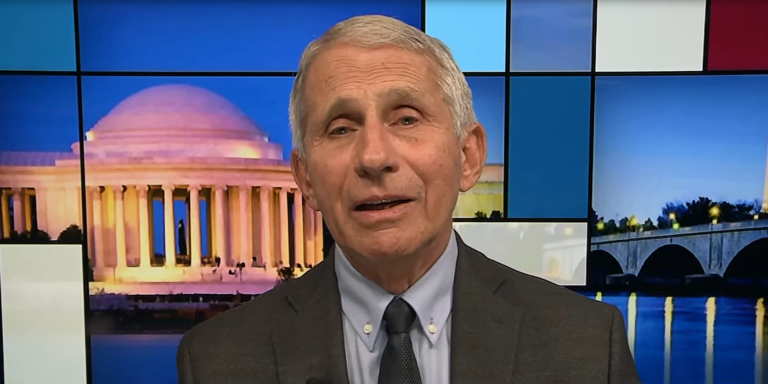
Fauci Mural Removed from NIH: End of an Era?

(José Niño, Headline USA) A mural at the National Institutes of Health commemorating Dr. Anthony Fauci has reportedly been taken down.

The mural had a phrase that read “science is telling us that we can do phenomenal things if we put our minds and our resources to it.”

According to a Washington Post report, in the first weeks after President Donald Trump took office, the mural was taken down. 

Three current NIH staffers sent The Post photographs of the missing Fauci mural. 

The NIH did not offer an explanation as to why the mural was removed. However, this move appears to be in line with the Trump administration’s recent actions to distance itself from Fauci’s legacy. 

Five years ago, in Trump’s first presidential term, the “slow the spread” initiative was rolled out. It consisted of a two-week campaign of guidelines and measures with the aim of slowing the spread of the COVID-19 virus. 

Trump and the White House Coronavirus Task Force, which Fauci was in charge of, claimed the health guidelines, mostly focused on social distancing, would be effective in containing the spread of the virus. 

However, Trump and his advisers changed course, and started to blame Fauci for his policy advice to implement COVID shutdowns, school closures, and vaccine mandates.

Tesla founder Elon Musk has been highly critical of Fauci, calling him a “freaking demon” back in November, and claiming he funded virus research in China that kicked off the pandemic. Fauci and his supporters have sharply rejected these allegations. 

To shield Fauci from potential punitive action taken by the Trump administration, former President Joe Biden granted him a preemptive pardon. 

So far in the second Trump administration, Musk’s Department of Government Efficiency has targeted the NIH in an effort to eliminate waste and potential fraud. Such a campaign has been met with resistance from House Democrats. 

“It’s a profound threat to scientific progress in America,” Rep. Jamie Raskin, D-MD, said at a recent rally outside the NIH. “This is the jewel of the scientific establishment … and Elon Musk and DOGE have brought their slash-and-burn tactics right to its doorstep.”

The Trump administration has defended its initiatives to hold the NIH accountable, claiming the funding will allocate money toward scientific research and away from administrative costs. 

“Americans are no longer interested in blind faith adherence to demonstrably fallible ‘experts’ like Anthony Fauci,” spokesman Kush Desai stated. “The Trump administration will continue to restore transparency, accountability, and confidence in our healthcare apparatus to Make America Healthy Again while being a good steward of taxpayer dollars.” 

Fauci was appointed to the position of Director of National Institute of Allergy and Infectious Diseases (NIAID) in 1984, a position he held for 38 years until his retirement in December 2022.

José Niño is the deputy editor of Headline USA. Follow him at x.com/JoseAlNino 

U.S. Marshals Don’t Have ‘Manpower’ to Bring Iranian Assassination Plot Defendant to Courthouse

(Ken Silva, Headline USA) A trial date has been set for Asif Merchant, the Pakistani man busted for hiring two undercover FBI agents to be “hitmen” in an alleged Iranian-sponsored assassination plot against Donald Trump—but Merchant is being blocked from seeing his lawyer.

On Friday, U.S. Judge Eric R. Komitee set Merchant’s trial date for Jan. 26. Merchant was arrested on July 12 as he was attempting to leave the country, and he’s been held in solitary confinement ever since.

Merchant’s next court hearing is set for June 17. His lawyers have filed numerous complaints that their client has unable to meet with them or to review his discovery, which includes recordings of conversations he had with the undercover FBI agents.

According to Merchant’s attorney, Avraham Moskowitz, the Justice Department is refusing to provide his client with the recordings because prosecutors fear they will be smuggled out of prison—thereby endangering the informant and undercover agents. Moskowitz said the risk of recordings being smuggled out of Merchant’s high-security jail is nearly non-existent—unless one of the prison guards does the deed.

Last week, the DOJ responded to Moskowitz’s complaints, insisting that Merchant poses a security risk at Brooklyn Metropolitan Detention Center, where the likes of alleged United Healthcare CEO assassin Luigi Mangione and alleged sex trafficker Sean “Diddy” Combs are also incarcerated.

According to the DOJ, Merchant can smuggle the recordings via “low-tech hand to hand tradecraft”, which presumably means that Merchant could pass a physical thumb drive to someone.

The DOJ did offer to increase the number of times Merchant can visit his attorney in person from once a month to twice.

However, the DOJ hasn’t even been keeping its once-a-month promise, according to Moskowitz, who further blasted prosecutors last Thursday.

“The Government has proposed bringing Mr. Merchant to the courthouse twice a month so that he can meet with counsel to review the discovery. While the Government’s gracious offer would be helpful, recent history has shown that it cannot be relied on,” he said.

“Just today, for the second time in the past two weeks, Mr. Merchant was not produced to the courthouse for his scheduled meeting with counsel. Although a production order was submitted by the prosecutors, the Marshals Service claimed that because of the [special administrative measures] to which Mr. Merchant is subject, they did not have the manpower available to bring him to the courthouse.”

Moskowitz also criticized the DOJ for continuing to keep the FBI undercover recordings secret.

“Given the fact that Mr. Merchant is in solitary confinement and only has contact with members of the correctional staff at the MDC, the only way Mr. Merchant could get an ‘electronic device or other media’ is if it is smuggled into his cell by a member of the MDC staff,” Moskowitz said in his letter.

“Similarly, given that the MDC staff reviews every piece of mail that Mr. Merchant receives or sends, it would be impossible for him to smuggle the recordings out of the MDC through the mail without the assistance of MDC staff members,” he said.

“Simply put, the Government’s lack of trust in its correctional officers is both shocking and distressing,” he said.

Judge Komittee has yet to rule on the matter.

Ken Silva is the editor of Headline USA. Follow him at x.com/jd_cashless.

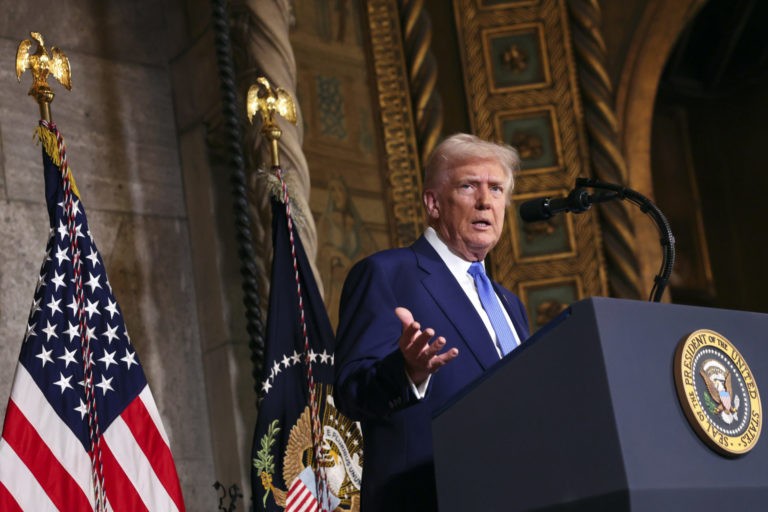
Trump Claims Biden’s Autopen Pardons Are ‘Void’

(Maire Clayton, Headline USA) President Donald Trump said he would be voiding the pardons former President Joe Biden issued as Trump said Biden used an autopen to sign the documents.

Trump took to Truth Social early Monday morning to make the announcement.

“The ‘Pardons’ that Sleepy Joe Biden gave to the Unselect Committee of Political Thugs, and many others, are hereby declared VOID, VACANT, AND OF NO FURTHER FORCE OR EFFECT, because of the fact that they were done by Autopen,” Trump wrote.

Trump alleged the pardons were not approved by Biden due to the use of the autopen.

“In other words, Joe Biden did not sign them but, more importantly, he did not know anything about them!” he continued. “The necessary Pardoning Documents were not explained to, or approved by, Biden. He knew nothing about them, and the people that did may have committed a crime.”

The Heritage Foundation’s Oversight Project previously conducted a signature analysis and concluded it believes the White House reused Biden’s same digital signature on each document.

“Whoever controlled the autopen controlled the presidency,” the Heritage Foundation posted along with examples of the use of the autopen.

Prior to Trump’s Truth Social post, the president posted a meme Sunday which showed the prior president as an autopen.

Trump continued and said that those who served on the Jan. 6 Select Committee are “subject to investigation at the highest level.”

“The fact is, they were probably responsible for the Documents that were signed on their behalf without the knowledge or consent of the Worst President in the History of our Country, Crooked Joe Biden!” Trump wrote.

Biden signed preemptive pardons for all members who were on the committee. In addition, he gave some of his family members, Dr. Anthony Fauci and retired Gen. Mark Milley preemptive pardons as well.

Jan. 6 defendant William Pope gave an interesting take on Trump going after the use of the autopen.

“He is pitting the autopen vs. the coverup committee’s desire to not accept a pardon,” Pope posted. So, if they challenge the autopen in court, they will look like criminals who need a pardon. But if they don’t challenge, other Biden autopen use could be canceled.”

OUCH! Sidestep These Gold & Silver Blunders…

(Clint Siegner, Money Metals News Service) The unfortunate truth is that it is possible for bullion investors to lose money in an up market. Some buyers are learning that lesson now, and it is worth sharing.

Those who understand how these markets work can make better decisions about what to buy and when. They might even take advantage of the bullion market idiosyncrasies to magnify gains.

At Money Metals, we go to great lengths to educate the public about this topic. However, not everyone has seen or taken our advice.

An example: One of our clients was among the waves of investors buying coins, rounds, and bars in 2021. They ignored our warnings to stick with low-premium bars and rounds – and instead chose to purchase silver American Eagles which were in very short supply at the time.

Premiums for that coin – the amount bullion dealers charge above the silver market price – were at unprecedented highs due to inventory shortages.

It was the result of a potent combination of factors. Eagles were the most popular silver product any bullion dealer sold. The market was flooded with buyers while sellers had vanished.

U.S. Mint Incompetence Causes Erratic Premium Swings

And Eagles are produced by the inept U.S. Mint, an absolutely incompetent organization which actually dramatically shrank production despite overwhelming demand!

Treasury US Mint Seal
The U.S. Mint has become notorious for its mismanagement

Money Metals had been loudly encouraging clients to avoid paying the inflated premiums and turning to other items. We regularly published warnings about Eagles being significantly overpriced. However, there has always been a strong impulse among buyers to stick with official U.S. Mint coins.

The silver market price at the time was $25.20/oz. The premium was a whopping $14/oz. So our client paid more than $39 for each 1 oz coin. (Other dealers were charging even more.)

Last week, when the client called to discuss selling, he discovered the premiums had collapsed. There are plenty of sellers now, and the sky-high premiums in recent years have come way down.

The silver price had risen to $33.50, but the total bid price, including the bid premium, for his Eagles was about $34/ea. The client is currently underwater by roughly $5/coin despite silver being $8 higher.

Avoid High Premium Items and Focus on the “Melt Value”

The first thing to understand about bullion investing is that the metal you buy has TWO components. There are essentially two independent markets driving bullion prices and they don’t necessarily move in the same direction.

The first component is the market price, or “spot” price for the metal, and it is set in the futures markets. This is the price talked about in the media and it is what most people focus on.

The other component is the premium mentioned above. This is a price gold and silver dealers add to the market price to determine the total price for any retail bullion product.

When it comes to premiums, the manufacturing capacity of mints and refiners who produce coins, rounds, and retail-size bars matters a great deal. So does the volume of buying and selling amongst bullion investors.

In other words, mine output and the availability of large COMEX deliverable bars haven’t been much of a factor in premiums – at least up to this point. It’s all about supply and demand in retail coins, rounds, and bars.

The mine output of raw silver and the availability of COMEX deliverable bars is, however, a big factor when it comes to the spot price of the metal – at least in theory.

Supply and demand fundamentals (or lack thereof) in COMEX price discovery are the subject of much consternation and we won’t get into that here.

Premiums vary for each product, while the spot price will be used for all products as the base price.

Supply & Demand, Manufacturing Costs Drive Premiums

We’ve already covered the capacity of mints and refiners to provide supply as well as the contribution of retail investors when it comes to both supply and demand.

Manufacturing cost is another factor in premiums.

From a manufacturing standpoint, it is less costly to produce a single 100 oz bar than it is to mint 100 one-ounce coins, so the bar will have a lower premium. Most dealers offer a discounted premium for buying in larger quantities, etc.

Finally, it is important to understand there are both bid and ask premiums, depending on whether an investor is selling or buying. The price difference between the two is how bullion dealers make a living. They buy metal using a lower bid premium and sell it using a higher ask.

The differential between bid and ask premiums, referred to as the spread, will widen in unbalanced markets where demand dramatically outstrips supply or vice versa.

LESSON: Silver Is Silver, and Gold Is Gold

So what are the lessons for bullion investors? Bullion prices are more complicated than many expect when they get into this market, but investors can still apply one basic rule for success; focus on low premiums.

Investors can pretty much never go wrong buying at the lowest available price. That means focusing on rounds and bars and avoiding government-issued coins with a hefty upcharge.

Rare coins are the ultimate example of how to lose money in an up market – especially if you do business with those shady coin companies advertising on television with celebrity spokesmen.

Paying more than a couple dollars extra for a silver Eagle is bad, but paying 2-3 times what the metal content is worth for some dubious collectible coin will turn out much worse for anyone who does not know what they are doing.

Try to time purchases when premiums are low. Now is a good time to buy because there is plenty of silver with premiums below about $2.50/oz and gold below $100/oz.

Investors who prefer buying coins can get away with paying a little extra, as coins will bring some extra premium when it is time to sell.

When the price difference between a Silver Eagle and a silver round is $2, the buyer can be confident. When it is $10, the buyer should heed Money Metals’ advice and choose another product.

When It Comes to Premiums, Product Selection Is Important

Some savvy investors took advantage of the huge premiums in retail bullion in 2020 – 2023. 90% silver U.S. coinage is one of the better products for speculating on premiums. Supply is 100% dependent on the number of people selling it as the U.S. Mint stopped production 60 years ago.

We had clients who accumulated this product at ask premiums under $1/oz. When demand exploded, 90% silver premiums were among the first to spike. Bid premiums went as high as $8/oz.

It was possible for them to exchange for silver bars and significantly increase their number of ounces owned.

Here is one final suggestion for investors who would rather not bother watching the retail markets or trying to evaluate premiums. Money Metals offers VaultSecure Gold and VaultSecure Silver.

These allocated storage options were created at the beginning of the buying frenzy in 2020 and designed to end-run shortages and premium spikes in retail bullion products.


Clint Siegner is a Director at Money Metals Exchange, a precious metals dealer recently named “Best in the USA” by an independent global ratings group. A graduate of Linfield College in Oregon, Siegner puts his experience in business management along with his passion for personal liberty, limited government, and honest money into the development of Money Metals’ brand and reach. This includes writing extensively on the bullion markets and their intersection with policy and world affairs.

Chinese Gold Investment Demand Surged in February

(Mike Maharrey, Money Metals News Service) Investment demand for gold in China was robust last month, with monthly ETF gold inflows setting a record.

China ranks as the world’s number one gold market.

The Shanghai Benchmark Gold Price PM (SHAUPM) in yuan rose 4.3 percent last month. That was slightly higher than the 3.4 percent increase charted in dollar terms due to a weakening yuan.

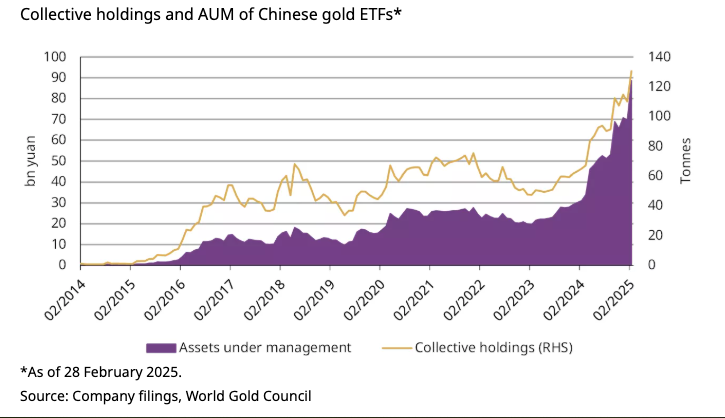
The rising gold price continues to draw Chinese investors. This is reflected by four straight months of positive gold flows into China-based ETFs.

Chinese gold ETFs added 21 tonnes of gold in February. That pushed total Chinese fund holdings to 131 tonnes, the highest level on record. The combination of new gold and the rising price pushed total assets under management (AUM) by China-based ETFs to a record ¥89 billion ($12 billion).

According to the World Gold Council gold investment demand continues to enjoy significant tailwinds.

“The strong local gold price performance in the month – especially the gapping up at opening on 5 February when investors came back from the Chinese New Year holiday – attracted attention. Meanwhile, concerns around the Trump administration’s trade policy may have sparked some safe-haven flows.”

World Gold Council analyst Ray Jia reported that anecdotal information indicates demand for physical gold remains robust as well.

He pointed out that in late January, online searches for gold topped their previous peak in 2013 when gold demand in China surged to the highest in history. Jia said he anticipates continued strength in bar and coin demand.

“Our conversations with market participants indicate that gold bar sales maintained their stunning pace seen in 2024, even leading to inventory shortages for some.”

Jia said he anticipates “continued strength in bar and coin demand while the soaring gold price may weigh on gold jewelry sales in tonnage terms – although consumer spending may not change much.”

A new policy allowing Chinese insurance companies to invest in gold for the first time could also give demand a significant boost in the coming months.

While higher prices have driven Chinese investment demand higher, they are dragging on jewelry sales. This was reflected by a 28 percent month-on-month decline in withdrawals from the Shanghai Gold Exchange to 90 tonnes.

Some of the decline was seasonal. Wholesalers and jewelry manufacturers typically buy less gold after the Chinese New Year holiday. According to the World Gold Council, every February on record – except 2023 when pent-up demand from COVID restrictions pushed up gold offtake – has charted a month-on-month decline, averaging 41 percent over the past 10 years.

Nevertheless, wholesale demand remains weak in historical terms. As already noted, the soaring local gold price has depressed jewelry sales, leading to weaker stocking activity by manufacturers. Jewelry producers account for the majority of SGE withdrawals.

Looking ahead, there are signs of improvement in the Chinese economy and consumer confidence has ticked up. New loans surged to a record high in January, signaling government stimulus policies have taken hold.

According to the World Gold Council, a resurgence of economic growth could stabilize the gold jewelry sector.

“We continue to believe that investment demand for gold could also remain generally robust as investors anticipate further price gains and concerns of the US trade policy uncertainties push up safe-haven buying.”


Mike Maharrey is a journalist and market analyst for Money Metals with over a decade of experience in precious metals. He holds a BS in accounting from the University of Kentucky and a BA in journalism from the University of South Florida.

$3000/Ounce: Why The Oldest Money Just Hit Its Newest High

(Peter C. Earle, Money Metals News Service) Less than a week after breaking the $2,900 per ounce barrier, gold has surged past $3,000 per ounce, driven primarily by deepening economic uncertainty.

The S&P 500 has entered correction territory, tumbling over 10 percent from its recent highs as fears of a slowdown grip markets, with persistent inflation and sluggish growth stoking concerns of stagflation.

Trade tensions have escalated once again, with wildly vacillating tariff threats — including a 200 percent duty on European wines and spirits — fueling uncertainty and rattling global supply chains.

Meanwhile, a growing schism in the political and military ties between the United States and Europe has added to market instability, as diplomatic fractures raise concerns over the future of transatlantic cooperation. Against a backdrop of turmoil, investors are once again flocking to gold as the ultimate safe-haven asset, pushing prices to historic highs.

For 5,000 years, gold has been a bedrock of economic commerce, a constant in the ever-shifting sands of monetary history.

Era after era, it has been dismissed as an outdated relic — denigrated by policymakers, sidelined by financial engineers, and declared obsolete by the architects of fiat money — only to rise again with quiet, unshakable resilience when the grand designs of men collapse under their own weight.

Time and time again, its eulogies have been written, its relevance pronounced dead, yet today, it once more stands at the center of the monetary and fiscal universe, not by decree, but by the sheer gravity of economic reality.

Central banks, once dismissive of gold, are now buying it at an unprecedented pace, seeking shelter from the very systems they helped create.

Since the Biden administration crossed the proverbial Rubicon, wielding the ubiquity of the US dollar as a geopolitical weapon, nations across the world have been jolted into recognizing the peril of dollar dependency, shifting their reserves toward the one asset that history has never betrayed.

Gold, indifferent to ideology and immune to the hubris of policymakers, is reclaiming its throne — not with fanfare, but with the silence of a gravitational presence that has never truly left.

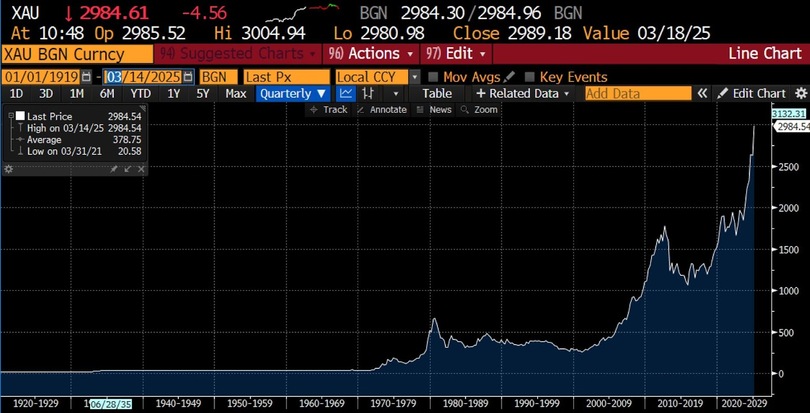
Gold’s rise over the decades has been closely tied to economic crises, inflationary pressures, and geopolitical instability. Gold surpassed $500 per ounce for the first time in December 1979 as investors scrambled for safe-haven assets.

The 1970s had been marked by stagflation, an oil crisis, and a weakening US dollar, exacerbated by the collapse of the Bretton Woods system in 1971. Inflation in the US had surged past 13 percent, while geopolitical events such as the Iranian Revolution and the Soviet invasion of Afghanistan contributed to economic uncertainty.

These factors fueled fears of currency devaluation, prompting gold prices to soar. By the end of 1979, the metal had become a preferred hedge against both inflation and instability.

Gold price per ounce USD (1920 – present)

(Source: Bloomberg Finance, LP)

Gold remained below $1,000 per ounce for nearly three decades until March 2008, when the global financial crisis drove investors into safe assets.

The collapse of major financial institutions like Bear Stearns and the subprime mortgage crisis led to a severe credit crunch and widespread fear of a banking system collapse. As the Federal Reserve and other central banks responded with massive liquidity injections and interest rate cuts, investors turned to gold as protection against financial instability. The metal breached $1,000 per ounce on March 13, 2008, as concerns mounted over the sustainability of the global financial system.

Just a few years later, in April 2011, gold prices surged past $1,500 per ounce as the aftermath of the financial crisis evolved into the European sovereign debt crisis. Countries like Greece, Portugal, and Ireland faced potential defaults, raising doubts about the stability of the eurozone. At the same time, the US dealt with its own fiscal struggles, including a credit rating downgrade by Standard & Poor’s in August 2011, further reinforcing gold’s role as a hedge against monetary and financial turmoil.

The next major milestone occurred in August 2020, when gold surged past $2,000 per ounce amid the COVID-19 pandemic. The global economy was upended as lockdowns, business closures, and widespread unemployment forced governments to roll out unprecedented stimulus measures, including trillion-dollar relief packages and near-zero interest rates. These efforts devalued currencies and sparked fears of inflation, leading gold to its then-record high of $2,075 per ounce.

As inflationary pressures seemed resurgent in August 2024, the gold price crossed $2,500 per ounce, driven additionally by rising geopolitical tensions, persistent inflation, and concerns over the weakening US dollar. A combination of central bank purchases, trade conflicts, and shifting global monetary policies contributed to further price gains.

And now, gold has hit an all-time high of $3,000 per ounce, reflecting continued uncertainty in global markets. Factors such as renewed gold-buying by central banks, a weaker dollar, tariffs, and global economic instability have cemented — or more aptly, reminded of — gold’s role as the ultimate hedge against financial turbulence.

From this point, gold could continue to rocket north, sag back to $2,000 an ounce, or hover around its new record high before establishing a clearer directional bias as political and economic trends unfold.

What is certain, however, is that gold has consistently met the rare set of criteria that make it the soundest (according to the market as experienced in real life) form of money in human history.

And just as certain, that truth will continue to be doubted, dismissed, and ultimately reconfirmed, as long as ambitious, power-seeking individuals attempt to manipulate the systems in which it operates. Reality will inevitably prove them wrong, again.

Originally Published on AIER’s The Daily Economy.


Peter C. Earle is an economist who joined AIER in 2018. Prior to that he spent over 20 years as a trader and analyst at a number of securities firms and hedge funds in the New York metropolitan area. His research focuses on financial markets, monetary policy, and problems in economic measurement. He has been quoted by the Wall Street Journal, Bloomberg, Reuters, CNBC, Grant’s Interest Rate Observer, NPR, and in numerous other media outlets and publications. Pete holds an MA in Applied Economics from American University, an MBA (Finance), and a BS in Engineering from the United States Military Academy at West Point.