Constitutional Crisis? SCOTUS Blocks Deportation of Violent Criminals

(Headline USA) The Supreme Court on Saturday blocked, for now, the deportations of any Venezuelans held in northern Texas under an 18th century wartime law. Many of the men slated for deportation are accused of being members of the Tren de Aragua gang.

In a brief order, the court directed the Trump administration not to remove Venezuelans held in the Bluebonnet Detention Center “until further order of this court.”

Justices Clarence Thomas and Samuel Alito dissented.

The high court acted in an emergency appeal from the American Civil Liberties Union contending that immigration authorities appeared to be moving to restart removals under the Alien Enemies Act of 1798. The Supreme Court had said earlier in April that deportations could proceed only if those about to be removed had a chance to argue their case in court and were given “a reasonable time” to contest their pending removals.

The administration is expected to return to the Supreme Court quickly in an effort to persuade the justices to lift their temporary order.

Drew Ensign, an attorney for the Justice Department, has said that people slated for deportation would have a “minimum” of 24 hours to challenge their removal in court. He said no flights were scheduled for Friday night and he was unaware of any Saturday, but the Department of Homeland Security said it reserved the right to remove people then.

ICE said it would not comment on the litigation.

Also Friday, a Massachusetts judge made permanent his temporary ban on the administration deporting immigrants who have exhausted their appeals to countries other than their home countries unless they are informed of their destination and given a chance to object if they’d face torture or death there.

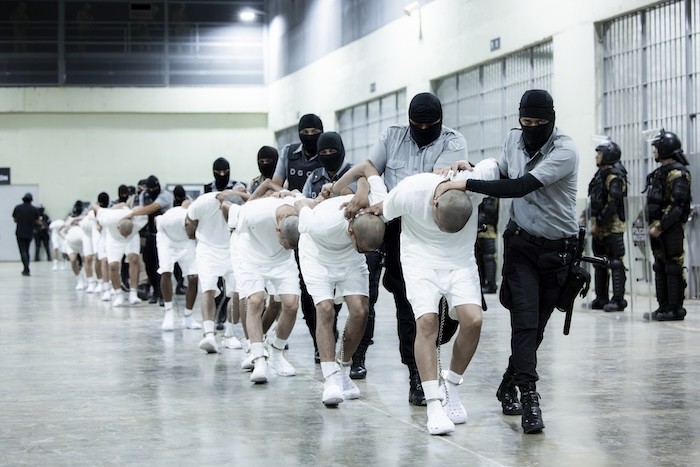
Some Venezuelans subject to Trump’s Alien Enemies Act have been sent to El Salvador and housed in its notorious main prison.

Constitutional law professor Jonathan Turley said on his blog that while the rulings may upset some Trump supporters, they were made in accordance with the Constitution.

“Despite the growing counter-constitutional movement, both decisions show how the courts are functioning appropriately and expeditiously in sorting out these difficult cases … The justices ordered the Trump administration not to remove Venezuelans being held in the Bluebonnet Detention Center ‘until further order of this court,” Turley wrote on Saturday.

“Justices Clarence Thomas and Samuel Alito dissented from the order. However, this is merely a hold on deportations pending further review of the emergency appeal from the American Civil Liberties Union, which is challenging the use of the Alien Enemies Act of 1798,” he added.

“This rarely used and highly controversial law stretches back to the Adams Administration. There are good-faith arguments on both sides of the case that the Court wants to consider.”

Adapted from reporting by the Associated Press
Bill Clinton Insults OKC Bombing Victims by Returning to Crime Scene for 30th Anniversary

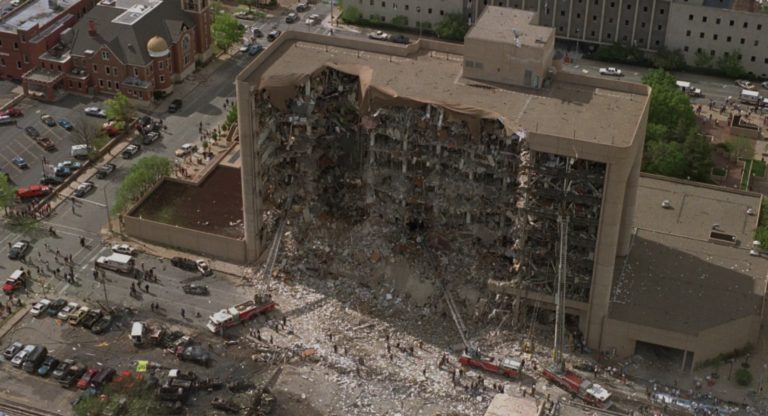
(Ken Silva, Headline USA) Thirty years after the deadliest homegrown attack in U.S. history, former President Bill Clinton will return to Oklahoma City on Saturday to a crime scene that his government helped create.

Clinton was president on April 19, 1995, when a truck bomb exploded, destroying a nine-story federal building in downtown Oklahoma City. He delivered the keynote address at a remembrance ceremony near the Oklahoma City National Memorial Museum on Saturday. Clinton, now 78, was widely praised for how he helped the city grapple with its grief in the wake of the bombing, which killed 168 people, including 19 children.

However, there is well-documented evidence suggesting that Clinton’s government had foreknowledge of the bombing, which was said to have been committed in revenge for the Waco massacre two years earlier. Indeed, an ATF informant had warned her handlers in early 1995 that an attack was impending, and ATF agents were absent from the federal building on the morning of the explosion.

After the bombing, Clinton’s Justice Department suppressed information about possible accomplices to bomber Timothy McVeigh. The FBI initially announced a manhunt for a mystery McVeigh accomplice known as John Doe 2, only to later claim that the man never actually existed.

Evidence suggests that the coverup extended all the way up to the Clinton White House. The night before McVeigh’s April 27, 1995, preliminary hearing, DOJ prosecutor and future Biden Attorney General Merrick Garland met with Hillary Clinton, according to White House visitor logs. The next day, Garland repeatedly objected to questions about John Doe 2 raised by McVeigh’s defense lawyers.

“The only person on trial at this hearing is Mr. McVeigh. It doesn’t matter whether there were two or 100 people in that truck as long as there was somebody representing Mr. McVeigh there. It is discovery and totally outside of the scope of this hearing,” Garland said during that hearing.

About five months later, Clinton nominated Garland to be an appeals court justice.

Utah attorney Jesse Trentadue, who has procured volumes of new information about the OKC bombing investigation via his lawsuits against the FBI, said he thinks Garland was receiving marching orders from the Clintons: suppress information about the others involved in the attack.

“That would have been the most important hearing in [Garland’s] life. He would have been there for days going through all the evidence,” Trentadue told this reporter in 2022. “If Garland were briefing someone [about the case], wouldn’t it be done by phone?”

OKC bomb researcher Richard Booth—who provided this reporter with the visitor logs and Clinton Library receipts to show their authenticity—said he believes Garland’s White House visit must have been related to the McVeigh case due to its monumental importance. The researcher said he hasn’t found further details about the meeting.

Now more than 30 years after the fact, Trump’s DOJ is continuing the coverup of what really happened on April 19, 1995. Trentadue recently moved to unseal an FBI informant’s deposition about the bombing ahead of the 30th anniversary, but Principal Acting Assistant Attorney General official Yaakov Roth objected. The deposition from the FBI informant, who says he saw McVeigh in 1994, remains under seal.

“Mr. Roth appeared in that case in his official capacity and heads the Department of Justice’s vehement opposition to unsealing Matthews’ deposition,” Trentadue told Bondi in a March 26 letter. “Why is the Department of Justice fighting so hard to prevent the unsealing of that deposition when it is contrary to everything the current administration has publicly stated about exposing and cleaning up the FBI lawlessness?”

Attorney General Pam Bondi has not responded to messages seeking comment.

The Associated Press contributed to this report.

Ken Silva is the editor of Headline USA. Follow him at x.com/jd_cashless.

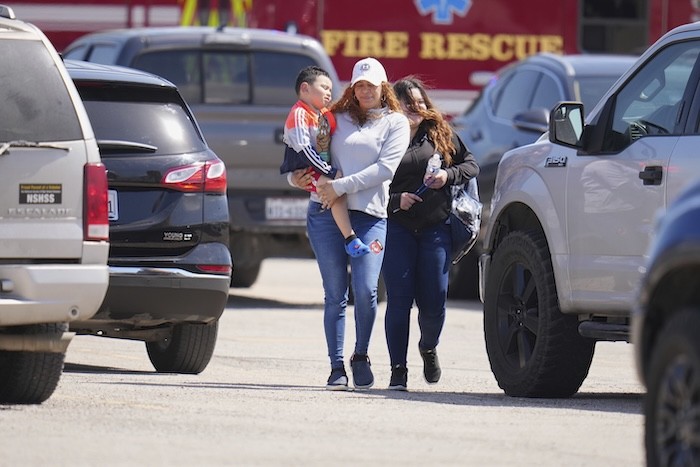
Father of Slain Teenager Booted from Press Conference Held by Killer’s Family

(José Niño, Headline USA) After Jeff Metcalf’s son, Austin Metcalf, was fatally stabbed by another teenager at a high school track meet on April 2, the father extended an olive branch to the alleged murderer’s family—saying, “I already forgive this person. Already. God takes care of things.”

The family of the alleged murderer, Karmelo Anthony, has repaid Jeff Metcalf’s grace by kicking him out of a press conference. The Metcalf family was later “swatted”— a false call intended to trigger a large police response

The particularly tense moment unfolded on Thursday when Jeff Metcalf made an unannounced appearance at a press conference organized by the Next Generation Action Network on behalf of the Anthony family. His presence prompted Dallas police to escort him out after warning he could face trespassing charges if he refused to leave. The incident caused a 50-minute delay in the start of the event.

According to Metcalf’s father, he attended because he thought it would be a chance for the two families to engage in a meaningful and constructive dialogue.

He reportedly complied with police requests to leave without incident.

Following the contentious press conference on Thursday, Jeff Metcalf’s home was targeted by a “swatting” call. Frisco Police Department confirmed that officers responded to a fake gunshot at Metcalf’s address.

Metcalf told news outlets that no one was home at the time, but he arrived approximately five minutes after police.

Meanwhile, Anthony has been released on $250,000 bail. His family is staying in a lavish $900,000 home that is being paid for by donations that were ostensibly made for legal costs.

José Niño is the deputy editor of Headline USA. Follow him at x.com/JoseAlNino

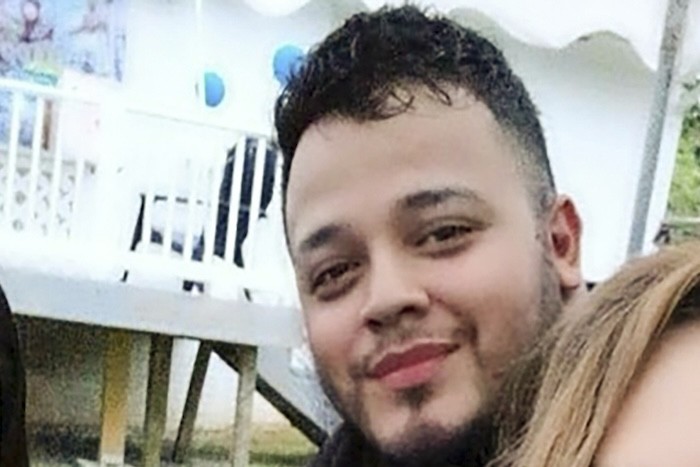
Teen Murder Suspect Karmelo Anthony Stays in Lavish $900K Home

(José Niño, Headline USA) Karmelo Anthony, 17, moved into a luxury Frisco neighborhood in the Dallas-Fort Worth metroplex after being released on a $250,000 bond and moving, raising questions about his family’s financial situation and the use of hundreds of thousands in donated funds for legal costs.

According to the Daily Mail, Anthony is currently residing with his family in a gated community known as Richwoods, following his release from jail on Monday. He faces charges in connection with his recent killing of Austin Metcalf.

The residence, reportedly commanding a monthly rent of around $3,500, had three vehicles parked in the driveway on Tuesday: a white Chevrolet Suburban, a black Acura, and a third unidentified sedan.

One neighbor remarked that the family had recently acquired a new vehicle.

“He got a new car,” the resident said to the Daily Mail. “If you look at the license plate, it’s got a paper tag and it says it expires June 4.”

Richwoods is located roughly a mile from Centennial High School, where Anthony was enrolled and participated on the track team.

Residents of the gated community reportedly didn’t realize the family had moved in until Anthony’s release on Monday. Since then, some have expressed unease about having a murder suspect living in their otherwise exclusive neighborhood.

“Not good. Not good. I don’t think he should be out,” an anonymous mother in the gated community said to the Daily Mail.

The gated Richwoods community sits about a mile from Centennial High School, where Anthony was a student and track athlete.

One neighbor told the outlet that the family’s presence in such a neighborhood speaks to their financial status. “They’re not poor people. That’s for sure,” he said.

According to the report, the home has seen a steady stream of deliveries, with Amazon trucks making frequent stops — all allegedly for Anthony’s family.

Another resident voiced frustration over the situation, saying, “The best thing they can do is move. I think that would be best for everyone.”

It remains unclear how long Anthony and his family have been living at the property.

Anthony was held at the Collin County Jail after being charged with first-degree murder for allegedly stabbing 17-year-old Austin Metcalf in the chest during a dispute over a seat at a track meet on April 2.

The fatal confrontation occurred during the UIL District 11-5A championship track meet at Frisco Independent School District’s Kuykendall Stadium in Frisco, Texas.

According to witnesses reports of the fatal confrontation, Anthony warned Metcalf by saying, “Touch me and see what happens” while reaching into his backpack. 

Hunter Metcalf, Austin’s twin brother, stated that the entire altercation lasted less than 30 seconds. According to Hunter, Anthony pulled a knife from his backpack and stabbed Austin in the chest after a brief verbal exchange.

The stabbing proved fatal, with Austin Metcalf dying in his twin brother’s arms at the scene despite lifesaving measures applied by first responders. After the stabbing, Anthony was apprehended by a school resource officer. 

During his arrest, Anthony reportedly made spontaneous statements including “I’m not alleged, I did it” and asked if his actions could be classified as self-defense

His family asserted that “the narrative being spread is false, unjust, and harmful” on a GiveSendGo.com fundraiser to cover legal expenses, which had raised over $480,000 as of Friday. 

Anthony was initially held on a $1 million bond, but Collin County Judge Angela Tucker later reduced it to $250,000 and allowed him to await trial at home, under 24-hour supervision by his parents or another approved adult, while wearing an ankle monitor.

The bond reduction came a week after Anthony’s attorney announced plans to challenge the “excessive” $1 million amount and urged the district attorney to reconsider the severity of the charges.

According to defense attorney Mike Howard, the fundraiser — originally launched to assist with legal costs — is also being used to help the family relocate and hire additional security in response to the backlash following Metcalf’s death.

“Given that Karmelo has no prior criminal history and given that this young man has not been in any sort of trouble before, $1 million is not necessary,” Howard declared.

“This family needs to be able to survive,” he continued. “There’s been a tremendous amount of pressure. I think at this point, living in a gated community, given everything, the safety of their younger children is very warranted. Security details and criminal defense are not cheap.”

That said, Prosecutor Bill Wirsky questioned the family on why the funds raised hadn’t been used to cover Anthony’s bond.

“It isn’t as simple as giving a phone call to access it,” Anthony’s parents told Fox 4.

They noted that accessing the money had proven challenging and that a significant portion had already been allocated to his legal defense.

​​Frisco Independent School District plans to expel Karmelo Anthony just weeks before his scheduled high school graduation. 

The district’s code of conduct mandates automatic expulsion for an accusation of murder on school property, though Anthony may have the right to appeal this decision.

José Niño is the deputy editor of Headline USA. Follow him at x.com/JoseAlNino 

Suspected FSU Shooter Was Abused, Abducted to Europe When He Was 15

(Ken Silva, Headline USA) As police continue to investigate a possible motive for the man who allegedly killed two people and wounded at least six others in Thursday’s mass shooting at Florida State University, liberal media outlets are focusing on the shooter’s purported right-wing ideology—with reports emerging that alleged gunman Phoenix Ikner was kicked out of a political club for espousing “racist and white supremacist views.”

However, other details are emerging that are arguably far more relevant to understanding what may have led to Ikner’s actions: He was apparently abused by his mother.

When Ikner was a child, his parents were involved in several custody disputes with his biological mother, court records show.

In 2015, when he was 10, his biological mother, Anne-Mari Eriksen, said she was taking him to South Florida for spring break in 2015 but instead traveled to Norway.

According to the Washington Post, Ikner told his stepmother, Jessica Ikner, that Eriksen had forced him to lie to his father about doing his homework, taking the hormone shots required for his growth disorder and brushing his teeth.

“He said his mother didn’t bring his toothbrush or buy him one, and that he did not brush his teeth for 103 days,” the Post reported Saturday.

“After they returned to the U.S., the boy and his father successfully sought a protective order against Eriksen, whom they accused of domestic violence, including scratching and punching her child, court documents show.”

Ikner’s father also filed an emergency motion for custody, reportedly expressing fears that his son, who he said had developmental delays and special needs, was not getting the medication that he needed, according to the New York Post.

After returning to the U.S., Erkisen pleaded no contest to removing a minor from the state against a court order and was sentenced to 200 days in jail. She later moved to vacate her plea, but that was denied.

In the fall of that same year, Eriksen filed a civil libel-slander complaint against Jessica Ikner, along with several other family members. The complaint, which was later dismissed, accused them of harassing Eriksen and abusing Ikner’s position at the sheriff’s office.

In 2020, at age 15, the suspect received court approval to change his name from Christian Eriksen to Phoenix Ikner, court documents show. His old name was a constant reminder of a “tragedy” he suffered, in the words of administrative magistrate James Banks, who approved the request, NBC News reported.

Banks observed that Ikner was a “mentally, emotionally and physically mature young adult who is very articulate” and “very polite” said he chose the new name as a representation of “rising from the ashes anew.”

Deputy’s Family Has Stayed Quiet for Now

A Tallahassee Police Department patrol car was stationed Thursday evening near the street where the family lives, blocking reporters from approaching the family’s home in a well-kept suburban neighborhood on the city’s east side.

Phone messages left for Jessica Ikner at a number listed for her on a school resource website and another phone connected to her through public records were not immediately returned Friday. And a sheriff’s office spokeswoman said she is not aware of the family putting out a statement or having a family spokesperson.

The only insight comes from the past statements. Nearly a decade ago, Jessica Ikner wrote a story posted on the Tallahassee Family Magazine website about children’s safety while surfing the internet, including tips to strengthen family bonds.

“Build a trusting relationship with your child,” she wrote. “Let them know that if they do make a mistake they can still come to you about anything.”

Ikner was shot by police during his rampage on Thursday, and he remains in custody.

The Associated Press contributed to this report.

Ken Silva is the editor of Headline USA. Follow him at x.com/jd_cashless.

Navigating Volatility and Silver’s Future: Insights from David Morgan

(Money Metals News Service) In a wide-ranging conversation with Money Metals’ Mike Maharrey, renowned precious metals analyst David Morgan offered a sobering yet insightful look at current market volatility, global economic tensions, and the long-term outlook for silver and gold.

Morgan, publisher of The Morgan Report and author of The Silver Manifesto, shared deep analysis on monetary trends, geopolitical risk, and the evolving role of silver in the global economy.

(Interview Starts Around 5:41 Mark)

Metals Resilience Amid Market Chaos

Reflecting on the previous week’s market turbulence, sparked largely by escalating trade tensions and a partial reversal by the Trump administration, Morgan expressed surprise not at the initial drop in gold and silver, but at how swiftly both metals rebounded. Silver, in particular, suffered a steep decline of around 14%, yet bounced back with unexpected strength.

“It’s signaling strongly that gold and silver certainly have a long ways to go,” said Morgan, referencing renewed investor interest and a fundamental shift in asset allocation trends.

Beyond the Tariffs: Structural Economic Weakness

While much media coverage has fixated on tariffs, Morgan emphasized that the economic problems go far deeper. He highlighted America’s systemic dependency on China for key resources such as rare earth elements, pharmaceuticals, and even some military components — calling it a “national security issue.”

Morgan argued that the global economy is in a contraction phase, regardless of trade policy, and that increasing the money supply amid shrinking goods and services is a textbook path to hyperinflation.

“Tariffs are more of a trigger,” he said, “not the cause.”

Trump, Volatility, and Investor Strategy

Maharrey and Morgan discussed how President Trump’s unpredictable negotiation style — likened metaphorically to “slapping someone in the face before a handshake” — has amplified market volatility. The VIX recently spiked into the upper 50s, nearing levels seen during the pandemic.

Morgan urged investors to remain calm and pragmatic.

“The trend is your friend,” he advised. “Shift gradually — reduce stock exposure, increase commodities exposure. You don’t have to get all in or all out overnight.”

He emphasized that the broader trend shows equities weakening while gold begins a significant uptrend — a shift already visible in institutional behavior.

Dollar and Treasury Weakness: A Turning Point?

Another surprise for many was the simultaneous sell-off in both the U.S. dollar and treasuries, traditionally seen as safe havens. Gold, by contrast, held its ground.

Morgan cited Exter’s Pyramid to explain the shift, noting that as trust in fiat assets erodes, liquidity flows to gold — the ultimate form of real money.

“The run to gold has begun,” Morgan declared, citing central bank accumulation as a stealth signal that the revaluation of gold is already underway.

Russia, Sanctions, and Gold Strategy

The conversation turned to Russia’s prescient decision to load up on gold in the 2000s and 2010s. As sanctions froze their dollar and euro reserves, Russia’s gold holdings became an economic lifeline — highlighting the enduring utility of gold in a crisis.

“They look really smart in retrospect,” Maharrey noted.

Morgan even commented provocatively that “Russia is becoming the United States and the United States is becoming Russia,” pointing to the West’s increasing authoritarian drift and Russia’s apparent shift toward self-reliant, nationalist economic policies.

The Gold-Silver Ratio: Will It Normalize?

With the gold-silver ratio hovering near 100:1 — far above historical norms — Maharrey posed the question: Is this the new normal?

Morgan disagreed with the idea of a permanent divergence, emphasizing that silver still tracks gold about 85% of the time. He argued that fundamental supply and demand realities make a return to a more traditional ratio (e.g., 70:1, 50:1, or even 30:1) likely.

The Coming Silver Shortage: Data-Driven Forecasts

Citing data from analyst Matt Watson and the Silver Institute, Morgan highlighted an annual silver deficit averaging 200 million ounces over the past 4–5 years. Global silver production and recycling only yield about 1 billion ounces per year, a number expected to decline due to lower ore grades.

“By 2035, we could see a 500 million ounce deficit in a single year,” Morgan warned.

At current rates, above-ground silver reserves — estimated at 2–3 billion ounces — could be depleted within a few years unless prices rise and new sources are developed. Importantly, the Watson model underestimated investment demand in 2020, pegging it at 200 million ounces when actual figures were closer to 500 million ounces (200M from individual investors, 320M from institutions).

Morgan believes silver’s affordability, combined with growing investor interest and gold’s rising price, will push demand higher — accelerating the depletion timeline.

Despite its role as a historical monetary metal, silver is virtually absent from central bank reserves. Morgan noted this institutional blind spot limits silver’s price recognition compared to gold — but also creates an opportunity.

“There’s not enough silver out there to support a 16-to-1 or 30-to-1 monetary ratio,” he said. “To reintroduce silver as money, it would have to be revalued much higher — maybe even 10-to-1.”

Final Thoughts and Resources

Morgan concluded by pointing listeners to two key resources:

  • TheMorganReport.com — where users can sign up for his free newsletter and premium content
  • SilverSunrise.TV — the upcoming documentary platform featuring voices like G. Edward Griffin and Ellen Brown

“The run to gold has begun, but silver’s time is coming,” Morgan asserted. “Stay calm, stay focused, and position yourself accordingly.”

Trump Shows Evidence that Deported ‘Maryland Man’ is Indeed an MS-13 Member

(Ken Silva, Headline USA) On Wednesday, the Tennessee Star published a bombshell article about how “Maryland man” Kilmar Abrego Garcia—an El Salvador national who was deported last month on the grounds that he’s a suspected MS-13 gang member—was suspected by Tennessee Highway Patrol (THP) of human trafficking in 2022, and that the FBI ordered him to be released.

Wednesday’s article was based on anonymous sources. But on Friday, Fox News published a Homeland Security document about the 2022 incident, confirming the Tennessee Star report. Additionally, the DHS released an image from police body cam footage that shows Abrego Garcia.

According to the 2022 DHS report, Abrego Garcia told THP officers that he had spent the last three days driving from Houston, Texas to Temple Hills, Maryland, “to bring in people to perform construction work.”

“There was no luggage in the vehicle, leading the encountering officer to suspect this was a human trafficking incident,” the report said. “All the passengers gave the same home address as the subject’s home address. During the interview, subject pretended to speak less English than he was capable of and attempted to put encountering officer off-track by responding to questions with questions.”

The report doesn’t mention that the FBI told Tennessee police to release the man. However, the Tennessee Star independently confirmed that aspsect of the story with state police.

“THP confirmed the 2022 stop to The Star on Thursday night, including The Star’s reporting that the ‘Biden-era FBI’ instructed officers at the scene to release Abrego Garcia and his passengers after photographing them and their vehicle, but THP did not confirm the date of the incident,” the Star reported Friday.

“Sources have additionally told The Star that Abrego Garcia was driving without a valid license, and that the circumstances of the stop made THP suspect he was engaged in human trafficking.”

Along with Abrego Garcia’s potential gang activities, it has been revealed that Abrego Garcia’s wife filed a restraining order against him in 2021 over domestic violence allegations.

Meanwhile, the Trump administration is facing possible contempt of court over the matter. The judge in Abrego Garcia’s case has said she is determining whether to undertake contempt proceedings, saying officials “appear to have done nothing to aid in Abrego Garcia’s release from custody and return to the United States” despite a Supreme Court ruling that the administration must “facilitate” his release.

Note: The original version of this article reported on a picture Trump released of the “Maryland man” with an apparent MS-13 tattoo. Questions have since emerged about whether the tattoo is actually an MS-13 symbol. Out of an abundance of caution, Headline USA has removed that photo, which can be found here.

Ken Silva is the editor of Headline USA. Follow him at x.com/jd_cashless.

Just 30% of Illinois 4th Graders Read at Proficiency Standards

(The Center Square) Illinois Republican state Rep. Dan Ugaste is speaking out against a “nationwide literacy crisis” that counts Illinois among the more than 40 states where just one out of every three fourth grade students are now meeting reading proficiency standards.

Data from the National Assessment of Educational Progress report card shows that in Illinois, just 30% of fourth graders are hitting such standards. In a 2024 national exam, the state’s students finished 29th in the country for the percentage of fourth graders at or above proficiency.

“This is a huge problem across the country, but it’s a real problem here in Illinois,” Ugaste told The Center Square. “It’s my understanding that our 8th graders are doing a bit better. It speaks to the amount of damage that was done when the schools closed during the pandemic. That’s when these children would have first been in school and first learning how to read, write and do math.”

With researchers identifying third and fourth grades as being a critical period in a student’s overall academic development, school system critics like Ugaste argue that now more than ever, parents should be allowed to make use of school choice to send their children to the best school for them. Researchers stress such assessments can be early predictors for critical milestones such as future employment and overall earning potential.

Ugaste is urging parents to take immediate action.

“First and foremost, you got to do what you can to help your own kids,” he said. “Start reaching out to your legislators; start reaching out to your school boards, get involved in what’s happening in your schools, what they’re teaching them, how much time they’re spending on things like reading and math versus other subjects. We have to be involved in our kids’ education; we have to be involved in our government; we have to be involved in our communities.”

Ugaste said he’d also like to see parents demanding lawmakers in Springfield repeal some of the mandates they’ve enacted, giving local school boards and parents greater control over curriculum.

“Let the communities, the parents and the educators locally decide how much time should be spent on subjects and things of that nature,” he said. “We’re trying to dictate from Springfield what they should be learning, how much recess time they should have, and all these other issues. We just need to get out of that arena.”

The legislature allowed the state’s only school choice program, Invest in Kids, to expire in 2023. Invest in Kinds was a scholarship program that allowed lower-income families to use tax-credited donations to pay for private schools.

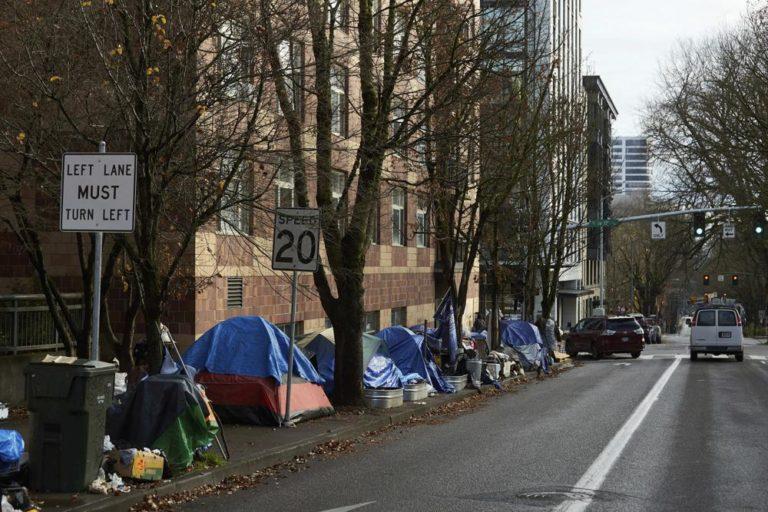
Homelessness up by 90% Since 2020 in Colorado

(Derek Draplin, The Center Square) Colorado has seen the fourth highest percentage increase in homelessness in the U.S. since 2020, according to a new report.

The report, by the free-enterprise Common Sense Institute, also called into question most of the state’s “housing first” approach, saying it “may not be the best approach to addressing this challenge.”

Colorado’s homeless population increased by 90% since 2020, ranking behind only Vermont (212%), Illinois (148%) and Rhode Island (121%). According to the report, the state’s 3.14 homeless per 1,000 residents ranks ninth nationally.

In the combined Denver-Boulder-Aurora area, $405 million in local, state, federal and nonprofit funding was spent in 2023 to combat homelessness, CSI noted.

Denver had a record-high 9,977 unhoused individuals in 2024, according to point-in-time counts. Of those, 2,233 individuals participated in Denver’s “housing first” All in Mile High Program, which cost $69,413 per person and an additional $16 million on those who became unsheltered after leaving the program, the report said.

“This report makes clear that homelessness is growing fastest in cities most reliant on housing-first strategies,” said Dustin Zvonek, CSI’s research fellow on homelessness and a former Aurora City Council member. “We need to step back and look at the broader data — ask what’s working, what’s not, and focus on implementing policies that deliver measurable, sustained improvements.

The think tank also contrasted Denver’s “housing first” approach with El Paso County’s (Colorado Springs) and Aurora’s “work first” approach. In El Paso County, the point-in-time count for last year was 1,146 homeless individuals, 12% less than the prior year.

“Communities like Colorado Springs are showing real results with work-first models grounded in accountability and recovery,” Zvonek added. “It’s time to apply those lessons where the crisis is growing most rapidly.”

Other cities that take a “housing first” approach include Los Angeles, which saw a 39% increase in homeless individuals since 2020; San Francisco (9% increase) and Portland, Oregon (70% increase).

“Housing first policies have not reduced the number of homeless individuals in many of the cities practicing them, though they have moved many people from unsheltered spaces to sheltered spaces,” CSI’s report concluded. “Because results have not been demonstrated, federal agencies and other public leaders must loosen funding so that it can be used to support approaches that prioritize self-sufficiency.”

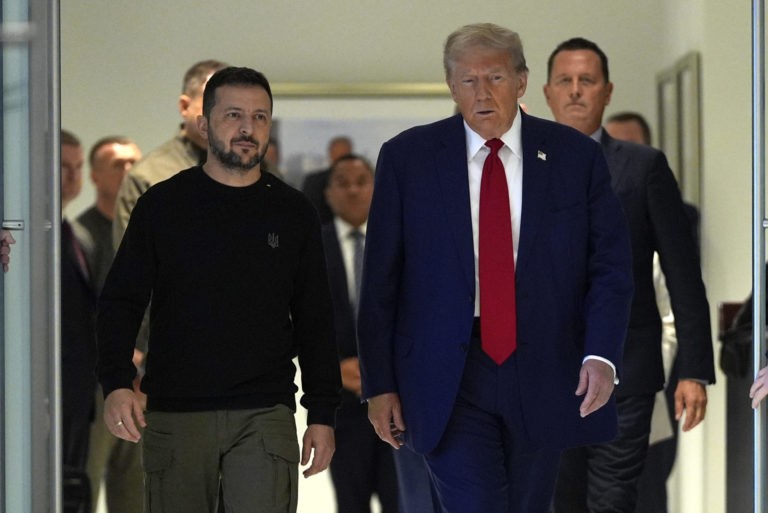
Rubio: US To Decide Within Days If Ukraine Peace Deal Is Possible

(Kyle Anzalone, Antiwar.com) Secretary of State Marco Rubio said that President Donald Trump will decide if ending the war in Ukraine is possible sometime in the coming days.

“We’re not going to continue with this endeavor for weeks and months on end. So we need to determine very quickly now, and I’m talking about a matter of days, whether or not this is doable in the next few weeks,” Rubio told reporters in Paris.

President Trump made ending the war in Ukraine one of his top campaign promises. Since taking office in January, his staff has engaged in several rounds of high-level talks with Russian and Ukrainian officials.

“The president feels very strongly about that. He has dedicated a lot of time and energy to this… this is important, but there are a lot of other really important things going on that deserve just as much, if not more attention,” Rubio said.

Middle East envoy Steve Witkoff, who is leading the American negotiations, told Fox News host Sean Hannity that talks with Russia were progressing well. In an interview that aired Monday, he explained, “This is the third meeting I’ve had with [Putin]. This last meeting lasted close to five hours. It was a compelling meeting, and towards the end, we actually came up with a path to a permanent peace.”

However, Trump and Rubio have stated that Russia is not engaging quickly enough in the diplomatic process. The president and secretary of state have both threatened new sanctions on Russia in recent weeks if the Kremlin does not agree to a deal to end the conflict very soon.

Moscow appears to be unwilling to accelerate the pace of talks on ending the war in Ukraine. Earlier this week, Kremlin spokesman Dmitry Peskov said the issue was “so complex that it’s unrealistic to expect immediate results.”

Following the invasion of Ukraine in 2022, US-Russian relations sank to a historic low point, with almost no contact between Washington and Russia during that period. Early rounds of talks between US and Russian officials focused on returning to a normal diplomatic relationship.

While Trump and Rubio have placed blame on Moscow for the lack of progress towards a peace deal, Ukrainian President Volodymyr Zelensky has publicly declared that Kiev would not surrender any territory to bring the war to an end.

Additionally, Kiev is moving closer to signing a deal to allow Washington to recapture some of the money spent on Ukraine aid by seizing profits from sales of oil, gas and rare earth minerals. A top Ukrainian official said a memorandum of intent was signed on Thursday, and the deal is expected to be inked next week.

It’s unclear if the arrangement includes security guarantees for Ukraine, but Rubio told reporters the issue came up during his talks in Paris.

This article originally appeared at Antiwar.com.

Kyle Anzalone is the opinion editor of Antiwar.com and news editor of the Libertarian Institute. He hosts The Kyle Anzalone Show and is co-host of Conflicts of Interest with Connor Freeman.