DNC Group Mixes Up Two Latina GOP Reps in Embarrassing Post

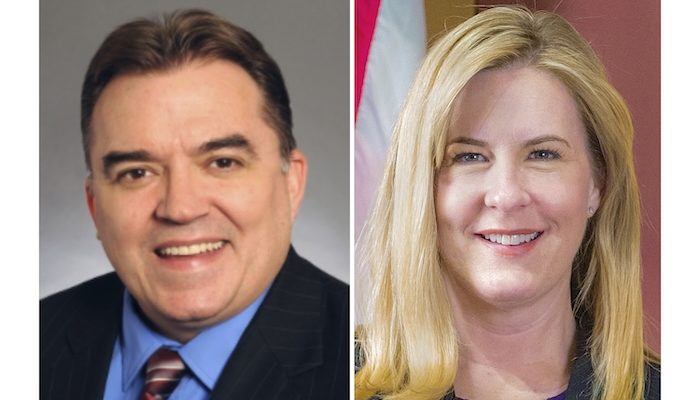
(Luis CornelioHeadline USA) The campaign arm of House Democrats on Friday confused two Hispanic Republican lawmakers in a social media ad aimed at attacking their support for President Donald Trump. 

The Democratic Congressional Campaign Committee, or DCCC, mistakenly swapped photos of Rep. Maria Elvira Salazar, R-Fla., and Rep. Monica de la Cruz, R-Texas, in a TikTok graphic meant to smear de la Cruz. 

“These Republicans will lose their seats next year,” the DCCC wrote in the post, targeting de la Cruz, among other lawmakers.

But instead of showing a photo of de la Cruz, the graphic displayed an image of Salazar, a completely different Hispanic Republican from another state. 

Critics, including de la Cruz and Salazar, slammed the mix-up as embarrassing.  

“I see the DCCC’s ‘Latinx outreach’ efforts are going splendidly. The party of inclusion thinks we all look alike,” de la Cruz wrote sarcastically. 

Salazar jumped in to mock the Democratic group as well. 

“Just when you think the DCCC has hit rock bottom… they grab a shovel,” she wrote. “They insist on calling us Latinx, but can’t even tell who we are. No vision. No leader. No clue.” 

DCCC, which is responsible for electing Democrats to the House of Representatives, removed the post following the backlash. 

The racial blunder comes as Democrats continue to bleed support from Hispanic voters following Trump’s landslide victory in the 2024 presidential election, when the GOP expanded its reach not only among Hispanics.  

This also wasn’t the DCCC’s first social media blunder. 

In 2021, the group was ridiculed after posting a graphic thanking then-President Joe Biden for a two-cent drop in gas prices. 

Even liberal Washington Post writer Philip Bump could not defend the post. He called it perhaps “the worst defense of the Biden administration yet.” 

“Since Biden took office, the price of gas has risen more than a dollar on this same measure,” Bump wrote. 

Headline USA left a voicemail with the DCCC press office seeking comment, but no response was received before publication.

Thousands Gather to Celebrate Army’s 250th Anniversary

(The Center Square) Thousands of people from across the U.S. came together Saturday in Washington D.C. to mark the 250th anniversary of the United States Army.

The day is dedicated to honoring the service and sacrifices of the brave men and women whose calling is to defend the nation. Events include a parade of thousands of soldiers and fireworks to end the celebration.

For many, Saturday is a day unlike any other. Several told The Center Square it allowed them to pause and take a moment to reflect on the history and service of active-duty Army members and veterans while continuing to inspire the nation with a sense of pride, honoring their legacy.

As the event kicked off, excitement and a sense of peace filled the air over the nation’s capital as people in attendance said they looked forward to experiencing what the day had to offer.

“We’re excited and the kids are excited about being able to see all of the festivities and the history of the army,” Kelly Clifford, a resident of North Carolina, told The Center Square.

People were drawn to the celebration for a variety of reasons: some want to celebrate the milestone, others attended the event so they could honor their loved ones who served, or are currently serving.

“We were making a trip to D.C. for the museums for the kids,” Kelly said. “When we heard about the event, we were really excited to have that be the final thing that we got to do.”

Many have personal ties to the military because of their friends and family who served.

Throughout American history, the Army has played a crucial role in maintaining U.S. independence and defending freedom around the world.

“We wouldn’t have freedom without their sacrifices,” John Clifford told The Center Square.

Many people view the army as an important part of the nation’s story. If it wasn’t for the military’s role in the American Revolution and beyond, the United States would be a lot more different than it is now, they said. Supporters say that younger generations should be encouraged to learn about its history so that they can have a better understanding of how these values have shaped the United States.

“I think putting something bigger than yourself ahead of your own needs is one of the things the Army has been an example of over the last 250 years,” Kelly said.

WATCH: Anti-Trump Protests Underway in Communities Across U.S.

The Center Square) Hundreds of protests across the U.S. are under way as President Donald Trump celebrates the 250th anniversary of the U.S. Army in Washington D.C.

Dubbed the “No Kings Day of Defiance” by progressive organizers, the protests are meant to push back on Trump’s policies on immigration and more.

Casey Anthony Alvetta Jones, 27, Dalton, Ga., attended a protest in front of U.S. Rep. Marjorie Taylor Greene’s office in Dalton. He said he voted for Trump last election but decided to attend one of the protests because he felt “betrayed” by the president.’

“I’m out here because I believe Trump betrayed us,” Jones told The Center Square. “His promise was to stop all wars around the world. Now he’s funding Israel and their war, very not what he said.”

Jones said when Trump “talked about deportation, it was only supposed to be criminals and hard offenders, but now you’re getting people from the courts and deporting them …”

“What’s happening in our country right now really isn’t a politics issue, but more as a humanity issue,” Jones said.

Larger protests were planned in Philadelphia, Chicago, Seattle, Phoenix and hundreds of other locations. They come after a week of violent anti-Immigration and Customs Enforcement protests in Los Angeles that led to Trump activating 2,000 members of the California National Guard to protect federal interests in the city.

There are over 2,000 cities and towns hosting No Kings events Saturday, where in some cases local or state leaders will speak, and “millions” that have RSVP’d, according to event communications.

Dems Scramble to Hug the Flag After Years of Trashing It

(Luis CornelioHeadline USA) Democrats faced mockery after launching a campaign to embrace the American flag despite their long history of smearing and even defacing it.

Reps. Pat Ryan, D-N.Y., and Chris Deluzio, D-Pa., kicked off the apparent effort by handing out U.S. flags ahead of President Donald Trump’s military parade on Flag Day, June 15, 2025.

Each flag reportedly included a note from Ryan and Deluzio, both of whom are veterans, reading the following: “Patriotism does not belong to one party” and “The flag, and the values it stands for, belong to every single American.”

Politico drew fire for running cover for the party in an article headlined “Democrats reclaim the American flag.”

“Democrats’ newest approach to win back voters is a fresh embrace of the nation’s oldest symbol,” Politico journalist Adam Wren wrote in Friday’s piece.

The story quoted Maryland Gov. Wes Moore, former Transportation Secretary Pete Buttigieg, Sen. Mark Kelly and Rep. Mikie Sherrill, all Democrats, to reinforce the narrative.

On X, critics mocked Politico for parroting the claim and for a string of editorial errors. Politico later issued an editor’s note, correcting several errors in the piece.

“CORRECTION: This article originally misspelled Ruben Gallego’s first name, misidentified Hakeem Jeffries’ title, mischaracterized Chris Deluzio’s deployments to Iraq, and misstated Donald Trump’s birthday,” Politico noted.

Others pointed out that Democrats routinely wave foreign flags, the LGBTQ flag and the trans flag, yet only now have they remembered the American flag.

Photos circulated online showed anti-ICE rioters in Los Angeles burning the American flag to protest Trump’s immigration crackdown. At the same time, Democrats proudly waved the gay pride flag on the White House grounds.


Manhunt Underway for Political Assassination Suspect, Who Was a Tim Walz Appointee

(Headline USAHundreds of law officers fanned out across a Minneapolis suburb Saturday in pursuit of a man who authorities say posed as a police officer and fatally shot a Democratic state lawmaker in her home in an apparent left-wing political assassination. Authorities say the same suspect also shot and wounded a second lawmaker.

Democratic former House Speaker Melissa Hortman and her husband, Mark, were killed in their Brooklyn Park home. Sen. John Hoffman, also a Democrat, and his wife, Yvette, were injured at their Champlin address, about nine miles away.

Hortman had reportedly just voted to cut public healthcare benefits for illegal immigrants. She was reportedly the only Democrat to vote with Republicans on that measure, which has led to speculation that her killing was retaliation.

The early morning attacks targeting lawmakers in the northern suburbs of Minneapolis prompted warnings to other elected officials around the state and the cancellation of planned “No Kings” demonstrations against President Donald Trump. Authorities say the suspect had “No Kings” flyers in his car and writings mentioning the names of the victims as well as other lawmakers and officials, though they could not say if he had any other specific targets.

Two people familiar with the matter identified the suspect as 57-year-old Vance Boelter. The people could not publicly discuss details of the ongoing investigation and spoke to The Associated Press on condition of anonymity. Boelter is a former political appointee who served on the same state workforce development board as Hoffman, state records show, though it wasn’t clear if or how well they knew each other.

Law enforcement has recovered several AK-style firearms from the suspect’s vehicle, and he’s believed to still be armed with a pistol, one of the people familiar with the matter told the AP.

An overnight shooting

Police responded to reports of gunfire at the Hoffmans’ home shortly after 2 a.m., Champlin police said, and found the lawmaker and his wife, Yvette, with multiple gunshot wounds.

After seeing who the victims were, police sent officers to check on Hortman’s home, where they encountered what appeared to be a police vehicle and a man dressed as an officer at the door, leaving the house.

“When officers confronted him, the individual immediately fired upon the officers who exchanged gunfire, and the suspect retreated back into the home” and escaped, Brooklyn Park Police Chief Mark Bruley said.

Multiple bullet holes could be seen in the front door of Hoffman’s home.

President Donald Trump said in a White House statement that the FBI would join in the investigation.

The suspect

Boelter was appointed to the workforce development board by then-Minnesota Gov. Mark Dayton in 2016 and then reappointed in 2019 by failed vice presidential candidate Gov. Tim Walz to a four-year term that expired in 2023, state records show.

State corporate records show Boelter’s wife filed to create a company called Praetorian Guard Security Services LLC with the same Green Isle mailing address listed for the couple. On a website for the business, Boelter’s wife is listed as the president and CEO while he is listed as the director of security patrols.

The company’s homepage says it provides armed security for property and events and features a photo of an SUV painted in a two-tone black and silver pattern similar to a police vehicle, with a light bar across the roof and “Praetorian” painted across the doors. Another photo shows a man in black tactical gear with a military-style helmet and a ballistic vest with the company’s name across the front.

An online resume says he is a security contractor who has worked oversees in the Middle East and Africa, in addition to past managerial roles at companies in Minnesota.

Two Democratic lawmakers targeted

Hortman, 55, had been the top Democratic leader in the state House since 2017. She led House Democrats in a three-week walkout at the beginning of this year’s session in a power struggle with Republicans. Under a power sharing agreement, she turned the gavel over to the top Republican, Rep. Lisa Demuth, and assumed the title speaker emerita.

Hortman and her husband had two adult children.

Hoffman, 60, was first elected in 2012 and played a key role as chair of the Senate Human Services Committee, which oversees one of the biggest parts of the state budget. He and his wife have one daughter.

State Patrol Col. Christina Bogojevic asked people “out of an abundance of caution” not to attend any of the “No Kings” protests that were scheduled for across the state on Saturday. Bogojevic said authorities didn’t have any direct evidence that the protests would be targeted, but said the suspect had some “No Kings” flyers in their car. Organizers announced that all of the protests across the state were canceled.

Massive search effort underway

Hours after the shootings, hundreds of police and sheriff deputies from departments in the region, some in tactical gear with assault-style weapons were scattered through the town.

An alert sent to people’s cellphones asked residents to continue sheltering in place as police were still looking for a suspect “who is armed and dangerous.”

“Suspect is white male, brown hair, wearing black body armor over blue shirt and blue pants and may misrepresent himself as law enforcement. Do not approach. Call 911,” the alert said.

Some roadblocks had been set up in which authorities stopped and checked vehicles.

“This is crazy, someone going after representatives. This is wrong. I’m hoping they’ll catch them,” said Brooklyn Park resident Douglas Thompson, 62, adding he wasn’t worried and believed authorities would catch the suspect.

Minnesota House Speaker Lisa Demuth, a Republican from Cold Spring, called the attack “evil” and said she was “heartbroken beyond words” by the killings of Hortman and her husband, Mark.

“With the law enforcement response ongoing and details still emerging, I will simply ask all Minnesotans to please lift up in prayer the victims of this horrific attack, as well as the law enforcement personnel still working to apprehend the perpetrator,” Demuth said in a statement.

Adapted from reporting by the Associated Press

Ex-Illinois House Speaker Gets 7.5 Years in Prison, $2.5 Million Fine for Corruption

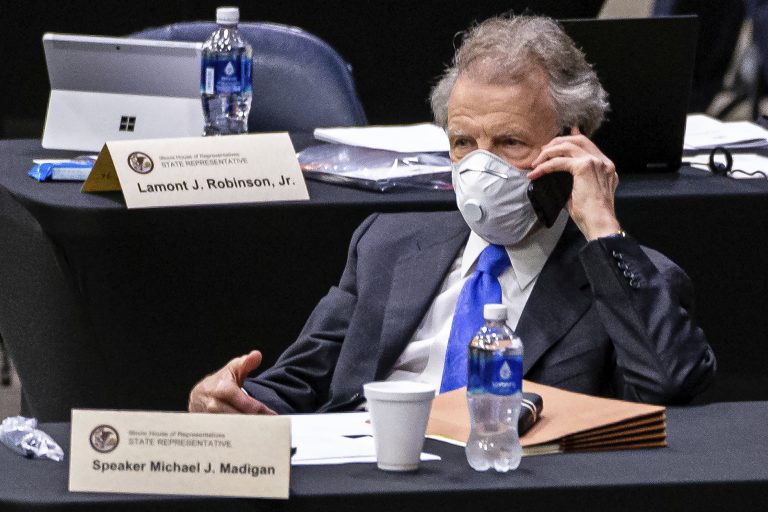
(The Center Square) A federal judge sentenced Michael Madigan Friday to seven-and-a-half years in prison and ordered him to pay a fine of $2.5 million for crimes committed during his tenure as the longest-serving speaker of the Illinois House of Representatives.

Judge John Robert Blakey handed down the 90-month sentence Friday at the Everett McKinley Dirksen U.S. Courthouse in Chicago. He also imposed three years of supervised release after his prison time ends. Madigan will be required to report to prison on Oct. 13.

The judge said it was difficult to reconcile the two recommendations, one from government attorneys and one from the defense. Prosecutors had asked for a 12.5-year prison sentence and a $1.5 million fine. Defense attorneys requested that Madigan be sentenced to a year of home confinement with probation and community service.

In considering sentence mitigation, Blakey said he didn’t just read the letters sent to him on Madigan’s behalf, but he dwelled upon them at length.

He also noted Madigan’s “clear dedication” to public service.

“Being great is hard, but being honest is not,” Blakey said. “This case is really sad. He had no reason to commit these crimes, but he chose to do so.”

“I’m not holding the defendant responsible for public corruption in Illinois,” Blakey said, noting Madigan was responsible for his corruption but not for all public corruption.

Blakey said he considered Madigan’s age and support of family and friends to be important as mitigating factors.

The judge then went through aggravating factors in considering the sentence.

“This is a tale of two different Michael Madigans,” Blakey said. “He had no reason to do the things he did in this case.”

“When he takes the stand and tries to lie, that’s an aggravating factor.”

Madigan’s decision to testify at his trial surprised many.

The judge called the ex-speaker’s testimony “a nauseating display of perjury and evasion.”

“You lied, sir. You did not have to, but you did,” Blakey told Madigan.

Before handing down the sentence, Blakey offered Madigan the chance to speak. After consulting his lawyers, the former speaker accepted and thanked the judge for the opportunity.

“I’m truly sorry for putting the people of the state of Illinois through this,” Madigan said.

The 83-year-old ex-speaker asked that Blakey let him take care of his ailing wife Shirley and take care of his family.

In final arguments before sentencing, Assistant U.S. Attorney Sarah Streicker said Madigan exploited his position in public office when he was at the pinnacle of power in state government.

“For years, the defendant held a public image of working for the people,” Streicker said. “He breached the public trust.”

“The sentencing factors require a significant term of incarceration,” Streicker said, adding that Madigan’s corrupt actions involved “huge pieces of legislation that affected everyone in the state.”

Streicker suggested that Madigan’s damage to the fabric of Illinois was even greater than the damage done by convicted former Gov. Rod Blagojevich, who was pardoned earlier this year by President Donald Trump.

“Governors, they came and went over the years, but Madigan stayed. His power and his presence remained constant,” Streicker said. “The primary harm is the erosion of trust in government.”

In discussing deterrence, Streicker said Madigan’s crimes added another chapter to the sordid history of Illinois politics.

“The public is paying attention,” Streicker said.

Defense attorney Dan Collins thanked Blakey for spending his weekend reading letters written on Madigan’s behalf and pleaded for the judge to consider Madigan’s character.

“His leadership has been so strong,” Collins said.

“Mike did not live his life to seek power,” Collins added. “He was a man who did his best.”

Collins said Madigan now spent his time caring for his sick wife.

“Today, judge, mercy is justice,” Collins concluded. “Mike deserves mercy today.”

A jury convicted Madigan Feb. 12 on 10 counts of bribery, conspiracy, wire fraud and use of a facility to promote unlawful activity.

Brian Gaines, Honorable W. Russell Arrington Professor in State Politics at the University of Illinois, said prosecutors made the strongest case they could.

“I don’t think anybody who’s paid close attention imagines that this particular case represents every example or every instance of financial impropriety that took place in this very, very long stretch of very, very powerful rule,” Gaines told The Center Square.

Gaines noted that Madigan’s bribery-related benefits to ComEd were estimated at hundreds of millions of dollars.

“And I don’t imagine that the court case got to the bottom of everything that’s untoward or illegal or unseemly,” Gaines added.

Streicker said the government moved to dismiss the remaining counts against “Madigan only” after the former speaker’s sentence was imposed. Madigan codefendant Michael McClain was not convicted with Madigan Feb. 12, but McClain was convicted at the related ComEd Four trial in 2023 and faces sentencing next month.

During discussion about sentencing guidelines, attorneys continued arguments about the utility’s valuation numbers provided by ComEd executive Scott Vogt during the trial.

Defense attorneys disputed prosecutors’ arguments for sentencing enhancement based on the assertion that Madigan lied on the witness stand. Madigan attorney Lari Dierks said the government did not provide evidence of Madigan’s perjury, adding that 140 people wrote to the court affirming the former speaker’s honesty.

“His word is his bond. He has a reputation of a lifetime of honesty,” Dierks said of the former speaker.

Assistant U.S. Attorney Julia Schwartz said Madigan told purposeful lies on the stand when he said he expected ComEd subcontractors to work.

At one point during his explanation of calculations regarding sentencing guidelines, the judge referred to Blagojevich’s attempted $1.5 million bribe to appoint someone to former U.S. Sen. Barack Obama’s seat after he was elected president, which the judge said no one was “willing to pay or able to pay.”

In Madigan’s case, Blakey said the government provided evidence that ComEd’s projected increase in shareholder value was expected to exceed $400 million.

“The law doesn’t require exact precision,” Blakey said.

The judge echoed Schwartz’ argument earlier in the week when he said he was being conservative by estimating the benefit to ComEd to be at least $400 million.

“The $400 million estimate is not speculative,” Blakey said, adding that he would apply the government’s enhancement to sentencing.

Blakey said the government overwhelmingly proved its argument in favor of sentencing enhancement for an organizer, leader or supervisor of criminal activity.

“Madigan acted as the central command post for the entire bribery scheme,” Blakey said.

Blakey also said prosecutors established that Madigan willfully gave false testimony during the trial. The judge gave several examples of the ex-speaker’s perjurious statements.

Madigan served in the Illinois House from 1971 to 2021. He was speaker for all but two years between 1983 and 2021. Madigan also chaired the Democratic Party of Illinois from 1998 to 2021.

After a break, Blakey ruled on sentencing enhancements related to Madigan’s convictions related to a state board seat for former Chicago Alderman Daniel Solis, D-Chicago, who was a cooperating witness for the government.

The judge again ruled in favor of prosecutors.

“When I sit down with [Governor-elect J.B.] Pritzker, I’ll tell him, ‘This is what we want to do,’” Blakey said, repeating Madigan’s comments to Solis during a recorded call.

The judge said again that Madigan willfully made false statements during trial.

“The defendant lied,” Blakey said.

The judge said the court gave only a few relevant examples of Madigan’s perjury.

Blakey noted that the court would not apply a potential decrease in sentencing due to the defendant’s refusal to show remorse or accept responsibility.

Illinois House Minority Leader Tony McCombie, R-Savanna, said it was disappointing that some former Republican politicians joined Democrats in writing letters on Madigan’s behalf.

“Absolutely. We do sound like a broken record with our continuous calls for ethics reform, but we have to have them. We can’t rely on the federal prosecution to hold elected officials to a higher standard, regardless of who stood up for them. That says something about those folks as well,” McCombie told The Center Square.

After explaining sentencing calculations, the judge named 105 years in prison as the advisory range. He said the guidelines did not recommend probation but did include terms of supervised release.

Blakey said the guideline range for a fine was $50,000 to $500,000, but said the statutory maximum was $2.5 million. He later suggested that the crimes committed could have provided for a greater fine.

Streicker suggested that a potential term of supervised release should prevent the defendant from holding elected position.

Madigan attorney Dan Collins said he would not object.

“Mike is not going to hold office or seek office ever again,” Collins said.

LA Councilwoman Asks Police Chief How to Obstruct ICE; Chief Left Baffled

(Luis CornelioHeadline USALAPD Chief Jim McDonnell shot down suggestions from a Democratic politician that police officers alert residents to federal immigration operations around the area, calling it “obstruction of justice.” 

Los Angeles City Councilwoman Imelda Padilla made the puzzling recommendation at a Thursday City Council hearing where McDonnell was testifying. Padilla’s proposal comes as President Donald Trump ramps up deportation efforts in California. 

“Can we use technology, like AI technology, to create a situation where your department can identify: ‘Hey, there are agents, non–City of L.A., in the neighboring town. Everyone go on alert’?” she asked.

McDonnell appeared baffled by the question, prompting Padilla to paraphrase. 

“I’m asking a creative, creativity question here,” she said. “What can your department do to warn us, to warn our community … you can warn us so we can warn our folks in the spirit of your loyalty to the City of Los Angeles?” 

McDonnell stepped in, asking, “So, you’re asking me to warn you about an enforcement action being taken by another agency before it happens?” Padilla replied, “Yeah.” 

This is when McDonnell gave Padilla a quick lesson on the law. 

“Yeah, we can’t do that,” he said.  

“Why not?” she asked. 

“That would be obstruction of justice. You may want to talk to the city attorney about that,” McDonnell replied.  

As the exchange continued, Padilla remained unfazed. She pressed again, asking how lawmakers could be notified. 

“We don’t do that,” McDonnell responded. “We’re not going to broadcast, like the FBI is looking for a terrorist suspect, right? Are we going to tell them, ‘Hey, the FBI is coming looking for you’ … That would be completely inappropriate and illegal.” 

Trump Praises ‘Excellent’ Israeli Strikes on Iran

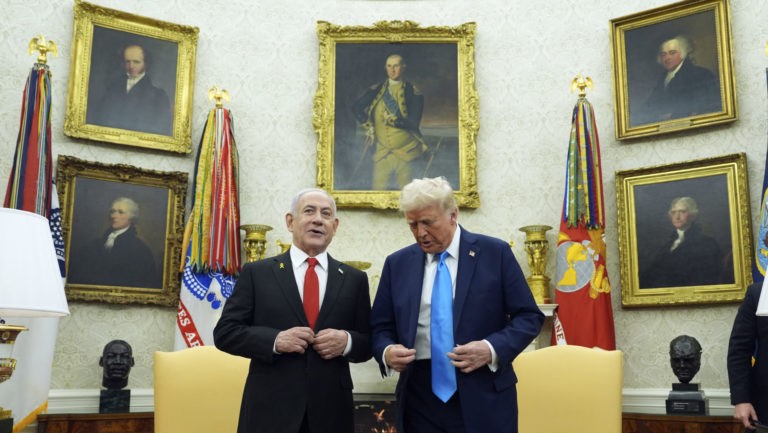
(Kyle Anzalone, Antiwar.com) President Donald Trump endorsed the massive Israeli strike on Iran early on Friday morning, calling the attack “excellent.” A source explained that the US provided Israel with intelligence for the operation.

Speaking with ABC News on the phone following the Israeli strikes across the Islamic Republic, Trump said, “I think it’s been excellent.” He continued, “We gave them a chance and they didn’t take it. They got hit hard, very hard. They got hit about as hard as you’re going to get hit. And there’s more to come. A lot more.”

Trump refused to provide details about the US role in the attack, saying, “I don’t want to comment on that.”

However, elements of Washington’s support for Tel Aviv are becoming public. Israeli officials told the Jerusalem Post and Axios that the White House helped to create the illusion that the US was still seeking a diplomatic settlement with Iran.

Just hours before the attack, President Trump declared that he was committed to a “Diplomatic Resolution to the Iran Nuclear Issue!” But it appears he had already greenlit the Jewish state’s attack on the Islamic Republic.

A source provided further details of the US support, telling ABC News that Washington provided Tel Aviv with “exquisite” intelligence. Additionally, the source said the US will help Israel defend against any Iranian response.

The Iranian Foreign Ministry said in a statement that it holds the US responsible for the attack. “The Zionist regime’s aggressive actions against Iran cannot have been carried out without the coordination and authorization of the United States. Accordingly, the United States government, as the main supporter of this regime, will also be responsible for the dangerous effects and consequences of the Zionist regime’s adventure,” the ministry said.

Since starting the assault early Friday morning, Israeli forces have delivered multiple rounds of strikes targeting Iranian military sites, nuclear facilities, and residential buildings. Top Iranian nuclear scientists and generals have been confirmed killed.

Tel Aviv said the operation, dubbed “Nation of Lions,” will last several days.

Israel is seeking more support from the US. The Jerusalem Post reports that Israeli Defense Minister Israel Katz will hold a call with Secretary of Defense Pete Hegseth later on Friday to lobby Washington for more military assistance. Additionally, Trump is expected to speak with Israeli Prime Minister Benjamin Netanyahu by phone.

This article originally appeared at Antiwar.com.

Kyle Anzalone is the opinion editor of Antiwar.com and news editor of the Libertarian Institute. He hosts The Kyle Anzalone Show and is co-host of Conflicts of Interest with Connor Freeman.

A Border Patrol Agent Died in 2009. His Widow is Still Fighting for Benefits

(Headline USAWhen her husband died after a grueling U.S. Border Patrol training program for new agents, Lisa Afolayan applied for the federal benefits promised to families of first responders whose lives are cut short in the line of duty.

Sixteen years later, Afolayan and her two daughters haven’t seen a penny, and program officials are defending their decisions to deny them compensation. She calls it a nightmare that too many grieving families experience.

“It just makes me so mad that we are having to fight this so hard,” said Afolayan, whose husband, Nate, had been hired to guard the U.S. border with Mexico in southern California. “It takes a toll emotionally, and I don’t think they care. To them, it’s just a business. They’re just pushing paper.”

Afolayan’s case is part of a backlog of claims plaguing the fast-growing Public Safety Officers’ Benefits Program. Hundreds of families of deceased and disabled officers are waiting years to learn whether they qualify for the life-changing payments, and more are ultimately being denied, an Associated Press analysis of program data found.

The program is falling far short of its goal of deciding claims within one year. Nearly 900 have been pending for longer than that, triple the number from five years earlier, in a backlog that includes cases from nearly every state, according to AP’s review, which was based on program data through late April.

More than 120 of those claims have been in limbo for at least five years, and roughly a dozen have languished for a decade.

“That is just outrageous that the person has to wait that long,” said Charlie Lauer, the program’s general counsel in the 1980s. “Those poor families.”

Justice Department officials, who oversee the program, acknowledge the backlog. They say they’re managing a surge in claims — which have more than doubled in the last five years — while making complicated decisions about whether cases meet legal criteria.

In a statement, they said “claims involving complex medical and causation issues, voluminous evidence and conflicting medical opinions take longer to determine, as do claims in various stages of appeal.” It acknowledged a few cases “continue through the process over ten years.”

Program officials wouldn’t comment on Afolayan’s case. Federal lawyers are asking an appeals court for a second time to uphold their denials, which blame Nate’s heat- and exertion-related death on a genetic condition shared by millions of mostly Black U.S. citizens.

Supporters say Lisa Afolayan’s resilience in pursuing the claim has been remarkable, and grown in significance as training-related deaths like Nate’s have risen.

“Your death must fit in their box, or your family’s not going to be taken care of,” said Afolayan, of suburban Dallas.

Their daughter, Natalee, was 3 when her father died. She recently completed her first year at the University of Texas, without the help of the higher education benefits the program provides.

The officers’ benefits program is decades old and has paid billions

Congress created the Public Safety Officers’ Benefits program in 1976, providing a one-time $50,000 payout as a guarantee for those whose loved ones die in the line of duty.

The benefit was later set to adjust with inflation; today it pays $448,575. The program has awarded more than $2.4 billion.

Early on, claims were often adjudicated within weeks. But the complexity increased in 1990, when Congress extended the program to some disabled officers. A 1998 law added educational benefits for spouses and children.

Since 2020, Congress has passed three laws expanding eligibility — to officers who died after contracting COVID-19, first responders who died or were disabled in rescue and cleanup operations from the September 2001 attacks, and some who die by suicide.

Today, the program sees 1,200 claims annually, up from 500 in 2019.

The wait time for decisions and rate of denials have risen alongside the caseload. Roughly one of every three death and disability claims were rejected over the last year.

U.S. Sen. Ted Cruz and other Republicans recently introduced legislation to require the program to make determinations within 270 days, expressing outrage over the case of an officer disabled in a mass shooting who’s waited years for a ruling. Similar legislation died last year.

One group representing families, Concerns of Police Survivors, has expressed no such concerns about the program’s management. The Missouri-based nonprofit recently received a $6 million grant to continue its longstanding partnership with the Justice Department to serve deceased officers’ relatives — including providing counseling, hosting memorial events and assisting with claims.

“We are very appreciative of the PSOB and their work with survivor benefits,” spokesperson Sara Slone said. “Not all line-of-duty deaths are the same and therefore processing times will differ.”

Nate Afolayan dreamed of serving his adopted country

Born in Nigeria, Nate Afolayan moved to California with relatives at age 11. He became a U.S. citizen and graduated from California State University a decade later.

Lisa met Nate while they worked together at a juvenile probation office. They talked, went out for lunch and felt sparks.

“The next thing you know, we were married with two kids,” she said.

He decided to pursue a career in law enforcement once their second daughter was born. Lisa supported him, though she understood the danger.

He spent a year working out while applying for jobs and was thrilled when the Border Patrol declared him medically fit; sent him to Artesia, New Mexico, for training; and swore him in.

Nate loved his 10 weeks at the academy, Lisa said, despite needing medical treatment several times — he was shot with pepper spray in the face and became dizzy during a water-based drill.

His classmates found him to be a natural leader in elite shape and chose him to speak at graduation, they recalled in interviews with investigators.

He prepared a speech with the line, “We are all warriors that stand up and fight for what’s right, just and lawful.”

But on April 30, 2009 — days before the ceremony — a Border Patrol official called Lisa. Nate, 29, had fainted after his final training run and was hospitalized.

It was dusty and 88 degrees in the high desert that afternoon. Agents had to complete the 1.5-mile run in 13 minutes, at an altitude of 3,400 feet. Nate had warned classmates it was too hot to wear their black academy shirts, but they voted to do so anyway, records show.

Nate, 29, finished in just over 11 minutes but then struggled to breathe and collapsed.

Now Nate was being airlifted to a Lubbock, Texas, hospital for advanced treatment. Lisa booked a last-minute flight, arriving the next day.

A doctor told her Nate’s organs had shut down and they couldn’t save his life. The hospital needed permission to end life-saving efforts. One nurse delivered chest compressions; another held Lisa tightly as she yelled: “That’s it! I can’t take it anymore!”

Lisa became a single mother. The girls were 3 and 1.

Her only comfort, she said, was knowing Nate died living his dream — serving his adopted country.

Sickle cell trait was cited in this benefit denial

When she first applied for benefits, Lisa included the death certificate that listed heat illness as the cause of Nate’s death.

The aid could help her family. She’d been studying to become a nurse but had to abandon that plan. She relied on Social Security survivors’ benefits and workers’ compensation while working at gyms as a trainer or receptionist and dabbling in real estate.

The program had paid benefits for a handful of similar training deaths, dating to a Massachusetts officer who suffered heat stroke and dehydration in 1988. But program staff wanted another opinion on Nate’s death. They turned to outside forensic pathologist Dr. Stephen Cina.

Cina concluded the autopsy overlooked the “most significant factor”: Nate carried sickle cell trait, a condition that’s usually benign but has been linked to rare exertion-related deaths in military, sports and law enforcement training.

Cina opined that exercising in a hot climate at high altitude triggered a crisis in which Nate’s red blood cells became misshapen, depriving his body of oxygen. Cina, who stopped consulting for the benefits program in 2020 after hundreds of case reviews, declined to comment.

Nate learned he had the condition, carried by up to 3 million U.S. Black citizens, after a blood test following his second daughter’s birth. The former high school basketball player had never experienced any problems.

A Border Patrol spokesperson declined to say whether academy leaders knew of the condition, which experts say can be managed with precautions such as staying hydrated, avoiding workouts in extreme temperatures and altitudes, and taking rest breaks.

Under the benefit program’s rules, Afolayan’s death would need to be “the direct and proximate result” of an injury he suffered on duty to qualify. It couldn’t be the result of ordinary physical strain.

The program in 2012 rejected the claim, saying the hot, dry, high climate was one factor, but not the most important.

It had been more than two years since Lisa Afolayan applied and three since Nate’s death.

Lisa Afolayan’s appeal was not common

Most rejected applicants don’t exercise their option to appeal to an independent hearing officer, saying they can’t afford attorneys or want to get on with their lives.

But Lisa Afolayan appealed with help from a border patrol union. A one-day hearing was held in late 2012. The hearing officer denied her claim more than a year later, saying the “perfect storm” of factors causing the death didn’t include a qualifying injury.

Lisa and her daughters moved from California to Texas. They visited the National Law Enforcement Officers Memorial in Washington, where they saw Nate’s name.

Four years passed without an update on the claim. Lisa learned the union had failed to exercise its final appeal, to the program director, due to an oversight. The union didn’t respond to AP emails seeking comment.

Then she met Suzie Sawyer, founder and retired executive director of Concerns of Police Survivors. Sawyer had recently helped win a long battle to obtain benefits in the death of another federal agent who’d collapsed during training.

“I said, ‘Lisa, this could be the fight of your life, and it could take forever,'” Sawyer recalled. “‘Are you willing to do it?’ She goes, ‘hell yes.’”

The two persuaded the program to hear the appeal even though the deadline had passed. They introduced a list of similar claims that had been granted and new evidence: A Tennessee medical examiner concluded the hot, dry environment and altitude were key factors causing Nate’s organ-system failure.

But the program was unmoved. The acting Bureau of Justice Assistance director upheld the denial in 2020.

Such rulings usually aren’t public, but Lisa fumed as she learned through contacts about some whose deaths qualified, including a trooper who had an allergic reaction to a bee sting, an intoxicated FBI agent who crashed his car, and another officer with sickle cell trait who died after a training run on a hot day.

Today, an appeal is still pending

In 2022, Lisa thought she might have finally prevailed when a federal appeals court ordered the program to take another look at her application.

A three-judge panel said the program erred by failing to consider whether the heat, humidity and altitude during the run were “the type of unusual or out-of-the-ordinary climatic conditions that would qualify.”

The judges also said it may have been illegal to rely on sickle cell trait for the denial under a federal law prohibiting employers from discrimination on the basis of genetic information.

It was great timing: The girls were in high school and could use the monthly benefit of $1,530 to help pay for college. The family’s Social Security and workers’ compensation benefits would end soon.

But the program was in no hurry. Nearly two years passed without a ruling despite inquiries from Afolayan and her lawyer.

The Bureau of Justice Assistance director upheld the denial in February 2024, ruling that the climate on that day 15 years earlier wasn’t “unusually adverse.” The decision concluded the Genetic Information Nondiscrimination Act didn’t apply since the program wasn’t Afolayan’s employer.

Arnold & Porter, a Washington law firm now representing Afolayan pro bono, has appealed to the Court of Appeals for the Federal Circuit.

Her attorney John Elwood said the program has gotten bogged down in minutiae while losing sight of the bigger picture: that an officer died during mandatory training. He said government lawyers are fighting him just as hard, “if not harder,” than on any other case he’s handled.

Months after filing their briefs, oral arguments haven’t been set.

“This has been my life for 16 years,” Lisa Afolayan said. “Sometimes I just chuckle and keep moving because what else am I going to do?”


Why Investors Can’t Trust the System—and Should Trust Gold

(Money Metals News Service) In a wide-ranging and candid interview on the Money Metals podcast, host Mike Maharrey sat down with Axel Merk—President and CIO of Merk Investments—to explore the deepening divide between government fiscal behavior and investor interests.

The conversation centered on growing sovereign debt, entitlement reform avoidance, shifting macroeconomic dynamics, and the critical role of gold and silver in a volatile financial system.

(Interview Starts Around 5:46 Mark)

Government vs. Investors: Conflicting Incentives

Merk began by highlighting a quote he first coined over 20 years ago: “The interests of a government in debt are not aligned with those of investors.” He elaborated that governments with massive debt burdens have every incentive to allow inflation to erode that debt’s real value. In contrast, investors aim to preserve purchasing power. Merk cited Milton Friedman’s famous observation that citizens always pay for government deficits—either through taxation or inflation.

Referencing the recently proposed “Big Beautiful Bill”—an actual name used for a U.S. budget reconciliation measure—Merk noted the CBO’s estimate that the bill would add $2.4 trillion to the federal deficit. He pointed out that political mechanisms like budget reconciliation allow such legislation to pass with just 51 Senate votes, sidestepping broader fiscal responsibility.

Despite public claims of fiscal conservatism from lawmakers like House Speaker Mike Johnson, Merk argued that the lack of entitlement reform shows that “business as usual” continues. He added, “If you make all these promises, you’ve got to pay for them somehow—or you’ve got to update the promises that you have made.”

No Appetite for Reform, Only Kicking the Can

Merk recommended The High Cost of Good Intentions (2017) for historical context on entitlement programs, showing how reforms rarely reverse expansionary trends. While Europe has shown that bond markets can force governments to act, the U.S. enjoys a much greater capacity to “kick the can down the road.”

That said, Merk warned investors: “This game is rigged. When the interests of government are not aligned with yours, it’s something to be thinking about.”

He also cautioned that governments can change the rules unexpectedly—especially when fiscal pressures mount—making long-term planning for investors even more challenging.

Why Gold and Silver Still Matter

Turning to gold and silver as investment tools, Merk described the metals as essential in addressing systemic risk, particularly amid long-term inflation and global debt. Merk’s firm manages over $2.3 billion in gold and gold-mining assets, offering a unique view of both the physical and speculative ends of the metals market.

He distinguished physical gold investors—whom he called “defensive”—from gold mining investors who typically seek outsized returns with higher volatility. While large miners have recently underperformed expectations, their cleaner balance sheets now reduce their leverage to rising gold prices. Merk’s firm focuses on junior miners, which he says offer better upside but come with higher risk.

Silver’s recent rally also came under discussion. Merk noted the decline in the gold-to-silver ratio, pointing to silver’s more industrial nature and sensitivity to economic momentum. He said the latest uptick likely reflects optimism around trade stabilization with China and a possible upward revision of the U.S. economic outlook.

Tariffs, Fragmentation, and Financial Plumbing

One of the most insightful moments came when Merk described the long-term consequences of tariffs and financial fragmentation. He warned that policies like Trump’s proposed 10% baseline tariffs don’t just shift trade—they also change capital flows, leading to higher domestic financing needs and upward pressure on long-term interest rates.

Merk criticized the mainstream narrative that the U.S. dollar’s dominance is unshakable. “There doesn’t need to be an alternative,” he said. “The alternative is greater fragmentation.” He warned that the erosion of global financial integration threatens the very plumbing that supports U.S. reserve currency status.

He also referenced Germany’s moves to repatriate gold as a symptom of growing distrust in U.S. monetary stewardship and the weaponization of the dollar.

Caution, Complexity, and No Crystal Balls

Merk made clear that while he’s bullish on gold, he avoids hard price predictions. “I don’t have a crystal ball,” he said. His goal is to provide “food for thought” and challenge assumptions.

He emphasized that the world is entering a “multipolar financial system” where many currencies—not just the dollar—play strategic roles. That, in turn, will have unpredictable implications for investments, currencies, and gold prices.

Final Thoughts

Axel Merk left listeners with a sobering message: long-term fiscal pressures, lack of political will, rising tariffs, and financial fragmentation will continue to fuel uncertainty. Precious metals remain one of the few reliable hedges against these structural problems.

He encouraged listeners to follow his insights via MerkInvestments.com and his account on X (formerly Twitter) @AxelMerk, particularly during central bank meetings. “I’m a monetary policy buff,” he quipped, adding that inflation has now made his “two cents’ worth” worth at least four.