Illegal Alien Resorted to Cannibalism While in Custody, Noem Says

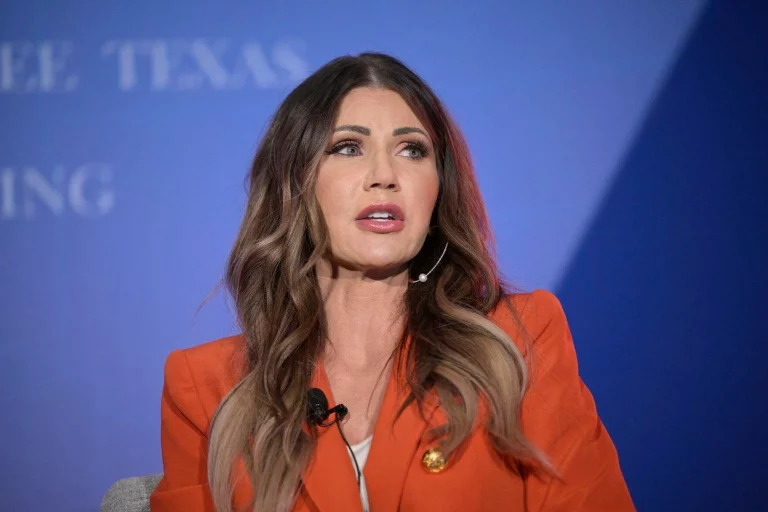
(Luis CornelioHeadline USA) An illegal alien resorted to cannibalism while being deported from the U.S., Homeland Security Secretary Kristi Noem said Tuesday at a Florida press conference with President Donald Trump.

The individual, whom the administration has not yet publicly identified, forced the flight crew to seek medical attention due to his psychotic behavior.

“The other day, I was talking to some marshals who have been partnering with ICE. They said that they had detained a cannibal and put him on a plane to take him home,” Noem said at the newly opened Alligator Alcatraz immigration detention center in Florida.  

“And while they had him in his seat, he started to eat himself and they had to get him off and get him medical attention,” she added. 

Noem referenced the case to sound the alarm about the kind of individuals who broke into the U.S. under former President Joe Biden’s lax border policies. 

“These are the kind of deranged individuals that are on our streets in America that we’re trying to target and get out of our country,” Noem continued. “Because they are so deranged, they don’t belong here and … they shouldn’t be walking the streets with our children.” 

Noem, along with Trump and Florida Gov. Ron DeSantis, toured the newly inaugurated detention center, described as a “state-of-the-art facility” that boasts 3,000 beds. 

DHS said among those who could be transferred to Alligator Alcatraz are Santo Villaba-Reyes, a Venezuelan national convicted of homicide, and Alberto Godinez-Lopez, a Guatemalan national also convicted of homicide. 

“Alligator Alcatraz, and other facilities like it, will give us the capability to lock up some of the worst scumbags who entered our country under the previous administration,” Noem stated in a press statement on Monday. “We will expand facilities and bed space in just days, thanks to our partnership with Florida. Make America safe again.” 

Ex-FBI Agent Charged in Jan. 6 Protest Now Working on DOJ Weaponization Task Force

(Ken Silva, Headline USA) Former FBI agent Jared Wise knows all about government weaponization.

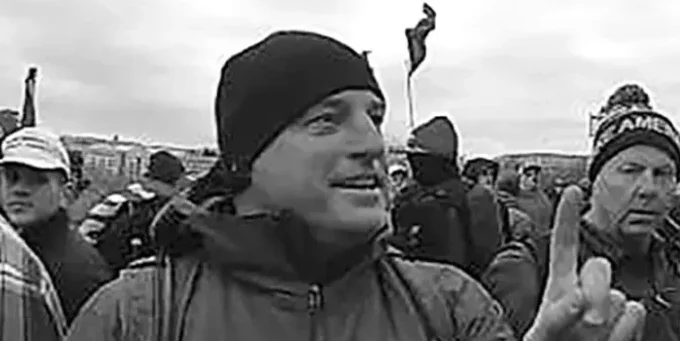
Charged for participating in the Jan. 6, 2021, Capitol Hill uprising, Wise once had an FBI informant allegedly steal $190,000 from him—and when he reported the theft to his former employer, agents refused to investigate. In fact, the FBI went as far as investigate Wise for trying to contact the informant who allegedly stole from him.

Now, Wise is working on a Justice Department task force designed to address injustices like the one he faced. The former FBI supervisory agent is reportedly serving as a counselor to Justice Department pardon attorney Ed Martin Jr., who also serves as director of the working group.

A department spokesperson declined to comment. The New York Times was first to report on Wise’s appointment.

Wise, who worked as a special agent or supervisory special agent for the FBI from 2004 through 2017, was arrested in Oregon on Capitol protest-related misdemeanor charges in May 2023.

Wise repeatedly shouted, “Kill ’em!” as he watched rioters assaulting officers outside the Capitol, according to an FBI agent’s affidavit. Wise clapped his hands and raised his arms ”in triumph” after he entered the building through the Senate wing door, the affidavit says. He left the building about nine minutes after entering.

Wise was on trial in Washington when Trump returned to the White House in January and immediately pardoned, commuted prison sentences or ordered the dismissal of cases for all of the nearly 1,600 protestors.

Wise is also a former Project Veritas contractor.

Ken Silva is the editor of Headline USA. Follow him at x.com/jd_cashless.

SCOOP: FBI Received Intel about Underground Chinese Bases in America

(Ken Silva, Headline USA) The FBI has declassified internal records about possible Chinese election interference in 2020. Buried in those documents is perhaps an even more explosive allegation—that the Chinese Communist Party has underground bases in the U.S.

The newly declassified—but still heavily redacted—records were released Tuesday by Sen. Chuck Grassley, R-Iowa, who’s been investigating the matter. Grassley previously revealed that the FBI received a tip from an informant in 2020 that China may have shipped “tens of thousands” of pro-Biden “fraudulent mail-in votes”—but that FBI headquarters squashed the investigation.

The new records confirm that FBI headquarters indeed squashed the investigation. Moreover, internal communications show that officials were concerned that the allegations of election interference conflicted with testimony from then-FBI Director Christopher Wray, who had told Congress that he had no credible evidence that interference was taking place.

“The reporting will contradict Director Wray’s testimony,” a heavily redacted September 2020 internal FBI email stated.

However, the newly released documents also cast doubt on the veracity of the FBI informant’s tip about election interference. According to the documents, the FBI informant obtained his information from a sub-source in China, who in turn said he received the info from “unidentified PRC officials.” The FBI said the “placement of the ultimate sub-source is unknown.”

Moreover, the same FBI informant apparently provided his handler with allegations about “underground bases in Republican states to disperse Coronavirus.” The FBI informant received that information from a different sub-source than the one who alleged election interference. The FBI informant told his handler that he found his sub-source’s tip about underground Chinese bases to be credible.

“We’re skeptical of this reporting based on the portions regarding COVID that veer into conspiracy theories,” a skeptical agent wrote on Sept. 29, 2020.

The newly released documents also address the fact that Customs and Border Patrol had captured 19,888 fraudulent driver’s licenses in 2020. Most of these IDs allegedly came from Hong Kong and China in late July 2020 and were en route to a Midwestern battleground state.

The internal documents show that agents raised questions about whether the FBI informant learned information about the driver’s licenses from the internet, as opposed to having any special or inside knowledge from sources in China. Indeed, the informant provided the tip about that scheme in August 2020, a month after CBP issued a press release about the matter.

Despite the fact that the FBI didn’t seem to have solid info about CCP election interference, Sen. Grassley still blasted the bureau for recalling the info on the grounds that it contradicted Wray’s testimony.

“These records smack of political decision-making and prove the Wray-led FBI to be a deeply broken institution. Ahead of a high-stakes election happening amid an unprecedented global pandemic, the FBI turned its back on its national security mission,” Grassley said in a press release.

“One way or the other, intelligence must be fully investigated to determine whether it’s true, or if it’s just smoke and mirrors. Chris Wray’s FBI wasn’t looking out for the American people – it was looking to save its own image. Now’s the time to rebuild the FBI’s trust. Director Patel’s willingness to work with me to establish renewed transparency and accountability is a critical part of that process, and I applaud him for his efforts.”

Ken Silva is the editor of Headline USA. Follow him at x.com/jd_cashless.

Mystery Surrounds The Jeffrey Epstein Files After Bondi Claims ‘Tens of Thousands’ of Videos

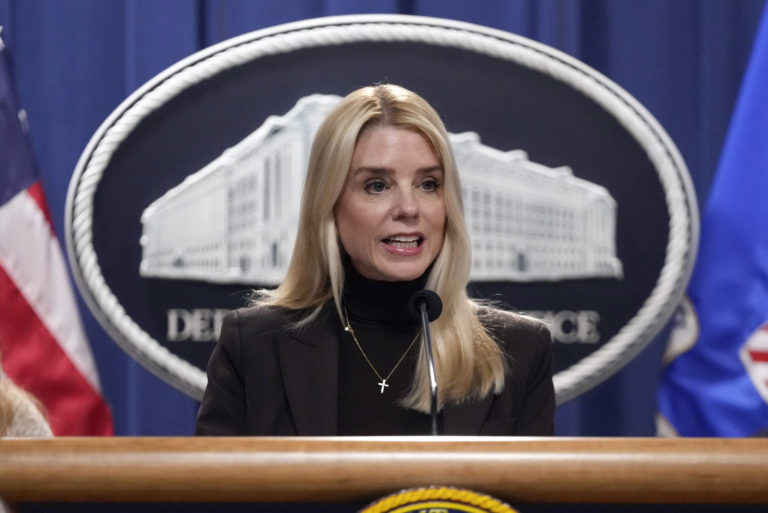
(Headline USA) It was a surprising statement from Attorney General Pam Bondi as the Trump administration promises to release more files from its sex trafficking investigation of Jeffrey Epstein: The FBI, she said, was reviewing “tens of thousands of videos” of the wealthy financier “with children or child porn.”

The comment, made to reporters at the White House days after a similar remark to a stranger with a hidden camera, raised the stakes for President Donald Trump’s administration to prove it has in its possession previously unseen compelling evidence. That task is all the more pressing after an earlier document dump that Bondi hyped angered elements of Trump’s base by failing to deliver new bombshells and as administration officials who had promised to unlock supposed secrets of the so-called government “deep state” struggle to fulfill that pledge.

Yet weeks after Bondi’s remarks, it remains unclear what she was referring to.

The Associated Press spoke with lawyers and law enforcement officials in criminal cases of Epstein and socialite former girlfriend Ghislaine Maxwell who said they hadn’t seen and didn’t know of a trove of recordings like what Bondi described. Indictments and detention memos do not reference the existence of videos of Epstein with children, and neither was charged with possession of child sex abuse material even though that offense would have been much easier to prove than the sex trafficking counts they faced.

One potential clue may lie in a little-noticed 2023 court filing — among hundreds of documents reviewed by the AP — in which Epstein’s estate was revealed to have located an unspecified number of videos and photos that it said might contain child sex abuse material. But even that remains shrouded in secrecy with lawyers involved in that civil case saying a protective order prevents them from discussing it.

The filing suggests a discovery of recordings after the criminal cases had concluded, but if that’s what Bondi was referencing, the Justice Department has not said.

The department declined repeated requests from the AP to speak with officials overseeing the Epstein review. Spokespeople did not answer a list of questions about Bondi’s comments, including when and where the recordings were procured, what they depict and whether they were newly discovered as authorities dug through their evidence collection or were known for some time to have been in the government’s possession.

“Outside sources who make assertions about materials included in the DOJ’s review cannot speak to what materials are included in the DOJ’s review,” spokesperson Chad Gilmartin said in a statement.

Bondi has faced pressure after first release fell short of expectations

Epstein’s crimes, high-profile connections and jailhouse suicide have made the case a magnet for conspiracy theorists and online sleuths seeking proof of a coverup. Elon Musk entered the frenzy during his acrimonious fallout with Trump when he said without evidence in a since-deleted social media post that the reason the Epstein files have yet to be released is that the Republican president is featured in them.

During a Fox News Channel interview in February, Bondi suggested an alleged Epstein “client list” was sitting on her desk. The next day, the Justice Department distributed binders marked “declassified” to far-right influencers at the White House, but it quickly became clear much of the information had long been in the public domain. No “client list” was disclosed, and there’s no evidence such a document exists.

The flop left conservatives fuming and failed to extinguish conspiracy theories that for years have spiraled around Epstein’s case. Right wing-personality Laura Loomer called on Bondi to resign, branding her a “total liar.”

Afterward, Bondi said an FBI “source” informed her of the existence of thousands of pages of previously undisclosed documents and ordered the bureau to provide the “full and complete Epstein files,” including any videos. Employees since then have logged hours reviewing records to prepare them for release. It’s unclear when that might happen.

In April, Bondi was approached in a restaurant by a woman with a hidden camera who asked about the status of the Epstein files release. Bondi replied that there were tens of thousands of videos “and it’s all with little kids,” so she said the FBI had to go through each one.

After conservative activist James O’Keefe, who obtained and later publicized the hidden-camera video, alerted the Justice Department to the encounter, Bondi told reporters at the White House: “There are tens of thousands of videos of Epstein with children or child porn.”

The comments tapped into long-held suspicions that, despite the release over the years of thousands of records documenting Epstein’s activities, damaging details about him or other prominent figures remain concealed.

The situation was further muddied by recent comments from FBI Director Kash Patel to podcaster Joe Rogan that did not repeat Bondi’s account about tens of thousands of videos.

Though not asked explicitly about Bondi, Patel dismissed the possibility of incriminating videos of powerful Epstein friends, saying, “If there was a video of some guy or gal committing felonies on an island and I’m in charge, don’t you think you’d see it?” Asked whether the narrative “might not be accurate that there’s video of these guys doing this,” he replied, “Exactly.”

Epstein’s suicide in August 2019, weeks after his arrest, prevented a trial in New York and cut short the discovery process in which evidence is shared among lawyers.

But even in a subsequent prosecution of Maxwell, in which such evidence would presumably have been relevant given the nature of the accusations against an alleged co-conspirator, salacious videos of Epstein with children never surfaced nor were part of the case, said one of her lawyers.

“We were never provided with any of those materials. I suspect if they existed, we would have seen them, and I’ve never seen them, so I have no idea what she’s talking about,” said Jeffrey Pagliuca, who represented Maxwell in a 2021 trial in which she was convicted of luring teenage girls to be molested by Epstein.

To be sure, photographs of nude or seminude girls have long been known to be part of the case. Investigators recovered possibly thousands of such pictures while searching his Manhattan mansion, and a videorecorded walk-through by law enforcement of his Palm Beach, Florida, home revealed sexually suggestive photographs displayed inside, court records show.

Accounts from more than one accuser of feeling watched or seeing cameras or surveillance equipment in Epstein’s properties have contributed to public expectations of sexual recordings. A 2020 Justice Department Office of Professional Responsibility report on the handling of an earlier Epstein investigation hinted at that possibility, saying police who searched his Palm Beach home in 2005 found computer keyboards, monitors and disconnected surveillance cameras, but the equipment — including video recordings and other electronic items — was missing.

There’s no indication prosecutors obtained any missing equipment during the later federal investigation, and the indictment against him included no recording allegations.

An AP review of hundreds of documents in the Maxwell and Epstein criminal cases identified no reference to tens of thousands of videos of Epstein with underage girls.

“I don’t recall personally ever having that kind of discussion,” said one Epstein lawyer, Marc Fernich, who couldn’t rule out such evidence wasn’t located later. “It’s not something I ever heard about.”

In one nonspecific reference to video evidence, prosecutors said in a 2020 filing that they would produce to Maxwell’s lawyers thousands of images and videos from Epstein’s electronic devices in response to a warrant.

But Pagliuca said his recollection was those videos consisted largely of recordings in which Epstein was “musing” into a recording device — “Epstein talking to Epstein,” he said.

Complicating efforts to assess the Epstein evidence is the volume of accusers, court cases and districts where legal wrangling has occurred, including after Epstein’s suicide and Maxwell’s conviction.

The cases include 2022 lawsuits in Manhattan’s federal court from an accuser identified as Jane Doe 1 and in the U.S. Virgin Islands, where Epstein had a home, alleging that financial services giant JPMorgan Chase failed to heed red flags about him being a “high-risk” customer.

Lawyers issued a subpoena for any video recordings or photos that could bolster their case.

They told a judge months later the Epstein estate had alerted them that it had found content that “might contain child sex abuse imagery” while responding to the subpoena and requested a protocol for handling “videorecorded material and photographs.” The judge ordered representatives of Epstein’s estate to review the materials before producing them to lawyers and to alert the FBI to possible child sexual abuse imagery.

Court filings don’t detail the evidence or say how many videos or images were found, and it’s unclear whether the recordings Bondi referenced were the same ones.

The estate’s disclosure was later included by a plaintiffs’ lawyer, Jennifer Freeman, in a complaint to the FBI and the Justice Department asserting that investigators had failed over the years to adequately collect potential evidence of child sex abuse material.

Freeman cited Bondi’s comments in a new lawsuit on behalf of an Epstein accuser who alleges he assaulted her in 1996. In an interview, Freeman said she had not seen recordings and had no direct knowledge but wanted to understand what Bondi meant.

“I want to know what she’s addressing, what is she talking about — I’d like to know that,” she said.

Adapted from reporting by the Associated Press.

‘Big, Beautiful Bill’ Narrowly Passes Senate, Faces Tough Crowd in House

(Thérèse Boudreaux, The Center Square)  After more than 26 hours of debate and a record number of vote-a-rama amendments, the U.S. Senate narrowly passed President Donald Trump’s ‘big, beautiful bill’ Tuesday.

The massive budget reconciliation bill hikes the debt ceiling by $5 trillion and implements President Donald Trump’s tax, energy, border security and defense agenda. But the cost and complexity of the bill required Vice President J.D. Vance to break the chamber tie with Sens. Rand Paul, R-Ky., Thom Tillis, R-N.C., and Susan Collins, R-Maine, voting no.

By permanently extending the bulk of the 2017 tax cuts – rather than extending them for only 10 years, as the House originally did — the Senate-amended OBBBA would add roughly $4 trillion to the national debt when accounting for interest by fiscal year 2034.

Republican leaders have spent weeks trying to rally their constituents around the massive bill, formerly titled the One Big Beautiful Bill Act but stripped of its name via a last-minute procedural complaint by Senate Democrats. While fiscal hawks objected to the bill’s projected impact on the debt and deficit, other Republicans raised concerns about the $1.7 trillion in savings found by House and Senate committees.

The majority of the bill’s offsets came from Medicaid reforms, with the House imposing work requirements on able-bodied adults and the Senate lowering the Medicaid provider tax cap from 6% to 3.5%. Some GOP senators worried this could cause rural hospitals to close, so a provision creating a $50 billion hospital stabilization fund was included.

Another 11th-hour amendment, introduced by U.S. Sens. Marsha Blackburn, R-Tenn., and Maria Cantwell, D-Wash., passed in a 99-1 vote and stripped a provision that would have banned states from regulating AI for the next ten years or risk losing federal funds.

The Senate also changed the House’s plan to quickly phase out most Inflation Reduction Act subsidies and gave states with high SNAP payment error rates more time to fix their rates before incurring the penalties outlined in the bill.

Most notably, the Senate changed budget reconciliation precedent by operating under current policy baseline, an accounting method that treats tax cut extensions as if it costs nothing. As a result, the Senate waived the usual requirement to find additional budgetary offsets in order to codify the tax provisions of the bill.

Dozens of House Republicans had already warned they will reject the bill if it returns with drastic Senate revisions, especially the never-before use of current policy baseline to calculate revenue loss from tax cuts. House Speaker Mike Johnson, R-La., had personally promised holdouts that tax cuts would be paired dollar-for-dollar with spending reductions or economic growth.

Since the Senate’s final product upended that compromise, Johnson and House committees will likely have to revise the Senate’s revisions to get enough lower chamber votes, which in turn will require another Senate vote before the bill can reach Trump’s desk.

Sen. Ron Johnson, R-Wis., a deficit-concerned holdout who eventually voted in favor, called the bill “a step forward” after its Senate passage but reiterated that “there is still a long way to go.”

WATCH: Trump Tours ‘Alligator Alcatraz’ That’s Assisting in Deportation Efforts

(Morgan Sweeney, The Center Square)  President Donald Trump traveled to Florida Tuesday to visit ‘Alligator Alcatraz,’ the new, hastily constructed immigrant detention center that sounds like something from a science fiction novel.

“Very soon, this facility will house some of the most menacing migrants, some of the most vicious people on the planet,” Trump said at a panel Tuesday.

The facility – which might ultimately look more like a deportation camp – is the nearly 40-square-mile Dade-Collier Training and Transition Airport in Miami-Dade County. Nestled amidst the wetlands of the Big Cypress National Preserve and with a nearly 11,000-foot runway, it was selected to be quickly transformed into a deportation site. It is typically used for military training.

Hundreds of tents with beds are being set up to house about 5,000 migrants making the location America’s largest state-run deportation facility. Florida Gov. Ron DeSantis used his emergency authority to assist the federal government in its mass deportation efforts by preparing the site. Running the site will reportedly cost Florida about $450 million for one year, according to a Department of Homeland Security official, to be mostly reimbursed by the Federal Emergency Management Agency.

“This facility here is a fantastic representation of what can happen when all of government works together and when it’s accountable to the taxpayers and citizens that live here,” said DHS Secretary Kristi Noem, who also visited the site Tuesday.

“This facility is exactly what I want to consider every single governor in this country to consider doing with us.”

Even though the center has been ‘stood up’ in just eight days, Noem attempted to allay the concerns of some Americans about the well-being of the migrants who will be detained there.

“I want everybody to recognize that the detention facilities that ICE adheres to is a higher standard than is required at state-level, at local department of corrections facilities,” Noem added. “This is a state-of-the-art facility – air-conditioned, isolated though, for security purposes.”

Trump framed the cost of the project not as additional expense for the federal government but as a mere redirection of taxpayer dollars that were already being used to care of migrants anyway.

“We took the FEMA money that Joe Biden allocated to pay for the free luxury hotel rooms where he [was] paying hundreds of millions of dollars in New York City, and we used it to build this project. And Ron, it was just a little fraction of that money, the money they spent on that project,” he said to the governor.

Florida Attorney General James Uthmeier dubbed the facility “Alligator Alcatraz,” referencing its location and the infamous high-security federal prison off the coast of San Francisco that used to house some of the country’s most dangerous criminals.

Headline Rewind: Our Best Stories from the Week June 23-29

(Ken Silva, Headline USA) Watch our video breakdown of our best stories from last week, and find the time stamps and links below:

0:20: FBI Still Defending Undercover Agent Who Provoked Garland Shooting in Ongoing Appeal

FBI Still Defending Undercover Agent Who Provoked Garland Shooting in Ongoing Appeal


2:20: Trump Declares War on GOP Dissenter Thomas Massie Ahead of 2026 Primary

Trump Declares War on GOP Dissenter Thomas Massie Ahead of 2026 Primary


4:25: Dan Bongino Tells Murdered Fireman’s Wife that July 13 Butler Gunman Acted Alone

Dan Bongino Tells Murdered Fireman’s Wife that July 13 Butler Gunman Acted Alone


6:00: Nearly 8 Years Later, Body Cam Footage Emerges of 1st Officer to Enter Las Vegas Shooter’s Hotel

Nearly 8 Years Later, Body Cam Footage Emerges of 1st Officer to Enter Las Vegas Shooter’s Hotel

Ken Silva is the editor of Headline USA. Follow him at x.com/jd_cashless.

Federal Prison Guards are Placing Inmates in Restraints for WEEKS at a Time, IG Finds

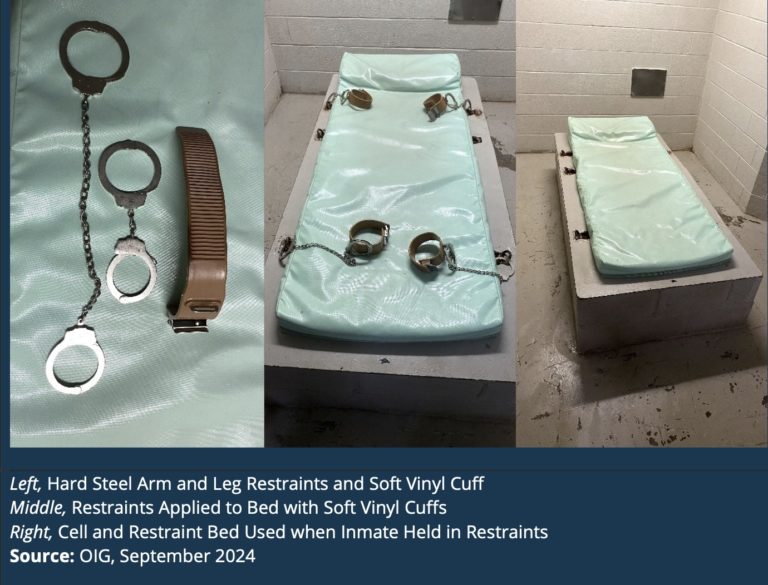
(Ken Silva, Headline USA) The DOJ Inspector General’s Office published an advisory Tuesday that details how federal prison guards are chaining inmates to beds and chairs for weeks at a time, which has resulted in severe injuries and death.

Federal law allows guards to restrain inmates “only as a last alternative after all other reasonable efforts to resolve a situation have failed,” and they’re supposed to check on the inmates every 15 minutes to make sure they’re breathing and that their blood is circulating properly. According to the DOJ-OIG’s Tuesday advisory, the Bureau of Prisons (BOP) has been abusing this authority.

The DOJ-OIG said it has received dozens of complaints over the years from inmates who say they were assaulted and injured while restrained.

The examples cited by the Inspector General are horrific.

In one instance, an inmate had to have part of a limb amputated after being kept in restraints for over 2 days, the report said.

Another inmate appears to have been tortured to death. According to the DOJ-OIG report, that unnamed inmate was restrained for more than two days. Then, he was released for two hours—only to be pepper-sprayed and returned to his restraints for another five hours before he was found dead.

“For the inmate’s final hour in restraints before being discovered unresponsive, the 15-minute and 2-hour restraint check forms indicated that the inmate was not responding to staff,” the DOJ-OIG report noted. “According to the autopsy report for this inmate, the cause of death was ‘Vaso-Occlusive Crisis due to Sickle Cell Disease Complicating Oleoresin Capsicum Use and Prolonged Restraint Following Altercation.’”

Other inmates were placed in “ambulatory restraints”—which are defined as “approved soft and hard restraint equipment which allow the inmate to eat, drink, and take care of basic human needs without staff intervention”—for weeks on end.

“BOP records indicate that one inmate was held in ambulatory restraints for over 12 days, removed from restraints for approximately 4 hours, and then placed back into ambulatory restraints for over 30 days,” the DOJ-OIG report said.

“The BOP placed this same inmate back into restraints just about a week later, and this time held him in a combination of ambulatory and four-point restraints for more than 29 additional days.

Another inmate was placed in a combination of four-point and ambulatory restraints for more than 18 days, almost 9 days of which the inmate was in four-point restraints.”

The DOJ-OIG made a number of recommendations for the BOP to update its guidelines for restraining prisoners, and to ensure such guidelines are followed. The BOP agreed with the recommendations.

Tuesday’s advisory follows a report the DOJ-OIG issued in December 2023 about guards placing inmates in 3-feet-wide by 3-feet-long cages for hours on end.

“For approximately eight hours, the inmate stood in the secure enclosure, which did not contain a chair or any furnishings. The inmate then agreed to be handcuffed in order to receive a chair and be taken to the bathroom,” that report said.

“After the inmate used the bathroom, staff returned the inmate to the secure enclosure, with a chair, rather than his standard cell due to miscommunication or lack of communication among BOP officials. The inmate then remained in the holding cage with a chair for an additional twelve hours,” he said.

“At one point during those twelve hours, the chair was removed. In addition, while the inmate may have been offered the opportunity to be handcuffed to use the bathroom again, he did not use the bathroom during the final twelve hours in the secure enclosure.”

The U.S. Dollar Is “Unattractive”

(Mike Maharrey, Money Metals News Service) The dollar is “unattractive.” At least that’s how UBS sees it.

In a recent note, the Swiss investment bank said it is time to “reduce and hedge exposure to USD before further dollar declines.”

The dollar has weakened significantly over the last six months, with the dollar index (DXY) falling by over 10 percent so far in 2025.

It was the biggest dollar decline through the first half of any year since 1973. That was just two years after Nixon severed the last tie between the dollar and gold.

UBS analysts say they expect a further dollar weakness, and the U.S. economy slows, and worry about the rapidly deteriorating fiscal situation in Washington, D.C.

“We like using near-term dollar strength to reduce excess U.S. dollar cash by investing or diversifying into other currencies such as the Japanese yen, euro, British pound, and Australian dollar. We think now is the time to review strategic currency allocations in international portfolios and consider hedging U.S. dollar exposure in U.S. assets back into home currencies.”

Meanwhile, Bloomberg recently reported that many exporters “no longer want dollars,” explaining that foreign vendors are asking U.S. importers to settle invoices in euros, pesos, and yuan to avoid currency swings.

Interestingly, the UBS note forgot (left out) the most stable currency in its analysis – gold.

U.S. Global Investors Chief Investment Officer Frank Holmes didn’t forget. He called gold the “preferred reserve asset,” pointing out that “one of the surest beneficiaries of the dollar’s weakness has been gold.”

In fact, gold recently moved ahead of the euro as the second-largest reserve asset. But it’s not so much that central banks are trading in gold for euros. The EU currency’s share of global reserves has remained relatively steady.

They’re swapping dollars for gold.

Last year was the third-largest expansion of central bank gold reserves on record, coming in just 6.2 tonnes lower than in 2023 and 91 tonnes lower than the all-time high set in 2022. (1,136 tonnes). 2022 was the highest level of net purchases on record, dating back to 1950, including since the suspension of dollar convertibility into gold in 1971.

To put that into context, central bank gold reserves increased by an average of just 473 tonnes annually between 2010 and 2021.

Meanwhile, the dollar’s share of global reserve currencies slid further in 2024. As of the end of last year, dollars made up 57.8 percent of global reserves. That is the lowest level since 1994, representing a 7.3 percent decline in the last decade. In 2002, dollars accounted for about 72 percent of total reserves.

Respondents to a recent World Gold Council survey think this trend will continue, with 73 percent saying they expect their dollar reserves to decline even more in the next five years.

And they expect to buy more gold.

Of the 73 central banks that responded to the survey, 95 percent said they believe central bank gold reserves will increase over the next 12 months. A record 43 percent of the respondents indicated they expect their own gold reserves to expand. That was up from 29 percent in 2024.

That’s not to say the dollar is going away anytime soon. Holmes noted that the greenback still dominates trade and debt markets.

“But its supremacy is gradually slipping, and the evidence is mounting.”

What does that mean for investors?

Holmes said they “should think carefully about how exposed their portfolios are to a single currency.

“Just as central banks are hedging their dollar exposure with gold and foreign assets, individuals and households may want to do the same.”

He’s right.

Even a modest de-dollarization of the global economy could be a disaster for the United States.

The U.S. depends on this global demand for dollars supported by its reserve status to underpin its massive government. The only reason Uncle Sam can borrow, spend, and run massive budget deficits to the extent that it does is the dollar’s role as the world’s reserve currency. It creates a built-in global demand for dollars and dollar-denominated assets. This absorbs the Federal Reserve’s money creation and helps maintain dollar strength despite the Federal Reserve’s inflationary policies.

So, if the world no longer needs dollars, who will absorb the inflation?

American consumers.

Even a modest de-dollarization of the world economy would cause a dollar glut. The value of the U.S. currency would further depreciate. That translates to more price inflation at home. In the worst-case scenario, the dollar could collapse completely, leading to hyperinflation.


Mike Maharrey is a journalist and market analyst for Money Metals with over a decade of experience in precious metals. He holds a BS in accounting from the University of Kentucky and a BA in journalism from the University of South Florida.

U.S. Refueled Israeli Jets Throughout Iran War

(Dave DeCamp, Antiwar.comUS military tanker aircraft refueled Israeli jets throughout the 12-day US-Israeli war against Iran to ease the burden on Israel’s limited and aging fleet of tankers, Israel Hayom has reported.

The report said that “hundreds of aerial refuelings were conducted for Israeli fighter jets flying to Iran” during the 12 days of attacks on Iran. It was always believed that Israel wouldn’t be able to launch significant airstrikes on Iran without the US supporting the attacks with refueling.

In the first days of the 12-day war, dozens of US KC-135s, KC-46s, and other tanker aircraft were spotted by flight trackers leaving the United States and heading east across the Atlantic Ocean. US officials confirmed that the tanker deployment was related to the Middle East, and the Israel Hayom report said that some of them were used to refuel Israeli jets.

Besides the refueling, the US also supported Israel’s attacks on Iran by providing intelligence, helping intercept Israeli missiles and drones, and eventually launching its own airstrikes on three Iranian nuclear facilities using B-2 bombers, a fleet of fighter jets, and a submarine.

It’s unclear how much the 12-day war cost the US, but it must be in the billions, as a report from Military Watch Magazine estimated that the US used 15% to 20% of its global THAAD anti-missile arsenal, which comes at a cost of at least $800 million. The US is believed to have two of its seven THAAD missile defense systems stationed in Israel, along with US troops to operate them.

This article originally appeared at Antiwar.com.