Poll: Harris Favored Over Vance in Hypothetical 2028 Presidential Election

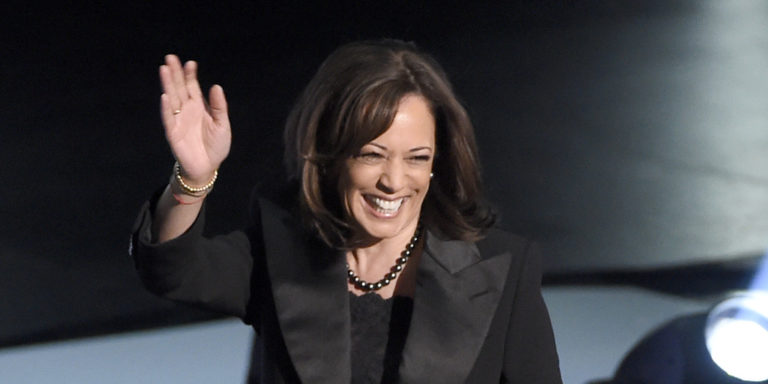
(Jon Syf, The Center Square)  Kamala Harris is favored over Vice President J.D. Vance in a hypothetical 2028 presidential election, according to a new poll.

Harris was favored by 45% of respondents, Vance by 42% and 12% were undecided in a poll where Overton Insights asked 1,200 registered voters the questions between June 23-26 on behalf of Libertas, which says it focuses on family education and policy reform as it looks to “change hearts, minds and laws to create a freer future.”

The poll included results on several head-to-head and group election candidate pool possibilities. Vance received 43% of the vote, with Charles Barkley receiving 34% and 24% remaining undecided in that hypothetical.

Vance was favored with 74% of the Republican vote compared to 8% for Joe Rogan and 3% for Barstool’s Dave Portnoy in a hypothetical three-way primary. Vance received 32% of the vote compared to 26% for Donald Trump Jr., 11% for Ron DeSantis, 9% for Nikki Haley, 4% for Robert F. Kennedy Jr. and 3% for Vivek Ramaswamy in that hypothetical six-way Republican primary.

The poll also showed 34% of voters consider themselves politically homeless and not represented by either of the two main parties while 49% don’t believe they are homeless in terms of party identity.

Harris was the heavy favorite in a hypothetical 10-way Democratic primary with 38% of the support compared to 11% for Pete Buttigieg, 10% for Gavin Newsom, 7% for Alexandria Ocasio-Cortez, Josh Shapiro and Tim Walz while Cory Booker had 4%, Gretchen Whitmer had 5%, Wes Moore had 2% and sports commentator Stephen A. Smith has 2%.

Buttigieg, Walz and Newsom all garnered 15% support in a hypothetical nine-way primary without Harris.

‘Swamp Creation’ Or ‘Massive Win’? Here’s How the Senate Changed ‘Big, Beautiful Bill’

(Thérèse Boudreaux, The Center Square)  After a 27-hour voting session, Senate Republicans narrowly approved their amended version of the House-passed “big, beautiful bill” Tuesday, sending it back to the lower chamber for final approval.

But the Senate’s swath of controversial changes has alienated multiple House Republicans and upset delicate political compromises House Speaker Mike Johnson, R-La., made with his constituents earlier, curtailing the bill’s chances of reaching the president’s desk by July 4.

The 940-page budget reconciliation bill – formerly titled the One Big Beautiful Bill Act before Senate Democrats pulled the name on procedural grounds – implements the bulk of President Donald Trump’s political agenda and campaign promises.

While the Senate mostly retained the House’s national security infrastructure funding, policies boosting fossil fuel energy production, and student loan repayment plan overhaul, it meddled in almost every other area of the bill.

One of the major sticking points now is the Senate’s adoption of the current policy baseline, an accounting method never before used in the budget reconciliation process to score tax cut costs.

Using that baseline rather than the House’s current law baseline theoretically zeros out about 90% of the bill’s projected ten-year $3.3 trillion cost, allowing tax cut permanence and negating the need for Senate committees to find hundreds of billions of dollars in offsets.

The Senate bill makes permanent the 2017 Tax Cuts and Jobs Act’s boosted maximum standard deduction and cross-bracket tax cuts; the 20% Qualified Business Income deduction; and the $2,000 child tax credit, though the Senate reduced the House’s four-year $500 boost to $200.

The Senate also beefed up the House’s temporary tax cut for eligible seniors, boosting the senior $4,000 deduction to $6,000. Although the Senate kept the House’s temporary nixing of taxes on tips and overtime, it capped deductions for tips at $25,000 and deductions for overtime at $12,500 for single filers.

Three key business tax credits would become permanent as well – full reimbursement for new capital investments like machinery and equipment, an expanded deduction for corporation’s interest on debt, and immediate deductions for companies’ research costs.

Though violating the House’s fiscal framework allowed for these ambitious tax policies to pass muster, the lower chamber will almost certainly revise the Senate’s revisions and send the bill back to the Senate, rather than approving of the Senate’s changes and sending it to Trump’s desk as Senate Majority Leader John Thune, R-S.D., hoped.

Johnson was only able to garner enough votes for the original bill by extending the tax cuts for the next 10 years only, fully offsetting the extension by including $1.7 trillion in savings and projecting robust economic growth.

Additionally, Johnson had reached delicate agreements with holdouts concerned about the bill’s cost-saving Medicaid reforms, the new state and local tax (SALT) deduction cap, funding reorganization of SNAP, and the phaseout timeline of Inflation Reduction Act subsidies.

Senate committees modified all of those portions, further jeopardizing the bill’s passage.

The Senate’s plan to gradually lower the 6% Medicaid provider tax cap to 3.5% by 2030 upset lawmakers from Medicaid-heavy districts, but GOP leaders are hoping the last-minute addition of a $50 billion rural hospital stabilization fund could placate them.

Instead of accepting the House’s plan to quadruple the SALT deduction cap permanently, the Senate-passed bill raises the cap to $40,000 only until 2030, at which point it will revert to the current $10,000 cap. Most Blue-state GOP House lawmakers seem mollified by this new compromise except Rep. Nick LaLota, R-N.Y.

Reactions are still pending from House Republicans concerned about SNAP. The Senate plan makes states cover 75% of the program’s administrative costs beginning in 2027, a higher rate than proposed by the House.

Like the House, it makes states pay a percentage of program costs the higher the state’s payment error rate. But the Senate’s cost-sharing requirements only kick in if a state has an error rate over 5% and the cost-sharing percentage caps at 15%, lower than the House’s 25%. The new plan also expands noncitizen eligibility for SNAP benefits and the populations who are exempted from work requirements.

This means that Johnson’s toughest holdouts will be lawmakers in the House Freedom Caucus, which includes Reps. Chip Roy, R-Texas; Andy Ogles, R-Tenn.; Andy Harris, R-Md.; Ralph Norman, R-S.C.; Keith Self, R-Texas; and others.

The HFC blasted not only the current policy baseline but also the Senate’s toothless phaseouts of the IRA’s costly solar and wind subsidies. Although the Senate initially had included a tax on wind and solar projects using materials from “foreign entities of concern,” like China, it ultimately scrapped that provision.

In a social media post Tuesday, Self called the bill “a swamp creation.” Ogles acknowledged that if the House doesn’t swallow the Senate’s bill, lawmakers will likely engage in “legislative ping pong,” but added that “that’s okay.”

“Like I’ve been saying for weeks: let’s STAY IN DC and get it RIGHT for the American People,” Ogles posted on X. “No recess for unfinished work.”


Israel Called Its Initial Attack on Iran ‘Red Wedding,’ Referring to a Fictional Massacre that Relied on Deception

(Dave DeCamp, Antiwar.com) According to The Wall Street Journal, Israel codenamed its initial attack on Iran that killed senior military leaders “Red Wedding,” referring to a gruesome massacre from the book series “Game of Thrones,” which was adapted into a TV series on HBO.

In the Red Wedding scene, one family murders the members of the other, including a pregnant woman, during a wedding feast, a surprise attack that relies on betrayal and deception. Israel’s attack also relied on deception as it used the cover of nuclear talks between the US and Iran to catch Tehran off guard.

The Israeli attack was launched on Friday, June 13, two days before the US and Iran were set to hold another round of nuclear negotiations. According to the Journal report, part of the ruse involved Israeli officials leaking stories to the media about a split between President Trump and Israeli Prime Minister Benjamin Netanyahu about the possibility of Israel attacking Iran.

Trump and Netanyahu held a phone call on Monday, June 9, the day the Journal report said Israel had decided to launch the attack on June 13. Axios reporter Barak Ravid, a former IDF intelligence officer, reported the day after the call that an Israeli official and a US official told him that Trump expressed to Netanyahu that he believed he could reach a nuclear deal with Iran and opposed military action at that time.

According to the Journal, on the day of the attacks Trump told reporters that the US and Iran were “fairly close to an agreement” and that he didn’t want the Israelis “going in,” and Israeli officials told reporters they would wait to see the results of the next round of US-Iran nuclear talks before attacking.

The Journal report said: “The key to the deception, said a security official familiar with the planning of the operation, was the idea implanted in the minds of the Iranians that Israel wouldn’t strike without US authorization and participation. As long as the US wasn’t mobilizing its forces and was engaged in negotiations, Israel could threaten to attack and even mobilize its troops in plain sight of Iran without giving away the element of surprise.”

Hours before Israel’s bombing campaign started, Trump wrote on Truth Social that he was still committed to a diplomatic solution with Iran. The Journal report said Israeli warplanes were already getting in the air when he made the post.

As Israeli planes were on the way to Iran, senior Iranian air force officials began to mobilize and ended up gathering together in the same place, where they were hit by Israeli missiles. The surprise attack on Iran’s military leaders killed multiple senior officials, including Mohammad Bagheri, the chief of staff of the Iranian Armed Forces, and Hossein Salami, the commander of Iran’s Islamic Revolutionary Guard Corps.

In its initial strikes on Iran, Israeli warplanes also fired missiles into the homes of Iranian nuclear scientists, and that part of the attack was dubbed “Operation Narnia,” a reference to the C.S. Lewis series because the planners initially thought it was a “fantastical” operation. Israel also hit Iranian air defenses with drones launched from inside the country, and the Journal report said the success of the initial attack, which lasted about four hours, was thanks to Israel building up its intelligence assets within Iran over the past few decades.

This article originally appeared at Antiwar.com.

Over 500 Jewish Organizations Receive $94 Million from DHS

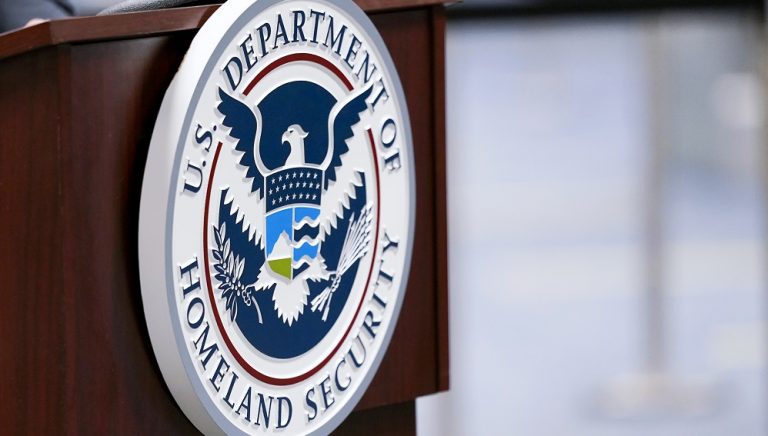
(José Niño, Headline USA) Jewish synagogues, schools, and community centers nationwide will receive an influx of cash as the Department of Homeland Security announces $94 million in grants following a surge in antisemitic attacks.

Last Friday, DHS announced that it is awarding $94,416,838 in federal grants to 512 Jewish faith-based organizations across the United States.

The funds, distributed through the Nonprofit Security Grant Program and administered by FEMA, are designed to help these organizations “harden their defenses against attacks,” per the official DHS press release.

The urgency of this funding was underscored by two recent violent incidents: the killing of two Israeli Embassy staffers outside the Capital Jewish Museum in Washington, D.C., and a terrorist attack in Boulder, Colorado, where demonstrators were assaulted with a flamethrower and Molotov cocktails during a pro-Israel event. DHS cited these attacks directly in its announcement, stating the grants would “help protect Jewish faith-based institutions from further attacks.”

The Anti-Defamation League (ADL) reported a record high of 9,354 antisemitic incidents in 2024, representing a staggering 344% increase over the past five years.

The organizations receiving grants include a host of of Jewish institutions: synagogues, schools, community centers, and other faith-based facilities. Over 40 Jewish organizations advocated for this funding, which was appropriated by Congress in response to the surge in threats connected to the ongoing Israel-Hamas war.

All faith-based institutions were eligible to apply, but the immediate focus was on those most at risk, with the goal of providing “support for target hardening and other physical security enhancements” such as cameras, reinforced doors, and other safety measures, according to a Fox New report.

DHS Assistant Secretary Tricia McLaughlin emphasized the urgency of this perceived crisis, stating, “DHS is working to put a stop to the deeply disturbing rise in antisemitic attacks across the United States. That this money is necessary at all is tragic. Antisemitic violence has no place in this country. However, under President Trump and Secretary Noem’s leadership, we are going to do everything in our power to make sure that Jewish people in the United States can live free of the threat of violence and terrorism.”.

The release of these funds marks the first major disbursement since a months-long freeze on federal spending reviews by the Trump administration, which had delayed the allocation of the full $220 million appropriated by Congress[.

The Jew Telegraphic Agency reported that Lauren Wolman, the director of federal policy and strategy at the of the ADL, welcomed the announcement. However, she stressed, “the job isn’t done,” urging DHS to release the remaining supplemental funds to meet overwhelming demand and ensure the safety of Jewish communities nationwide.

José Niño is the deputy editor of Headline USA. Follow him at x.com/JoseAlNino 

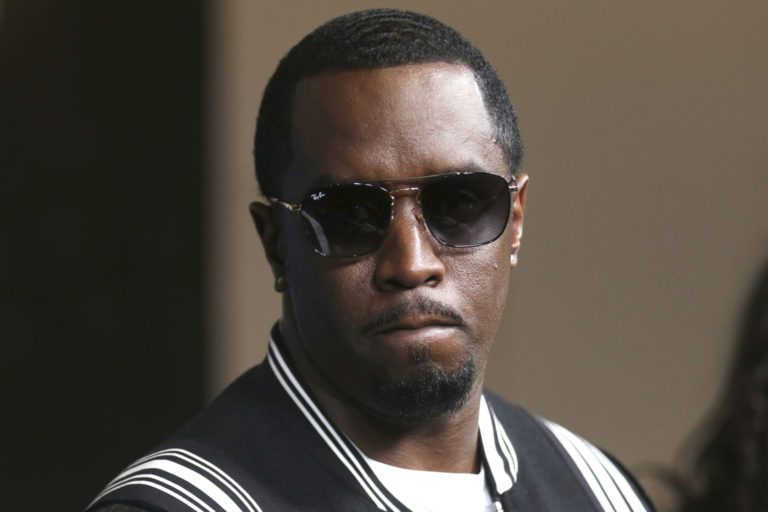
BREAKING: Sean ‘Diddy’ Combs Acquitted of Most Serious Charges

(Headline USASean “Diddy” Combs was convicted of a prostitution-related offense but acquitted Wednesday of sex trafficking and racketeering charges that could have put one of hip-hop’s most celebrated figures behind bars for life.

The mixed result came on the third day of deliberations. It could still send Combs, 55, to prison for as long as a decade, and is likely to end his career as a hitmaking music executive, fashion entrepreneur, brand ambassador and reality TV star.

But the verdict cleared one of hip-hop’s most celebrated figures of charges that could have put him behind bars for life.

After hearing the verdict, Combs held his hands up in a prayer motion, looking at jury and hugged defense lawyer Teny Geragos. Combs later continued to pump his right fist subtly, seemingly satisfied that he was acquitted on the most serious charges.

Combs was convicted of flying people around the country, including his girlfriends and paid male sex workers, to engage in sexual encounters, a felony violation of the federal Mann Act.

But the jury of eight men and four women acquitted Combs of racketeering conspiracy and sex trafficking charges, related to allegations that he used his money, power and frightening physical force to manipulate his girlfriends into hundreds of drug-fueled sex marathons with the men.

Combs and his defense team argued that the women were willing participants and that none of his violence justified the severity of the charges.

U.S. District Judge Arun Subramanian was weighing whether to grant Combs bail in the wake of the verdict. He adjourned the court while he considers whether to free Combs on bail.

Combs appeared overwhelmed as court adjourned for at least a few hours. He wiped his face, turning and kneeling at his chair, his head bowed in prayer. In the audience, his relatives stood and applauded as he faced them.

“I’ll be home soon,” he said, and “I love you, baby.”

“I love you, Mom,” he added.

His relatives applauded him and his lawyers as he was led out of court.

Combs has been behind bars since his arrest in September. His lawyers argued that the acquittal on the most serious counts changed the legal landscape enough that he should get bail.

Combs seemed buoyant arriving in the courtroom earlier Wednesday morning, a contrast to his mood a day earlier after he learned that the jury at his sex trafficking trial had reached a yet-to-be-disclosed verdict on all but one of the five charges.

Combs smiled and clasped his hands together in the air toward his family and supporters before hugging several of his lawyers and sitting down to await the outcome of the jury’s third day of deliberations.

On Tuesday, Subramanian ordered the jury to continue its closed-door discussions for a third day after the panel of eight men and four women said it was unable to reach consensus on the top count: racketeering conspiracy.

The judge agreed with prosecutors and Combs’ defense team that less than 13 hours of deliberations was too soon to give up on reaching a verdict on all counts.

In a note to the court late Tuesday, the jury said “unpersuadable opinions on both sides” among some jurors had prevented the group from reaching a unanimous verdict on the racketeering conspiracy charge.

The disclosure of Tuesday’s jury note about the partial verdict had seemed to put defense attorneys and their client in a dour mood even before it was read in open court by the judge.

Eight defense lawyers formed a half-circle behind Combs as the smiles and lighthearted mood that accompanied the arrival of other jury notes over two days seemed absent as the attorneys contemplated the possibility that jurors had reached agreement on counts that carry the heaviest sentencing penalties.

Combs appeared morose as his lawyers spoke with him. At one point, the hip-hop mogul solemnly read a piece of paper that attorney Marc Agnifilo handed to him.

After the jury came in for instructions and then exited the room, a subdued Combs sat in his chair for a few minutes. As he stood to leave, he faced his relatives and supporters in the audience, blew a kiss and tapped his heart, as he frequently has done at the start and end of each day.

Then he paused before his mother and exchanged a few words, telling her, “Love you” and “I’ll be all right.”

Marshals then led him from the room.

Adapted from reporting by the Associated Press


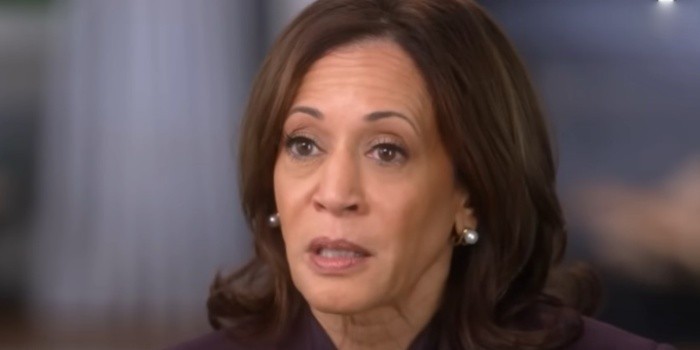
Paramount to Pay $16 Million for Doctoring Kamala Harris Interview

(Headline USAParamount has agreed to pay $16 million to settle a lawsuit by President Donald Trump for doctoring CBS’ “60 Minutes” interview with then-Vice President Kamala Harris in October.

Paramount, which owns CBS, said the money will go to Trump’s future presidential library, not to the Republican president himself. It said the settlement did not involve an apology.

Trump, who did not agree to be interviewed by “60 Minutes” during the campaign, has protested editing where Harris is seen giving two different answers to a question by the show’s Bill Whitaker in separate clips aired on “60 Minutes” and “Face the Nation” earlier in the day. CBS said each reply came within Harris’ long-winded answer to Whitaker, but was edited to be more succinct.

Trump’s lawyer, Edward Andrew Paltzik, said that “this led to widespread confusion and mental anguish of consumers, including plaintiffs, regarding a household name of the legacy media apparently deceptively distorting its broadcasts, and then resisting attempts to clear the public record.”

Because they were misled, voters withheld attention from Trump and his Truth Social platform, Paltzik argued.

Trump, described as a “media icon” by his lawyers, was “forced to redirect significant time, money and effort to correcting the public record,” he said.

CBS News’ president and CEO, Wendy McMahon, and “60 Minutes” executive producer Bill Owens, who both opposed a settlement, have resigned in recent weeks.

A spokesman for Trump’s legal team said that with the settlement, Trump “delivers another win for the American people.”

In early February, “60 Minutes” released a full, unedited transcript of the Harris interview. When that happened, Trump slammed CBS News in a Truth Social post.

“CBS and 60 Minutes defrauded the public by doing something which has never, to this extent, been seen before,” he wrote. “They 100% removed Kamala’s horrible election changing answers to questions, and replaced them with completely different, and far better, answers, taken from another part of the interview.”

Adapted from reporting by the Associated Press


DOJ Declines to Prosecute FBI Agent for Partying w/ Prostitutes Overseas

(Ken Silva, Headline USA) The DOJ Inspector General issued a report Tuesday, finding that a then-FBI supervisory special agent solicited and used prostitutes overseas. However, the Justice Department declined to prosecute the agent.

According to the DOJ-OIG report, the then-agent used an FBI-issued mobile device to conduct the transactions with the prostitutes, and he failed to self-report close or continuous contact with a foreign national he was dating while overseas.

“During its investigation, the OIG found indications that the then-SSA had failed to self-report close or continuous contacts with the foreign national prostitutes,” the report said.

“The OIG investigation further found the then-SSA failed to self-report close or continuous contact with a foreign national the then-SSA was dating overseas and with the foreign nationals whom the then-SSA paid for sex, in violation of FBI policy,” the report said.

“Criminal prosecution was declined.”

It’s unclear whether the agent was punished at all. While he’s no longer a supervisory agent, the DOJ-OIG report doesn’t state whether he retired or is still with the bureau.

Reports from the DOJ’s Office of the Inspector General in recent years suggest that the DOJ and FBI have a widespread culture of sexual misconduct.

For example, last October the DOJ-OIG released a report about how a federal prosecutor had a sexual relationship with the target of a police investigation.

According to that report, the DOJ-OIG received information from a local police department that a U.S. Attorney used his government-issued mobile device to engage in extensive, sexually explicit communications with someone who later became the target of a police investigation.

The DOJ-OIG said its investigation substantiated the local police department’s tip.

And according to a 2020 Associated Press article entitled, ‘Under the rug:’ Sexual misconduct shakes FBI’s senior ranks, the last time the OIG did an extensive probe of sexual misconduct within the FBI, it tallied 343 “offenses” from fiscal years 2009 to 2012, including three instances of “videotaping undressed women without consent.”

That AP investigation identified at least six sexual misconduct allegations involving senior FBI officials over the past five years, including two new claims brought by women who say they were sexually assaulted by ranking agents.

“Each of the accused FBI officials appears to have avoided discipline, the AP found, and several were quietly transferred or retired, keeping their full pensions and benefits even when probes substantiated the sexual misconduct claims against them,” the AP reported in December 2020.

Ken Silva is the editor of Headline USA. Follow him at x.com/jd_cashless.

Hackers Say They Have 100GB of Trump Emails

(José Niño, Headline USA)  Hackers claiming ties to Iran say they possess 100GB of emails from President Donald Trump’s inner circle and may soon leak or sell the trove, after previously distributing a batch to the media before the 2024 U.S. election.

In online conversations with Reuters on Sunday and Monday, the hackers—who use the pseudonym “Robert”—claimed to possess about 100 gigabytes of emails from the accounts of “White House Chief of Staff Susie Wiles, Trump lawyer Lindsey Halligan, Trump adviser Roger Stone and porn star-turned-Trump antagonist Stormy Daniels.”

Robert mentioned the potential of selling the material but did not provide further details about their plans or the content of the emails.

U.S. Attorney General Pam Bondi described the breach as “an unconscionable cyber-attack.” The White House and FBI responded with a statement from FBI Director Kash Patel, who said: “Anyone associated with any kind of breach of national security will be fully investigated and prosecuted to the fullest extent of the law.”

The Cybersecurity and Infrastructure Security Agency (CISA) posted on X that “This so-called cyber ‘attack’ is nothing more than digital propaganda, and the targets are no coincidence. This is a calculated smear campaign meant to damage President Trump and discredit honorable public servants who serve our country with distinction”

Robert first appeared during the final months of the 2024 presidential campaign, claiming to have breached the email accounts of several Trump allies, including Wiles, and subsequently distributed emails to journalists.

Reuters authenticated some of the leaked material, including an email that appeared to show a financial arrangement between Trump and lawyers for Robert F. Kennedy Jr., now Trump’s health secretary.

Other documents included Trump campaign communications about Republican candidates and discussions of settlement negotiations with Daniels. Although the leaks received some media attention, they did not fundamentally alter the outcome of the presidential race, which Trump won.

A September 2024 indictment from the U.S. Justice Department alleged that Iran’s Revolutionary Guards ran the Robert hacking operation.

After Trump’s election, Robert told Reuters that no more leaks were planned. As recently as May, the hackers said, “I am retired, man.” However, the group resumed communication after the recent 12-day air war between Israel and Iran, which ended with U.S. bombing of Iran’s nuclear sites. In recent messages, Robert said they were organizing a sale of the stolen emails and wanted Reuters to “broadcast this matter.”

Frederick Kagan, a scholar at the American Enterprise Institute, commented that Iranian spies may be seeking retaliation through means unlikely to provoke further U.S. or Israeli military action, stating, “A default explanation is that everyone’s been ordered to use all the asymmetric stuff that they can that’s not likely to trigger a resumption of major Israeli/U.S. military activity. Leaking a bunch more emails is not likely to do that.”

Despite concerns about potential digital attacks, Iran’s hackers maintained a low profile during the conflict, though U.S. cyber officials warned that American companies and critical infrastructure operators might still be at risk from Iranian operations.

Over the last year, American-Iranian relations has reached new lows. Headline USA has reported on multiple instances of alleged Iranian plots to assassinate Trump, all in an effort to get the United States into a direct confrontation with Iran.

José Niño is the deputy editor of Headline USA. Follow him at x.com/JoseAlNino 

DOJ Busts Chinese Nationals Spying on Navy Personnel and Bases 

(Luis CornelioHeadline USA) The Trump-led DOJ busted two Chinese nationals for spying on U.S. Navy service members and bases, and for plotting to recruit others on behalf of the People’s Republic of China. 

Prosecutors said that Yuance Chen, 38, and Liren “Ryan” Lai, 39, were arrested on June 27 and arraigned Monday on a criminal complaint charging them with overseeing and carrying out a clandestine intelligence operation. 

These operations allegedly took place within the Northern District of California and were allegedly conducted on behalf of China’s principal foreign intelligence agency, the Ministry of State Security (MSS). 

Chen, a green card holder, and Lai, who entered the U.S. on a tourist visa, now face charges of violating the Foreign Agents Registration Act. 

Their scheme included the facilitation of “dead drop” cash payments in exchange for information relating to U.S. national security.  

“This case underscores the Chinese government’s sustained and aggressive effort to infiltrate our military and undermine our national security from within,” said Attorney General Pamela Bondi in a press statement. 

“The Justice Department will not stand by while hostile nations embed spies in our country – we will expose foreign operatives, hold their agents to account, and protect the American people from covert threats to our national security,” she added. 

According to Bondi, Lai recruited Chen to work for the MSS in or around 2022. 

“While in Guangzhou, China, in January 2022, Lai and Chen worked together to facilitate a dead-drop payment of at least $10,000 on behalf of the MSS, working with other individuals located in the United States to leave a backpack with the cash at a day-use locker at a recreational facility located in Livermore, California,” the DOJ said. 

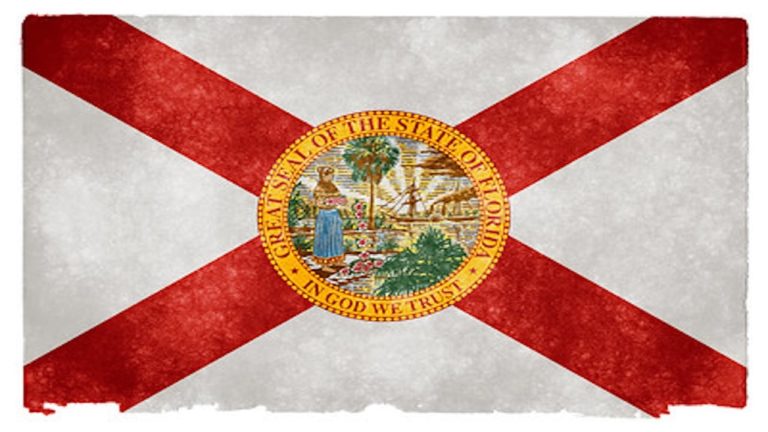
Florida Ends All Sales Taxes on Gold, Silver, Platinum

(Sound Money Defense League, Money Metals News Service) By signing sound money legislation earlier this week, Florida Governor Ron DeSantis has ended Florida’s discriminatory practice of assessing sales taxes on small purchases of gold, silver, or platinum bullion and coins.

Florida’s House Bill 7031, a bill by the House Ways and Means committee, was considered by multiple House and Senate committees before passing overwhelmingly out of both chambers and reaching the governor’s desk.

This bill removes the arbitrary $500 minimum purchase size for citizens to qualify for any sales tax exemptions on precious metals as of August 1, 2025.

Florida had been one of only five states in the United States maintaining only a partial sales tax exemption – leaving in force a tax on small purchases of precious metals.

Once Florida’s full exemption taxes effect next month, California, Massachusetts, Connecticut, and New York will be the only states still levying this “poor tax,” which singles out and punishes small-time precious metals purchasers.

Kentucky recently passed a full sales tax exemption on the monetary metals, and a new Connecticut law establishes a full exemption as of July 2027.

The national backlash against taxing constitutional money is accelerating, given today’s environment of rising inflation and geopolitical conflict.

Jp Cortez, executive director for the Sound Money Defense League, explained that “by eliminating sales taxes on purchases of precious metals under $500, even people of humble means can access the benefits of storing one’s wealth in gold and silver. Removing taxes on precious metals, thereby allowing individuals to save and invest freely, is the most impactful thing Florida can do to restore sound money.”

“Inflation continues to harm Americans nationwide due to financial mismanagement by the Federal Reserve and by the politicians in Washington, DC. Florida is the latest state to give citizens greater ability to protect themselves,” said Money Metals Exchange CEO Stefan Gleason, whose company, Money Metals Exchange, has helped lead sound money policy efforts across the nation for over a decade.

States have been removing sales taxes from monetary metals for the following reasons:

  • Taxing precious metals is unfair to certain savers and investors. Gold and silver are held as forms of savings and investment. States do not tax the purchase of stocks, bonds, ETFs, currencies, and other financial instruments, so it makes no sense to tax monetary metals.
  • Levying sales taxes on precious metals is illogical because gold and silver are inherently held for resale. Sales taxes are typically levied on final consumer goods. But precious metals are inherently held for resale, not “consumption.”
  • Taxing gold and silver harms in-state businesses. It’s a competitive marketplace, so buyers in states with precious-metals sales taxes often take their business to neighboring states that have eliminated or reduced sales tax on precious metals. Coin conventions also tend to avoid the sales tax states.
  • Taxing precious metals is harmful to citizens attempting to protect their assets. Purchasers of precious metals aren’t fat-cat investors. Most who buy precious metals do so in small increments as a way of saving money. Precious metals investors are purchasing precious metals as a way to preserve their wealth against the damages of inflation. Inflation harms the poorest among us-including pensioners, Floridians on fixed incomes, wage-earners, savers, and more.

Including Florida, 44 U.S. states now fully or partially exempt gold and silver from sales taxes. That leaves 6 states and the District of Columbia as the primary jurisdictions that still harshly penalize citizens seeking to protect their savings against the serial devaluation of the Federal Reserve Note.

2025 has become another successful year for sound money policies across the country. In addition to securing the above-mentioned Florida, Kentucky, and Connecticut sales tax exemptions, the Sound Money Defense League secured passage of a Wyoming bill establishing a state gold reserve. The group also prompted Idaho to reaffirm gold and silver as constitutional money while exempting them from the state capital gains tax. Alabama also declared gold and silver to be legal tender.

Img credit: Nicolas Raymond/Flickr


Sound Money Defense League is a non-partisan public policy group working nationally since 2014 to restore gold and silver as sound money – America’s constitutional money. The League, in partnership with Money Metals, also publishes the annual Sound Money Index.