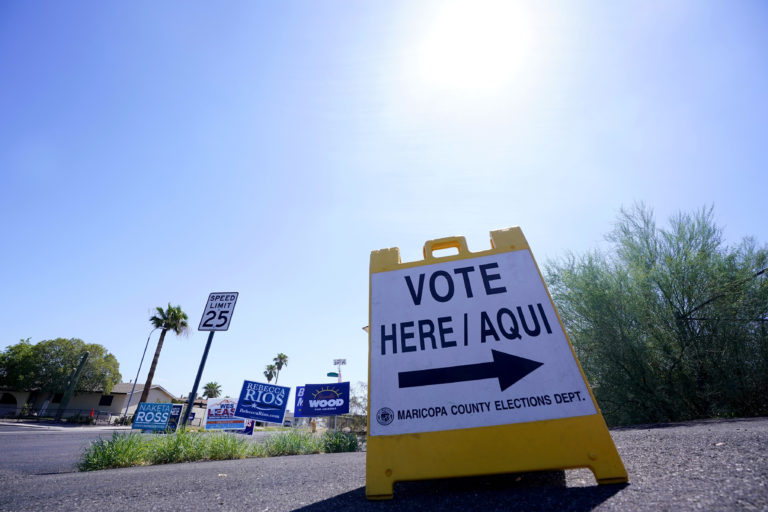
(Luis Cornelio, Headline USA) The Republican National Committee and the Republican Party of Arizona sued the state over an obscure law that allows U.S. citizens abroad to register and vote in the state, even if they’ve never set foot there.
They argue that A.R.S. § 16-103(E) violates the state constitution’s residency requirement by granting ballots to anyone abroad whose parents live and are registered to vote in Arizona.
Arizona Secretary of State Adrian Fontes is allowing people who have never even lived in the state to vote.
The RNC is working with the @AZGOP to sue Fontes and defend Arizona rights and clean their voter rolls.
RNC Chair Michael Whatley decried the law in a press statement on Monday, saying, “Arizona’s elections should be decided by Arizonans, not by individuals who have never lived a single day in this country.”
He warned that the law opens the door to voter fraud “by allowing votes from people who have never established legal residency.” Whatley added, “The RNC is defending the rights of Arizona voters to stop this unconstitutional law in its tracks.”
The law took effect in 2023 and borrows language from the federal Uniformed and Overseas Citizens Absentee Voting Act (UOCAVA) of 1986, which applies only to federal elections.
The lawsuit names Democrat Arizona Secretary of State Adrian Fontes as a plaintiff. He took office in 2023 after Democrats won key statewide posts, including the governorship.
“This action is part of the RNC’s nationwide legal strategy to clean up voter rolls and ensure that only eligible voters cast ballots in American elections,” the RNC said.
(José Niño, Headline USA) Adam Christopher Sheafe, now in custody, told investigators he killed Pastor Bill Schonemann in April as the first step in a plan to execute religious leaders for “misleading their flocks.”
Sheafe, 51, confessed to committing the gruesome murder of Pastor William “Bill” Schonemann in New River, Arizona, revealing a chilling plot to kill religious leaders nationwide. Sheafe’s campaign, which he called “Operation First Commandment,” was rooted in a personal, extremist obsession with the Old Testament.
Sheafe admitted in multiple jailhouse interviews that he targeted Pastor Schonemann at random after seeing him in the neighborhood, later following him home from church services. “I just drove there like two in the morning, maybe, and parked,” Sheafe revealed to ABC15. “And then I just went in there and did it.” He luridly described crucifying the 76-year-old pastor and placing a handmade crown of thorns on his head, actions he said were planned for all his intended victims.
🚨SICKENING🚨
Adam Sheafe has admitted to murdering Arizona pastor Bill Schonemann and crucifying his body.
Sheafe believed Christian pastors and priests were “preaching that Jesus is God’s only son, and God also. That’s not what God said. Very clearly he said that he alone is God; it’s the first commandment.” He repeatedly alluded to the Old Testament’s First Commandment as justification for violence, claiming that pastors who teach the divinity of Jesus are “leading the flock astray.”
“If anybody is to preach that anyone other than Him is God, we are to stone them to death, or we are to execute them, and so I’m following that law,” Sheafe proclaimed.
The Old Testament is a collection of ancient religious writings that form the first part of the Christian Bible. It is composed of books written primarily in Hebrew, with some portions written in Aramaic. It reflects the religious history, laws, poetry, prophecies, and moral teachings of the ancient Israelites.
The Old Testament is known in Judaism as the Tanakh, an acronym referring to:
Torah (Law)
Nevi’im (Prophets)
Ketuvim (Writings)
The Tanakh is the foundational scripture of Judaism and is central to Jewish religious life, law, and identity.
Christianity, on the other hand, interprets the Old Testament through the lens of the New Testament. Christians see it as preparing the way for Jesus Christ, whom they believe fulfills its prophecies.
Despite Sheafe’s use of Old Testament language and symbolism, which includes references to the tribes of Israel and the crafting of crowns of thorns—there is no evidence Sheafe is Jewish by faith or ancestry, contrary to social media speculation.
NEW:
🇺🇲 A 51-year-old Jewish man with a Hebrew neck tattoo was arrested after crucifying a Christian pastor in Arizona and placing a crown of thorns on his head.
Adam Christopher Sheafe admitted to planning the ritualistic killing of 14 Christian leaders across 10 states.… pic.twitter.com/ct1iw8eKrE
In fact, Sheafe has stated he was raised Christian and had a positive childhood, telling journalist Briana Whitney that no one from the Christian faith had ever mistreated him. He also claimed to be of sound mental health.
Sheafe’s arrest in Sedona, where he allegedly planned to kill two more priests, ended his self-declared mission.
Currently in custody at Coconino County Jail, Sheafe faces charges of burglary, stolen vehicle possession, and aggravated assault, per a report by ABNA. Murder charges are pending in Maricopa County.
José Niño is the deputy editor of Headline USA. Follow him at x.com/JoseAlNino
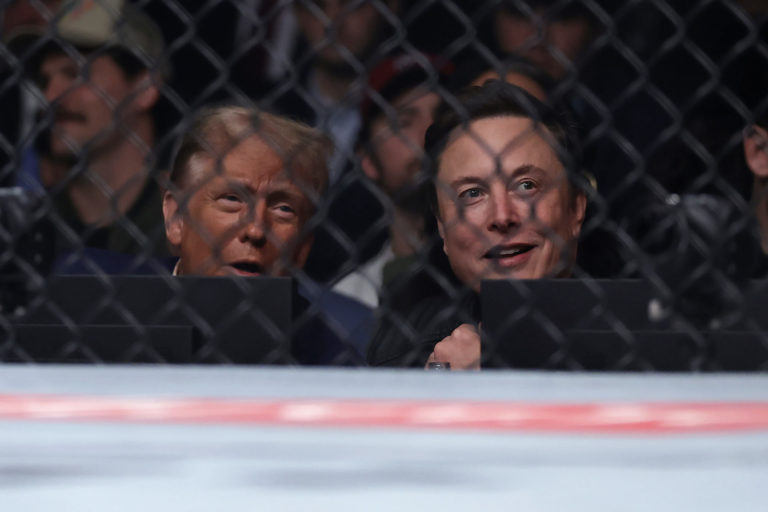
(Headline USA) The war of words between billionaire Elon Musk and President Donald Trump over the big bill of tax breaks and spending cuts is heating up again, with Musk claiming he may form a new political party and Trump blasting the Tesla CEO over electric vehicle subsidies.
Trump has gone as far as suggesting that he may deport Musk, who came here on a student visa from South Africa.
Reporter: Are you going to deport Elon Musk?
Trump: We'll have to take a look. We might have to put DOGE on Elon. You know what DOGE is? The monster that might have to go back and eat Elon. Wouldn’t that be terrible? He gets a lot of subsidies. pic.twitter.com/6I0OAIv7Js
The most prominent divide in the relationship between Musk and Trump is the president’s big bill. Musk ramped up his criticism of the bill just three days ago, arguing the legislation that Republican senators are scrambling to pass would kill jobs and bog down burgeoning industries.
Musk, who is also CEO of SpaceX, posted on X on Saturday that the bill would be “political suicide for the Republican Party.”
With the Senate working its way through a tense overnight session that dragged into Tuesday, Musk suggested he will work to get members of Congress who vote for the bill out of their seats next year.
“Every member of Congress who campaigned on reducing government spending and then immediately voted for the biggest debt increase in history should hang their head in shame,” he wrote on X. “And they will lose their primary next year if it is the last thing I do on this Earth.”
The post was viewed 26 million times on the social media platform.
A few hours later, Musk followed up with a post claiming he will create a new political party if the bill passes.
“If this insane spending bill passes, the America Party will be formed the next day,” he wrote. “Our country needs an alternative to the Democrat-Republican uniparty so that the people actually have a VOICE.”
Musk’s post about the America Party was viewed 32 million times on X.
For his part, Trump focused some of his criticisms of Musk on EV mandates and subsidies. In a post on Truth Social early Tuesday morning, Trump said Musk has known that he’s against an EV mandate and that people should not be forced to own electric vehicles.
“Elon may get more subsidy than any human being in history, by far, and without subsidies, Elon would probably have to close up shop and head back home to South Africa,” Trump wrote.
While Trump may have been making a commentary on Musk’s business acumen, the populist wing of MAGA, including Steve Bannon, have explicitly called for Musk’s deportation. According to the Washington Post, Musk entered the U.S. under a student visa in 1995 but never enrolled in courses. Instead, Musk began working, a potential violation of his visa.
Steve Bannon calls for Elon Musk's deportation and for Trump to sign an executive order seizing SpaceX pic.twitter.com/wk34gkW7vJ
The President went on to say that there could be some cost savings for the nation.
“No more Rocket launches, Satellites, or Electric Car Production, and our Country would save a FORTUNE. Perhaps we should have DOGE take a good, hard, look at this? BIG MONEY TO BE SAVED!!!” Trump posted.
Several hours later, while standing on the White House lawn before heading to Florida, Trump continued to discuss what he believes is Musk’s displeasure with potentially losing EV subsidies.
“He’s very upset. You know, he can lose a lot more than that, I’ll tell you right now,” Trump said. “Elon can lose a lot more than that.”
The President also cautioned Musk on the Department of Government Efficiency, or DOGE, which the billionaire used to lead.
“DOGE could be the monster that turns around and eats Elon,” Trump said.
(Jesse Colombo, Money Metals News Service) Like last summer, gold is moving sideways as it works off its overbought condition following strong spring gains. There are many parallels between then and now—an encouraging sign.
In this article, I want to share an update on where gold stands when priced in multiple major currencies—a valuable perspective that offers deeper insight into its current position and likely next moves. While this methodology is relatively simple, it’s remarkably powerful and often overlooked by most analysts. In fact, it has become something of a trademark approach for me and for this newsletter.
I predicted that once last summer ended and trading volume returned, gold would break out sharply and extend its spring rally—and that’s exactly what happened.
This summer, I’m seeing many similar parallels, which I’ll detail in this piece. So, let’s dive in.
Let’s begin with COMEX gold futures, which I find more insightful for analysis than the spot price—mainly because $100 increments in COMEX gold often act as key psychological support and resistance levels.
After briefly dipping below the $3,300 support level on Friday, gold has rebounded today—a positive sign, as I would ideally like to see it continue holding above that level.
In the chart below, I’ve removed all support and resistance levels except for the most important ones right now: $3,200 and $3,500. These mark the lower and upper bounds of the trading range that gold has been confined to over the past few months.
I view this as a healthy consolidation phase—gold is simply catching its breath after the strong gains it has posted over the past year. It’s perfectly normal for markets, including gold and silver, to quiet down during the summer months.
Trading volume tends to decline, and news flow slows as many financial professionals head off on vacation (some even summering in the Hamptons if they’re from Wall Street!).
Additionally, geopolitical fears have subsided somewhat in recent weeks after the U.S. and Israel struck various targets within Iran, which has taken some immediate pressure off gold.
However, the ever-growing U.S. national debt—which just hit a record $37 trillion—and a weakening dollar continue to provide strong underlying support for gold prices, as I’ll discuss shortly.
Back on April 22nd, I published an update titled “Did Gold Just Peak?” Several factors led me to raise that question, including gold’s rejection of the key $3,500 level on that day and the formation of a spinning top candlestick—a classic signal of market hesitation or a potential pause. In addition, gold was quite overbought and stretched to the upside, as indicated by various technical measures, including the Relative Strength Index (RSI).
The RSI, a widely used momentum oscillator, helps determine whether an asset is overbought, oversold, or in a neutral state, and it clearly showed that gold was due for a breather.
When I suggested that gold may have peaked, I didn’t necessarily mean it would experience a sharp pullback. Rather, I expected it to enter a period of consolidation to work off its overbought condition. Sure enough, that’s exactly what has unfolded, with gold trading in a range for the past several months.
The good news is that gold is no longer overbought, as indicated by the Relative Strength Index (RSI) shown at the bottom of the price chart. This indicates that gold has successfully worked off its excess and is now in a much stronger position to resume its rally—likely, though not exclusively, once the summer ends and traders (along with trading volume) return.
I believe we’ll have a clear signal that this consolidation phase is over when gold decisively breaks above the $3,500 resistance level—formed at the April 22nd peak—on strong volume.
Interestingly, if you look at the chart of gold from last summer, you’ll see that its summer consolidation also began in April under very similar conditions: it was overbought, a spinning top candlestick signaled hesitation, and Middle East tensions had started to ease.
It’s fascinating how history so often repeats itself in financial markets, offering valuable clues for those paying attention. I certainly hope this year’s summer consolidation ends the same way it did last year—with a strong breakout to new highs!
I also like to analyze gold priced in euros, as it removes the influence of the U.S. dollar and often provides a clearer view of the underlying trend. From that perspective, gold remains in a solid technical position, with the uptrend still firmly intact. The €3,000 level stands out as a key resistance, and a decisive breakout above it would be a strong signal that the next major leg of gold’s bull market is underway.
I also closely track gold priced in euros, British pounds, and Swiss francs, as this unique currency blend offers a clearer lens into gold’s intrinsic strength. Support and resistance levels tend to form clearly in this mix, making it a valuable gauge.
Although gold has pulled back to its uptrend line, which extends all the way back to the start of the bull market in early 2024, the broader uptrend remains firmly intact. Ideally, I’d like to see a strong bounce off this trendline, followed by a decisive breakout above the key 8,400 resistance level. That would be a powerful signal confirming that gold’s bull market is resuming in full force.
I’ve recently begun tracking gold priced in the World Currency Unit (WCU)—a composite currency based on the GDP-weighted average of the world’s 20 largest economies. In many ways, it offers one of the most balanced and accurate reflections of gold’s true global performance, which is why I’ve been paying close attention to it.
Gold priced in World Currency Units (WCUs) clearly demonstrates that its uptrend remains strong, with a well-defined trading range between 2,400 and 2,600 that’s important to watch closely:
I also closely monitor gold futures on the Shanghai Futures Exchange (SHFE), as Chinese traders have increasingly become a major force driving gold’s price action—including much of the bull market over the past year, as I explained in a recent report.
A look at SHFE gold futures shows that the uptrend remains firmly intact, though the metal is currently consolidating within a range between 750 and 820. A decisive close above the 820 resistance level should signal the start of the next major leg higher.
Gold priced in Japanese yen is also trading within a range, between 450,000 and 500,000:
Next, let’s turn to the gold mining sector, starting with the large-cap VanEck Gold Miners ETF (GDX). GDX recently broke out of a long-term triangle pattern that stretches all the way back to 2011—a major bullish development.
GDX also broke out of its key $42–$46 horizontal resistance zone in April, which is a very bullish sign. Since then, it has largely treaded water over the past few months, mirroring gold’s consolidation—a normal and healthy pause.
Assuming gold soon breaks out from its trading range, that move should help propel gold mining stocks and ETFs like GDX higher as well.
Finally, I want to provide an update on the U.S. dollar, as measured by the U.S. Dollar Index. The index has recently broken below the critical 100 level and has continued to move lower—exactly as I’ve been anticipating. This decline is providing a bullish tailwind for gold and silver, helping to offset the impact of easing geopolitical tensions in recent weeks.
Given the long-established inverse relationship between the dollar and commodities, a falling dollar is typically supportive of higher commodity prices. With the dollar’s trend now firmly down, this should continue to offer a strong boost for both gold and silver.
To summarize, although gold has been treading water since late April, I view this as a healthy consolidation phase—an opportunity for the metal to work off its overbought conditions amid the typically quieter summer period, when trading volume and news flow tend to slow across all markets.
The fact that this consolidation is clearly visible across numerous major world currencies further supports the idea that this is a classic, textbook pause rather than a sign of weakness.
If gold continues to follow the pattern we saw last summer, this sets up a very bullish scenario: last year, gold surged to new highs as soon as September arrived and trading activity picked up. I certainly hope to see a repeat performance—and I’ll be sure to keep you updated every step of the way.
If you found this report valuable, click here to subscribe to The Bubble Bubble Report for more content like it.
Jesse Colombo is a financial analyst and investor writing on macro-economics and precious metals markets. Recognized by The Times of London, he has built a reputation for warning about economic bubbles and future financial crises. An advocate for free markets and sound money, Colombo was also named one of LinkedIn’s Top Voices in Economy & Finance. His Substack can be accessed here.
(Mike Maharrey, Money Metals News Service) Do you feel like you spend more and more money every month but get less and less for it? That’s because you are.
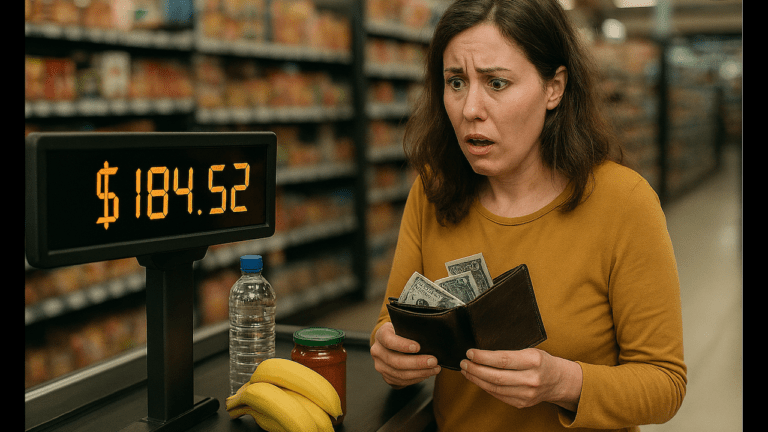
As talking heads on mainstream financial networks point to ever-increasing retail sales (May data notwithstanding) and gush about the “health of the American consumer,” Joe Main Street is spending hand over fist to keep up with rising prices.
In fact, we can account for virtually the entire increase in retail sales in the United States since April 2021 by price inflation.
Retail sales increased rapidly as the country emerged from the government-imposed pandemic lockdowns. By mid-2020, they had climbed from a pandemic low of under $400 trillion to pre-pandemic levels around $500 trillion. Retail sales rapidly surged from there. By the spring of 2021, retail sales were up to $575 trillion. Media reports touted the surge in consumer spending, lauding it as a sign of a recovering economy.
It was also the foreshadowing of something much more sinister.
Inflation.
As Federal Reserve Chairman Jerome Powell insisted inflation was “transitory,” retail sales continued to march higher. But in July 2021, they were over $600 trillion, and they continued to climb steadily higher in the subsequent months.
In May, retail sales were $715.4 billion. Since July 2021, retail sales have increased by a healthy 15.9 percent.
But when you adjust retail sales for price inflation, an entirely different picture emerges. In real terms, sales flatlined in April 2021 and have remained rangebound between $550 trillion and $575 trillion ever since.
So, while American consumers have spent more month after month for the last four years, they have been purchasing roughly the same amount of stuff. That big 15 percent-plus increase in retail sales is nothing more than a reflection of rising prices.
The Reality of Retail Sales
Most people reflexively assume an increase in retail sales means consumers bought more goods and services. But that’s just one side of the coin. Retail sales data not only reflect the amount of goods and services sold; they also capture changes in prices.
Retail sales are calculated by multiplying the price of goods by the quantity sold (Sales = P × Q). These figures are not adjusted for inflation. As a result, if prices rise while the volume of goods and services remains constant, retail sales data will still show an increase. In fact, retail sales can rise even when fewer goods are sold – if prices increase enough.
For instance, let’s say a widget costs $1. If consumers purchased 100 widgets last month, retail sales were $100 (1×100=100). Now let’s say the price increases to $2 this month. Due to the higher price, consumers only purchased 60 widgets. Retail sales would increase to $120 (2×60=120). The news would report that retail sales rose by 20 percent. Talking heads on CNBC would gush about how well consumers are doing.
But in reality, consumers did a lot worse.
They paid more and bought less.
American consumers have faced this ugly reality for nearly four years now.
And keep in mind, the situation is worse than the data indicates because the government revised the CPI formula in the 1990s so that it understates the actual rise in prices. Based on the formula used in the 1970s, CPI is closer to double the official numbers.
All of this underscores the pain of price inflation. It steals your purchasing power. Thanks to the ever-devaluing dollar, you have to work harder and harder just to maintain your standard of living. This is precisely why so many people find it impossible to get ahead.
Mike Maharrey is a journalist and market analyst for Money Metals with over a decade of experience in precious metals. He holds a BS in accounting from the University of Kentucky and a BA in journalism from the University of South Florida.
(Kenneth Schrupp, The Center Square) Six California Republican state lawmakers sent a letter to President Donald Trump urging Immigration and Customs Enforcement to avoid “sweeping raids” and create “a path to legal status” for “non-criminal undocumented immigrants.”
“We have heard from employers in our districts that recent ICE raids are not only targeting undocumented workers, but also creating widespread fear among other employees, including those with legal immigration status,” wrote the lawmakers. “we urge you to direct ICE and DHS to focus their enforcement operations on criminal immigrants, and when possible to avoid the kinds of sweeping raids that instill fear and disrupt the workplace.”
Signatories included state Sen. Minority Leader Brian Jones, R-San Diego. Jones authored a bill that failed in committee that would have required the prisons and jails in California to provide requested release dates to federal immigration officials for individuals convicted of serious or violent felonies or wobblers — crimes serious enough to be prosecuted as either a felony or a misdemeanor.
Under existing state law, such cooperation is prohibited except in limited cases involving some serious or violent crimes.
“We also call on your leadership to modernize our immigration process to allow non-criminal undocumented immigrants with longstanding ties to our communities a path toward legal status,” the letter continued. “America needs a system that reflects both compassion and lawfulness — one that upholds sovereignty while recognizing the reality on the ground.”
“The last President to successfully tackle this issue was Ronald Reagan nearly 40 years ago, and it is long past time to modernize our immigration policies,” the lawmakers wrote.
Reagan’s 1986 Immigration Reform and Control Act allowed approximately three million undocumented immigrants who had continuously resided in the United States since before Jan. 1, 1982, to secure legal status. The last time a Republican presidential candidate won California was 1988 when Vice President George H.W. Bush was elected president.
“Finally, we urge you to expand and reform the H-2A and H-2B visa programs to authorize more legal guest workers across the entire economy, and to streamline the process to make it easier for vital industries to get the workers they need,” wrote the lawmakers. “From construction to hospitality to food processing, California’s employers are struggling to fill positions.”
According to the American Farm Bureau, the federal government authorized 384,900 H-2A temporary agriculture visas. The H-2B visa program for temporary non-agricultural workers is capped at 66,000 per year.
The state’s latest jobs report found 5.3% of Californians, or 1.1 million, were unemployed in May. The latest federal Bureau of Labor Statistics data on California found there were 659,000 job openings in March 2025, suggesting there may be nearly two unemployed Californians for every open job.
The letter’s signatories included primary author Sen. Suzette Valladares, R-Santa Clarita, along with Sens. Jones, Rosilicie Ochoa-Bogh, R-Yucaipa, and Assemblymembers Heath Flora, R-Ripon; Diane Dixon, R-Newport Beach, and Laurie Davies, R-Laguna Niguel.
(Dave DeCamp, Antiwar.com) The Trump administration has approved a new arms deal for Israel that will provide the country with $510 million worth of Joint Direct Attack Munitions (JDAMS), kits that turn bombs into precision-guided weapons, as the US continues to provide military aid to support the genocidal war in Gaza.
According to the Pentagon’s Defense Security Cooperation Agency (DSCA), the State Department notified Congress of the sale of 3,845 JDAMS for 2,000-pound BLU-109 bombs and 3,280 JDAMS for 500-pound MK 82 bombs. The deal also includes US “government and contractor engineering, logistics, and technical support services; and other related elements of logistics and program support.”
The DSCA said Boeing is the principal contractor for the deal. The notification of the potential deal begins a time period when US lawmakers could potentially block the sale, but there’s little opposition to US military support for Israel within Congress, despite the many war crimes the US is implicated in by providing Israel with weapons.
Fragments of bombs with US-provided JDAM kits have been found at the scene of Israeli airstrikes in Gaza that have massacred many civilians. In 2023, Human Rights Watch said it identified JDAM fragments that were found in two airstrikes on homes in central Gaza that killed 43 civilians, including 19 children, and 14 women.
It’s unclear at this point how the deal will be financed, but many arms sales to Israel are funded by US military aid, and US assistance to Israel has significantly increased since October 7, 2023. According to the Israeli newspaper Haaretz, in that time, US funding has covered an estimated 70% of Israel’s war-related military spending.
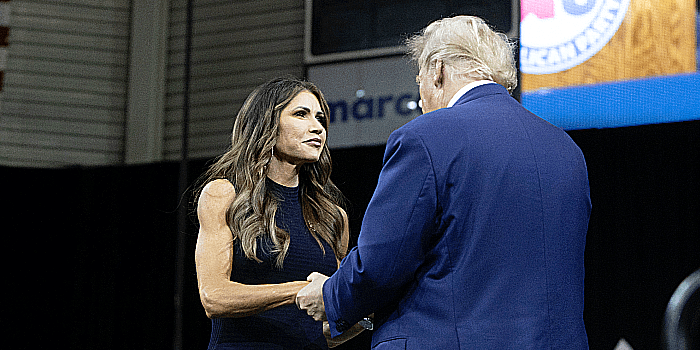
(Luis Cornelio, Headline USA) Homeland Security Secretary Kristi Noem said Monday that “ICEBlock,” an app designed to alert individuals of immigration enforcement operations, appeared to constitute obstruction of justice.
“This sure looks like obstruction of justice,” Noem wrote on X, responding to a CNN segment about the controversial app. She also warned that the app threatens the safety of ICE agents by putting a target on their backs.
“Our brave ICE law enforcement face a 500% increase in assaults against them,” she said. “If you obstruct or assault our law enforcement, we will hunt you down and you will be prosecuted to the fullest extent of the law.”
This sure looks like obstruction of justice. Our brave ICE law enforcement face a 500% increase in assaults against them.
If you obstruct or assault our law enforcement, we will hunt you down and you will be prosecuted to the fullest extent of the law. pic.twitter.com/4ZcfrpyRV1
Noem’s comments followed a CNN story on tech developer Joshua Aaron, who created ICEBlock to push back against President Donald Trump’s ICE raids across the country.
ICEBlock works by encouraging users to report suspected ICE sightings and broadcasts alerts to others nearby. The app now has more than 20,000 users.
“When I saw what was happening in this country, I wanted to do something to fight back,” Aaron told CNN, before comparing ICE raids to operations similar of Nazi Germany. “We’re literally watching history repeat itself.”
According to Aaron, the app does not collect personal data and allows users to report ICE sightings anonymously.
“We don’t want anybody’s device ID, IP address, location,” Aaron said. “We don’t want anything being discoverable. And so, this is 100% anonymous and free for anybody who wants to use it.”
(Luis Cornelio, Headline USA) One of billionaire Elon Musk’s former friends issued a prediction about the tech mogul’s next move following his very public feud with President Donald Trump.
In a Sunday interview with Politico, neuroscientist Philip Low—who had a falling out with Musk—claimed the former DOGE head will try to destroy Trump.
“I’ve had my share of blowouts with Elon over the years,” Low said. “Knowing Elon the way I know him, I do think he’s going to do everything to damage the president.”
Low and Musk ended their friendship after Low removed him from the advisory board of a Silicon Valley startup he had founded.
Musk and Trump’s relationship soured over policy differences and personal feuds between Musk and members of Trump’s cabinet.
After Trump ousted Musk from DOGE, Musk launched a tirade on social media, accusing Trump of being tied to the Epstein files and claiming Trump only won the presidency because of Musk, among other personal attacks.
Trump swiftly hit back, threatening to revoke Musk’s multi-billion-dollar government contracts. The feud cooled off shortly after Trump’s warning.
In remarks to Politico, White House spokesperson Harrison Fields dismissed renewed reporting on the clash.
“Politico’s fixation on another palace intrigue non-story is laughable and fundamentally unserious,” Fields said. “The President is focused on Making America Great Again by securing our border, turning the economy around, and pursuing peace around the globe.”
(Headline USA) President Donald Trump will visit a new migrant detention facility in the Florida Everglades on Tuesday, showcasing his attempts to deport the thousands of criminals who entered the U.S. illegally under the Biden administration.
White House press secretary Karoline Leavitt said Trump will be visiting “Alligator Alcatraz,” a moniker that has alarmed immigrant activists but appeals to the president’s aggressive approach to deportations.
“There’s only one road leading in, and the only way out is a one-way flight,” she said. “It is isolated, and it is surrounded by dangerous wildlife and unforgiving terrain.”
Trump’s visit is intended to highlight his hard-line immigration policies that have been embraced by supporters of his “Make America Great Again” agenda. The detention facility is being built on a remote airstrip about 50 miles west of Miami, and the surrounding swampland is filled with mosquitos, pythons and alligators.
Trump will be joined by Homeland Security Secretary Kristi Noem, Florida Gov. Ron DeSantis and Rep. Byron Donalds, who is running to succeed DeSantis as governor in 2026.
Earlier Monday, DeSantis confirmed Trump’s trip, saying he thinks the facility will be “ready for business” by the time he visits. The facility could house 5,000 detainees.
The governor, who unsuccessfully challenged Trump for the Republican presidential nomination last year, said he spoke with Trump over the weekend. He also said the site obtained approval from the Department of Homeland Security.
“What’ll happen is you bring bring people in there,” DeSantis said during an unrelated news conference in Wildwood. “They ain’t going anywhere once they’re there, unless you want them to go somewhere, because good luck getting to civilization. So the security is amazing.”
Who else can't wait for the grand opening of Alligator Alcatraz tomorrow! 🙋♂️ pic.twitter.com/MqjdrQYKJw
The facility has drawn protests over its potential impact on the delicate ecosystem and criticism that Trump is trying to send a cruel message to immigrants. Some Native American leaders have also opposed construction, saying the land is sacred.
Florida Attorney General James Uthmeier, who popularized the name “Alligator Alcatraz,” has described the facility as a “one-stop shop to carry out President Trump’s mass deportation agenda.”
“There’s really nowhere to go. If you’re housed there, if you’re detained there, there’s no way in, no way out,” he told conservative media commentator Benny Johnson.
DHS posted an image of alligators wearing hats with the acronym ICE, for U.S. Immigration and Customs Enforcement.
State officials in Florida are spearheading construction of the facility, but much of the cost is being covered by the Federal Emergency Management Agency, which is best known for responding to hurricanes and other natural disasters.