(Chris Woodward, The Center Square) President Donald Trump’s executive order on homelessness continues to have people talking.
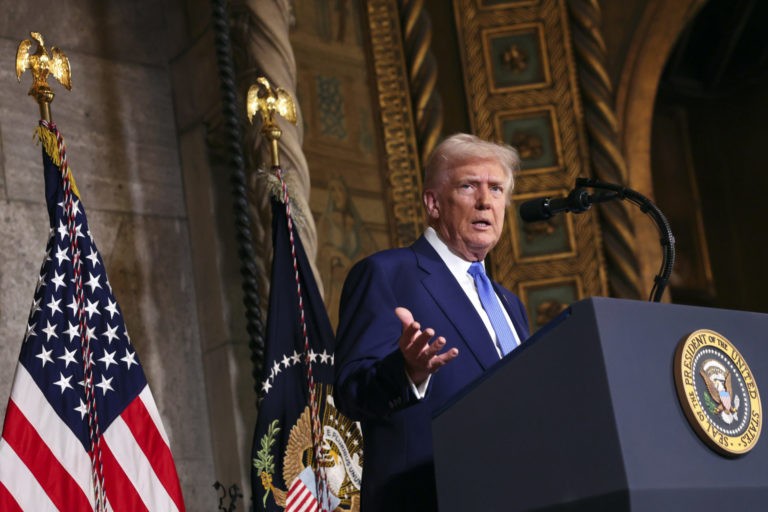
The order is called “Ending Crime and Disorder on America’s Streets.” It aims to do something about the number of homeless and drug-addicted people living on the streets through efforts such as committing them for mental health treatment. Trump said it is part of a “new approach focused on protecting public safety” across the nation.
“Endemic vagrancy, disorderly behavior, sudden confrontations, and violent attacks have made our cities unsafe,” said Trump in an online statement. “The number of individuals living on the streets in the United States on a single night during the last year of the previous administration – 274,224 – was the highest ever recorded.”
According to the president, the “overwhelming majority” of these people are addicted to drugs, have a mental health condition, or both.
“Nearly two-thirds of homeless individuals report having regularly used hard drugs like methamphetamines, cocaine, or opioids in their lifetimes,” said Trump. “An equally large share of homeless individuals reported suffering from mental health conditions. The federal government and the states have spent tens of billions of dollars on failed programs that address homelessness but not its root causes, leaving other citizens vulnerable to public safety threats.”
The Center Square emailed all the Democrats representing Arizona on Capitol Hill. None of them responded.
However, the National Alliance to End Homelessness issued a press release saying the order “would impose a multitude of harmful, ineffective, and outdated policies and practices” for addressing homelessness. The Alliance went on to take issue with the order’s “attacks” on housing, the “call for forced institutionalization,” and the elimination of “fundamental privacy protections” for homeless people.
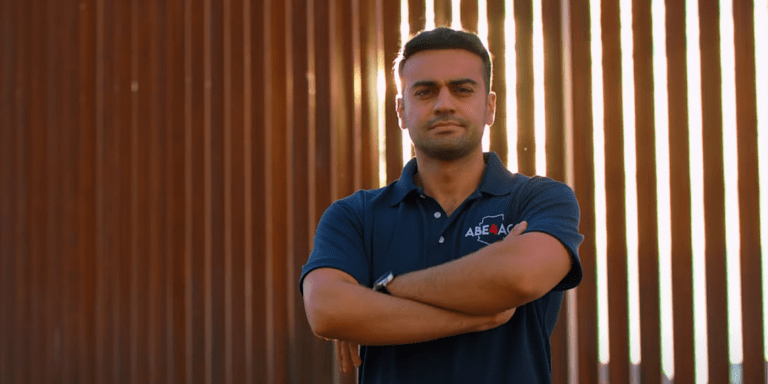
U.S. Rep. Abe Hamadeh, R-Arizona, told The Center Square that he understands concerns about due process rights, adding “we must make sure they are never violated.” At the same time, Hamadeh said, “We must also recognize the rights of our citizens who do not want their neighborhoods swallowed up” by homeless encampments.
“Earlier this year, I participated in the Veterans’ Community Project groundbreaking in Glendale, Arizona,” said Hamadeh, a former U.S. Army Reserve captain. “The project provides transitional housing for veterans who are experiencing homelessness. Not only will the veterans be able to live in a tiny home, but they will also receive much-needed employment and healthcare services.”
Hamadeh called that an “innovative, holistic, and compassionate approach” to the situation.
“Compassion has to be the cornerstone of all approaches we take, whether providing a hand up to those facing financial based homelessness or hospitalization for those experiencing mental health issues,” said Hamadeh, whose resume includes past work experience as a Maricopa County prosecutor.
Hamadeh went on to say that he believes President Trump’s executive order is “welcomed by those who truly understand that much of our homelessness is a result of mental illness and addiction.” He added that too many of “these individuals are preyed upon by opportunists in the ‘homeless industrial complex’ and do not get the real assistance they need.”
(Luis Cornelio, Headline USA) The Secret Service nearly renewed the security clearance of disgraced former Director Kimberly Cheatle, who resigned after would-be assassin Thomas Matthew Crooks nearly killed President Donald Trump on her watch, according to RealClearPolitics.
The agency halted the renewal after the news site on Friday began reporting on Republican opposition to the move. It’s unclear why Cheatle would need a security clearance since she left the Secret Service in July 2024.
“Following the security debacle in Butler, the former director of USSS made the right decision to resign,” said Sen. Ron Johnson, R–Wis. “I see no reason for her security clearance to be reinstated.”
Sen. Marsha Blackburn, R–Tenn., echoed Johnson’s remarks, saying: “Not only did she oversee one of the greatest security failures in our nation’s history, but she also stonewalled congressional oversight and ran away from my colleagues and me when we confronted her.”
Blackburn added that under “no circumstances should she be allowed to regain her security clearance, and it is shameful she would even try.”
Asked for comment, a USSS spokesperson confirmed that Director Sean M. Curran saw no public benefit in extending security clearances to former directors.
“Since appointed, Director Curran has been building a dynamic team of knowledgeable advisors that will help implement his vision for the agency,” the spokesman told RealClearPolitics.
“Additionally, Director Curran has been modernizing the intelligence apparatus within the agency. During that process, he has determined that not all former directors need to have their clearances renewed,” the spokesperson added.
Cheatle resigned after Trump survived two assassination attempts during his 2024 campaign to return to the White House.
She was replaced by Ronald L. Rowe Jr., who retired just days after Trump took office in January 2025.
Curran, who was present during the Butler assassination attempt, was later appointed by Trump to lead the Secret Service.
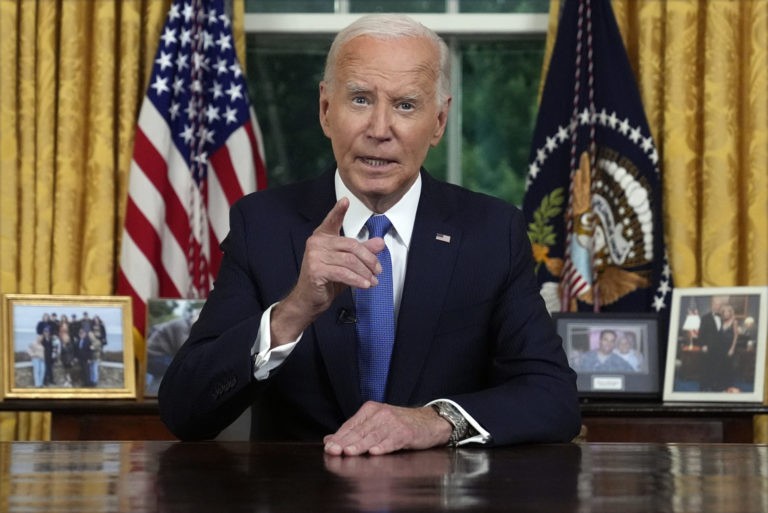
(Luis Cornelio, Headline USA) Former President Joe Biden made a rare appearance at the 2025 National Bar Association Gala on Thursday, where he appeared confused to the point of needing assistance.
Biden left the White House in January 2025 after facing what many described as an infernal “coup” by Democrats’ concerns about his age and cognitive decline.
Footage of Biden’s entrance showed him, alongside his granddaughter Maisy, being greeted by applause and cheers.
Moments later, Biden appeared lost as to where to go next, prompting a gala official to guide him.
BREAKING: Former President Joe Biden walks onto the stage and gets LOST at the National Bar Association Gala.
The fitness test was introduced in 1966 by President Lyndon B. Johnson, but was phased out in 2012 during the Obama administration.
“I’m pleased to announce that we’re officially restoring the Presidential Fitness Test and the Presidential Fitness Award. And it’s going to be a very big thing,” Trump said at the executive order signing on Thursday, adding that the test “was a wonderful tradition, and we’re bringing it back.”
The fitness test requires students ages 10 to 17 to run, do sit-ups, pull-ups or push-ups and a sit-and-reach test. After 2012, it was changed to the Youth Fitness Program. The Obama administration said it wanted to focus less on athletic performance and more on student health.
Yet, the White House noted, America is still seeing a decline in health and physical fitness.
“For far too long, the physical and mental health of the American people has been neglected,” the White House stated. “Rates of obesity, chronic disease, inactivity, and poor nutrition are at crisis levels, particularly among our children.”
Joanna Faerber, an elementary physical education specialist at Louisiana State University, states that everyone can agree “childhood obesity and lack of physical activity and physical education in school is limited.”
“President Trump wants every young American to have the opportunity to emphasize healthy, active lifestyles — creating a culture of strength and excellence for years to come,” White House press secretary Karoline Leavitt said in a statement.
This order has sparked some responses from health experts who express concerns over the negative impacts this could have on students’ mental health and body image.
Fitness education should be about more than how fast children can run, or how far they can stretch, Jacqueline Goodway, a kinesiology professor at Michigan State University, wrote in an email to The New York Times.
“We need to ensure our children have the skills, knowledge and behaviors for a lifetime of physical activity and physical fitness,” Goodway wrote.
Yet having something set in place is necessary for students’ physical education, Kathy Hirsh-Pasek, a senior fellow at the Brookings Institution and an expert in child development, said.
“I don’t have fond memories of trying to do chin-ups,” said Hirsh-Pasek. “On the other hand, we need something.”
The executive order grants the President’s Council on Sports, Fitness, and Nutrition, which will be administered by Health and Human Services Secretary Robert F. Kennedy Jr., made up of 30 elite athletic members, to create a new Presidential Fitness Award and develop school programs that reward excellence in physical education.
In joining the Council, golfer Bryson DeChambeau, Kansas City Chiefs placekicker Harrison Butker and former New York Giants linebacker Lawrence Taylor, among other professional athletes, were invited to the signing at the White House.
Paul Levesque, also known as Triple H, a former professional wrestler, posted on X, expressing his gratitude in being a part of this initiative.
“Physical fitness has been a part of my life from a young age and has created the path to support myself and family beyond my wildest dreams,” Triple H wrote. “The President’s Council on Physical Fitness is a vehicle to get young people active and healthy.”
This all comes in light of the U.S. preparing to host the 2025 Ryder Cup, 2026 FIFA World Cup and the 2028 Summer Olympics.
The article offered no evidence to support the claim, relying solely on the unsubstantiated ramblings of anti-Trump author Michael Wolff. Wolff floated the suggestions during a podcast interview.
“She’s introduced by a model agent, both of whom Trump and Epstein are involved with,” Wolff claimed with no evidence. “She’s introduced to Trump that way … Epstein knows her well.”
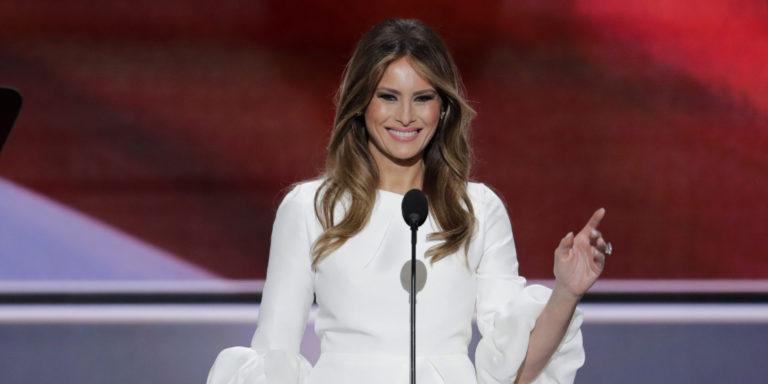
When Mrs. Trump heard of the article, she ordered her attorneys to have a word with the Beast. Soon thereafter, the outlet issued a public apology and pulled the article from its website.
“After this story was published, The Beast received a letter from First Lady Melania Trump’s attorney challenging the headline and framing of the article,” an editor’s note read on the now-deleted article. “After reviewing the matter, the Beast has taken down the article and apologizes for any confusion or misunderstanding.”
The Daily Beast’s smear comes as the left intensifies its efforts to link President Trump to Epstein, the deceased sex offender.
It also comes amid the Democratic Party’s outrage over Attorney General Pam Bondi’s announcement that no further Epstein-related documents will be released, even though she previously said she was reviewing the so-called Epstein client list.
Bondi has since clarified that no such list exists, and that she was simply referring to the trove of court records, which she has since made public.
In contrast, Joe Biden, who served as president from 2021 to 2025, did not release any such documents during his time in office.
(Money Metals News Service) In a compelling episode of the Money Metals Podcast, host Mike Maharrey sits down with Frank E. Holmes, CEO and CIO of U.S. Global Investors and Executive Chairman of Hive Blockchain Technologies, for a wide-ranging discussion on gold, platinum, interest rates, the dollar, and the shifting geopolitical landscape.
The conversation offers critical insights into global market trends, monetary policy distortions, and the rising importance of real assets.
(Interview Starts Around 6:27 Mark)
Gold: Consolidation or Launchpad?
Gold surged to a record high in April 2025 but has since entered a quiet phase, trading sideways.
Frank Holmes doesn’t see this as a loss of momentum.
Instead, he compares the current state of the gold market to a sailor adjusting sails in shifting winds. It’s not the end of the rally—it’s a tactical pause. Holmes remains bullish, urging investors to “stock those gold coins, stock those silver coins.”
Despite the Federal Reserve holding rates steady at its July meeting, Holmes believes real interest rates are already negative due to understated inflation. He dismisses the official CPI as misleading, citing airfare prices that are up 100% since before COVID and Amazon retail increases of 30 to 100%.
According to Holmes, inflation is actually running at an annualized rate closer to 12%, not the 4–5% reported. With purchasing power quietly eroding, he argues that savvy investors are moving into real assets—and gold remains a cornerstone.
Platinum’s 50% Rally: Not a Fluke
While gold has commanded headlines, platinum has quietly outperformed all major commodities in the first half of 2025, soaring nearly 49%. Holmes attributes this to a surge in industrial and jewelry demand, particularly across Asia.
Platinum’s lustrous appeal in diamond settings, combined with its resistance to tarnish, makes it a favorite in fast-growing economies like China, Vietnam, and Malaysia. But supply isn’t keeping pace.
South Africa, the world’s leading platinum producer, is grappling with anti-mining regulations that have choked exploration and development.
Holmes also points out that palladium, often mined alongside platinum, has its own geopolitical challenges, with most of it sourced from Russia.
The BRICS Challenge and the De-Dollarization Drive
Holmes sees a deliberate effort by China and Russia to weaken the U.S. dollar’s global dominance, particularly through the expansion of BRICS nations and gold accumulation.
China’s strategy hinges on giving its currency more perceived legitimacy by backing it with gold and promoting alternatives to the dollar through initiatives like One Belt, One Road.
The freezing of $300 billion in Russian assets during the Ukraine invasion only accelerated the desire of other nations to insulate themselves from U.S. financial power.
But Holmes also sees a powerful countermeasure in the rise of dollar-backed stablecoins. He highlights Tether as a prime example, with over 300 million wallets, $13 billion in profits, and more U.S. Treasury holdings than Germany.
Stablecoins, Holmes argues, allow foreign citizens to hold dollars outside their own fragile banking systems, preserving demand for the greenback even amid growing distrust of U.S. fiscal policy.
Military Spending and the Dollar Tug-of-War
Despite deficit spending and monetary excess, the U.S. dollar remains strong thanks to its unmatched military backing and global fungibility. Holmes points to a worldwide surge in defense spending as democratic nations re-arm in response to authoritarian threats.
Germany, for example, is boosting its military budget to $250 billion, while Canada has raised its defense outlays from $25 billion to $150 billion. The U.S. continues to invest in cyber and AI defense capabilities, further solidifying its monetary leverage.
The Genius Act, passed recently, paves the way for widespread adoption of stablecoins as a new form of U.S. dollar liquidity.
Holmes believes that while other currencies race to devalue, the dollar’s military and technological advantages will ensure it devalues the least.
The April tariff war, strategically aimed at China, has also helped reinforce dollar strength, pushing the DXY index back to its 50-day moving average.
The Commodity War: Copper, Gold & Strategic Metals
Holmes sees a global war—not of bullets, but of metals.
As China secures dominance over strategic minerals, including copper and rare earths, the U.S. faces mounting pressure to develop domestic resources. But bureaucratic red tape, especially from the EPA, continues to stifle American mining projects.
Holmes credits investor Robert Friedland for recognizing the opportunity early, quietly accumulating undervalued copper and gold tracts in the U.S. a decade ago. Copper, with its vital role in electrical conductivity, is becoming a strategic asset on par with oil.
Holmes argues that China would love nothing more than to divert copper exports exclusively to its shores, much like it has done with other critical minerals.
The battle for resource control is intensifying, and the West needs to accelerate its response if it wants to remain competitive in the next phase of industrial development.
East vs. West: Why Western Investors Are Missing the Gold Boat
Despite gold’s strong fundamentals, many Western investors remain skeptical or outright bearish. Holmes notes that billions have been redeemed from gold ETFs like GDX and GDXJ, even as gold stocks hit record highs.
The disconnect is stark—Newmont Mining blew past earnings expectations, but not a single analyst saw it coming. He sees this negativity mirrored in other sectors too, such as airlines, where analysts failed to predict a 130% rise in United Airlines’ stock.
Meanwhile, family offices and hedge funds have been quietly accumulating gold, taking advantage of low sentiment and attractive valuations.
Holmes attributes the skepticism to a broader Wall Street bias against cyclical assets. By the time mainstream analysts catch on, he warns, the real profits will have already been made.
Final Thoughts & Resources
Holmes encourages listeners to subscribe to Frank Talk, his weekly investment commentary published through USFunds.com. The newsletter offers market insights, SWOT analyses, and short-form updates on gold, global economics, and upcoming data releases.
His approach is clear: understand the game, assess your performance, and prepare for the next opponent.
As the world pivots toward hard assets and geopolitical uncertainty escalates, Holmes believes it’s more important than ever to stay informed—and stay bullish.
(José Niño, Headline USA) Arkansas Attorney General Tim Griffin has found no state or federal laws violated by Return to the Land, a whites-only community in the Ozark hills, after a preliminary investigation, per a report by KNWA Fayetteville.
Return to the Land, a community founded in the Ozark hills in late 2023, operates as a private association for people of European ancestry and screens out applicants who are not white, Christian, or straight.
The group’s structure—selling ownership as LLC shares tied to individual land plots—was designed to function outside the reach of traditional housing discrimination laws.
When the community drew media and activist attention in the summer of 2025, Griffin condemned its explicit racial criteria and initiated a legal review, promising to investigate possible violations. Griffin declared that “racial discrimination has no place in Arkansas or anywhere in a free society.”
But Griffin’s office now says that, at least for the time being, “we have not seen anything that would indicate any state or federal laws have been broken.”
As Headline USA previously reported, Return to the Land’s founders advertised their enclave as a space for people who hold traditional views and are of European extraction. They vet potential members with written applications and interviews to confirm their ancestry—practices that legal scholars and civil rights groups deem as clear attempts to circumvent federal housing laws through the group’s designation as a Private Members Association.
Because the Fair Housing Act primarily regulates public offerings of housing, RTTL claims an exemption as a members-only group.
Griffin’s office, after reviewing available evidence, agreed that the community’s legal posture currently protects it from both state and federal prosecution.
Despite the attorney general’s conclusion that no laws have been broken, the decision is not the final word. Griffin described the review as “preliminary,” leaving open the possibility of future action if new facts emerge or if the group’s activities change.
José Niño is the deputy editor of Headline USA. Follow him at x.com/JoseAlNino
(José Niño, Headline USA) The video-sharing app TikTok has appointed Erica Mindel, a former Israeli army instructor and former U.S. State Department contractor, to manage its so-called “hate speech” policy, according to a report by The New Arab.
The appointment, confirmed last week, is drawing allegations that the platform is shifting its moderation policies toward censoring content supportive of Palestinian rights movements.
Mindel, who previously served in Israel’s military and worked for Ambassador Deborah Lipstadt on countering antisemitism, will lead efforts to shape TikTok’s approach to hate speech and advise the company on related regulatory matters.
Her selection comes amid heightened geopolitical tension and growing claims that major U.S. tech firms are curbing pro-Palestinian expression on their platforms.
The role was reportedly created following consultations between TikTok executives and the Anti-Defamation League (ADL). Per a report by The Cradle, Dan Granot, the ADL’s national director of antisemitism policy, cited the position as a key recommendation that emerged from high-level discussions in 2024.
While TikTok has said the hire is intended to improve its response to hate speech, critics accuse the company of reinforcing political agendas under the guise of content safety.
According to data from the watchdog group Sada Social, TikTok complied with 94% of Israeli government content removal requests in late 2024. Users have also reported increasing censorship of common pro-Palestinian phrases like “Free Palestine.”
The controversy surrounding Mindel’s appointment adds to broader concerns about tech companies’ relationships with Israeli institutions. Human Rights Watch has accused Meta of systematic censorship of Palestinian content, while Google has faced internal employee protests over Project Nimbus, a $1.2 billion deal providing AI and cloud services to the Israeli military.
ByteDance, TikTok’s parent company, remains embroiled in negotiations with U.S. regulators over a forced divestiture order passed by Congress in 2024.
While that move was largely portrayed as targeting potential Chinese influence, insiders have since told media outlets the driving concern for Congress was the app’s impact on “Israel’s image,” according to a report by the Middle East Eye.
José Niño is the deputy editor of Headline USA. Follow him at x.com/JoseAlNino
(Dave DeCamp, Antiwar.com) President Trump has said it would be “very hard” to reach a trade deal with Canada if it recognizes a Palestinian state, suggesting the US’s trade relationship with its neighbor to the north hinges on its stance toward Israel.
“Wow! Canada has just announced that it is backing statehood for Palestine,” Trump wrote on Truth Social early Thursday morning. “That will make it very hard for us to make a Trade Deal with them. Oh’ Canada!!!”
The post came after Canadian Prime Minister Mark Carney said Canada would recognize a Palestinian state in September if the Palestinian Authority agrees to certain commitments.
“Preserving a two-state solution means standing with all people who choose peace over violence or terrorism, and honoring their innate desire for the peaceful co-existence of Israeli and Palestinian states as the only roadmap for a secure and prosperous future,” Carney said.
Carney’s comments came after both the UK and France also announced plans to recognize a Palestinian state at the UN General Assembly in September, which Trump has also rebuked. “You’re rewarding Hamas if you do that. I don’t think they should be rewarded,” Trump said on Wednesday when asked about the UK’s plans.
While the talking point from the US and Israel is that recognizing a Palestinian state, the Western countries would consider the PA the de facto governing body, and the PA has repeatedly called for Hamas to disarm and give up governance in Gaza. Despite the PA’s stance and President Trump’s previous favorable comments about PA President Mahmoud Abbas, the Trump administration is taking action against the body.
The State Department announced on Thursday that it was imposing sanctions on PA and Palestinian Liberation Organization (PLO) officials over their support for the International Criminal Court (ICC) and the International Court of Justice’s (ICJ) actions against Israel.
(Sarah Roderick-Fitch, The Center Square) The U.S. economy added 73,000 jobs in July, while the unemployment rate has remained steady at 4.2% over the past few months.
“I’ve been calling this a ‘Frozen’ job market for awhile. Now I would call it a red flag. The economy is barely adding any jobs,” said Heather Long, chief economist for the Navy Federal Credit Union. “Companies do not want to hire or invest with this much uncertainty about tariffs, inflation, etc.”
The unemployment rate slightly ticked up from 4.1% in June – returning to May’s rate of 4.2%, according to the latest Bureau of Labor Statistics jobs report.
The report noted revisions for May and June numbers “were larger than normal.”
June revisions show the economy added only 14,000 jobs, down from the previously reported 147,000. May numbers show the economy added only 19,000 jobs, down from the originally reported 144,000.
“The big preliminary annual revision coming out on Sept. 9 may even show job losses,” Long wrote in a post on X.
Despite the weak numbers, the report showed that average hourly earnings rose by 12 cents to $36.44, a year-over-year increase of 3.9%.
The report noted that most job gains remain in the health care and social assistance industries, adding that federal jobs continue to be lost.
The report comes as the White House released a slew of new tariff rates for dozens of countries late Thursday evening.