Trump Sets Global Tariffs as Consumers Brace for Price Hikes

(Brett Rowland, The Center Square) Consumers across the country are bracing for higher prices on everything from coffee to cars as President Donald Trump’s full suite of “Liberation Day” tariffs go into effect next week. 

Some public companies had previously delayed price hikes, but that could change as more tariffs become effective.

Prices for clothes and shoes could jump. In the short term, consumers could pay 39% more for shoes and 37% more for clothes, with shoes and apparel prices expected to gain 18% and 17% higher in the long term, respectively, according to the latest figures from the Yale Budget Lab. That group projected that the tariffs would increase average household costs by about $2,400 annually.

The U.S. Chamber of Commerce, the largest business lobby, reported that manufacturers, wholesalers, and retailers are paying higher prices for goods and services. At the same time, “they are slowly beginning to raise the prices they charge their customers,” said Neil Bradley, executive vice president, chief policy officer, and head of strategic advocacy at the U.S. Chamber of Commerce.

Countries with the highest tariffs include Syria (41%), Laos (40%), Myanmar (40%), Switzerland (39%), Serbia (35%) and Iraq (35%). Some countries could face higher rates, including Brazil, depending on final rates, most of which Trump set unilaterally. 

Trump cut deals with about two-thirds of the United States’ major trading partners. Those nations mostly came in under 19%. Most got 15%. So far, the United Kingdom has the lowest rate at 10%. Trump extended the deadline for several other key trading partners, including Canada, Mexico and China. 

The White House said Thursday that Trump would continue to be open to deals that benefit America. 

Consumer Technology Association CEO Gary Shapiro said the trade group hopes to see more deals to lower tariffs in the coming week.

“Constant shifts in tariff policy make it increasingly difficult for U.S. companies – especially startups and small businesses – to plan, invest, and compete globally,” he said. “CTA continues to urge the administration and Congress to pursue a predictable, forward-looking trade agenda rooted in fairness, and collaboration with, trusted partners. American innovation thrives when markets are open, trade rules are clear, and businesses are free to focus on creating jobs and bringing groundbreaking technologies to market.”

He added: “We expect the administration will use the next seven days before the tariffs go into effect on August 7 to negotiate further deals with trading partners, including with our northern friend and neighbor Canada, to lower tariffs, provide greater certainty, and eliminate barriers to trade.”

Businesses could still get relief through the courts. On Thursday, a panel of 11 appellate court judges scrutinized Trump’s tariff authority, asking attorneys on both sides of the case tough questions about the president’s authority to restructure global trade without help from Congress. The court didn’t rule on the tariffs on Thursday but is expected to do so in the coming weeks.

Trump has said he wants to use tariffs to restore manufacturing jobs lost to lower-wage countries in decades past, shift the tax burden away from U.S. families, and pay down the national debt.

A tariff is a tax on imported goods paid by the person or company that imports the goods. The importer can absorb the cost of the tariffs or try to pass the cost on to consumers through higher prices.
 

Ex-Trump Prosecutor Jack Smith Faces Investigation by Independent Political Watchdog

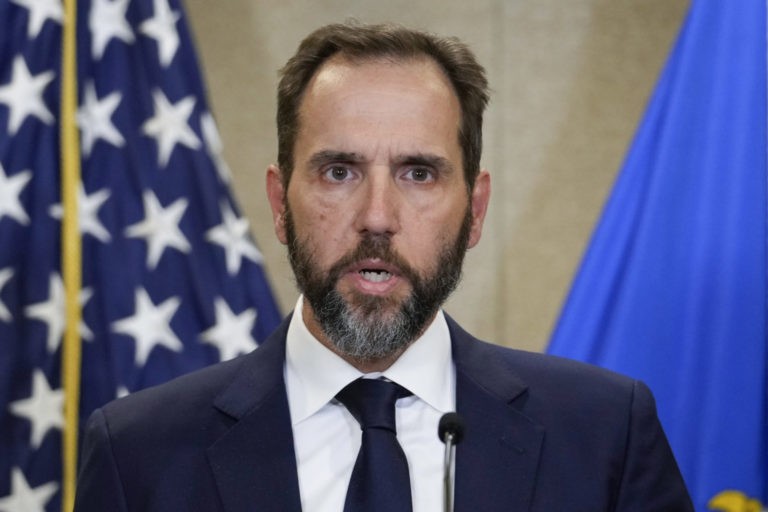
(Headline USA)  An independent watchdog agency responsible for enforcing a law against partisan political activity by federal employees has opened an investigation into Jack Smith, the Justice Department special counsel who brought two criminal cases against then-candidate Donald Trump before his election to the White House last year.

The Office of Special Counsel confirmed Saturday that it was investigating Smith on allegations he engaged in political activity through his inquiries into Trump. Smith was named special counsel by then-Attorney General Merrick Garland in November 2022 and his special counsel title is entirely distinct from the agency now investigating him. The office has no criminal enforcement power but does have the authority to impose fines and other sanctions for violations.

It was not clear what basis exists to contend that Smith’s investigations were political in nature or that he violated the Hatch Act, a federal law that bans certain public officials from engaging in political activity. Sen. Tom Cotton, an Arkansas Republican, had earlier this week encouraged the office to scrutinize Smith’s activities and had alleged that his conduct was designed to help then-President Joe Biden and his vice president Kamala Harris, both Democrats.

Smith brought two cases against Trump, one accusing him of conspiring to overturn the results of the 2020 presidential election and the other of hoarding classified documents at his Mar-a-Lago estate in Florida. Both were brought in 2023, well over a year before the 2024 presidential election, and indictments in the two cases cited what Smith and his team described as clear violations of well-established federal law. Garland has repeatedly said politics played no part in the handling of the cases.

Both cases were abandoned by Smith after Trump’s November win, with the prosecutor citing longstanding Justice Department policy prohibiting the indictment of a sitting president.

There was no immediate indication that the same office investigating Smith had opened investigations into the Justice Department special counsels who were appointed by Garland to investigate Biden and his son Hunter.

The White House had no immediate comment on the investigation into Smith, which was first reported by The New York Post.

The office has been riven by leadership tumult over the last year. An earlier chief, Hampton Dellinger, was abruptly fired by the Trump administration and initially sued to get his job back before abandoning the court fight.

Trump selected as his replacement Paul Ingrassia, a former right-wing podcast host who has praised criminally charged influencer Andrew Tate as a “extraordinary human being” and promoted the false claim that the 2020 election was rigged. A Senate panel was set to consider his nomination at a hearing last month, but it was pulled from the agenda.

Trump’s trade representative, Jamieson Greer, is serving as acting head of the office.

Adapted from reporting by the Associated Press.

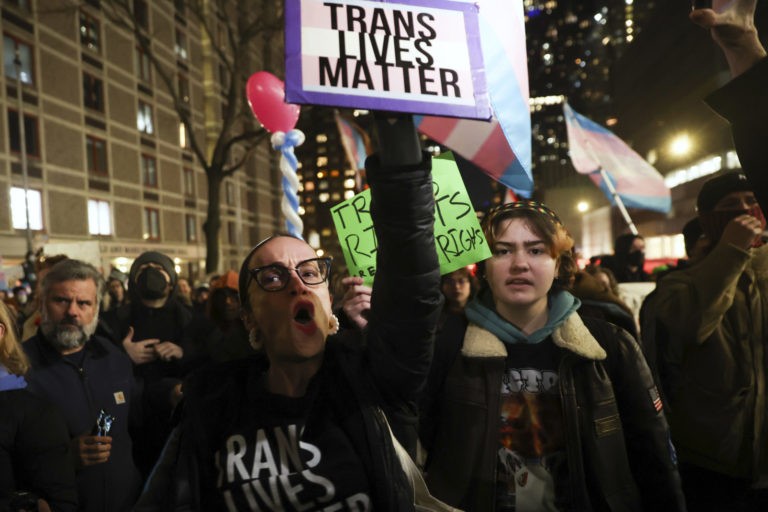
‘Trans’ Training Turns Into Chaos after Conservative Asks Simple Question

(Luis CornelioHeadline USA) A so-called trans training event in Texas devolved into chaos after conservative podcaster Sara Gonzalez used the host’s own logic to push back against allowing biological males into women’s restrooms.

The host, activist Gordy Carmona, had dismissed concerns about biological males entering women’s spaces, arguing that transgender individuals make up less than two percent of the Texans.

Gonzalez quickly countered that argument by asking why should biological women—approximately 50 percent of the local population—compromise to accommodate the relatively tiny percent of self-identifying transgender individuals.

This question, along with Gonzalez’s MAGA hat, seemingly triggered the event attendees who began to get up and leave.

The video of the exchange, originally posted on X, appears to have been censored and is no longer embeddable in articles. However, it can still be viewed here.

“The trans population is less than 2% of the whole Texas population. Why are we focusing so much time on 2% of the population,” Carmona asked, inadvertently setting up Gonzalez’s takedown.

He went on to insist that allowing transgender individuals to use their preferred restrooms poses no threat.

“There has not been one instance of a trans person inflicting any kind of harm in a bathroom,” Carmona said.

Gonzalez fired back by citing instances where self-identifying transgender individuals had allegedly committed sex offenses in restrooms.

“You don’t know! You don’t know!” one attendee shouted.

“I know what a boner looks like, ma’am,” Gonzalez shot back.

That’s when the libs got triggered. Several stormed out in protest. Some even began hurling profanity.

“I thought this was an inclusive environment,” Gonzalez quipped.

“Not for you. Not for bigots and racists,” one attendee snapped.

The event took place on July 28, though Gonzalez posted it three days later.

ICE Arrests 4x Deportee Shielded by Capitol Hill

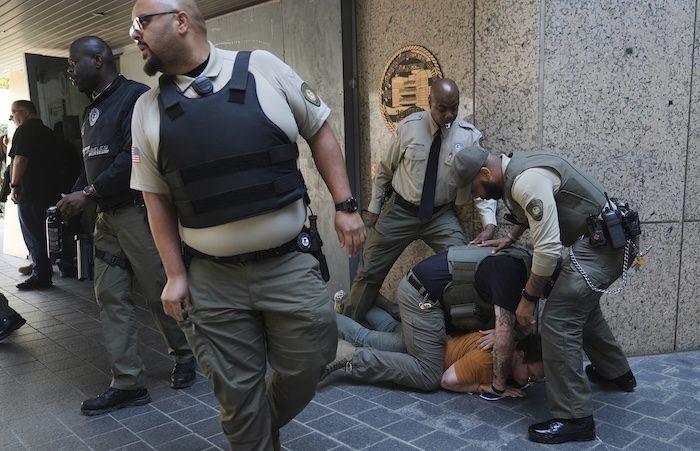
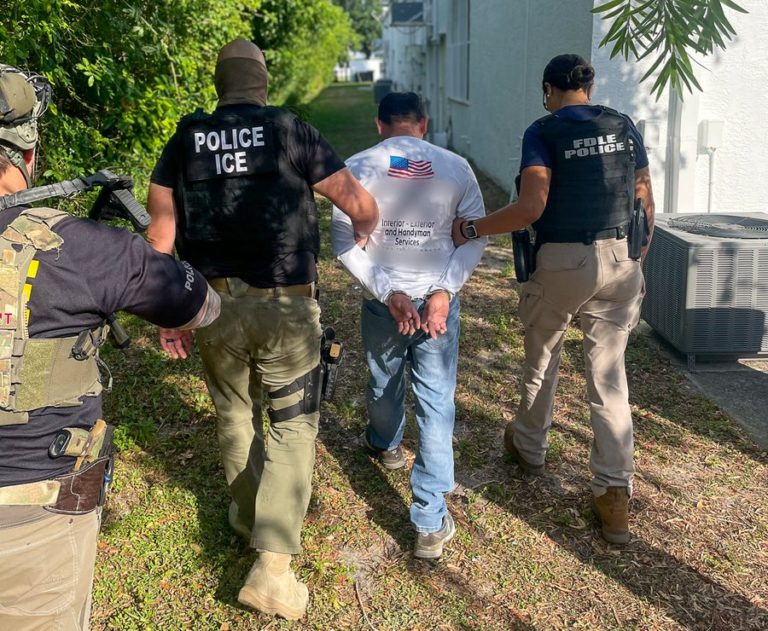
(Luis CornelioHeadline USA) The Trump administration announced Saturday that an illegal alien temporarily shielded by Capitol Hill has been arrested.

Homeland Security Secretary Kristi Noem said the foreign national was arrested Friday night after an eight-hour standoff between ICE and unidentified Capitol Hill officials, who allegedly told immigration agents they were not allowed to make an arrest on Capitol grounds.

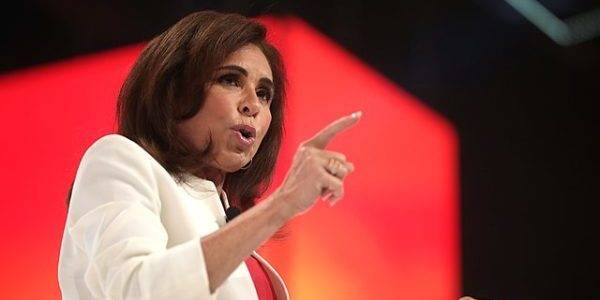
“Good news: This four time deported felon was arrested last night,” Noem wrote on X, responding to a video of U.S. Attorney for the D.C. District Jeanine Pirro sounding the alarm about the standoff on Thursday.

Pirro said in the video that the illegal alien had a long criminal rap sheet and had been expelled from the U.S. no fewer than four times.

“He managed to make it back. He is fact working at Capitol Hill,” Pirro said, adding that someone on Capitol Hill informed immigration agents they were barred from making arrests near the Capitol.

“ICE has been waiting eight hours to arrest this individual. And we’re coming to the end of his shift and he goes inside and suddenly he’s unavailable for an arrest,” Pirro continued.

It remains unclear which Capitol Hill entity told ICE it could not detain the individual on congressional grounds.

Senate Confirms Former Fox News Host Pirro as Top Federal Prosecutor for the Nation’s Capital

(Headline USA) The Senate has confirmed former Fox News host Jeanine Pirro as the top federal prosecutor for the nation’s capital, filling the post after President Donald Trump withdrew his controversial first pick, conservative activist Ed Martin Jr.

Pirro, a former county prosecutor and elected judge, was confirmed 50-45. Before becoming the acting U.S. Attorney for the District of Columbia in May, she co-hosted the Fox News show “The Five” on weekday evenings, where she frequently interviewed Trump.

Trump yanked Martin’s nomination after a key Republican senator said he could not support him due to Martin’s outspoken support for rioters who stormed the U.S. Capitol on Jan. 6, 2021. Martin now serves as the Justice Department’s pardon attorney.

In 2021, voting technology company Smartmatic USA sued Fox News, Pirro and others for spreading false claims that the company helped “steal” the 2020 presidential election from Trump. The company’s libel suit, filed in a New York state court, sought $2.7 billion from the defendants.

Last month, Republican members of the Senate Judiciary Committee voted unanimously to send Pirro’s nomination to the Senate floor after Democrats walked out to protest Emil Bove’s nomination to become a federal appeals court judge.

Pirro, a 1975 graduate of Albany Law School, has significantly more courtroom experience than Martin, who had never served as a prosecutor or tried a case before taking office in January. She was elected as a judge in New York’s Westchester County Court in 1990 before serving three terms as the county’s elected district attorney.

In the final minutes of his first term as president, Trump issued a pardon to Pirro’s ex-husband, Albert Pirro, who was convicted in 2000 on conspiracy and tax evasion charges.

Adapted from reporting by the Associated Press.


House Committee Revives Proposal for ‘Automatic’ Draft Registration

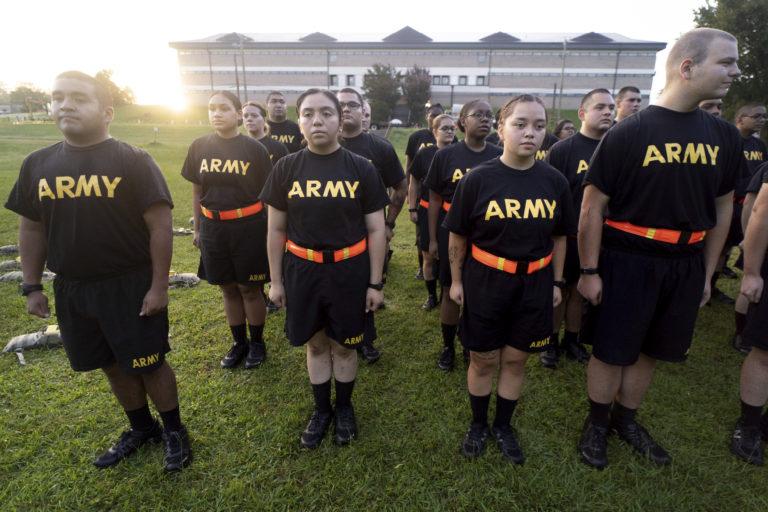
(Edward Hasbrouck, Antiwar.com) For the second successive year, the House Armed Services Committee (HASC) has included an ill-considered and unworkable proposal by the Selective Service System (SSS) to try to automatically construct a database of potential draftees from other government records collected for other purposes in the House version of the annual National Defense Authorization Act (NDAA).

The proposal to try to register young men “automatically” on the basis of aggregation and (mis)matching of other poorly-suited databases collected and intended for other purposes may fit perfectly with the standard operating procedures of the so-called Department of Government Efficiency (DOGE), which has already obtained access to the Selective Service registration database for unknown purposes. But if DOGE were really concerned with ending wasteful and inefficient government programs and agencies, it would have recommended abolishing the SSS, not making an attempt to salvage it.

Ongoing passive but pervasive noncompliance makes registration or a draft unenforceable. Compliance has fallen dramatically since the start of the wars in Ukraine and Gaza, and there’s been even more concern among potential draftees about activation of either a general draft or a draft of health care workers since the U.S. bombing of Iran. Deployment of soldiers for immigration enforcement, transportation of deportees to overseas death camps, and policing of domestic political protests in L.A. and elsewhere has prompted another surge of concern about a possible draft and what sorts of illegal orders might be given to both draftees and enlistees.

Automatic draft registration won’t magically make the registration database accurate or complete. But it has been proposed by SSS staff — otherwise threatened with losing their jobs if the agency is shut down as a useless failure — because it would enable the agency to pretend to be ready to implement a draft on demand. And it’s supported by both Republican and Democratic hawks because it would enable them to continue to pretend that the draft is available as a fallback option, so they can plan, prepare, and commit the U.S. to endless, unlimited war(s) without having to think about whether the people are willing to fight those wars, even if they escalate.

Whether warmongers like it or not, “automatic” draft registration can’t solve the compliance problem because no other government databases have all the information needed to identify all potential draftees or determine who is and who isn’t subject to the draft or required to register.

Even if the Selective Service System were able to magically construct a complete and accurate list of potential draftees, the agency is ever more unready to actually carry out a draft. A decades-overdue revision and “modernization” of the SSS contingency plans for a draft was scheduled for publication in the Federal Register earlier this year as a “Notice of Proposed Rulemaking”, but that update to Selective Service regulations has been held back indefinitely by President Trump’s freeze on promulgation of new Federal regulations. In 2021, Congress directed the SSS and the Department of Defense to conduct and report back to Congress on a comprehensive mobilization exercise including “the processes of the Selective Service System in preparation for induction of personnel into the armed forces under the Military Selective Service Act”, but that years-overdue Congressionally-mandated exercise hasn’t even been scheduled yet. Draft boards exist on paper, but they are almost entirely unprepared for the work they would have to do in the event of a draft. 

President Trump has neither taken any public position with respect to Selective Service nor appointed a permanent Director of the SSS, leaving the agency in charge of a carry-over Acting Director.

Last year, the proposal for automatic draft registration was put forward on behalf of the SSS by Rep. Chrissy Houlahan (D-PA). This year, it was proposed as an amendment to the first draft of the NDAA by Rep. Jack Bergman (R-MI), although Rep. Houlahan again claimed credit for helping get it approved by the HASC. It was included in a package of unrelated amendments adopted “en bloc” (as a package, without separate debate or vote) by voice vote.

Support for ongoing planning and preparation for a draft remains sadly bipartisan — although support for repeal of the Military Selective Service Act has been equally bipartisan.

The proposal for automatic draft registration now goes to the full House for consideration as part of the NDAA for fiscal year 2026.

Last year, the proposal for automatic draft registration was removed from the NDAA for FY 2025 during the final closed-door negotiations of a package of compromises on the NDAA between House and Senate leaders. No similar provision is included in the version of the NDAA for FY 2026 that was adopted by the Senate Armed Services Committee and is now under consideration in the Senate. If no change is made during floor debate in either the House or Senate, “automatic” draft registration will be among the differences between the House and Senate versions referred to the House-Senate conference committee for this year’s NDAA.

 This article originally appeared at Antiwar.com.


Secret Service Sniper Said He Saw Gunman ‘Crawling’ on Rooftop w/ Rifle before Trump Assassination Attempt

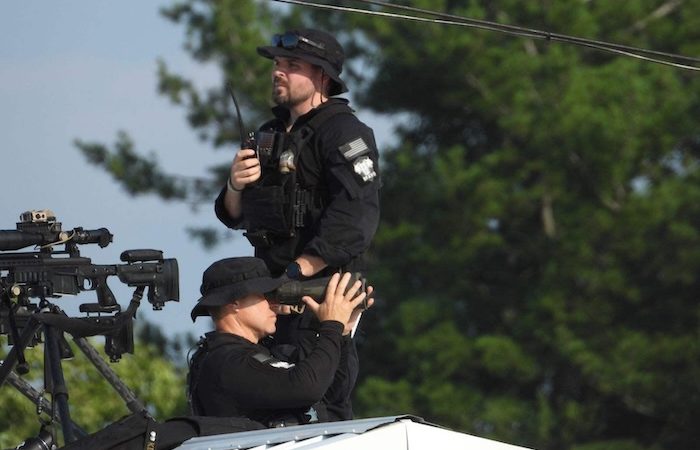
(Ken Silva, Headline USA) Secret Service counter-sniper David King is the man who put the final bullet through the would-be Trump assassin during the July 13, 2024, deadly campaign rally in Butler, Pennsylvania.

However, King was not the first person to return fire at the alleged would-be assassin, Thomas Crooks. Rather, the cop who first shot at Crooks was Butler ESU Sgt. Aaron Zaliponi—doing so in the first six seconds, after Crooks had fired eight times. King’s shot came 15 seconds after Crooks opened fire—and 10 seconds after the shooting had stopped.

For months, questions have lingered about why the Secret Service took 15 seconds to return fire. And now, a recently released interview transcript with King raises further questions, because it contradicts earlier statements about when he saw Crooks.

During his Nov. 21, 2024, interview with the House Task Force, King told investigators that he didn’t see Crooks until after he had already stopped shooting.

“I was observing the rooftops, didn’t see anything … When the first shot rang out, I identified the location that Crooks was at, put my binos down, got my rifle. At the time that I was getting into my rifle and getting the lase of Crooks, that’s when I assumed that three rounds and then five went off,” King told House investigators.

Later, a House staffer asked King: “Had you seen Mr. Crooks at any time prior to viewing him through your rifle scope?”

“No,” King responded.

The staffer pressed further: “And as you are seeing Mr. Crooks through your rifle scope, did you see him fire any shots, or did you only see him after he was done firing shots?”

“I didn’t – yeah. It must have been after,” King said.

About three weeks later, King participated in another interview with the Senate Homeland Security Committee. That time, he was confronted with notes he took after the shooting. Those notes, which he wrote, say that he saw Crooks “crawling” into position before he started firing.

“I and my teammates positioned ourselves to observe that area that everyone was moving to. I noticed an individual, white male, white or gray shirt low crawling on the roof. I noticed an AR-style weapon on his hands. As I moved to observe through my rifle scope I heard weapon fire,” King’s notes said.

“I looked up to see my engagement scope, looked back through the scope, observed the individual shooting, and engaged. At that time, the shooter dropped out of my sight in the scope. I continued to observe the area, as there were reports of another individual on the water tower at four o’clock,” his notes said.

After presenting King’s own notes to him, the Senate investigator asked to clarify if he really saw Crooks “crawling” on the rooftop before firing. Despite what the notes said, King said he didn’t actually see Crooks.

“No. What I was trying to get at is when I saw him, he was on the peak of the roof, in his firing position, and as soon as he was identified the shots went out. I didn’t have the time to do any radio call or any other action except to get on my gun and take action on my own,” King told the Senate.

“It sounds like an eternity, but basically as soon as I saw him—I don’t know how long he was there. But once I identified, then the shots went out.”

King didn’t respond to a request for comment about his contradictory testimonies. In fact, he apparently deleted his LinkedIn account after this reporter messaged him there.

King has widely been hailed as a hero for his actions on July 13.

“His name is David,” Trump told the New York Post last month, adding that King “did a fantastic job.”

“He just, he went about his business. Less than just about four seconds, and that’s when it all stopped and he got him perfectly from a very long distance,” Trump said—giving incorrect information about the timing of King’s shot. “So we got a little bit lucky in that regard.”

Ken Silva is the editor of Headline USA. Follow him at x.com/jd_cashless.

Smithsonian Axes Exhibit on Trump’s Impeachments as NPR Backer Goes Belly-Up

(Ben Sellers, Headline USA) Facing sharp scrutiny from the Trump administration over perceived left-wing bias, the Smithsonian Institution said Friday that it had temporarily removed a display on President Donald Trump’s two politically motivated impeachments.

The ultimate fate of the display remained uncertain for the foreseeable future, although a Smithsonian spokesperson maintained that the National Museum for American History’s exhibit on the American presidency eventually “will include all impeachments,” the Associated Press reported.

Smithsonian spokesman Phillip Zimmerman said the decision to restore the exhibit to its previous 2008 state stemmed from a need to update some of the details following a review in July of the museum’s “legacy content.”

The temporary installation on Trump that was added in September 2021 “was intended to be a short-term measure to address current events at the time,” he said.

The exhibit left intact displays on Andrew Johnson and Bill Clinton, the two other presidents who have been impeached, as well as a display on the forced resignation of Richard Nixon following the Watergate scandal.

House Democrats, led by then-Speaker Nancy Pelosi, first impeached Trump in late 2019 amid claims that he had pressured Ukraine President Volodymyr Zelenskyy to investigate the corruption of top political rival Joe Biden and his son Hunter.

However, Joe Biden’s decision to issue a blanket pardon for his son in December 2024, prior to leaving the presidency, appeared to validate the longstanding concerns over Hunter’s illicit influence-peddling while on the board of the energy company Burisma.

Pelosi again led the charge to impeach Trump for inciting an “insurrection” following the U.S. Capitol uprising on Jan. 6, 2021.

Although Democrat majorities in the House advanced both impeachments, Trump was acquitted both times in the Senate.

Since regaining control of the White House in his landslide 2024 victory, Trump has been eager to settle scores within Washington, D.C.’s permanent bureaucracy and elsewhere.

He directly addressed the Smithsonian’s perceived bias in a March executive order titled “Restoring Truth and Sanity to American History,” which tasked Vice President Vice President J.D. Vance with ensuring that no funding went to “exhibits or programs that degrade shared American values, divide Americans based on race, or promote programs or ideologies inconsistent with Federal law and policy.”

The Smithsonian’s announcement on Friday came as another publicly funded nonprofit under fire for its political bias announced that it was closing shop.

The Corporation for Public Broadcasting, which bankrolled outlets like NPR and PBS through its congressional grants, announced its closure following Congress’s passage of the Rescissions Act last month, which clawed back some $9 billion in partisan public funding and spending excesses.

CPB stood to lose $1.1 billion from the rollback, according to NPR.

Leftists lashed out following the legislation’s passage, insisting—despite a preponderance of evidence to the contrary—that it was nonpartisan and that its programming performed a critical service to the public interest.

“Parents and children, senior citizens and students, tribal and rural communities—all will bear the harm of this vote,” said Katherine Maher, NPR’s president and CEO, in a statement responding to the cuts.

Ben Sellers is a freelance writer and former editor of Headline USA. Follow him at x.com/realbensellers.

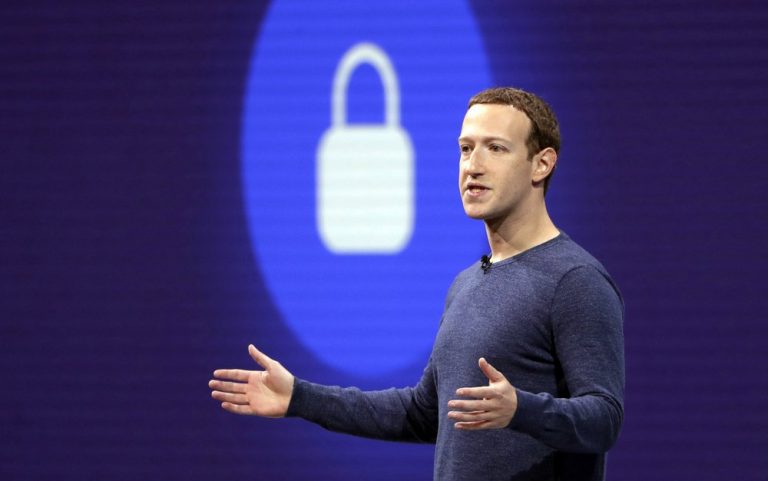
Facebook Accused of Hacking Snapchat to Harvest Encrypted User Data

(Ben Sellers, Headline USA) A tech entrepreneur’s viral thread about corporate espionage using Israeli software went viral Friday after catching the attention of Elon Musk and other prominent social-media influencers.

The thread suggested, among other things, that Facebook may have hacked into the encryption software of rival Snapchat in order to gain insights from its user data.

Alex Vacca, the founder and chief operating officer of ColdIQ, said that Facebook founder Mark Zuckerberg used the VPN app Onavo to spy on user habits before making the decision to acquire the popular messaging app WhatsApp.

A VPN, or very private network, is normally understood to provide an extra layer of online privacy by routing web activity through an anonymous server. But by routing it instead through Facebook’s servers, Zuckerberg turned it into a surveillance tool.

According to Vacca, this gave the social-media giant access to metadata including:

• Every app you opened
• How long you used it
• Which websites you visited
• What time you used each app

In February 2014, Facebook purchased WhatsApp in a blockbuster $19 billion deal.

“No one in the history of the world has ever done something like this,” Zuckerberg said at the time in a press conference announcing the acquisition.

The move also drew the attention of antitrust watchdogs following the company’s $1 billion purchase of Instagram in 2012.

That gave the company four of the top seven social-media platforms at the time. But according to Vacca, that wasn’t enough. The company also had its eye on Snapchat, which was growing increasingly popular, particularly with younger users, due to its privacy features.

Zuckerberg attempted a $3 billion acquisition of Snapchat in 2013, but the company’s CEO, Evan Spiegel, rejected the offer.

The photo-based app allows users to send photos that are immediately deleted after viewing, reducing the risk of a negative online footprint while also giving its users a false sense of security.

Snapchat’s encryption features initially prevented Facebook from spying through its VPN. However, Zuckerberg tasked his engineers with building “kits” that would embed into users’ mobile devices and intercept the Snapchat traffic prior to encryption, Vacca said.

Facebook also used the VPN to spy on other popular platforms, including Houseparty, YouTube and Amazon, giving it a competitive edge and the ability to develop new features mirroring those of its rivals.

Vacca’s thread rekindled outrage against Facebook and Zuckerberg (who notoriously contributed nearly $400 million to swing the 2020 election in favor of Democrat Joe Biden through the dubious use of nonprofits).

Conservative activist Laura Loomer called it “the most evil social media company to ever exist.”

Kyle Becker, a prominent X influencer and former Headline USA contributor, referred to the site as “Fascistbook.”

Both Snapchat and Facebook have come under fire for a litany of privacy and online safety concerns. An explosive legal complaint filed in September 2024 by New Mexico Attorney General Raúl Torrez alleged that, despite its supposed safety guardrails, Snapchat had been a conduit for “rampant” sextortion of minors.

Ben Sellers is a freelance writer and former editor of Headline USA. Follow him at x.com/realbensellers.

Illegal Immigrants Accused of Trying to Run Over ICE Officers

(Dave Mason, The Center Square)  Local and federal law enforcement searched for two illegal immigrants who allegedly tried to ram their vehicle into U.S. Immigration and Custom Enforcement officers near Colorado Springs.

The search was started in the Black Forest area, where ICE said the immigrants Thursday morning tried to run over officers from the agency’s Denver office with a vehicle during an ICE operation at a construction site. ICE said one of its officers fired at the immigrants’ vehicle in self-defense.

“Two criminal aliens attempted to ram their vehicle into ICE officers during a targeted enforcement operation in Colorado Springs, Colorado, July 31,” an ICE spokesperson said in a statement. “As a result of their violent actions and to protect the officers and agents onsite, an officer fired three shots into the vehicle.”

The fugitives, who ICE said fled and abandoned their vehicle, have not been identified.

The El Paso County Sheriff’s Office assisted the Department of Homeland Security and ICE after the incident and set up a containment area to preserve the crime scene, the sheriff’s office said Friday in a news release.

At least two dozen unmarked vehicles and deputies blocked off the area, The Gazette, a Colorado Springs newspaper and website, reported.

A shelter-in-place order was placed at 10:30 a.m. Thursday in the 9900 block of Burgess Road and was lifted around 6 p.m.

The sheriff’s office said it used deputies assigned to its patrol division, school resource officers, drones and community service specialists. Deputies also went door to door to check on residents’ safety.

The FBI is involved with the investigation.

“FBI Denver is investigating an alleged assault on a federal officer that occurred in El Paso County, Colo. earlier today,” the FBI said in a statement Thursday to Fox 21, a TV station in Colorado Springs. “As this is an ongoing investigation, we do not have any further information to provide at this time.”

The Center Square reached out to the Department of Homeland Security Friday, but did not receive a response.

ICE said assaults on its officers and agents are up 830% and blamed that on anti-ICE rhetoric from Democratic politicians.