(Mike Maharrey, Money Metals News Service) Over the last several months, consumer credit data has suggested that Americans may have reached their credit limits. Now, there is further evidence of debt stress, as more consumers with high credit scores are falling behind on their credit card payments.
This is dreadful news for an economy that depends on consumers borrowing and spending money, and signals that it may not be as robust as some analysts claim.
Even with the contraction, Americans are still buried under $1.3 trillion in revolving debt.
The double whammy of rising debt and interest rates exacerbates the debt problem. The average annual percentage rate (APR) currently stands at 20.13 percent, with some companies still charging rates as high as 28 percent. The average is only slightly down from the record high of 20.79 percent set last August.
We’re seeing growing evidence that Americans are struggling under the burden of those debt payments.
LegalShield’s Consumer Stress Index (CSLI) increased by 4.4 percent in the second quarter and is at the highest level since November 2020, when the economy was shut down during the pandemic.
A LegalShield spokesperson said, “As consumers take on more credit to keep up with inflation and everyday expenses, many are hitting a breaking point. The increase in legal inquiries tied to foreclosures and personal finance issues suggests that debt-fueled spending is no longer sustainable for a growing number of Americans.”
LegalShield’s Foreclosure Index surged 13.3 percent in Q2 and now stands nearly 29 percent higher than a year ago.
Meanwhile, according to Federal Reserve data, late-stage delinquencies on credit card debt ticked year-over-year in Q1. Meanwhile, 4.3 percent of total outstanding household debt is in some stage of delinquency. Serious delinquencies, defined as debts that are 90 or more days past due, rose to 2.8 percent of total debt, a 52 percent increase year-on-year.
Subprime credit card borrowers are struggling the most. According to credit scoring company VantageScore, the number of subprime borrower accounts over 90 days delinquent is up 109 percent year-on-year.
Consumers with the highest credit scores are also starting to fall behind.
According to VantageScore, there was a 47 percent year-on-year increase in late payments by people in the prime segment.
“Even though in absolute terms the increase is modest, it shows that even consumers considered the most credit-healthy are also beginning to see some stress with regard to repayments.”
Reuters noted that there has also been a “uptick” in auto loan and mortgage late-stage delinquencies. A VantageScore economist said, “Defaults on secured loans, such as mortgages, typically happen only when the pressure on finances is too much for the consumer to manage.”
The End of the Road?
Does the increasing consumer stress indicate that this bubble economy could be on its last legs?
It might.
As inflation surged in the wake of the monetary malfeasance of the pandemic era, Americans blew through their savings. Then they turned to credit cards. It wasn’t that people were buying more. They were just paying more, trying to keep up with surging price inflation. Once they blew through their savings, consumers were forced to finance life using Visa and Mastercard. Consumer debt surged from $4.15 trillion in 2020 to over $5 trillion today.
Now the bill is coming due, and Americans are tapped out.
Consumers may get a break from the Federal Reserve interest rate cuts. Fed chair Jerome Powell indicated that the central bank is close to further easing monetary policy. However, that’s no guarantee of relief. When the Fed cut in late 2023, credit card rates barely budged.
Furthermore, easing monetary policy means more monetary inflation, which may well drive consumer prices even higher.
The bottom line is that Americans have blown through the savings they accumulated during the pandemic and have run their credit cards close to the limit. An economy run on Visa and Mastercard simply isn’t sustainable. When Americans finally hit their credit limit, it will have major implications for economic growth.
Mike Maharrey is a journalist and market analyst for Money Metals with over a decade of experience in precious metals. He holds a BS in accounting from the University of Kentucky and a BA in journalism from the University of South Florida.
(Jesse Colombo, Money Metals News Service) U.S. Treasury market volatility is at three-decade lows, strongly indicating that a major move is ahead that will have significant effects on the financial markets, including precious metals.
Although often overlooked by retail investors, there is a strong case that the most important market to watch is not stocks but U.S. Treasuries.
Treasuries set the tone for long-term interest rates, shaping everything from government and corporate borrowing costs to mortgage rates, stock prices, and even precious metals prices, which perform best in environments of low real yields.
Right now, I see clear and compelling evidence that U.S. Treasuries are on the verge of a major move that will have sweeping consequences across the entire financial landscape.
My thesis is based on the fact that volatility in the U.S. Treasury market is currently at multi-decade lows, a condition known as a “volatility squeeze.” History shows that such squeezes in financial assets almost always precede major moves.
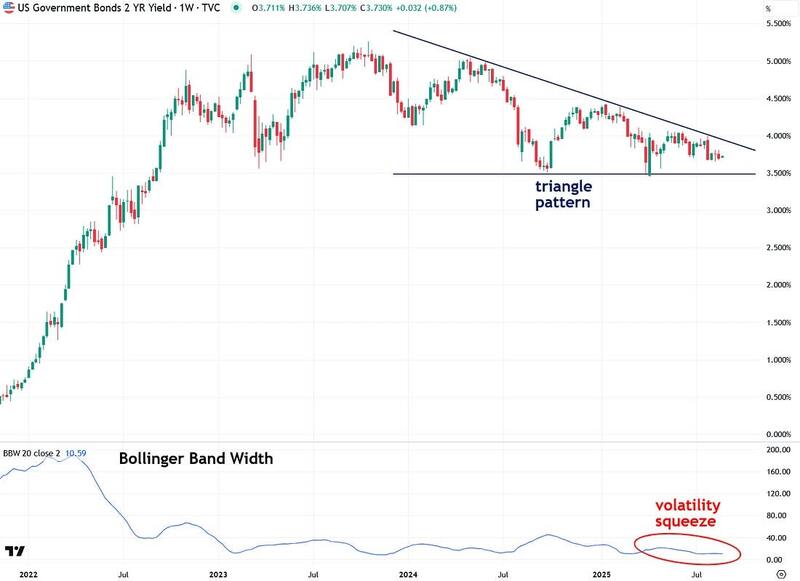
Now, let’s examine the charts across the Treasury complex, beginning with U.S. 2-Year Treasury Note yields, to highlight the highly unusual setup currently developing.
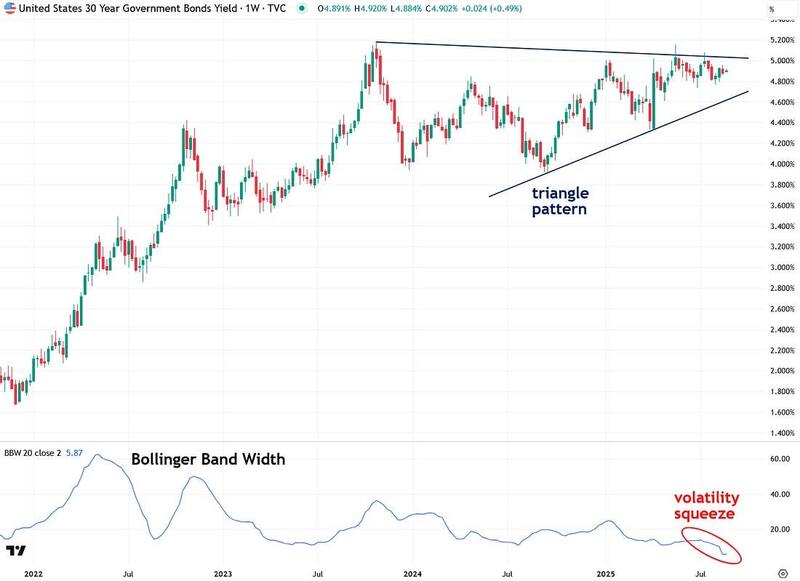
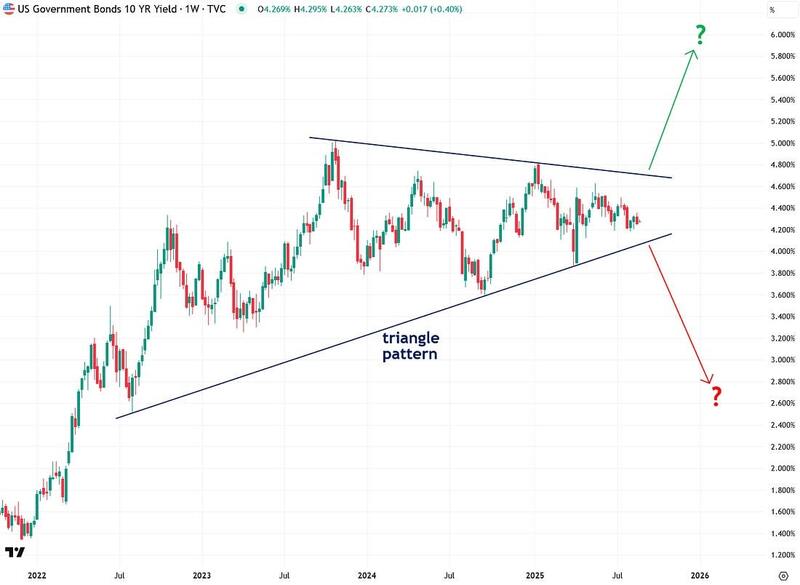
The weekly chart shows a triangle pattern forming over the past two years, signaling a period of compression similar to a spring under pressure. When that pressure is released, it typically leads to a powerful breakout, and I expect a similar move in Treasury notes soon.
This volatility squeeze is further confirmed by the Bollinger Band Width indicator beneath the chart, which is a valuable tool for tracking volatility in financial markets and assets.
I’ll address which direction Treasuries are likely to break out shortly, but first, I want to show the fascinating volatility squeeze setup across the entire Treasury complex.
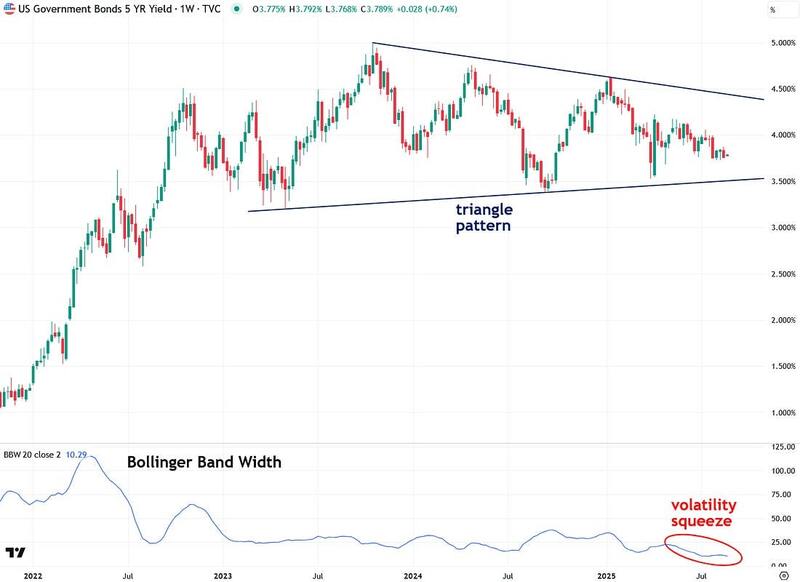
The same triangle pattern and volatility squeeze setup can also be seen in U.S. 5-Year Treasury Note yields:
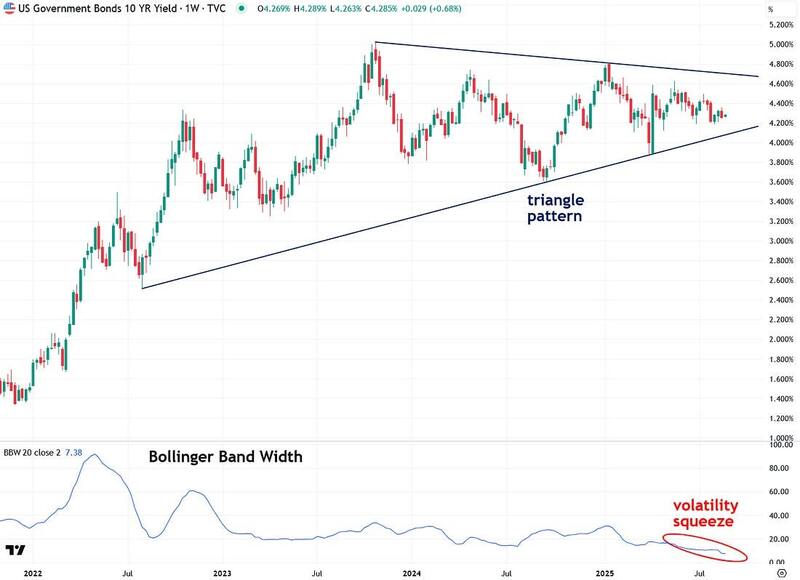
The most important and closely watched bellwether of the Treasury complex, the 10-Year Note yield, is also showing a triangle pattern and volatility squeeze setup:
Finally, the 30-Year U.S. Treasury Bond yield is showing the same setup as the shorter maturities, and the fact that this pattern is consistent across the entire Treasury complex strengthens my thesis by highlighting how broad-based it is:
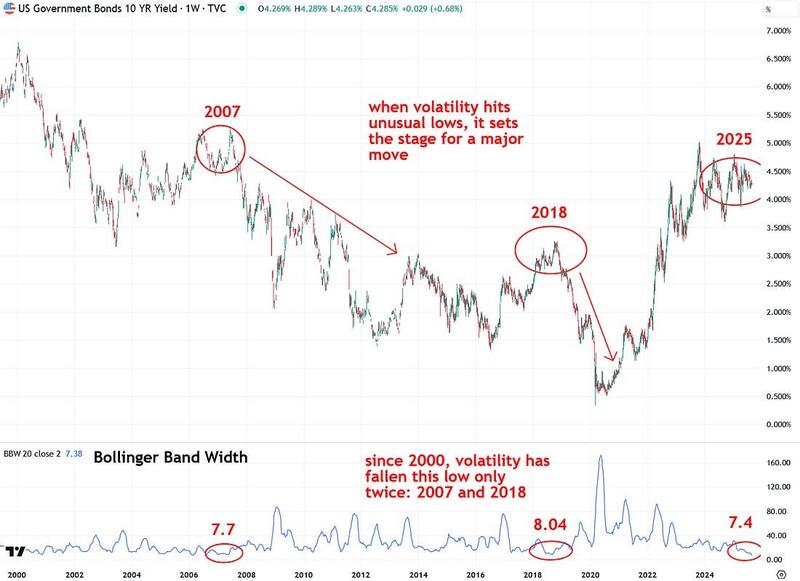
To illustrate just how extreme the current volatility squeeze in U.S. Treasuries is, I created a weekly chart of U.S. 10-Year Note yields going back to the year 2000.
According to the Bollinger Band Width indicator, volatility is now at its lowest level in this entire period at 7.4. The only other times it came close were in 2007 (7.7) and 2018 (8.04), and both of those periods were followed by major moves in interest rates.
I believe another significant move is approaching very soon.
It is important to note, however, that while the last two episodes resulted in falling yields, a volatility squeeze does not indicate direction. It only signals that a large move is ahead.
I will address the likely direction shortly, but for now, focus on the highly unusual nature of this volatility setup.
Now that I’ve made the case that the unusually calm behavior in U.S. Treasuries is likely to give way to an explosive move, I want to address the question of direction.
Unfortunately, the outlook is uncertain because of conflicting economic crosscurrents, primarily inflation and economic growth.
The situation is unclear, and even the Fed, Wall Street, and most economists are acknowledging that reality. This uncertainty is the precise reason why Treasuries remain stuck in a low-volatility holding pattern as they wait for further clarity.
Once that clarity emerges, Treasuries are going to pick a direction and move significantly.
Like all bonds, Treasuries are sensitive to inflation because it erodes the value of their fixed coupon payments.
Treasuries are also sensitive to economic growth since strong growth often leads to higher inflation and tighter monetary policy from the Federal Reserve.
In contrast, weak growth and especially recessions typically cause Treasury yields to decline because they signal falling inflation and looser monetary policy. This is often accompanied by quantitative easing (QE), where the Fed digitally creates money to buy Treasuries, which drives yields down further.
While the straightforward scenarios above are easy to understand, the real world is often more complicated.
Things become tricky when Treasuries receive mixed signals from the economy, particularly in a stagflationary environment where inflation remains stubbornly high but economic growth is weak. In such situations, the proper response for Treasuries is far less clear.
That is exactly where we are right now, and it explains the current volatility squeeze in Treasuries as the market waits for additional inflation and economic data before committing to a clear direction.
Over the past month, concerns about a potential U.S. stagflationary scenario have been growing. A surprisingly weak July jobs report showed that only 73,000 jobs were added, while job growth for May and June was sharply revised downward by a combined 258,000 jobs.
On the inflation front, the Fed’s preferred gauge, the Personal Consumption Expenditures (PCE) price index, showed that core inflation rose to 2.8% in June, remaining well above the Fed’s 2% target and signaling that inflation is still stubbornly high.
Economists are increasingly concerned that the Trump administration’s new tariffs may already be contributing to higher prices and are watching upcoming inflation reports closely to see if this trend persists.
The key upcoming labor and inflation reports to watch are: Personal Consumption Expenditures (PCE) on August 29, the Producer Price Index (PPI) on September 10, and the Consumer Price Index (CPI) on September 11.
On the labor side, important releases include JOLTs Job Openings on September 3, the ADP Employment Report on September 4, Nonfarm Payrolls on September 5, and the weekly Initial Jobless Claims, released every Thursday morning.
My view, at least for now, is that a U.S. economic slowdown leading to a recession will become much more evident in the months ahead, and that will drive Treasury yields sharply lower.
I see the abrupt deceleration in both the job market and the housing market as early evidence. Adding weight to this outlook, Moody’s Analytics chief economist Mark Zandi recently issued a high-profile recession call, citing a weakening labor market along with soft consumer spending, construction, and manufacturing data.
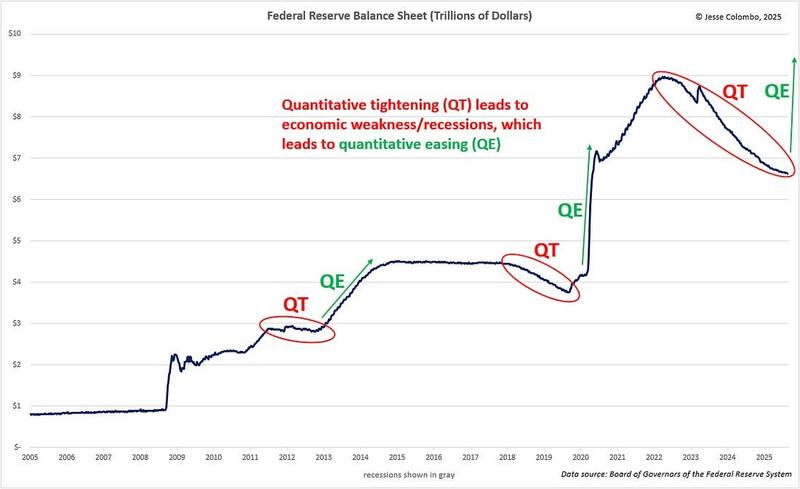
What raises the risk of an economic slowdown and recession is the Fed’s ongoing quantitative tightening (QT) program, which is shrinking its balance sheet by reducing holdings of Treasuries and mortgage securities, as shown in the chart below.
The flip side, however, is that a resulting recession would likely trigger a return to quantitative easing (QE) or digital money creation.
Since the U.S. economy is now heavily dependent on monetary stimulus, this would almost certainly lead to another round of Treasury purchases by the Fed, driving yields much lower. Such a shift would also be extremely bullish for precious metals.
While the Treasury market remains in a holding pattern, waiting for upcoming data to confirm or refute either a recessionary or stagflationary scenario, I want to emphasize the value of technical analysis in this scenario.
As an analyst, I do not make short-term predictions; instead, I prefer a reactive approach that allows the market to reveal its direction through decisive price action supported by volume.
At this point, I am waiting for Treasury yields to break out clearly in one direction, confirmed by economic data consistent with that move. My bias is that Treasury yields are more likely to decline from here due to economic weakness, but I am maintaining a disciplined wait-and-see approach.
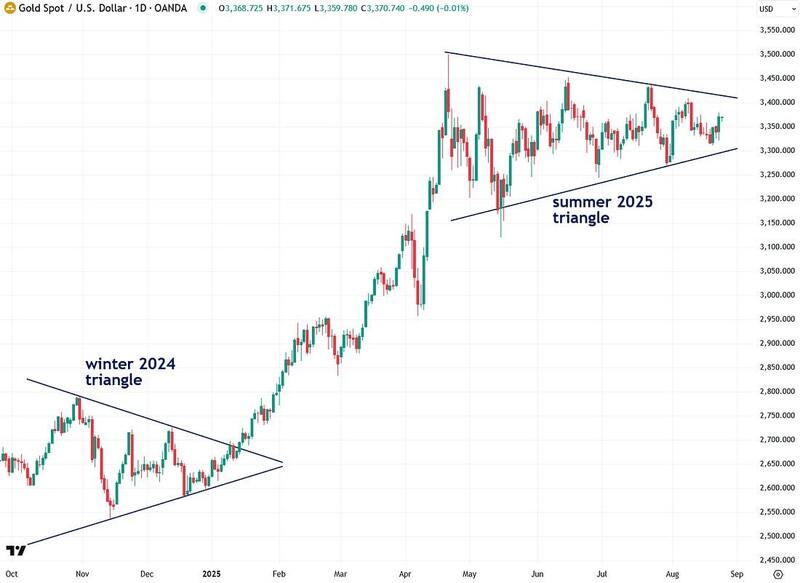
The current volatility squeeze in Treasuries closely parallels the five-month volatility squeeze and triangle pattern forming in gold. In fact, the indecision in Treasuries is a major driver of that behavior in gold, since gold takes its cues heavily from U.S. interest rates.
If interest rates were to fall significantly from here, that would likely trigger a breakout in gold from its triangle pattern, with the potential to run to at least $4,000.
To summarize, volatility in U.S. Treasuries is at its lowest level in decades, and history shows that such periods almost always precede major moves. This dynamic, known as a volatility squeeze, indicates that a powerful move in Treasuries is coming that will have a dramatic impact across the financial markets.
For now, the Treasury market is in a holding pattern as it waits for clearer signals from upcoming economic data. Neither the Treasury market nor most economists can yet say with confidence which path lies ahead, but that clarity should emerge soon, and when it does, it should trigger a historic move in interest rates.
If the outcome is a sharp economic slowdown or recession, Treasury yields will fall significantly, and that would propel gold to $4,000+ and silver to $60+.
If you found this report valuable, click here to subscribe to The Bubble Bubble Report for more content like it.
Jesse Colombo is a financial analyst and investor writing on macro-economics and precious metals markets. Recognized by The Times of London, he has built a reputation for warning about economic bubbles and future financial crises. An advocate for free markets and sound money, Colombo was also named one of LinkedIn’s Top Voices in Economy & Finance. His Substack can be accessed here.
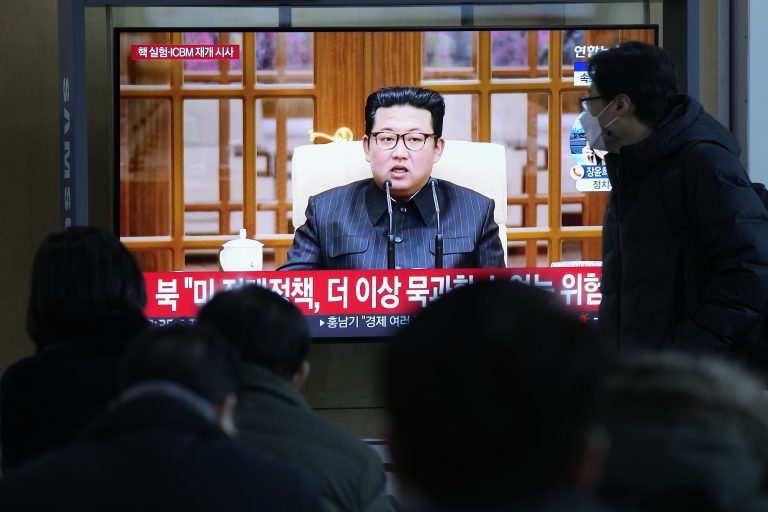
(Kyle Anzalone, Libertarian Institute) President Donald Trump met South Korean President Lee Jae Myung and discussed improving ties with North Korea during a White House summit on Tuesday. Pyongyang has ruled out talks with Seoul and pledges only to engage with Washington if Trump drops the demand that North Korea denuclearize.
“I have very good relationships with Kim Jong-un, North Korea,” he said. “In fact, someday I’ll see him. I look forward to seeing him. He was very good with me. We had two meetings, we had two summits. We got along great. I know him better than you do. I know him better than anybody, almost other than his sister,” said Trump.
Trump met with North Korean Supreme Leader Kim Jong-un three times during his first administration. Lee asked Trump to leverage his relationship with Kim to improve ties on the Korean Peninsula. Lee suggested building a “Trump Tower” and playing golf in North Korea.
Trump said he would like to meet with Kim this year.
At the end of Trump’s first administration, tensions on the Korean Peninsula were at a low point. Pyongyang and Washington were working to implement the steps agreed to during the 2018 Singapore summit. The US and South Korea canceled most war games, and North Korea froze missile tests.
However, during the 2019 summit in Hanoi, Trump allowed his then National Security Adviser John Bolton to demand that Kim agree to undergo “Libyan-style” denuclearization. Pyongyang often cites Libya, where dictator Muammar Gaddafi agreed to denuclearize and was then overthrown in a US-backed revolution, as a reason for maintaining a nuclear deterrent.
President Joe Biden took a more confrontational approach towards North Korea. The Biden administration resumed live-fire war games with South Korea and pushed Tokyo and Seoul into a trilateral military pact with Washington.
In response, Kim resumed missile tests and signed a defense pact with Russia. North Korea provided weapons and soldiers for Russia’s war with Ukraine. Additionally, Kim ruled out talks with South Korea and said North Korea no longer sought to reunify the Korean Peninsula.
Trump said that ties with Pyongyang would not have deteriorated had he been president, and Lee agreed.
Over the past month, Pyongyang has ruled out talks with Seoul. North Korea argues that South Korea is subservient to the US. Kim Yo-jong, Sister of Supreme Leader Kim and senior party official, said North Korea was still open to talks with the US if Trump would drop the demand for denuclearization.
This article originally appeared at The Libertarian Institute.
(José Niño,Headline USA) The Federation for American Immigration Reform (FAIR) recently submitted a federal court brief challenging New York‘s request to restore Trump Administration funding, which was suspended after the state refused to say whether it was still providing public benefits to illegal aliens.
The Personal Responsibility and Work Opportunity Reconciliation Act of 1996 (PRWORA) restricts public benefits to “qualified aliens” exclusively—a category that excludes illegal aliens. PRWORA additionally mandates that states verify they aren’t distributing public benefits to unqualified non-citizens.
Following PRWORA’s passage, then-Attorney General Janet Reno under the Clinton administration issued state waivers exempting them from this verification mandate. The Trump administration revoked these waivers and currently withholds federal funds from states like New York that decline to verify they aren’t providing public benefits to undocumented immigrants.
FAIR’s legal filing argues the state’s injunction request must be rejected because the federal court lacks jurisdiction to grant such relief. According to statute, Congress has removed federal court authority to review executive actions where Congress hasn’t established review standards, instead leaving such decisions to executive discretion. PRWORA grants the Attorney General unreviewable authority to approve or revoke verification requirement waivers.
“For our immigration laws to be enforced effectively, it is essential that the magnet of public benefits be turned off,” declared Dale L. Wilcox, FAIR’s executive director and general counsel. “Illegal aliens should not receive a pay-off for breaking our laws. Congress understood that very well when it passed PRWORA, and New York’s plea that it be allowed to go on flouting the law is without any legal basis. We hope the court sees that it doesn’t even have jurisdiction to enter an injunction, and denies relief.”
According to Pew Research, there are 825,000 illegal aliens residing in New York.
The litigation is identified as State of New York v. U.S. Department of Justice, No. 1:25-cv-00345 (D.R.I.).
José Niño is the deputy editor of Headline USA. Follow him at x.com/JoseAlNino
(José Niño,Headline USA) The Trump administration has announced an immediate freeze on the issuance of worker visas for foreign commercial truck drivers, with Secretary of State Marco Rubio citing safety concerns for American citizens and economic impacts on domestic truckers.
“Effective immediately we are pausing all issuance of worker visas for commercial truck drivers. The increasing number of foreign drivers operating large tractor-trailer trucks on U.S. roads is endangering American lives and undercutting the livelihoods of American truckers,” Rubio stated last Thursday on the social media platform X.
Effective immediately we are pausing all issuance of worker visas for commercial truck drivers.
The increasing number of foreign drivers operating large tractor-trailer trucks on U.S. roads is endangering American lives and undercutting the livelihoods of American truckers.
The Hill reported that this decision follows an incident involving Harjinder Singh, an Indian truck driver who allegedly caused fatal injuries by making an illegal U-turn approximately 50 miles north of West Palm Beach, Florida. According to the Department of Homeland Security, Singh—who faces three vehicular homicide charges—was residing in the United States legally.
Transportation Secretary Sean Duffy announced Tuesday that the Federal Motor Carrier Safety Administration has initiated an investigation into the deadly Florida highway collision.
As Headline USA reported in late April, President Trump issued an executive order mandating English proficiency for all commercial truck drivers operating within U.S. borders. This followed his March executive order establishing English as the nation’s official language.
“They should be able to read and understand traffic signs, communicate with traffic safety, border patrol, agricultural checkpoints, and cargo weight-limit station officers,” the White House specified in the directive. “Drivers need to provide feedback to their employers and customers and receive related directions in English.”
International truck drivers typically work in the United States under H-2B visa classifications.
Additionally, the State Department confirmed Thursday that it is reviewing over 55 million U.S. visa holders for potential deportable violations, including criminal conduct, visa overstays, and involvement in any type of “terrorist activity.”
Last week, the State Department announced it would suspend all visas for Gaza Strip visitors while conducting a “full and thorough review of the process and procedures used to issue a small number of temporary medical-humanitarian visas in recent days.”
José Niño is the deputy editor of Headline USA. Follow him at x.com/JoseAlNino
(Luis Cornelio, Headline USA) The Trump administration has stepped in to defend a Democratic congresswoman who is facing a civil, $10 million defamation lawsuit filed by journalist Matt Taibbi.
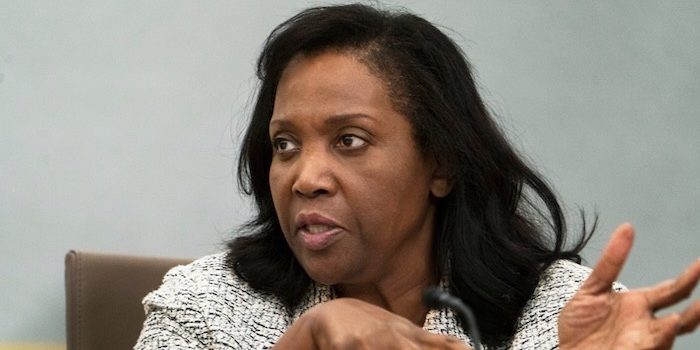
Taibbi filed the federal lawsuit in April against Rep. Sydney Kamlager-Dove, D-Calif., after she allegedly falsely accused him of being a “serial sexual harasser” during both a congressional hearing and on social media.
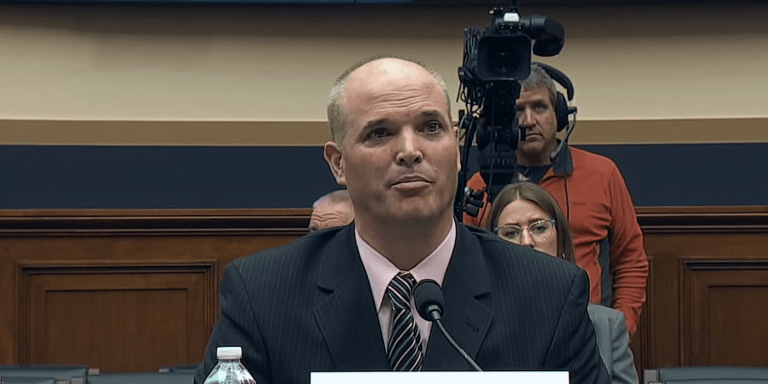
Taibbi a key witness during a House Foreign Affairs Committee hearing on the “censorship industrial complex.”
🚨NEW: Trump's DOJ has intervened in support of a Democrat lawmaker who's being sued by reporter @mtaibbi Acting U.S. Attorney Alina Habba says the DOJ will file a motion to dismiss Taibbi's lawsuit against Rep. Kamlager-Dove, who last year baselessly accused him of being a… pic.twitter.com/COc6q5HUTQ
On Aug. 19, Deputy Attorney General Todd Blanche and Acting U.S. Attorney Alina Habba filed a request for pre-motion conference, saying that the department intends to file a motion to dismiss for “lack of subject-matter jurisdiction.” The filing was first reported by CourtWatch.
The DOJ argued that Taibbi did not properly seek remedies through the Federal Tort Claims Act, and that the act protects Kamlager-Dove’s comments made during her official duties as a member of Congress.
“This is a single-count defamation action brought against Congresswoman Kamlager-Dove for statements made while acting within the scope of her employment as a member of Congress,” the filing stated.
They added that the court “should dismiss” Taibbi’s complaint.
Taibbi appeared to anticipate that Kamlager-Dove’s comments could be shielded by the Constitution’s Debate Clause. However, he argued that the congresswoman’s online sharing of the accusations is not protected.
“These statements are demonstrably false and were made with actual malice—either with knowledge of their falsity or with reckless disregard for their truth,” Taibbi’s attorneys wrote in the lawsuit.
“The allegations echo prior false claims that have been the subject of legal action and multiple public corrections, of which Defendant was undoubtedly aware, evidencing her actual malice,” the attorneys added.
🚨 Matt Taibbi Files $10M Lawsuit Against Rep. Kamlager-Dove for Calling Him a “Serial Sexual Harasser”
The Lawsuit
On April 3, 2025, journalist Matt Taibbi filed a $10 million federal lawsuit against Rep. Sydney Kamlager-Dove (D-CA), Ranking Member of the House Foreign… pic.twitter.com/qMaRo650jl
Kamlager-Dove’s accusations stem from a satirical piece Taibbi once wrote, according to the Daily Wire. It reported:
“Taibbi has not been accused of or charged with sexual harassment by any woman. The articles that the congresswoman appears to be referring to describe a satirical passage in a book Taibbi co-authored about writing a Moscow nightlife guide in 1990s Russia.
“The women referenced in the passage have both been interviewed and confirmed that Taibbi never sexually harassed them. Several news outlets have issued updates to articles referring to the passage to clarify its satirical nature and remove inaccurate statements about Taibbi.”
The Trump administration’s defense of a Democrat lawmaker is not unprecedented, as past governments have similarly shielded members of Congress from lawsuits.
(Headline USA) President Donald Trump pledged on Friday to fire Lisa Cook, the embattled governor of the Federal Reserve, if she does not resign. Now, he’s following through on that promise.
Trump said in a letter posted on his Truth Social platform that he is removing Cook effective immediately because of allegations that she committed mortgage fraud.
“The American people must have the full confidence in the honesty of the members entrusted with setting policy and overseeing the Federal Reserve,” Trump wrote in a letter addressed to Cook, a copy of which he posted online. “In light of your deceitful and potentially criminal conduct in a financial matter, they cannot and I do not have such confidence in your integrity.”
.@POTUS on Federal Reserve Governor Lisa Cook: "I'll fire her if she doesn't resign. What she did was bad, so I'll fire her if she doesn't resign." pic.twitter.com/1vEv7k7ar8
Trump argued that firing Cook was constitutional. “I have determined that faithfully enacting the law requires your immediate removal from office,” the president wrote.
Bill Pulte, a Trump appointee to the agency that regulates mortgage giants Fannie Mae and Freddie Mac, made the accusations last week. Pulte alleged that Cook had claimed two primary residences — in Ann Arbor, Michigan, and Atlanta — in 2021 to get better mortgage terms.
Trump’s move is likely to touch off an extensive legal battle that will probably go to the Supreme Court and could disrupt financial markets. Stock futures declined slightly late Monday, as did the dollar against other major currencies.
Responding to the scandal, Cook said Monday night that she would not step down. “President Trump purported to fire me ‘for cause’ when no cause exists under the law, and he has no authority to do so,” she said in an emailed statement. “I will not resign.”
Cook will have to fight the legal battle herself, as the injured party, rather than the Fed.
(Luis Cornelio, Headline USA) A trove of newly declassified documents exposed how the DOJ under the first Trump administration failed to prosecute high-profile Democrats despite strong evidence, according to a summary report by Just the News.
Federal agencies like the FBI and IRS slow-walked or squashed probes into James Comey, Hillary Clinton and her foundation, Adam Schiff, Hunter Biden and other leftist figures—a stark contrast to how President Donald Trump was treated after leaving office in 2021.
For instance, the documents showed that the DOJ reportedly secured enough proof that Comey authorized the leak of classified information before the 2016 election.
Other reporting, also by Just the News, indicated how Schiff—a longtime Trump critic—allegedly leaked information to smear Trump in the Russian collusion hoax.
A tax probe into the Clinton Foundation was launched in 2019, then was abruptly shut down by the federal government.
The pattern of shielding high-profile Democrats extended to the Biden family, as whistleblower testimony revealed the feds slow-walked its criminal probe of Hunter Biden. In doing so, officials let key statutes of limitation expire.
Special Counsel John Durham, tasked with exposing the origins of the Russian hoax, largely failed to hold intel officials accountable for the scheme designed to undermine Trump’s 2016 win.
The permissiveness ended the exact moment Trump left office in 2021.
President Biden installed Attorney General Merrick Garland, who appointed Jack Smith as special counsel to target Trump.
Even leftist outlets, such as The New York Times, admitted Biden long wanted his DOJ to aggressively go after Trump.
Smith secured two grand jury indictments, one over document dispute between Trump and the National Archives, the other over Trump’s objections to the certification of the 2020 election.
Trump also faced a civil case from New York Attorney General Letitia James and a criminal indictment from Fulton County District Attorney Fani Willis.
The documents case collapsed when a federal judge ruled Smith’s appointment unconstitutional. The election case was ultimately tossed after the 2024 election.
The New York civil judgment against Trump was overturned on appeals and the Fulton County prosecution was indefinitely frozen amid an affair controversy between Willis and the man she hired to go after Trump.
(Ken Silva, Headline USA) The DOJ Inspector General released a report Monday, finding that an FBI agent illegally installed surveillance equipment on private property, and that the agent’s boss then covered up the illegal activity.
The boss—a now-retired FBI special agent-in-charge (SAC)—also reprimanded other bureau employees who reported the illegal surveillance equipment, the report said.
To top it off, the FBI SAC retired before being interviewed, and refused to talk to the DOJ-OIG thereafter.
An FBI agent illegally installed surveillance equipment on private property. Then, the agent's bossed covered up the crime — and in fact reprimanded other employees who reported the illegal surveillance. The OIG said he's provided the report to the FBI "for its information." pic.twitter.com/oeTGZvYOUz
“The OIG has the authority to compel testimony from current Department employees upon informing them that their statements will not be used to incriminate them in a criminal proceeding,” the inspector general’s report said.
“The OIG does not have the authority to compel or subpoena testimony from former Department employees, including those who retire or resign during the course of an OIG investigation.”
The inspector general said he provided his report to the FBI “for its information.”
Ken Silva is the editor of Headline USA. Follow him at x.com/jd_cashless.