Report: Leftists Are Worried that George Soros Will be ‘De-Banked’

(Ken Silva, Headline USA) The Wall Street Journal reported Saturday that progressive non-profit organizations have raised alarms that billionaire George Soros will be “de-banked” by the Trump administration—that is, he’ll have his accounts frozen and won’t be able to fund leftist initiatives.

The Journal’s article comes amidst reports that the Justice Department is probing Soros for potential criminal offenses, including arson, providing material support to terrorism, racketeering, wire fraud, and other violations. Soros and his Open Society Foundations have long drawn right-wing scrutiny for funneling billions into left-leaning causes, including the election of some of the nation’s most radical prosecutors.

According to the Journal, “a coalition of progressive nonprofits, meanwhile, is warning Capitol Hill offices that the administration could use investigations to push financial institutions to ‘debank’ or freeze the accounts associated with major Democratic donors including Soros, which could damage Democrats’ prospects in the 2026 midterm elections.”

Despite the reported concerns, Soros is still funding left-wing groups at full force. Open Society is on track to hand out $1.4 billion this year, according to the Journal, which cited people with knowledge of the spending. By contrast, billionaires Mark Zuckerberg and Bill Gates have both drastically scaled back their spending on liberal groups.

The IRS reportedly didn’t respond to the Journal’s request for comment.

De-banking was a common tactic used against government dissidents under the Biden administration.

According to the Senate Banking Committee, 8,056 consumers filed complaints with the Consumer Financial Protection Bureau against a financial institution for improperly closing checking, savings, or other deposit accounts. In the same period, 3,899 consumers filed complaints related to being “unable to open” a deposit account

Some of the more high-profile examples of de-banking in recent years include Dr. Joseph Mercola, whose bank accounts were deactivated by JP Morgan Chase in 2023. Mercola achieved public prominence for his opposition to the COVID-19 vaccine.

Additionally, last May journalist Christina Urso, who’s making a documentary about the 2020 plot to kidnap Michigan’s governor, had her account closed by Bank of America.

Victims of de-banking have noted the irony that financial institutions de-bank political dissidents, but have no problem doing business with notorious criminals such as Jeffrey Epstein. The attorney general for the U.S. Virgin Islands revealed last year that JP Morgan Chase had a relationship with Epstein until mere months before his death in 2019.

Once Donald Trump took office earlier this year, Sen. Elizabeth Warren, D-Mass., whom Trump nicknamed “Pocahontas” over her dubious claims to be of Native American heritage, wrote to the White House, offering to work together on de-banking.

“Dear President Trump, I write to request that you take action on preventing the debanking of too many Americans across the country, including consumers unfairly locked out of the financial system due to overdraft fees, religious affiliation, or political beliefs,” Warren wrote to Trump in February.

“You share what appears to be a bipartisan interest in addressing debanking,” Warren added, referencing Trump’s comments at the World Economic Forum, where he blasted Bank of America for de-banking conservatives.

“I strongly agree that debanking is a serious issue, and it is unfortunately a practice not confined to Bank of America. My staff has identified thousands of debanking-related complaints lodged by consumers in the last three years alone,” she said, listing four main de-banking culprits: Bank of America, JPMorgan Chase, Wells Fargo, and Citigroup.

Ken Silva is the editor of Headline USA. Follow him at x.com/jd_cashless.

Report: Charlie Kirk Assassination Trial Expected to Cost Utah County $5 Million

(Ken Silva, Headline USA) The trial of alleged Charlie Kirk assassin Tyler Robinson is expected to cost Utah County roughly $5 million, the Wall Street Journal reported Sunday, indicating that Robinson’s case won’t be moved to another venue, despite concerns that he may not get a fair trial where Kirk was killed.

“Trial costs include a defense team, speeding up four new hires at the county prosecutor’s office and hundreds of hours of police overtime,” the Journal reported.

“The county is responsible for keeping everyone involved in the case safe. That includes a SWAT team and two armored vehicles every time accused shooter Tyler Robinson is transported from the county jail to the courthouse,” the newspaper added.

“Trials are sometimes moved if the court system can’t find an unbiased jury, or if it just isn’t equipped for the job. But Utah County officials said they have received no indication that the proceedings will be moved.”

Robinson has Salt Lake lawyer Kathryn Nester representing him, as well as two California-based attorneys. Utah County taxpayers are reportedly upset that they’re footing the bill for his pricey defense. Utah County Commissioner Amelia Gardner told the Journal that “her Facebook page was flooded with constituents angry that their taxpayer dollars were funding what they saw as an over-the-top defense for Robinson.”

Despite those complaints, “It’s the best use of taxpayer dollars to ensure that he had good competent defense the first time so that we don’t have to go to retrials because of rookie mistakes,” she reportedly said.

Robinson’s next hearing is set for Oct. 30, and he’s yet to enter a plea. After turning himself in to the police on Sept. 11—about 33 hours after Kirk was killed—he’s since stopped cooperating with law enforcement. Utah County prosecutors have said they will seek the death penalty against him.

Ken Silva is the editor of Headline USA. Follow him at x.com/jd_cashless.

U.S. Government Runs Fourth-Largest Budget Deficit in History

(Mike Maharrey, Money Metals News Service) Despite all the talk about DOGE and cost-cutting earlier this year, the federal government spent more in fiscal 2025 than it did the previous year and set a new spending record.

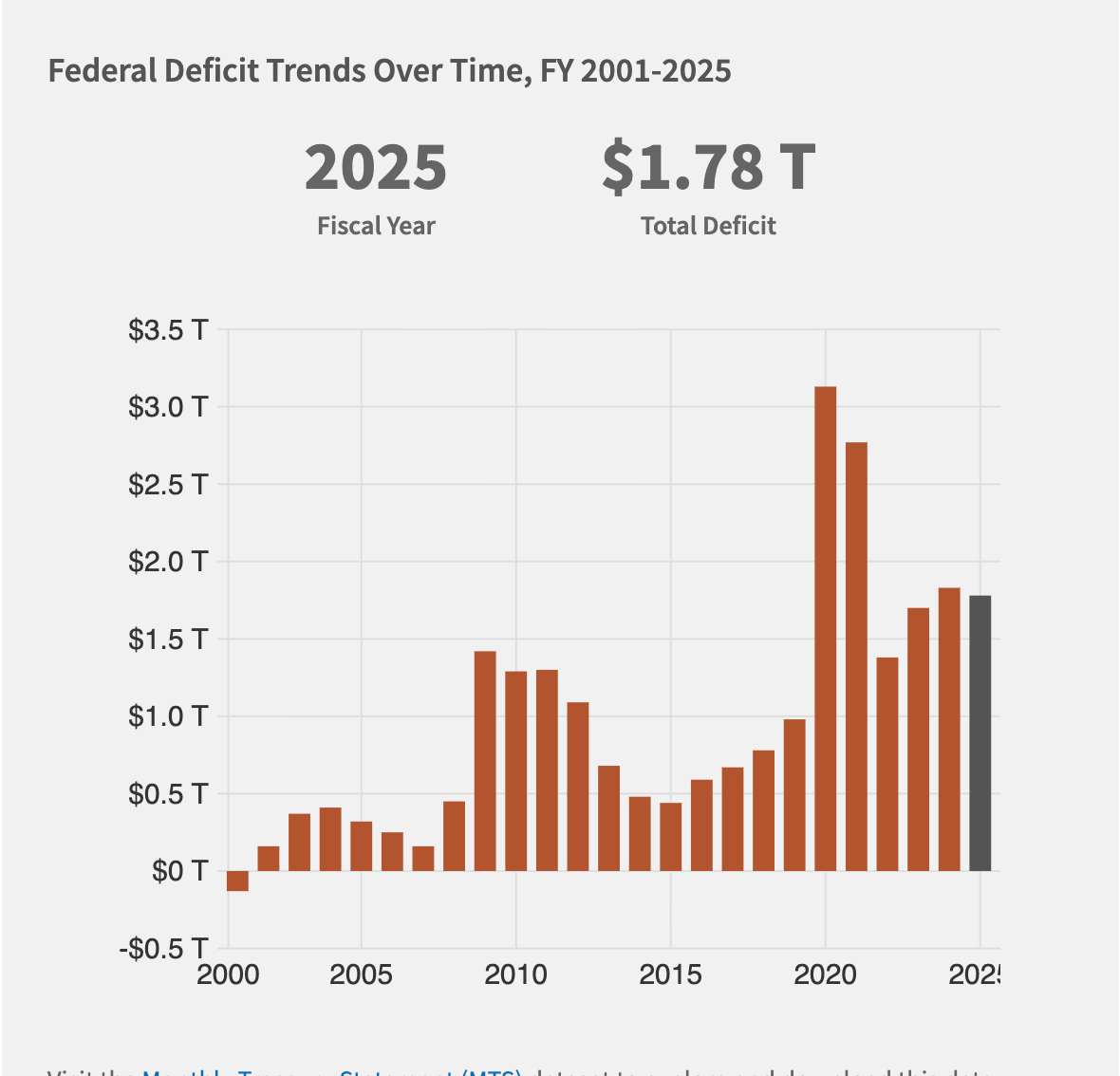
However, thanks to an influx of tariff revenue, the fiscal 2025 budget deficit was slightly smaller – if you can call a $1.78 trillion deficit “small.”

That compares to a $1.82 trillion deficit in fiscal 2024.

It was the fourth-largest deficit in history. The only deficits bigger than the last two years occurred during the pandemic era in 2020 and 2021.

Treasury Department officials estimate the budget deficit-to-GDP ratio dropped slightly to 5.9 percent. It typically runs around 3 percent.

It was the first time the deficit to GDP ratio had been below 6 percent since 2022, prompting Treasury Secretary Scott Bessent to declare “we’re on our way.”

However, these numbers are nothing to brag about.

Breaking Down the Deficit Numbers

The U.S. government took in $5.2 trillion in fiscal 2025. That was 6.4 percent higher than 2024.

A surge in tariff revenue helped boost overall receipts. The U.S. collected $202 billion in customs duties, a 142 percent increase year-on-year. The government took in $30 billion in tariffs in September alone, a 295 percent year-on-year surge.

This big increase in tax receipts comes on the heels of an 11 percent revenue boost last year.

The problem is clearly on the spending side of the ledger.

The Trump administration blew through a record of just over $7 trillion last year, a 4.1 percent increase.

There is no indication that spending will slow down any time soon. The Big Beautiful Bill “cut” some spending but increased it in other areas. Furthermore, those “cuts” were from projected spending increases. Actual expenditures will still go up, just not as fast as originally planned. The bottom line is that even with the Big Beautiful Bill, spending will increase on an absolute basis.

This is par for the course.

You might recall that President Biden promised that the [pretend] spending cuts would save “hundreds of billions” with the debt ceiling deal (aka the [misnamed] Fiscal Responsibility Act).

That never happened.

Supporters of the Big Beautiful Bill expect economic growth stimulated by tax cuts to boost revenue and narrow the deficit. However, history casts significant doubt on this claim.

The ugly truth is the government isn’t committed to cutting spending in any meaningful way, and it always finds new reasons to spend even more, whether for “crises” at home or wars overseas.

Paying for the Debt

The federal government is being increasingly burdened by its skyrocketing interest expense. This is one of the reasons President Trump and others in the administration are pressuring the Federal Reserve to slash interest rates.

Interest on the national debt cost $1.2 trillion in fiscal 2024. That was up 7.3 percent over 2024.

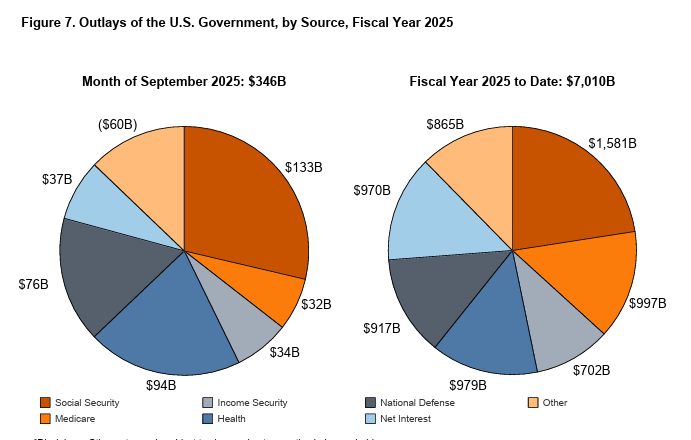
Net interest (interest expense – interest receipts) stands at $970 billion in fiscal ‘25.

In the last fiscal year, the federal government spent more on interest on the debt than it did on national defense ($917 billion) or Medicare ($997 billion). The only higher spending category is Social Security ($1.58 trillion).

Uncle Sam paid $1.13 trillion in interest expenses in fiscal 2024. It was the first time interest expense had ever eclipsed $1 trillion.

Much of the debt currently on the books was financed at very low rates before the Federal Reserve started its hiking cycle. Every month, some of that super-low-yielding paper matures and must be replaced by bonds yielding much higher rates. And even after the Federal Reserve cut rates, Treasury yields have pushed upward as demand for U.S. debt sags.

Why Does It Matter?

A lot of people act like massive budget deficits don’t matter. However, as the Bipartisan Policy Center points out, the growing national debt and the mounting fiscal irresponsibility undermine the dollar.

“Confidence in U.S. creditworthiness may be undermined by a rapidly deteriorating fiscal situation, an increasing concern with federal debt set to grow substantially in the coming years.”

This could lead to lower economic growth, higher unemployment, and less investment wealth.

Lack of confidence in the U.S. fiscal situation could also lower demand for U.S. debt. This would force interest rates on U.S. Treasuries even higher to attract investors, exacerbating the interest payment problem.

The bottom line is the U.S. government has a spending problem it won’t address. No matter what the politicians in D.C. claim, there is no way to fix the budget problem by shoveling more money into the hole with tariffs, much less replacing the IRS.

The rest of the world is paying attention.

Biden ran the debt higher at a dizzying pace, but to be fair, this isn’t just a Biden problem. Every president since Calvin Coolidge has left the U.S. with a bigger national debt than when he took office.

It’s going to take more than DOGE rooting out waste to get the borrowing and spending under control. Even if the Trump administration manages to slash discretionary outlays as promised, that only accounts for 27 percent of total spending. The vast majority is for entitlements, and there is little political will to take the scissors to Social Security or Medicare.

And the sad fact is that, given the political incentives, people in power will always kick the debt can down the road. It is a long-term problem that will require painful measures to fix. Politicians don’t want to create pain. That’s a quick path out of office. So, they will punt the debt problem and spend more to make constituents happy.

This is all well and good, but the problem with playing kick the can down the road is that you eventually run out of road.


Mike Maharrey is a journalist and market analyst for Money Metals with over a decade of experience in precious metals. He holds a BS in accounting from the University of Kentucky and a BA in journalism from the University of South Florida.


Report: Trump Urged Zelensky To Accept Russia’s Terms for a Peace Deal

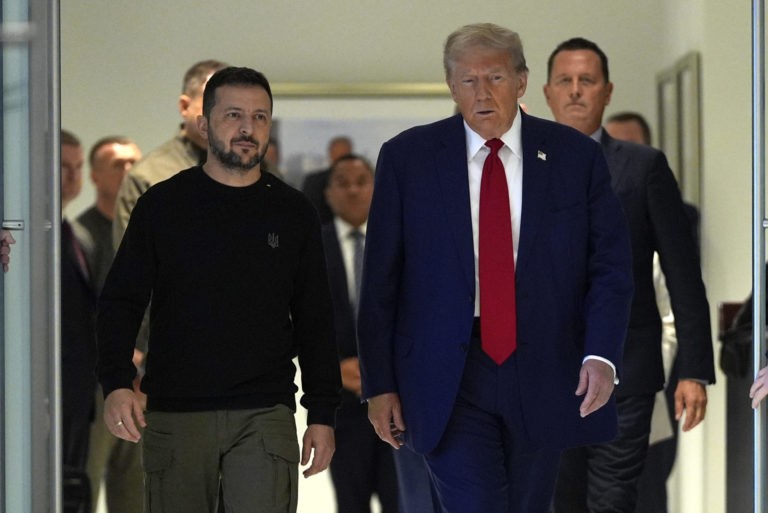
(Dave DeCamp, Antiwar.comDuring a meeting at the White House on Friday, President Trump urged Ukrainian President Volodymyr Zelensky to accept Russia’s terms for a peace deal, warning Russian President Vladimir Putin could “destroy” the Ukrainian leader if he didn’t make the concessions, the Financial Times reported on Sunday.

People familiar with the matter told the outlet that the meeting descended into a “shouting match” multiple times and that Trump was telling Zelensky to give up control of territory in Ukraine’s eastern Donbas region. The president also tossed aside a map of the Ukrainian frontlines, saying he was “sick” of seeing it.

“This red line, I don’t even know where this is. I’ve never been there,” Trump reportedly said.

The report said that Putin made a new offer to Trump when they spoke on the phone on Thursday by proposing that Ukraine cede the Donbas in exchange for Russia ceding small parts of Kherson and Zaporizhzhia. The position marks a concession from Moscow as its previous offer involved Ukraine ceding the Donbas and freezing the lines in Kherson and Zaporizhzhia.

Trump also told Zelensky during the meeting that Ukraine was losing the war and that the Russian economy was doing “great,” contradicting recent public comments he made about the conflict.

A European official told the FT that Zelensky was feeling “very negative” after the meeting. Despite the reported tensions, Trump and Zelensky kept things cordial in their public comments, and Trump appeared to endorse the idea of freezing the current battle lines in a post on Truth Social.

“The meeting with President Volodymyr Zelensky of Ukraine was very interesting, and cordial, but I told him, as I likewise strongly suggested to President Putin, that it is time to stop the killing, and make a DEAL! Enough blood has been shed, with property lines being defined by War and Guts,” Trump wrote.

“They should stop where they are. Let both claim Victory, let History decide! No more shooting, no more Death, no more vast and unsustainable sums of money spent,” the president added.

Zelensky also left the meeting on Sunday without getting Trump to pledge to provide Ukraine with Tomahawk missiles, which are nuclear-capable and have a range of over 1,000 miles. When speaking to reporters after the meeting, Zelensky said that he wouldn’t comment on the possibility of the US providing long-range weapons because “the United States does not want an escalation.”

High-level US and Russian officials are set to hold talks this week ahead of the next summit between Trump and Putin, which is expected to take place in Budapest, Hungary, sometime over the next two weeks.

This article originally appeared at Antiwar.com.


Hegseth Announces 7th US Bombing of Boat in the Caribbean

(Dave DeCamp, Antiwar.comUS Secretary of War Pete Hegseth announced on Sunday that the US military bombed another boat in the Caribbean and killed three “terrorists,” marking the seventh known US strike on a vessel in the region since the bombing campaign began on September 2.

As usual, Hegseth claimed the vessel was carrying drugs but provided no evidence to back up the claim. He also claimed the boat was affiliated with the Ejército de Liberación Nacional (ELN), or the National Liberation Army, a Marxist-Leninist insurgent group that operates on the Colombia-Venezuela border and has a presence in both countries. The US has listed ELN as a “Foreign Terrorist Organization” since 1997.

“There were three male narco-terrorists aboard the vessel during the strike—which was conducted in international waters. All three terrorists were killed and no US forces were harmed in this strike,” Hegseth wrote on X. “These cartels are the Al Qaeda of the Western Hemisphere, using violence, murder and terrorism to impose their will, threaten our national security and poison our people.”

Video of the strike released by Hegseth

Most US strikes on boats in the region have targeted boats that departed Venezuela, as US officials have made clear that the real goal of the US military campaign in the region is to pursue regime change in the country, but Hegseth didn’t specify where the boat had departed from. He just said in the post that it was struck in US Southern Command’s area of responsibility, which includes all of South America.

On Saturday, President Trump confirmed that the US struck a vessel last Thursday that left two survivors, an Ecuadorian and a Colombian. The president said they were being sent to their home countries “for detention and prosecution.” He claimed the strike targeted a “submarine,” and the video he posted of the strike appears to show a submersible being hit with a missile.

Based on the numbers released by the Trump administration, the US has extrajudicially executed at least 32 people in strikes at sea. The Pentagon has not provided any evidence to Congress to back up its claims about who it is bombing and what the boats were carrying.

The latest strikes came after the news that SOUTHCOM Commander Adm. Alvin Holsey, who has been in charge of the US operations in the Caribbean, was stepping down. According to The New York Times, he previously raised issues with the bombing campaign and the US policy toward Venezuela.

This article originally appeared at Antiwar.com.


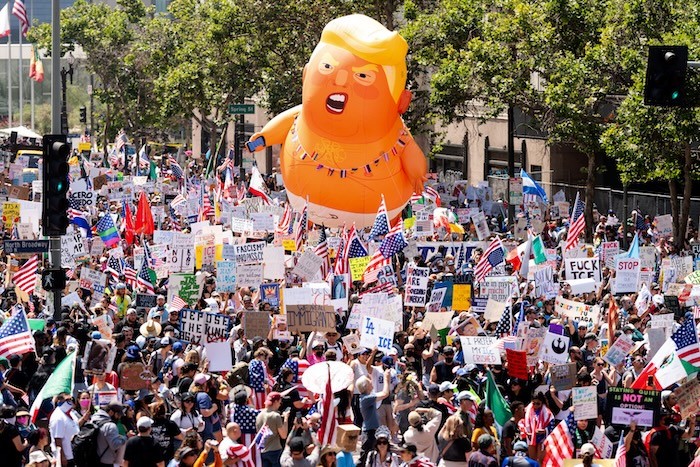
Trump Trolls ‘No Kings’ Protests with Wild Pooping Video

(Luis CornelioHeadline USA) President Donald Trump mocked the “No Kings” protests over the weekend by sharing an AI-generated video of himself aboard an aircraft dropping waste on demonstrators below. 

The video, posted by Trump on Truth Social, shows him seated on a military jet labeled “King Trump” while wearing a crown, a clear jab at the protesters’ anti-Trump slogan and rhetoric. 

The clip then cuts to Trump dumping massive loads of what appears to be excrement onto the protestors, including Democratic activist Harry Sisson, who is depicted being stunned and covered in the mess. 

The video also features what appears to be an AI-generated recreation of New York City’s Times Square, where crowds of protesters are similarly drenched. 

As expected, the clip triggered condemnation from Democrats. Sisson, who has faced backlash for allegedly luring girls into sending him nudes, complained online. 

“Can a reporter please ask Trump why he posted an AI video of himself dropping poop on me from a fighter jet? That would be great thanks,” Sisson wrote. 

Hillary Clinton, the twice-failed presidential candidate, joined the outrage on X: “He’s definitely not mad that 7 million Americans came out to protest him yesterday….” 

White House spokesperson Steven Cheung fired back, saying, “Crooked is definitely still bitter and depressed that President Trump won in 2016.” 

He added, “I suggest you get the mental help you desperately need because it must be difficult waking up everyday obsessing over your defeat, one of the biggest in political history.” 

Trump’s “dumping” video has since garnered more than 3 million views across reposts on X. 

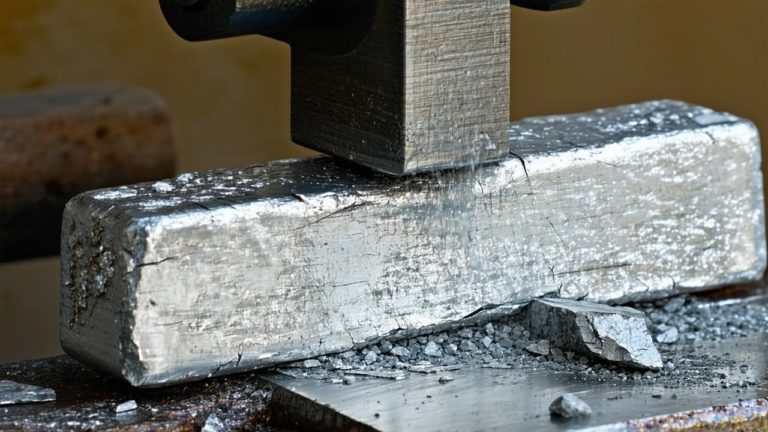
London, India, and the Anatomy of a Silver Squeeze

(Mike Maharrey, Money Metals News Service) For the first time in history, India’s largest precious metals refiner ran out of silver.

A convergence of factors from market dynamics to logistical problems led to this unprecedented silver shortage. While the market dynamics that got us here might be difficult to untangle, the situation is about as basic as it gets.

There’s not enough silver.

October is typically a strong month for Indian silver demand with the approach of Diwali, a festival in honor of the Hindu goddess of wealth. Vipin Raina boosted his silver inventory, and he was ready for the rush.

Or at least he thought he was.

He told Bloomberg the demand blew him away.

“Most people who are dealing silver and silver coins, they’re literally out of stock because silver is not there. This kind of crazy market — where people are buying at these levels — I have not seen in my 27-year career.”

The pump was already primed before festival season, as demand for silver in India began to surge earlier this year after the grey metal zoomed to new all-time highs in rupee terms.

As gold continued to hit record high after record high, investors began to hop on the silver bandwagon. As Bloomberg put it, “India’s festival buyers were joined by international investors and hedge funds piling into precious metals as a bet on the fragility of the US dollar — or simply to follow the market’s irrepressible surge higher.

The surge in demand quickly drove that price to a record over $50 an ounce. It wasn’t long before silver shortages were reported worldwide and cracks began showing up in the London market.

Underlying Market Rot in the London Silver Market

There was already underlying rot in the silver market due to a lack of metal.

The global silver market depends on hundreds of millions of ounces of silver stored in London vaults. Over the last several years, there has been a steady drain of silver.

The reason is simple. Silver demand has outstripped supply for four straight years. The structural market deficit came in at 148.9 million ounces last year. That drove the four-year market shortfall to 678 million ounces, the equivalent of 10 months of mining supply in 2024.

The Silver Institute projects a fifth straight supply deficit this year.

The shortage of silver in London was exacerbated when tariff worries led to a flow of metal from London to the U.S.

According to Bloomberg, silver inventories in London have dropped by one-third since mid-2021.

But the problem is even deeper than that.

Much of the silver in London vaults is already committed to ETFs. That leaves very little “free float” metal to provide liquidity to the London market.

According to Bloomberg, the amount of free float silver dropped from a high of 850 million ounces to just 200 million ounces, a 75 percent decline. Metals Focus estimates that the available metal is now closer to 150 million ounces.

This reveals a structural weakness in the paper silver market (and gold, too). It’s easy to sell an ETF share. All it takes is a few computer strokes. Moving metal that backs these funds is another story.

According to data compiled by Bloomberg, ETFs globally vacuumed up over 100 million ounces of silver in recent months, “amid concerns about the stability of the U.S. dollar, a wave of investment that’s become known as the ‘debasement trade.’”

The silver price rapidly surged to over $54, before dropping 6 percent and finally settling in the $52 range.

As prices rose, a significant short squeeze developed in the silver futures market.

In simplest terms, a short occurs when somebody sells a silver contract today, committing to deliver silver at a set price in the future with the expectation of a falling market price. If the price drops, the investor can sell the contract and pocket the gain. But if the price rises, the investor suffers a loss. If nobody will buy the contract, he is obligated to deliver the silver.

This short squeeze has caused liquidity in the London market to virtually dry up. This has driven London benchmark prices higher at a very rapid pace, and it has caused a price gap between New York and London. The London spot price recently shot to a $3 premium over New York futures. The last time we saw a premium like this was during the Hunt Brothers’ squeeze.

Meanwhile, the cost to borrow silver overnight rose to well over 100 percent on an annualized basis.

According to Bloomberg, things got ugly.

“One senior banker described how tempers rose as clients who had borrowed silver — typically companies in the physical supply chain, like refiners and dealers — called repeatedly to ask for the latest cost of borrowing. When his bank could no longer offer a price to roll forward its clients’ loans, some started screaming down the phone lines, he said.”

Things have gotten so dysfunctional, some traders were able to buy from one bank, quoting a lower premium and immediately sell to another bank for an instant profit.

India – The Straw That Broke the Silver Market’s Back

With the integrity of the silver market already undermined, the unprecedented silver demand in India pushed it over the edge.

Gold gets some of the blame.

With the price of gold so high, many Indian consumers turned to silver.

According to Bloomberg, a viral video last spring by investment banker and social media influencer Sarthak Ahuja primed the pump when he told his followers that the 100-1 gold-silver ratio made silver an obvious buy.

Analysts, bullion dealers were all giving bullish calls on silver in Indian media in a way that has not happened in the last 14 years,” one analyst told Bloomberg. “The FOMO [fear of missing out] factor has worked.

As Indian consumers began to pivot toward silver, the price premium began to rise. Typically, Indian prices run a few cents higher than global averages, but that spread began to grow. It was slow at first – from a few cents to 50 cents. And then to a dollar.  And then above a dollar. Today, we’re seeing premiums as high as $5 an ounce.

I have been here in this company for the last 28 years and I have never seen these kind of premiums,” a trader told Bloomberg.

Initially, Indian buyers were primarily sourcing silver from Hong Kong, but they reportedly shifted more toward London during the Chinese Golden Week Holiday in the first week of October.

But London vaults were already tapped out.

JPMorgan Chase ranks as the world’s largest precious metals trader, and the big bank is a key source of Indian silver. About two weeks ago, the JPMorgan representatives told at least one large Indian client that it didn’t have any silver to send in October.

Meanwhile, Indian suppliers were running out of silver, and local premiums skyrocketed. Several Indian ETFs stopped taking new orders because they couldn’t source the metal. However, other investment vehicles continued accepting new funds. This raised worries that they might be unable to obtain the needed metal.

Indian traders were forced to get their hands on metal wherever they could. Money Metals Exchange even arranged for a large shipment of 1,000-ounce silver bars to India.

Bullion banks engaged in similar operations, standing for delivery of silver on the COMEX and airlifting silver bars to Europe and beyond.

What’s Next?

There isn’t a quick, easy fix for the silver market.

This isn’t just a logistical problem. It is rooted in a fundamental lack of metal.

You can’t supply what doesn’t exist.

There is only one way to relieve the pressure – make more silver available in London. This can only happen if ETFs sell, freeing up metal for the free float stock, or by physically moving silver to London from overseas.

An executive at a logistics company said he has received calls from customers seeking to take silver out of New York Comex vaults and move it to London. He estimated traders want to shift between 15 and 30 million ounces of metal between the two hubs. That totals over 2 million pounds of silver.

A spokesperson for a precious metal refiner told Bloomberg, “There’ll be a natural momentum for material to move back into London and hopefully things will normalize.

“It’s just a question of mobilizing those balances that are sitting elsewhere in the world and moving them back to London.”

That’s easier said than done.

In the first place, it’s going to require higher prices to clear the market.

Furthermore, according to Bloomberg, some traders are reluctant to move metal from New York to London.

“The logistics are complicated, particularly amid fears the government shutdown may slow down customs processes, and the London squeeze means that even one day’s delay could be punishingly expensive.”

Traders will undoubtedly be able to relieve some of the pressure by moving silver from New York to London. However, as long as demand remains elevated, there won’t be enough metal to go around. The higher price is attracting more investment interest and keeping demand elevated. Meanwhile, the dynamics driving precious metals prices generally higher, including de-dollarizationinflation worries, and global debt, aren’t going away any time soon.

And then there is the fundamental problem.

There isn’t enough metal.

And you can’t print silver.


Mike Maharrey is a journalist and market analyst for Money Metals with over a decade of experience in precious metals. He holds a BS in accounting from the University of Kentucky and a BA in journalism from the University of South Florida.

Man Arrested for Planting Bomb Under Fox News Van after Charlie Kirk Assassination; 2 Prior Suspects Cleared

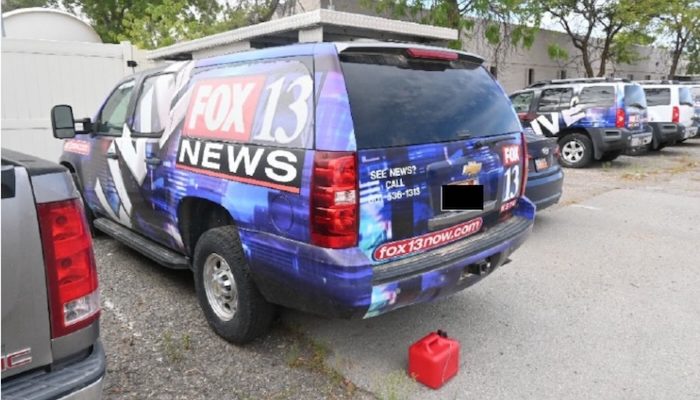
(Ken Silva, Headline USA) A Utah man has been charged with planting a bomb under a Fox News van two days after the Charlie Kirk assassination. Meanwhile, two suspects originally arrested for the attempted bombing have been cleared.

Christopher Solomon Proctor, 45, lit a fuse attached to a 2.5-gallon plastic gas container that he had put under a news vehicle owned by the Salt Lake City local Fox affiliate, KSTU-TV, that was parked outside of a building on Sept. 12, according to federal court filings. The fuse went out before the gas ignited.

Proctor has pleaded not guilty to charges of attempted arson and possession of an unregistered destructive device. His attorney, Richard Sorenson, didn’t respond to emails seeking comment.

During a hearing last Monday, U.S. Magistrate Judge Dustin Pead ordered Proctor, who was arrested Sept. 29, to remain in jail until his trial. Pead said there was evidence that Proctor had planned to repeat the attempt, despite family and friends insisting that Proctor posed no danger to others, according to court documents.

A license plate reader recorded Proctor’s vehicle near the scene within minutes of the crime, and investigators found items in Proctor’s home similar to those used to carry out the attempted arson, including black boots, a different gas can that also had a hole carved in the top, and a portion of fuse, Assistant U.S. Attorney Michael Thorpe wrote.

According to prosecutors, Proctor bought more fuse days after the failed attempt and returned to the crime scene a week later. Proctor “had mentioned burning Fox News on previous occasions” to others, and told an acquaintance that he lit a fuse under a “fox news” vehicle but it did not blow up, Thorpe wrote.

“That purchase, the presence of another gas-can at his residence and the deliberate resurveilling of the news station lead to an inference that the defendant may not have been satisfied with his failed attempt,” Thorpe wrote.

The day after the alleged arson attempt, two men—Adeeb Nasir, 58, and his 31-year-old son, Adil Nasir—were arrested on suspicion of placing a makeshift bomb under the KSTU-TV news vehicle. Investigators searched their home and found two sticks of inactive dynamite that the men claimed were real, according to court documents. They were charged in state court with crimes including possessing hoax explosives.

However, the men were cleared of their involvement in the bombing last Wednesday, according to the local Fox affiliate that’s also the victim of the crime. The Nasirs were both released from jail, though they still face charges—Abil reportedly facing two felony counts of manufacturing, possessing, selling, or using a weapon of mass destruction, and Abeed facing  two lesser felony counts of possession of a dangerous weapon by a restricted person due to controlled substance use.

“I don’t believe the crime that is spoken about with the FOX 13 stuff, I don’t think that really has anything to do with this case,” Third District Judge Mark Kouris reportedly said after hearing from both the defense and the prosecution, “and the fact that the two were mixed together is a mystery in my opinion.”

The incident happened two days after conservative activist Charlie Kirk was killed during an event at Utah Valley University in Orem, about 35 miles south of Salt Lake City. Thorpe said at Monday’s hearing that there is no evidence linking the alleged arson attempt to Kirk’s death, KSTU-TV reported.

The Associated Press contributed to this report.

Ken Silva is the editor of Headline USA. Follow him at x.com/jd_cashless.

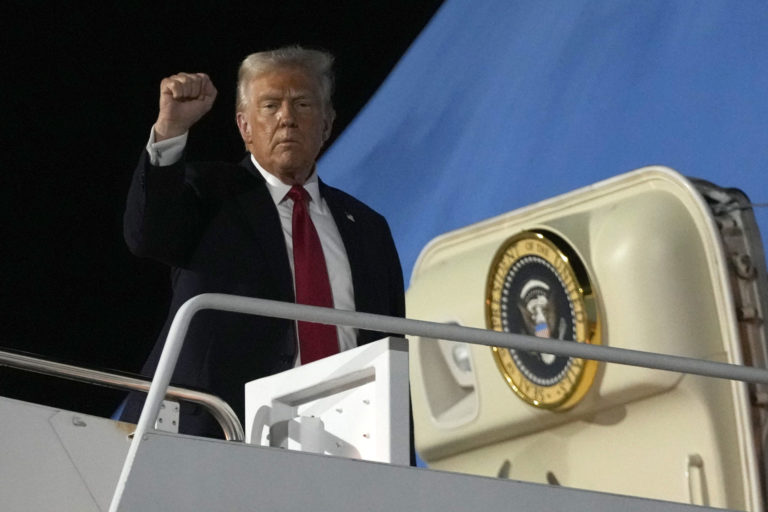
FBI Investigates Hunting Stand Near Trump’s Landing Area 

(Luis CornelioHeadline USA) Federal authorities in Miami are investigating a suspicious hunting stand discovered within direct sight line of where President Donald Trump boards and exits Air Force One at Palm Beach International Airport. 

The U.S. Secret Service uncovered the stand on Sunday during advance security preparations ahead of Trump’s return to Palm Beach this weekend, agency spokesperson Anthony Guglielmi said in a statement. 

“The U.S. Secret Service is working closely with the FBI and our law enforcement partners in Palm Beach County,” Guglielmi said. “During advance security preparations prior to the Palm Beach arrival, which included the use of technology and comprehensive physical sweeps, our teams identified items of interest near Palm Beach International Airport.” 

FBI Director Kash Patel confirmed Sunday that the bureau has opened an investigation into the matter in a statement posted on X. 

“Prior to the President’s return to West Palm Beach, USSS discovered what appeared to be an elevated hunting stand within sight line of the Air Force One landing zone,” Patel told Fox News. He added that no suspects were located and that the bureau is collecting evidence, including cellphone data.

The discovery comes as the Secret Service prepares to conduct additional training with the Palm Beach County Sheriff’s Office and the Palm Beach Police Department to enhance security at Mar-a-Lago. 

In response to the incident, security at Palm Beach International was heightened on Sunday, and Trump was seen using smaller stairs to deplane from Air Force One. 

This development follows two previous assassination attempts on Trump in 2024. In July, he was nearly struck by a bullet during a rally in Pennsylvania. Later, in September, he survived a second attempt at his West Palm Beach, Florida golf course. 

The second would-be assassin, Ryan Routh, scoped out the Palm Beach International Airport before settling on Trump’s golf course for his attempt on the president’s life.

The Price of Beef is Too Damn High. Trump Has a Plan

(Headline USAPresident Donald Trump said Sunday that the United States could purchase Argentinian beef in an attempt to bring down prices for American consumers.

“We would buy some beef from Argentina,” he told reporters aboard Air Force One during a flight from Florida to Washington. “If we do that, that will bring our beef prices down.”

Trump promised earlier this week to address the issue as part of his efforts to keep inflation in check.

U.S. beef prices have been stubbornly high for a variety of reasons, including drought and reduced imports from Mexico due to a flesh-eating pest in cattle herds there.

Trump has been working to help Argentina bolster its collapsing currency with a $20 billion credit swap line and additional financing from sovereign funds and the private sector ahead of midterm elections for his close ally, President Javier Milei.

Adapted from reporting by the Associated Press