Florida AG Targets JPMorgan over Trump Debanking, Jack Smith Collusion

(Luis CornelioHeadline USA) Florida Attorney General James Uthmeier launched a state investigation Monday into JP Morgan after the bank abruptly closed the accounts of President Donald Trump’s media company in 2024.

Uthmeier announced the probe in a video statement on X and in a letter to JP Morgan CEO Jamie Dimon, affirming the financial institution may have violated multiple criminal and civil anti-fraud laws as well as prohibitions against de-banking.

“Rest assured, this office will be investigating to ascertain the nature of these secret and suspicious circumstances,” Uthmeier wrote in the letter, confirming that the Office of Statewide Prosecution and Enforcement Division would handle the matter “immediately.”

The state investigation follows revelations from declassified FBI documents revealing that JP Morgan began scrutinizing Trump Media & Technology Group Corp, a Florida corporation, in 2023.

The timing coincided with subpoenas from then-Special Counsel Jack Smith, who had been directed by Attorney General Merrick Garland to investigate Trump after the 2020 election.

JPMorgan then reportedly pressed TMTG for transaction details dating back years, raising concerns that the bank’s inquiries were “pretextual,” Uthmeier wrote.

JPMorgan “insisted this fact-gathering was merely ‘due diligence,’” the Florida attorney general added. “These inquiries, however, appear to be pretextual and unrelated to their stated purpose.”

Shortly after TMTG closed a merger in March 2024, JPMorgan terminated the corporation’s bank accounts.

“The timing of this activity and JPMC’s termination of its business relationships with TMTG raise obvious, troubling questions,” Uthmeier stated.

He also ordered JPMorgan to “initiate a litigation hold to preserve all documents and records (in all formats) that may be relevant to this matter.”

Debanking became a common tactic for major financial institutions targeting Republicans, particularly those tied to Trump after the 2020 election.

These actions followed widespread Big Tech censorship, including efforts aimed at shutting down Trump, some of which later resulted in multi-million-dollar settlements.
Pelosi Dynasty: Nepo Daughter Runs after Nancy Announces Retirement

(Luis CornelioHeadline USA) Californians may not have seen the last of the Pelosi dynasty, even after Democratic power broker Nancy Pelosi announced her retirement last week. 

Christine Pelosi, the “nepo” daughter of the former speaker of the House, announced Monday that she is running to represent San Francisco in the California state Senate. 

“I am running to represent you, San Francisco, in Sacramento,” the younger Pelosi said in a campaign video posted on X. 

Christine is an attorney, left-wing activist and current member of the Democratic National Committee.

In remarks to Headline USA provided after deadline, Christine defended her record and dismissed criticism of nepotism:

“I am running for CA Senate where my years of service in local government and elected state party office will serve San Francisco and help me build power for the people.  I think after 40 years of our greatest Representative and House Speaker ever, it’s time for San Francisco to have a new voice in Washington.  I have always worked my heart out building grassroots campaigns and coalitions – most recently for prop 50 – and will do so as I campaign for Senate on a platform focused on women’s rights, the future of work, and vulnerable victims and survivors.”

Her announcement ends speculation that she might run to replace her mother in Congress. 

It came just four days after Nancy Pelosi confirmed she would not seek a 20th term representing California’s 12th congressional district.  

Nancy, 85, has held the San Francisco-based seat since 1987. 

Her retirement follows growing calls for younger leadership in Washington, particularly after she led the effort to push former President Joe Biden out of the 2024 race over age concerns. 

The race to replace Pelosi has already drawn six Democratic and two Republican candidates, though GOP chances remain slim given San Francisco’s deep-blue politics. 

The Democratic primary for both the U.S. House and state legislatures is set for June 2026, with state Sen. Scott Wiener and tech entrepreneur Saikat Chakrabarti among the early contenders to succeed Nancy. 

Notably, Christine is seeking to replace Wiener in the state legislature.

Editor’s Note: This article has been updated to include Christine Pelosi’s remarks provided to Headline USA.

Senate Votes to Reopen Government, Sending Funding Bills to House

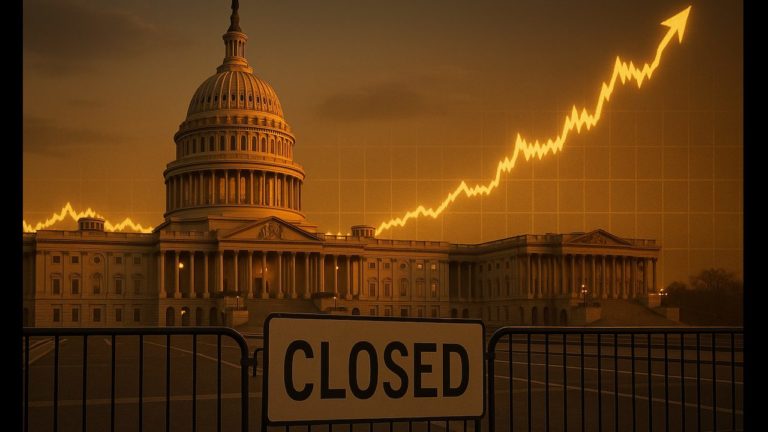
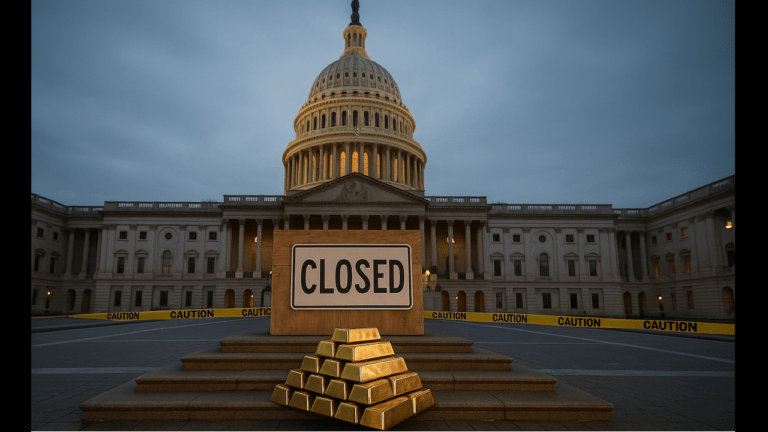
(The Center Square) After spending nearly seven weeks in a political deadlock, U.S. senators finally passed legislation to end the record-long government shutdown.

Eight senators in the Democratic Caucus provided the filibuster-breaking votes for the legislation––a Continuing Resolution paired with three full-year funding bills—to pass the chamber.

The package now heads to the Republican-controlled House for approval and then the president’s desk, meaning the government will likely reopen by the end of the week.

The funding deal includes the CR, which extends previous government funding levels until Jan. 30, and a minibus of three appropriations bills that fully funds Military Construction and Veterans Affairs; Agriculture-FDA-Rural Development; and the Legislative Branch for fiscal year 2026.

The CR will give lawmakers time to pass the remaining nine appropriations bills that would ensure the rest of federal agencies are funded for the entire fiscal year, which started Oct. 1.

It also reverses the Trump administration’s Reduction-In-Force actions during the shutdown and forbids future mass layoffs of federal workers for as long as the CR remains in effect.

Crucially, Senate Majority Leader John Thune, R-S.D., has promised Democrats a vote on extending the enhanced Obamacare Premium Tax Credit by mid-December.

Democrats triggered the record-long government shutdown and continuously filibustered attempts to end it over those subsidies. Democratic leaders demanded that any funding deal include a renewal of the pandemic-era PTC expansion, and Thune’s promise of a vote on the subsidies hardly guarantees an extension.

But for eight senators in the Democratic Caucus, the concessions were enough to gain their support for the funding deal.

Sens. John Fetterman, D-Pa.; Angus King, I-Maine; and Catherine Cortez Masto, D-Nev.; had already voted with Republicans to reopen the government for the past few weeks. Sens. Jeanne Shaheen, D-N.H.; Maggie Hassan, D-N.H.; Tim Kaine, D-Va.; Jacky Rosen, D-Nev.; and Dick Durbin, D-Ill; joined them in both Sunday’s procedural vote and Monday’s vote on final passage.

US Bombs Two More Boats in the Waters of Latin America

(Dave DeCamp, Antiwar.com) US Secretary of War Pete Hegseth announced on Monday that the US military bombed two more boats that he claimed, without providing evidence, were carrying drugs in the Eastern Pacific Ocean.

The strikes bring the total number of boats the US has bombed since early September to 20, including 10 that were targeted in the Caribbean and 10 that were hit in the Eastern Pacific. Hegseth said the latest bombing killed a total of six “narco-terrorists,” a term the Trump administration has used to justify extra-judicial executions for an alleged crime that doesn’t receive the death penalty in the United States.

The six deaths bring the total number of people the US military has killed at sea to 75, according to numbers released by the Trump administration. “Under President Trump, we are protecting the homeland and killing these cartel terrorists who wish to harm our country and its people,” Hegseth wrote on X.

Last week, President Trump repeated the false claim that for each boat the US military destroys, 25,000 American lives are saved. He has previously claimed the strikes were targeting fentanyl, which has caused the majority of drug overdoses in the US, but the Pentagon has told Congress that all of the boats it has hit were allegedly smuggling cocaine, though the Department of War has not provided any evidence to back up its claims about what the vessels are carrying.

The bombing campaign began targeting boats leaving Venezuela, which is not a producer of fentanyl or a transit point for fentanyl that arrives in the US. A report from The Washington Post cited officials from the US and other countries who said the route the US was targeting near Venezuela is mainly used to smuggle cocaine and marijuana to Trinidad and Tobago, and from there, cocaine is shipped to Europe and West Africa.

The bombing campaign has come under increasing scrutiny due to the lack of legal authority. During a recent congressional briefing on the strikes, the Pentagon admitted it didn’t know the identities of the people it has been killing. Rep. Sara Jacobs (D-CA), who attended the briefing, said the military campaign would still be illegal even if it were authorized by Congress.

The Trump administration has also continued its military buildup in the Caribbean aimed at unseating Venezuelan President Nicolas Maduro. The Senate has failed to assert its war powers over the president, voting down a bill last week that would have blocked Trump from launching a war with Venezuela without congressional authorization


This article originally appeared at Antiwar.com. 

Sen. Grassley Joins Call to Televise Charlie Kirk Assassination Case

(Ken Silva, Headline USA) Sen. Chuck Grassley, R-Iowa, has joined the growing number of voices calling for cameras to be allowed in the courtroom to record the proceedings of alleged Charlie Kirk killer Tyler Robinson.

“I want to compliment Erika Kirk, wife of assassinated conservative leader Charlie Kirk. She has made an emotional appeal to have cameras in the courtroom at the trial of her husband’s murderer,” Grassley said Tuesday on the Senate floor, referencing Erika’s recent calls for transparency.

“I commend her for this brave plea, because it fits in with a stand I’ve been taking for the last couple of decades.”

Grassley said he’s supported allowing cameras in federal and state courtrooms for decades. Some states allow for that, but federal courts typically ban cameras and other electronics.

“Cameras would boost transparency and Americans’ confidence in the American judiciary,” he added.

While Grassley, Erika and numerous others want the Kirk case televised, both the prosecution and the defense want to prohibit cameras from the courtroom. The Utah County Sheriff’s Office has also requested cameras to be banned.

Attorneys for Robinson reportedly want to ban cameras so that their client’s physical appearance is “no longer the subject of interest” in media coverage. It’s unclear why prosecutors and the local sheriff is also pushing for secrecy.

However, Grassley and Erika Kirk are joined by numerous media outlets pushing for transparency.

Court TV’s Julie Grant, for instance, has called for the judge to “let the cameras roll.”

Local media has joined the fray, too. In a motion to Judge Tony Graf on Thursday, Deseret News, KSL, KUTV, the Utah News Dispatch and the Utah Headliners Chapter of the Society of Professional Journalists all asked to be heard on the matter before the judge makes a decision.

Judge Tony Graf is expected to rule on the matter in January.

Ken Silva is the editor of Headline USA. Follow him at x.com/jd_cashless.

Supreme Court Rejects Call to Overturn Its Decision Legalizing Same-Sex Marriage Nationwide

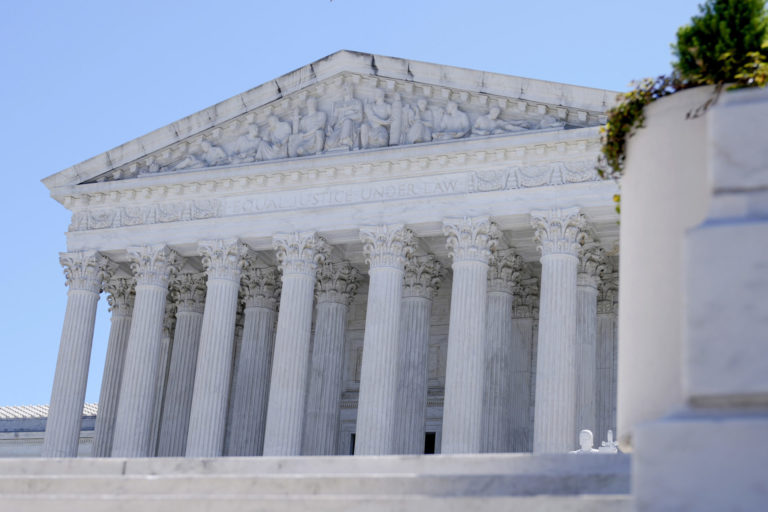
(Headline USA) The Supreme Court on Monday rejected a call to overturn its landmark decision that legalized same-sex marriage nationwide.

The justices, without comment, turned away an appeal from Kim Davis, the former Kentucky court clerk who refused to issue marriage licenses to same-sex couples after the high court’s 2015 ruling in Obergefell v. Hodges.

Davis had been trying to get the court to overturn a lower-court order for her to pay $360,000 in damages and attorney’s fees to a couple denied a marriage license.

Her lawyers repeatedly invoked the words of Justice Clarence Thomas, who alone among the nine justices has called for erasing the same-sex marriage ruling.

Thomas was among four dissenting justices in 2015. Chief Justice John Roberts and Justice Samuel Alito are the other dissenters who are on the court today.

Roberts has been silent on the subject since he wrote a dissenting opinion in the case. Alito has continued to criticize the decision, but he said recently he was not advocating that it be overturned.

Justice Amy Coney Barrett, who was not on the court in 2015, has said that there are times when the court should correct mistakes and overturn decisions, as it did in the 2022 case that ended a constitutional right to abortion.

But Barrett has suggested recently that same-sex marriage might be in a different category than abortion because people have relied on the decision when they married and had children.

Human Rights Campaign president Kelley Robinson praised the justices’ decision not to intervene. “The Supreme Court made clear today that refusing to respect the constitutional rights of others does not come without consequences,” Robinson said in a statement.

Davis drew national attention to eastern Kentucky’s Rowan County when she turned away same-sex couples, saying her faith prevented her from complying with the high court ruling. She defied court orders to issue the licenses until a federal judge jailed her for contempt of court in September 2015.

She was released after her staff issued the licenses on her behalf but removed her name from the form. The Kentucky legislature later enacted a law removing the names of all county clerks from state marriage licenses.

Davis lost a reelection bid in 2018.

Adapted from reporting by the Associated Press

Headline Geopolitics: Carl Zha Debunks Western Myths about China

(José Niño, Headline USA) In this Headline Geopolitics episode, José Niño interviews Carl Zha, host of the Silk & Steel Podcast and one of the most provocative voices dissecting U.S.–China relations.

Zha breaks down the trade war, America’s pivot to Asia, Western myths about China, and whether the latest RAND Corporation talk of “coexistence” is genuine or just repackaged containment.

They also tackle media bias, Taiwan, and why Carl believes Washington—not Beijing—is driving global instability.

Follow Carl Zha on X: https://x.com/CarlZha

Carl Zha’s Podcast: https://podcasts.apple.com/us/podcast/silk-and-steel-podcast/id1451115518 

José Niño is the deputy editor of Headline USA. Follow him at x.com/JoseAlNino

The Latest: Trump Hosts Former Terrorist, Now-Syrian President at the White House

(Headline USA) ​​ President Donald Trump welcomed Syrian President Ahmad al-Sharaa after lifting sanctions imposed on Syria, which had been a pariah state for decades before rebel forces toppled Syrian President Bashar Assad last December.

Al-Sharaa — who once had ties to al-Qaida and had a $10 million U.S. bounty on his head — was named interim leader in January.

Trump and al-Sharaa first met in May in Saudi Arabia. Now, Al-Sharaa has become the first Syrian head of state to visit the White House since the Middle Eastern country gained independence from France in 1946.

His priorities include securing a permanent repeal of sanctions that punished Syria for widespread allegations of human rights abuses by Assad’s government and security forces.

Adapted from reporting by the Associated Press


End to Government Shutdown in Sight After Senators Make Funding Deal

(Thérèse Boudreaux, The Center Square)   U.S. senators finally broke the government funding impasse Sunday night, voting 60-40 to advance a bill ending the government shutdown.

The Senate must hold a final vote on the legislation and then the House must approve the legislation before the government reopens.

After Senate Majority Leader John Thune, R-S.D., kept lawmakers in session over the weekend, Republicans approached Democrats with a final offer: in exchange for support to reopen the government, they would guarantee a vote on the expiring Obamacare subsidies and also reverse some of the Trump administration’s mass layoffs.

Those two concessions were as far as Republican leaders were willing to go to end the ongoing shutdown, which has lasted a record-long 40 days as Democrats held out over health care policy demands.

Sens. John Fetterman, D-Pa.; Angus King, I-Maine; and Catherine Cortez Masto, D-Nev.; had already voted with Republicans to reopen the government for the past few weeks.

Sens. Jeanne Shaheen, D-N.H.; Maggie Hassan, D-N.H.; Tim Kaine, D-Va.; Jacky Rosen, D-Nev.; and Dick Durbin, D-Ill; joined them Sunday night, breaking the filibuster.

“This bill is not perfect, but it takes important steps to reduce their shutdown’s hurt,” Durbin said. “Now that Democrats secured these wins, it’s time for Leader Thune to keep his promise to schedule a vote on the ACA tax credits in December and we will see to it that he makes good on his word for the millions of Americans worried they won’t be able to afford health care in January.”

The Senate Appropriations Committee released an updated Continuing Resolution on Sunday night, which outlines the details of Republicans’ offer.

The new CR will extend government funding to Jan. 30, which will reopen the government, avoid the risk of lawmakers ramming through a bloated omnibus in December, and give Congress enough time to finish the normal-order appropriations process.

Republicans also paired the CR with the Senate-passed minibus, which will knock out three of the 12 appropriations bills that provide fiscal year 2026 funding for federal agencies.

The minibus funds Military Construction and Veterans Affairs; the Food and Drug Administration, Agriculture department, and rural development; and the Legislative Branch.

Crucially, the deal also includes a promise that lawmakers will vote on extending the sunsetting enhanced Obamacare Premium Tax Credit. Senate Democrats had voted 14 consecutive times against reopening the government since Sept. 30 over demands that a funding deal also extend the subsidies.

A mere vote on the subsidies does not necessarily guarantee an extension, however. So Republican leaders have sweetened the deal by vowing to reverse some of the Trump administration’s legally dubious Reduction-in-Force (RIF) actions, where it laid off thousands of furloughed federal workers during the shutdown. The funding deal will also prevent the administration from conducting RIFs as long as the CR remains in effect.

“After 40 days as a consistent voice against shutting our government down, I voted YES for the 15th time to REOPEN,” Fetterman posted on X. “I’m sorry to our military, SNAP recipients, gov workers, and Capitol Police who haven’t been paid in weeks. It should’ve never come to this. This was a failure.”

Trump Pardons 77 People Linked to 2020 Presidential Election Challenge

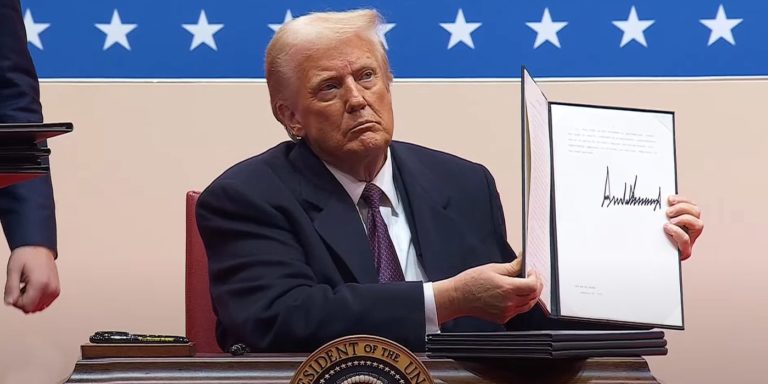
(Sarah Roderick-Fitch, The Center Square) President Donald Trump issued a proclamation providing pardons for a slew of people accused of trying to overturn the 2020 presidential elections, including Rudy Giuliani and Mark Meadows.

The proclamation claims it “ends a grave national injustice perpetrated upon the American people” following the 2020 election, in which former President Joe Biden ousted Trump.

The president’s pardon grants “full, complete, and unconditional pardons to all United State citizens for conduct relating to the advice, creation, organization, execution, submission, support, voting, activities, participation in, advocacy for or of any slate or proposed slate of Presidential electors, whether or not recognized by and State or State official, in connection with the 2020 Presidential Election, as well for any conduct relating to their efforts to expose voting fraud and vulnerabilities” as part of the election.

The pardon, signed Friday, names 77 people, including Giuliani, Meadows, John Eastman and Sidney Powell. Trump notes that the pardon doesn’t include himself.

Meadows served as the president’s chief of staff during his first administration, while Powell and Eastman served as attorneys for Trump.

To be sure, none of the those pardoned have been charged with federal crimes; however, some have faced charges in states such as Georgia, Wisconsin, Nevada, and Arizona. The pardon doesn’t protect people charged with crimes in those states.

Ed Martin, the U.S. Pardon Attorney at the U.S. Department of Justice, made the announcement Monday morning.

Martin posted on his personal X account, “No MAGA left behind.”

In a separate post, he explained the reasoning behind the pardons, saying the Biden administration had targeted the people.

“A very little bit behind the curtain: When I began as U.S. Pardon Attorney, POTUS encouraged us to look at two categories of Americans especially: First, those who needed and deserved clemency, especially long serving inmates who are ready to be released. Second, he wanted us to look at those people who had been targeted by the Biden administration. The targeted is a huge group of Americans,” Martin posted on X. “We’ve been working hard to find them and one group that jumped up right away is the [2020] alternate electors and their affiliates who were targeted by Jack Smith and others. Gen. Bondi and DAG Blanche pushed us to do it right and fast. There are many more Americans who Biden targeted. And we’re working to help them.”

On the evening of Trump’s second inauguration in January, the president pardoned about 1,500 individuals accused of being involved in the Jan. 6, 2021, U.S. Capitol riots.