LA Mayor to Turn Off Power, Water of Properties that Hold Large Gatherings

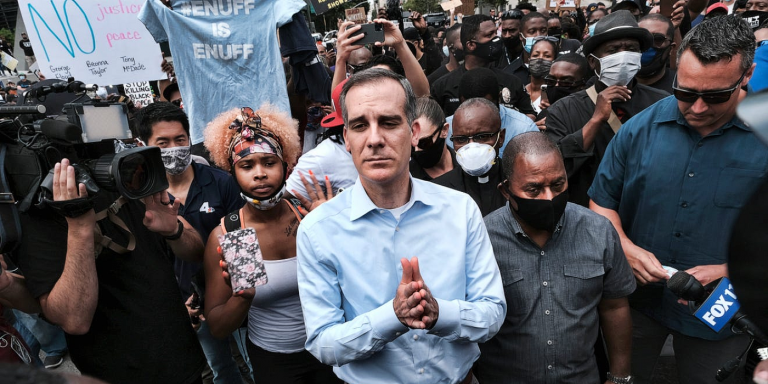
Just weeks after participating in a massive Black Lives Matter movement, Los Angeles Mayor Eric Garcetti authorized the city to shut off the power and water to homes, businesses and other properties that hold “unauthorized” large gatherings.

Garcetti claimed that law enforcement officers are having a difficult time shutting down gatherings where there are hundreds of people “breaking the law” by being together.

“By turning off that power, shutting off that water we feel we can close these places down, which usually are not one-time offenders but multiple-offenders,” Garcetti said.

This new order could affect Grace Community Church, a megachurch led by Pastor John MacArthur, because it has defied the governor’s executive orders not to hold indoor worship services and not to sing.

The state has already threatened to slap the church with daily $1,000 fines, and officials have warned MacArthur that he could be arrested if he continues to hold services.

But MacArthur has not backed down and instead hired legal representation to fight California Gov. Gavin Newsom’s “unconstitutional” restrictions.

“The state has absolutely no power to impose the restrictions it is demanding,” Jenna Ellis, one of the attorneys representing the church, and one of President Donald Trump’s legal team members, said in a statement. “This is not about health and safety, it is about targeting churches.”

Los Angeles is not the only city in the country passing extreme restrictions. In Houston, Mayor Sylvester Turner on Monday announced that his city will slap $250 fines on individuals who are caught not wearing a face mask while in public.

And in Chicago, residents who travel to “coronavirus hotspots” are required to self-isolate for 14 days or face fines of between $100 and $500 a day.

PELOSI: ‘Perhaps You Mistook [Republicans] for Somebody Who Gives a Damn’

(Headline USA) Washington talks on vital COVID-19 rescue money are teetering on the brink of collapse after a marathon meeting in the Capitol generated lots of recriminations but little progress on the top issues confronting negotiators.

“There’s a handful of very big issues that we are still very far apart” on, said Treasury Secretary Steven Mnuchin.

He talked of impasses on aid to states and local governments and renewing supplemental unemployment benefits in the Thursday night meetings.

Both sides said the future of the talks is uncertain. President Donald Trump is considering executive orders to address evictions and unemployment insurance, but they appear unlikely to have much impact.

A breakdown in the talks would put at risk more than $100 billion to help reopen schools, a fresh round of $1,200 direct payments to most people and hundreds of billions of dollars for state and local governments to help them avoid furloughing workers and cutting services as tax revenues shrivel.

House Speaker Nancy Pelosi, D-Calif., and top Senate Democrat Chuck Schumer of New York emerged to give a pessimistic update about the chances for an agreement. Pelosi was asked on CNBC if giving money to Americans who need it the most amid the pandemic are measures that “both sides can agree to.”

“Perhaps you mistook them for somebody who gives a damn for what you just described,” Pelosi replied.

Both sides have adopted a hard line in the talks, though the Trump team is more open in disclosing a handful of its proposed compromises. Republicans were late to agree to the talks and have become frustrated by the inflexible tactics of Pelosi and Schumer, who have been exuding confidence in a political and legislative landscape that’s tilted in their favor.

The Democratic pair say the federal coronavirus aid package needs to be huge to meet the moment: a surge in cases and deaths, double-digit joblessness and the threat of poverty for millions of the newly unemployed.

“We believe the patient needs a major operation while Republicans want to apply just a Band-Aid,” Schumer said. “We won’t let them just pass the Band-Aid, go home and leave America bleeding.”

Senate Republicans have been split, with roughly half of McConnell’s rank-and-file opposed to another rescue bill at all. Four prior coronavirus response bills totaling almost $3 trillion have passed on bipartisan votes despite intense wrangling. But Trump and McConnell want a bill and discussed the topic at the White House on Thursday morning.

The White House is also promising that Trump will attempt to use executive orders to address elements of the congressional package involving evictions and jobless benefits. But there’s no evidence that the strategy would have much impact or be anything close to what’s necessary, and Pelosi appeared unimpressed at a morning news conference.

“I don’t think they know what they’re talking about,” Pelosi said dismissively.

Pelosi and Schumer staked out a firm position to extend a lapsed $600-per-week bonus jobless benefit, demanded generous child care assistance and reiterated their demand for food stamps and assistance to renters and homeowners facing eviction or foreclosure.

“Don’t nickel and dime our children,” Pelosi said. “Don’t say, ‘We want to give a tax break to a business lunch and not give more money for children to have food stamps.’”

Pelosi was referring to a GOP proposal to increase the deduction for business meals from 50% to 100%. The idea seems likely to die, along with Trump’s efforts to cut the Social Security payroll tax. But Schumer and Pelosi continue to push to restore a tax break for state and local taxes paid mostly by wealthier people with high incomes and valuable homes.

McConnell, R-Ky., is likely to have to assume a higher profile if the talks are to come to a successful close, but he issued a grim assessment of the situation Thursday, again complaining that Pelosi and Schumer are not negotiating in good faith.

“Day after day, they’ve stonewalled the president’s team. Day by day, they’ve tried to invent new euphemisms to create the illusion of progress,” McConnell said Thursday.

Frustration was palpable among Republican senators shuttling in and out of a GOP lunch session, some of whom say Schumer is intent on using the situation as a hammer against Republicans. Schumer is desperate to win the Senate majority just as Republicans are in trying to hold on in a terrible political year.

“As long as they calculate that they’re better off politically doing nothing, it’s going to be hard for us to move forward,” said Sen. Marco Rubio, R-Fla. “And that’s the calculation they’ve made, it appears.”

McConnell is sending the Senate home rather than forcing impatient senators to bide their time while Democrats play hardball. That suggests a vote won’t come until late next week or even after. Progress has been scant in the talks despite more than a week of negotiation.

White House negotiators made some concessions on jobless benefits and aid to state and local governments in a Tuesday session — and then promptly got scalded by Republicans after details leaked out.

Adapted from reporting by Associated Press.

US Adds 1.8M Jobs, Exceeding Expectations as Virus Resurged

(Headline USA) The United States added 1.8 million jobs in July, with the unemployment rate declining from 11.1 percent to 10.2 percent, which exceeded many economists’ forecasts.

Even counting the hiring of the past three months, the economy has now recovered only about 42% of the 22 million jobs it lost to the pandemic-induced recession, according to the Labor Department’s jobs report released Friday.

The perceived acceleration of the viral outbreak that began in late June — due to more widespread testing for COVID-19 — more than doubled the daily U.S. confirmed case count by mid-July, though the rate of new reported cases has since declined. The outbreaks have led many states and cities to close bars and other businesses for a second time.

July’s job gain was much lower than June’s 4.8 million and May’s 2.7 million jobs, both of which were revised slightly.

The economy is struggling to emerge from the devastating recession that caused the economy to shrink at a nearly 33% annual rate in the April-June quarter, the worst quarterly fall on record. Employers slashed their work forces, consumers cut spending and corporations pulled back on investment and expansion, due to government-induced shutdowns.

The economy has since started to grow again, and many economists have forecast a solid rebound in the July-September quarter.

THIS IS A BREAKING NEWS UPDATE. AP’s earlier story is below:

Just how severely has the resurgence of the coronavirus pummeled the U.S. economy? The jobs report for July being released Friday will provide the clearest answer yet.

Economists have forecast that employers added 1.6 million jobs, according to a survey by data provider FactSet. That would normally be a scintillating gain. Yet it would still fall far short of June’s 4.8 million increase and May’s 2.7 million gain. And it would mean that the economy has regained only about 40% of the jobs that were lost when the pandemic intensified in March and triggered a deep recession and tens of millions of layoffs.

The unemployment rate is expected to have declined from 11.1% to 10.5%.

Some economists say Friday’s report could even show that the nation lost jobs in July. Others expect the gain to be much larger. The pandemic has so disrupted the economy that the range of predictions by experts has become much wider — and less accurate — than it typically was before.

The economy cratered in the April-June quarter, shrinking at a nearly 33% annual rate, as the viral outbreak shut down businesses and consumers pulled back sharply on dining out, traveling and shopping.

Growth rebounded in May and June. But the viral outbreak re-intensified in late June, doubling the nation’s daily confirmed case count to more than 60,000. Case counts have declined somewhat in recent weeks. Yet the new outbreaks have forced most states to pause or reverse their re-openings — closing bars, discouraging travel and limiting shopping and indoor dining for a second time, all of which has likely slowed hiring.

The Institute for Supply Management reported in two surveys this week that both manufacturing and service sector companies expanded output and sales faster in July than in June. Even so, companies in both surveys reported that they were still cutting jobs.

Some other recent data points to a weak month for hiring. The Census Bureau has found in weekly experimental surveys that the number of people with jobs fell 6.7 million in July, which points to a huge drop in the official figures. In June, the same set of surveys had shown a gain of 5.5 million, close to the government’s official figure.

The Census report isn’t adjusted for seasonal trends, though, and many schools typically cut jobs in the summer, which has led economists to say that the Census figures might be exaggerating the losses.

Two bright spots for the economy, though, have been housing and auto sales. Ultra-low interest rates, produced in part by the Federal Reserve’s ultra-low interest rates, fueled sharp increases in sales of new and existing homes in June. Lower interest rates have also boosted auto sales, though both home and auto sales remain below pre-pandemic levels.

Adapted from reporting by Associated Press.

Ohio Gov. DeWine Tests Negative After Positive COVID Test Earlier in Day

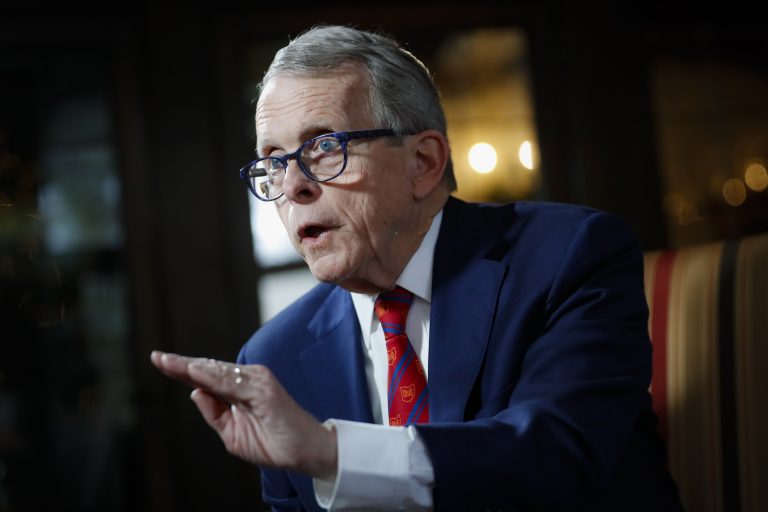
(Associated Press) Ohio Gov. Mike DeWine tested negative for COVID-19 on Thursday after testing positive earlier in the day before he was to meet with President Donald Trump, according to a statement from his office.

His wife, Fran DeWine, also tested negative, as did staff members. They underwent a different type of test in Columbus; one considered to be more accurate than the rapid-result test which showed DeWine to be positive for COVID-19 just ahead of a planned meeting with Trump in Cleveland.

The conflicting results underscore the problems with both kinds of tests and are bound to spur more questions about them. Many people in the U.S. can’t get lab results on the more accurate version for weeks, rather than the few hours it took the governor to find out.

The governor and first lady plan to undergo another test Saturday, according to the statement.

DeWine, an early advocate among Republicans of wearing masks and other pandemic precautions, said he took a test arranged by the White House in Cleveland as part of standard protocol before he was to meet Trump at an airport. He had planned to join the president on a visit to the Whirlpool Corp. plant in northwest Ohio.

Instead, he received the news he tested positive, called his wife, and returned to central Ohio where he took the other test that showed him to be negative.

The positive result from the first test was “a big surprise to our family,” DeWine said at a late afternoon news conference broadcast from his porch on his farm in Cedarville in southwestern Ohio, where he planned to quarantine for 14 days.

Dewine, 73, said he didn’t know how he would have contracted the coronavirus and that he’s already been spending much of his time at his farm, keeping his distance from family members and staff.

DeWine said he feels fine with no symptoms. His only health concern is asthma he’s had since he was a teenager, for which he uses an inhaler daily.

He said he’d already received some “not nice texts” Thursday from people claiming the news proves that mask-wearing is pointless.

“The lesson that should come from this is that we’re all human, this virus is everywhere, this virus is very tough,” DeWine said before the negative result. “And yes you can contract it even when you’re being very, very careful and even when you’re wearing a mask.”

But, the governor said, “the odds are dramatically better” of avoiding a positive test if people wear a mask.

DeWine, in his first term as governor, is one of Ohio’s most familiar politicians, previously serving as a U.S. congressman, two-term U.S. senator, Ohio attorney general and lieutenant governor.

Trump offered DeWine his best wishes and said “he’ll be fine” in remarks after arriving at the airport, where he was greeted by Lt. Gov. Jon Husted, who tested negative.

“A very good friend of mine just tested positive,” Trump said. He added that DeWine “has done a fantastic job.”

Husted said he’s been talking with DeWine via teleconference for weeks, and doesn’t expect changes in that routine or other aspects of DeWine’s job.

DeWine was the second U.S. governor to test positive for the coronavirus after Oklahoma Gov. Kevin Stitt announced he contracted the virus last month.

In recent weeks, DeWine has pleaded with Ohioans to take personal responsibility over the virus’s spread across the state. He had resisted a statewide mask mandate until July 23. DeWine’s first try at a statewide requirement for wearing masks inside businesses — back in April — drew backlash that led him to rescind that directive the following day, a stutter among the aggressive moves that had won him early praise in his efforts to curb the virus.

Mask-wearing also has been a point of contention at the Statehouse, where many Democratic lawmakers have donned masks while many Republican lawmakers have not. DeWine has often found himself at odds with members of his own party on the policy.

DeWine’s key health adviser during the pandemic, Dr. Amy Acton, left government this week. In the early months, she joined DeWine at daily briefings and was a popular figure. However, backlash against state restrictions helped lead to a protest at her home and her decision to step away from the spotlight.

“Quite candidly, throughout this pandemic, (first lady) Fran and I have avoided crowds,” DeWine said. “We have not gone out to be close with a lot of people. So we’re not going to do that.”


Michelle O. Blames Trump, COVID and Racism for Her Mental-Health Issues

Former First Lady Michelle Obama said this week that she is suffering from a “low-grade depression” because of the coronavirus pandemic, racial tensions in the U.S., and the Trump administration’s responses to both.

“I’m waking up in the middle of the night because I’m worrying about something or there’s a heaviness,” Obama said in her “The Michelle Obama Podcast” on Wednesday.

“I try to make sure I get a workout in, although there have been periods throughout this quarantine, where I just have felt too low,” she claimed.

Obama then described the “emotional highs and lows that I think everybody feels, where you just don’t feel yourself.”

It is “exhausting” to be “waking up to yet another story of a black man or a black person somehow being dehumanized, or hurt, or killed, or falsely accused of something,” she said.

And it is just as troubling to see how many Americans refuse to wear face masks, she complained.

“There’s almost like there’s a limit to our sacrifice and it was about a month and then we just got tired of the virus,” she said.

“That’s been disheartening to see so many people who have grown tired of staying at home because the virus didn’t impact them.”

The former First Lady then slammed the Trump administration, claiming that “watching the hypocrisy of it, day in and day out, is dispiriting.”

“These are not, they are not fulfilling times, spiritually,” she said. “I know that I am dealing with some form of low-grade depression.”

Additionally, she used the platform to suggest that the pandemic had reopened the discussions about “wealth redistribution” that her husband’s presidency had initiated.

The classification of many low-wage service employees as “essential workers” should lead others to reflect on their value to the workforce.

“That’s a part of that reflection, that we need to do, you know—with ourselves, and, and as a community.” Obama said, according to Breitbart.

“And we have to think about that, in terms of how wealth is distributed,” she continued. “You know, how, how these essential people are supported.”

Since leaving the White House, Obama has pursued multiple projects, including publishing a memoir, releasing a documentary film series, and now hosting a Spotify podcast that dives into politically-related issues.

But Democrats have another task for her in mind: running alongside Joe Biden for the White House this year.

A group of activists is pushing Biden’s campaign to ask Obama to be his running mate, arguing that her political clout would be a sure guarantor that Biden would win in November.

With Biden’s own cognitive decline already a focal point of the campaign, it is unclear, however, whether Michelle Obama’s self-professed mental-health issues could raise any red flags.

If so, it would not be the first time that a vice-presidential running mate’s depression had cost Democrats the election.

During the 1972 campaign, South Dakota Sen. George McGovern was swept by incumbent Republican President Richard Nixon, with many blaming the controversy surrounding original vice-presidential nominee Thomas Eagleton’s history of receiving clinical electro-shock therapy as being a deciding factor.

Liberty Headlines’ Ben Sellers contributed to this report.

NY Attorney General Files Suit to Dissolve NRA; Gun-Rights Org Sues Back

UPDATE: The NRA has filed a countersuit against New York Attorney General Letitia James accusing her of defamation and violating the group’s First Amendment rights, Fox News reported.

James “made the political prosecution of the NRA a central campaign theme” during her 2018 election bid, it says.

Original story below:

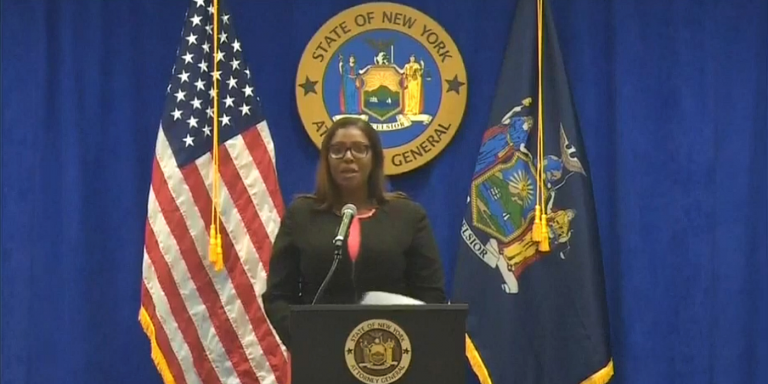
After an 18-month investigation targeting the National Rifle Association, New York Attorney General Letitia James announced that her office had filed suit seeking the NRA‘s complete dissolution for serving as a “personal piggy bank” for top executives.

“It’s clear that the NRA has been failing to carry out its stated mission for many many years and instead has operated as a breeding ground for greed, abuse and brazen illegality,” James said in an often melodramatic announcement Thursday.

“… Today we send a strong and loud message that no one is above the law, not even the NRA, one of the most powerful organizations in this country,” she continued.

James, a radical Democrat, testily denied to reporters that the probe was politically motivated.

“This has nothing to do with my personal opinion with regards to gun violence,” she claimed during the press conference in response to a reporter’s question.

“This has to do with the fact that … the NRA as a corporation, unfortunately, did not follow not-for-profit law in the state of New York,” she said, “and as a result of that they should be held accountable.”

While insisting also that her well-documented opposition to Second Amendment rights was immaterial to the investigation or the case, James acknowledged that one of only two precedents for the demanding that the organization be terminated was a prior suit brought against President Donald Trump’s family business.

“It’s not a question of a moment that I’ve been waiting for,” she said. “… We came to the conclusion based upon our thorough investigation that enough was enough and we needed to step in and dissolve this corporation, just as we did with the Trump Foundation.”

James prominently has backed prior suits targeting both gun rights and the president’s finances with mixed results.

However, her current case focuses narrowly on the actions of four top NRA executives: CEO Wayne LaPierre, general counsel John Frazer, former CFO Wilson “Woody” Phillips and former Chief of Staff Joshua Powell.

She launched the probe only a few months after assuming office in January 2019.

Shortly thereafter, the NRA’s internal disputes over its finances became public when its then-president, Oliver North, departed and distanced himself from the group’s operations by personally denouncing LaPierre.

North alleged in his exit letter that LaPierre had funneled more than $200,000 into personal expenditures.

According to James, though, the executives’ overall mismanagement had “contributed to the loss of more than $63 million.”

That included LaPierre’s use of $3.6 million over a two-year period on lavish charter-jet trips to the Bahamas, African safaris and other family vacations.

James also accused LaPierre on spending $1.2 million in NRA funds on gifts to friends and vendors, golf-club memberships and hotels, as well as securing lucrative consulting contracts that “resulted in little if any actual work.”

James alleged that the executives had concealed their slush expenses through the organization’s advertising company, Ackerman McQueen, which paid them out and then re-billed the NRA in one lump sum “without any details of the nature or purpose of the expense.”

She said that the NRA had paid the firm more than $70 million.

According to James, the lawsuit included 18 causes of action, among which were:

  • failing to comply with state laws governing charitable organizations
  • false reporting of financial details to the state
  • improper expense documentation
  • improper wage reporting

In addition to dissolving the NRA, the civil suit was seeking financial restitution and penalties for the four defendants and a removal from their leadership positions, as well as a ban from serving in future leadership positions for nonprofit organizations in New York.

James insisted that despite the actions centering on only four of its leaders, the NRA could not continue to exist because “the corruption was so broad and because of the level of waste and because they have basically destroyed all of the assets.”

Miss. Poultry Plant Execs Indicted After Worksite Raids Involving 680 Illegals

(Headline USA) Four executives from two Mississippi poultry processing plants have been indicted on federal charges tied to one of the largest workplace immigration raids in the U.S. in history, and the largest worksite enforcement action within a single state.

U.S. Attorney Mike Hurst and the acting director of U.S. Immigration and Customs Enforcement, Matt Albence, announced the indictments as the documents were unsealed Thursday.

Their announcement happened a day before the one-year anniversary of the raids in which 680 people were arrested at seven poultry plants in central Mississippi.

Hurst and Albence also scolded journalists for reports that focused on the arrests separating children from immigrant parents who were sent to detention centers.

“If a parent puts their child in that position where they commit a criminal act that subjects them to being arrested and detained … that responsibility falls on them,” Albence said.

None of the four people from the newly unsealed indictments were arrested on the day of the raids, said Hurst, who is the U.S. attorney for south Mississippi. He said they worked as managers, supervisors or human resources employees.

Hurst said journalists have failed to focus on the American victims of identity theft — people whose Social Security numbers have been falsely used by immigrants working in the U.S. without proper documentation.

Albence said last year’s raids in Mississippi have brought 126 indictments, 117 criminal arrests and 17 convictions. Hurst said the investigation continues.

Two people from the indictments unsealed Thursday — Salvador Delgado-Nieves and Iris Villalon — worked at A&B Inc., a plant in Pelahatchie.

Delgado-Nieves, 57, of Pelahatchie, was charged with harboring people who were in the U.S. illegally and assisting them with falsely presenting themselves as U.S. citizens. He was also charged with helping immigrants obtain false Social Security cards and of making false statements to law enforcement. Conviction would carry up to 74 years in prison and $2.5 million in fines, Hurst said.

Villalon, 44, of Ocean Springs, Mississippi, was charged with harboring a person who was in the U.S. illegally and one count of making false statements about hiring immigrants without proper documentation. Conviction would carry up to 20 years in prison and $750,000 in fines, Hurst said.

The two others indicted — Carolyn Johnson and Aubrey “Bart” Willis — worked for Pearl River Foods LLC in Carthage.

An indictment says Johnson, 50, of Kosciusko, Mississippi, was a human resources manager, and Willis, 39, of Flowery Branch, Georgia, was manager of the plant.

Johnson was charged with harboring people who were in the U.S. illegally, wire fraud and aggravated identity theft. Conviction on all charges would carry up to 84 years in prison and $2.25 million in fines, Hurst said.

Willis was charged with harboring people in the U.S. illegally. Conviction on all charges would carry a maximum of 50 years in prison and $1.25 million in fines, Hurst said.

An indictment says both Willis and Johnson harbored immigrants after the plant was raided.

It was not immediately clear whether any of the four people indicted is represented by an attorney. They were scheduled to appear before federal magistrates later Thursday.

“Companies who intentionally or knowingly base their business model on an illegal workforce deprive law abiding citizens and lawful immigrants of employment opportunities, which are especially critical as our economy looks to recover from the challenges faced by the COVID-19 pandemic,” Albence said.

Adapted from reporting by Associated Press.

Cuomo Begs Wealthy NYC Residents to Return, Help Pay COVID Shortfall

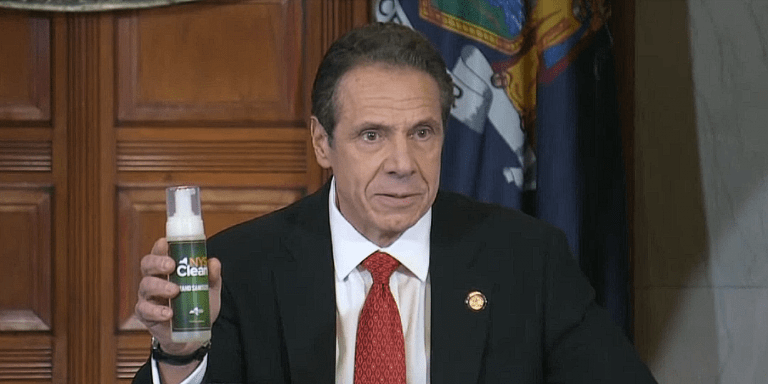
New York Gov. Andrew Cuomo begged wealthy Manhattanites who fled the Big Apple during the height of the coronavirus pandemic to return to the city and help ease the financial burden caused by the pandemic.

“I literally talk to people all day long who are now in their Hamptons house who also lived here, or in their Hudson Valley house or in their Connecticut weekend house, and I say, ‘You gotta come back, when are you coming back?’” Cuomo said during a press conference earlier this week, according to the New York Post.

”’We’ll go to dinner—I’ll buy you a drink,'”Cuomo said, describing his conversations with wealthy New Yorkers. “‘Come over—I’ll cook.’”

Cuomo admitted that it’s more appealing for New Yorkers to remain outside of the city because of the high taxes.

The city is currently facing a $30 billion deficit because of the pandemic, and some city officials have proposed raising taxes on the wealthy to make up for that loss.

But Cuomo said that if the city raises taxes, the wealthy will never return.

“They’re not coming back right now. And you know what else they’re thinking? ‘If I stay there, I pay a lower income tax,’ because they don’t pay the New York City surcharge,” Cuomo said.

New York has had one of the worst outbreaks in the country, largely because of Cuomo’s and New York City Mayor Bill de Blasio’s reluctance back in March to take early action to shut down the state.

Cuomo, like several other blue-state governors, also spearheaded a disastrous policy requiring nursing homes to accept coronavirus patients even if they lacked the resources to separate them from the healthy population.

Cuomo has continued to deny that he is to blame for this policy, instead blaming the Trump administration, New York’s hospitals, and even the nursing homes themselves.

Dems Reiterate Threat to Pack Supreme Court If GOP Fills Vacancy This Year

With Supreme Court Justice Ruth Bader Ginsburg’s health in question, Democrats are warning the Senate GOP not to try to fill a possible Supreme Court vacancy unless Republicans want an electoral retaliation.

Democrats are trying to use Republicans’ 2016 strategy against them, reminding the GOP that they blocked former President Barack Obama’s appointment of Merrick Garland because of the upcoming presidential election.

That standard should apply to this year’s election too, according to Sen. Tim Kaine, D-Va.

“We knew basically they were lying in 2016, when they said, ‘Oh, we can’t do this because it’s an election year.’ We knew they didn’t want to do it because it was President Obama,” Kaine told NBC News.

If Republicans do try to fill a Supreme Court vacancy, Democrats might even add seats to the high court, Kaine said.

“If they show that they’re unwilling to respect precedent, rules and history, then they can’t feign surprise when others talk about using a statutory option that we have that’s fully constitutional in our availability,” he said.

“I don’t want to do that,” he claimed. “But if they act in such a way, they may push it to an inevitability. So they need to be careful about that.”

Sen. Mazie Hirono, D-Hawaii, admitted that she and several other Democrats have been “talking with people who have different ideas about what we can do” if President Donald Trump does nominate a justice to the bench.

Those options include “adding to the court, including having certain circuit court judges cycle in and, and other ideas,” Hirono said.

Left-wing activists have been pushing the Democratic establishment to retaliate against the GOP for the party’s blockade of Garland for several years now, and the Democratic National Committee finally agreed that it would pursue “structural court reforms to increase transparency and accountability” in its 2020 platform.

Republicans, however, are not concerned. Senate Judiciary Committee Chairman Lindsey Graham, R-S.C., said that if a Supreme Court vacancy does appear, the GOP will fill it whether Democrats like it or not.

“Yeah. We’ll cross that bridge. After [Supreme Court Justice Brett] Kavanaugh, the rules have changed as far as I’m concerned,” Graham said. “We’ll see what the market will bear if that ever happens.”

GOP Bill Would Let All Prosecutors and Judges Carry Concealed Firearms

Three Republican senators introduced a bill Wednesday that would let retired local, state and federal judges and prosecutors carry concealed firearms, according to a press release.

Sens. Tom Cotton of Arkansas, Marsha Blackburn of Tennessee and Kelly Loeffler of Georgia brought forward the Protect Our Prosecutors and Judges Act, a bill that would amend the Enforcement Officers Safety Act.

The Enforcement Officers Safety Act currently gives active and retired law-enforcement officers the right to carry concealed firearms, no matter the prohibitions of state and local laws.

Their legislation would extend this right to judges and prosecutors.

“Judges and prosecutors have been the target of growing threats and violence simply for doing their jobs,” Cotton said.

“They should be able to protect their own lives and their families,” he continued. “Our bill will allow federal judges and prosecutors to defend themselves in a similar way to other law enforcement officers.”

Judges and prosecutors have rarely been the target of criminals who want revenge, but the U.S. Marshals Service warns that threats against legal officers is on the rise.

The Marshals Service said it received nearly 4,500 “threats and inappropriate communications.”

Blackburn echoed the concern in the the Senate press release.

“Cities across the country have seen a spike in crime in the wake of weeks-long protests, making the thin blue line appear even thinner than usual,” Blackburn said.

“I am pleased to join my colleagues in this crucial effort to ensure members of law enforcement are able to protect themselves in case of emergency,” she said.

A prominent case arose recently when the son of federal judge Esther Salas was killed after answering a doorbell at the family home in New Jersey.

Salas, who had been appointed four days prior to oversee the case surrounding Jeffrey Epstein accomplice Ghislaine Maxwell, was in the basement at the time. Her husband also was critically injured in the July 19 shooting.

In the past 100 years, 14 prosecutors have been murdered in the United States, CBS News reported.