NJ Gym Owners Spar w/ CNN’s Cuomo Over Saving Their Business

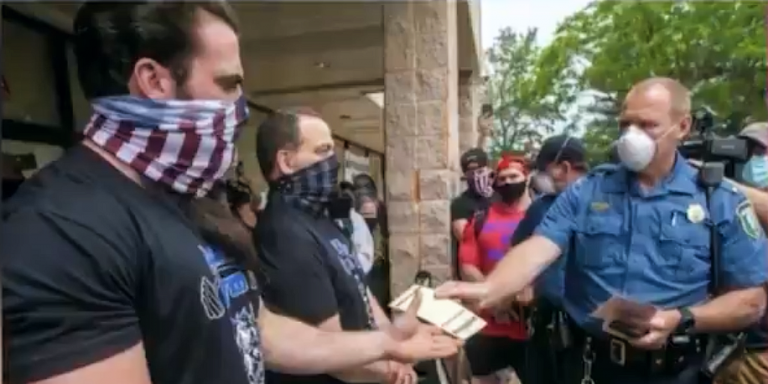
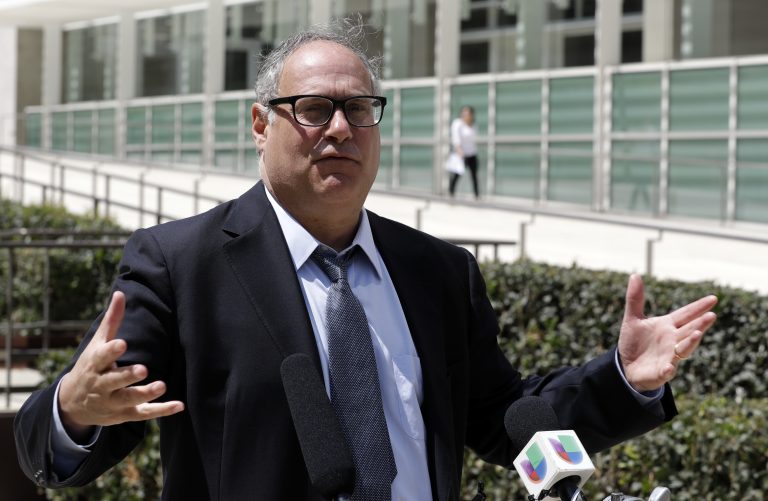
Two New Jersey gym owners who have defied the state’s shutdown order defended their decision to do so during a heated exchange with CNN’s Chris Cuomo.

They argued that an executive order by Gov. Phil Murphy, D-N.J., requiring gyms to close is “oppressive,” “unacceptable” and discriminatory.

“They have violated everyone’s constitutional rights,” Atilis Gym co-owner Frank Trumbetti said of New Jersey officials.

“We all have the right to make a living,” he continued. “We all have the right to actually do what we want to do as Americans. We are promised liberty. And they have actually put such oppressive restrictions on us that it’s just unacceptable to us.”

Trumbetti and Ian Smith have opened the doors to Atilis Gym every day for the past several weeks, despite Murphy’s attempts to shut them down.

The gym has received countless fines, which are being paid by a GoFundMe the two owners established, and residents who enter the gym are handed citations by officers immediately after walking out.

The tension between the state and the gym reached an all-time high last week when Trumbetti and Smith were arrested after kicking down the boards the state had put on their gym’s windows in an effort to prevent them from opening the gym.

“We’re being villainized as small businesses in general, that we’re responsible for the spread,” Smith told Cuomo. “But over 50% of the deaths are coming from places that are supposed to be under a governor’s control.”

New Jersey Attorney General Gurbir Grewal is now recommending a daily $10,000 fine if Trumbetti and Smith continue to reopen their gym, and local officials are threatening to revoke the gym’s license permanently.

Smith and Trumbetti, however, said they have no intention of shutting things back down.

“We are over 4 months into an economic shutdown that was supposed to be 14 days,” Smith said. “It’s time to end this and resume life in a safe and responsible manner.”

Court Reverses Activist Judge’s Order to Shut Down Dakota Access Pipeline

0

(Associated Press) A federal appeals court on Wednesday reversed a judge’s order that shut down the Dakota Access pipeline pending a full environmental review.

The U.S. Court of Appeals for the District of Columbia Circuit sided with pipeline owner Energy Transfer to keep the oil flowing, saying a lower-court judge “did not make the findings necessary for injunctive relief.”

But the appellate court declined to grant Energy Transfer’s motion to block the review, saying the company had “failed to make a strong showing of likely success.”

The appeals court said it expects the parties to “clarify their positions” in the lower court.

On July 6, U.S. District Judge James Boasberg ordered the pipeline closed within 30 days while the U.S. Army Corps of Engineers fulfills his demand to conduct a more extensive environmental review than the one that allowed the pipeline to start moving oil near the Standing Rock Indian Reservation three years ago. This process could take more than a year.

Boasberg cited the “potential harm” that the pipeline could cause before the Corps finishes its survey. He rejected the company’s request to halt the order, sending the case to the three-judge appeals panel. The appellate court paused Boasberg’s order in mid-July to give it time to consider the case.

Jan Hasselman, the EarthJustice attorney representing Standing Rock and other tribes who have signed onto the lawsuit, said the appeals court ruling Thursday was not a setback.

“There is more to like than dislike in this ruling,” he said. “There will be a review and a new permit during the next administration.”

Standing Rock Tribe Chairman Mike Faith said the tribe was committed to continuing its fight.

“As the environmental review process gets underway in the months ahead, we look forward to showing why the Dakota Access Pipeline is too dangerous to operate.”

Energy Transfer spokeswoman Vicki Granado said the ruling “allows this important pipeline to continue to operate” and that the company looks forward to “continuing to work through the legal process to resolve all matters related to this pipeline.”

North Dakota state officials had lamented the shutdown order as damaging to the state’s economy, and Gov. Doug Burgum welcomed Wednesday’s appellate ruling. He said it cleared the way for “continued safe pipeline operations.”

In arguing against the closure, Energy Transfer said the line couldn’t be shut off by the judge’s Aug. 5 deadline. The company said it would take three months to empty the pipe of oil and perform the time-consuming and expensive steps to keep the line from corroding without the flow of oil.

Texas-based Energy Transfer estimated it would cost $24 million to empty the oil and take steps to preserve the pipe. The company said it would have to spend another $67.5 million each year to maintain the line while it’s inoperable.

The pipeline holds about 5 million barrels of oil when full.

It was the subject of months of protests in 2016 and 2017, sometimes violent, during its construction near the Standing Rock Sioux Reservation that straddles the North Dakota-South Dakota border. The tribe took legal action against the pipeline even after it began carrying oil from North Dakota across South Dakota and Iowa to a shipping point in Illinois in June 2017.

The $3.8 billion, 1,172-mile (1,886-kilometer) pipeline crosses beneath the Missouri River, just north of the reservation. The tribe draws its water from the river and has concerns about pollution. The company maintains the line is safe.

Permits for the project were originally rejected by the Obama administration, and the Army Corps of Engineers prepared to conduct a full environmental review. In February 2017, after President Donald Trump took office, the Corps scrapped the review and granted permits, concluding that running the pipeline under the Missouri River posed no significant environmental issues.

The Corps said that opinion was validated after an additional year of review, as ordered by Boasberg, an Obama appointee, in 2017.

Boasberg ruled then that the Corps had “largely complied” with environmental law when permitting the pipeline but ordered more review because he said the agency did not adequately consider how an oil spill under the Missouri River might affect the Standing Rock Sioux’s fishing and hunting rights, or whether it might disproportionately affect the tribal community.

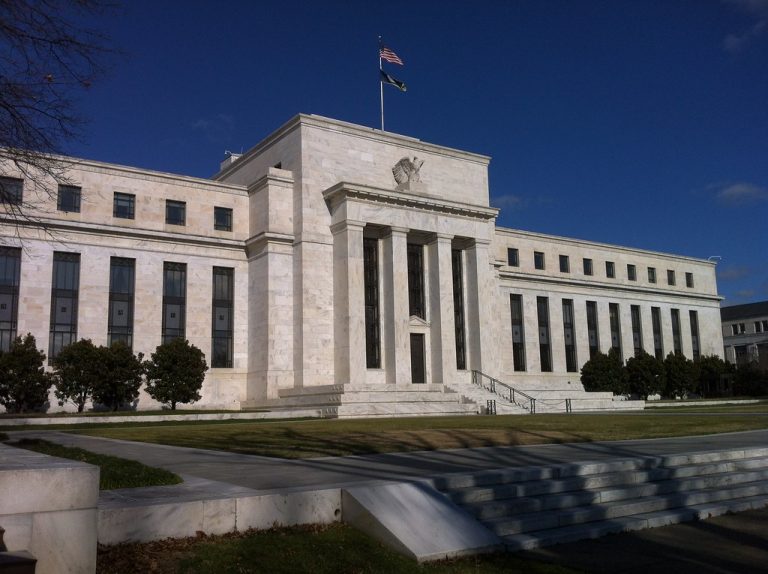
Has the Fed Let the Inflation Genie Out of the Bottle?

The dramatic ascent of precious metals markets this summer reflects what could be just the start of a longer-term decline and fall in the Federal Reserve Note‘s value and status.

With gold prices surpassing $2,000/oz recently, the monetary metal has now made new all-time highs versus all the world’s major fiat currencies.

Gold is, as former Federal Reserve chairman Alan Greenspan has acknowledged, the “ultimate money.”

The Fed, by contrast, is the ultimate inflator.

Fed officials won’t tolerate deflation (an increase in the purchasing power of the currency) – or even “no-flation” (in the form of a stable-value Federal Reserve Note).

In defiance of their statutory mandate to pursue “price stability,” Fed officials are waging a deliberate campaign to generate higher rates of price inflation.

According to a CNBC report, “In the next few months, the Federal Reserve will be solidifying a policy outline that would commit it to low rates for years as it pursues an agenda of higher inflation… in which inflation above the central bank’s usual 2% target would be tolerated and even desired.”

Meanwhile, the Fed continues to suppress interest rates across the yield curve. On Tuesday, the yield on the 10-year Treasury note fell to a record-low 0.52%.

A falling dollar (the U.S. Dollar Index in July suffered its biggest one-month decline since 2010) coupled with spiking precious metals prices and rising inflation expectations would normally send investors fleeing from bonds, forcing their yields up.

But these are not normal times.

“Not only have Treasury yields been historically low, they have been unusually stable,” notes Barron’s. “That would be consistent with ‘yield curve control,’ a method of pegging long-term borrowing costs. This has been among the policies under discussion by the Fed…”


It appears that “yield curve control” policy is already being implemented behind the scenes as part of the Fed’s bond buying operations.

The Fed is now the largest single institutional holder of U.S. Treasuries. Through the powers of self-dealing and an unlimited printing press, the Fed can manipulate the bond market like a puppeteer.

For how long can the central planners artificially sustain a bull market in bonds that is becoming increasingly divorced from market realities? At some point, interest rates will hit a final bottom.

Conventional wisdom used to be that 0% was the absolute floor. But in recent years, we’ve seen trillions of dollars’ worth of European cash and debt instruments carry negative yields.

There need not necessarily be any “zero lower bound” on rates on any part of the yield curve. However, even if U.S. rates never turn negative in nominal terms, they can go deeply negative in real terms – with no lower bound.

To illustrate, if benchmark bond yields hover around 0.5%, that nominally positive yield is actually negative (-1.5%) assuming a 2% inflation rate.

Fed policymakers can effectively cut rates by raising inflation.

And by the way, there is nothing more bullish for gold and silver prices than steeply negative real interest rates on fiat currencies.

Maintaining negative real interest rates – as opposed to negative nominal rates – is the path the Fed is on… not the path Europe took.

Europe’s negative interest rate policies are now widely viewed as having failed to achieve central bankers’ objectives of stimulating borrowing and economic activity.

Negative nominal rates sent the signal that an economic freeze was in place, so people continued to hunker down financially.

But pushing inflation rates higher gives the illusion of growth.

Though the real economy may be shrinking in the aftermath of coronavirus lockdowns, a stock market pumped up by Fed liquidity injections does stimulate paper wealth creation. In theory, that paper wealth might trickle down into actual consumer demand and job creation.

In reality, the Fed is transferring wealth to Wall Street and pain to Main Street.

Financial wealth will to some extent find its way into the real economy – in the form of higher price inflation. That’s what soaring precious metals markets seem to be telegraphing.

Money on Fire

The Fed’s inflation-raising scheme is in many ways far more dangerous than negative interest rate policy.

Central bankers can manipulate interest rates with precision if they are careful. But they should not be so arrogant as to believe they can successfully manipulate inflation rates up to particular targets and keep them there.

Once the inflation genie is let out of the bottle – once consumers, businesses, and investors begin to act on expectations of higher rates of price increases – inflationary psychology can snowball faster than the Fed can issue policy statements.

Inflationary episodes like we saw the late 1970s – and like we’ve been seeing over the past four months – are characterized by extreme volatility amid dollar insecurity.

Holders of Federal Reserve Note dollars and dollar-denominated real negative-yielding IOUs are like sheep lining up to get slaughtered through purchasing power losses.

Those who want to survive the coming inflation must seek the protection of sound assets, including sound money – gold and silverOriginal Source

REPORT: Las Vegas Officials Sent 223K Primary Ballots to Wrong Address

On Wednesday, the Trump campaign filed suit against Nevada Democrats for a secretive attempt to pass a measure that would send ballots automatically to every registered voter on the state’s voting rolls.

It followed other blue states, most notoriously California, amid false media claims that they were merely sending out applications.

But increasingly, the mail-in ballot push that began on the very day in March when President Donald Trump declared a national health emergency in the coronavirus pandemic has come under scrutiny with Democrats’ bad-faith intentions coming into focus.

Nowhere is that clearer than in Nevada, where data from the recent primaries, in which the state attempted the same practice, show the disastrous consequences that ensued, according to the Public Interest Legal Foundation.

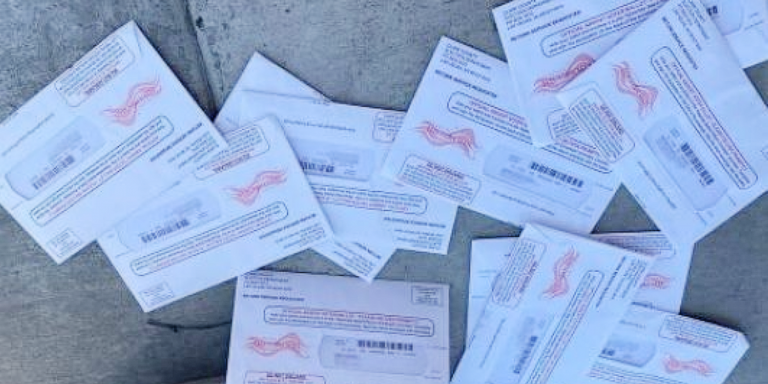
The election-integrity watchdog on Wednesday issued a research brief showing that in Clark County—the state’s southernmost county, which encompasses Las Vegas and Henderson—more than 223,000 ballots went to the wrong address.

That comprised, in total, roughly 17 percent of the 1,325,934 ballots that were mailed out.

“These numbers show how vote by mail fails,” said J. Christian Adams, PILF president and general counsel.

“New proponents of mail balloting don’t often understand how it actually works,” he continued. “States like Oregon and Washington spent many years building their mail voting systems and are notably aggressive with voter list maintenance efforts.”

He noted that the two Pacific Northwest states—both currently dealing with their own sets of issues surrounding radical anarchist protests—did not offer evidence that other blue states could likewise address the problems by deciding to introduce the new system in November’s tightly contested presidential election.

“Pride in their own systems does not somehow transfer across state lines,” Adams said. “Nevada, New York, and others are not and will not be ready for November.”

After discounting other ballots that were deemed undeliverable or inactive, only 23 percent of those mailed out in Nevada’s Clark County primary were returned and accepted.

Meanwhile, anecdotal evidence indicated that some of the ballots were carelessly discarded in Dumpsters and other places where they might easily have been compromised.

Hillary Clinton prevailed over Trump by just over 27,000 votes, or 2.42 percent, in the 2016 election, with only two of the state’s 17 counties (Clark and Washoe) supporting her.

However, the vast majority of voters in the state hailed from those two counties.

In Washoe County—the state’s westernmost, which encompasses Reno and Sun Valley—only a third of the ballots were returned and accepted.

Just under 10 percent of them were deemed undeliverable, meanwhile, by the US Postal Service.

The state’s AB4 bill also would close down nearly three quarters of its polling locations in comparison to the 2016 election, thereby discouraging voters from participating in person and putting a disproportionate burden on USPS.

It would also, controversially, legalize ballot harvesting by allowing partisan activists to return ballots on behalf of others where the law previously permitted only family members to do so.

PILF noted that on top of the integrity issues, Clark County’s all-mail ballot effort during the primaries was needlessly wasteful, with the county projecting a cost of $184,738 to send the ballots to inactive registrants with the expectation that 90 percent would bounce back.

Trump Allies Hope Biden Chooses Susan Rice for VP: The ‘Most Target-Rich’ Candidate

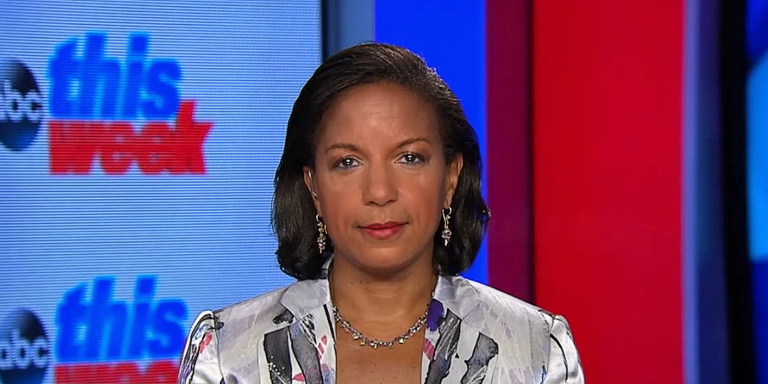
Presidential candidate Joe Biden has not yet announced who he’ll choose to be his running mate, but President Trump’s allies hope it’s former national security adviser Susan Rice.

Rice’s involvement in the Benghazi and Obamagate scandals would be the perfect fodder for Trump’s reelections strategy, according to campaign officials.

Recent documents reveal that Rice lied during a congressional probe to cover the trail of cronies like former FBI Director James Comey and former FBI Deputy Director Andrew McCabe during the Russian collusion hoax.

She was also involved in the unmasking of top Trump associates, including Michael Flynn.

Her role in the Benghazi scandal also makes her a rich target for political opponents.

For months, she lied to the American public about the fatal attack in Benghazi, Libya and blamed an online video for the violence.

An investigation revealed that the video had nothing to do with the terrorist attack, but Rice continued to repeat that lie over and over again.

“I can’t think of anyone that is more polarizing who would fire up the base than Susan Rice,” said former Rep. Jason Chaffetz, a Republican who investigated the Obama administration as chairman of the House Oversight Committee. “They know her, and they don’t like her.”

Rice’s past scandals make her the “most target-rich” candidate out of all of Biden’s top VP choices, according to a Trump adviser.

“She is absolutely our No. 1 draft pick,” a Trump campaign official told Politico.

The Trump campaign, however, said that even if Biden chooses someone other than Rice, voters will see Biden’s campaign for what it is: a radical attempt to undo the progress Trump has made over the past four years, said Trump campaign spokesman Tim Murtaugh.

“It doesn’t matter who Joe Biden picks because they all reside on the far left and will continue to use him as an empty vessel to fill with their radical agenda,” Murtaugh said in a statement.

Dems Urge Biden to Pick Michelle Obama As VP

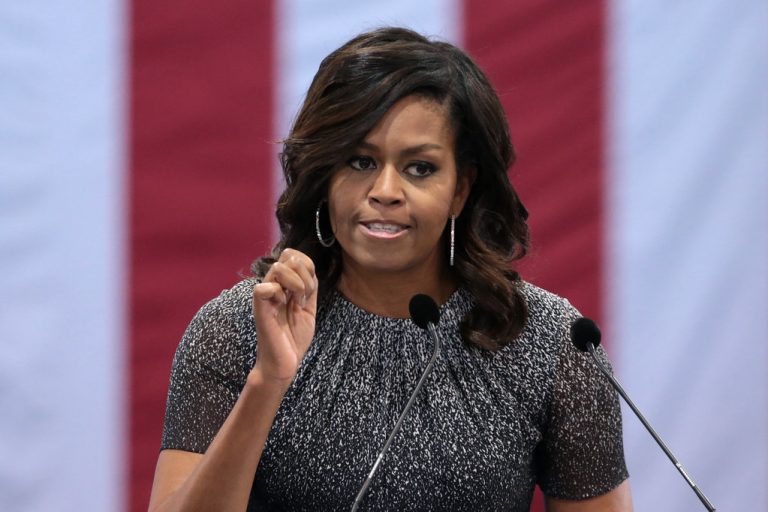
Presidential candidate Joe Biden is set to announce his pick for Vice President this month, and some supporters are pushing him to tap former First Lady Michelle Obama.

The supporters even created the “Committee to Draft Michelle Obama for VP” to lobby and convince Biden that the only way to win the presidency is by choosing Mrs. Obama, who is the “most admired woman in the world,” according to the committee.

“As a candidate, she has the power not only to assure victory over Donald Trump but to unite a bitterly divided nation and continue her life’s tireless work for the American people. As a leader, her stature and preexisting rapport with heads of state are unparalleled,” the committee wrote in a letter to the Biden campaign, according to The Hill.

Even though Biden leads President Trump in just about every national poll, Democrats “cannot afford to take any chances,” the letter states.

“Mr. Biden must put forward the strongest ticket possible for a crushing landslide that not only unseats Mr. Trump but throws the un-American spirit of Trumpism on the ash heap of history. One that also strengthens the opportunity to win down the ticket and take back the U.S. Senate. This is why we encourage Mr. Biden to formally invite Ms. Obama,” they wrote.

Biden has previously said that he would ask Obama to be his vice president “in a heartbeat,” but noted that she is not eager to step back into the world of politics anytime soon.

Earlier this week Mrs. Obama said on her podcast that she was suffering from a “low-grade” depression, which she attributed to the coronavirus and to President Trump.

This hesitance shouldn’t stop Biden from asking though, the committee argued.

“We realize such an invitation is a sensitive matter for Ms. Obama, one to which she has given great thought and declined in the past. Of course, we honor whatever she decides now, but we would be remiss if we did not put forth the considerations that we feel underscore her singularity as a leader for this challenging time,” they wrote.

Biden’s other top choices include Sen. Kamala Harris, D-Calif., and former national security adviser Susan Rice, according to sources close to the Biden campaign.

NEVERMIND: Proposal to Disband Minneapolis Police Blocked from Ballot

(Associated Press) A Minneapolis commission decided Wednesday to take more time to review a City Council amendment to dismantle the Police Department in the wake of George Floyd’s death, ending the possibility of voters deciding the issue in November.

Members of the Charter Commission expressed concern that the process to change the city’s charter was being rushed after Floyd died following an encounter with police. While several commissioners said changing the Police Department was necessary, they said the amendment before them was flawed. Several said it faced legal barriers, was created without input from key community members who oppose it, and that it gave too much power to the City Council.

“It’s appropriate to explore transformational changes in the department, but it needs to be done thoughtfully,” said Commissioner Peter Ginder, who voted in favor of taking more time. “That hasn’t been done here.”

The five City Council members who authored the proposed charter amendment released a statement criticizing the decision, but said they will continue to work toward transforming the way the city provides public safety. They said they plan to put an amendment before voters in November 2021.

“It is not our legacy to use bureaucratic processes to circumvent the people in an attempt to ‘protect’ voters from themselves,” said Council Member Jeremiah Ellison. “That is not democracy. In a democracy, the people decide. But I guess today the Charter Commission decided otherwise.”

The proposed amendment followed widespread criticism of law enforcement over Floyd’s death, despite video leaked earlier this week that showed him resisting arrest and failing to follow officers’ orders.

It would have replaced the Police Department with a “Department of Community Safety and Violence Prevention” that backers said would take a more “holistic” approach, which wasn’t fully defined. The proposal did allow for armed officers — creating a division of licensed peace officers, who would have answered to the new department’s director.

“The council says ‘Trust us. We’ll figure it out after this is approved. Trust us.’ Well I don’t, and we shouldn’t,” said Barry Clegg, chairman of the Charter Commission. “Charter change is too important.”

The 15-member commission, made up of volunteers appointed by a judge, voted 10-5 to take another 90 days to review the proposed amendment. Most of those who voted against taking the extra time said they would recommend rejecting the amendment.

But the issue would likely have gone to voters even if it was rejected because the City Council was required only to consult the commission and is not bound by their action. The lack of a final decision means the proposal won’t clear deadlines to make the ballot this November, but it could be on the ballot in 2021.

“There is no democracy denied here. There is no denial of democratic rights. It’s a question of when, not if,” Commissioner Gregory Abbott said. “We can fix this. We can get police reform. We just need to find a different avenue to do it in.”

A similar move by the commission effectively ended a proposed charter change in 2018 that would have given the City Council more control over the department.

Mel Reeves, a longtime community activist, said he was not surprised by the commission’s decision. He saw it as a delay tactic.

“We talk about living in a democracy, but if you really want to be democratic, sometimes it’s damn near impossible. If people really want to do something, there are all kinds of mechanisms to keep them from doing it,” he said.

The process has unfolded during a violent summer in Minneapolis after Floyd’s death, with shootings dramatically higher than last year following attacks on the reputation of law enforcement. Many residents are worried about a proposal to “abolish” police officers.

Some City Council members promised a robust process to get public input on how a new department would look and work. Council member Steve Fletcher, one of the proposal’s authors, said before the commission’s vote that the city would continue to move ahead with the community engagement process.

Floyd, a black man who was handcuffed, died May 25 after Derek Chauvin, who is white, pressed his knee against Floyd’s neck for nearly eight minutes, as Floyd said he couldn’t breathe, even though Floyd also made the claim throughout the arrest and resisting being put in a police cruiser because he said he was “claustrophobic.”

Chauvin was charged with second-degree murder and other counts, and three other officers at the scene were charged with aiding and abetting. All four officers were fired, and Floyd’s death sparked protests in Minneapolis and around the world.

Mayor Jacob Frey, who was opposed to abolishing the department, and Chief Medaria Arradondo have moved ahead with their own changes since Floyd’s death, including requiring officers to document attempts to de-escalate situations whether or not force is used. They also have expanded requirements for reporting use-of-force incidents, ordering officers to provide more detail.

Adapted from reporting by Associated Press.

‘See You in Court’: ACLU Files Nearly 400 Cases Versus Trump

(Associated Press) The day after Donald Trump’s election in November 2016, the American Civil Liberties Union posted a message to him on its website: “See you in court.”

As president, Trump hasn’t personally squared off against the ACLU from the witness stand, but the broader warning has been borne out. As of this week, the ACLU has filed nearly 400 lawsuits and other legal actions against the Trump administration, some meeting with setbacks but many resulting in important victories.

Among other successes for the ACLU, it prevailed in a U.S. Supreme Court case blocking the administration from placing a citizenship question on the 2020 census. It also spearheaded legal efforts that curtailed the policy of separating many migrant children from their parents.

“The assault on civil liberties and civil rights is greater under this administration than any other in modern history,” said the ACLU’s president, Anthony Romero. “It’s meant we’ve been living with a three-alarm fire in every part of our house.”

Since the day Trump took office, the ACLU — according to a breakdown it provided to The Associated Press — has filed 237 lawsuits against the administration and about 160 other legal actions, including Freedom of Information Act requests, ethics complaints and administrative complaints.

Of the lawsuits, 174 have dealt with immigrant rights, targeting the family separation policy, detention and deportation practices and the administration’s repeated attempts to make it harder to seek asylum at the U.S.-Mexico border.

The other lawsuits address an array of issues high on the ACLU’s agenda: voting rights, LGBT rights, racial justice and others. In one long-running case, the ACLU succeeded in blocking the administration’s policy of barring young immigrant women in government custody from getting abortions.

“Donald Trump has provided a full employment program for ACLU lawyers on all of our issues,” Romero said.

By comparison, the ACLU says it filed 13 lawsuits and other legal actions against President George W. Bush’s administration in his first term, mostly alleging encroachments on civil liberties related to counter-terrorism policies.

Many of the ACLU’s recent lawsuits remain unresolved. Of those that have been decided, Romero said, the ACLU has won far more often than it has lost, though a precise breakdown was unavailable.

Among the setbacks, ACLU national legal director David Cole said, one of the most disappointing involved Trump’s efforts to ban foreign nationals from several predominantly Muslim countries. Lawsuits by the ACLU and its allies successfully blocked implementation of the first two versions of the ban, but the Supreme Court allowed a third version to go into effect in 2018.

By a similar 5-4 vote, the Supreme Court also allowed the implementation of the Trump administration policy barring transgender people from enlisting in the military. Lower courts had supported efforts by the ACLU and other groups to scrap the ban.

Another LGBT rights case recently ended in a major victory for the ACLU and its allies when the Supreme Court ruled 6-3 in June that gays, lesbians and transgender people were protected from employment discrimination under the Civil Rights Act of 1964. One of the ACLU’s clients, Aimee Stephens, was fired from her job at a Michigan funeral home because she was transgender; she died just a few weeks before the high court ruled in her favor.

There’s no question the ACLU has caught the attention of Trump and his administration.

The Republican president, at an “Evangelicals for Trump” rally in January, derided the ACLU as a “group of beauties” who had filed a lawsuit accusing public schools in Smith County, Tennessee, of improperly promoting Christian religious beliefs.

“We will not allow faithful Americans to be bullied by the hard left,” Trump said.

In a May 2018 speech, then-Attorney General Jeff Sessions assailed the ACLU for a lawsuit that led to a drop in stop-and-frisk arrests by Chicago police.

“If you want crime to go up, let the ACLU run the police department,” Sessions said.

Recently, the ACLU has drawn criticism from a longtime supporter, George Washington University law professor Jonathan Turley. He worries that the organization is aligning too closely with the Democratic Party and is now less willing than in the past to support unpopular causes, such as the free-speech rights of far-right activists.

In an email, Turley questioned the wisdom of the “torrent of lawsuits” against the Trump administration.

“The result was less of a sniper strategy and more of a saturated bombing strategy,” he wrote.

Even as it spars with the administration, the ACLU notes that Trump’s presidency has been beneficial in some respects — fueling huge increases in donations and membership.

Romero says the ACLU national office and its state affiliates received about $175 million in donations in the three months after Trump’s election. It says it has increased its headquarters staff from 386 to 605 and now has 122 attorneys, up from 84 in November 2016.

Membership has soared from about 400,000 to more than 1.8 million. Romero says many of the newcomers have been asking how they can help as volunteers in bolstering voting rights, immigrants’ rights and other causes.

Demonstrating its increased interest in electoral politics, the ACLU had directed $28 million of its national funds to its affiliates in battleground states such as Florida, Arizona and Texas. Since 2016, Romero said, the ACLU of Texas has been able to double its budget to $8.5 million and its staff to 65 employees.

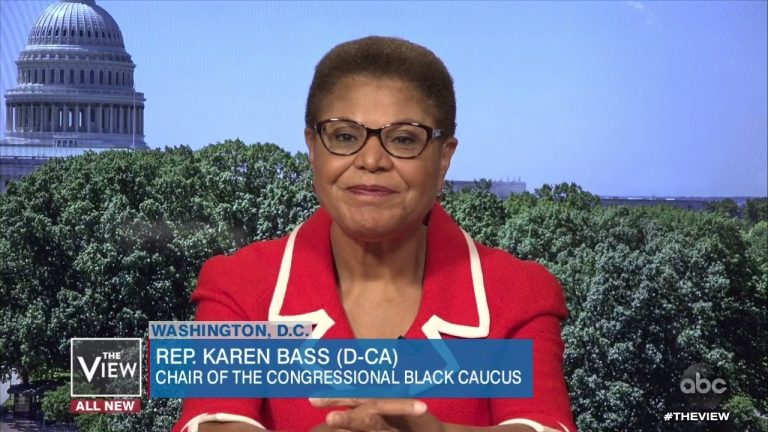
VP Contender Karen Bass’s Fidel Castro Sympathy a Problem in Fla.

0

(Associated Press) Until recently, Robert Lewis had never heard of Karen Bass, the California congresswoman in contention to be Democratic presidential candidate Joe Biden’s running mate. But the recent college graduate had long heard stories from his grandfather recounting the days of oppression in Cuba under Fidel Castro.

When he learned that Bass had called Castro’s death “a great loss,” the 22-year-old considered it a disregard for the plight of those who suffered at the hands of Castro’s government.

“Through the stories from my grandparents and because of my upbringing, it makes me feel like their experiences were my own,” said Lewis, a political independent who is still weighing his choices ahead of the presidential election.

Lewis’ reaction is a blow to Democrats who in recent years have tried to pull young Cubans in Florida away from the Republican Party, the political home of many of their parents and grandparents. The next generation is less focused on the past and open to change, Democrats argued, as President Barack Obama embraced engagement with Cuba and in 2014 declared he would “bury the last remnant of the Cold War.”

But Bass’s comments provide fresh evidence to the contrary. While polling show young Cubans in Florida open to new policies, they also remain skeptical of the Cuban government and, experts note, wary of politicians who aren’t. Even for some young Cubans, the congresswoman’s remarks are troubling — and a reminder that Castro still stirs strong passions.

“Say it ain’t so, Joe,” said one poster on a Facebook community called “Cubanos Con Biden,” a 6,000-member group partially run by the Biden campaign. It has been dominated by discussion about Bass in recent days.

Hispanics account for one-fourth of the population of Florida, a critical presidential battleground, and 1 in every 5 of its 13.8 million voters. The Pew Research Center estimates that nearly a third of Florida’s Hispanic voters have roots in Cuba.

Republicans have long dominated with those voters, in part by taking a hard line on maintaining the embargo meant to isolate the island and its now-deceased leader. But shifting views on the embargo have given Democrats hope.

A 2018 poll of Cuban Americans in Miami-Dade County showed a massive generational and age divide in the county in their views about U.S.-Cuba policy. The poll by Florida International University poll found that among those who migrated to the United States before 1980, about 3 in 5 opposed establishment of diplomatic relations, while about 70% of those who were born in the U.S. or arrived after 1980 were in favor.

But the same poll found evidence that Trump, who opposes the Obama-era policies, may have hardened views. Support for the embargo has grown among those who migrated before 1980 with 68% in support in 2018, up from 57% in 2016.

That’s not necessarily evidence that Bass and her comments would hurt Biden’s chances in Florida, noted Guillermo Grenier, the poll’s lead researcher. Rather, he said, it’s likely that many Cuban American voters have already solidified around Trump.

“The folks who are pro-Trump are going to stay pro-Trump. There is a small number of undecided, but if they are swayed by the selection of Bass as VP, they really weren’t undecided,” he said.

Still, Democrats are clearly worried about the risks.

Bass has walked back her remarks made after Castro’s death in 2016 — that “the passing of Comandante en Jefe is a great loss to the people of Cuba.”

No offense was intended, Bass said on NBC’s “Meet the Press” on Sunday.

“Lesson learned. Wouldn’t do that again,” she said. “Talked immediately to my colleagues from Florida and realized that that was something that just shouldn’t have been said.”

She didn’t consider herself a Castro sympathizer, she added. “My position on Cuba,” she said, “is really no different than the position of the Obama administration.”

The apology wasn’t helped by trips Bass took to Cuba as a member of Congress to learn about the country’s health care system and as a young activist in the 1970s.

Republican Sen. Marco Rubio of Florida, a Cuban American, has called the congresswoman a “Castro sympathizer.”

Bass is hardly the only Democrat to be hit with the charge. Sen. Bernie Sanders, I-Vt., earlier this year came under fire for a television interview in which he lauded Castro for a literacy program and asserted that it was “unfair to simply say everything is bad” in Cuba. Sanders lost Florida by nearly 40 percentage points in the Democratic presidential preference primary in March, with Biden garnering 62% of the vote.

Such comments are not just a problem with Cuban Americans, said Fernand Amandi, a Miami political consultant who is a Democrat and is of Cuban descent.

Bass’s comments could peel away support among other Latinos, especially those from Nicaragua and Venezuela, who fled the oppressive conditions of their native countries.

“The litmus test in Florida is: Do no harm, because it’s a state that is always decided by the thinnest of margins. Just taking off the table any segment of the Florida electorate could prove fatal,” he said.

If chosen as Biden’s running mate, Bass could become the first woman and first African American elected vice president. She is on a short list of women, including U.S. Rep. Val Demings of Orlando, who are said to be finalists for the job.

For some Democrats of Cuban descent, Bass’ past remarks aren’t enough to determine their vote.

“I would still support Biden regardless of who he chooses as the VP,” said Adam Schwartzbaum, a 35-year-old attorney in Coral Gables whose father and grandparents arrived in Miami after the Cuban revolution in 1961.

“We celebrated when Fidel Castro passed away. We still see him as a dictator who really impoverished the island,” he said.

But his real worry is that Republicans would use Bass’s remarks as distraction from what he called the more important goal of electing Biden.

“Right now the focus is to move Trump out of office,” he said.

Portland Police Chief: Violence Detracts from Rioters’ Social Justice ‘Message’

0

(Headline USA) Clashes outside a U.S. courthouse in Portland, Oregon, have slowed since Democratic Gov. Kate Brown agreed to involve local law-enforcement in lieu of federal agents sent by the Trump administration to protect the building—but the turmoil is far from over.

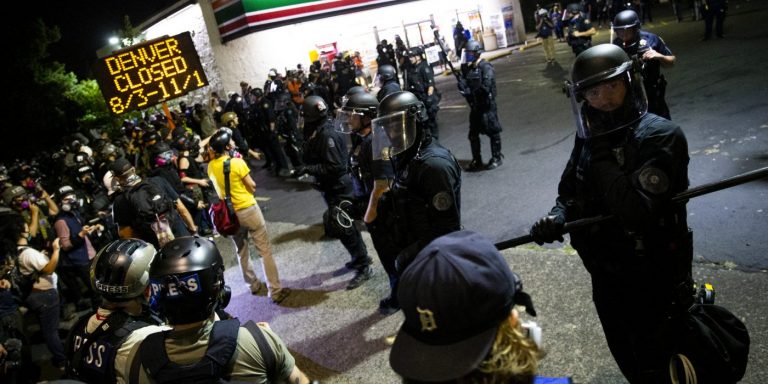
For the past several nights, Portland police have clashed with violent rioters in other parts of city, far from the Mark O. Hatfield Federal Courthouse, as residents rally around a call to defund the police force.

Demonstrators are also mad at the use of tear gas by police multiple times over the summer to tamp down unrest—despite the fact that Antifa insurgents continue to use dangerous weapons such as water balloons filled with chemical agents and high-powered commercial lasers.

Early Wednesday, police declared a riot and made three arrests after saying demonstrators set fires, erected barricades in a street and broke into the police union headquarters.

Police said someone also fired a gun during the unrest and a pickup truck accelerated into the crowd while pushing an unoccupied motorcycle in front of it.

No one was injured in either incident. Police have interviewed the driver of the truck but so far have made no arrests. Police did not use tear gas during the demonstration.

Police Chief Chuck Lovell, who is black, said he was concerned that the national attention paid to the ongoing protests and the resources needed to police them were hurting the “beautiful, vibrant city” of Portland.

Police have arrested more than 400 people since late May, he said. U.S. agents arrested at least 94 people on federal charges through July 30.

“This is not forwarding the goals of things that are going to lead to better outcomes for people of color,” said Lovell, who wrote an opinion piece for the New York Times this week that expressed the same sentiments.

“This movement is very powerful and I feel like the violence has taken away from it in a really kind of concerning way.”

“I think it’s really dependent on Portland as a community to really say we’re not going to tolerate this,” he added.

Residents have protested in Portland for 69 consecutive days since George Floyd was killed by police in Minneapolis.

Demonstrations increasingly focused on the federal courthouse, where protesters broke glass, lit fires and tossed fireworks and other objects at law enforcement.

The courthouse was also covered with graffiti.

The clashes prompted President Donald Trump to send federal agents from U.S. Customs and Border Protection, U.S. Marshals Service and U.S. Immigration and Customs Enforcement to guard the courthouse.

Demonstrators tossed fireworks, flares, rocks, ball bearings and bottles at the federal agents and used power tools to try to bring down a fence protecting the courthouse.

U.S. agents responded each night with multiple rounds of tear gas, pepper balls and rubber bullets in an escalation of violence that led to injuries to demonstrators and federal agents.

The violent clashes at the courthouse have abated since July 30, when local authorities stepped in under a deal between the governor and the U.S. Department of Homeland Security.

But after a quiet weekend, nightly protests have once more gained steam in other parts of the city.

The demonstrators are calling for the city to defund the Portland Police Bureau and are critical of Mayor Ted Wheeler, who is also police commissioner.

They also want charges dropped against protesters who have been arrested in earlier protests.

Adapted from reporting by the Associated Press