‘Susan Collins can’t be trusted anymore and doesn’t deserve to be offered another fig leaf…’
Susan Collins/Photo by Medill DC (CC)
(Ben Sellers, Liberty Headlines) An omen of what is likely to be an increasingly bitter and partisan election season, two environmental groups that previously endorsed centrist Sen. Susan Collins, R-Maine, are withdrawing their support because she dared to vote twice with her party.
The League of Conservation Voters and Environmental Defense Fund are both being pressured to turn on Collins in her 2020 re-election bid, reported Politico Pro.
“Some of Collins’ recent votes have been extremely disappointing,” said Tiernan Sittenfeld, the senior vice president of government affairs for LCV.
Ironically, the issues cited by the Left have little or nothing to do with the environmental policies that LCV and EDF promote.
Some claim that Collins’ support of a massive tax reform bill, the Tax Cuts and Jobs Act, helped open the Alaskan tundra to drilling exploration.
Both of Collins’s GOP Senate colleagues from Alaska, Lisa Murkowski and Dan Sullivan, also voted in favor of the bill.
But the nail in the coffin of liberals’ love-affair with Collins was her decision to side with her fellow GOP members to confirm Supreme Court Justice Brett Kavanaugh amid salacious, unproven allegations of a 30-year-old, drunken high-school sexual assault.
“Susan Collins can’t be trusted anymore and doesn’t deserve to be offered another fig leaf,” said Ian Koski, a Democratic strategist in Maine who is encouraging activists to aggressively push the advocacy groups.
Radicals leading the fight against Kavanaugh went to extreme measures to intimidate Collins with threats of violence, as well as a crowd-funding campaign that raised millions for her yet-unnamed Democratic opponent.
At the time, former Obama national security adviser Susan Rice expressed interest via Twitter in taking on Collins in the 2020 race.
Nor did liberals cease their vindictive animus against the incumbent moderate after Kavanaugh’s confirmation. Collins’s own alma mater later weighed revoking an honorary degree it had bestowed on her.
Democrats face longshot odds at retaking the Senate, where Republicans currently hold a three-seat majority and the party in the White House historically would benefit from an incumbent coattails advantage.
However, the Left has taken great pains to paint the Trump presidency as an exception, ratcheting up the polarized political dialogue and smearing the chief executive with now-disproven allegations of Russian collusion and other incessant investigations.
With stakes thus raised, several “tossup” races on both sides of the aisle are likely to draw firm battle lines—including the seats of Sens. Cory Gardner, R-Colo.; Martha McSally, R-Ariz.; Thom Tillis, R-NC; Doug Jones, D-Ala.; Jean Shaheen, D-NH; and Mark Warner, D-Va.
But while several of those have faced narrow margins in past races, Collins has long enjoyed popular support in her state, with her last election garnering 68.5 percent of the vote.
If Democrats sense a vulnerability there, it will demand an “all hands on deck” effort Koski told Politico.
‘We have quite literally loved our trees to death…’
IMAGE: FoxNews via YouTube
(Ben Sellers, Liberty Headlines) Rep. Bruce Westerman, R-Ark., and the Congressional Western Caucus are turning tree-huggers’ own arguments against them as forest fires regularly continue to ravage areas like California.
“We have quite literally loved our trees to death,” Westerman said in a recent announcement. “Forests going up in flames and releasing tons of carbon into the atmosphere is not true conservation; proactive, sound forest management is.”
Westerman, a forester by trade before seeking office, called on Congress to stop tying the hands of the U.S. Forest Service and Bureau of Land Management with bureaucracy and litigation.
According to The Hill, 40 percent of Forest Service employees’ time is spent on paperwork as liberal groups fight to block the removal of bad brush from protected areas.
“Years of mismanagement have led to insect infestation, overstocked stands, and dead and decaying trees,” Westerman said.
In addition to addressing things like injunctive relief, the bill also calls for financial reforms tied to liabilities, legal fees and the arbitrary ceiling on contracted services—which not only hinder firefighting and prevention, but also the reforestation efforts afterward.
The cost of fighting the fires alone has reached upward around $2.5 billion in recent years, without even taking into account the massive collateral damage, said Congressional Western Caucus chair Paul Gosar, R-Ariz.
“We need additional forest management authorities and resources for active management and we need them now,” Gosar said. “If Congress does not act, more lives and property will be lost.”
Gosar hinted at the irony that his Democratic colleagues have made things like the Green New Deal, estimated to cost $93 trillion, their legislative priorities while disregarding the relatively simple solution to addressing one of the biggest producers of environmentally harmful atmospheric gasses.
“My colleagues on the other side of the aisle often exaggerate the impacts of carbon dioxide, but the facts are, the best way to sequester carbon is through healthy forests,” Gosar said.
As Democrat leaders undertake negotiations with the White House to reach a new agreement on infrastructure funding, Westerman would welcome bipartisan support for America’s natural resources, similar to what he received last session.
Several of the provisions from his bill wound up being included in the omnibus Farm Bill passed in December.
But with the newly radicalized opposition party pushing its agenda to the Left, that could pose a challenge to the bill’s passage.
Eco-groups like California’s Earth Island Institute have previously disputed that forest thinning efforts result in better forest management and fewer fires.
And the radical activist-legal group Earth Justice has referred to the bill as a “gift to the timber industry” despite its emphasis on reforestation.
In reality, the bill’s efforts to block costly injunctive litigation in order to redirect funding and resources where they belong—fighting forest fires—would undermine a key portion of the activist strategy for pushing their green agenda through the courts and forcing industry to pay the costs.
Those legal fees ultimately get passed onto consumers in housing and construction costs, as well as creating a limited supply of lumber to meet the demands of the market, noted Chuck Roady, vice president and general manager of F.H. Stoltze Land and Lumber.
“Millions of board feet of timber and thousands of acres of forest health treatments are held up in litigation across the country,” Roady said. “The need to actively manage our forests and keep our mills running has never been more apparent.”
The result is a double-whammy for those left homeless by the Left’s infernos in their efforts to rebuild their lives.
“Knowing firsthand what it is like to look into the eyes of a family who has lost everything in a wildfire, I want to ensure that we are as proactive as possible in identifying and addressing the sources of the problem,” said Rep. Duncan Hunter, R-Calif.
“Now is the time to act on proper forest and land management, not when there is an emergency,” Hunter said.
‘The Attorney General’s mischaracterizations of the redacted report’s findings have raised more questions than they have answered…’
Amy Klobuchar / IMAGE: CNN via Youtube
(Ben Sellers, Liberty Headlines) Under the pretense of following up on Attorney General William Barr‘s testimony last week before the Senate Judiciary Committee, Sen. Amy Klobuchar, D-Minn., sent a letter to special counsel Robert Mueller requesting the release of any information he may have on President Donald Trump’s taxes.
“Unfortunately, Chairman Graham has made clear that he does not intend to call you to testify before the Senate Judiciary Committee,” Klobuchar said in her letter to Mueller. “Accordingly, I respectfully request that you provide answers.”
Committee chair Lindsey Graham, R-SC, said that Mueller could “provide testimony” if he disputed any of Barr’s answers, but he dismissed the possibility of a public hearing, which would doubtlessly degenerate into a grandstanding media spectacle.
Klobuchar’s May 2 appeal to Mueller asked for any of the president’s tax returns he had obtained, as well as any financial documents related to the Trump Organization.
The announcement came as Democrats in the House of Representatives clashed with Treasury Secretary Steve Mnuchin over his refusal to provide Trump’s tax returns.
Mnuchin this week formally declined the request after determining that the congressional committees making it had no valid legislative interest in the tax documents.
Meanwhile, House Democrats advanced a resolution to hold Barr in contempt for his refusal to provide a fully unredacted version of the Mueller Report to Congress.
In response to the baseless demand and the ensuing attack on Barr, the White House announced that it would assert executive privilege.
Trump previously declared his intention to fight all partisan, politically motivated subpoenas generated by the House over the Russia collusion hoax.
Compared with the sniping of many of her Democratic colleagues, Klobuchar’s interrogation of Barr last week seemed to strike a more conciliatory tone.
However, her letter to Mueller suggested the 2020 presidential hopeful was not above attempts at scoring partisan political points.
“The Attorney General’s mischaracterizations of the redacted report’s findings have raised more questions than they have answered,” Klobuchar said in an accompanying press release.
“The American people deserve a Justice Department that is committed to the impartial administration of justice and I will continue to press for answers on their behalf.”
Klobuchar also submitted a follow-up list of 12 questions to Barr, asking him to confirm “for the record” the characterizations of several points he had made before the Senate committee.
William Barr / IMAGE: Senate Judiciary Committee
In it, she belabored already stale Democratic talking points and attack strategies—including the claim that it is possible to obstruct justice when no underlying criminal activity was proven.
Mueller, in his report, had pointedly deferred to the attorney general’s office to make the charging decision on obstruction, even though it was within the scope of his duties to do so.
In determining not to pursue the charge, Barr said such cases often are left to the discretion of the prosecutor because they are difficult to establish, following the legal standard, beyond a reasonable doubt.
But, in her letter to Barr, Klobuchar requested the specific “contexts” in which past prosecutors had declined to pursue the charges.
Klobuchar also continued to harp on the unfounded accusation that Barr lied during an earlier appearance before Congress by saying he could not surmise the reasons Mueller’s office might object to his four-page release of the report findings.
“Given the Special Counsel’s concerns, do you have any regrets about the way you handled the release of the report?” she asked.
In response to a question by Rep. Charlie Crist, D-Fla., Barr had properly speculated in his April congressional appearance that Mueller and his team wanted the release to be more comprehensive.
Barr maintained that his focus was on releasing the full report as quickly as possible rather than providing summaries that the media might mischaracterize.
But the night before Barr’s Senate testimony, The Washington Post broke a story leaking a letter that Mueller had submitted to Barr, which Democrats used to form their dubious accusations of perjury.
Barr noted that in speaking to Mueller personally, the special counsel had not taken issue with the substance of his release but that he did not know the minds of unnamed members of Mueller’s team.
Despite the vagueness of Crist’s question, Barr countered that he had answered it fully and accurately based on the wording.
Thus far, Klobuchar’s presidential campaign has failed to get significant traction. Although she has sought to position herself as a moderate in some instances with a willingness to reach across the aisles, her legislative record tells a different story.
Still, Klobuchar did express a willingness to work with her Republican colleagues and with the Justice Department on efforts to strengthen cybersecurity and prevent election interference from Russia and other hostile foreign agents.
During the hearing, she called on Barr’s support for the Secure Elections Act, which would include additional audits and a provision for back-up paper ballots.
“Otherwise, we are not going to have any clout to get back-up paper ballots if something goes wrong in this election,” she said.
(Ben Sellers, Liberty Headlines) Rep. Ilhan Omar, D-Minn. has on many occasions used her identity as a shield—notoriously blaming her own inflammatory hate rhetoric on the fact that she has a different set of cultural norms and experiences.
But as her mainstream appeal wanes, likely to face a primary challenger in her race next year, the freshman congressman is grasping for support wherever she can find it, and becoming even more radicalized along the way.
Omar—who was last year elected as one of the first Muslim women in Congress, alongside Rep. Rashida Tlaib, D-Mich.—has been accused of repeatedly using anti-Semitic stereotypes and downplaying the Sept. 11 terrorist attacks in her public comments.
Former Ku Klux Klan leader David Duke praised Omar’s positions, referring to her as “the most important Member of the US Congress” on Twitter for her stance against Jewish Zionism.
But where most of Duke’s forays into politics wound up as unmitigated failures, Omar envisions her own historical role to be much larger.
In a recent HuffPost interview, she referred to herself as the president’s “biggest nemesis,” intent on stirring up a coalition of angry Trump-haters to help insulate her from criticism, while also underscoring her qualifications as a multi-category minority.
“Clearly, I am a nightmare [for Trump]—because he can’t stop really thinking about ways that he can continue to use my identity to marginalize our communities,” Omar said.
Ironically, putting aside her assertions that the president had sought to capitalize on her identity for political reasons, Omar, herself, has been known to invoke it quite frequently.
Immediately after her controversial 9/11 remarks were revealed by a fellow Muslim who condemned them, Omar went on “The Late Night with Stephen Colbert” to deflect.
“If you think about, you know, historically, where our nation is at right now, there are many members of our community that, their identities are a lightning rod—they’ve become—they’re being used as a political football,” she said on the show.
“We are talking about immigrants, we are talking about refugees, women of color—people of color—minorities … Muslims specifically,” Omar continued. “And I just happen to embody all of those identities—and so it’s easy for this to be kind of self-explanatory.”
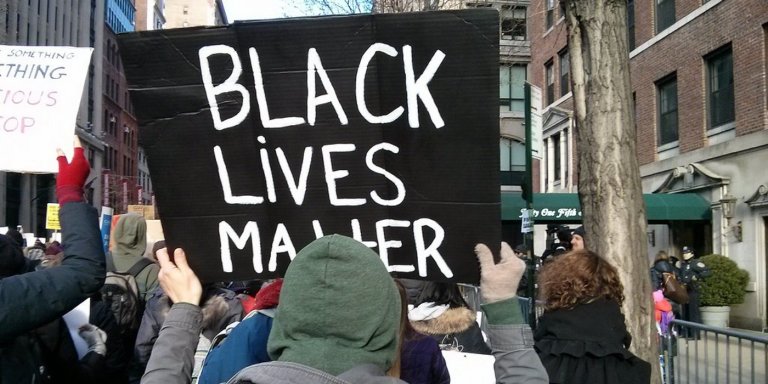
More recently, Omar staged a rally on Capitol Hill with members of radical black-supremacist groups including the Black Panthers and Black Lives Matter.
While attacking Trump specifically, her rhetoric at the rally took a surprisingly sharp turn, seeming to embrace a sort of counter-position to the president’s self-declared U.S. nationalism that instead sought to overthrow and exclude any non-‘marginalized’ American citizens.
“We are collectively saying your vile attacks, your demented views are not welcome here,” Omar, a Somali refugee, said, according to CNN.
“This is not going to be the country of the xenophobics. This is not going to be the country of the white people,” Omar said. “This is not going to be the country of the few. This is going to be the country of the many.”
It is a familiar tactic for Omar, who previously attempted to re-frame the criticism of her anti-Semitism as being itself indicative if Islamophobia.
For every criticism she receives, Omar redoubles her efforts, entrenched in the certainty that her worldview is the correct one, despite the ever-narrowing margin of support.
And for all her attacks on Trump, she seems determined to posture herself as the opposite polar extreme of what she perceives him to be—accepting that, in a sense, it makes her more similar than different; locked in her own symbiotic, yen-and-yang relationship with the president.
“As someone who certainly has survived far worse people than him, I’m going to be alright,” Omar told HuffPo. “… I always find conflicts to be the best sources for organizing.”
Although her views may be far outside the mainstream, Omar said in the article that she was able to cop with the sense of isolation by imagining a legion of like-minded followers standing beside her.
“People ask me, ‘Ilhan, do you feel afraid? Do you feel marginalized?’ And I don’t,” she told HuffPo. “Because I know hundreds of my sisters are constantly walking with me in every single space I’m in.”
‘Peter Strzok and Lisa Page referring to something as political? I mean, that’s like the pot calling the kettle black…’
(Ben Sellers, Liberty Headlines) As Democrats eat chicken on the House floor, some of the most powerful Republicans in the Senate are inching closer to holding partisan bureaucrats publicly accountable for spreading false innuendo about President Donald Trump colluding with Russia.
Sen. Ron Johnson, R.-Wisc., and Sen. Chuck Grassley, R-Iowa, on Monday wrote a letter to Michael K. Atkinson, inspector general of the intelligence community, highlighting two shocking exchanges that they hoped were being investigated between former FBI counterintelligence chief Peter Strzok and his paramour, FBI attorney Lisa Page.
“There are going to be so many people looking into these things now,” Johnson told Fox News in a follow-up interview. “We have inspector generals, we have Attorney General Barr, we have at least two Senate committees that are going to be looking at this.”
Specifically, the two committee chairs—Johnson oversees Homeland Security and Foreign Affairs, while Grassley currently heads the Senate Finance Committee—sought clarity on messages between the lovebirds Strzok and Page that suggested some of the FBI’s “sister” investigative agencies may have been leaking false information to the media.
In one of the messages from December 2016, Strzok told Page, “Think our sisters have begun leaking like mad. Scorned and worried and political, they’re kicking in to overdrive.”
In another message, from April 2017, Strzok wrote, “I’m beginning to think the agency got info a lot earlier than we thought and hasn’t shared it completely with us. Might explain all these weird/seemingly incorrect leads all these media folks have. Would also highlight agency as source of some of the leaks.”
While previous congressional probes into the FBI scandal—followed by an inspector general’s investigation and report—revealed substantial misconduct and suggested rabidly partisan bias may have informed the investigation, Johnson said the two messages hinted at an even broader conspiracy.
“This raises all kinds of questions, all kinds of concerns,” Johnson said, “and we’re just writing the inspector general of the intelligence community to see if … has he undertaken an investigation into leaks from those agencies?”
A previous Freedom of Information lawsuit from Judicial Watch sought to discover the records between former CIA Director John Brennan and former Director of National Intelligence James Clapper with CNN during the election and the rollout of the salacious and unverified Steele Dossier, which claimed Trump had colluded with or been compromised by Russia.
The two high-ranking intelligence officials during the Obama administration both later were hired by CNN as special correspondents.
It has been documented and reported that immediately following the election, key Clinton aides John Podesta and Robbie Mook took an active role in crafting the Russia collusion narrative, both to explain Clinton’s election loss and to divert public attention away from any possible investigations into her alleged campaign corruption.
“In early December [2016], if you take a look at the news stories, that’s really the first news stories talking about a Russian potential working with the Trump campaign or involvement with the Trump organization,” Johnson said.
This made the timing of Strzok’s remark about the “sisters” all the more curious, he added.
Peter Strzok & Lisa Page/PHOTOS: Justice Dept. & Ohio State U.
“It’s really puzzling—in those first text messages, what would those sister agencies be worried about? And to refer to these agencies as political—Peter Strzok and Lisa Page referring to something as political? I mean, that’s like the pot calling the kettle black,” Johnson said. “But what are they kicking into overdrive?”
The second e-mail, with its references to fake stories being planted in the media, was no less disconcerting, Johnson said.
“Now we know that there was no substance at all to those stories—but you have agencies, potentially of the United States government—leaking stories that fully indicate that [Russian collusion] might be the case and really creating this incredible narrative,” Johnson said.
“That has taken about eighteen months to get to the bottom of—the fact that there was no story there, there was no collusion,” he said. “And yet, agencies of the federal government were leaking stories.”
At the time of the April message about the media leaks, there already was open discussion about whether Trump was under investigation related to any of the allegations of Russian collusion.
A month later, the president fired disgraced FBI Director James Comey for his refusal to give a straight answer over whether Trump was being investigated.
Comey later acknowledged leaking potentially classified memos about his privileged conversations with Trump to the media in order, to help spur a special counsel’s investigation, he said.
Johnson said he didn’t necessarily expect for criminal charges to emerge from the forthcoming inquiries but that providing a full set of facts about the debunked Russia narrative was no less important.
“The public has a right to know, and people do need to realize it’s congressional investigations — their whole purpose is to make this information public,” he said.
Even though the inspector general’s previous report on the FBI did not lead to serious consequences for the bad actors involved, making sure the story is part of the public record, especially now that the Russia claims have been disproved, had taken on a new urgency.
“I’m always concerned if it’s another criminal investigation, if no crimes are revealed, we may never hear about it,” Johnson said, “but this is just potentially wrongdoing on the parts of these agencies.”
‘If Republicans fail to fight back nationally … we will find ourselves in a perpetual minority for a generation…’
North Carolina’s Congressional districts/IMAGE: USA Today via Youtube
(Ben Sellers, Liberty Headlines) After two recent victories for Democrats in their “sue-till-blue” effort to undo GOP advantages in red states, former Wisconsin Gov. Scott Walker is calling on Republicans to “wake up.”
On Monday, Fox News published an op–ed from Walker urging his fellow conservatives to be aware of how the Left’s blatant power-grab was playing out right under their noses.
Holder and former President Barack Obama “have spent years and millions of dollars selling the false narrative that Democrats draw ‘fair maps’ while any and all Republican-drawn maps are ‘partisan gerrymanders,'” Walker said.
“While rhetorically cute, their primary goal has nothing to do with fighting gerrymandering as they repeatedly claim, but to put redistricting in the hands of unelected, unaccountable bureaucrats and lifetime-appointed judges,” he said.
The Holder gerrymandering group—first formulated during the 2016 Democratic National Convention by key liberal players, including then-House Minority Leader Nancy Pelosi and then-Virginia Gov. Terry McAuliffe—had a significant impact in the 2018 races that helped give the House of Representatives its current Democratic majority.
It initially had released a list targeting about a dozen red states during the 2020 races, but it appears to be expanding its goals in real time.
Activist-liberal judicial panels recently ruled against the district maps in Michigan and Ohio—two crucial swing states that helped carry the elections of both Obama and President Donald Trump.
The Holder-run NDRC also appears to be wielding an ever-increasing level of political influence after Obama’s former campaign arm, Organizing for Action, was brought into its fold.
Eric Holder & Barack Obama/PHOTO: WhiteHouse.gov
That move assures the NDRC not only financial resources and other campaign-related infrastructure, but a massive distribution list of social-justice-warriors ready to mobilize at its beck-and-call.
The group has divided into multiple layers, including a nonprofit fund that does not need to disclose its donor lists and a super-PAC that has the ability to spend unlimited funds to promote the candidates of its choice—sometimes without their consent.
Walker said the current effort was a win–win for the well-heeled Left.
“Win or lose they are happy to spend their money on lawyers just for the talking points their liberal judges and academics give them to use on cable news and social media,” he said.
“They are more interested in winning the battle of the courtroom in front of friendly judges than winning the battle of ideas before the voters.”
Walker—whose own election loss last year came following such a Democrat-led gerrymandering effort in Wisconsin, cautioned on what the implications would be if the Right did not counter the efforts.
“If Republicans fail to fight back nationally … we will find ourselves in a perpetual minority for a generation,” he said.
The Supreme Court in March heard arguments surrounding two cases—in Maryland and North Carolina—that Republicans hoped would lead to a broader ruling in their favor.
“The Supreme Court can and should swiftly bring clarity and restore reason to what has been profoundly flawed processes,” Walker said.
However, with some of the conservative judges wavering, there remained the possibility that the decision could swing the other way, or perhaps that a delayed ruling may arrive too late to undo the damage in time for next year’s election.
Moreover, such a verdict would apply only to federal districts and not to those of state legislators, who often are responsible for drawing the electoral maps.
Scott Walker/Photo by Gage Skidmore (CC)
“State legislatures, who are elected and accountable to the people they serve, have the long-standing right to draw their own districts, for their own state, as they see fit within the confines of the law,” Walker said.
But by using liberal-leaning state Supreme Courts to force redistricting of those legislators, the Democrats could continue kicking the can down the road even after a U.S. Supreme Court loss and, effectively, redraw their own gerrymandered (and, by then, constitutionally protected) maps in 2021.
“We must keep Democrats from hijacking the United States Constitution to achieve their partisan ends,” Walker said. “If we have fairly drawn maps approved by elected officials who are accountable to the voters, we will win.”
‘Increasingly, you’ll see citizens sour on the whole enterprise…’
Elizabeth Warren and Kamala Harris / IMAGE: Sen. Kamala Harris via Facebook
(Ben Sellers, Liberty Headlines) While congressional Democrats launch constant attacks on President Donald Trump claiming abuse of power, already some 2020 hopefuls are promising to replace him with … the exact same thing.
A story by Politico on Saturday highlighted the emphasis that several Democratic 2020 candidates were placing on ambitious agendas they would likely need to enact by executive order.
All the while, they shamelessly overlooked their opposition to similar actions made by the sitting president.
Sen. Kamala Harris, D-Calif., recently made headlines for promising that she would give Congress 100 days to “get their act together” before taking unilateral action to restrict Second Amendment freedoms if elected.
Former Rep. Robert Francis O’Rourke (“Beto”), unveiling a $5 trillion spending plan for climate change legislation, also promised to push it through without the help of legislators.
Meanwhile, both Harris and O’Rourke have vocally supported impeaching Trump for his firing of corrupt FBI Director James Comey, claiming it was obstruction of justice even though no underlying crime was committed.
In the duplicitous minds of Democratic strategists like Andrew Feldman, the flip–flop on overstepping constitutional checks and balances is entirely justified because Orange Man = Bad.
“That’s basically the only way to govern now—it’s kind of a way of life,” Feldman told Politico. “… You can actually get a lot done, and as we’ve seen with the Trump administration, you can do a lot of harm.”
Trump recently issued his second veto in response to Congress’s efforts to keep his executive authority in check.
His first veto overturned a bill to block him from declaring a national emergency and using Pentagon funds to build a border wall.
The second vetoed bill sought to curb the president’s authority under the War Powers Act in response to U.S. support of Saudi Arabian military operations in Yemen—an alleged terrorist safe-harbor and breeding ground.
Although the efforts failed to secure enough votes in Congress for a veto override, anti-Trumpists on both sides of the aisle—after acquiescing to years of Obama’s autopen fiats—have made much hay of their claims that Trump is overreaching.
Barack Obama/IMAGE: YouTube
Ironically, after decrying Trump’s authority, progressive leaders are now pivoting back to a more White House-centered vision of governance as they outline their own presidential ambitions.
Some on the Left dismissed those campaign-trail promises as simple talking points intended to fire up the liberal base.
But, inevitably, their contorted arguments about the scope of presidential authority always circle back to attacking the present office-holder, even when giving his ideological adversaries a free pass.
“I think it’s more to appeal to various segments of the electorate—to rev people up issue by issue,” said Les Francis, a deputy White House chief of staff in the Carter administration. “It’s against a backdrop of dysfunctionality and paralysis to be sure. But I think it’s more, ‘How do you get people revved up?’”
Among the other candidates included in Politico‘s list were Sen. Elizabeth Warren, D-Mass.; and Washington Gov. Jay Inslee. Both, like O’Rourke, promised immediate executive action to roll back Trump’s environmental policies.
But in the same breath as Warren promised to restore a massive land-grab of park lands in Utah—initiated by former President Barack Obama in the waning days of his Oval Office tenure—she feigned outrage that Trump had dared reinstate the original park boundaries by that exact method.
“With one stroke of his pen, President Trump shrunk our protected lands by more than two million acres in 2017 — the single biggest rollback of protected lands in U.S. history,” Warren wrote in a blog post via Medium.
Politico was quick to note that in 2014 Trump was among the many Republicans who criticized Obama’s use of executive order on a number of issues—most prominently by refusing to enforce existing laws related to immigration and health care.
Repubs must not allow Pres Obama to subvert the Constitution of the US for his own benefit & because he is unable to negotiate w/ Congress.
One obvious difference, though was that Trump was neither a public figure nor even a candidate for office at the time.
Another point to consider is that Trump has simply used executive authority largely to undo those things that Obama used it to do in the first place.
And in some cases, like the border wall negotiations, the current president has made every effort in good faith to negotiate with the obstructionist opposition.
Trump has since embraced—and even boasted about—the number of times he used executive orders to enact policy, although Politico noted it was only slightly higher than that of Obama or George W. Bush during their first two years in office.
President Donald Trump chairs the U.N. Security Council/IMAGE: Fox News via Youtube
Meanwhile, in their partisan opposition to Trump, Democrats have identified another method through which executive action may be stymied: using the courts to issue an injunction.
While many of Obama’s actions challenged in the courtroom wound up proving to be unconstitutional, Trump’s have, by and large, been cleared and validated after the frivolous deployment of lawsuits as a stall tactic.
Even so, one source told Politico that, eventually, the tit-for-tat use of executive authority to reverse one’s predecessor may prove to have a limited shelf-life.
“People will get thoroughly sick of that,” Bo Cutter, a veteran of two Democratic White Houses, told Politico. “… Increasingly, you’ll see citizens sour on the whole enterprise.”
‘Given Teamsters union bosses’ well-deserved reputation for using violence to shut down dissent, it is critical that the NLRB quickly prosecute…’
IMAGE: CBS Boston
(Ben Sellers, Liberty Headlines) Teamster thugs at an Alabama Sysco Foods plant got federal charges for attempting to snatch the petitions from anti-union activists.
According to the National Right to Work Foundation, Sysco employee Sulane Lowery filed a federal unfair labor practice charge with the National Labor Relations Board against the International Brotherhood of Teamsters and Teamsters Local 612.
“Sulane Lowery is simply exercising his right to oppose Teamsters monopoly unionization, but rather than seeking to convince workers to voluntarily affiliate with their union, Teamsters bullies have resorted to physical intimidation and coercion,” said NRTW Foundation President Mark Mix.
Lowery had been organizing a counter-drive as the union sought to press the Sysco employees to support giving it exclusive worker representation at the food-distribution plant south of Birmingham.
Lowery’s complaint said that he was gathering the petitions from coworkers when several Teamsters agents “ripped from his hands the petitions he was collecting.”
The union henchmen then proceeded to steal employee information from the petitions, although they never returned them.
“Given Teamsters union bosses’ well-deserved reputation for using violence to shut down dissent, it is critical that the NLRB quickly prosecute the Teamsters for this blatantly illegal behavior,” Mix said.
The attack is believed to be caught on tape by security cameras and will be investigated.
Despite its efforts to protect workers’ rights to be free from union coercion and intimidation practices, NRTW said its own ability to operate free from intimidation had also come under threat recently by a different sort of thugs.
In March, the partisan Democrats in the U.S. House of Representatives, led by Speaker Nancy Pelosi, railroaded through a highly contentious bill, HR 1, which it dubbed the “For the People” Act.
In reality, despite its rosy, Orwellian nomenclature, the bill, which cleared the House 228–197 was anything but “for the people.”
Among the bill’s lowlights:
Expand ‘access’ to voter registration—by effectively limiting safeguards in place to prevent voter fraud
Force presidents and vice presidents to release their tax returns
Rewrite campaign finance laws, forcing nonprofit advocacy groups to submit reams of paperwork and disclose donors
“The clear, unconstitutional aim of HR 1 is to curtail the free speech of ordinary citizens,” said Greg Mourad, NRTW’s committee vice president, in a newsletter.
Like the petition-stealing teamsters, NRTW said it fears the disclosure of its supporters, in an era in which leaks and doxing have become common practices deployed by the Left, would be tantamount to an intimidation tactic.
“Effectively, Right to Work officers would either have to help thuggish politicians and union bosses track down and harass our supporters for daring to criticize them, or risk fines and, potentially, imprisonment,” Mourad said.
‘Sir, the flip—flop in this case, I think, is that you’re not answering the question directly…’
Cory Booker and Kamala Harris / IMAGE: Senate Judiciary Committee
(Ben Sellers, Liberty Headlines) Although “collusion” was supposed to be the main topic during Wednesday’s Senate Judiciary Committee hearing with Attorney General William Barr, it was “confusion” that seemed to overcome Sen. Kamala Harris, D-Calif.
Harris, a 2020 presidential hopeful, has previously expressed befuddlement over whether she approved of Jussie Smollett‘s hate-crime hoax and whether she would allow incarcerated felons to vote in elections.
At the hearing, she seemed shell-shocked once again upon learning that Deputy Attorney General Rod Rosenstein, who oversaw the Mueller investigation for nearly two years (prior to his resignation this week), was involved in the prosecutorial decisions after the report’s submission.
During Harris’s often peevish seven-minute interrogation of Barr, she grilled the recently appointed attorney general by demanding to know if he was aware of whether Rosenstein—the man he took over the Mueller investigation from—had consulted with a DOJ ethics panel before becoming involved.
“I think they cleared it when he took over the investigation,” Barr said, noting that Rosenstein was approved by the Senate 96–4 following a specific discussion that he would lead the Russia investigation when then-Attorney General Jeff Sessions recused himself.
Harris said Rosenstein had a conflict of interest since he was also a key witness over the firing of former FBI Director James Comey.
Trump axed the disgraced Comey in May 2017 at Rosenstein’s recommendation, amid questions over whether the FBI was conducting an investigation into the now debunked claims of Russian conspiracy.
“[Rosenstein] wouldn’t be participating if there was a conflict of interest,” Barr said.
“This seems to be a bit of a flip–flop,” Barr added, “because when the president’s supporters were challenging Rosenstein—”
Harris interrupted: “Sir, the flip–flop in this case, I think, is that you’re not answering the question directly.”
Harris, a former San Francisco prosecutor, also claimed—without citing evidence—that Barr had a conflict of interest, making it unclear who would have been a satisfactory decision-maker in her mind.
“I think the American public has seen quite well that you are biased in this situation and you have not been objective,” she said after Barr asked what the basis would be for him to consult an ethics panel over ongoing investigations.
Political Theater of the Absurd
While more reasonable members of the Senate Judiciary Committee—including Sens. Amy Klobuchar, D-Minn.; Ben Sasse, R-Neb.; and Joni Ernst, R-Iowa—sought to explore ways Congress and the Justice Department could collaborate on preventing future Russian interference in elections, many of the the committee’s leftist radicals engaged in political theater, launching a full fledged assault on Barr’s credibility.
Sen. Cory Booker, D-NJ, another presidential hopeful, bemoaned that partisanship had allegedly seeped into the investigation.
“We’re at a very sobering moment in American history,” Booker said. “… I fear that we’re descending into a new normal that is dangerous for our democracy on a number of levels.”
Unfortunately, his far-left Senate colleagues—including Harris, Mazie Hirono of Hawaii and Richard Blumenthal of Connecticut—didn’t get the memo.
“A lot of respected nonpartisan experts and legal officials were surprised by your efforts to protect the president,” Hirono said, “but I wasn’t surprised. You did exactly what I thought you’d do. That’s why I voted against your confirmation—I expected you would try to protect the president, and indeed you did.”
Hirono—who attempted to make a name for herself with her bombastic, profanity-laced, misandrist attacks during the confirmation hearings for Supreme Court Justice Brett Kavanaugh—demanded Barr’s resignation.
However, her tirade was cut off by committee chairman Lindsey Graham, R-SC, who criticized her for slandering Barr.
Like Harris, Blumenthal—a leading Senate voice in impeachment calls and attempts to sue the president for his tax returns—called on Barr recuse himself from other investigations into the president.
“You’ve been very adroit and agile in your responses to questions here,” Blumenthal said, “but I think history will judge you harshly, and maybe a bit unfairly, because you seem to have been the designated fall guy for this report.”
Recalibrating ‘Normalcy’
William Barr / IMAGE: Senate Judiciary Committee
As the Democrats griped that the Justice Department had overlooked Trump’s alleged moral shortcomings when assessing the Mueller Report, Barr tried to represent the written rule of law and best practices that he used to form the basis of his decisions.
“I’m not in the business of determining when lies are told to the American people,” he said. “I’m in the business of determining whether a crime has been committed.”
The attorney general, though mostly unflappable, was at times was clearly perplexed by the partisan grandstanding and outlandish accusations.
“This whole thing is sort of mind-bendingly bizarre,” he said in response to a question from Sen. John Kennedy, R-La., about the Democrats’ charges that he sought to forestall the report and mislead about its conclusions while making legally mandated redactions.
“I made clear from the beginning that I was putting out the report—as much of the report as I could—and it was clear that it was gonna take three weeks or so, maybe four, to do that,” Barr said.
Many of the complaints the Democrats raised were rendered moot by the report’s sparingly redacted, full public release in April—although they continued to press their narrative of malfeasance.
It is likely that the Democrats are seeking to justify, in the public eye, their continuing push for further House-led investigations into the accusations against Trump, which would, no doubt, extend through next year’s election season.
But Barr criticized the move and put the ball in the partisan leftists’ court to recalibrate their own “normalcy”—by accepting the legal conclusions of the Mueller Report and moving on rather than engaging in crass political games.
“The report is now in the hands of the American people,” he said. “Everyone can decide for themselves—there’s an election in 18 months. That’s a very democratic process, but we’re out of it, and we have to stop using the criminal justice process as a political weapon.”
‘When we pressed him on it, he said his team was still formulating an explanation…’
William Barr / IMAGE: Senate Judiciary Committee
(Ben Sellers, Liberty Headlines) In the first hours of Attorney General William Barr‘s testimony before the Senate Judiciary Committee on Wednesday, several Democratic members honed on a letter that Special Council Robert Mueller sent to the AG’s office on March 24, which they claimed contradicted Barr’s previous testimony.
The letter, revealed the day before the testimony in a piece by The Washington Post, seemed to suggest, according to the Democrats, that Mueller was dissatisfied with Barr’s conclusions summarizing the key findings of the special counsel’s report on claims that President Donald Trump potentially obstructed the investigation.
But Barr disputed this, saying in response to a question from Sen. Dick Durbin, D-Ill., that he had spoken directly with Mueller and been told otherwise.
“My understanding was his concern was not the accuracy of the statement of the findings in my letter, but that he wanted more out there to provide additional context to explain his reasoning on why he didn’t reach a decision on obstruction,” Barr said.
Democrats have hammered the attorney general as part of their deflective efforts to undermine and scapegoat over the Mueller Report’s unsatisfactory conclusions about President Donald Trump’s campaign activity.
Following the revelations of the Mueller letter, some on the Left called on Barr to resign, claiming he had lied to Congress when directly questioned about any concerns that Mueller’s office might have had with the summary.
Barr, however, said the specific question he was asked cited complaints from unnamed staffers whose concerns he was not directly aware of. Regarding what Mueller had represented to him in the letter as a concern, Barr analogized his summary of the report to a judge rendering a verdict.
“After a monthslong trial, if I wanted to go out and get out to the public what the verdict was … and the prosecutor comes up, taps me on the shoulder and says, ‘Well, the verdict doesn’t really fully capture all my work. How about that great cross examination I did, or how about that third day of trial where I did that—- this doesn’t capture everything’—my answer to that is I’m not trying to capture everything,” Barr said.
He said Mueller was offered the opportunity to review in advance his four-page summary but declined.
Durbin expressed his skepticism, saying the fact that Mueller put it in writing was a telling indicator that he objected to the way the conclusions were being represented.
“There’s a good rule in politics: A good attorney doesn’t write a letter and doesn’t throw one away,” he said.
Passing the Buck on Obstruction
During the testimony, Barr also directly addressed Mueller’s decision to pass the buck on determining whether Trump had obstructed justice.
Barr said both he and recently resigned Deputy Attorney General Rod Rosenstein—who oversaw much of the investigation—were surprised that Mueller had deferred on the obstruction question, which was part of his charter to decide conclusively.
“I think that if he felt that he shouldn’t go down the path of making a traditional prosecutive decision then he shouldn’t have investigated—that was the time to pull up,” Barr said, responding to a question from Sen. Chuck Grassley, R-Iowa.
Barr said that when he initially asked Mueller why his office had failed to reach a conclusion he didn’t get a direct answer. “When we pressed him on it, he said his team was still formulating an explanation.”
Given the burden of making that highly politicized determination, Barr said he weighed the evidence individually on each of the 10 possible obstruction claims, using the “analytical framework” provided by Mueller.
Ultimately, Barr said he found that it would be difficult to prove obstruction without an actual crime having occurred since the report had found no evidence of collusion between the Trump campaign and Russia.
“The paradigmatic case is there’s an underlying crime and the persons implicated are concerned about the crime being discovered,” Barr told Sen. Lindsey Graham, R-SC, the committee chair.
Barr said that one of the more publicized accounts from the report—that Trump directed attorney Don McGahn to dismiss Mueller was not outside of the scope of the president’s authority and may have stemmed from valid concerns about Mueller’s conflicts of interest related to a key player in the investigation, former FBI Director James Comey.
However, Barr noted that dismissing Mueller would be different from trying to end the investigation and that the White House had, in fact, fully cooperated with the investigative efforts, with McGahn testifying for more than 30 hours.
Graham pointed to several prominent Democrats having called for the dismissal of Comey, and Barr said Mueller’s findings supported the fact that there was no attempted cover-up involved in the firing.
“Even the report at the end of the day … came to the conclusion that a reason that loomed large there … was his refusal to tell the public… that the president was not under investigation,” Barr said.
Although Comey had told Trump as much in their private conversations, it was later revealed that the FBI had been investigating Trump, albeit under false pretenses supplied by the Steele Dossier.
Improperly Predicated Investigation
Republicans on the committee focused on the dossier and the role of Hillary Clinton’s actions and the Obama Justice Department’s actions in their own campaign interference.
Barr told Grassley that he was currently looking into whether the investigation into Trump, led by biased FBI agents including Peter Strzok, was properly predicated and that he hoped to deliver his findings to Congress.
Both Grassley and Graham noted that the Democrats’ actions using the firm Fusion GPS seemed, ironically, to be the most obvious case for foreign interference in the 2016 election.
“The Mueller Report spent millions investigating and found no collusion between Trump campaign and Russia,” Grassley said, “but the Democrats paid for a document created by a foreign national with reported foreign government sources—not Trump, but the Democrats. That’s the definition of collusion.”
However, Durbin attempted to redirect the conversation, saying that the GOP’s “Lock Her Up” Defense had no bearing on the testimony that Barr was there to provide.
He mocked the Republican questioning, claiming that their focus was really about Hillary Clinton’s e-mails and other scandals—including the Bill Clinton-era Travelgate and Whitewater investigations.
“There’s a lot of material we should be going through today, according to their response to this, that is totally unresponsive to the reality of what the American people want to know,” Durbin said.