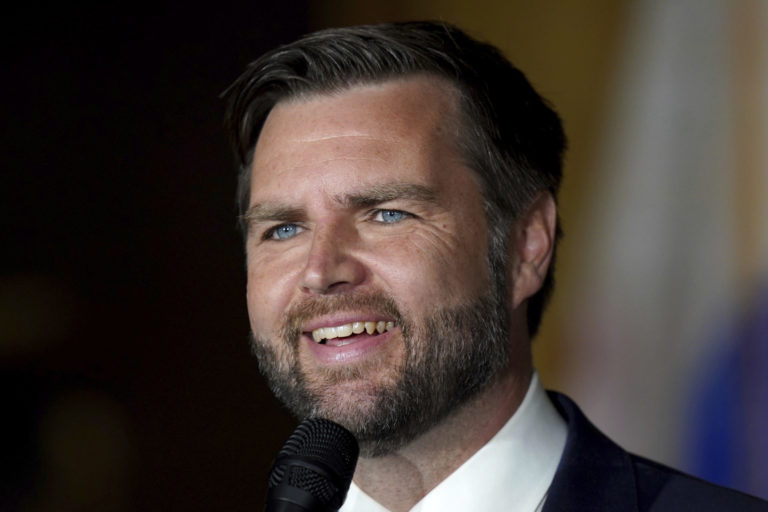
(Ken Silva, Headline USA) Journalist James O’Keefe published a shocking report Tuesday about how a Secret Service agent assigned to Vice President JD Vance’s security detail leaked details about his travels to one of O’Keefe’s undercover reporters.
Furthermore, the agent, Tomas Escotto, only became a citizen in 2018, he voted for Joe Biden for president in 2020, and he “hates ICE,” according to O’Keefe’s report, which comes on the heels of a man attacking Vance’s Cincinnati home with a hammer earlier this month.
Escotto, who may have broken the law with his leaks, has reportedly been placed on administrative leave and has had his security clearance revoked.
As is typical with O’Keefe’s journalism, Escotto was apparently catfished by the undercover female reporter—meeting her on the dating app Tinder. Footage shows Escotto spilling the beans about his job to the reporter during a dinner date. He later texted her photos of sensitive locations, as well as details of Vance’s travel plans—telling the reporter in on Dec. 26 that the vice president would be in Ohio for four to five days before traveling to Florida for the weekend.
Escotto even sent images from Air Force Two at one point.
O’Keefe said typically he gives the government a day or two to respond to his forthcoming reports. But in this case, he worked with the Secret Service and agreed to redact information that could compromise Vance’s security.
Secret Service Deputy Director Matthew Quinn issued a statement in response to O’Keefe’s reporting.
“The U.S. Secret Service has no tolerance for any behavior that could potentially compromise the safety, privacy or trust of our protectees,” he said.
“This incident is under investigation and the employee involved has been placed on administrative leave with his clearance suspended and access to agency facilities and systems revoked. The U.S. Secret Service has also issued an order for all personnel to retake the agency’s required anti-espionage training… The U.S. Secret Service deeply apologizes to the Vance family for this violation of their trust and privacy.”
Quinn also reportedly issued an internal memo about the matter, complaining about O’Keefe’s tactics.
“Over the past several months, an agency employee was deliberately targeted and manipulated by a citizen-journalism media organization that misrepresented itself in an effort to get close to the employee and expose sensitive information. This is the second time in less than a year that our personnel have been subjected to this same deceptive tactic,” he said.
“Sadly in this instance, the employee failed to meet the standards demanded of this agency and engaged in conduct that runs counter to our values, our policies, and the training we provide to prevent exactly this type of compromise,” he added.
Earlier this month, a man encroached onto Vance’s property in Ohio, breaking windows and causing other damage. The Secret Service heard a loud noise at the home around midnight and found a person who had broken a window with a hammer and was trying to get into the house.
The attacker in that case, William D DeFoor, who was born biologically male but identifies as a woman, is in jail pending trial.
Ken Silva is the editor of Headline USA. Follow him at x.com/jd_cashless.
(José Niño, Headline USA) The State Department canceled more than 100,000 visas during 2025, representing a 150% jump from the previous year and marking an unprecedented expansion of enforcement that swept up thousands of international students criticized for their stance on Gaza.
Dropsite News reported that officials revoked legal status for more than double the roughly 40,000 people affected in 2024 under Biden. The cancellations primarily impacted tourists and business travelers who overstayed their authorized periods, but approximately 8,000 students and 2,500 specialized workers also lost their legal standing.
Last March, Secretary of State Marco Rubio launched an initiative called “Catch and Revoke” that uses artificial intelligence to scan social media profiles of visa holders for content deemed supportive of Hamas or pro-Palestinian activism.
The AI surveillance program specifically targets international students. Officials now require student visa applicants to make their social media profiles public, and embassies search for “any indications of hostility toward the citizens, culture, government, institutions, or founding principles of the United States,” per The Guardian.
Federal agents detained Mahmoud Khalil, a former Columbia University student and green card holder, in March 2025 for his role as a negotiator during campus protests. Authorities also revoked the visa of Rumeysa Ozturk, a PhD student at Tufts University, before masked federal agents detained her.
A federal judge in Boston ruled in September 2025 that the administration’s targeting of international students for deportation on ideological grounds violated constitutional protections.
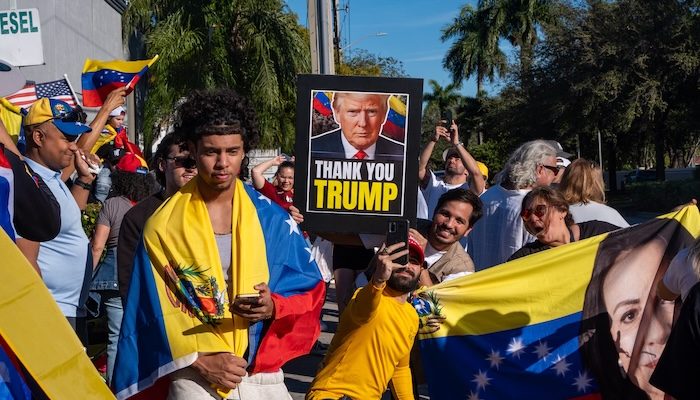
The Trump administration also expanded visa bond requirements to 38 countries, primarily in Africa, South America, and Asia. Certain applicants must now post refundable bonds of $5,000 to $15,000, with Venezuela and Cuba added shortly after U.S. military operations targeting Venezuelan leader Nicolás Maduro, VisaHQ reported.
José Niño is the deputy editor of Headline USA. Follow him at x.com/JoseAlNino
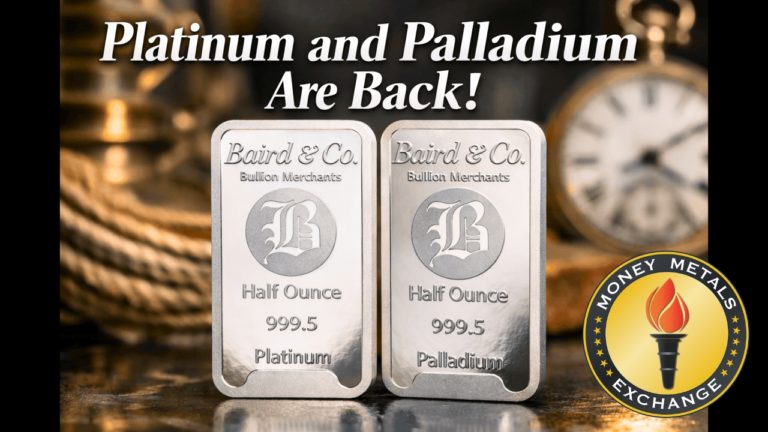
Gold and silver remain the cornerstone precious metals for most investors. Still, the discussion highlighted why platinum and palladium are re-entering the spotlight as supply tightens, industrial demand holds up, and investors look for diversification inside the broader hard asset complex.
Platinum’s Late 2025 Breakout Was Not a Fluke
Nick Smart described 2025 as a pivotal year for platinum, particularly in the last six months. That move followed multiple years of weak pricing that often sat below $1,000 per ounce.
His argument was direct. Years of underinvestment in mine supply met changing demand dynamics. Above-ground inventories began depleting, and the gap between supply and demand widened. When a market is that tight, prices tend to move quickly once the imbalance becomes apparent.
A Smaller Market Than Most Investors Realize
One of the most important points from the conversation is scale.
Smart put global primary platinum production at roughly 6 million ounces per year, with palladium in a similar range. He contrasted that with gold at roughly 120 to 130 million ounces annually, which underscores that platinum and palladium are far thinner markets than most investors expect.
In a market this small, it does not take a dramatic shift in demand to create meaningful price pressure.
Why Supply Is So Hard to Expand
Smart explained that platinum and palladium are not just rare. They are hard to find in concentrated, economically mineable deposits.
He noted that platinum and gold can have similar average distribution levels in the Earth’s crust, measured in parts per billion. However, platinum group elements require very specific geological conditions to form ore bodies rich enough to mine.
He also underscored that about 90 percent of global platinum group element reserves are in South Africa. That concentrates supply in a single region and makes diversification difficult.
From the mining side, he highlighted another constraint. Many deposits are deep underground and require heavy upfront infrastructure investment. Prices were depressed for years, so the industry did not invest enough to build the next wave of supply. Even now, new mines can take years to bring online.
Retail Demand Is Small, But It Can Still Matter
Stefan Gleason brought the retail bullion perspective.
He said that in Money Metals’ mix, platinum has typically been about 1 percent of sales, palladium less than 1 percent, and rhodium even smaller. Gold and silver dominate the investment conversation, and those markets are more liquid.
Even so, Gleason described why platinum is getting more attention. It has its own unique drivers, and in a tight market, marginal investment demand can have an outsized impact. Physical bullion buyers also tend to be long-term holders rather than short-term traders, especially given wider bid-ask spreads in platinum products.
Tight Markets Show Up First in the Market Plumbing
Gleason also discussed stresses that show up behind the scenes, especially in financing.
He referenced a shortage of platinum in London and said borrowing costs, often called lease rates, have surged to roughly 12 to 15 percent annualized. He also noted that there have been even higher spikes during periods of extreme tightness. Higher financing costs can ripple through refineries, industrial users, and producer hedging. That adds another layer of pressure beyond simple supply and demand.
He also described a geographic pull on available metal. Inventory moved into the United States amid tariff threats. At the same time, London looked tighter. China also expanded platinum hedging and investment participation, which created competing demand centers.
Above-Ground Inventory Is the Real Alarm Bell
Gleason said platinum has less than half a year of above-ground supply. He called that level unsustainable.
That matters because when inventory buffers get thin, even small disruptions can force prices to adjust quickly. Transportation delays, regional stockpiling, or a demand surprise can all create sudden stress.
The host offered a striking comparison to show the market’s size. He suggested that roughly $6 billion could buy up the available platinum supply. The point was not precision. The point was how small this market is relative to global capital flows.
Jewelry Demand Adds a Second Tailwind
A major theme that investors often overlook is jewelry substitution.
Gleason noted that gold is now roughly twice the price of platinum. He argued that this is encouraging more platinum jewelry demand, particularly in India and China.
Smart reinforced the point from the manufacturer’s perspective. When gold prices soar, producers face higher inventory costs and risk pricing out customers. Platinum can become a practical substitute, especially for white gold, while still carrying a luxury status.
What Could Derail the Bullish Case
The main downside risk discussed was a sharp economic slowdown.
Gleason said platinum is more economically sensitive than gold and silver. A deep recession could weigh on platinum demand, and palladium could be hit even harder. However, he also suggested that an inflationary slowdown could still be constructive for hard assets broadly.
Smart focused on what has changed structurally in auto demand. The shift to battery electric vehicles has not happened as aggressively as many forecasts assumed.
He said that in 2025, about 75 percent of new vehicles sold in the United States are still internal combustion engine vehicles. He identified hybrids as the fastest-growing global category. He also emphasized that hybrids can use more platinum and palladium than conventional engines, which supports industrial demand rather than weakening it.
Where Platinum and Palladium Fit in a Precious Metals Strategy
For most investors, gold and silver remain the foundation.
Still, this discussion highlighted why platinum and palladium can play a role. They bring a different set of drivers inside the precious metals universe, including industrial demand, constrained supply, and a market structure that can react sharply when inventories get thin.
For investors who already hold gold and silver, adding a modest allocation to platinum or palladium can diversify exposure across the precious metals complex. The supply picture described in this interview is one reason these metals are drawing attention again.
Buy Platinum, Palladium, Gold, and Silver from Money Metals
Money Metals Exchange offers a wide selection of physical precious metals for investors. That includes gold and silver bullion, plus platinum and palladium products.
If you want to build or diversify your holdings with physical metal, Money Metals makes it easy to buy securely and take delivery. You can also arrange professional storage through a trusted United States dealer that focuses on serving long-term precious metals investors.
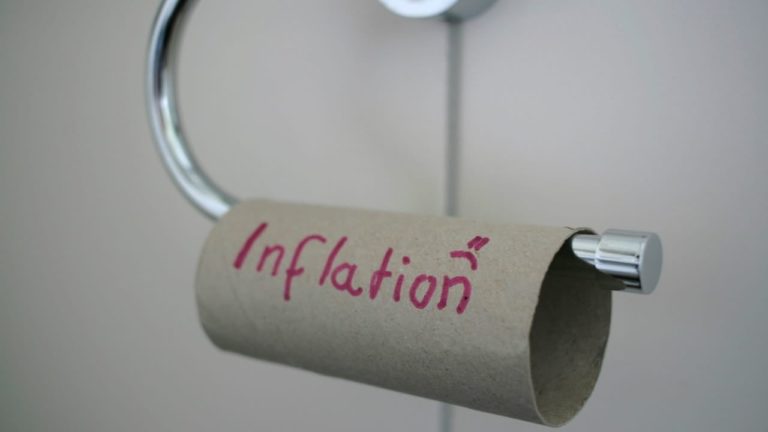
(Mike Maharrey, Money Metals News Service) Analysts warned that the December CPI report would be “muddy.”
It was.
But you will find what you really need to know about the current trajectory of inflation in two unrelated charts.
The CPI Data
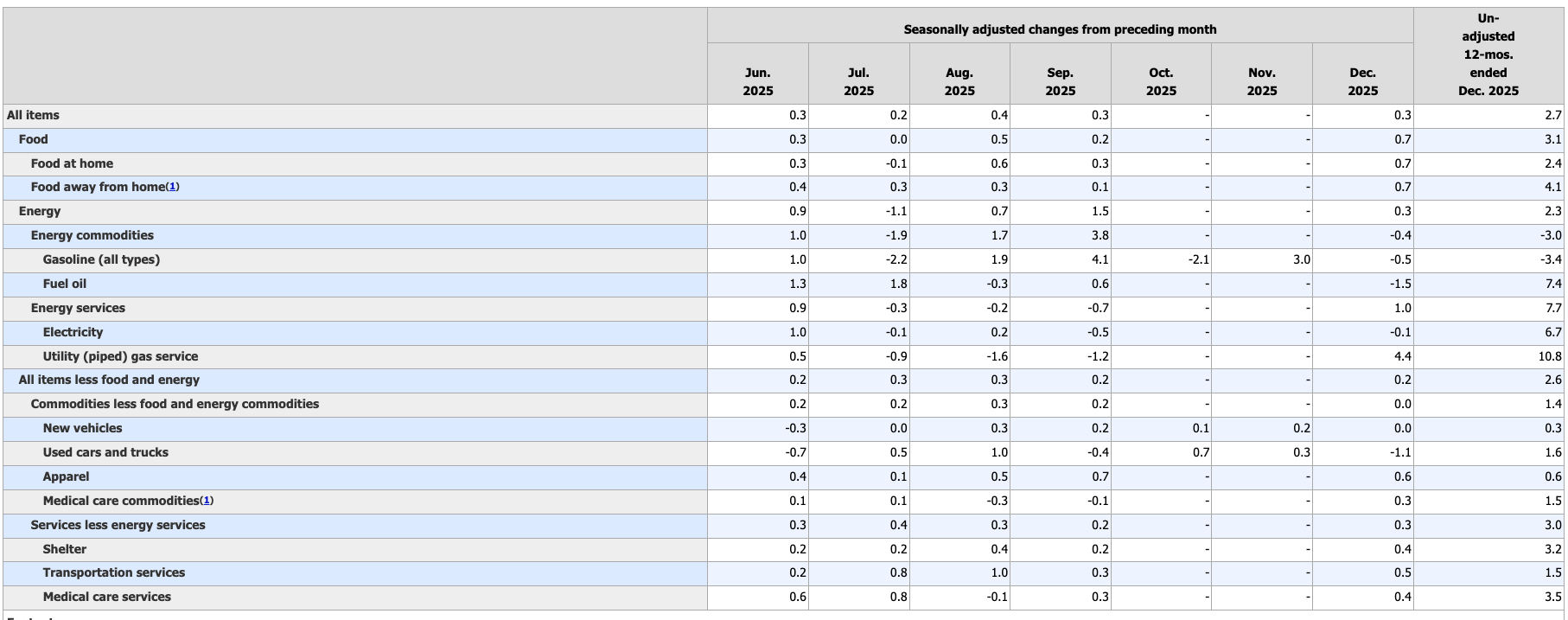
The December data were generally in line with expectations. Core CPI was even slightly cooler than expected, injecting a bit of optimism in the marketplace.
Overall, prices rose 0.3 percent month-on-month, in line with expectations. The headline annual CPI rate was unchanged at 2.7 percent, still well above the mythical 2 percent target.
Stripping out more volatile food and energy prices, core CPI prices rose 0.2 percent month on month. The annual core CPI held steady at 2.6 percent.
The core data came in slightly lower than projected, pumping some optimism that the Fed will continue its monetary easing in 2026 into the market.
However, over the last six readings (with no October data), core CPI has increased by 0.2, 0.3, 0.3, 0.2, 0.2, and 0.2 percent, annualizing to 2.8 percent. Core CPI has been mired in this range for well over a year.
Digging a little deeper into the numbers, we find shelter prices rose 0.4 percent month-on-month. Meanwhile, food prices surged by 0.7 percent in December. Energy prices also ticked up 0.3 percent, despite gasoline prices dropping by -0.4 percent.
Service costs rose by 0.3 percent, reflecting price gains mostly unconnected with tariff pressures.
Used cars and trucks charted the biggest price drop, falling 1.1 percent.
Quite frankly, you should always be reluctant to read too much into these reports because they understate price inflation by design. The government revised the CPI formula in the 1990s so that it understated the actual rise in prices. Based on the formula used in the 1970s, CPI is closer to double the official numbers. So, if the BLS used the old formula, we’d be looking at CPI closer to 6 percent. And using an honest formula, it would probably be worse than that.
However, this government data drives decision-making, so we need to pay attention to what it tells us.
And the December report tells us that inflation is still well above the Fed’s stated target, despite being core readings being “cooler than expected.”
Morgan Stanley chief economic strategist Ellen Zentner put it this way.
“We’ve seen this movie before — inflation isn’t reheating, but it remains above target. There’s still only modest pass-through from tariffs, but housing affordability isn’t thawing. Today’s inflation report doesn’t give the Fed what it needs to cut interest rates later this month.”
The Real Inflation Story
The CPI tracks the changes in the price of a pre-determined “basket of goods.” This provides some insight into general price movements in the economy. But it doesn’t really tell us about “inflation” – at least in the sense economists used to define the word.
Technically speaking, inflation is an increase in the supply of money and credit. Rising consumer prices (measured by the CPI) are just one symptom of this monetary inflation. In other words, the CPI report is kind of like a thermometer. It can tell you if you have a fever, but it can’t tell you what’s causing it.
To get the full inflation picture, you need to look at the trajectory of the money supply.
By that metric, we have plenty of inflation, and it is accelerating!
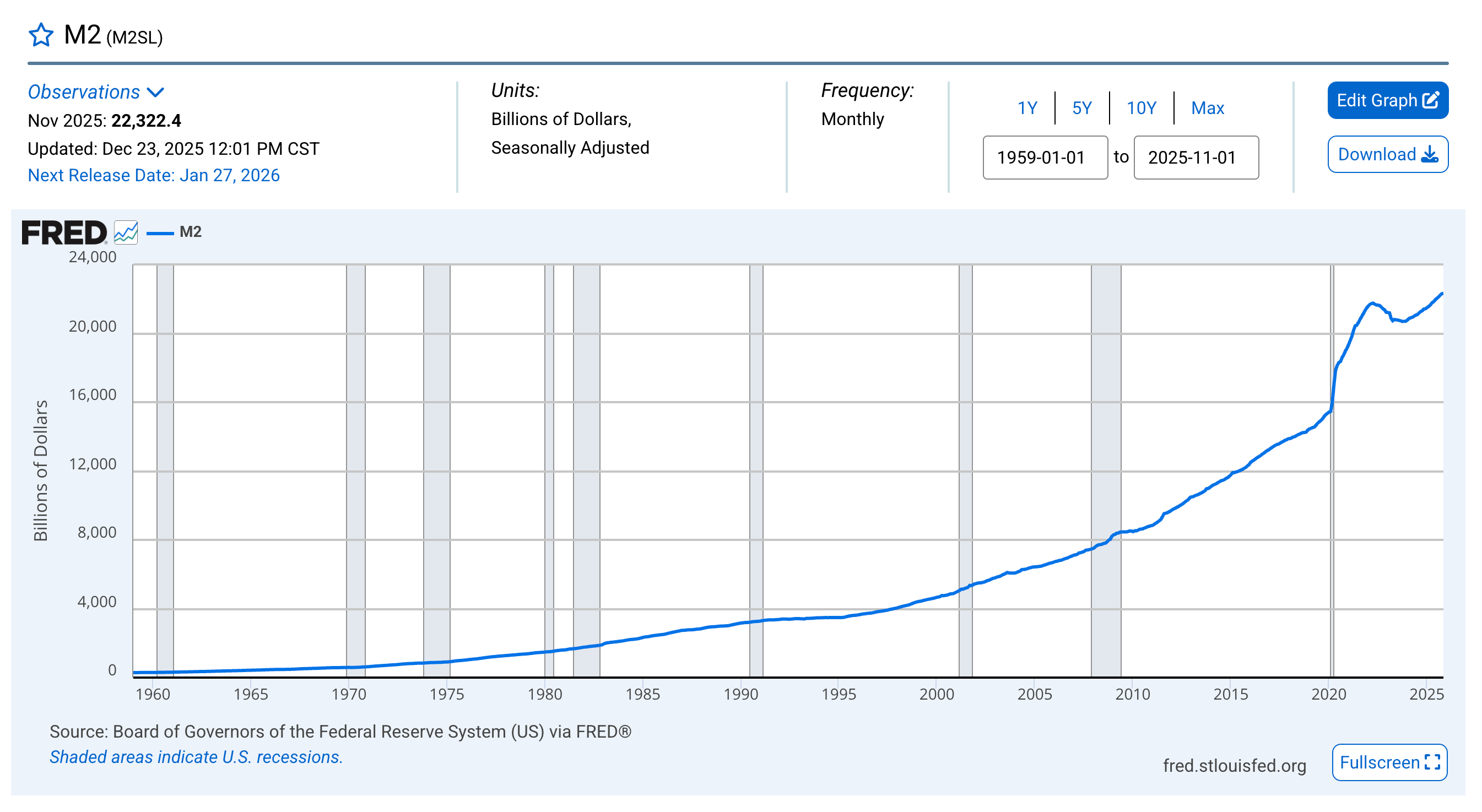
After peaking in April 2022, the money supply began to decline as the Fed hiked rates that year. The money supply bottomed in October 2023 and began increasing again. The money supply is now well above the pandemic peak.
And money creation has accelerated over the last several months.
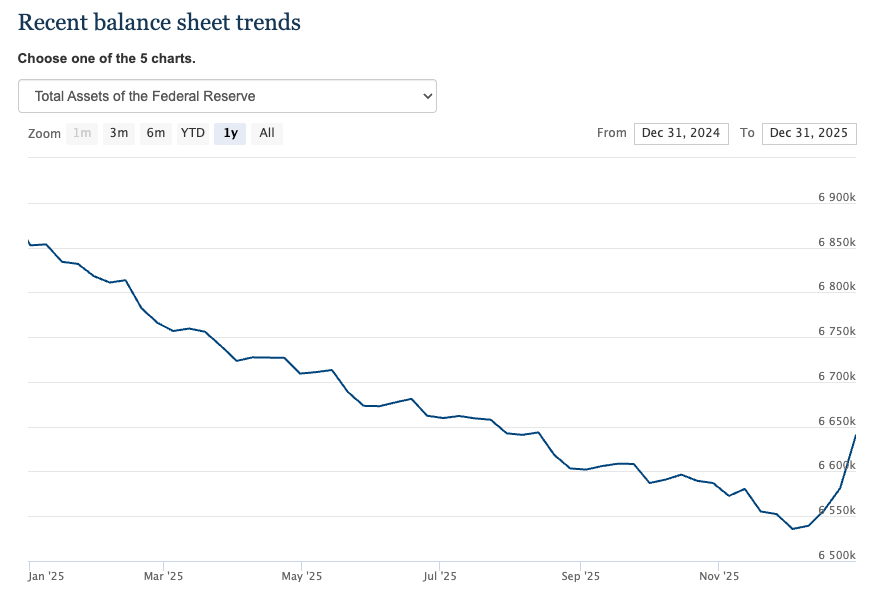
We also know inflationary pressures are increasing because the Federal Reserve is once again expanding its balance sheet.
While you’ll never hear anybody at the Fed utter the term, the central bank relaunched quantitative easing last month. That means they are once again buying U.S. Treasuries using money created out of thin air.
Again – this is by definition inflation.
So, why would the central bank continue to loosen monetary policy even when faced with sticky inflation?
Because, as I have been saying for months, the Fed is in a Catch-22.
The Fed needs to cut interest rates and run quantitative easing to support the debt-riddled bubble economy. But it also needs higher rates to keep price inflation under control.
Obviously, it can’t do both.
Any “cooler than expected” CPI report will throw more fuel on the easing fire and raise the possibility for more this year, despite the central bankers’ efforts to tamp down expectations for further easing.
In other words, you get more inflation — despite what the CPI data might indicate.
Mike Maharrey is a journalist and market analyst for Money Metals with over a decade of experience in precious metals. He holds a BS in accounting from the University of Kentucky and a BA in journalism from the University of South Florida.
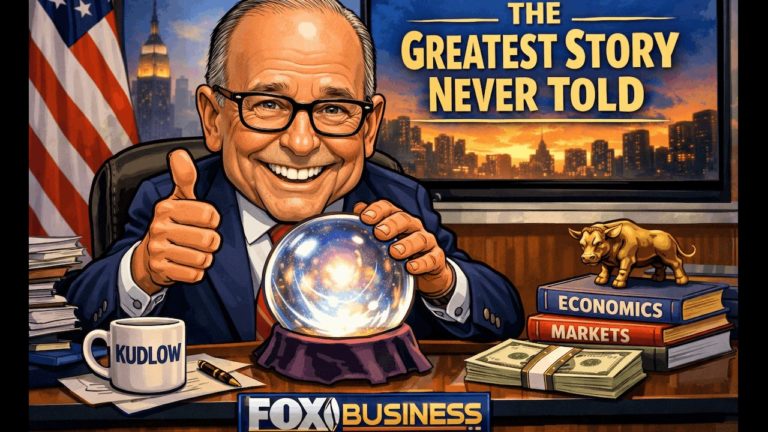
(Mike Maharrey, Money Metals News Service) Did Larry Kudlow just predict a financial crisis and recession in 2026?
Kudlow is a prominent conservative economic commentator who hosts a show on Fox Business. He served as Director of the National Economic Council (NEC) in the first Trump administration.
Kudlow first referenced the stock market, noting that it continues to hit new record highs.
“Stocks up, taxes down. Stocks up, federal regulations down. Stocks up, energy prices down.”
He emphasized the importance of falling oil prices, noting that oil “permeates virtually the whole economy.”
Kudlow also talked up the impact of tax cuts, climbing GDP growth, and falling price inflation, and lauded the ongoing “business boom.”
He closed out his commentary proclaiming, “Falling energy prices are going to hand the midterms over to the GOP as long as they sell it. It’s the greatest story never told.” [Emphasis added]
Now, you’re probably thinking, “Mike, this doesn’t sound like a guy who thinks we’re running headlong into an economic crisis.”
And you’re right. He doesn’t.
And he didn’t expect a financial crisis or a Great Recession in 2008 either.
In fact, he used the same phrase to describe the 2008 economy – calling it “the greatest story never told.”
“Despite all the doom and gloom from the economic pessimists, the resilient U.S. economy continues moving ahead,” he wrote, going on to predict those warning about economic problems would end up “with egg on their faces.”
“There’s no recession coming. The pessimistas were wrong. It’s not going to happen. The Bush boom is alive and well. It’s finishing up its sixth consecutive year with more to come. Yes, it’s still the greatest story never told.”
Maybe Kudlow should quit telling stories.
We all know what happened less than one year later.
I’m not writing this to pick on Kudlow. He was far from alone in 2008. In fact, most mainstream pundits and prognosticators insisted everything was fine in early ‘08.
This underscores a couple of problems when it comes to mainstream economic forecasting on the big networks.
The first problem is that people who support the current administration will always spin data to try to convince you that the economy is booming. Remember all the talking heads claiming Biden was bringing down inflation and solving the deficit problem?
The second problem is that most pundits fail to interpret current economic data within a broader macroeconomic framework.
I don’t think the U.S. economy is heading toward a cliff because the economic data is signaling a crash (although there are signs). I think the U.S. economy is heading toward a cliff because I’ve watched this movie before.
I understand how the loose monetary policy to stimulate the economy after the dot-com bubble burst blew up the housing bubble in the early 00s, setting the stage for 2008.
I understand that the Federal Reserve never unwound the extraordinary monetary policy of that era. I understand that the economy was cracking under the weight of rising interest rates in 2019, and the Fed pivoted to rate cuts and quantitative easing, trying to stave off a recession (just like it is today).
I understand that the pandemic was a gift for the government because it gave them an excuse to go all in on monetary and fiscal stimulus that kicked the inevitable recession down the road.
I understand how these decades of easy money have created a giant Debt Black Hole that dominates the economy today.
I understand how this monetary malfeasance fed asset bubbles, incentivized malinvestment, and created an artificial boom.
And I know that when you have a boom, there is always a bust.
I really can’t blame Kudlow and others who are convinced everything is fine. The problems aren’t obvious. They are bubbling under the surface, as they were in late 2007 and early 2008.
But, as I said, there are signs. Gold and silver, cruising to record highs day after day, are telling us something. It’s not that gold and silver are getting more valuable this quickly. We’re watching the decline of the dollar in real time.
But right now, the data looks OK. And Trump has done some positive things in terms of tax and regulatory policy. But Trump (or any president) can’t undo the inevitable effects of nearly 20 years of easy money. The best any administration can do is keep the easy money spigot running and cross their fingers that inflation doesn’t get too out of control.
The Fed has been trying to walk this tightrope for months. But at some point, economics will take control. It might not be in the next six months. It might not even be this year. But we will pay the piper for the monetary malfeasance of the last two decades. You would be wise to prepare, Kudlow’s confidence notwithstanding.
Mike Maharrey is a journalist and market analyst for Money Metals with over a decade of experience in precious metals. He holds a BS in accounting from the University of Kentucky and a BA in journalism from the University of South Florida.
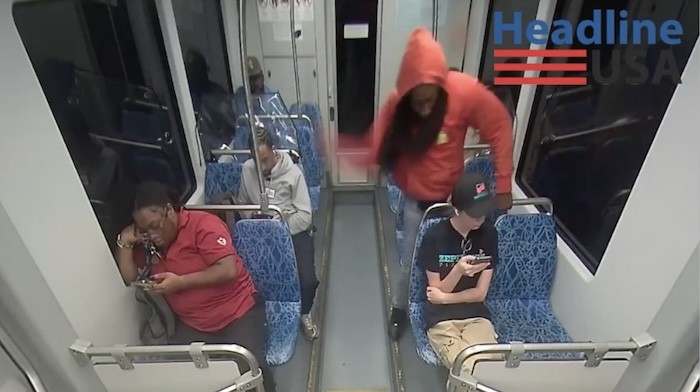
(Ken Silva, Headline USA) A federal judge is prohibiting police from releasing footage of officers arresting the man who allegedly stabbed Ukrainian refugee Iryna Zarutska to death on a Charlotte train on Aug. 22.
In a Friday order, U.S. District Judge Kenneth Bell agreed that publicizing the footage of Decarlos Brown Jr.’s arrest could prejudice his constitutional rights to due process and a fair trial, and also endanger key witnesses and others depicted in the recordings—either physically or reputationally.
Therefore, “the release of any and all law enforcement and ‘911’ emergency recordings relating to the August 22, 2025 events that are the subject of the indictment, including all body camera recordings, dashboard camera recordings, cell phone recordings, surveillance recordings from the CMPD ‘Real Time Crime’ cameras, or any other recordings in the possession, custody, or control of the CMPD’s Office or other governmental agencies is prohibited without prior authorization from the Court,” he said.
A US judge is prohibiting police from releasing footage of officers arresting the man who allegedly stabbed Ukrainian refugee Iryna Zarutska to death on a Charlotte train. In his order Friday, the judge agreed that publishing the material could jeopardize the safety of witnesses. https://t.co/KGCfk57rq9pic.twitter.com/9br8eUs0IZ
Judge Bell’s order was in response to a lawsuit filed in state court by WSOC-TV, which sought copies of the above-mentioned recordings. A state judge was going to release the recordings to the news outlet to review and see if they should be made public, but Brown asked the federal judge to intervene—and the judge did.
Zarutska’s family is allowed to have the recordings, but is not allowed to distribute or publish them.
Brown has yet to enter a plea in federal or state court. His lawyers filed a motion in December seeking to deem Brown incompetent to stand trial.
A state judge has already ordered Brown to undergo an evaluation at a local mental hospital. His lawyers said that evaluation should be finished by this month.
Additionally, Brown’s lawyers filed a motion signaling that they will ask for the case to be moved to another jurisdiction due to the publicity he’s received in Charlotte.
Ken Silva is the editor of Headline USA. Follow him at x.com/jd_cashless.
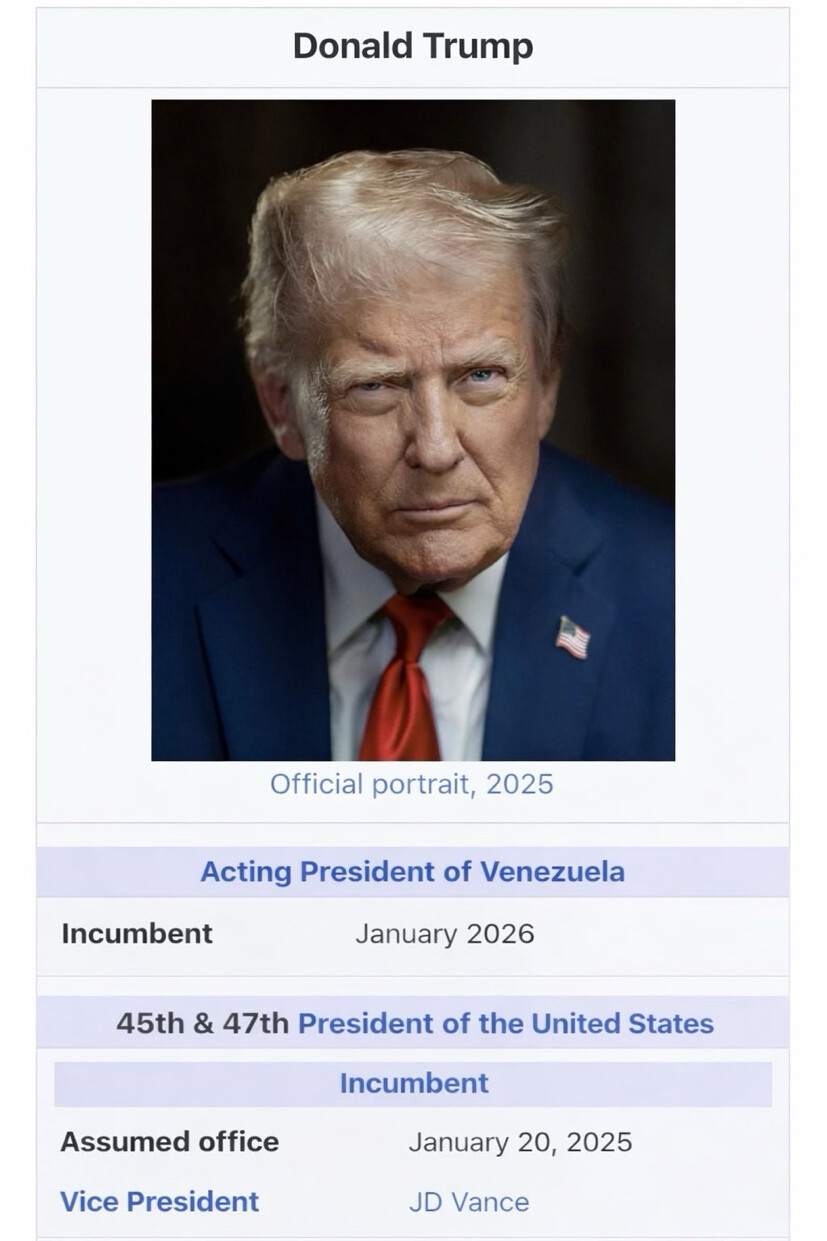
(Dave DeCamp, Antiwar.com) President Trump on Sunday shared a picture of a fake Wikipedia page that described him as the “Acting President of Venezuela” as he continues to push the idea that the US is “running” the country following the attack to abduct President Nicolas Maduro.
Trump has insisted that the real acting president of Venezuela, Delcy Rodriguez, who served as Maduro’s vice president, is willing to go along with his plan, which has received a cool reception from US oil companies.
While Rodriguez has said she’s willing to cooperate with the US, her government has maintained a message of unity and defiance in the face of US aggression and continues to call for the release of Maduro and his wife, Cilia Flores.
Picture posted on Trump’s Truth Social Account
“In these difficult times our country is experiencing, Venezuelans have once again demonstrated that our greatest strength is national unity and historical awareness,” Rodríguez said in a post on Telegram on Monday.
“The collective response has been one of firmness, serenity, and determination to preserve peace, raise our voices for the release of President Nicolas Maduro and First Lady Cilia Flores, and defend the constitutional order, which guarantees protection and social justice for our people,” she added.
In comments on Sunday, Rodriguez said that “the enemy’s great victory would be division” and warned Venezuela was in an unequal confrontation with a “nuclear power.” She added that Venezuela has a “moral and historical superiority that inspires us to resist.”
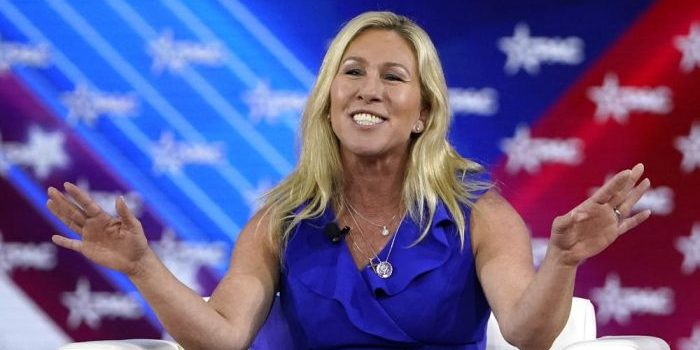
(José Niño, Headline USA) The White House informed the Secret Service that former Rep. Marjorie Taylor Greene, R-Ga., may have alerted Code Pink protesters about President Donald Trump’s surprise September visit to a Washington restaurant she recommended, according to two sources on Trump’s team. The incident at Joe’s Seafood sparked achaotic confrontation that embarrassed the president and raised serious security concerns just one year after an assassination attempt.
Greene forcefully rejected the allegations, telling Axios the suggestions were “an absolute lie, a dangerous lie. I would never do that.” She emphasized that while she recommended the restaurant to Trump, she had no knowledge of when he would actually visit the establishment.
The former congresswoman defended herself onsocial media, stating “This is exactly what I told this little WH tool that wrote this absurd dangerous LIE about me on behalf of the WH because they are mad at me for telling the truth about the President and forcing the release of the Epstein files.”
This is exactly what I told this little WH tool that wrote this absurd dangerous LIE about me on behalf of the WH because they are mad at me for telling the truth about the President and forcing the release of the Epstein files. Now they are making up horrific lies about me!!… https://t.co/ab8MxGe87v
— Former Rep. Marjorie Taylor Greene🇺🇸 (@RepMTG) January 9, 2026
Greene then placed blame on security protocols, demanding answers about why the Secret Service failed to sweep the venue. “Why didn’t secret service sweep the restaurant??? Why didn’t they set up metal detectors and check every person at the door like they do at every single public event he attends???” she questioned. She insisted that only the fancy lobbyist hangout near the White House and Trump aides knew about the reservation.
Trump’s September 9 outing with Vice President Vance and Cabinet members was designed to demonstrate that National Guard deployment had improved DC safety. Instead, Code Pink activists got within feet of his table, chanting “Free DC! Free Palestine! Trump is the Hitler of our time!”
White House officials base their suspicions on two factors. First, Greene repeatedly called staffers the day of the dinner to confirm Trump was going, prompting the president to phone her shortly before departing. Second, her friendship with Code Pink co-founder Medea Benjamin raised eyebrows, particularly given their shared opposition to military aid for Ukraine and Israel.
Code Pink spokesperson Melissa Garriga dismissed the notion as comical, stating “That absolutely did not happen.”
Greene maintained her innocence, explaining “He went to Joe’s in September, 2 months before he turned on me and attacked me. We had no ill will and a great relationship at the time.” She added “I do not have Medea Benjamin’s phone number and do not have any contact with her.”
The incident marked a turning point in Trump’s relationship with Greene, who left office this past week.
The Secret Service declined to comment on whether Greene faces investigation.
José Niño is the deputy editor of Headline USA. Follow him at x.com/JoseAlNino
UPDATE: Shortly after this article’s publication, it was reported that the Clintons are refusing to testify to Congress about Jeffrey Epstein. The headline of this article has been updated accordingly, while the rest of the article remains unchanged.
See Hillary Clinton’s statement on the matter here:
(Morgan Sweeney, The Center Square) Former President Bill Clinton and former Secretary of State Hillary Clinton are supposed to sit for closed-door depositions this week as part of the ongoing Epstein files investigation, but it remains unclear if they will be attending.
The depositions have already been pushed back twice.
In August, the House Committee on Oversight and Government Reform subpoenaed Department of Justice records, a number of former attorneys general and FBI directors, and the Clintons. The Clintons’ subpoenas directed them to meet with congressional investigators for private testimony in October.
Their attorney has argued that neither of them has information relevant to the investigation. Their depositions were pushed back to mid-December. The attorney later requested to reschedule the December dates reportedly due to a funeral, according to Politico. They were rescheduled for Tuesday, Jan. 13, and Wednesday, Jan. 14.
The Center Square reached out to Chairman James Comer, R-Ky., and several other members of the committee on whether the committee had heard from them as of Monday but did not hear back in time for publication.
The committee had not released a new statement on the Clintons’ requested appearance as of 8 p.m. Monday.
In December, Comer said in a statement that the committee would begin “contempt of Congress proceedings” if the Clintons’ depositions didn’t happen.
“The former President and former Secretary of State have delayed, obstructed, and largely ignored the Committee staff’s efforts to schedule their testimony. If the Clintons fail to appear for their depositions next week or schedule a date for early January, the Oversight Committee will begin contempt of Congress proceedings to hold them accountable,” Comer said.
It is rare for Congress to subpoena former presidents, and rarer still for them to provide in-person, sworn testimony as part of a congressional investigation. President Donald Trump sued when he was subpoenaed to testify regarding Jan. 6.
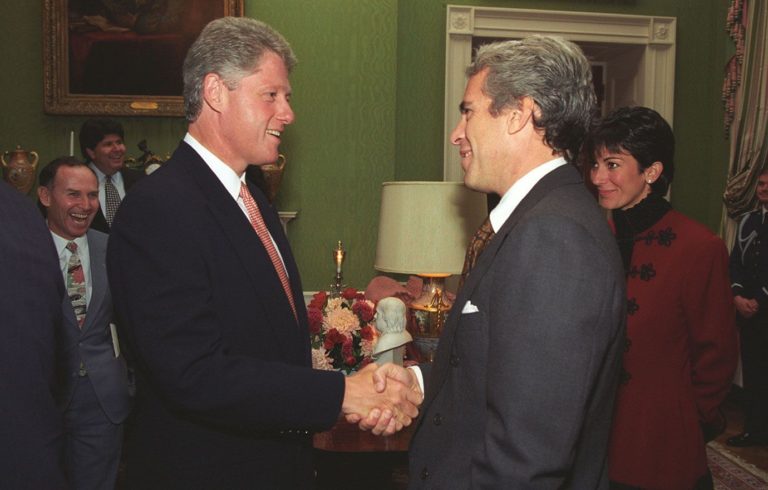
It is well-established that Bill Clinton knew the disgraced financier and sex trafficker. Clinton has admitted to having flown on Epstein’s private jet, and Epstein also reportedlyvisited the Clinton White House numerous times (along with his associate Ghislaine Maxwell at least once). Maxwell has told Deputy Attorney General Todd Blanche that Clinton was a friend of hers. Maxwell’s nephew worked for Hillary Clinton’s 2008 presidential campaign and “was hired by the State Department shortly after” she became secretary of state, Clinton’s subpoena notes.
Trump also knew Epstein and it was reported in December that flight logs showed he had flown on his jet eight times. Like Bill Clinton, his name has also been mentioned many times in the Epstein files. Trump has not been subpoenaed in the Epstein files investigation, and in July, when the FBI said it wouldn’t be disclosing any more of the files, it also said it “did not uncover evidence that could predicate an investigation against uncharged third parties.”
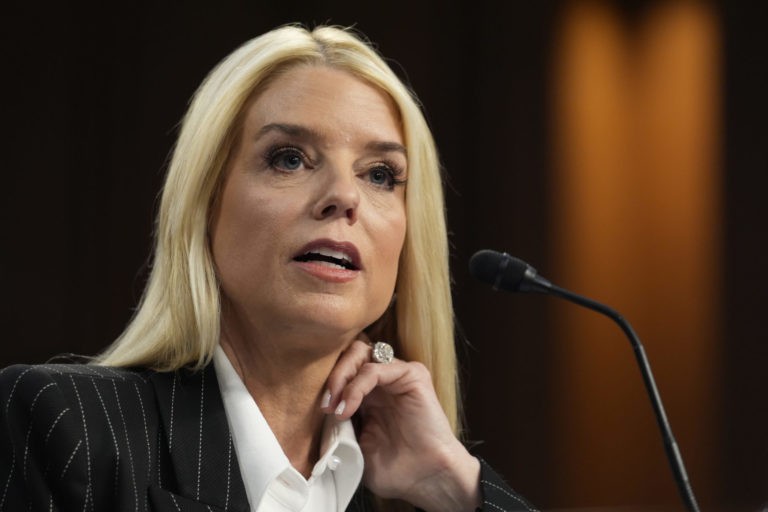
(Ken Silva, Headline USA) President Donald Trump is reportedly not happy with Attorney General Pam Bondi, characterizing her as “weak” and “ineffective” behind closed doors.
According to the Wall Street Journal, Trump is displeased with Bondi’s lack of successful prosecutions against political operatives who targeted him in the past.
Bondi’s Justice Department indicted former FBI Director James Comey for perjury and New York Attorney General Letitia James for mortgage fraud, but those cases were tossed after judges ruled that the attorneys who brought the indictments were improperly appointed. Bondi’s DOJ has yet to secure new indictments.
“Trump has also complained frequently that Bondi’s handling of the Federal Bureau of Investigation’s files on convicted sex offender Jeffrey Epstein has created months of political and personal headaches for him,” the Journal reported, citing anonymous sources.
Bondi was reportedly behind the decision to have conservative influencers pose in front of cameras with binders of “Epstein files” that didn’t contain any new material. After the first release fell flat, Bondi said officials were poring over a “truckload” of previously withheld evidence she said had been handed over by the FBI and raised expectations of forthcoming releases.
Her department has since missed a Dec. 18 deadline—a date set by congressional legislation—to release all of the DOJ records on Epstein. Lawyers are reportedly reviewing millions of newly discovered pages.
Additionally, Trump has reportedly “expressed frustration that the Justice Department hasn’t done more to pursue those he claims helped steal the 2020 election.”
According to the Journal, Bondi has grown “increasingly concerned” in the past month about Trump’s complaints.
But when reached for comment, Trump stood behind his attorney general, whom he appointed after unsuccessfully trying to appoint former Rep. Matt Gaetz.
“Pam is doing an excellent job. She has been my friend for many years,” Trump reportedly said in a statement to the Journal. “Tremendous progress is being made against radical left lunatics who are good at only one thing, cheating in elections and the crimes they commit.”
However, Trump did publicly vent his frustrations with Bondi last September, when he posted on Truth Social that had received numerous complaints that the DOJ is “all talk, no action” when it comes to investigating Democrats. Some speculated that Trump meant to privately message Bondi, but accidentally posted it for the public to see.
“‘They’re all guilty as hell, but nothing is going to be done,’” Trump wrote, quoting some of the criticisms he said he had heard.
“We can’t delay any longer, it’s killing our reputation and credibility,” Trump continued. “They impeached me twice, and indicted me (5 times!), OVER NOTHING. JUSTICE MUST BE SERVED, NOW!!!”
Ken Silva is the editor of Headline USA. Follow him at x.com/jd_cashless.