(Bethany Blankley, The Center Square) After years of investigating aviation security, retired federal investigators and 9/11 whistleblowers argue terrorism threats are very real and unless greater security measures are implemented, another similar terrorist attack could happen again.
One of them, a former U.S. Air Marshall and Federal Aviation Administration security (Red Team) leader, Bogdan Dzakovic, was responsible for determining how effective U.S. aviation security was in preventing terrorist attacks. Prior to 9/11, they uncovered a crisis.
FAA Red Teams were established after the 1998 Pam Am bombing. At the time, it was considered the greatest terrorist attack committed against American civilians.
On Dec. 21, 1988, Pan Am Flight 103 left Frankfurt, Germany, with a stop in London before heading to the U.S. Forty minutes into the flight, it blew up over Lockerbie, Scotland. All 259 people on board, including 190 Americans and 11 Scots on the ground, were killed.
The mastermind was a Libyan intelligence officer who planted a bomb in luggage that went undetected. The plane exploded at 30,000 feet, raining debris over 845 square miles, “creating the largest-ever crime scene,” the FBI says. A decades-long investigation led to the prosecution and conviction of Abdelbaset Ali Mohmed al-Megrahi. In 2001, he was sentenced to life in prison only to be released eight years later.
Five years before Pan Am, a Hezbollah suicide bomber drove a truck full of explosives into U.S. Marine barracks, killing 241 on Oct. 23, 1983. A similar attack against the U.S. Embassy in Beirut occurred on April 18, 1983, killing 17 Americans, including eight CIA officers.
After the 1979 Iranian Revolution that held 66 Americans hostage for 444 days, the 1980s and 1990s were marked by a pattern of Islamic terrorist attacks. They increasingly involved suicide bombers and plane hijackers with a motivation to cause mass casualties, Dzakovic told The Center Square in an exclusive interview. After Pan Am, the major terrorist attacks that motivated him to “think like a terrorist” and realize the U.S. was a prime target were the 1994 Air France hijacking and the 1995 Bojinka Plot, he said.
On Dec. 24, 1994, four members of the Armed Islamic Group of Algeria hijacked Air France Flight 8969 departing Algiers intent on flying it into the Eiffel Tower. The plane landed in Marseilles with the hijackers believing it was to refuel but special forces stormed the plane and killed them.
In January 1995, a fire in a Manila apartment led to authorities uncovering a massive terrorist plot after they found bombmaking materials and a laptop. Laptop files showed plans to plant bombs on 11 U.S. airplanes to simultaneously blow them up over the Pacific Ocean. The masterminds were Kuwaiti born Pakistanis Ramzi Yousef and his uncle, Khalid Sheikh Mohammed.
Yousef had so far evaded authorities after orchestrating the Sept. 26, 1993, World Trade Center bombing, which killed six and wounded hundreds more. He was later found and convicted in 1997 and sentenced to life in prison. Mohammed, the former head of propaganda for al-Qaeda and mastermind behind the 9/11 attacks, is currently detained at Guantanamo Bay.
Islamic terrorism patterns entering the aviation field “should have been a major eye-opener to U.S. federal law enforcement, security, and intelligence agencies,” Dzakovic said.
In 1999, he began working with Steve Elson, a retired Vietnam-era Navy SEAL and FAA Special Agent, and Brian Sullivan, a retired Vietnam-era Army lieutenant colonel and FAA Special Agent, to identify aviation vulnerabilities to thwart terrorist attacks. Elson and Sullivan had already been sounding the alarm about a crisis in aviation security. Sullivan repeatedly warned about vulnerabilities at Logan International Airport in Boston, contacting state and federal authorities who ignored his warnings, he said.
For years, Dzakovic’s Red Teams tested airport security smuggling inert weapons and mock bombs onto commercial flights, with a success rate of 95%. Published reports detailed findings, concluding U.S. airports and airplanes were vulnerable to an attack.
Dzakovic, Sullivan and Elson urged the FAA to strengthen airport security, luggage screening and checkpoints and fortify cockpit doors, to no avail. They brought the same concerns to other federal agencies, Congress and President George W. Bush to no avail.
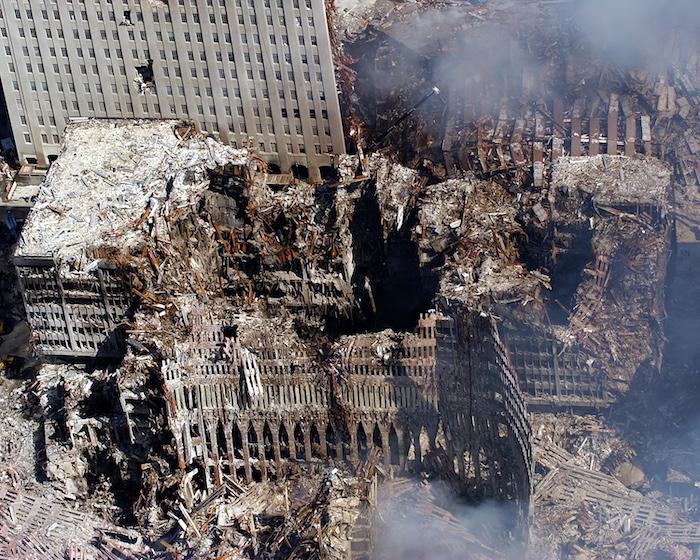
Their worst fear came true on 9/11. For Sullivan, this hit close to home. Ten of the terrorists boarded two planes after getting through security with box cutters at Logan Airport – the very airport Sullivan warned had failed security tests. They hijacked the planes and flew them into the Twin Towers, killing nearly 3,000.
While Elson and Sullivan retired, Dzakovic filed a formal whistleblower disclosure with the U.S. Office of Special Counsel, stating the “FAA executed its civil aviation security mission in a manner that was a substantial and specific danger to public safety.” He submitted more than 500 pages of documentation. One year later, the OSC agreed with his assessment.
Dzakovic also testified before the 9/11 Commission about the FAA refusing to implement security measures after Red Teams successfully placed inert explosive device components in luggage that made it onto commercial aircraft 31 times. None of the evidence he presented was included in the commission’s report, he said.
“What happened on 9/11 was not a failure in the system, it was a system designed for failure,” he told The Center Square.
“The terror threat is real and ongoing, especially in light of the U.S. conflict with Iran,” Sullivan told The Center Square. Citing the Airline Pilots Association who warned last year that “aviation remains a primary target for terrorists who are constantly probing for weaknesses,” he said U.S. leaders “need to get serious about the vulnerabilities in our aviation security system before our adversaries take advantage of them again.”
(Chris Wade, The Center Square) President Donald Trump touted his record on crime and public safety during a visit to New York on Friday, which was also aimed at boosting Republican candidates in tightly contested races ahead of the midterms.
Trump toured the Nassau County Police Academy in Long Island, where he highlighted new FBI crime statistics showing a drop in violent crime last year. In remarks, the president highlighted a drop in violent crime, immigration crackdowns and support for police during his second term in the White House, praising New York law enforcement officials packed into the auditorium for “making America safe again.”
“In the past four years before I took office, the country was overrun by violent criminals,” Trump said in his remarks. “You remember just a couple of years ago how bad it was, right? Foreign gangs, savage thugs. Sleepy Joe. That was four years of hell. We lived in hell.”
The FBI’s preliminary 2025 crime data shows violent crime fell an estimated 9.3% nationwide compared with 2024, including an 18.1% decrease in murder and non-negligent manslaughter. The agency says that’s the single largest yearly decrease in those categories since 1937.
But the president’s visit was also aimed at boosting Republicans in closely contested races across his former home state, including two Long Island congressional seats held by Democrats that Republicans are hoping to flip in the fall elections.
Trump also stumped for Nassau County Executive Bruce Blakeman, a Republican challenging Democratic Gov. Kathy Hochul, pointing out that his county has one of the best public safety ratings in the nation.
“Think of that — the number one safest county in the United States of America,” Trump said from the podium, turning to Blakeman on the nearby stage. “How do you top that? Keep up the good work.”
Trump highlighted Blakeman’s previous election wins and suggested he was within striking distance of defeating Hochul in the upcoming election.
“He’s going to win. I mean it,” Trump said. “This guy is a winner.”
Trump won Nassau County in 2024, marking the first time Republicans had won the county in more than two decades. He endorsed Blakeman early in the race, and this is the second time he has appeared at a rally with the gubernatorial hopeful.
A Siena poll released earlier this week shows Hochul leading Blakeman by 10 points, 49% to 39% — a 10 point drop from a June voter survey in a sign that the governor’s race is tightening.
Hochul, who is seeking another four-year term in November, criticized Friday’s visit and said Trump “is rewarding his MAGA puppet by doubling down on his support.”
“From day one, Bruce Blakeman has supported Trump as he jacks up costs and enables ICE’s cruel overreach,” she posted on X. “He’s only loyal to Trump. My loyalty is to New Yorkers — that’s the difference.”
Trump also used Friday’s remarks to claim his administration is bringing the prices “way down” despite the latest data suggesting overall inflation is up 3.4%, compared to a year ago.
He also repeated his claim that Iran is “very badly defeated” and said he will “soon” be declaring that the strait of Hormuz is United States territory. He also defended the decision to attack Iran, saying despite the pain at the pumps for many Americans “we don’t want them to have a nuclear weapon.”
“Remember that when you have to pay a little bit more, you’re at $4,” Trump said. “I’ll never apologize. I did the right thing.”
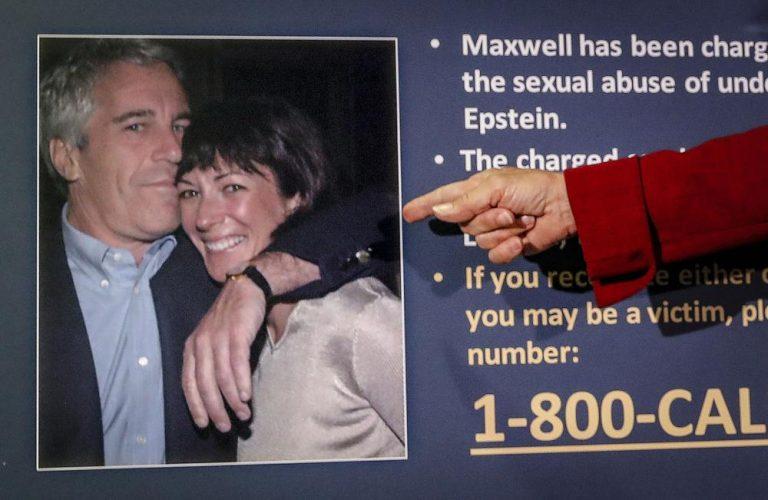
(Luis Cornelio, Headline USA) The late founder of Playboy magazine, Hugh Hefner, reportedly alerted the FBI in 2005 to alleged sexual abuse by Jeffrey Epstein involving a Playboy Playmate, according to a series of new reports.
The alleged victim, then-model Audra Christiansen, has since said that the FBI ignored Hefner’s repeated calls to alert them that she was a survivor of sexual abuse and trafficking at the hands of Epstein.
The alleged sexual abuse, revealed first by journalist Julie K. Brown and reported by NewsNation, was detailed in a 2024 federal lawsuit filed by Christiansen alongside 33 other women against the U.S.
Hugh Hefner reportedly notified the FBI that a Playboy Playmate was sexually abused and trafficked by Jeffrey Epstein and others in his orbit. Court records state Hefner was told by then-Playboy Playmate Audra Christiansen in 2005 that she was an Epstein survivor and requested… pic.twitter.com/lghKjn6fkB
Christiansen later came forward in a letter to then-Attorney General Pam Bondi.
In an interview with NewsNation, Christiansen said that the FBI told Hefner it would support his claims but never followed through. Worse still, she said the FBI again ignored her pleas in 2020.
“I called again (to the FBI) in 2020 due to threats that were happening to our family. I have never been able to speak to the FBI. I even hired an attorney to speak to them, and they would not meet with her or I. Still nothing from the DOJ or FBI,” she told the outlet.
Hiring an attorney did not help, she added.
“My attorney was blown away; they didn’t want to hear from me,” Christiansen continued.
The former model said many other women were victims of Epstein’s abuse but have remained silent.
“I was not the only playmate that had issues with perpetrators Epstein or otherwise. They are too afraid to step forward, but it was a big deal back then. Hef was trying to keep us all safe,” Christiansen stated.
According to Christiansen, one of the Epstein files released by the DOJ contained an FBI Form 302 documenting one of her allegations against the late sex offender.
She claimed the file was heavily redacted. However, after she sent the letter to Bondi, information from the file was made publicly available, and Christiansen said she believed the disclosure was intentional.
“The timing and the very specific information that was selectively unredacted are difficult for me to view as accidental. Of all the identifying details that could have been released, the fact that I had been a Playboy Playmate was exposed immediately after I publicly spoke out,” Christiansen added.
“That distinction matters because, to my knowledge, I am the only former Playboy Playmate who has publicly come forward as a survivor in connection with this case. Revealing that detail made it significantly easier to identify me, even without publishing my name,” she continued.
Christiansen is one of 34 women suing the U.S. government in the Southern District of Florida.
(Luis Cornelio, Headline USA) The embattled former Cambridge professor who faced intense media scrutiny over questions about his academic credentials was found dead Friday.
Jason Arday worked as a professor of sociology at the University of Cambridge following his historic appointment in 2023.
He resigned from the university in August 2026 after a series of news reports accused him of plagiarizing his 2015 Ph.D. thesis and several other academic papers. He was called a “DEI fraud.”
His family said Arday had been subjected to a “campaign of sustained abuse” since his appointment to Cambridge.
“The campaign of misinformation was too much for Jason, who was a gentle man and who always wanted to see the best in everyone,” the family said in a statement.
In a separate statement, Cambridge Vice-Chancellor Deborah Prentice said the university was “desperately saddened to hear this tragic news.”
“Our heartfelt sympathies go to Jason Arday’s family and friends at this incredibly difficult time,” Prentice added.
Before his death, Arday rejected the accusations, saying he was the victim of a racially motivated smear campaign.
In his resignation announcement, Arday warned that his departure from Cambridge was not an admission of guilt.
He said the attacks had taken a “profound toll” on him.
“Sadly, the years since my appointment have also been marked by an unrelenting level of public scrutiny and personal attack,” Arday said. “While criticism is an inevitable part of academic life, what I have experienced has gone far beyond scholarly disagreement. The relentless accusations, speculation and public commentary have taken a profound toll on me and on those I love.”
Arday said he needed time to heal and promised to return.
Following news of his death, critics on social media blamed Cambridge, primarily arguing that the university had appointed Arday despite questions about his qualifications and then abandoned him after the allegations emerged.
(Headline USA) Police arrested a 19-year-old found hiding in a dormitory closet at Virginia State University on Saturday in connection with an overnight shooting on campus that left five people wounded, including one with critical injuries.
Camron Harris of Henrico, Virginia, is not a student on campus nor were four of the people injured, Chesterfield County Police said in a statement. They ranged in age from 17 to 23. One of the injured, a 20 year old, is a student and has now been released from the hospital, authorities said. The victims’ names have not been released.
Authorities have given no information about a possible motive. Police obtained eight felony warrants for Harris, including for malicious wounding and the use of a firearm in the commission of a felony. It wasn’t immediately clear if he had an attorney who could speak on his behalf. Efforts to reach Harris’ family by phone were unsuccessful.
CORNERED AND CAUGHT: A 19-year-old Virginia man was found hiding in a dorm closet after an hours-long manhunt following a mass shooting at Virginia State University that left five people wounded early Saturday morning.
The university said in an earlier statement that authorities were searching for multiple suspects, but police provided no additional information Saturday evening about the search. University officials said earlier in the day that law enforcement did not believe there was an immediate threat to the campus community, and a campus lockdown had been lifted.
The shooting, just after 1:30 a.m. Saturday, prompted a campus lockdown and came as students were getting ready for the new school year.
It happened near the university’s Quad Annexes, where campus police and Chesterfield County officers discovered five people suffering from gunshot wounds outside campus dormitories.
According to the university’s website, residence halls opened for students a week ago, and classes resume on Monday. Many students had just completed the university’s “New Trojans Experience” for incoming students.
“We recognize the concern this incident has caused among our students, parents, alumni, friends, and the broader VSU community,” the university statement said. “The safety and well-being of our students remain our highest priority.”
The campus had a large law enforcement presence on Saturday morning, and the university informed students that they should monitor their email for additional safety measures and information about support services. The Bureau of Alcohol, Tobacco, Firearms and Explosives and the Hanover County Sheriff’s Office were assisting, county police said.
Virginia State University is a historically black university located in Ettrick, Virginia, about 24 miles south of the state capital of Richmond. The public university has about 5,700 students and was the first fully state-supported four-year college for Black Americans. Most of its students are undergraduates.
The university has grown in recent years while attempting to improve safety and retain its historic charm, said Arthur Fridrich, the university’s former director of distance education, who lives near the campus and visits regularly. A shooting like this just as students return for classes is heartbreaking for the community, he said.
“To start a new year with this event is very tragic. It casts a shadow in the minds of all students, and for some it will be difficult to rid their minds of this term,” Fridrich said. “For those that were shot, my heart bleeds. I hope that they all mend and somehow do not let this event define their lives.”
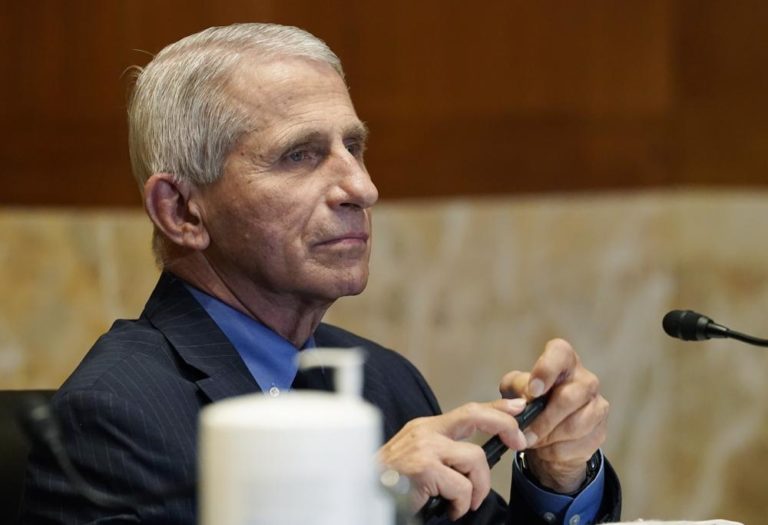
(Headline USA) Dr. Anthony Fauci on Friday declined a request to appear voluntarily before a second Senate panel after majority Republicans on the Homeland Security Committee voted along partisan lines last week to hold him in contempt.
In a pointed letter to Sen. Ron Johnson, a Wisconsin Republican, a lawyer for the former director of the National Institute of Allergy and Infectious Diseases said any effort to compel him to appear before a Senate subcommittee, after a contentious July 29 hearing, would be to “impermissibly harass or degrade Dr. Fauci for political purposes.”
During the July hearing on his handling of the COVID-19 pandemic, Fauci invoked the Fifth Amendment right against self-incrimination 100 times, prompting the Aug. 6 contempt vote and setting up a referral to the Justice Department for potential investigation over whether he had properly exercised his constitutional rights.
Dr. Fauci’s attorney has just notified us that Fauci refuses to appear for a private transcribed interview.
The American people deserve answers to legitimate questions regarding our miserably failed response to COVID-19. Some of those questions can only be answered by Dr. Fauci.…
Republican Sen. Rand Paul of Kentucky, the committee chairman who pressed for the contempt finding, said the constitutional protection did not apply because Democratic President Joe Biden had issued a preemptive pardon to Fauci, and he did not need to be concerned about potential prosecution.
Paul has long accused Fauci of misleading the public during the pandemic and the July hearing was the latest episode in his highly publicized confrontations with him. Paul has repeatedly called for Fauci to be prosecuted and imprisoned.
Johnson, chairman of the subcommittee on investigations, had sought to open a parallel avenue of congressional investigation about Fauci’s role in responding to the COVID-19 pandemic, including the safety and efficacy of the COVID-19 vaccines.
(Headline USA) Five people were wounded in a shooting involving multiple suspects at Virginia State University early Saturday, prompting a campus lockdown and police investigation just as students got ready for a new school year.
It happened near the university’s Quad Annexes, where campus police and Chesterfield County officers discovered five people suffering from gunshot wounds outside campus dormitories. At least one of the wounded people was later confirmed to be a student, the university said in a statement.
The shooting was still under investigation later Saturday and happened as Virginia State’s academic year begins. According to the university’s website, residence halls opened for students a week ago, and classes resume on Monday. Many students had just completed the university’s “New Trojans Experience” for incoming students.
ACTIVE SHOOTER in Virginia, university on LOCKDOWN, various people shot— FOX
Police and university officials have not identified any of the victims. The five were taken to hospitals, and one initially listed as having life-threatening injuries has been upgraded to critical condition, county police said.
The others sustained non-life-threatening injuries, police said. The person confirmed to be a student was among those whose injuries were not life-threatening, and the student has been released from a hospital, the university said.
The university said in a statement early Saturday that the shooting involves “multiple suspects.” It said in a statement later in the day that law enforcement did not believe there was an immediate threat to the campus community, and a campus lockdown had been lifted.
“We recognize the concern this incident has caused among our students, parents, alumni, friends, and the broader VSU community,” the university statement said. “The safety and well-being of our students remain our highest priority.”
The campus had a large law enforcement presence on Saturday morning, and the university informed students that they should monitor their email for additional safety measures and information about support services. The Bureau of Alcohol, Tobacco, Firearms and Explosives and the Hanover County Sheriff’s Office were assisting, county police said.
Virginia State University is a historically black university located in Ettrick, Virginia, about 24 miles south of the state capital of Richmond. The public university has about 5,700 students and was the first fully state-supported four-year college for Black Americans. Most of its students are undergraduates.
(Headline USA) A series of shootings in Michigan left five people plus a suspect dead Friday, police said, following an extensive search around two homes and a wooded area.
Officers responded just before noon to reports of a shooting at a home in Missaukee County, about 170 miles northwest of Detroit, and found three people dead and another in critical condition, Michigan State Police said in a statement. The wounded person was taken to a hospital.
Suspect Chad Hickman, 39, fled before they arrived at the home, according to police. As officers conducted a large-scale search for him, they found a fourth person dead at another home.
In a post on the social platform X, police warned that Hickman was armed and dangerous and told community members not to approach him.
Suspect Dead After Spree Shooting Kills Five in Northern Michigan … Friday August 14, 2026 at approximately 11:40 am Missaukee Countyhttps://t.co/o4P6hsb9VD® Crime Report Aug. 15, 2026
Police in Manton, Michigan, discovered the body of Chad Hickman, a suspect in a shooting… pic.twitter.com/mmqzXMBaOV
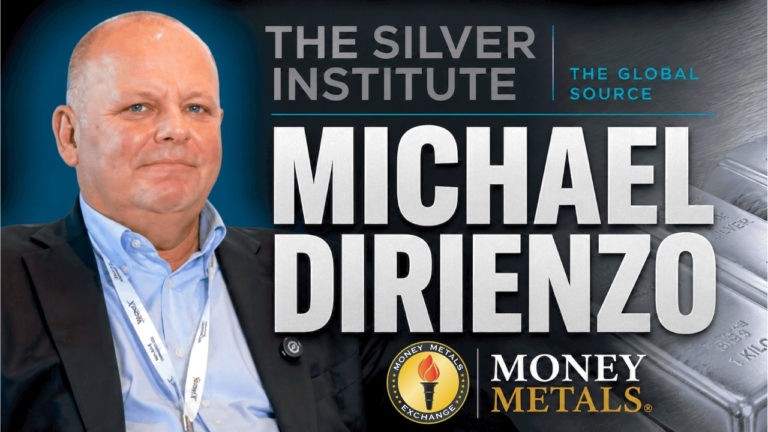
(Money Metals News Service) Silver has experienced a wild ride in 2026, but The Silver Institute President and CEO Michael DiRienzo says investors shouldn’t let the volatility obscure a much bigger story: the underlying silver market remains remarkably strong.
DiRienzo joined Money Metals podcast host Mike Maharrey to discuss silver’s dramatic price swings, persistent supply deficits, industrial demand, solar energy, artificial intelligence, investment flows, and the metal’s expanding role in medicine.
His central message was straightforward. Silver is no longer the $13 or $15 metal investors remember from less than a decade ago. In DiRienzo’s view, the market has established substantially higher floors because silver is increasingly being valued for both its industrial utility and its investment potential.
(Interview Starts Around 7:21 Mark)
From $121 Silver Back to $65
Silver surged to roughly $121 an ounce on January 29, 2026, before falling sharply alongside gold. By the morning of Maharrey’s interview with DiRienzo, silver was trading around $65 per ounce.
DiRienzo said the late-February outbreak of war in Iran put additional pressure on precious metals. Interestingly, he noted that gold and silver have tended to respond positively to announcements involving ceasefires or the reopening of the straits, suggesting the conflict has been weighing on the precious metals complex rather than providing the traditional geopolitical boost investors might expect.
But underneath the geopolitical turmoil, DiRienzo sees strong fundamentals.
He noted that just two years ago, predicting an average 2026 silver price above $72 to $75 per ounce would have sounded extraordinary. Yet the market has reached precisely that neighborhood this year.
Mining companies have also benefited substantially from higher prices. DiRienzo said second-quarter figures being reported by mining companies were broadly positive, including among Silver Institute members producing silver both as a primary product and as a byproduct.
Industrial Demand Remains a Powerful Force
Industrial demand remains one of the most important pillars supporting silver.
The Silver Institute expects a small decline in industrial demand this year, driven in part by reduced silver consumption in photovoltaics. With silver prices elevated, solar manufacturers have an obvious incentive to reduce the amount of silver they use or substitute another material.
Doing so, however, isn’t simple.
Silver has the highest electrical conductivity of any metal, and the process of screen-printing silver paste onto solar cells is already mature and highly efficient. Alternative materials and metallization technologies still face hurdles before they can compete with silver at scale.
Copper metallization exists, for example, but DiRienzo said it has yet to scale sufficiently to replace silver across the solar industry. For solar farms designed to operate for 25 years, manufacturers also have to consider silver’s reliability, durability, and stability rather than simply its upfront cost.
Solar’s Silver Appetite Has Exploded
The scale of silver consumption in solar has changed dramatically over the past decade.
DiRienzo said solar represented about 11% of total silver industrial demand in 2014. By 2024, its share had climbed to just under 30%, marking the peak year for silver consumption in solar to date.
The industry is now attempting to engineer some silver out of its cells as prices rise. But manufacturers were already trying to reduce silver consumption when the metal traded for only $13 per ounce.
As DiRienzo explained, manufacturers relentlessly pursue even tiny savings. Reducing costs by two, three, or four cents per solar cell can matter when production is measured in enormous volumes.
That means efforts to thrift silver will continue. But DiRienzo doesn’t foresee silver disappearing from photovoltaics the way photographic demand largely disappeared with the transition to digital photography.
AI Could Become Another Major Silver Demand Driver
Artificial intelligence represents another potentially significant source of future silver demand.
The AI boom requires an enormous physical infrastructure of data centers filled with electrical contacts, wiring, and other components that can use silver.
DiRienzo said data centers have grown by more than 6,000% in just three years. The Silver Institute has already examined silver’s role in AI data centers and other emerging technologies in a report on silver as a “next generation metal.”
The precise amount of silver being consumed by AI infrastructure remains difficult to quantify. DiRienzo acknowledged that the Institute is hearing about increased consumption but doesn’t yet have firm numbers.
The direction, however, appears clear to him. With AI infrastructure still in its infancy and data-center installations expanding around the world, DiRienzo expects silver demand from this sector to increase.
Higher Gold Prices Are Also Affecting Jewelry
Silver may also be benefiting indirectly from gold’s elevated price.
DiRienzo pointed to examples of jewelry made primarily from silver and then plated with gold, providing the appearance of gold while using silver as the underlying metal.
Jewelry demand remains highly price-sensitive because it is fundamentally a discretionary purchase. DiRienzo also highlighted an interesting demographic trend: more women between the ages of 24 and 30 are buying silver jewelry globally.
The Silver Institute expects overall silver jewelry demand this year to remain relatively consistent with last year’s level.
Higher Prices Can’t Quickly Produce More Silver
The supply side of the market presents a very different challenge.
A silver miner can’t simply flip a switch and dramatically increase production because prices have risen. DiRienzo noted that some of the mining taking place today traces back to plans made 10 years ago, in 2016.
Mining companies are spending more on exploration, but DiRienzo said they aren’t doing so recklessly. Much of the activity appears concentrated around existing projects as companies search for additional or previously unidentified veins.
That means substantially higher silver prices aren’t necessarily going to unleash a flood of new supply anytime soon.
Mine production increased about 3% in 2025, but the Silver Institute expects production to decline 0.3% in 2026.
A Sixth Consecutive Silver Market Deficit
The supply constraint becomes particularly important when considered alongside persistent demand.
The Silver Institute expects the silver market to record its sixth consecutive annual structural deficit in 2026. DiRienzo estimated the shortfall at roughly 46 million to 50 million ounces, although it could become larger if demand strengthens.
Recycling will help. The Institute expects recycled silver supply to increase by roughly 7% this year.
It still won’t be enough.
Even after incorporating recycling into total supply, DiRienzo expects demand to exceed supply again in 2026.
A market deficit doesn’t mean the world has literally run out of silver. It means annual demand is exceeding annual newly available supply, forcing the market to draw on above-ground inventories.
And those inventories aren’t necessarily as freely available as headline figures might suggest.
The Silver Sitting in Vaults Isn’t Necessarily Available
DiRienzo used London inventories to illustrate the problem.
Suppose London Bullion Market Association vaults contain approximately 750 million ounces of silver. That sounds like an enormous stockpile.
But DiRienzo estimated that roughly 75% of that silver is already allocated to exchange-traded products around the world.
That leaves a much smaller pool of readily available metal — and accessing that remaining “free float” can be extremely price sensitive.
The consequences became apparent when tariff concerns caused silver to move from London and elsewhere into New York ahead of the April 2, 2025, “Liberation Day” tariff announcement.
Precious metals ultimately weren’t included in the tariffs, but the episode demonstrated how quickly physical metal can move when market participants anticipate disruptions.
Maharrey pointed to another example closer to home: Money Metals was shipping 1,000-ounce silver bars to India during the tight market around Diwali.
DiRienzo recalled the episode and noted that silver lease rates subsequently surged as the market became extremely tight.
Could similar silver squeezes happen again?
“Absolutely,” DiRienzo said. “No question about it.”
Silver Investment Demand Could Strengthen
The Silver Institute also expects stronger retail investment demand for physical silver.
DiRienzo said demand for silver coins and bars could increase approximately 7% in 2026, despite challenges involving Indian import duties. India has been an especially strong market for silver bars and coins over the past several years.
Exchange-traded products tell another part of the investment story.
Silver ETPs recorded net inflows of approximately 270 million ounces in 2025. The outbreak of war subsequently contributed to liquidations in gold and silver ETPs, with DiRienzo saying silver had experienced outflows of roughly 6% this year.
He added that the Silver Institute was hearing that investment activity was beginning to pick up again.
Medicine Shows Another Side of Silver
When Maharrey asked DiRienzo to name one of silver’s lesser-known applications that he finds particularly interesting, DiRienzo pointed to health and medicine.
Silver’s antibacterial properties give it uses throughout healthcare environments. DiRienzo cited silver coatings in operating rooms and on operating tables and instruments, along with silver incorporated into hospital drapes and used alongside cleaning agents.
He also highlighted emerging nanotechnology. The Silver Institute’s August edition of Silver News was set to examine how nanosilver can help doctors administer the correct drug dosage.
Silver’s antibacterial properties extend beyond hospitals. DiRienzo also cited water purification, pools, and efforts to combat outbreaks of Legionnaires’ disease. In these applications, silver can help prevent infection and promote healing.
These applications may represent relatively small amounts of silver compared with solar panels, electronics, or investment products, but they demonstrate just how broad the metal’s usefulness has become.
From $15 to More Than $70
Perhaps the most striking way to understand today’s silver market is simply to look backward.
During the interview, DiRienzo opened the World Silver Survey and read off a series of historical average prices.
Silver averaged $17.05 per ounce in 2017. It subsequently averaged $15.71, followed by $16.21 in 2019. By 2023, the average had risen to $23.35, followed by $28.27 in 2024 and approximately $40 in 2025.
In 2026, DiRienzo said the market is talking about an average above $70 per ounce.
That longer-term perspective matters after silver’s retreat from its January peak.
At around $65 an ounce during the interview, silver was dramatically below its $121 high. But Maharrey emphasized that it wasn’t very long ago that investors were accustomed to silver trading for $13, $14, or $15.
DiRienzo believes the difference reflects a fundamental change in the market.
“We think new floors have been set in the market,” he said. Silver, in his assessment, is now trading on the strength of both its industrial applications and its investment appeal.
A Tight Market With Powerful Long-Term Drivers
Silver’s 2026 correction may dominate short-term investor psychology, but the fundamentals DiRienzo described point toward a much larger story.
The market is heading toward a sixth consecutive structural deficit. Mine production is expected to decline slightly. Recycling is increasing, but not enough to close the gap. Physical investment demand could rise 7%. Solar still consumes enormous amounts of silver despite ongoing thrift efforts. AI infrastructure presents another rapidly growing source of potential demand.
Meanwhile, much of the silver sitting above ground isn’t necessarily freely available to the market.
DiRienzo believes 2026 is shaping up to be a remarkable year for the metal. He expects the annual average silver price to set a record, and he sees evidence that the market has established price floors far above those of the previous decade.
Silver may still be volatile. But in DiRienzo’s view, today’s silver market is fundamentally different from the one investors knew when the metal traded in the teens.
And those fundamentals — industrial demand on one side and investment demand on the other — could continue defining the silver market long after the geopolitical turbulence of 2026 has passed.
Construction of the ballroom, which has taken over the East Wing of the White House, has gone on for the past several months. A panel of district judges in the District of Columbia halted the project’s construction in an order last week.
The ballroom is meant to host meetings between President Donald Trump, administration staff and foreign leaders on the White House grounds, while security for the president has become a focal point following recent threats on his life.
“If allowed to go into effect, the injunction would wrongfully install a single district judge as sole arbiter of what further construction is ‘strictly necessary’ to protect the safety of the President, his family, staff members, and visitors to the White House, including foreign dignitaries, and presidents and prime ministers of other countries,” Solicitor General John Sauer wrote in a brief to the high court.
The D.C. district court specifically halted construction of the ballroom but allowed updates to underground security infrastructure to continue. In a filing to the court, Sauer said the construction includes bomb shelters, medical facilities and a drone port.
Concerns have grown over funding for the ballroom as well. The White House initially estimated $400 million in costs for the construction from private donations.
However, members of Congress have pointed out that taxpayers would be on the hook for necessary security measures to protect the ballroom, including $155 million for Secret Service, $149 million for the White House military office, and $3 million for the executive residency.
“The Project is on time and under budget, and the ballroom is funded with approximately $400 million in private donations by President Donald J.Trump and ‘some of the most prominent and successful corporations and people in America’ – zero taxpayer dollars are needed or required,” Sauer wrote.
Sauer said there would be “no way” for the ballroom to be altered or dismantled.
The Trump administration argued courts are not entitled to dictate projects within the executive branch. The administration also said the ballroom falls into Trump’s duties as president to host foreign leaders.
“Modernizing the East Wing to address security requirements, update its infra-structure, and better allow the President to carry out his Article II duties (like receiving foreign dignitaries) falls well within the statutory text,” Sauer said.
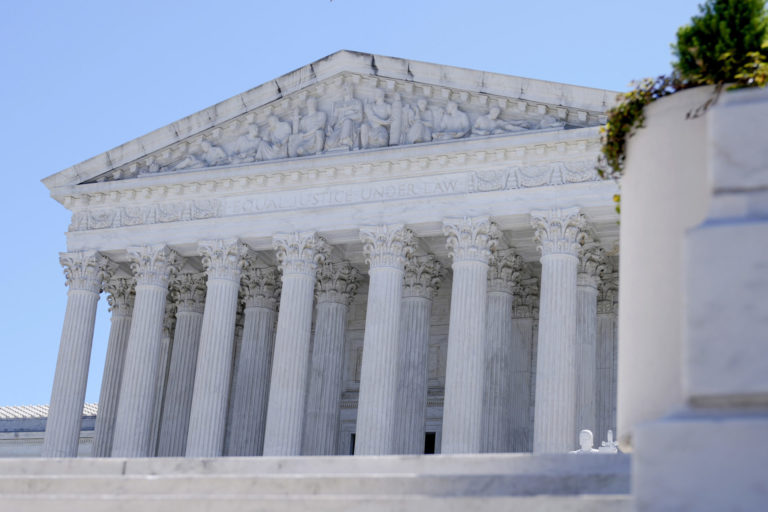
Justices on the high court will decide whether to allow continued construction on the ballroom through the emergency docket, where decisions can be made without as much briefing. The high court could decide whether to allow construction in the next few days.