Silver Price Meltdown Sparks Buying Frenzy And Supply Chain Breakdown

(Mike Maharrey, Money Metals News Service) On Tuesday, February 3, host Chris Marcus brought Stefan Gleason back to Arcadia Economics after the prior Friday’s historic silver meltdown.

Stefan Gleason is the President and CEO of Money Metals Exchange, one of the largest online precious-metals dealers in the United States. He also runs the Money Metals Depository in Idaho, a Class 3 vaulting operation that stores, buys, and sells physical gold and silver at scale.

In other words, Gleason sits where retail demand meets real-world supply chains, and he sees the stress fractures before most investors even notice them.

That is why his perspective matters when a meltdown turns into a buying frenzy. The chart move is only the surface. Underneath it are order surges, fulfillment bottlenecks, staffing strain, refinery backlogs, and widening spreads that punish emotional decision-making. Gleason’s authority on the topic comes from operating through those conditions, not commenting on them from a distance.

In this episode, he described Friday’s action as “absolute pandemonium,” followed by an exceptionally busy weekend.

The silver meltdown did not kill momentum. It ignited retail pandemonium and pulled in new buyers who thought they missed the runup, then rushed in when the correction hit.

The buying frenzy intensified fast enough to expose weak links across the supply chain, from dealer fulfillment to refining capacity, and it set the tone for what both men warned could be an even more volatile stretch ahead.

Who Bought And Sold As Silver Whiplashed From $120

Marcus asked who bought into the whiplash and who sold into it. Gleason said the whiplash brought action from both directions. Some longtime holders sold, not to abandon their positions, but to take profits into the run. Others used the setback to buy more.

He emphasized that the most important shift was the flow of new buyers entering the market in large numbers. He said the physical metals industry is small, so even a modest uptick in participation can strain the dealer network and make whiplash effects worse in pricing, premiums, and fulfillment.

Money Metals Hired 70 Staff As Orders Flooded In

Gleason said orders flooded in so fast that Money Metals had to prioritize execution over marketing. He described a surge that required hiring at speed, including around 70 new staff, while still needing more capacity to handle the demand.

He said this flood is not just about packing boxes. It involves training, verification, and quality control that cannot be rushed. The operational challenge, he explained, is processing a rising tide of high-value metal while maintaining accuracy and security through every step.

Mainstream Still Late Despite Explosive Metals Moves

Marcus raised the question of whether explosive moves finally pulled the mainstream in. Gleason said the mainstream remains late, even with explosive price action dominating headlines. He argued that most people still do not own physical gold or silver and are not actively managing their finances at a level that would lead them into hard assets early.

He also said explosive moves can create a self-reinforcing cycle. People who believed they missed their chance at higher prices saw the pullback and rushed in. That helped keep buying pressure alive even as volatility frightened some observers away.

Inflation, Rate Cuts, And Financial Repression Drive Hard Assets

Marcus pointed to inflation pressures and the market pricing in rate cuts. Gleason argued that the combination of inflation and rate cuts is exactly what drives hard assets. He said the system is built to manage the debt burden and that negative real rates amount to financial repression that harms savers.

In that environment, he described hard assets like gold and silver as financial insurance. He also noted global demand dynamics, arguing that Asia and central bank accumulation have been key forces behind the broader move, even before U.S. retail interest fully wakes up.

Junk Silver Glut Forces Prices Below Spot

Gleason described a junk silver glut as a major part of the current dislocation. He said 90% coinage silver flooded the market at the same time the refining system became overwhelmed, forcing junk silver prices below spot.

He explained that the glut persists because 90% silver is not .999 fine silver, so it cannot easily be turned into popular bullion products without refining. When refining backlogs grow, a glut can deepen and keep prices below spot until the bottleneck clears or demand shifts toward that specific category.

Refinery Backlogs Break Local Dealers’ Cash Flow

Marcus asked why refinery backlogs matter to retail customers. Gleason said refinery backlogs break the cash flow cycle that many local dealers rely on. He explained that scrap and coinage sellers typically ship material to refineries and receive advances that let them keep buying.

When refineries stop advancing cash and extend turnaround times, local dealers lose a key funding mechanism. That pushes bids down, widens spreads, and reduces liquidity. Gleason said the cash flow squeeze is one reason selling certain forms of silver can feel unusually punitive in the current market.

Wider Spreads Make Physical Silver A Bad Trading Vehicle

Gleason said wider spreads are a warning sign for anyone tempted to treat physical silver like a trading vehicle. Each time you cross the bid-ask spread, you pay the cost of that spread, and wider spreads make frequent trading far more expensive.

He urged buyers to focus on straightforward bullion items and avoid products with elevated premiums during stress. He used Silver Eagles as a common example where premiums can rise fast, making them a less efficient way to accumulate ounces when spreads and demand are both rising.

Why Cheap Junk Silver Still Sits Unsold

Marcus asked why cheap junk silver does not get snapped up when it is priced below spot. Gleason said the answer is that many new buyers do not understand junk silver and do not want complexity. They want something new, shiny, and easy to price.

That lack of understanding keeps cheap junk silver sitting longer than expected, even when it is the bargain product on paper. Gleason said this is a demand mismatch, not proof that silver itself is unwanted. It is one more distortion created by a market expanding faster than education can keep up.

China Premiums, Comex Drawdowns, And Silver Leaving America

Marcus highlighted China premiums and COMEX drawdowns as signs of tightness outside the U.S. Gleason said China premiums can pull physical silver across borders, especially given the concentration of refining capacity in Asia, though doing business overseas introduces new risk and friction.

He also described how dislocations can accelerate COMEX drawdowns when the financial incentive to move metal becomes large enough. Gleason said he had seen silver leaving America when demand and financing pressures abroad made time valuable and premiums attractive.

Silver Act Could Expand Comex Vaults Beyond New York

Gleason said a Silver Act could become a major story next, because it targets geographic concentration in the COMEX vault network. He described systemic risk in having COMEX-linked depositories clustered around New York and said the bill would push for vault expansion into other regions.

He said vault expansion could improve system integrity, resilience, and logistics by allowing more locations to support COMEX delivery. He also noted that significant silver stockpiles exist in depositories outside the exchange system, and that expanding vault access could bring more of that metal into the deliverable network.

What Sellers Can Expect In Today’s Chaotic Market

Marcus asked what sellers should expect if they need to sell during a chaotic market. Gleason said bids were weak but improving, and he emphasized that chaotic conditions widen spreads and can lead to disappointing offers, especially for products like junk silver.

He said some categories were seeing bids rise as buying began to dominate again. Still, he cautioned against selling into chaos unless necessary, since spreads can narrow as backlogs ease and the market finds its footing.

Inventory, Shipping Backlogs, And A Copper Premium Warning

Gleason said Money Metals was dealing more with shipping backlogs than inventory shortages, even as some competitors showed signs of product delays. He described the backlogs as driven by the physical workload of processing inbound metal, including testing and quality control, before inventory can be resold.

He also issued a copper premium warning. He said copper rounds and bars often carry fabrication premiums that are hard to justify relative to the underlying metal, and suggested copper pennies or paper exposure for those who want copper without paying extreme premiums.

Money Metals Vault And Loans Put Liquidity In Reach

To close, Gleason described Money Metals Exchange as a large dealer and depository based in Idaho, operating since 2010. He highlighted the company’s vaulting capabilities and said the firm offers a revolving line of credit against customer metal held in segregated storage for business purposes.

Marcus wrapped by calling the interview a master class and thanked Gleason for sharing a clear picture of what the silver price meltdown has unleashed. Gleason’s final point tied back to the title’s theme. A meltdown can spark a buying frenzy, and when it does, it exposes every weak link in the supply chain.

Stay connected with Chris Marcus and Arcadia Economics HERE.
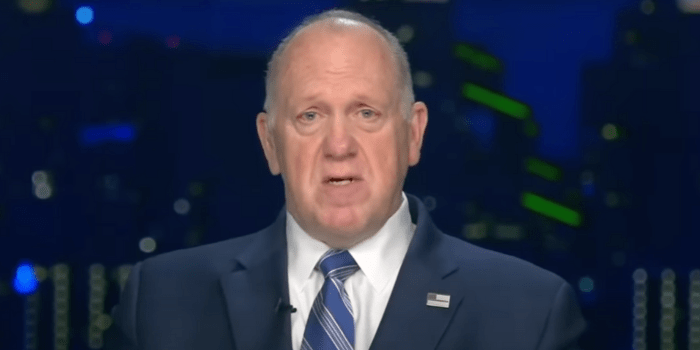
700 Federal Agents to Leave Minnesota, Homan Says

(Andrew Rice, The Center Square) ​​ The Trump administration will remove 700 federal agents who are assisting immigration enforcement measures in Minnesota, White House Border Czar Tom Homan said Wednesday. 

Homan said during a news conference that a “mix” of Custom and Border Protection and ICE officers would be removed from Minnesota. He estimated around 2,000 federal agents would remain in Minnesota. 

“We want to get back to the original footprint, the Minnesota footprint, of what ICE offices looked like before this operation,” Homan said. He added about 150 agents in Minnesota is a typical level of operations. 

Homan said the withdrawal of officers is due to the “unprecedented collaboration” between federal, state and local officials. He also said federal agents should return to their homes in other parts of the country to enforce immigration laws. Homan clarified that special agents investigating fraud scandals in the state will stay put. 

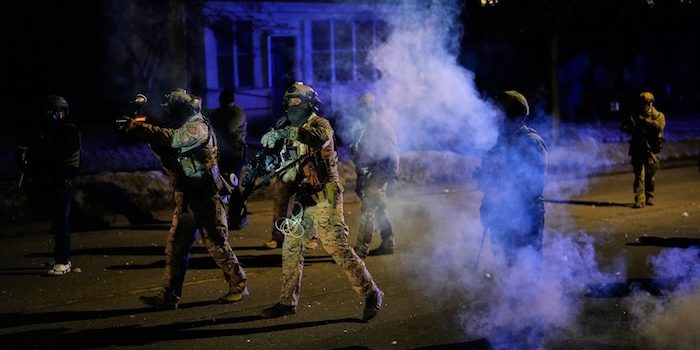
On Dec. 4, the U.S. Department of Homeland Security sent 2,000 federal agents to the Minneapolis and St. Paul metropolitan area as part of operation Metro Surge, an effort for increased immigration enforcement in the cities. Since the initial enforcement, reports have estimated as many as 2,000 federal agents have been deployed across Minnesota. 

“We are not asking any state or local official to do immigration enforcement activity,” Homan said. 

Homan added that federal agents are engaging in “targeted enforcement operations.” He said this means agents will specifically be operating on reasonable suspicion to question and detain individuals. 

Homan also announced the establishment of a joint operations center to manage immigration enforcement. 

“This reorganization also enables ICE to leverage joint intelligence capabilities to effectively target threats as well as to reduce the overall personal footprint and enhance public safety and confidence in the agency’s capabilities and presence here,” Homan said. 

Homan called on protestors in Minneapolis to stop their activities across the state. 

“Stop impeding, stop interfering, stop violating the law, because we will arrest you,” Homan said. 


ICE Detains New Orleans Police Recruit Suspected of Being an Illegal Alien

(Luis CornelioHeadline USA) The Trump administration said Tuesday that ICE agents detained an alleged illegal alien who had been enrolled as a police recruit by the New Orleans Police Department. 

ICE identified the suspected illegal alien as Larry Temah, a 46-year-old Cameroonian national who was just one week from graduating as an NOPD officer at the time of his arrest. 

The federal agency also released a photo showing federal agents arresting Temah while he was still wearing his NOPD uniform.

He had reportedly been issued a gun despite his apparent illegal status. Federal law prohibits illegal aliens from possessing firearms. 

Headline USA spoke with NOPD officer and communications director Reese Harper, who described the recent comments about Temah as “misleading.” 

Harper said that the NOPD verified Temah’s alleged “employment eligibility” through ICE’s E-Verify before his hiring and “was never notified of any ICE detainer.”

Additionally, Harper disputed the claims Temah had been issued a weapon: “Contrary to some reports, Mr. Temah was not issued a service weapon and was not in possession of a firearm at the time of his arrest. He was early in academy training and had not completed the program.”

Harper clarified that “New Orleans is not a sanctuary city, and NOPD does not control jail operations or detainer decisions, which fall under the Sheriff’s Office.”  

He continued, “Any claim that NOPD knowingly violated the law is false.” 

Despite Harper’s comments, ICE accuses Temah of entering the United States in 2015 on a visitor visa. 

While it is unclear if he overstayed that visa, ICE noted that Temah received conditional residency after marrying a U.S. citizen in 2022. 

His application for permanent residency was later denied “due to fraud,” the federal agency alleged. 

ICE stated that Temah was ordered removed in absentia after failing to appear for immigration court hearings on three separate occasions 

At the time he was recruited by the NOPD, Temah did not possess valid work authorization, according to ICE. 

DHS Assistant Secretary Tricia McLaughlin slammed the police department for allegedly issuing a firearm despite his illegal status. 

“What kind of law enforcement department gives criminal illegal aliens guns and badges? It’s a FELONY for illegal aliens to even possess a firearm,” McLaughlin said. “Under President Trump and Secretary Noem, ICE is restoring law and order. Criminal illegal aliens have no place in our communities—especially on our police forces.” 

Temah is the second foreign national to be arrested by the Trump administration while serving as a police officer or recruit. The first, Radule Bojovic of Hanover Park, Illinois, was detained in October for allegedly overstaying his visa for more than 10 years. 

Bojovic, who was ultimately released, returned to duty in December after it was confirmed that his work authorization was valid and his immigration proceedings were ongoing. 

BREAKING: Would-be Trump Assassin Sentenced to Life in Prison

Editor’s note: This morning, Headline USA published a trove of photos and videos of Ryan Routh from his time in Ukraine. You can find that here.

(Headline USAA man convicted of trying to assassinate President Donald Trump on a Florida golf course in 2024 was sentenced Wednesday to life in prison after a federal prosecutor said his crime was unacceptable “in this country or anywhere.”

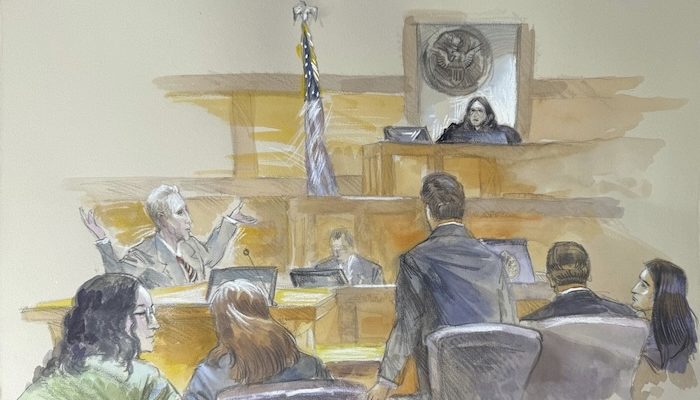
U.S. District Judge Aileen Cannon pronounced Ryan Routh’s fate in the same Fort Pierce courtroom that erupted into chaos in September when he tried to stab himself shortly after jurors found him guilty on all counts.

“American democracy does not work when individuals take it into their own hands to eliminate candidates. That’s what this individual tried to do” Assistant U.S. Attorney John Shipley told the judge.

Routh’s new defense attorney, Martin L. Roth, argued that “at the moment of truth, he chose not to pull the trigger.”

The judge pushed back, noting Routh’s history of arrests, to which Roth said, “He’s a complex person I’ll give the court that, but he has a very good core.”

Routh then read from a rambling, 20-page statement. Cannon broke in and said none of what he was saying was relevant, and gave him five more minutes to talk.

“I did everything I could and lived a good life,” Routh said, before the judge cut him off.

“Your plot to kill was deliberate and evil,” she said. “You are not a peaceful man. You are not a good man.”

She then issued his sentence: Life without parole, plus 7 years on a gun charge. His sentences for his other three crimes will run concurrently.

Routh’s sentencing had initially been scheduled for December, but Cannon agreed to move the date back after Routh decided to use an attorney during the sentencing phase instead of representing himself as he did for most of the trial.

Routh was convicted of trying to assassinate a major presidential candidate, using a firearm in furtherance of a crime, assaulting a federal officer, possessing a firearm as a felon and using a gun with a defaced serial number. “Routh remains unrepentant for his crimes, never apologized for the lives he put at risk, and his life demonstrates near-total disregard for law,” the prosecutors’ sentencing memo said.

His defense attorney had asked for 20 years plus the mandatory seven for the gun conviction.

“The defendant is two weeks short of being sixty years old,” Roth wrote in a filing. “A just punishment would provide a sentence long enough to impose sufficient but not excessive punishment, and to allow defendant to experience freedom again as opposed to dying in prison.”

Prosecutors said Routh spent weeks plotting to kill Trump before aiming a rifle through shrubbery as the Republican presidential candidate played golf on Sept. 15, 2024, at his West Palm Beach country club.

At Routh’s trial, a Secret Service agent helping protect Trump on the golf course testified that he spotted Routh before Trump came into view. Routh aimed his rifle at the agent, who opened fire, causing Routh to drop his weapon and run away without firing a shot.

In the motion requesting an attorney, Routh offered to trade his life in a prisoner swap with people unjustly held in other countries, and said an offer still stood for Trump to “take out his frustrations on my face.”

“Just a quarter of an inch further back and we all would not have to deal with all of this mess forwards, but I always fail at everything (par for the course),” Routh wrote.

In her decision granting Routh an attorney, Cannon chastised the “disrespectful charade” of Routh’s motion, saying it made a mockery of the proceedings. But the judge, nominated by Trump in 2020, said she wanted to err on the side of legal representation.

Cannon signed off last summer on Routh’s request to represent himself at trial. The U.S. Supreme Court has held that criminal defendants have the right to represent themselves in court proceedings, as long as they can show a judge they are competent to waive their right to be defended by an attorney.

Routh’s former federal public defenders served as standby counsel and were present during the trial.

Routh had multiple previous felony convictions including possession of stolen goods, and a large online footprint demonstrating his disdain for Trump. In a self-published book, he encouraged Iran to assassinate him, and at one point wrote that as a Trump voter, he must take part of the blame for electing him.

Adapted from reporting by the Associated Press


Judge Behind Pro-Haiti TPS Order Exposed as Biden Donor 

(Luis CornelioHeadline USA) The federal judge who blocked the Trump administration from ending TPS for 350,000 Haitians has deep ties to Democratic politics, including donating tens of thousands of dollars to Joe Biden and other left-wing campaigns. 

U.S. District Judge Ana C. Reyes, appointed by Biden in 2022, has contributed $38,000 to Democratic candidates and causes since 2008. She previously volunteered for Biden’s campaign and maxed out her contributions, in addition to working pro bono for refugees, according to Fox News. 

Reyes drew sharp criticism from conservative commentators after she claimed Monday that it was “substantially likely” that DHS Secretary Kristi Noem’s decision to end TPS for Haitians was motivated by “hostility toward nonwhite immigrants.” 

She ruled Noem’s order violated the Administrative Procedure Act, though the Trump administration has vowed to appeal.

Critics online said Reyes’s ruling was far from surprising, given her past ties to the political left. 

Born in Uruguay, Reyes bragged about her work representing asylum seekers during a 2017 speech at the Women’s Bar Association of the District of Columbia, where she received the Woman Lawyer of the Year award. 

She also thanked attorneys at the Center for Gender & Refugee Studies and the United Nations High Commissioner for Refugees, calling it an honor to fight “for the rights of refugees in the United States.” 

Reyes is the first openly gay federal judge in D.C. and confirmed that she provided legal guidance to Biden’s 2020 campaign on election law issues. 

Her donations have gone to ActBlue and Jon Ossoff’s campaign, according to FEC records reported by Fox News. 

She was also a frequent contributor to Defeat By Tweet, a super PAC created in 2020 to encourage Democratic donors to pledge a small donation every time Trump tweeted. 

Reyes first drew widespread backlash in 2025 after issuing a preliminary injunction that blocked the Trump administration from banning transgender individuals from serving in the military. 

‘House N—–‘: Anti-ICE Agitator Calls Black Agent a Sickening Racial Slur

(Luis CornelioHeadline USA) A mob of anti-ICE agitators surrounded a black federal agent in a hostile confrontation, at one point directing the racial slur “house n*gger” at him, as seen in a viral video Tuesday. 

The footage, shared on X by Right Angle News Network, showed the unidentified agent being confronted by multiple agitators as he attempted to leave the area in a federal vehicle. 

The video shows one of the activists, presumably a transgender or non-binary identifying individual, pressing the agent about immigration enforcement. 

During the interaction, the agent questioned the individual’s gender, asking, “Are you a man?” 

A bystander immediately reacted to the remark, responding, “Wow. Is that a question?” 

The confrontation escalated as the first agitator accused the agent of harming families, asking, “How do you feel ripping people from their families? Does that feel good?” 

The crowd grew more aggressive, prompting the agent to disengage and leave, ordering the agitator to keep their distance. 

“Sir, I need you to move from my vehicle,” the agent said. 

Moments later, an unidentified man, whose face was not visible in the 33-second clip, hurled the racial slur at the agent. 

“A house n*gger working for the KKK,” the anti-ICE activist shouted. 

Visibly taken aback by the remark, the agent fired back, asking, “What the f*ck is wrong with you people?” 

Another woman in the crowd then challenged the agent, asking, “Why are you calling a woman a man?” 

As the agent again urged the group to step away from the vehicle, the same individual repeated the racial slur, shouting, “You f*cking, house n*gger bitch!” 

As the agent entered the vehicle and attempted to leave the scene, one of the agitators threw what appeared to be snow or ice at the rear window. 

It remains unclear when the video was recorded or who filmed it. However, the clip went viral as anti-ICE activists flooded the streets of Minneapolis to protest President Donald Trump’s deployment of federal agents. 

Watch the interaction below:

The Routh Records: See Ukraine Through the Lens of a Would-be Trump Assassin

(Ken Silva, Headline USA) Headline USA has obtained a trove of photos and videos featuring convicted would-be Trump assassin Ryan Routh while he was in Ukraine in 2022. The records provide the most complete account of Routh’s activities there to date, though many questions remain.

Routh, who’s set to be sentenced today for attempting to kill Trump in September 2024, traveled to Ukraine mere weeks after Russia invaded in late February 2022. He said in his 2023 self-published book, Ukraine’s Unwinnable War, that it took him about a month to wind down his construction business and acquire military gear. He flew to Poland and across to the Ukrainian border, winding up as a regular fixture at Maidan Square in Kyiv.

The North Carolina native revealed his motivation helping the warfighting effort in an interview with documentarian Eric Senunas in April 2022—published here for the first time.

“The war started and I think everyone in the world can agree it’s black and white, good versus evil. To me, it felt like everyone around the world should hop on the plane and go to Ukraine,” he said.

At 56 years old, Routh was deemed too old to fight. Therefore, “I had to go to plan B,” he said in his interview with Senunas.

“If I couldn’t fight, I’d have to bring in more fighters to the fight, and more equipment and more support.”

According to his self-published book, Routh and with his “best partner” — an Israeli who’s yet to be identified — worked to help place recruits in various Ukrainian military units.

“I went to city hall and after several days got verbal permission to set up a tent at Independence Square as a volunteer center. So I purchased a tent and made signs and banners and set up a hub off to the side in the grass. It was a successful hub for a matter of 2 or 3 weeks until the police one day balled up my tent and threw it away,” Routh wrote in his book.

Days later, Routh said that he and other activists staged a demonstration for the soldiers stranded at the Azovstal Steel Plant, a vast industrial complex in the city of Mariupol that came under heavy Russian bombardment in spring 2022. At that event, Routh was filmed in a commercial for the Azov Brigade — a unit in the Ukrainian military that began in 2014 as a militia with ties to the country’s neo-Nazi movement. Two months before Routh appeared in that commercial, the DHS issued a bulletin warning that the Azov Brigade was recruiting right-wing extremists from America to join its cause.

Like his numerous encounters with law enforcement in the U.S., Routh managed to avoid jail. His fellow demonstrators apparently did not.

According to his book, Routh then embarked on a project to supply Ukraine with drones. As in his recruiting efforts, he said that he was unsuccessful in this endeavor as well.

At first, Routh said that he assembled a team of international engineers, including at least one Iranian. They had bandied about ideas for producing drones, but didn’t follow through on any of them. Frustrated with the inaction, Routh said that he set out to build his own drone.

“In the end, I had to build my own drone based on all the ideas that were presented and mesh and meld it all together, using only what materials were available in a war-torn country. Most suppliers were back alley secret meetings for security, making sourcing parts hard,” he said.

His book says that city officials wouldn’t allow drone testing in Kyiv, which forced Routh to take all his equipment in a supply van to the front line in Mykolaiv. Military officials there weren’t keen on allowing him to test his makeshift drone, either.

Apparently other volunteers were frustrated with the Ukrainian officials, too. Routh surreptitiously recorded international fighters talking about how badly the warfighting efforts were going at the time.

“I was like, ‘What’s the grid coordinates?’ They’re like, ‘We don’t know.’ I was like, ‘How the fuck do you not know?’” one volunteer recounted, speaking about a time when he and his crew were taking fire from the Russians.

Two volunteers even said the Ukrainians were stealing from them.

“They stole one of my bags … At least they just got old clothes and shoes, but it’s still a few hundred dollars’ worth of equipment,” one volunteer, who had an American accent, can be heard saying.

“I had 6,000 pounds of gear stolen outside of the battalion HQ,” another volunteer with a British accent said.

Routh returned to the U.S. that summer. However, he maintained contact with some of the people he met abroad—including an apparent Ukrainian from whom he tried to buy a rocket launcher. Routh’s attempted purchase was revealed by the Justice Department last year, but Headline USA has obtained a screenshot of the text conversation—as well as the reaction from the Ukrainian after Routh tried killing Trump in September 2024.

“I thought he [was] kidding,” the Ukrainian texted to journalist Kate Jones, who provided the interaction to this reporter. “Some one give [sic] him a rifle and inform about schedule.. someone from inside.”

Jones, who texted with Routh but never met him in person, also provided texts of her trying to quell Routh’s fears about another Trump presidency—by, among other things, explaining that Trump provided military aid and training to Ukraine during his first term.

Some 17 months later, Routh has contacts pleading for leniency on his behalf to Judge Aileen Cannon. A Ukrainian named Mariia Riznyk told Judge Cannon that Routh saved her life in early 2022, while an ex-Afghanistan National Army commando named Mohammadullah Ahmadi called Routh “a man of immense compassion and selflessness.”

Routh’s attorney has asked Judge Cannon for a 20 year sentence, while the DOJ seeks life.

Ken Silva is the editor of Headline USA. Follow him at x.com/jd_cashless.

Texts Reveal Friendship between Epstein and Democrat Member of Congress

(Luis CornelioHeadline USA) Newly released emails between U.S. Virgin Islands Del. Stacey Plaskett and Jeffrey Epstein directly contradict her past denials of having a close relationship with the late convicted sex offender. 

The emails, included in recently released DOJ documents, show Plaskett referring to Epstein as a “friend” and sharing non-public details about her congressional work, according to Monday reporting from the Washington Free Beacon. 

Plaskett has faced mounting scrutiny over her ties to Epstein since entering national politics in 2015. At the time, Epstein was already a convicted sex offender. 

A text message dated Sept. 24, 2018, reportedly shows Plaskett thanking Epstein for his “support” and asking whether it would be “presumptuous” for her to “consider you a friend.” 

Epstein responded on Aug. 10, 2019, writing, “Privileged to be called friend.” 

The message was sent roughly ten months before Epstein was formally charged in federal sex trafficking cases. 

In another exchange, Plaskett told Epstein “first” about an IRS tax break extension for Virgin Islanders following Hurricanes Irma and Maria. 

“You’re the first person I told,” Plaskett wrote on Feb. 27, 2018, according to the Free Beacon. “Don’t say anything yet.” 

Plaskett publicly announced the tax break extension later that same day. 

“Great work,” Epstein responded. As reported by the outlet, Epstein saved over $300 million in tax breaks through several shell companies in the Virgin Islands. 

“Now let’s see if we can create some controls for the money we get for rebuilding,” Plaskett added in a follow-up message. 

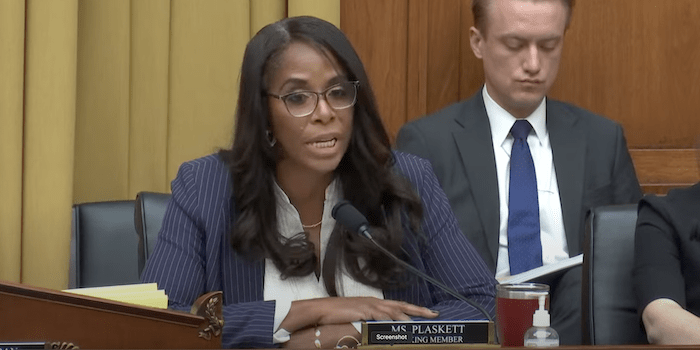
Plaskett’s ties to Epstein have long been controversial, but newly released emails prompted a censure vote. The emails, released by the House Oversight Committee, showed her taking instructions from Epstein during a 2018 anti-Trump hearing. 

During the hearing, Plaskett followed Epstein’s guidance, questioning Cohen about communications involving Trump aide Rhona Graff. 

The messages occurred in 2018, four months before Epstein was arrested by the DOJ on federal sex trafficking charges. 

Two Men Push Conservative Journalist Covering Minneapolis Roadblock

(Luis CornelioHeadline USATwo masked individuals violently confronted a journalist Monday in South Minneapolis while he was documenting anti-ICE agitators blocking federal agents. 

The journalist, Jorge Ventura, said the men attempted to stop him from recording the scene. 

In one instance, a masked man pushed Ventura toward his Uber, shouting, “Get in the fucking car,” while trying to grab his phone.  

Seconds later, the other man knocked the phone from Ventura’s hand, prompting a brief struggle. 

Ventura said the men appeared to be attempting to steal his device. 

At one point, Ventura observed an activist questioning an Uber driver, accusing him of being an ICE agent. 

“It looks like in our system, your plates came up as an ICE plate. That doesn’t seem like it’s the case, but I just wanted to come through and see what was up and talk to you, see how you were doing,” the vigilante said. 

Ventura said he was waiting nearby while covering the scene. 

The incident happened as Minneapolis descended further into chaos after federal immigration agents arrived to crack down on illegal immigration. 

Protests and violent clashes have erupted across the city after ICE’s deadly encounters involving anti-ICE agitators Renee Good and Alex Pretti. 

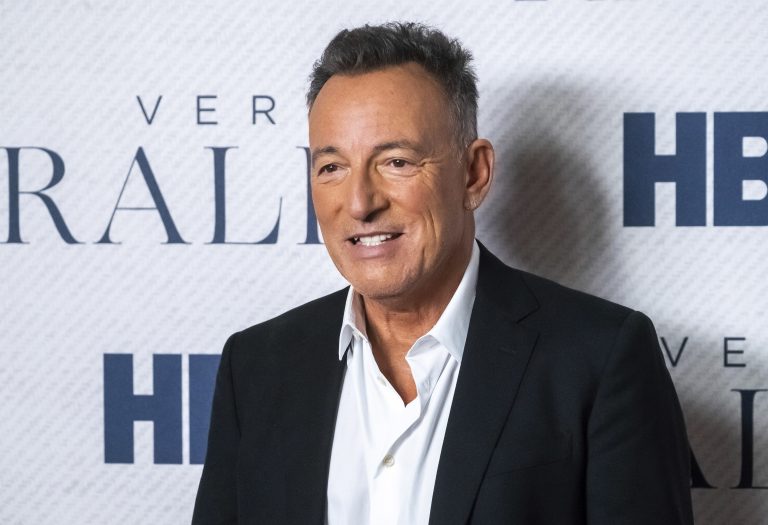
Springsteen Called Out for Bilking Fans w Sh**ty Protest Song

(Ben Sellers, Headline USA) Septuagenarian rocker Bruce Springsteen faced backlash over his newly released tribute to Minnesota anti-ICE protesters, not only because of its divisive political overtones, but because the song itself sucked.

In a message posted to Bluesky on Wednesday, “The Boss” boasted, “I wrote this song on Saturday, recorded it yesterday and released it to you today in response to the state terror being visited on the city of Minneapolis.”

He dedicated it to recently killed activists Renee Good and Alex Pretti, both of whom were shot in apparent self-defense last month by immigration officials.

But critics noted that the protest song — which directly name-checks Republicans including President Donald Trump, Homeland Security Secretary Kristi Noem and White House adviser Stephen Miller — was a far cry from Springsteen’s glory days of penning classics like “Thunder Road” or the oft-misinterpreted anti-war anthem “Born in the USA.”

The song’s slapdash approach plays fast and loose with rhyme and meter, while its schlocky sentiment comes off as tone deaf, with recent stats showing that nearly six in 10 Americans strongly support the deportation of illegal immigrants.

Even its title seems an uninspired act of self-plagiarism, borrowing from Springsteen’s own 1993 classic “Streets of Philadelphia.”

Some, on the other hand, argued that the disappointing ditty was entirely on brand for the overrated crooner.

“Bruce ‘The Boss’ Springsteen apparently earned his alias by bilking fans and venues early in his career, in order to pay his bandmates, wrote right-wing influencer Raheem Kassam in a Substack post. “He’s spent the last several decades shaking down America, and his latest track – ‘Streets of Minneapolis’ – is no different.”

Several elements struck Kassam as lazy and derivative songwriting.

“The speed at which he pulled together the cliched melodies and a harmonica solo that sounds like it was lifted from outtakes from The Promised Land (1978) was part of its sales pitch,” wrote the former Breitbart editor, who now leads the National Pulse newsroom.

Moreover, the song overlooked key factual details about the circumstances of Good’s and Pretti’s deaths.

“Springsteen portrays Pretti as some harmless peacenik protester — a claim that collapsed almost immediately under the weight of police reports and video evidence,” Kassam wrote.

In one egregious example — both of factual inaccuracy and of attempting to shoehorn too many syllables into one line — Springsteen sings, “Now they say they’re here to uphold the law, but they trample on our rights / If your skin is black or brown, my friend, you can be questioned or deported on sight.”

No evidence supports the claim of race-based deportations. Indeed, some have observed that the deaths of Good and Pretti, who were both Caucasian, effectively debunked commonly held leftist misperceptions of “white privilege” when dealing with law enforcement.

Kassam further slammed Springsteen for exploiting the passions of leftist idealogues to line his own bank account.

“No statement appears to have been made about the revenue generated from the new, anti-cop song,” he wrote. “Springsteen will always find a way to turn tragedy into merchandise. ‘The Boss’ is again raking in cash made from his caterwauling, this time over dead left-wing agitators.”

He likewise criticized Springsteen’s sheer recklessness for egging on pliable protesters by using falsehoods and violent rhetoric to inflame their passions.

“If more people are hurt, it is – just as in the cases of Good and Pretti – squarely the fault of the Springsteens of the world for radicalizing them into defending illegal criminal migrants, pedophiles, rapists, and fraudsters,” Kassam wrote.

Other critics mocked the 76-year-old Springsteen, once the embodiment of blue-collar machismo, for his increasingly haggard appearance.

“This elderly lesbian (Bruce Springsteen) is a clueless degenerate,” wrote noted sociologist Gad Saad. “I can’t stand her.”

While some detractors may be happy to see the song fade into obscurity as its references quickly become dated, others took to song themselves, writing pro-ICE responses that lampooned Springsteen for his growing irrelevance.

Ben Sellers is a freelance writer and former editor of Headline USA. Follow him at x.com/realbensellers.