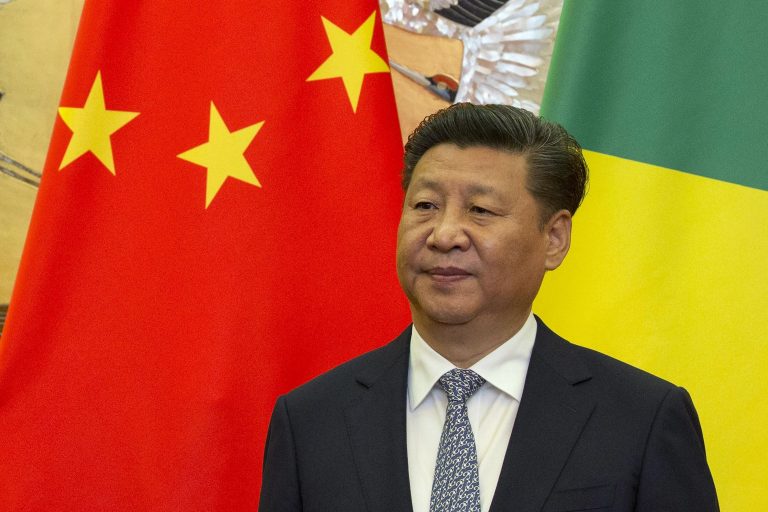
(Dave DeCamp, Antiwar.com) Chinese President Xi Jinping told President Trump in a phone call on Wednesday that Taiwan is the “most important issue” in US-China relations, according to Beijing’s readout of the conversation.
“President Xi emphasized that the Taiwan question is the most important issue in China-US relations,” the Chinese readout said. “Taiwan is China’s territory. China must safeguard its own sovereignty and territorial integrity, and will never allow Taiwan to be separated. The US must handle the issue of arms sales to Taiwan with prudence.”
The conversation came a little more than a month after China launched major military drills around Taiwan simulating a blockade in response to the Trump administration approving a series of arms sales to Taipei worth more than $11 billion, a higher dollar amount than all weapons sales for the island approved by the Biden administration.
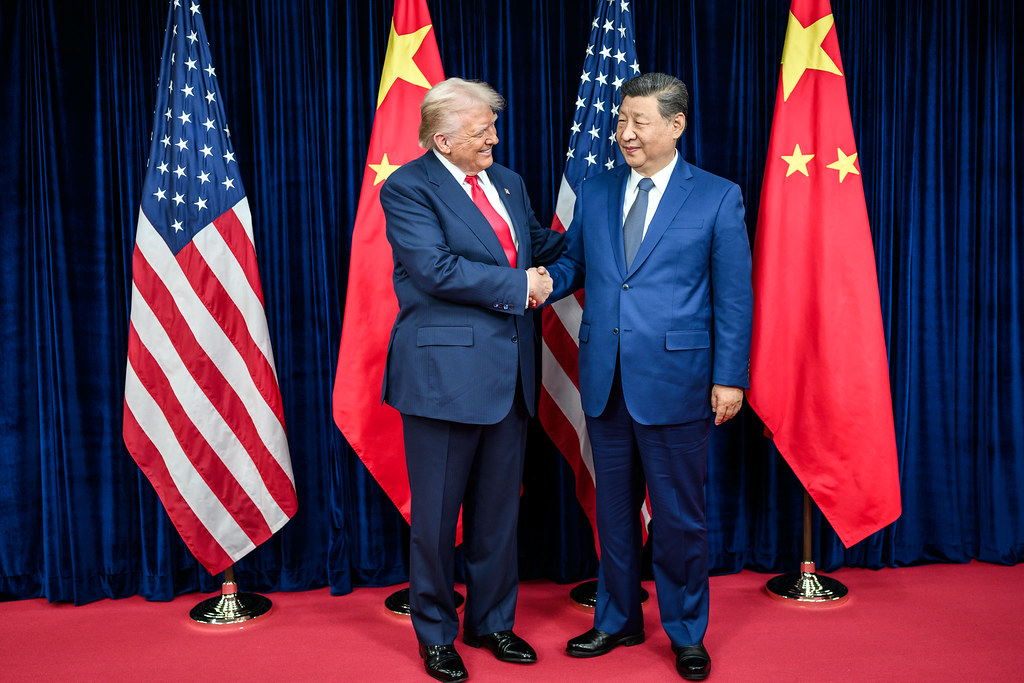
President Donald Trump greets Chinese President Xi Jinping before a bilateral meeting at the Gimhae International Airport terminal, Thursday, October 30, 2025, in Busan, South Korea. (Official White House Photo by Daniel Torok)
According to the Chinese readout, President Trump said that he understands “how China feels about the Taiwan question.” In his statement on the call, Trump said they discussed Taiwan and several other issues that were not mentioned in China’s readout.
“It was a long and thorough call, where many important subjects were discussed, including Trade, Military, the April trip that I will be making to China (which I very much look forward to!), Taiwan, the War between Russia/Ukraine, the current situation with Iran, the purchase of Oil and Gas by China from the United States, the consideration by China of the purchase of additional Agricultural products including lifting the Soybean count to 20 Million Tons for the current season (They have committed to 25 Million Tons for next season!), Airplane engine deliveries, and numerous other subjects, all very positive!” Trump wrote on Truth Social.
The US president added that he believes the US-China relationship and his relationship with Xi are “extremely good” and that positive developments will occur between the two countries for the remainder of his term, but the Chinese readout shows there is significant tensions over US support for Taiwan.
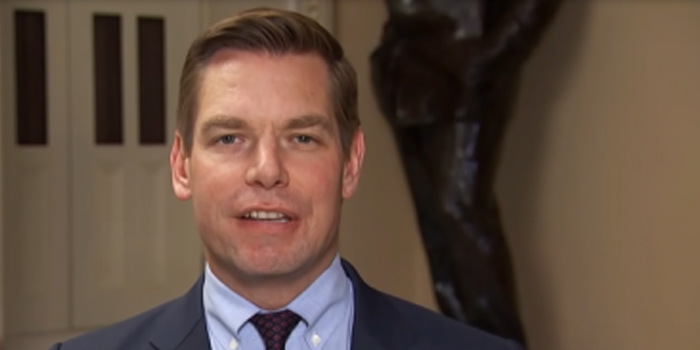
(Luis Cornelio, Headline USA) California gubernatorial candidate and Rep. Eric Swalwell has plowed through more than $200,000 in campaign donations to pay for childcare, including several thousand dollars paid to his own wife, Brittany Swalwell, the mother of his children.
Federal Election Commission filings show that the $200,000 originates from 2019 through 2025. The campaign spent $22,000 on childcare from October to December 2025, marking the largest expenditure in a single quarter, according to Fox News.
The campaign paid Brittany Swalwell over $6,000 for “childcare,” in addition to $102,000 from 2021 to 2025 to a California-based woman named Amanda Barbosa.
Barbosa’s LinkedIn reportedly indicates she began a childcare company a month before Swalwell campaign began paying her.
Nearly $60,000 was paid from 2023 to 2025 to D.C.-based preschool Bambini Play & Learn Child Development Center.
FEC filings show that the campaign reimbursed $9,713.42 for payroll taxes related to campaign childcare, nearly $2,000 for “childcare for campaign event,” $1,124.11 for travel expenses, food, beverage and childcare reimbursements and $625.91 for childcare, food & beverages reimbursement, according to Fox.
The outlet reported that while federal law prohibits campaigns from using donations for personal expenses, the Federal Election Commission (FEC) stated in 2018 that childcare expenses resulting from campaign activities can be classified as campaign expenditures.
In 2022, following an appeal by Swalwell, the FEC clarified that campaign funds may also be used to cover overnight childcare expenses incurred due to campaign travel.
Still, the payments have raised questions among campaign finance experts. Dr. and attorney Allen Mendenhall warned that using campaign funds for childcare could create a slippery slope.
“It’s an expense that candidates with young children will incur regardless of whether they’re in a campaign,” Mendenhall said. “I have childcare costs. Many people have childcare costs, and we can’t just use this other money to subsidize our things.”
Mendenhall said the FEC could risk setting a precedent that shifts childcare costs to donors.
Mendenhall said the FEC could risk creating a precedent that shifts childcare costs to donors. He warned it could also open the door for clothing, grooming and other personal expenses to be classified as campaign expenditures.
“The danger here,” Mendenhall explained, “is creating a special class of politicians who are insulated from normal constraints, ordinary constraints that everybody else has to deal with.”
(Joshua D Glawson, Money Metals News Service) There is a new viral trend on YouTube and social media of an “Asian Guy” generated by artificial intelligence (AI) tools, spreading mostly false or misleading information across the precious metals industry.
At this point, you might stop and ask yourself, “If it is obviously AI, why are so many people falling for it?”
It likely has to do with people’s attention span and their willingness or ability to research everything they see or hear. And not everything the “Asian Guy” AI bot says is a falsehood… but there is so much fabrication and half-truths peppered throughout.
Some of these AI junk videos have gone viral, leading many to believe that the high viewership must mean they are reliable or authentic.
It’s unknown whether Asian Guy videos are an intentional misinformation operation or just riddled with AI hallucinations.
Some precious metals commentators have even speculated that the so-called “Asian Guy” AI bot – which operates across numerous separate YouTube accounts – is a Chinese Communist Party (CCP) inspired initiative unleashed to cause chaos and confusion. Or perhaps it’s an overzealous silver stacker playing with AI tools to amuse himself and get clicks and YouTube ad revenue.
New Bogus Claim: Dealer Reporting of $3,000+ Transactions?
Whatever the source of the AI videos, it’s not harmless.
For example, one of these AI videos, just this week, is causing a little confusion and tension after it boldly and specifically asserted that there’s a new disclosure law going into effect on February 15, 2026, that would compromise the privacy of all precious metals purchasers.
The [fake] requirement, according to this ridiculous AI bot, is that the federal government is rolling out a new reporting requirement whereby any $3,000+ transaction involving physical silver, gold, and other precious metals would be reported to authorities via a Currency Transaction Report (CTR).
And the bot claims dealers will now be uploading to the feds every buyer’s name, social security number, address, and what was purchased.
The AI bot goes on to say that all precious metals dealers and coin shops are required to comply with this new law – and that some of them personally told the AI bot they will be doing so! (LOL, really?!)
Of course, this is all fake news from an unscrupulous YouTuber hungry for views and followers (or worse).
The claims are so farcical that it’s hard to know what the inspiration was, if any, for them. But there was a reference by the bot to something being published on the Federal Register on December 31, 2025.
So we looked.
There was something there, but it was simply a notice that further delayed until 2028 a possible rule change created late in the Biden administration that modifies investment advisor obligations under the Bank Secrecy Act.
Putting aside the fact that they were further postponed, these proposed rules have nothing to do with precious metals dealers or reporting obligations in any event.
The Reality: There Are No New Disclosure Rules for Dealers
The phony Asian Guy is causing unnecessary anxiety in the precious metals market, prompting folks to worry that their precious metals dealers may be turning over all their transaction information to the government. Some are even pointedly calling to ask whether or not their dealer plans to comply with this (non-existent) requirement.
To be clear, there has been NO CHANGE to rules under the Bank Secrecy Act that impact precious metals dealers for many years. Nothing is going into effect this month, contrary to what the AI bot claims.
That said, it is true that some dealers out there actually do report more customer transactions than the law requires. At Money Metals, though, we follow the law and have examined it very closely to be sure of our obligations – and we are also transparent with our customers.
And no responsible dealer would ever report anything that’s not lawfully required.
Money Metals Is the Best Source for Accurate Precious Metals News
This is why it is so extremely important to know where you are getting your information when it comes to precious metals investing and the economy.
Money Metals is a trustworthy, recognized, and established authority on precious metals related news, with plenty of research from respected analysts and reporters. Money Metals also leads the national public policy efforts to defend the rights, privacy, and financial interests of all precious metals investors.
When you have questions about precious metals investing or policies that might impact you, visit MoneyMetals.com/news, where we cover all popular and current topics related to precious metals.
Joshua D. Glawson is Content Manager for Money Metals and is writer on such topics as politics, economics, philosophy, finance, and personal development. He has a Bachelor’s in Political Science from the University of California Irvine.
(Headline USA) An Arizona Department of Public Safety helicopter responding to assist officers with an active shooter situation crashed, killing both the pilot and a trooper who was a paramedic on board, authorities said.
A Ranger helicopter crew responded to assist the Flagstaff Police Department and other law enforcement agencies on Wednesday night, Sgt. Kameron Lee of the department said in a statement.
“Tragically, during the incident, the helicopter crashed, killing both the pilot and the trooper/paramedic on board,” Lee said.
The names of the trooper and pilot have not been released.
Two AZDPS Crew Members Killed in Helicopter Crash During Flagstaff Active Shooter Response
Flagstaff, Ariz. — On the evening of Wednesday, February 4, 2026, an Arizona Department of Public Safety (AZDPS) Ranger Helicopter crew responded to assist the Flagstaff Police… pic.twitter.com/tKJyfqbAkG
The Bell 407 helicopter crashed near Flagstaff about 10:15 p.m. and there was a fire afterward, the Federal Aviation Administration said in a statement. A search of the registration number showed the helicopter was manufactured in 2004.
KTVK-TV showed a map indicating that the crash happened northeast of the shooting scene.
The FAA said it will assist the National Transportation Safety Board in the crash investigation. An email seeking information was sent to the NTSB early Thursday.
The state Department of Public Safety’s Air Rescue Unit is trained for various high-risk situations, including mountain and water rescues.
The suspect in the shooting suffered non-fatal gunshot wounds and was taken into custody, Lee said. No one else was injured.
(Money Metals News Service) In this episode of the Money Metals Midweek Memo, host Mike Maharrey returns with a single message for listeners watching the screen turn red. Perspective matters more than panic.
He opens with a quick personal aside from Florida, where an outdoor hockey game in Tampa turned so cold the crew had to warm the ice to prevent cracking. It is a small story with a larger point. Context changes how you interpret the same number. A 30-degree day feels different after you have just stood in 6 degrees with 11 inches of snow on the ground.
The Numbers Were Ugly, But the Year Still Looked Strong
Maharrey says the selloff was severe by any standard. During trading sessions on Friday and Monday, gold fell more than 13 percent and dropped several hundred dollars below $5,000 per ounce. He notes Friday’s decline was the steepest single-day drop since 1983.
Silver was even more dramatic. He describes a 34 percent plunge, with silver briefly trading below $80.
Then he widens the frame. Even after that “bulls are dead” moment on Friday, gold was still up 13 percent year to date, and silver was still up 18.7 percent year to date. He emphasizes the psychological whiplash of treating just-under-$5,000 gold as a crisis when, two years earlier, most people would have dismissed $5,000 gold as unrealistic.
By the time of this recording, he says the market had already clawed back a meaningful chunk of the decline. Gold was back above $5,000, and silver was back above $90.
Money Metals Says Inventory Is Available for Dip Buyers
Before diving into causes, Maharrey makes a practical point for listeners trying to take advantage of the move. He says reports of retail shortages are real in some corners of the market, but he states that Money Metals has plenty of inventory and no order limits or restrictions.
He adds that phone wait times may be longer because of the surge in demand. He says the company hired over 50 people since Christmas to handle higher volume. He also claims some silver products are available below spot and directs listeners to the specials on the Money Metals website, while noting the phone line is 800-800-1865.
Two Headlines Lit the Fuse
Maharrey attributes the initial spark to two developments that hit the tape and hit sentiment.
The first was President Donald Trump announcing that Kevin Warsh will succeed Jerome Powell as chair of the Federal Reserve this spring. He says markets interpreted Warsh as a hawkish pick, and traders reacted as if the “easy money punch bowl” might be pulled away.
Maharrey then gives Warsh’s background as context. He says Warsh is 55 years old, served as a Federal Reserve governor from 2006 to 2011, and was the youngest person ever nominated to the Fed board at age 35. He also notes Warsh previously worked in mergers and acquisitions at Morgan Stanley and served in the George W. Bush administration as a special assistant to the president for economic policy and executive secretary of the National Economic Council.
From there, Maharrey argues the “independent Fed” narrative is overstated and calls Fed officials political actors. He frames Warsh’s family and political connections as further evidence that central banking is not conducted in a vacuum.
Warsh’s Record Sounds Hawkish, His Recent Rhetoric Sounds Dovish
Maharrey acknowledges why Warsh has the hawk label. He says Warsh has criticized the size of the Fed’s balance sheet, criticized rapid rate cuts during the 2008 crisis, warned about inflation risk, and was the only Fed member to argue against QE2 in 2011, when the Fed bought Treasuries. Maharrey also references the familiar pledge from that era that assets would later roll off the balance sheet, noting that they are still there many years later.
But he argues investors should pay more attention to what people do than what they say, and he uses Alan Greenspan as his example of a purported sound-money figure who ultimately presided over easy money and asset bubbles.
On Warsh specifically, Maharrey says Warsh has more recently aligned himself with Trump’s rate-cut posture. He quotes Warsh calling for “regime change” at the Fed and criticizing the central bank’s hesitancy to cut rates, framing that as dovish behavior despite the historical hawk reputation.
This is where Maharrey argues the market reaction may have been backward. If anything, he suggests Warsh could be more accommodating than Powell, at least at first, particularly because Trump selected him and would not choose a chair expected to do the opposite of what he wants.
Hot Producer Prices Added Fuel to the Fire
The second catalyst was inflation data. Maharrey says the Producer Price Index came in hotter than expected and reinforced fears that interest rate cuts could be delayed.
He reports headline PPI rose 0.5 percent month over month versus a 0.2 percent forecast. He reports core PPI surged 0.7 percent versus a 0.2 percent forecast.
He characterizes PPI as a leading indicator because companies often pass higher costs to consumers, and he warns this could bleed into CPI over the next month or two. In his telling, that possibility put additional pressure on gold and silver because fewer or later rate cuts are typically seen as headwinds for non-yielding assets.
This Was Not Fundamentals, It Was Deleveraging
Maharrey then shifts from headlines to mechanics. He describes a market structure event where price levels triggered waves of automated selling.
He explains how stop-loss orders can create a cascade. As prices fall through key levels, more stops trigger, prices fall further, margin pressure rises, and selling becomes self-reinforcing.
He cites Société Générale analysts who characterized the move as not fundamentally driven but driven by positioning. He quotes their description of metals deleveraging, with stops being hit, margin calls rising, systematic funds cutting risk, silver’s outsized drop reflecting leverage being flushed, and the move being accelerated by profit taking, volatility limits, and CTA deleveraging, especially around month-end. His conclusion is that the size of the move was more about market plumbing than a sudden change in reality.
He also notes that stocks sold off alongside metals and that rumors of Warsh’s appointment had already started pressuring markets the day before.
The Two Reasons He Thinks “Hawkish Warsh” Won’t Last
Maharrey’s skepticism centers on politics and math.
First, he argues that Trump’s choice implies that Trump expects more favorable policy outcomes than he believes he is getting from Powell. He suggests either that Warsh has been saying what Trump wants to hear, or he will be inclined to cut more quickly once in the chair.
Second, he argues the “debt black hole” is the dominant force. In his view, the Fed is stuck in a catch-22. It needs higher rates to fight persistent inflation, but the debt-burdened economy cannot function at normal rates. He believes that, when forced to choose, central bankers tend to rescue the economy and enable government borrowing rather than keep inflation fully contained.
He also argues there is little room to shrink the balance sheet meaningfully. He says the Fed increased the balance sheet modestly over the last month and returned to quantitative easing without using the term at the December meeting. He adds that weakening demand for Treasuries and persistent yields suggest the Fed will be pushed toward more aggressive buying as a buyer of last resort.
To illustrate de-dollarization pressure and fiscal concerns, he references a Danish pension fund that chose to divest Treasuries, saying its manager cited poor U.S. government finances as the reason rather than a political dispute. In Maharrey’s framing, Warsh’s reputation cannot override these constraints.
Perspective Rules for the Next Correction
Maharrey closes by turning the episode into a checklist of mental habits, framed as lessons rather than trading rules.
He says corrections are normal and healthy in a bull market and that nothing rises in a straight line. He argues gold and silver were likely overbought by technical measures, meaning statistically stretched relative to recent history. At the same time, he says the metals remain underinvested, which matters more over a longer horizon.
He urges listeners to focus on what actually changed. If fundamentals shift, reassess. If nothing fundamental changed, it was likely a headline-driven correction.
The fundamentals, he says, he is watching remain the same. He lists de-dollarization, central bank gold buying, inflation pressures, Federal Reserve easing, geopolitical tension, and U.S. fiscal malfeasance. He argues that nothing that happened on Friday or Monday reversed those dynamics.
He also notes the importance of looking beyond metals in isolation. On Friday, he says nearly everything sold off, including stocks, bonds modestly, commodities, and Bitcoin, while the dollar rose. He asks whether a short-term dollar rally changes anyone’s long-term view of the dollar’s prospects.
Finally, he underscores the emotional trap. He says you have not lost money until you sell, then admits he felt the same gut reaction watching prices drop, even though he did not sell. He uses his own experience of buying silver around $12 as a reminder that emotion can override math if you let it.
Manipulation Is Real, But It Is Not an All-Purpose Explanation
Maharrey addresses a recurring theme in precious-metals circles. He says he believes manipulation exists and that evidence supports that claim, but he argues that a big selloff is not proof of manipulation by itself.
He points out that many people only invoke manipulation when prices fall, not when they spike, and he calls that asymmetric reasoning. He also notes gold is an enormous market with massive volumes, which makes it difficult for any one actor to control for long. Silver, he says, is smaller and more vulnerable to temporary distortions because of the gap between paper exposure and physical supply, but he still warns against treating every downtick as a conspiracy.
A Secular Bull Market Thesis, With Humility
Maharrey concedes that any sharp selloff forces the question of whether the bull market is ending. He says it is possible, but he does not believe that is what this move signaled.
He reiterates his view that gold and silver are in the early stages of a long-running secular bull market, while bonds are in a secular bear market. He argues bonds have lost their safe-haven role, and he calls gold the last safe haven standing, with the caveat that silver is more volatile.
Even so, he stresses the need for humility and ongoing reassessment. Markets turn, narratives break, and no one is right forever. The discipline, he says, is staying calm, avoiding emotional decisions, tracking fundamentals, and maintaining perspective.
Why He Thinks This Dip Matters
Maharrey ends with a broader demand argument. He says mainstream attention is shifting and points to a claim that the CIO of Morgan Stanley discussed a “60/20/20” portfolio concept that includes a 20 percent allocation to precious metals. He contrasts that with his assertion that most people hold no metals and that the average allocation is around 1 percent.
From there, he frames the asymmetry. Even a move from 1 percent to 2 percent would represent a major step up in demand, layered on top of what he describes as record gold demand last year. He cites 5,000 tons of gold demand for the first time ever.
He closes by directing listeners to Money Metals resources, the email list he says includes more than a million people, and reminders about the weekly Friday Market Wrap show.
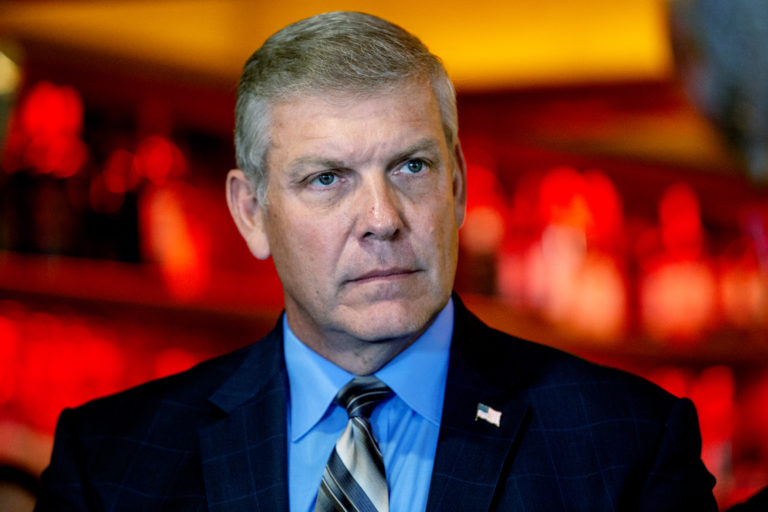
(Headline USA) Georgia Republican U.S. House member Barry Loudermilk, who has been active in the House GOP investigations into the Jan. 6, 2021, Capitol protest, announced Wednesday that he won’t seek reelection this year.
Loudermilk has served in Congress since 2015. He is part of a wave of incumbents exiting the House. So far, 50 are stepping down or running for some other office.
Four Republican-held congressional seats in Georgia will change hands this year. In addition to Loudermilk, U.S. Rep. Marjorie Taylor Greene resigned from her seat in January, setting up a March special election. U.S. Reps. Buddy Carter and Mike Collins are both running for the GOP’s U.S. Senate nomination, aiming to unseat incumbent Democratic U.S. Sen. Jon Ossoff.
Loudermilk, 62, said in a statement that he wanted to spend “more dedicated time” with his family.
“I first ran for election to Congress in 2014 and, as I stated then, representing the people in Congress is a service, not a career,” Loudermilk said. “And although I continue to have strong support from the people of the 11th Congressional District, I believe it is time to contribute to my community, state, and nation in other ways.”
The 11th Congressional District, northwest of Atlanta, includes all of Bartow, Gordon and Pickens counties and parts of Cherokee and Cobb counties. The Cook Political Report ranks the district as the fifth-most strongly Republican district of the nine that the GOP holds in Georgia.
Before serving in Congress, Loudermilk served in the Air Force. He chaired the Bartow County Republican Party and then served six years in the Georgia state House of Representatives and two years in the state Senate.
After Republicans took the majority in 2023, Loudermilk led a subcommittee that released a report alleging former U.S. Rep. Liz Cheney acted improperly on the Democratic-led Jan. 6 committee and calling for her to be investigated for criminal witness tampering. The Biden administration pardoned Cheney and other members of the politicized J6 committee.
Loudermilk currently leads another subcommittee that is charged with further investigating Jan. 6.
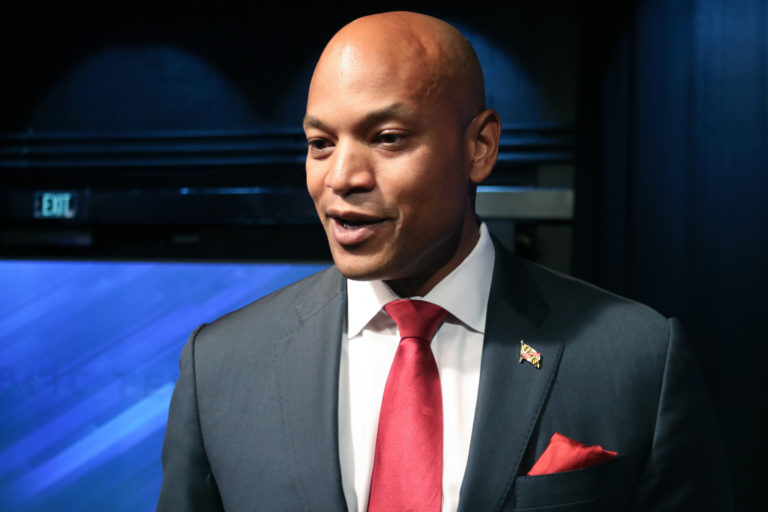
(Luis Cornelio, Headline USA) Not only did Maryland Gov. Wes Moore lie about a Bronze Star, his Baltimore origins, a fictional football Hall of Fame introduction and his academic credentials, but a new report also suggests he fabricated a story about his great-grandfather fleeing the KKK.
The report, published Wednesday by the Washington Free Beacon, centered on Moore’s repeated claim that his maternal great-grandfather, Rev. Josiah Johnson Thomas, fled South Carolina for Jamaica after narrowly escaping a lynching by the KKK in the 1920s.
Moore has repeatedly referenced the story as a sign of strength, portraying Thomas as a preacher who, along with his son, Moore’s grandfather, was targeted for rebuking racism in South Carolina.
However, the Free Beacon reported that the “straight out of Hollywood” story appears to be “false” as it is “flatly contradicted by historical records.”
According to the report, records do confirm that Thomas preached during the 1920s and later moved to Jamaica, the Caribbean island where he was born.
The same records from the Protestant Episcopal Church in the Diocese of South Carolina indicate the move followed his appointment to replace a Jamaican pastor who died suddenly a week earlier.
Moore has claimed that the move occurred quietly in the middle of the night, while the Free Beacon reported that the records show the appointment was public and made in an organized manner.
Those same records make no reference to the KKK. In fact, the outlet added that data from Virginia Commonwealth University’s Mapping of the Second Ku Klux Klan shows the group did not maintain a chapter near Thomas’s church in Pineville during that period.
Moore’s office responded dismissively to the report, with spokesperson Ammar Moussa accusing the outlet of being fixated on the governor, a potential 2028 presidential candidate.
“The Free Beacon’s fixation on Governor Moore is mildly amusing. What’s more concerning is how casually they treat the reality of being Black in the South in the 1920s,” Moussa claimed. “Anyone questioning whether racial terror and intimidation were pervasive in that era should open a history book or, better yet, reach out to the KKK to ask what they were up to in South Carolina in the 1920s.”
Moore’s communications director, David Turner, also declined to provide members of the governor’s extended family to corroborate the claims.
“They have no desire to teach you the basics of American history,” Turner said.
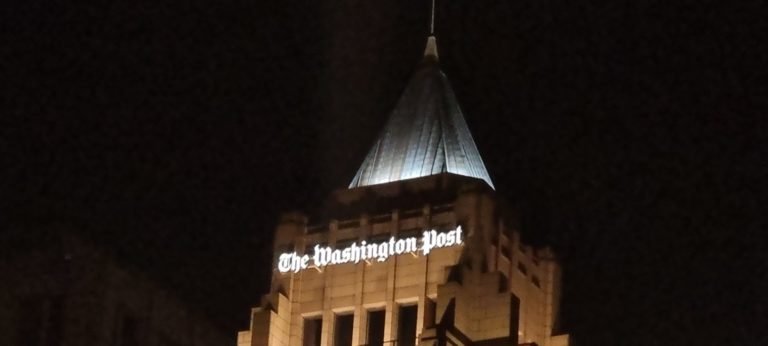
(Headline USA) The Washington Post laid off one-third of its staff Wednesday, eliminating its sports section, several foreign bureaus and its books coverage.
The Post’s executive editor, Matt Murray, called the move painful but necessary to put the outlet on stronger footing and to weather changes in technology and user habits. “We can’t be everything to everyone,” Murray said in a note to staff members.
He outlined the changes in a companywide online meeting, and staff members then began getting emails with one of two subject lines — telling them their role was or was not eliminated.
Rumors of layoffs had circulated for weeks, ever since word leaked that sports reporters who had expected to travel to Italy for the Winter Olympics would not be going. But when official word came down, the size and scale of the cuts were shocking, affecting virtually every department in the newsroom.
“It’s just devastating news for anyone who cares about journalism in America and, in fact, the world,” said Margaret Sullivan, a Columbia University journalism professor and former media columnist at the Post and The New York Times. “The Washington Post has been so important in so many ways, in news coverage, sports and cultural coverage.”
Martin Baron, the Post’s first editor under its current owner, billionaire Jeff Bezos, condemned his former boss and called what has happened at the newspaper “a case study in near-instant, self-inflicted brand destruction.”
Bezos, who has been silent in recent weeks amid pleas from Post journalists to step in and prevent the cutbacks, had no immediate comment.
A private company, the Post does not reveal how many subscribers it has, but it is believed to be roughly 2 million. The Post would also not say how many people it has on staff, making it impossible to estimate how many people were laid off Wednesday. The Post also did not outline its finances.
The Post’s troubles stand in contrast to its longtime competitor The New York Times, which has been thriving in recent years, in large part due to investments in ancillary products such as games and its Wirecutter product recommendations. The Times has doubled its staff over the past decade.
Eliminating the sports section puts an end to a department that has hosted many well-known bylines through the years, among them John Feinstein, Michael Wilbon, Shirley Povich, Sally Jenkins and Tony Kornheiser. The Times has also largely ended its sports section, but it has replaced the coverage by buying The Athletic and incorporating its work into the Times website.
The Post’s Book World, a destination for book reviews, literary news and author interviews, has been a dedicated section in its Sunday paper.
Word of specific cuts drifted out during the day, as when Cairo Bureau Chief Claire Parker announced on X that she had been laid off, along with all of the newspaper’s Middle East correspondents and editors. “Hard to understand the logic,” she wrote.
Lizzie Johnson, who wrote last week about covering a war zone in Ukraine without power, heat or running water, said she had been laid off, too.
“The Post has survived for nearly 150 years, evolving from a hometown family newspaper into an indispensable national institution, and a pillar of the democratic system,” Ashley Parker, a former Post journalist, wrote in an essay in The Atlantic. But if the paper’s leadership continues its current path, “it may not survive much longer.”
Fearing for the future, Parker was among the staff members who left the newspaper for other jobs in recent months.
Also on Wednesday, the Atlanta Journal-Constitution, which stopped print editions and went all-digital at the end of last year, announced that it was cutting 50 positions, or roughly 15% of its staff. Half of the eliminated jobs were in the newsroom.
Murray said the Post would concentrate on areas that demonstrate authority, distinctiveness and impact, and resonate with readers, including politics, national affairs and security. Even during its recent troubles, the Post has been notably aggressive in coverage of Trump’s changes to the federal workforce.
The company’s structure is rooted in a different era, when the Post was a dominant print product, Murray said in his note to the staff. In areas such as video, the outlet hasn’t kept up with consumer habits, he said.
“Significantly, our daily story output has substantially fallen in the last five years,” he said. “And even as we produce much excellent work, we too often write from one perspective, for one slice of the audience.”
The latest deal came less than a week after the State Department moved forward with another major potential deal for Patriot air defense missiles worth $9 billion.
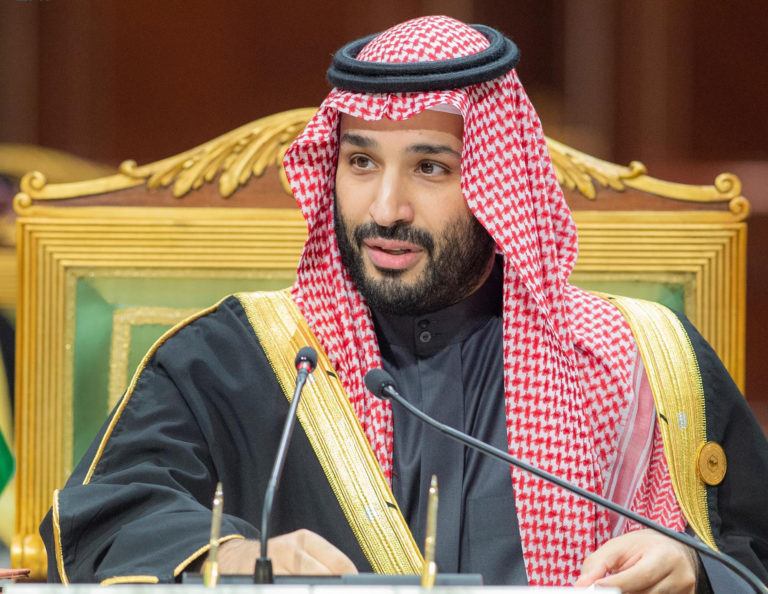
The $12 billion in arms sales to Saudi Arabia came a few months after Saudi Crown Prince Mohhamed bin Salman visited President Trump at the White House, where they signed a new military agreement, dubbed the US-Saudi Strategic Defense Agreement (SDA), and the US designated Riyadh a “major non-NATO ally.”
President Trump poses for photos with Crown Prince Mohammed bin Salman on November 18, 2025, in the Oval Office. (Official White House Photo by Daniel Torok)
The Pentagon’s Defense Security Cooperation Agency (DSCA) said in a statement on the F-15 sustainment deal that it will “support the foreign policy and national security objectives of the United States by improving the security of a Major non-NATO Ally that is a force for political stability and economic progress in the Gulf Region.”
Under the SDA, Saudi Arabia pledged to purchase F-35 fighter jets and 300 US-made tanks, according to a statement from the White House at the time of MbS’s visit in November 2025. The US is expected to sell more than $100 billion in weapons to Riyadh in the coming months and years.
While Trump made a commitment to a massive number of arms sales to Saudi Arabia, he stopped short of providing the Kingdom with a mutual defense guarantee similar to NATO’s Article 5, something Riyadh has sought for many years.
The latest US arms sales for Saudi Arabia come as the country is at odds with the UAE, another Gulf country Trump strongly supports. Riyadh was recently conducting airstrikes in Yemen against the UAE-backed Southern Transitional Council.
Trump maintained close ties with the Saudis during his first term, advancing major arms sales and providing support for the brutal Saudi-led war against the Houthis, officially known as Ansar Allah, in Yemen. In 2019, Trump vetoed a congressional resolution to end US involvement in the war.
(Thérèse Boudreaux, The Center Square) Dozens of Republicans are demanding that the U.S. Senate take up House-passed legislation implementing election security reforms – and they’re willing to restructure filibuster rules to ensure it succeeds.
The SAVE Act passed the lower chamber with slim bipartisan support last April. The bill would require Americans to present proof of citizenship when registering to vote, necessitate in-person voter registration for federal elections, and require states to remove all noncitizens from their voter rolls.
Yet after 300 days, the Senate Rules Committee has still made no move to bring it to the floor. More than 30 House Republicans, led by Rep. Brandon Gill, R-Texas, sent a scathing letter to committee Chairman Mitch McConnell, R-Ky., demanding action.
Forty-eight Republican senators have cosponsored the legislation, and Rep. Chip Roy, R-Texas, says he received commitments from 50 senators to vote for it. But with Senate Democrats pronouncing the bill “dead on arrival” if it reaches the floor, GOP lawmakers are once again debating whether to change the Senate’s 60-vote threshold.
Sen. Mike Lee, R-Utah, has stated on social media that “the historical norm” required senators who wish to filibuster a bill to speak on the floor.
He condemned the current 60-vote threshold requirement, where senators use cloture as the only method of advancing most legislation.
“Cloture—which allows for a supermajority of senators to end the talking filibuster—first became available in 1917, but still wasn’t used routinely,” Lee argued. “The Zombie Filibuster—in which senators could have the benefit of ongoing debate without actually speaking—has now become the norm[.]”
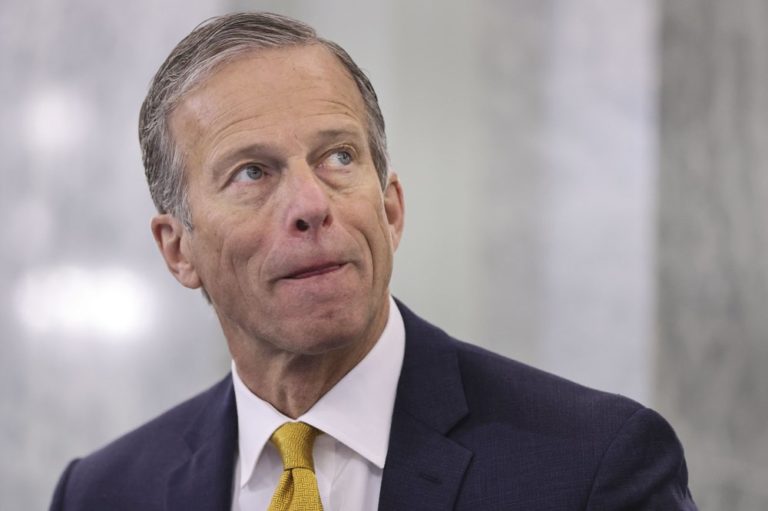
Despite pressure from Lee and others, Senate Majority John Thune, R-S.D., has remained noncommittal on the issue. He told reporters Tuesday that leaders will “talk about that idea and determine how they want to proceed.”
“We will vote on the SAVE Act — but a talking filibuster has ramifications everybody needs to be aware of,” Thune added. “That would tie the floor up, with unlimited debate and amendments.”
If filibuster rules are not changed, the SAVE Act will almost certainly fail the Senate, where Republicans have up to 53 votes.
Democrats have called the legislation an act of voter suppression, saying that federal law already prohibits noncitizens from voting and the SAVE Act will simply make it harder for veterans, the disabled, minorities, and women who change their last names to register to vote.
Under the legislation, people would not be able to register to vote with only their drivers license, since noncitizens can obtain that. They must instead present documents proving U.S. citizenship, such as a birth certificate or U.S. passport.
Sen. Lindsey Graham, R-S.C., and other Republicans say the requirements are “eminently reasonable.”
“Common sense requirements to prove your eligibility to vote in federal elections are not ‘Jim Crow 2.0.,” Graham said on social media Wednesday. “Every time we try to bring rationality to the debate around illegal immigration, the Democrats let the radical, left-wing nut jobs take over for them – but they won’t for us.”