(Luis Cornelio, Headline USA) A 26-year-old man has been charged with allegedly attempting to murder Office of Management and Budget Director Russell Vought at his Virginia home after traveling there wearing a surgical mask and gloves, according to recent reports.
The suspect, Maryland-native Colin Demarco, is accused of plotting to murder a victim identified by the initials “R.V.,” who “has served as a presidential appointee,” according to CBS News’s reporting on court documents. The incident occurred on Aug 10, 2025.
The criminal complaint also notes that the victim was involved with Project 2025, a series of conservative policy proposals spearheaded by The Heritage Foundation, an initiative in which Vought played a role.
The charges were brought by the Arlington County Sheriff’s Office in Northern Virginia, where Vought’s home is located.
Jail records reviewed by Headline USA show that Demarco is facing charges of attempted murder in the first and second degree, wearing a mask in a public place and carrying a concealed weapon.
Demarco was booked on Jan. 22 at 1:51 p.m., and a bond has not been set. Court records show he appeared multiple times between Jan. 26 and Jan. 28, with additional proceedings scheduled through Feb. 23.
According to CBS News, the U.S. Marshals Service determined that Demarco had claimed to be writing a manifesto and had drafted notes detailing weapons, along with a document titled “Body Disposal Guide.”
The alleged attempt on Vought’s life comes after he has faced years of relentless media attacks over his work within the Trump administration and his involvement with Project 2025.
Those smears have included branding Vought a “white Christian nationalist” and associating him with Nazism.
Democratic politicians have also targeted Vought as dangerous because of his policy views. Sen. Jeff Merkley, D-Ore., previously attacked him on the Senate floor using a display board labeled “Radical Russ Vought: Dangerously Unfit.”Vought has additionally been labeled a “threat to democracy” and accused of racism.
The alleged attempted murder of Vought follows a wave of politically motivated violence targeting conservatives, including the killing of Turning Point USA founder Charlie Kirk, the attempted assassination of Supreme Court Justice Brett Kavanaugh and two assassination attempts against President Donald Trump, among others.
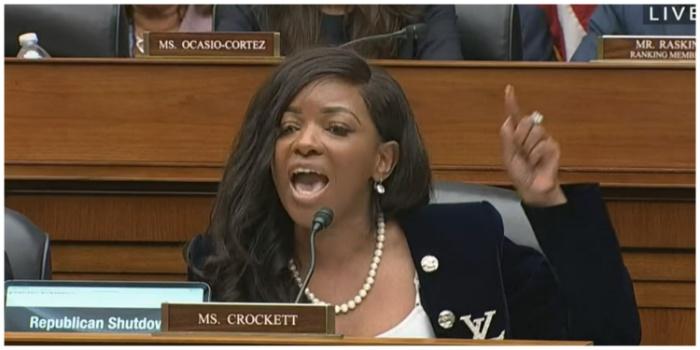
(Luis Cornelio, Headline USA) Texas Senate candidate and Rep. Jasmine Crockett used over $120,000 on luxury hotels, transportation and private security in 2025 alone, according to congressional campaign disclosures.
The total expenditures, drawn from both her congressional and senatorial campaigns, amounted to $124,000, Fox News reported, citing Federal Election Commission filings.
Crockett spent $32,685.58 on luxury hotels, including $11,841.27 in the final quarter of 2025, while launching her Senate campaign against what she called a “system of greed.”
The top hotels funded by Crockett’s campaigns included the Ritz-Carlton, St. Regis, Hotel Zaza, Kimpton, and the five-star Los Angeles West Hollywood Edition.
Limousine and luxury car services received $11,738.60 in 2025. Fox reported that Crockett spent $5,446.30 on California-based Bay Area Lux Limos in October, November and December.
FIRST ON FOX: Democrat Rep. Jasmine Crockett, running for Senate in Texas, spent more than $120,000 in 2025 on luxury hotels, VIP transportation and private security, according to FEC filings.
Private security accounted for by far the largest share, with Crockett paying nearly… pic.twitter.com/adCPCPW3hI
According to the outlet, Crockett spent the most money on private security, despite openly endorsing the idea of defunding the police.
In total, she spent nearly $80,000 on private security in 2025, with the most amount spent in the final quarter of 2025.
The expense was shocking given that in 2021, while serving as a state lawmaker, Crockett said that the “Defund is about finally being smart on crime.”
She added, “Defund is about lightening the load for our offices of all things they didn’t sign up for. Defund is about finally being fiscally responsible when it comes to policing in this state.”
Fox News’s Fox’s scrutiny of her spending comes as Crockett gained national attention for her unconventional approach to legislating and speaking during congressional hearings.
She referred to former Rep. Marjorie Taylor Greene as “bleach blonde, bad-built, butch body,” Texas Gov. Greg Abbott, who uses a wheelchair, as “governor hot wheels,” and President Donald Trump as “putin’s h*e.”
Crockett entered the U.S. House of Representatives in 2023 after serving two years in the Texas House. She is now running a longshot campaign for Sen. John Cornyn’s seat in 2026.
(Luis Cornelio, Headline USA) A group of NFL players admitted they could not name a single song by Super Bowl halftime headliner Bad Bunny, the outspoken anti-Trump reggaeton artist from Puerto Rico.
Several players across the league expressed unfamiliarity with Bad Bunny’s music during interviews on Cayden’s Corner, undercutting the notion that the performer resonates with NFL players or football culture.
Los VegasRaiders cornerback Marcus Peters summed it up bluntly.
“I don’t know no Bad Bunny songs,” Peters said.
Los Angeles Rams running back Kyren Williams echoed the sentiment, saying, “I have no idea.”
Detroit Lions wide receiver Amon-Ra St. Brown also said he could not name a song, while Houston Texans cornerback Kamari Lassiter admitted he does not listen to Bad Bunny’s music at all.
Cincinnati Bengals offensive tackle Orlando Brown Jr. similarly said he does not listen to Bad Bunny and could not identify any of his work.
Only one player, Vikings running back Aaron Jones Sr., identified a Bad Bunny song, and only after being prompted by the host, struggling to pronounce Titi Me Preguntó.
The lack of enthusiasm mirrors results from The Athletic’s anonymous NFL player survey, which showed a near split over Bad Bunny’s selection as the Super Bowl halftime performer.
Roughly 41 percent of players said they opposed the choice, while 58 percent said they supported it.
“I don’t even know who Bad Bunny is,” an anonymous NFC offensive player told The Athletic. “I always think it should be an American. I think they’re trying too hard with this international stuff.”
Another NFC offensive player criticized the NFL’s decision, saying the league should select performers who align more closely with football culture.
“I do not like it. (I’d prefer) anyone who’s synonymous with football and football culture. I feel like there’s tons of artists out there who are fans of the game.”
The NFL’s selection of Bad Bunny has drawn criticism beyond music, as the artist has repeatedly attacked President Donald Trump and most recently used his Grammy Awards acceptance speech to scold Immigration and Customs Enforcement over immigration enforcement.
(Money Metals News Service) In a recent episode of the Money Metals podcast, host Mike Maharrey sat down with veteran investment advisor J. Ted Oakley, founder of Oxbow Advisors. Oakley brought more than 40 years of experience advising high-net-worth clients, but the conversation began far from Wall Street.
Oakley shared a deeply personal story of growing up in extreme poverty in the backwoods of North Carolina and Georgia, without running water or basic comforts. Forced to work from a young age and leave home shortly after high school, he learned early that survival required discipline, effort, and vigilance. Those formative years left a permanent imprint on how he views risk, loss, and responsibility.
That background, Oakley explained, created a mindset that never takes capital for granted. Even after achieving success, he admits to “running scared” in the sense that he never forgets how quickly things can be lost. That perspective shapes how he manages money today, with a strong emphasis on avoiding catastrophic losses rather than chasing reckless gains.
(Interview Starts Around 6:20 Mark)
Why Gold Belongs in a Serious Portfolio
Unlike many traditional advisors, Oakley has long viewed gold and silver as essential components of a diversified portfolio. He emphasized that gold, in particular, should be understood not merely as a commodity but as a form of currency that has preserved value for thousands of years.
Oakley noted that while gold can experience long periods of stagnation or decline, its historical role as a universally tradable store of value makes it uniquely suited to hedge against monetary instability. At Oxbow Advisors, gold is held across all strategies as a currency-like asset rather than a speculative trade.
Silver, by contrast, plays a different role. Oakley described it primarily as an industrial metal with higher volatility and a higher beta than gold. Because of that volatility, his firm trades silver more actively and typically allocates less capital to it than to gold, recognizing both its opportunity and its risk.
Rethinking the 60/40 Model
The conversation turned to recent remarks by the chief investment officer of Morgan Stanley, who suggested rethinking the traditional 60/40 stock-bond portfolio in favor of a 60/20/20 allocation that includes precious metals. Oakley said the recommendation made sense given the breakdown of the old model.
For years, massive liquidity injections made passive index investing appear foolproof. But Oakley argued that the environment has changed. Stocks and bonds no longer provide the same diversification benefits they once did, forcing institutional voices to acknowledge alternatives like gold.
He suggested the shift reflects a broader changing of the guard in markets, as strategies that worked effortlessly for more than a decade begin to falter under new macroeconomic pressures.
Navigating Volatility Without Panic
As gold and silver experienced sharp corrections following recent highs, Maharrey raised the emotional toll these moves take on investors. Oakley observed that he received few calls during the early stages of the rally, but interest surged once gold pushed above $5,000 and silver climbed into triple digits.
That pattern, he said, is often a contrarian signal. When enthusiasm peaks among average investors, corrections tend to follow. Oakley cautioned that such pullbacks do not signal the end of a bull market, but they do require patience. Historically, major breaks often take three to four months to stabilize before resuming an upward trend.
He stressed that gold should be allocated deliberately, whether at 5%, 10%, or another level, and then held with discipline. Selling during volatility undermines gold’s role as a long-term stabilizer. Oakley encouraged investors to think in relative terms, such as how much gold it takes to buy a home over time, rather than focusing solely on dollar prices.
Gold Versus Silver in a Changing World
Oakley highlighted key differences between gold and silver that investors often overlook. Gold has been heavily supported by central bank buying, especially since 2022, when geopolitical shifts accelerated demand among sovereign institutions.
Silver lacks that central bank backing and remains more exposed to industrial demand cycles. While structural supply deficits exist, Oakley cautioned that mining constraints take time to resolve, meaning price volatility is inevitable. He acknowledged that supply cannot be ramped up quickly, which supports long-term prices, but short-term swings are unavoidable.
On inflation, Oakley argued that official measures understate the real cost pressures faced by households. He described today’s environment as one of “stealth inflation,” where expenses like healthcare, insurance, and groceries rise faster than headline CPI figures suggest.
He believes policymakers are incentivized to allow inflation to run hotter than interest rates as a way to reduce the real burden of debt, echoing the post–World War II period from 1946 through the early 1960s. Yield curve control and financial repression, he suggested, may be used again to manage unsustainable debt-to-GDP levels.
Looking ahead, Oakley expects inflation to remain structurally higher over the next five to ten years, regardless of short-term soft patches or political narratives surrounding tariffs and rate policy, including leadership changes such as the appointment of Kevin Walsh.
The Risk Most Investors Are Missing
Perhaps Oakley’s strongest warning concerned the dominance of passive investing. He estimated that more than 90% of investors are heavily concentrated in S&P 500 index funds and U.S.-focused exchange-traded funds.
That concentration, he warned, leaves portfolios vulnerable if foreign markets outperform and global investors reduce exposure to U.S. assets due to currency weakness. Oakley noted that many advisors entered the industry after 2009 and have never experienced a prolonged bear market, leading to overconfidence in strategies that worked only under extraordinary monetary conditions.
He believes the next decade will challenge those assumptions, as markets require active management, diversification, and risk awareness rather than blind faith in indexes.
A Legacy Beyond Markets
Beyond investing, Oakley spoke passionately about his philanthropic work supporting foster children. Inspired nearly three decades ago by the book A Child Called “It”, he founded charitable organizations that now operate across roughly 68 counties in Texas.
Through two foundations, Oakley helps nearly 10,000 children each year, providing essentials, educational support, and pathways through college. He described the work as deeply personal, rooted in gratitude for those who helped him when he had nothing.
For Oakley, success is ultimately measured not by returns alone, but by the lives improved along the way—a philosophy that mirrors his disciplined, long-term approach to both markets and life.
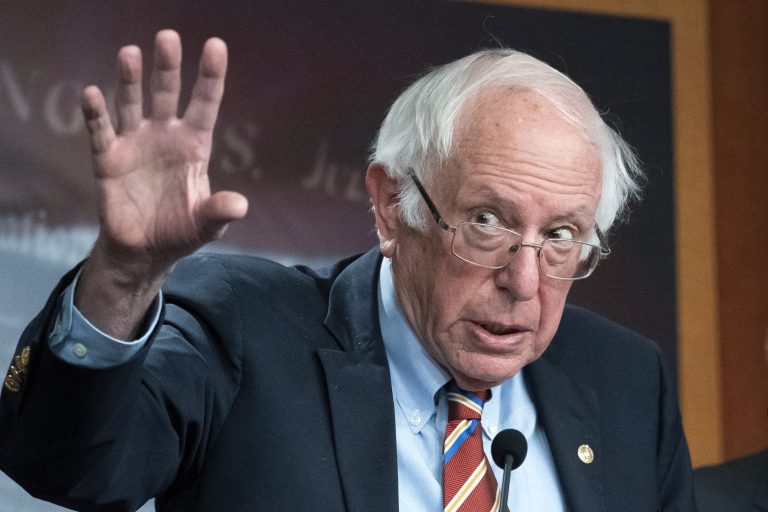
(Luis Cornelio, Headline USA) Socialist Sen. Bernie Sanders, I-Vt., has been flying high on private jets while railing against billionaires on his “Fighting Oligarchy” tour, plowing more than half a million dollars in campaign funds into luxury air travel.
Private jets are a luxury most Americans never experience. For Sanders, however, they have become routine, costing his campaign donors roughly $550,000 in 2025 alone, according to Federal Election Commission filings.
As reported first by Fox News, most of the private air travel occurred through July 2025, coinciding with the period when Sanders and fellow democratic socialist Rep. Alexandria Ocasio-Cortez traveled the country attacking billionaires.
Fox News reported that Sanders was spotted in April boarding a luxury Bombardier Challenger jet that reportedly costs $15,000 an hour to operate within California.
The aircraft operator, Ventura Air Services, openly markets its high-end amenities on its website.
“Offering one of the widest cabins of any business jet available today, stand-up room of over six feet and a passive noise insulation system, it provides superior cabin comfort for its passengers,” the airline wrote.
It is little surprise, then, that Sanders’s campaign paid $354,000 to the company alone.
Additional payments went to private aviation firms, including N-Jet and Cirrus Aviation Services.
While such luxury may appeal to anyone, Sanders is no stranger to private air travel.
During his 2020 presidential campaign, Sanders reportedly spent more than $1.9 million on private jets.
In the 2018 midterms, his campaign spent nearly $298,000, preceded by $157,000 in 2017, partially backed by the Democratic National Committee.
In 2016, while campaigning for Hillary Clinton, Sanders demanded roughly $100,000 in private air travel expenses charged to the campaign.
Sanders has defended his reliance on private jets, telling Fox News that it was the only way to travel efficiently while campaigning.
“When you run a campaign and do you three or four or five rallies in a week, the only way you can get around to talk to 30,000 people … it’s the only way to get around,” he claimed in May. “No apologies for that. That’s what campaign travel is about. We have done it in the past and we will do it in the future.”
(Chris Woodward, The Center Square) California has a new law that prohibits law enforcement from wearing masks, but don’t expect it to be enforced in Los Angeles. At least not when it comes to federal immigration officers.
Los Angeles Police Chief Jim McDonnell said enforcement of Senate Bill 627 would endanger officer safety. McDonnell, who decided against enforcing the ban, added that the Los Angeles Police Department is not the mask police for federal agents.
“The reality of one armed agency approaching another armed agency to create conflict over something that would be a misdemeanor at best or an infraction, it doesn’t make any sense,” McDonnell said at a recent news conference. “It’s not a good public policy decision, and it wasn’t well thought out.”
Gov. Gavin Newsom signed SB 627 into law in September. At the time, the Democratic governor told lawmakers that “America should never be a country where masked ‘secret police’ grab people off the streets and throw them into unmarked vans and speed away.”
Newsom went on to say that “Californians must know that they are interacting with legitimate law enforcement officers, rather than masked vigilantes.”
State Sens. Scott Wiener, D-San Francisco, and Jesse Arreguin, D-Berkeley, introduced SB 627, also known as the No Secret Police Act.
In their 2025 joint press release, Wiener said federal operations in California have “created an environment of profound terror.” As a result, Wiener said, SB 627 was necessary to maintain public trust.
“Law enforcement officers do critically important work to keep our communities safe, and they should be proud to show their faces and provide identifying information when doing so,” Wiener said. “It boosts trust in law enforcement, which makes it easier for law enforcement to do their jobs and makes California safer for all of us.”
Arreguin agreed, adding that first responders are responsible for vital work that protects communities, but trust and accountability are also key to keeping neighborhoods safe.
“This bill will ensure that law enforcement are easily identifiable, maintaining that trust and accountability,” said Arreguin.
Wiener and Arreguin did not respond to The Center Square’s request for additional comments.
The Coalition for Humane Immigrant Rights, based in Los Angeles, said it is “deeply troubled” by McDonnell’s comments.
Jeannette Zanipatin, CHIRLA director of policy, told The Center Square the department’s position signals acquiescence rather than leadership.
“Allowing armed officers to operate anonymously undermines public safety, erodes trust, and contradicts California law designed to prevent secret policing. Immigrant communities already live with fear,” said Zanipatin. “Leadership now requires you to affirm that no law enforcement agency is above accountability and that the LAPD will stand for transparency, civilian oversight, and the rule of law.”
Other people are falling on the side of Chief McDonnell.
Ira Mehlman, media director for the Federation for American Immigration Reform, said it is not the place of local law enforcement to tell federal law enforcement officers how they can dress.
“And we have to look at this in the context of what has been going on,” Mehlman told The Center Square. “Over the past year or so, there has been a 1,300% increase in assaults against ICE officers, and there has been doxxing of these officers that has resulted in harassment of family members, so there is a good reason to protect the identities of these law enforcement officers.”
Regardless of how local officials and state legislators feel about immigration enforcement, no officers should be put in danger, Mehlman said.
The U.S. Department of Homeland Security will not comply with Gov. Newsom’s “unconstitutional ban,” Homeland Security Assistant Secretary Tricia McLaughlin told The Center Square in September. In November, the U.S. Department of Justice sued California to block the ban.
(Johnny Edwards, The Center Square) The DeKalb County Police Department has fired a veteran officer for telling a transgender library patron to stay out of the women’s restroom, according to internal records obtained by The Center Square.
The records also show that the officer, who faced public accusations of “transphobia,” got involved that day because a woman with two children complained to a library security guard about a man being in their restroom, according to the security guard’s account to police contained in the investigative file.
Speaking for the first time about the incident to The Center Square, former Officer Glen Weaver was unrepentant.
“There were women and children in the bathroom when he was in there,” Weaver said. “If I was a father, and I had my daughter going to the bathroom, and I’m waiting for her to come out and this dude comes walking into the bathroom – there would have been an issue.”
The incident happened Oct. 20 at the Tucker-Reid H. Cofer Library, in Tucker, while the library was functioning as an early voting site. After exiting the women’s room and sitting down at a computer desk, Sasha Rose Swinson – a male who identifies as female – claimed a uniformed DeKalb County officer approached saying, “Excuse me, sir.”
According to Swinson, the officer made an embarrassing scene in earshot of other library visitors, with a directive to use the men’s restroom or the unisex family restroom in the future.
In a recorded interview with police Internal Affairs, Swinson quoted the officer saying, “That’s the women’s restroom and you’re not a woman. That’s obvious.”
“It was just really shocking to hear practically every transphobic trope under the sun thrown at me in the space of about 30 seconds,” Swinson said in interview with The Center Square. “His words are still ringing in my head.”
Swinson complained to the library, which passed the complaint along to the county and the chief of police. The story circulated through the Atlanta news media late last year. The county’s top elected official, CEO Lorraine Cochran-Johnson, called the matter a “teachable moment” in a statement to one TV station, saying, “DeKalb County strongly supports our LGBTQ+ community, and we embrace the right to express one’s sexual orientation and gender identity.”
Asked why the officer’s suggestion to use another bathroom wasn’t an option, Swinson balked at the question, saying that’s asking to “justify my existence.”
“And I’m not going to do that,” Swinson said. “I’m not going to think of myself as less of a person just because I’m different.”
Swinson told reporters last year that getting Weaver fired wasn’t the goal. Informed by The Center Square that the officer did lose his job, Swinson said, “I’m actually a little saddened by that.”
“But again, if it inures to people’s benefit, if he’s not around to harass the next trans person he sees, I suppose that’s all for the good,” Swinson said.
Weaver – deemed “guilty of transphobia” by one blogger’s headline – never spoke out in his own defense until now.
“Cops are supposed to have tough skin, right?” he said. “But I don’t like being accused on nationwide TV of false accusations.”
Weaver admitted asking Swinson to use a different restroom, but insisted that he was calm, polite, whispering and discreet. He denied saying it was “obvious” Swinson isn’t a woman. The interaction wasn’t recorded on bodycam. Weaver said he was having a technical problem and hadn’t yet taken the camera to the department to be serviced.
To learn the outcome of the case, The Center Square requested all records of the Internal Affairs investigation through the Georgia Open Records Act. The files, produced late last month, revealed Swinson’s complaint cost the officer his job.
Weaver, 70, said he served the department for 28 years before retiring and becoming a part-time reserve officer. DeKalb’s elections department was paying him $60 per hour to work at the library during advance voting, the records show. He said he’s also been cut off from security jobs working for film crews making movies and commercials in the Atlanta area. He said he still has his $3,400 per month county pension, though, and he still teaches firearms classes to airline pilots.
“It hurts,” Weaver said. “Those movie jobs were paying 70 bucks an hour, and I was doing traffic.”
The records also show that Weaver didn’t approach Swinson of his own accord, but rather because a library security guard believed a biological male using the women’s restroom was making females uncomfortable.
DeKalb County Library Security Officer Victor Reed said in his statement to Internal Affairs that Swinson entered the ladies’ room with two women and two children already inside. Shortly after, one woman came out and “shook her head.” A few minutes later, a mother with two kids emerged, Reed said.
“She had a look on her face like something was wrong,” the security guard told investigators. “She stated that, ‘How can we allow men to go into a women’s restroom?'”
Reed said the police officer apparently overheard this conversation, as the security guard explained to the mother that the library system has no policy on who can use which restroom. Reed declined to speak with The Center Square for this story.
“The lady mumbled something under her breath and just dashed out the door,” he told investigators. “She was (angry).”
In fact, not only does the library system allow patrons to use whichever bathroom “aligns with their gender identity,” but DeKalb County passed an ordinance in 2023 forbidding discrimination based on “perceived gender-related identity.” Georgia has a state law against boys in girls’ sports that also requires separate restrooms and separate changing rooms for males and females in school facilities, but that doesn’t cover public libraries.
“I think he did the right thing – he stood up for truth, he stood up for reality, he stood up for common sense,” Beth Parlato, senior attorney for the Independent Women’s Law Center, told The Center Square. “And the rest of these people are standing behind this stupid ordinance to protect a person who has no business being in a girls’ bathroom.”
The account of a woman complaining – also new news to Swinson.
“Nobody ever told me that, in the entire extent of this investigation,” Swinson said. “That’s the basic problem right there, is they’re viewing me as a male when I’m not, for all intents and purposes.”
The internal investigation faulted the officer not only for engaging Swinson without legal justification, but also failing to activate his bodycam, failing to obtain permission from the department to work at the voting site, and failing repeatedly to check in with dispatch before working in uniform.
It was his first time for each violation, the file says. Weaver’s immediate supervisor recommended a write-up, noting that under the department’s progressive discipline guidelines, first offenses call for “written counseling.”
But Maj. Theodore Golden, Assistant Chief Lonzy Robertson and Police Chief Greg Padrick all overrode that, recommending termination. All three declined interview requests. The police department issued a written statement saying that “any misconduct that warrants disciplinary action is grounds for removal” from the reserve and retired officers program.
“Because we’re in a woke type of environment, this came from up top,” Weaver said. “They just wanted for me to just go away.”
(Headline USA) On Friday, Rep. James Comer, a Kentucky Republican and chairman of the House Oversight Committee, requested records related to firms partially owned by the husband of Minnesota Democratic Rep. Ilhan Omar.
The scrutiny of Omar’s finances comes from a required financial disclosure statement she filed in May last year. She reported then that two firms tied to her husband, a winery called eStCru and an investment firm called Rose Lake Capital, had risen in value by at least $5.9 million dollars.
Omar has also pointed out that her husband’s reported income from the winery was between $5,000 and $15,000 and none from Rose Lake Capital.
Comer released a letter to Timothy Mynett, a former Democratic political consultant who is married to Omar, requesting records related to a pair of companies that had a substantial jump in value between 2023 and 2024, according to financial disclosures filed by the congresswoman.
A spokesperson for Omar, Jackie Rogers, said in a statement that Comer’s letter was “a political stunt” and part of a campaign “meant to fundraise, not real oversight.”
“This is an attempt to orchestrate a smear campaign against the congresswoman, and it is disgusting that our tax dollars are being used to malign her,” Rogers added.
In the letter to Mynett on Friday, Comer said, “There are serious public concerns about how your businesses increased so dramatically in value only a year after reporting very limited assets.”
President Donald Trump also said last month that the Department of Justice is looking into her finances.
In response to the president, Omar said on social media that “your support is collapsing and you’re panicking,” adding that “Years of ‘investigations’ have found nothing.”
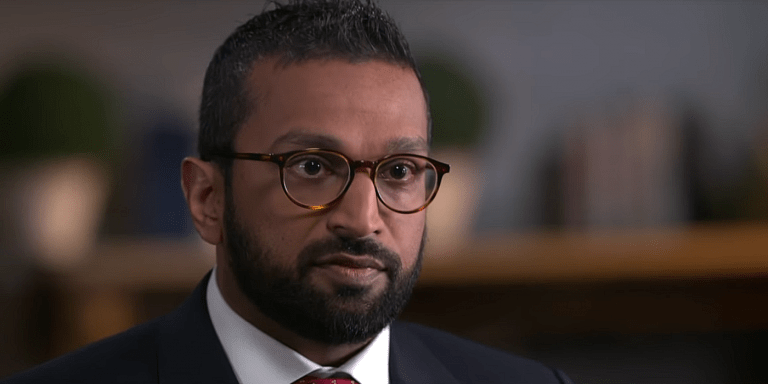
(Ken Silva, Headline USA) It’s been a rough week for right-wing influencer Elijah Schaffer. On Tuesday, Schaffer, who’s going through a divorce, was revealed to have had an affair with another right-wing influencer, Sarah Stock.
Schaffer also apparently had his car stolen, though he posted about getting it back. To top it off, he took a blow in court on Wednesday, when a judge denied his motion to dismiss a defamation lawsuit filed against him by Alexis Wilkins, the girlfriend of FBI Director Kashyap Patel.
Wilkins’s lawsuit stems from Schaffer tweeting a photo of her and Patel above another tweet that explained how females from the Mossad—Israeli’s intelligence agency—have been used as “honeypots” to seduce government officials and other targets.
More bad news for Elijah Schaffer: His motion to dismiss the lawsuit from FBI Director Patel's girlfriend has been denied. The gf is also using this decision as a supplemental authority in a similar lawsuit against ex-FBI agent Kyle Seraphin. 1st reported by @SeamusHughespic.twitter.com/DEn2J9Nka4
Schaffer didn’t explicitly say that Wilkins was an Israeli honeypot sent to seduce Patel. Nevertheless, his post prompted Wilkins to file a lawsuit on Oct. 28 in federal court.
Schaffer, for his part, blasted the lawsuit as an attack on free speech. He filed a motion to dismiss on Jan. 5, arguing that his post shouldn’t be read as a literal assertion that Wilkins is an active Mossad agent committing espionage and treason—”particularly where Plaintiff herself describes that implication as ‘inherently ludicrous.’”
Judge Donald Middlebrooks disagreed.
“[Schaffer’s] posts, considered holistically, support [Wilkins’] allegation that a viewer of the alleged defamatory post could reasonably draw the inference that [Schaffer] is labeling Ms. Wilkins a ‘honeypot’ and accusing her of infiltrating the U.S. government,” Middlebrooks said in his ruling.
While the decision might be considered a blow to Schaffer—and to free speech—he has said he looks forward to the case going to discovery. Schaffer says he plans to learn whether Patel is pushing the lawsuit behind the scenes.
“Does Kash Patel know about this? If he doesn’t know that his girlfriend is waging million-dollar lawsuits … what kind of FBI director doesn’t know that his girlfriend is waging frivolous lawsuits against the press?” Schaffer said last November. “Now if he does know, this is a proxy lawsuit by Kash Patel.”
Along with Schaffer, Wilkins also sued right-wing influencer Sam Parker on Oct. 31. In that case, Parker posted an essay about Wilkins in February 2025 entitled “Who is Alexis Wilking—Girlfriend of Kash Patel?”
According to the court docket in that case, Wilkins has yet to serve Parker.
Wilkins seeks $5 million from both men. Those cases follow an initial lawsuit she filed against former FBI agent Kyle Seraphin in August over his allegations that she’s a “former Mossad agent.”
Seraphin filed a motion to dismiss the lawsuit earlier this month, saying that he was joking when he made those comments. A judge has yet to rule on Seraphin’s motion.
The rumors about Wilkins stems from her work for PragerU, which constantly pumps out pro-Israel propaganda. PragerU’s CEO, Marissa Streit served in Unit 8200—Israel’s equivalent of the NSA—and its founder, Dennis Prager, has gone on secret missions on behalf of Israel. Prager has talked about Israel sending him on a secret mission to smuggle Jewish artifacts into the Soviet Union when he was 20 years old.
However, there is no evidence that Wilkins is an intelligence agent, Mossad or otherwise.
Ken Silva is the editor of Headline USA. Follow him at x.com/jd_cashless.
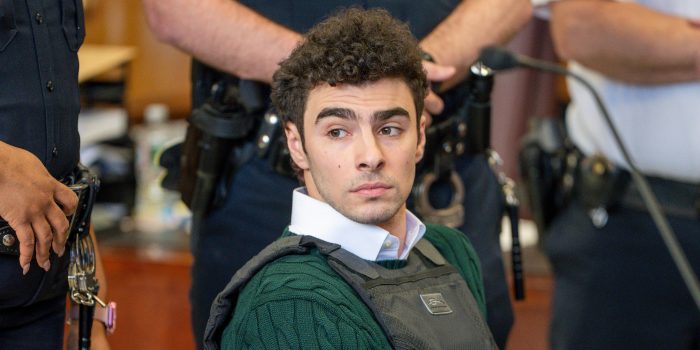
(Headline USA) Luigi Mangione spoke out in court Friday against the prospect of back-to-back trials over the killing of UnitedHealthcare CEO Brian Thompson, telling a judge: “It’s the same trial twice. One plus one is two. Double jeopardy by any commonsense definition.”
Mangione, 27, made the remarks as court officers escorted him out of the courtroom after a judge scheduled his state murder trial to begin June 8, three months before jury selection in his federal case.
Judge Gregory Carro, matter-of-fact in his decision after a lengthy discussion with prosecutors and defense lawyers at the bench, said the state trial could be delayed until Sept 8 if an appeal delays the federal trial.
Mangione’s lawyers objected to the June trial date, telling Carro that at that time, they’ll be consumed with preparing for the federal trial, which involves allegations that Mangione stalked Thompson before killing him.
“Mr. Mangione is being put in an untenable situation,” defense lawyer Karen Friedman Agnifilo said. “This is a tug-of-war between two different prosecution offices.”
“The defense will not be ready on June 8,” she added.
“Be ready,” Carro replied.
Mangione has pleaded not guilty to state and federal charges, both of which carry the possibility of life in prison. Last week, the judge in the federal case ruled that prosecutors can’t seek the death penalty.
Jury selection in the federal case is set for Sept. 8, followed by opening statements and testimony on Oct. 13.
Wearing a tan jail suit, Mangione sat quietly at the defense table until his outburst at the end of the hearing.
As the trial calendar began to take shape, Assistant District Attorney Joel Seidemann sent a letter to Carro asking him to begin the New York trial on July 1.
The prosecutor argued that the state’s interests “would be unfairly prejudiced by an unnecessary delay” until after the federal trial. Under the law, he said, the state has “priority of jurisdiction for purposes of trial, sentencing and incarceration” because Mangione was arrested by New York City police, not federal authorities.
When Mangione was arrested, federal prosecutors anticipated that the state trial would go first. Seidemann told Carro on Friday that Thompson’s family has also expressed a desire to see the state trial happen first.
“It appears the federal government has reneged on its agreement to let the state, which has done most of the work in this case, go first,” Carro said Friday.
Scheduling the state trial first could help Manhattan prosecutors avoid double jeopardy issues. Under New York law, the district attorney’s office could be barred from trying Mangione if his federal trial happens first.
The state’s double jeopardy protections kick in if a jury has been sworn in a prior prosecution, such as a federal case, or if that prosecution ends in a guilty plea. The cases involve different charges but the same alleged course of conduct.
Mangione isn’t due in court again in the state case until May, when Carro is expected to rule on a defense request to exclude certain evidence that prosecutors say connects Mangione to the killing.
Those items include a 9 mm handgun that prosecutors say matches the one used to kill Thompson and a notebook in which they say he described his intent to “wack” a health insurance executive.
Last week, Garnett ruled that prosecutors can use those items at that trial.
Thompson, 50, was killed on Dec. 4, 2024, as he walked to a midtown Manhattan hotel for UnitedHealth Group’s annual investor conference.
Surveillance video showed a masked gunman shooting him from behind. Police say “delay,” “deny” and “depose” were written on the ammunition, mimicking a phrase used to describe how insurers avoid paying claims.
Mangione, a University of Pennsylvania graduate from a wealthy Maryland family, was arrested five days later at a McDonald’s in Altoona, Pennsylvania, about 230 miles (about 370 kilometers) west of Manhattan.