Democrats Tank DHS Funding Bill for Fourth Time

(Thérèse Boudreaux, The Center Square) U.S. Senate Democrats tanked the Department of Homeland Security funding bill for a fourth time Thursday, ensuring the department’s funding lapse will span at least a month.

With three American citizens having died during protests against Immigrations and Customs Enforcement activities, Democrats say they will oppose the last remaining 2026 appropriations bill until it includes new restrictions on federal immigration enforcement operations.

The failed vote comes as America escalates its military operations in Iran, increasing the pressure on Congress to fund the Coast Guard, Secret Service, border patrol and cybersecurity activities, and other agencies critical to ensuring national security.

“There could not be a more important moment for Senate Democrats to put aside political games and ensure full funding for the Department of Homeland Security. It is inexcusable that they are allowing this critical agency – and the experts who protect our nation – to remain shut down while global tensions continue to rise,” Sen. Cindy Hyde-Smith, R-Miss., said on X following the vote.

“While Democrats continue to dawdle, critical homeland security missions – like cybersecurity ops and the US Coast Guard – are working without full resources,” Hyde-Smith continued. “Senate Democrats need to get serious and engage constructively in the legislative process, negotiate in good faith, and work toward a solution that restores funding necessary to get this vital department back to work.”

With the lapse in funding, DHS employees deemed “essential” – including TSA agents and most members of FEMA, the Coast Guard, and the Secret Service – have worked without pay, leading to hours-long delays at airports across the country.

To remedy this, Democrats have introduced proposals that would provide full-year funding for all DHS agencies except ICE and CBP. 

Republicans rejected that route for the second time, also on Thursday, arguing that full DHS funding is critical. They have urged Democrats to compromise on immigration enforcement reforms rather than demand an overhaul of ICE.

Democrats’ policy ultimatums include prohibiting DHS agents from wearing masks, racially profiling people, tracking protestors, entering “sensitive” locations like churches and schools, or entering private property without a judicial warrant, among other things.

The Trump administration has already agreed to some of the demands, such as requiring body-worn cameras for DHS agents and ending roving patrols.

But it has rejected most of the other measures, arguing that personal ID requirements would endanger agents and that requiring extra warrants or making certain locations off-limits would handicap agents’ ability to do their jobs.

Report: Hospital Drug Prices Can Vary Up to 2,000X Across Country

(Andrew Rice, The Center Square) The price for the same prescription drug in different hospitals nationwide could have more than a $10,000 difference, according to a new report.

A report from 3 Axis Advisors used publicly available hospital data to analyze the cost differential between the same generic prescription drugs in hospitals across the country. It found a 2,347x differential between the minimum and maximum prescription drug prices in some cases. This means one insurance company could pay $1 for a prescription drug while another could pay $2,347 for the same drug purchased at a different hospital.

The report bears this out when it looks at prescription drugs across various hospitals. The report found 200 milligrams of Keytruda, a drug to treat cancer, ranged from $12,000 to $43,000. It also found 480 milligrams of Opdivo, another drug to treat cancer, ranged from $17,000 to $67,000.

The report found that, in some cases, uninsured patients could be receiving a better price for prescription drugs than insured patients. It pointed to various billing methods, inconsistent unit usage, and unclear contracts for the vastly different prescription drug prices.

In 2021, the Centers for Medicare & Medicaid Services implemented the Hospital Price Transparency Rule, a requirement for hospitals to publicly disclose detailed “standard charges” in prescription drug prices. However, the report’s analysis found this has done little to address vastly different prices across the country.

“While there is often consistency in list prices presented to payers and patients, the majority of a hospital’s patients – those with insurance – face a confusing array of potential prices,” the report reads.

The report also found other popular prescription drugs including Ocrevus, to treat multiple sclerosis, ranged from $16,000 to $65,000; Tysabri ranged from $6,500 to $27,000.

“These pricing disparities are significantly large enough to theoretically fund travel expenses between the hospitals while still resulting in significant savings,” the report reads.

Indeed, the report estimated a patient could obtain Keytruda through United Healthcare in Colorado for $12,059, but would likely pay $43,099 in Massachusetts. Similarly, the cost for Darzalez Faspro, a treatment for myeloma, cost $9,311 in North Carolina compared to $36,300 in Wisconsin.

Additionally, Tysarbi, a medication for multiple sclerosis and Crohn’s disease, cost $6,477 through Cigna in Tennessee and $26,451 in New Jersey.

“While transparency requirements have unveiled price variations, they have yet to achieve meaningful price standardization, consumer usability, or systemic affordability,” the report reads.

The report called for greater transparency and structural reforms to insurance and hospital pricing metrics. It called for standardized billing based on the number of units sold in a drug.

The report also called for hospitals to provide consumer-friendly search functions to negotiate and compare drug prices. Additionally, the report called on the Centers for Medicare and Medicaid Services to implement greater enforcement and oversight of its protocols.

“Hospital data revealed a new level of dysfunction that surprised even us drug pricing cynics,” said Antonio Ciaccia, president of 3 Axis Advisors. “What we found wasn’t just complexity — it was systemic chaos that makes it nearly impossible for payers and patients to understand or predict what they’ll pay at the hospital.”

The report comes as the Trump administration has sought to increase price transparency and lower insurance costs for millions across the country. Trump launched TrumpRx, a prescription drug tool for Americans to find prices on different products across the country.

He has also sought to reduce prices for common prescription drugs to similar levels as European countries. Most-favored-nation pricing means the U.S. would pay no more than the lowest price paid by peer countries. Trump has thus far managed to get 17 of the largest drug manufacturers across the country to agree on most-favored-nations prices.

“This represents the greatest victory for patient affordability in the history of American health care, by far, and every single American will benefit,” Trump said.

Advocates for reform have celebrated the administration’s moves to reduce prices but have called for greater price transparency within the country as well.

“Maximum price transparency with stronger standardization and enforcement will allow patients to shop, make informed choices, and be protected from overcharges,” said Cynthia Fisher, founder of Patient Rights Advocate.

Dominion Shooter Was Scorned by Ex-Girlfriend, Turned to FBI for Wife

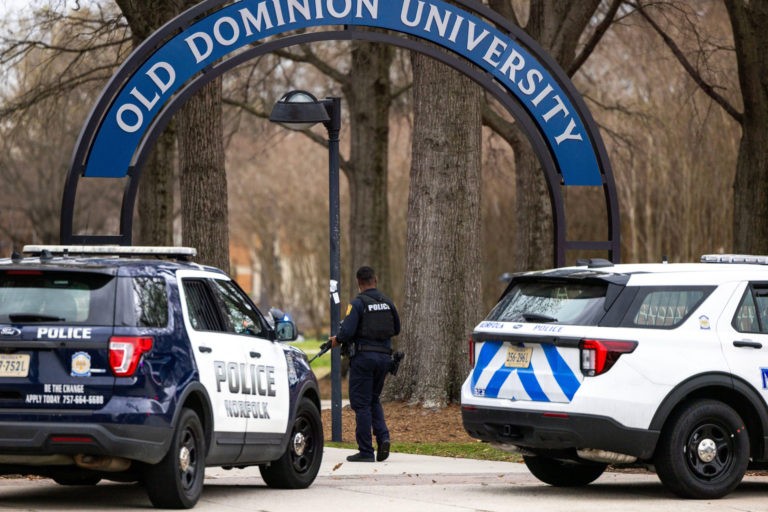
(Ken Silva, Headline USA) The suspect who killed one person and injured two others at Old Dominion University on Thursday has been identified by authorities as Mohamed Bailor Jalloh, a former student of the school who pleaded guilty in 2016 to attempting to provide material support to the Islamic State.

The shooting is being investigated as an act of terrorism, FBI Director Kash Patel said in a social media post. He said the shooter is dead because of “a group of brave students who stepped in and subdued him.”

According to the New York Post, one of the students, a cadet in the ROTC, fatally stabbed Jalloh.

Jalloh, a former member of the Army National Guard, was sentenced to 11 years in prison and was released from federal custody in December 2024.

According to court records, Jalloh is from Sierra Leone. He traveled there with his ailing father in 2015, and met a recruiter for ISIS while abroad. While there, his girlfriend of six years also broke up with him—sending him “risqué photos and videos” of her and the new boyfriend. That apparently sent him spiraling.

It wasn’t long after that when the ISIS recruiter introduced Jalloh to an FBI informant. Jalloh was interested in finding a Muslim wife, but the informant wanted him to help with an “operation” in the U.S.

“Through a sophisticated bate-and-switch, the [FBI informant] made a series of commitments to assist Mr. Jalloh to get married—and from Mr. Jalloh’s perspective, relieve his pain—but then would demand some degree of cooperation in return. Mr. Jalloh first expressed ambivalence about doing any ‘operation’ and then flatly rejected the idea,” a sentencing memorandum for Jalloh states.

“However, the [informant] persisted and eventually enlisted Mr. Jalloh to try to find a weapon as the quid pro quo for his assistance in finding a bride.”

Jalloh was arrested after buying a rifle. According to court records, his crime of supporting ISIS stems from him sending money to someone he thought was an ISIS member—who was, in fact, an FBI agent.

Ashraf Nubani, a Virginia attorney who represented Jalloh in his 2016 criminal case, did not immediately respond to messages Thursday seeking comment.

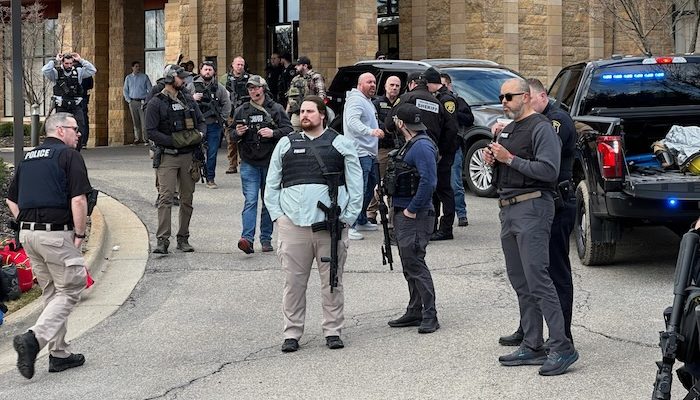
At a news conference Thursday afternoon, Old Dominion University Police Chief Garrett Shelton said officers responded after receiving reports that people were being shot in one of the classrooms in the university’s business school building, Constant Hall.

After the university initially said there were two victims, Shelton said authorities learned that there was a third victim who brought themselves to a hospital.


He said all three victims are affiliated with the university. Shelton said authorities are “very early” in the investigation and have not yet determined the “full cause of death” of the shooter.

Within a matter of less than 10 minutes, the call came in, officers arrived and they determined the shooter was dead, the chief said.

Lt. Col. Jimmy Delongchamp, public information officer for the U.S. Army Cadet Command at Fort Knox, Kentucky, reportedly said that two people wounded are members of the Army Reserve Officers’ Training Corps at ODU.

“We will continue to coordinate with the university and law enforcement agencies as they investigate the incident,” Delongchamp said in a brief telephone interview. “There’s still a lot more stuff we have to work out.”

According to Sentara Health, two of the victims were transported by ambulance to the Level I trauma center at Sentara Norfolk General Hospital. One of those patients has passed away. The other remains in critical condition.

A third person was treated and released from the Sentara Independence free-standing emergency department in Virginia Beach after arriving in a personal vehicle, Sentara Health said.

Within about an hour of the shooting, ODU declared that there was no longer a threat on the campus.

The public university in Norfolk canceled classes and suspended all operations on its main campus through Friday and urged people to avoid the area in and around Constant Hall while emergency officials continued to work. Counseling and food services will remain available.

In a message to the university community, ODU President Brian Hemphill said the school faced a tragedy on campus. He expressed gratefulness for the swift emergency response and thoughts and prayers to those impacted.

“The safety of our campus community is my top priority,” Hemphill wrote. “We are deeply committed to safeguarding all Monarchs and ensuring a secure learning, living, and working environment at all times.”

Located in coastal Norfolk, Old Dominion University has about 24,000 students, 17,500 of them undergraduates. The school has around 240 degree programs, and is known for its research spending and doctoral programs. Nearly 30% of its students are military-affiliated, according to the university website. The area is also home to Naval Station Norfolk, the largest naval station in the world.

The Associated Press contributed to this report.

Ken Silva is the editor of Headline USA. Follow him at x.com/jd_cashless.


U.S. Strikes Over 5,500 Targets in Iran

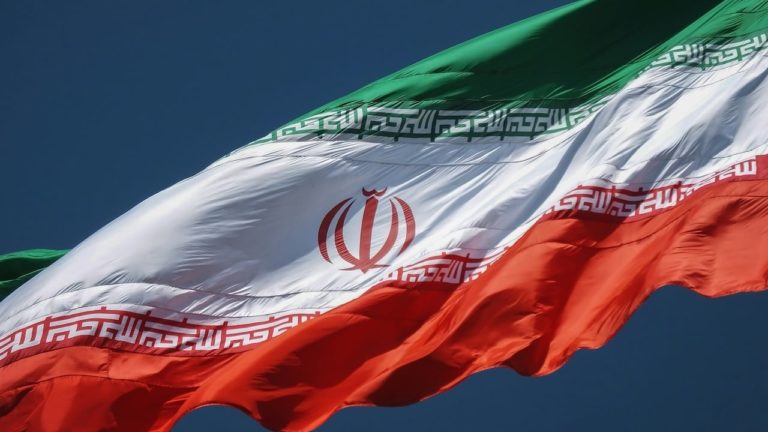
(Sarah Roderick-Fitch, The Center Square) As the conflict with Iran enters day 12, 50,000 service members remain deployed around the Middle East, while the U.S. has struck over 5,500 targets inside the Islamic Republic.

During a press briefing at the Pentagon Tuesday morning, Secretary of War Pete Hegseth said it would be the “most intense day of strikes inside Iran – the most fighters, the most bombers, the most strikes [and] intelligence more refined and better than ever.”

Admiral Brad Cooper, Commander of U.S. Central Command, delivered a video statement Wednesday updating the status of military efforts in the region. “U.S. forces continue delivering devastating combat power against the Iranian regime. I’ve said this before, but it bears repeating. U.S. combat power is building. Iranian combat power is declining, and we remain centered on very clear military objectives in eliminating Iran’s ability to project power against Americans and against its neighbors. Every day, we’re striking hard at Iranian ballistic missiles and drones,” said Cooper.

The admiral said over 60 Iranian Naval ships have been destroyed using “precision weapon systems,” adding that the last four Soleimani-class warships have been destroyed.

Cooper claims ballistic missile and drone attacks from the Islamic Republic have “dropped drastically”; however, he warns that Iran continues to target civilians in the region as well as “hiding behind their own people as they launch attacks.”

CENTCOM issued a warning to Iranian civilians Wednesday instructing them to avoid ports in the Islamic Republic.

“Iranian dockworkers, administrative personnel, and commercial vessel crews should avoid Iranian naval vessels and military equipment,” CENTCOM said in a statement.

Multiple reports Wednesday also claim projectiles near the Strait of Hormuz struck three commercial vessels.

While briefing reporters Wednesday outside the White House, President Donald Trump was asked if he thinks oil companies should use the Strait of Hormuz.

“I think they should. I think they should. I think they should use the Strait of Hormuz. We took out just about all of their mine ships in one night…just about all of their navy is gone,” the president told reporters.

Trump continues to express optimism over the progress the U.S. and Israel have made since the beginning of the strike.

As of Wednesday, the State Department said over 43,000 American citizens have returned to the U.S. from the Middle East.

The Pentagon confirmed Tuesday that an estimated 140 service members have been injured since the start of Operation Epic Fury.

Sean Parnell, the chief Pentagon spokesman, released a statement Tuesday afternoon confirming reports that up to 150 U.S. service members have been injured during the conflict.

“Since the start of Operation Epic Fury, approximately 140 service members have been wounded over 10 days of sustained attacks. The vast majority of these injuries have been minor, and 108 service members have already returned to duty. Eight service members remain listed as severely injured and are receiving the highest level of medical care,” Parnell said.

As of Wednesday, seven U.S. service members have been killed since the operation began, during Iranian attacks on Saudi Arabia and Kuwait.

Oil Jumps to $100 Per Barrel and Stocks Sink Worldwide with No Clear End in Sight for the Iran War

(Headline USA) With no clear end in sight, the war with Iran is sending oil prices back to $100 per barrel, and stocks are sinking worldwide on Thursday.

The S&P 500 fell 1.2% and is returning to big swings following a couple days of relative calm. The Dow Jones Industrial Average was down 607 points, or 1.3%, as of 11 a.m. Eastern time, and the Nasdaq composite was 1.7% lower.

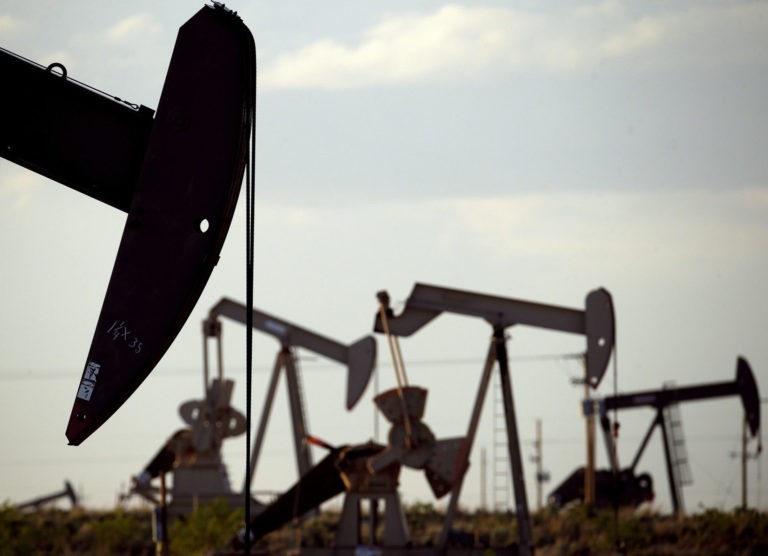
The center of action was again the oil market, where the price of a barrel of Brent crude, the international standard, got as high as $101.59 overnight before pulling back to $100.44, a 9.2% rise. Worries are worsening that the war could block the production of oil in the Persian Gulf for a long time and cause a debilitating surge of inflation for the global economy.

Iran’s new supreme leader released his first statement Thursday since succeeding his late father, saying his country would keep up attacks on Gulf Arab neighbors and use the effective closure of the Strait of Hormuz as leverage against the United States and Israel. A fifth of the world’s oil typically sails through the strait, and oil producers in the region are cutting production because their crude has nowhere to go.

Countries around the world are trying to make up for that, and the International Energy Agency said Wednesday that its members would release a record amount of oil, 400 million barrels, from their stockpiles built for such emergencies.

But such moves are short-term fixes, and they do not clear the long-term risks. Analysts have said that if the Strait of Hormuz remains closed, oil prices could jump to $150.

To be sure, the U.S. stock market has a history of bouncing back relatively quickly from military conflicts in the Middle East and elsewhere, as long as oil prices don’t stay too high for too long. Even with all the up- and- down swings of the last couple weeks, many rocking markets hour to hour, the S&P 500 is still just roughly 4% below its all-time high set in January.

What’s made this jump for oil prices frightening is not only the degree — prices jumped near $120 earlier this week to their highest level since 2022 — but that they’re also occurring during an uncertain time for the economy.

Last month’s report on hiring by U.S. employers was surprisingly weak, which raised worries about a possible worst-case scenario for the economy called “stagflation.” That’s one where economic growth stagnates while inflation remains high. And it’s a miserable mix that the Federal Reserve has no good tools to fix.

A more encouraging signal arrived Thursday. A report said that the number of U.S. workers applying for unemployment benefits inched lower last week. That’s a sign that layoffs are potentially remaining low around the country.

Dollar General, meanwhile, reported better profit and revenue for the latest quarter than analysts expected. But the retailer with relatively low prices, whose customers often have the least cushion to absorb higher gasoline prices, gave forecasts for revenue this upcoming year that indicated a slowdown in growth. Its stock fell 5.8%.

Some of the worst losses on Wall Street again hit companies with big fuel bills. United Airlines sank 3.9%, and cruise-ship operator Carnival fell 5.7%.

Worries about the private-credit industry continued to hurt the market. Investors have been rushing to pull their money out of some funds and companies that have lent to businesses whose profits are potentially under threat. Many of the worries are focused on business that could be made obsolete by new AI-powered rivals and may not pay back their loans.

Morgan Stanley fell 4% after its North Haven Private Income fund said it allowed investors to redeem only 5% of its total shares instead of the nearly 11% they had requested. That 5% cap is the advertised limit.

In stock markets abroad, indexes fell across Europe and Asia.

Japan’s Nikkei 225 dropped 1%, and France’s CAC 40 sank 0.9% for two of the world’s bigger moves.

In the bond market, Treasury yields continued to climb because of upward pressure from rising oil prices. The yield on the 10-year Treasury rose to 4.24% from 4.21% late Wednesday and from just 3.97% before the war started.

Higher yields help make all kinds of borrowing more expensive, such as mortgages for potential U.S. homebuyers and bond offerings for companies looking to expand. They also push down on prices for all kinds of investments, from stocks to crypto.

Because of the spike for oil prices, traders have pushed back forecasts for when the Fed could resume its cuts to interest rates. President Donald Trump has been angrily calling for such cuts, which would give the economy and job market a boost but also potentially worsen inflation.

A barrel of benchmark U.S. crude rose 10.1% to $96.12.

Adapted from reporting by the Associated Press


Report: Epstein Files Compromised by ‘Foreign Hacker’

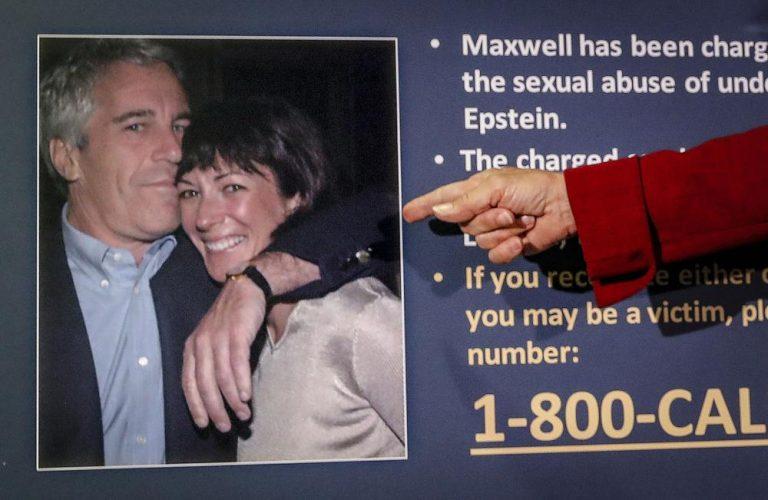
(Ken Silva, Headline USA) The hacker who compromised a server in the FBI’s New York City field office and accessed files about sex criminal Jeffrey Epstein in the process in 2023 is a foreign cybercriminal, according to Reuters.

Headline USA was the first English-speaking outlet to report on the hacker accessing the “Epstein files” in 2023 on the day of the Super Bowl—an incident that resulted in roughly 100 terabytes of data being lost forever.

Reuters added additional details Wednesday.

“The intrusion was carried out by a foreign hacker who did not appear ​to realize they had penetrated ⁠a law enforcement server. The hacker expressed disgust at the presence of child abuse images on the device and left a message threatening to turn its owner over to the FBI,” Reuters reported, citing an anonymous source.

“Bureau officials defused the situation by convincing the hacker that they actually were the FBI, in part by having the hacker join a video chat where they flashed their law enforcement credentials in front ⁠of a web ​camera.”

Reuters added that it’s still unclear who the hacker was, what country they ​were operating from, what they did with the material accessed, or whether any effort was made to identify or punish them for breaking into the FBI’s server. The FBI told Reuters that the hack is still under investigation.

As previously reported by Headline USA, the hack’s connection to the Epstein files is detailed in a draft of a September 2024 sworn declaration from FBI agent Aaron Spivack, who was under an internal bureau investigation for being responsible for the February 2023 computer intrusion. The record was reported on by a French publication and was posted on Reddit, but was otherwise unpublicized until this outlet reported on it on Feb. 27.

According to Agent Spivack’s declaration, the 2023 FBI computer hack stems from the bureau enabling remote internet access to the C-20 computer lab. The FBI’s C-20 squad is a group in the New York office that investigates child sex crimes by.

Agent Spivack said that 500 terabytes of data went missing as a result of the intrusion. He said he was able to recover about 400 terabytes.

“I was told to Google how to recover the data,” he remarked in his declaration. “No one else tried to help us.”

Spivak said his team wasn’t able to identify the computer that hacked them—“but it had to have accessed our network either by being plugged into the network, or possibly by telnetting in virtually,” he added.

Rumors of missing or destroyed Epstein evidence have persisted ever since it was revealed that Epstein had removed computers from his Palm Beach home before police searched it in October 2005.

Last February, author Michael Shellenberger reported that FBI employees were destroying evidence on severs. Shellenberger’s source was FBI whistleblower Garret O’Boyle, who in turn heard the rumor from another agent inside the bureau.

Most recently, Rep. Anna Paulina Luna, R-Fla., made similar comments on CNN last month.

“We had someone come forward and say there was destruction of evidence under the former deputy director of the FBI,” Luna said.

Ken Silva is the editor of Headline USA. Follow him at x.com/jd_cashless.

California Guv: No Imminent Threat Despite Warning about Possible Iran Drone Attack

(Headline USA) California Gov. Gavin Newsom said there was no imminent threat to the state, despite a warning from the FBI that Iran could send drones to the West Coast in retaliation for war.

Newsom said drone issues “have always been top of mind.”

“We’ve been aware of that information. … It’s all about a posture of preparedness for worst-case scenarios,” the governor said Wednesday.

The FBI recently warned police departments that Iran could try to strike the state.

“Iran allegedly aspired to conduct a surprise attack using unmanned aerial vehicles from an unidentified vessel off the coast of the United State Homeland, specifically against unspecified targets in California, in the event that the US conducted strikes against Iran,” the alert said, according to ABC News.

“We have no additional information on the timing, method, target, or perpetrators of this alleged attack,” the FBI said.

President Donald Trump was asked about it Wednesday at Joint Base Andrews.

“It’s being investigated, but you have a lot of things happening. All we can do is take ’em as they come,” Trump said.

Police in Los Angeles and San Francisco said they were monitoring world events for any risks to their cities. Both said they’re working closely with state and federal authorities.

Adapted from reporting by the Associated Press.

BREAKING: Gunman Who Injured 2 People at Old Dominion University in Virginia is Dead, College Says

(Headline USA) A gunman is dead and two people are hurt after a shooting at Old Dominion University on Thursday morning, the Virginia school said.

ODU said a gunman opened fire in its business school building, injuring two people who were sent to the hospital. It wasn’t immediately clear how the shooter died.

The two people injured are in critical condition, said a spokesperson for Sentera Health, the health care system that oversees the hospital.

Lt. Col. Jimmy Delongchamp, public information officer for the U.S. Army Cadet Command at Fort Knox, Kentucky, told The Associated Press that the two people wounded are members of the Army Reserve Officers’ Training Corps at ODU.

“We will continue to coordinate with the university and law enforcement agencies as they investigate the incident,” Delongchamp said in a brief telephone interview. “There’s still a lot more stuff we have to work out.”

Within about an hour of the shooting, ODU declared that there was no longer a threat on the campus.

The public university in Norfolk canceled classes and suspended all operations on its main campus through Friday and urged people to avoid the area in and around Constant Hall while emergency officials continued to work. Counseling and food services will remain available.

In a message to the university community, ODU President Brian Hemphill said the school faced a tragedy on campus. He expressed gratefulness for the swift emergency response and thoughts and prayers to those impacted.

“The safety of our campus community is my top priority,” Hemphill wrote. “We are deeply committed to safeguarding all Monarchs and ensuring a secure learning, living, and working environment at all times.”

The federal Bureau of Alcohol, Tobacco, Firearms and Explosives said on the social platform X that it had agents on scene supporting the response.

Virginia Gov. Abigail Spanberger said in social media posts that she was monitoring the situation and that “state support is being mobilized” to help ODU. She didn’t provide specifics.

FBI Director Kash Patel said on X that personnel from his agency are working with the local authorities who responded to the shooting.

Located in coastal Norfolk, Old Dominion University has about 24,000 students, 17,500 of them undergraduates. The school has around 240 degree programs, and is known for its research spending and doctoral programs. 

Nearly 30% of its students are military-affiliated, according to the university website. The area is also home to Naval Station Norfolk, the largest naval station in the world.

Adapted from reporting by the Associated Press


BREAKING: Armed Man Rammed Vehicle into Michigan Synagogue and Was Fatally Shot by Security

(Headline USAA man armed with a rifle rammed a vehicle into the nation’s largest Reform synagogue, in a Detroit suburb, and was fatally shot by security, according to The Associated Press.

The vehicle caught on fire after crashing into the Temple Israel synagogue in West Bloomfield Township, the AP reported, citing an anonymous source.

Investigators were still working to identify the man and a possible motive for the attack. The AP’s source cautioned that the investigation is still in the early stages

The AP’s source could not publicly discuss details of the investigation and spoke on condition of anonymity.

Oakland County Sheriff Sheriff Mike Bouchard confirmed during an earlier news conference that security at the synagogue had engaged in gunfire with at least one person, and that no one was in custody.

WDIV-TV reported that a truck had crashed into the synagogue. Smoke could be seen billowing from the synagogue’s roof. Footage from the scene shows dozens of police vehicles surrounding the building.

FBI Director Kashyap Patel said agents were on scene of an “apparent vehicle ramming and active shooter situation” at the synagogue.

The Oakland County Sheriff’s office said authorities are clearing the building. About a dozen parents sprinted to get their children from an early childhood learning center inside the building after getting approval from police. West Bloomfield School District went on lockdown.

Michigan Gov. Gretchen Whitmer issued a statement saying she was tracking developments.

Temple Israel calls itself the nation’s largest Reform synagogue, with 12,000 members. according to its website. It has an early childhood education center and offers educational programs for families and adults.

The website says the synagogue is “passionate about helping Jewish communities across the globe” and that its mission is to “create a community building through the lens of Reform Judaism.”

The Jewish Federation of Detroit advised all Jewish organizations in the area “to go into lockout protocol — nobody in or out of your building.”

Adapted from reporting by the Associated Press.

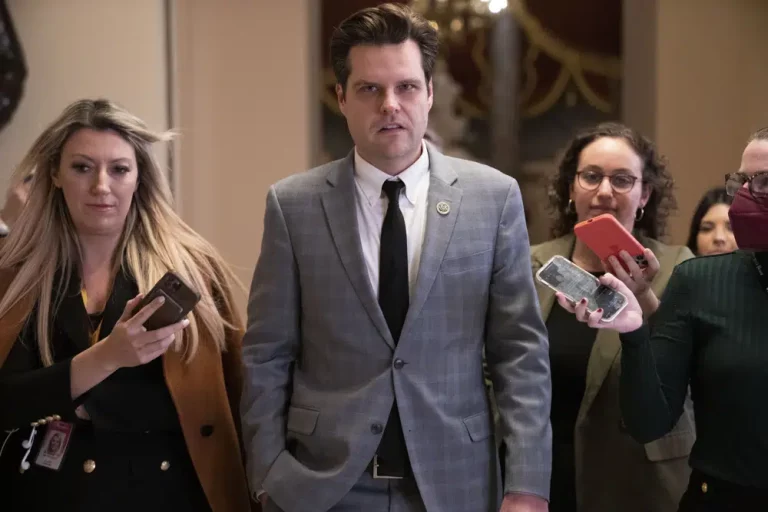
FBI Had Source Informing on Matt Gaetz Since September 2020, New Records Show

(Ken Silva, Headline USA) The FBI has released new records on Matt Gaetz, detailing the bureau’s investigation into the former congressman.

Gaetz was under investigation from 2020 to 2023 for allegedly paying women, including a minor, for sex. Gaetz has steadfastly denied the allegations, and the Justice Department closed its investigation in 2023 without filing charges.

According to the newly released FBI documents, agents were receiving information about Gaetz since at least September 2020. The records, released on Monday, redact the sources name.

As has been widely reported, Gaetz’s former associate Joel Greenberg cooperated against him after pleading guilty in May 2021 to a bevy of crimes, including sex trafficking a 17-year-old girl.

Greenberg had been indicted in August 2020, so it’s possible that he’s the confidential source referenced in the FBI records if he started cooperating the very next month. The New York Times reported in May 2021 that Greenberg had been meeting with prosecutors for the previous five months, which would mean his cooperation started in December 2020—three months after the newly released FBI memo.

In any event, Greenberg is still in prison, while Gaetz has transitioned to a role as an anchor for OANN. Gaetz was nominated to be Trump’s attorney general, but didn’t have enough support in the Senate—in part due to the sex crimes allegations.

When the House Ethics Committee released a report about the matter in December 2024, he took to social media to rebuff the allegations.

In a series of posts on X, Gaetz shared on Monday screenshots of transcribed interviews with women he allegedly had sexual relations with, aiming to discredit claims that he paid women, including a minor, for sex.

These screenshots appear to be part of the broader documentation from the committee, but notably, they were not included in the final report, Gaetz said.

In one screenshot, one of the alleged victims affirmed that she “never charged anyone anything,” and suggested that any money Gaetz gave her was gifts: “I never – I never charged anyone anything. It was all their choice to give me whatever they wanted.”

In another screenshot, when asked if she believed she was trafficked, she replied, “No. I wouldn’t say that.” She also stated that she “never discussed money” with Gaetz and did not consider herself to be “escorting,” saying: “There was a lot of times where I did not get paid for being there. In that time, I thought a lot of these people were my friends.”

Gaetz used these assertions to argue that he did not engage in prostitution, let alone sex trafficking. “Giving funds to someone you are dating – that they didn’t ask for – and that isn’t ‘charged’ for sex is now prostitution?!?” he questioned.

Ken Silva is the editor of Headline USA. Follow him at x.com/jd_cashless.