Biden Economy Forcing Stores to Think Outside Box on Black Friday

(Headline USA) Stores stepped up discounts and other enticements on Black Friday to entice shoppers holding out for the best deals. But retailers worry those may not be enough.

Consumers are coming under pressure as their savings dwindle and their credit card debt grows. And although they have gotten some relief from easing inflation, many goods and services like meat and rent are still far higher than they were just three years ago.

Barbara Lindquist, 85, from Hawthorne Woods, Illinois, said she and her husband plan to spend about $1,000 for holiday gifts for her three adult children, 13 grandchildren and three great-grandchildren. That’s about the same as last year.

But Lindquist, who continues to work as a pre-school teacher at a local church, said she’ll be more focused on deals given still high prices on meat and other staples. And she plans to buy more gift cards, which she believes will help her stick to her budget.

“I go for value,” said Lindquist, who just picked up discounted sheets and towels at Kohl’s for friends who will be visiting from Panama during the holidays.

Many retailers had already ordered fewer goods for this holiday season and have pushed holiday sales earlier in October than last year to help shoppers spread out their spending.

An early shopping push appears to be a trend that only got more pronounced during the pandemic when clogs in the supply network in 2021 made people buy early for fear of not getting what they wanted.

But retailers said that many shoppers will be focusing more on deals and will likely wait until the last minute. Best Buy said it’s pushing more items at opening price points, while Kohl’s has simplified its deals, promoting items under a certain price point like $25 at its stores.

Target said shoppers are waiting longer to buy items. For example, instead of buying sweatshirts or denim back in August or September, they held out until the weather turned cold.

“It’s clear that consumers have been remarkably resilient,” Target’s CEO Brian Cornell told analysts last week. “Yet in our research, things like uncertainty, caution and managing a budget are top of mind.”

Salesforce said online sales rose 1% to about $7.5 billion year-over-year on Thanksgiving, as retailers offered better deals. Sales of shoes and handbags increased the most at 11% compared to last year, followed by a 6% rise in sales of healthy and beauty products. Global online sales also rose 1% to $31.7 billion, according to Salesforce, which tracks data from more than 1.5 billion consumers.

Salesforce said online discounts rates in the U.S. have risen to 28% this week, compared to 21% last year, with retailers offering the best deals on apparel and health and beauty products.

The National Retail Federation, the nation’s largest retail trade group, expects shoppers will spend more this year than last year, but their pace will slow given all the economic uncertainty.

The group has forecast that U.S. holiday sales will rise 3% to 4% for November through December, compared with a 5.4% growth of a year ago. The pace is consistent with the average annual holiday increase of 3.6% from 2010 to pre-pandemic 2019. Americans ramped up spending during the pandemic, with more money in their pockets from federal relief checks and nowhere to go during lockdowns. For the holiday 2021 season, sales for the two-month period surged 12.7%.

Online discounts should be better than a year ago, particularly for toys, electronics and clothing, according to Adobe Analytics, which tracks online spending. It predicts toys will be discounted on average by 35%, compared with 22% a year ago, while electronics should see 30% cuts, compared with last year’s 27%. In clothing, shoppers will see an average discount of 25%, compared with 19% last year, Adobe said.

Analysts consider the five-day Black Friday weekend — which includes the Monday after the holiday known as Cyber Monday — a key barometer of shoppers’ willingness to spend. And Black Friday is expected to be once again the busiest shopping day of the year, according to Sensormatic Solutions, a firm that tracks store traffic.

On average, the top 10 busiest shopping days in the U.S are expected to once again account for roughly 40% of all holiday retail traffic, Sensormatic said.

Marshal Cohen, chief retail adviser at Circana, a market research firm, said he thinks that shoppers will just stick to a list and not buy on impulse. He also believes they will take their time buying throughout the season.

“There’s no sense of urgency,” Cohen said. “The consumers are saying, ‘I will shop when it’s convenient for me.’”

Adapted from reporting by the Associated Press
‘No Ordinary Joe’: Report Exposes Biden’s Luxurious $84 Million Getaways

(Luis Cornelio, Headline USA) As the nation grapples with concerns over soaring inflation, President Joe Biden came under scrutiny for his holiday retreats to opulent multimillion-dollar compounds, the latest being a sprawling 14-acre estate on Nantucket Island for Thanksgiving.

However, a damning report by the New York Post has shed light on a pattern of visits by Biden to properties worth a staggering $84 million across Nantucket, Lake Tahoe, Kiawah Island and St. Croix.

To make matters worse, Biden has faced scorching criticism for failing to list the free stays on his financial disclosures, earning criticism similar to those aimed at conservative Supreme Court Justice Clarence Thomas.

Most recently, Biden came under fire for spending the Thanksgiving holiday at the $38.9 million Nantucket compound owned by private equity billionaire David Rubenstein, a longtime ally of the president.

For over four decades, Biden has frequented Rubenstein’s waterfront abode. Despite his Thanksgiving retreat drawing criticism amid inflation concerns, this lifestyle choice seems to reflect a pattern dating back years.

During a summer vacation, the Biden family opted for a $20 million waterfront residence in Lake Tahoe, owned by Democratic billionaire Tom Steyer. Local complaints were raised, citing potential violations of local ordinances during their stay.

Moreover, Biden’s visit coincided with Maui wildfires, drawing ire from Hawaiians for what was seen as an apparent lack of acknowledgment of the disaster.

Criticism mounted as Biden seemingly refrained from offering condolences for the fatalities that marked the tragedy in Maui. Subsequently, the Bidens briefly visited Maui but swiftly returned to their vacationing family members.

“Described as one of Lake Tahoe’s prime properties, Steyer’s six-bedroom sanctuary, within the exclusive Glenbrook community, boasts unrivaled amenities,” the report detailed.

Notably, the Biden family’s retreat to Kiawah Island in South Carolina last year saw them enjoying the comforts of a $20 million mansion owned by Democratic donor Maria Allwin, reportedly at no cost to the Bidens. 

As the calendar turned to 2023, Biden ventured to the US Virgin Islands, where they stayed at a waterfront villa owned by Democratic billionaires Bill and Connie Neville. Remarkably, as per the New York Post, the expense to the Biden family was nonexistent. 

Biden’s multiple visits to the Caribbean destination between 2014 and 2016, along with another in 2019 before announcing his presidential campaign, have drawn attention to the luxury accommodations enjoyed by the president and his family.

D.C. Brothel’s ‘Impeccable’ Records Reveal Million-Dollar Profits, Alleged Gov’t Ties

(Luis Cornelio, Headline USA) A recent federal investigation into a sophisticated network of high-end brothels that allegedly catered to politicians, government contractors and military officials has unveiled startling revelations, the New York Post reported Wednesday.  

According to DHS Special Agent Zachary Mitlitsky, the accused leaders maintained “impeccable” records of their operations, shedding light on a multimillion-dollar enterprise that operated across lavish apartments in the D.C. area and Massachusetts.

The investigation, detailed in an affidavit, outlined meticulous records of sales and implicated individuals involved in the alleged sex work.

Mitlitsky emphasized concerns that two of the accused co-conspirators, Han Lee and Junmyung Lee, might possess access to undisclosed funds, posing a potential flight risk and warranting their detention.

“I believe that Han’s financial and business record keeping was impeccable,” Mitlitsky stated. “Han maintained ledgers detailing the daily activity of her brothels. At the time of the search warrant execution, one such ledger was open to a page showing the stage names, appointment dates and times and earnings of the women.” 

Luxury items from renowned brands like Yves St. Laurent, Givenchy, Louis Vuitton, and Jimmy Choo were among the discovered possessions. Additionally, a cellphone reportedly containing communication between Han and sex workers, detailing client preferences, was seized. 

“During these communications, Han not only listed a brief description of the anticipated customers, expected sexual services and corresponding pricing, and schedule of appointments for the day but also set forth what I believe to be her house rules for commercial sex workers engaging in sex for a fee at the brothel apartments,” Mitlitsky wrote. 

DOJ has formally charged Han Lee, James Lee, and Junmyung Lee with conspiracy to coerce and entice individuals to travel for illegal sexual activity. The indictment specifies that clients paid between $350 and $600 per hour for services, depending on the requested service. 

Colorado Supreme Court Revives Failed Challenge to Oust Trump from 2024 Ballot

(Luis Cornelio, Headline USA) An appeals court greenlit a reexamination of a failed plan to remove former President Donald Trump from Colorado’s primary election ballot, following a recent dismissal in a lower court. 

The Colorado Supreme Court chose on Tuesday to reconsider Judge Sarah B. Wallace’s decision to uphold Trump’s inclusion on the ballots. This move reignites the Colorado debate over Trump’s eligibility for the primary, signaling yet another left-wing-led legal hurdle.

The lawsuit, brought forth by the left-wing Citizens for Responsibility and Ethics in Washington (CREW) alongside six Colorado voters, contends that Trump’s alleged involvement in the Jan. 6 protests disqualifies him from seeking elected office.

Specifically citing Section 3 of the 14th Amendment, the CREW claims that Trump’s actions render him unfit for future positions.

Judge Wallace, in her prior ruling, cast doubt on the application of the 14th Amendment, ruling that the Disqualifications Clause is not applicable for disqualifying a candidate from a presidential race. 

Responding to the Wallace’s ruling, Steven Cheung, spokesperson for Trump’s campaign, celebrated it as a blow to what he labeled as “un-American ballot challenges” against the former president. 

“With this decision, Democrats’ 14th Amendment challenges have now been defeated in Colorado, Michigan, Minnesota and New Hampshire,” he said. “These cases represent the most cynical and blatant political attempts to interfere with the upcoming presidential election by desperate Democrats who know Crooked Joe Biden is a failed president on the fast track to defeat.” 

Following CREW’s swift appeal post the initial ruling, the state’s Supreme Court has agreed to an expedited review, setting what the New York Times called an “accelerated timetable.” On the other hand. Trump’s legal team is required to file a brief by Monday, with oral arguments scheduled for Dec. 6. 

Colorado Secretary of State Jena Griswold, a far-left Democrat, slammed Wallace’s ruling during an interview on Nov. 22. 

“The idea that every person would be barred from office if they engage in insurrection, except the president, in itself is troubling,” Griswold said, adding she will abide by the Supreme Court’s decision.

This legal contest in Colorado mirrors similar lawsuits unfolding across multiple states, including Florida, Michigan and Minnesota.  

According to Forbes, litigation on Trump’s eligibility remains pending in Alaska, Arizona, Connecticut, Delaware, Kansas, Massachusetts, Montana, New Jersey, New Mexico, New York, South Carolina, Texas, Vermont, Virginia, West Virginia, Wisconsin and Wyoming.

DeSantis Super PAC in Shambles: CEO Quits Amid Near-Physical Altercation Chaos

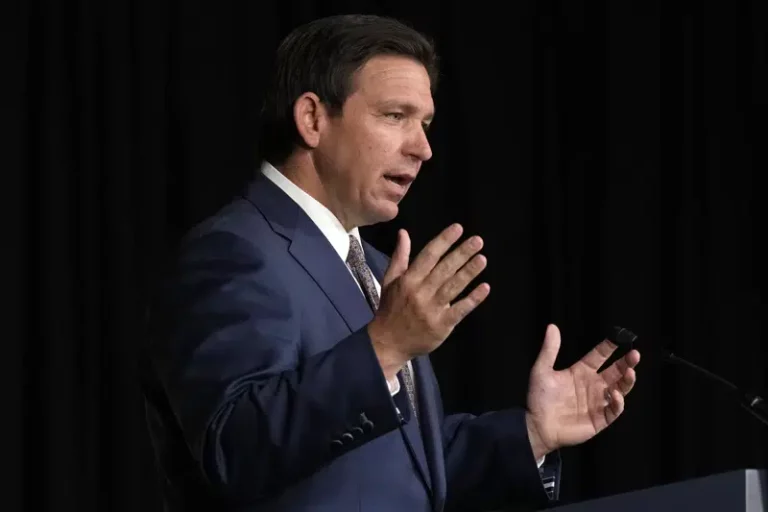
(Luis Cornelio, Headline USA) Never Back Down, a super PAC in support of Florida Gov. Ron DeSantis’s presidential bid, is in disarray following the abrupt resignation of CEO Chris Jankowski.

Jankowski’s departure comes amid internal strife surrounding the future direction of the political committee’s strategies, particularly on how to best attack DeSantis’s opponents.

The resignation, announced just days prior to a contentious meeting at the PAC’s Georgia headquarters, signifies a significant shake-up within the organization.

“Never Back Down’s main goal and sole focus has been to elect Governor Ron DeSantis as President,” Jankowski claimed in a statement. “Given the current environment it has become untenable for me to deliver on the shared goal and that goes well beyond a difference of strategic opinion.”

In the same statement, Jankowski pledged his commitment to DeSantis’s candidacy for the presidency. “For the future of our country I support and pray Ron DeSantis is our 47th president,” he added.

Reports indicate that internal disputes over countering former U.N. Ambassador Nikki Haley’s surging popularity in polls fueled the internal turmoil. A clash between key PAC executives, including chief strategist Jeff Roe and DeSantis ally Scott Wagner, escalated to a heated confrontation during which Wagner had to be physically restrained.

“You have a stick up your a–, Scott,” Roe shouted at Wagner, according to NBC News. “Why don’t you come over here and get it?” Wagner responded. Wagner then rose from his chair but was physically restrained by two other board members.

Speculation looms over DeSantis and Florida First Lady Casey DeSantis attributing the PAC’s ads to the decline in the governor’s presidential campaign ratings, trailing way behind former President Donald Trump. 

Criticism has arisen particularly around Never Back Down’s advertisements targeting Haley’s alleged ties to China, which have seemingly backfired, with some attributing the negative sentiment to DeSantis himself, the New York Times reported. 

In response to the backlash, allies of DeSantis launched a separate PAC, Fight Right, with the intention of mounting attacks against Haley. Notably, one of the ads released by this new PAC drew parallels between Haley and disgraced former Secretary of State Hillary Clinton.

‘I’m Surprised It Took This Long’: WH Officials Knew DOJ Would Target Adams

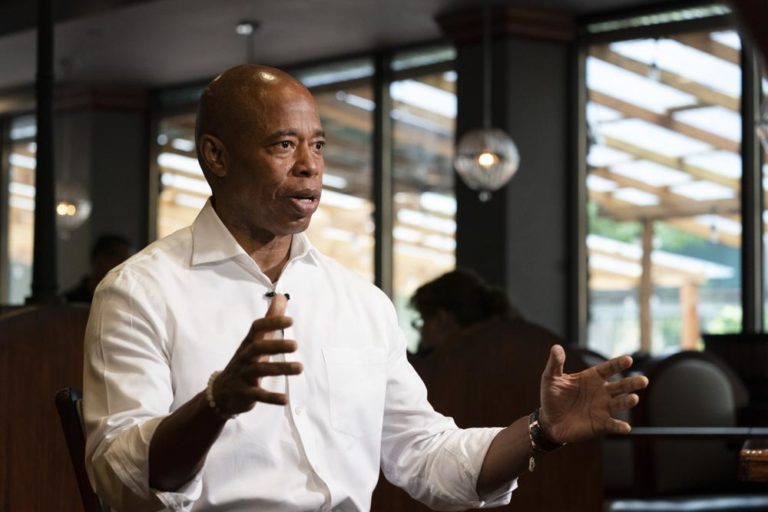
(Luis Cornelio, Headline USA) A Wednesday report by Politico shed light on insider predictions within the White House regarding the DOJ’s scrutiny of New York City Mayor Eric Adams.  

The report suggests a foreseen clash between the federal investigators and Adams, echoing widespread accusations that Adams is being targeted for his scorching criticism of the Biden administration’s laxed immigration policies. 

Two anonymous sources within the White House, disclosed to Politico, indicate a near year-long rift between President Joe Biden and Adams, with early indicators pointing toward federal scrutiny of the mayor.

“I’m surprised it took this long,” remarked an individual described as a “longtime Democratic aide” to Biden. 

The report highlighted purported “ethical yellow flags in the mayor’s career” that were recognized early on by some within the Biden team. Allegations included a reported bid-rigging scandal and issues surrounding a non-profit linked to Adams. 

Democratic leaders have openly accused the Biden administration of being aware of previous investigations into Adams. 

“They read the same press stories everybody else reads,” stated a national Democratic operative regarding the unfolding reports. “Fair or not fair, they’re out there. This is not a secret kept in New York.” 

This investigation unfolds against the backdrop of a federal inquiry into potential illegal financing from the Turkish government in the Adams campaign. The probe is centered around whether any promises were made in exchange for donations. However, it’s emphasized in multiple reports that neither Adams nor his campaign have been explicitly accused of any wrongdoing. 

Adams recently intensified criticism of the federal government’s inaction on the unprecedented surge of illegal immigration impacting New York City. The resultant strain led to budget cuts and a reduction in NYPD hiring. 

“D.C. has abandoned us, and they need to be paying their cost to this national problem,” he said earlier this week. “Don’t yell at me, yell at D.C.” 

The DOJ’s raids of Adams’s phones and campaign documents have prompted backlash from some Republican commentators who allege a political motive due to Adams’ anti-Biden rhetoric. This strained relationship follows the Biden campaign ousting Adams from campaign involvement since January, post his critical comments. 

“[T]hey gotta slap him back into place,” commented conservative pundit Ashley St. Clair regarding the DOJ’s investigation into Adams.

Adding to the Adams chaos, as reported by the Messenger, a woman filed a $5 million lawsuit on Thursday against the mayor over accusations of sexual assault. “Plaintiff was sexually assaulted by Defendant Eric Adams in New York, New York in 1993 while they both worked for the City of New York,” the filing alleged.

Trump Heads to Haley Territory (S.C.) for Post-Thanksgiving Palmetto Bowl

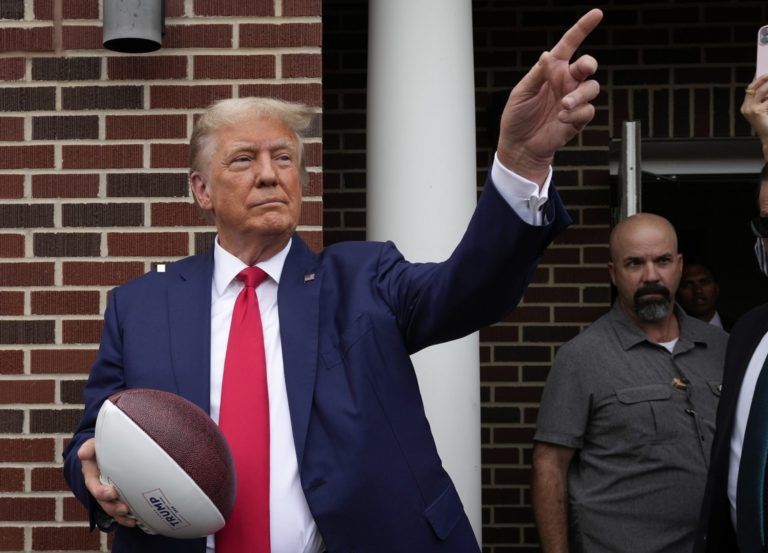
(Headline USA) Former President Donald Trump is headed back to South Carolina this weekend, attending the biggest athletic event of the year in a state where he boasts strong support heading into next year’s Republican presidential nomination battle.

Trump will be at the Nov. 25 matchup in the state capital of Columbia between the University of South Carolina and Clemson University, his campaign confirmed on Tuesday.

He’ll be there at the request of Gov. Henry McMaster, one of Trump’s biggest backers and a South Carolina alumnus, who said last week that Trump had a “standing invitation” to come to the state.

The game, known as the Palmetto Bowl, comes as Trump competes against former South Carolina Gov. Nikki Haley, among others, for the 2024 Republican nomination.

Haley, who also served as Trump’s first United Nations ambassador, is among a handful of contenders competing for a distant second place to the current GOP front-runner.

Trump, whose 2016 win in South Carolina’s GOP primary helped solidify his position atop the field, has remained popular in the state ever since.

He has the support of a slew of top Republicans in the state, including Reps. Joe Wilson and Russell Fry, Lt. Gov. Pamela Evette and McMaster—who, as lieutenant governor, was the first statewide-elected official in the country to support his 2016 campaign.

“Gov. McMaster and Lt. Gov. Evette look forward to joining President Trump this Saturday to show him first-hand the passion and tradition that makes this rivalry the greatest in college football,” said Brandon Charochak, a spokesman for McMaster.

The Haley campaign didn’t immediately respond to a message on whether she would also attend the game. An alumna and member of Clemson’s Board of Trustees, Haley often talks on the campaign trail about her friendship with Clemson head coach Dabo Swinney and her encouraging game-day text exchanges with him.

The annual Clemson–South Carolina matchup is the hottest ticket in South Carolina’s college football realm. Clemson, the all-time leader in the series, is angling to avenge last season’s 31-30 loss, which kept the Tigers out of the College Football Playoff.

According to the University of South Carolina, the stadium capacity for Saturday’s game is 77,559.

This year’s game is set for 7:30 p.m. ET at Williams–Brice Stadium, the Columbia home of the University of South Carolina’s Gamecocks.

The Clemson Tigers (7-4) are coming off a win over North Carolina. With last week’s victory over Kentucky, South Carolina (5-6) will be facing their in-state rival with bowl eligibility on the line.

Adapted from reporting by the Associated Press
Israel Reaches Deal w/ Hamas to Release 50 Hostages for 150 Palestinians

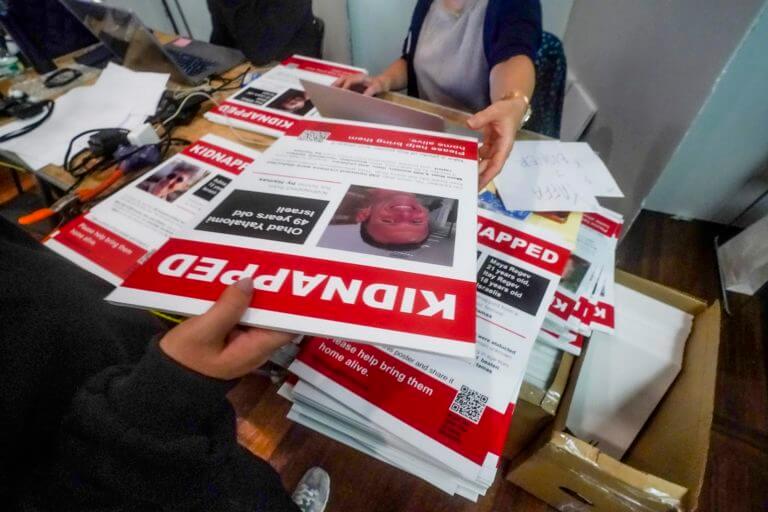
(Headline USA) U.S. and Israeli officials have spent weeks scrambling to put together a deal that would free dozens of hostages held by Hamas. The White House saw that as the only realistic way to halt the bloody combat that has devastated the region for more than six weeks.

On Wednesday, Israel’s war cabinet signed off.

“In recent days, I have spoken with our friend, US President Joe Biden and I requested his intervention in order to improve the outline that will be presented to you,” Israeli Prime Minister Benjamin Netanyahu said as his war cabinet convened.

“Indeed, it has been improved to include more hostages and at a lower cost,” he added. “These talks have been productive. President Biden joined in the effort and I thank him for it.”

The final deal that emerged this week—during a four-day cease-fire, Hamas would release 50 hostages in exchange for 150 Palestinian prisoners held by Israel—was an agreement that evolved through the weeks of negotiations.

According to reports, the deal will involve women and children only.

The U.S. continuously pushed Hamas, with Qatar and Egypt acting as critical intermediaries.

All the while, Biden and other senior U.S. officials assured distraught family members of hostages through emotional Zooms and in-person meetings that they were doing everything they could to secure their loved ones’ release.

The U.S. president was still working on the hostage deal as late as Wednesday in phone calls with Netanyahu and other world leaders, stressing the importance of moving from agreement to actual releases. Biden vowed that he would not relent until all American hostages in Gaza were released.

And there was a final hiccup in the agreement both sides apparently had reached. Talks continued, and no hostages were to be released before Friday.

Biden said the White House had been working tirelessly to secure the release of hostages since the “earliest moments of Hamas’s brutal assault.”

This account of how the hostage deal came together was described by the senior White House official and two Egyptian officials who were granted anonymity to discuss the sensitive negotiations, as well as accounts in Israeli media.

The cell to communicate with Hamas was established by Brett McGurk, the National Security Council’s coordinator for the Middle East, and Joshua Geltzer, legal adviser to the National Security Council. McGurk would speak every morning with Mohammed bin Abdulrahman bin Jassim Al Thani, the Qatari prime minister, while Jake Sullivan, the White House national security adviser, communicated daily with his Israeli counterparts, with Biden being briefed throughout.

Also critical was CIA Director Bill Burns, who had been talking with David Barnea, the director of Mossad, the Israeli intelligence agency.

One of the earliest proposals was put forward on Oct. 12, five days after the initial Hamas attack, and it called for releasing all women and children held by Hamas and other Palestinian militants in Gaza, in return for freeing all Palestinian women in Israeli prisons, according to the Egyptian officials.

The Israelis rejected that initial proposal, but it “opened the door for more talks,” one of the Egyptian officials said.

In repeated conversations in late October between Biden and Netanyahu, the Israeli prime minister underscored his red line: The attacks on Gaza would cease only if there was a hostage release. Biden had his own demand throughout the talks: Humanitarian assistance had to reach Gaza, regardless of a deal.

Eventually, the first two U.S. hostages held by Hamas—Natalie and Judith Raanan—were released.

As senior national security officials tracked their release out of Gaza and Biden personally phoned Natalie’s father to tell him of the news, the White House became more confident that the secret cell set up to talk with Hamas would work, and intensified efforts to rescue more hostages.

Shortly after the Raanans’ release—and just before a long-anticipated Israeli ground invasion into Gaza—the U.S. was informed that Hamas had signed off on the contours of a deal that would halt the offensive temporarily while the women and children were released.

But there were multiple issues, from Israel’s view: Hamas had offered no proof of life of any of the hostages, nor would it say who precisely was being held until the fighting ceased. That, for Israel, wouldn’t be enough to stop the ground invasion. The U.S., too, was skeptical.

Meanwhile, Hamas’s political leaders in Beirut, Doha and Cairo accused Israel of stalling the talks.

Hamas political bureau member Basem Naim told journalists in Beirut on Nov. 10 that the group was prepared to release the civilian hostages if there were guarantees of “safe movement so that we can collect information and data to implement this step.” He complained that Israel was not responsive.

Still, the negotiations continued.

Israel’s ground invasion plans were revised so fighting could be paused if a hostage deal came together. The talks—with messages being routed through Doha or Cairo into Gaza— veered into highly technical details, and proposals flew back and forth.

The U.S. repeatedly pushed Hamas, with Doha as the intermediary, to provide identifying information for the women and children being held. The militant group continued to refuse.

By Nov. 12, Biden had had enough.

He called Qatar’s ruling emir, Sheikh Tamim bin Hamad Al Thani, and demanded specifics from Hamas. For any agreement to go through, Biden insisted, the U.S. needed clear identifications for the estimated 50 hostages who would be freed—ages, gender, where they were from. Otherwise, the deal would not go through.

Shortly after that call, Hamas produced the information the U.S. had sought. Biden called Netanyahu on Nov. 14 and urged the prime minister to take the deal. Netanyahu agreed to move forward. In meetings with McGurk, Netanyahu urged the U.S. to press the Qataris to nail down the final terms.

During this time, the mediators had been swapping more workable drafts of a hostage agreement. One version outlined a five-day cease-fire and the release of somewhere between 200 to 300 Palestinian women and children. Israel had insisted on a two-day cease-fire and the release of about 100 non-Hamas Palestinians.

But Hamas then went dark. The militant group stopped talking with the Qataris and Egyptians, threatening to walk from the talks after the Israeli Defense Forces entered Shifa Hospital, the largest and best-equipped medical center in Gaza, which is also being used by Hamas for military purposes, according to videos released by the IDF.

“Everything was to fall apart at this stage,” one of the Egyptian officials said. “Hamas was angry. We all were angry.”

For three days, Egypt, Qatar and the U.S. pressured the warring sides to reach a compromise: Four-day cease-fire, and three Palestinian prisoners for each hostage. Egypt also insisted on easing Israeli restrictions on the flow of humanitarian aid.

Talks resumed last Friday, and in another conversation with the Qatari emir, Biden told him it was the last shot at a hostage deal and he had to close it now.

McGurk spent the next several days after that call between Biden and Al Thani hammering out the finer points of the hostage agreement.

Officials also crafted a way to try to entice Hamas to release more hostages than the 50 already agreed to. The universe of unresolved issues continued to narrow until Tuesday morning, Nov. 21, when Hamas told Qatari officials they were on board.

Adapted from reporting by the Associated Press

CDC Suggests Masking to Stay Safe from COVID over Holidays; Twitter Reacts

(Jacob Bruns, Headline USA) In order to stay safe and slow the spread of COVID-19, the Centers for Disease Control and Prevention declared in a tweet Tuesday that Americans should consider masking up when near their relatives.

The comments came from the Biden-appointed CDC Director Mandy Cohen, who also suggested that people continue to receive the medically risky COVID vaccines and undergo frequent testing.

“Talk about ways to keep you and your family safe this holiday season,” she wrote, suggesting that people use “vaccines, masks, testing & treatment.”

Cohen also delivered comments live from Nassau Medical Center on Monday, sharing a similar message.

“There are ways to protect yourself, even this week,” she asserted.

“So, I hope you got vaccinated, and if you didn’t it’s not too late,” she added. “Make sure to get that updated COVID shot, flu shot, and, if you’re over 60, RSV shot.”

She said the COVID jab held a special place in her heart, and that she encouraged all of her family and friends to get the shot, as well as mask up.

“I wouldn’t recommend something I wouldn’t recommend for my own parents, for my own daughters,” Cohen said. “The most important reason is this virus changes. COVID has changed and flu has changed. You want the most updated protection you can get.”

Like the rest of the corporate media, Cohen has desperately continued to try to stoke fear about COVID despite the fact that most Americans are long past it.

She claimed in the interview that “nearly 1,000 people have died in New York in just the last three months, adding that the virus is “still taking peoples lives.”

Unfortunately for those involved in the CDC and its corporate partners in Big Pharma, the American people have become increasingly skeptical of masking, lockdowns, jabs and other unnecessary precautions, with only 14% of U.S. adults receiving the most recent round of vaccinations.

The current mortality rate per reported COVID cases in the U.S. is estimated to be around 1.1%

As reported by Twitchy, several Twitter users reacted skeptically following Cohen’s tweet encouraging people to vax and mask up for the holidays in the year 2023.

Ozempic, Wegovy Threaten to Ruin Holiday Bingeing Traditions

(Headline USA) For most of her life, Claudia Stearns dreaded Thanksgiving.

As a person who struggled with obesity since childhood, Stearns hated the annual turmoil of obsessing about what she ate—and the guilt of overindulging on a holiday built around food.

Now, after losing nearly 100 pounds using medications including Wegovy, a powerful new anti-obesity drug, Stearns says the “food noise” in her head has gone very, very quiet.

“Last year, it felt so lovely to just be able to enjoy my meal, to focus on being with friends and family, to focus on the joy of the day,” says Stearns, 65, of Somerville, Massachusetts. “That was a whole new experience.”

As millions of Americans struggling with obesity gain access to a new generation of weight-loss drugs, Stearns’s experience is becoming more common—and more noticeable at the times of year when cooking, eating and a sense of abundance can define and heighten gatherings of loved ones and friends.

Medical experts and consumers say the drugs are shifting not only what users eat, but also the way they think about food.

For some, it means greater mental control over their meals. Others say it saps the enjoyment from social situations, including traditionally food-centric holidays like Thanksgiving, Passover and Christmas.

“It’s something that really changes a lot of things in their life,” says Dr. Daniel Bessesen, chief of endocrinology at Denver Health, who treats patients with obesity. “They go from food being a central focus to it’s just not.”

UNDERMINING THE FESTIVITIES?

The new obesity drugs, originally designed to treat diabetes, include semaglutide, used in Ozempic and Wegovy, and tirzepatide, used in Mounjaro and recently approved as Zepbound.

Now aimed at weight loss, too, the drugs delivered as weekly injections work far differently than any diet. They mimic powerful hormones that kick in after people eat to regulate appetite and the feeling of fullness communicated between the gut and the brain.

Users can lose as much as 15% to 25% of their body weight, studies show.

“That’s how it works—it reduces the rewarding aspects of food,” explains Dr. Michael Schwartz, an expert in metabolism, diabetes and obesity at the University of Washington in Seattle.

For Stearns, who started treatment in 2020, using the weight-loss medications means she can take a few bites of her favorite Thanksgiving pies—and then stop.

“I would not feel full,” she says, “but I would feel satisfied.”

Yet such a shift can have broader implications, both religious and cultural, because it alters the experience of festive and religious holidays that are often built around interactions with food — and lots of it.

“I’m Italian. For us, it’s like going to church, going to a table,” says Joe Sapone, 64, a retiree from Atlantic Highlands, New Jersey, who lost about 100 pounds with dieting and Mounjaro.

He no longer needs what he called “the food orgy” of a holiday, but he acknowledges it was an adjustment.

“Part of succeeding at this is disconnecting a good time with what you eat,” he says. “Am I still going to have fun if I don’t eat that much?”

CHANGES IN ENJOYMENT

Many users welcome what they say is greater control over what they eat, even during the emotionally charged holiday season.

“I may be more selective of the items I put on my plate,” says Tara Rothenhoefer, 48, of Trinity, Florida. She lost more than 200 pounds after joining a clinical trial testing Mounjaro for weight loss in 2020. “I don’t care about the bread as much. I still eat what I enjoy.”

But others on the drugs lose their appetites entirely or suffer side effects—nausea, vomiting, diarrhea—that undermine the pleasure of any food.

“I’ve had a handful of patients over the years who were really miserable because they didn’t enjoy food in the same way,” says Dr. Katherine Saunders, an obesity expert at Weill Cornell Medicine and co-founder of Intellihealth, a clinical and software company that focuses on obesity treatment.

But, she added, most people who have turned to weight-loss medications have spent years struggling with the physical and mental burdens of chronic obesity and are relieved to discover a decreased desire for food—and grateful to shed pounds.

When people stop taking the drugs, their appetites return and they regain weight, often faster than they lost it, studies show.

One early analysis found that two-thirds of patients who started taking weight-loss drugs were no longer using them a year later.

Part of that may be due to high cost and ongoing supply shortages. But the larger question of what it means to alter a basic human drive like appetite needs to be considered as well, says Dr. Jens Juul Holst of the University of Copenhagen.

He is one of the researchers who first identified the gut hormone GLP-1, or glucagon-like peptide 1, which eventually led to the new class of obesity drugs.

Speaking at an international diabetes conference this fall, Holst offered a philosophical critique of the new medications’ real-world impact.

“Why is it that you’ve lost weight? That’s because you’ve lost your appetite. That’s because you’ve lost the pleasure of eating and the reward of having a beautiful meal,” Holst told his colleagues. “And how long can you stand that? That is the real, real question.”

Adapted from reporting by the Associated Press