(Headline USA) A recent meeting between the Biden campaign and the New York Times “did not go well,” according to a new report from Semafor.
A source familiar with the meeting said Monday that Biden’s team has been meeting with reporters and editorial members of major news outlets over the past few months, likely in an effort to influence their coverage of the president and his reelection bid.
Most of the meetings with reporters have been “substantive” and “productive,” the source said, “with the exception of its recent meeting” with the Times.
It could be that the Times reporters did not appreciate the Biden campaign’s criticism of their coverage.
Semafor claimed the Biden campaign “invoked a spreadsheet laying out areas where the team believes their reporting has fallen short,” and used the meeting as an “opportunity to tell them what they’re getting wrong.”
Biden’s officials were also reportedly frustrated with the outlet’s “coverage of former President Donald Trump,” arguing that the media is “too focused on his legal troubles and haven’t paid enough attention to some of his incendiary recent statements on the campaign trail.”
This is not the first time Biden’s team has complained about the media when it declines to give him glowing coverage.
In December, for example, President Joe Biden lashed out at reporters who asked him about his dropping poll numbers, accusing them of misreporting the polls and focusing on the “wrong” ones.
And at a Chicago fundraiser on Nov. 9, Biden reportedly told donors that while “the press has been talking about two polls … there are 10 other polls we’re winning.”
The Hill reported shortly after the exchange between Biden and the reporters that “part of the frustration is the disproportionate media focus on the polls that show Biden losing while ignoring polls that show him winning,” according to those familiar with the White House’s thinking.
Of the 12 most recent polls, Biden has won three and tied two, while Trump—who currently leads with a 2.2 point advantage in the RealClearPolitics average, won the remaining seven outright. One of the polls that showed Biden winning was the most recent New York Times poll.
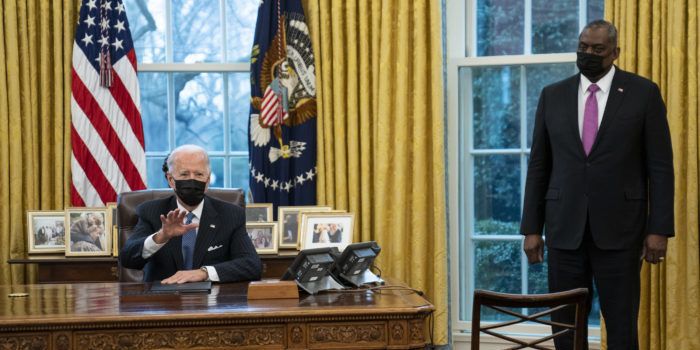
(Headline USA) The White House said this week that President Joe Biden was not planning to ask for Defense Secretary Lloyd Austin’s resignation, even after Austin failed to inform him of his week-long hospitalization, The Hill reported.
Reports over the weekend revealed that Austin had been incapacitated in the intensive-care unit for days after undergoing an elective surgical procedure, and that he had failed to inform other Pentagon leadership or the White House of his emergency hospitalization.
In fact, when asked about his whereabouts, Austin’s office reportedly told other military personnel that the defense secretary was “working from home for the week.”
The day after Austin was admitted to the hospital, however, he did transfer authorities that required “constant secure communications capabilities” to Deputy Defense Secretary Kathleen Hicks.
When asked whether Biden would fire Austin, senior administration officials said on Monday that “Austin’s going nowhere.”
National security spokesperson John Kirby confirmed to reporters: “There is no—no plans for anything other than for Secretary Austin to stay in the job and continuing the leadership that … he’s been demonstrating.”
Kirby claimed Biden “respects the fact that Secretary Austin took ownership for the lack of transparency,” and said there would be a review of the situation so the administration could “learn” from the experience.
John Kirby says Biden "respects" how Defense Secretary Lloyd Austin "has handled multiple crises over the last three years," so he won't be fired pic.twitter.com/uObNPoue1a
“Our main focus right now is on Secretary Austin’s health and making sure he gets all the care and support he needs to fully recover,” he added.
The Pentagon also insisted that Austin has no plans to resign.
“He remains focused on conducting his duties as secretary of Defense in defense of our nation,” DOD spokesperson Maj. Gen. Patrick Ryder told reporters.
Austin is still hospitalized in the Walter Reed Military hospital, but it is not clear what elective procedure he underwent that triggered his emergency hospitalization.
In a statement, Austin admitted that he “could have done a better job ensuring the public was appropriately informed. I commit to doing better,” he said.
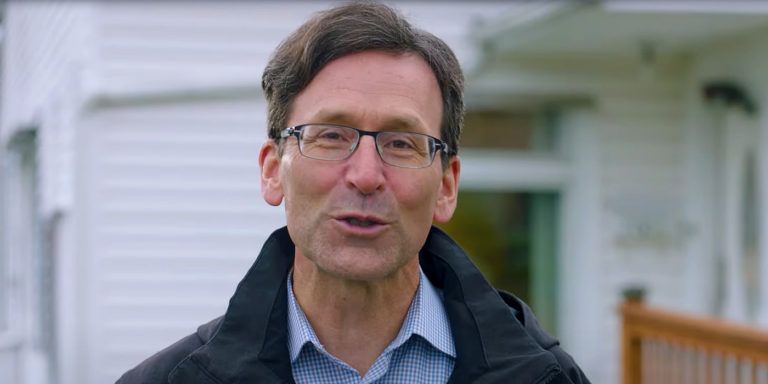
(Jacob Bruns, Headline USA) In the midst of a Washington state gubernatorial campaign, Bob Ferguson, the Democrat attorney general and candidate for governor, has sent thousands of checks to dead or fictional people as a repayment for a chicken and tuna price-fixing lawsuit, the Post Millennial reported.
A local radio show, the Ari Hoffman Show on Talk Radio 570 KVI, acquired dozens of photos of the various checks sent out to some people who had never lived in the state, others who have been long dead and still others who were a combination of the names of family members in a household.
In total, 440,000 Washington residents were supposed to get settlement checks this month, for a total of $40.6 million—all with Bob Ferguson’s name on the checks as the payer.
Ferguson has faced scrutiny from Republicans and the media for his monumental blunder.
Washington state GOP Chair Rep. Jim Walsh called the situation a “mess” and a “typical bureaucratic screw-up.”
Walsh suggested that the mess came about because the AG was trying to get his name on checks to “low-income Washingtonians” by sending them cash “willy nilly.”
And it turned out that the list “included a significant number of people who’ve been dead, not for like a few months, but for like 20 years? 25 years? And they started sending checks out to these people.”
Walsh’s deceased wife even received a check from the state.
According to Walsh, the AG screwed up the spelling of names on numerous occasions, leading to difficulty depositing checks at banks.
“It looks like it’s an attempt to do some electioneering,” he concluded.
An ethics complaint has been filed against Ferguson with the State Auditor’s Office, alleging that Ferguson essentially used taxpayer dollars to support his gubernatorial campaign.
“Bob Ferguson decided to send checks to hundreds of thousands or millions of lower-income people, giving them a portion of the settlement with chicken and tuna companies,” the complaint said.
“He put his name on the check as the payer, and he attached a letter to the checks that is blatant and illegal campaigning with public funds,” it added.
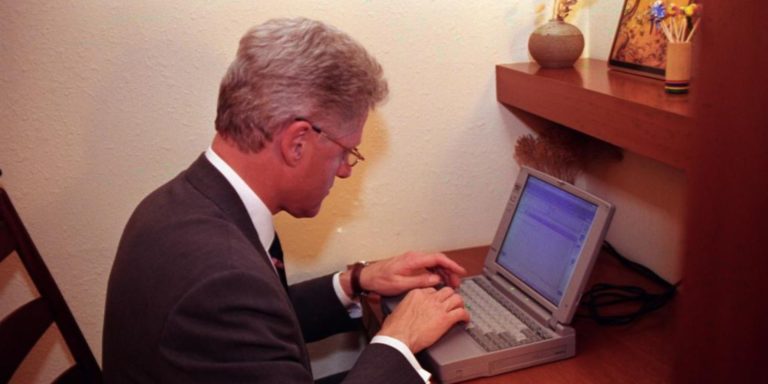
(Luis Cornelio, Headline USA) The Clinton Presidential Center deleted a photo of former President Bill Clinton supposedly sending “his first-ever email” after the caption, “Can you guess who it was to?” prompted numerous peculiar responses.
The photo, posted Monday on Twitter, depicted Clinton in front of what seemed to be a laptop computer, celebrating “World Typing Day,” coinciding with the release of Jeffrey Epstein court documents that explicitly mentioned the former president’s name.
Many users flooded the Clinton Presidential Center’s post with replies suggesting the “first-ever” email was sent to Epstein, the late pedophile and former Clinton ally.
“The @ClintonCenter just deleted this post. I’m sure you can guess what most of the comments and QT’s were before they closed replies and deleted the tweet,” declared Chaya Raichik, founder of the Libs of TikTok page.
As reported by the New York Post, the latest documents released in the Epstein case contain unfounded allegations that Sarah Ransome, one of Epstein’s accusers, told a former columnist in 2016 that Epstein kept copies of sex tapes of Clinton.
In 2019, Ransome told the New Yorker that she “invented the tapes to draw attention to Epstein’s behavior.” Presumably, Ransome referred to the fact that Epstein had not faced federal charges stemming from the then-child abuse allegations.
Epstein was ultimately arrested on federal charges for sex trafficking crimes. He reportedly died by suicide in 2019 while awaiting trial for the charges.
The federal indictment against Epstein contained numerous documents obtained by investigators and provided by the victims.
Some of the files remained sealed until last year when U.S. Judge Loretta Preska ordered the release of the documents for Jan. 1.
Since then, documents have been released, naming several celebrities and politicians but not implicating them in any criminal activity. Notably, Oprah Winfrey, who has no association with Epstein and is not mentioned in the newly released court documents, allegedly disabled comments on her Instagram account amid accusations.
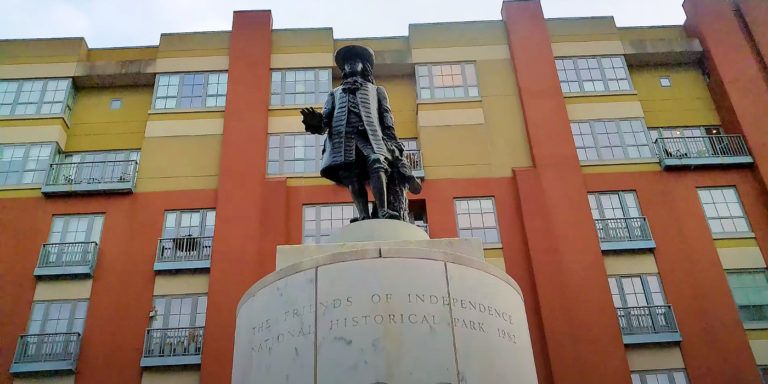
(Molly Bruns, Headline USA) The National Parks Service announced the removal of a statue of William Penn, the founder of the state of Pennsylvania, from a Philadelphia park in order to make the park more “welcoming, accurate, and inclusive.”
Interior Secretary Deb Haaland announced that the Welcome Park will include more displays providing information on the indigenous groups that lived in the area before European settlers came to American shores, according to the New York Sun.
Haaland proudly reported that she and her team consulted Native American groups on the expansion of the displays.
The Department of the Interior also posted to social media, requesting “input [for] Welcome Park rehabilitation.”
NPS erected Welcome Park in 1982 to commemorate the founding of Pennsylvania. It is the only place in the state’s most populous city honoring Penn’s achievements.
Several Twitter users voiced their vehement opposition to tearing down the Penn statue and replacing it with a woke-ified version of Native American history.
“The Biden administration is taking down a statue of William Penn,” columnist David Marcus said in a reply to the NPS post. “Not Robert E Lee, not Stonewall Jackson, but William Penn. These people hate America, there’s no doubt anymore.”
The Biden Administration is taking down a statue of William Penn. Not Robert E Lee, not Stonewall Jackson, but William Penn. These people hate America, there’s no doubt anymore. https://t.co/ZHVrJ8GkQ9
“No foreign ‘enemy’ hates us like our own government,” a third user added. “Why don’t you just build a statue of whatever criminal filth you and your pets decide is the next civil rights hero?”
No foreign “enemy” hates us like our own government.
Why don’t you just build a statue of whatever criminal filth you and your pets decide is the next civil rights hero?
Penn was born in London in 1644 and emigrated to the British colonies after facing religious persecution.
His Charter of Privileges laid out religious liberties and civil rights laws that had a tremendous influence on the Continental Congress that drafted the American Constitution.
The park founders named Welcome Park after the ship that Penn took from England, the Welcome, which now sits on the Delaware River.
On Friday night, at least five unregistered cars were towed from outside of the illegal immigrant camp at New York City’s Floyd Bennett Field.
Among the cars towed were several newer Toyotas, including a Sienna minivan, and a couple of Sequoia SUVs.
“This is insane,” Assemblywoman Jaime Williams, a Democrat from Brooklyn, said on Saturday. “Where did they get the money [to buy vehicles]? This is bigger than all of us.”
Williams posted a video of the posh cars being removed from near the old airfield on Facebook.
The Democrat lawmaker also called the situation “bizarre,” noting that “people have to wake up and realize what’s happening. These are the same people who are knocking on doors begging for food and money”
Williams was alluding to the mass-scale door-to-door begging taking place around the old airfield.
David Fitzgerald, 62, a resident of Brooklyn’s Marine Park neighborhood, said that numerous illegal immigrants have wandered the streets begging for money and clothing.
“There’s definitely an invasion of immigrants from Floyd Bennett Field in our neighborhood,” he said, noting that they were “knocking on the door looking for money.”
For residents, the unsolicited panhandling was a nuisance at best, if not a threat to public safety.
“To have people knocking at your door looking for food that don’t speak English, it’s annoying,” Fitzgerald said “I don’t like it. We have never had this before, ever.”
When speculating as the ultimate cause of New York City’s troubles, Williams blamed President Joe Biden and his lax administration for the influx of illegal immigrants.
According to Williams, the administration was “turn[ing] a blind eye” to New York City’s struggles.
“Floyd Bennett Field, our national park, has become a dumping ground,” she added.
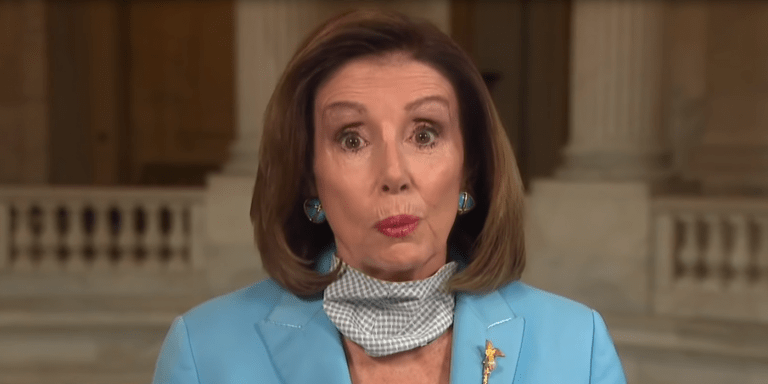
(Headline USA) Former House Speaker Nancy Pelosi, D-Calif., refused to condemn Democratic efforts to remove former President Donald Trump from the 2024 ballot, arguing such decisions were “up to the states.”
Asked by ABC News’s George Stephanopoulos on Friday whether the rulings by the Colorado Supreme Court and Maine secretary of state to remove Trump were legitimate, Pelosi demurred.
“Those laws … those are up to the states, they have different laws from state to state,” she said.
“I don’t think he should have ever been president,” Pelosi continued, offering her own unique interpretation of the Constitution. “But, nonetheless, there is a view of the Constitution in Article 14, Section 3, that he should not be able to run for president.”
It was unclear whether the wildly gesticulating leftist leader was having a momentary mental lapse or simply did not know the difference.
Pelosi acknowledged that her own state of California decided that the so-called Insurrection Clause, which prohibits those who commit insurrection of holding office, did not apply to Trump.
“That’s not the point,” she said.
The point, rather, is “that again, different states have different laws,” she added.
Pelosi also argued that Trump did commit insurrection, even though he has not been charged with such a crime.
Indeed, Trump was acquitted by the Senate of the partisan impeachment charges that Pelosi and her Democrat-led House filed against Trump during his final weeks as president.
“I think that he incited an insurrection, and again, that he [wouldn’t] stop what was going on as his own people said, ‘This is your legacy, smoke coming from the Capitol is your legacy,’” she told ABC News.
Questions have since followed as to what role Pelosi played in failing to secure the U.S. Capitol—whether intentionally or unintentionally—in order to force through the disputed certification of the election.
Pelosi was pressed on the issue again in a separate interview with CNN’s Dana Bash, who pointed out that Trump could be helped politically by the efforts to remove him from the ballot.
“That’s a matter that they will have to deal with,” Pelosi replied. “Martyrdom is his thing.”
She then argued that instead of focusing on Trump, Democrats should prioritize “kitchen table issues” that voters care about.
“What’s important is what matters to the American people and their families at that kitchen table,” she said, despite regularly being slammed for her own elitist and out-of-touch ways during the pandemic. “And you have to keep bringing it back to that because that’s what is important to our country.”
Trump’s campaign has appealed the Colorado Supreme Court’s decision to the U.S. Supreme Court, which is expected to rule on it soon.
(Clint Siegner, Money Metals Exchange) The outlook for pension systems is growing increasingly dire. Promises made to retirees have been generous and they can only be kept if prices for all kinds of assets move consistently higher.
The trouble is that the past three years don’t look like the first twenty years of the century.
The 40-year bull market in bonds ended. Commercial real estate is in deep trouble. And there are many indications that a recession is coming, which should translate to lower stock prices.
Now some large pension programs are looking to borrow money to meet their obligations. The union-boss-controlled California State Teachers’ Retirement System (CalSTRS) announced plans to borrow $30 billion in an effort to avoid selling distressed real estate and bonds.
They don’t have much choice. Cutting retirement benefits is forbidden by law.
For some systems in certain locales, such as the government employee pensions in Illinois, changing the law means amending the state’s constitution — a political impossibility.
The CalSTRS move to borrow roughly 10% of its total asset value smells of desperation. It is a gamble which pays off if there is a big recovery in commercial real estate and bond prices.
The outlook for commercial real estate remains gloomy. The retail sector has struggled for years due to the ongoing transition from brick and mortar to online shopping.
More recently demand for office space has been in decline. Work from home was a trend prior to COVID, and it massively accelerated during the pandemic.
The most likely scenario for a recovery in bond prices involves a decline in stock prices.
The Fed isn’t likely to start dropping interest rates until stock market weakness signals recession or even worse economic malaise.
If markets fall, it will only get harder and more expensive for pensions to borrow next time.
The alternatives to borrowing will be a fire sale of assets, or a bailout from either the state or federal government.
Given that California is facing a record $68 billion deficit and federal deficits are also skyrocketing, bailouts could be a difficult sell. Liberal California state politicians will likely want to rescue pensions, but they will have to borrow to do it. The state’s creditworthiness could be an issue.
At the federal level, a bailout to maintain lavish retirement benefits for teachers in California is going to be a hard sell among representatives from more conservative states.
Overextended pension systems managed to stay afloat when prices for equity, real estate and bonds all moved higher. The promises made to retirees assumed a mostly uninterrupted bull market in financial assets.
Few state pension systems allocate any of their assets to physical precious metals in order to protect retirees from inflation and credit risk. One notable exception is the Ohio Police and Firefighters Pension Fund which reportedly acquired a physical gold holding.
Now pension systems that are hitched entirely to financial assets must navigate potential bear markets and tighter borrowing conditions. Many of them may not succeed.
And silver isn’t currently priced for this dynamic.
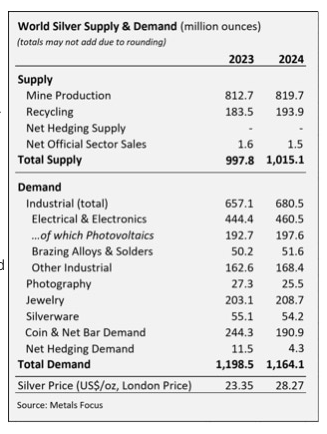
The Silver Institute released preliminary supply and demand numbers at its Silver Industry Dinner in New York City in November.
Industrial silver demand is projected to rise by 8 percent to a record 632 million ounces.
According to the Silver Institute, investment in photovoltaics, power grid and 5G networks, growth in consumer electronics, and rising vehicle production all helped drive industrial demand higher.
Industrial silver demand will be offset by lower physical investment demand. Silver coin and silver bar demand is projected to drop by 21 percent to 263 million ounces after setting a record in 2022. This is primarily due to a big drop in silver investment in India and Germany. Record-high local silver prices in India drove profit-taking throughout most of the year. In Germany, a Value Added Tax hike on some silver coins at the start of 2023 dampened investor enthusiasm.
Even with the year-on-year decline overall in investment demand, it remained at a historically high level globally. Strong investment sentiment in North America helped offset the decline in India and Germany.
Investment in paper silver also dropped in 2023. The Silver Institute projects record outflows for Exchange Traded Funds (ETFs) for the second straight year due to monetary tightening and a boost in yields. Outflows are expected to drop by 40 million ounces, about one-third of 2022’s record outflows.
Excluding India, global jewelry demand is expected to rise slightly in 2023. India will see a decline in jewelry demand after a record surge in 2022.
Silverware is expected to decline by as much as 12 percent globally.
Overall, silver demand will drop by about 10 percent to 1.14 billion ounces. However, according to the Silver Institute, total demand remains historically elevated and will come in at the second-highest level in history.
On the supply side, global mined silver is anticipated to fall by 2 percent year-on-year to 820 million ounces, driven by lower output from operations in Mexico and Peru.
With a combination of historically high demand and falling mine output, the Silver Institute projects a 140 million-ounce market deficit in 2023.
Silver Underpriced
Given the current macroeconomic environment, and the supply and demand dynamics, silver appears to be significantly undervalued at $23 to $25 an ounce.
According to the Silver Institute’s projections, 2023 will chart the third consecutive annual deficit in a row.
The Silver Institute called the 2022 deficit “possibly the most significant deficit on record.” It also noted that “the combined shortfalls of the previous two years comfortably offset the cumulative surpluses of the last 11 years.”
Meanwhile, the demand for solar power is rising rapidly and it is projected to drive the industrial demand for silver significantly higher.
The International Energy Association (IEA) predicts that in 2023, investment in the solar power industry will exceed the amount of money flowing into oil production.
Due to its outstanding electrical conductivity, silver is an important element in the production of solar panels. It is used to conduct electrical charges out of the solar cell and into the system. Each solar panel only uses a small amount of silver, but with the demand for solar panels growing exponentially every year, those small amounts of silver add up.
According to a research paper by scientists at the University of New South Wales, solar manufacturers will likely require over 20 percent of the current annual silver supply by 2027. By 2050, solar panel production will use approximately 85–98 percent of the current global silver reserves.
Recession worries would typically dampen industrial demand for silver, but the photovoltaic industry is essentially recession-proof due to support from governments around the world. With battling climate change a priority, it is highly unlikely investment in solar power and other green energy technologies will fall, even during an economic downturn.
All of this signals a rapid increase in silver demand in an environment of constrained supply.
And while industrial offtake accounts for roughly half of global silver demand, at its core, silver is a monetary metal. It tends to track with gold over time. In fact, silver often outperforms gold during a gold bull run.
In other words, if you’re bullish on gold due to the prospect of loosening Federal Reserve monetary policy and a resurgence of inflation, you should be bullish on silver as well.
Since the world went to a total fiat money system, there seems to be some correlation between the silver-gold ratio and central bank money creation. During periods of central bank money-printing, the gap tends to shrink. For instance, it plummeted in the aftermath of the 2008 financial crisis as the Fed engaged in extreme monetary policy.
Silver isn’t currently priced for this dynamic.
In fact, silver is significantly undervalued compared to gold.
The current silver-gold ratio is just over 87-1. That means it takes over 87 ounces of silver to buy an ounce of gold. To put that into perspective, the average in the modern era has been between 40:1 and 50:1. Historically, the ratio has always returned to that mean. And when it does, it does it with a vengeance. The ratio fell to 30-1 in 2011 and below 20-1 in 1979.
Given the current silver price, the silver-gold ratio, and the supply and demand dynamics, silver appears to be on sale.
(Joshua D. Glawson, Money Metals Exchange) There is an untold story in American monetary history. Some are reluctant even to discuss it.
I’m referring to the U.S. Secret Service’s very own role in the destruction of sound money in America.
As constitutional, sound money in the form of physical gold and silver coins – whether minted privately or not – became an annoying impediment to expanding the size and power of the federal government, central planners began circulating unbacked paper proxies and formed a Gestapo-like police agency to enforce the scheme.
Founded in 1865, toward the tail end of the American Civil War, the Secret Service originated as a branch of the U.S. Treasury Department.
The primary job of this federal police force was to prevent others from counterfeiting the U.S. currency, which had just been nationalized through acts of Congress via the National Currency Act of 1863 and the Coinage Act of 1864.
These Washington, D.C. laws imposed taxes with a levy court system and implemented direct taxation. This led to the country’s first income tax. The government also strengthened the establishment of the Internal Revenue Service (IRS), which had conveniently begun operation in 1862. Conjointly, these propped up the new federal fiat currency system.
From around 1837 through part of the Civil War, currency issuance and banking in America had been directed by a more decentralized network of states and free banking institutions. These entities issued banknotes that could be cashed in for standardized gold or silver coins or traded for goods and services.
During the Civil War, however, both sides issued their own banknotes to help fund their respective war efforts, often unbacked by the two monetary metals.
The Union pushed forth greenback fiat currency in Demand Notes and United States Notes. At the same time, the Confederates printed fiat greybacks in the forms of Confederate Dollars and Confederate Treasury Notes.
The number of fiat dollars in a bank and region in the new era would be largely based on population rather than gold and silver reserves, which is one reason the Union continued to encourage immigration both for fiat monetary support and war efforts.
The Union pushed to expand American territories through these Acts to increase population and issuance of government fiat money.
Since the Union and Congress sought to impose a federal fiat legal tender currency system that did not rely on tangible value and voluntarism, they needed enforcement of those laws. Those supporting laws included income taxes and establishing the IRS.
The war, economic strife, and competition between currencies created various types of “counterfeit” currency.
Government officials made haughty claims that one in three fractional gold or silver coins at that time were counterfeit and did not contain their original gold or silver weight. By decreasing the amount of gold or silver in a coin, a counterfeiter could turn a profit.
Yet, these government hypocrites had no qualms about mandating that unbacked fiat currency must be considered legally equal to gold and silver coinage. Nor did they object to the illicit profit this enabled the central government to rake in.
Sadly, the U.S. Supreme Court notoriously affirmed this devious scheme when deciding the “Legal Tender Cases,” considered by many legal scholars (including present-day Justices on the high court) to have been wrongly decided.
As such, the government changed the definition of money and citizens could henceforth be compelled to accept non-redeemable paper as equal to gold or silver coins.
On April 14, 1865, President Abraham Lincoln signed legislation establishing the Secret Service to combat counterfeit money – the non-government type, that is. Later that same day, Lincoln was assassinated, and he died on April 15.
From 1865 to 1901, the Secret Service’s main mission was to bust private counterfeiting operations. In 1881, President James Garfield was assassinated – interestingly, not too long after publicly advocating for a return to the gold standard.
Then, in 1901, with the assassination of President William McKinley, and under the new presidency of Theodore Roosevelt, the Secret Service was given the additional task of defending U.S. presidents. (McKinley’s assassination occurred a year after he signed the Gold Standard Act of 1900, which halted bimetallism by diminishing the monetary role of silver.)
The Secret Service grew from its original role of helping to ramrod a new fiat currency standard into a much larger police force that also protects the U.S. Presidents.
A full 50 years before the Christmas Eve passage of the Federal Reserve Act of 1913, Congress had already set in motion a plan to rob our nation’s monetary system of its gold and silver, slip a fiat currency into circulation, promote fractional reserve banking, stamp out state and private banknotes, strengthen the IRS, and spawn the Secret Service to help enforce it all.
The solution is to return to a free market for money – a system of competition where gold and silver are permitted to circulate alongside other forms of payment – and to remove government force from the equation.