FAA Report: Boeing’s Steps to Improve Safety Culture Have Helped but Don’t Go Far Enough

(Headline USA) When it comes to safety culture at Boeing, there is “a disconnect” between senior management and workers.

However, employees responsible for checking the company’s planes question whether they can raise issues without fear of retaliation, according to panel of outside experts.

The aviation-industry and government experts also said safety training and procedures at Boeing are constantly changing, leading to confusion among employees.

The woke company is one of many that has been criticized for prioritizing virtue-signaling over matters such as diversity, equity and inclusion ahead of matters of corporate responsibility.

In the case of airlines, the most fundamental of those responsibilities is passenger safety.

The comments were contained in a report Monday to the Federal Aviation Administration. Congress ordered the study in 2020, when it passed legislation to reform how the FAA certifies new planes after two deadly crashes involving Boeing 737 Max jetliners.

Safety at Boeing is being re-examined after last month’s blowout of an emergency door panel on an Alaska Airlines jet. Accident investigators said in a preliminary report that bolts used to help hold the panel in place were missing after the plane underwent repairs at Boeing’s factory in Renton, Washington.

The FAA relies on employees at Boeing and other aircraft manufacturers to perform some quality-review on behalf of the regulatory agency. After the Max crashes, critics in Congress said managers put undue pressure on employees to approve work done for the FAA.

Boeing said it had taken steps to improve its safety culture. The panel of experts said Boeing’s changes have reduced the chance of retaliation against employees who report safety problems.

It added, however, that “the restructuring, while better, still allows opportunities for retaliation to occur.”

Adapted from reporting by the Associated Press

Electric Vehicles’ Success May Rely on Renters, but Little Incentive Exists for Landlords

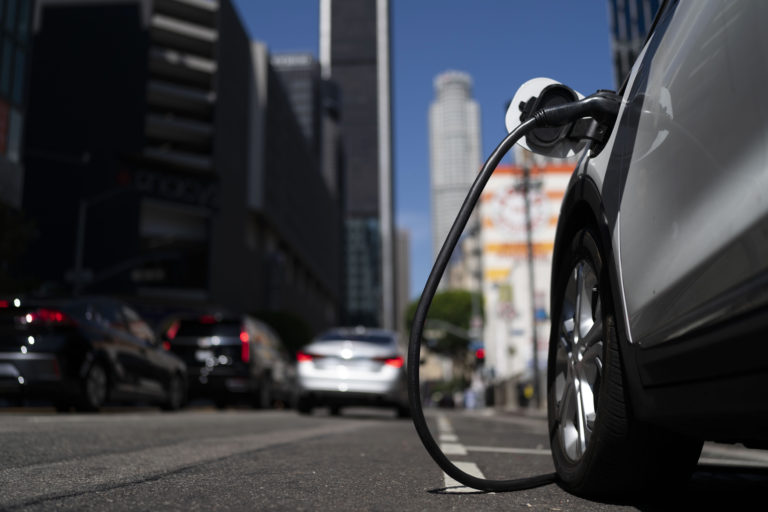
(Affordability and charging access remain the biggest obstacles to consumer acceptance of electric vehicles and the government’s ambitious transition targets.

These factors pose even greater challenges for a demographic that has been seemingly overlooked by policymakers—those residing in multiunit dwellings.

“The transition to EVs in the United States will hit a deep pothole unless the more than one-third of the 124 million households that rent can be convinced to purchase an EV,” said longtime systems engineer Robert Charette in a recent article he authored for IEEE Spectrum.

“More importantly,” he said, “a compelling case must be made to tens of thousands of condo community associations as well as the millions of rental property owners that they should install EV chargers.”

The issue becomes more complex when viewed from the diverse perspectives of renters, condominium owners and landlords.

Landlords question the rationale behind covering the costs, while tenants who may only stay for several years are hesitant to pay for installations. Condo owners face the additional hurdle of homeowner association board approvals.

Charette told the Center Square the confluence of affordability, the number of renters and the age of apartment buildings all affect the options available.

Within apartment buildings, Charette said, there is a striation of socioeconomic capability and “a high percentage of people can’t afford to pay their rent right now.”

The question is how many renters in a building would make it worthwhile for landlords to invest in chargers, even with government subsidies?

The answer only invites more questions.

The average price of a new EV is just over $55,300—something Charette says is scarcely affordable for the average family.

He cited recent reports stating that millions of Americans—especially low-income households—struggle with unaffordable rent increases due to inflation and housing shortages. Despite decreasing prices of used EVs, the majority are still beyond the budgets of most renters.

Research indicates homeowners purchase EVs at nearly six times the rate of renters. The discrepancy, he explained, is primarily because most EV owners can charge at home using Level 2 chargers.

Renters of single-family and mobile homes with dedicated parking spots can charge at home using Level 1 chargers without requiring added electrical upgrades or landlord permission. However, many of the roughly 28 million people living in apartment buildings, Charette said, lack on-site EV charging.

Illinois is the latest state to pass a “right to charge” law requiring parking spots at new homes and multiunit dwellings to have conduit installed to accommodate chargers. California, Colorado, Florida, Hawaii, Maryland, New Jersey, New York, Oregon and Virginia have passed similar legislation.

The details vary by state, but in many cases the tenant is typically responsible for the cost of the equipment, installation, maintenance and electricity used, as well as liability insurance. In addition, many leases state that any improvements made to the property by the tenant belong to the owner after their agreement expires.

Given the expense and the fact that, on average, renters stay for only a few years before moving, Charette suggests the number of tenants installing chargers is likely to be extremely small.

Many renters in suburban areas lack access to robust mass transit, and therefore rely on cars more often than their city counterparts.

Lehigh Valley engineer James Daley, a member of the IEEE Standards Association, told the Center Square the migration of households to the suburbs has provided incentives to build apartment complexes where convenient parking is a major amenity.

Daley said having several apartment buildings in a single suburban complex is typical—and parking requirements, such as the number of parking spaces allocated for each dwelling unit, are usually covered in land-development ordinances.

Even if a building’s wiring can accommodate EV charging loads, the problem, he saids, is the way electric service is provided to the buildings.

Electricity is distributed from the utility company to a transformer and then to the service panel containing meters for each household. The significance of this, Daley said, is that it is not possible to dedicate an EV charger to a specific household.

He questioned how installing a percentage of parking spots with charging units could be accomplished equitably. Additionally, who pays for the installation? Is the cost spread over all households? Are those without EVs subsidizing the cost of charging?

Charette said the age of apartment buildings in the U.S. is an overlooked factor and addressing the issue would necessitate infrastructure upgrades.

This raises more questions, one being: if a landlord bears the cost, will it lead to rent increases?

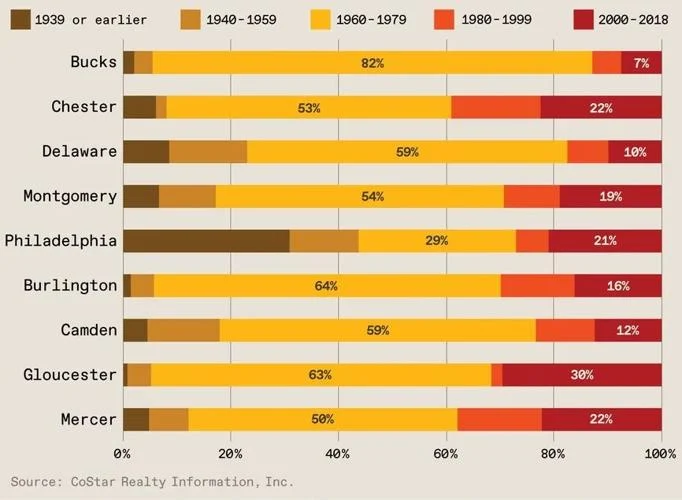
For instance, data he obtained from a Delaware Valley Regional Planning Commission report showed a large percentage of apartment buildings in the greater Philadelphia region were more than 40-years-old and were typically occupied by low-income and minority renters.

multi-family rental units built by decade
A horizontal bar graph showing the percentage of multi-family rental units built by decade in the Delaware Valley.
IEEE Spectrum and the Delaware Valley Regional Planning Commission / GRAPHIC: via The Center Square

Something else Charette said hadn’t been thoroughly considered was the risk involved when charging in multilevel underground parking garages—and, in some locations, the uppermost level may be designated solely for charging.

If there were an EV fire at the lower levels without rapid detection and suppression capabilities, he said, “It’s like having a toxic chemical explosive going off in your basement.”

While cities develop programs to facilitate on-street charging, and other innovations are being explored, alternatives to at-home charging include the use of public charging stations or charging at the workplace, if available.

“What exists today is a vicious cycle” Charettes said, where renters, even if they can afford it, are reluctant to buy EVs due to a lack of reliable, convenient, and affordable charging, and owners of rental properties—especially of apartment buildings—will not invest in EV chargers because too few tenants use them.

Alleged CIA Asset Seen on Video ‘Casing’ the Capitol before 9/11, New Court Records Say

(Ken Silva, Headline USA) Recent court filings in a long-running lawsuit over the 9/11 terrorist attacks reveal the existence of a video that purportedly shows alleged CIA asset Omar al-Bayoumi “casing” the U.S. Capitol ahead of the Sept. 11, 2001, terrorist attacks.

Bayoumi, an alleged Saudi and CIA intelligence asset, was a subject of FBI investigations for more than 20 years because he was the handler for two of the plane hijackers, Nawaf al-Hazmi and Khalid al-Mihdhar. He was never charged.

According to a Jan. 26 order in a 9/11 civil lawsuit, a video exists from 1999 that purportedly shows Bayoumi “casing” Capitol Hill. The Florida Bulldog reported earlier this month that the video was among a collection of documents and footage released to the plaintiffs in March 2022 and December 2023 by London’s Metropolitan Police Service, which also investigated Bayoumi.

Plaintiffs are trying to use the video, which is sealed from the public, as evidence as part of their lawsuit against the government of Saudi Arabia. However, the presiding judge has thus far disallowed that because plaintiffs’ attorneys were allegedly late in providing a copy to the defense, which in turn had no opportunity to analyze the video.

Plaintiffs have asked the judge to reconsider her decision, but Saudi Arabia urged the judge to exclude the video in a court filing Friday.

In its filing, Saudi Arabia’s attorneys disputed the plaintiffs’ characterization of the video. Far from helping plot a terrorist attack, Bayoumi was simply a tourist in Washington DC, according to the kingdom’s lawyers.

“The hour-long video has only seven minutes of footage of the outside of the Capitol, taken at ground level. The vast majority of the video—including footage of the White House, the Washington Monument, the Smithsonian Institute, the National Mall, the Saudi Embassy, and the Islamic Center of Washington, D.C., as well as the artwork on the inside of the Capitol— has no possible connection to a plan to crash an airplane into the Capitol,” Saudi Arabia’s lawyers said.

“In the video, Al Bayoumi shows an interest in beautiful flower beds, old-fashioned lamp posts, water fountains, and even a squirrel running across the White House lawn. He introduces himself to other tourists along the way and ends by filming the exterior of the hotel ‘where I live,’” they said.

“This is nothing more than a tourist video. It bears no similarity to actual Al Qaeda casing reports on U.S. targets, which included ‘very detailed’ logistic and structural reports on potential targets.”

The judge has yet to render her final decision on the matter.

Meanwhile, A military judge has ordered the FBI to produce 3,000 pages of documents about Bayoumi.

First reported by the national security blog SpyTalk on Dec. 1, the order was issued by a judge overseeing proceedings against 9/11 defendants, including alleged mastermind Khalid Shaikh Mohamad, at Guantanamo Bay.

“The accused [9/11 defendants] are charged with a conspiracy, so existing evidence from the criminal investigations into that conspiracy is relevant to this case,” wrote Air Force Col. Michael McCall in his order, according to SpyTalk.

“It is notable that the prosecution has not argued that additional materials do not exist, nor has it asserted a privilege over the information.”

Ken Silva is a staff writer at Headline USA. Follow him at twitter.com/jd_cashless.

Corporations Slow Price Hikes Due to Consumer Habits, Need to Assist Biden

(Headline USA) Inflation has changed the way many Americans shop. Now, some hope, those changes in consumer habits are helping bring down inflation.

However, some prices will remain obstinately high—if not permanently so—as Treasury Secretary Janet Yellen has acknowledged, due to the Biden administration’s slow reaction in addressing the issue, which has led to wage increases that will result in higher overhead and production costs.

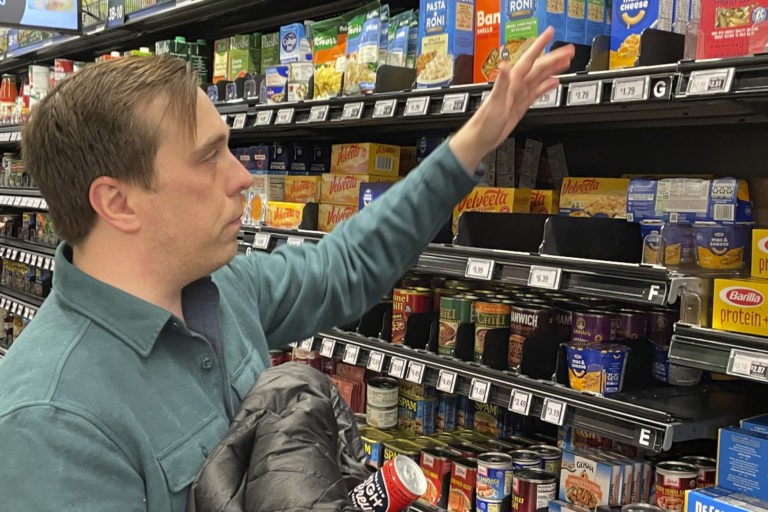
Fed up with prices that remain about 19%, on average, above where they were before the pandemic, consumers are fighting back. In grocery stores, they’re shifting away from name brands to store-brand items, switching to discount stores or simply buying fewer items like snacks or gourmet foods.

More Americans are buying used cars, too, rather than new, forcing some dealers to provide discounts on new cars again. But the growing consumer pushback to what critics condemn as price-gouging has been most evident with food, as well as with consumer goods like paper towels and napkins.

In recent months, consumer resistance has led large food companies to respond by sharply slowing their price increases from the peaks of the past three years.

This doesn’t mean grocery prices will fall back to their levels of a few years ago, though with some items, including eggs, apples and milk, prices are below their peaks. But the milder increases in food prices should help further cool overall inflation, which is down sharply from a peak of 9.1% in 2022 to 3.1%.

Public frustration with prices has become a central issue in President Joe Biden’s bid for re-election. Polls show that despite a decline in inflation from the record-breaking peaks it hit a year into his presidency, many consumers are unhappy that prices remain so much higher than they were before he took office, and blame Democrats for the economic conditions.

Meanwhile, the dramatic rate hikes issued by the Federal Reserve in response to Bidenflation have come with their own set of problems, making home ownership prohibitively expensive for first-time buyers who cannot afford the mortgage, and forcing some businesses to begin cutting costs—including advertising—that help drive economic stability and growth.

The interest rates also have helped—alongside the profligate spending by the Biden administration on things like its war in Ukraine—to send the national debt skyrocketing into uncharted territory, with interest on the loans on track to exceed the gross domestic product next year.

In a break from others in the Biden administration, Yellen conceded in a January interview, “I think most Americans know that prices are not likely to fall.”

When high inflation persists, consumers often develop an inflationary psychology: Ever-rising prices lead them to accelerate their purchases before costs rise further, a trend that can itself perpetuate inflation as happened during the debilitating price spikes of the Jimmy Carter administration in the 1970s.

“That was the fear—that everybody would tolerate higher prices,” said Gregory Daco, chief economist at globalist consulting firm Ernst & Young whose predictions have often tracked with the leftist agenda.

“I don’t think we’ve moved into a high inflation regime,” Daco claimed.

Instead, this time many consumers have reacted like Stuart Dryden, a commercial underwriter at a bank who lives in Arlington, Virginia.

On a recent trip to his regular grocery store, Dryden, 37, pointed out big price disparities between Kraft Heinz-branded products and their store-label competitors, which he now favors.

Dryden, for example, loves cream cheese and bagels. A 12-ounce tub of Kraft’s Philadelphia cream cheese costs $6.69. The store brand, he noted, is just $3.19.

A 24-pack of Kraft single cheese slices is $7.69; the store label, $2.99. And a 32-ounce Heinz ketchup bottle is $6.29, while the alternative is just $1.69. Similar gaps existed with mac-and-cheese and shredded cheese products.

“Just those five products together already cost nearly $30,” Dryden said. The alternatives were less than half that, he calculated, at about $13.

“I’ve been trying private-label options, and the quality is the same and it’s almost a no-brainer to switch from the products I used to buy a ton of to just the private label,” Dryden said.

Alex Abraham, a spokesman for Kraft Heinz, said that its costs rose 3% in the final three months of last year but that the company raised its own prices only 1%.

“We are doing everything possible to find efficiencies in our factories and other parts of our business to offset and mitigate further price increases,” Abraham said.

Last week, Kraft Heinz said sales fell in the final three months of last year as more consumers traded down to cheaper brands.

Dryden has taken other steps to save money: A year ago, he moved into a new apartment after his previous landlord jacked up his rent by about 50%.

His former apartment had been next to a relatively pricey grocery store, Whole Foods. Now, he shops at a nearby Amazon Fresh and has started visiting the discount grocer Aldi every couple of weeks.

Samuel Rines, an investment strategist at Corbu, says that PepsiCo, Kimberly–Clark, Procter & Gamble and many other consumer food and packaged goods companies exploited the rise in input costs stemming in part from supply-chain disruptions and in part from Biden policies that eliminated Trump-era U.S. energy independence, and sent gas and energy prices skyrocketing.

Still, some decried the phenomenon as “greedflation.” And in a March 2023 research paper, the economist Isabella Weber at the University of Massachusetts, Amherst, referred to it as “seller’s inflation.”

Yet beginning late last year, many of the same companies discovered that the strategy was no longer working. Most consumers have now long since spent any savings they built up during the pandemic.

Lower-income consumers, in particular, are running up credit card debt and falling behind on their payments. Americans overall are spending more cautiously.

Daco noted that overall sales during the holiday shopping season were up just 4%—and most of it reflected higher prices rather than consumers actually buying more things.

Several notoriously woke corporations may also be motivated to lower the prices— temporarily, at least—to help get Biden across the finish line in his re-election bid.

Rines pointed to Unilever, which makes, among other items, Hellman’s mayonnaise, Ben & Jerry’s ice cream and Dove soaps. Unilever jacked up its prices 13.3% on average across its brands in 2022. Its sales volume fell 3.6% that year. In response, it raised prices just 2.8% last year; sales rose 1.8%.

“We’re beginning to see the consumer no longer willing to take the higher pricing,” Rines said. “So companies were beginning to get a little bit more skeptical of their ability to just have price be the driver of their revenues. They had to have those volumes come back, and the consumer wasn’t reacting in a way that they were pleased with.”

Unilever itself recently attributed poor sales performance in Europe to “share losses to private labels.”

Other businesses have noticed, too. After their sales fell in the final three months of last year, PepsiCo executives signaled that this year they would rein in price increases and focus more on boosting sales.

“In 2024, we see … normalization of the cost, normalization of inflation,” CEO Ramon Laguarta said. “So we see everything trending back to our long-term” pricing trends.

Jeffrey Harmening, CEO of General Mills, which makes Cheerios, Chex Cereal, Progresso soups and dozens of other brands, has acknowledged that his customers are increasingly seeking bargains.

And McDonald’s executives have said that consumers with incomes below $45,000 are visiting less and spending less when they do visit and say the company plans to highlight its lower-priced items.

“Consumers are more wary—and weary—of pricing, and we’re going to continue to be consumer-led in our pricing decisions,” Ian Borden, the company’s chief financial officer, told investors.

Officials at the Federal Reserve, the nation’s primary inflation-fighting institution, have cited consumers’ growing reluctance to pay high prices as a key reason why they expect inflation to fall steadily back to their 2% annual target.

“Firms are telling us that price sensitivity is very much higher now,” Mary Daly, president of the Federal Reserve Bank of San Francisco and a member of the Fed’s interest-rate setting committee, said last week.

“Consumers don’t want to purchase unless they’re seeing a 10% discount,” Daly added. “… This is a serious improvement in the role that consumers play in bridling inflation.”

Surveys by the Fed’s regional banks have found that companies across all industries expect to impose smaller price increases this year.

The New York Fed says companies in its region plan to raise prices an average of about 3% this year, down from about 5% in 2023 and as much as 7% to 9% in 2022.

Adapted from reporting by the Associated Press

Central Bank Gold Buying Expected to Remain Hot Over Next Several Years

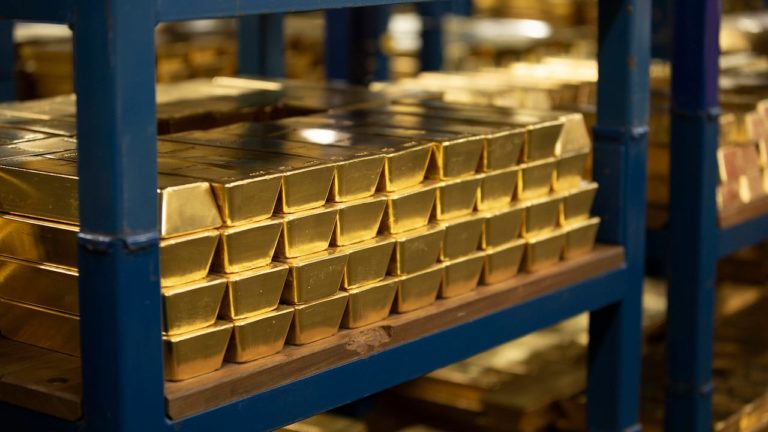
(Mike Maharrey, Money Metals News Service) Net central bank gold buying exceeded 1,000 tons two straight years, and commodity analysts at ANZ Bank expect central bank gold demand to continue hot for at least the next six years.

[Emerging market] central banks could purchase over 600 tons of gold annually until 2030, to take its share in their foreign reserves to 10 percent. China will likely occupy the lion’s share in global official gold demand.

Analysts at the Australian bank noted that annual central bank gold demand has nearly tripled and now makes up 25 to 30 percent of total global demand.

Central bank net gold purchases totaled 1,037 tons in 2023. That fell just 45 tons short of 2022’s multi-decade record.

China was the biggest buyer in 2023. The People’s Bank of China officially reported a 225-ton increase in its gold reserves.

Total central bank gold buying in 2022 came in at 1,136 tons. It was the highest level of net purchases on record dating back to 1950, including since the suspension of dollar convertibility into gold in 1971.

ANZ analysts say the recent bout of price inflation helped drive central bank gold demand.

Recent inflation shocks globally, aggressive policy rate hikes in the developed markets, and valuation losses on foreign currency reserves held by emerging market (EM) central banks have enhanced Gold’s appeal relative to bonds in their portfolios.

ANZ analysts also pinpoint declining faith in the bond market – particularly U.S. Treasuries – as another reason central banks are diversifying into gold.

Depleted trust in the US fixed-income assets and the rise of non-reserve currencies are other themes that could support central bank gold buying.

ANZ notes U.S. Treasuries represent approximately 59 percent of the total foreign currency reserves globally. But bond prices have dropped precipitously since the Fed embarked on its monetary tightening project to address hot price inflation.

Higher interest rates also led to dollar strength, making servicing dollar-denominated debt much more expensive.

According to ANZ, about 50 percent of the decline in Asian central bank FX reserves in 2022 was due to valuation losses.

This was quite large and has likely left a lasting sour taste. It is unsurprising, therefore, that central banks are diversifying their reserves away from bonds.

Financial analyst Jim Grant has warned about a “generational bear market” in bonds. In an interview on the Odd Lots Podcast last summer, Grant said he thinks we’re at the beginning of a long-term trend of a weak bond market with higher interest rates that could last decades.

I speculate that we are embarked on a long cycle of rising rates. And I say that first of all, for reasons of pattern recognition, there’s no theory behind it. But I observe that in 2020 and ‘21, some unimaginably large number of debt securities were priced to yield less than nothing. Bloomberg keeps this particular figure. And I bet still, perhaps you could check me on this, I bet still there’s like a hundred billion of bonds priced to yield less than nothing worldwide. But there were $18 trillion, I think at the peak.

[It was] the most extraordinary expression of unqualified bullishness on an asset class because it had the name of ‘bonds’ which had been falling in yield, rising in price. So no, it would not surprise me at all if we were embarked on something resembling a generation-length bear market in bonds, meaning rising yields and falling prices that would fit the form.

According to ANZ, the recent run of central bank gold buying could be part of a broader move away from the dollar.

The global monetary system is evolving, with EMs pushing their own currencies for international payments. China is reportedly settling trades with Russia in RMB and has made clear its intention to internationalize its currency. Other regional players, like India, are also pushing to settle foreign trade in their own currency. This evolving multi-currency system will see a gradual shift in foreign currency reserve portfolios, and gold is likely to play an important role as this develops.

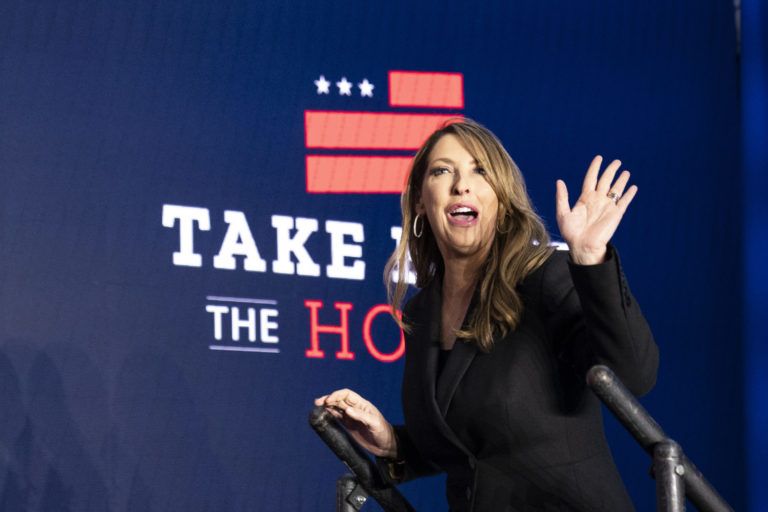
Ronna McDaniel Formally Announces Plans to Step Down from RNC

(Jacob Bruns, Headline USA) Longtime Republican National Committee chair Ronna McDaniel has formally announced her plans to step down from her position, effective next week, Newsmax reported.

McDaniel, who headed up the RNC for seven years, will resign on March 8, three days after Super Tuesday.

She released a statement Monday announcing her intentions.

“I have decided to step aside at our spring training on March 8 in Houston to allow our nominee to select a chair of their choosing,” McDaniel said. “The R.N.C. has historically undergone change once we have a nominee, and it has always been my intention to honor that tradition.”

Recent indications are that Trump has expressed support for current North Carolina GOP chairman Michael Whatley to fill the role, as well as his daughter-in-law Lara Trump—also a North Carolina native—to serve as co-chair.

Whatley helped to bring the NCGOP from the precipice following a series of scandals that culminated in the 2019 resignation of longtime chair Robin Hayes, who was indicted on a bribery charge but later pardoned by then-President Trump.

He has also succeeded in safeguarding the state’s elections, despite efforts by Democrat state Attorney General Josh to force many of the same dubious mail-in ballot laws that other battleground states succeeded in implementing ahead of the 2020 election.

Republicans in the North Carolina legislature notably gained a super-majority against Democrat Gov. Roy Cooper last year after successfully courting Democrat lawmaker Tricia Cotham to switch parties.

Lara Trump, the wife of Eric, has previously been floated as a potential U.S. Senate contender in the state, and gaining political experience at the RNC is likely to strengthen her hand for a possible run in 2026 to replace RINO Sen. Thom Tillis.

McDaniel—the niece of retiring RINO Sen. Mitt Romney, R-Utah—reaffirmed her desire to see Republicans succeed in 2024 and beyond.

“I remain committed to winning back the White House and electing Republicans up and down the ballot in November,” she said.

McDaniel’s legacy as RNC chair has been mixed.

She oversaw some relatively successful elections, but also failed to take advantage of general momentum during the lackluster “red wave” of 2022.

The RNC chair has faced criticism for Republican failures in 2023, leading former Republican candidate Vivek Ramaswamy to call for her resignation during a debate.

“Since Ronna McDaniel took over as chairwoman of the RNC in 2017, we have lost 2018, 2020, 2022—no red wave, that never came,” Ramaswamy said in his opening remarks onstage.

This led him to call for “accountability in our party,” offering a chance for McDaniel to come on stage to resign.

“For that matter, Ronna, if you wanna come onstage tonight, you wanna look the GOP voters in the eye and tell ’em you resign, I will turn over my—yield my time to you.”

With the rumors that McDaniel was already on her way out having begun to circulate after the Jan. 23 New Hampshire primary, a damning report by RedState revealed millions in wasteful spending on luxuries like flowers and limousines, consultants fees and office supplies.

Other Republicans took a more moderate approach to analyzing McDaniel’s tenure.

Former House Speaker Kevin McCarthy, R-Calif., even praised her as a “strong leader” who was “instrumental in helping us win back the House majority” after losing it in 2018.

“Her leadership in the party helped expand the electoral map and supported candidates that are now rising stars,” McCarthy said.

Headline USA’s Ben Sellers contributed to this report.

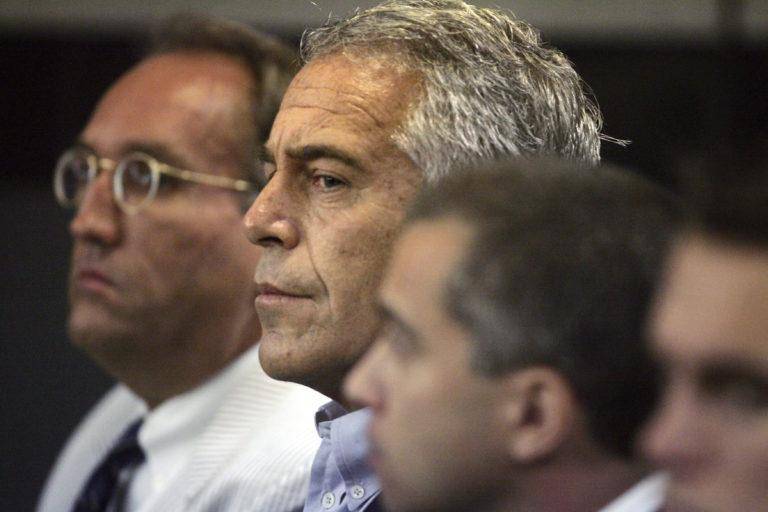
Ron DeSantis Approves Releasing More Jeffrey Epstein Records

(Ken Silva, Headline USA) Florida Gov. Ron DeSantis announced last week that he’s signing legislation that will pave the way for more documents about notorious sex trafficker Jeffrey Epstein to be released.

DeSantis’s announcement came after both houses of the Florida state legislature passed a bill for the public release of evidence and testimony from grand-jury proceedings that took place back in 2006.

“All files related to Jeffrey Epstein’s criminal activity should be made public. While the federal government continues to stonewall accountability, I’m glad the Legislature has taken action to release the grand jury material from the Florida state case,” DeSantis said last Wednesday.

“I will sign the bill into law.”

The 2006 investigation into Epstein resulted in what’s now commonly referred to as a “sweetheart plea deal” for the deceased pedophile, where he pleaded guilty to solicitation of a minor in exchange for non-prosecution. Epstein served 13 months in jail, during which time he was allowed to leave for work release during the day. The FBI then closed its investigation in 2008, allowing Epstein to again run amok for another decade.

The Epstein records could reportedly be released as soon as July.

Last month, other Epstein records were unsealed from the years-long civil litigation between him and his victims.

Among those records included emails showing that one of Epstein’s victims claimed in 2016 that there were sex tapes featuring Bill Clinton, as well as billionaire Richard Branson and Prince Andrew.

The victim, Sarah Ransome, also alleged in emails that one of her friends had a sexual relationship with Donald Trump, whom she referred to in emails as a pedophile.

Meanwhile, the victims are now suing the FBI for allowing Epstein’s sex-trafficking network to operate with impunity for years.

The lawsuit was filed earlier this month, nearly a year after victims filed a complaint with the Justice Department over the matter. The lawsuit suggested that the victims were particularly insulted by FBI Director Chris Wray’s statements at a December congressional hearing, where he told Sen. Marsha Blackburn, R-Tenn., that he hasn’t looked at the Epstein case in years.

Ken Silva is a staff writer at Headline USA. Follow him at twitter.com/jd_cashless.

DOJ Charges Another Conservative Journalist Who Documented Capitol Hill Uprising

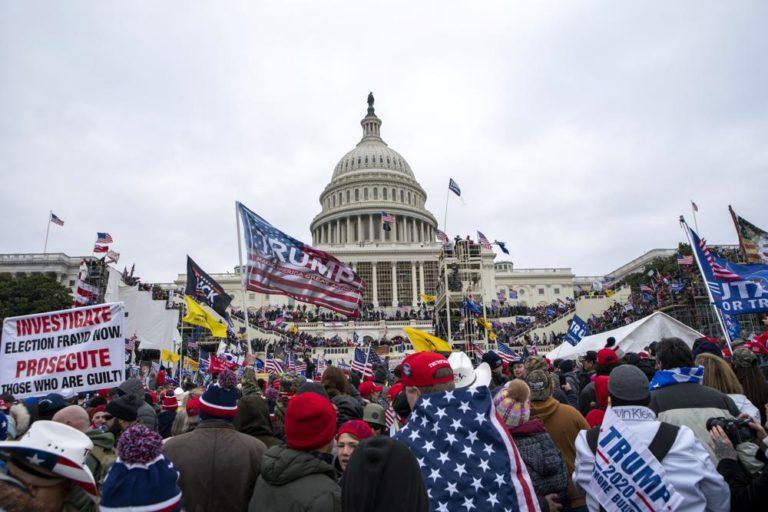
(Ken Silva, Headline USA) Blaze Media journalist Steve Baker is facing charges for entering the Capitol to document events during the Jan. 6, 2021, uprising.

Baker’s impending charges were reported Friday by Stephen Horn, another journalist who was charged over his Jan. 6 activities. Horn said the Justice Department asked Baker to turn himself in this week.

Baker said he will not take a plea deal.

“Misdemeanors? For what? Terrorism? Is there such a thing as misdemeanor terrorism charges? 60 other journalists entered the Capitol on J6. Do we all have to see the world through the same prism?” he asked.

Baker has been on the forefront of exposing anomalies and likely government malfeasance on Jan. 6. Recently, he reported that a Capitol Police Special Agent gave false testimony at the Oath Keepers’ sedition trial last year.

Baker is now at least the second reporter to be charged for—by all accounts—purely journalistic activities. He joins Horn, who was convicted of four misdemeanor charges in September for entering the Capitol while filming the Jan. 6 protests/riots. Horn received 12 months of probation last month.

Headline USA understands there are more than 20 other reporters who, like Horn and Baker, entered the Capitol on Jan. 6, but aren’t facing charges. Headline USA reviewed some of their names, but is withholding them so they won’t be targeted, too.

Along with Horn and Baker, the DOJ also charged Infowars host Owen Shroyer with disorderly conduct and entering a restricted area of Capitol grounds.

In Shroyer’s case, he violated terms of a deferred prosecution agreement stemming from a December 2019 arrest for shouting during a House Judiciary Committee impeachment hearing. Shroyer’s deferred prosecution agreement entailed him agreeing to do community service and follow certain conditions, such as not engaging in disorderly or disruptive conduct on Capitol grounds.

While Shroyer may not have been prosecuted solely for his journalism, the DOJ nevertheless successfully pushed for a jail sentence for him—even though he never entered the Capitol. In doing so, DOJ prosecutors cited his First Amendment-protected activity as a reason to put him in jail.

“The First Amendment is no bar to the Court’s consideration of Shroyer’s words and actions at sentencing,” the DOJ argued.

Ken Silva is a staff writer at Headline USA. Follow him at twitter.com/jd_cashless.

Patriot Front Leader Arrested for Marching w/ Torch at Charlottesville in 2017

(Ken Silva, Headline USA) Patriot Front leader Thomas Rousseau, who more than six years ago participated in the infamous 2017 torch march in Charlottesville, Virginia, has been charged with a little-used law that makes it a crime to burn objects with intent to intimidate.

The white nationalist group announced Rousseau’s arrest Sunday on Telegram.

“The arrest comes after a nearly 7-year witch hunt by politically motivated prosecutors, stemming from the events that transpired at the Unite the Right rally in 2017,” the group said.

Documentarian Ford Fischer recirculated footage he took of Rousseau nearly seven years ago at Charlottesville.

Rousseau marks the latest in a string of arrests of the Charlottesville torch marchers that began last year.

The previous Charlottesville D.A., Robert Tracci, had declined to press charges. But his replacement, the Soros-backed Charlottesville district attorney, Jim Hingeley, made it a campaign promise to prosecute torch-carriers, and there is no statute of limitations for felonies in Virginia.

Of the handful of torch-marchers to be charged by Hingeley’s office, four of them have been convicted and two sentenced to six-month jail stints. At least four other defendants could have trials this year.

Rousseau and Charlottesville

When he marched at Charlottesville in 2017, Rousseau was a member of Vanguard America, a white nationalist organization that was partner of a larger coalition called the Nationalist Front. Other groups in the Nationalist Front included the National Socialist Movement and the League of the South—the former being an FBI front group, and the latter also being deeply infiltrated by the FBI.

Vanguard America is also the group James Alex Fields Jr. was seen with the night after the torch march. Later that day, Fields would drive his car into a crowd of counter-protestors, killing Heather Heyer and injuring several others.

Vanguard America has since mutated into the Patriot Front under Rousseau’s leadership.

Rousseau recently just had charges dropped against him in a conspiracy to riot case in Idaho.

The judge’s dismissal stems from the incident in June 2022, when 31 members of the right-wing nationalist group were arrested after someone reported seeing people loading into a U-Haul van like “a little army” at a hotel parking lot in Coeur d’Alene. The members were accused of planning to riot at a nearby LGBT event.

Five of the Patriot Front defendants were convicted of misdemeanor charges of conspiracy to riot last July. However, a judge began tossing the prosecutions a month later after finding that the government had acted in “bad faith.”

“The State has engaged in bad faith in its dilatory disclosures, non-disclosures, failure to comply with Court Orders, failure to appear in Court when required, all the while insisting it has provided everything to Defense Counsel and is prepared for trial,” the judge said last August.

The Patriot Front members convicted from Idaho have filed appeals.

Ken Silva is a staff writer at Headline USA. Follow him at twitter.com/jd_cashless.

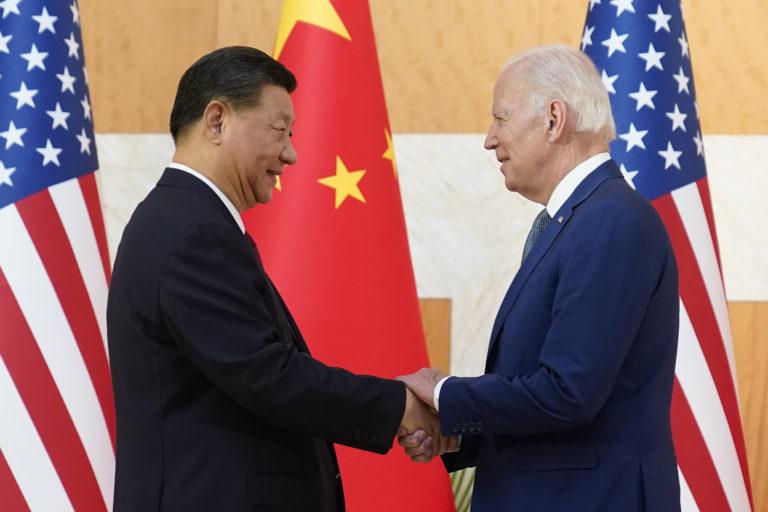
Master of Geography? Biden Calls China’s Xi Jinping ‘Head of Russia’

(Luis Cornelio, Headline USA) President Joe Biden—who has repeatedly claimed that his mental acuity is intact—stumbled over his words during a speech at the Governors Ball on Sunday, this time falsely calling Xi Jinping “the head of Russia.” 

The Biden gaffe occurred as he reflected on his foreign policy experience, even attempting to joke about his age. “I’ve been around. I know I don’t look it,” he claimed before botching his Xi story.

“I’ve spent a lot of time with Xi Jinping, somebody whom I have a great deal of differences with,” he said. “When I was vice president, my president told me that he wanted me to know Xi Jinping because it was clear he was going to be head of Russia – of China.”

This time, the White House did not stealth-edit the transcript of Biden’s remarks. However, the confusion regarding which country Xi ruled was not the sole misstep in Biden’s speech. 

Biden repeated the demonstrably false claim that he “traveled 17,000 miles” with Xi after former President Barack Obama tasked him to meet the Chinese leader, then vice president of China.

“So, I traveled 17,000 miles with him throughout the country — our country and — and in — in China, as well,” Biden specifically claimed. However, even Glenn Kessler, the Washington Post’s fact-checker—whose leanings aren’t particularly conservative—debunked this claim. 

Giving Biden three Pinocchios for the made-up figure, Kessler reported that Biden has met Xi several times over the years, but he had never traveled with the Chinese leader for such a long distance. “Biden is using a figure that cannot be verified in a misleading way,” Kessler wrote.

Biden also stumbled over his words while attempting to recite a quote from former President Abraham Lincoln—whose ties to the Biden family recently surfaced as the 16th president pardoned Biden’s great-great-grandfather.

“[Lincoln] said, ‘We’re not enemies, but we’re friends.’ This is in the middle of — this is in the — in the part of the Civil War.  He said, “We’re not enemies, but we’re friends.  We must not be enemies,” Biden claimed.

However, Biden’s version of the quote is a tad inaccurate. Lincoln’s exact remarks during his first inaugural, according to the Library of Congress, were: “I am loth to close. We are not enemies, but friends. We must not be enemies. Though passion may have strained, it must not break our bonds of affection.”

Shortly thereafter, Biden appeared visibly confused, asking an aide, “I’m right here?”