Reporter Sues Michigan AG for Hiding Whitmer Kidnap Conspiracy Evidence

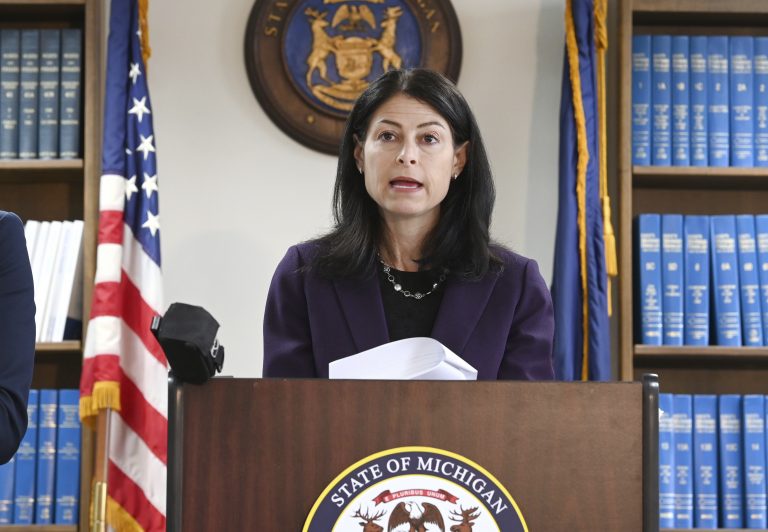
(Ken Silva, Headline USA) Criminal proceedings against the men accused of plotting to kidnap Michigan Gov. Gretchen Whitmer have concluded with the exception of a few pending appeals, but government officials are still hiding evidence from the public.

Independent journalist Eric VanDussen filed a lawsuit over the matter Thursday, claiming that state prosecutors withheld an unknown number of Antrim County trial exhibits, which he requested last September. VanDussen previously successfully sued for Whitmer kidnap records last year, with a judge ruling last August that evidence introduced in open court is subject to public disclosure.

But after the Antrim County trial concluded last September with three men exonerated on all counts, Michigan still withheld some of the evidence form that matter, according to VanDussen.

The reporter also said Michigan is making unlawful redactions to the records it’s releasing.

“Defendant unlawfully redacted the public records requested by Plaintiff and improperly excised information and data from various photographs, video recordings, audio recordings, transcripts and other exhibits,” he said.

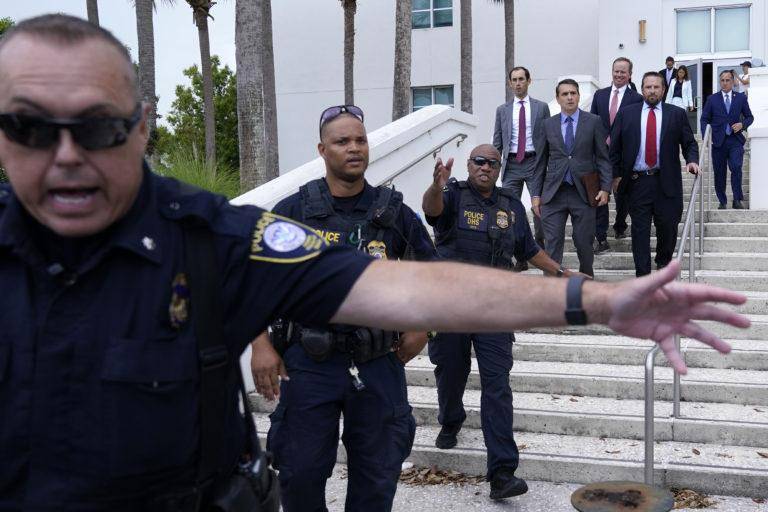
For example, the state blurred out the face of FBI informant Dan Chappel in a photo released, even though Chappel’s face was visible in open court.

The government blacked out the face of FBI informant Dan Chappel before releasing it to the public.

VanDussen argued that blurring the FBI informant’s face violated a previous judge’s order to disclose the exact same evidence presented in court. “If the exhibit did not have redactions or deletions when produced in open court, they may not now have redactions or deletions added to the exhibit before production to plaintiff,” the judge said last August.

VanDussen’s lawsuit follows a bombshell investigation he and reporter Trevor Aaronson published earlier this month, in which they revealed a trove of previously unpublished FBI records about the Whitmer kidnap case.

Earlier this month, Headline USA also asked Rep. Dan Bishop, R-N.C., about congressional efforts to obtain secret Whitmer records.

Even though a case such as the FBI’s Whitmer kidnap conspiracy is now closed, Bishop said he expects stiff resistance from the FBI if Congress tried to obtain records from that matter.

“I think if we subpoenaed records, I wouldn’t be surprised to see the FBI resist, even though the case is closed. But certainly, that ought to be looked into,” Bishop said of the Whitmer case.

Ken Silva is a staff writer at Headline USA. Follow him at twitter.com/jd_cashless.

Gold Rally, Geopolitical Risks & U.S. Economy: Insights from Financial Experts

(Money Metals News Service) In an insightful interview, Mike Maharrey of Money Metals delved into the intricacies of the current financial landscape with Greg Weldon, CEO of Weldon Financial, known affectionately in the industry as the “Gold Guru.” 

Their discussion shed light on a multitude of factors affecting the global and U.S. economies, from the recent surge in gold prices to the underlying currents shaping the future of finance.

The interview kicked off with an analysis of the recent rally in gold prices, which have hit record levels in both spot and futures markets. This surge comes amid widespread expectations of Federal Reserve rate cuts, despite the prevalent belief that inflation has been effectively managed. However, Weldon suggests that the rally in gold is not just a reaction to immediate economic policies but also reflects deeper concerns including the debasement of paper currencies globally and mounting geopolitical tensions.

Weldon detailed the pressing geopolitical risks emanating from the strategic maneuvers of Russia and China, which have significant implications for the U.S. and the broader global economy. He pointed out the staggering global debt level, now exceeding $307 trillion, underscoring the severity of the financial imbalance facing nations worldwide.

The conversation then turned to domestic issues, focusing on misleading U.S. employment data and the alarming state of consumer debt. Weldon cited specific figures, noting an increase in unemployment by over 500,000 in the last year and a significant rise in part-time employment at the expense of full-time jobs. Furthermore, consumer debt levels have skyrocketed, with credit card debt alone surpassing the one trillion dollar mark and interest rates on this debt reaching an unprecedented 28-30%.

The federal government’s borrowing habits were another point of concern, with the fiscal 2024 deficit nearing a trillion dollars only five months into the year. The discussion highlighted the unsustainable nature of the U.S. government’s financial strategy, particularly the excessive amounts spent on servicing the national debt.

Weldon and Maharrey did not shy away from the contentious issue of social security within the broader context of national debt concerns. They criticized the current system, likening it to a Ponzi scheme due to its unsustainable structure, whereby younger generations fund the benefits of the retired, with little hope of seeing any returns on their contributions.

On the topic of inflation and interest rates, Weldon expressed apprehension about the emerging trend towards higher rates, a reversal from the 40-year trend of decreasing rates. This shift poses significant challenges to economic stability and could herald a new era of financial hardship if not managed prudently.

Questions and Answers

In the detailed interview between Mike Maharrey and Greg Weldon, several key questions and answers stood out, addressing the nuances of the current economic and geopolitical landscape:

What do you think is behind the recent gold rally?

Answer: Greg Weldon suggests that while anticipation of Fed rate cuts and the perceived end of inflation might be immediate factors, the rally is also deeply rooted in global issues. He highlights the debasement of paper currencies worldwide and geopolitical tensions, particularly involving Russia and China. Weldon underscores the importance of the dollar’s stability in this context, suggesting that if the dollar starts to depreciate significantly, it could lead to a more dramatic rally in gold prices.

Can you delve into the concept of de-dollarization and its implications?

Answer: Weldon discusses the tangible fear surrounding de-dollarization, especially given the geopolitical maneuvers by countries like China. He points out the anxiety among wealthy individuals about the stability of their assets and the dollar’s future role. Weldon explains that the shift away from the dollar, driven by geopolitical strategies and economic policies, poses a real risk to the U.S. economy and could lead to a decline in the dollar’s value.

What’s the real story behind the current job market in the U.S.?

Answer: Weldon provides a stark contrast to the optimistic employment figures often presented. He mentions a significant increase in unemployment and a rise in part-time jobs at the expense of full-time employment. Weldon emphasizes the misleading nature of headline employment figures and points to a stressed consumer base, struggling with high debt levels and insufficient wage growth.

How significant is the issue of consumer debt in the U.S.?

Answer: Weldon characterizes the level of consumer debt as alarmingly high, noting that people are borrowing at historically high-interest rates. He warns of the impending tightening in consumer credit, particularly affecting credit cards and auto loans, which could exacerbate the financial strain on U.S. households.

How does the federal government’s borrowing affect the economy?

Answer: The conversation highlights the unsustainable borrowing habits of the federal government, with the fiscal 2024 deficit nearing a trillion dollars only partway through the fiscal year. Weldon points out the massive expenditure on interest payments and the problematic nature of current fiscal policies, particularly their impact on future generations.

What are your thoughts on the current state and future of social security?

Answer: Weldon criticizes the current social security system as fundamentally flawed and unsustainable. He describes it as a Ponzi scheme where younger generations fund retirees’ benefits with little hope of receiving their own. He calls for a candid discussion and overhaul of the system to prevent future financial calamities.

Conclusion

These questions and answers from the interview provide a glimpse into the critical economic and financial issues discussed by Maharrey and Weldon, offering insights into the challenges and dynamics shaping the current and future economic landscape.

The interview concluded with a focus on the shifting dynamics of global currencies and the role of gold as a stable investment option. Weldon elaborated on the potential for de-dollarization, particularly by economic powerhouses like China, which could drastically impact the value of the U.S. dollar and, by extension, the global economy. He advocated for gold as a safeguard against these uncertainties, emphasizing its enduring value amidst the declining purchasing power of paper currencies.

Maharrey and Weldon’s discussion offered a comprehensive overview of the current financial environment, highlighting the complexities and challenges facing investors and policymakers alike. Their insights underscore the importance of understanding the broader economic and geopolitical factors at play, beyond the immediate market fluctuations, for anyone looking to safeguard and grow their wealth in these turbulent times.


To listen to this interview, CLICK HERE.

Inflation Is Still Hot and the Fed Isn’t Willing to Tame It

(Mike Gleason, Money Metals Exchange) As inflation data comes in hotter than expected, markets are reassessing the outlook for rate cuts. 

This week’s Consumer Price Index report showed the CPI rising 0.4% in February. That was the largest increase since last September. Higher gas prices and housing costs were major contributors. 

On an annual basis, the CPI is now rising at a 3.2% rate – well above the Federal Reserve’s stated 2% inflation target. 

Following the CPI release, the Producer Price Index also came in hotter than expected. 


  • Yahoo Finance Report: Hotter-than-expected inflation data continues to dent hopes that the Federal Reserve will cut interest rates in the coming months. (With) wholesale prices jumping 0.6% on the month, is higher than the 0.3% of a percent forecast.
  • CNBC Report: February PPI headline number expected to be up 3/10 of a percent. Zoom, zoom, zoom, up double. Up 6/10 of a percent. That would be the hottest going back to, well, equals July of last year. To find a higher number, you’re going back to June of ’22.
  • CBS News Report: Inflation came in just a bit hotter than expected in February. The Labor Department says consumer prices are up more than 3% over the last year. They increased 4/10 of a percent from January to February, which means it’s up slightly. Housing and gasoline costs contributed to more than 60% of those increases.


Far from being in a clear trend lower, inflation is proving to be sticky. It may even be on a path higher in the months ahead. Recent price action in the gold market and commodities markets would suggest that higher manufacturing and consumer costs are coming down the pipeline.

A downturn in the U.S. dollar on foreign exchange markets could exacerbate price inflation.

For years, Federal Reserve chairman Jerome Powell has publicly declared an inflation target of 2%. But some voices in Congress and within the Fed itself are calling for that target to be lifted. Raising interest rates and restricting currency supply growth in order to tame inflation would inflict too much pain on borrowers and the broader economy, they say.

Rather than admit the Fed can’t or won’t necessarily meet its 2% inflation objective, Powell seems to be subtly redefining the objective. He is talking about progress toward the 2% target as being sufficient to justify a shift toward interest rate cuts and looser monetary policy. 

Two percent inflation is something that may or may not actually be achieved at some indefinite time in the future. But Fed policymakers can always insist they’re on their way to achieving it…someday.

In the meantime, investors shouldn’t count on inflation ever coming down sustainably to as low as 2%. And even if it does according to official calculations, the reported inflation rate may not reflect the full extent of real-world inflation as experienced by typical households.

The decline in the U.S. dollar’s purchasing power will ultimately be reflected in the gold price. Gold’s performance may not perfectly match inflation in any given year. But over the very long run, the precious metal can be counted on to retain its purchasing power – which means its price will continue to go up in terms of depreciating Federal Reserve notes. 

Of course, gold recently broke out to new record nominal highs above $2,200 an ounce. This week the monetary metal pulled back from those highs on concerns that hot inflation may delay expected rate cuts from the Fed.

It’s possible that we could see more backing and filling in the days ahead. Following a major breakout such as we’ve seen, it is normal and healthy for former resistance levels to get revisited before the uptrend continues.

Schumer Attempts to Meddle in Israel’s Democratic Elections

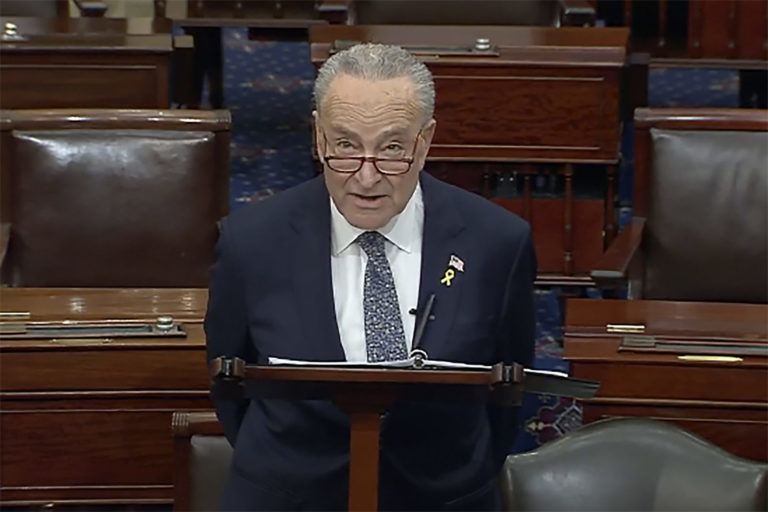
(Headline USA) Senate Majority Leader Chuck Schumer on Thursday waged an unprecedented attack on one of America’s closest allies by attempting to meddle in its democratic elections.

”Israeli people are being stifled right now by a governing vision that is stuck in the past,” he said.

The bombastic senator—who previously fueled controversy for threatening physical violence against Supreme Court judges—called on Israel to hold new elections, saying he believed Israel’s conservative Prime Minister Benjamin Netanyahu had “lost his way.”

The rhetoric followed not long after Israeli officials publicly condemned the Biden administration, accusing them of a suspected coup attempt.

Using Schumer, who is Jewish, likely helped to mitigate some of the political liability that Biden otherwise would have faced from Jewish voters at home, even as polls indicate that his support among the once reliably Democrat voting bloc has fast eroded.

A recent poll of Jews in deep-blue New York indicated that a majority supported Republican presumptive nominee Donald Trump, whose support for Israel was unwavering as president.

Biden, meanwhile, has attempted to hedge his bets while balancing the demands of radical Muslims, on whose support he also remains dependent in key swing states including Michigan and Minnesota, where large populations have recently signaled there displeasure during the primaries by voting “uncommitted” in protest.

Attempting to scapegoat Netanyahu as an obstacle to peace in the region may be the only way that Biden and other feckless Democrats can remain noncommittal even while it is the terrorist organization Hamas that remains the true obstacle to peace.

Schumer accused the prime minister—a legendary war hero—of putting himself in a coalition of far-right extremists.

“[A]s a result, he has been too willing to tolerate the civilian toll in Gaza, which is pushing support for Israel worldwide to historic lows,” Schumer claimed. “Israel cannot survive if it becomes a pariah.”

Schumer says Netanyahu, was one of several obstacles in the way of the two-state solution pushed by Democrats.

Netanyahu “has lost his way by allowing his political survival to take precedence over the best interests of Israel,” Schumer claimed.

Israelis argue that following the Oct. 7 massacre that killed some 1,200 innocent citizens and took hostage another 200, many of whom remain in captivity, the country’s national security depended on Hamas no longer existing as the government in control of the Gaza region. The Netanyahu government has said it has no intention of occupying the territory once its mission of capturing the terrorists and freeing the hostages is achieved.

The Democrat leader in his speech also blamed right-wing Israelis, Hamas and Palestinian Authority President Mahmoud Abbas. Until they are all removed from the equation, Schumer said, “there will never be peace in Israel and Gaza and the West Bank.”

However, he appeared to offer no solutions for achieving that outcome.

The United States cannot dictate the results of an election in Israel, Schumer said, but “a new election is the only way to allow for a healthy and open decision-making process about the future of Israel, at a time when so many Israelis have lost their confidence in the vision and direction of their government.”

At the White House, national security spokesman John Kirby declined to weigh in on Schumer’s remarks, saying the White House is most focused on getting a temporary cease-fire in place.

“We know Leader Schumer feels strongly about this and we’ll certainly let him speak to it and to his comments,” Kirby said. “We’re going to stay focused on making sure that Israel has what it needs to defend itself while doing everything that they can to avoid civilian casualties.”

Israeli ambassador Michael Herzog called the speech “counterproductive to our common goals.”

“Israel is a sovereign democracy,” Herzog tweeted. “It is unhelpful, all the more so as Israel is at war against the genocidal terror organization Hamas, to comment on the domestic political scene of a democratic ally.”

The speech also drew a swift reprisal from Republicans. Senate Republican Leader Mitch McConnell, R-Ky., said on the Senate floor immediately after Schumer’s speech that “Israel deserves an ally that acts like one” and that foreign observers “ought to refrain from weighing in.”

The Democratic Party has an anti-Israel problem, McConnell said. “Either we respect their decisions or we disrespect their democracy,” he said.

And at a House GOP retreat in West Virginia, House Speaker Mike Johnson, R-La., called Schumer’s speech “inappropriate.”

“It’s just plain wrong for an American leader to play such a divisive role in Israeli politics while our closest ally in the region is in an existential battle for its very survival,” the Republican speaker said.

Netanyahu has long had a cozy relationship with Republicans in the United States, most notably speaking at a joint session of Congress in 2015 at the invitation of GOP lawmakers while then-President Barack Obama directly undermined Israeli security by engaging in nuclear negotiations with Iran.

Obama notably snubbed Netanyahu and offered him an historically chilly reception, the first president to signal a major public rift in the alliance that had existed since Israel’s 1948 founding.

Just this week, Netanyahu was invited to speak to Republican senators at a party retreat. But Herzog took his place due to last minute scheduling issues, according to a person familiar with the closed-door meeting.

It is unclear how Schumer’s unusually direct call will be received in Israel, where the next parliamentary elections are scheduled for October 2026. Prior to the Oct. 7 massacre, there already were suspicious of U.S. interference and efforts to foment a color revolution by stirring up leftist dissent following a similar model to the attacks waged on former President Donald Trump during his time in office.

Without overtly attacking him, the Biden administration has made clear where it stands through strategic passive-aggression

In a tone-deaf hot-mic moment while speaking to lawmakers after his State of the Union address, Biden promised a “come to Jesus” moment with the Jewish leader.

And Vice President Kamala Harris, Schumer and other lawmakers met last week in Washington with Benny Gantz, a member of Israel’s War Cabinet and rival of Netanyahu—a visit that drew a rebuke from the Israeli prime minister.

Gantz joined Netanyahu’s government in the War Cabinet soon after the Hamas attacks. But he is expected to leave the government once the heaviest fighting subsides, signaling the period of national unity has ended.

Schumer claimed that as the highest ranking Jewish elected official in the United States, he felt an obligation to speak out. He said his last name derived from the Hebrew word Shomer, or “guardian.”

“I also feel very keenly my responsibility as Shomer Yisroel—a guardian of the People of Israel,” he insufferably postured.

Schumer said that if Israel tightens its control over Gaza and the West Bank and creates a “de facto single state,” then there should be no reasonable expectation that Hamas and their allies will lay down arms. It could mean constant war, he said.

“As a democracy, Israel has the right to choose its own leaders, and we should let the chips fall where they may,” Schumer said. “But the important thing is that Israelis are given a choice.”

Adapted from reporting by the Associated Press

BREAKING: Satanic Pedophile Strikes Plea Deal w/ DOJ

(Ken Silva, Headline USA) Richard “Rabid” Densmore, a member of the Satanic pedophile cult 764, has agreed to plea guilty to one count of sexual exploitation of a minor—a crime that carries a 15- to 30-year prison sentence.

Densmore originally faced two counts of child sexual exploitation, one count of coercion and enticement, and two counts of possessing child pornography.

His charges stem from a complaint in August 2022 that a Discord user named “Rabid” was grooming minors to create child pornography and engage in self-harm. The FBI identified Rabid as being Densmore.

According to Densmore’s plea agreement, which was filed Friday, he sent a message to “Jane Doe,” a female under the age of 18, asking for a picture of her breasts with his username, “Rabid,” written on them. He also sent someone referred to as “Person A” a form of Discord currency called Nitro, in an effort to persuade Jane Doe to send the requested image.

“On September 30, 2022, after Jane Doe expressed reservations about sending the requested image, [Densmore] sent a Discord message to another user, Person A, who had an online relationship with Jane Doe,” the plea agreement states.

“[Rabid] sent Person A [the] Nitro currency to persuade him to have Jane Doe send the requested image.”

At the convincing of Person A, Jane Doe allegedly sent Densmore a video over the internet, in which Jane Doe was nude with her vagina visible and “Rabid” written on her chest.

The plea agreement does not mention other allegations against Densmore that were included in earlier court filings. According to prosecutors, he had another girl cut his nickname, “Rabid,” on her forehead.

“A minor victim reported to investigators that she met Rabid on Discord in or around August 2022. She was 15 years old at the time and told Rabid that she was a minor. The girl knew that Rabid’s first name was ‘Richard.’ Rabid told her that he created a Discord server or chat room called ‘Sewer,’” the DOJ said in an earlier motion.

“The primary purpose of Sewer was to stream child pornography and self-harm content. Rabid told the girl to solicit people to stream content on Sewer. The girl streamed a video of herself on Sewer in which she inserted an ice cube into her vagina.”

The FBI executed a search warrant on Densmore’s home last February, finding child porn and other material related to the 764 cult.

For some reason, Densmore was a free man for another 11 months.

Then, after he was arrested on Jan. 29, a judge let him loose on bail. Densmore’s bail was revoked after the DOJ filed an emergency motion about the matter.

A date for Densmore’s sentencing has yet to be scheduled.

Densmore is one of a slew of 764 members to be arrested.

Other 764 Cases

In November 2021, the FBI arrested 764 member Angel Almeida. Details of Almeida’s 764 activities weren’t made public until records about his case were unsealed late last year.

More recently, the Justice Department filed charges in December against another 764 member, Kalana Limkin, for allegedly promoting child pornography, sexual extortion, and trafficking, animal cruelty and self-harm of minors.

Additionally, last month U.S. Marshals arrested 764 member Kyle Spitze on child porn charges. Spitze’s disturbing story can be read here.

And more recently, Canadian police announced last month the arrest of a 14-year-old male who was affiliated with 764.

According to the Justice Department and others, 764 is linked to the Order of Nine Angles, a terroristic cult that seeks to corrupt the youth with the end goal of accelerating the collapse of Western society.

The 764 cult “represents a radical shift in the group to specifically target children and use [child porn] and videos depicting animal cruelty, self-harm, and other acts of violence to accelerate chaos in society,” the DOJ said in recent court filings.

Ken Silva is a staff writer at Headline USA. Follow him at twitter.com/jd_cashless.

Bragg’s Office Agrees to Delay Trump Trial for a Month Due to Possible Exculpatory Evidence

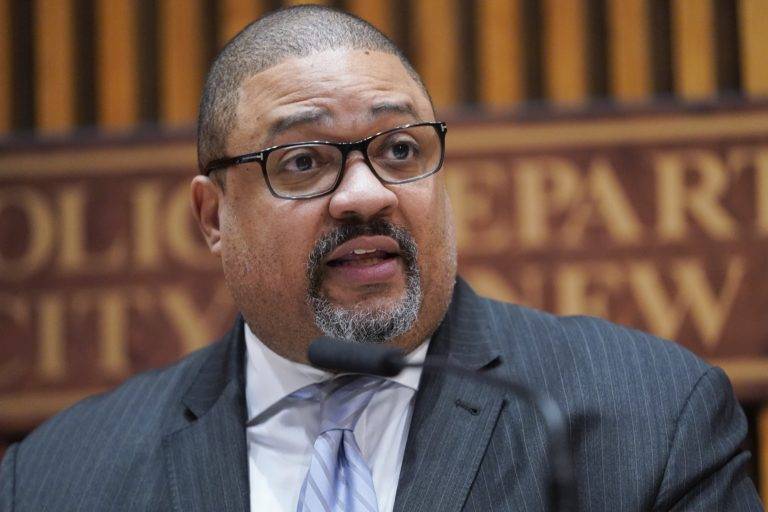
(Headline USA) Following revelations that federal prosecutors had withheld tens of thousands of pages of potentially exculpatory material related to an alleged hush-money investigation from former President Donald Trump’s 2016 campaign, prosecutors in the office of Manhattan District Attorney Alvin Bragg agreed to a 30-day delay, less than two weeks before the trial’s expected March 25 start date.

Prosecutors said in a court filing Thursday they were open to delaying the start of the lawfare trial by a month “in an abundance of caution” to give the former president’s lawyers time to review evidence they only recently obtained from the previous federal investigation into the matter, but that they would fight the defense’s push for a longer delay.

Judge Juan Manuel Merchan did not immediately rule.

Trump’s legal team said it has received tens of thousands of pages of evidence from the U.S. attorney’s office in Manhattan in the last two weeks, including records about former Trump lawyer-turned-prosecution witness Michael Cohen that are “exculpatory and favorable to the defense.”

Headline USA reached out to Cohen via text message. However, he declined to comment on the developments.

Prosecutors claimed most of the newly turned-over material was “largely irrelevant to the subject matter of this case,” though some records were pertinent.

Trump’s lawyers want a 90-day delay, but they’ve also asked Merchan to dismiss the case entirely, alleging the last-minute disclosures amounted to prosecutorial misconduct and violated rules governing the sharing of evidence. That process, called discovery, is routine in criminal cases and is intended to help ensure a fair trial.

Prosecutors contend Trump’s lawyers caused the problem by waiting until Jan. 18 to subpoena the U.S. attorney’s office for the full case file—a mere nine weeks before the scheduled start of jury selection.

Bragg’s office said it requested the full file last year, but the U.S. attorney’s office only turned over a subset of records. Trump’s lawyers received that material last June and had ample time to seek additional evidence from the federal probe, the D.A.’s office said.

Short trial delays because of issues with evidence aren’t unusual, but any delay in a case involving Trump would be significant, with trial dates in his other criminal cases up in the air and Election Day less than eight months away.

The defense has also sought to delay the trial until after the Supreme Court rules on Trump’s presidential immunity claims, which his lawyers say could apply to some of the allegations and evidence in the Manhattan case. The Supreme Court is scheduled to hear oral arguments April 25.

Arlo Devlin–Brown, a former chief of public corruption for the U.S. attorney’s office in Manhattan, said prosecutors may be acquiescing to a delay because they recognize the amount of material is substantial and want to stake out a position they think Merchan will find reasonable.

“The Trump team likely views this as quite a positive on two fronts: They’re getting a trove of documents, some of which may be useful, and they’re getting more time,” said Devlin–Brown, who is not involved in the case.

Since March 4, Trump’s lawyers have received more than 100,000 pages of records from the U.S. attorney’s office, including a batch of 31,000 pages on Wednesday, according to a court filing. More material is expected to be turned over in the coming days.

The case centers on allegations that Trump falsified his company’s records to hide the true nature of payments to Cohen, who paid porn actress Stormy Daniels $130,000 during the 2016 presidential campaign to suppress her claims of an extramarital sexual encounter with Trump years earlier.

Trump pleaded not guilty last year to 34 felony counts of falsifying business records and has denied having a sexual encounter with Daniels. His lawyers argue the payments to Cohen were legitimate legal expenses and not part of any cover-up.

Legal experts have noted that Bragg—a radical, George Soros-funded prosecutor who campaigned on the promise of pursuing the Trump case—has the weakest of all of the lawfare attacks on the presumptive GOP presidential nominee.

The charges normally would have been a misdemeanor and thus would have surpassed their statute of limitations. In order to resurrect it, Bragg had to upgrade it beyond his own authority to a federal-level felony charge.

While it would likely be dismissed under normal circumstances, Manhattan judges, including Merchan, have shown a pattern of extreme prejudice against Trump and a willingness to stretch the law to justify the desired political outcome—namely, preventing him from reelection.

Trump has repeatedly sought to postpone his criminal trials while he campaigns to retake the White House.

“We want delays,” Trump told reporters as he headed into a Feb. 15 hearing in New York case. “Obviously I’m running for election. How can you run for election if you’re sitting in a courthouse in Manhattan all day long?”

At that hearing, prosecutor Matthew Colangelo complained that Trump was attempting to use his complicated legal calendar “to evade accountability” by seeking delays.

But Manhattan prosecutors’ new willingness to bump the trial comes about a week after another document dump prompted them to abandon another high-profile case in the midst of a trial—a fact Trump’s lawyers hardly missed.

Three men were abruptly cleared March 6 of an alleged scheme involving the possession of handwritten drafts of lyrics to “Hotel California” and other Eagles classics. The startling turn came after prosecutors and defense lawyers were suddenly given 6,000 pages of material involving band co-founder Don Henley, his lawyers and associates.

It happened after Henley, the prosecution’s key witness, apparently decided late in the game to give up his right to keep communications with his attorneys private. He and others had already testified. After defense lawyers said the material belatedly raised questions they could no longer ask him and other witnesses, prosecutors agreed to drop the case.

Trump’s lawyers drew a parallel. They wrote that in his case, too, prosecutors “should have recognized that they do not have a complete understanding of their witnesses and that material existed that they needed to collect.”

The deluge of evidence in Trump’s case pertains to the federal investigation that sent Cohen to prison.

After a decade of working for Trump, Cohen broke with him in 2018 and soon pleaded guilty to campaign finance violations related to the hush-money payments, making false statements on a bank loan application, evading taxes related to his investments in the taxi industry and lying to Congress.

Cohen went to prison for about a year before being released to home confinement because of the COVID-19 pandemic. He became an outspoken Trump foe and is poised to be a key prosecution witness against Trump. Trump and his lawyers, meanwhile, contend Cohen is completely untrustworthy.

In their case against Cohen, federal prosecutors said the hush-money payments were made to benefit Trump and occurred with his knowledge—but they stopped short of accusing Trump of directly committing a crime.

The Justice Department’s Office of Legal Counsel, which provides legal advice and guidance to federal agencies, has maintained that a sitting president cannot be indicted. Federal prosecutors didn’t revive their investigation once Trump left the White House.

Adapted from reporting by the Associated Press

Report Details the CIA’s Covert Psyop Campaign against China

(Ken Silva, Headline USA) Reuters published an article Thursday about how then-President Donald Trump launched a covert CIA propaganda campaign against China in 2019—a campaign that’s likely still continuing to this day.

According to Reuters, the CIA created a small team of operatives who used bogus internet identities to spread negative narratives about the Chinese Communist Party while leaking disparaging intelligence to overseas news outlets.

“The CIA team promoted allegations that members of the ruling Communist Party were hiding ill-gotten money overseas and slammed as corrupt and wasteful China’s Belt and Road Initiative, which provides financing for infrastructure projects in the developing world,” Reuters reported.

“The efforts within China were intended to foment paranoia among top leaders there, forcing its government to expend resources chasing intrusions into Beijing’s tightly controlled internet.”

The program was reportedly the result of a Trump order, authorizing the CIA to take action not only in China, but also in countries around the world where the United States and China are competing for influence.

According to Reuters, Matt Pottinger, a senior National Security Council official at the time, crafted the authorization, which cited Beijing’s alleged use of malign influence, allegations of intellectual property theft and military expansion as threats to U.S. national security.

Two intelligence historians suggested that the program is still operational—telling Reuters that when the White House grants the CIA covert action authority, through an order known as a presidential finding, it often remains in place across administrations.

Reuters said Trump’s program is reminicnet of the CIA’s Cold War-era operations against the Soviet Union. During that era, the CIA spammed Communist countries with news articles and radio broadcasts critical of their governments.

“In the 1950s, for example, the CIA created an astrological magazine in East Germany to publish foreboding predictions about communist leaders, according to declassified records,” Reuters noted.

Paul Heer, a former senior CIA analyst, reportedly cautioned that the program could backfire.

Heer said that China could tell its citizens: “Look at the United States intervening in the internal affairs of other countries and rejecting the principles of peaceful coexistence.”

“And there are places in the world where that is going to be a resonant message,” he said.

Ken Silva is a staff writer at Headline USA. Follow him at twitter.com/jd_cashless.

Fla. Judge Denies Trump’s ‘Unconstitutional Vagueness’ Claim but Still Open to Tossing Case

(Headline USA) In a day that saw presumptive GOP presidential nominee Donald Trump’s lawyers working overtime, with major developments in three of his four criminal lawfare trials, the one in which Trump most hoped for a big win wound up being a mild disappointment.

U.S. District Judge Aileen Cannon on Thursday rejected one bid from Trump to throw out out his classified documents criminal case on the basis of “unconstitutional vagueness.”

However, opinions differed as to whether Cannon remained open to a second motion from Trump’s legal team concerning the issue of “selective prosecution,” with conservative investigative reporter Julie Kelly projecting a dismissal.

Kelly laid out her own argument in a lengthy Twitter thread noting Cannon’s frequent references to key details in the Robert Hur report that outlined the somewhat parallel classified documents case, for which President Joe Biden was not charged.

“Cannon won’t dismiss the case based on the motions debated today–vagueness of Espionage Act and protection under the Presidential Records Act,” Kelly tweeted. “But it’s very likely she will dismiss the case based on selective prosecution, a motion still pending before her.”

Cannon issued a two-page order saying that though the Trump team had raised “various arguments warranting serious consideration,” a dismissal of charges was not merited based on the vagueness argument.

During the hearing, which lasted more than three-and-a-half hours, Cannon, who was appointed to the bench by the former president said at one point that a dismissal of the indictment would be “difficult to see” and that it would be “quite an extraordinary” step to strike down an Espionage Act statute that underpins the bulk of the felony counts against Trump.

Nonetheless, the fact that cases against Biden and former President Bill Clinton both were summarily dismissed thus strengthens Trump’s argument that special counsel Jack Smith was a political appointee with a mandate to target Trump in order to derail his campaign, not because of any national security threat he posed.

In fact, Tur’s report reveals that the flagrancy and callous disregard with which Biden mishandled classified documents was far more egregious than Trump’s offense, and took place over a longer period of time, when he clearly and unambiguously lacked any authority to be in possession of the materials.

Thursday’s ruling from Cannon was a modest win for  Smith’s team, but it left unanswered questions over when the case might proceed to trial.

Cannon heard arguments on March 1 on when to schedule a new trial date—it was initially set for May 20—but has yet to announce one and gave no indication Thursday on when she might do so.

Prosecutors have pressed the judge to set a date for this summer. Trump’s lawyers are hoping to put it off until after the election.

Trump attended Thursday’s arguments, listening intently with his hands sometimes clasped in front of him on the defense table as his attorneys pressed Cannon to throw out the case.

After the hearing, Trump on his Truth Social platform took note of the “big crowds” outside the courthouse, which included supporters with flags and signs who honked their car horns in solidarity with the ex-president. He again said the prosecution is a “witch hunt” inspired by Biden.

Some of Thursday’s arguments centered on the 1978 statute known as the Presidential Records Act. The law requires presidential documents to be turned over to the National Archives and Records Administration, though former presidents may retain notes and papers created for purely personal reasons.

His lawyers say the act entitled him to designate as personal property the records he took with him to Mar-a-Lago in Florida and that he was free to do with the documents as he pleased.

“He had original classification authority,” said defense lawyer Todd Blanche. “He had the authority to do whatever he thought was appropriate with his records.”

Prosecutors countered that those records were clearly presidential, not personal, and included top-secret information and documents related to nuclear programs and the military capabilities of the U.S. and foreign countries.

They argued that the presidential records statute was never meant to permit presidents to retain classified and top-secret documents, like those kept at Mar-a-Lago—although a previous case involving Clinton said otherwise.

“The documents charged in the indictment are not personal records, period. They are not,” Harbach said. “They are nowhere close to it under the definition of the Presidential Records Act.”

Cannon seemed disinclined to throw out the case on those grounds.

“It’s difficult to see how this gets you to the dismissal of an indictment,” she told a Trump lawyer.

Trump’s lawyers separately challenged as overly vague a statute that makes it a crime to have unauthorized retention of national defense information, a charge that forms the basis of 32 of the 40 felony counts against Trump in the case.

Defense lawyer Emil Bove said ambiguity in the statute permits what he called “selective” enforcement by the Justice Department, leading to Trump being charged but enabling others to avoid prosecution.

Bove suggested the recent report by Hur that criticized Biden’s handling of classified information did not recommend charges proved his point about the lack of clarity.

When a law is unclear, Bove told Cannon, “The court’s obligation is to strike the statute and say ‘Congress, get it right.’”

Jay Bratt, another prosecutor with Smith’s team, disputed that there was anything unclear about the law, and Cannon pointedly noted that striking down a statute would be “quite an extraordinary step.”

In her subsequent ruling rejecting the defense request, she cited “still-fluctuating definitions of statutory terms/phrases” along with “disputed factual issues” that could be decided by a jury.

Cannon has suggested in the past that she sees Trump’s status as a former president as distinguishing him from others who have held onto classified records.

After the Trump team sued the Justice Department in 2022 to get his records back, Cannon appointed a special master to conduct an independent review of the documents taken during the FBI’s Mar-a-Lago search. That appointment was later overturned by a federal appeals court.

On Thursday, she wrestled with the unprecedented nature of the case, noted that no former president had ever faced criminal jeopardy for mishandling classified information.

But, Bratt responded, “there was never a situation remotely similar to this one.”

Adapted from reporting by the Associated Press

Ex-FBI Trainee Sentenced to 15 Months for $1.4M Insider Trading Scheme

(Ken Silva, Headline USA) Former FBI trainee Seth Markin was sentenced to 15 months imprisonment Wednesday for participating in a $1.4 million insider trading scheme.

Markin’s sentenced was announced by the U.S. Attorney’s Office for the Southern District of New York, which prosecuted the case. Markin was arrested in July 2022 and pled guilty to securities fraud based on insider trading on Dec. 4.

According to Justice Department prosecutors, Markin, who had been accepted into the FBI as a new agent-trainee, stole insider information on a company named Pandion Therapeutics from his then-girlfriend, who worked for a major law firm.

“In February 2021, MARKIN secretly looked through the Law Firm Associate’s confidential work documents, without her permission, and learned that, in a matter of weeks, Merck, a publicly traded pharmaceutical company, was going to acquire Pandion, a publicly traded biotechnology company, for approximately three times the value of Pandion’s share price,” the DOJ said in a press release.

“MARKIN immediately purchased Pandion stock on the basis of this material, non-public information and also told several family members and friends to purchase Pandion’s stock.”

In total, Markin and an associate named Brandon Wong together caused at least 20 people to trade in Pandion stock based on the material, non-public information misappropriated from the girlfriend, resulting in millions of dollars of illegally obtained trading profits, according to the DOJ.

Markin was reportedly caught while at the FBI Academy in Quantico, where his then-girlfriend called to ask why his named had come up in an inquiry by the Financial Industry Regulatory Authority into trading in Pandion stock. Markin allegedly lied, saying he didn’t trade the stock.

Markin also lied to his own employer, the FBI, telling agents a fake cover story that he learned about Pandion on StockTwits, that he purchased the stock because of a recent earnings report and a new board member addition, and that he did not know that his former girlfriend worked on the Pandion transaction.

Commenting on the 15-month sentence, U.S. Attorney Damian Williams lamented Markin’s downfall.

“Instead of investigating crimes, he’ll now spend time in prison,” he said. “Today’s sentence should serve as a stark reminder that, no matter who you are, if you try to cheat the system by stealing and trading based on material, non-public information, you will be punished.”

Ken Silva is a staff writer at Headline USA. Follow him at twitter.com/jd_cashless.

Wisconsin Senate Votes to End Taxes on Sound Money

(Money Metals News Service, Sound Money Defense League) The Wisconsin Senate has voted in favor of Assembly Bill 29 to end the sales tax on purchases of gold and silver. Joining the state Assembly, which overwhelmingly voted to approve this law last week, Senators voted 23-9 in favor of this pro-sound money legislation. The bill will now be transmitted to Gov. Tony Evers for his signature.

Assembly Bill 29, primarily sponsored by Rep. Shae Sortwell, also passed out of the State Assembly by a bipartisan vote of 86-12. This popular bill is cosponsored by almost two dozen other legislators and enjoys wide support – and would align Wisconsin with the policies of 43 other U.S. states.

AB 29 would exempt “precious metals bullion,” defined as coins, bars, rounds, and sheets that contain at least 35% gold, silver, copper, platinum, or palladium.

Imposing taxes on the exchange of Federal Reserve notes for monetary metals (i.e. gold and silver) has become an unusual and outmoded practice in the United States… only 7 states still engage in it.

Passage of these bills would remove a major disincentive to holding gold and silver — a move that has become especially pertinent at a time when inflation is ripping through the economy and wreaking havoc on family budgets.

Article 1, Section 10 of the U.S. Constitution prescribes that gold and silver are money, and imposing a tax on the exchange of one money for another is inherently illogical.  But there are other strong public policy reasons why so few states still impose sales tax on precious metals purchases:

  • Levying sales taxes on precious metals is inappropriate. Sales taxes are typically levied on final consumer goods. Computers, shirts, and shoes carry sales taxes because the consumer is “consuming” the good. Precious metals are inherently held for resale, not “consumption,” making the application of sales taxes on precious metals inappropriate.
  • Studies have shown that taxing precious metals is an inefficient form of revenue collection. The results of one study involving Michigan show that any sales tax proceeds a state collects on precious metals are likely surpassed by the state revenue lost from conventions, businesses, and economic activity that are driven out of the state.

The harm is exacerbated when you consider that all of Wisconsin’s neighbors (Minnesota, Iowa, Illinois, and Michigan) have already stopped taxing gold and silver. This harms in-state businesses. Tennessee ended this tax in 2022, and Arkansas and Ohio eliminated this tax in 2021.

  • Taxing precious metals is unfair to certain savers and investors. Gold and silver are held as forms of savings and investment. Wisconsin does not tax the purchase of stocks, bonds, ETFs, currencies, and other financial instruments.
  • Taxing precious metals is harmful to citizens attempting to protect their assets. Purchasers of precious metals aren’t fat-cat investors. Most who buy precious metals do so in small increments as a way of saving money. Precious metals investors are purchasing precious metals as a way to preserve their wealth against the damages of inflation. Inflation harms the poorest among us, including pensioners, Wisconsinites on fixed incomes, wage earners, savers, and more.

More than a dozen states have introduced pro-sound money legislation in 2024 so far, including Alaska, Indiana, Iowa, Georgia, Kansas, Kentucky, Missouri, New Hampshire, Nebraska, New Jersey, Oklahoma, Vermont, and West Virginia.

Img Credit: Mike Horan/Vector Portal