Trailer Full of Bibles Set on Fire in Front of Church on Easter Sunday

(Dmytro “Henry” Aleksandrov, Headline USA) Tennessee law enforcement started investigating an anti-Christian incident that happened on Easter Sunday in front of a church, where a trailer full of hundreds of Bibles was intentionally set on fire.

Around 6 a.m. on March 31, 2024, the security cameras at the Global Vision Church in Mount Juliet, Tenn., reportedly caught a man blocking the entrance to the church by dropping off a trailer in the middle of the intersection, according to Blaze Media.

After doing that, a man set hundreds of Bibles on fire in front of the church.

“There was a lady that had driven through the night to get to our church and she was in the parking lot and was able to get the police officers here quickly, but it was quite the scene to wake up to on my first morning back from Israel,” the church’s pastor, Greg Locke, said.

Local police and fire departments extinguished the blaze. Even though the fire caused temporary road closures, there were no injuries from the trailer fire and the church property did not incur any damage.

In addition to that, Easter Sunday services at the church were not interrupted.

“It did not, nor will it stop us. It was cleaned up in time for people to drive into the parking lot. We had a full house and a marvelous service,” Locke said.

He then added that this deliberate attempt to prevent Christians from worshiping God was something that never happened before in the history of the church.

“We’ve had people do things to our building. We’ve been vandalized a number of times, hence why we have to have security, but never 200 Bibles being burned. That’s a pretty rebellious statement towards the church,” he said.

Locke then added that this attack is a clear example of how Christians are constantly persecuted for their religious beliefs.

“If you think Christianity is not under attack more than ever before in the United States of America, you have not been paying attention,” he said.

Police urged everyone who has information or footage related to the incident to contact the Wilson County Sheriff’s Office at 615-444-1459.

Trump Warns Mexico Won’t Get ’10 Cents’ If He’s Elected

(Headline USA) Former President Donald Trump reacted to Mexican President Andrés Manuel López Obrador’s demand for additional aid from the U.S. to crack down on illegal immigration through his country, warning that he won’t give Mexico “10 cents” if he’s elected in November.

Obrador made the demand last month during an interview with CBS’s  60 Minutes, arguing the Biden administration must invest more resources into addressing the “root causes” of illegal immigration.

“On 60 Minutes, the president of Mexico says, ‘We’re not going to shut down our border until you change your policy on Cuba and change your policy on Venezuela.’ Is it OK for the Mexican president to dictate American policy?” Fox News host Brian Kilmeade asked Trump on Friday.

Trump pointed out that Obrador was essentially extorting President Joe Biden, and blasted Biden for allowing him to do it.

“Well, he said much more than that. He said he wants $10 billion essentially just to talk, $10 billion to talk, and that’s come out since, and no, that wouldn’t happen with me, with the wall,” he said.

Trump famously forced the newly elected socialist leader to the bargaining table by threatening to halt all exports or impose a massive tariff on trade if Mexico refused to accept back the illegal immigrants it was allowing to cross.

The country recently said once again that it would refuse to accept any non-Mexicans, even if Mexico was their country of origin, should the state of Texas try to deport them.

The reason for the disparity in treatment is “very simple: lack of respect for the president,” Trump noted.

“They would never say that to me,” he continued. “They would never say before we even talk. They want $10 billion a year, Mexico just asked for $10 billion a year. They would never ask it. I wouldn’t give them 10 cents,”

Trump went on to warn Americans that November’s election will be the “most important day in the history of our country.”

The U.S. “is going bad, and it’s going to be changed on Nov. 5, and if it’s not changed, we’re not going to have a country anymore,” he said.

Obrador’s list of demands for the Biden administration included $20 billion a year in aid to Latin America countries, lifted sanctions on Venezuela, the end of the Cuban embargo, and the legalization of millions of illegal Mexicans living in the U.S. 

Madonna Performs ‘Satanic Ritual’ During Dallas Concert

(Molly Bruns, Headline USA) In a concert during Holy Week, aging pop singer Madonna opened with what appeared to be a Satanic ritual, featuring fire, strange abstract dancing, references to “the deep things of Satan” and a distorted version of a Lebanese hymn narrating the crucifixion of Jesus Christ, according to Twitchy.

The show started with what sounded like a reading from the Bible, but it quickly became evident it was something more nefarious.

“Blessed is he who reads about the words of the prophecy and blessed are those who hear and who keep what is written therein,” the narration started. “For the time is near… those of you who have not learned what some called ‘the deep things of Satan,’ I know your works.”

Behind the narration, a version of the Lebanese hymn “Al Yawn Oulliqa Khashaba” by Lebanese Christian artist, Fairouz, played, according to The961.com. Madonna’s team distorted the audio, creating an eerie effect.

“A crown of spines crowns / The King of angels / He was dressed in a purple robe of mockery / He who adorns the heavens with clouds,” are some of the translated lyrics of the Fairouz song.

It is tradition for Lebanese Christians to play this hymn on Good Friday.

Several attendees reportedly left the concert immediately after the display, in protest of the display.

The 65-year-old singer is no stranger to using blasphemy, among other things, to shock and provoke outrage.

The video for 1989’s “Like a Prayer” featured her making out with a saint and earned condemnation from the Vatican.

Madonna previously used Fairouz’s work in a 1990 album titled Erotica, causing the Lebanese artist to sue.

Madonna settled out of court for $2.5 million.

More recently, she insulted supporters of former President Donald Trump by saying at a feminist rally shortly after his 2017 inauguration that she was thinking about “blowing up the White House.”

Although gratuitous provocation has been one of the tactics deployed by the musical mainstay to stay edgy and relevant in a career spanning more than four decades, recent headlines have focused more on concerns over her alleged substance-abuse issues,  botched plastic surgery and need for a handrail during the stage performance, as well as speculation that she may be wearing an adult diaper onstage.

Social-media users reacted with disgust at Madonna’s latest stunt.

“What’s wrong with artists these days?” one Twitter user asked. “they do everything on stage but sing. I’ll be damned if my child sets foot in a concert. 90% is perverted or demonic or all of the above.”

“I’ll be damned if I pay for this,” another user said.

Some also pointed out the similarities between Madonna’s performance and several other mainstream artists, including Taylor Swift and Sam Smith.

It is true that many of the performances involve cartoonish costumes, strange flailing, fire and blatant references to demons and Satan.

With Swift in particular, the demonic undertones have helped to fuel conspiracy theories linked to a broader continuum of folk tales that suggest the entertainment business is chock full of devil-worshippers, child abusers and other cultists who use their influence to indoctrinate the masses.

El Paso Judge Released Dozens of Illegals Involved in ‘Border Riot’

(Headline USA) An El Paso judge ordered the release this weekend of dozens of illegal immigrants who were allegedly involved in storming the southern border and attacking Texas National Guard troops to gain access to the country.

Judge Humberto Acosta made the decision on Easter Sunday, accusing the El Paso District Attorney’s Office of wrongfully detaining the illegal immigrants because they were not ready to proceed with detention hearings for each defendant.

“So if the DA’s office is telling me that they are not ready to go, what we’re going to do is we’re going to release all these individuals on their own recognizance,” Acosta said at the hearing, according to the El Paso Times.

Acosta only mentioned illegals booked specifically on a “riot participation” charge. It is not clear whether illegals who were also charged with assault for their alleged role in the border riot were also released.

In total, about 40 illegals accused of being involved in the riot were released as a result of Acosta’s order.

Video footage of the incident showed hundreds of illegals rushing the barrier along Texas’s southern border and overwhelming the Texas National Guard troops stationed around it. 

National Guard sources later said law enforcement confiscated several weapons, including knives, from the illegals involved.

“These people were willing to assault military,” a source told the New York Post. “They were willing to assault law enforcement. They have complete disregard for our laws.”

Hundreds of Texas National Guard troops have been deployed to the southern border to prevent illegal crossings.

Though their efforts have been relatively successful, one soldier said the Biden administration’s refusal to assist them has made it impossible to slow the tide of illegals into the state.

“The biggest problem that we have is Border Patrol busing migrants into the country,” the soldier told the Post. “We can push them back all we want through the wire, but they know that if they get through, they get to the wall Border Patrol is just going to pick them up [and process them].”

Desantis Crossed Key Bridge 30 Secs. Before Disaster: ‘I’m Really Lucky’

(Jacob Bruns, Headline USA) Larry Desantis, a Maryland baker, crossed the Francis Scott Key Bridge just seconds before its collapse, barely making it across alive, ABC News reported.

According to the Baker, he was one of the last cars to be allowed onto the bridge before it was struck by a massive cargo ship, Dali, last week.

“It makes me think, you know. I mean, I’m really lucky,” Desantis told ABC in a TV interview.

The baker has driven across the bridge to Herman’s Bakery in Dundalk, Maryland for 16 years.

“One minute later, I wouldn’t be here,” he added.

Desantis first noticed that something was off when he looked in his mirror and saw that there were no vehicles behind him.

“It was an eerie feeling because there were no vehicles at all,” he said, noting that usually “you’ll see 20 or 30 tractor-trailers coming and going.”

Though Desantis survived, six people are believed to have died as a result of the collision.

The number of casualties cannot officially be confirmed until water conditions become more suitable for the search, according to Maryland Gov. Wes Moore.

“We pray for all the victims of the Key Bridge collapse and also their loved ones,” Moore said at a Saturday press conference. “We are thinking about them now and always.”

Though little has been said about the cause of the incident so far, it appears that a power outage on the ship caused the pilot to lose control.

In response to the crisis, President Joe Biden said that the federal government, and not the shipping company responsible for the mess, intended to pay for a new bridge, according to CNN.

“It’s my intention that the federal government will pay for the entire cost of reconstructing that bridge,” Biden told the press.

“I expect the Congress to support my effort,” he added. “This is going to take some time.”

The president also claimed to have instructed his administration to “move heaven and earth” to reopen the bridge “as soon as humanly possible.”

Although it is unlikely he would solicit the help of a Republican, another DeSantis—namely Florida Gov. Ron DeSantis—has experience in such areas.

After the devastating impacts of Hurricane Ian in 2022 destroyed the bridge to Pine Island, DeSantis worked with Florida’s Department of Transportation to reopen it in three days.

He routinely cited the feat while on the presidential campaign trail as an example of his results-driven executive experience. DeSantis

Baltimore, by contrast, is a notorious bed of corruption and dysfunction that is likely to see much of the pledged $60 million in federal aid siphoned off by its Democrat leaders.

Former President Donald Trump slammed the historic and once beautiful city as a “rat-infested hell hole” due to its years of mismanagement.

Money Metals Exchange: A Vanguard in Precious Metals and Sound Money Advocacy

(Money Metals News Service) In a recent episode of “Gold Chain IQ,” Stefan Gleason, a key figure from Money Metals Exchange (aka Money Metals), shared insights into the precious metals industry, focusing on education, the importance of sound money, and a groundbreaking development in Idaho for a new depository.

Stefan Gleason, with a background in public policy and publishing, co-founded Money Metals Exchange in 2010 alongside family members: his brother-in-law Clint Siegner and his brother Mike Gleason. 

The family business, now a leading precious metals dealer in the United States, is unique for integrating a robust educational component into its business model, aiming to make customers more informed about buying gold and silver, and the pitfalls within the precious metals industry.

Education as the Core of Marketing

The concept of educational marketing in the precious metals industry, according to Gleason, stems from the belief that well-informed customers make better decisions. Money Metals places a significant emphasis on educating its audience about the importance of sound money, the history of precious metals, and strategies for hedging against inflation. This approach not only empowers consumers but also helps combat scams and misinformation prevalent in the industry.

Critique of Mainstream Media’s Stance on Gold

Gleason criticized the mainstream media’s negative portrayal of gold, attributing it to a larger agenda of promoting big government and discouraging the limitations that gold imposes on currency expansion. He highlighted the historical shifts away from gold-backed currency, especially noting the removal of the gold standard by President Nixon in 1971, as pivotal moments that led to the current skepticism and hostility towards precious metals.

The New Depository in Idaho

A significant announcement made during the interview was the construction of a new depository by Money Metals in Idaho. This facility, set to be the largest depository west of New York, symbolizes a significant investment in infrastructure to support the growing demand for precious metals storage. This depository aims to offer unparalleled security and efficiency for investors looking to safeguard their assets.

Sound Money Legislation and Advocacy

Gleason also discussed the Sound Money Defense League’s efforts led by Jp Cortez to promote policies that facilitate the use and ownership of precious metals. He provided an overview of the states that have been most and least friendly to sound money principles, revealing efforts to exempt gold and silver from sales taxes and encourage states to hold precious metals as reserve assets. These initiatives reflect a broader strategy to remonetize gold and silver, recognizing their constitutional and intrinsic value.

The Sound Money Defense League has been instrumental in grassroots efforts advocating for the removal of sales taxes on gold and silver, aiming to make it easier and more economically feasible for individuals to invest in precious metals. 

As of the interview with Stefan Gleason, he mentioned that, with recent legislative achievements, 44 states have either fully or partially exempted gold and silver from their sales tax regimes. Specific states were not all listed in detail during the interview, but he highlighted that efforts were ongoing in Kentucky and New Jersey to pass similar exemptions. 

However, Wisconsin recently eliminated all state taxes on the sale of gold and silver coins and bullion. This was highlighted as a significant victory for sound money advocates and for the efforts of organizations like the Sound Money Defense League.

The organization’s active role in these legislative changes underlines its commitment to promoting sound money principles and removing financial barriers to owning precious metals. The success in these states represents a significant shift towards recognizing gold and silver as money rather than mere commodities subject to taxation.

Confronting Challenges in the Industry

The interview shed light on the challenges facing the precious metals industry, including high-pressure sales tactics and scams. Gleason emphasized the importance of consumer education to avoid overpaying for precious metals products and outlined strategies for identifying reputable dealers.

A Vision for the Future

Stefan Gleason’s participation in “Gold Chain IQ” not only showcased Money Metals’ commitment to the precious metals community but also highlighted ongoing efforts to advocate for sound money principles. As the company continues to grow and contribute to legislative changes, it remains a pivotal player in promoting a more informed and secure precious metals market.

Questions and Answers

The interview with Stefan Gleason on “Gold Chain IQ” covered a wide range of topics regarding the precious metals industry, sound money legislation, and Money Metals’ initiatives. 

How did Money Metals come up with the concept of educational marketing?

  • Answer: With a background in public policy and publishing, Stefan Gleason emphasized that communication and education are integral to their business model. Believing in the importance of sound money and recognizing a general lack of understanding among consumers about precious metals, Money Metals prioritizes educating their customers as part of their marketing and mission. This approach makes customers more informed and aware of potential scams in the industry.

Why is there a negative portrayal of gold in mainstream media?

  • Answer: Gleason discussed how gold’s inherent value as a limiter on government and currency expansion conflicts with agendas promoting big government and debt expansion. Since the early 20th century and especially after the gold standard was removed, there has been a concerted effort to diminish gold’s role in public consciousness, aligning with interests that benefit from unlimited currency printing and debt accrual.

Can you talk about the new depository breaking ground in Idaho?

  • Answer: The new facility in Idaho will be the largest depository west of New York, reflecting Money Metals’ growth and commitment to providing secure storage for precious metals. The depository is part of a larger strategy to enhance infrastructure and services for investors, ensuring safety and efficiency in metals storage.

What progress is being made in sound money legislation?

  • Answer: Gleason highlighted efforts in various states to promote sound money principles, including exempting gold and silver from sales taxes and encouraging states to hold precious metals as reserve assets. The Sound Money Defense League plays a crucial role in these initiatives, aiming to remonetize gold and silver and address the impediments to their broader use and acceptance.

What are some of the challenges within the precious metals industry, especially concerning scams?

  • Answer: The industry faces challenges with high-pressure sales tactics and scams, often involving overpriced products. Gleason stressed the importance of consumer education to avoid such pitfalls and the commitment of Money Metals to provide valuable information and fair pricing to its customers.

What future directions do you see for Money Metals and sound money advocacy?

  • Answer: Stefan Gleason expressed optimism about the growing awareness and acceptance of precious metals in the U.S. and globally. Money Metals will continue to focus on educational efforts, sound money advocacy, and expanding its services, like the new depository in Idaho, to support the precious metals community and promote financial stability.

These questions and answers offer a glimpse into the comprehensive approach Money Metals takes toward the precious metals market, emphasizing education, transparency, and advocacy for sound money principles.

This summary captures the essence of the interview, underscoring the importance of education, transparency, and advocacy in the pursuit of a more stable and sound financial system through the integration of precious metals.

Proposal to Move Bank Regulation Goalposts Signals Underlying Problems in Financial System

(Mike Maharrey, Money Metals News Service) If a formula spits out a number you don’t like, just change the formula so you get a better number!

That’s exactly what the Bureau of Labor Statistics did to the Consumer Price Index formula in the 1990s. Because the CPI kept indicating price inflation was too high, the BLS tweaked the formula to spit out a lower inflation number.

Now the International Swaps and Derivatives Association (ISDA) is trying to talk the Federal Reserve into changing the formula for the supplementary leverage ratio (SLR) to make bank balance sheets look better.

This proposal sends some alarming messages about the stability of the banking system and confidence in U.S. government debt.

What Is the SLR and Why Do They Want to Change It?

The SLR is calculated by dividing the bank’s tier 1 capital (capital held in a bank’s reserves and used to fund business activities for the bank’s clients) by all assets on the bank’s balance sheet, including U.S. Treasuries and deposits at Federal Reserve Banks.

Banks use the SLR to calculate the amount of equity capital they must hold relative to their total leverage exposure. Regulations imposed after the 2008 financial crisis require category I, II, and III banks to maintain an SLR of 3 percent. “Globally Systemically Important Banks” are required to keep an extra 2 percent SLR buffer.

During the pandemic, the Fed temporarily altered SLR requirements, allowing banks to exclude Treasuries and reserves from the formula’s denominator. This made it easier to maintain the required SLR ratio.

As a Federal Reserve note explained, the banking system “exhibited considerable strains” during the reign of COVID-19. As the pandemic unfolded and governments began shutting down economies, banks quickly liquidated risky assets and increased their cash holdings. This resulted in a “sharp increase in bank deposits.”

According to the Fed note, “The associated rise in the overall balance sheets had the potential of causing their tier 1 capital levels to fall below the amount required by the SLR, which could have resulted in banks limiting their provision of financial services.”

To provide some relief, the central bank made temporary changes to the SLR formula effective April 1, 2020. The emergency rule allowing banks to exclude U.S. Treasuries from the calculation expired a year later.

In a letter addressed to the Federal Reserve, along with the FDIC, and the Office of the Comptroller of Currency, the ISDA urged these government agencies to make that “temporary, emergency” rule change permanent.

“To facilitate participation by banks in U.S. Treasury markets—including clearing U.S. Treasury security transactions for clients—the Agencies should revise the SLR to permanently exclude on-balance sheet U.S. Treasuries from total leverage exposure, consistent with the scope of the temporary exclusion for U.S. Treasuries that the Agencies implemented in 2020.”

The proposed rule change would allow banks to exclude both “on-balance sheet U.S. Treasuries that a bank holds in inventory or as part of its liquidity portfolio, as well as U.S. Treasuries the bank has received in a repo-style transaction to the extent the bank records the U.S. Treasuries on its balance sheet.”

This raises a question: does this indicate that the banking system is under “considerable strain?”

What Would a Change to the SLR Mean in Practice?

According to the ISDA, the change would “promote the stability of the U.S. Treasury market.” The organization also said it would more broadly “help support market liquidity in the context of projected increases in the size of the U.S. Treasury market and the importance of bank participation in the market.”

From a practical standpoint, it would incentivize banks to buy and hold more U.S. Treasuries by allowing them to hold them on their balance sheet without impacting their SLR. This would be good news for the U.S. Treasury Department, given that is selling billions of dollars in Treasuries every month to cover the massive government budget deficits.

The impact would be similar to quantitative easing.

In effect, the proposed change in the SLR would boost demand for Treasuries, driving prices higher and interest rates lower than they otherwise would be. Given the impact of Treasury yields on the broader bond market, it would also likely push other borrowing costs lower.

It would also enable banks to lend more money than they otherwise could under the current SLR scheme. This is a form of money creation and would have an inflationary effect.

European Investment Bank senior policy analyst Antonio Carlos Fernandes called this proposal “alarming.”

In an article published by Medium, Fernandes identifies several reasons banks would love to adjust the SLR requirements to exclude U.S. Treasuries.

  1. Treasuries are generally considered “risk-free” assets because they are backed by the “full faith and credit” of the U.S. government. The proposal to exclude them from the leverage ratio requirement implies banks perceive them as more risky. This could “potentially undermine confidence in U.S. government debt.”  
  2. The SLR is intended to backstop risk-based capital requirements and to ensure banks don’t become overleveraged, even with “safe” assets. The carveout for Treasuries would weaken these protections. 
  3. The formula change would incentivize banks to load up on U.S. Treasuries. Fernandes called this a “concentration of risk” that would “heighten the interconnectedness between the banking system and government debt, posing systemic risks.” 
  4. The request to exclude Treasuries from the SLR could signal “broader anxiety” about the U.S. fiscal situation and government debt levels. Given the spending problem in Washington D.C., this anxiety is certainly justified.

Fernandes summed up the situation this way:

“Any perception that banks require special exemptions for holding U.S. government debt could shake global confidence in Treasuries as a safe haven asset and could impact the status of the U.S. dollar.”

Trouble in the Banking System?

This proposal also casts doubt on the notion that the banking system is “sound and resilient.”

A year ago, rising interest rates precipitated a banking crisis kicked off by the collapse of Silicon Valley Bank. The Fed managed to paper over the problem with a bailout program.  

Through the Bank Term Funding Program (BTFP), banks, savings associations, credit unions, and other eligible depository institutions were able to take out short-term loans (up to one year) using U.S. Treasuries, agency debt, mortgage-backed securities, and other qualifying assets as collateral.

Instead of valuing these collateral assets at their market value, banks were able to borrow against them “at par” (Face value). It would be like the bank extending you a second mortgage based on the original value of your house after a flood caused significant damage. Normal people would never get this kind of sweetheart deal.

The BTFP was set up to address a specific problem that took down Silicon Valley Bank and two other financial institutions.

SVB went under because it tried to sell its undervalued bonds to raise cash. The plan was to sell the longer-term, lower-interest-rate bonds and reinvest the money into shorter-duration bonds with a higher yield. Instead, the sale dented the bank’s balance sheet with a $1.8 billion loss driving worried depositors to pull funds out of the bank.

The BTFP gave banks facing similar problems an alternative. They could quickly raise capital against their bond portfolios without realizing big losses in an outright sale. It gave banks a way out, or at least the opportunity to kick the can down the road for a year.

The BTFP shut down in March.

Fernandes said the timing of this ISDA proposal should raise some questions about the global banking system.

“With the conclusion of the BTFP, are banks signaling a potential banking crisis on the horizon? Or perhaps, even more significantly, are they indicating concerns about an impending international financial crisis, given the central role that U.S. Treasuries play in the global financial markets?” 

Money Metals President Stefan Gleason said these are just “more games” to try to make banks look safer than they really are, “even though they have a lot of exposure to U.S. bonds.” 

“Especially after they’ve experienced big value declines and an erosion in bank equity, causing their measured leverage to increase.”

Gleason is right. When you dig beneath all of the technical, regulatory mumbo-jumbo, this is just another example of the powers that be moving the goalposts to keep the game tilted in their favor.


Mike Maharrey is a journalist and market analyst for MoneyMetals.com with over a decade of experience in precious metals. He holds a BS in accounting from the University of Kentucky and a BA in journalism from the University of South Florida.


We Should All Be Preppers Now

(Clint Siegner, Money Metals News Service) The label “prepper” carries some baggage. Even after all this country has seen in recent years, some still consider those stocking up on food, ammo, bullion, and other emergency essentials as a little bit nuts.

Despite some close brushes with disaster, including the 2008 financial crisis and the more recent supply chain disruptions associated with COVID-19, it somehow seems hard to believe the nation’s critical systems are at risk.

Normalcy bias is a luxury people can no longer afford. Anyone operating as if the next twenty years are sure to look pretty much like the last twenty probably isn’t paying attention.

The collapse of the Francis Scott Key Bridge in Baltimore is the latest warning. We are dependent on fragile, complex, interconnected systems. The nation’s transportation system is only one of them. Other examples include the financial system and the electric grid.

It does not require a deliberate attack to disrupt these systems. Incompetence, corruption, and negligence can yield the same result. So can random accidents.

The reason the container ship struck one of the primary bridge supports might have been any of those things. There’s also the possibility it was deliberate, and that other attacks on key infrastructure may be in the offing.

Even if the incident proves to be an isolated event, its ramifications will be widespread. The loss of the critical bridge and the short-term shutdown of the Port of Baltimore are going to disrupt supply chains.

For investors, preparation means thinking about whether you are “all-in” on conventional securities, or if you have some hedges in place. It means thinking about what true hedges are.

The phony diversification many financial advisors like to talk about probably won’t cut it. An investor isn’t going to be properly hedged by moving 20% of his portfolio out of consumer cyclicals and into utility stocks.

If a critical system goes down, one of the next things to collapse could be the financial markets. Stocks, bonds, and other assets that depend on confidence can fall nearly as fast as the Francis Scott Key Bridge.

Investors are wise to acquire some assets that aren’t dependent on confidence, or well-functioning systems, to hold their value. This means buying non-conventional assets beyond stocks, bonds, and money market funds.

Physical bullion is one of the assets to consider. Certain kinds of real estate, such as farmland, are another. Bitcoin may be worth a look, though it isn’t going to hold up if the failed system turns out to include the internet.

To be clear, the paper price of precious metals can also be dragged down during a panic in the financial markets. However, it is important to understand that scarce physical bullion is different from a metal derivative, such as a futures contract.

Confidence in cash – the Federal Reserve note dollar – isn’t what it used to be.

The full faith and credit of our insolvent, and corrupt, federal government also doesn’t amount to much these days. Many investors won’t want to hold cash or buy Treasuries, two of the most popular and traditional safe-havens.

Investors who are wary of rising credit risk and inflation risk are going to look at physical metal.

The early days of the Covid panic provide a pretty good model for how modern markets are likely to respond to major turmoil. Investors temporarily dumped gold and silver futures, driving paper prices down. But demand for bullion spiked and premiums surged, offsetting much of the decline in prices.

Now is not the time to follow the herd.

Stocks have been strangely impervious to bad news. It is apparently going to take an extreme event for most investors to snap awake, switch the autopilot off, and seek genuine safe-havens.

Don’t Be a Victim of Gold and Silver Scams!

(Mike Maharrey, Money Metals News Service) An elderly woman in Maryland lost nearly $800,000 in a gold scam. The incident underscores the importance of using caution when buying, selling, and handling gold and silver.

Montgomery County Detective Sean Petty told NBC4 that the woman was taken by a “well-crafted scam.”

The rip-off started when the victim received a phone call from a man claiming to be a federal investigator. He told her that buying gold would help protect her from identity thieves. 

The 64-year-old woman proceeded to wire $789,000 to a gold bullion company to purchase gold bars.

So far, so good. There’s nothing wrong with buying gold bars. While it might not protect you from identity thieves, it will protect you from the government stealing your wealth with constant currency devaluation.

But then the woman made a big mistake. She met a man in a parking lot near her home and handed over her gold – twice!

The scammers convinced the woman that the man was a government courier and that they would safely store her gold for her.

A relative finally convinced the victim that she was being scammed, and she reported it to the police. Officers set up a sting operation, contacting the scammers and setting up a third handoff. This time, the woman was an undercover officer.

Police arrested Wenhui Sun, of Lake Arbor, California. Unfortunately for the woman, there is still no sign of her gold.

According to Maryland State’s Attorney John McCarthy, this nationwide cash-to-gold scam victimized at least a dozen senior citizens across the country. 

In fact, Money Metals has detected two other such instances in the past two weeks and has even helped bag one of the crooks in Illinois who had 16 gold kilo bars in his possession.

Don’t Be a Scam Victim

There are several steps people can take to avoid being victimized by gold scams. 

First and foremost, only do business with a trusted company such as Money Metals. It should go without saying, but never buy gold or silver in a parking lot behind a convenience store (This has happened.) or from a sketchy strip mall storefront.

Second, don’t trust unknown people calling your phone and making unsolicited pitches. No matter how convincing or credible they may seem, these people are almost always scammers.

Third, securely store your gold and silver, either in your own safe or in a trusted vaulting security.

Fourth, don’t unnecessarily tell people about your gold and silver. The fewer people who know about it, the safer you’ll be.

Fifth, remember the old adage, “If it sounds too good to be true, it probably is.” Don’t get taken in by unusually low prices. If somebody is trying to sell you gold or silver below the spot price, it is almost certainly a scam.

Also, please read this article from Money Metals. Some of the biggest and longest-running scams involve dealers who employ high-pressure salesmen and TV ads using celebrity spokesmen. Another type is the failure-to-deliver swindle.


Mike Maharrey is a journalist and market analyst for MoneyMetals.com with over a decade of experience in precious metals. He holds a BS in accounting from the University of Kentucky and a BA in journalism from the University of South Florida.

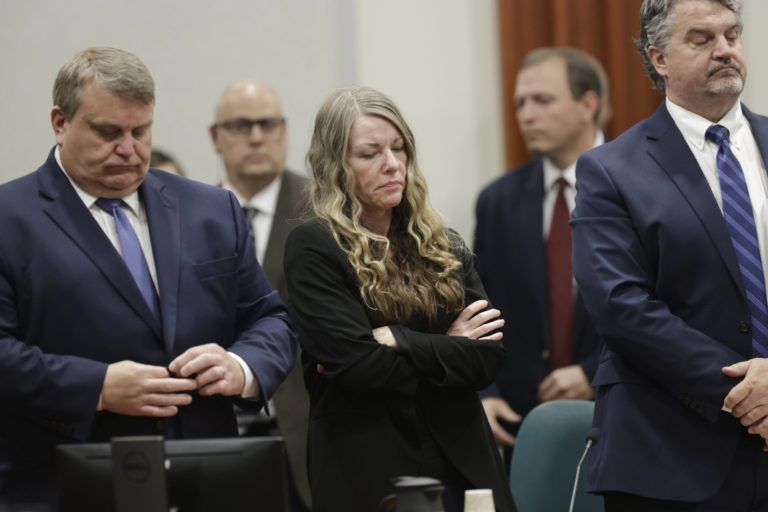
Idaho Man on Trial for Killing Wife, 2 Kids He Claimed Were Zombies

(Headline USA) The trial of a man charged with the deaths of his wife and his girlfriend’s two youngest children is set to begin in Idaho this week, serving as a second act in a bizarre case that has drawn worldwide attention and already resulted in a life sentence for the mother of the children.

Chad Daybell’s trial is expected to last up to 10 weeks, with jury selection scheduled to get underway in Boise on Monday.

The 55-year-old self-published author is charged with three counts of first-degree murder for the deaths of Tammy Daybell, 7-year-old Joshua “JJ” Vallow and JJ’s big sister, Tylee Ryan, who was last seen a few days before her 17th birthday.

The younger children’s mother, Lori Vallow Daybell—who married Chad Daybell shortly after the deaths—was found guilty last year and sentenced to life in prison without parole.

The couple claimed they could tell if people had been possessed by dark spirits that could turn them into “zombies,” former friend Melanie Gibb testified in court. They believed the only way to get rid of a zombie was to destroy the possessed person’s body by killing them.

The children’s bodies were found buried in Chad Daybell’s eastern Idaho yard in the summer of 2020.

Chad Daybell also is charged with insurance fraud in connection with Tammy Daybell’s death and two counts of conspiracy to commit first-degree murder and grand theft by deception in the children’s deaths.

If convicted, he could face the death penalty.

Daybell has pleaded not guilty. Last week, his attorney John Prior told KIVI-TV in Boise that Daybell is ready to go forward with the case and “wants to tell his story.”

Two days later, 7th District Judge Steven Boyce issued a gag order barring any of the attorneys or parties in the case from talking about it until after jury selection and opening statements.

Chad and Lori Daybell originally were scheduled to stand trial together, but in 2022 Prior asked the court to split the cases, saying the co-defendants will have “ mutually antagonistic defenses.” The legal term generally means a jury would have to disbelieve one defendant in order to believe the other.

“Our version of the facts of this case will differ greatly from what Ms. Vallow and her legal counsel are going to be presenting,” Prior told the judge, who later agreed to split the cases.

The grim case began in the fall of 2019, after extended family members noticed Lori Vallow’s two youngest kids seemingly had disappeared and prodded law enforcement to launch a search. The subsequent months-long investigation spanned several states and took several grim and unexpected turns.

Lori Vallow and Chad Daybell were having an affair when both of their spouses died unexpectedly, investigators learned. Vallow’s husband was shot to death by her brother in Arizona in July 2019 and the brother told police it was in self-defense.

Tammy Daybell died in her sleep in November 2019, the untimely death first chalked up to natural causes but later determined to be from asphyxiation, according to an autopsy. Lori Vallow and Chad Daybell married just two weeks after Tammy Daybell died, surprising family members and authorities.

The couple’s friends later told detectives that the pair also held unusual religious beliefs, including that they had been reincarnated and were tasked with gathering people before a biblical apocalypse.

Lori Vallow Daybell referred to her two youngest kids as zombies before they vanished in September 2019, one friend would later testify during her trial, Gibb testified.

Prosecutors say Lori and Chad Daybell espoused those doomsday-focused beliefs to justify the deaths of her kids and his wife, but it was all part of a scheme to eliminate any obstacles to their relationship and to obtain money from survivor benefits and life insurance.

Adapted from reporting by the Associated Press