(Mike Maharrey, Money Metals News Service) It appears cooling price inflation was “transitory” to borrow a favorite Federal Reserve term from a bygone era.
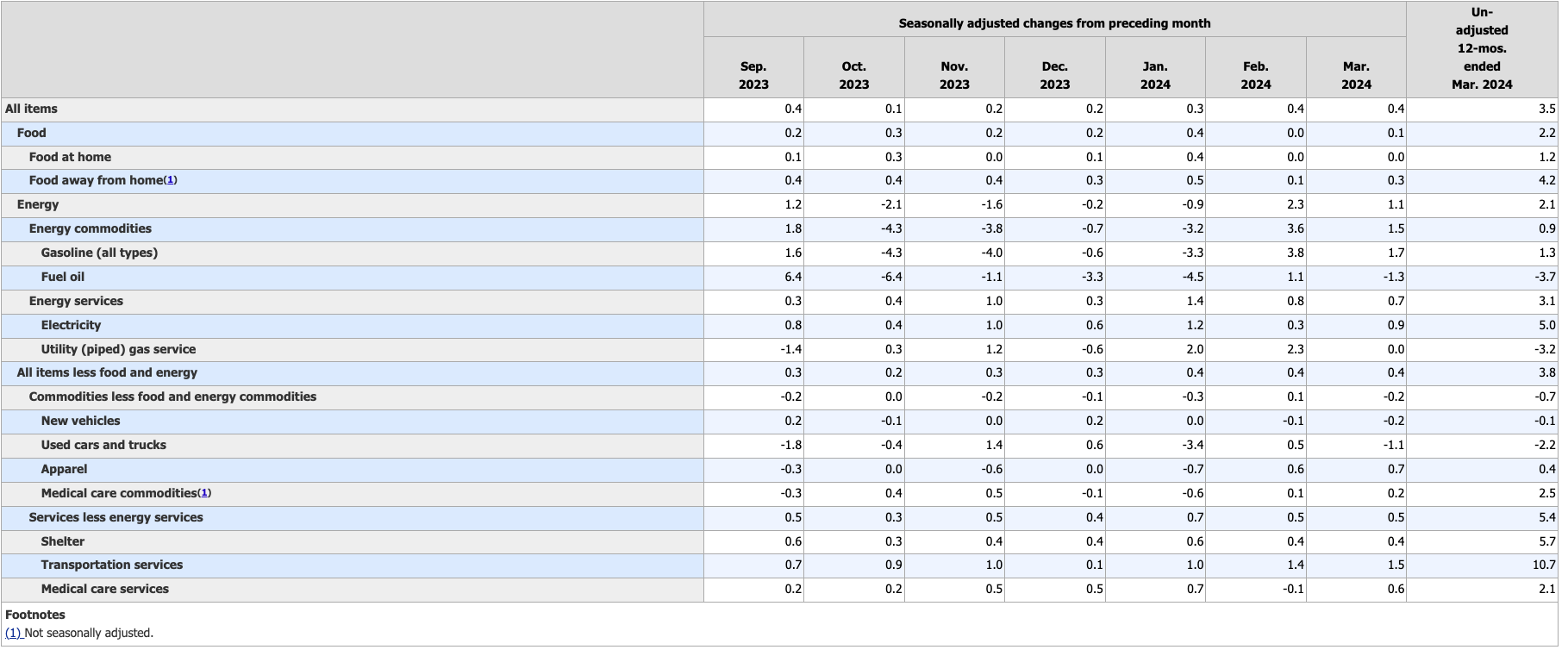
The Consumer Price Index (CPI) for March was hotter than expected by every metric.
The consensus was price inflation would show some resilience. As one analyst told Seeking Alpha, even meeting the consensus would constitute a “hot” report.
“A hotter-than-expected number would come as a surprise and not be well received because it would clearly indicate an unexpected uptick in the pace of inflation.”
And that’s exactly what happened.
The headline annual CPI for March came in at 3.5 percent, according to the BLS report. That was up sharply from the 3.2 percent print in February and hotter than the projected 3.4 percent rise.
For folks keeping score at home, annual CPI was 3.1 percent in November.
On a monthly basis, prices rose 0.4 percent. That matched the February increase. The expectation was for the monthly number to fall slightly to 0.3 percent.
To put the numbers in perspective, prices have gone up by over 1 percent (1.3%) in the last four months. That annualizes to 3.9 percent. The trend is toward hotter price inflation, not cooler.
Excluding more volatile food and energy prices (as if anybody can exclude such things from their budgets) core CPI was up 0.4 percent in March just like it was in February. The consensus was for core CPI to cool slightly to 0.3 percent.
On an annual basis, the core CPI remained at 3.8 percent. The expectation was that the annual core number would fall to 3.7 percent.
The core data underscores the stickiness of price inflation. It has been hovering around the 4 percent range since July.
It’s important to note that none of these numbers are close to the Federal Reserve’s mythical 2 percent price inflation target. Core CPI is nearly double the target.
The Fed claims to be data-dependent. Well, the data tells us that the cooling trend we saw late last year was transitory. No matter how you slice, dice, or massage the numbers, nothing indicates the Fed is anywhere near winning the inflation fight.
And keep in mind, inflation is worse than the government data suggest. The government revised the CPI formula in the 1990s so that it understates the actual rise in prices. Based on the formula used in the 1970s, CPI is closer to double the official numbers. So, if the BLS was using the old formula, we’re looking at CPI closer to 6 percent. And using an honest formula, it would probably be worse than that.
Looking more closely at the data, energy costs and shelter costs continue to drive the CPI higher.
Energy prices rose 1.1 percent month-on-month after increasing 2.3 percent in February. Gasoline was up 1.7 percent.
Shelter costs were up by another 0.4 percent on the month and 5.7 percent on an annual basis.
Price inflation for food appears to be moderating, rising by just 0.1 percent month-on-month. But some food prices continue to increase at a significant pace. Meat, fish, poultry, and egg prices climbed by 0.9 percent, driven by a 4.6 percent jump in the price of eggs.
Excluding energy, the services index increased 0.5 percent in March. On an annual basis, it increased by 5.4 percent.
With the hotter-than-expected CPI print, most analysts now think a June interest rate cut is off the table.
The markets reacted accordingly.
Gold and silver charted their first significant corrections in several weeks. Gold fell over $18 in just the first couple of hours after the data was released. Silver was down about 28 cents. But after the initial sell-off, both metals recovered most of those losses.
Meanwhile, bond yields rose, and stocks slid. The Dow was down over 400 points by mid-morning and the NASDAQ dumped nearly 1 percent.
This has been the pattern every time we’ve gotten hot inflation data.
The Markets Are Missing the Big Picture
The markets are reacting to the likelihood that the Fed will hold rates higher for longer, but they are totally missing the big picture.
They are going to get their rate cuts – but not for the reason they think.
And when that happens, the markets will get their rate cuts in spades. The Fed will be forced to slash rates back to zero and relaunch quantitative easing. It’s just a matter of time.
This isn’t even on the mainstream’s radar.
The markets just want their easy money back. After well over a decade of artificially low interest rates, most people in the mainstream thinks that’s the norm.
Easy money is the mother’s milk of this economy. It can’t function without it. That’s why the markets are so desperate for rate cuts. The irony is they want price inflation to come down so the Fed can go back to the inflationary policies that got us here, to begin with. They want artificially low interest rates. They want the Fed’s big fat thumb on the bond market. They want money creation.
But that’s what got us here in the first place.
After the 2008 financial crisis, the Fed slashed rates to zero and held them artificially low for nearly a decade. It launched three rounds of quantitative easing, creating nearly $4 trillion out of thin air. It quickly abandoned its only effort to normalize monetary policy in 2018 when the economy got shaky and the stock market crashed. Then it doubled down during the pandemic, dropping rates to zero again and injecting almost $5 trillion more into the economy.
The question isn’t, “Why is the CPI still hot?” The question is, “Why is anybody remotely surprised CPI is still hot given the amount of money created?” (i.e. inflation)
This puts the Fed between a rock and a hard place. It needs to cut interest rates because this debt-riddled economy simply can’t function in a high-rate environment.
But the central bank can’t plausibly cut rates with price inflation still far above its target.
The Fed has been hoping against how the data would give them cover to cut rates. But ‘tis not to be. The March data just backs them deeper into the corner.
Mike Maharrey is a journalist and market analyst for MoneyMetals.com with over a decade of experience in precious metals. He holds a BS in accounting from the University of Kentucky and a BA in journalism from the University of South Florida.
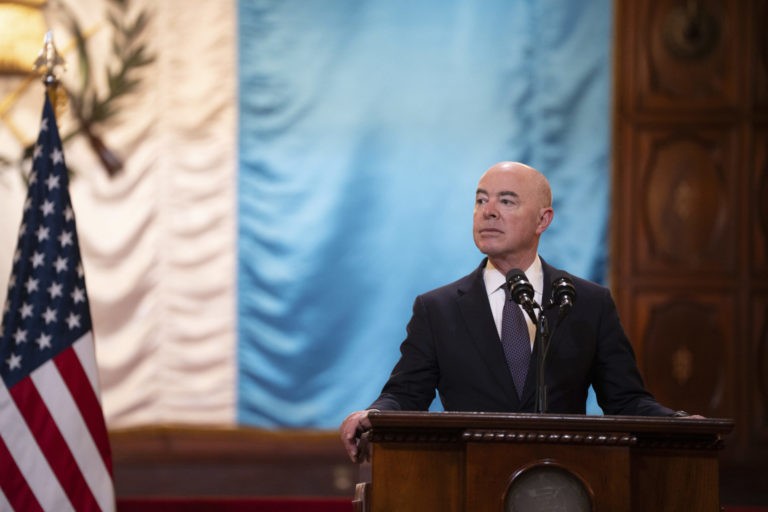
(Headline USA) Speaker Mike Johnson will delay sending the House’s articles of impeachment against Homeland Security Secretary Alejandro Mayorkas to the Senate this week as previously planned after Republican senators requested more time Tuesday to build support for holding a full trial.
The sudden change of plans cast fresh doubts on the proceedings, the historic first impeachment of a Cabinet secretary in roughly 150 years, which stems from the administration’s brazen dereliction of duty in handling of the southern border.
House Republicans impeached Mayorkas in February but delayed sending the articles while they finished work on government funding legislation.
Johnson had planned to send the impeachment charges to the Senate on Wednesday evening. But as it became clear that Democrats, who hold majority control of the chamber, had the votes to quickly dismiss them, Senate Republicans requested that Johnson delay until next week.
While Republicans argued Tuesday that forgoing a full Senate trial would break precedent, most Senate Republicans voted to do just that when Donald Trump, the former president, was impeached a second time on charges he incited an insurrection in the Jan. 6, 2021 attack on the Capitol.
Their effort to halt the proceedings failed after several Republicans sided with Democrats to support proceeding with the hearings. However, Trump was ultimately acquitted in the Senate trial.
“Our members want to have an opportunity not only to debate but also to have some votes on issues they want to raise,” said Sen. John Thune, R-S.D., the second-ranking Republican Senate leader.
Under procedural rules, senators are required to convene as jurors the day after the articles of impeachment are transmitted for a trial.
“There is no reason whatsoever for the Senate to abdicate its responsibility to hold an impeachment trial,” Johnson’s spokesman, Taylor Haulsee, said in a statement announcing the delay.
Senate Majority Leader Chuck Schumer. D-N.Y., who has decried the impeachment push as a “sham,” suggested Democrats still planned to deal with the charges quickly.
“We’re ready to go whenever they are. We are sticking with our plan. We’re going to move this as expeditiously as possible,” Schumer said.
“Impeachment should never be used to settle policy disagreements,” he told reporters earlier Tuesday.
House Republicans charged in two articles of impeachment that Mayorkas has not only refused to enforce existing law but also breached the public trust by lying to Congress and saying the border was secure.
Some RINO lawmakers, however, predictably sided with Schumer in downplaying the seriousness of Mayorkas’s violations, claiming the charges did not meet the Constitution’s bar of high crimes and misdemeanors.
“Ultimately, I think it’s virtually certain that there will not be the conviction of someone when the constitutional test has not been met,” said retiring Sen. Mitt Romney, R-Utah, the only Republican to vote twice on impeaching former President Donald Trump during Democrats’ spurious and politically charged attempts to undermine the Republican president.
“Mayorkas has done a terrible job, but he’s following the direction of the president and has not met the constitutional test of a high crime or misdemeanor,” said Romney, who noted he was not sure how he would vote on the Senate’s process.
Still, with elections approaching, Republicans want to force Congress to grapple with the Biden administration’s handling of the southern border into the forefront, while Democrats desperately attempt to deflect from that and other serious policy liabilities linked to President Joe Biden’s radical agenda.
“I think there are a lot of Democrats who really want to avoid the vote,” Thune said. “I don’t blame them. I mean, this is the No. 1 issue on the minds of Americans.
One of those Democrats was Sen. Sherrod Brown, D-Ohio, who faces a serious threat of losing re-election in a state that has grown increasingly red over the past decade.
Brown called the impeachment trial a “distraction” and pointed to Republican senators rejecting a bipartisan deal aimed at tamping down the number of illegal border crossings from Mexico.
That deal would still have allowed a staggering rate of 5,000 daily border crossings and likely would have been a back-door attempt at offering amnesty to the illegal aliens Biden has already admitted into the country.
Rather than deport border-crossers, Mayorkas has openly admitted that any additional funding would be used to streamline the process for admitting them.
That, however, hasn’t stopped Democrats’ attempts to gaslight voters about the root cause of the border crisis, which is them.
“Instead of doing this impeachment—the first one in 100 years—why are we not doing a bipartisan border deal?” Brown said.
Prior to Mayorkas, only one U.S. cabinet official had ever been impeached. Secretary of War William Belknap in 1876. A House investigation found evidence that he had received kickback payments while administering government contracts.
Belknap resigned, but the Senate still held a trial. The votes on all five impeachment charges against Belknap fell short of the two-thirds majority needed for a conviction.
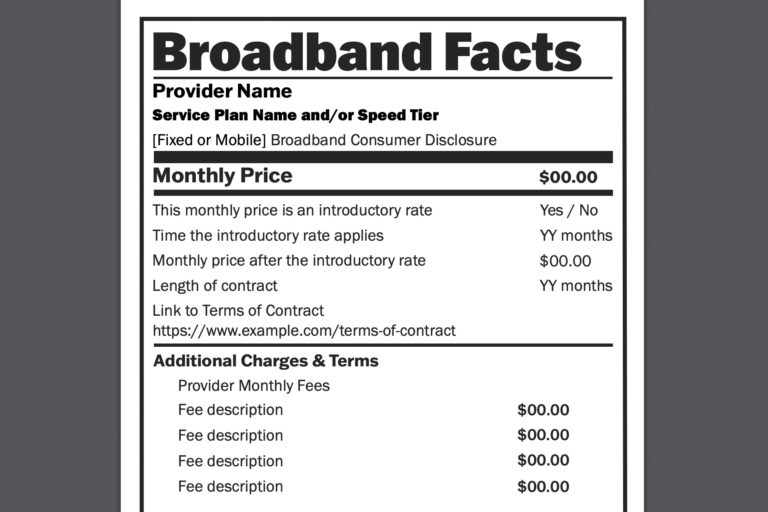
(Headline USA) Much like nutritional labels on food products, “broadband labels” for internet packages will soon tell you just what is going into the pricing of your service, thanks to new rules adopted by the Federal Communications Commission this week.
“If you’ve ever shopped for home or mobile internet, you can understand how hard it can be to understand what you’re actually paying for,” said Jon Donenberg, deputy director of the White House National Economic Council, on a call with reporters.
“The broadband nutrition label is a tool that can help consumers make sure they have a clear, straightforward explanation of home and mobile services before signing up for anything,” Donenberg added.
Following the design of labels used by the Food and Drug Administration, these broadband labels were intended to provide easy-to-understand, accurate information about the cost and performance of high-speed internet service to help consumers avoid junk fees, price hikes, and other unexpected costs.
Internet service providers selling home access or mobile broadband plans will be required to have a label for each plan beginning April 10.
However, some firms with less than 100,000 subscribers will have until Oct. 10, 2024, to comply with the FCC rules.
The labels will be mandated to appear at any point of sale, including online and in stores, and they will be required to disclose all pricing information—including introductory rates, data allowances and speeds.
The labels will also include links to information about network management practices and privacy policies.
If a provider does not display their labels or posts inaccurate information about its fees or service plans, consumers can file a complaint with the FCC Consumer Complaint Center.
Hidden fees and unexpected rate hikes have dogged consumers shopping for internet service for years across industries including banking, hotel and airline pricing, and utility and phone services.
On a call Tuesday, a spokesperson for the FCC clarified that the labels “cannot be buried in multiple clicks” or hidden in a way that a consumer might miss.
“Fees can make it hard to understand the true cost of an internet plan,” said Donenberg, adding that the agency was “committed to rooting out surprise junk fees that some companies pile on to your bills.”
Each label will be required to contain the following information:
Monthly price and contract length
Whether that price will change after a certain period and what it will change to
Complete list of monthly and one-time fees, and early termination fee
Whether the company participates in the Affordable Connectivity Program and link to check if one qualifies
“Typical” download and upload speeds, and latency
Data cap and price beyond that cap
Links to network management (e.g., zero rating and content blocking) and privacy policies
A glossary is available on the FCC site to help consumers better understand the information displayed on the label.
(Money Metals News Service) In this week’s episode of “Money Metals Midweek Memo,” host Mike Maharrey delves into the often overlooked yet significant realm of gold investment, drawing an engaging parallel between gold’s market perception and a personal anecdote from his school days about a girl named Bertha.
Much like Bertha’s transformation from a disregarded figure to one of the most admired, gold, despite being the investment world’s “ugly duckling,” is poised for a remarkable turnaround, challenging prevailing biases and demonstrating its enduring value.
Gold’s Record Surge and Mainstream Skepticism
Recently, gold has seen an unprecedented surge, reaching record highs over $2,350 an ounce, hinting at a bull run with strong momentum. Despite this, mainstream financial media and analysts remain dismissive or outright negative about gold’s prospects. Maharrey critiques this stance by highlighting a pervasive lack of understanding and appreciation for gold’s qualities and economic fundamentals among financial professionals and media.
Mike Maharrey criticizes the mainstream financial media and analysts for their generally negative or dismissive attitudes toward gold as an investment. He observes that despite gold’s historical significance, practical applications, and recent surge to record highs, mainstream financial pundits often ignore or belittle its importance and potential as a safe-haven asset.
This skepticism towards gold is depicted through various examples, including the reluctance of financial media to cover gold’s rally with the same enthusiasm as other assets like cryptocurrencies.
Maharrey proposes two main reasons for the mainstream’s negative stance on gold:
First, he points out the financial industry’s structure, where selling physical gold offers little benefit to financial planners due to the lack of recurring revenue, leading to a general reluctance to recommend gold as an investment.
Secondly, he criticizes the mainstream financial experts’ understanding of macroeconomics, which he finds lacking.
Maharrey argues that many are influenced by Keynesian economics, leading to misconceptions about inflation, government stimulus, and the true economic value of gold.
He further explains that the mainstream financial media’s failure to recognize significant macroeconomic trends could impact the gold market. Maharrey then addresses the complacency of some who believe that the absence of a recent financial crisis means there won’t be one, cautioning against such optimism by referencing the timeline leading up to the 2008 financial crisis.
This financial literacy or economic education gap leads to widespread misconceptions about inflation, the economy’s health, and the utility of gold, resulting in biased financial advice and media coverage that often overlooks or underestimates gold’s investment merits.
Furthermore, Maharrey argues that the financial industry’s structure, which favors investments generating continuous fees and commissions, naturally disincentivizes the promotion of gold, which does not offer ongoing revenue streams for brokers once sold.
In essence, Maharrey’s commentary highlights a disconnect between mainstream financial narratives and the underlying economic indicators that support gold’s value as an investment.
He advocates for a more nuanced understanding of gold’s role in a diversified portfolio, especially in light of macroeconomic trends that could threaten the stability of more conventional investments.
Public Disinterest in Gold
Mike Maharrey mentions Guy Christopher in relation to Wall Street’s general disinterest or negative stance towards gold as an investment. Christopher, a former stockbroker turned financial journalist who also worked with Money Metals, is cited for his insights into the attitudes of financial planners towards gold.
He had conversations with financial planners under the condition of anonymity, revealing that discussing or recommending gold could potentially lead to the loss of their licenses.
According to the late Guy Christopher, Wall Street professionals don’t know much about gold, and their education and insights into it are limited. They tend to dismiss gold as a murky investment and are likely to dissuade clients from buying even a single ounce.
This dismissive attitude towards gold is attributed to the nature of Wall Street itself, where selling physical gold does not benefit financial planners with commissions or continuing fees, unlike other investments they sell. Hence, once a client buys gold, it doesn’t generate further revenue for brokers, making it an unattractive recommendation for them.
This reflects a broader issue where the incentives in the financial industry do not align with promoting investments like gold that are out of the brokerage and financial planning mainstream.
The Misunderstood Nature of Gold
Maharrey counters common misconceptions about gold, emphasizing its practical uses beyond investment—ranging from jewelry to technology applications—and its historical role as money.
He challenges the dismissive views of notable figures like Warren Buffett and Dave Ramsey, arguing that such positions stem from a superficial understanding of gold and its market dynamics.
Mike Maharrey critiques Dave Ramsey’s stance on gold, labeling it as misguided and overly dismissive. While he acknowledges Ramsey’s debt repayment strategies as solid, Maharrey disagrees with Ramsey’s assessment of gold as an investment.
Ramsey is criticized for claiming that gold has a “crummy track record” as an investment option, a view Maharrey challenges by citing historical periods where gold significantly outperformed other asset classes.
Maharrey provides examples to refute Ramsey’s claims, pointing out that gold saw a cumulative gain of 280% during the 2000s, a decade when the S&P 500 experienced a 24% fall. He further highlights gold’s strong performance during the 1970s, a period of high inflation where gold delivered average annual returns of 30.7%, vastly outpacing the nominal gains of the S&P 500.
Maharrey also notes gold’s resilience during the pandemic and its comparative outperformance against several asset classes in 2023, using these examples to underscore gold’s utility and effectiveness as a hedge against economic uncertainty and inflation.
By countering Ramsey’s views with historical data, Maharrey aims to demonstrate that gold, contrary to being a poor investment choice, has consistently served as a valuable and reliable asset in times of economic distress.
Maharrey criticizes the mainstream financial advice that often overlooks gold’s benefits, suggesting that such perspectives stem from a limited understanding of economic history and the dynamics of inflation and currency devaluation.
Analyzing the Economic Landscape
The episode shifts to a comprehensive analysis of the macroeconomic environment, suggesting that gold’s current and future value is underappreciated amidst a landscape marred by inflation, Federal Reserve policies, and a burgeoning debt crisis.
Maharrey argues that prevailing economic indicators and mainstream optimism overlook deeper systemic issues that could precipitate a significant financial downturn, further bolstering gold’s appeal as a safe-haven asset.
Mike Maharrey discusses the relationship between current interest rates, the economic bubble, and the Federal Reserve’s monetary policy, suggesting a precarious situation that could unfavorably impact the economy. He notes that the Federal Reserve has raised interest rates to levels above 5% in an attempt to combat inflation.
However, Maharrey argues that even these elevated rates are insufficient to effectively curb inflation, as they remain below the actual rate of inflation when considering more accurate measures beyond the Consumer Price Index (CPI).
Maharrey warns that the economy is riddled with debt, making it extremely vulnerable to these interest rate increases. He explains that the debt levels across national, corporate, and personal spheres have reached such heights that even moderately high interest rates pose a significant risk of precipitating a financial crisis. This is due to the increased cost of servicing debt, which could lead to defaults and a cascading series of economic problems.
Furthermore, Maharrey characterizes the current economic environment as a “bubble,” inflated by years of historically low interest rates and aggressive monetary expansion, including quantitative easing.
He suggests that the Federal Reserve’s policies since the 2008 financial crisis, and more aggressively during the pandemic, have created malinvestments and inflated asset prices across various sectors, including real estate and stocks. These conditions, he argues, have set the stage for a potentially severe economic correction or burst.
By linking the current interest rates with the broader context of an economic bubble, Maharrey implies that the Federal Reserve’s efforts to normalize monetary policy (by raising interest rates) after years of unprecedented stimulus could inadvertently trigger the very crisis it seeks to avoid.
He suggests that the correction of these imbalances when it occurs, could be more severe than past downturns due to the magnitude of the debt and the bubbles created by prolonged loose monetary policy.
In this context, gold is presented as a prudent hedge against the systemic risks posed by these economic conditions, offering a form of financial protection against the potential bursting of the current economic bubble.
National Debt
Mike Maharrey emphasizes the critical issue of rising national and personal debt levels, drawing attention to their potential impacts on the economy and the attractiveness of gold as an investment. He notes the national debt has soared to well over $34 trillion, highlighting the unsustainable trajectory of government borrowing.
Maharrey also points out the alarming increase in credit card debt among Americans, who have accrued an additional 10% on their credit cards despite facing interest rates as high as 28% on some accounts. This spike in credit card usage is attributed to individuals struggling to make ends meet, indicating broader economic challenges and financial strain on households.
Maharrey argues that the high levels of debt, both at the national and personal levels, make the economy particularly vulnerable to interest rate increases. He explains that even though current interest rates of over 5% are not sufficient to rein in inflation effectively, they are high enough to potentially trigger financial distress in an economy burdened by excessive debt.
The implication is that the Federal Reserve’s interest rate policy, aimed at controlling inflation, could inadvertently precipitate a financial crisis by making debt servicing more challenging for governments, businesses, and individuals alike.
The discussion around debt serves to underscore Maharrey’s broader argument about the precarious state of the economy and the protective role of gold as an investment. By highlighting the debt issue, he suggests that systemic financial vulnerabilities could lead to economic conditions that favor the stability and value preservation characteristics of gold.
Maharrey uses these points to caution against complacency in financial planning and to advocate for the inclusion of gold in investment portfolios as a hedge against economic uncertainty and potential financial turmoil stemming from the debt crisis.
Gold and Silver
Mike Maharrey touches on silver, emphasizing its potential to outperform gold in a bull market for precious metals. He notes that silver has historically tended to offer greater percentage gains than gold during periods of rising prices for precious metals.
Highlighting the recent performance, Maharrey points out that over the past 30 days from the time of his commentary, silver had risen by 15% compared to gold’s 7.7% increase. This observation is used to underscore silver’s volatility and its potential for significant price movements in favorable market conditions.
He further argues that several indicators suggest silver is significantly underpriced compared to gold, especially when considering the gold-to-silver ratio, which measures how many ounces of silver it takes to purchase one ounce of gold. A high ratio traditionally indicates that silver is undervalued relative to gold, which Maharrey implies is the current case.
Moreover, Maharrey suggests that if the gold bull run continues or accelerates, particularly in the midst of a broader economic crisis, silver could see even more substantial increases in value. This is due in part to silver’s dual role as both a precious and industrial metal, which could drive demand across different sectors, further boosting its price.
In essence, Maharrey views the current market conditions as a potentially opportune time for investing in silver, given its historical performance patterns relative to gold and its current valuation. He suggests that investors consider the advantages of including silver in their portfolios, highlighting its potential for high returns in a bullish market for precious metals.
A Call to Action
Encouraging listeners to recognize the “inner beauty” of gold, Maharrey advises on the strategic acquisition of gold and silver as prudent measures against impending economic uncertainties. He underscores the importance of preparing for potential market shifts by investing in precious metals and leveraging their stability in times of economic distress.
Visit MoneyMetals.com or contact a specialist at Money Metals Exchange at the phone number:
1-800-800-1865
Conclusion
“Money Metals Midweek Memo” with host Mike Maharrey serves not only as a critique of conventional financial wisdom regarding gold but also as a clarion call for a reevaluation of investment strategies in the face of economic realities.
By drawing on historical insights, current trends, and a nuanced understanding of the economic landscape, Maharrey offers a compelling case for the inclusion of gold in any discerning investor’s portfolio, heralding a period where gold, much like Bertha, proves its detractors wrong.
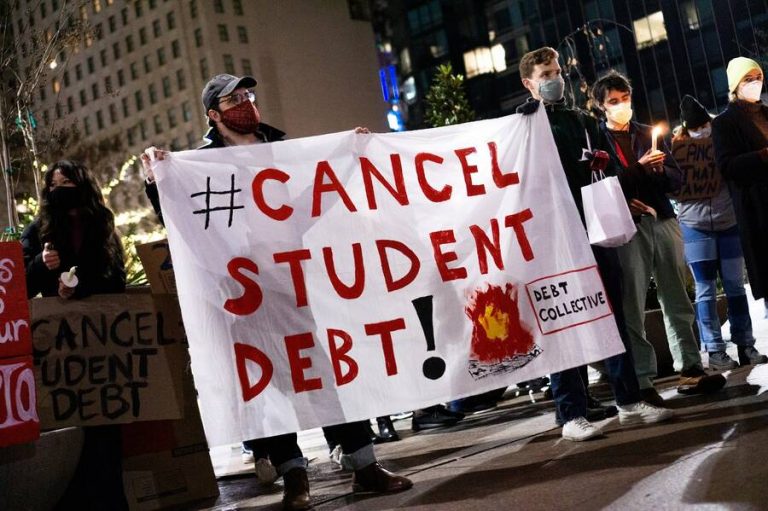
(Casey Harper, The Center Square) A coalition of states has filed a legal challenge to President Joe Biden’s latest executive effort to forgive a portion of Americans’ student loan debt.
“With the stroke of his pen, Joe Biden is attempting to saddle working Missourians with a half trillion dollars in college debt,” Missouri Attorney General Andrew Bailey, who is helping lead the legal challenge, said in a statement.
The lawsuit came shortly after Biden announced the plan on Monday.
The states in question said it was yet another an overreach of executive authority following his failed effort ahead of the 2022 election, which was eventually shut down by the U.S. Supreme Court last June.
“The United States Constitution makes clear that the President lacks the authority to unilaterally ‘cancel’ student loan debt for millions of Americans without express permission from Congress,” Bailey said. “The President does not get to thwart the Constitution when it suits his political agenda.”
The latest scheme appears to be timed so as to coincide with the upcoming presidential election, in which Biden has seen his appeal plummet among younger voters, minorities and other key demographics.
The White House claims that Biden has so far canceled at least some of the debt for 4 million Americans, totaling $146 billion so far.
It said the newest effort would partially “forgive” debt for 30 million Americans, though independent analyses have not confirmed that figure.
Critics note that there is no such thing as government debt forgiveness, since the borrowers’ burden simply gets shifted to the tax-paying population at large, driving additional federal debt and inflation.
“This is nothing but a political ploy to buy votes in an election year,” tweeted Sen. Tommy Tuberville, R-Ala. “The Supreme Court already ruled that Joe Biden’s student loan scheme is ILLEGAL. This is not loan forgiveness—it’s debt redistribution.”
Some, in fact, argue that minorities and other lower-income population groups are disproportionately affected by it due to their decisions to forgo the expense of higher education, while privileged upper- and middle-class young adults who squander their money on useless degrees get rewarded for their poor decisions.
“Just last year, the Supreme Court struck down an attempt by the President to force teachers, truckers, and farmers to pay for the student loan debt of other Americans—to the enormous tune of $430 billion,” said the new lawsuit.
“In striking down that attempt, the Court declared that the President cannot ‘unilaterally alter large sections of the American economy,’” it continued. “Undeterred, the President is at it again, even bragging that ‘the Supreme Court blocked it. They blocked it. But that didn’t stop me.’”
There is no official cost estimate yet for the plan, but experts raised concerns about the already ballooned national debt, which is on pace to hit $35 trillion this year.
“You can’t solve a very real debt problem by issuing more debt,” Maya MacGuineas, president of the Committee for a Responsible Federal Budget, said in a statement.
“The President’s previous student loan cancellation plan was expensive, inflationary, poorly targeted, and would have boosted rather than reduced tuitions,” she added. “This plan similarly misses the mark.”
The loan-amnesty plan would be enacted through a proposed federal rule, which means it has a lengthy process ahead and could be overturned if Republicans win in November, although it will by then have already fulfilled its political purpose for Biden.
The plan would cancel as much as $20,000 in interest for borrowers whose interest on unpaid debt has continued to grow over time, regardless of income. It aims to help those with undergraduate debt who have been paying for more than 20 years and graduate debt paid for more than 25 years, suggesting either that their degrees did not add any particular value to their earning potential or that the borrower in question were simply deadbeats who opted to spend their money in other ways.
Those major components come alongside several other miscellaneous loan-amnesty efforts tailored to specific federal programs Biden has been announcing since taking office.
Biden claimed during Monday afternoon remarks in Madison, Wisconsin, that for many Americans, their debt is too great a burden.
“Today, too many Americans, especially young people, are saddled with unsustainable debts in exchange for a college degree,” Biden said. “The ability for working- and middle-class folks to repay their student loans has become so burdensome that a lot can’t repay it for even decades after being in school.”
Even before the lawsuit, Biden’s plan to forgive even more student loan debt was taking fire from Republicans and budget experts.
“By ‘cancelling student loan debt,’ Joe Biden is telling blue-collar workers he doesn’t care about them,” tweeted Sen. Ted Cruz, R-Texas. “This is nothing but a vote-buying scheme by the Democrats.”
By “cancelling student loan debt,” Joe Biden is telling blue-collar workers he doesn’t care about them.
Signing onto the lawsuit are Arkansas, Florida, Georgia, Missouri, North Dakota, Ohio, and Oklahoma.
“This plan completely violates the administrative pay-as-you-go requirement put in place by last summer’s Fiscal Responsibility Act,” MacGuineas said.
“That provision was put in place to require any significant regulations from adding to deficits, but the administration has abused its ability to waive these requirements—which is intended only for regulations that are ‘necessary for the delivery of essential services’ or ‘necessary for effective program deliverym'” she added.
(Casey Harper, The Center Square) Newly released federal inflation data showed consumer prices continued to rise at an elevated rate for yet another month, signaling that inflation’s rise may not be over after all.
The announcement not only flew against the Biden administration’s efforts to gaslight voters into thinking the president’s economic policies were succeeding, but also had a ripple effect of convincing many that the Federal Reserve’s plans to cut interest rates would likely be forestalled.
Over the last 12 months, consumer prices have risen 3.5%, according to BLS, an increase from the 12-month average released in last month’s data.
“The energy index rose 1.1 percent over the month. The food index rose 0.1 percent in March,” BLS said. “The food at home index was unchanged, while the food away from home index rose 0.3 percent over the month.”
Experts raised the alarm after the data’s release.
“Core CPI coming in very hot for the third month in the row,” tweeted Jason Furman, a Harvard professor and former economic advisor during the Obama administration, in a six-tweet thread analyzing the latest figures.
“The numbers are not kind to the thesis that January was a seasonal anomaly,” he added.
Core CPI coming in very hot for the third month in the row. The numbers are not kind to the thesis that January was a seasonal anomaly.
Furman said he was perplexed by any who believed the Fed would be cutting rates within the next two month as some had projected previously.
Job growth—propped up artificially by government hiring and subsidies for the health-care industry—once again came in with projected estimates that were higher than expected, although they are likely to be revised downward when the actual data arrives, as many have been.
Nonetheless, Furman said the employment data, paired with the increased prices, laid out a clear argument for the Fed to stay the course on rates as government spending continued to leave the overall health of the U.S. economy in limbo.
“The labor market data is screaming a cut isn’t needed for one side of the mandate,” Furman said. “And the price data is screaming that it could be dangerous for the other side of the mandate.”
Overall it is a mystery to me why anyone thinks the Fed might cut rates in June. The labor market data is screaming a cut isn't needed for one side of the mandate. And the price data is screaming that it could be dangerous for the other side of the mandate.
Although prices increased overall, changes varied across different goods and services.
“Indexes which increased in March include shelter, motor vehicle insurance, medical care, apparel, and personal care,” BLS said. “The indexes for used cars and trucks, recreation, and new vehicles were among those that decreased over the month.”
While overall food prices remained largely steady, some items became more expensive, due in part to the present and expected supply-chain shortages from a recent wave of bird flu, which also impacts other livestock, as well as humans.
That could hit even harder in the summer months, sending grocery prices soaring once again, even as global instability threatens to send gas prices on the rise.
“The index for meats, poultry, fish, and eggs rose 0.9 percent in March, as the index for eggs rose 4.6 percent over the month,” BLS said. “The nonalcoholic beverages index also increased in March, rising 0.3 percent. The index for fruits and vegetables increased 0.1 percent over the month.”
President Joe Biden has repeatedly taken fire for the spike in prices since he took office. After Wednesday’s data was released, Republicans blasted him again.
“Under President Biden’s failed Bidenomics agenda, inflation has skyrocketed by 19.4% since he took office,” Sen. Rick Scott, R-Fla., said in a statement.
“Prices keep climbing, and wages can’t keep up. That’s why I have been fighting every day to stop Democrats from doubling down on the reckless spending that got us here in the first place,” Scott continued. “As someone who grew up in public housing and watched my mom struggle to pay the bills, I know how devastating inflation is for families like mine growing up.”
Headline USA’s Ben Sellers contributed to this report.
(Ken Silva, Headline USA) U.S. District Judge Laura Taylor Swain has reportedly sentenced Aimee Harris to one-month imprisonment for stealing and selling the diary of Ashley Biden, which describes inappropriate sexual behavior by her father, President Joe Biden.
Judge Swain, who was appointed to her seat by Bill Clinton, reportedly called Harris’s actions “despicable” when handling down her sentence Tuesday.
Prosecutors claim that Harris was temporarily residing in Biden’s Florida home in September 2020 when she came across the diary, which allegedly contained “highly personal entries,” including tax records and family photos.
Leaked pages from the diary surfaced in a National File report, revealing sections where Biden allegedly recounted instances of sexual trauma, including suspicions of molestation.
Among these pages, Biden purportedly recalled “showers w/ my dad,” deeming them “probably not appropriate.”
Project Veritas has since released audio of Biden confirmed that the diary belonged to her. Even left-wing fact-checkers have not ruled that the diary does not belong to Biden.
In August 2022, Harris, along with Robert Kurlander, pleaded guilty to one count of conspiracy to commit interstate transportation of stolen property from an immediate family member of a former government official who was running for national office.
The guilty plea came after an aggressive investigation against multiple individuals, including Project Veritas journalists who held on the diary but did not publish so over authenticity concerns.
In late 2021, the FBI raided the home of three Project Veritas journalists, including James O’Keefe—implicitly confirming the authenticity of the Ashley Biden diary, and drawing heat from even left-leaning organizations such as the ACLU.
“Unless the government had good reason to believe that Project Veritas employees were directly involved in the criminal theft of the diary, it should not have subjected them to invasive searches and seizures,” Brian Hauss, senior staff attorney with the ACLU’s Speech, Privacy, and Technology Project, said last June in a letter to a federal judge.
The only party to be charged thus far over the diary fiasco are the two people who allegedly tried to sell it: Harris and her partner, Robert Kurlander.
(Ken Silva, Headline USA) “Sedition Hunters,” the shadowy group of online sleuths that use controversial facial recognition technology to help the FBI track down Jan. 6 protestors, has written a letter for Attorney General Merrick Garland and U.S. Attorney Matthew Graves—urging them to arrest thousands of additional J6 protestors before the 2024 election.
Sedition Hunters lobbied Garland in a letter obtained and published Tuesday by leftist outlet Raw Story. The letter had not been delivered yet at the time Raw Story published its article.
“It appears that the department and the FBI are not on pace to arrest an alarmingly large percentage [of those] who committed crimes at the Capitol on January 6 but have not been charged yet,” the letter said.
The author of the letter is reportedly a Sedition Hunter that operates online under the handle @MsTerryMete. She declined to be named because she supposedly fears retaliation from Jan. 6ers, ane because she worries that she could face retaliation from the federal government if Donald Trump becomes president again, Raw Story reported.
“These people have already committed political violence once, and for the more violent offenders to remain un-arrested and face no accountability is a concern to me because it’s an election year — and what’s to stop them from committing political violence again this year?” she said.
According to the letter, 3,900 people committing crimes at the Capitol on Jan. 6. That includes people who breached the Capitol and those who engaged in violence on the grounds, but not the people who were on the Capitol grounds—itself a crime—but otherwise didn’t violate any laws.
“To date, the FBI has arrested upward of 1,375 people, leaving roughly 2,500 yet to be held accountable,” Raw Story reported.
Earlier this year, U.S. Attorney Graves signaled that his office would continue arresting Jan. 6 protestors, but the Sedition Hunters criticized him for reducing the rate of arrests.
“About 626 people have been charged with assaulting law enforcement and media, or entering a restricted area with a dangerous or deadly weapon,” Raw Story reproted.
“Based on those numbers, the arrest rate for violent offenders would need to pick up the pace from about 16 per month to 26 per month in order to meet the deadline before the statute of limitations runs out on Jan. 6, 2026.”
(Luis Cornelio, Headline USA) Ukrainian President Volodymyr Zelenskyy issued a scathing rebuke of Americans who voice opinions opposing his own, claiming they are doing Russia’s bidding in its ongoing war.
In a candid interview with German media company Axel Springer, Zelenskyy asserted, without evidence, that Russia has successfully molded “the information field of the world,” before criticizing Americans who dare to raise positions detrimental to Ukraine.
“They pump their narratives through the media,” Zelenskyy vaguely suggested, according to Politico, a media company owned by Axel Springer.
He further stated, “These are not Russian citizens or natives of Russia, no. They are representatives of certain media groups, citizens of the United States. They are the ones in the media with the appropriate messages, sometimes very pro-Russian.”
Zelenskyy’s remarks come amid House Speaker Mike Johnson, R-La., facing a threat of a motion to vacate the speakership from Rep. Marjorie Taylor Greene, R-Georgia.
Greene has pledged to initiate this move if Johnson advances a multi-billion-dollar aid package to Ukraine, totaling $60 billion.
Former President Donald Trump, who has advocated for peace in the conflict between Russia and Ukraine, has opposed sending more U.S. taxpayer dollars to Ukraine.
Among the reasons cited by Trump and other America First Republicans are widespread corruption allegations in Ukraine, the perceived unfeasibility of a Ukrainian victory, and the risk of involving the U.S. in a conflict with Russia, a nuclear power.
Despite Trump’s opposition, Zelenskyy called on Trump to visit Ukraine to assess the damage and reconsider whether he still believes he could end the war. Zelenskyy claimed he has made such offers privately.
“We conveyed the messages and the context through the appropriate people,” he said. “We said that we would like Donald Trump to come to Ukraine, see everything with his own eyes and draw his own conclusions. In any case, I am ready to meet him and discuss the issue.”
Headline USA has requested clarification in an email sent to Ukraine’s Ministry of Foreign Affairs and the Security Service of Ukraine, the country’s chief security agency.
The Ukrainian Ministry of Foreign Affairs referred Headline USA to the Ukrainian presidential press office, which did not respond to several emails on Wednesday.
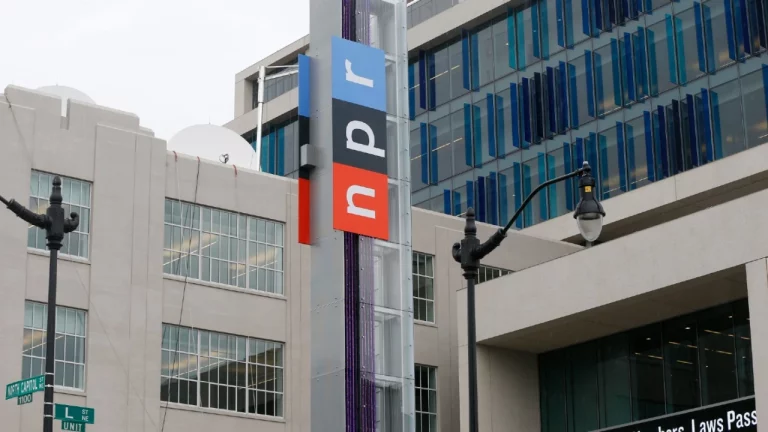
(Dmytro “Henry” Aleksandrov, Headline USA) Veteran NPR editor Uri Berliner published an essay on Apr. 9, 2024, exposing the far-left bias of the taxpayer-funded organization.
Berliner, who has been at NPR for 25 years, wrote in his essay published in the Free Press that NPR started the news war against Donald Trump by spreading the Russia collusion hoax.
“Persistent rumors that the Trump campaign colluded with Russia over the election became the catnip that drove reporting. At NPR, we hitched our wagon to Trump’s most visible antagonist, Representative Adam Schiff,” he wrote.
Berliner also criticized NPR’s decision to not cover the Hunter Biden laptop story during the 2020 presidential election, with the propaganda outlet stating it won’t “waste” time on stories that are “just pure distractions.”
Berliner also admitted that NPR was repeating the lies of Anthony Fauci about the COVID-19 pandemic origins.
The editor also pointed out that the outlet’s audience has moved dramatically to the left, based on polling.
“Back in 2011, although NPR’s audience tilted a bit to the left, it still bore a resemblance to America at large. Twenty-six percent of listeners described themselves as conservative, 23% as middle of the road, and 37% as liberal,” he wrote.
It all started changing after Trump was elected and the political ideology of an average NPR consumer radically changed by 2023, with only 11% of people describing themselves as “very or somewhat conservative.”
“An open-minded spirit no longer exists within NPR, and now, predictably, we don’t have an audience that reflects America,” Berliner wrote.
Additionally, anti-white sentiment infected NPR in 2020 after the death of George Floyd, with the organization starting to prioritize race and identity, implement DEI initiatives, give “unconscious bias training sessions” and offer “monthly dialogues” for “women of color” and “men of color.”
However, NPR’s efforts to push anti-white racism and establish a more “racially diverse” audience were not successful, Berliner said.