White House Tries to Distance Itself From Viral ‘Death to America’ Protest in Michigan

(Headline USA) The White House tried to distance itself from a viral protest in Dearborn, Michigan, last week in which activists shouted “Death to America” and “Death to Israel,” The Hill reported.

Asked about the viral protest and whether President Joe Biden condemned it, White House press secretary Karine Jean–Pierre on Tuesday responded by simply saying “Yes,” but quickly sought to qualify her response in order to avoid further political fallout from Democrats’ jihadist voting bloc.

Although the White House believed it was “important to give folks space to peacefully protest,” the “violent rhetoric” displayed at Michigan’s rally should be denounced, Jean–Pierre clarified.

The hourlong rally to commemorate International Al Quds Day took place in front of the Henry Ford Centennial Library last Friday.

It was led by local activist Takek Bazzi, who reportedly has helped lead efforts in the state to rally Muslims against Biden over his continued support for Israel.

“Imam Khomeini, who declared International Al Quds Day, this is why he would say to pour all of your chants and all of your shots upon the head of America,” Bazzi said during the rally, referring to former Iranian leader Ayatollah Ruhollah Musavi Khomeini.

“It’s not Genocide Joe that has to go; it’s the entire system that has to go,” Bazzi continued, referring to a popular chant about Biden. “Any system that would allow such atrocities and such devilry to happen and would support it—such a system does not deserve to exist on God’s earth.”

The crowd responded by repeatedly chanting “Death to America” and “Death to Israel.”

Bazzi subsequently defended the chants, asserting that “When these fools ask us if Israel has the right to exist … the chant ‘Death to Israel’ has become the most logical chant across the world today.”

Several other Democrats, including Dearborn Mayor Abdullah Hammoud, have also publicly denounced the protest, releaseing a statement on Monday via Twitter.

“We reject all inflammatory and violent statements made at the gathering,” Hammoud tweeted.

“Dearborn is a city of proud Americans; the hateful rhetoric heard on Friday does not reflect the opinion of the members of this community,” he continued. “The Dearborn community stands for peace and justice for all people. We are proud to call this city and this country home.”

Notably, “Squad” Rep. Rashida Tlaib, D-Mich., whose district includes Dearborn, and Michigan Gov. Gretchen Whitmer had not yet released statements of their own as of Wednesday.

Mattel Rolls Out Less Competitive, Non-Scoring Scrabble to Accommodate Gen-Z

(Molly Bruns, Headline USA) Toy company Mattel introduced a new, easier, more inclusive version of Scrabble in order to cater to Generation Z, the first such modification in the game’s 75-year history, according to the New York Post.

The new game, called “Scrabble Together,” is a free-form word formation game with less competitive gameplay, a simpler scoring system, helper cards, faster playing times and a “No More Scoring” option.

The goal cards give players tasks, such as “play a horizontal word,” “play a three-letter word” or “play a word that touches the edge of the board.”

The player who completes 20 challenges first wins the game.

“The makers of Scrabble found that younger people, Gen Z people, don’t quite like the competitive nature of Scrabble,” Gyles Brandreth, co-host of the language podcast Something Rhymes With Purple, said. “They want a game where you can simply enjoy language, words, being together and having fun creating words.”

Instead of changing the entirety of the game, Scrabble kits will simply come with a second board on the bottom side allowing people to play “together mode.”

Ray Adler, vice president and global head of games for Mattel, discussed the game excitedly.

“Scrabble Together Mode continues to celebrate the wonder of words just as the Classic version does, but thanks to its exciting new co-operative and dynamic gameplay, it’s more accessible and brings people together.”

Twitter users expressed their dismay at the new addition to the game, as Twitchy reported.

“I thought this was a Babylon Bee post,” said user @soirchick, referring to the conservative-leaning satire site.

“Well no one can read past a 3rd grade level so…” added Catholic blogger Jeff Putnam.

“We won’t be sent to the gulags alphabetically, but by our ‘Words with Friends’ rankings,” said businessman and California congressional candidate Max Ukropina.

“Is Parker Brothers adding squatters to Monopoly yet?” Twitter user Stephen Dresser asked.


CIA-Led Ceasefire Breaks Down after Hamas Admits It Can’t Release Hostages

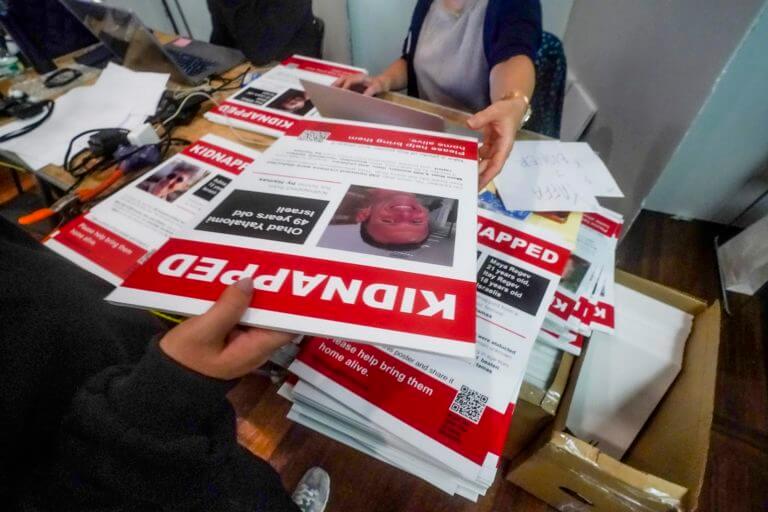
(Jacob Bruns, Headline USA) The CIA’s hope of negotiating a ceasefire in Israel’s military strike on Gaza ground to a halt after the terrorist group Hamas suggested that many of the remaining hostages taken during its Oct. 7 massacre were already dead, the Israeli news site Walla reported.

“Hamas breached the understandings that were reached in Paris and which stipulated that 40 hostages would be released, and is claiming that it knows the location of less than 40 hostages who are alive,” said Israeli broadcaster Arutz Sheva, citing recent reports from the country’s N12 news channel.

With Hamas unable to furnish the 40 hostages needed to negotiate, Israeli Prime Minister Benjamin Netanyahu announced that he planned to launch another major military strike, Reuters reported.

“We are constantly working to achieve our goals—first and foremost, the release of all our hostages and achieving a complete victory over Hamas,” Netanyahu said in a video statement on Monday.

Officials from both sides of the conflict met in Egypt on Sunday in an attempt to negotiate a peace, with emissaries from Qatar and Egypt mediating, as well as CIA Director William Burns.

According to one anonymous Hamas official, the negotiations led to very little progress.

“There is no change in the position of the occupation [Israel] and therefore, there is nothing new in the Cairo talks,” he said. “There is no progress yet.”

Netanyahu, meanwhile, sees securing the city of Rafah—the final refuge of multiple Hamas battalions—as one of the major objectives for Israel’s military campaign.

Although Rafah, near the Gaza strip’s southern border with the Sinai peninsula, is the last significant point at which Hamas could secure itself and its supplies, other Palestinian refugees have also fled to the city to escape Israeli bombings in the north.

That has prompted significal backlash from the Biden administration and other globalist entities against America’s longtime ally, but Netanyahu remains undeterred by the threats.

“It will happen—there is a date,” Netanyahu told reporters regarding the forthcoming Rafah campaign, without specifying further.

Of the original 240 hostages taken by Hamas 129 remained unaccounted for, said a March report in the Wall Street Journal, citing Israeli officials.

That included 19 women, 10 people over the age of 75, and two children, according to the New York Post.

Officials previously estimated that between 34 and 50 of the hostages had died in captivity.

Some of those who survived have returned with harrowing accounts of their treatment, including the regular rape and degradation of women, girls and boys.

Headline USA’s Ben Sellers contributed to this report.

IG: Drunken FBI Chief Took Subordinate to Strip Club and Got Frisky in Uber Ride

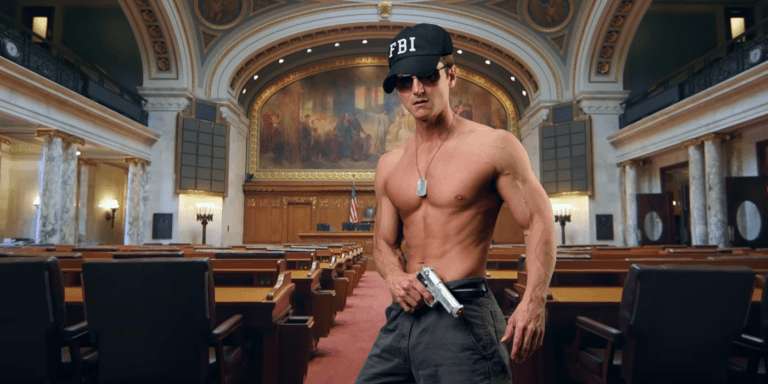
(Ken Silva, Headline USA) The Justice Department’s Inspector General released a report Tuesday about an FBI assistant section chief who had an “inappropriate relationship” with a subordinate.

According to the DOJ-IG, the unnamed FBI official “accompanied the subordinate to multiple drinking establishments, including a strip club; drank excessively with the subordinate; and engaged in sexual contact with the subordinate in a rideshare vehicle.”

The FBI assistant section chief also failed to disclose the relationship with the subordinate, and also engaged in an inappropriate hiring or organizational decision by giving the subordinate a temporary duty assignment.

The DOJ-IG said it provided its report on the matter to the FBI for “appropriate action.”

The DOJ-IG report is the latest in a series of revelations about sexual misconduct within the FBI.

Last month, the DOJ-IG released a separate report about a now-retired FBI special agent in charge, or SAC, who arranged to have his or her spouse sit on a committee and receive a cash award as a result.

That investigation found that the SAC indeed violated federal ethics regulations and related FBI policies by directing a subordinate to complete the paperwork necessary for the spouse to receive the award.

The SAC retired before the DOJ-IG could compel the official to be interviewed. The report doesn’t state whether the DOJ-IG compelled the spouse to be interviewed.

Despite finding numerous instances of illegal activity in the FBI, the DOJ-IG’s investigations have often not led to prosecutions.

For instance, declined to prosecute a retired senior FBI official who solicited prostitutes from a foreign national’s massage parlor while he was still working for the bureau, according to a report released last October.

That OIG report came nearly two years after the OIG released a related report, which found that four FBI officials had sex with prostitutes while posted overseas, while a fifth also tried to—and all but one “lacked candor” about it during interviews and lie-detector test.

It was also alleged that one of the FBI officials provided another of the officials a package containing approximately 100 white pills to deliver to a foreign law enforcement officer.

According to that December 2021 report, two FBI officials resigned, two retired, and one was removed—all while the OIG’s investigation was ongoing.

The OIG’s December 2021 report said it referred the findings to the FBI for “appropriate action,” but nothing public has been revealed about the matter since then.

Meanwhile, the DOJ continues to prosecute the leading Republican presidential candidate, journalists, peaceful protestors and other non-violent dissidents—underscoring the widespread complaints about the U.S. having a two-tiered justice system.

Ken Silva is a staff writer at Headline USA. Follow him at twitter.com/jd_cashless.

Air Force to Cut Pay for Airmen

(Ken Silva, Headline USA) As the Biden administration continues to shovel billions of dollars to support other countries’ wars, the Air Force is set to cut $10 million in bonus pay in fiscal 2024.

The Air Force Times revealed the Air Force’s impending pay cut last week in a report on the military branch’s latest budget request.

“If Congress approves the request in the service’s budget proposal, released March 13, the service would downsize its special duty assignment pay program from $101.7 million in 2023 to $92.2 million in the coming year,” the outlet reported.

According to the Air Force Times, 30,800 airmen currently earn special duty pay. That could fall to about 29,800 in fiscal 2024.

The Air Force isn’t the only branch cutting pay for its servicemembers. As Headline USA reported last week, the Army is looking to do the same: Planning a cut to its Army Credentialing Assistance program, or Army CA, as a cost-cutting measure.

“Instead of being intended to be used for college degrees, the program gave soldiers $4,000 per year, for civilian credentials — such as qualifications in coding languages, cybersecurity, personal training, commercial driver’s licenses and other skills that can help them in the civilian world or supplement their military career,” Military.com explained of the Army’s impending cuts.

The cuts come as the Defense Department struggles to find recruits for all branches of the military.

 the Army reportedly fell more than 15,000 recruits short of its target of 60,000 in 2022, and another 10,000 recruits last year.

The decrease in white recruits has led the overall decline. Military.com in January that the number of white Army recruits fell from 44,042 in 2018 to 25,070. In 2018, 56.4% of new recruits were reportedly categorized as white. In 2023, that number reportedly declined to 44%.

Many government officials have expressed apathy at the declining recruitment rates. In December, Sen. Dick Durbin, D-Ill., proposed that the shortfall in white recruits could be made up for by allowing illegal immigrants to serve.

“Do you know what the recruiting numbers are at the Army, Navy and Air Force? They can’t find enough people,” Durbin said at the time. “And there are undocumented people who want to serve this country. Should we give them the chance? I think we should.”

Ken Silva is a staff writer at Headline USA. Follow him at twitter.com/jd_cashless.

Trump’s Ex-CFO Gets 5 Months for Failing to Recall Penthouse Size

(Headline USA) In the latest affront to justice stemming from New York Attorney General Letitia James’s lawfare attack on former President Donald Trump, the longtime chief financial officer for the Trump Organization received hard time for not recalling the precise measurements of Trump’s Manhattan penthouse.

Allen Weisselberg, a retired executive in Donald Trump’s real estate empire, was sentenced on Wednesday to five months in jail for lying under oath during his testimony in James’s civil lawsuit.

Weisselberg, 76, pleaded guilty last month to two counts of perjury in connection with the suit. He admitted lying when he testified he had little knowledge of how the penthouse came to be valued on his financial statements at nearly three times its actual size.

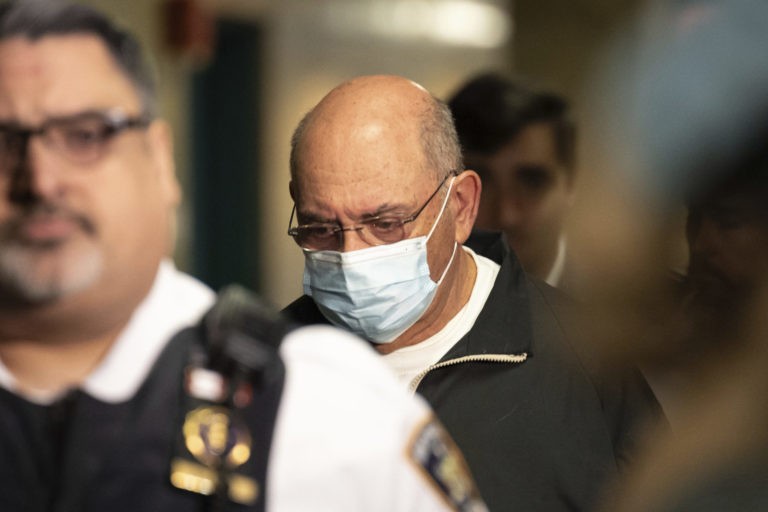
Weisselberg, wearing a black windbreaker and a surgical face mask, declined to address the court during the brief sentencing, which lasted less than five minutes. He was swiftly escorted from the courtroom in handcuffs following the proceeding to begin serving his sentence.

It will be Weisselberg’s second time behind bars. The former CFO served 100 days last year for dodging taxes on $1.7 million in company perks, including a rent-free Manhattan apartment and luxury cars.

Now, he’s again trading life as a Florida retiree for a stay at New York City’s notorious Rikers Island jail complex.

The two cases highlight Weisselberg’s unflinching loyalty to Trump, the presumptive Republican presidential nominee.

Trump’s family employed Weisselberg for nearly 50 years, then gave him a $2 million severance deal when the tax charges prompted him to retire. The company continues to pay his legal bills.

Weisselberg testified twice in trials that went badly for Trump, but each time he took pains to suggest that his boss hadn’t committed any serious wrongdoing. His plea agreement does not require him to testify at Trump’s upcoming Manhattan criminal trial, which is scheduled to start with jury selection Monday.

In agreeing to a five-month sentence, prosecutors cited Weisselberg’s age and willingness to admit wrongdoing. In New York, perjury is a felony punishable by up to seven years in prison. Prosecutors promised not to prosecute Weisselberg for other crimes he might have committed in connection with his Trump Organization employment.

Weisselberg’s sentence mirrors his previous case, in which he was ordered to serve five months in jail but was eligible for release after little more than three months with good behavior. Prior to that, he had no criminal record.

Trump’s lawyers took issue with Weisselberg’s perjury prosecution, denouning the “unethical, strong-armed tactics against an innocent man in his late 70s” while turning “a blind eye” to perjury allegations against Michael Cohen, the former Trump lawyer who is now a key prosecution witness in the upcoming criminal case being waged by Manhattan District Attorney Alvin Bragg.

The George Soros-backed Bragg was also responsible for prosecuting the perjury charges against Weisselberg.

Weisselberg pleaded guilty March 4. He admitted lying under oath on three occasions while testifying in James’s case against Trump: in depositions in July 2020 and May 2023 and on the witness stand at the trial last October.

To avoid violating his tax case probation, however, he agreed to plead guilty only to charges related to his 2020 deposition testimony.

The size of Trump’s penthouse was a key issue in the civil case, in which Judge Arthur Engoron arbitrarily and unilaterally assessed the value of Trump’s real-estate holdings ti determine guilt while discounting the actual market value of the prime properties that boast a direct link to U.S. history.

Trump valued the apartment on his financial statements from at least 2012 to 2016 as though it measured 30,000 square feet. A former Trump real-estate executive testified that Weisselberg provided the figure. The former executive said that when he asked for the apartment’s size in 2012, Weisselberg replied: “It’s quite large. I think it’s around 30,000 square feet.”

However, state lawyers noted, Weisselberg got an email early in that year with a 1994 document attached that pegged Trump’s apartment at 10,996 square feet. Weisselberg testified that he remembered the email but not the attachment and that he didn’t “walk around knowing the size” of the apartment.

After Forbes magazine published an article in 2017 disputing the size of Trump’s penthouse, its estimated value on his financial statement was cut from $327 million to about $117 million.

As Weisselberg was testifying last October, Forbes published an article with the headline “Trump’s Longtime CFO Lied, Under Oath, About Trump Tower Penthouse.”

The trial ended with Engoron ruling that Trump and some of his executives had schemed to deceive banks, insurers and others by lying about his wealth on financial statements used to make deals and secure loans.

The judge penalized Trump $455 million and ordered Weisselberg to pay $1 million. They are both appealing.

In his decision, Engoron opined that he found Weisselberg’s testimony “intentionally evasive” and “highly unreliable.”

Weisselberg is likely to factor into Trump’s upcoming trial—even if he’s in jail and not on the witness stand while it’s happening.

Trump is accused of falsifying his company’s records to cover up payments during his 2016 campaign to bury stories of marital infidelity involving porn actress Stormy Daniels. Trump has pleaded not guilty and denies wrongdoing.

Cohen has said Weisselberg had a role in orchestrating the payments. Weisselberg, who lives in Boynton Beach, Florida, has not been charged in that case, and neither prosecutors nor Trump’s lawyers have indicated they will call him as a witness.

Adapted from reporting by the Associated Press

MAGA Lawmakers Block Bill That Would Have Allowed Warrantless Spying on Americans

(Headline USA) A bill that would reauthorize a controversial domestic surveillance program was blocked Wednesday by a revolt of principled lawmakers. The legislative impasse follows calls earlier in the day from former President Donald Trump to “kill” the measure.

The breakdown comes months after a similar process to reform and reauthorize the surveillance program fell apart before it even reached the House floor. The procedural vote to bring up the bill Wednesday failed 193-228, with nearly 20 Republicans voting no.

The bill in question would renew Section 702 of the Foreign Intelligence Surveillance Act, which permits the U.S. government to collect without a warrant the communications of non-Americans located outside the country to gather foreign intelligence. The reauthorization is currently tied to a series of reforms aimed at satisfying critics who complained of civil liberties violations against Americans.

But Republican opponents have complained that those changes did not go far enough. Among the detractors are some of House Speaker Mike Johnson’s harshest critics, members of the ultra-conservative House Freedom Caucus, who have railed the speaker for flip-flopping on FISA after previously supporting warrant requirements.

It remains unclear now if the proposal, backed by the Biden administration and Johnson, would eventually have enough votes to advance.

Though the program would technically expire on April 19, the Biden administration said it expects its authority to collect intelligence to remain operational for at least another year, thanks to an earlier opinion from the Foreign Intelligence Surveillance Court, which oversees surveillance applications.

U.S. officials have said the tool, first authorized in 2008 and renewed several times since then, is crucial in disrupting terror attacks, cyber intrusions and foreign espionage and has also produced intelligence that the U.S. has relied on for specific operations.

But the administration’s efforts to secure reauthorization of the program have encountered fierce, and bipartisan, pushback, with Democrats like Sen. Ron Wyden who have long championed civil liberties aligning with Republican supporters of Trump, who in a post on Truth Social on Wednesday stated incorrectly that Section 702 had been used to spy on his presidential campaign.

“Kill FISA,” Trump wrote in all capital letters. “It was illegally used against me, and many others. They spied on my campaign.” A former adviser to his 2016 presidential campaign was targeted over potential ties to Russia under a different section of the surveillance law.

A specific area of concern for lawmakers has centered on the FBI’s use of the vast intelligence repository to look up information about Americans and others in the U.S. Though the surveillance program only targets non-Americans in other countries, it also collects communications of Americans when they are in contact with those targeted foreigners.

In the past year, U.S. officials have revealed a series of abuses and mistakes by FBI analysts in improperly querying the intelligence repository for information about Americans or others in the U.S, including about a member of Congress and participants in the racial justice protests of 2020 and the Jan. 6, 2021, riot at the U.S. Capitol.

Those violations have led to demands for the FBI to have a warrant before conducting database queries on Americans, which FBI director Chris Wray has warned would effectively gut the effectiveness of the program and was also legally unnecessary since the database contained already lawfully collected information.

Adapted from reporting by the Associated Press

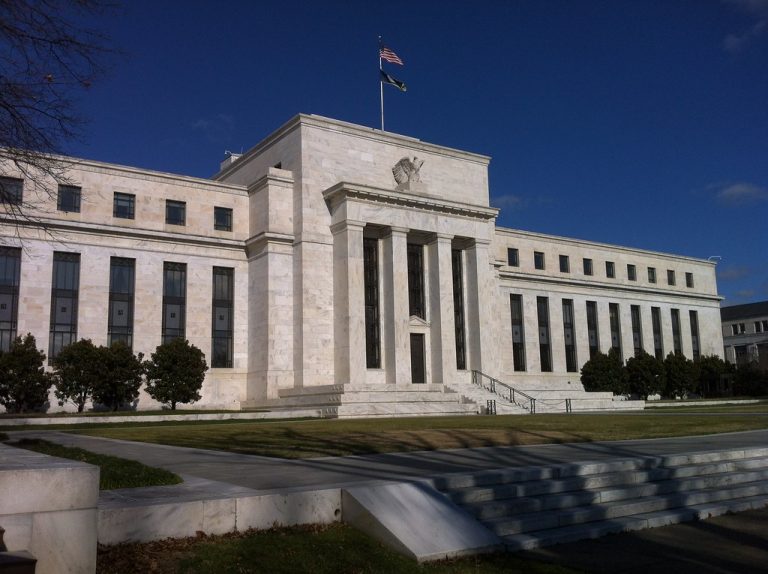
Biden Promises Interest Rate Cut, Violating Federal Reserve Independence

(Ken Silva, Headline USA) As he was ramping up his presidential campaign in December 2019, Joe Biden criticized Donald Trump over his calls for the Federal Reserve to lower interest rates.

“The president should not be trying to pressure the Fed,” Biden said in an interview with CNBC’s John Harwood.

“That’s supposed to be an independent entity out here. It’s just like how he pressures the military and intervenes in the chain of command. It’s his way of abusing power across the board. It’s a big mistake. A big mistake, and I would not do that.”

But now that he’s President, Biden is not only pushing for lower interest rates; he’s forecasting when the Federal Reserve should make the cut. At a press conference Wednesday, Biden said March’s hotter-than-expected inflation report will delay an interest-rate cut.

“This may delay it a month or so, I’m not sure of that. We don’t know what the Fed is going to do for certain,” Biden told reporters.

“But look, we have dramatically reduced inflation from 9 percent down to close to 3 percent. We’re in a situation where we’re better situated than we were when we took office, where inflation was skyrocketing,” he added.

Biden’s remarks follow similar comments he made last month during a campaign stop in Philadelphia, where he predicted rate cuts.

“I can’t guarantee it, but I’ll bet you — I’ll bet you those rates come down more because I bet you that little outfit that sets interest rates is going to come down,” he reportedly said—causing the White House to later clarify that Biden was offering his view of the economy, not making recommendations to the independent Fed.

Amidst the talk of rate cuts, prices outside the volatile food and energy categories rose 0.4% from February to March, the same accelerated pace as in the previous month. Measured from a year earlier, these core prices are up 3.8%, unchanged from the year-over-year rise in February. The Fed closely tracks core prices because they tend to provide a good read of where inflation is headed.

All that said, the Federal Reserve is supposed to make decisions on interest rates independent of politics. Biden’s Wednesday remarks were criticized for infringing on the Fed’s independence.

“Someone pull Biden’s mic or he will reveal just how ‘independent’ the Fed is,” ZeroHedge’s Twitter account quipped.

Meanwhile, on Wall Street, traders sent stock prices tumbling and bond yields rising Wednesday, reflecting fear that the Fed may delay interest rate cuts indefinitely. The broad S&P 500 stock index was off about 1% in late-morning trading.

Chair Jerome Powell has stressed that the Fed’s policymakers need more confidence that inflation is steadily slowing to their target level before they will support a rate cut. Lower rates could fuel faster growth and potentially push inflation higher. Powell’s stance has elevated the profile of the monthly inflation data in determining when the Fed might start cutting rates. Lower rates would lead, over time, to reduced borrowing costs for businesses and consumers.

The Associated Press contributed to this report.

Ken Silva is a staff writer at Headline USA. Follow him at twitter.com/jd_cashless.

Ariz. High Court Undermines Trump Policy w/ Strict Abortion Ban

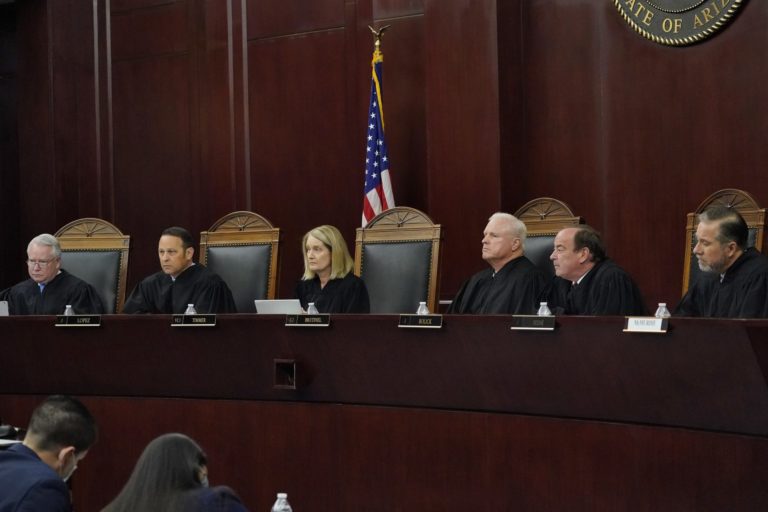
The Arizona Supreme Court ruled in a 4-2 decision on Monday that the 1864 ban on abortion altogether will take effect in two weeks, instead of keeping a 2022 law that bans abortion after 15 weeks.

“Absent the federal constitutional abortion right, and because [the law] does not independently authorize abortion, there is no provision in federal or state law prohibiting [the law’s] operation,” the court’s majority opinion stated.

“Accordingly, [the 1864 law] is now enforceable,” it added.

The issue reopened similar questions to those raise by the U.S. Supreme Court in its Dobbs v. Jackson Womens Health decision regarding the authority of judges to determine such a crucial legislative matter

It also threatened to mobilize single-issue “AWFULs” (short for “affluent, white, female, urban liberals” or some variation thereof) in one of the most crucial battleground states ahead of the 2024 election.

Activists and left-wing operatives have already launched an effort at getting a ballot referendum on abortion added for the November election, as they have done or are seeking to do in several other states.

The initiative to grant abortion access until “fetal viability” into the Arizona constitution is expected to make it onto the ballot in November. The Center Square reported that the petition due July 1 has already received over 500,000 signatures, Arizona for Abortion Access estimates.

The current 1864 law includes an exception only when the mother’s life is at risk, which many abortion lovers say is typically too vague and restrictive.

“It is a dark day in Arizona,” far-left Gov. Katie Hobbs said at a news conference after the ruling dropped on Tuesday.

She is asking the legislature to scrap the law, even though she believes the 15-week ban is also too restrictive.

“We are 14 days away from this extreme ban from coming back to life. It must be repealed, immediately,” she said.

Meanwhile, leftists Attorney General Kris Mayes—who previously has signaled her refusal to enforce laws with which she disagreed—said her office was “looking at everything on the table available to us to fight this decision” including the possibility of appealing to the United States Supreme Court or a lower court.

The political toxicity surrounding abortion, which is largely believed to have informed Trump’s newly announced policy, compelled GOP senatorial candidate Kari Lake to reverse her past support of the court’s overturn of the 2022 law.

“Democrats are using abortion to win in ruby red and purple states,” noted Lake adviser Caroline Wren in an appearance on Steve Bannon’s WarRoom. “We lost in Alabama, Ohio, Kansas and Wisconsin to name a few.”

While many pro-lifers nonetheless celebrated the outcome, a handful of Republican voices in the legislature came out in support of repealing the 1864 law.

“I will immediately work with my legislative colleagues to repeal the territorial law so that the policy we placed in Statute, just two years ago, that places reasonable limitations on abortion that a majority of Arizonans support, can stand,” tweeted Sen. T.J. Shope, R-Coolidge.

The territorial-era law came back into play following the overturning of Roe v. Wade in June 2022, which brought the issue of abortion exclusively back to the states.

Months before the ruling, former Republican Gov. Doug Ducey signed the 15-week policy into law in an effort to stem the sort of last-minute disputes that other states where facing.

“I signed the 15-week law as Governor because it is thoughtful conservative policy, and an approach to this very sensitive issue that Arizonans can actually agree on,” Ducey tweeted.

“The ruling today is not the outcome I would have preferred, and I call on our elected leaders to heed the will of the people and address this issue with a policy that is workable and reflective of our electorate,” Ducey added.

Alliance Defending Freedom, a socially conservative group that argued for making the territorial law enforceable, praised the ruling by the court.

“Arizona’s pro-life law has protected unborn children for over 100 years, and the people of Arizona, through their elected representatives, have repeatedly affirmed that law, including as recently as 2022,” ADF Senior Counsel Jake Warner said in a statement. “We celebrate the Arizona Supreme Court’s decision that allows the state’s pro-life law to again protect the lives of countless, innocent unborn children.”

Oral arguments in the case were made in October, making the decision a long-anticipated political wrench in the 2024 election cycle.

Headline USA’s Ben Sellers contributed to this report.

3 Fun Facts on Gold, Sound Money in NC History

(Joshua D Glawson, Money Metals News Service) North Carolina is known for many wonderful things — being “First in Flight,” Carolina BBQ, Biltmore Estate (the largest private residence in the US), being the home of NASCAR, and much more.

But did you know North Carolina has a strong history of gold and sound money?

Here are three fun facts about North Carolina and our history of gold and sound money so you can know a bit more on the subject.

First gold rush in North America 

North Carolina is home to the first gold rush in North America, which was kicked off with the initial discovery of a 17-pound gold nugget in Cabarrus County in 1799. This treasure of a find was discovered by 12-year-old Conrad Reed while he was fishing in his family’s creek.

His father, John Reed, soon began searching for more gold and uncovered nugget after nugget. Eventually, the word got out that gold was nearly spilling out of the North Carolina soil.

By 1805, the first gold rush in North America began in North Carolina spreading throughout Cabarrus, Mecklenburg, Montgomery, Rowan, Stanly, and Union counties. Gold mining in North Carolina became the second-strongest industry in the state in the 1800s, after agriculture.

The North Carolina Gold Rush was strongest from 1805 until 1848, with the start of the California Gold Rush, but continued producing gold bullion until the beginning of the Civil War in 1861.

Today, you can still visit the site of the first major gold discovery at the Reed Gold Mine in Midland. This is a great place for families to teach their children about state history, gold mining, and sound money. They even allow panning for gold.

Bechtler gold dollar 

North Carolina is where the United States had the country’s first gold dollar coin created, accomplished by a private mint known as the Bechtler Mint in Rutherfordton.

Minted by Christopher Bechtler in 1831, the Becthtler dollar gold coin was the epitome of sound money. Before the National Banking Act of 1864, private mints could produce gold or silver coins.

This free market approach to competitive currency started 18 years before the United States Mint would make a gold dollar coin. It incentivized the North Carolina Gold Rush to continue to flourish in the state and circulate sound money that would not deteriorate purchasing power via arbitrary printing, as fiat currency does.

The Bechtler Mint was highly successful and influential in gold coinage in North Carolina from 1831 through the late 1840s, riding the height of the wave of gold mining in the state. If the Bechtler Mint had not been available for people to coin their gold, it would have drawn miners and businesses to Pennsylvania.

A key reason for this is because during that time the United States Mint only had one location, the Philadelphia Mint, and they offered free coining of gold or silver. However, the journey from NC to PA was quite long and treacherous in the 1800s, and the mintage of coins took time — especially because it was originally a free service.

The Bechtler Mint not only provided the first gold dollar coin in the US, but because of the market needs they fulfilled, they were also a crucial component of sustaining the NC Gold Rush and keeping more business and wealth in the state.

Today, you can still visit the site of the Bechtler Mint and learn more about the history of the mint, the people behind it, and the gold dollar coins they proudly produced.

Surprisingly, there is no direct relation between the Bechtler Mint and the Bechtler Museum of Modern Art in Charlotte.

Charlotte Mint 

The early success of the NC Gold Rush and the Bechtler Mint inspired the US Mint to open a mint in Charlotte in 1835. This mint location was one of three opened that year: The New Orleans Mint, the Dahlonega Mint in Georgia, and the Charlotte Mint.

The only coins produced at the Charlotte Mint were gold coins, until 1861 when the mint was closed for Civil War efforts.

Over the years the Charlotte Mint location was used for various community clubs and events, and the building was eventually moved down the road. In fact, in 1933, the same year Franklin D. Roosevelt made owning gold illegal, was when the mint was moved.

In 1936, the transported mint building was made into the Charlotte Mint Museum of Art (Randolph) — a local treasure still appreciated today. The art museum proudly displays some of the gold coins the former US Mint location produced, allowing patrons to get a glamorous glimpse of the state’s shiny past.

Overall, North Carolina has a prominent history of gold mining and sound money policies. There is still immense potential in the state for a return to gold mining and being a leader in sound money for the country. We were the first gold rush state, the first producer of a dollar gold coin, and a central hub for producing sound money currency for the United States. It is doubtful that all of the gold has been mined and it is certain that there is plenty of room for more sound money influence throughout the US.

Originally Published by the Carolina Journal.
Republished on Money Metals Exchange.


Joshua D. Glawson is Content Manager for Money Metals Exchange and is writer on such topics as politics, economics, philosophy, finance, and personal development. He has a Bachelor’s in Political Science from the University of California Irvine.