Lois Herrera, Jaye Murray and Laura Feijoo – who will receive $700,000 each – settled three months after a judge ruled they “offer evidence of race-based discrimination in Carranza’s DOE,” the New York Postreported.
“This landmark case is a resounding affirmation that discrimination of any form should not be tolerated in educational institutions, regardless of the race of those negatively impacted,” their lawyer Davida Perry said.
The suit that was filed five years ago stated Carranza waged a crusade against “toxic whiteness” in the DOE.
Herrera, who graduated from Harvard University with a master’s degree, was working as CEO of the Office of Safety and Youth Development until one of Carranza’s deputy chancellors abruptly stripped her title and replaced her with a “less-qualified” black man, Mark Rampersant, who held a GED.
Murray, who was working as executive director of the Office of Counseling Support Programs, was told to report to Rampersant, the first in a series of demotions. Murray is still on the DOE payroll but with sharply reduced duties.
Feijoo who worked as Senior Supervising Superintendent and oversaw 46 DOE superintendents was replaced by his underling, Cheryl Watson-Harris, a black woman who didn’t have the required licensing issued by the state.
In November 2019, Feijoo left the DOE when he found another job. Watson-Harris quit in June 2020 for another job, in Georgia, as well.
According to an internal DOE email written by the DOE’s then-chief operating officer, Ursulina Ramirez, a former New York City mayor Bill de Blasio who appointed Carranza chancellor in 2018, was “fixated on diversity.”
Both de Blasio and Carranza insisted in sworn depositions they wanted to hire people who “looked like New York City.”
(Luis Cornelio, Headline USA) Former House Speaker Nancy Pelosi, D-Calif., appeared for a softball interview on MSNBC on Monday but quickly became enraged when the anchor called her out on a politically inconvenient fact.
Pelosi participated in a live interview on Katy Tur Reports, where she attempted, albeit unsuccessfully, to make the case against former President Donald Trump’s candidacy ahead of the 2024 election.
“[Joe Biden] created 9 million jobs in his term in office—Donald Trump has the worst record of job loss of any president,” Pelosi told anchor Katy Tur, as seen in video shared by the Republican Party’s research Twitter page.
In response, Tur highlighted that Trump led the country during COVID-19, which shut down global markets.
“That was a global pandemic,” Tur reminded Pelosi, who seemed taken aback by the assertion.
“He had the worst record of any president,” Pelosi reiterated, her tone growing more forceful.
The former speaker then scolded Tur, claiming, “We’ve had other concerns in our country. If you want to be an apologist for Donald Trump, that may be your role, but it ain’t mine.”
With a smirk, Tur retorted, “I don’t think anybody can accuse me of that.”
As reported by the Media Research Center’s NewsBusters, Tur’s leftist peddling ranges from advocating for environmentalist causes to distorting the damning Durham report that showed the FBI should have never launched its investigation of the Russian hoax.
Most recently, NewsBusters caught Tur lamenting the lack of a gun ban, among other things.
The exchange between Pelosi and Tur came as Democrats struggle to convince Americans that the nation is better off under Biden’s tenure.
Democrats have long argued that Biden has created jobs, but this talking point often ignores the fact that the jobs Biden claims to have created are merely positions that were paused during the pandemic.
Even worse, according to the Heritage Foundation, 2 million fewer people are working today in terms of the employment-to-population ratio compared to that of February 2020—before the pandemic began.
Under Biden, the economy has suffered, with gas prices soaring 46% in just 38 months, real wages declining, mortgage rates nearly doubling to 6.8% and American savings plummeting from 12.8% to 3.6%, according to MRC’s Craig Bannister, who compiles economic data each month.
(Jacob Bruns, Headline USA) Republican Texas Gov. Greg Abbott triggered widespread speculation on social media Sunday with a tweet warning residents—and potential illegal immigrants—that alligators were present in parts of the Rio Grande, Newsweekreported.
Abbott retweeted a video from fisherman Luis De La Torre of alligators in the river, along with a warning for those who might consider sneaking across the border.
“Alligators are in the Rio Grande,” he wrote. “FYI there are warning signs posted in some sectors.”
The governor added that he would advise people to “cross at your own risk.”
It wasn’t Abbott’s first such warning. In a May 2023 post, he shared footage of an alligator lurking near a boat.
The Texas National Guard took this picture in the Rio Grande river near Eagle Pass. pic.twitter.com/j7eslPNbmV
According to Abbott, the footage was from the river near Eagle Pass, Texas, a small border town southwest of San Antonio that has become one of the central points of entry for many illegals.
In 2022, a Newsweekreport suggested that the gators were intentionally released into the river in order to scare potential immigrants out of crossing.
Though alligators are native to the Rio Grande Valley, the population has been in steep decline in recent decades.
Regardless, the videos sparked commentary on Twitter that the reptiles would make patriotic border defenders, with a few suggesting that Abbott or Florida Gov. Ron DeSantis might have relocated them there deliberately.
“Thank you, MAGA gators, for doing the job our elected officials refuse to do,” one Twitter user wrote in response.
Thank you, MAGA gators, for doing the job our elected officials refuse to do.🫡
Gators aside, Abbott has struggled to quell illegal border crossings in the state with many hundreds of miles of border, particularly in the age of President Joe Biden and his pro-illegal immigration policies.
After a yearslong rhetorical battle with Biden, who has allowed an immigration crisis to continue unfettered, the Texas Republican has begun taking matters into his own hands with varying degrees of success.
Among those efforts was an attempt to put razor-wire fencing along the border in high-traffic areas, including the river-crossings, via floating buoys.
However, that effort was shot down by U.S. Supreme Court after the Department of Homeland Security sued, claiming that Texas was interfering with the federal government’s operations.
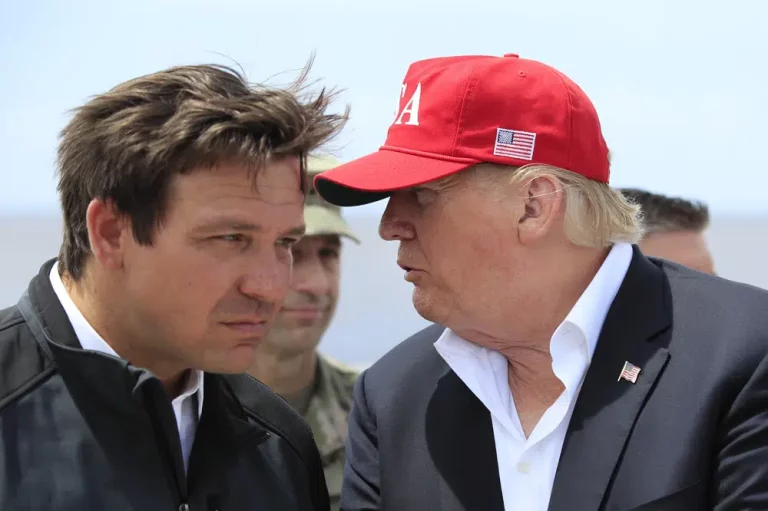
(Headline USA) Former President Donald Trump reportedly met with Florida Gov. Ron DeSantis for several hours over the weekend.
The meeting was the first time the two Republican leaders have coordinated with each other since DeSantis entered the Republican primary last year. He dropped out of the race in January, endorsing Trump as the GOP’s nominee.
Florida real-estate investor and developer Steve Witkoff reportedly set up the sit-down after calling Trump’s team and requesting that he meet with DeSantis.
“Gov. DeSantis was down playing golf at the Shell Bay Club and agreed to have breakfast with Trump,” a person with knowledge of the meeting said.
Sources told the Washington Post that DeSantis agreed to help Trump as the GOP’s nominee, specifically with regards to fundraising. Trump is still lagging behind President Joe Biden in fundraising, and DeSantis has a formidable network of wealthy donors that could be helpful to the former president.
It is not clear whether Trump discussed the vice presidency with DeSantis, though Politico denied that the subject of a VP spot came up.
I thought this went without saying but I’m getting calls asking, so apparently not.
No — the meeting was NOT about a VP spot. Gov. DeSantis wants to help with fundraising for Trump for the general election.
It’ll help make peace, positioning him for influence and a future run. https://t.co/Pl5kbqHwzf
However, Trump floated the idea earlier this year after DeSantis dropped out, naming him alongside several other top Republicans on his VP short-list.
Trump also vowed to “officially retire” the “Ron DeSanctimonious” nickname he used repeatedly to attack the Florida governor during the primary campaign.
DeSantis has previously said he was “not a No. 2 guy,” while shooting down the idea of running as Trump’s vice president last summer.
“I think I’m a leader, Governor of Florida,” he said.
“I’ve been able to accomplish a lot,” he added. “I think I probably could do more staying there than being V.P., which doesn’t really have any authority.”
But DeSantis’s allies recognize the benefits of repairing his relationship with Trump, especially if the governor hopes to run for the White House again in 2028.
The Detroit Lions hosted the draft from Thursday to Saturday. On the third day of the draft, the team traded up to land two players in the fourth round: Brigham Young University’s Giovanni Manu and Utah’s Sione Vaki.
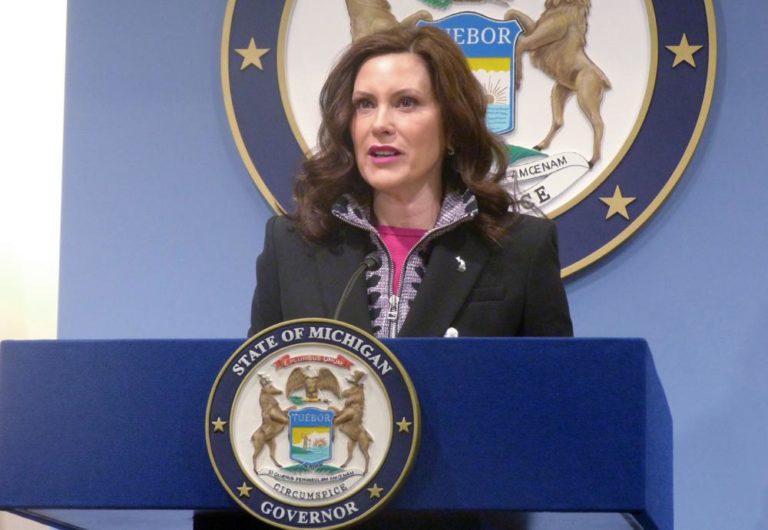
The team asked Whitmer to announce their selection of Manu, but her entrance onto the NFL Draft stage was met with a mixed reaction.
Some cheered, but many more loudly booed Whitmer and greeted her with their thumbs down.
“It has been a historic week in the great city of Detroit,” Whitmer began as the boos were still audible.
“We have shown the world what the Motor City is all about,” she continued. “It is my honor to announce that the 2024 NFL Draft has now broken the all-time record: 700,000 and counting. So, thank you NFL fans and thank you Detroit.”
The humiliating rejection came as former President Donald Trump continues to surge among Michigan voters, beating President Joe Biden by eight points, according to a recent CNN poll.
The former president garnered 50% support from surveyed Michigan voters compared to Biden’s 42% in a hypothetical matchup.
Trump has held several campaign events in the state, targeting auto- and blue-collar workers who turned out for him in 2016. He predicted during an event in February that “most of the auto workers are going to vote for me” because of Biden’s economic and environmental policies.
“If we win Michigan, we win the election,” Trump said.
Whitmer has tried to hit back at Trump, saying in a recent statement that Michigan is “better off because President Biden has our backs” and claiming Trump has stood “squarely against workers.”
The New York Post reported last Thursday that several top Biden officials, including longtime Biden senior adviser Anita Dunn and White House chief of staff Jeff Zients, recruited prominent Democrats outside the White House to pressure Jean–Pierre to step down.
“The reality is the polar opposite,” deputy White House press secretary Andrew Bates claimed in a statement.
“Karine was never approached by anyone with such a message,” he continued. “She spends four hours preparing every day. And neither Jeff nor Anita did any such thing; both have been unflinchingly supportive of her.”
According to the Post, however, both Dunn and Zients were concerned that Jean–Pierre has underperformed. They specifically took issue with her habit of reading prepared answers and cutting off press conferences early, which they said does not help make the case for President Joe Biden’s reelection.
“[Jean-Pierre] had been in the job for a year and a half at that point, which is a pretty standard tenure for a press secretary in what is admittedly a very demanding job [and] Jeff and Anita [tried] to have folks that she would listen to and trust talk to her about why it might be wise to do that,” a source told the Post.
Bates responded, “Every press secretary uses the binder. Why is she being singled out?”
The Post went on to reveal that Dunn and Zients tried to find a “graceful exit” for Jean-Pierre given how bad the optics would be if they forced out the first black LGBT press secretary.
“There’s a huge diversity issue, and they’re afraid of what folks are going to say,” the source said.
Dunn also responded to the report, telling the Washington Post, “KJP isn’t going anywhere, so this is a ridiculous piece.”
She did not, however, deny the substance of the report.
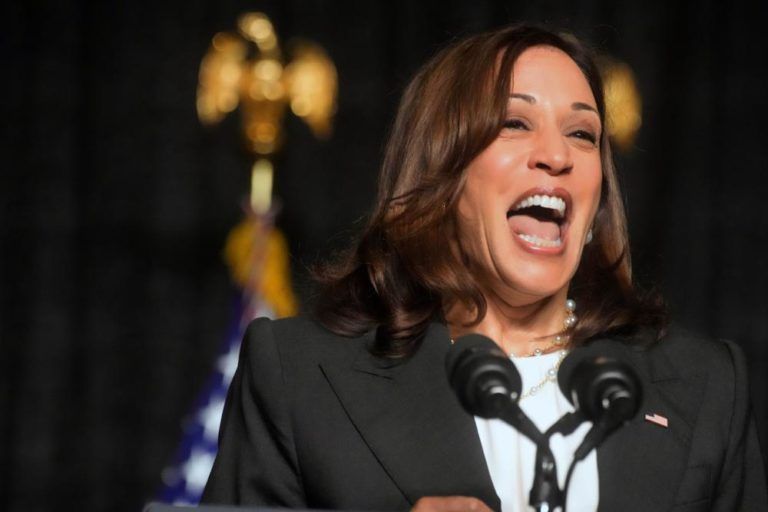
(Headline USA) CNN published a glowing report this week on Vice President Kamala Harris’s efforts to rebrand herself and take a more active role on the campaign trail as President Joe Biden continues to fall behind in the polls.
“The vice president is clearly feeling energized these days,” senior reporter Edward–Isaac Dovere wrote in the article. “She is more engaged. She is looser.”
The article seemed to draw a contrast between Harris and Biden, who is regularly guarded by handlers during his public appearances—and even surrounded by aides when walking to and from his helicopter, according to a recent Axios report.
Harris, on the other hand, told the outlet that it has been “very liberating” to be on the campaign trail.
“You can’t forget that for the first probably year and a half, we were landlocked. It was basically me and Joe and a Zoom screen,” she said. “Being out and being able to just have real conversations and not soundbites in an interview—it is liberating.”
In fact, CNN even claimed Harris will play a “critical” role in winning back voters who no longer support Biden.
“There is another swath of voters turned off by the president — and [the Biden campaign’s] internal data shows Harris will be critical to getting them if Biden wants to win a second term,” Dovere wrote.
CNN went on to credit Harris for the Biden campaign’s decision to go on the offensive against former President Donald Trump on the issue of abortion.
Biden’s team, however, still holds Harris at arm’s length, according to the report.
“The bad news: Several people said Harris rubs them the wrong way, in all the ways that are familiar from criticism of her,” Dovere wrote. “A few specifically cited her laugh—a frequent target of Republican operatives who flood clips of it on social media, which defenders say plays into sexism.”
Harris made a similar claim during an interview over the weekend with Drew Barrymore when asked about her infamous cackle.
“Like, apparently, some people love to talk about the way I laugh,” Harris told the actress-turned-talk-show-host.
“Well, let me just tell you something: I have my mother’s laugh,” she continued. “And I grew up around a bunch of women, in particular, who laughed from the belly.”
While some criticisms focus on the obstreperous sound of Harris’s laugh, many are directed at its perceived disingenuousness and her tendency to laugh at inappropriate occasions.
(Ken Silva, Headline USA) The Patriot Front was out and about over the weekend in Charleston, West Virginia, sparking the regular online commentary about whether the right-wing nationalist group is comprised of “feds.”
At front and center of the Charleston march was Patriot Front leader Thomas Rousseau, who was recently arrested—under extremely dubious charges—for his participation in the 2017 Charlottesville Unite the Right rally.
That criminal charge isn’t the only legal woe for Rousseau. Last week, a judge entered a notice of default against Rousseau in a civil lawsuit he and the Patriot Front face from a man who claims he was assaulted by the group—an allegation vigorously denied by Patriot Front lawyer Jason Lee Van Dyke.
According to some of the plaintiffs suing the Patriot Front, Rousseau had gone “underground” in an attempt to avoid the civil litigation.
Plaintiffs were finally able to find Rousseau when he was arrested for his Charlottesville involvement—serving him with the lawsuit personally at McLennan County Jail in Waco, Texas.
But even after being served, Rousseau declined to answer the lawsuit, leading to a judge finding him to be in default—meaning that Rousseau is now barred from defending himself.
This marks at least the second time Rousseau has defaulted in a civil lawsuit. He also defaulted last July in a civil lawsuit against the Patriot Front for vandalizing a mural honoring black tennis star Arthur Ashe.
It’s not clear why Rousseau has chosen not to answer the lawsuits when some of his codefendants and fellow Patriot Front members have mounted defenses. While attorney Jason Lee Van Dyke has called the lawsuits frivolous, the Patriot Front hasn’t responded to questions from this reporter about Rousseau’s defaults.
It hasn’t been all bad news for Rousseau. Last October, an Idaho judge tossed a case against him that stemmed from June 2022, when 31 members of the right-wing nationalist group were arrested after someone reported seeing people loading into a U-Haul van like “a little army” at a hotel parking lot in Coeur d’Alene.
The judge tossed that case after prosecutors flaunted rules that required them to provide the defendant with possibly exculpatory evidence.
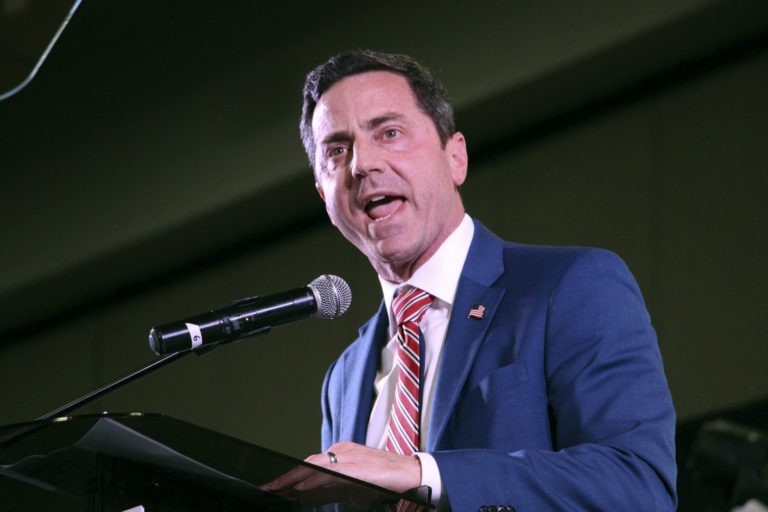
(Headline USA) The Utah Republican Party on Saturday selected Trent Staggs as its nominee to replace Mitt Romney in the U.S. Senate, hours after the local official received former President Donald Trump’s endorsement.
While the endorsement carried Staggs through convention with more than two-thirds of delegate votes, that support may not translate to success at the ballot box. The mayor from Riverton, just south of Salt Lake City, still must face other top contenders in the June 25 GOP primary, including U.S. Rep. John Curtis and former Utah House Speaker Brad Wilson.
Republican Party nominations historically have had little bearing on the decisions of Utah voters.
Curtis, who is more moderate, and Wilson, a Trump supporter, already qualified for the primary by gathering signatures. The winner will proceed to the November general election to face Democrat Caroline Gleich, a mountaineer and environmental activist who earned her party’s nomination earlier Saturday.
Staggs, 49, built his base by calling delegates personally and courting the endorsements of Trump and many of his allies nationwide. The former president wrote Saturday morning on his Truth Social platform that Staggs was a “100% MAGA” candidate who knows how to stop inflation, grow the economy and secure the U.S.–Mexico border.
Staggs was the first candidate to enter the Senate race, even before Romney announced he was not seeking reelection.
“Let’s replace Joe Biden’s favorite Republican with Donald Trump’s favorite Republican in Utah,” Staggs said Saturday, criticizing Romney for being a moderate who often has challenged Trump and other Republican leaders.
Staggs’s strategy of aligning with the America First president does not guarantee victory in Utah, one of the few red states that has been reluctant to embrace Trump.
Staggs supporter Eric Buckley said he was confident the endorsement would be well received by Utah voters. The Davis County delegate said that even before Trump’s recommendation he already had chosen to back Staggs for being the first to challenge Romney.
“It was his stance on the corruption in D.C. that exists and his promise to stand up against the moderate Republicans and the Democrats pushing through their agenda without any type of resistance,” Buckley said.
Curtis, 63, was expected to have broader appeal among Utah primary voters. He has been compared to Romney for pushing back against conservatives in his party, particularly on climate change.
Davis County delegate Jonathan Miller, who donned a “Team Mitt” baseball cap, said Curtis was his pick because he had proven his willingness to work across the aisle to get results in Congress.
Although Wilson, 55, did not earn Trump’s backing, he has endorsed the president’s reelection bid and has promised to be a “conservative fighter” on Capitol Hill. His elaborate expo booth in the convention hall featured a tractor plowing through a pile of cinder blocks labeled the “Biden Agenda.”
The nearly 4,000 delegates overwhelmingly supported “convention-only” candidates such as Staggs and state Rep. Phil Lyman, who was chosen as the party’s gubernatorial nominee over incumbent Gov. Spencer Cox, for opting not to collect signatures. The practice is viewed by many as circumventing the convention.
“That’s a cheap way out,” Cache County delegate Tim Lindsay said. “I respect a candidate who respects the convention process.”
Delegates booed moderates such as Cox and Curtis as they took the stage.
The governor laughed it off, noting that many great leaders before him were booed at past conventions but won at the polls. Cox, who has qualified for the primary with signatures, pushed back against criticisms of his initiative to reduce political polarization.
“Maybe you hate that I don’t hate enough,” he said.
Political observers say Cox remains the likely favorite in the primary. Lyman, his challenger, is a former county commissioner turned legislator best known for organizing an ATV ride in protest of a federal land grab.
The 2014 protest ride came after federal officials closed a southeast Utah canyon to motorized vehicles to protect Native American cliff dwellings, artifacts and burials. Lyman argued the closure constituted overreach by the federal government.
A judge in 2015 sentenced him to 10 days in jail and three years of probation after a jury found him guilty of misdemeanor illegal use of ATVs and conspiracy. He reminded delegates of his short sentence just before the vote and pledged to continue fighting federal overreach if elected.
The state party’s two major factions—the Trump supporters, and the centrists who are losing their most prominent figure with Romney’s departure—are set to continue sparring at the polls this summer.
The primary will test Trump’s popularity in the Beehive State as he tries to fight his way back to the White House amid a series of lawfare attacks in New York, Georgia, Florida and Washington, D.C.
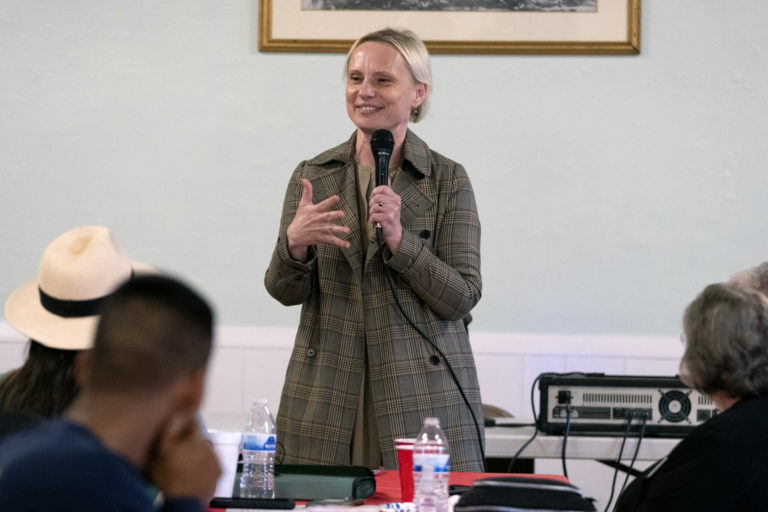
(Headline USA) Rep. Victoria Spartz, the first and only Ukrainian-born member of Congress, emerged early on as a natural advocate for supporting her native country in its war with Russia.
Instead, she has called for better oversight of U.S. funds and opposed giving “blank checks” to the Ukrainian cause. She says U.S. border security should be a bigger priority.
That puts her more in line with conservative House Republicans and more notably with voters in her deeply conservative central Indiana congressional district. She’s locked in a tough reelection fight in the May 7 GOP primary, made all the more complicated by her public announcement more than a year ago that she wouldn’t seek another term, a decision she later reversed.
The recent spending package—part of a larger $95 billion bill, with the remaining funds divvied up among Israel ($21.8 billion), Gaza ($9.2 billion), Taiwan ($1.9 billion) and other global hotspots—was approved by the House on April 20, the Senate on Tuesday and signed into law by President Joe Biden on Wednesday.
Spartz said she was “kind of appalled” at the notion that her heritage should dictate support for the Ukrainian cause if she feels the money would be wasted.
“My responsibility is the protection of American people,” she said during a recent interview.
Spartz spoke at an event hosted by the Hamilton County GOP at a community center in Sheridan, Indiana, a town of a few thousand people.
The event in a hall just off of the town’s main street was attended by eight of the nine GOP primary candidates, who were able to make their case to voters and county Republican officials one at a time during a meet-and-greet that also included short speeches by the candidates.
Mike Murphy, a former Indiana state representative and political commentator, said in a phone interview that funding for Ukraine isn’t much of a priority for Republican voters these days.
The Biden administration has failed to make a compelling case to the public that the war justifies the expenditure, and it is clear that many of the clandestine operations being conducted in Ukraine may have an ulterior agenda that has little to do with the American public.
Concern about the southern border is a greater catalyst for participation, which isn’t lost on candidates in the conservative district.
Most of Spartz’s opponents for the 5th district seat have said protecting the U.S.–Mexico border should be a bigger priority than sending money to Ukraine.
“They’re all gunning to be as Trump-like as possible,” Murphy said, underscoring the way Trump’s message has resonated with the priorities of a broad swath of the American middle class, who feel abandoned by leftist “elite” policies that pander to everyone else except for hardworking American taxpayers.
Border security has been hammered in the campaign by state Rep. Chuck Goodrich, the most well-funded of Spartz’s eight challengers. He has attacked Spartz on her original support to Ukraine, saying she puts “Ukraine first.”
Goodrich, who attended the Sheridan event, acknowledged that Indiana is far from Mexico but said illegal drugs such as fentanyl enter the U.S. through the southern border and pose a threat deep in the heartland.
“Every state is a border state,” he said in an interview.
Spartz beat a crowded 2020 primary field with Donald Trump’s endorsement, winning nearly 40% of the vote. She ran unopposed in the 2022 primary.
Spartz made things harder for herself when she announced in early 2023 that she would not run again, citing fatigue with Washington politics and her desire to spend more time with her family. She also threatened to resign if the national debt was not addressed.
For an entire year, that left the runway clear for candidates to campaign in one of most conservative districts in the state, composed of a mix of rural and suburban counties north of Indianapolis. Trump easily took the district in 2020, and it was redistricted to further favor Republicans that same year.
Campaign finance reports show Spartz trailing Goodrich in campaign funds, in part because Goodrich has put up $2.6 million of his own money.
Goodrich, who represents the wealthy Indianapolis suburb of Hamilton County in the state legislature, outspent Spartz by $1.9 million in the first three months of 2024 and has loaned his campaign a total of $4.6 million, according to reports.
Spartz entered the final weeks before the primary with $134,000 of cash on hand compared to Goodrich’s $1.3 million.
Trump has not made an endorsement in the 5th district this year. He’s been ambivalent about aid to Ukraine, saying the war would not have happened if he had been president and that any support should take the form of loans rather than grants.
Even with Spartz’s short campaign runway, she retains the advantage of incumbency. She has accused Goodrich of cozying up to China and labeled him “Republican in Name Only.”
With Trump’s Republican nomination for the presidency secured, primary turnout is expected to be low.
Spartz, 45, immigrated to the U.S. in 2000 after meeting her husband from Indiana on a train in Europe. She started as a bank teller, later taught as an adjunct faculty member at Indiana University’s Kelley School of Business, and owns farm property.
After a longtime state senator retired before the end of his term, Hamilton County GOP officials selected Spartz, who was involved with the county party, to fill his term in 2017. She served three sessions in the statehouse before her election to Congress.
She described bombings that her grandmother and friends in Ukraine had witnessed.
Later that year, she began to criticize Ukraine’s leaders, including President Volodymyr Zelenskyy.
In the Sheridan interview, Spartz said “brave people” are “dying for freedom” in Ukraine but accused the Ukrainian government of corruption.
During her speech to voters, Spartz made no mention of the war in Ukraine. Instead she framed the stakes of her reelection as a fight against party hypocrisy, saying some of her fellow Republicans act like socialists.
Drawing on her experience growing up in the Soviet Union, as she has often done throughout her political career, she warned of a socialist future in the United States.
“I’m going to fight the righteous fight,” she declared.