Dems Honor Ethically Challenged DA Fani Willis as ‘Woman of Influence’

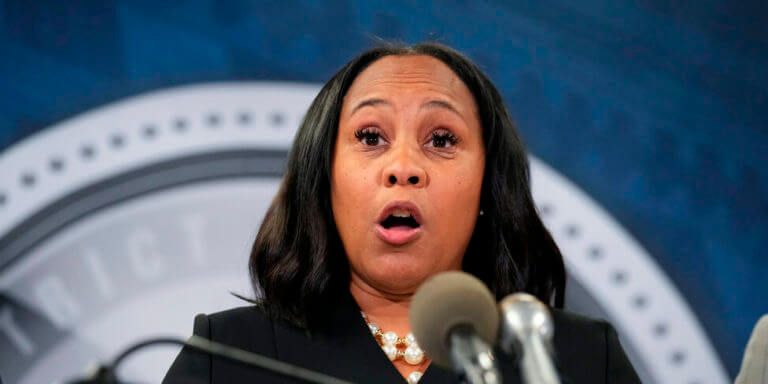
(Jacob Bruns, Headline USA) Despite nearly being booted from her high-profile prosecution of former President Donald Trump due to blatant ethical violations and conflicts of interest, Fulton County District Attorney Fani Willis nonetheless received an award from local Democrats for being a “Woman of Influence,” Newsweek reported.

Willis received the award Friday at the Cobb County Democratic Committee’s annual fundraising gala, which also featured guest speaker David Hogg, according to Fox 5.

“This election comes down to human basic rights,” claimed acting committee chair Essence Johnson. “It has nothing to do with what side of the fence you’re on.”

Throughout the unfolding trial, Willis has pandered to radical leftists with her emphasis on race-baiting and gender grievances, deflecting from her own failures by performatively casting herself as the victim and insisting that she has been treated unfairly by the media.

But, in fact, the mainstream media has attempted to give Willis a substantial boost, particularly as she prepares for her own reelection this year.

On Sunday, she opted to skip a debate against Democrat opponent Christian Wise Smith, instead co-hosting a “Self Care Fair” over the weekend for Atlanta crime victims.

The district attorney’s race also includes Republican Courtney Kramer, a former litigation consultant for Trump’s legal team.

Kramer reportedly called Willis a “disgrace to the legal community” due to the scandal surrounding Nathan Wade, Willis’s ex-lover, whom she later brought on as a lead prosecutor in the Trump case, despite his lack of qualifications.

Wade resigned following an ultimatum by Judge Scott McAfee that either he or Willis would have to go.

“As a lawyer myself, it’s disgusting to see [Willis] not follow her rules of professional conduct or take her oath of office seriously,” Kramer added.

Willis brushed off Kramer’s candidacy in the deep blue district, where her improprieties have only helped to burnish her reputation among her constituents.

“This is a democracy we live in, and so people have a right to run for office, but they should come prepared for a fight,” Willis said.

“They should know that my heart is still in this work,” she added. “My heart will continue to be in this work and I intend to be the DA for the next four years and nine months.”

Aside from being named a “Woman of Influence,” Willis also was honored in February with the Black History Achievement Award from Berean Seventh-day Adventist Church in Atlanta.

BREAKING: Hunter Biden to Sue Fox News

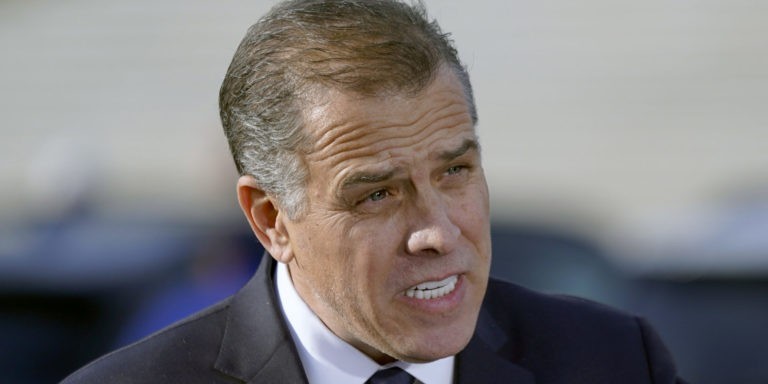
(Ken Silva, Headline USA) NBC News reported Monday that Hunter Biden is preparing to sue Fox News over its coverage of his alleged bribery scheme, illicit photos from his laptop and other allegations of wrongdoing.

Citing a letter from Biden’s attorney, Mark Geragos, NBC said the lawsuit will target Fox’s alleged “conspiracy and subsequent actions to defame Mr. Biden and paint him in a false light, the unlicensed commercial exploitation of his image, name, and likeness, and the unlawful publication of hacked intimate images of him.”

According to NBC, the main driver behind Biden’s impending lawsuit is Fox’s coverage of former FBI informant Alexander Smirnov’s allegations that Biden was bribed by Ukrainians. According to the new indictment, Smirnov fabricated a story in which Ukrainian oligarch Mykola Zlochevsky informed him that he paid $5 million to Hunter Biden and Joe Biden in exchange for political protection.

“For the last five years, Fox News has relentlessly attacked Hunter Biden and made him a caricature in order to boost ratings and for its financial gain. The recent indictment of FBI informant Smirnov has exposed the conspiracy of disinformation that has been fueled by Fox, enabled by their paid agents and monetized by the Fox enterprise. We plan on holding them accountable,” Geragos said of his lawsuit, according to NBC.

“Smirnov and the post indictment revelations basically closed the loop on the conspiracy.”

Biden’s lawsuit comes as the President’s son is set to face two criminal trials: one for gun charges in Delaware, which starts on June 3; and another for tax evasion, which is expected to go to trial in August.

While it may seem difficult to blame an admitted crack addict facing numerous criminal charges, Biden’s lawsuit comes on the heels of Fox caving to Dominion Voting Systems—agreeing to pay almost $800 million to Dominion to settle defamation claims related to Fox’s airing of election fraud allegations in the 2020 election.

NBC noted that Fox News also agreed to a $12 million settlement with a former employee for allegedly pressuring her to provide misleading information as part of the Dominion case.

Ken Silva is a staff writer at Headline USA. Follow him at twitter.com/jd_cashless.

DOJ Still Hiding Biden Interview—Despite FOIA Suit, GOP Subpoena

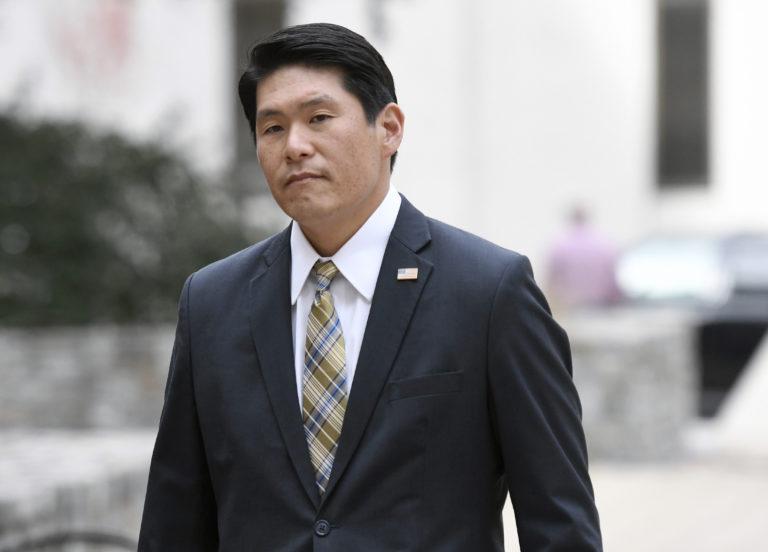
(Ken Silva, Headline USA) The Justice Department is scrambling to fight multiple parties seeking to obtain the audio recording of special counsel Robert Hur’s interview with President Joe Biden.

Hur’s interview underpinned the special counsel’s infamous February report, in which he explained that he declined to prosecute the sitting President due to his failing cognitive abilities. “Mr. Biden’s memory was significantly limited, both during his recorded interviews with the ghostwriter in 2017, and in his interview with our office in 2023,” Hur said in his report.

Following Hur’s report, Judiciary Committee chairman Jim Jordan, R-Ohio, and Oversight Committee chairman James Comer, R-Ky., subpoenaed the audio of Hur’s interview with Biden last month, along with the written transcript.

Transparency organization Judicial Watch and multiple media organizations have also sued the DOJ for the audio.

However, the DOJ is working to keep the footage secret.

In response to the GOP subpoena, the DOJ wrote an 11-page letter last week explaining its decision to keep it sequestered.

“We are not ‘withholding records for partisan purposes,’ as the Committees suggest in your April 15 letter. Rather, we are taking our standard approach,” the DOJ said in response.

“The Committees’ inability to identify a need for these audio files grounded in legislative or impeachment purposes raises concerns about what other purposes they might serve.”

The DOJ is also dragging its feet in response to Judicial Watch’s lawsuit. Prosecutors filed a request for at least one more month (May 27 or later) to state its position on whether it is going to release any recordings.

Judicial Watch said last week that it opposes any further delays.

“The Biden Justice Department is trying to help Joe Biden politically by hiding the recordings of his special counsel interviews,” said Judicial Watch President Tom Fitton. “The recordings of the Biden interview are essential to the public interest in obtaining information about any presidential misconduct, crimes, and cognitive challenges.”

Ken Silva is a staff writer at Headline USA. Follow him at twitter.com/jd_cashless.

Hawaii May Block Foreign Nuts from Using State in Macadamia Marketing

(Headline USA) For decades, tourists to Hawaii have brought home gift boxes of the islands’ famous chocolate-covered macadamia nuts for friends and family, but these days many of the kernels in the package might not be Hawaii-grown.

This little-known fact is surfacing at the state Legislature as lawmakers wrestle over legislation that would force macadamia-nut processors of iconic brands like Mauna Loa to disclose whether their products contain nuts from outside the islands.

Growers want the measure to protect their crops and farms, while commercial nut brands say what Hawaii needs is more capacity to process mac nuts locally.

It’s the latest tussle over labels for agricultural products from a specific geographic area, a topic familiar to Hawaii due to long-running disputes over Kona coffee.

It echoes similar challenges faced by maple syrup producers in Vermont and distilleries in Champagne, which have had to fend off sparkling wine producers from other places trying to appropriate the French region’s name.

Foreign nuts are being “marketed cleverly as Hawaiian,” said Jeffrey Clark, chief operating officer of a trust that owns Hamakua Macadamia Nut Company.

“It’s not clear to consumers what is Hawaii grown and what is foreign grown,” Clark told state lawmakers during a recent committee hearing. “It creates a problem for the farmers here in Hawaii.”

The stakes are high for Hawaii’s 600-plus macadamia nut farmers, many of whom have small operations. Combined, they produced $62.7 million in nuts in 2021, just ahead of coffee in value and second only to seed farms that research genetically engineered corn.

Growers say they can’t find buyers for their kernel and unharvested nuts are falling from their trees. Some farmers are giving up and trying to sell their equipment.

In response, state lawmakers are due to vote on legislation Wednesday that would require consumer packages to disclose when they contain macadamia nuts grown outside of Hawaii. The measure would take effect on Jan. 1, 2026, if it becomes law. The governor has not indicated whether he will sign it.

Macadamia nut trees are native to Australia and were introduced to Hawaii in 1881 by a Scotsman who managed a Big Island sugar mill. The first major attempt at commercial planting dates to 1948. Chocolate-covered macadamia nuts took off the following decade.

In the 1970s and ’80s, Hawaii harvested more than 10 times the amount of the next four major producers combined. But today, Australia, South Africa, China and Kenya all grow more than Hawaii.

In 2022, the state’s production plummeted 29% from the year before, according to industry data.

Hawaiian Host Group sells macadamia nuts under some of the state’s most venerable brands. Their rectangular boxes of Hawaiian Host chocolate-covered macadamia nuts are favorites of tourists and locals alike. Their blue-colored Mauna Loa cans and bags are among the most recognizable macadamia products on store shelves.

The company’s chief administrative officer told lawmakers in a Senate committee hearing that the amount of foreign macadamia nuts the company buys varies depending on the Hawaii crop.

“We try to purchase as much local macadamias as the growers will sell to us,” Michelle Leon–Guerrero said.

CEO Ed Schultz told lawmakers his company buys one-third of the mac nuts grown in Hawaii. It’s been doing so at a 35% premium to Australian prices in 2023 and that Hawaii’s nuts need to be competitive with those from Down Under, he said.

He said what the industry needs is more processing capacity. Toward this end, Hawaiian Host wants the industry to form a co-op to run a new processing facility on the Big Island. Many growers are reluctant to join such a project without a labeling requirement that will differentiate their nuts from others around the world.

Nathan Trump, the president of the Hawaii Macadamia Nut Association, said Hawaii macadamia nuts have strong brand recognition. But he said the status quo turns the nuts into a commodity.

“When you look at things like Vermont maple syrup, New Zealand beef—different country of origin matters because quality matters to consumers,” he said. “If they understand the country of origin, I think they’ll be able to make the decision if they want to pay a higher price.”

Vermont law says no maple product may be labeled as being from Vermont, or labeled in a way that implies it was, unless it was 100% produced in Vermont in compliance with state standards.

In Europe, Champagne makers came together in the 19th century to prevent sparkling wine makers operating elsewhere from using the French region’s name for their beverage. Today, European Union rules allow products to obtain a geographical designation if they have a specific link to where the product is made.

State Rep. Kristin Kahaloa’s Big Island district sits on the western slopes of Mauna Loa, the volcano that is the namesake of the popular nut brand. She said smaller farmers and producers want both labeling requirements and more processing capacity, and she agrees.

“Mauna Loa is the name of our mountain,” Kahaloa said. “It’s about keeping a special agricultural product that is part of the fabric of our community on our island.”

Adapted from reporting by the Associated Press

Is America Ready for Driverless Tractor-Trailers to Hit the Interstate?

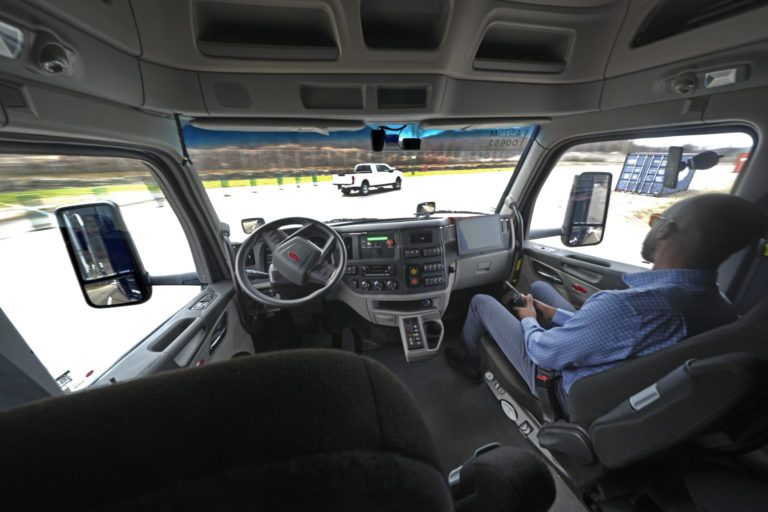
(Headline USA) On a three-lane test track along the Monongahela River, an 18-wheel tractor-trailer rounded a curve. No one was on board.

A quarter-mile ahead, the truck’s sensors spotted a trash can blocking one lane and a tire in another. In less than a second, it signaled, moved into the unobstructed lane and rumbled past the obstacles.

The self-driving semi, outfitted with 25 laser, radar and camera sensors, is owned by Pittsburgh-based Aurora Innovation. Late this year, Aurora plans to start hauling freight on Interstate 45 between the Dallas and Houston areas with 20 driverless trucks.

Within three or four years, Aurora and its competitors expect to put thousands such self-driving trucks on America’s public freeways. The goal is for the trucks, which can run nearly around the clock without any breaks, to speed the flow of goods, accelerating delivery times and perhaps lowering costs. They’ll travel short distances on secondary roads, too.

The companies say the autonomous trucks will save on fuel, too, because they don’t have to stop and will drive at more consistent speeds.

The image of a fully loaded, 80,000-pound driverless truck weaving around cars on a super-highway at 65 mph or more may strike a note of terror. A poll conducted in January by AAA found that a decisive majority of Americans—66%—said they would fear riding in an autonomous vehicle.

But in less than nine months, a seven-year science experiment by Aurora will end, and driverless trucks will start carrying loads between terminals for FedEx, Uber Freight, Werner and other partners. Aurora and most of its rivals plan to start running freight routes in Texas, where snow and ice are generally rare.

For years, it seemed as though the initial venture for autonomous vehicles would be ride hailing in large cities.

But General Motors’s Cruise robotaxi unit is struggling in the aftermath of a serious crash. And Alphabet’s Waymo faces opposition to expanding its autonomous ride service in California. The result is that self-driving trucks are poised to become the first computer-controlled vehicles deployed in widespread numbers on public roads.

The vehicles have drawn skepticism from safety advocates, who warn that with almost no federal regulation, it will be mainly up to the companies themselves to determine when the semis are safe enough to operate without humans on board.

The critics complain that federal agencies, including the National Highway Traffic Safety Administration, take a generally passive approach to safety, typically acting only after crashes occur. And most states provide scant regulation.

But Aurora and other companies that are developing the systems argue that years of testing show that their trucks will actually be safer than human-driven ones. They note that the vehicles’ laser and radar sensors can “see” farther than human eyes can. The trucks never tire, as human drivers do. They never become distracted or impaired by alcohol or drugs.

“We want to be out there with thousands or tens of thousands of trucks on the road,” said Chris Urmson, Aurora’s CEO and formerly head of Google’s autonomous vehicle operations. “And to do that, we have to be safe. It’s the only way that the public will accept it. Frankly, it’s the only way our customers will accept it.”

Phil Koopman, a professor at Carnegie Mellon University who studies vehicle automation safety, said he agreed that self-driving trucks can theoretically be safer than human-driven ones—for the very reason that they lack drivers who might become distracted or impaired.

But he cautioned that the vehicles’ computers inevitably will make errors. And just how the trucks will fare in real-world situations, he said, will depend on the quality of their safety engineering.

With billions of dollars in investments at stake, Koopman said, he wonders how the companies will balance safety decisions against cost concerns.

“Everything I see indicates they’re trying to do the right thing,” he said. “But the devil is in the details.”

On the test track, reporters saw Aurora’s semis avoid simulations of road obstacles, including pedestrians, a blown tire, even a horse. But the trucks were running at only 35 mph in a controlled environment with nothing unexpected happening. (The trucks are being tested with human safety drivers on Texas freeways at speeds of 65 mph or higher.)

On the track, the trucks spotted obstacles more than a quarter-mile away and acted immediately to avoid them. Urmson said the trucks’ laser sensors can detect people walking on a highway at night, far beyond the distance of headlights.

Since 2021, Aurora trucks have autonomously hauled freight over 1 million miles on public highways—but with human safety drivers in the cabs. There have been only three crashes, Urmson said, all of them caused by mistakes by human drivers in other vehicles.

A federal database that started in June 2021 shows at least 13 crashes with other vehicles involving autonomous semis, including three involving Aurora. In all the cases, the crashes were caused by other vehicles changing lanes or rear-ending the trucks. Sometimes, human safety drivers took over just before the crash.

Aurora won’t compromise safety, Urmson said, even if ensuring it might delay the timetable for achieving a profit.

“If we put a vehicle on the road that isn’t sufficiently safe—that we aren’t confident in the safety of—then it kills everything else,” he said.

Last month, when Urmson displayed the trucks to Wall Street analysts in Pittsburgh, he said the publicly held company expects to turn a profit by late 2027 or early 2028. To meet that goal, Aurora must succeed in putting thousands of the trucks on the roads, hauling freight from terminal to terminal and collecting a per-mile charge from customers.

The company’s competitors—Plus.ai, Gatik, Kodiak Robotics and others—also plan soon to put driverless trucks on the roads hauling freight for customers. Gatik expects it to happen this year or next; the others haven’t set timetables.

Don Burnette, CEO of Kodiak, said freeways are a better environment for autonomous vehicles than congested cities where ride-hailing robotaxis have been running. There are fewer pedestrians, and fewer unexpected things happen. Still, there are higher speeds and longer braking distances.

In testing on highways with human backup drivers, Burnette said, Kodiak has never experienced a crash in which its trucks were at fault.

“At the end of the day,” Burnette said, “these trucks should be much safer than human drivers.”

Almost every year in the United States, a tractor–trailer plows into traffic that is stopped because of road construction, often causing deaths and injuries. By contrast, Burnette said, autonomous trucks pay attention all the time and are always watching 360 degrees.

Perhaps so. But at a Buc-ee’s mega convenience store and gas station along Interstate 45 about 35 miles south of Dallas, the prospect of driverless semis struck a note of fear.

“It sounds like a disaster waiting to happen,” said Kent Franz, a high school basketball coach in Chandler, Oklahoma, who was traveling to Houston for a wedding.

“I’ve heard of the driverless cars—Tesla, what have you—and the accidents they’ve been having,” he continued. “Eighteen-wheelers? Something that heavy, relying on technology that has proven it can be faulty? Doesn’t sound very comfortable to me.”

Patti Pierce, a retired accountant from Plano, Texas, said she would be OK with the technology—in about a decade.

“I don’t want to be on the road with them right now,” she said. “I like the gadgets in my car, but I’m not sure the technology is good enough right now to have a truck that drives itself.”

No federal regulations specifically cover autonomous vehicles, Koopman of Carnegie Mellon noted. Most states have no such regulations, either. Koopman said the automated-vehicle industry has persuaded many states to bar local governments from enacting such regulations. The result, he said, is that the public must trust the companies that are deploying autonomous semis.

The National Highway Traffic Safety Administration and the Federal Motor Carrier Safety Administration, both part of the federal Department of Transportation, lack authority to stop autonomous vehicles from going on the roads. If something goes wrong, though, they can require recalls or order trucks out of service.

“You can’t expect the government to protect you here,” Koopman said. “The company’s going to decide when they think they’re safe, and the only thing the regulator is going to do is judge them after the fact.”

For the past five years, the motor carrier administration has been preparing safety standards for trucks with automated driving systems. The standards will govern inspections, maintenance and the remote monitoring of the trucks. But it’s unclear when the rules will emerge from the regulatory process.

In the meantime, the autonomous semi companies say they can help address a truck driver shortage, estimated by the industry to amount to 64,000 drivers. Yet there also are worries that autonomous trucks eventually will supplant human drivers and cost them their livelihoods.

The Teamsters union, which represents about 600,000 drivers, most of them truckers, is pushing state legislatures to require human drivers to monitor the self-driving systems, contending that they are unsafe. A 2021 Transportation Department study concluded that the nationwide use of fully automated semis was years away, giving drivers time to transition to other transportation and logistics jobs that will be created.

Aurora’s Urmson said he thinks driverless semis will complement the work already done by human drivers, because many more goods will have to be moved for a growing population.

“If you’re driving a truck today,” he said, “my expectation is you’re going to be able to retire driving a truck.”

Adapted from reporting by the Associated Press

Guess Where a Cyberattack Just Took down the Voter Registration System

(Ken Silva, Headline USA) Talk about a coincidence.

The tech publication CyberScoop revealed Friday that a cyberattack forced local government officials to sever their connection with the state’s voter registration system in none other than Coffee County, Georgia—where Donald Trump alleged that election fraud took place in 2020. Part of Fulton County DA Fani Willis’s election integrity case stems from Coffee County, due to a team led by Trump lawyer Sidney Powell allegedly accessing election equipment there in January 2021 in an attempt to prove fraud.

Amidst Fani’s ongoing lawfare and with the 2024 election fast approaching, Coffee County has now “suffered a cyberattack this month that forced the county to sever its connection to the state’s voter registration system as a precautionary measure,” according to CNN.

“The voter registration system, known as GARViS, is a relatively new technology that state officials have touted as a way of ensuring millions of Georgian voters are registered accurately. There was no indication that GARViS was infiltrated by the hackers, and Coffee County’s network connection to GARViS was severed as a precautionary move,” CNN reported.

“Coffee County was cut off from GARViS for multiple days, but county officials are now reconnected to the voter registration system via backup laptops and cellular networks that are isolated from the county network that was hacked.”

Coffee County reportedly sent the following statement to Cyberscoop, which broke the story about the breach: “Upon examination, Coffee County’s IT infrastructure showed no evidence of exfiltration of data/files, but did indicate cyber-activity by an unknown malicious actor.”

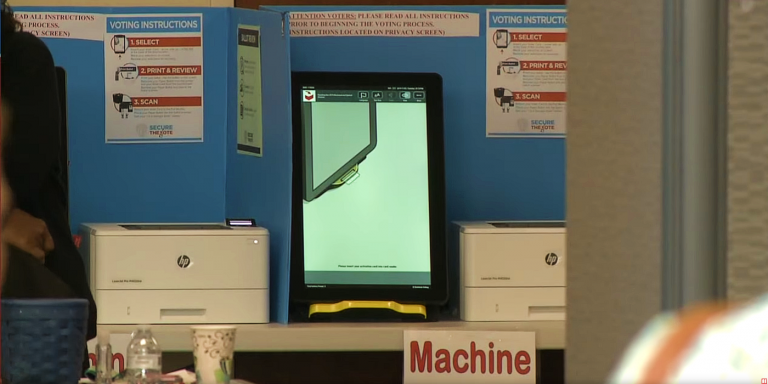
Meanwhile, it looks like Georgia is set to use Dominion Voting Systems in the upcoming 2024 election, despite a forensic report showing cybersecurity flaws in Dominion’s voting machines. Georgia election officials said that the machines won’t be updated until after the 2024 elections because it’s such a massive undertaking.

Some still have hope that could change. A trial concluded in January, in an ongoing lawsuit that seeks to have a judge declare that the touchscreen voting machines are so flawed they are unconstitutional. The judge in that case has yet to render a decision.

Ken Silva is a staff writer at Headline USA. Follow him at twitter.com/jd_cashless.

Intel Report: Putin Didn’t Order Death of Russian Opposition Leader Navalny

(Headline USA) U.S. intelligence officials have determined that Russian President Vladimir Putin likely didn’t order the death of imprisoned opposition leader Alexei Navalny in February, according to an official familiar with the determination.

While U.S. officials believe Putin was ultimately responsible for the death of Navalny, who endured brutal conditions during his confinement, the intelligence community has found “no smoking gun” that Putin was aware of the timing of Navalny’s death—which came soon before the Russian president’s reelection—or directly ordered it, according to the official.

The official spoke on the condition of anonymity to discuss the sensitive matter.

Soon after Navalny’s death, U.S. President Joe Biden said Putin was ultimately responsible but did not accuse the Russian president of directly ordering it.

At the time, Biden said the U.S. did not know exactly what had happened to Navalny but that “there is no doubt” that his death “was the consequence of something that Putin and his thugs did.”

Navalny, 47, Russia’s best-known opposition politician and Putin’s most persistent foe, died Feb. 16 in a remote penal colony above the Arctic Circle while serving a 19-year sentence on extremism charges that he rejected as politically motivated.

He had been behind bars since January 2021 after returning to Russia from Germany, where he had been recovering from nerve-agent poisoning that he blamed on the Kremlin.

Russian officials have said only that Navalny died of natural causes and have vehemently denied involvement both in the poisoning and in his death.

In March, a month after Navalny’s death, Putin won a landslide reelection for a fifth term, an outcome that was never in doubt.

The Wall Street Journal first reported about the U.S. intelligence determination.

Adapted from reporting by the Associated Press

Leaked Audio Exposes Leftist Gov.’s Rebuke of Biden’s Open Border

(Luis Cornelio, Headline USA) A Democratic governor and staunch White House ally sharply criticized President Joe Biden’s open border policies, despite having been considered as his running mate. 

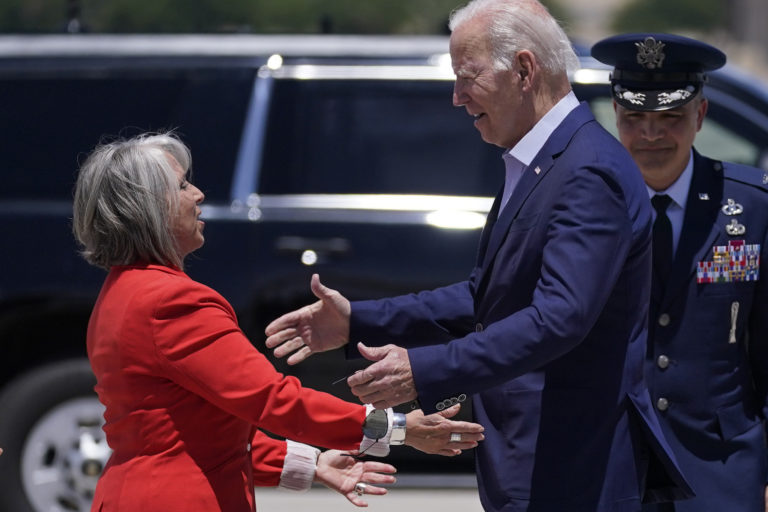
In a leaked audio, New Mexico Governor Michelle Lujan Grisham didn’t mince words when addressing DHS Secretary Alejandro Mayorkas’s reluctance to collaborate with the border state to curb illegal crossings. 

The origin of the recording isn’t immediately clear, but Lujan Grishman spokesperson Jodi McGinnis Porter confirmed the authenticity of the audio, according to the Santa Fe New Mexican. 

Lujan Grisham’s critical remarks were made during a phone conversation with a government official regarding the federal government’s crackdown on marijuana at Border Patrol checkpoints in Southern New Mexico. 

While recreational and medicinal marijuana are legal in New Mexico, they remain illegal at the federal level, a point Lujan Grisham emphasized in the leaked conversation. 

The governor threatened to draft a letter calling out Mayorkas’s simultaneous targeting of marijuana and refusal to secure the border in New Mexico. 

“The press also knows that Border Patrol is taking a hard stance, and the only way is either we have to adjust it or I have to send you a letter saying, ‘You’re persecuting a state, you’re not using your discretion, you’re not working with me on immigration,’ and I don’t want to send that letter,” she added.

During the same portion of the audio, Lujan Grisham expressed feeling “boxed in, hard.” 

Lujan Grisham claimed Mayorkas dismissed her concerns about the prosecution of marijuana offenses at the New Mexico’s southern border. 

“Here’s what also the secretary said to me, just so you know: ‘Oh, who cares? They make a lot of money,'” Lujan Grishman said. “Well, first of all, it’s patients’ medicine. So I was really offended by that. Shame on him.” 

Lujan Grisham was elected as New Mexico’s governor in 2019, following six years of service in the U.S. House. She gained notoriety in 2020 when Biden, then the Democratic nominee for president, considered her as his running mate.

Ultimately, Biden selected Kamala Harris, then a Senator from California. 

Firefighter Dies after NYC Fired Him to Make Budget for Illegals, Family Left w/ Nothing

(Luis Cornelio, Headline USA) A beloved former member of the New York City Fire Department passed away suddenly due to a heart attack—months after the city terminated his employment to allocate funds for providing hotels and other taxpayer-funded benefits to illegal aliens. 

Derek Floyd, as reported by the New York Post, succumbed on April 15, leaving behind his wife and children grieving and grappling with financial strain. 

Floyd’s demise occurred months after his dismissal by the NYFD on Christmas. He was on “long term duty,” a status attributed to firefighters injured in the line of duty, as described by the Post. 

His termination unfolded amid the city’s controversial strategy to finance benefits for illegal aliens, ranging from hotel accommodations and social services. 

“I wouldn’t wish it on anyone,” remarked Floyd’s widow, reflecting on the ordeal she endured. 

“I think it definitely took a toll once they let him go,” she continued, alluding to the FDNY’s decision to terminate her late husband. 

“He always tried to… stay positive about it, and he wasn’t really angry. But you see a person, and the wheels are turning in their brain where they’re just constantly thinking, so I definitely think it did affect us,” she added. 

Floyd, a decorated veteran who completed three tours in the Middle East, aspired to join the Fire Department in 2019 before suffering a heart attack during training. 

“Being a firefighter was something he was really passionate about,” remarked widow. “He was really a big-time, like, family person, he was all about his kids.” 

The widow lamented that Floyd’s dismissal left him uninsured, a benefit typically extended to public servants who risk their lives for public safety. 

“If Derek would have stayed on, he would have had a life insurance policy with the FDNY,” she emphasized. “That would have helped out financially because right now, it’s really bad. I’m honestly swimming in a lot of debt.” 

As reported by the Post, the city government diverted $74 million from the FDNY’s budget in 2025 to accommodate the surge of illegals immigrants in the city.

Legal Scholar Says ‘There’s No Crime’ in Trump Trial, Hints at ‘Destruction’ of Rule of Law

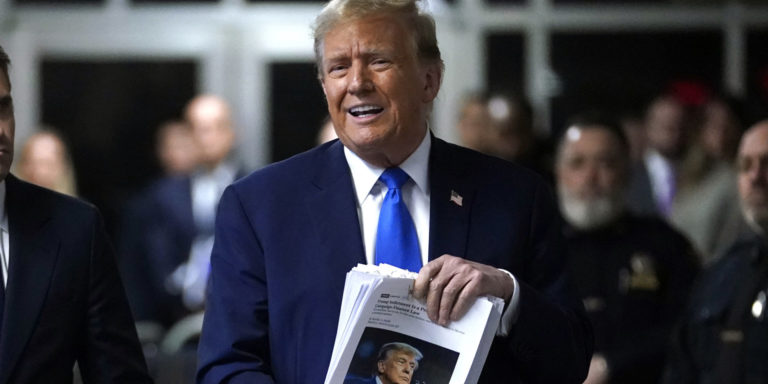
(Luis Cornelio, Headline USA) A liberal legal scholar has delivered a stark assessment of the prosecution of former President Donald Trump by Manhattan District Attorney Alvin Bragg over widely disputed campaign finance laws.

Harvard Law Professor Emeritus Alan Dershowitz adamantly declared the absence of any “crime” in the Manhattan trial during an appearance on Fox News’s Sunday Morning Futures with host Maria Bartiromo. 

“There is no crime,” Dershowitz asserted in the interview, which was shared by Trump on Truth Social.

“That’s why they’re putting on people like [former American Media CEO David] Pecker talking about catch and kill, they’re putting on [model Karen] McDougal… there’s no crime,” Dershowitz stressed, alluding to Bragg’s prominent witnesses. 

Dershowitz cautioned Bragg to be “ought to be very careful” about his legal framework of the Trump trial, citing a recent case where an appeals court in upstate New York overturned disgraced Hollywood producer Harvey Weinstein’s conviction for sexual misconduct. 

The New York Court of Appeals overturned Weinstein’s conviction due to the inclusion of testimonies from individuals not directly linked to the case. 

“That’s what’s happening,” Dershowitz stated, drawing parallels between the Weinstein and Trump trials. “There is no crime in Manhattan. You cannot figure out what the crime is. That’s why they’re putting on all this evidence of non-crimes, trying to persuade the jury that ‘catch and kill’ is a creme, it’s not; paying hush money is a crime, it’s not.” 

The legal scholar, known for his previous endorsements of Hillary Clinton and Barack Obama, suggested that at most, the alleged actions of the Trump organization could amount to a misdemeanor, “barred by the statute of limitations.” 

Dershowitz challenged Bragg’s legal premise: Trump’s alleged payments to his former attorney Michael Cohen—who in turn paid Stormy Daniels and McDougal—constitute a felony due to so-called violations of federal campaign law. 

However, Trump has not faced any charges related to these alleged payments. 

“You can’t suddenly resurrect that and turn that into a crime by invoking a federal statute which the federal government refused to invoke and that the Federal Election Commission refused to invoke,” Dershowitz argued. “There is no crime.” 

Dershowitz concluded with a somber warning about the dangers of weaponizing the judicial system against political adversaries: “If it’s Donald Trump today, they can go after you tomorrow and your relatives tomorrow for something that isn’t a crime.” 

He added, “That’s why every American whether you’re a Democrat should be opposed to what’s going on in that Manhattan courtroom. It’s a scandal, and it’s the destruction of America’s rule of law.”