Acting AG Blanche Confirms Weaponization Fund Is Canceled

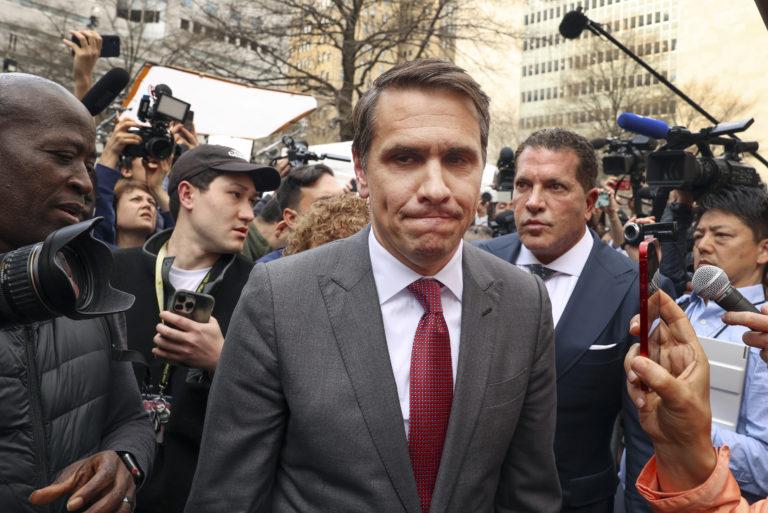
(Luis CornelioHeadline USA) The proposed $1.776 billion Anti-Weaponization Fund is no more.

Acting Attorney General Todd Blanche confirmed in remarks to the House Appropriations Committee on Tuesday that the Department of Justice is walking away from the initiative.

“We are not moving forward with the fund, period,” Blanche told lawmakers in a tense hearing, later adding: “The reasons for the fund, I think, remain as important as they were before, but we are not moving forward with the fund.”

Blanche said the fund was a priority for President Donald Trump, who was himself indicted by the Biden administration shortly after leaving the White House in 2021.

Blanche’s remarks mark the latest sign that the DOJ has abandoned the effort entirely.

The fund was first announced in a May 18 press release after Trump settled a civil lawsuit against the IRS over the agency’s failure to prevent the leak of his confidential tax-return information to the legacy media.

His comments also followed two federal court rulings tied to the settlement.

First, U.S. District Judge Leonie Brinkema, a Clinton appointee, on May 29 issued a temporary restraining order blocking the fund after a lawsuit filed by a former federal prosecutor who claimed he was fired for his role in the aggressive targeting of Jan. 6 defendants.

Separately, U.S. District Judge Kathleen M. Williams of Florida also on May 29 revived Trump’s case against the IRS after a group of former judges urged her to do so in an amicus brief.

Williams ordered the DOJ and Trump’s attorneys to respond by June 12 to questions about the settlement, which was entered outside her court.

At the center of the revived case is the claim that Trump and the DOJ may have misled the court, though no evidence has been produced to support that allegation.

Federal Workers Use Bed Bugs to Demand Biden-era Telework

(Luis CornelioHeadline USA) The Trump-led Department of Agriculture is battling a bed bug infestation that officials say may have been caused by employees’ negligence, with the same workers now demanding the right to stay home while collecting taxpayer-funded salaries.

The infestation, first reported Tuesday by NOTUS, appears to have affected the Animal and Plant Health Inspection Service, which is based at the George Washington Carver Center in Beltsville, Maryland.

A USDA spokesperson said the infestation persisted even after fumigation services were ordered because infested personal items were left behind by employees, even after they were initially allowed to work from home.

“USDA took prompt and robust action several weeks ago,” the spokesperson said, according to NOTUS. “Unfortunately, personal belongings left in the offices caused further issue. Animal and Plant Health Inspection Service management is working with employees to ensure the spaces are emptied for proper mitigation.”

Five employees, none of whom agreed to speak on the record and instead spoke anonymously, said they were notified of the bed bug issue in mid-May. APHIS temporarily allowed employees to work from home while the building underwent treatment.

The problem persisted despite those efforts, prompting some employees to complain of purported “noxious fumes” and “resulting sickness.” The federal agency renewed telework accommodations in response.

However, new bed bugs were observed in certain parts of the building on Friday. This time, employees were told to use their vacation time if they did not wish to report to the office.

“They treated the building, and then they sent people home again because of offgassing. Then they came back. Now there’s more bedbugs,” an anonymous employee told NOTUS.

Another unnamed employee claimed they had “returned to an office that was making them sick because the chemicals hadn’t aired out.”

The complaints come after Donald Trump issued an executive memorandum ending the Biden administration’s expansive telework policies, which had allowed thousands of employees to work remotely with little supervision for extended periods while taxpayers continued funding federal office space.

’60 Minutes’ Correspondent: CBS News Head Bari Weiss is ‘Murdering’ the Show

(Headline USA)  In a remarkable sign of the turmoil at CBS’s top-rated “60 Minutes,” correspondent Scott Pelley said CBS News head Bari Weiss was “murdering the show” and accused its new producer of having “slender qualifications” for the job, according to reports.

Pelley made his accusations in an introductory meeting Monday between the newsmagazine’s staff and Nick Bilton, the new executive producer named by Weiss last week, according to a detailed report on the Status website, which said it had heard a recording of the meeting. Weiss herself was not present, according to the report. Status specializes in media news and analysis.

Status reported that Pelley, the longtime “60 Minutes” correspondent, began grilling Bilton at the 10 a.m. meeting about the firings last week of Bilton’s predecessor, Tanya Simon, and correspondents Sharyn Alfonsi and Cecilia Vega. Status also reported that Pelley told Bilton, a former technology journalist and filmmaker with no traditional broadcast news experience, that his qualifications for the position were “slender.”

Pelley also charged, according to Status, that Weiss herself had “no qualifications for her job,” and said the changes she had made to “CBS Evening News,” which Pelley once anchored, “have been catastrophic.”

It added that Bilton insisted that “Bari loves this institution” and “she loves ’60 Minutes'” — to which Pelley countered, “She’s murdering ‘60 minutes.’ She does not love this place. She was brought in to kill it and she’s doing exactly that.”

Two spokespeople for CBS News did not immediately respond to a request for comment.

But a person close to CBS News leadership, speaking on condition of anonymity, told The Associated Press that both Weiss and Bilton had tried to reach out to Pelley late last week when the changes rocked the 57-year-old show to tell him that he was an integral part of “60 Minutes” and wanted him to remain so.

The person said Weiss and Bilton felt it was disappointing that Pelley’s accusations were being aired publicly despite efforts to engage with him privately.

The New York Times, which also reported that it had listened to a recording of Monday’s meeting, noted that Pelley’s “newscaster’s baritone” was shaking during the exchange. The newspaper also quoted an unnamed executive at the meeting as saying Weiss had been prepared to come, but “we asked her not to.”

Reports about the contentious meeting came four days after Weiss, who has become a polarizing figure in the media world since taking the reins at CBS last October, told staff in a memo that it was time for a “new approach” at the top-rated newsmagazine.

In the memo, Weiss and CBS News president Tom Cibrowski said their goal was “building a show that thrives in the 21st century.”

“That requires a new approach,” they wrote, defining that approach as “expanding ‘60 Minutes’ beyond a one-hour television broadcast, deepening its role across CBS News, and holding everything we produce to the ambition, fairness, and fearlessness that have defined ‘60 Minutes’ at its best.”

Bilton, they said, “embodies the energy and ambition that animated the founders of the show. We cannot imagine a better fit.”

The Status report noted that Pelley was applauded multiple times by other staffers during the meeting. It said Pelley focused on the firings last week, calling them cruel.

Bilton reportedly replied that he was not intimidated. “I have been a journalist for 25 years, Scott,” Status quoted him as saying. “I have sat and talked with incredibly powerful people like you have. None of it intimidates me, OK? So you are not going to intimidate me in front of this group of people.”

Adapted from reporting by the Associated Press

Gov. Walz Appoints Members to Operation Metro Surge ‘Truth Council’

(Elyse S. Apel, The Center Square) Minnesota Gov. Tim Walz has appointed members to a new council tasked with documenting the impacts of Operation Metro Surge and Operation PARRIS, two federal immigration enforcement operations that sparked controversy, litigation and criminal investigations that remain ongoing.

Walz, a Democrat, announced the appointments  to the Governor’s Council on Recording the Truth of Operation Metro Surge and Operation PARRIS on Minnesotans, also referred to as the Minnesota Truth Council.

The council will be chaired by former Hennepin County District Court Judge Peter Cahill, who presided over the 2021 murder trial of former Minneapolis police officer Derek Chauvin following the death of George Floyd.

“Documenting history requires trusted leaders who are committed to listening, preserving people’s experiences, and ensuring that Minnesota’s story is not forgotten,” Walz said. “These council members bring deep expertise, lived experience, and a shared commitment to the truth. Their work will help create a lasting public record of both the harm endured and the resilience Minnesotans demonstrated during this difficult chapter in our state’s history.”

Members include representatives from education, civil rights, business, health care, law enforcement and community organizations across Minnesota.

The council was created through Executive Order 26-05, signed by Walz in March. That order directed the group to gather testimony, data and firsthand accounts related to Operation Metro Surge and Operation PARRIS and develop recommendations aimed at preventing similar events in the future.

The order described Operation Metro Surge, launched by the Department of Homeland Security in December 2025, as the largest immigration enforcement action in agency history. Operation PARRIS followed in January 2026 and focused on refugee communities in Minnesota.

“Over a period of more than 10 weeks, masked and armed immigration agents detained children, indiscriminately used chemical agents, violated the civil rights of peaceful protestors, detained American Indians, and conducted unwarranted stops and arrests of our neighbors simply because of the color of their skin,” the order said.

The council will work alongside The Advocates for Human Rights, which has been contracted to collect stories and testimony from people affected by the operations. The American Civil Liberties Union of Minnesota and The Advocates for Human Rights each appointed one member to serve on the council.

The council will issue preliminary findings by Oct. 31 and submit a final report by Dec. 1 to the governor, legislative leaders and Minnesota’s congressional delegation. The council plans to collect information through public forums, testimony, video evidence and other records. At least four public meetings will be held before the final report is issued.

This effort comes as legal and political controversy surrounding Operation Metro Surge is ongoing.

Minnesota Attorney General Keith Ellison, along with the cities of Minneapolis and Saint Paul, is pursuing a federal lawsuit seeking to have the operation declared unconstitutional and unlawful. State officials have argued the enforcement surge caused extensive economic damage, citing estimates of more than $240 million in lost wages and over $600 million in business losses.

At the same time, state prosecutors have filed criminal charges against two federal immigration agents tied to incidents that occurred during the operation. Hennepin County Attorney Mary Moriarty has said additional investigations remain ongoing.

Federal officials have disputed Minnesota Democrats’ characterization of the operation.

An Immigration and Customs Enforcement spokesperson previously told The Center Square that state prosecutions of federal agents are “unlawful” and a “political stunt.” Federal officials have also defended the larger operation, saying agents apprehended more than 4,000 individuals, including violent offenders and gang members, as part of Operation Metro Surge.

The Advocates for Human Rights’ website describes the council as an “independent, non-partisan” effort to create a historical record of both alleged human rights violations and the community response that followed.

The council has no law enforcement authority and cannot prosecute individuals or award compensation. Instead, its final report is intended to document the impacts of the operations and recommend potential policy and legislative reforms.

“The only way we move forward is with accountability,” Walz said in the executive order. “Minnesotans demand and deserve a public record that reflects the violent, cruel, inhumane, and deeply disturbing actions of federal immigration agents, and the dignity of our response. This record can help serve as a step towards our state’s long-term recovery.”

U.S. Reps Ask Regulators for Answers on Data Centers

(John Cole, The Center Square)  As the debate around data centers continues in Pennsylvania, a pair of lawmakers have penned a letter pushing for answers and transparency at the federal level.

Last week, U.S. Reps. Madeleine Dean, D-4th District, and Dwight Evans, D-3rd District, sent a letter to the Federal Energy Regulatory Commission, or FERC, asking how the agency is overseeing increased power demand from data centers.

FERC’s mission, according to the agency’s website, is to assist consumers in “obtaining reliable, safe, secure, and economically efficient energy services at a reasonable cost through appropriate regulatory and market means, and collaborative efforts.”

Dean and Evans pinpointed the reliability of the electrical grid and the costs that may be passed on to home consumers in their request.

“There is an increasing presence of data centers, and questions of how, when, and where they will connect to the grid,” Dean and Evans write. “Our concerns about the future of data centers and their energy demand impacting interstate transmission capacity not only include realistic assessments of load interconnection projects that will be added to the grid but also fluctuating load cycles destabilizing the grid.”

“This is in addition to concerns about the environmental impact, including air quality and water consumption, community input, long-term planning, and the inclusion of distributed energy resources (DERs) in any future buildout,” they continued.

In this letter, Dean and Evans also cite a recent alert from The North American Electric Reliability Corporation, or NERC, an organization that analyzes the reliability of power grids throughout the United States and Canada.

This NERC alert highlighted concerns about reliability arising from new computational loads, including data centers, interacting with the bulk power system, while highlighting “7 advisory actions that transmission planners, owners, coordinators, and operators should consider, and encourages their adoption to support reliability standards and address emerging challenges.”

As Dean and Evans seek answers at the federal level, the discussion has also emerged among lawmakers in the Pennsylvania General Assembly.

On May 4, the state House unanimously passed House Bill 2223, authored by Rep. Elizabeth Fiedler, which would require electric utilities to evaluate and consider the use of advanced transmission technologies, or ATTs, on new and existing service lines within their transmission siting applications filed with the state regulatory commission, which are currently required by law for all newly proposed transmission facilities.

A week prior to that vote, Gov. Josh Shapiro sent a letter to utility companies laying out his administration’s criteria they will consider justifiable in future rate-making cases.

And last week, Shapiro announced voluntary standards that data center developers will have to meet to receive state government support. Republican leadership in the Senate signaled broad agreement with the governor’s pitch.

Rank and file members on both sides of the aisle, however, have suggested to repeal a 2021 sales tax exemption for data center developers, while others want to pause consideration of new proposals for as long as three years.

The letter from Dean and Evans to FERC also requested information on the Trump administration’s decision to cancel clean-energy projects, believing this could “impact transmission planning and delivering electricity to consumers due to changes in energy supply.”

A statewide tracker for data center proposals noted that 68 sites have either been proposed or are under construction. An additional 72 data centers are active, according to the map.

Evans and Dean requested responses by June 30.

HUD Shifts $4B Homelessness Program from ‘Housing First’ to Treatment

(Tim Clouser, The Center Square) The U.S. Department of Housing and Urban Development announced a $4 billion funding opportunity for homelessness services on Monday, shifting away from the Housing First model.​

The notice of funding opportunity, or NOFO, for HUD’s Continuum of Care program, represents a major turning point in federal funding for homelessness services. The overhaul prioritizes funding for services focused on treatment and recovery over broad renewals of Tier 1 projects, such as permanent housing. ​

The courts blocked a NOFO last year that would’ve dropped the funding cap for Tier 1 renewal projects from about 90% to 30% midway through the existing grant cycle.

The new NOFO includes a 60% cap on those projects, offering CoCs a compromise, while also directing funds toward transitional housing.

“The ‘housing first’ experiment failed Americans by warehousing the vulnerable without results,” HUD Secretary Scott Turner wrote in a press release Monday when announcing the shift in federal priorities.

Housing First prioritizes taxpayer-subsidized permanent housing for homeless individuals without any preconditions such as sobriety, participation in addiction treatment or employment.

Supporters argue that it’s supposed to be paired with support services, such as treatment, but participation is voluntary.

Critics say Housing First results in a revolving door, subsidized by everyday citizens with their taxes.

Dr. Sam Tsemberis developed Housing First in the 1990s, and HUD has used the model for 15 years.​

“This ideology promised to end homelessness. Instead, billions of taxpayer dollars were spent while homelessness increased to record levels,” Turner wrote, referencing federal data from January 2024.​

While recent data shows a 3.4% decline in estimated homelessness nationwide from 2024 to 2025, HUD’s annual point-in-time count in January 2025 still represents about a 27% increase from 2013.

Taxpayer-subsidized beds also increased 151% from 2013 to 2025, according to HUD’s press release.

In an interview last year, Tsemberis said the fentanyl crisis facing the nation today is different than the crack epidemic in the 1990s; however, he told The Center Square that the solution for homelessness is housing and argued that abandoning Housing First will result in more people ending up on the streets.​

“What I’m very concerned about is that they want to move everything back to where people need to be in treatment and be sober before they get housing,” Tsemberis told The Center Square last fall in an interview about his model. “It’s going to increase homelessness, and it doesn’t make sense to me.”

The Trump administration is ready to move on from Housing First ​and tie funding to a provider’s results.

Since 2007, permanent supportive housing has increased by 111% nationwide, rising to 188% when rapid rehousing projects are included; meanwhile, HUD says transitional housing has fallen nearly 60%.

In 2024, 88% of CoC funding went toward permanent housing, while 1% went to transitional housing.​

HUD says the new NOFO is intended to address the “root causes of homelessness” and ties funding to performance to ensure the federal spending moves the needle rather than maintaining the status quo.

The federal government says it will direct $1.3 billion from the NOFO toward investing in new projects.​

According to the NOFO, applicants can set themselves apart when competing for funding by requiring homeless individuals to engage in support services to receive housing, partnering with mental health and treatment providers and employment programs, and coordinating outreach with law enforcement.

Quickly clearing encampments on public property and reducing public drug use also earn them points.​

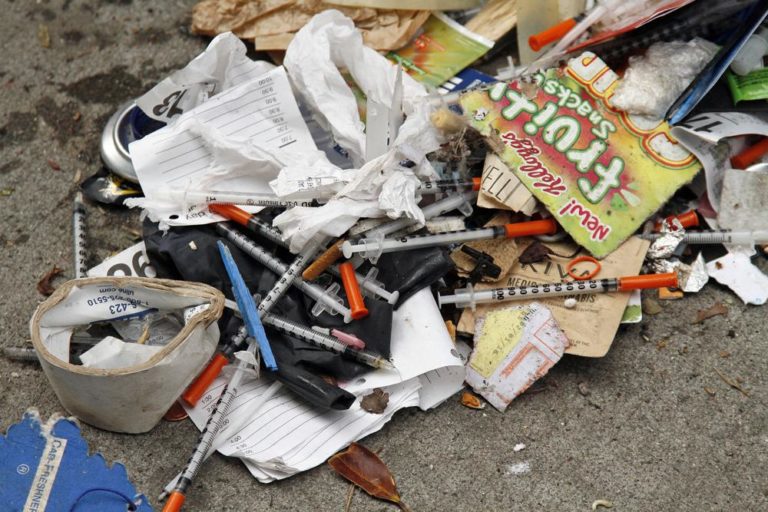
The NOFO requires funding applicants to certify that they will not operate drug-injection sites, or “safe consumption sites,” distribute drug paraphernalia, known as harm reduction, or permit illicit drug use.

The provision explicitly states that it’s not intended to require sobriety to receive housing. Still, another guideline in the NOFO does award points to applicants competing for funding who do require sobriety.

“Housing alone will not solve a crisis driven by addiction and mental illness. Under President Donald Trump’s leadership, HUD is making necessary reforms to put recovery first,” Turner wrote in Monday’s release.

Rep. Massie on Reported Trump-Netanyahu Spat: It’s All Talk Until US Withholds Military Aid to Israel

(Dave DeCamp, Antiwar.com) Rep. Thomas Massie (R-KY) on Tuesday responded to an Axios report that alleged President Donald Trump lashed out at Israeli Prime Minister Benjamin Netanyahu over Israel’s escalations in Lebanon, saying that it was “all talk” and pointing out that the US could withhold military aid if it actually wanted to see an end to Israel’s wars.

“It’s all talk. Just withhold foreign aid to Israel for a month and they’ll stop bombing their neighbors – instant peace, the Strait of Hormuz can be opened, and gas drops $2 a gallon,” Massie wrote on X. “Israel has been, and continues to be, the biggest welfare recipient from American tax payers.”

According to a source speaking to Axios, Trump told Netanyahu, “You’re fucking crazy. You’d be in prison if it weren’t for me. I’m saving your ass. Everybody hates you now. Everybody hates Israel because of this.” Axios had published multiple accounts of similar rifts between President Biden and Netanyahu as the Biden administration continued supporting Israel’s genocidal war in Gaza.

After the call with Netanyahu on Monday, Trump said in two separate posts on Truth Social that there was an agreement between Israel and Hezbollah for a ceasefire in Lebanon, but Israeli attacks continued on Tuesday. Israel did hold off on threatened strikes on Beirut, though an Israeli official had told Ynet earlier on Monday that the threat was coordinated with the US.

Massie also took aim at Netanyahu in a post on X on Tuesday, saying that the more the Israeli leader “prevents the war with Iran from ending, the more obvious it becomes that he convinced Trump to start it.”

Massie, virtually the only Republican in Congress who consistently opposes military aid to Israel, recently lost his primary to a Trump-backed candidate in a race that became the most expensive House primary in US history, fueled by spending from pro-Israel groups and donors.

This article originally appeared at Antiwar.com.  

Zelensky: US Doesn’t Make Enough Anti-Ballistic Missiles

(Dave DeCamp, Antiwar.com) Ukrainian President Volodymyr Zelensky said on Sunday that the United States isn’t producing enough anti-ballistic missiles and that he has requested a license for Ukraine to start producing Patriot missiles.

“There is not enough anti-ballistic missile production in the United States, and this could lead to a crisis in different parts of the world,” Zelensky wrote on X.

“60–65 anti-ballistic missiles per month, compared to current challenges, is nothing. It is no secret, and Russia knows this. We need to expand the production. I asked the previous US administration, and I am asking today’s administration to give Ukraine licenses to produce Patriot missiles,” he added.

The Ukrainian leader said that he sent a letter to Congress and President Donald Trump about the matter. It’s unclear whether he’s referring to a letter he sent to Trump several days ago, in which he pleaded for more US military aid.

In the letter, Zelensky said he appreciated the continued US military aid funded by the US’s NATO allies under the Prioritized Ukraine Requirements List (PURL), but that it wasn’t enough. He said the “current pace of deliveries through the PURL program is no longer keeping up with the reality of the threat we face.”

The US used an enormous number of Patriot missiles and other interceptors during the US-Israeli bombing campaign against Iran, and there were reports at the time that the Pentagon was considering diverting weapons shipments meant for Ukraine to the Middle East, but it’s unclear if that happened.

Zelensky’s renewed plea for more air defenses comes amid a looming threat of a major escalation of Russian strikes on Kyiv, which Russian officials say will happen in response to Ukrainian drone attacks killing civilians, including a Ukrainian drone attack that hit a college in Luhansk and killed 21 civilians. While Russia and Ukraine have traded heavy attacks in recent days, there’s no sign yet that Russia has gone ahead with the escalation in strikes on the Russian capital.

This article originally appeared at Antiwar.com.  

Over One Ton of Cocaine Seized at U.S.-Mexico Tunnel Bust

(Bethany Blankley, The Center Square) Border Patrol agents in Southern California have found another underground cross border tunnel, leading to the arrest of four men and the seizure of enough cocaine to kill 34 million people.

As illegal crossings across the southwest border have dropped by 95% under the Trump administration, record drug busts are ongoing, and cross border tunnels stretching thousands of feet from Mexico into the U.S. are still being found.

After a months-long investigation, the most recent bust occurred on May 29 in the U.S. Customs and Border Protection San Diego Sector near the Otay Mesa Port of Entry. The sector and POE have been ground zero for cross border tunnels for decades.

In April, San Diego Sector Border Patrol Tunnel Team agents uncovered a 3,000-foot-long large-scale narcotics smuggling tunnel under the Otay Mesa POE, The Center Square reported.

One month later, agents found a similar sophisticated 1,933-foot-long cross border tunnel leading to a Buy 4 Less retail store in Otay Mesa from Tijuana, Mexico. The tunnel, dug 55 feet underground and roughly 4.5-feet high, has reinforced walls, a rail, ventilation system and electricity to facilitate the smuggling of people and drugs, authorities found.

During the latest bust, four men, two each with California and Mexican addresses, have been charged with conspiracy to distribute controlled substances. One was charged with conspiracy to use a cross-border tunnel and conspiracy to import controlled substances, according to the U.S. Department of Justice. If convicted, they face life in prison and a $10 million fine.

“For these defendants, it wasn’t a light at the end of the tunnel. It was lights and sirens,” U.S. Attorney Adam Gordon said.

CBP San Diego Sector Border Patrol agents surveilled the store front from December 2025 to May 2026 after “a new group of around seven or eight ‘employees’ were seen regularly,” involved in suspicious activity, according to the charges. They were first observed allegedly regularly transporting a large number of suitcases from the store into vehicles or walked them across the border into Mexico, investigators found.

Months later and prior to the men’s arrests, Border Patrol agents observed a man “loading three large, heavy items into a white van which departed Buy 4 Less and ultimately parked on the street near a mechanic shop,” and another man on a bicycle allegedly conducting counter surveillance, according to the charges. The scheme allegedly involved the men moving deep freezers and packages and taking heavy boxes out of Buy 4 Less and loading them into vans and truck beds.

San Diego County Sheriff’s deputies were notified, conducted traffic stops, and a K9 identified the controlled substances. This led to the seizure of more than a ton of cocaine.

They found 173 packages weighing nearly 631 pounds in one truck, 423 packages weighing more nearly 1,035 pounds in another truck and 255 packages weighing 604 pounds in a van, according to the complaint. They field tested the substances, which tested positive for cocaine. Total weight seized was nearly 2,270 pounds.

With 30 milligrams of cocaine considered a lethal dose, the amount seized was enough to kill 34 million people. That’s equivalent to the population of 25 San Diegos and nearly the entire population of California.

After the drug seizures, warrants were issued to search Buy 4 Less, where agents found the exit point of the tunnel. It was concealed under the floor of a storage room in the store, according to the complaint. The tunnel was accessed using a sophisticated hydraulic lift, extending more than 1,000 feet from the store to the border and another 800 feet inside Mexico, authorities found.

“Criminal organizations continue to look for ways to exploit our border, but they underestimate the determination of the men and women protecting it,” San Diego Sector Chief Border Patrol Agent Justin De La Torre said. “This tunnel’s discovery is a testament to our strong partnerships and the unwavering commitment of law enforcement on both sides of the border.”

In the Southern District of California, federal and local law enforcement are working together to combat transnational crime.

“Law enforcement collaboration is the backbone of dismantling sophisticated transnational drug cartels, as these organizations rely on vast illicit supply chains spanning multiple jurisdictions,” San Diego County Sheriff Kelly Martinez said. “Joint operations disrupt trafficking networks, choke illicit financial flows and prevent transnational cartels from exploiting jurisdictional gaps.”

The CBP San Diego Sector has historically been one of the busiest human and drug smuggling corridors along the southwest border. During the Biden administration when record illegal entries were reported and after Texas border security efforts expanded, the sector became the epicenter of illegal crossings, The Center Square first reported.

Since 1993, authorities have found 99 tunnels in the Southern District of California with 28 considered to be sophisticated, according to CBP data. The tunnels are destroyed by pouring thousands of gallons of concrete inside, CBP says.

Tunnels are also being discovered in the CBP El Paso Sector connecting Ciudad Juarez, Mexico, to El Paso, Texas, The Center Square reported. In the latest case, agents uncovered a tunnel equipped with electricity and ventilation with an exit point leading to a box car positioned on the road with a trap door.


FBI Director’s Girlfriend Sues Reporters for Story about ‘Inebriated’ Friend

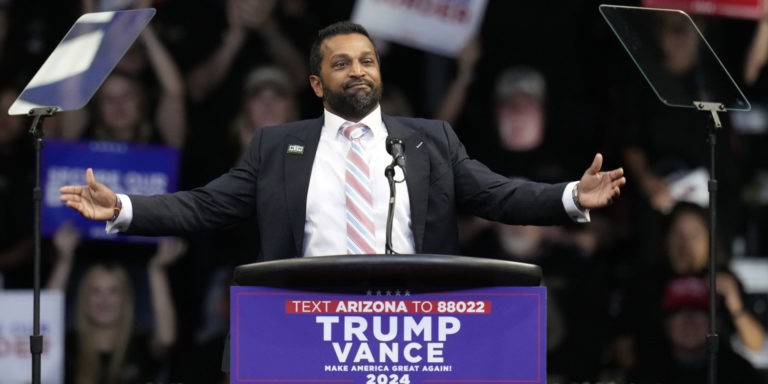
(Ken Silva, Headline USA) FBI Director Kashyap Patel’s girlfriend, Alexis Wilkins, has sued MS Now and two of its reporters for a story claiming that the bureau had agents escort one of her inebriated friends home after a night of partying in Nashville.

The Dec. 5 story, written by Carol Leonnig and Ken Dilanian, said that the incident took place in the spring of 2025.

“Patel’s girlfriend, Alexis Wilkins, asked FBI agents on her security team at least two times, including once this spring, to drive her friend home, and agents objected to diverting from their assignment, said the sources,” the story said, citing anonymous sources.

“But Patel insisted they do as Wilkins requested and in one case called the leader of Wilkins’ security detail and yelled at him to do so.”

According to Wilkins’s lawsuit, the story was totally fabricated. Wilkins doesn’t drink alcohol, and didn’t even have FBI security in the spring of 2025, when the incident was said to have taken place. Wilkins only received taxpayer-funded security later in the year in response to death threats, according to the lawsuit.

“Defendants are, of course, free to comment on the leadership of the FBI and its allocation of resources, whether positively or negatively,” Wilkins’s lawsuit says. “They are not, however, entitled to lie about it … Journalists cannot avoid accountability by hiding behind fabricated ‘anonymous’ sources.”

Wilkins claims the false story caused her reputational harm, and she seeks over $75,000 as a result. MS Now and its reporters have yet to respond to the lawsuit, which is the latest in a series of legal actions from Wilkins and Patel.

Wilkins first sued former FBI agent Kyle Seraphin last August for his claims that she’s  an Israeli intelligence asset who’s acting as a “honeypot”—a tactic where someone sexually manipulates their target to compromise, manipulate or spy on them. Wilkins has also sued right-wing influencers Elijah Schaffer and Sam Parker over similar claims.

Patel, for his part, filed an unsuccessful lawsuit against former agent Frank Figliuzzi over his claims that he spends more time in the nightclub than in the office. He’s also suing The Atlantic for reporting that his drinking habits are negatively affecting his performance.

Ken Silva is the editor of Headline USA. Follow him at x.com/jd_cashless.